Rays of sunshine are not too plentiful this weekend—neither in the weather, because it is persistently drizzling (just enough to soak you after a while,) nor in the absolutely horrendous news. And I do hope none of you has been indulging in a sunny holiday in Dubai, ha ha (sorry about the graveyard humour.)
However, sunshine is to be found in the wonderful paintings of J. M. W Turner, at the joint exhibition with John Constable at Tate Britain.
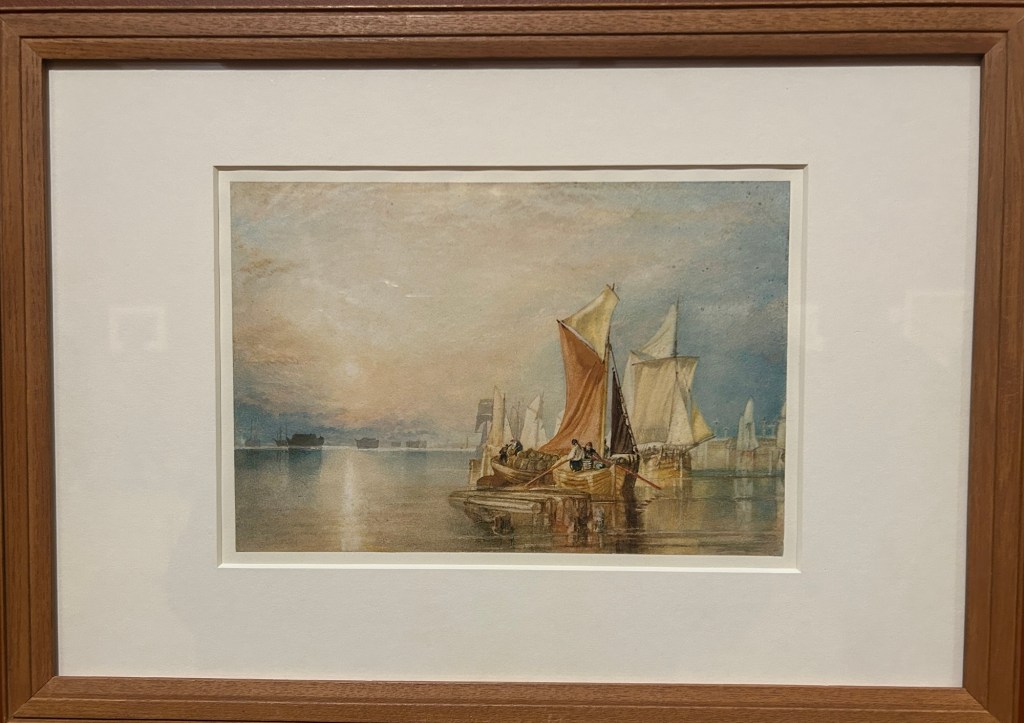
Born within a year of each other – Turner in 1775, Constable in 1776 – and both trying to transform landscape painting, the two were great rivals, rather than friends.
Raised in the gritty heart of Georgian London, Turner quickly became a rising star of the art world, beginning his formal training at the Royal Academy Schools aged just 14 and exhibiting there soon after—whereas Constable, the son of a wealthy Suffolk merchant, faced a longer, more arduous rise to acclaim.
I think Constable was a very accomplished, solid artist who funded his life by painting portraits of wealthy people in order to be able to indulge in his great love, landscape painting. The combination of known faces and beloved places makes for an evocative and precious portrait of life in Regency England.
The juxtaposition of these two artists is certainly an interesting one, but may I say at once that in my mind Constable loses by the comparison. The curators cleverly did not place their works next to each other, but gave separate rooms to each.
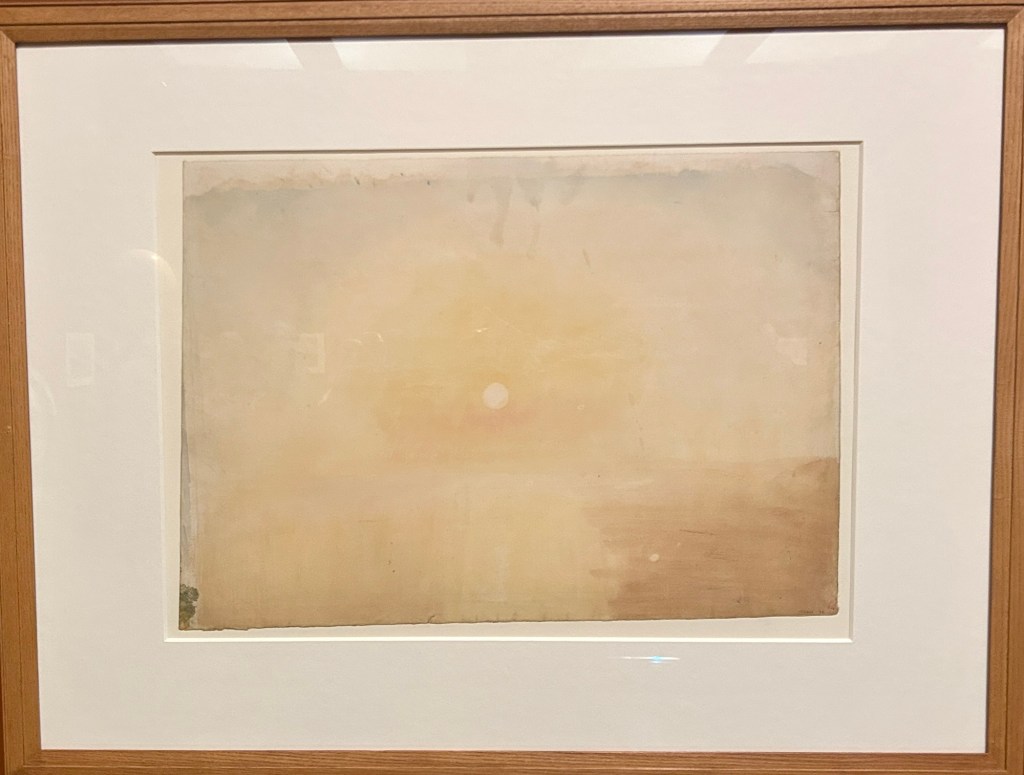
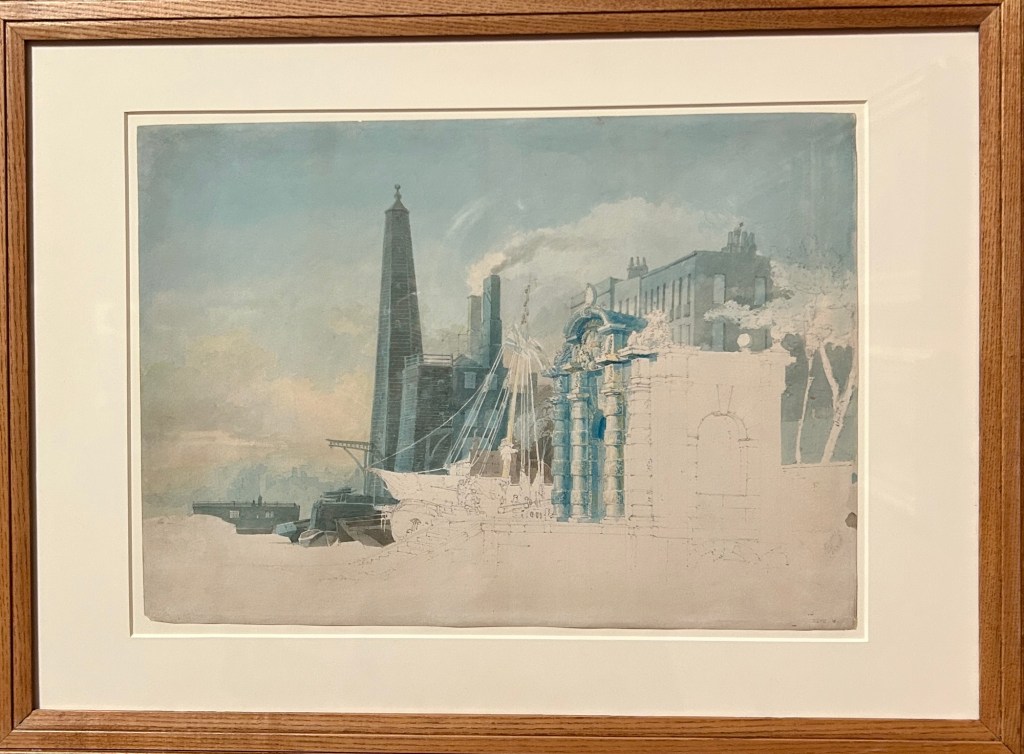
At the time they were exhibiting, Constable had a solid following and favourable reviews, whereas Turner was thought a genius by some, but deranged by others. In our modern consciousness and wider knowledge and appreciation of art, Turner’s paintings are mind-blowing. His treatment of the natural elements, wind, rain, water, clouds, sunrises and sunsets—in fact, all aspects of light and its effects, are unique. Especially the watercolours—the way he moved paint around and scraped paint off in places to achieve the translucent quality of the air around him is astonishing. Watercolour is a very delicate and elusive medium, and mistakes are dearly paid for; but he found it convenient and easy to transport so that he could capture the effects of light on nature live.
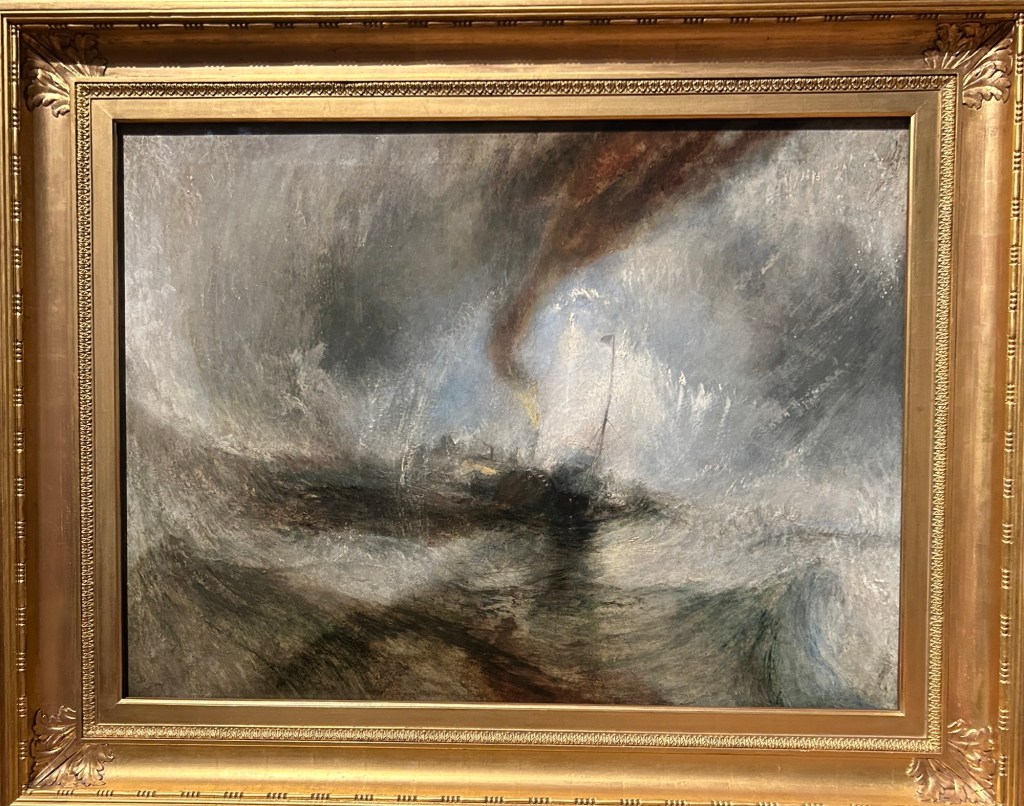
Many of the works in the exhibition are from private collections, so the opportunity to see them in person, and in close proximity, was a rare treat.
Share this:


 Letters from Athens
I’m a huge fan of Constable’s bucolic landscapes. But Turner was able not only to capture light but to use it, control it, like a tool. His subjects may not have been as relaxing but his portrayal was outstanding.
LikeLike
My feeling exactly!
LikeLiked by 1 person
I wonder what Constable would have been capable of had he been able to study at the Royal Academy as a teenager.
LikeLiked by 1 person
I don’t know if it would have made much difference, because his technique is very accomplished. Turner just had that extra touch of genius. I think Constable was a nicer man, though…
LikeLiked by 1 person
To me there’s no contest. Turner every time. While Constable produced pretty and accurate pictures, they are lacking the emotion Turner brings.
And, yes, watercolours are a difficult medium to work with.
LikeLiked by 1 person
Agreed. You start in front of a Turner and you thin, Wow!
LikeLike
Beautiful art!
LikeLiked by 1 person
As a Londoner, I had access to some wonderful art galleries, and always preferred Turner to Constable’s somewhat sanistised ideals of life at his time. Many years ago now, I went on my own to see a Turner exhibition at the Tate Britain, and I was amazed by the quality of his work. I also loved Mike Leigh’s film about his life, starring Tim Spall. https://www.imdb.com/title/tt2473794/
Best wishes, Pete.
LikeLike
Yes, I haven’t seen the film. Must make a note of it
LikeLiked by 1 person
Completely agree with you about Turner being the star here, although it was fascinating to see some of Constable’s smaller works, which I much preferred to his more famous six-footers! Some of the late Turner paintings are astonishing, especially those in same room as the Snow Storm one. The artwork showing the House of Parliament on fire took my breath away – I could stare at it for hours!
LikeLike
I see we have similar tastes in art as well as books! 🤗😂
LikeLike
Yes, indeed!
LikeLike
To my mind, there is no comparison- Turner just GOT light and environmental conditions
LikeLike