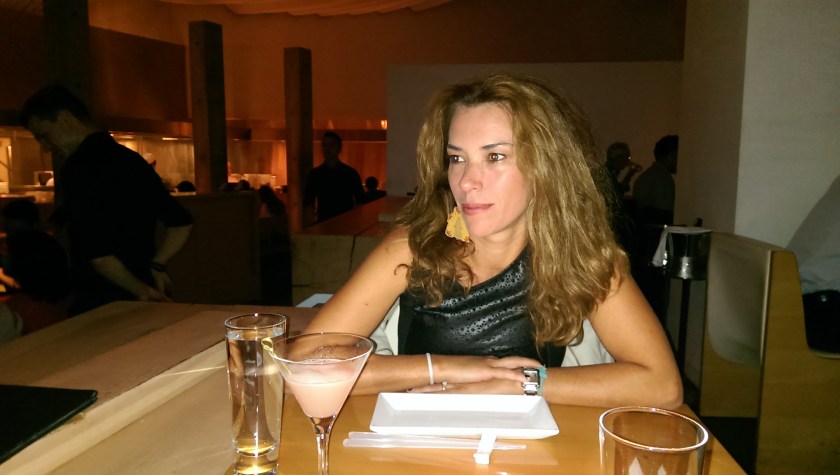
August Q&A – the college admissions officer

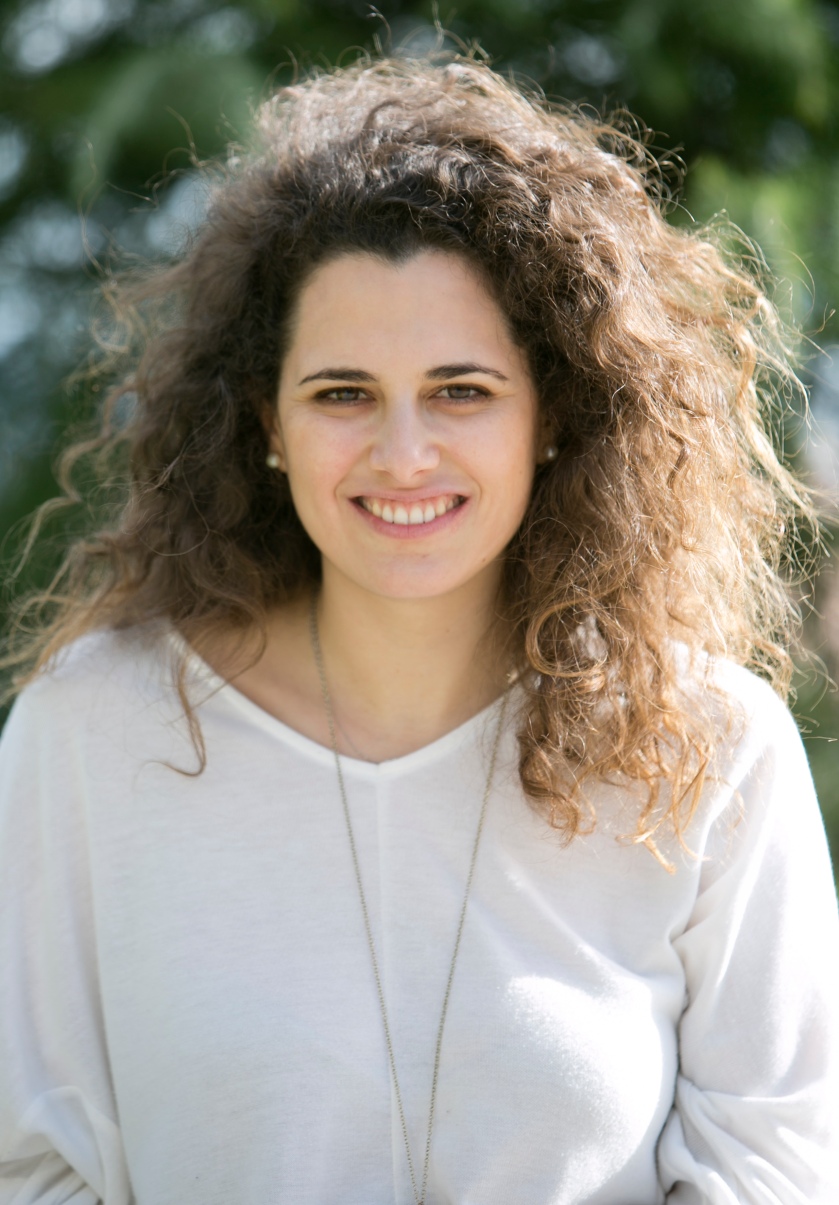
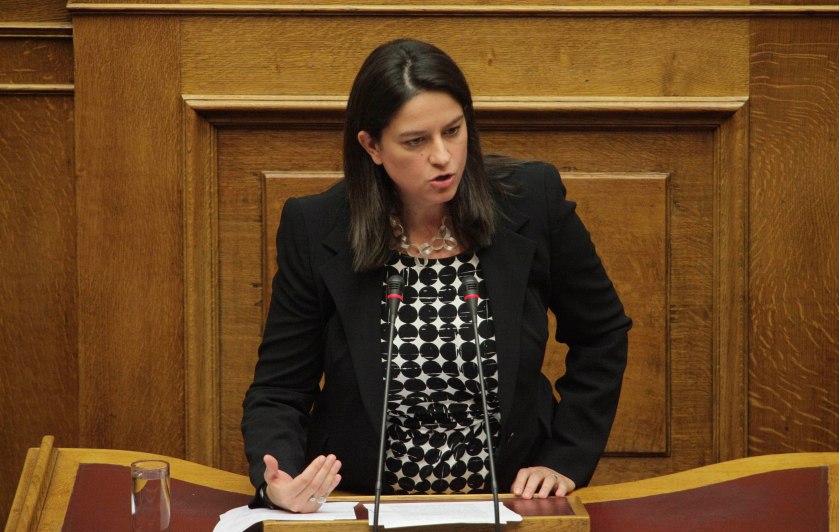
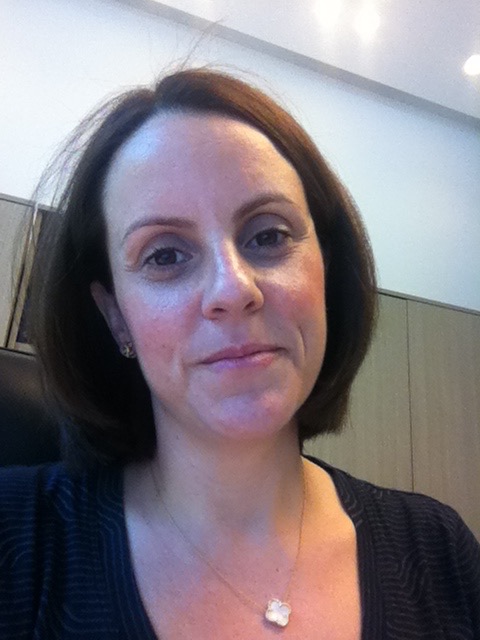
Lucy Kanatsoulis is a business consultant turned college admissions officer. No one ever grows up saying “I want to become a dean of admissions!” It’s one of those jobs that one stumbles into and only understands its complexities when one actually does it…

Tell us a little about yourself

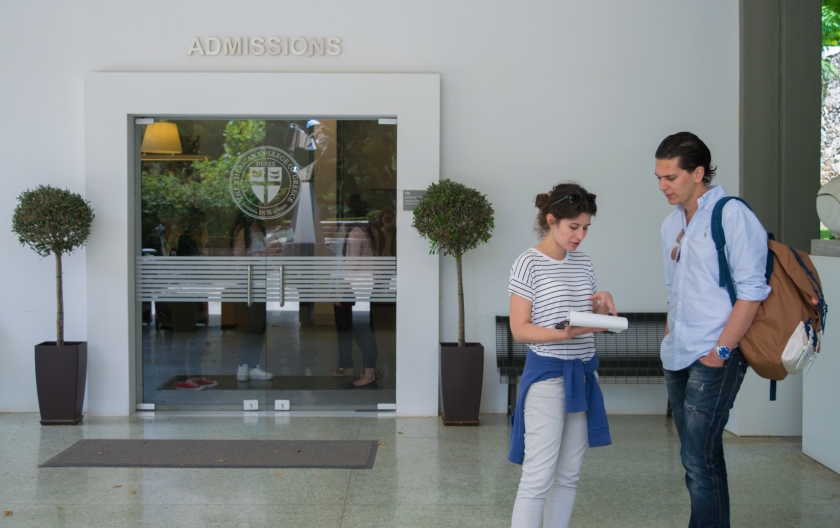
I was raised in Athens and lived in London and New York, where I worked as a business consultant for investment banks. Fifteen years ago I decided to give in to my inner Greek and return to Athens, where I currently live and work as the Dean of Admissions at Deree – The American College of Greece. Working in such a beautiful environment where I have the potential to help students and change their lives, remains an inspiration to me despite the difficult times we are facing.
 

image


What were the major difficulties you’ve faced in the last five years?

Certainly the current economic crisis has created a sense of uncertainty for all Greeks. And unfortunately, uncertainty is a toxic foundation for growth that highlights even further the problems of Greece – resistance to change, lack of opportunities, absence of inspirational political leadership. Admissions is incredibly personal—you’re asking applicants to open up their lives to you and on many occasions I witness the anxiety and depression that young people and their families face today. The feeling of being “swallowed up” by the current situation takes over your dreams and hopes. Coping with this uncertainty and anxiety has been one of the major difficulties I have faced.

Did anyone in particular inspire you or help you?

When I returned to Greece, I was desperate to find a job that would make me happy and give me some meaning. Through a friend I met Nikos who introduced me to the world of “education”. This person has unique values and an exceptional approach to life: Inspired by education and committed to service, he motivated me to take the job because I believed in the institution, I loved doing right by students, and I hoped to use it as a platform to make a difference in young people’s lives.

What are your hopes/plans for the future?

At this point I have decided to live for the moment. The current situation of uncertainty prohibits me from making any short-term or long-term plans. Even summer vacation is a spur of the moment decision. An eternal planner, it has taken a huge effort on my part not to plan for the future and take every day as it comes.


What are your hopes for Greece? What changes do you hope to see happen?

I hope for Greece to make a comeback – I believe that the foundations of this comeback lie in the proper education of the future generation, both at home and at school. Greek families need to inspire a work ethic, honesty and ideals for change and through education we need to provide the knowledge, opportunities and team spirit to achieve this.
 

image


Have you considered leaving? If so, where would you like to go, and why?

Yes. I often find myself flirting with the idea of moving to Canada, a place I have never visited but a country that I feel represents the best of what both Europe and America has to offer with inspirational leadership that creates opportunities. However, this still remains a flirtation and my inner Greek has not given up – leaving my country, my home and my job is not something I am ready to do yet.

Are you actively doing anything to help with the situation? Is there something you would like to do?

Working in education enables you to impact young people’s lives through scholarship programs, funded study abroad opportunities, international internship programs, and academic counseling that indirectly contributes to changing Greece’s future. I also participate in volunteer community actions organized by the College to help those afflicted by the crisis. I always feel, though, that I could do more…

How do you see Greece in 5, 10 years?

Unfortunately I do not believe much will have changed in 5 or 10 years. For us to actually see a different Greece and a change in the deeply rooted Greek mentality we will have to wait for the next generation to take over and this might take longer than 5 or even 10 years. It is impossible to predict but I remain hopeful.

How do you cope with obstacles and frustrations in your everyday life?

For many people like myself coping with the daily Greek frustrations has become a challenge.
Many times, I find that it takes all my inner strength to try and put things in perspective and continue with my daily life. There are good days and gloomy days. In these times, I try to nurture the stability that I have, focus on my family, job and friends, and alleviate as much of uncertainty that I can.

What are the positive sides of living in Greece? Have you had any good experiences lately?

The Greek summer: the smell of jasmine in the evening breeze, open air cinemas, starlit skies, the sound of the sea, sand on your bare feet, fresh fish at a taverna by the sea, open windows, the taste of succulent summer fruit, hair flowing freely, scanty linen and cotton clothes, bare skin and summer wine! As my husband so eloquently puts it: In spite of Greece’s financial plight, the sun still shines so strong and bright!
July Q&A – the Archaeologist

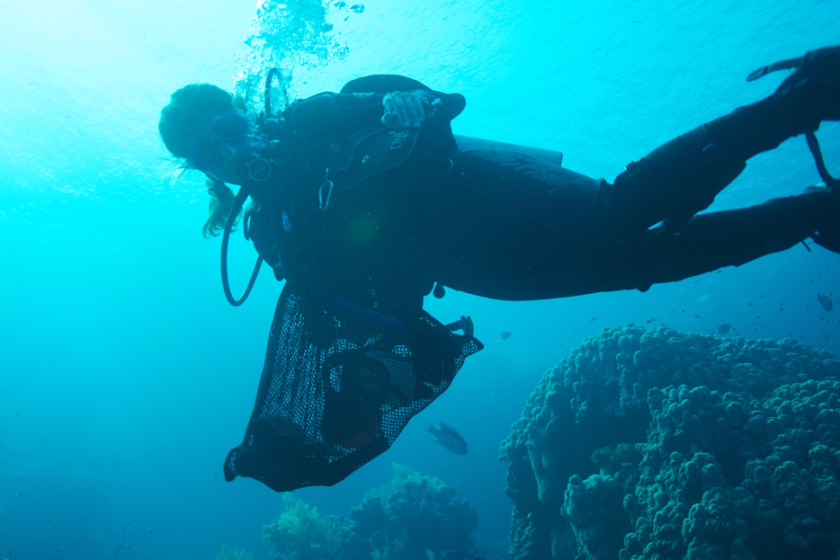
Chryssanthi Papadopoulou can conceivably be described as a sort of treasure hunter. Every summer, she dons scuba gear and explores archaeological sites at the bottom of the sea. Archaeology is a job uniquely suited to the Greek environment: wherever you excavate, you are likely to find something. During digging work for the Athens Metro, more than 50.000 findings came to light! Sounds like an ideal life?  As you will see, things are never that simple.


Tell us a little about yourself

My name is Chryssanthi and I am an archaeologist. I am from Athens, which is also where I currently live and work. I love my job; it is one of the things that keep me happy. I conduct fieldwork in the summer and research in the winter. Both aspects of the job are rewarding in different ways. For the last ten years I have been excavating underwater sites: primarily shipwrecks, but also sunken land structures. The break that the sea offers from reality is rewarding enough to get me through the winters – literally and metaphorically. Needless to say that Greece is an archaeological paradise.

What were the major difficulties you’ve faced in the last five years?

A little over five years ago, I returned to Greece after having spent 5 years living on and off in the UK. At the time it seemed like a good idea to “come home” – at least temporarily. It took me over 2 years to re-adjust to Greek reality. I still have not managed to fully come to terms with Greece. Nevertheless, I have gradually fitted in again. I often feel that I made a mistake returning “home”. This is a thought that I simply cannot shake off and in a sense, this doubt is an omnipresent difficulty for me these last 5 years.


image


Did anyone in particular inspire you or help you?

In Athens we have 17 foreign Schools of Archaeology. It was the foreign schools that have always been my haven; a buzzing international community of junior and senior scholars constantly on the move for the purposes of their field-projects and research. Being a member of this community reassures me that Greece too can be multicultural and that perhaps it is not such a bad place to live after all.

What are your hopes/plans for the future?

I have no long-term plans. I am still considering the possibility of going abroad. The UK continues to feel a lot like home and I miss it still.

What are your hopes for Greece? What changes do you hope to see happen?

I hope for the financial crisis to pass. I realize that this sounds naïve and oversimplified. Nevertheless, after everything that’s been said and done in the last six years, I no longer know how to make this sound factual and realistic. I am unclear as to what really needs to be done and even more unclear as to whose benefit this will be for. This is one of the worse predicaments that our governments have imposed on us: not knowing with any degree of certainty what to wish for any more… Saying that, what I hope to see are reason, factual explanations, tangible solutions, and (alas!) intelligent politicians.

Have you considered leaving? If so, where would you like to go, and why?

Yes, I admitted to considering this before. The UK continues to feel partly like home. In the case of a Brexit, though, I can no longer go there that easily.

If you have already decided to leave what would make you stay?

Intelligent ideas, solutions and individuals make me want to hang around. Provided that Greece chooses to invest in these, I am up for staying and helping out whichever way I can.

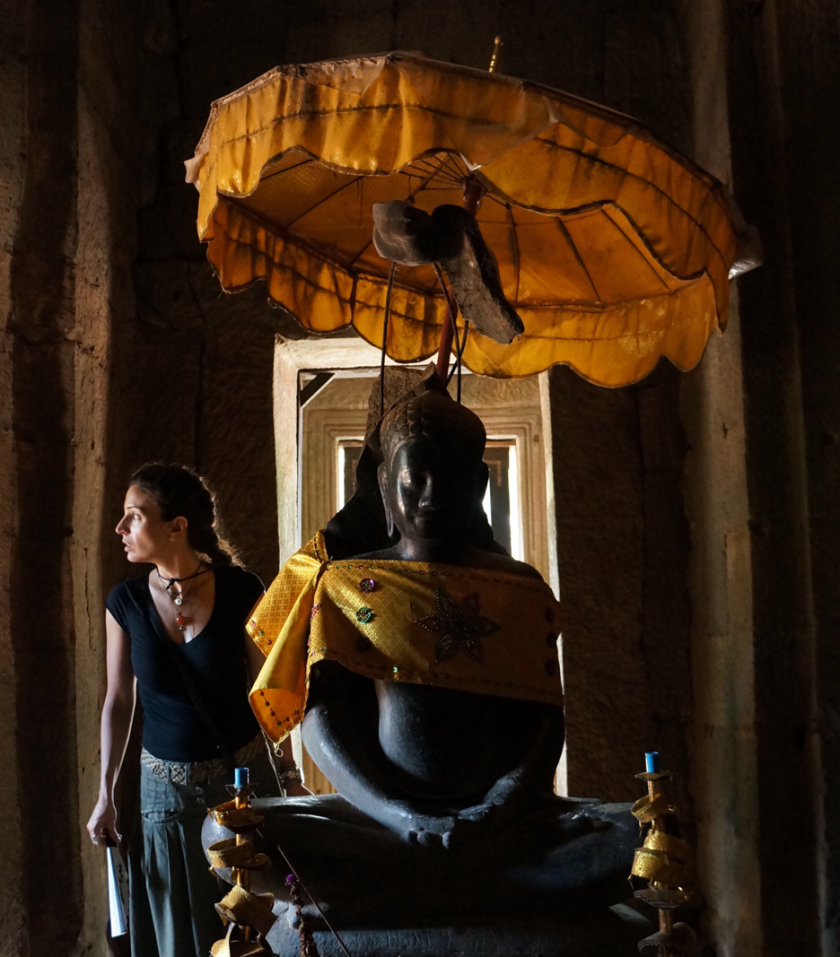
Angor Wat, Cambodia
Angkor Wat, Cambodia


Are you actively doing anything to help with the situation? Is there something you would like to do?

I have sunk into a state of passivity. I feel too numb to move. As a result, I am of very little help to anyone including myself. I suppose the one thing that I have never done is evade taxes. Consequently, in a way I am helping with the situation. What I need the most is to be able to see a way out of this. However long this way may be, as long as it is discernible, it is a viable destination. One can at least feel that one is heading towards something.

How do you see Greece in 5, 10 years?

This is way too difficult a question. Not even Pythia (the Oracle of Delphi) would have had an answer to this. In antiquity the manteis (seers) were commonly blind. Their sense of sight was the sacrifice they were forced to make in order to gain divine foresight. I find myself in the paradoxical situation where I have been stripped of my sense of sight without having been offered anything in exchange. I simply cannot see down the line.

How do you cope with obstacles and frustrations in your everyday life?

I do my best to keep frustrations and negativity away from the dinner table. We have our evening ritual at home when we cook something delicious and take a long time to dine (Italian-style). At the dinner table we share only the positive encounters and incidents of our day, and crack as many jokes as we can. Wine always helps.

What are the positive sides of living in Greece? Have you had any good experiences lately?

Summer is coming. This they have not managed to interfere with yet! Summer in Greece is one of the international stereotypes for fun. I make the most of it and it lifts my spirits.

June Q&A – the Chemical Engineer

Nikos Tsourougiannis is the general manager of family-owned company CHROMICHIMIKI SA which operates in the field of dyeing and finishing of woven fabrics.

Tell us a little about yourself

After my studies in England (at the University of Surrey and the Imperial College of Science) and my military service, I started working in our family business, Chromochimiki SA. Our business is processing woven textiles – dyeing and finishing. My father worked in various dyeing and finishing mills as a chemist and general manager. In 1997, while I was still studying Chemical Engineering in England, we had the chance to open a small fabric dyeing plant; we started from literally nothing, with three production machines. Gradually, taking advantage of every opportunity afforded by the state (subsidies etc.), and by getting bank loans, of course with personal guarantees, we started adding machinery piece by piece.
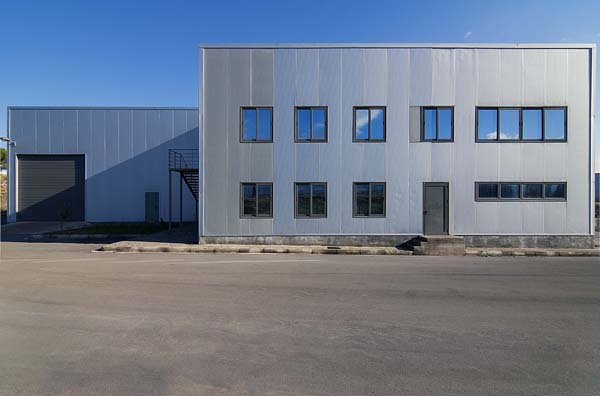
imageIn 2003, when the crisis had started and the financial environment was not at its best, we bought a piece of land and built our new plant, against reason as well as against everyone’s advice. On May 2nd 2005, production started in our new factory, with brand new machinery. We believed in ourselves, and in our work, and we have not regretted it, despite everything. Even in 2012, at the peak of the crisis, we continued to invest; we now have 30 employees, having started with 9. Of course, the psychological and financial cost was great, and the workload was massive; but even today we plan on taking advantage of opportunities offered and to continue investing. Apart from my father and myself, there is a strong team, and I would not like to take all the credit – the strength of our company does not lie in the machinery, but in the people running it. I really believe in the human factor; we are all cogs of one machine, and if we don’t take pride in our work, no success is possible.
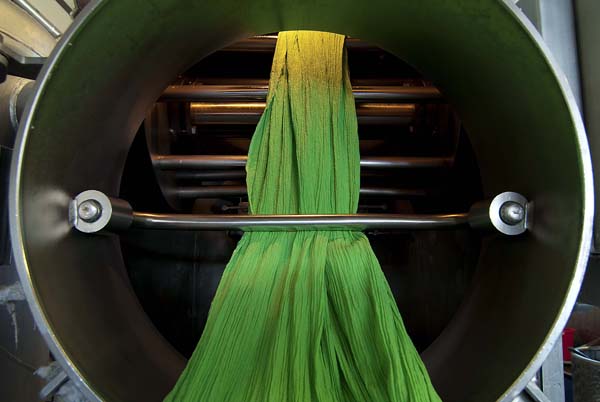
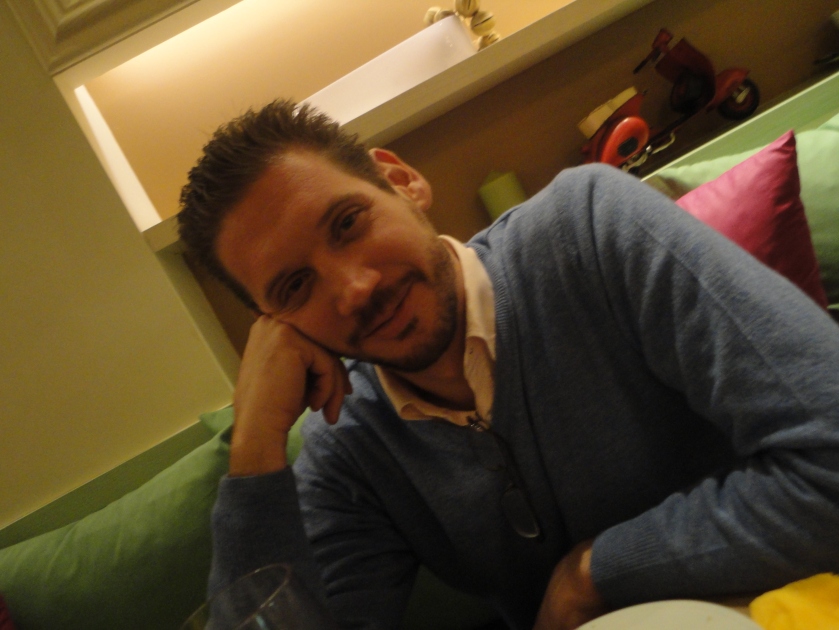
Our clients are either producers of textiles (weavers) or merchants who import from other countries. We treat the fabrics: we dye and finish them (we make them waterproof, oil repellent, flame retardant, etc.) When we started in 1997, our expertise was only in dyeing curtains. Later we expanded into upholstery, tablecloths, terry towels and fashion fabrics, for both men and women’s wear. We were forced into this – the processing cost is much higher, since we had to invest in different kinds of mechanical equipment, a large warehouse, higher labour cost – but business was diminishing, and we needed to keep up our market share.

In a way, this expansion has been beneficial. We are a small but flexible unit which gives us an advantage against foreign competition: for example, as regards dye houses from China – we might be more expensive, but our quality and response delivery times cannot be matched by them.

What were the major difficulties you’ve faced in the last five years?

Where can I start? Mainly the public sector – bureaucracy, delays, taxation, and, of course, the capital controls which make our daily life harder. Bank loans and the cooperation with the Greek banks makes business difficult; the cost of money is very high, social security contributions are crippling. You really have to be a masochist to run a company these days – well, maybe we are!
Another difficulty we have to face is unfair competition, such as imports without any quality control from countries like China, Pakistan and India. Also the monopoly in energy, which makes it very expensive; the cost of energy in Greece is probably the highest in Europe.
Lastly, because of the reduction in Greek production there are no raw materials (such as chemical dyes etc.) to be found locally – everything has to be imported. And now, because of the capital controls, this has become extremely hard.


image


Did anyone in particular inspire you or help you?

My father. He’s 78 and he still works. I’ve had so many valuable lessons from him – not only in business but life lessons. No studies or degrees can replace that. I was not an ideal student at school, so he always said to me, ‘I don’t care what you’ll become in life – but, whatever it is, even if it’s just collecting rubbish, you have to do it well.’ When I started working, he used to tell me, ‘Your must treat your work like a girlfriend.’ This ethic and values he gave to his family, we have passed on to the staff as well.
My father is the soul of the company – nothing would have been achieved without him. He’s there every day and when we are facing a problem we always ask for his advice. His experience is irreplaceable.
Another person who inspired me and taught me a lot is my first boss, Nikos Kouvaras. I was 14, and I worked in his factory in the summer. He gave me a card that said: “Niko, remember this – two things in life will never betray you, your family and your work.”

What are your hopes/plans for the future?

Difficult to define, but of course I do have hopes and ambitions. We always want to do more, expand, but it’s not easy.

What are your hopes for Greece? What changes do you hope to see happen?

In our sector there used to be around 250 dye houses in Greece. Now there are only 10 -15. Unfortunately, industry in Greece since the 80s has become a scapegoat and is discriminated against.
My view is that a country without industry, without production, is doomed. In Greece industry has been destroyed, and I want to believe that, in the end, it will make a comeback. Even Switzerland, despite high labor costs,  has industry. In my country we produce nothing – this has to change.


image


Have you considered leaving? If so, where would you like to go, and why?

In 2011 we came very close to stopping our production. Finally, we decided to take a big risk, and instead to invest, and it seems to have paid off: we almost doubled our turnover in these years. Leaving the country is the easy solution. I don’t know if circumstances will make us act differently in the future, but as long as we have the willingness and the courage, we’ll fight to stay in Greece.
Where would I choose to go? You’ll think it strange, and perhaps it’s not the best timing to say this, but I would choose North Africa – one of the countries on the Mediterranean. I know at the moment these countries are not politically stable, but, in the future, perhaps this will change. They’re close to Europe and have other advantages. But this is just a future thought.

Are you actively doing anything to help with the situation? Is there something you would like to do?

I believe just the fact that we keep this company going is no small feat. The easy solution would be to close the factory and move somewhere cheaper.

How do you see Greece in 5, 10 years?

Unfortunately, in this country you cannot predict. Eighteen months to a year ago we were literally about to ‘take off’: we’d been offered very big contracts and were ready to sign – but the developments in the political environment changed everything. So what can I say? It’s impossible to foresee what will happen in this country.

image
How do you cope with obstacles and frustrations in your everyday life?

As regards the professional side, there’s not much you can do but grit your teeth and have patience. Generally I believe in the saying: ‘Where there’s a will, there’s a way.’

What are the positive sides of living in Greece? Have you had any good experiences lately?

Greece is a country with unbelievable opportunities. First of all, the people, the workforce. Despite our faults, Greeks are really hard working, smart, friendly and full of willingness to give and share with other people. The weather, the climate in general and our location which is geopolitically strategic, gives this country and its people the chance to hope and dream for future generations.

May Q&A – the Entrepreneur

Feeling hungry? At the office and in need of coffee? Nothing in the fridge? Bored of cooking on the weekend?
Paminos Kyrkinis and his brother Constantinos have addressed these questions by creating e-FOOD.gr, an online delivery service that lets you order food (in five languages!) in 1’ without extra charge. You can select your meal from 4300 restaurants and shops in 50 Greek cities.

Tell us a little about yourself

Born and raised in Greece, studied Economics and Business at the University of Cambridge and the University of Warwick. Entrepreneurial by nature, I started my first online business at 24 and have since co-founded five different companies, e-FOOD being the largest and most successful.


image


What were the major difficulties you’ve faced in the last five years?

Over the past five years I’ve been actively involved with e-FOOD as founder – together with my brother – and CEO. We have been lucky enough to have experienced significant growth so managing a team that has grown from 3 to 120 people in 4 years has been quite a challenge!

Did anyone in particular inspire you or help you?

Immanuel Kant who said: Strive for the impossible to achieve the best of what is possible.

What are your hopes/plans for the future?

At the moment I am 100% focused on e-FOOD and my goal is to change the way people order delivery in Greece. We want to offer the best possible experience to our users and make this the fastest and easiest way to order your favorite food. Online delivery in Greece is growing fast and there is a lot of potential for further growth.


image


What are your hopes for Greece? What changes do you hope to see happen?

I want the positive forces in Greece that are being overshadowed by mediocrity to prevail. Greeks excel all over the world. There is no reason not to do this at home. e-FOOD is now part of one of the largest food delivery companies in the world with presence in 38 countries and I am proud to say that we are one of the best performers in the group and we started right here in Greece!

Have you considered leaving? If so, where would you like to go, and why?

I have never felt compelled to leave Greece but in my industry San Francisco would be the obvious choice and it is something that I have of course considered and may reconsider in the future. It was after all an informed decision of mine to return to Greece in 2011. There are opportunities in Greece and e-FOOD is proof of that. In 4 years we have created a company with 120 employees and this started in my living room. e-FOOD is now part of Rocket Internet and Delivery Hero – Rocket Internet is one of the largest internet groups in the world – and all this started in Greece in 2012 during the peak of the crisis. There are other companies in the Greek starutup industry that have enjoyed similar success or are on track to achieve it.

If you have already decided to leave what would make you stay?

I have not decided to leave but if I had I would keep in mind that the grass always seems greener on the other side. We have to be the change we want to see in Greece.

Are you actively doing anything to help with the situation? Is there something you would like to do?

I feel I have made a small contribution through e-FOOD and the 120 jobs (and counting) created. I hope to do more. Meanwhile, our cooperation with Boroume* (www.boroume.gr) and other non-profit organizations have allowed us to help our fellow citizens by providing free meals.


image


How do you see Greece in 5, 10 years?

At the moment there is a trend for certain situations to persist although they have already been overtaken by reality. I believe we will experience the total collapse of mediocrity, and through this a new Greece will emerge.

How do you cope with obstacles and frustrations in your everyday life?

I don’t believe that obstacles and frustrations are unique to Greece. I am aware of tons of obstacles and frustrations even in the most sophisticated countries. Problem solving is part of everyone’s personal and business life so I am certain one will find ways to cope no matter how unnecessary or annoying these obstacles and frustrations may be.

What are the positive sides of living in Greece? Have you had any good experiences lately?

Its people. From time to time we might encounter someone who doesn’t stop at a crossing to let pedestrians pass, or give their place in line to a pregnant woman or their seat to an elderly person on the bus. But these people exist everywhere. I’ve found that people’s honesty, kindness and gratitude as well as the directness of human relations in Greece are unequalled, and I’ve lived abroad for years!


*BOROUME is a non-profit organization that helps combat food wastage.

April Q&A – the project manager

Alexia Vasdeki is a model for self-reliance. In today’s economy where youth unemployment is over 50%, she had no trouble in finding a job and, to top it all, she loves it! She is just back from Vietnam, where she and other volunteers helped build a school.

Tell us a little about yourself

I grew up in Athens and studied at the Athens University of Economics and Business. During my studies, I was an active member of AIESEC, a global student organization, whose aim is to activate and develop the leadership potential of young people. After I finished my term in the National Committee of AIESEC in Greece, I went on their voluntary program in Brazil to teach English in a small-town school. Upon my return to Greece, I decided that I wanted to learn more about education so I completed a degree in pedagogy at my old Alma Mater. Following this, I worked on a project concerning education and social entrepreneurship and for the last year and a half I’ve been working for a company, Krataion Consulting, that is involved in consulting, project management and training. It’s something that I really enjoy because every day is a challenge and I feel I’m learning so much!
My passions are sports, traveling and volunteerism.


IMG_186


What were the major difficulties you’ve faced in the last five years?

I’ve been lucky, since my activities while at University gave me the means to find a job easily and to work in an environment I love. I have yet to send out a CV!

Did anyone in particular inspire you or help you?

Yes, a lot of people have inspired me. One who stands out is Spyros, the owner of the company where I work. He’s a very special person because he combines some unique characteristics. He’s intelligent, extremely ethical and cares for those around him. He’s always trying to give us opportunities to develop and evolve as human beings; something significant he’s also taught me is the importance of self-knowledge. To me this person is a real leader and this reflects on all our team since each day we look forward to going to the office to work, laugh, play (yes, we play games at the office), and eat lunch all together. When there’s real trust within a team there’s no need for timetables, each takes care of his responsibilities. And since we love what we do the results are always great.

What are your hopes/plans for the future?

My biggest dream would be to help change the educational system in Greece. When I was in Brazil I understood at first hand what is said about education being the most sustainable way to solve the greatest problems in the world. I came to really believe this, so upon my return I studied pedagogy not because I was interested in being a teacher but I wanted to find out exactly how the educational system functions both in Greece and abroad.


IMG_5471


What are your hopes for Greece? What changes do you hope to see happen?

In truth I’m not expecting to see change coming from the state, but rather from the new generation. I’ve learnt that if I want something in life, I must not wait around but go out and get it. Of course it would be my sincere hope and a major help if at some point proper structures and procedures were put in place so that things worked smoothly. Moreover, my dream would be the creation of a good educational system which would not chop and change but instead evolve.

Have you considered leaving? If so, where would you like to go, and why?
I’m considering going abroad for a while either to do a post-graduate course or to work in a country where I could learn things that would benefit my own country upon my return. I’d really like to see the government begin to encourage young people to stay here.


DSC09295


Are you actively doing anything to help with the situation? Is there something you would like to do?

In my job I have the good fortune to work on projects that are meaningful. One of these, which we’re working on as a team, is a project called ReGenerationan initiative of the World Economic Forum Global Shapers Athens Hub, whose object is to combat youth unemployment in Greece but also the ‘brain drain’ which sees so many young people leave the country each year.
This is a program of paid internships which aims to help recent graduates take their first step into the work market, by offering them a 6-month paid internship in either a multinational or a smaller company, as well as a training program to help them acquire the necessary skills to take this step.
The program, which is sponsored by Coca-Cola and the The Hellenic Initiative, has been very successful so far: in 2014 we found jobs for 55 people, 80% of whom have had their contracts renewed, and in 2015 internships were found for 105 people, 70% of whom were kept on.

How do you see Greece in 5, 10 years?

I believe that in 5-10 years the situation Greece will have taken an upturn – not because the state will have made any fundamental alterations, although I sincerely wish they will, but because people will have taken the initiative to bring about the necessary changes. In my opinion the basic ingredient for this to become possible is solidarity.


IMG_4617


How do you cope with obstacles and frustrations in your everyday life?
Truth is that I have been working a lot since I believe that frustration and anxiety can cause many problems and I have seen it happening often. Therefore, what I have been doing is working on self-knowledge in order to understand better who I am, what frustrates me and what matters most to me. It’s not always easy but I love it when there is a crisis and without getting anxious or nervous, I calmly manage it and solve it.

What are the positive sides of living in Greece? Have you had any good experiences lately?

I love living in Greece! I believe that it is, if not the only, one of the few countries which combine sun, sea, mountains, amazing weather & climate, delicious food, hard working people who at the same time are very kind and know how to have fun and enjoy life. One super simple great experience that I had lately was that after work I went by the sea and had coffee with my friends, and these are the small joys of life.


January Q&A – the politician

Niki K. Kerameus is a lawyer and a politician; she’s also involved  in social welfare on a pro bono basis.

35-year old Niki is a partner at Kerameus & Partners Law Firm in Athens, practicing mainly in international arbitration. She has significant experience in international arbitration matters, having worked in this field in three different jurisdictions (Athens-Greece, Paris-France, New York-U.S.A.).

Since January 2015, Niki also serves as a Member of the Hellenic Parliament (State Constituency). She has served as “Shadow Minister” for the Administrative Reform and E-Government Sector of New Democracy (ND), the major opposition party of Greece, from March 2015 until January 2016, and has just now been appointed as the third Parliamentary Representative of ND.

Niki is a founding member and until recently President of the Non-profit Foundation “Desmos”, which locates surplus from companies and individuals to cover needs of our most vulnerable citizens and social welfare organizations.

Finally, Niki is a mother-to-be, expecting her first child in 2 months!


ÂÏÕËÇ - ÓÕÆÇÔÇÓÇ ÔÏÕ ÍÓ ÃÉÁ ÔÁ ÐÑÏÁÐÁÉÔÏÕÌÅÍÁ(EUROKINISSI/ÃÉÙÑÃÏÓ ÊÏÍÔÁÑÉÍÇÓ)


Tell us a little about yourself

I grew up in a family that has always encouraged me to learn and to actively participate in civic life. After studying and working for several years abroad, in France and the United States, as a lawyer, I decided to return to Greece in order to apply, in my country’s benefit, all experiences acquired. About a year ago I got involved in politics when I accepted a highly honoring proposal from the former Prime Minister, Mr. Antonis Samaras, to be included in the State Constituency list of ND. One of the main reasons I decided to accept was because I strongly feel that our generation has to actively engage with society; that we should not simply criticize, but act when the opportunity arises; that we should all – to the extent possible – try to make the difference we would like to see materializing around us.

What were the major difficulties you’ve faced in the last five years?

Among the difficulties I have faced these past five years is striving to build a business practice in the midst of an unprecedented financial crisis. Such difficulties, though, seem immaterial when compared to the real difficulties faced by our most vulnerable citizens suffering on a daily basis from the repercussions of the crisis. As a founding member of “Desmos”, which aims at helping our most vulnerable citizens, I have come face to face with the most significant survival problems that an important segment of the Greek population has been facing for the past years.

Did anyone in particular inspire you or help you?

I have had the tremendous chance of being surrounded by a number of people who have both inspired me and helped me in my path so far. My parents, my brother, my mentor to the legal profession in New York, and most importantly my husband who has been a tremendous source of support and wisdom throughout the eight years we have been together.

What are your hopes/plans for the future?

What I hope for, and try to contribute towards, is to shape a better future for our children, in a fair, growing, opportunity-offering country.

What are your hopes for Greece? What changes do you hope to see happen?

I hope to see the country turn once again towards growth, productivity, towards regaining credibility abroad and creating new jobs.


Have you considered leaving? If so, where would you like to go, and why?

I lived and worked abroad for almost 10 years. My decision to return to Greece right when the financial crisis hit was carefully balanced. Although my professional prospects as a lawyer were definitely more promising abroad, I felt that we – the younger generation – had to at least try to return to Greece and assist our country in any way we can.

If you have already decided to leave what would make you stay?

If I was a young entrepreneur who had decided to start a career abroad, I would be tempted to stay if there was concrete hope for a better future in Greece. Kyriakos Mitsotakis’ election as Leader of the major opposition party, New Democracy, incarnates – in my opinion – the optimism that there are better days to come for our country, and could hopefully invert the Greek “brain drain”.

Are you actively doing anything to help with the situation? Is there something you would like to do?

Both in the past few years and in the present, I try to help in two different ways: (i) through my active engagement in politics and (ii) through my offering and volunteering to “Desmos”.

How do you see Greece in 5, 10 years?

Greece’s and its people’s potential is huge, and 5-10 years is quite a significant projection time for which I have only optimism. I see the current, catastrophic government dissociated from the political scene and new leadership driving the country. I see a reformed, more efficient, transparent public sector, where institutions can serve the benefit of all citizens, with impartiality and objectivity, offering a fertile environment for business and private initiative to grow and young people motivated to create and participate. I see older people equipped with dignity for themselves and hope for their children’s future.

How do you cope with obstacles and frustrations in your everyday life?

I cope with obstacles and frustrations with realism, patience, effort, persistence.

What are the positive sides of living in Greece? Have you had any good experiences lately?

There are definitely positive sides of living in Greece. Our friends, family, the climate, the beauty of our country, and most importantly the challenge to fix what needs to be fixed.


If you want to know more about Niki, check out her  site: www.nikikerameus.gr

In less than 4 years, Desmos has offered goods worth almost 2 million euros to more than 300.000 vulnerable citizens of Greece.If you want to find out more about DESMOS, their site is here – or read a previous post on this blog: DESMOS: Matching donations to needs.

November Q&A: The hotelier

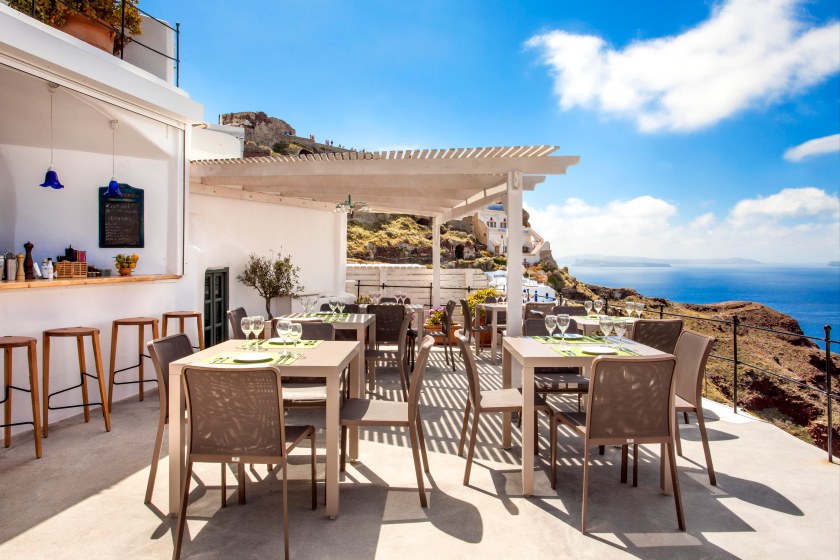
imageIoulia Mavrelou works in her family’s hotels. One, the ESPERAS, is a dream destination on the beautiful island of Santorini, with its black volcanic beaches, its town perched high above the sea and its stunning views. The other, the MYRTO, in the old quarter of Athens, Plaka, is at the moment undergoing renovation. Ioulia’s husband works alongside her and they have three young children.
Tell us a little about yourself.

I was born and raised in Athens by a rather conservative family. After school, I left to study Hotel Management at the Ecole Hôtelière de Lausanne. I also have a BA in Tourism and Hotel Management from Surrey University in the UK and an MBA from ALBA University in Athens

After my studies I worked in prestigious hotels in Europe and the USA, and I also taught Operations and Administration for Hotels at BCA University in Athens. In 2001 I returned to Greece full time, and became the Managing Director of my family’s HOTEL ESPERAS in Oia, Santorini, and later a VP of Operations at Hotel Myrto in Athens.

What were the major difficulties you’ve faced in the last five years?

It’s been hard, for reasons both economical and psychological. The fear people had of traveling to Greece due to the unstable economic and political environment meant we’ve had to face and overcome financial problems. Decisions made by Greece’s politicians result in continued uncertainty and distrust, so it’s a constant psychological roller coaster.

Did anyone in particular inspire you or help you?

During the last five years, my father and my husband have been the inspiration that drives me forward. My father taught me about hard work, and to be patient; to wait and to act at the right moment. My husband inspires me to pursue things until the end and not to give up.

imageWhat are your hopes/plans for the future?

I hope that the economic situation in Greece will become stable and that we will have the opportunity to grow our company.

What are your hopes for Greece? What changes would you like to see happen?

In my opinion radical changes need to be made in order for the country to survive. Unfortunately I don’t believe that any Greek government is willing to implement those changes in areas such as education, pensions etc. or to allow privatizations and implement measures to help entrepreneurship and allow the country to move forward.

Have you considered leaving? If so, where would you like to go, and why?

We are considering leaving as a family and moving to an English-speaking country since we feel that the adjustment will be easier, especially for our children. Of course, the fact that we work in our family business plays a major part in this decision, making it particularly difficult.

If you have already decided to leave, what would make you stay?

A complete and radical change in Greece, which would force the Greek people to change their ways as well.

Are you actively doing anything to help with the situation? Is there something more you would like to do?

I feel that I am – and have been all my life – doing my part as an entrepreneur by paying all my taxes and creating jobs for honest folks.
Tourism is a major source of income for Greece. In spite of all the difficulties, last summer was a reasonably good season for us and bookings have remained steady for 2016.

How do you see Greece in 5, in 10 years?

Unfortunately I see my country in the same situation if not worse than today. Observing the measures taken so far does not allow me to be optimistic.

How do you cope with obstacles and frustrations in your everyday life?

I am blessed to have a loving family and friends I can count on, who have been next to me when needed.

What are the positive sides of living in Greece? Have you had any good experiences lately?

The climate, our extended families and all the assets we have in Greece are the biggest reasons for staying. The summer vacation I spent with my family were exactly what holidays by the sea should be…

imageIoulia kindly agreed to be the Guinea pig for this feature, so any comments about improvements are welcome. If you want to see the site of the stunning ESPERAS HOTEL, just click on the name.