My best books of 2025

As the year draws to a close, I though I’d make a short list of the best books I read this year—the books I personally liked best, because obviously opinions differ. I was inspired by Jacqui Wine’s Journal—I’ve followed her for years, because our tastes coincide, and I’ve had many wonderful recommendations from her over time. If you haven’t come across her Blog, I urge you to take a look, especially if you are a fan of solid storytelling and excellent writing. She also often revisits old favourites, as well as books in translation. 

Since I do like variety in my reading, my list is quite eclectic. Here are the ten I savoured most, not in any particular order. 

Wild Thing, by Suzanne Prideau, a truly exceptional life of Paul Gaugin, which I reviewed a little while ago Here

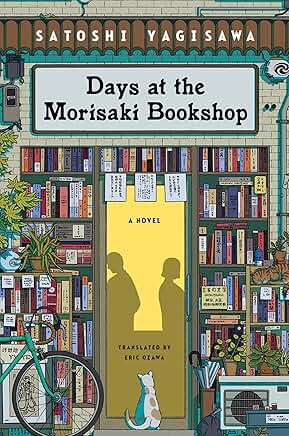
Days at the Morisaki Bookshop and More Days At the Morisaki Bookshop, to coincide with my trip to Japan. Life in Tokyo through the eyes of a young woman. Amusing and different (and a cool cover!). Buy it: Here

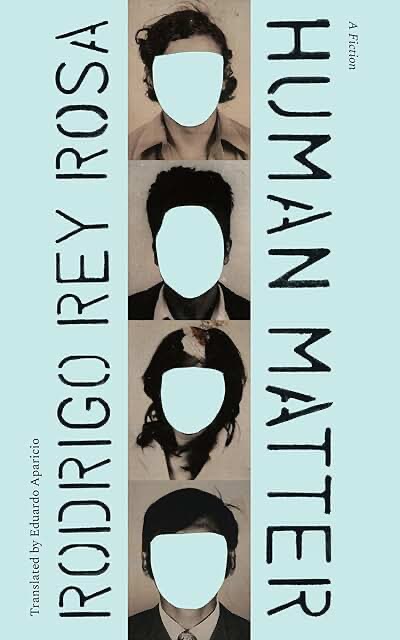
Human Matter, by Rodrigo Rey Rosa, a well-known Guatemalan writer. A semi-autobiographical dive into the realities of a dictatorial regime, seen through its bureaucracy. Engrossing if harrowing. Here

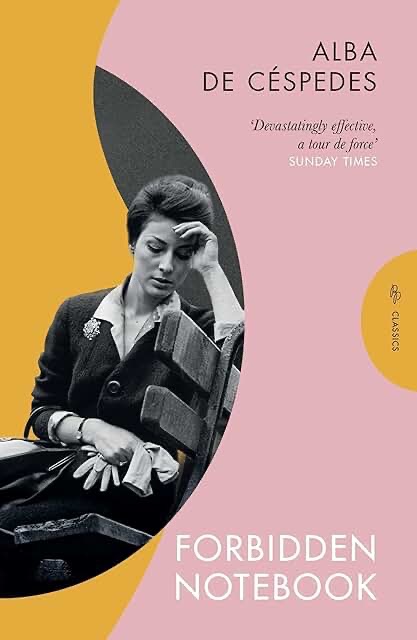
The Forbidden Notebook, by Alba de Cespedes. One of Jacquie’s suggestions, about the  daily life of an Italian housewife in the 50s. Fascinating. Here

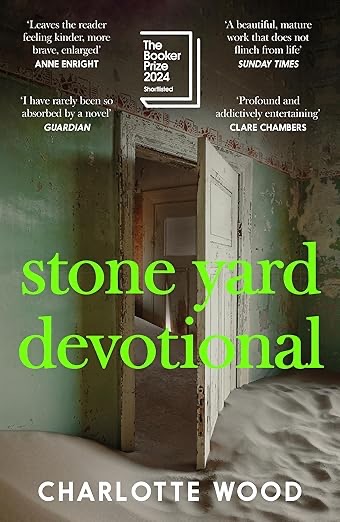
Stone Yard Devotional, by Charlotte Moore. One of the Booker Prize shortlist for 2024. Very original and atmospheric. I got caught up in a very absorbing story. Here

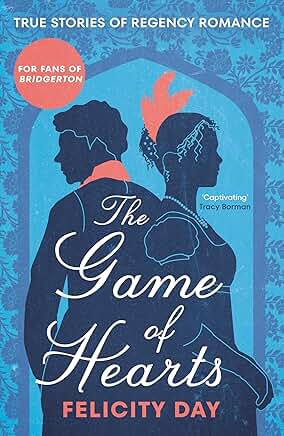
The Game of Hearts, by Felicity Day. Part of my research into the Regency era. The stories of real women of that time—often, truth is stranger than fiction. Or more amusing. Here

Longbourn, by Jo Baker. Pride and Prejudice from behind the mirror: the daily life of the Bennet household as seen through the eyes of their servants. Here

Horse, a novel, by Geraldine Brooks. A great story told over two time lines, based on the real champion thoroughbred Lexington. With added enjoyment for people who love horses. Here

The Safekeep, by Yale Van Der Wooten. Another book shortlisted for the Booker Prize, this is an original story of the developing relationship between two very different women staying in the same house in the Dutch countryside during the summer of 1961. It is well plotted and in turns mysterious and unnerving. Here

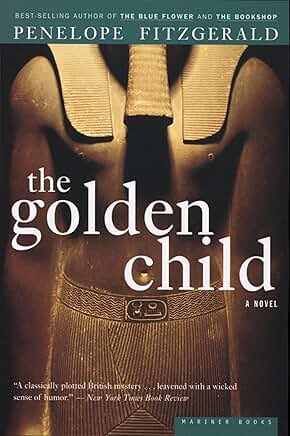
The Golden Child. I love Penelope Fitzgerald and this was one that, most surprisingly, I had not read. Like an immersion in a warm bubble bath. Did not disappoint. Here

Add to those a couple of thrillers, some Regencies (good and not so good), and a handful of crime novels (I especially enjoy those of Vaseem Khan, set in India with a most interesting policewoman heroine.) I’ve also been reading books by people whose blogs I’ve been following for years and who have been most supportive of my own book. They’ve been on my TBR list for a while, but—so many books, so little time, as I keep repeating.

Well, I do hope some of the above will appeal to you. Happy reading! (Or perhaps you’ve e read them all?)

In praise of Penelope Fitzgerald

My days, darkened by the quasi-permanent absence of sunlight, were unexpectedly lit up by the discovery I had somehow missed reading a couple of Penelope Fitzgerald’s books, although she has long been one of my favourite writers.

Penelope Fitzgerald died in 2000 aged 83. In 2008 The Times listed her among “the 50 greatest British writers since 1945”. The Observer in 2012 placed her final novel, The Blue Flower, among “the ten best historical novels”, and A.S. Byatt called her, “Jane Austen’s nearest heir for precision and invention.”

Fitzgerald’s books are short, but within a few pages her prodigious powers of imagination create whole worlds. In The Beginning of Spring, she manages to describe the minutiae of life in pre-Revolutionary Russia as if she had been born there. But the research is worn so lightly it is imperceptible.

The Blue Flower, about the poet Novallis, has always been one of my favourite books. Based on the life of Friedrich von Hardenberg (1772–1801) it describes the time when, aged 22, before he became famous under the name Novallis, he became mystically attracted to the 12-year-old Sophie Von Kühn, an unlikely choice for an intellectual of noble birth given Sophie’s age and lack of education and culture, as well as her physical plainness and negligible material prospects. The couple became engaged a year later but never married as Sophie died of consumption a few days after her 15th birthday. The book is sad, subtle and romantic.

One of the books I had not read yet is The Golden Child, which is actually a murder mystery (she did not include it in her novels) with such a biting sense of humour that I found myself laughing out loud. The book is set in a museum, where “Even in total silence one could sense the ferocious efforts of the highly cultured staff trying to ascend the narrow ladder of promotion.” A perfect phrase if there ever was one. Or the description of the characters, even their names: “Hawthorne-Mannering, the Keeper of Funerary Art, was an exceedingly thin, well-dressed, disquieting person, pale, with movements full of graceful suffering, like the mermaid who was doomed to walk upon knives. Born related, or nearly related, to all the great families of England (who wondered why, if he was so keen on art, he didn’t take up a sensible job at Sotheby’s), and seconded to the Museum from the Courtauld, he was deeply pained by almost everything he saw about him.”

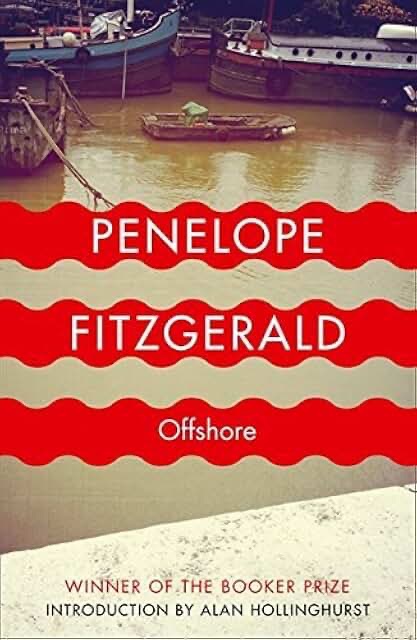
Her third novel, Offshore, won the Booker Prize in 1979. Based on her own years of living on an old sailing barge moored at Battersea Reach, it is about the mixed emotions of houseboat dwellers who live between the water and the land, fully belonging to neither.

Although she launched her literary career late, at the age of 58, Fitzgerald wrote nine novels, plus several biographies, short stories and articles. She had a hard life because due to her husband’s alcoholism she faced poverty, living for years in a houseboat which sank twice, and in public housing. She taught until the age of 70. Would she have been as good if she’d had an easy life? I think probably yes, because she was born in a scholarly family: she was the daughter of Edmund Knox, later editor of Punch, and Christina, daughter of Edward Hicks, Bishop of Lincoln and one of the first female students at Oxford. She was a niece of the theologian and crime writer Ronald Kox, the cryptographer Dillwyn Knox, the Bible scholarWilfred Knox, and the novelist and biographer Winifred Peck. She obviously also had great inherent talent.

She remains a unique, luminous voice in the literary firmament. I highly recommend her to anyone wanting to immerse themselves in her world.