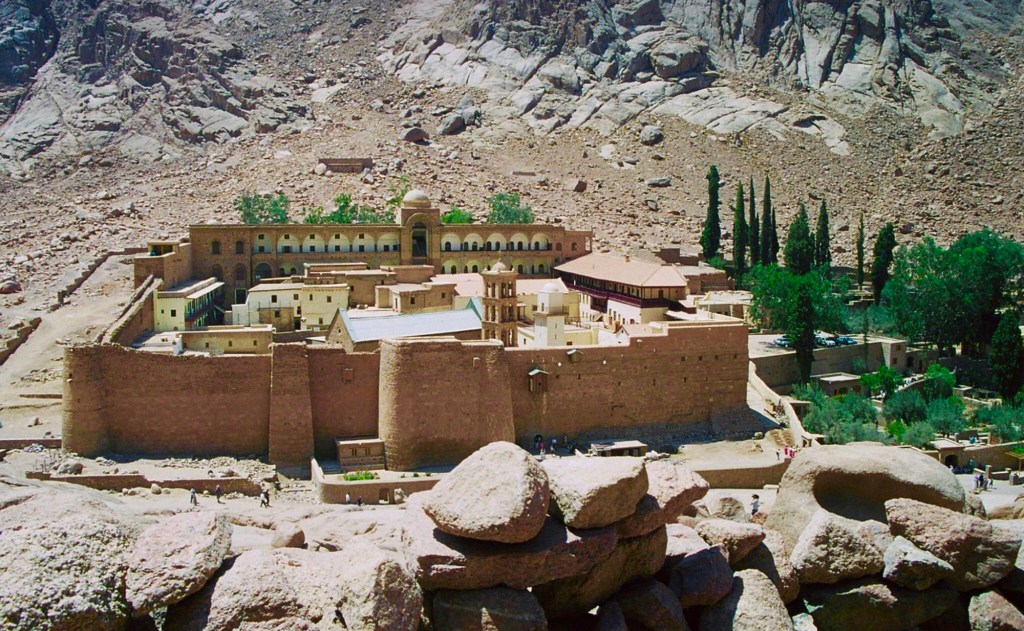
There is great alarm in the Greek Orthodox Church about the fate of Saint Catherine’s Monastery, which is situated at the foot of Mount Sinai, in Egypt.
The monastery, built in the 6th century by the order of the Byzantine Emperor Justinian the First, is the oldest monastery in Christendom. Continually inhabited by monks, it contains what is thought to be the Burning Bush seen by Moses and possesses numerous rare works, such as the Codex Sinaiticus and the Syriac Sinaiticus, as well as a wonderful collection of early Christian Icons and illuminated manuscripts.
The site is considered sacred by the three major Abrahamic religions: Judaism, Christianity and Islam. It became a World Heritage site in 2002.
Last week an Egyptian court ruling decided the lands around the monastery should revert to Egypt, and there were even rumours that Egypt intends to turn the monastery into a museum. These rumours were swiftly denied, however the uncertainty about the monastery’s status quo remains.
A delegation from Greece has met with their Egyptian counterparts and discussions are under way, which are delicate due to the many legal complications as well as the interests involved. The Church obviously wants to preserve the status quo, but the Greek government (heavily criticised by the opposition for delays in solving the issue which has been looming for a while) also wishes to preserve good relations with Egypt.
If the ruling stands, the monastery risks losing the lands around it which are essential to its daily functioning and, ultimately, its survival, including gardens with water springs, orchards and olive groves. Unfortunately, these lands are coveted for touristic expansion.
As in all such cases which have to deal with geopolitical issues as well as financial interests, much politicking will be going on, with each side trying to gain as many advantages as possible.
The hegoumen of Saint Catherine’s, Archbishop Damianos, has been very active in his leadership of the monastery, including organising a digital archive of the monastery’s manuscripts, establishing the first Greek University in Egypt, fostering interfaith dialogue and preserving the monastery’s rich spiritual and cultural traditions.
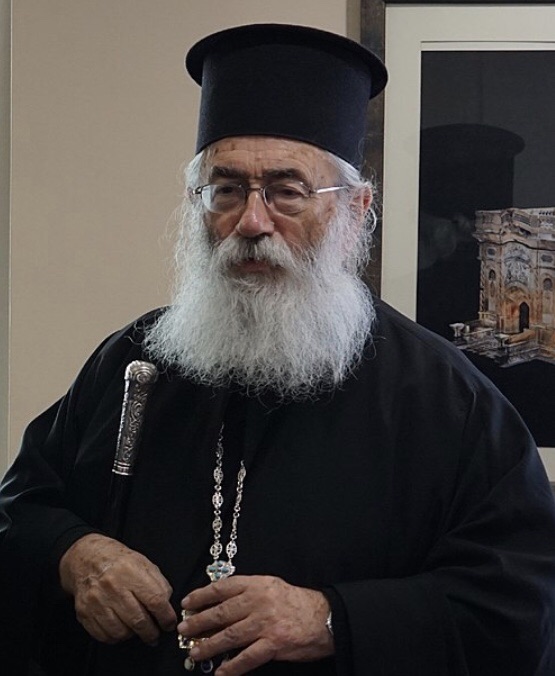
In 2004, the Benaki Museum in Athens organised a wonderful exhibition of masterpieces from the monastery, including icons, mosaics and manuscripts. These were also later shown at the Metropolitan Museum in New York. After the opening of the exhibition, there was a small diner in an Athenian restaurant, where I had the honour to be seated next to Archbishop Damianos.
I have to confess I was a little overwhelmed at first. An Orthodox priest—long black robes, long black beard, long black hair tied in a bun, embroidered vestments and a gold cross. What on Earth would we find to talk about for the next two hours? Well, I soon changed my mind. He was the most wily, charming, educated, well-travelled and well-read man, as well as a superb raconteur. A dinner I will never forget. I hope he gets to keep his monastery.
 Letters from Athens