Some years ago, while rooting around an antiques shop in Suffolk, we came upon an amusing little painting of six officers in red coats, seen from the back, with a small dog peeping between their legs. We bought it for the modest sum of, if I remember well, £20, and it is now on the wall of our coatroom.
I must admit it is a very good copy, down to the last detail
Sadly, no, it did not turn out to be a mislaid Rembrandt. But imagine my surprise when, visiting an exhibition at our local cultural centre, Les Franciscaines, I saw the original! Which is ten times the size of ours.
1839. Oil on canvas
The artist is called Félix Philippoteaux (1815-1884) and the painting, The Duke of Orléan’s Gentlemen. It portrays six of the duke’s officers, seen from the back, who were easily recognisable by their contemporaries simply by their height, demeanour and, of course, their distinctive clothing. The men formed the duke’s close entourage and were an essential part of life at court, following him on his travels from château to château.
This anecdote apart, the exhibition was entitled Seen from the back, and contained an interesting mixture of periods and styles, of people painted, or photographed, from the back. This view has been used by many painters over time, to illustrate situations and moods.
See, for example, the wonderful feeling of peace conveyed by the painting below. The shutters have been closed against the midday heat and bright light, giving off a subtle lavender gloom.
The closed shutters, Elisabeth Nourse (1859-1938)
Workmen were also often portrayed from the back, as in the famous painting by Gustave Caillebotte, Les raboteurs de parquet. Here we have workers in the industry which was the origin of Venice’s wealth: salt, or the “white gold.”
Les porteurs de sel à Venise, Bernard de Gironde (1843-1926)
In the painting below, we have the crowd looking at a luminous fountain at the 1889 Exposition Universelle, in Paris. Where, as regular readers will remember from a previous post, Rosa Bonheur met and painted Buffalo Bill.
Ernest Auge Duez, 1843-1869
Henri de Toulouse-Lautrec shared a love of dancers and horse racing with his friend Edgar Degas. This lithography is a masterpiece of mouvement—horse and rider as one in a supreme effort. Notice the interesting and daring viewpoint.
The Jockey , Henri de Toulouse-Lautrec (1864-1901)
And for something more modern, an oil painting of a nude model by Raoul Dufy.
The model in the Studio, Raoul Dufy (1877-1953)
Although I cannot say I like it, I include this highly weird, if not downright disturbing, surrealist photo by Joel-Peter Witkin (1939-) It is supposed to be a version of Ingres’s La baigneuse de Valpinçon. The violin holes have been replaced by scars which suggest that a pair of wings have been torn out.The maimed back is an allegory of the loss of liberty.
A woman once a bird, silver print
The exhibition was beautifully curated and featured many other interesting works. As for the Franciscaines itself, it is a stunning cultural centre which hosts regular high-quality exhibitions, concerts, talks and other events. It contains over 30.000 books and films which can be borrowed, has plenty of comfortable nooks and crannies in which to enjoy them on the spot, organises children’s workshops and also has a lovely informal restaurant and a shop with books and gifts.
Above is the central hall, a place usually full of people reading the papers and magazines on offer, kids perusing BDs (bandes dessinées, or comic books and graphic novels which the French adore), even people lounging or having a quick snooze on the sofas.
The place was built in 1875 as an orphanage for the children of men lost at sea. It was run by a Franciscan order of nuns and served as a hospital during the first war. Following various changes, the nuns moved to a new building in 2011 and the place was acquired by the city of Deauville. After major work was done by the brilliant architect Alain Moatti, the object being to put all sorts of cultural objects—be it books, art, music etc—at the reach of the public, it was inaugurated in 2021. It has been a huge success, and I encourage any visitors to Deauville to go and see it.
I know Regency romance is not to everyone’s taste, so for those of you not interested, you can stop right here.
Publishing is a steep learning curve. It is frustrating, slow, but also interesting and fun. In my search for information and improvement, I have joined the Authors Guild of America, where there is a very active and varied community of authors, all connecting and asking for and giving advice to each other. I have learned much from there.
The idea that if you can get an agent to take you on, you are invited to a posh lunch and thereafter everything is done for you has been firmly squashed. Unless you are Margaret Atwood, or a celebrity with a misery memoir to sell (Prince Harry, perhaps?) Stories abound of people being fired by their agents, agents unable to sell to publishers and so on. Even if the publisher acquires your book, nothing is secure. Publishers go out of business, the editor assigned to you leaves and the replacement hates your book, they publish but it does not sell…
Of course, you can always self-publish. But I have always had a niggling feeling that if nobody wants to take on your debut, it is probably not polished enough yet, or not good enough. Once you know the ropes, things will become easier. But self publishing is expensive, unless you are an expert at editing, proofreading, cover design, formatting, etc. Otherwise you have to hire people to do all these things.
And after all that, once your book is actually on the market (drum roll!) you still have to sell it. Again, unless you are a well-known author guaranteed to sell thousands of book, you can forget about book tours and organised readings paid for by your publisher. Also every single publisher expects you to take an active part in selling your book which, as I have slowly been finding out, consists of the dreaded social media, blog tours, getting your friends to review your book (much harder than expected) and other stratagems, such as paying for Amazon or Facebook ads. And your options depend on where you live—are there book fairs in your vicinity, friendly bookstores or libraries? In my case, none of that is available, since I live in the French countryside and I don’t think I know anyone who reads in English! Luckily there is plenty of advice to be found online.
Misunderstandings, banter and romance. Read it by joining my Reader’s Club
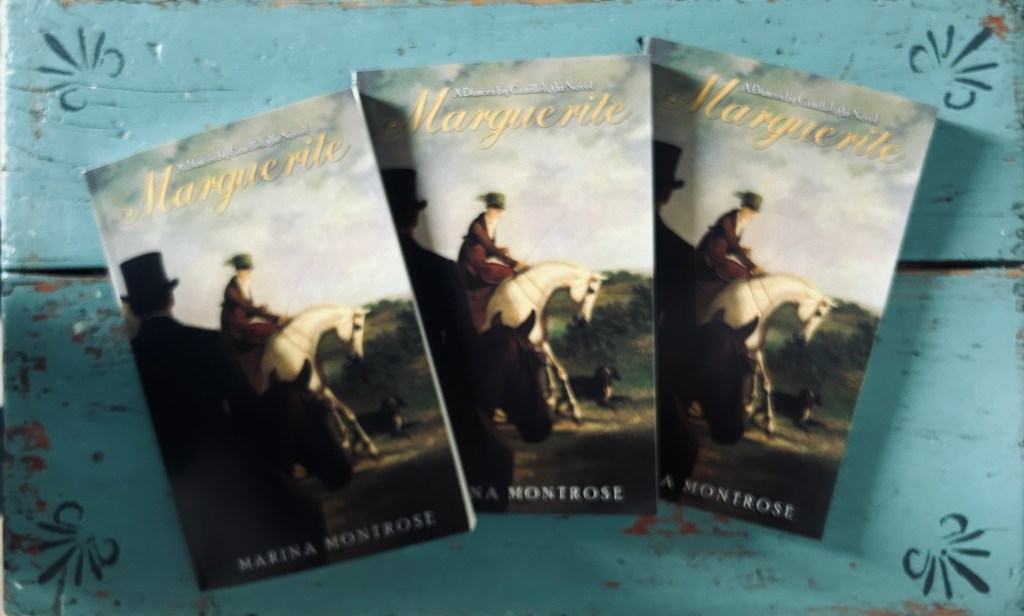
I was thrilled when I landed my publisher, Cupid’s Arrow, who are a small indie outfit in San Jose. They are lovely people, but overwhelmed by having to do it all themselves. Communication is slow. Information hard to get. And you mostly have to deal with your own problems. But the printed copies are great, especially the hardback (I was not expecting them to have hardbacks available.) My editor, Lisa, is wonderful.
I am not expecting to make much money out of this, but I do need to sell enough copies so that the publisher will take on the next book in the series. I have therefore applied myself to marketing the (damn) thing.
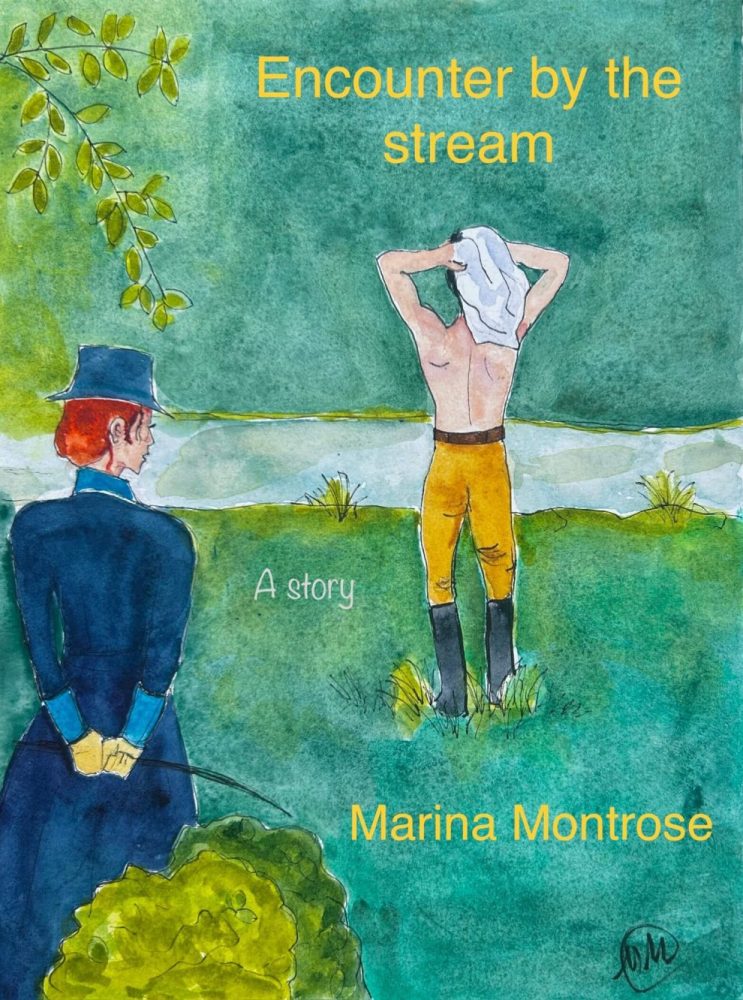
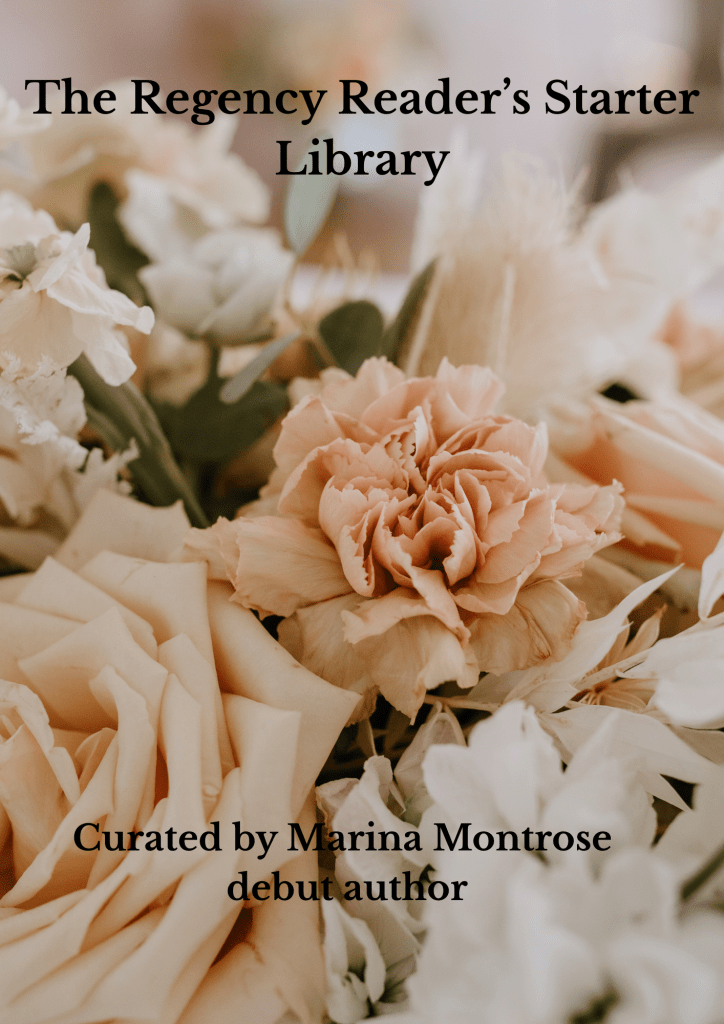
The Authors Guild provides members with tools to build a simple website for free, and human help where needed (shoutout to Hector, my saviour in hard times.) Within the website, I have set up a Reader’s Club, where subscribers can sign up to get freebies (extra content, short stories etc.) and news of upcoming publications. At the moment I am offering a free short story plus a curated list of books. If interested you can join here
I also set up an Instagram account and try to produce ‘content’ (who knew I would be getting into this at my age—but it’s actually quite fun, once you get around the tech.) The account is called mmontroseauthor Here is a post
I hope you are suitably impressed, and that some of you will join the Reader’s Club and/or take a look at my IG account. If you do, please let me know your thoughts. I always welcome feedback and comments, as you know.
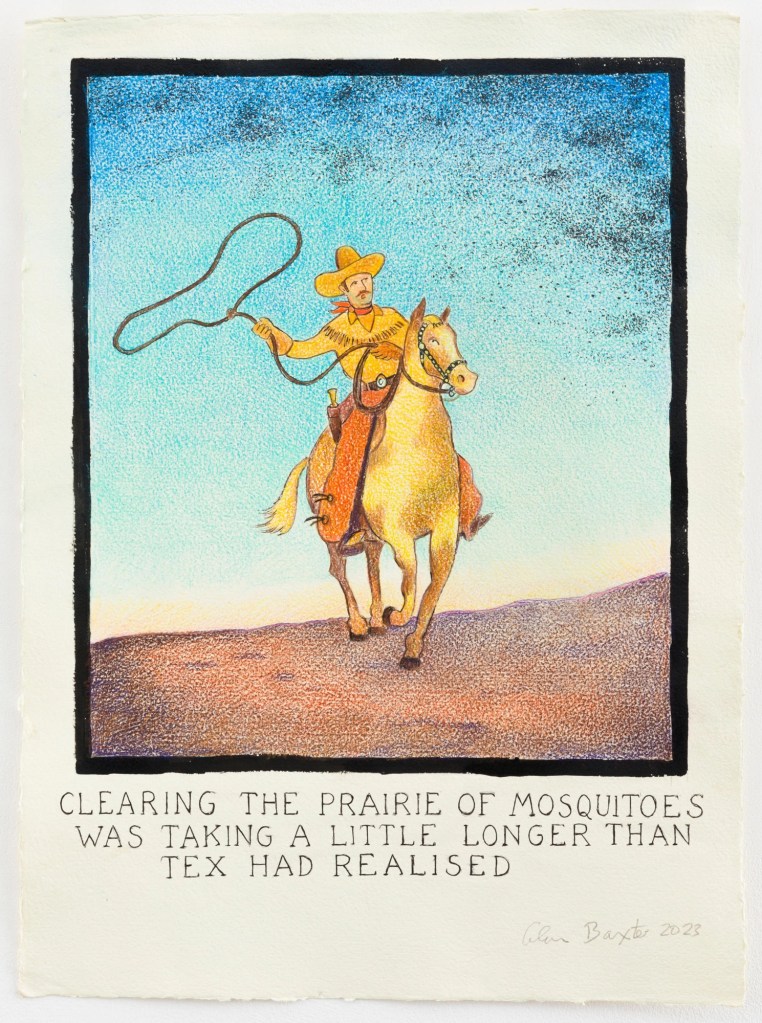
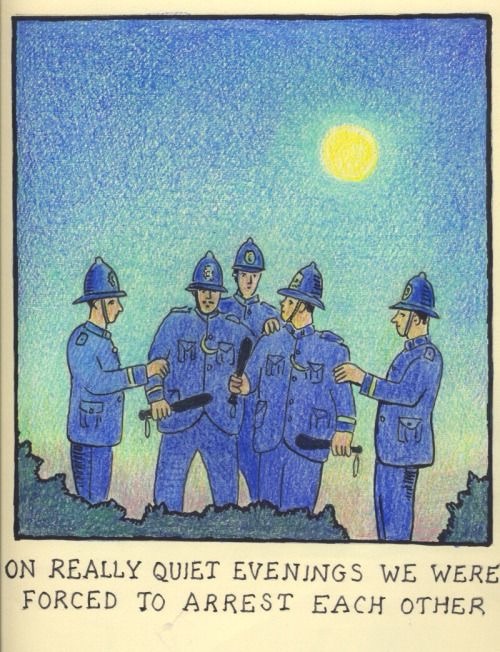
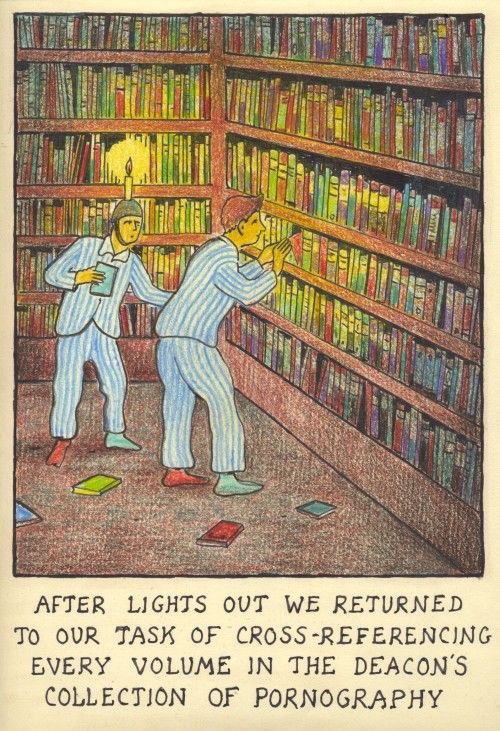
I am a huge fan of cartoons and comic strips and Glen Baxter, who passed away aged 82, was a big favourite.
Glen Baxter created a surreal artistic universe populated by erudite cowboys, tweed-clad empire-builders and malevolent Boy Scouts. His fame was higher outside England where he was considered a modern Surrealist Master. At home he sadly often fell into the funny greeting-cards category.
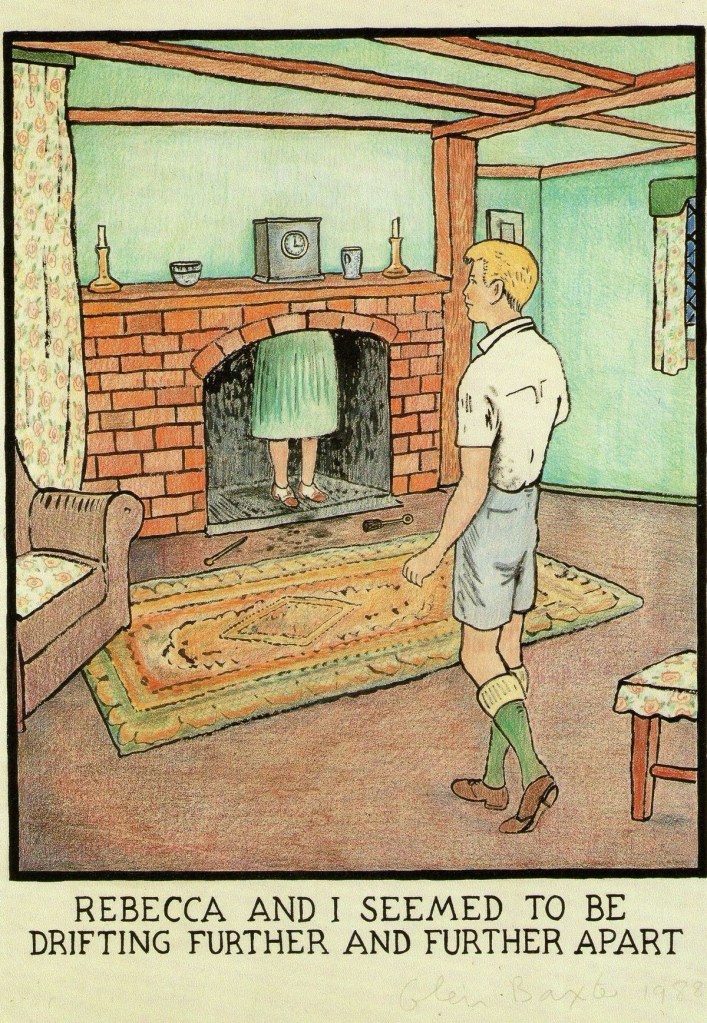
His drawings relied for their offbeat humour as much on their absurd deadpan captions as on the artfully simplistic drawings.
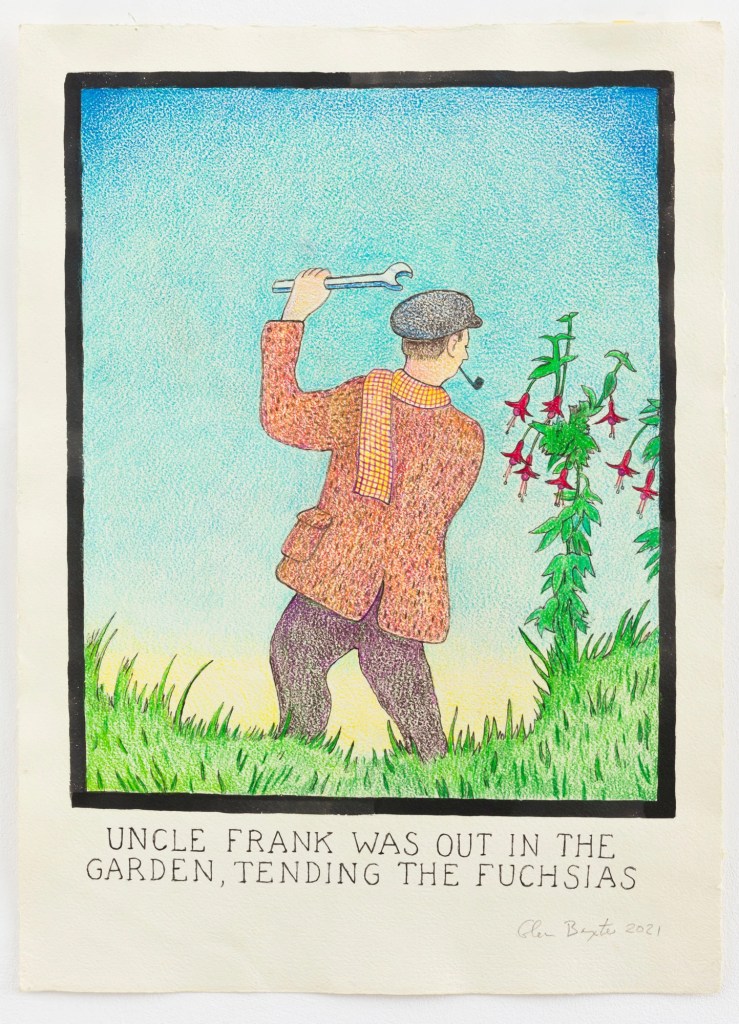
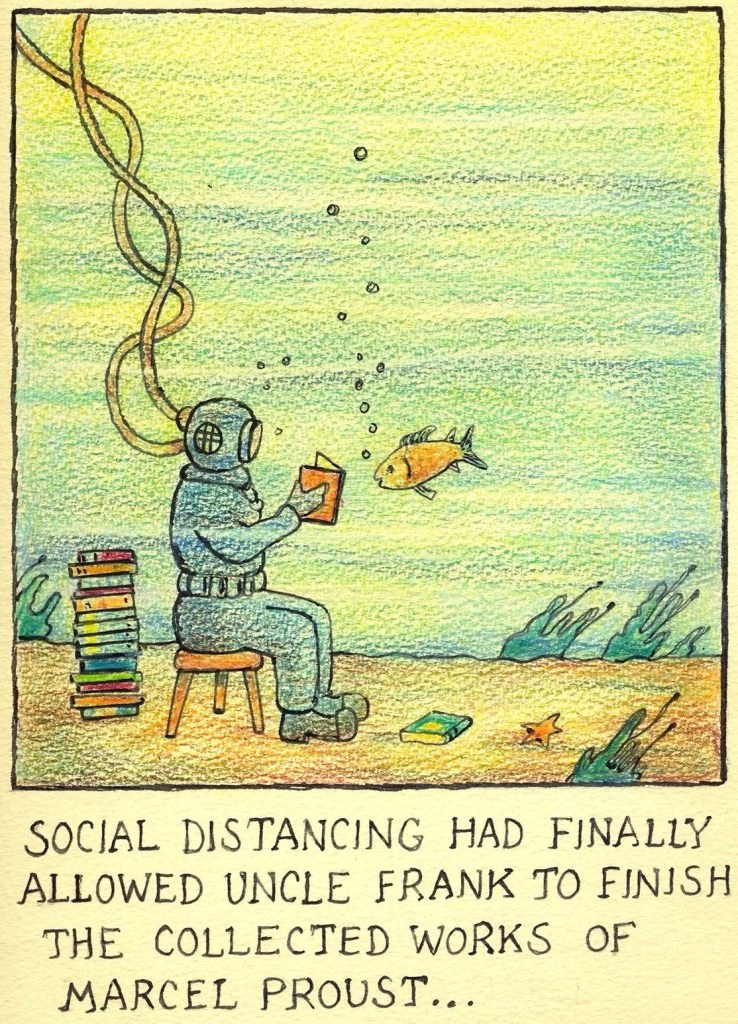
Often the drawings themselves were offbeat, such as the one featuring a man sawing off his own leg in front of two children, with the caption “Uncle Frank would keep us amused for hours”
Look at the image above: the bottom half of the lady inside the chimney suggests she is stolidly middle-aged, while the ‘husband’ looks like a teenager in his shorts. Can’t you imagine Baxter sitting at his work table thinking up all this nonsense? Not a bad day job…
Some images would depend for their effect wholly on the caption: two co-habitees glowering at each other: “The tension at No 83 had been almost unbearable ever since Eric had deliberately swallowed Toby’s anorak.”
Baxter was inspired by pulp fiction and old adventure comics which he combined with literary nonsense. The delightfully old-fashioned pictures depict incongruous characters such as cowboys, explorers and Boy Scouts uttering intellectual statements regarding art and philosophy.
This is probably not to everyone’s taste, but I love his work. And for those interested, here is a fun interview about his life and aspirations.
Happy Easter to all those who celebrate today (Greek Easter is next week.) Here’s an Easter Bunny to cheer you up.
And don’t we all cheering up. Reading the news this morning, I was appalled again. I ask, is an American life worth more than an Iranian, Ukrainian, Haitian, (etc, you get my drift) one?
Every time there is a missile or drone strike, civilians die. Or loose their loved ones. Or their homes. While, let’s face it, others enrich themselves.
Little big boys should stop playing with their guns.
The weather refuses to improve yet, and we are treated to endless rain and waterlogged grass. So I took refuge in poetry, and I would like to share this poem by Louis MacNeice, which evokes the ephemeral pleasures of life. It is lyrical and sad, exploring themes of time, memory and loss.
I particularly like MacNeice’s mastery of the poetic form in the poem’s distinctive rhyme scheme and rhythm. The poet was anxious about the darkening political situation evolving in Europe at the outbreak of the Spanish Civil War and he evokes a sense of impending destruction. The allusions are vague and a modern reader can surely adapt them to his or her own experience.
Detail of JMW Turner’s painting, The Sun Rising over water (1825-30)
While sorting out my camera roll I came upon various photos that I had saved out of interest. I thought I might share some of them.
Although this print is reproduced on many sites about Venice, I could not find out where to credit it…
This one in particular fascinated me, especially after our recent trip to Venice.
It shows how the millions of wooden poles upon which the city was built were placed. The wood was transported from surrounding forests via the rivers. It does not rot but, when it comes into contact with the clay mud at the bottom of the lagoon, becomes petrified. The construction process itself is awesome.
19th century carved ivory netsuke depicting a mouse traveller. Netsuke originated in the 17th century, starting as useful accessories for fastening a pouch to a kimono, for example, but evolving into an art form. This one is attributed to Giyokuseki.
I am in awe of this simple drawing of a glass (pencil on paper). By the Spanish artist Isabel Quintanilla (1938-2017)
An astonishing Roman marble bas-relief, depicting a midwife assisting a woman having a baby. I have never seen anything like it before, and I think it is lovely. What a feat, to convey such an atmosphere of serenity in stone.
I could not resist adding a couple of cartoons I had also saved, because what’s life worth without a good laugh? The one below is from the New Yorker.
Vivienne very kindly hosted me on her blog, Aspholessaria , and I am happy and honoured to return the favour. She writes mostly fantasy, which has not been my cup of tea so far, but I will now give it a try! I have already heavily promoted her to members of my family who are fans. And I have put her Viking books on my TBR list.
Here’s a bit about Vivienne:
V.M. Sang was born and lived her early life in Cheshire in the north west of England. She has always loved books and reading and learned to read before she went to school.
During her teenage years she wrote some poetry, one of which was published in Tecknowledge,the magazine of the University of Manchester Institute of Science and Technology (UMIST). Unfortunately, that is the only one that is still around.
V.M. Sang became a teacher and taught English and Science at her first school.
She did little writing until starting to teach in Croydon, Greater London. Here she started a Dungeons and Dragons club in the school where she was teaching. She decided to write her own scenario. The idea of turning it into a novel formed but she did nothing about it until she took early retirement. Then she began to write The Wolves of Vimar Series.
Walking has always been one of V.M. Sang’s favourite pastimes, having gone on walking holidays in her teens. She met her husband walking with the University Hiking Club, and they still enjoy walking on the South Downs.
V.M.Sang also enjoys a variety of crafts, such as card making, tatting, crochet, knitting etc. She also draws and paints.
V.M.Sang is married with two children, a girl and a boy. Her daughter has three children and she loves to spend time with them.
She now lives in East Sussex with her husband.
⭐️
Unlike me with my one measly novella, Vivienne has been very prolific, and you will find links to her books below, and of course on her website. Here I would like to mention her novella, The Making of a Mage. It’s one of the Wolves of Vimar prequels and tells of the early life of Carthinal, one of the main characters in the series.
Blurb: Carthinal is alone in the world. His parents and grandparents have died. Without money and a place to live, he faces an uncertain future.
After joining a street gang, Carthinal begins a life of crime. Soon after, he sees a performing magician, and decides he wants to learn the art of magic.But can he break away from his past and find the path to his true destiny?
⭐️
And now onto our interview:
1. You have been very prolific. Do you spend many hours writing every day?
Not really. I’ve been rather bad recently and hardly written anything except a few poems. I think it’s because I’ve finished Book 4 of The Wolves of Vimar (Immortal’s Death) and am stuck on another couple of projects.
2. Do you finish one project before starting another, or do you have a few things on the go at once?
I usually have more than one thing on the go. I’ve started Book 3 of my Historical Novel series and I’m also writing a series of short stories inspired by fairy tales. The second story is going through a critique process at the moment and I’m partway through the third one. I’m also writing some poetry as I’ve been asked to submit some for an anthology.
3. Who is your favourite author/book?
Usually the last one I’ve read!
But seriously, I enjoy Fantasy and Science Fiction. I loved the Wheel of Time by Robert Jordan, but there are so many books and excellent writers.
One of my special favourites is Diana Wallace Peach. She writes fantasy in such a beautiful way.
4. If the above is not a classic, what is your favourite classic book?
I think Wuthering Heights by Emily Bronte. She builds such a wonderful picture of the moors. Maybe I like it because of that. I used to live not far from that country and walked many times in my teens on those bleak moorland hills. Although they aren’t always bleak! In the heather season they are quite beautiful.
5. When we were children, Enid Blyton kept us up at night (with a torch under the covers) She is much criticised now, but she got many kids to read—as did JK Rowling, who is also criticised. I believe that is so important, above other considerations. Are your books read by children? Or teens and young adults?
I wholeheartedly agree with you about Enid Blyton. I loved her books when I was growing up, and they instilled a love of books in me.
I don’t consciously write for a particular age. My Elemental Worlds has been marketed as Young Adult. Someone said they thought Vengeance of a Slave was YA, but I disagree with that.
My books aren’t read by children. They are too long for a start, and I don’t think the language is children’s language. I don’t simplify words. Most YA books are also shorter than mine.
So no. They aren’t children or YA books.
6. If you have a proper job, what is it?
I used to be a teacher until I retired. Now I enjoy life! (If you get the chance to retire early, do so!)
7. Why do you write?
There are stories in my head trying to get out. I think they’ve always been there. I made a little ‘fairy’ out of grass and told my sister tales about her, and I told myself stories at night to help get to sleep. (What does this say about my stories if they put me to sleep?)
I wrote a very bad romance when I was in my teens, and read it to my long-suffering friends. They were very kind about it.
So I think I write to get these stories out of my head.
8. Why do you write fantasy?
When I was a student, I was doing teaching practice when a nine year old boy, with the wonderful name of Fred Spittal, asked me if I’d read Lord of the Rings. I hadn’t, and he recommended it, but said I should read The Hobbit first. I found both in the College Library and from there I was hooked. I read a lot of the fantasy that was around at the time and loved the way the authors built worlds out of their imagination. It’s still one of my favourite parts of writing fantasy.
9. From your About page, I know you love dogs. Do you have any pets at this time?
I don’t have any pets at this time, no. I didn’t think it was fair to have a dog while I was working as it would have to be left alone all day. Not good for a dog, which is a pack animal and needs company. After retirement we were going away a lot, so didn’t have any pets.
Growing up I had two dogs (not at the same time) a border collie, whom I called Laddie, and a corgi called Johnnie. I also had a budgerigar called Peter who was an amazing talker.
My stepfather was a farmer on the Cheshire/North Wales border and so there were plenty of animals around. There were the farm dogs, of course, and I had a cat called Frances who would sit on my shoulder. She was lovely.
Later, well after I’d married and had children, we had goldfish and three cats, although my husband doesn’t like cats!
10. If you could meet any three people, alive or dead, who would they be and why?
I would love to meet Leonardo da Vinci. Such a clever man–an artist, an engineer, a scientist, a medical researcher and more. We visited his chateau in Amboise, France and saw his inventions brought to life using only tools and materials from his day. Quite amazing.
You say three people. Someone I had (along with Leonardo) a picture of on the wall of my lab in school was Stephen Hawking. He was incredible. Not only did he have an amazing brain, but to do all he did with such a severe disability as Motor Neurone Disease, was incredible. His determination must have been second to none.
Finally, no, not a writer, but an artist. Any of the Impressionists, I think, but having visited his famous garden, I think I’d go with Monet.
11. Do you enjoy sport? Do you prefer to watch or take part?
Yes, I do enjoy sport. I used to play tennis, badminton and the occasional squash game, and when my daughter was at school and my son was small, I used to attend a session at the local sports centre aimed at mothers. They had a creche for the kids and we did some aerobics then volleyball, badminton or basketball.
Now, I don’t partake, but enjoy watching most sports (not golf though).
12. There is a photo of a lovely flower painting on your site. Do you still paint a lot? Who is your favourite artist?
I think I’ve answered the second part of your question alreaedy. I adore the Impressionists. I don’t think I really have a favourite amongst them, though.
As to the first part, I’ve not done so much recently. I have one partly finished, but it’s in oils and I don’t like to do it indoors as it creates a smell. I’m waiting for the warmer weather so I can finish it!
13. Do you do any voluntary work? If so, what?
I don’t do any voluntary work at the moment. I did work in the small park behind our house until recently. The park had become very overgrown, the council only cutting the grass. I contacted them and they looked it up. They told me it was supposed to be a ‘community project’. It seems the original volunteers had either died, moved away or grown too old, so several of us took it over. It looked nice for a few years, then the same thing happened. People moved away, and became too old. There was only myself and my husband doing it, and we’re getting older and finding it increasingly difficult, especially the heavier jobs. We do very little now, except for the occasional cutting back of overgrown brambles that are blocking the paths.
14. What do you think is the biggest problem facing the world today?
I think there are two. One is increasing selfishness and the other is stupidity.
From the person wanting to park their car as near as possible to their destination, regardless of inconvenience to others, to governments and large organisations who trample roughshod over anyone and everyone who gets in their way. Often stopping them getting what they want, up to and including taking over other people’s countries in order to get at the minerals etc that are there.
And threatening the whole future of humanity in not accepting scientifically proven things like Climate Change. And it’s not only governments who are becoming stupid, either. Individuals seem to have lost the ability to think for themselves.
Sigh…
Thank you so much for answering all my nosy questions, Vivienne. I’m sure my readers will enjoy discovering your books—those that don’t know them already, that is. Fantasy is very much the flavour of the day!
⭐️
For those interested, I am including links to Vivienne’s books below:
Here’s wishing you all a happy, healthy and prosperous new year. And hoping for Peace on Earth, although it doesn’t seem very likely at the moment…But one must remain positive.
I seem to be in a poetic mood lately, so here’s a seasonal one by Robert Frost.
A Christmas circular letter by Robert Frost.
The city had withdrawn into itself And left at last the country to the country; When between whirls of snow not come to lie And whirls of foliage not yet laid, there drove A stranger to our yard, who looked the city, Yet did in country fashion in that there He sat and waited till he drew us out, A-buttoning coats, to ask him who he was. He proved to be the city come again To look for something it had left behind And could not do without and keep its Christmas. He asked if I would sell my Christmas trees; My woods—the young fir balsams like a place Where houses all are churches and have spires. I hadn't thought of them as Christmas trees. I doubt if I was tempted for a moment To sell them off their feet to go in cars And leave the slope behind the house all bare, Where the sun shines now no warmer than the moon. I'd hate to have them know it if I was. Yet more I'd hate to hold my trees, except As others hold theirs or refuse for them, Beyond the time of profitable growth— The trial by market everything must come to. I dallied so much with the thought of selling. Then whether from mistaken courtesy And fear of seeming short of speech, or whether From hope of hearing good of what was mine, I said, "There aren't enough to be worth while."
"I could soon tell how many they would cut, You let me look them over."
"You could look. But don't expect I'm going to let you have them." Pasture they spring in, some in clumps too close That lop each other of boughs, but not a few Quite solitary and having equal boughs All round and round. The latter he nodded "Yes" to, Or paused to say beneath some lovelier one, With a buyer's moderation, "That would do." I thought so too, but wasn't there to say so. We climbed the pasture on the south, crossed over, And came down on the north.
He said, "A thousand."
"A thousand Christmas trees!—at what apiece?"
He felt some need of softening that to me: "A thousand trees would come to thirty dollars."
Then I was certain I had never meant To let him have them. Never show surprise! But thirty dollars seemed so small beside The extent of pasture I should strip, three cents (For that was all they figured out apiece)— Three cents so small beside the dollar friends I should be writing to within the hour Would pay in cities for good trees like those, Regular vestry-trees whole Sunday Schools Could hang enough on to pick off enough.
A thousand Christmas trees I didn't know I had! Worth three cents more to give away than sell, As may be shown by a simple calculation. Too bad I couldn't lay one in a letter. I can't help wishing I could send you one, In wishing you herewith a Merry Christmas.
🎄And a very Merry Christmas from me too, to you all.
Talk about leaving something behind! Tom Stoppard, who has just died, aged 88, wrote—over the course of five decades—35 stage plays (including seven translations or adaptations of foreign work), 11 radio plays, 6 television plays, and 14 film and television adaptations of books and plays. An opus which will keep his memory fresh for years to come.
I am not about to write an obituary complete with all his life details. Every newspaper has done that, and writer, journalist and magazine editor Tina Brown, who knew him personally since she was a teenager (he lived close to them and was friends with her father) has posted a lovely eulogy on Substack.
Stoppard wrote great theatre because he wrote great dialogue, witty and argumentative. In his own words, ‘Writing plays is the only respectable way of contradicting oneself.’
Here is a description of him, from an obituary in the Guardian:
A tall and strikingly handsome man, with a long, bloodhound face, a thick tangle of hair and a casually assembled wardrobe of expensive suits, coats and very long scarves, Stoppard cut an exotic, dandyish figure, a valiant and incorrigible smoker who moved easily in the highest social and academic circles, a golden boy eliding into middle-aged distinction and never losing the thick, deliberate accent of his origins, even though he never spoke Czech. He carved out his career in his own always carefully chosen words. He was often thought to be “too clever by half,” but never patronised audiences by talking down to them, even if they had to work hard to keep up.
Stoppard lived a charmed life in England, something he was always grateful for, considering a large part of his family died in the camps. This part of his personal history he only got to research in later years.
In my case, I credit Stoppard for instilling in me an eternal love of the theatre. Not living in England, I sadly did not manage to see all his plays, but I made it a point to see as many as I could, and they remain vivid in my memory. The wit, the irony, the sarcasm, the erudition and, above all, the sheer enjoyment.
Rozencrantz And Guidenstern Are Dead, The Real Inspector Hound, Arcadia, India Ink…The list goes on. Wonderful actors, such as Bill Nighy and the incomparable Felicity Kendall, fantastic sets. A great director, for a lot of them, in the shape of Peter Wood.
He’s always been number one in my list of people to invite to an imaginary dinner party. May you rest in peace, Mr Stoppard, and thank you.