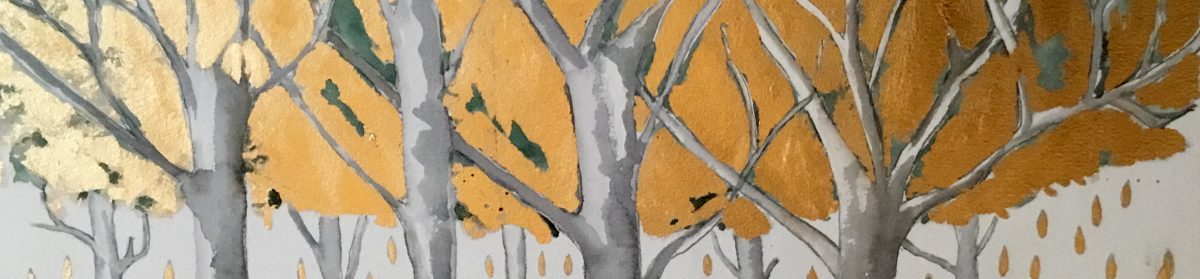
The year of the Fire Horse

On February 17, 2026, we officially entered the Year of the Fire Horse. In Chinese astrology, because the elements rotate alongside the animal signs of the Zodiac, the same combination returns only every 60 years. The Fire Horse is associated with intense momentum, restlessness and catalytic change. Well, one only has to read the news to realise that.

In honour of this, and to give it a more positive dimension, I decided to write about the horse in art. The horse has carried human civilisation upon its back: it has provided transport and entertainment, been a vehicle of agriculture and battle, a beloved and trusted companion, a spiritual presence and a symbol. As such, it has been depicted in art throughout the ages, in almost every culture.

It would take many volumes to include all, or most, representations of the horse in art. I will restrain myself, therefore, to some of my favourites, starting in prehistoric times.

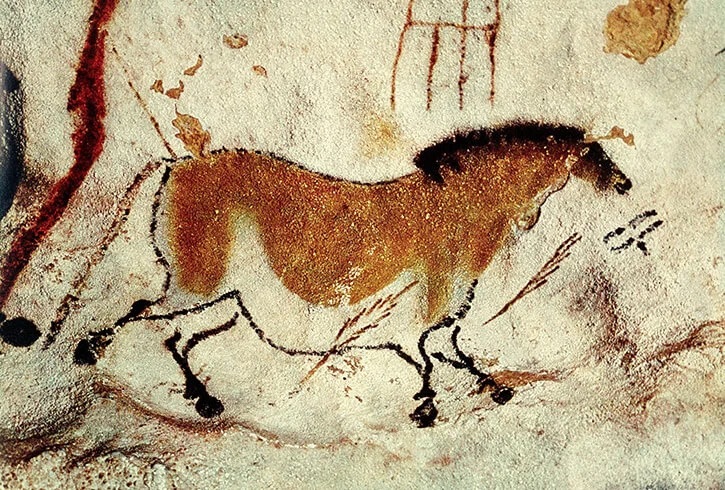
Stone Age occupants of Europe had a strange fixation on horses. Almost one in every three animals they depicted on cave walls was a horse. However, the reason why the horse loomed so large in ancient minds may remain forever a mystery.
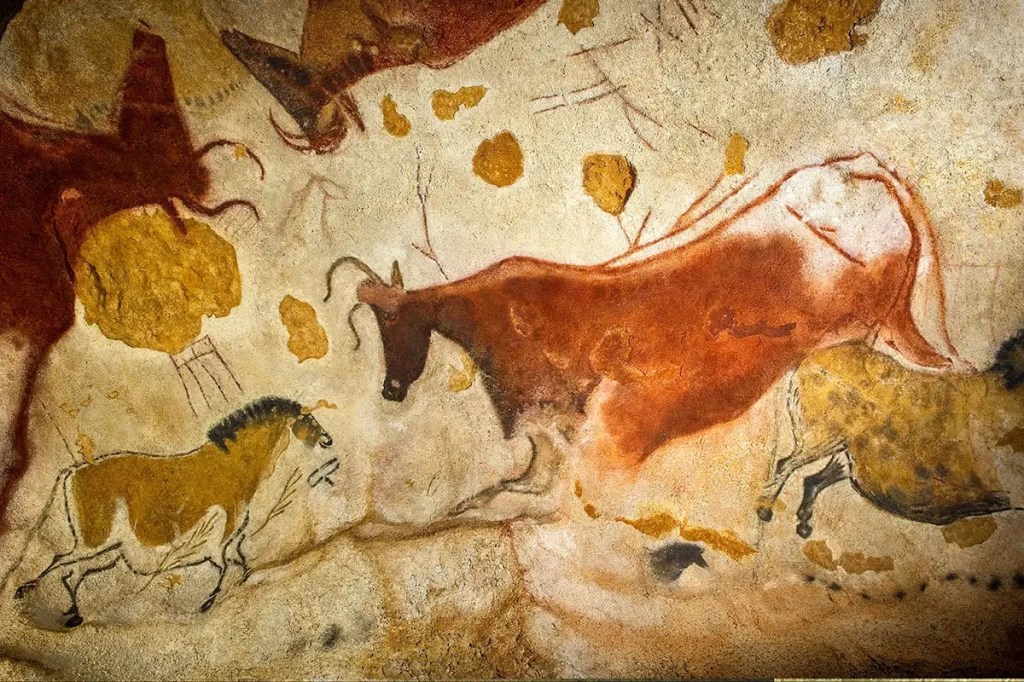
Some of the most famous cave paintings (but there are many, all over the world) are the those in the Lascaux network of caves in the Dordogne region of France. They are estimated to be roughly 17,000 years old.
Of course, horses could not be absent from Ancient Greek art, since they play a prominent part in mythology and history, from the flying horse, Pegasus, to Bucephalus, the beloved mount and companion of Alexander the Great. They figured in vases and plates, like the one below:
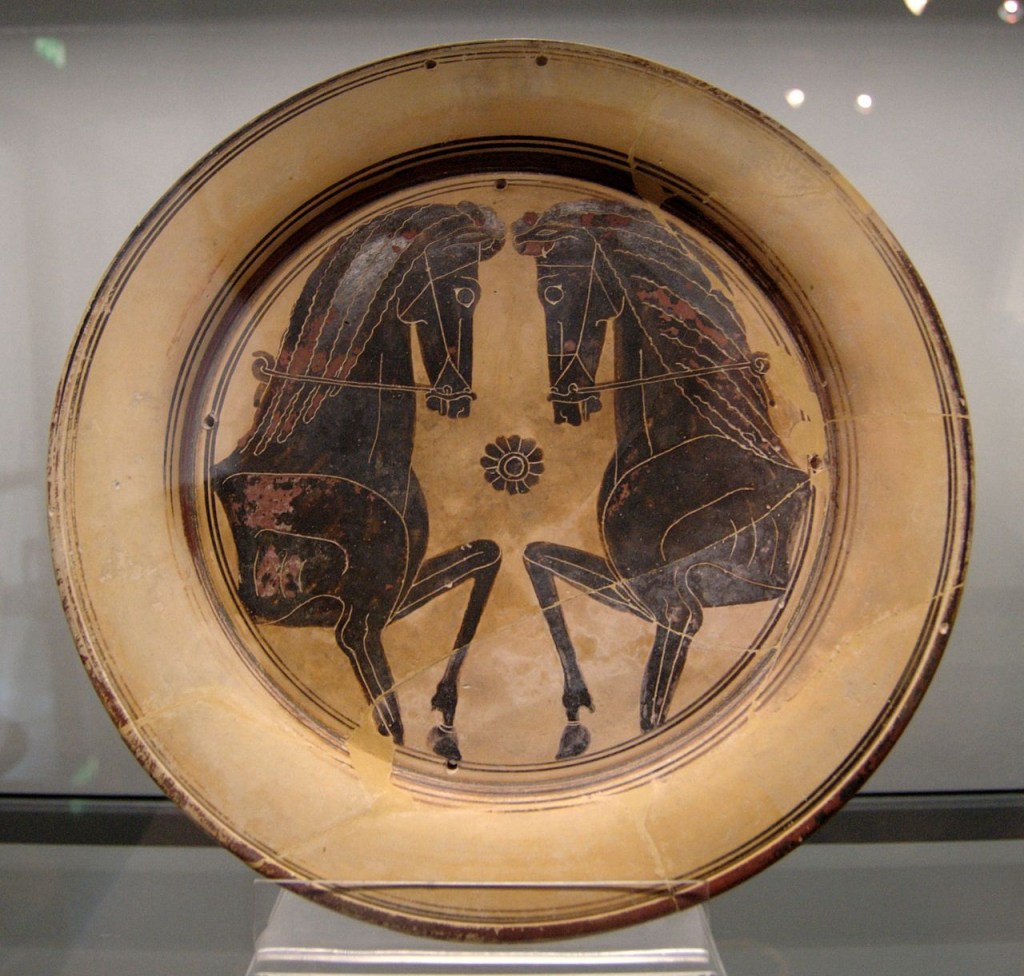
Horses’ heads, Corinthian black-figure plate, 600-575 BC

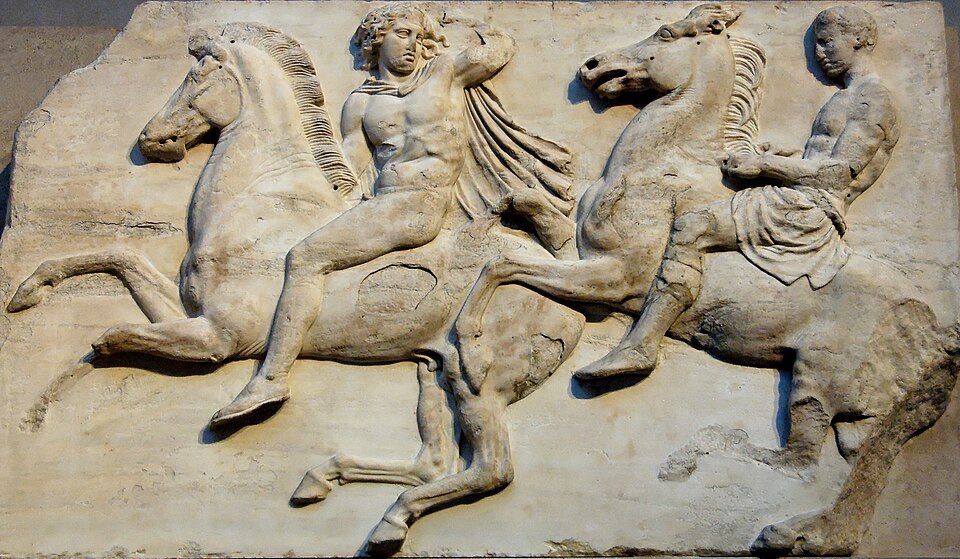
As well as in sculpture and bas-relief, such as the famous Parthenon frieze.
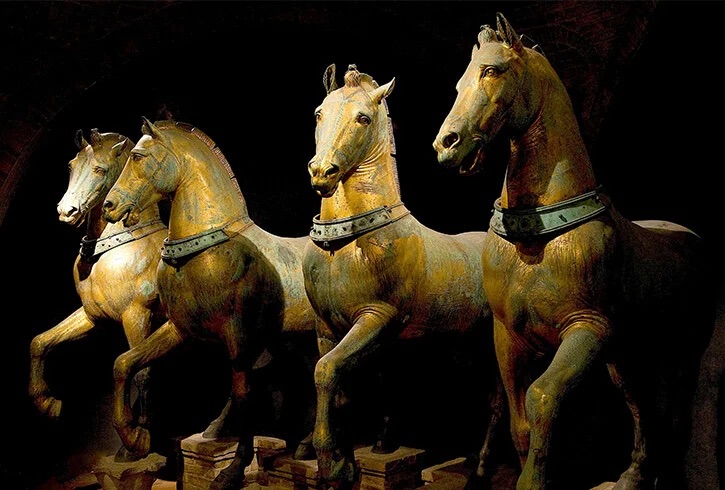
The other famous horses that date from classical antiquity, perhaps originally from Constantinople, where they were displayed for many years, are the Horses of Saint Mark.

Situated atop the Loggia of Saint Mark’s Basilica in Venice, these were originally part of a monument depicting a ‘quadriga’ – a four-horse carriage used for chariot racing in antiquity, used in the ancient Olympic games or depicted as the ‘Chariot of the Gods’ ridden by Apollo across the heavens.
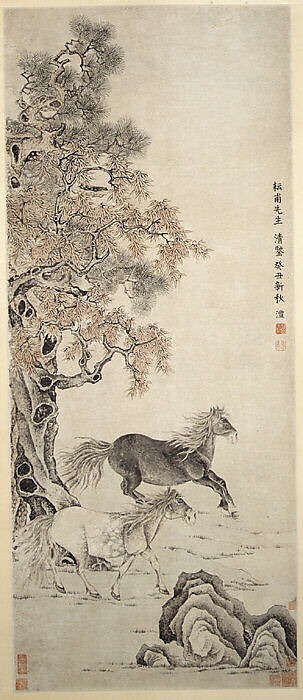
The horse was also revered and commemorated in China, in pottery and glazed statues as well as scrolls.
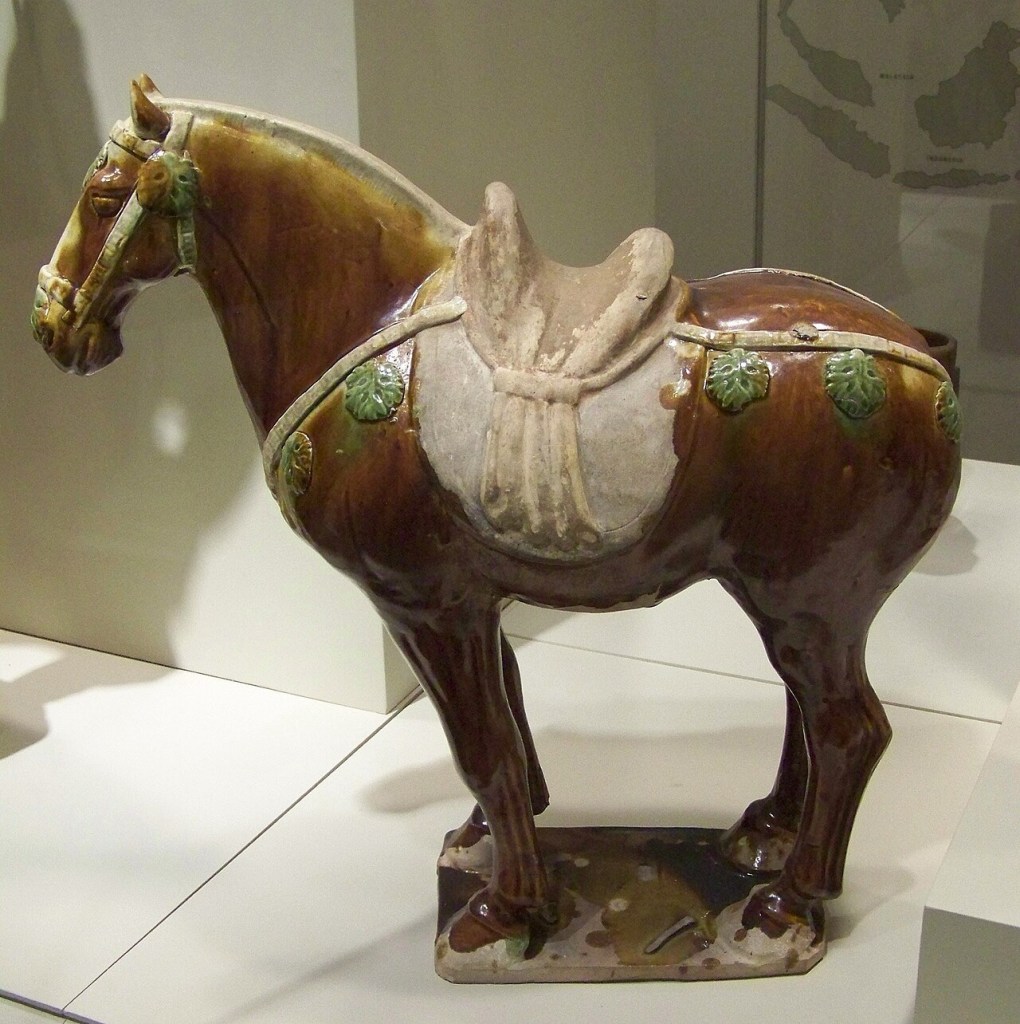
Tang dynasty horse statue

Unidentified
After Qian Feng Chinese
dated 1793

Coming to modern times, one of the most famous equestrian artists is certainly George Stubbs (1724-1806). He was self-taught and had an obsessive interest in anatomy.

In 1758, Stubbs rented a farmhouse in Lincolnshire and spent 18 months studying dead horses. Gruesomely stringing the carcasses up on a system of pulleys, he injected their veins with wax to give them a lifelike appearance and proceeded to systematically study them in different positions, stripping off each layer of the body.

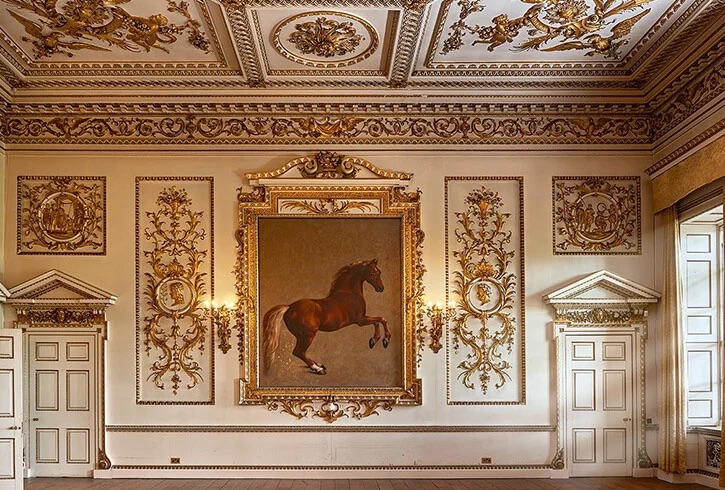
Stubbs made many wonderful paintings, but arguably his masterpiece is a life-size portrait of the horse Whistlejacket, (c. 1762), commissioned by his owner, the Marquess of Rockinham.
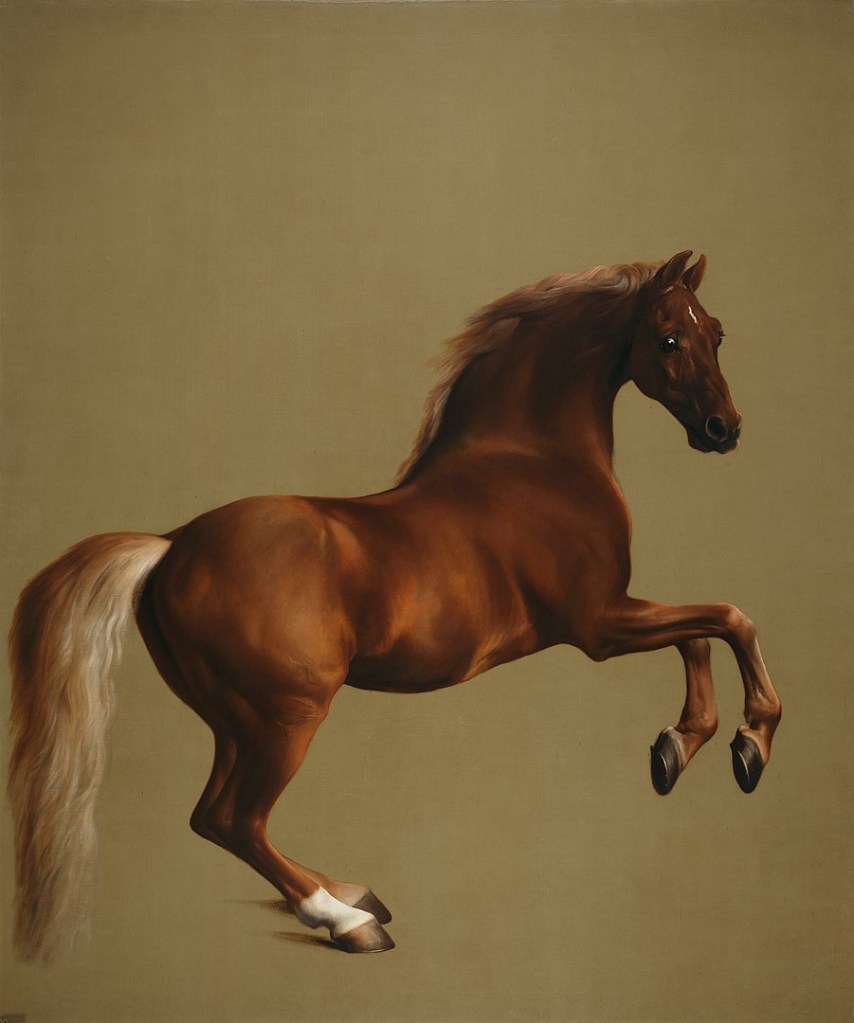

George Stubbs, Whistlejacket, c. 1762, National Gallery, London, UK.
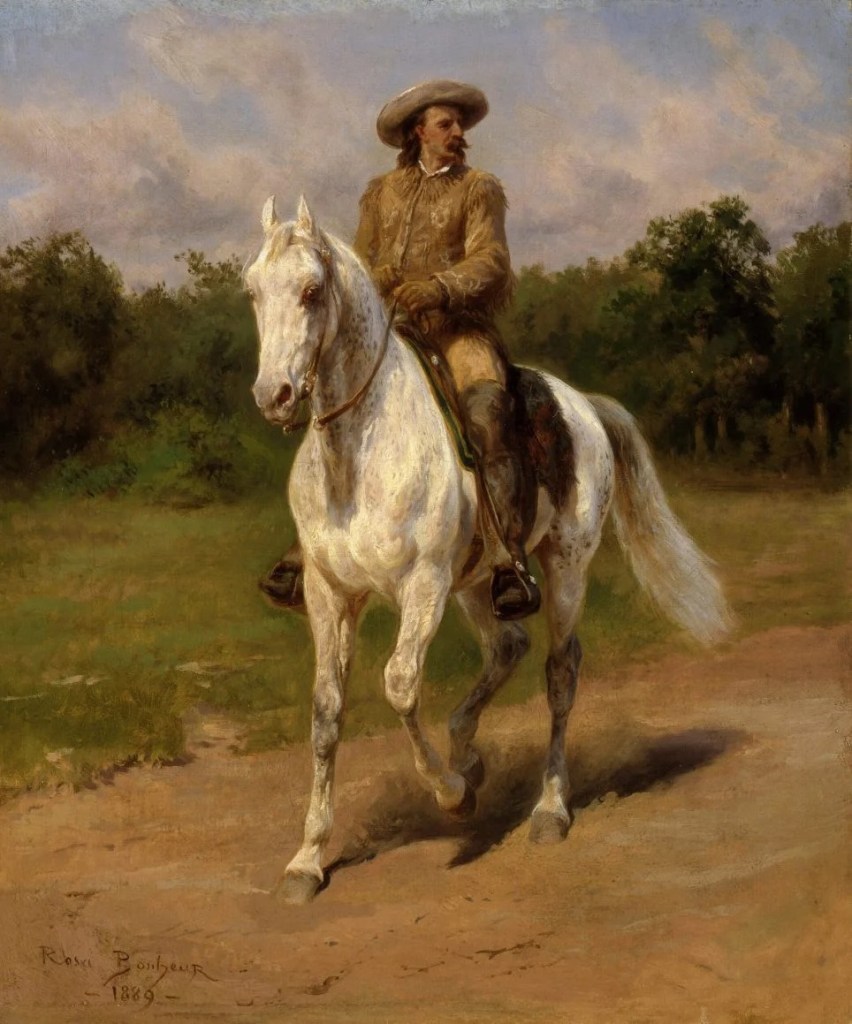
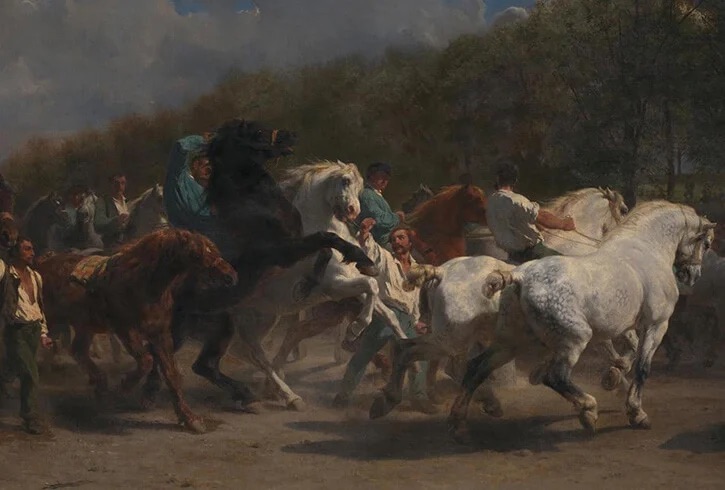
Another wonderful painter of animals was Rosa Bonheur, who was inspired by George Stubbs and Eugène Delacroix but also by Ancient Greek sculpture. Her most famous work is The Horse Fair, but I love the portrait below, of William F. Cody, alias Buffalo Bill, whom she met and befriended at his Wild Est Show, held on the lawns of Neuilly during the Exposition Universelle.
To paint the Horse Fair, which shows the horse market held on the Boulevard de l’Hôpital, Paris, Bonheur sketched there twice a week for a year and a half.
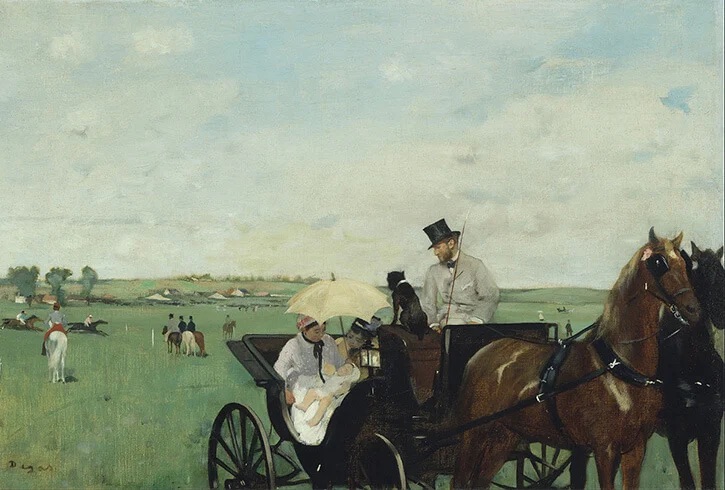
Another of my favourite paintings is At the Races in the Countryside (1869) by Edgar Degas, which focuses on a young, upper-class family at the races. It is a wonderful offset composition, relegating the race itself to the background.
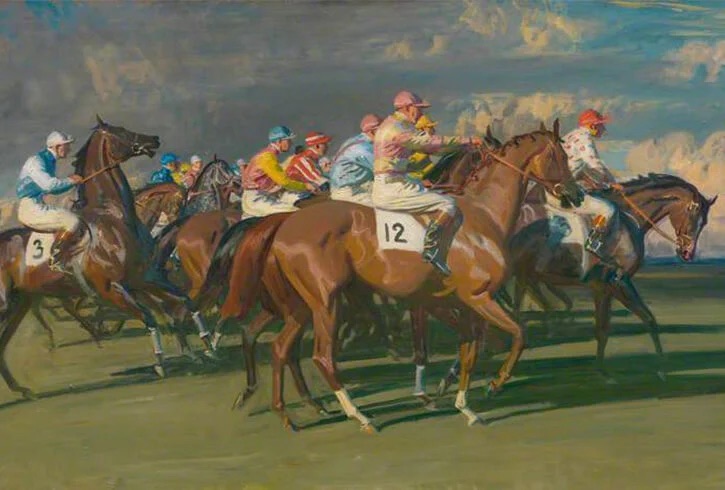
And of course I cannot fail to mention Alfred Munnings, who was enraptured by horse racing for his entire career. The painting below, brimming with excitement and anticipation, is titled Start at Newmarket: Study No. 4, c. 1947
I could go on forever, and might go on in another post, but this is a little taste to celebrate the start of the year of the Fire Horse. Which is your favourite?
Voyages in literature

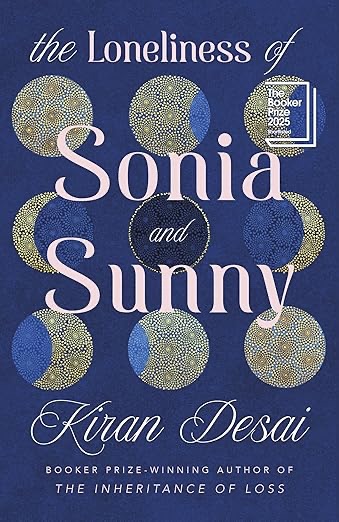
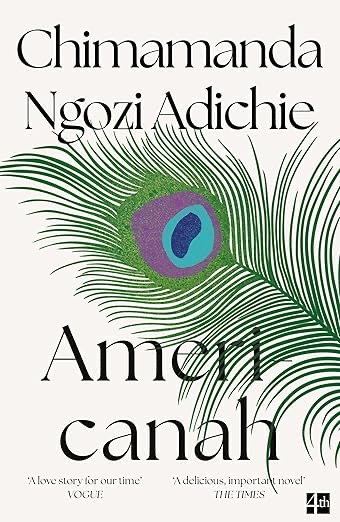
I always tend to have at least a couple of books on the go, and I choose them depending on my mood. So I must have been in the mood for a saga (in the modern sense of the word) since I plunged simultaneously into two doorstoppers: Americanah, by the Nigerian writer Chimamanda Ngozi Adichie, and The Loneliness of Sonia and Sunny, by the Indian writer Kiran Desai (both were written in English.) As I read on, I realised they shared a lot of similarities.

First of all, may I say both of these women are wonderful writers, whose clarity of prose and turn of phrase I much admire. It was very pleasurable immersing myself in their world.

Both books are meant to be, primarily, love stories. From an interview with Kiran Desai:

I wanted to write a story about love and loneliness in the modern world. I wanted to write a present-day romance with an old-fashioned beauty. In the past of my parents, and certainly my grandparents, an Indian love story would mostly be rooted in one community, one class, one religion, and often also one place. But a love story in today’s globalised world would likely wander in so many different directions.

However, the book is about so much more than that—it is about displacement, about identity, about moving to another country and then feeling you don’t belong in either your new home or your old one. It is about race and class distinctions.

Americanah deals with a lot of the same themes, although set in a primarily different background. Again based on a love story at its core, again exploring themes of displacement, race, identity and adapting to a different culture.

Both books are stories of love and expectations in today’s globalised world.

Which book did I prefer? Probably the first, for the simple reason that Ifemelu, the heroine of Americanah, is not a very likeable character. Although bright and self-assured, she often tends to shoot herself in the foot, especially as regards relationships. She can be unpleasant, disdainful and very sure her opinions are the right ones. I did enjoy the descriptions of life in Nigeria, though, a country I know little about.

This brings me to my main criticism of both books: although I understand how both writers became engrossed in the world they created (and I know that Desai worked on her book for years), I thought both books were ultimately too long and could have done with more judicious editing. I know it’s difficult to kill one’s darlings—but there was just too much detail and repetition of the minutiae of daily life, the backstory or subplots, the characters’ thoughts.

I asked myself—did I think this because our attention span has shrunk? I remember devouring long books like A Suitable Boy, by Vikram Seth. Dickens, Tolstoy, Dostoyevsky, Robertson Davies…I read Middlemarch twice. Would I have the patience now? I wonder. If I want to re-read something long nowadays, I usually get the audiobook.

What do you think? Has anyone read one or both of these books? Did you like them? Are they too long? I would be interested to know. Awaiting comments!

Rays of sunshine – J. M. W Turner

Rays of sunshine are not too plentiful this weekend—neither in the weather, because it is persistently drizzling (just enough to soak you after a while,) nor in the absolutely horrendous news. And I do hope none of you has been indulging in a sunny holiday in Dubai, ha ha (sorry about the graveyard humour.)

However, sunshine is to be found in the wonderful paintings of J. M. W Turner, at the joint exhibition with John Constable at Tate Britain.

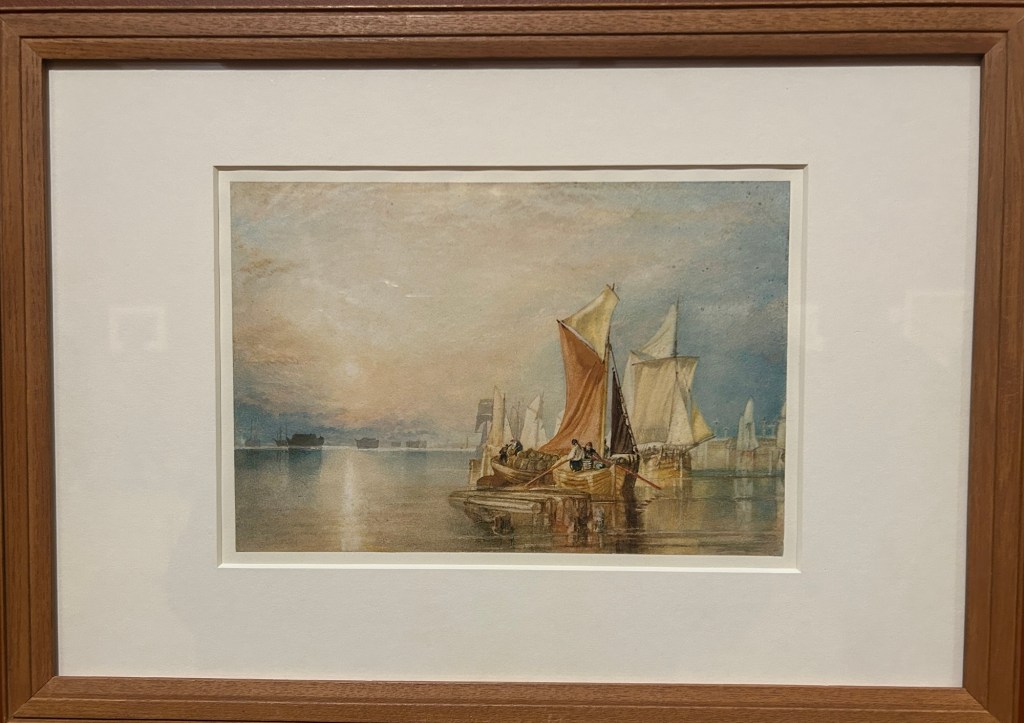
Stangate Creek, 1823-1824, watercolour on paper

Born within a year of each other – Turner in 1775, Constable in 1776 – and both trying to transform landscape painting, the two were great rivals, rather than friends.

Raised in the gritty heart of Georgian London, Turner quickly became a rising star of the art world, beginning his formal training at the Royal Academy Schools aged just 14 and exhibiting there soon after—whereas Constable, the son of a wealthy Suffolk merchant, faced a longer, more arduous rise to acclaim.

I think Constable was a very accomplished, solid artist who funded his life by painting portraits of wealthy people in order to be able to indulge in his great love, landscape painting. The combination of known faces and beloved places makes for an evocative and precious portrait of life in Regency England.

The juxtaposition of these two artists is certainly an interesting one, but may I say at once that in my mind Constable loses by the comparison. The curators cleverly did not place their works next to each other, but gave separate rooms to each.

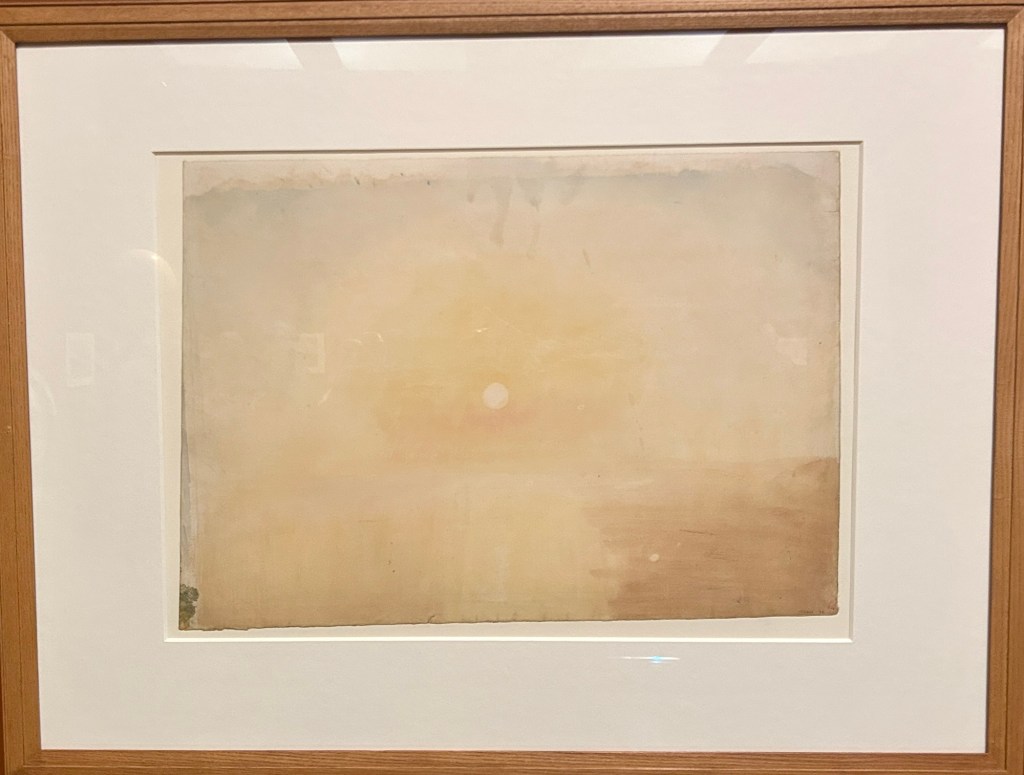
The sun rising over water, 1825-30, watercolour on paper

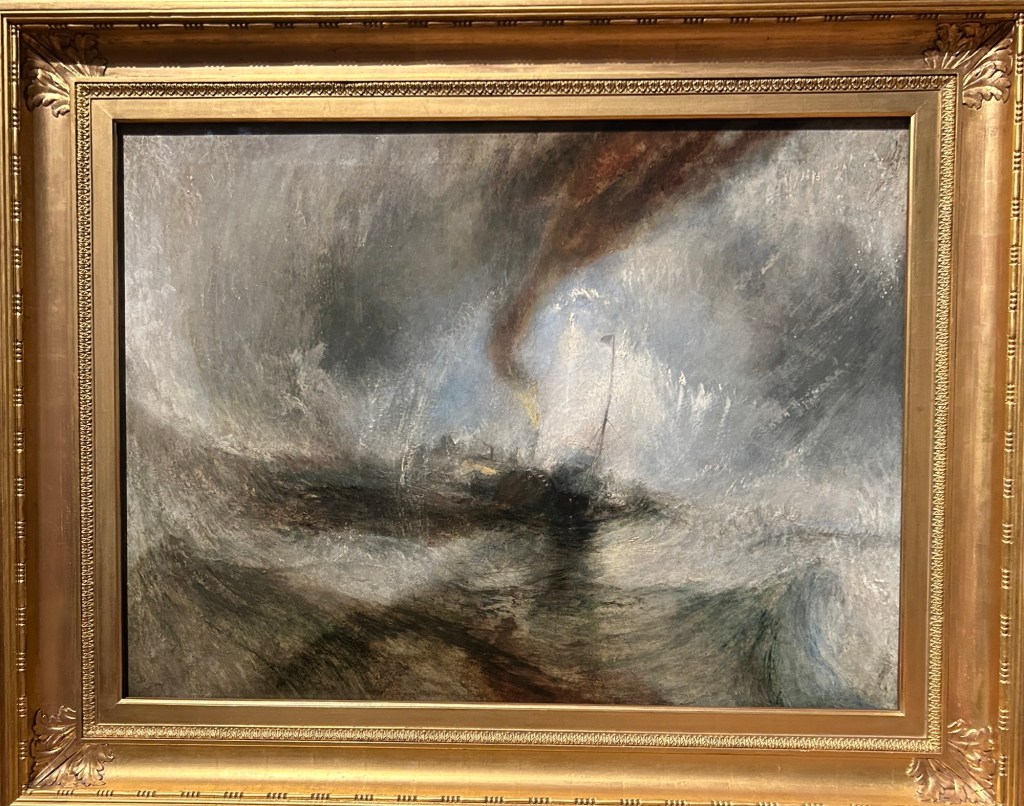
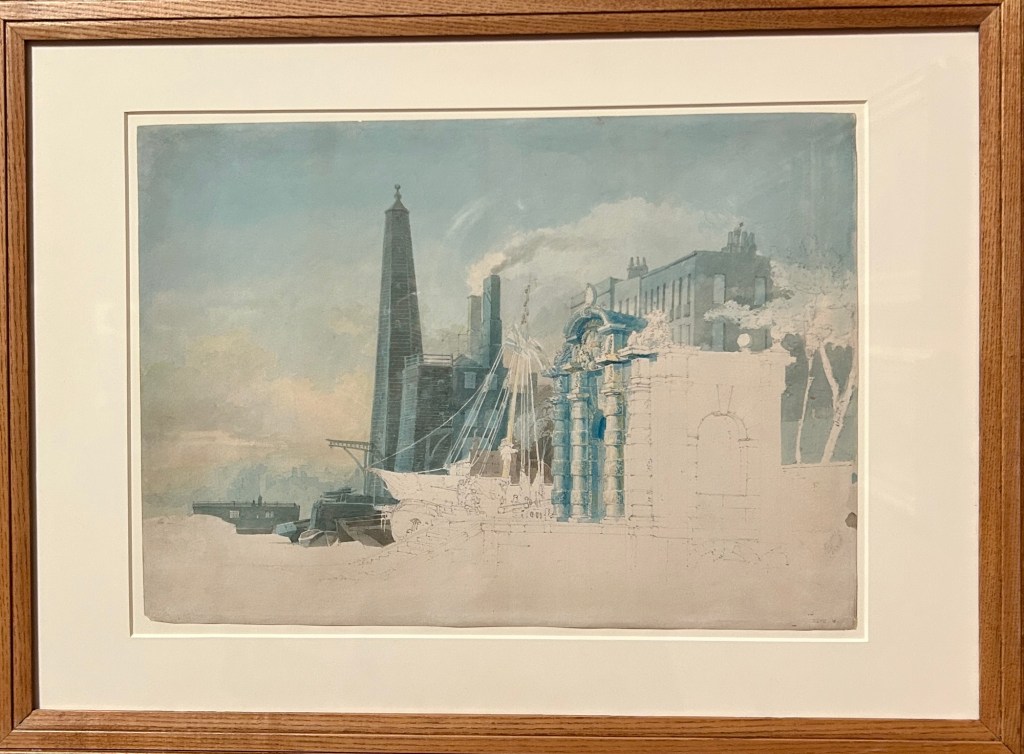
At the time they were exhibiting, Constable had a solid following and favourable reviews, whereas Turner was thought a genius by some, but deranged by others. In our modern consciousness and wider knowledge and appreciation of art, Turner’s paintings are mind-blowing. His treatment of the natural elements, wind, rain, water, clouds, sunrises and sunsets—in fact, all aspects of light and its effects, are unique. Especially the watercolours—the way he moved paint around and scraped paint off in places to achieve the translucent quality of the air around him is astonishing. Watercolour is a very delicate and elusive medium, and mistakes are dearly paid for; but he found it convenient and easy to transport so that he could capture the effects of light on nature live.

Snow storm – steam boat off a harbour’s mouth. Oil on canvas. This is one of Turner’s most daring paintings.

Many of the works in the exhibition are from private collections, so the opportunity to see them in person, and in close proximity, was a rare treat.

York House watergate, Westminster, London. Graphite and watercolour on paper.