
Yesterday I came across a fascinating article about lost inventions, among which was Greek fire. This took me back to my school years, when we thought Liquid Fire (υγρόν πυρ – as our history books called it/ it is also known as sea fire) amazingly cool when we studied the Byzantine era (as one does repeatedly in Greek school.)
Developed by the Byzantines in the seventh century, liquid fire was an incendiary naval weapon which could stay aflame even on water, and which helped the Byzantine Empire win numerous battles. Its recipe was a closely guarded state secret and has been lost to history.
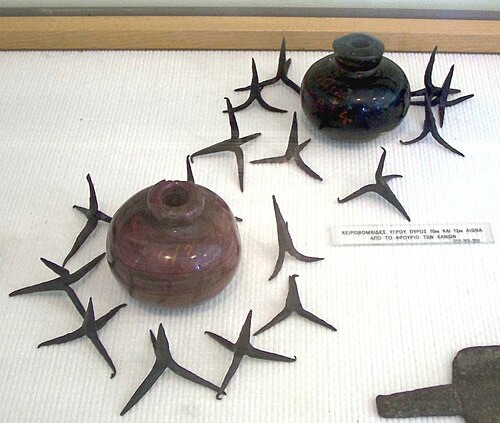
Byzantine sailors would toss grenades filled with liquid fire into enemy vessels, or spray it from a nozzle, engulfing them in flames.
Around the year 800, Theophanes the Confessor, a monk who recorded Byzantine history, chronicled the fate of enemy ships targeted by Greek fire: “Some of them were cast up burning by the sea walls, others sank to the bottom with their crews and others were swept down flaming as far as the islands Oxeia and Plateia.”
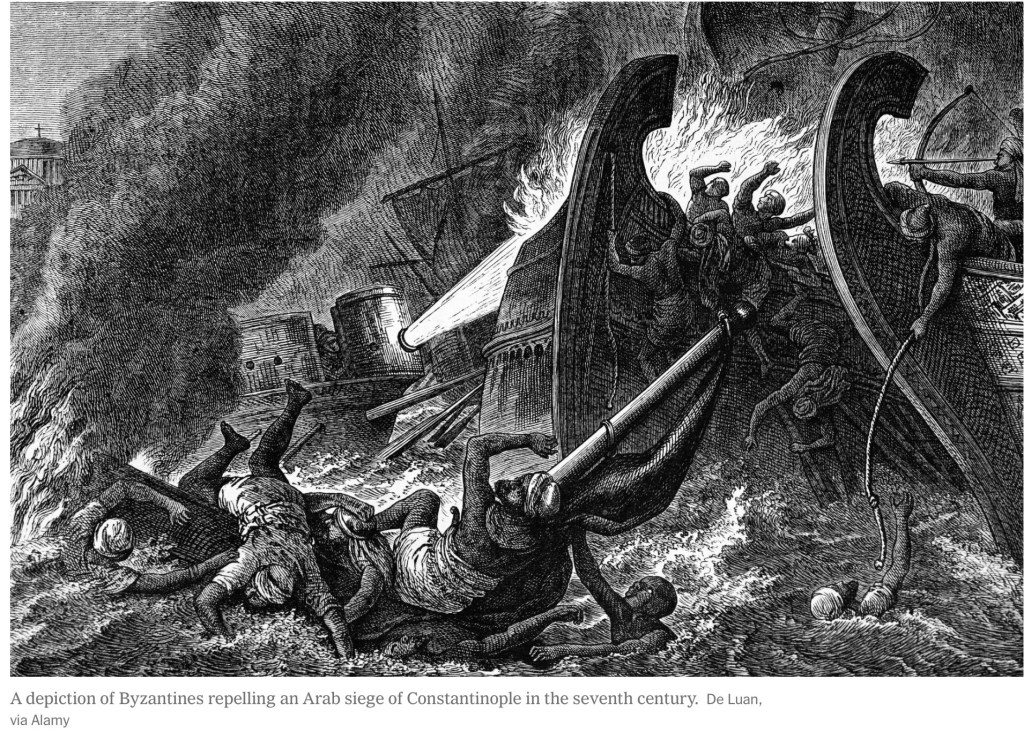
The whole process of the manufacture and deployment of this weapon was very complicated and perhaps that is why it fell out of use. It is best understood as a complete weapon system of many components, all of which needed to operate together to render it effective. This comprised not only the formula of its composition, but also the specialized dromon ships that carried it into battle, the device used to prepare the substance by heating and pressurizing it, the siphōn projecting it, and the special training of the siphōnarioi who used it. Knowledge of the whole system was highly compartmentalised, with operators and technicians aware of the secrets of only one component, ensuring that no enemy could gain knowledge of it in its entirety. This accounts for the fact that when the Bulgarians captured 36 siphōns and even quantities of the substance itself, they were unable to make any use of them.
Two more interesting facts: Liquid fire burned on water—according to some interpretations, it was ignited by water. Numerous writers testify that it could be extinguished only by a few substances, such as sand, strong vinegar, or old urine, so presumably by a sort of chemical reaction. Also the discharge of Greek fire was accompanied by “thunder” and “much smoke”.
Based on comparisons with modern fire-starting agents and the natural resources available in the region at the time, researchers assume that Greek fire was made by processing flammable materials like petroleum or coal, and that its effects and usage were similar to napalm today (and as horrifying.) But why did it become obsolete?
Some historians think that the Byzantines’ territory losses over time made it difficult to get the right ingredients; others suggest the recipe was told to so few people that it died along with them. And also due to the complications of usage mentioned above.
We live in an era where information is at the tips of our fingers and technology has solved many problems – so it is nice to think there are still some mysteries that cannot be solved (or at least up to now.) There are many interesting ones, but to me one of the most intriguing is another Greek invention, the Antikythera Mechanism.
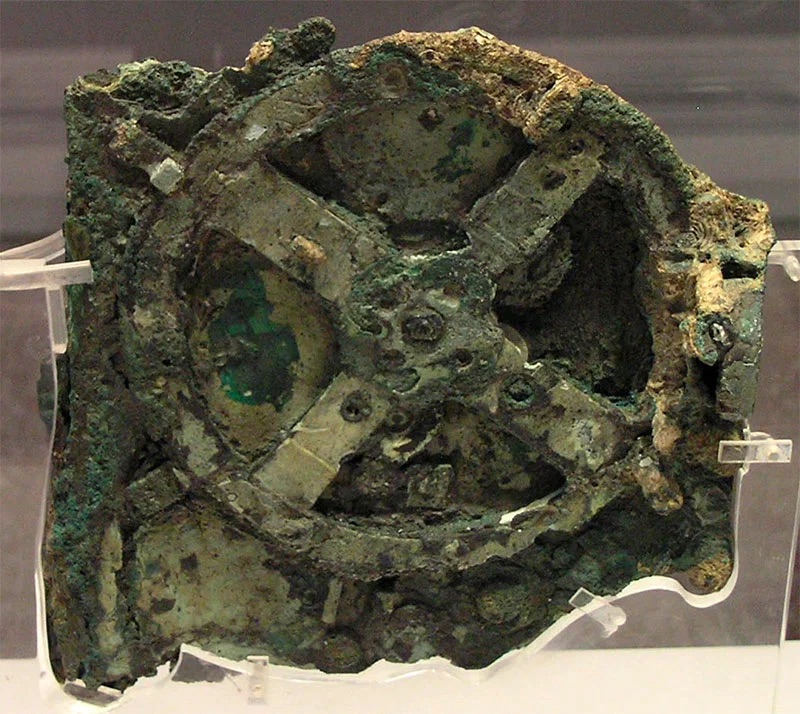
This unassuming small lump of heavily encrusted wood and bronze that can be seen in the Archaeological Museum of Athens, hides a mechanical device of stunning complexity, which is deemed to be the world’s oldest computer. Its secrets came to light slowly, half a century after it was brought up by divers exploring an ancient shipwreck off a Greek island in 1901.
In time, a global consortium of researchers used X-rays and imaging tools to probe the corroded fragments, revealing the device’s amazing sophistication.
Dated to the second century B.C., it had it had dozens of bronze gears and dials that produced a highly precise model of the solar system’s movements. The device, most probably, could predict not only the motions of the moon and the planets, but solar eclipses.
Its use was of great importance, since ancient Greeks saw solar eclipses as very bad omens, causing even kings to tremble. So if the device was able to predict such celestial events far in advance, it provided precious time to decide how to defuse the malevolent gods.
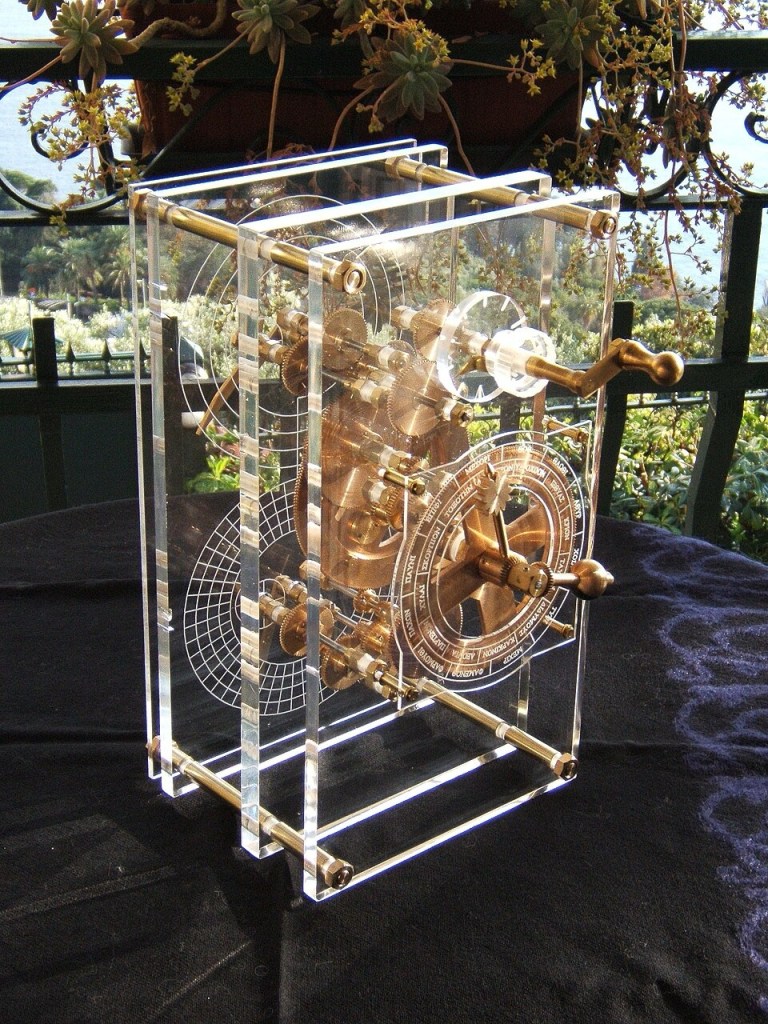
The mechanism still holds many secrets and uncertainties, since but a third of the original device has survived to the present day, making it hard, if not impossible, to come up with airtight arguments and conclusions about its true capabilities. Even so, Derek J. de Solla Price, a Yale historian who conducted early studies of the device, declared in 1959 that its discovery was “like opening a pyramid and finding an atomic bomb.” He added it was frightening to realise the surprising extent to which the ancient Greeks had progressed.
For those of you interested in more detail about this riveting object, the Wikipedia article contains a detailed explanation, plus a wonderful film which, although free to share, proved too complicated for me to post here. I urge you to look it up when you have a moment.
It is fascinating that archaeology consistently turns up hints of ancient accomplishments, buried for centuries. Some provide clarity on how our ancestors lived, but for every artifact that illuminates the past, there are several others that leave scholars with more questions than answers. So the search continues.
Share this:


