My best books of 2025

As the year draws to a close, I though I’d make a short list of the best books I read this year—the books I personally liked best, because obviously opinions differ. I was inspired by Jacqui Wine’s Journal—I’ve followed her for years, because our tastes coincide, and I’ve had many wonderful recommendations from her over time. If you haven’t come across her Blog, I urge you to take a look, especially if you are a fan of solid storytelling and excellent writing. She also often revisits old favourites, as well as books in translation. 

Since I do like variety in my reading, my list is quite eclectic. Here are the ten I savoured most, not in any particular order. 

Wild Thing, by Suzanne Prideau, a truly exceptional life of Paul Gaugin, which I reviewed a little while ago Here

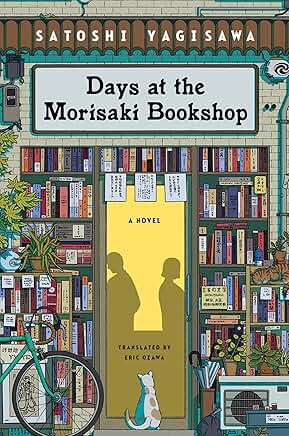
Days at the Morisaki Bookshop and More Days At the Morisaki Bookshop, to coincide with my trip to Japan. Life in Tokyo through the eyes of a young woman. Amusing and different (and a cool cover!). Buy it: Here

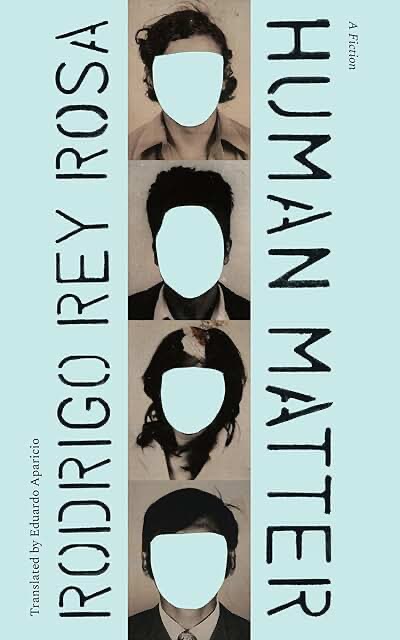
Human Matter, by Rodrigo Rey Rosa, a well-known Guatemalan writer. A semi-autobiographical dive into the realities of a dictatorial regime, seen through its bureaucracy. Engrossing if harrowing. Here

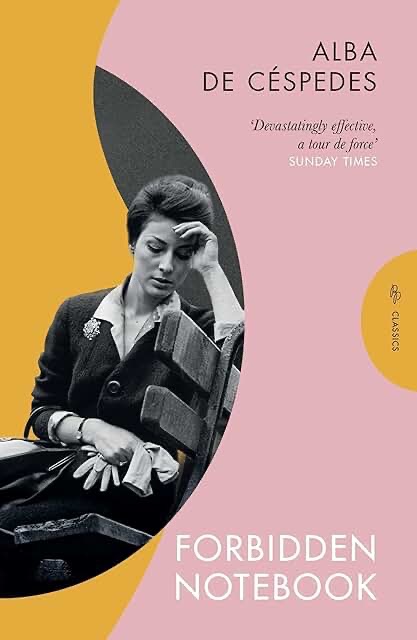
The Forbidden Notebook, by Alba de Cespedes. One of Jacquie’s suggestions, about the  daily life of an Italian housewife in the 50s. Fascinating. Here

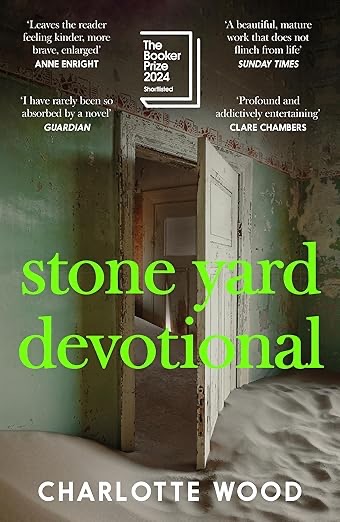
Stone Yard Devotional, by Charlotte Moore. One of the Booker Prize shortlist for 2024. Very original and atmospheric. I got caught up in a very absorbing story. Here

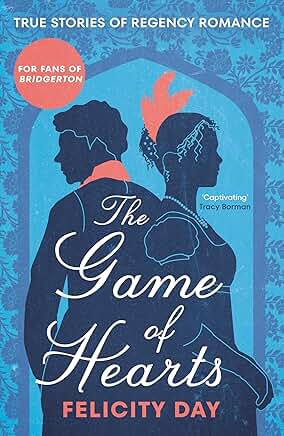
The Game of Hearts, by Felicity Day. Part of my research into the Regency era. The stories of real women of that time—often, truth is stranger than fiction. Or more amusing. Here

Longbourn, by Jo Baker. Pride and Prejudice from behind the mirror: the daily life of the Bennet household as seen through the eyes of their servants. Here

Horse, a novel, by Geraldine Brooks. A great story told over two time lines, based on the real champion thoroughbred Lexington. With added enjoyment for people who love horses. Here

The Safekeep, by Yale Van Der Wooten. Another book shortlisted for the Booker Prize, this is an original story of the developing relationship between two very different women staying in the same house in the Dutch countryside during the summer of 1961. It is well plotted and in turns mysterious and unnerving. Here

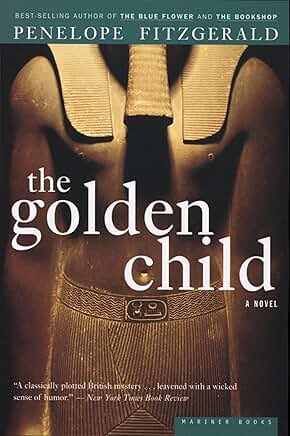
The Golden Child. I love Penelope Fitzgerald and this was one that, most surprisingly, I had not read. Like an immersion in a warm bubble bath. Did not disappoint. Here

Add to those a couple of thrillers, some Regencies (good and not so good), and a handful of crime novels (I especially enjoy those of Vaseem Khan, set in India with a most interesting policewoman heroine.) I’ve also been reading books by people whose blogs I’ve been following for years and who have been most supportive of my own book. They’ve been on my TBR list for a while, but—so many books, so little time, as I keep repeating.

Well, I do hope some of the above will appeal to you. Happy reading! (Or perhaps you’ve e read them all?)

Wild Thing—a book review

Wild thing is a life of the artist Paul Gaugin. Sue Prideaux does her subject proud—she is a sympathetic and judicious biographer who writes like a novelist and has researched her subject from different angles.

The biography contains information which was new to me. Gaugin had an extremely varied and interesting life, knowing both riches and poverty.

I will not reveal too much detail because it is a book well worth reading. But did you know that Gauguin:

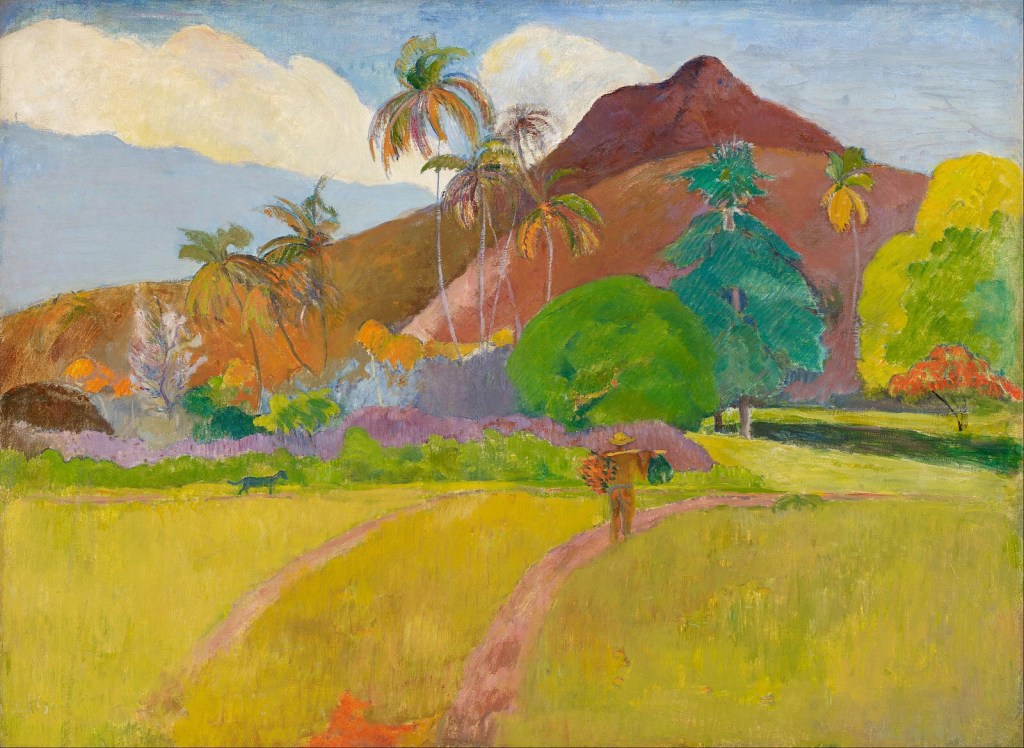
Paul Gaugin, Tahitian landscape

-Spent the first seven years of his life in Peru, which left indelible impressions of colour, heat and life in him? To my mind, this explains a lot about his palette and use of colour.

-That he then led a very bourgeois existence, working at the Bourse in Paris and becoming extremely wealthy? Even as he started painting and married, he lived luxuriously, spending without a thought for the future.

Then the Bourse failed in 1882 and for the rest of his life he was poor, living a hand to mouth existence, begging and borrowing from friends. He often did not have enough to eat.

La vision après le serment, 1888

-That he had a very complicated and close relationship with Vincent Van Gogh, which continued up to his death. Read the book to find out details of the famous ear-cutting episode.

-That Vincent’s brother, Theo Van Gogh, was Gauguin’s agent.

-That he was deeply affected by attending a public execution in Paris: the death by guillotine of a mysterious murderer.

-That he was greatly inspired by the colonial exhibits at the 1889 Exposition Universelle in Paris, where the Eiffel Tower, built for the celebration, soared heavenward, lit by electric light. Round its feet sprang recreations of the colonies and their treasures, from which he borrowed elements and incorporated them into his art. For this Camille Pissarro called him a bricoleur, a cobbler-together of second-hand ideas.

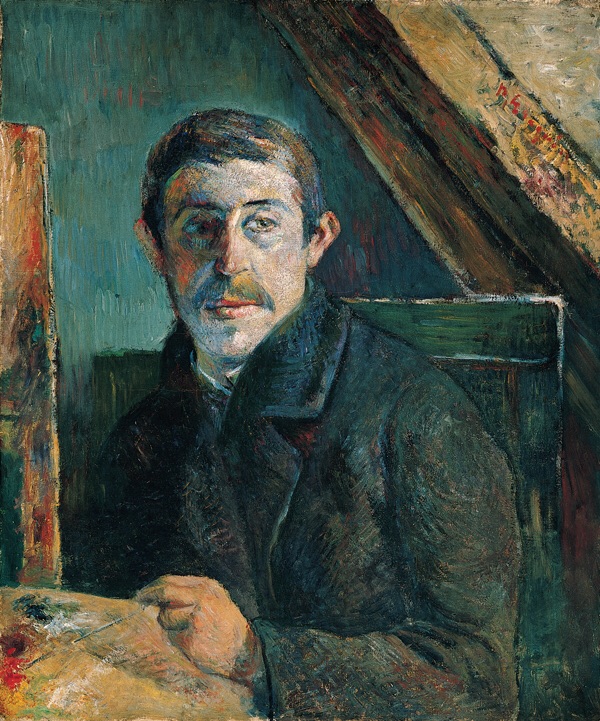
Self portrait

The book details his marriage and relationship to his children, and his friendships and dealings with prominent men of his world, such as André Gide, Pierre Loti, August Strindberg, Frederick Delius and others. One of his main supporters in hours of need was Edgar Degas. The biography is full of delicious anecdotes of this crowd of supremely talented men.

Finally we get an account of his latter years in Tahiti, where he ended up almost by chance. Gaugin’s life is one of the richest in the history of wester art, and Sue Prideaux does it full justice.

Les ancêtres de Tehamana, 1893 (portrait of Tehura).

Highly recommended.

The Booker Prize shortlist

The Booker Prize season has come around again, and the shortlist has been published. Let me say at once that I have not read any of these books, but last year the list contained some pretty good stuff, so I am hopeful of a repeat, especially since Roddy Doyle is Chair of the 2025 judges and he knows a good story when he sees one.

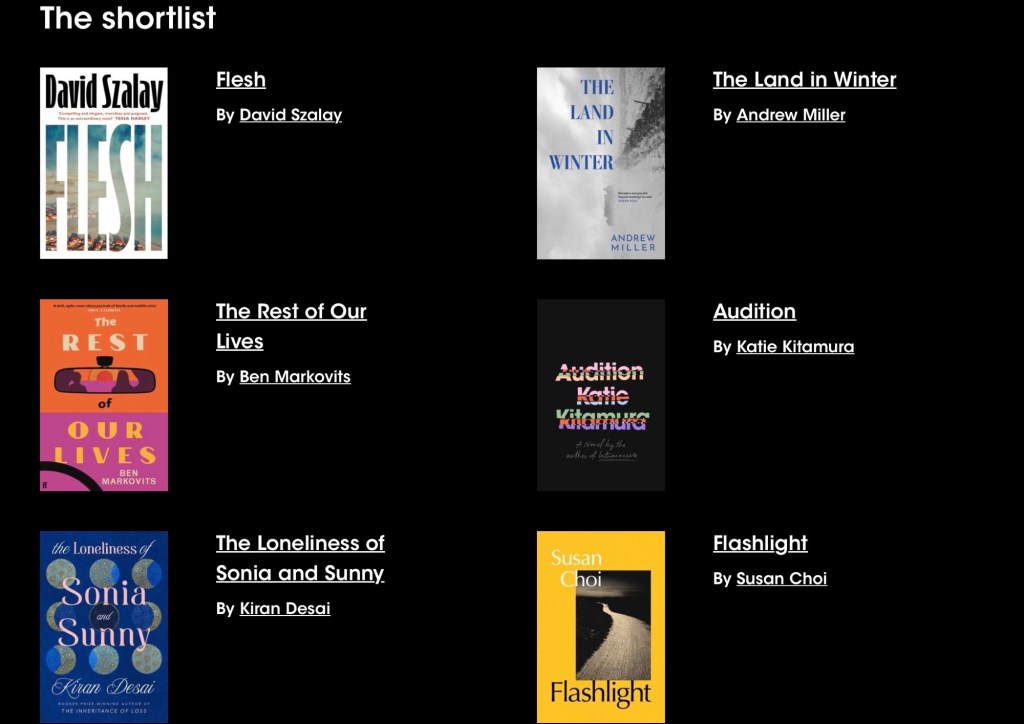
Photos from the Booker Prize site

I don’t suppose I will read them all, and I will look at some on the long list as well, but one I am looking forward to tackling is 700-page The Loneliness of Sonya and Sunny, by Kiran Desai (who has won it before in 2006 with The Inheritance of Loss.) It reminds me of another doorstop, A suitable Boy by Vikram Seth, which I devoured at the time. Many years in the making, it is an epic tale of love and life.

Flesh, by David Slazay, is (I quote the Booker Prize site): “A propulsive, hypnotic novel about a man who is unravelled by a series of events beyond his grasp.”

The Land in Winter, by Andrew Miller, is about two couples, a doctor, a farmer and their respective wives, whose lives are upended in the middle of a harsh winter landscape.

The Rest of Our Lives, by Ben Markovits, is about a middle aged academic who goes on a road trip after his wife has an affair, trying to escape his problems.

The last three all seem to be about lives unravelling. Hmm…it depends how each writer deals with the subject.

Audition, by Katie Kitamura, is about the relationship between two very different people: an attractive actress and a man young enough to be her son. Intriguing.

Flashlight, by Susan Choi, is a saga about a father’s mysterious disappearance and the reverberations of this event on his family.

All six authors are deep into their literary careers, with a number of books to their name and, besides previous winner Kiran Desai, Andrew Miller and David Szalay have been shortlisted before.

If (or when) any of you read any of these books, I will be glad of an opinion. In any case, a pile of new books is always enticing, even if at the moment it is not on my shelf but only on my screen.

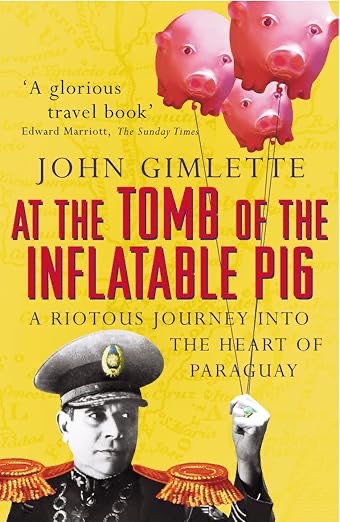
At the Tomb of the Inflatable Pig

“Reading the book is like watching a Komodo dragon eat a tethered goat. Paraguay, as Gimlette portrays it, is . . . completely bizarre. . . . Conquistadores and Nazis, whores and cannibals, all of them rather awful, all of them splendidly rendered. . . . Graham Greene would have approved.” –National Geographic Adventure

I seem to be on a roll of recommending favourite books. This one is in a category of its own, a crazed travelogue on Paraguay, one of the most exotic, captivating and eccentric countries in the world, according to writer John Gimlette. Even the title of the book is insane.

I have never been to Paraguay, nor are there any Paraguayans amongst my South American friends, so I cannot pretend to have a personal opinion on the veracity of his observations. I can only say the book enchanted me, with its descriptions of hellish jungles, Germanic villages, missionaries, utopian experiments and coups. Apparently the Paraguayans venerate Princess Diana and, if they deem it necessary, will call in Scotland Yard.

Here’s an excerpt from Chapter 1:

I had a room on the second floor. It was a vast, mildewed space that might once have been used for dancing classes. It had floor-to-ceiling louvred shutters that were so seized up with drifts of green paint that they’d become petrified in the open position, admitting scalding blasts of dust and roasted corn from the street below. I shared this great green tropical ballroom with two others, for whom it was, in its own way, heavenly. The first was an Englishman called Kevin Pluck who’d come to South America to give some long and careful thought to the question of whether or not he should ever get a job. He had an opening in the car factory at Luton, but the delicious, orange-blossomed lassitude that overwhelmed Asunción ensured that he wasn’t going to hurry the decision. He’d at least made up his mind to return to Luton with a suntan and so he spent a lot of time and effort trying to go brown. For some reason his skin remained determinedly cheesy.

I have given this book to various people as a gift, but I never followed up on whether they had read it and liked it, as I don’t believe in gifts with strings attached. I do however, consider it a fine aid to armchair travel. You will become lost in a world so exotic that it will make you feel like Alice in Wonderland.

The Worst Journey in the World

In yet another ineffectual effort to put some order into my bookshelf I came upon one of my favourite books of all time, The Worst Journey in the World, by Apsley Cherry-Garrard (1886 -1959).

This is an account of Robert Falcon Scott’s ill-fated expedition to discover the South Pole in 1911, written by the youngest member of the team, who was just 24 at the time. A memoir, in a completely immersive style, by someone who had never written a book before, nor wrote another in his entire life.

I came upon the book by chance many years ago, browsing in the wonderful Heffers bookshop in Cambridge. Just the cover of the hardback, the shape and heft and compact size of the wonderful Picador Travel Classics edition and I was sold. I bought the thing as an object, but then I started reading it and became hooked on the subject and, most unlikely for me, Polar exploration in general.

The old-fashioned, unreal feel of the whole organisation, the details and lists of supplies and packing, the endless debates of dogs versus ponies versus men hauling the sleds. Why would anyone want to put themselves through such an ordeal, but in fact, many did. They vied to get on the expedition crew. They felt it was heroic and, being British, even more heroic to combine the race to the South Pole with scientific projects such as geologising, which meant carrying about bags of rock samples, as well as going on a winter trip in the middle of the endless dark of the Antarctic winter (the Worst Journey in the title) in order to collect Emperor penguin eggs from their impossible to reach breeding grounds. Cherry was one of three men who went on that little pleasure trip, and it is a miracle how they survived, especially since their tent was blown away in a storm one night.

Apsley Cherry-Garrard with frostbitten nose

In fact it was a miracle any of them survived, because they had miscalculated the supplies and equipment needed. Scott and his team of four all died, from scurvy and cold and hunger, having faced the most bitter of disappointments. They had lost the race—finally arriving at their destination to find the Norwegian flag already planted there. Because of course, Roald Amundsen had no interest in penguins or rocks. He and his team were highly skilled on skis and used dogs to pull the sleds and got there in a ruthlessly efficient manner, five weeks before Scott. They also had a better diet of fresh meat and so did not suffer from scurvy.

Both Amundsen and, more importantly, Scott’s wife, learned of his death more than a year later, which in our era of instant communications, seems weirdly shocking.

Photo from Wikipedia

There have been many books written on polar exploration, about the exploits of Amundsen and Shackleton and others. I have read quite a few and watched films, especially the 1985 seven-part series called The last place on Earth. I find it all quite fascinating, more so since it is something I would never dream of attempting myself. I think it amazing that still, especially now that there is nothing left to ‘discover’, there are people still doing it—such as Sir Rannulph Fiennes, who, amongst other expeditions, was the first person to visit both the North Pole and the South Pole by surface means and the first to completely cross Antartica on foot.

Be that as it may, the book is engrossing and will make you travel into a different world. What is particularly interesting is the minutiae of daily life and the relationships between the men facing such difficult conditions. Highly recommended.

Rediscovering Barbara Pym

Does anyone remember Barbara Pym?

I’d read her books years ago while still at school. I wonder why, since I was at Greek school and she could hardly have been on the curriculum. Probably browsing my mother’s bookshelves, where I was allowed a free run. At the time it was difficult to find foreign books in Athens and she was member of a book club – cloth-bound volumes arrived by post every month or so: Agatha Christie, Georgette Heyer, Ian Fleming, Neville Shute. I still have most of them. The thrill of it, the anticipation of receiving a new book, before the instant gratification of Amazon (I almost miss it—still prefer Amazon, though.)

But I digress. I recently came upon a BBC dramatisation of some of Pym’s books on Audible and downloaded it on impulse.

Very old-fashioned cover, isn’t it?

Barbara Pym wrote a series of social comedies in the 50s, but by the 70s her work was deemed too old-fashioned and was rejected by several publishers. Still, she kept writing, and forged a friendship with the poet Philip Larkin, who championed her work. When both he and the critic Lord David Cecil nominated her as the most underrated writer of the century, her career was revived. Her book Quartet in Autumn was nominated for the Booker Prize.

Pym was a shrewd observer of a certain type of English middle-class behaviour. Spinsters, bored housewives, academics and, in particular, vicars and curates, all came under her sharp and ironic scrutiny.

Of course I did not recall details of the books but I seemed to remember amusing and straightforward stories of village life and church goings-on. Via the dramatisation I am now discovering a narrative full of undertones, sexual innuendo and a delightful disregard for morality. Respectable wives go out to lunch with their friends’ husbands, spinsters plot to entrap men into marriage, older women meddle in everything. County housewives obsess over the new curate as they would today over the Kardashians. And all of it delivered in posh cut-glass accents you never hear any more because people are careful to disguise them even if they spent their childhood at Eton.

Probably this is not to everyone’s taste—I don’t think the young would appreciate it—and even for me there is no element of nostalgia, since it is set before my time. But it is an excellent production and I am deriving considerable amusement from listening in the car.

In praise of Penelope Fitzgerald

My days, darkened by the quasi-permanent absence of sunlight, were unexpectedly lit up by the discovery I had somehow missed reading a couple of Penelope Fitzgerald’s books, although she has long been one of my favourite writers.

Penelope Fitzgerald died in 2000 aged 83. In 2008 The Times listed her among “the 50 greatest British writers since 1945”. The Observer in 2012 placed her final novel, The Blue Flower, among “the ten best historical novels”, and A.S. Byatt called her, “Jane Austen’s nearest heir for precision and invention.”

Fitzgerald’s books are short, but within a few pages her prodigious powers of imagination create whole worlds. In The Beginning of Spring, she manages to describe the minutiae of life in pre-Revolutionary Russia as if she had been born there. But the research is worn so lightly it is imperceptible.

The Blue Flower, about the poet Novallis, has always been one of my favourite books. Based on the life of Friedrich von Hardenberg (1772–1801) it describes the time when, aged 22, before he became famous under the name Novallis, he became mystically attracted to the 12-year-old Sophie Von Kühn, an unlikely choice for an intellectual of noble birth given Sophie’s age and lack of education and culture, as well as her physical plainness and negligible material prospects. The couple became engaged a year later but never married as Sophie died of consumption a few days after her 15th birthday. The book is sad, subtle and romantic.

One of the books I had not read yet is The Golden Child, which is actually a murder mystery (she did not include it in her novels) with such a biting sense of humour that I found myself laughing out loud. The book is set in a museum, where “Even in total silence one could sense the ferocious efforts of the highly cultured staff trying to ascend the narrow ladder of promotion.” A perfect phrase if there ever was one. Or the description of the characters, even their names: “Hawthorne-Mannering, the Keeper of Funerary Art, was an exceedingly thin, well-dressed, disquieting person, pale, with movements full of graceful suffering, like the mermaid who was doomed to walk upon knives. Born related, or nearly related, to all the great families of England (who wondered why, if he was so keen on art, he didn’t take up a sensible job at Sotheby’s), and seconded to the Museum from the Courtauld, he was deeply pained by almost everything he saw about him.”

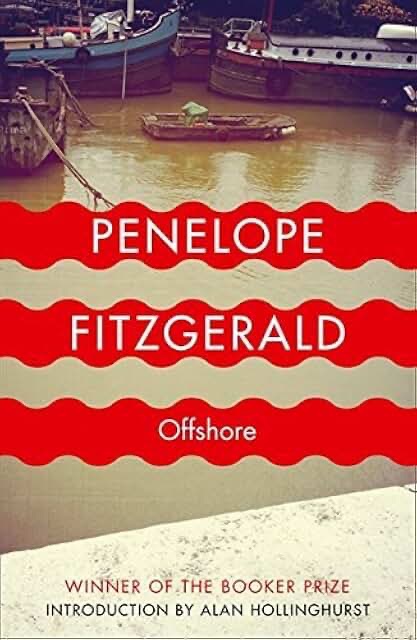
Her third novel, Offshore, won the Booker Prize in 1979. Based on her own years of living on an old sailing barge moored at Battersea Reach, it is about the mixed emotions of houseboat dwellers who live between the water and the land, fully belonging to neither.

Although she launched her literary career late, at the age of 58, Fitzgerald wrote nine novels, plus several biographies, short stories and articles. She had a hard life because due to her husband’s alcoholism she faced poverty, living for years in a houseboat which sank twice, and in public housing. She taught until the age of 70. Would she have been as good if she’d had an easy life? I think probably yes, because she was born in a scholarly family: she was the daughter of Edmund Knox, later editor of Punch, and Christina, daughter of Edward Hicks, Bishop of Lincoln and one of the first female students at Oxford. She was a niece of the theologian and crime writer Ronald Kox, the cryptographer Dillwyn Knox, the Bible scholarWilfred Knox, and the novelist and biographer Winifred Peck. She obviously also had great inherent talent.

She remains a unique, luminous voice in the literary firmament. I highly recommend her to anyone wanting to immerse themselves in her world.

The joy of beautiful prose

Being a bookworm from a young age, I read as the mood takes me, across a wide variety of genres: literary fiction, memoir, historical fiction and non-fiction, travel books, short stories, thrillers and crime. I have now arrived at an age where, if a book does not draw me in, I abandon it. So many books, so little time…And it has long ago ceased being homework. I read to be entertained, but also to be drawn into different worlds.

Into this last category come atmospheric books, such as the Booker Prize shortlisted Stone Yard Devotional, set in a religious community, or the winner, Orbital, set in space. The pace can be slow, but it is a delight to find oneself in a place one will never visit. The opposite of a thriller or police procedural, where you are waiting with bated breath to find out whodunnit.

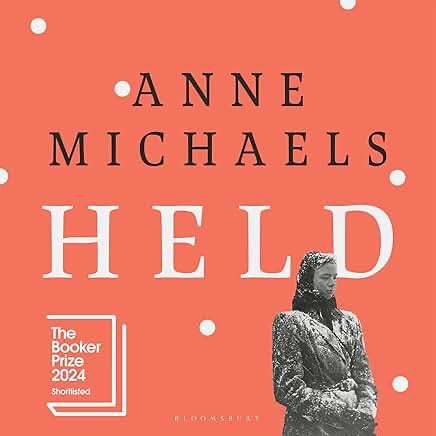
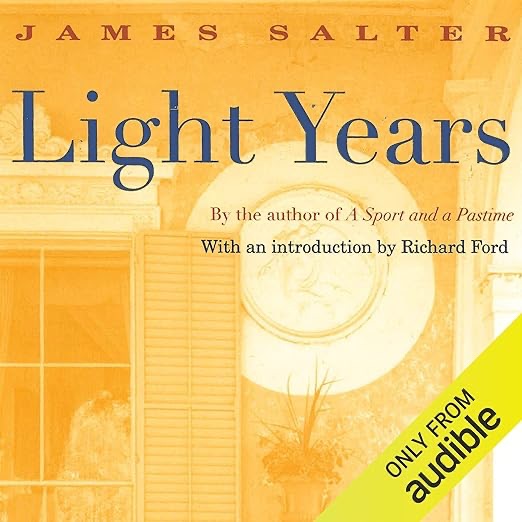
Occasionally, though, I come across a book where the plot does not matter, because the writing itself is so beautiful that I relish every sentence. I have lately, by coincidence, read two books of that calibre: Held, by Anne Michaels and Light Years, by James Salter.

Anne Michaels is an award-winning poet, which is perceptible in this fragmented tale of four generations of women. It explores the trauma of loss and the impact of love, shifting between times and viewpoints. You get submerged in the power of language, which is simply exquisite—lyrical and vivid. Like poetry, like music.

The second book is the story of a marriage, between two people who have privilege, charm but also flaws.

It describes the brittleness of happiness, the chinks in the perfect facade, the pull between contentment and desire. The inability to enjoy what one has, the longing to escape, the lure of something different. Restlessness, unfocused dissatisfaction. Voices heard, details of clothing, music, food. Flashes of landscape, the beauty of nature, subtle thoughts and feelings. The prose is lucid, the style is impressionistic, flawless.

Neither of these books have much of a plot, and ultimately perhaps this is not enough. A few of the reviewers complain about this and of course, liking a book or not is entirely subjective. It also much depends on one’s mood. Occasionally, however, it is a joy to luxuriate in wonderful language, where every sentence is a asks to be re-read. I loved both books and highly recommend them.

Orbital: a book review

A day in the life of six astronauts, bobbing around inside the International Space Station which is in orbit around earth. The spaceship orbits the Earth sixteen times in a day, during which the astronauts witness sixteen sunrises and sunsets. In fact, as Samantha Harvey describes it in this luminous novel, “the whipcrack of morning arrives every ninety minutes” and the sun is “up-down-up-down like a mechanical toy”.

The astronauts clock up time on the treadmill in order to preserve their body mass and go about their numerous chores: laboratory tasks, monitoring microbes or the growth of cabbages, tending to lab mice, endless cleaning. But they never tire of floating over to the observation windows, and their awe of our planet never dims.

There’s the first dumbfounding view of earth, a hunk of tourmaline, no a cantaloupe, an eye, lilac orange almond mauve white magenta bruised textured shellac-ed splendour.

Russian, British, Japanese, American, Italian: they each have their individual pasts and preoccupations, their different countries and cultures, but together they form a sort of whole, collective being. The two Russians go off to their “decrepit Soviet bunker”, but geopolitical divisions are hard to maintain when moving at 17,000 miles an hour. 

It is a strange, confusing existence which makes them at times question everything—is it day or night? Which era, year, decade are we in?

In order to avoid total confusion, a strict artificial order is imposed. Earth time (Earth time at take-off point?) is kept. Bedtimes, rising times, mealtimes—unconnected to the dawns and sundowns succeeding each other. Every continent, every mountain and river and desert and city, comes around again and again.

The past comes, the future, the past, the future. It’s always now, it’s never now.

The astronauts float around the gravity-free module at will. They remember their past lives, think of their loved ones, consider the future. One of them makes lists to keep things in perspective. They hate being so far from home and yet there is nowhere they’d rather be. They’re obsessed with space. The details of this unnatural existence are faithfully recorded:

When you enter your spacesuit and try to habituate yourself to the difficulty moving, the painful chafing, the unscratchable itches that might persist for hours, to the disconnection, the sensation of being buried inside something you cannot get out of, of being inside a coffin, then you think only of your next breath, which must be shallow so as not to use too much oxygen, but not too shallow, and even the breath after that is of no concern, only this one.

This image is one of the most widely known photographs of Earth, taken by the crew of the final Apollo mission (Apollo 17), as the the crew made its way to the Moon on Dec. 17, 1972. NASA dubbed this photo the ‘Blue Marble.’

And meanwhile, on earth, things are going on: wars, cities sending their innumerable lights into space, an approaching tornado. Some descriptions are terrifying:

Every swirling neon or red algal bloom in the polluted, warming, overfished Atlantic is crafted in large part by the hand of politics and human choices. Every retreating or retreated or disintegrating glacier, every granite shoulder of every mountain laid newly bare by snow that has never before melted, every scorched and blazing forest or bush, every shrinking ice sheet, every burning oil spill, the discolouration of a Mexican reservoir which signals the invasion of water hyacinths feeding on untreated sewage, a distorted flood-bulged river in Sudan or Pakistan or Bangladesh or North Dakota, or the prolonged pinking of evaporated lakes, or the Gran Chaco’s brown seepage of cattle ranch where once was rainforest, the expanding green-blue geometries of evaporation ponds where lithium is mined from the brine, or Tunisian salt flats in cloisonné pink, or the altered contour of a coastline where sea is reclaimed metre by painstaking metre and turned into land to house more and more people, or the altered contour of a coastline where land is reclaimed metre by metre by a sea that doesn’t care that there are more and more people in need of land, or a vanishing mangrove forest in Mumbai, or the hundreds of acres of greenhouses which make the entire southern tip of Spain reflective in the sun.

We are given numbers too large to fit into most human brains, condensed into readability.

Some eighty million miles distant the sun is roaring.

Shortlisted for the Booker Prize, Harvey’s book is a writing tour de force. Wonderfully imaginative, full of subtle humour and descriptions overflowing with colour and movement. If reading a book is opening a door into another world, this novel is a supreme example of it.

The Booker Prize Long List

Like every rabid bookworm in the land I too await the long list for the Booker Prize with anticipation each year. Not that I put much faith in prizes: in all creative things they are very subjective, and often the prize gets awarded to the book each person on the panel of judges dislikes least—just so they can all agree.

© Tom Pilston for Booker Prize Foundation

Also I cannot say that usually I read every book on the long list, or even on the short list—some do not appeal at all. Often some are books I have read before, such as Hilary Mantel’s Wolf Hall and Bring up the Bodies, which I adored. However, there are books I discovered because they were on the list, which I might not have picked otherwise—some I abandon half way through (I stopped long ago making myself read to the bitter end a book I dislike), some I love, such as Bernardine Evaristo’s Girl, Woman, Other.

This year the list looks tempting—it is varied and seems to contain meaty stories. I have read none of these books, and perhaps will not read them all, but I will certainly try some.

Here is the Booker’s dozen of thirteen novels, to tempt you:

-Colin Barrett, Wild Houses. A debut novel from a top Irish short story writer, it is a sort of crime tale set in small-town Ireland.

-Rita Bullwinkle’s Headshot follows the teenage girls taking part in a boxing tournament in Nevada. Spills and thrills, physical and mental combat.

-Percival Everett, James. One of the favourites to win, it retells the story of Jim, the runaway slave in Mark Twain’s Huckleberry Finn.

-Samantha Harvey’s Orbital is about six astronauts in an International Space Station.

-Rachel Kushner, Creation Lake. A freelance spy infiltrates a commune of eco-activists in France.

-Hisham Matar, My friends. The story of three Libyan dissidents exiled in Britain.

-Claire Messud, This Strange Eventful History. A Franco-Algerian family’s wandering through eight decades of war and peace.

-Anne Michaels, Held. Short snapshots of various characters bedevilled by war and tyranny, it is the most experimental work on the list.

-Tommy Orange, Wandering Stars. It explores the consequences of a shooting at a Native American powwow.

-Sarah Perry, Enlightenment. A baroque story about group of Strict Baptists in 1990s Essex.

-Richard Powers, Playground. Floating cities threaten to overwhelm a Polynesian island already ravaged by mining.

-Yael van der Wouden, The Safekeep. A debut novel about a young woman falling in love with her brother’s girlfriend explores the callous treatment of the Jews returning to the Netherlands after the war.

-Charlotte Wood, Stone Yard Devotional. A quiet Australian novel about a woman taking refuge among eccentric nuns at a Catholic retreat in the outback.

I consider it a list full of original, complex work, set in different cultures—there is something there for everybody. The authors are American, Irish, British, there is a Duch writer and a Native American—true diversity. And it is mostly free of household names. The chair of this year’s judges, artist and author Edmund de Waal, said : “These are not books ‘about issues’: they are works of fiction that inhabit ideas by making us care deeply about people and their predicaments.”

Enjoy.