A boat to nowhere

Picture this:

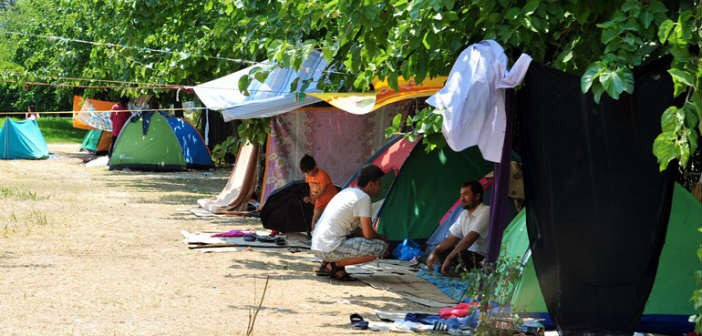
imageThe Pedion tou Areos (Field of Mars), at 25 hectares the biggest park in the center of Athens, built to commemorate the heroes of the 1821 revolution. It was refurbished some years ago at a cost of more than nine million euros, but has since gone slightly to seed, like much else in Athens. Drug users lurk in shady corners. And now a new dimension has been added to this landscape: rows of small, colorful tents line the Avenue of Heroes, clotheslines are strung between trees. Afghan refugees started this camp a couple of weeks ago and their numbers are swelling by the day. Amongst them are small children and pregnant women.

imageThis scenario is repeated in squares and on pavements throughout the city. Shopkeepers around offer the refugees food, but they don’t want them there. It’s bad for business, and business is bad anyway. Charitable organizations do the best they can. There is little help from the state.

image

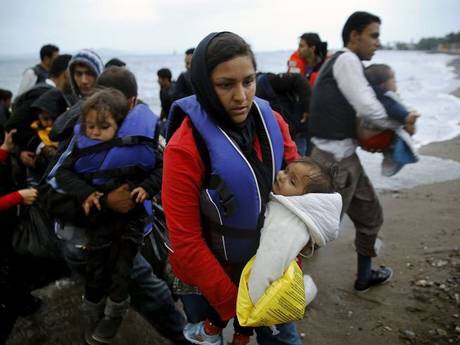
Hundreds of immigrants are arriving every day on the islands across from Turkey. More than 48.000 have come in the first semester of 2015, compared with 43.000 for the whole of 2014.

Exhausted, scared and lost, they are forced to wait for days in difficult conditions before being ‘processed’ by overworked officials in understaffed and underfunded local authority offices. Sometimes fights break out between nationalities: if the Afghans believe the Syrians are receiving better treatment, for example. When cleared, they make their way to Athens. But they don’t want to stay in Greece, where people are already struggling under an unbearable burden. Their dream is to end up in Germany, or get to England via France. Some have relatives there. There is chaos at the Larisa train station, chaos at Patras port, where they try to stow aboard lorries going to Italy.

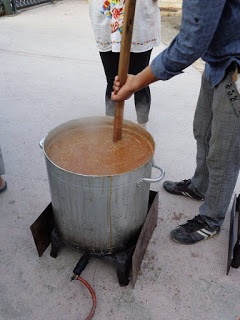
And  we are talking about those that have actually made it across. In the old days, slavers had to make sure the merchandise at least arrived in a fit state to be sold. Modern traffickers – or ‘brokers’ as they like to call themselves – demand to be paid in advance. Then they just pile the human cargo into boats made for a tenth of their number, if that, and set them loose upon the seas – sometimes with not even enough fuel to make land. Boats are left to the care of teenage captains, the tanks empty, people locked in the hold.

Many drown. The rest are rescued by the coastguard. Unfortunately, more rescue missions have resulted in increased traffic, as was seen with the Mare Nostrum operation in Italy. The traffickers are on a constant search for new routes, new methods of transport.

imageHow can Europe deal with such a massive transfer of populations, on a scale never seen before in history?

In the twenty-first century, in a society where the accumulation of material goods is a given, these people have NOTHING. It’s a concept difficult to comprehend. No clothes, no food, no papers, no home. Nothing. It is impossible to put oneself in the place of humans so desperate they are willing to leave behind everything they know, to risk life and limb, and who then arrive in a country where they are destitute, do not speak the language, and are repelled by all available means.

In an article entitled ‘You’re Better Than This, Europe’,  Nils MUIZNIEKS writes:

Europe needs to take a long, hard look at itself — and at the reality of the refugee issue. The European Union could start by overhauling its laws governing asylum and migration. By increasing legal avenues for migrants to reach Europe, with measures like eased humanitarian visas and family reunification rules, it would reduce the number of migrants taking perilous routes. That would help cut the ground from beneath the feet of smugglers, who grow richer when migration restrictions are harsh. (International New York Times, JUNE 28, 2015)

imageEurope, however, seems far from up to the task. Horrifying scenes are taking place on each side of the Channel. Meanwhile, the Hungarians are building a fence with Serbia to keep them out. Police and army are used to ‘secure’ borders. And each country, if you read the press, is mostly concerned with its own problems, while trying to foist the blame and the responsibility onto everyone else.

There is no doubt that the situation needs to be brought under control, especially since rumors abound that the boats are used to bring over ISIS militants from Libya amongst the refugees. There are no obvious or easy solutions, but the only way forward is for all countries to work together. Europe has to realize there is a huge, potentially explosive problem staring it in the face; a problem which must be dealt with quickly, decisively and, above all, humanely. 

We must never forget we are dealing with people here, people who today are mostly perceived as a threat. But a lot of them have escaped conditions so horrific it would be inhuman to send them back. And immigration, if properly managed, can enrich societies in many ways.

Greece had to deal with a major wave of immigrants in the years 1990-2011, after the fall of communism. These were mostly from Rumania, Bugaria and Albania, but also eventually from all over the world. Although there have been problems – notably a rise in criminality as gangs infiltrated the country – a lot of these immigrant integrated successfully. They learnt Greek, made friends, blended in, set up businesses. And if some report instances of racism in their work or social environment, a recent study showed that this does not extend to their children attending Greek school. A new law is in the process of being passed, which will ease the acquiring of Greek nationality for these children. Ironically, quite a few of these immigrants have now gone back to their countries, where conditions have improved compared to the deteriorating ones in Greece.

image

7 tips for a Greek holiday

Daily we are subjected to weird headlines: 
* Greek PM Tsipras says no to speedy elections, but…
(His party is riven in half, so he might not have a choice.)
* First taverna  to accept Bitcoin is inundated with tourists.
(Can that even be true?)
* 50% of Germans want Greece to stay in the Euro.
(No comment.)
* Athenians have not left to go on holiday yet..
.(How can they, they have no money.)

image

Meanwhile, travelers to Greece have been getting bombarded with advice: Bring thousands in cash. Do not get robbed. Keep away. Beware.

People have been bemoaning the lost tourist season, another stroke of bad luck for the stricken economy. It is said there are many canceled bookings and workers in tourism will have to be laid off. But then friends who did not cancel reported from a variety of islands to say they were having a lovely time. Also my friend Emanuele called from Italy to see how we were faring. He told me a lot of Italians are changing their destination from other countries to Greece in order to show solidarity and spend their money here. A message both touching and cheering.

image

My take is the following:

1. COME! The sun still shines, the sea is turquoise, ancient temples beckon. Take a boat, or climb a mountain. Whether you want to party, veg out or sightsee, Greece is still the place to be. Best holiday ever.

2. Bring some cash (just in case). If you lead the simple island life, you won’t need much, especially if you’ve already paid for transport and accommodation. A few drinks, a meal by the sea – swimming and siestas are free. Except if you’re headed for Myconos – but that’s another story. About getting robbed? It could happen wherever you go. Greece is far from being the most dangerous place on the planet. All over the world, most people get their wallets stolen in their local subway station.

3. Go to an open-air cinema: nothing beats watching a film under the stars, surrounded by jasmine and bougainvillea. In Greece, films are not dubbed.

4. Check out open-air concerts (free), or the panigyri (traditional festival celebrated on saints’ name days) at the local church. A lot of islands also put on interesting art exhibitions.

5. Talk to the locals. Most people speak English. They will be more than happy to try and explain the unexplainable political situation – in their opinion, of course! It makes for lively conversations.

6. If things get fraught, just get out of the center of Athens. Everywhere else will be fine.

7. Last but not least, there are bargains to be had. A lot of places – shops, hotels or restaurants – have put their prices down.

image

Greece on fire


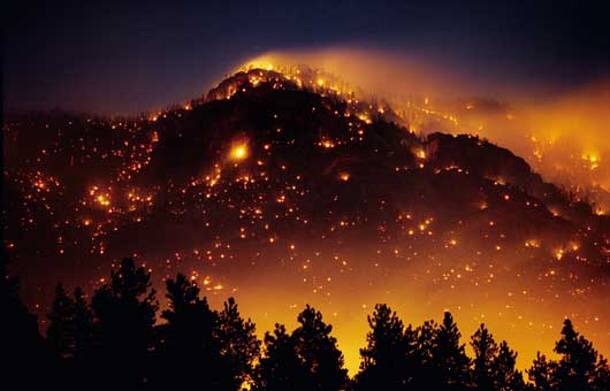
imageAs if we didn’t have troubles enough, Greece is now, literally, on fire. Huge blazes have broken out concurrently: around Athens, in the Peloponnese, and on some islands. The gods must be angry with us, indeed. Or perhaps it’s not the gods? There is talk of arson; of a plan to destabilize the government. More conspiracy theories? Heat and high winds are a dangerous combination for woods that have seen no rain for months. Rubbish such as glass bottles can also play a part, as well as people’s irresponsible behaviour. But we had a similar situation in the summer of 2007, in another politically unstable period under the Karamanlis government, when forest fires caused the death of 84 people and 4,5 million olive trees were burnt. Be that as it may, it’s another disaster, more damages for people and a country that can ill afford them.

Having lived through two fires myself, some years ago, I agonize for the people involved and, indeed, for the huge destruction of nature. There is nothing more heartbreaking than watching a mountain burn.
In our case, luckily our house itself did not burn either time, but everything around it did. At night, the hillside across from us was lit by a wall of flame, against which black silhouettes of houses and trees could be seen. An apocalyptic vision of hell. Bringing coffee to the firemen, we had to fight our way from our car to the fire engines in a storm of swirling ash flakes.
For days, trees or bushes you’d thought had been put out would flare up again. The lawn was black. Inside the house, however much you cleaned and scrubbed, bare feet would be black with soot. And the smell of burnt just would not go away. We’ve had to replant our garden twice.

I pray for the people fighting the blazes; firemen, volunteers, neighbors, even old ladies passing buckets of water. And for the fearless pilots who fly into the smoke and flames to dump water – that is how our house was saved – and then back down to the choppy, wind blown surface of the sea to fill up their tanks. A dangerous job indeed; and in these strained financial times, one can only hope the planes and helicopters have been properly maintained.

image

Capital controls: 15 ways in which they’ve changed our life

1. We have to wait in long lines at ATMs to get our daily cash allowance (€60 which has become €50 since the banks have run out of €10 and €20 notes.) Many people have acquired a ‘secret’ or ‘favourite’ machine – one that is more reliable/less crowded that others.

2. Public Transport is – temporarily – free, only a lot less buses are running. A friend arrived at work late yesterday because she had to wait one hour and two minutes for her bus (usually there’s one every ten minutes.)

3. Any subscriptions to foreign sites (such as extra iCloud storage) are frozen, since Greek credit cards cannot pay money abroad. Same goes for Amazon or other online shopping.

4. Venues booked for weddings or christenings – there are a lot of those at this time of year- ask for part of the money in advance, preferably in cash, so they can pay for the food, etc. People are being creative about their ‘big day’: flowers from the garden, a cousin will do the bride’s hair, sister takes the photos etc.

5. Funerals can be paid for in installments.

image6. Amongst my friends, the only people who have gone on holiday are those who have houses on the islands, or those who had prepaid for a trip somewhere. People trying to book rooms are asked for money in advance, in many cases in cash. Sometimes a friend on the spot can lend a hand.
However, tourists are OK since ATMs still seem to disburse money to foreign credit cards.

7. Some flights have been cancelled and many airlines are not accepting bookings from Greek tourist companies. However, around 15.000 internal flights will be available for around €10.

8. Businesses that deal in cash pay their employees in cash and get praise. Those that don’t can’t pay at all and get complaints. A lot of people have been asked to take unpaid vacation until the banks open (and are hoping that by the time this happens, their companies will still be operational.)

9. Dentists report cancellations for cosmetic appointments such as teeth cleaning or whitening.

10. Pharmacies report a rise in sales for medications used in chronic diseases such as diabetes as patients stock up, fearing a future lack.

11. People are paying with credit cards wherever possible in order to save what little cash they have. But some retailers are already refusing plastic.

12. Meanwhile, people who had money in the bank are trying desperately to spend it, fearing future haircuts. They’re buying up things they consider to have a resale value, such as jewels, cars, and electronic gadgets. To take advantage of this trend, luxury clothing retailers have started early and generous discounts (summer sales in Greece normally start in August.)

13. Generally people are trying to spend any money they have, so bills and taxes are paid promptly!

14. Imports and exports have become very complicated.

15. A lot of shows, especially those with expensive tickets, have been cancelled.

The big picture

“It is never too late to be what you might have been.”
― George Eliot

image

A sigh of relief? An all-night marathon ended in ‘white smoke,’ as Greece and its creditors managed to reach an agreement that secures the country’s place in the Eurozone. From Grexit to ‘Greekment’, as Donald Tusk, head of the European Council, dubbed it.

Of course, a lot of work remains to be done, since Greece has an obligation to immediately implement draconian reforms. There is political uncertainty because this implementation depends on the cooperation of all parties. For the Greek people, more hard times are ahead.

There is a feeling, abroad as well as in Greece, that the terms of the deal are punitively harsh. Nobody is celebrating. However, I think one must remain positive. Catastrophe has been averted, given that it appears the government had no plan B in case of a return to the drachma.
I hope Greece will take this chance to put its affairs in order, something which is long overdue. It’s sad and humiliating to accept, but maybe the political system will finally be obliged to break out of the vicious circle they’ve been in for so long, and bring about a real change in mentality.
Let’s hope this will be the making of a modern, self-sufficient new Greece.

At the same time, this crisis has shaken the foundations of Europe considerably, and exposed its flaws. There is an immediate need to look at the bigger picture. Today Europe is faced with huge problems, starting with its failure to alleviate the poverty of many of its citizens.
Amongst other things, it has to cope with wave upon wave of immigrants seeking a better life within its borders. It has to deal with the threat of terrorism. And it has to compete with emerging markets where labor is still both cheaper and willing to work much longer hours.
Europe has shown it is not united, nor has it found a way to accommodate the differences, cultural or other, between its members. Changes are needed; rifts must be healed and hard questions answered if the European machinery is to keep moving forward smoothly in future.


It ain’t over yet…

How better to start the day than with an ironic take on events by one of my favourite cartoonists, Matt.

image imageOn to the news:

In a turbulent all-night session, Greek PM Mr. Tsipras managed to get Parliament to ratify austerity terms previously rejected by his government, in a desperate bid to secure the country’s future in the Eurozone.

Mr. Tsipras explained his about-face by saying he did not get a mandate from the people to take Greece out of the Eurozone, confirming his pre-referendum assertion that a NO vote was not a vote against Europe. He has recognized that the pain of capital controls and economic collapse is too much to bear. Mr. Tsipras had promised voters a miracle which he was unable to deliver – the only way he can now redeem himself is if at least he achieves some restructuring (or what Mrs. Merkel calls re-profiling) of the debt.
He got 251 votes, bolstered by opposition parties, but lost the majority within his own party. The left faction of SYRIZA voted against, which is understandable from their point of view. They have been against all along. They accuse the ECB of using ‘liquidity asphyxiation’ to bring a rebel democracy to its knees. And they accuse the PM for not having a Plan B if Europe did not give in to his demands.

Major architect of the whole fiasco, ex Finance Minister Varoufakis, did not vote. He left for his holiday home on the island of Aegina, citing ‘personal reasons’ – a bizarre turn of events that was widely condemned by all parties. Readers’ comments in the press have vilified him as a rat leaving a sinking ship which he himself helped scuttle.

New Finance Minister Mr. Tsakalotos admitted that the measures proposed will reinforce austerity, but insisted we had to look at the big picture and promised to aid the weaker members of society.

However, Mr. Tsipras warned that the battle is not won yet, since it is far from certain the new proposals will be accepted by the lenders.

Conclusion: We will – should? – be happy if we manage to achieve a new agreement which will be similar to, and tougher than, the one we nearly got before the referendum.

To end on a lighter note, yesterday farmers in Thessaloniki rolled up image
with truckloads of watermelons which they proceeded to distribute to the pensioners waiting in line in the heat outside banks to get their money. They thought they could do with some refreshment.

Frozen

image

There’s a heat wave on, but everyone’s frozen: paralyzed, unable to plan or think of anything else than the situation we find ourselves in. Heads are buzzing and eyes are red from hours of watching television and computer screens, trying to make sense of the news pouring out.

There was an atmosphere of celebration after the referendum results on Sunday; but everyone I’ve talked to since Monday, from all social levels – and whether they voted YES or NO – is dazed and confused. Nobody’s spending any money, apart from filling the fridge and the car. That’s fine,  most people still have plenty to eat and enough clothes and other accessories to last them for years if need be – but what about those in retail? Business has fallen to zero overnight. Nobody’s shopping, nobody’s going to the hairdresser or even to the doctor if they can possibly avoid it. There is a peculiar exception to this: some are buying jewelry, expensive smartphones or tablets and even cars. This is because they fear a haircut will be applied to their savings, and they prefer to have goods they think will keep their value.

Immigrants from Albania and Bulgaria who have lived here for years and are well integrated, with families and children who go to Greek school, are returning to their countries. They don’t want their kids to go through the same things they experienced in their childhood. And this just a a law is being passed making it easier to get Greek nationality. Meanwhile, more than a thousand new immigrants landed on our shores in the last week. On Samos, there was a huge problem providing them with food, since the catering company had not been paid.

*

To kill time while waiting for the results of the European summit, we took ourselves off to our local open-air cinema. One of summer’s pleasures – watching a movie under the stars. Jasmine and bougainvillea climbing the walls, a bar selling popcorn, hotdogs and  nachos. Tickets €6.  Still an affordable evening out. The cinema was not full, but not empty either, with couples and families trying to forget their troubles for a couple of hours.

image

*

Back home to another episode of science fiction, or shall I say, the theater of the absurd?

Journalists on all TV channels were commenting on the fact that the Greek negotiating team had arrived at the meeting without a proposal. Our new Finance Minister, Mr. Tsakalotos, was inadvertently carrying handwritten notes in such a way they could be – and were – read by all. Then participants of the summit started emerging, all with long faces. They made statements saying how committed they were to finding a solution, but that it was going to be extremely difficult, that time was running out, and that the ball was in Greece’s court. Some openly said it was time Greece left the Euro, and maybe the Eurozone as well.

Next, our PM came out, all smiles, and declared proposals had been made for an equitable solution for us and our partners, promising social equality and economic growth. He implied all would be well by Sunday.

What to believe? Commentators were describing rescue talks as having collapsed yet again. Most were pessimistic about a positive outcome.

Is there some plan behind all this? I wish our politicians would come straight out and tell the Greek people what it is they’re expecting to achieve, what their proposals are, if they have a Plan B and how that would work out. My greatest fear is that, by the time they’ve sorted something out, it will be too little, too late. Every passing day, another bit of the Greek economy dies.

The day after

image

A quick roundup of today’s events:

Maverick finance minister Yanis Varoufakis resigns (to the relief of many in Europe). His place is taken by Euclid Tsakalotos, an Oxford-educated economist.

All party chiefs meet to prepare a ‘new’ proposal, which they will co-sign before submitting it for negotiation in Brussels.

The package under discussion is similar to the one proposed by Mr. Junker.[Statement from Washington: The referendum happened, and the situation remains the same.]
The question is: If we’re to go back to the same point we were at before the referendum, why was all this necessary, only with Greece now in a weaker position, with the previous program having expired, and a full-blown bank crisis going on?
Was it just a complicated piece of political maneuvering?

The government is trying to distil an air of optimism and presents an agreement as a foregone conclusion, to the contrary of the messages coming in from Europe, where the consensus seems to be dissatisfaction with the referendum result.
Tomorrow, the Eurogroup meets. Will the Greek team bring back an agreement? It appears difficult, and the terms will most probably be worse than before. And if they don’t succeed, what then?

“NO”

The country has voted: it’s a landslide for NO. No to more austerity, no to the disastrous economic policies of the Troika. It was also made clear that people are sick of the old political system, which bears a lot of responsibility for the situation in which we find ourselves. It is time for a real change. As I was writing this, the chief of the opposition, New Democracy leader Mr. Samaras, announced his resignation.

The European institutions have warned that this would be a step towards a Grexit.

The Greek PM however, has insisted that the NO vote would just be a show of support that would give him greater powers of negotiation and help him achieve a better deal. He has promised to deliver within 48 hours. Godspeed – I don’t think a single Greek, whatever they voted for, does not wish him well.

He is facing a mammoth task. The hard facts are the following:

The banks are shut, and likely to remain so for a while. Panic rumors are going around that there will be a haircut of deposits and that the contents of safe deposit boxes will be confiscated.

Most ATM machines are empty and the rest only give each person €50 instead of the €60 allowed since they have run out of €20 and €10 notes.

The tourist season is in ruins. Most Greeks cannot afford a holiday and there are multiple cancelations from abroad. Hotels will run out of supplies in ten days. Hospitals already lack basic necessities and medicines. Many small businesses will close because they need cash to function on a day to day basis. Their business will be taken over by multinationals who can afford to remain unpaid for a while. A lot of people will be laid off.

50% of children in the Athens region go to school without breakfast. More than 60% of young people are unemployed. Many thousands have committed suicide. A few hundred thousand have been obliged to emigrate.

And the elephant in the room: what will happen to the hundreds of destitute immigrants arriving on our shores every day? Who will feed them? Where will they go?

We hear the Italians are expressing solidarity. The Germans are intransigent: they think it’s time we went. These are the messages we’ve got so far.

It is my sincerest wish both sides will see their way forward to an agreement that will allow Greece to survive, recover and, in the future, thrive. The next few days and weeks are vital. It will be hard, but let’s hope the difficulties can be overcome. The alternative is a leap into the unknown.

cropped-image16.jpg

For the moment, I feel we are like jellyfish pushed around by the currents.