Wild Thing—a book review

Wild thing is a life of the artist Paul Gaugin. Sue Prideaux does her subject proud—she is a sympathetic and judicious biographer who writes like a novelist and has researched her subject from different angles.

The biography contains information which was new to me. Gaugin had an extremely varied and interesting life, knowing both riches and poverty.

I will not reveal too much detail because it is a book well worth reading. But did you know that Gauguin:

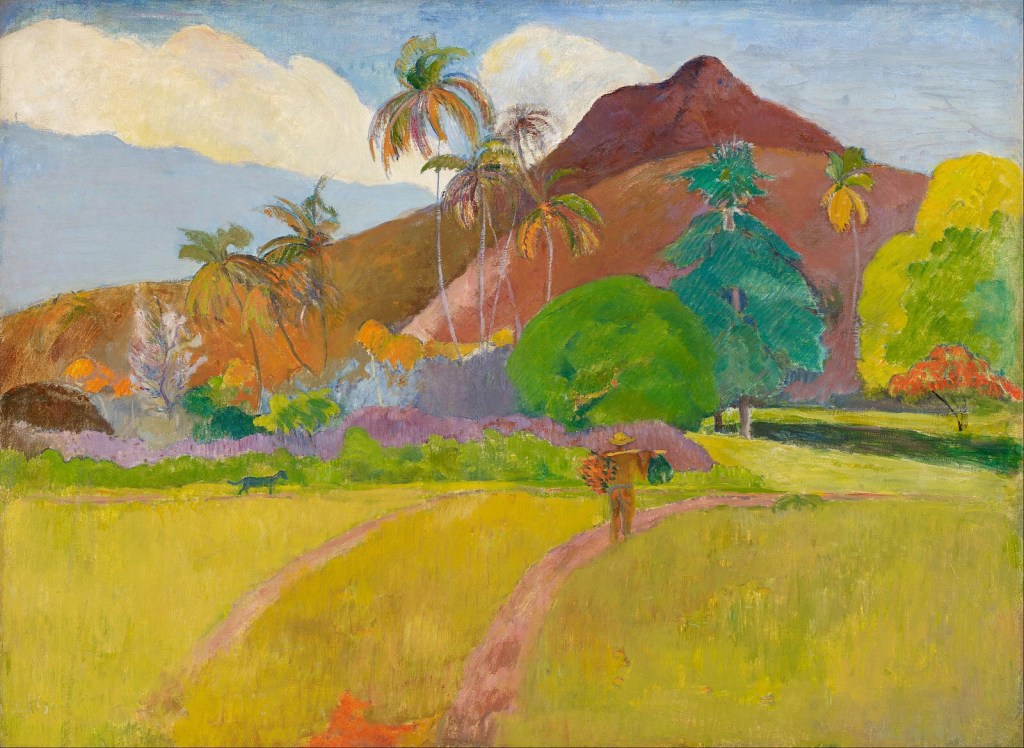
Paul Gaugin, Tahitian landscape

-Spent the first seven years of his life in Peru, which left indelible impressions of colour, heat and life in him? To my mind, this explains a lot about his palette and use of colour.

-That he then led a very bourgeois existence, working at the Bourse in Paris and becoming extremely wealthy? Even as he started painting and married, he lived luxuriously, spending without a thought for the future.

Then the Bourse failed in 1882 and for the rest of his life he was poor, living a hand to mouth existence, begging and borrowing from friends. He often did not have enough to eat.

La vision après le serment, 1888

-That he had a very complicated and close relationship with Vincent Van Gogh, which continued up to his death. Read the book to find out details of the famous ear-cutting episode.

-That Vincent’s brother, Theo Van Gogh, was Gauguin’s agent.

-That he was deeply affected by attending a public execution in Paris: the death by guillotine of a mysterious murderer.

-That he was greatly inspired by the colonial exhibits at the 1889 Exposition Universelle in Paris, where the Eiffel Tower, built for the celebration, soared heavenward, lit by electric light. Round its feet sprang recreations of the colonies and their treasures, from which he borrowed elements and incorporated them into his art. For this Camille Pissarro called him a bricoleur, a cobbler-together of second-hand ideas.

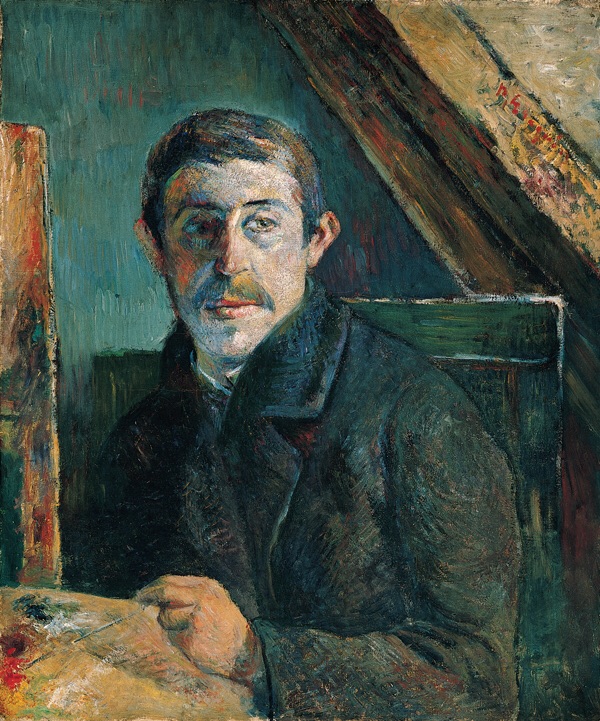
Self portrait

The book details his marriage and relationship to his children, and his friendships and dealings with prominent men of his world, such as André Gide, Pierre Loti, August Strindberg, Frederick Delius and others. One of his main supporters in hours of need was Edgar Degas. The biography is full of delicious anecdotes of this crowd of supremely talented men.

Finally we get an account of his latter years in Tahiti, where he ended up almost by chance. Gaugin’s life is one of the richest in the history of wester art, and Sue Prideaux does it full justice.

Les ancêtres de Tehamana, 1893 (portrait of Tehura).

Highly recommended.

Preaching to fish

Noted by his contemporaries for his powerful preaching, expert knowledge of scripture, and undying love and devotion to the poor and the sick, Saint Anthony of Padua (1195-1231) was one of the most quickly canonized saints in church history, being canonized less than a year after his death.

Born in Portugal of wealthy and noble parents, Anthony joined the Church early on and ended up in Italy after his ship was blown off course on a return journey from Morocco.

Although he died at 35, Anthony led a busy and varied life, preached in many places in Italy and France and performed many miracles. One can easily read about his life (there is a lengthy Wikipedia entry) but the reason I am writing about him is that I came, entirely by chance, upon this weird and wonderful detail of a mural in the Basilica di Sant’Antonio da Padova, of him preaching to a bunch of fish.

Just look at the expressions on those fish faces. Priceless

The story of Anthony “preaching to the fish” originated in Rimini, where he had gone to preach. When the Cathar  heretics there treated him with contempt, Anthony was said to have gone to the shoreline, where he began to preach at the water’s edge until a great crowd of fish was seen gathered before him. The people of the town and even heretics flocked to see this marvelous thing and were moved to listen to Anthony’s preaching.

There are other paintings of this event, but this one has a special flavour to it.

An artsy picnic

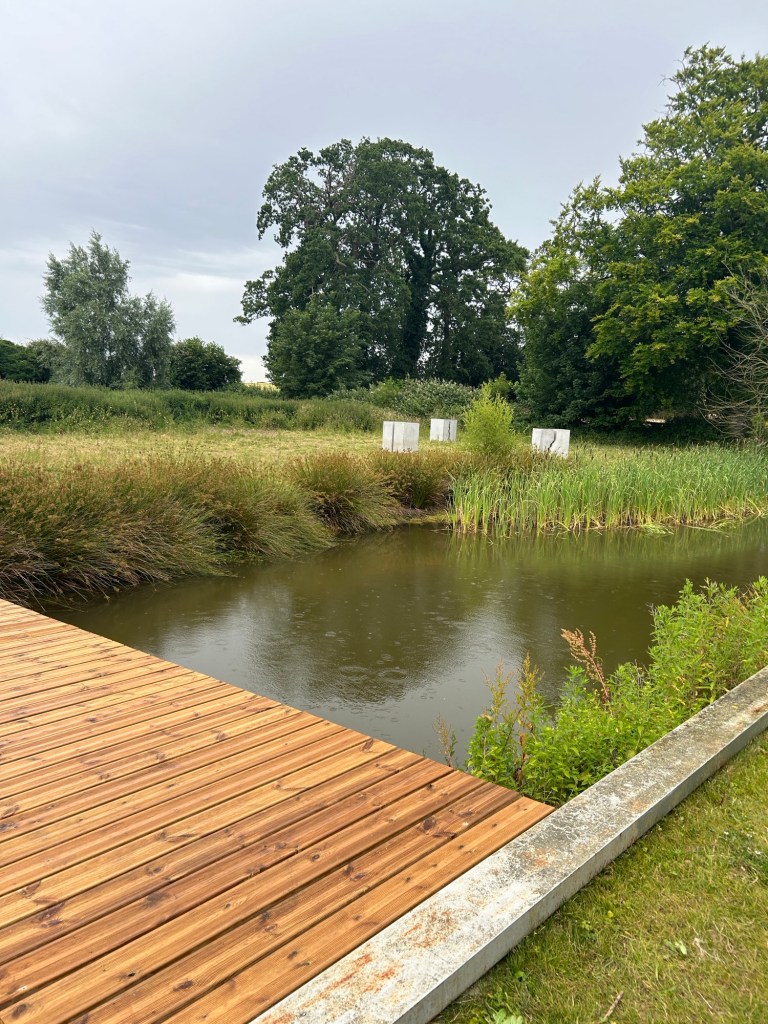
Some days ago I was happy to be invited to a picnic organised by a Paris art gallery, the Galerie Jocelyn Wolf, at a manor house in deepest Normandy. This was a very old building, renovated over the course of a few years by the gallery owner, Jocelyn, in order to provide a venue for artist residencies and a framework for exhibiting artworks, including outdoor sculptures.

After passing the Pont de Normandie, always a treat as driving over it is the next best thing to flying, I took a road winding through beautiful countryside and arrived literally in the middle of nowhere, where thankfully a small sign with PARKING on it gave a hint I was in the right place (to outward appearances, a rustic farm with various agricultural implements scattered around).

A gravel road led to the house itself, fronted by an orchard where I came upon a group of people sitting on the grass under the beautiful, ancient apple trees.

I joined them and someone thoughtfully provided me with a glass. Each group of three or four people shared a wicker basket of the most delicious local food: a loaf of fresh country bread, a variety of cured meats and cheeses, small radishes, a jar of rillettes, a brioche, punnets of berries—washed down with cool cider. Dogs and kids ran about.

Painting by Sosthene Baran

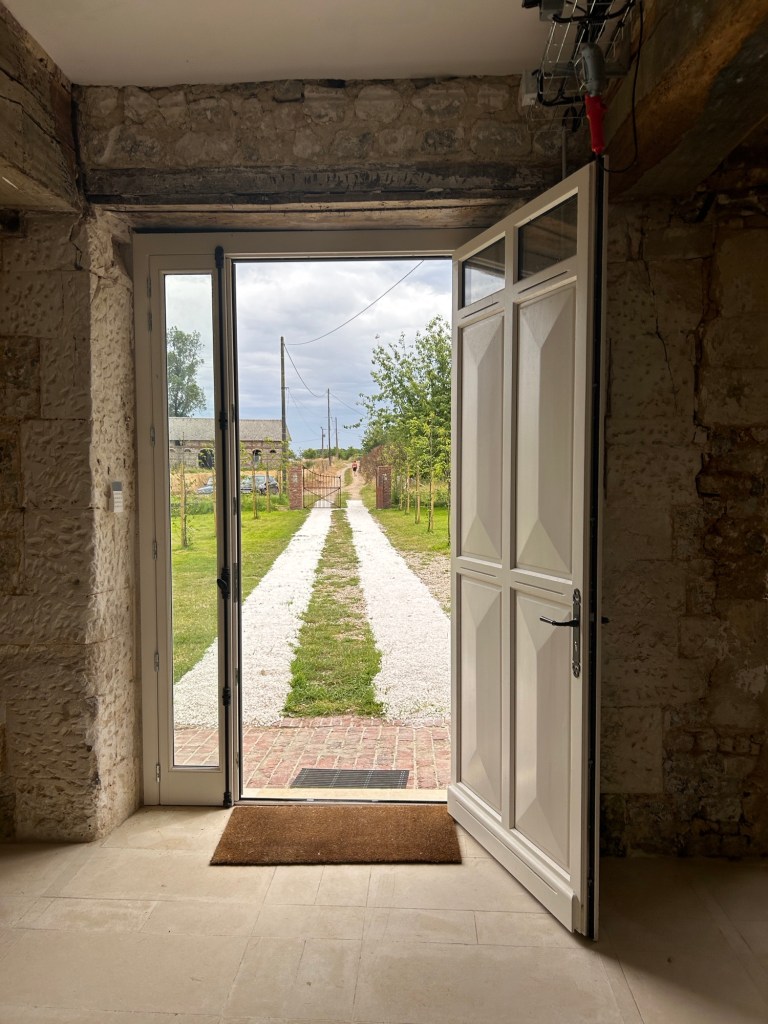
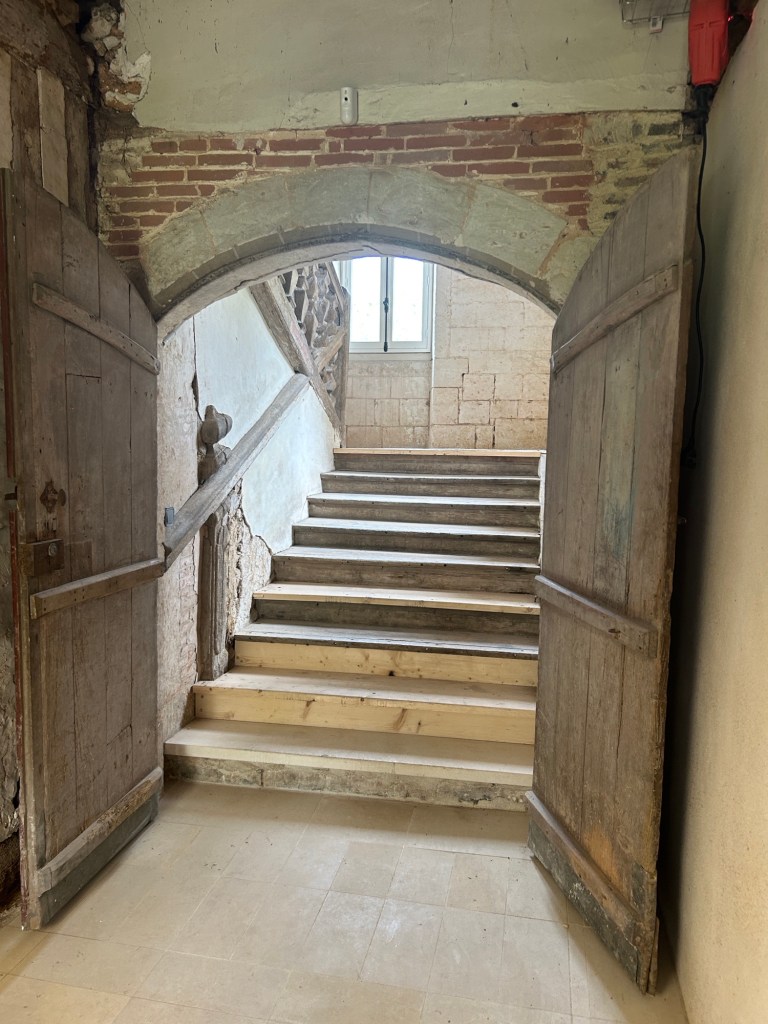
As we were finishing, a few drops of rain (it being Normandy, after all) made us gather up the remains and congregate for coffee in the kitchen, after which I went to explore the house. This has been left in a very primal state, with beautiful old doors renovated but unpainted, stone and brick exposed, and gallery-style electrics installed on wire tracks.

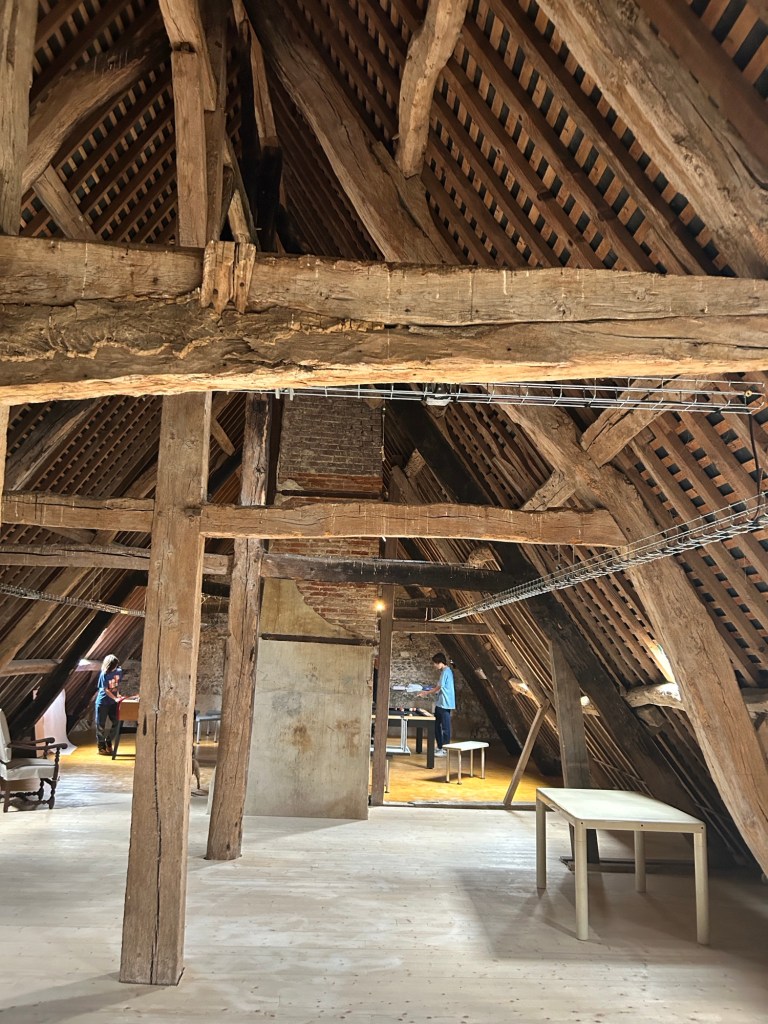
Windows on every side open on pristine, unspoilt countryside and there is a huge open space attic. The whole thing is in impeccable taste and a fitting framework for all sorts of art.

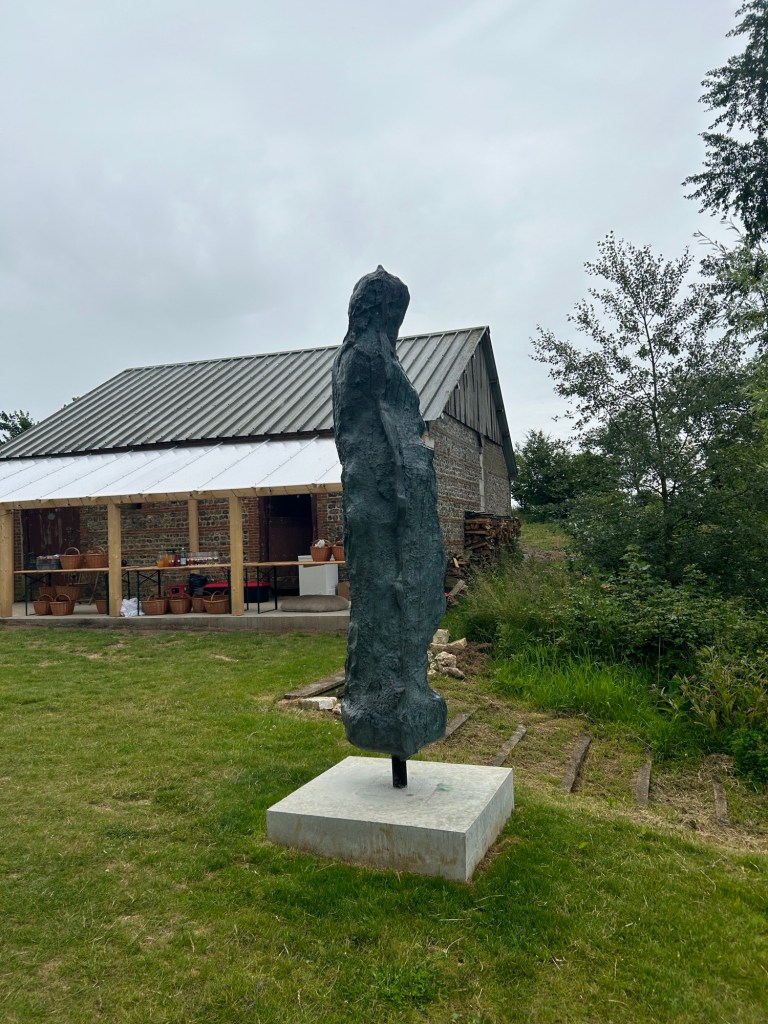
Sculptures by Christof Weber

The rain having stopped, I went for a tour of the garden to see the sculptures installed there, some actually in the pond behind the house.

Sculpture by Francisco Tropa

The afternoon concluded with a performance by two artists represented by the gallery, Prinz Gholam, who struck poses taken from famous sculptures while wearing a series of fascinating masks.

Down memory lane: the art comp

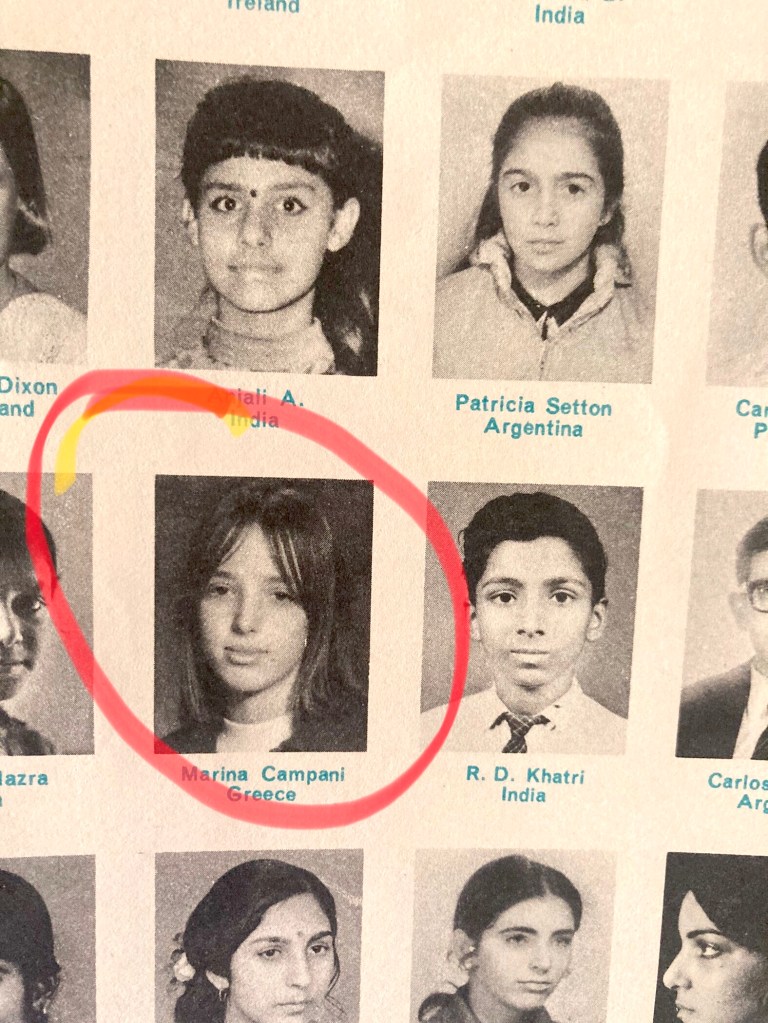
When I was fourteen, my school entered one of my paintings in a competition in India, The Shankar’s International Children’s Competition. How my—very inspiring—art teacher, Mrs Orfanou, came upon this competition, I have no idea.

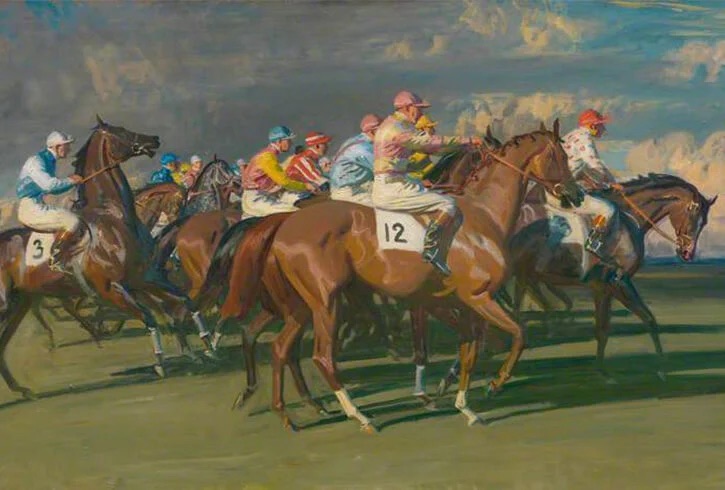
I won a ‘gold medal’ in my category, for my painting of racehorses. I think it was done in gouache.

I don’t remember having actually received a real gold medal, but I must have had some kind of certificate and also a copy of the book the organisers published each year.

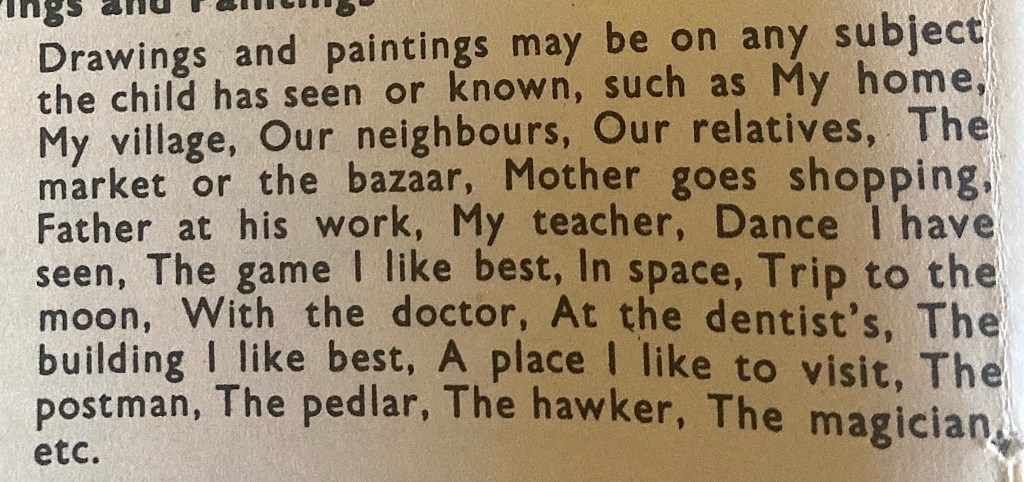
There are 17000 entries from 83 countries! There are twelve pages of photographs of the gold medalists, for every category. Along with the paintings, there are also short stories and poems.

Look how old-fashioned some of the suggested subjects are—I wonder if kids today even know what a pedlar or a hawker is.

Interestingly, I googled the competition, and it continued until 2019! Having been set up in 1949 for children in India, the next year it was opened to kids from all over the world. Sadly, I could not find anything more recent than 2019, so I assume it is no more.

In an unexpected turn of events, via the competition I acquired an Indian penpal named, if memory serves me right, Rajesh Malhotra, with whom I corresponded for a number of years. No idea what we wrote about, I suppose school and hobbies etc. We also practiced our English! (This was before the internet, and Facebook, obviously—people actually wrote letters.)

Footnote: When you decide to sort out the bookcases, the unexpected might turn up.

Peter Doig at The Courtauld

Peter Doig is an exciting artist—in fact, he is one of the most celebrated and important figurative painters working today. Born in Scotland in 1959, he moved with his family to Trinidad, then Canada, and later studied in London. In 2000 he was invited to return to Trinidad with his friend, artist Chris Ofili, and was so inspired he moved there permanently with his wife and children, until relocating recently to London.

His paintings focus on both landscapes and the human figure, melding them into evocative and often haunting compositions which are painterly and almost abstract. “I’m not trying to make paintings look like photos,” he has said of his process. “I want to make paintings using photos as a reference, the way painters did when photography was first invented.”

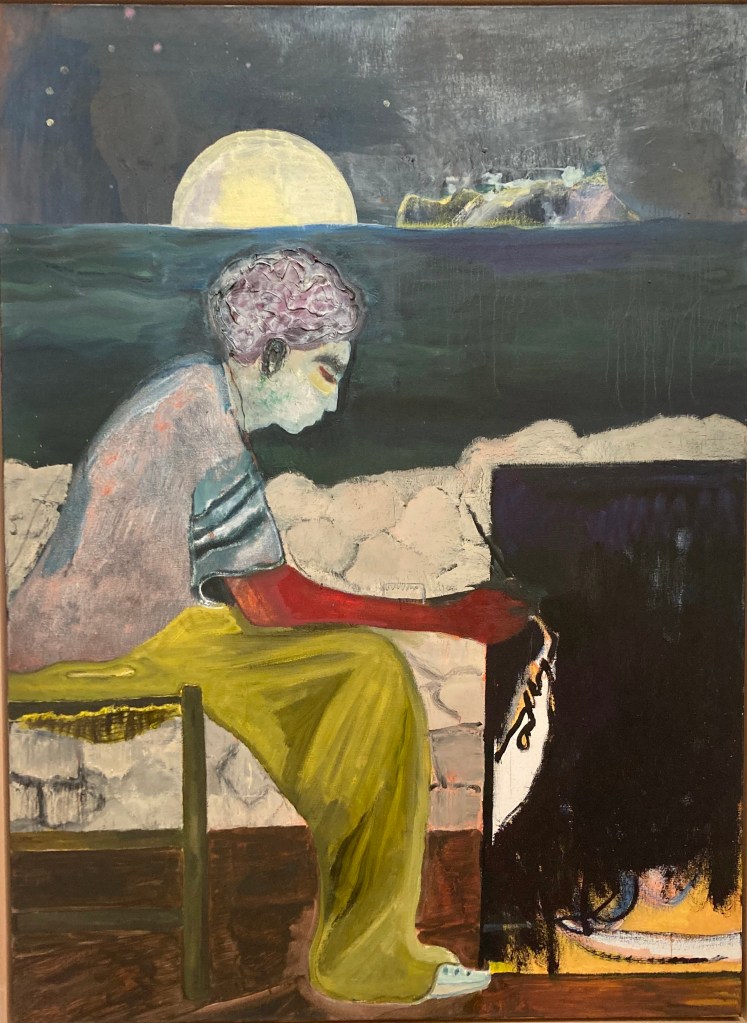
Painting on an Island. The setting is the prison island of Carrera, off the coast of Trinidad. Learning that some of the inmates were painters, Doig helped organise an annual exhibition of their work in Port of Spain.

I went to see his newest work, which is exhibited at The Courtauld in London. These are paintings that have evolved over a number of years, as he explores a rich variety of places, people, memories and ways of painting. Perhaps they are not his best work, but there is still that haunting quality, stark imagery and wonderfully strong palette to admire.

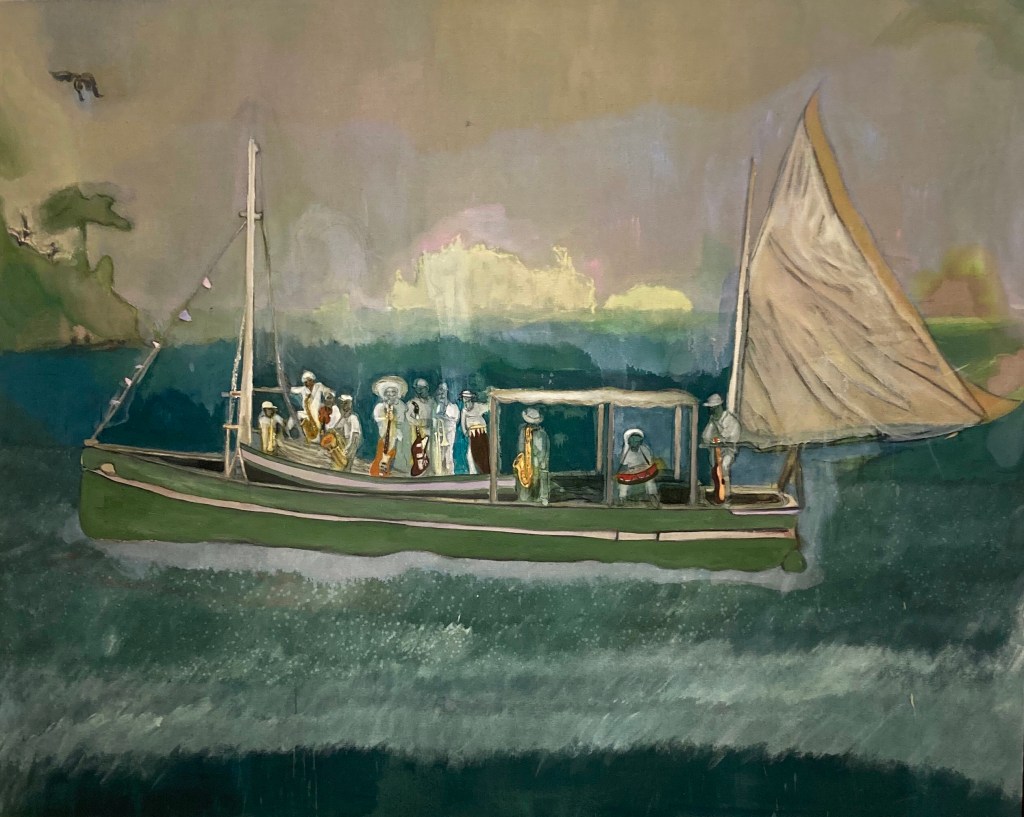
House of Music (Soca boat) Based on a photo of fishermen holding up their catch, Doig painted the men as musicians.

Their location at The Courtauld is also interesting because the permanent collection contains wonderful works that have been important inspiration for the artist, by artists such as Cézanne, Gauguin, Manet, Monet, Pissarro and Van Gogh. It was interesting to consider Doig’s contemporary works in the light of these masterpieces.

This painting was started in the Alps, but is inspired by Doig’s time in Canada

The Courtauld is also showcasing the artist’s work as a printmaker with a display that unveils for the first time a series of prints Doig made in response to the poetry of his friend and collaborator, the late Derek Walcott (1930-2017).

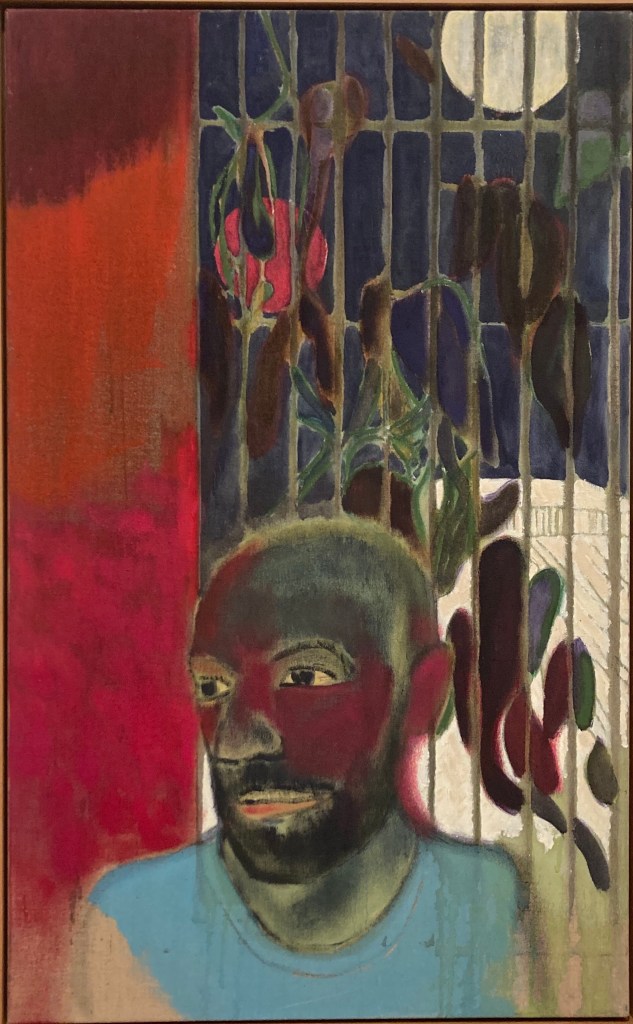
Portrait of Derek Walcott

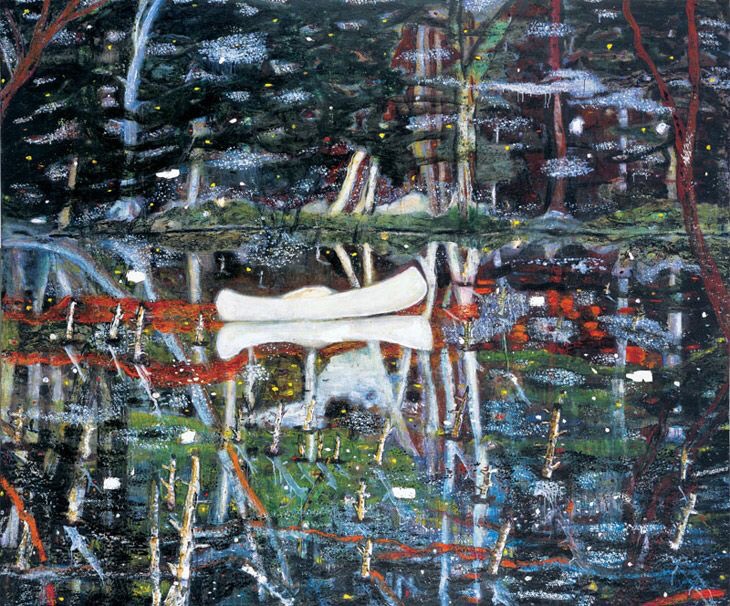
As a footnote, I will add that Doig’s works are held in the collections of the Art Institute of Chicago, the National Gallery of Art in Washington, D.C., the Tate Gallery in London, and the Goetz Collection in Munich, among others. In 2007, his painting White Canoe sold at Sotheby’s for $11.3 million, then an auction record for a living European artist.

White canoe

The Morgan Stanley Exhibition at The Courtauld is on until May 29

Drawings

Despite the lockdown we’ve been having quite a busy time what with one thing and another, and I’ve found it difficult in the last few weeks to work on any larger paintings. Especially since my studio is in the kitchen, and larger paintings have to go on the kitchen table, then the lot must be cleared away before meals if we are to be more than two using it. Is it any wonder that I work with water-based media? Oils would be impossible, what with the smell of turpentine and the permanent drips everywhere.

I’m not complaining, though, because I do love to work on paper. Often I just make a series of drawings.

Can you see the lovely deckled edges?

I treated myself to a bunch of sheets of handmade paper from Nepal, Bhutan and India. I found it on Etsy, at a marvelous shop called TornEdgePaper, which has a huge selection at very reasonable prices, should anyone be interested. They’re all different shades, and thicknesses and surfaces, and, although some are so thin and delicate as to be almost transparent, they are impressively strong.

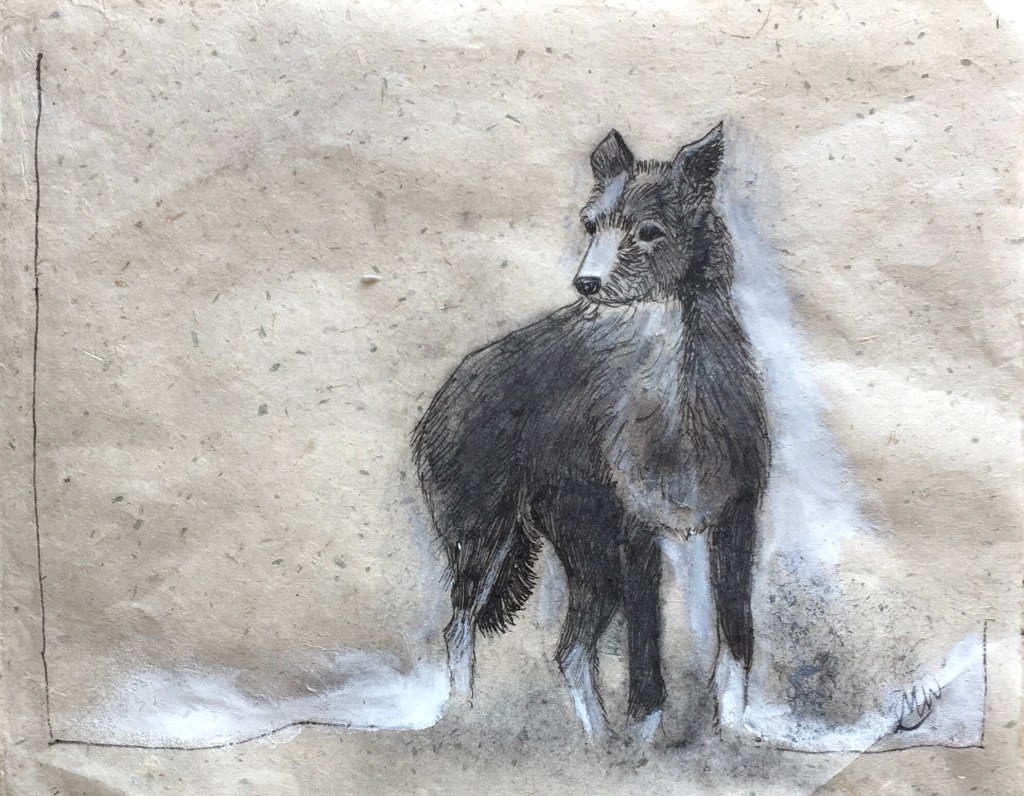
I’ve been using ink, pencil, graphite, gesso, watercolor and collage.

Trying out different effects.

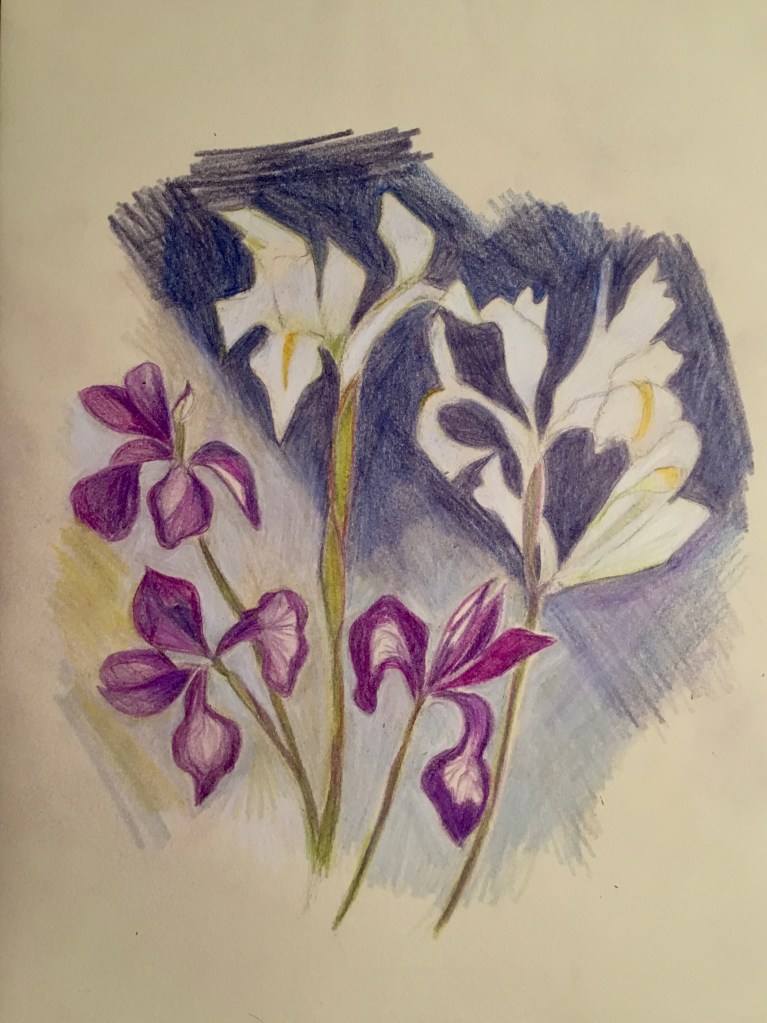
The one below is a floral study on tinted paper, using aquarelle pencils. Irises make such weird and wonderful shapes.

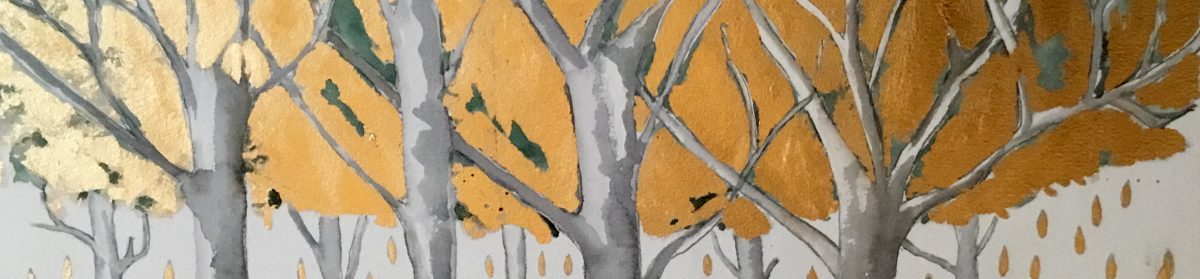
An ink drawing, this time on normal watercolor paper, featuring a raven with a gold leaf background.

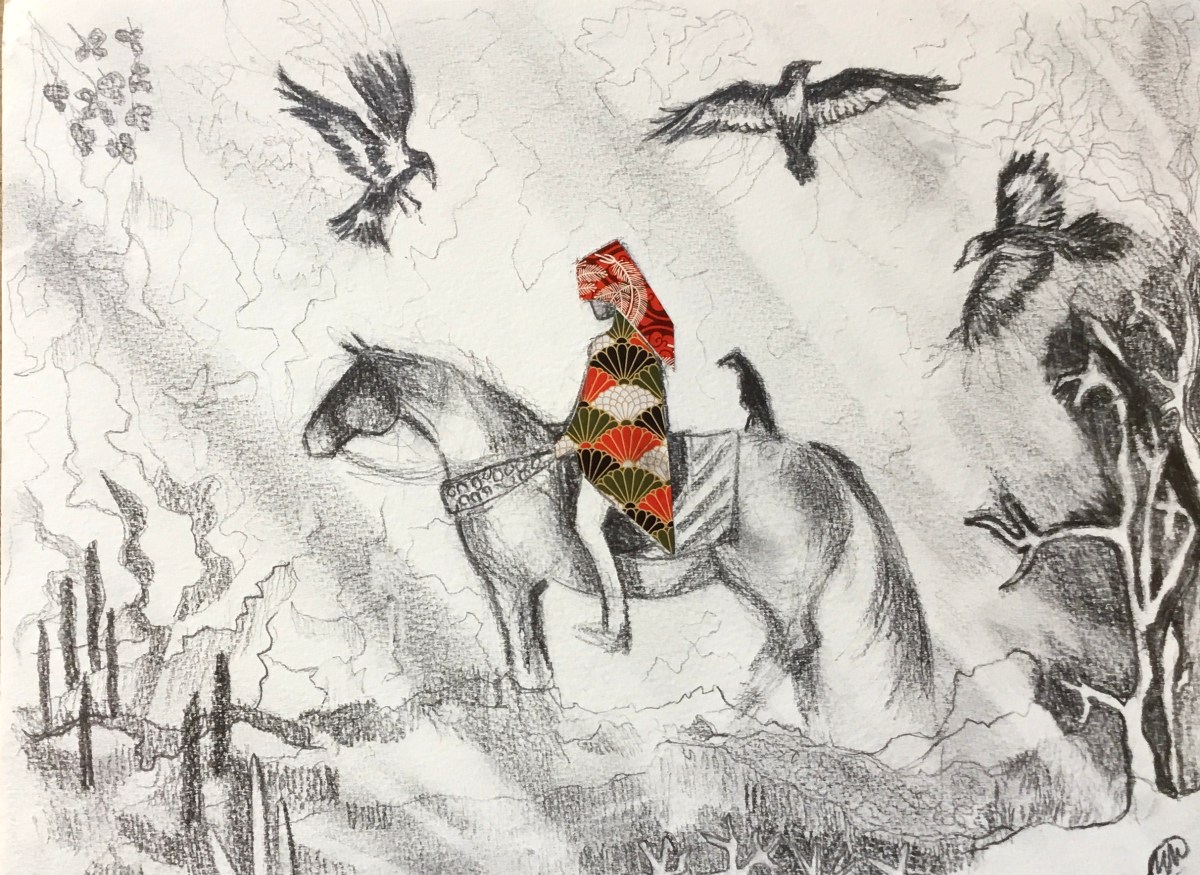
Last but not least, a pencil drawing with origami paper collage. It’s titled ‘Boy on horse with birds’, and I imagined him as a kind of young samouraï.


The horses of Susan Rothenberg

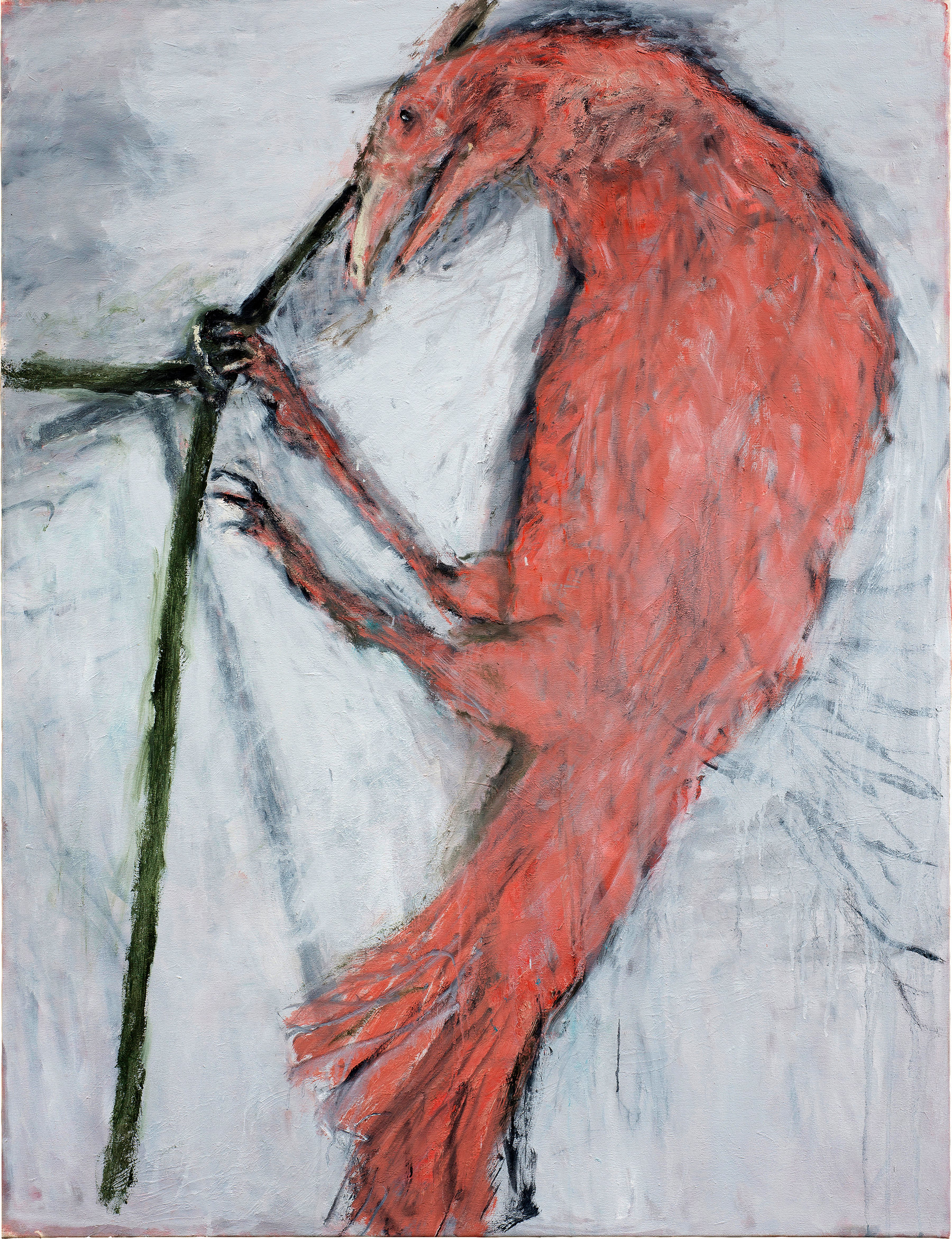
I don’t want this blog to be fielding a constant stream of obituaries, but I was sad to learn of the passing of Susan Rothenberg, an artist who’s been a great inspiration to me.


Born in 1945 in Buffalo, New York, Susan Rothenberg was a pioneer, in that her figurative paintings of the ‘70s were in direct opposition to the Minimalist abstract art that was in vogue in the New York art world at the time.


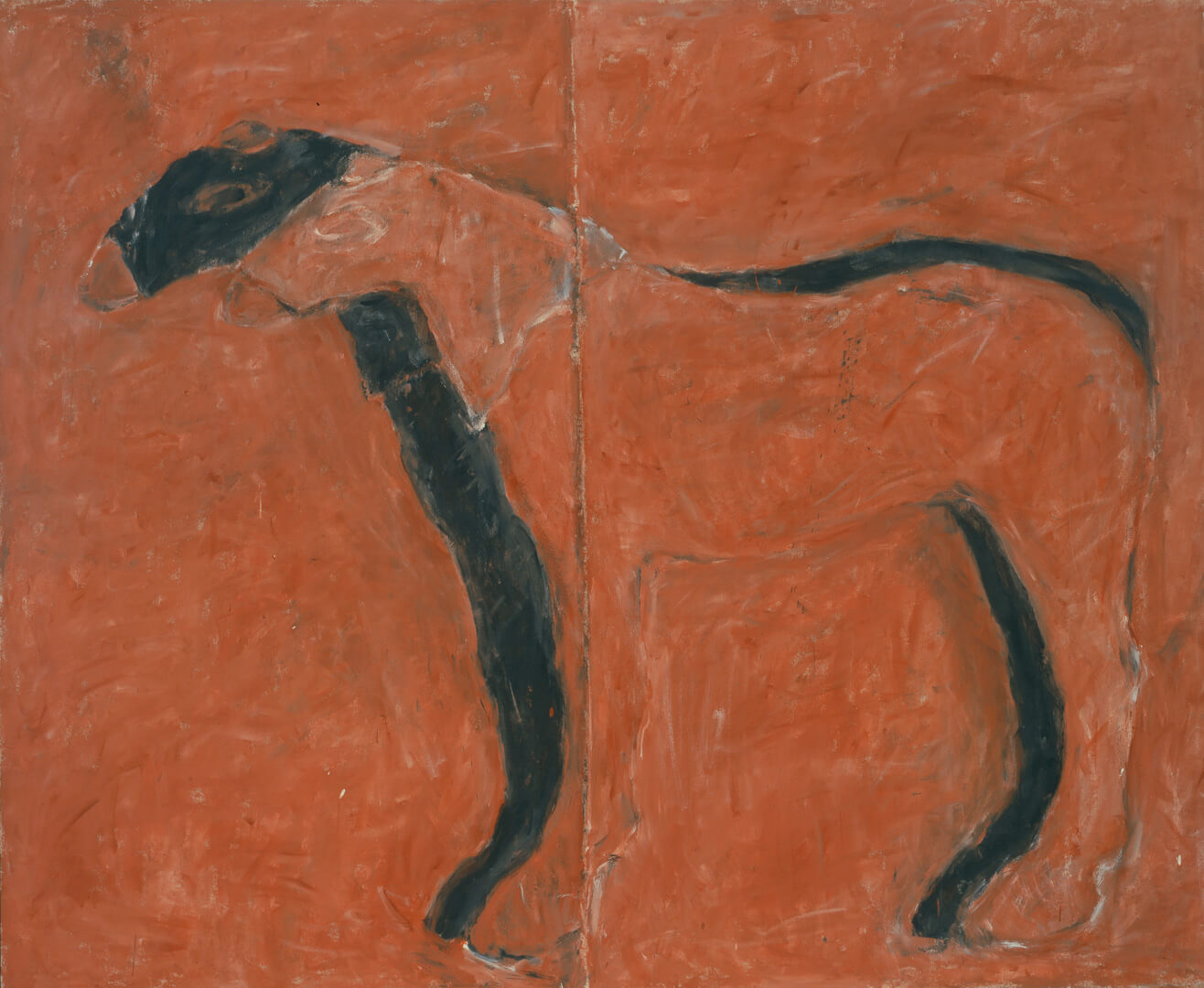
The paintings she mostly became known for were those featuring horses. Rothenberg depicted equine forms in a pared down style, against monochrome, vacant backgrounds. Sometimes, the horses were bisected; at others, they were contained within uneven geometrical forms. They usually appear alone, or in pairs. “The horse was a way of not doing people, yet it was a symbol of people, a self-portrait, really,” Rothenberg once said.


After the horses, Rothenberg moved on to painting disembodied heads and hands, and various objects.


At times, the images border on the surrealist, such as her improbable 1985 portrait of Piet Mondrian dancing in diffuse golden light, below.


In 1989, Rothenberg married conceptual artist Bruce Nauman and moved with him to a 750-acre ranch in Galisteo, New Mexico, near where Georgia O’Keeffe and Agnes Martin also lived and worked. They spent a lot of time in non-art-related activities, like horseback riding, walking the dogs, feeding the chickens, and were refreshingly uninterested in what was going on in the art world.


Rothemberg, in her own words: “I just don’t think there’s much stuff going on of the kind that I’m interested in, which is really just about painting. It’s not about issues, it’s not about politics, it’s not about process, it’s not about technology. I’m just a painter.”
Her recent work featured subjects including the inside of her studio and the natural surroundings by her home, using “dirtied-down” colors and thick, gestural painted surfaces to reflect the topography of the region.

Here’s a short video for those interested.

Staying home


It’s difficult to know how to describe the situation we find ourselves in. A mini-apocalypse? A plague? A warning for the future?
It’s been hard accepting how dangerous the virus is, and how contagious. Most of us, if in good health, kept up normal activities for a while, thinking it was just a bad kind of flu. Some are still not taking it seriously enough, obliging governments to impose confinement, curfews and fines.
In retrospect, it was a disaster waiting to happen, given the global amount of traveling that goes on, with no health checks whatsoever. The proof has been the rapidity with which the virus has spread worldwide.

However, this too shall pass, as have all previous epidemics: the object now being to limit the devastation it will leave in its wake, both in terms of deaths and financial.


I made this happy painting using natural powdered pigments, and loads of pink!


It’s interesting, and sometimes weird, to see how people are reacting. I still have friends who are on holiday, blithely ignoring the fact that they might be blocked from going home, maybe for months. Thousands of travelers, of all nationalities, are stuck abroad as we speak.

As with all extreme situations, this has brought out the best and the worst in people. Every day we witness incredible scenes—some of outrageous selfishness, some of great kindness.


Sketching what’s in front of me


Indisputably, we must come to terms with the new reality facing us for weeks, maybe for months to come.

I find myself back in confinement after the weeks when I could put no weight on my broken ankle—but this time without a cast! Bliss. I can now cook, and, as everyone knows, food is a great lifter of spirits. Improvising with what we have in the fridge, freezer and store cupboard. And I’ve been doing some foraging. There’s a little stream nearby, and its banks are full of wild garlic and nettles. Good for pesto, and soup, perhaps. There was a little yellow frog hopping about, and for a minute I thought ‘Frog legs!’, but then, Noo. No way 🙂


Another of my powdered pigment experiments


I feel so thankful and privileged to be able to go out in the garden. It’s such an escape from feeling like murdering the loved ones. I think of people stuck with small kids in tiny appartments. People worried about losing their jobs or going bankrupt. The refugees, piled in camps with no hygiene. People stuck in prison. The elderly who cannot see their families because they risk being contaminated. Africans who have no access to clean water with which to wash their hands. The list goes on.

I also have so much respect for the people with no choice but to continue working in very uncertain conditions. Nurses, doctors, policemen, firefighters, couriers, pharmacists, cashiers and many more.


Floral study


Apart from cooking, and reading, I’ve been drawing and painting, color being another spirit booster. Amazing how many ways there are of describing one cheerful vase of daffodils.

And let’s not forget that laughter is the best medicine. People’s sense of humor is flourishing, I’m pleased to report, with a spate of jokes, memes and caricatures flooding the web and my social media.


And I’m sure his mum was hovering just out of sight, in case he needed something else…

Magical Leonardo

During my London trip I managed to get a slot to see the Da Vinci drawings in the Queen’s Gallery.

Marking the 500th anniversary of the death of Leonardo da Vinci, this exhibition showed more than 200 of the Renaissance master’s greatest drawings in the Royal Collection. There was but one word to describe them: they were magical.


Loving works on paper as I do, I literally did not know where to look first: there were the most delicate flowers and plants, drawn with the precision of a botanist, yet filled with life in a unique way. It was a known fact that if Leonardo had to put a few flowers in the corner of a painting, he made dozens of studies before deciding which to use. Look at those acorns below, they seem to glow on the page.


Then there were maps which must have made the adventure-loving amongst his peers long to go off and explore.


The drawings in the Royal Collection used to be bound up in a book that was acquired by Charles II. The pages have now been separated so that the drawings can be shown in their full beauty. They provide an extraordinary insight into the workings of Leonardo’s mind and reflect the full range of his interests, including painting, sculpture, architecture, anatomy, engineering, cartography, geology and botany.

See below his scheme on how to breach a fortress’s walls.


Continue reading “Magical Leonardo”

All the colors in the world

Like most artists, I’m addicted to art supplies. Let me loose in an art shop, and I can spend hours amongst the multitude of paints on offer, trying hard not to bankrupt myself.
Nowadays paint is mostly made in labs, using different chemical substances, but artists in the past made their own supplies, using whatever materials they could find—including ‘the impossibly esoteric, the dangerously toxic, the prohibitively expensive, and the perilously fugitive,’ according to writer Simon Schama (article in the New Yorker, September 3, 2018). It’s a process I find extremely interesting, although I’m quite happy to squeeze ready-made paint out of a tube myself.


Imagine then my delight when I came upon an article on the Forbes Pigment Collection, a technicolor array of more than 2,500 samples, housed at the Harvard Arts Museums. The collection was started by Edward Waldo Forbes in the early 1920s, after he purchased a damaged Renaissance painting of the Virgin and child. Hoping to restore the painting to its original brilliance, Forbes realized that he needed to understand the materials he was working with. Forbes was the director of Harvard’s Fogg Museum from 1909 to 1944, and he firmly believed in the interdependence of art and science.


Arranged according to the exploded color wheel, the thousands of shades on display in the Collection — some poisonous, others impossibly rare — are a library of more than just color. Scientists and art historians tap into the collection in order to verify the origins of questionable paintings up for auction, or work to identify the key compounds of ancient colors in order to better preserve cultural masterpieces for generations to come.

The stories behind the pigments are endless, but some particularly stand out. Here are some of the best:

Dragon Blood: The legendary pigment was purportedly gathered from dragon wounds in the Middle Ages; more accurately, its color comes from tree resin. Conservation scientists at the Collection are working to unlock the mystery of this centuries-old pigment.

Mummy Brown: Made from the ground up remains of actual Egyptian mummies, mixed with white pitch and myrrh, it was used from the sixteenth century until late in the nineteenth when supplies ran out. At the time the mummies were imported into Europe in large numbers to be used for medicinal purposes (Ugh…)


Tyrian Purple: An ancient Phoenician dye that requires 10,000 mollusks to produce a single gram of pigment, is said to have been discovered by Hercules’s dog as he snuffled along the beach. It is a secretion produced by several species of predatory sea snails in the family Muricidae, rock snails originally known by the name Murex. Being extremely expensive to produce, it became very popular during the Byzantine Empire (Ancient Greek: πορφύρα, porphúra,) where its production was tightly controlled and its use restricted to the dyeing of imperial silks. Thus a child born to a reigning emperor was said to be porphyrogenitos, “born in the purple”.


In the reds range, Crimson is produced from the dried bodies of the kermes insect, which were gathered commercially in Mediterranean countries, where they live on the kermes oak, and sold throughout Europe; while Carmine is made from the dried bodies of the female cochineal, and was probably brought to Europe during the conquest of Mexico by the Spaniard Hernán Cortés.

Indian Yellow: It was noted for its intense luminance, was widely used in cloth dyeing and was especially well known from its use in Rajput-Mughal miniature paintings from the 16th to the 19th century. Indian yellow pigment was originally manufactured in rural India from the urine of cattle fed only on mango leaves and water. The urine would be collected and dried, producing foul-smelling hard dirty yellow balls of the raw pigment, called “purree”. The process was allegedly declared inhumane and outlawed in 1908, as the cows were extremely undernourished, partly because the leaves contain the toxin urushiol which is also found in poison ivy.


Lapis Lazuli is a deep blue metamorphic rock used as a semi-precious stone that has been prized since antiquity for its intense color. As early as the 7th millennium BCE, lapis lazuli was mined in northeast Afghanistan. At the end of the Middle Ages, it began to be exported to Europe, where it was ground into powder and made into ultramarine, the finest and most expensive of all blue pigments. Its rarity and brilliant hue, as well as the difficulty and expense of the extraction process made it more expensive than gold. It was used by some of the most important artists of the Renaissance and Baroque, including Masaccio, Perugino, Titian and Vermeer, and was often reserved for the clothing of the central figures of their paintings, especially the Virgin Mary.

Artists often took risks to create their works, using poisonous pigments like Emerald Green (a toxic copper-acetoarsenite) to get the color just right; or White Lead, a pure white pigment obtained by corroding metallic lead with acetic acid in the presence of carbon dioxide. This was done in pots with a little vinegar added, which were stacked up and covered with a mixture of decaying dung and spent tanner’s bark.


The Forbes Collection is constantly updated as many artists donate new samples. It could be described as a conservator’s crystal ball: offering glimpses into the aging process for various pigments, binders, and any other materials that might make their way into a work of art. Experts also might use the collection to evaluate the legitimacy of a painting’s attribution to an artist. By analyzing the chemical makeup of the pigments used in a painting and comparing them to the known standards of the Forbes collection, analysts can determine whether the colors used would have been available to a specific artist during their lifetime, or if a pigment would be available in the region from which the painting is believed to have originated.
One example is the verification of a painting by Jackson Pollock that went on the market a few years ago. Curators were ready to assert the painting was genuine, until this lab ran tests of the pigments that were used, using pigments in the collection as a standard, and discovered that the red that was used was not available in art-making materials until 20 years after Jackson Pollock had died.


Among the collection’s newest acquisitions are samples of Vantablack, a material developed by Surrey NanoSystems in the United Kingdom which is one of the darkest substances known, absorbing up to 99.96% of visible light. It was intended for military purposes and astronomy equipment, but there is an amusing story attached to it, because the company exclusively licensed it to artist Anish Kapoor’s studio for artistic use. This caused outrage among some other artists, including Stuart Semple. In retaliation, Semple banned Kapoor from buying Pinkest Pink, a strongest shade of pink that he had developed. However, in 2016 Kapoor got his hands on some Pinkest Pink and posted an Instagram post of his middle finger dipped in it. Semple then created another shade of paint made from crushed glass as a retort to Kapoor, and later barred Kapoor from buying other products of his, including his extremely strong shades of green and yellow paint as well as a paint sold as Black 2.0, which is nearly indistinguishable to Vantablack VBx, despite being acrylic. If one wanted to buy any of these paints, they would have to sign a contract stating that they were not Anish Kapoor and didn’t intend to give the paint to Kapoor. Vanity? Performance art? You choose.

All photos Google