An Intervention

Artist duo Elmgreen&Dragset were invited to exhibit their work in the iconic sculpture gallery of the Musée d’Orsay.

They called this installation, consisting of a number of boyish figures engaged in incongruous—in the context—pursuits, L’Addition.

Michael Elmgreen (born 1961 in Copenhagen, Denmark) and Ingar Dragset (born 1969 in Trodheim, Norway) have worked together as an artist duo since 1995, exploring the relationship between art, architecture and design.

Elmgreen&Dragset live and work in Berlin. They are known for art work that has wit and subversive humour, and also addresses social and cultural concern. Their work is too varied and prolific to be described in a short post, but anyone interested can look them up on Wikipedia—and they are, indeed, interesting.

For the first time in its history, the Musée d’Orsay invited someone to intervene in the museum’s permanent display of 19th century sculpture, which has remained the same for nearly 40 years.

As quoted in the museum’s site: In a trans-historical encounter between past and present, L’Addition highlights themes of evolving masculinities, solitude, and the magic of everyday situations. There is a certain beauty to be found in each of the fleeting moments captured in the works, whether it is in the pause before jumping from a diving board, the split second before a drone is sent off from a child’s hand, or a glimpse through the lens of a camera.

The figures are made of bronze, stainless steel and laquer. Boys waiting to dive, taking pictures from the mezzanine, setting off drones or just lounging upside down on the ceiling. It was all pretty cool, and an extra treat combined with the Caillebotte exhibition.

A wonderful collection

In 2004, the descendants of the Senn family made a donation of 205 pieces of art to the MuMa Museum in Le Havre. The collection, of mostly Impressionist and Fauve artists, was amassed by Olivier Senn and further embellished by members of his family. It includes works by such icons as Delacroix, Boudin, Monet, Renoir, De Chirico, De Staël and others. On the 20th anniversary of this major donation, the museum curated a major exhibition of the works.

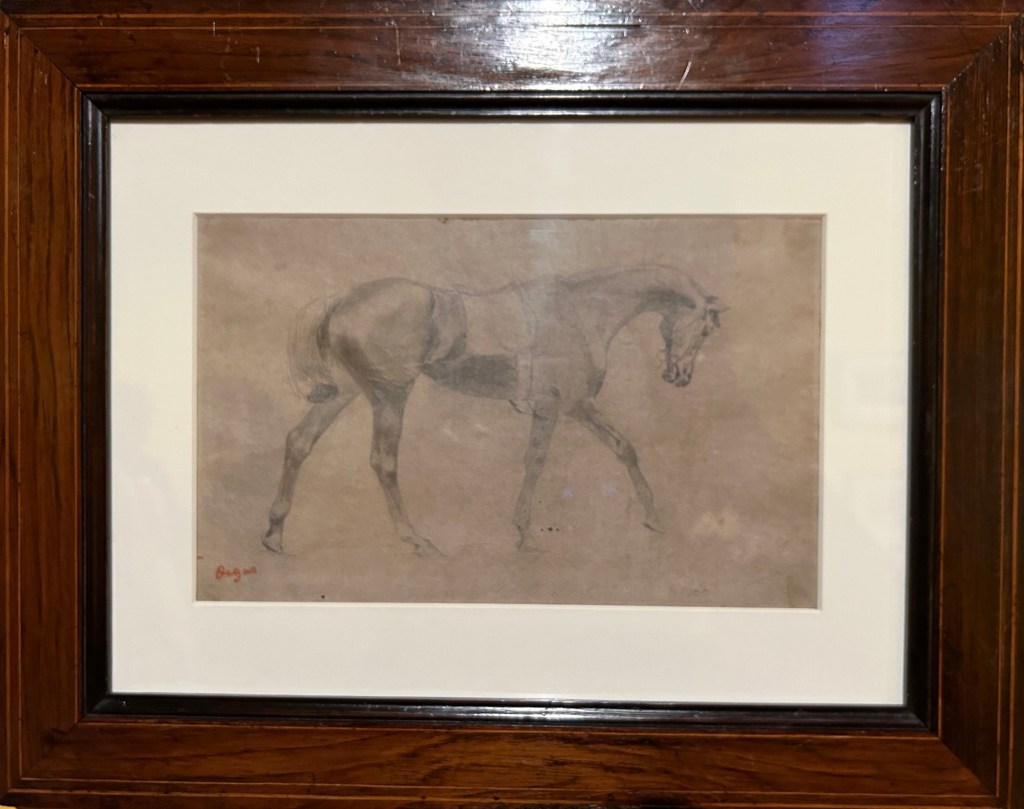
Edgar Degas, pencil on paper

Born in Le Havre in 1864, Olivier Senn studied law and, after marrying, joined his father-in-law’s cotton business. Once he’d made his fortune, he started buying art. The Senns and their descendants and relatives by marriage were all art and music lovers, as well as generous donors.

Yesterday’s vernissage of the exhibition drew a large and very appreciative crowd, which thankfully spread out around the museum rooms, making it pleasant to wander about, admiring the works. The collection was too large to describe in full, so I will linger over some particular favourites, a set of lovely pencil drawings by Edgar Degas.

Degas, circa 1859-1861.
This drawing, along with the one above and several others, were studies for a large oil painting titled Alexandre et Bucéphale

Another interesting work, probably in pastel, is the study below, for a painting called Semiramis building Babylon

Further little treasures among the works on paper were the small charcoal studies below, by Henri-Edmond Cross. A lesson in conveying much with but a few simple strokes.

Here’s a link for anyone who would like to see more:

https://www.muma-lehavre.fr/fr/expositions/les-senn-collectionneurs-et-mecenes

The Morozov art collection

It was a great treat to visit the Morozov Collection at the Louis Vuitton Foundation in Paris. The show, presented for the first time outside Russia, includes some 300 impressionist, post-impressionist and expressionist masterpieces amassed at the turn of the 20th century by the vastly wealthy Russian brothers Mikhail and Ivan Morozov,  before being swept away by the Russian Revolution.


Paul Gauguin

The brothers, born in 1870 and 1871 respectively, were the great-grandsons of a serf. With five rubles from his wife’s dowry, their ancestor set up a ribbon workshop, which he developed into a factory, and bought his family’s freedom. In a few generations, the family became wealthy, philanthropic industrialists.


Edvard Munch

Besides being fabulously wealthy, the brothers had very avant garde tastes, and built up the stunning collection which includes works by Russian as well as French artists. At the turn of the last century, the upper social echelon in Russia spoke French and the Morozov brothers created their collection on the advice of Parisian dealers such as Paul Durand-Ruel and Ambroise Vollard. Mikhail, who died prematurely from a heart attack at the age of 33, discovered Bonnard’s work in Paris and acquired the first paintings by Gauguin to enter Russia.


Picasso from the Rose period

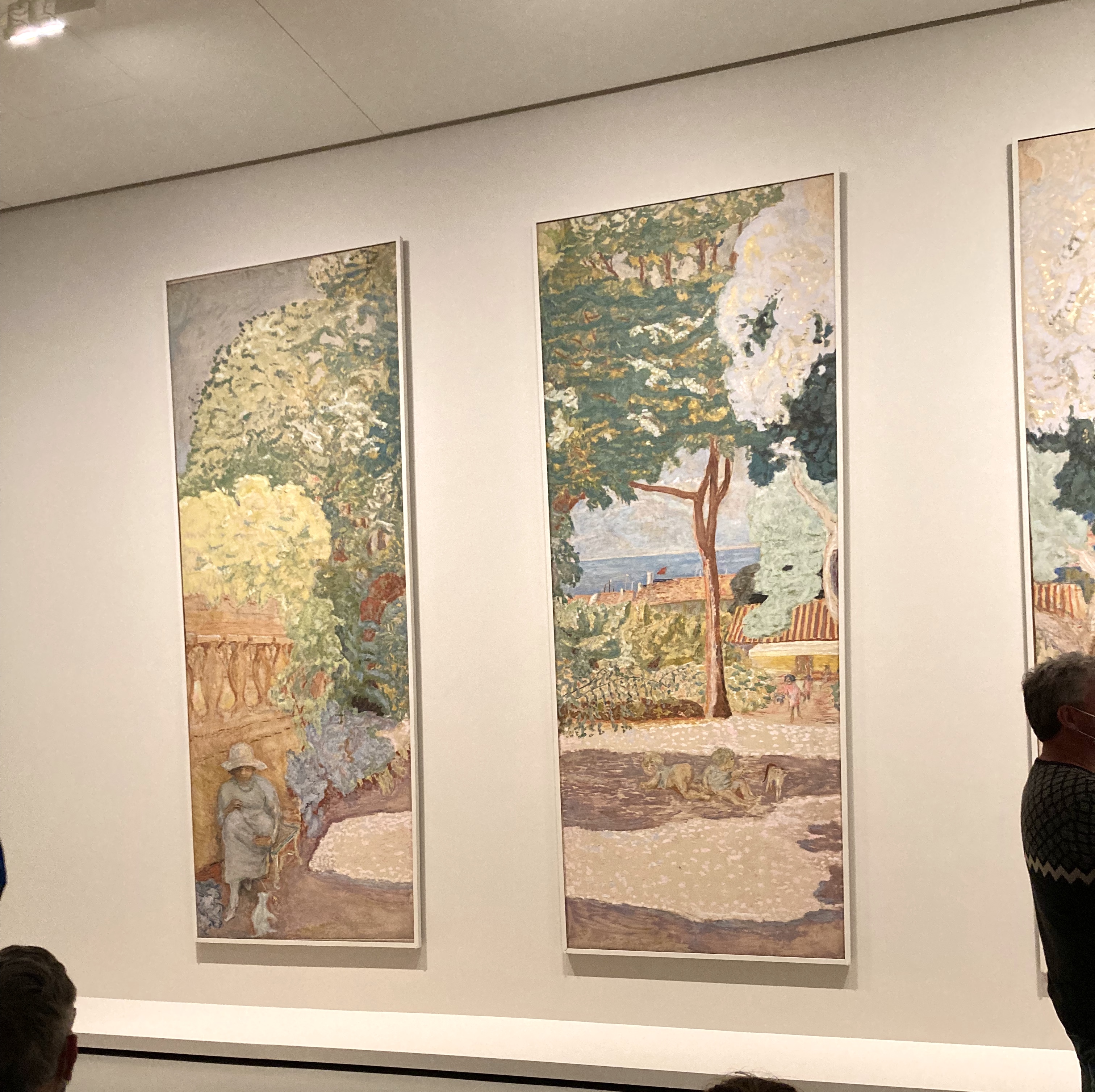
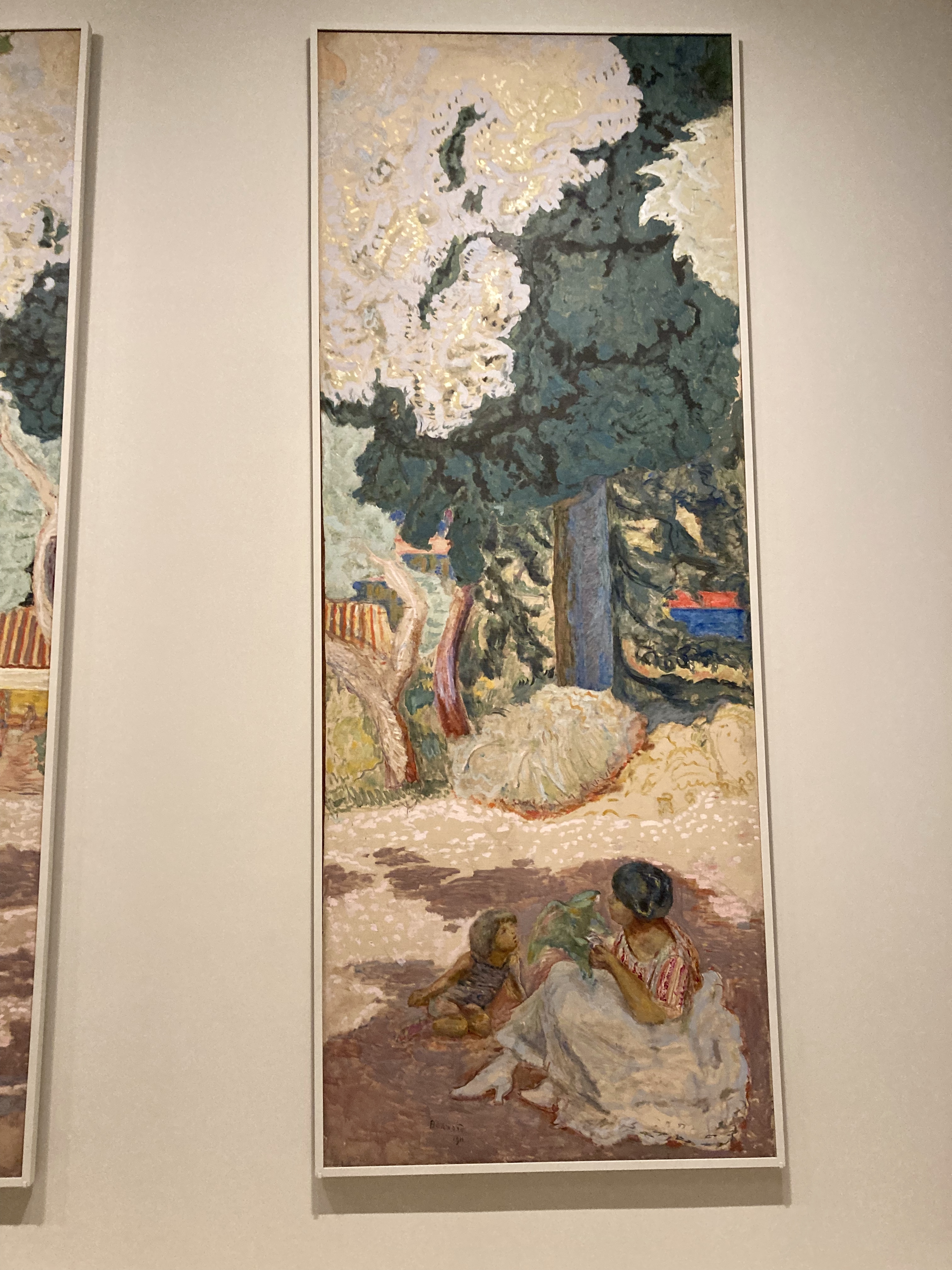
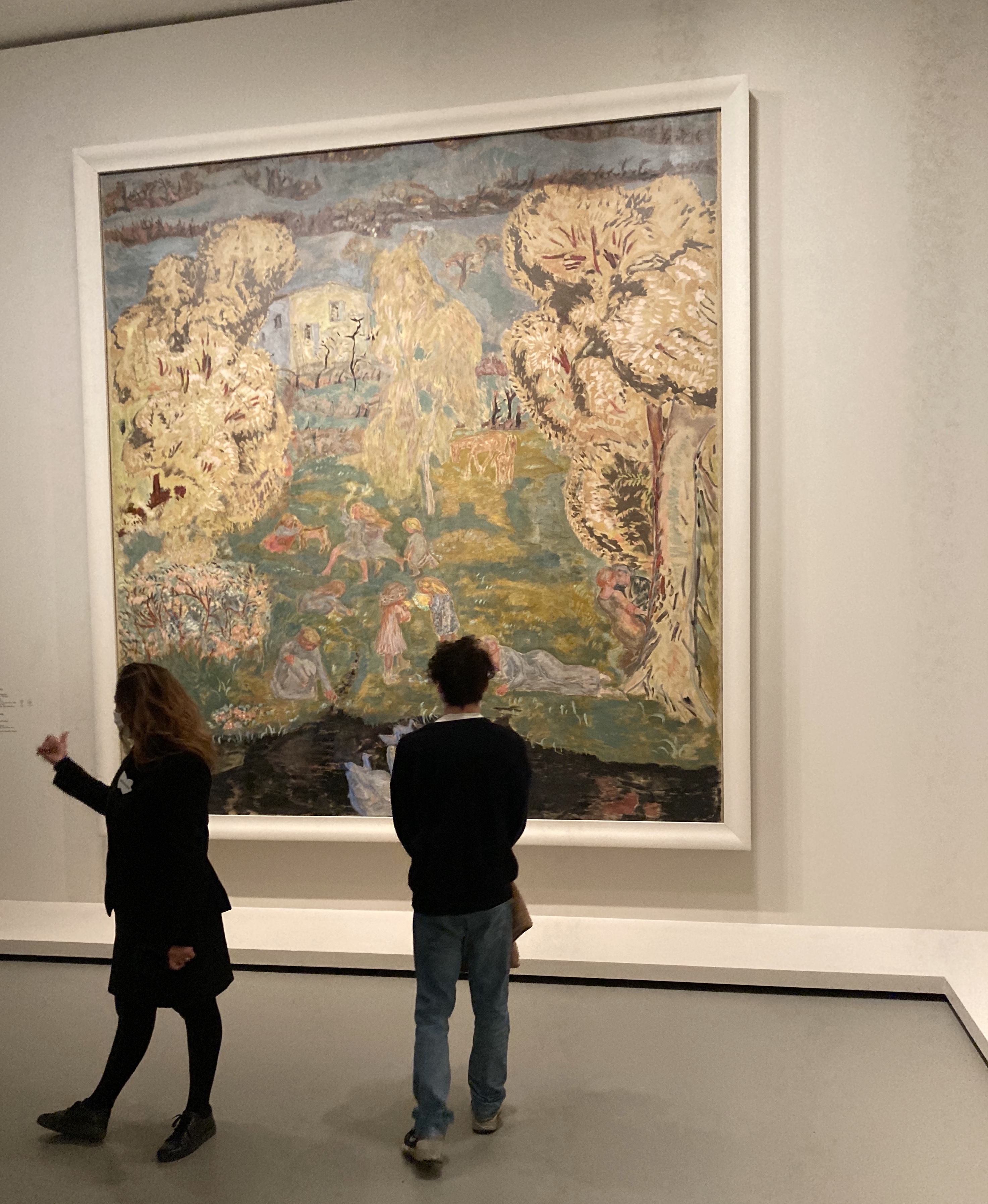
His brother Ivan took over the family business, abandoning his dreams of becoming a painter, and kept adding more French impressionists, post-impressionists and Fauvists to the collection, his favourite artist being Cézanne. In 1912, he commissioned Bonnard to decorate the staircase of his opulent Moscow residence, resulting in wonderfully luminous panels.


At the same time, he became close to Russian artists of his generation who advised him on his acquisitions and contributed their own works to the collection. I discovered with great pleasure and admiration the lovely portraits by Valentin Sérov, a painter I did not know.


Valentin Sérov


In a twist worthy of fiction, it all ended with the Communist revolution of 1917 in Russia. Ivan was reduced to being ‘assistant curator’ of his own collection and his home became a state museum.


Claude Monet

In 1918, the Morozov manufacturing company, whose real estate value was estimated at 26 million rubles, was taken over by the state and later that year the collection of artworks was nationalised by official decree.


Matisse

In the summer of 1919, Ivan and his family secretly crossed the border to Finland and then emigrated to Switzerland. He died in Germany at the age of 49.


Van Gogh


When the Nazis invaded Russia in 1941, the paintings were sent to be hidden in the Ural Mountains, where they stayed fairly well-preserved by temperatures that often fell to -40 degrees.


Bonnard

It wasn’t until 1950s that the Soviet government decided to redistribute them among the Hermitage, Tretyakov and Pushkin museums.


Bonnard. The visitors give an idea of the scale of the work

One of the most unexpected paintings in the exhibition is Vincent Van Gogh’s The Prison Courtyard (1890), which he made while in the Saint-Rémy-de-Provence psychiatric hospital. The artist’s brother Theo had sent him a photograph of Gustave Doré’s drawing of a London prison’s courtyard which Van Gogh reinterpreted into a primarily greenish blue-hued painting, the conditions of the prisoners echoing his own

And finally, two more portraits, a self portrait by Alexander Golovine,

and a portrait of Ivan Morozov by Valentin Serov, which features one of his paintings by Matisse in the background.