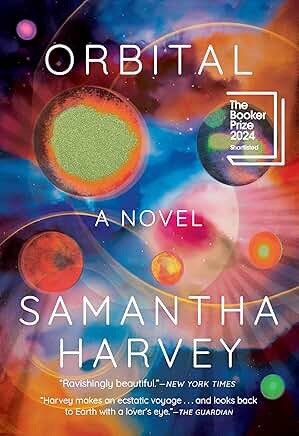
Orbital, the book about six astronauts in space I recently reviewed, has won the Booker Prize.
I admit I have not read the other books on the short list—or rather, I am in the process of reading Rachel Kusk’s Creation Lake. I like her writing, and loved The Mars Room, but I’m finding this one slow going. Some of the others are tempting, though, and I will get to them eventually.
Photo: bdnews24.com
Nevertheless, even though I lack comparison, I think this book is a very worthy winner, being at once original, lovely to read and beautiful in every way.
Samantha Harvey nearly gave up writing the book at some point, because she felt like an impostor, never having been in space. But then she took it up again, during the pandemic, and watched hours and hours of streaming video from the International Space Station while writing. Thus she could observe Earth from space, actually completing whole orbits and describing what she saw. The result is nothing short of miraculous.
In her acceptance speech, Harvey said she wanted to dedicate the prize “to everybody who does speak for and not against the Earth; for and not against the dignity of other humans, other life; and all the humans who speak for and call for and work for peace.”
Harvey, 49, is the author of four previous novels, including “The Wilderness,” about a man with Alzheimer’s, which was longlisted for the 2009 Booker Prize, and 2018’s “The Western Wind,” about the mysterious death of a village’s wealthiest resident in medieval England. She also wrote “The Shapeless Unease: A Year of Not Sleeping,” a 2020 memoir about her struggles with insomnia.I’m tempted to try one or two.
Of course, a few people thought it a good idea to publish articles panning Orbital in comparison to the other books on the short list. Although of course everyone is entitled to their opinion—and all art appreciation is subjective—I thought it was in poor taste to do so today. It smacks of sour grapes. Let the woman enjoy her day of glory—they are hard enough to come by. So, congratulations, Samantha Harvey!
A day in the life of six astronauts, bobbing around inside the International Space Station which is in orbit around earth. The spaceship orbits the Earth sixteen times in a day, during which the astronauts witness sixteen sunrises and sunsets. In fact, as Samantha Harvey describes it in this luminous novel, “the whipcrack of morning arrives every ninety minutes” and the sun is “up-down-up-down like a mechanical toy”.
The astronauts clock up time on the treadmill in order to preserve their body mass and go about their numerous chores: laboratory tasks, monitoring microbes or the growth of cabbages, tending to lab mice, endless cleaning. But they never tire of floating over to the observation windows, and their awe of our planet never dims.
There’s the first dumbfounding view of earth, a hunk of tourmaline, no a cantaloupe, an eye, lilac orange almond mauve white magenta bruised textured shellac-ed splendour.
Russian, British, Japanese, American, Italian: they each have their individual pasts and preoccupations, their different countries and cultures, but together they form a sort of whole, collective being. The two Russians go off to their “decrepit Soviet bunker”, but geopolitical divisions are hard to maintain when moving at 17,000 miles an hour.
It is a strange, confusing existence which makes them at times question everything—is it day or night? Which era, year, decade are we in?
In order to avoid total confusion, a strict artificial order is imposed. Earth time (Earth time at take-off point?) is kept. Bedtimes, rising times, mealtimes—unconnected to the dawns and sundowns succeeding each other. Every continent, every mountain and river and desert and city, comes around again and again.
The past comes, the future, the past, the future. It’s always now, it’s never now.
The astronauts float around the gravity-free module at will. They remember their past lives, think of their loved ones, consider the future. One of them makes lists to keep things in perspective. They hate being so far from home and yet there is nowhere they’d rather be. They’re obsessed with space. The details of this unnatural existence are faithfully recorded:
When you enter your spacesuit and try to habituate yourself to the difficulty moving, the painful chafing, the unscratchable itches that might persist for hours, to the disconnection, the sensation of being buried inside something you cannot get out of, of being inside a coffin, then you think only of your next breath, which must be shallow so as not to use too much oxygen, but not too shallow, and even the breath after that is of no concern, only this one.
This image is one of the most widely known photographs of Earth, taken by the crew of the final Apollo mission (Apollo 17), as the the crew made its way to the Moon on Dec. 17, 1972. NASA dubbed this photo the ‘Blue Marble.’
And meanwhile, on earth, things are going on: wars, cities sending their innumerable lights into space, an approaching tornado. Some descriptions are terrifying:
Every swirling neon or red algal bloom in the polluted, warming, overfished Atlantic is crafted in large part by the hand of politics and human choices. Every retreating or retreated or disintegrating glacier, every granite shoulder of every mountain laid newly bare by snow that has never before melted, every scorched and blazing forest or bush, every shrinking ice sheet, every burning oil spill, the discolouration of a Mexican reservoir which signals the invasion of water hyacinths feeding on untreated sewage, a distorted flood-bulged river in Sudan or Pakistan or Bangladesh or North Dakota, or the prolonged pinking of evaporated lakes, or the Gran Chaco’s brown seepage of cattle ranch where once was rainforest, the expanding green-blue geometries of evaporation ponds where lithium is mined from the brine, or Tunisian salt flats in cloisonné pink, or the altered contour of a coastline where sea is reclaimed metre by painstaking metre and turned into land to house more and more people, or the altered contour of a coastline where land is reclaimed metre by metre by a sea that doesn’t care that there are more and more people in need of land, or a vanishing mangrove forest in Mumbai, or the hundreds of acres of greenhouses which make the entire southern tip of Spain reflective in the sun.
We are given numbers too large to fit into most human brains, condensed into readability.
Some eighty million miles distant the sun is roaring.
Shortlisted for the Booker Prize, Harvey’s book is a writing tour de force. Wonderfully imaginative, full of subtle humour and descriptions overflowing with colour and movement. If reading a book is opening a door into another world, this novel is a supreme example of it.
Like every rabid bookworm in the land I too await the long list for the Booker Prize with anticipation each year. Not that I put much faith in prizes: in all creative things they are very subjective, and often the prize gets awarded to the book each person on the panel of judges dislikes least—just so they can all agree.
Also I cannot say that usually I read every book on the long list, or even on the short list—some do not appeal at all. Often some are books I have read before, such as Hilary Mantel’s Wolf Hall and Bring up the Bodies, which I adored. However, there are books I discovered because they were on the list, which I might not have picked otherwise—some I abandon half way through (I stopped long ago making myself read to the bitter end a book I dislike), some I love, such as Bernardine Evaristo’s Girl, Woman, Other.
This year the list looks tempting—it is varied and seems to contain meaty stories. I have read none of these books, and perhaps will not read them all, but I will certainly try some.
Here is the Booker’s dozen of thirteen novels, to tempt you:
-Colin Barrett, Wild Houses. A debut novel from a top Irish short story writer, it is a sort of crime tale set in small-town Ireland.
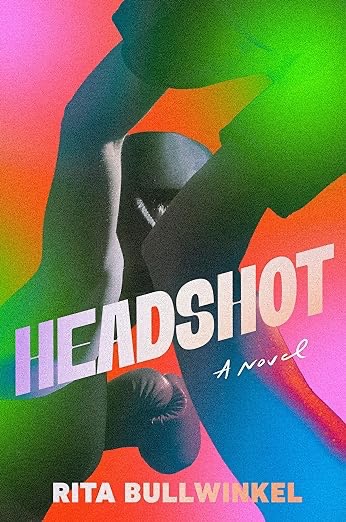
-Rita Bullwinkle’s Headshot follows the teenage girls taking part in a boxing tournament in Nevada. Spills and thrills, physical and mental combat.
-Percival Everett, James. One of the favourites to win, it retells the story of Jim, the runaway slave in Mark Twain’s Huckleberry Finn.
-Samantha Harvey’s Orbital is about six astronauts in an International Space Station.
-Rachel Kushner, Creation Lake. A freelance spy infiltrates a commune of eco-activists in France.
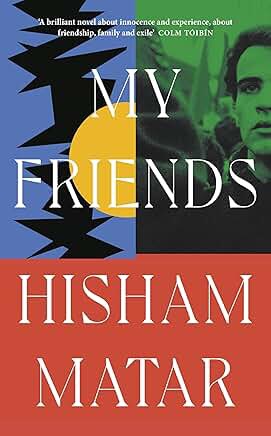
-Hisham Matar, My friends. The story of three Libyan dissidents exiled in Britain.
-Claire Messud, This Strange Eventful History. A Franco-Algerian family’s wandering through eight decades of war and peace.
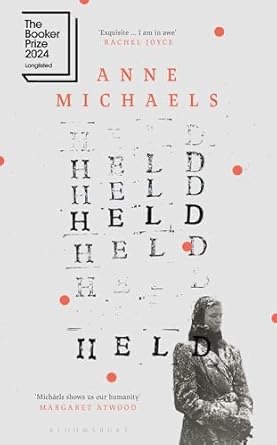
-Anne Michaels, Held. Short snapshots of various characters bedevilled by war and tyranny, it is the most experimental work on the list.
-Tommy Orange, Wandering Stars. It explores the consequences of a shooting at a Native American powwow.
-Sarah Perry, Enlightenment. A baroque story about group of Strict Baptists in 1990s Essex.
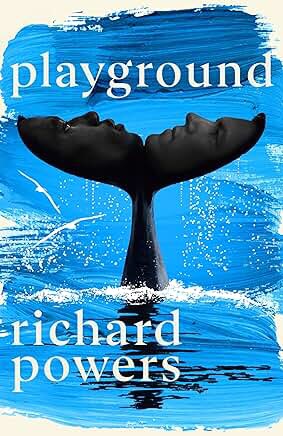
-Richard Powers, Playground. Floating cities threaten to overwhelm a Polynesian island already ravaged by mining.
-Yael van der Wouden, The Safekeep. A debut novel about a young woman falling in love with her brother’s girlfriend explores the callous treatment of the Jews returning to the Netherlands after the war.
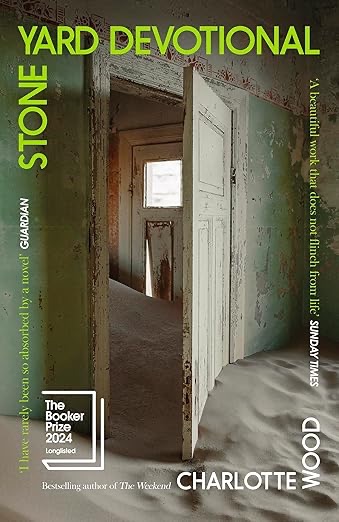
-Charlotte Wood, Stone Yard Devotional. A quiet Australian novel about a woman taking refuge among eccentric nuns at a Catholic retreat in the outback.
I consider it a list full of original, complex work, set in different cultures—there is something there for everybody. The authors are American, Irish, British, there is a Duch writer and a Native American—true diversity. And it is mostly free of household names. The chair of this year’s judges, artist and author Edmund de Waal, said : “These are not books ‘about issues’: they are works of fiction that inhabit ideas by making us care deeply about people and their predicaments.”









 Letters from Athens