Amongst the lesser-known of the Impressionists, for the simple reason he was wealthy and did not need to sell his paintings in order to live, Gustave Caillebotte (1848-1894) is nevertheless a most interesting artist, because he had a unique take on things, using perspective and composition in original ways. He was very ‘modern’ for his time as well as more realistic in his technique than some of the others.
A lawyer and engineer, he fought in the Franco-Prussian war and upon his return frequented the Académie des Beaux Arts, as well as befriending several artists. The first painting he exhibited, of labourers working on a wooden floor, was criticised as “vulgar” (sweaty men doing a menial job) and rejected by the Salon of 1875. It is a masterpiece, if only for the light and perspective.
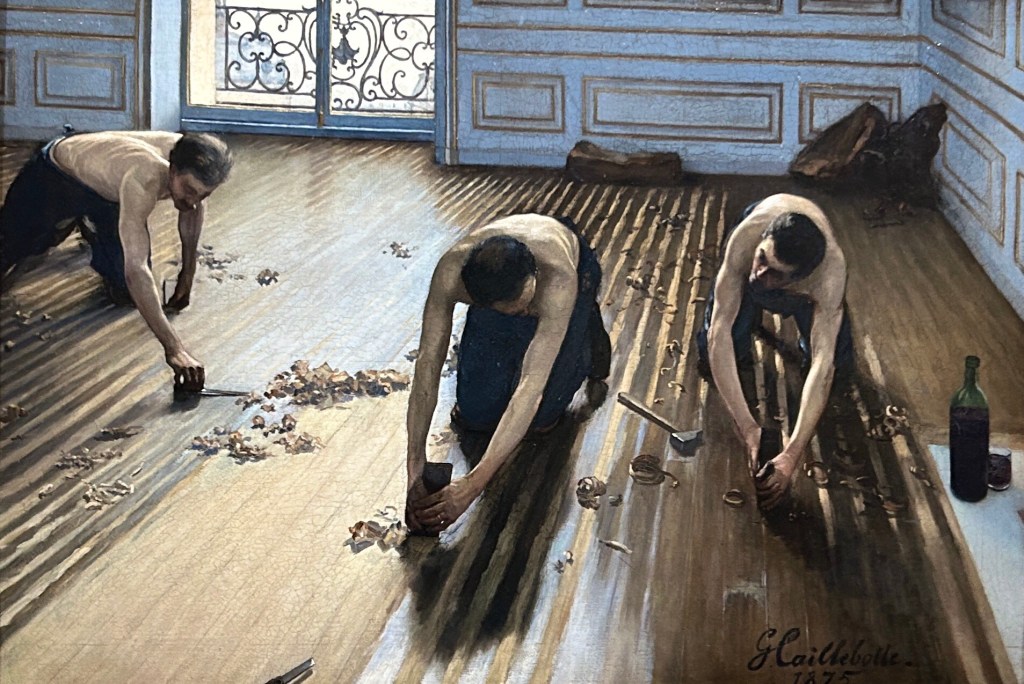
Rabatteurs de parquet, 1876 (détail)
Caillebotte painted many domestic scenes, depicting his family and friends in everyday pursuits.
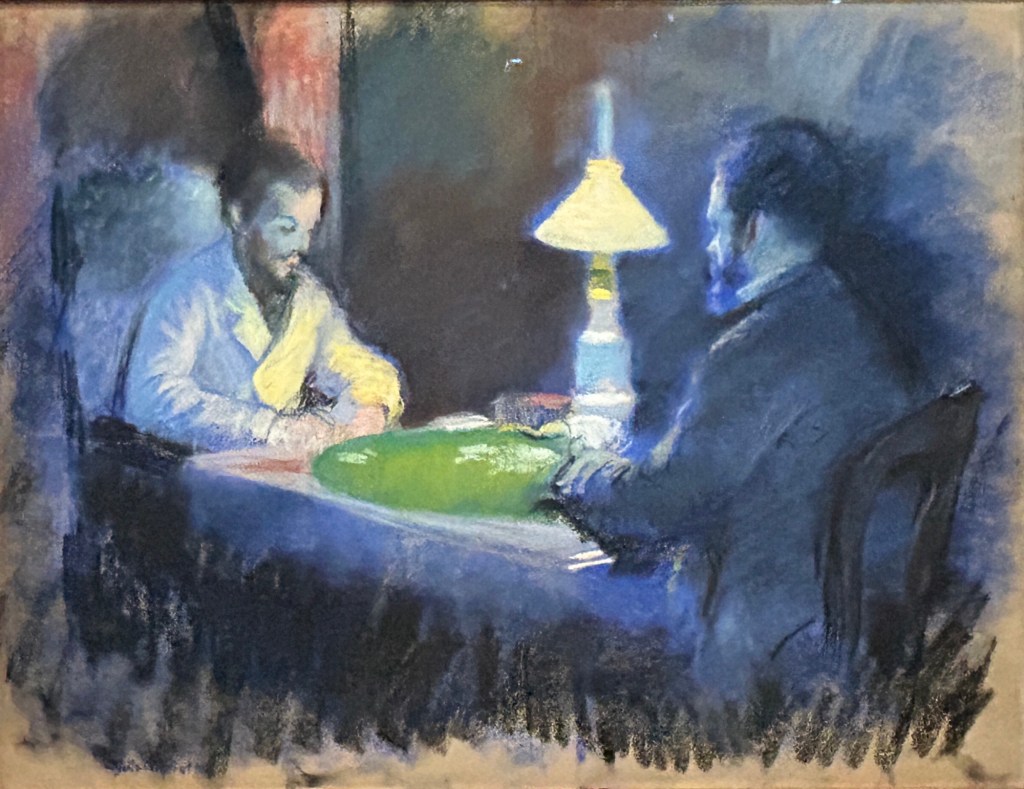
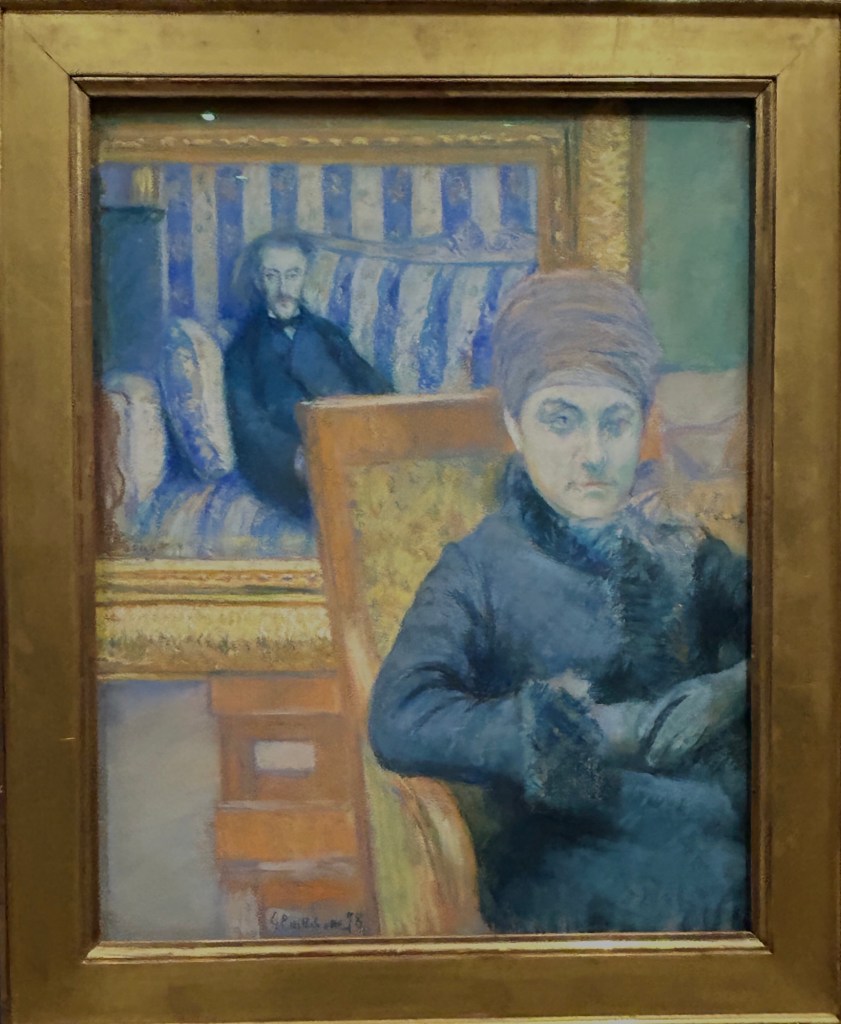
He also loved sport and painted people rowing or sailing at the family’s Yerres estate. His technique of cropping or zooming in is original and gives a lot of movement to his scenes.


Caillebotte also did many urban paintings, some from an elevated perspective, such as the one below.
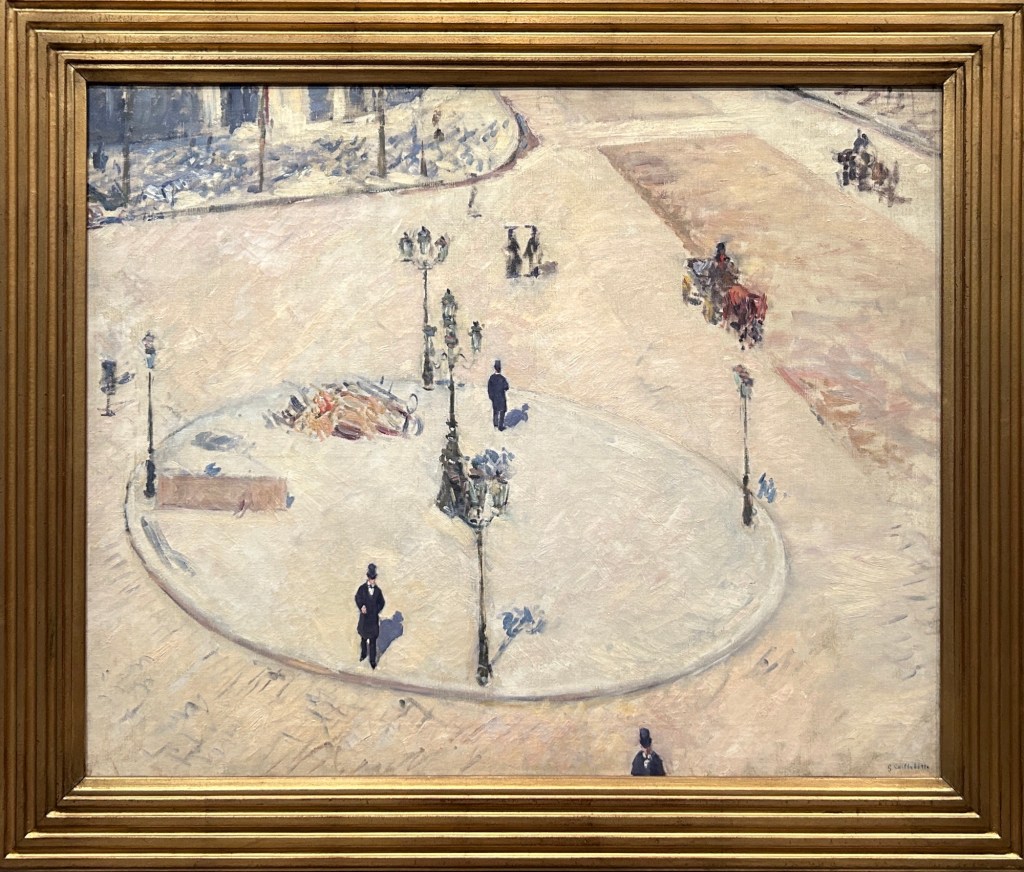
His paintings of Paris give off a very special flavour of the city.

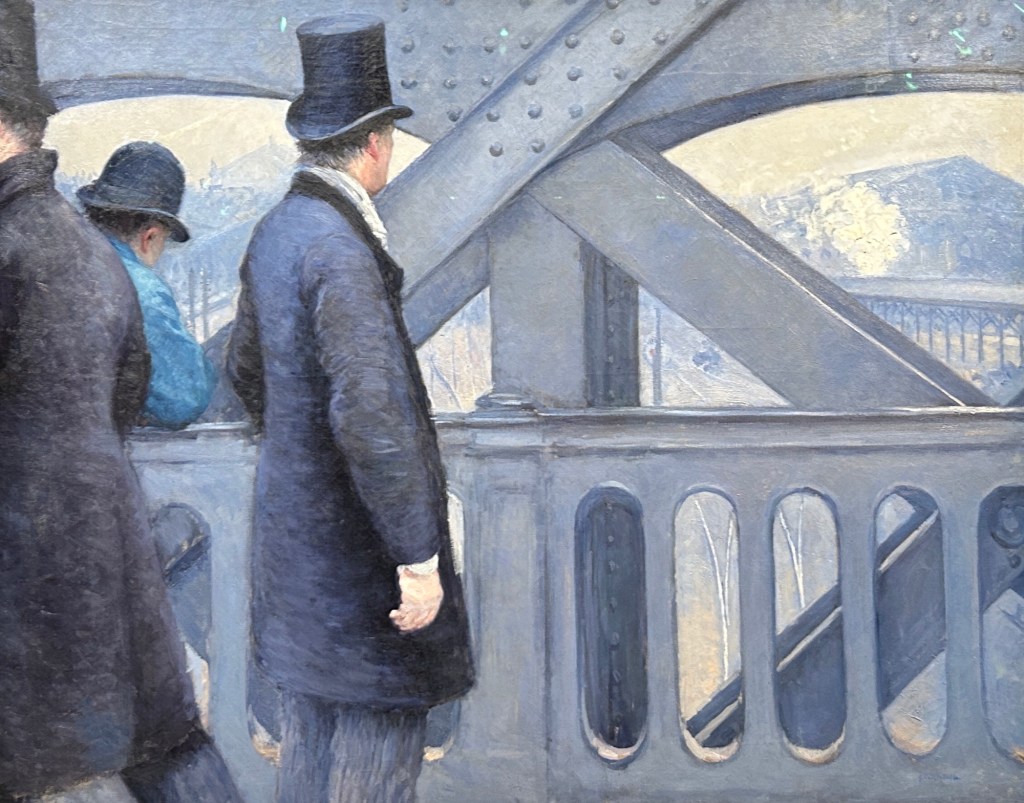
He also made realistic studies of the human body and his paintings of males nudes were considered revolutionary, depicting ‘real’ men in domestic settings, instead of heroes in allegories.

Caillebotte used his wealth to support many of his fellow artists, notably Renoir—who was a close friend—Monet and Pissarro, amongst others. He died young, at the age of 45, of pulmonary congestion. He left behind an impressive body of work and bequeathed a large and varied collection—he had acquired many works from his fellow artists—to the French government. Here he is below, in one of those funny hats they all wore to row on the river. He looks like a jolly good sort.

Self portrait in a summer hat (circa 1873)
I was very lucky to visit the exhibition before the crows swarmed in, with a friend who is a Friend of the museum and holder of a card allowing early entry. A most impressive artist.
 Letters from Athens