There is an interesting exhibition on at the moment close to us in Trouville, at the Villa Montebello, a small museum housed in an old villa built in 1865 by the Comtesse de Montebello. After a chequered past, it was acquired by the city of Trouville and became a museum in 1972.
The exhibition is mainly devoted to the artist Charles Mozin (1806-1862), who was a Parisian but built a house and settled in Trouville in 1939.
He was one of many artists who left Paris (a polluted and stinking, overpopulated city) to seek cleaner skies and beautiful landscapes in Normandy. Why Normandy, and why Trouville? Well, it was close to Paris, a mere 4 days by the diligence (stagecoach) and there were beautiful beaches, wonderful light and fresh fish.
In the early 19th century, sea bathing became fashionable, starting in Dieppe, which had old ties with England where this activity began. And then Trouville was discovered, at the time a small, simple fishing village.
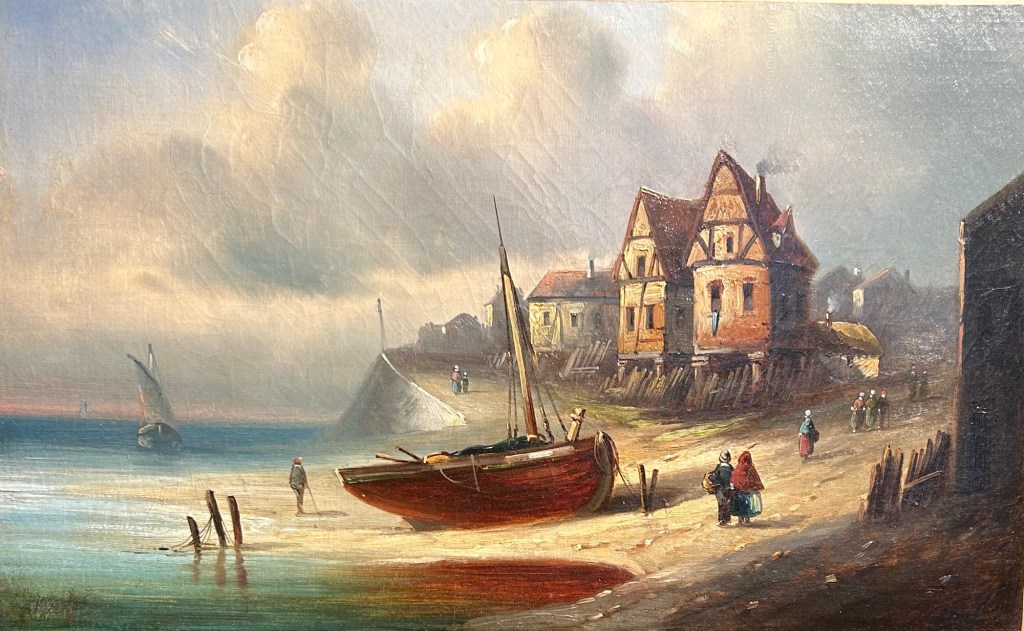
Around 1820, artists such as Eugène Isabey, Charles Mozin, Camille Corot and Richard Parkes Bonnington came to Normandy to paint and then exposed their works in grand Parisian exhibitions. People saw, were enchanted and came to visit. Rapid development followed and Trouville became a busy port as well as a station balnéaire. In the painting below, by Pierre Duval le Camus, one can see the juxtaposition of the old way of life with the new: a group of fishermen’s wives and their children are gathered on the beach, in a pause of their daily activities. It was a rough life—while the men were at sea, the women, aided by the children as soon as they were old enough, gathered mussels and sprats, mended nets, sold the fish their men caught in the market. They were hardworking and poor.
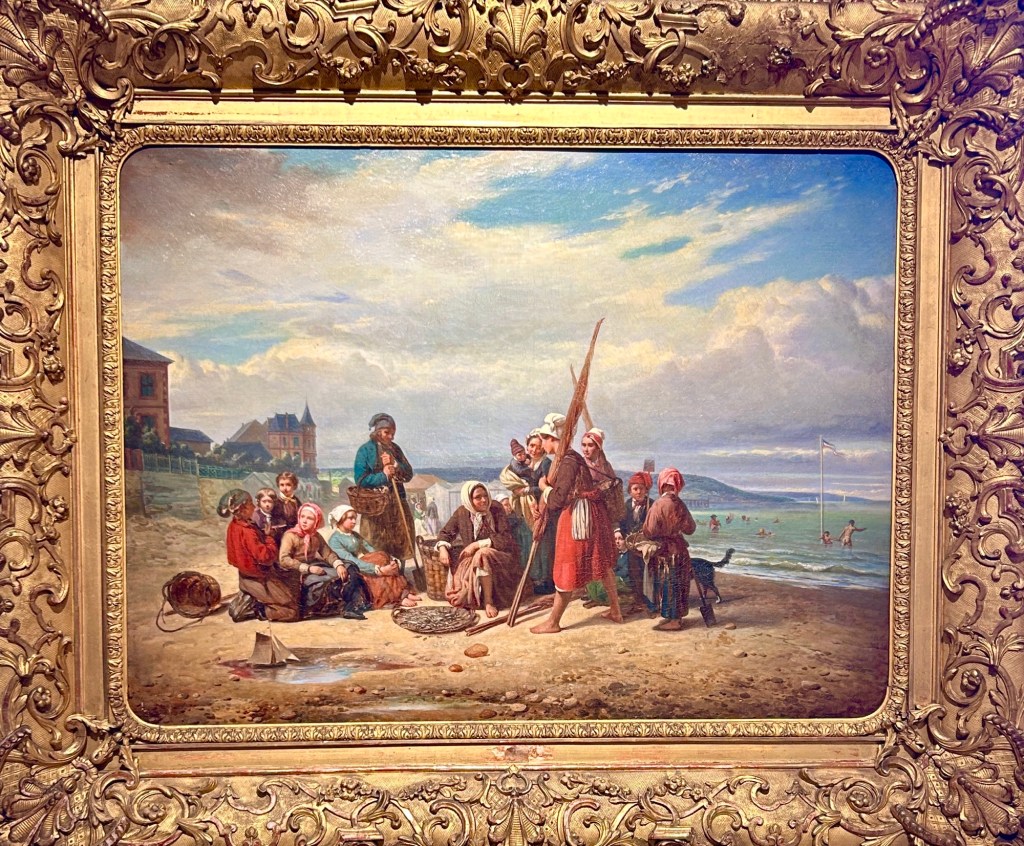
Behind them to the right, one can glimpse bathers—people of a higher social class and better means, the tourists of the day.

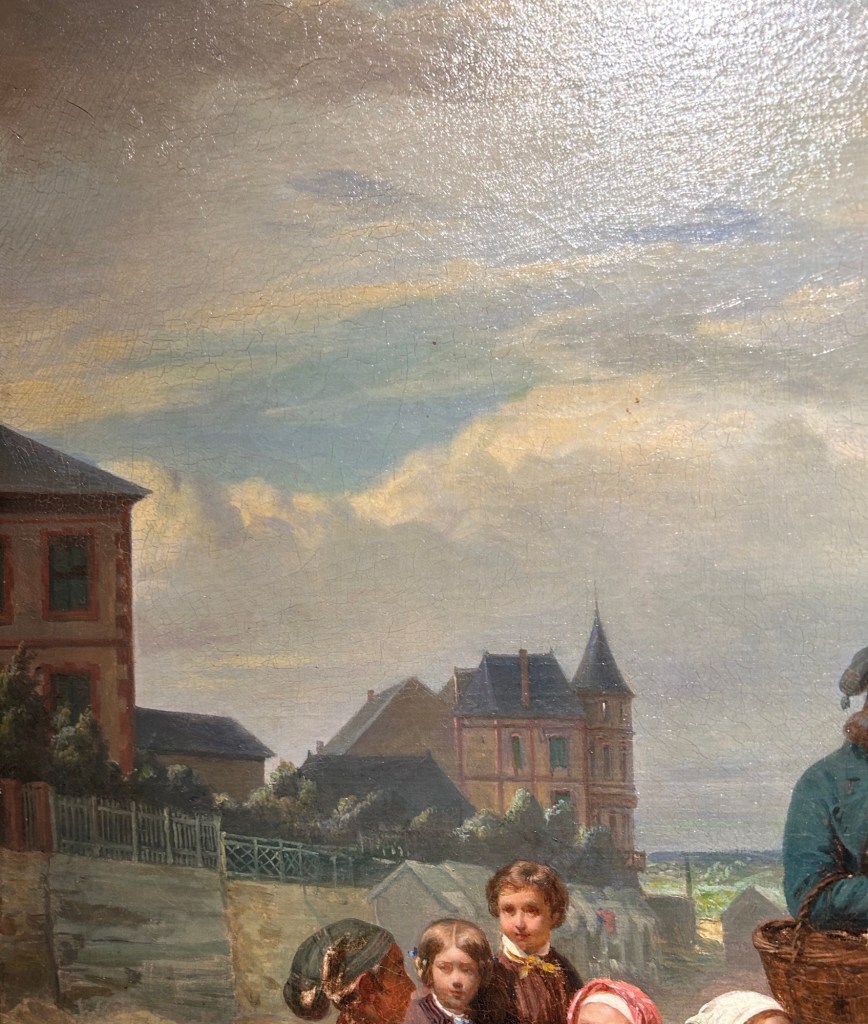
On the left, the buildings are not fishermen’s cottages, but vacation homes. The one on the right still exists, albeit in a very different setting.
Charles Mozin was the artist who best captured the progress of this development, about which he had very mixed feelings. He shunned society and much preferred the old, simple way of life. He was a very clever draughtsman, who captured details in his many sketchbooks and then went back to his studio in Paris to work on the large paintings.

A beautiful view of the Touque by moonlight. La Touque is the river which flows to the sea at Trouville. Ships sailed up the Touque to the port.

Above is an example of Mozin’s accurate and very detailed sketches.

This huge painting shows how much sea traffic there was, and the difficulty of entering the port, especially in rough seas. The vessel on the left is a passenger ship, which sailed regularly from Le Havre and was the main way of reaching Trouville. On the right a fishing boat is trying to manoeuvre in the narrow passage. Sometimes there were accidents, and there is a story of a ship which, encountering strong winds and currents, floundered and sank, drowning everyone on board, despite people rushing to the rescue in small boats. Only a dog survived and, when it was fished out of the sea, it was found to have in its mouth its master’s jacket.

In this painting, also by Mozin, one can see the new bridge connecting Trouville with what was going to become Deauville. At the time the land was marshy, and the Trouvillais used to ford the river before the bridge was built to graze their cattle on the près salés (salt meadows). The small building on the right was a customs house.
Below is a photo of the view from the Villa Montebello
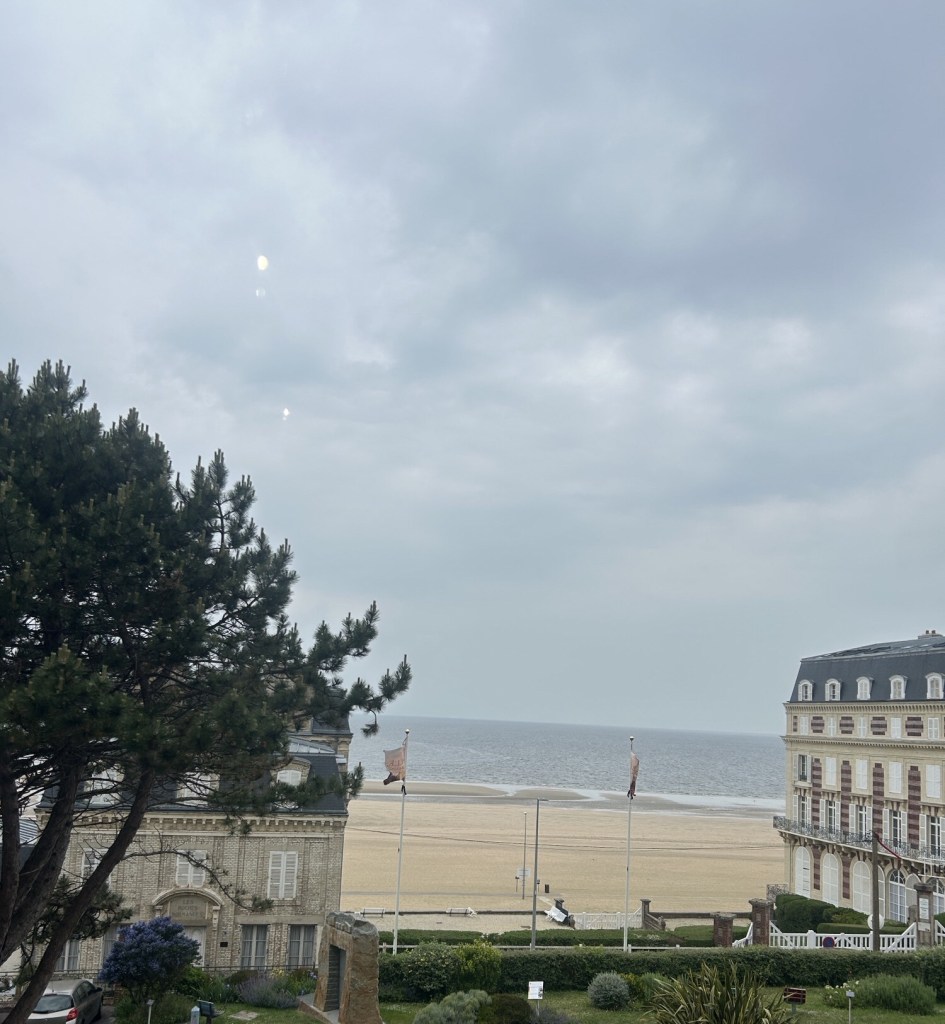
And finally, a view of Trouville today, at low tide. A lovely place, well worth visiting.

 Letters from Athens