Dorothea Tanning said, ‘Art has always been the raft onto which we climb to save our sanity.’
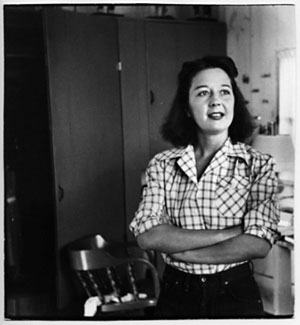
I watched a video of her, in late middle age. She wore a skirt and heels, had an apron tied about her waist, and could have been preparing dinner for friends. But she was not, she was putting bold strokes of black paint onto a canvas twice as tall as herself and as wide as her studio wall. She was a comfortable shape, and had a comfortable, smiling face. You can tell she’s enjoying herself. Later, she’s sewing some pink material to make one of her crazy soft sculptures. Her hands are freckled, she pushes the stuffing about. Then she shoves a bunch of the sculptures down the stairs, her little Lhasa Apso dogs running around, yapping.
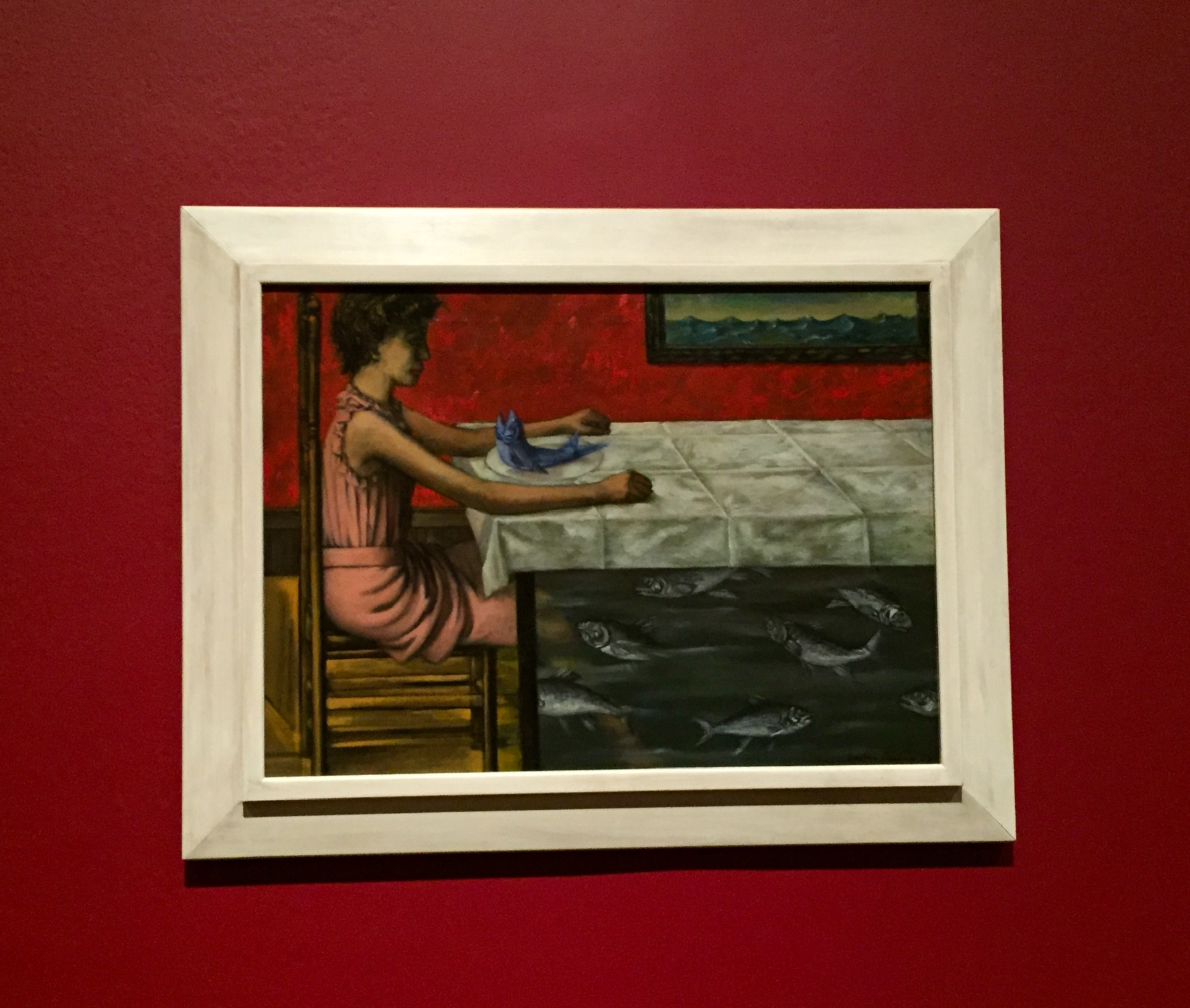
Dorothea Tanning’s husband was the surrealist artist Max Ernst. She met him as a young woman in Paris, when he was still married to Peggy Guggenheim and was selecting work for the ‘Exhibition by 31 Women’. She had left her native Galesburg, Illinois, where ‘nothing happens but the wallpaper,’ to study art briefly in Chicago, then work as an illustrator in New York. Here, the exhibition ‘Fantastic Art, Dada, Surrealism’ at the Museum of Modern Art inspired to travel to France to meet the surrealists.
Below is her self-portrait entitled ‘Birthday’, which is the work that put her on the art scene.
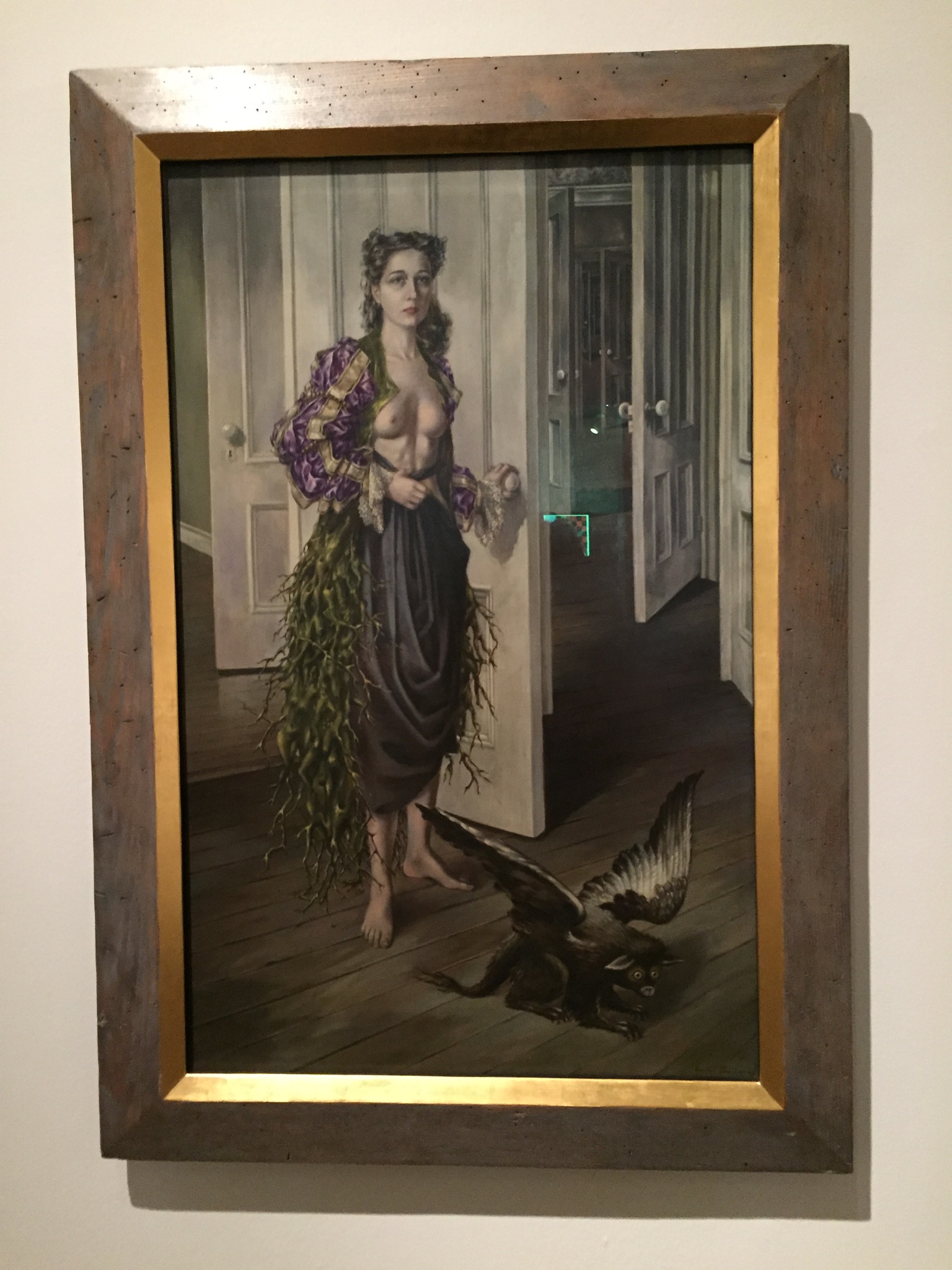
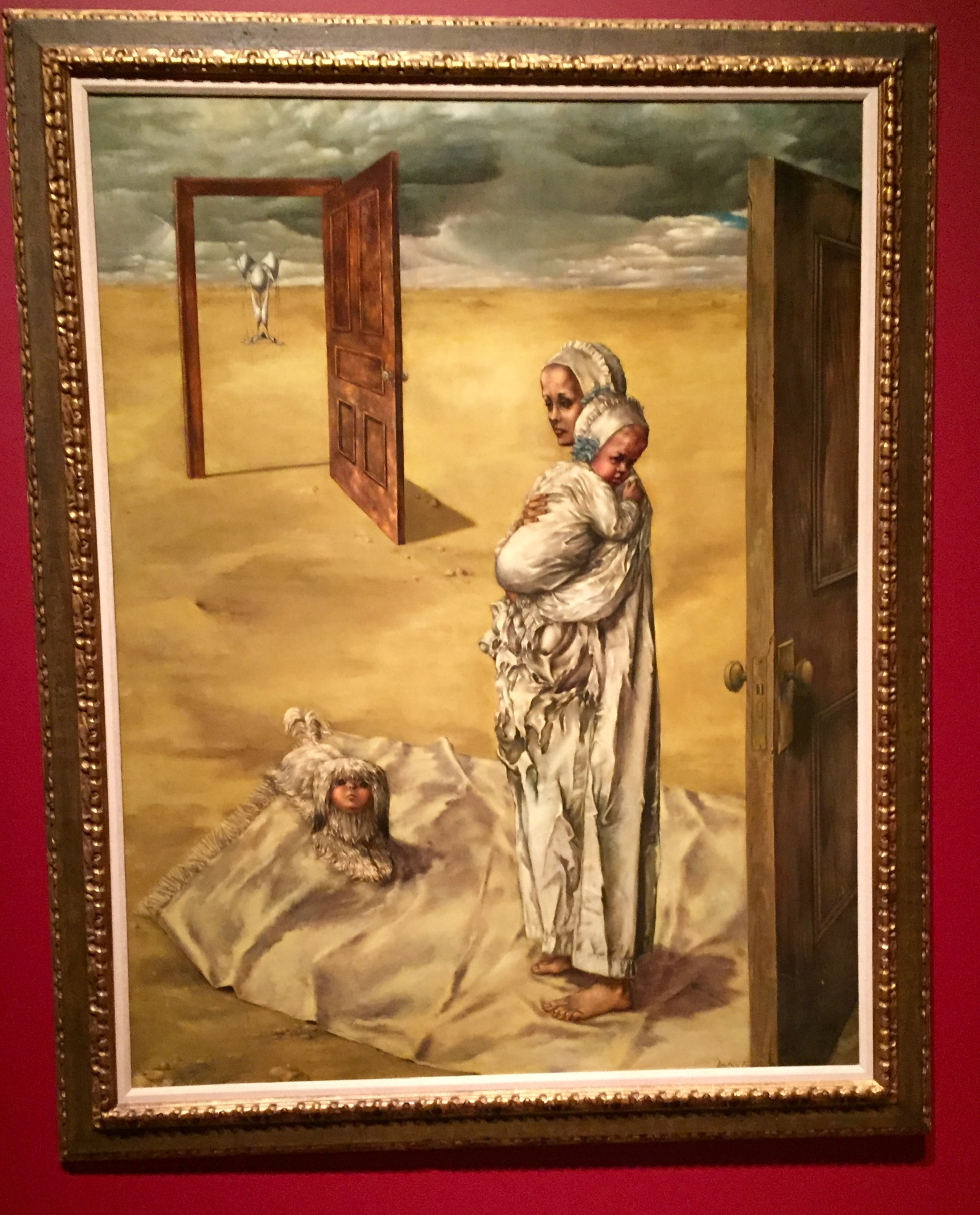
Tanning wanted to depict ‘unknown but knowable states’: to suggest there was more to life than meets the eye. Her paintings combine the familiar with the strange, exploring desire and sexuality. They are bursting with incongruous, amusing detail, such as little dogs based on the Lhasa Apso belonging to her husband, with his moustache, bulging eyes and sometimes human face. The painting below is entitled ‘Motherhood.’
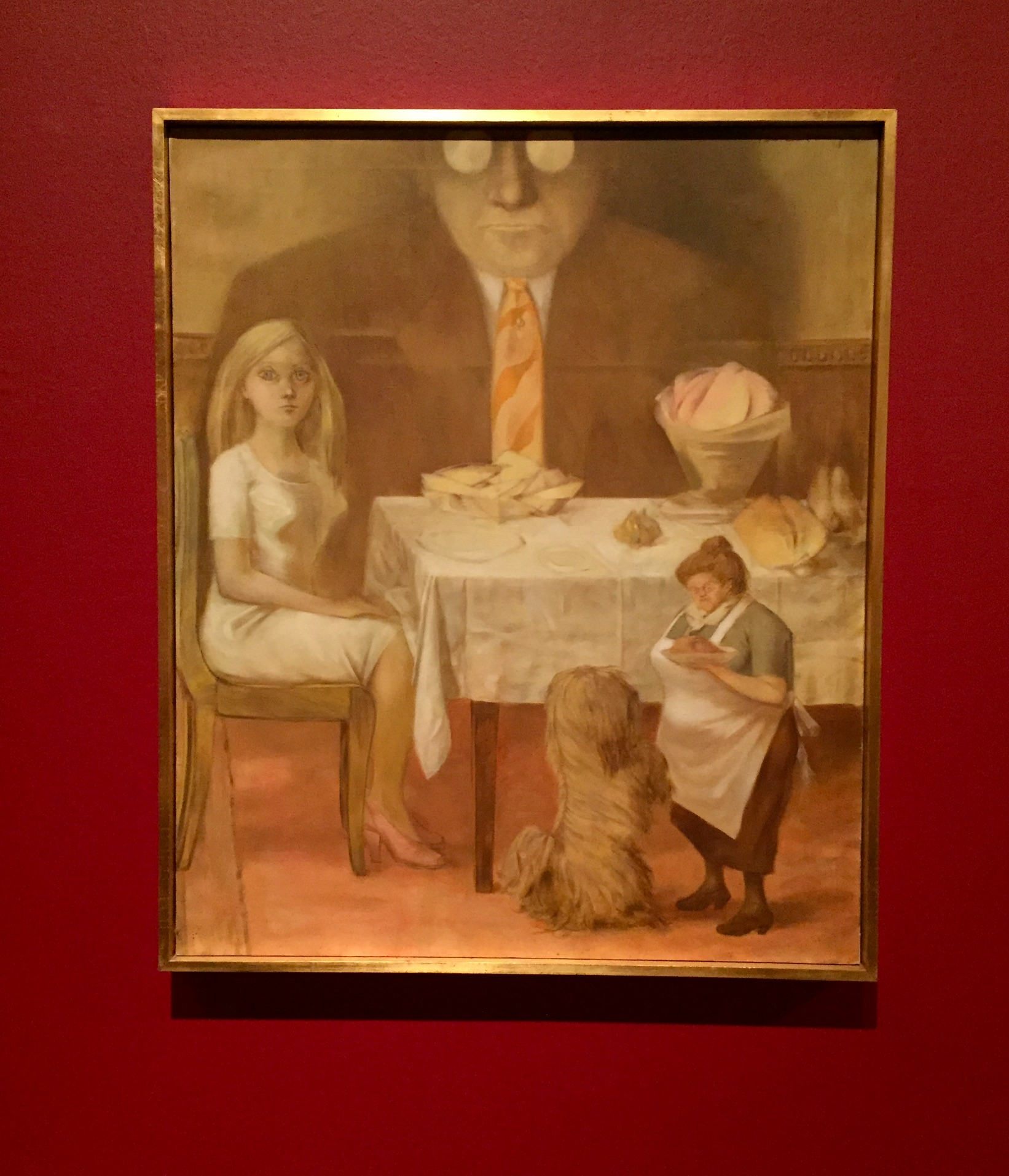
One of my favorite works is the one entitled ‘Portrait de famille.’ The ghostly, looming presence of the father, the spoilt, entitled daughter, the maid who is at the same level as the dog. It unsettles the viewer while making him smile.
Tanning and Max Ernst married in 1946 and moved to Sedona, Arizona, where he built a house with his own hands. Surrounded by lizards, scorpions and snakes, Tanning described Arizona as a ‘landscape of wild fantasy’. They were visited by many artists including Marcel Duchamp, poet Dylan Thomas and photographer Henri Cartier-Bresson. In 1957, Tanning and Ernst moved permanently to the south of France.
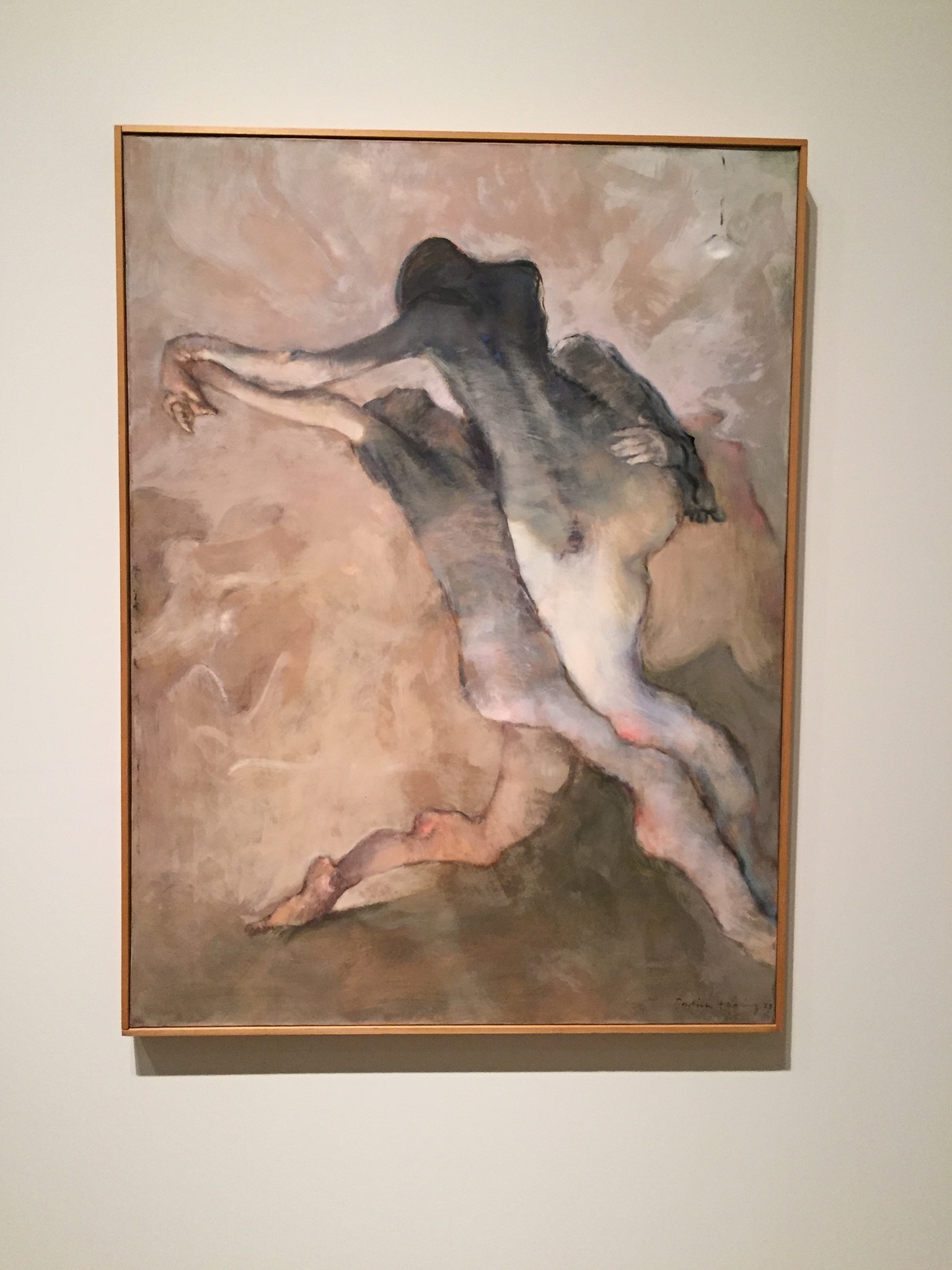
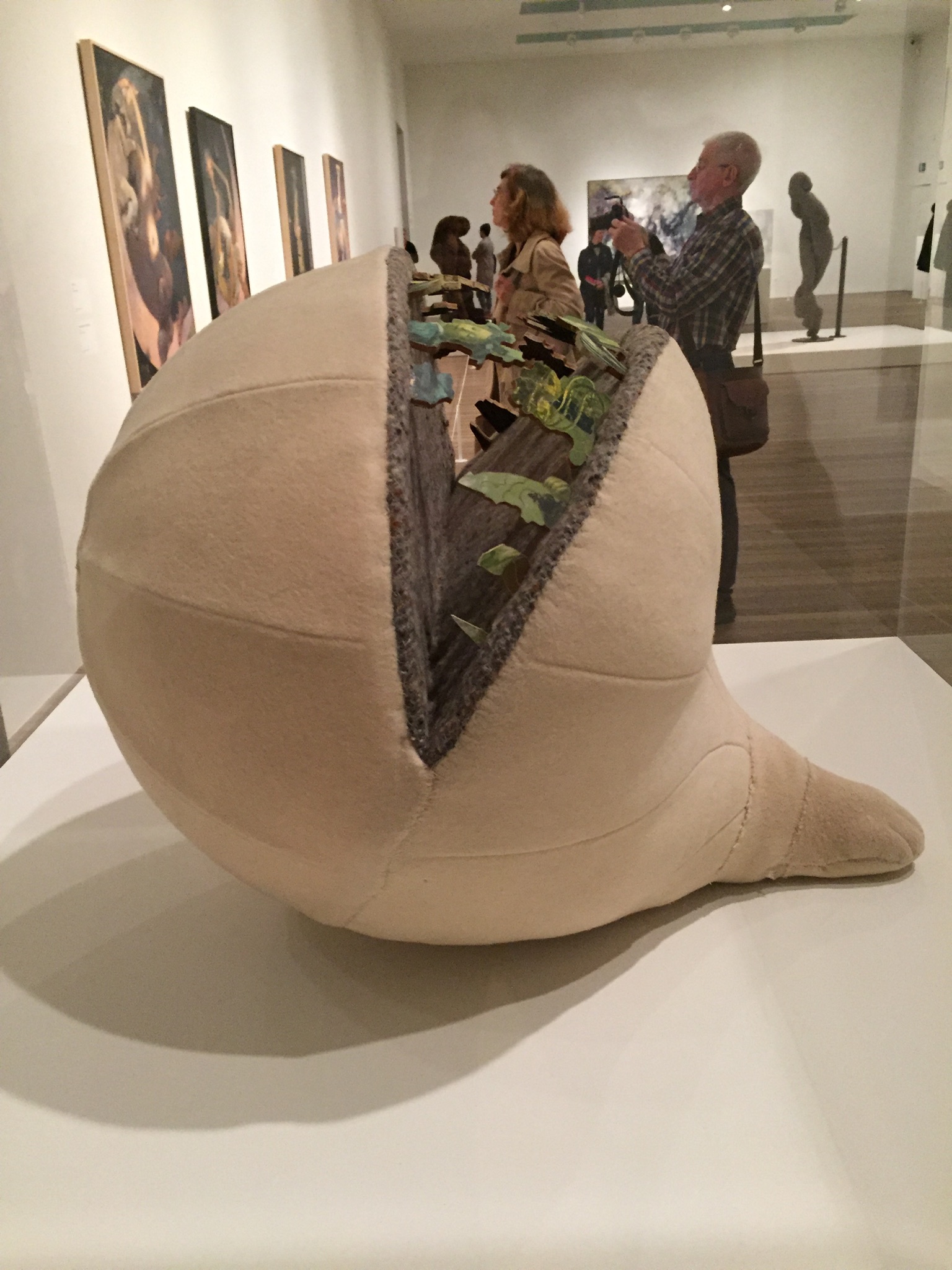
Around 1955 Tanning’s style changed from meticulously rendered figurative dreamscapes, to more abstract shapes where, however, the human figure could still be discerned, within a confident gestural flow and movement. And in the late 1960s, in yet another shift of direction, she started making her weird soft sculptures, using fabrics sourced in junk shops and her old Singer sewing machine.
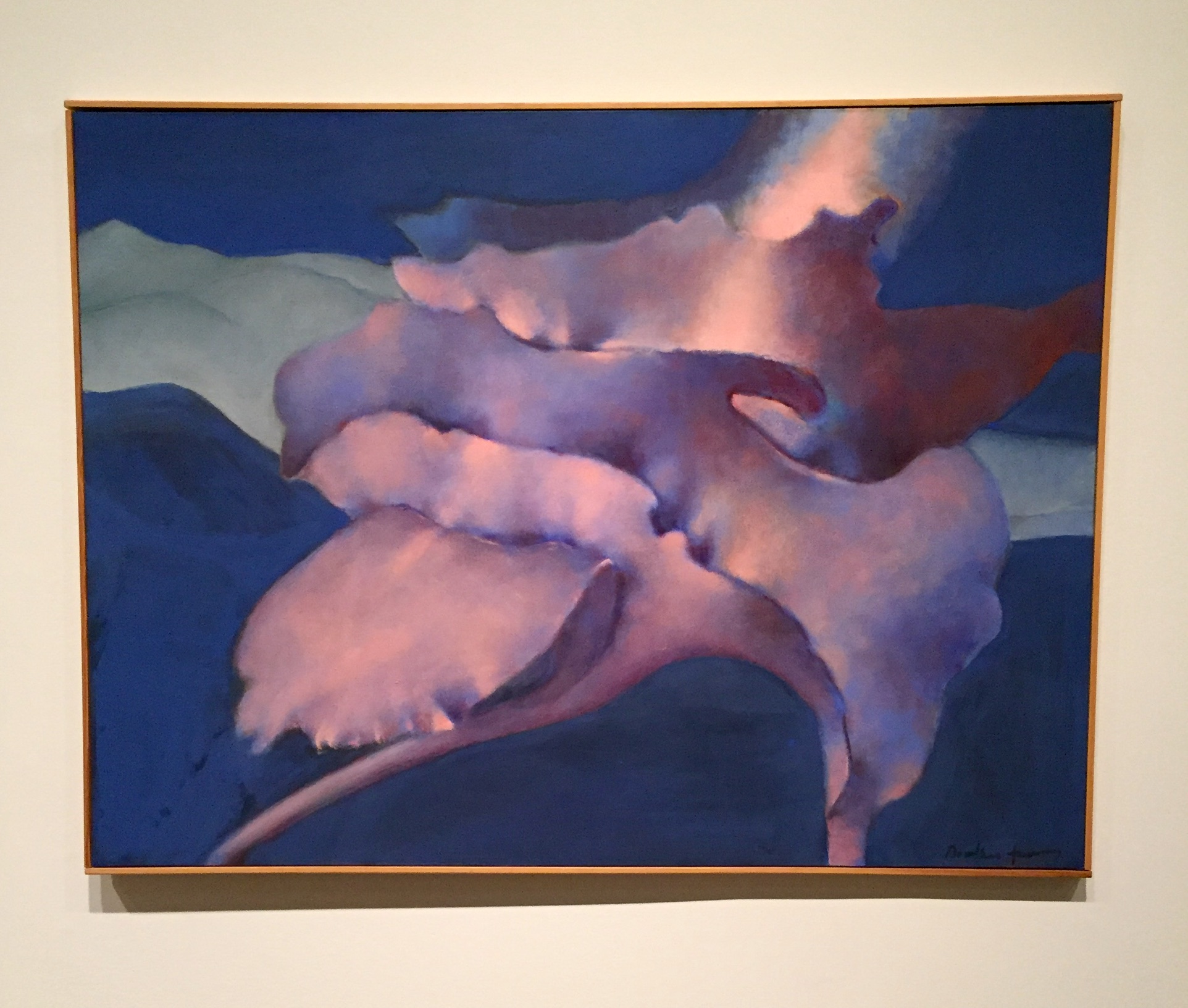
In 1976 Ernst died and Tanning was bereft. She gradually moved back to New York and turned to writing, publishing two memoirs, two books of poetry, and a novel. She died at the age of 101, the year her last collection of poems, Coming to That, was published.
“Living is so amusing” Dorothea Tanning
Tate Modern has put on the first large-scale exhibition of Dorothea Tanning’s work for 25 years: ‘It brings together 100 works from her seven-decade career – from enigmatic paintings to uncanny sculptures.’ The exhibition is on until June 9, don’t miss it if you’re anywhere near.
 Letters from Athens