Cover reveal and more

Things are moving fast all at once. After months of idleness, publication date for my debut novel, Marguerite, has been set for December 4. Very exciting!

While waiting for the publishers to reveal their complete marketing plan, I have been am busy setting up my side of things. I think I mentioned before that I joined the Author’s Guild of America, which was a shrewd move. They provide free tools to build a website (they can also build it for you if you like). They organised my domain name and an email in my pen name. They embedded the email sign-up form into the website. And the best—you communicate with a REAL PERSON (shoutout to Hector!) No bots, and no endless search for some elusive ‘Happiness Engineer’. Yay.

As for the rest, why must everything be so complicated? I was assured by Kindlepreneur (a very useful source of all kinds of information) that the best mailing service for authors is MailerLite, as well as being the easiest to set up. Well, either I’m a moron, or the other services need a degree in advanced coding. I have been struggling with the damn thing for days—despite a bot who is better than most, and even some help from a real live person. But it’s done, more or less. Finally, I’m pretty familiar with IG, via my art account, but I hate X, Facebook etc. I think I’ll pass. I’m too old to make little videos on TikTok.

Take a look at the cover and tell me what you think. I’m quite pleased with it. I was very clear about NO bare-chested duke clutching a swooning maiden.

It was difficult for the graphic artist to find a stock photo I liked, so I came upon the idea to use an old painting (in the public domain). This is an oil portrait by Swiss artist Jacques-Laurent Agasse (1767 – 1849), possibly of Mademoiselle Cazenove. Then I wanted to superimpose a profile of the duke watching Marguerite ride in the park. The graphic artist did a good job of my ideas, I think.

Finally, a bout of shameless self-promotion:

I am delighted to present my debut novel, Marguerite. Set in the elitist and socially restricted milieu of the ton in Regency London, it is the story of an independent, opinionated girl and the man who pursues her despite her refusing his offer of marriage. 

If this sounds like your cup of tea, I would be grateful if you would consider preordering the book. Preorders help new authors get discovered, and your support is invaluable. 

Once you’ve read the book (if you manage to finish and if you haven’t hated it!), I would love it if you would consider leaving a review. Even a sentence helps other readers find the book, and I am interested in every piece of feedback. 

I’d also like to invite you to take a look at my website, Marina Montrose Author, where subscribers to the Reader’s Club receive a free, exclusive short story as a thank you gift. You can join here:

https://www.mmontrose.com/disc.htm

Thank you for being part of this adventure. 📚

P.S. The book is available for preorder on Amazon, but print copies only on Amazon.com still…Here is a link to all the other places where you can preorder. Or order later on.

https://cupidsarrowpublishing.com/marguerite
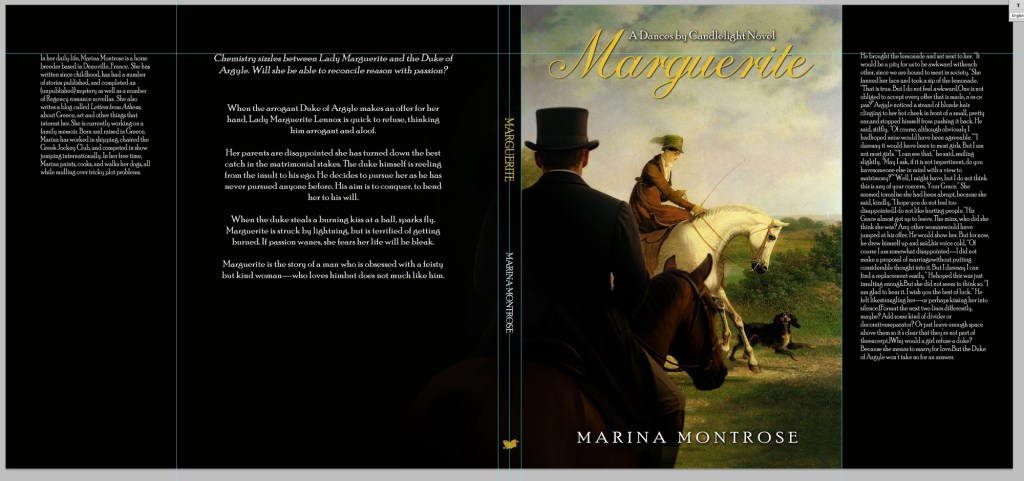
Hardback dust jacket

An afternoon at the Musée d’Orsay

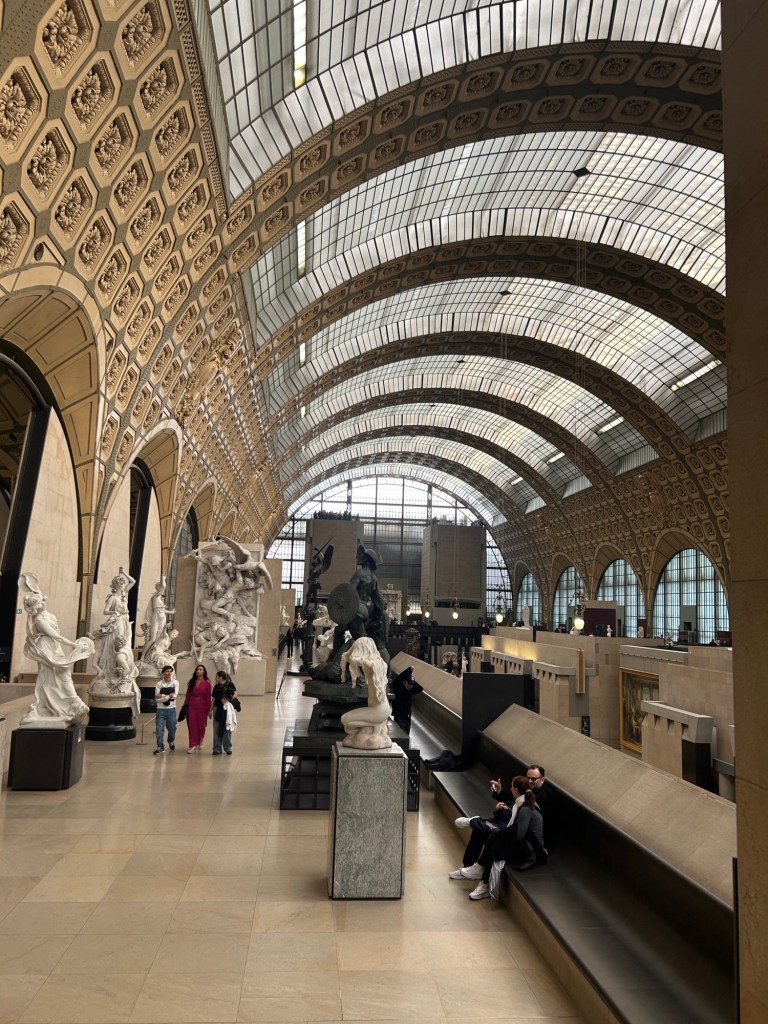
A few days ago I went to Paris to visit a friend, who lives right next to the Musée d’Orsay, in a bustling neighbourhood on the Left Bank. After a delicious lunch that she had prepared for me, we wandered over to the museum, which has always been a great favourite.

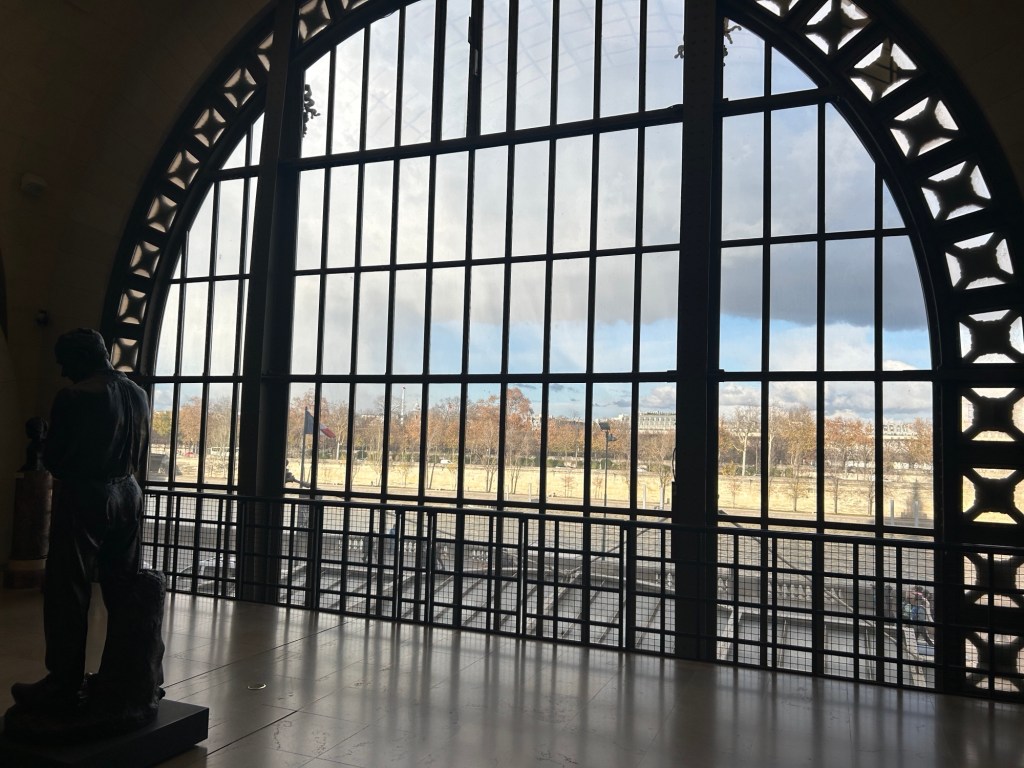
A conversion of the Gare d’Orsay, a Beaux-Arts railway station built in the late 19th century, the building itself is amazingly beautiful, with stunning views of Paris out of every window. Regular readers will know I visit as often as I can, and have written about exhibitions by Picasso, Caillebotte and others (for those interested, putting “Musée d’Orsay” in the finder will lead you to them).

The permanent collection is full of treasures, and every time I go I discover something new amongst the old favourites. My friend and I walked around, admiring the Gaugin paintings some of which I had read about in Sue Prideaux’s biography,Wild Thing (reviewed in a recent post).

The Meal, also known as The Bananas. 1891

Another lovely painting, the portrait, by Odilon Redon, of Baronne Robert de Domecy

Odilon Redon, 1900

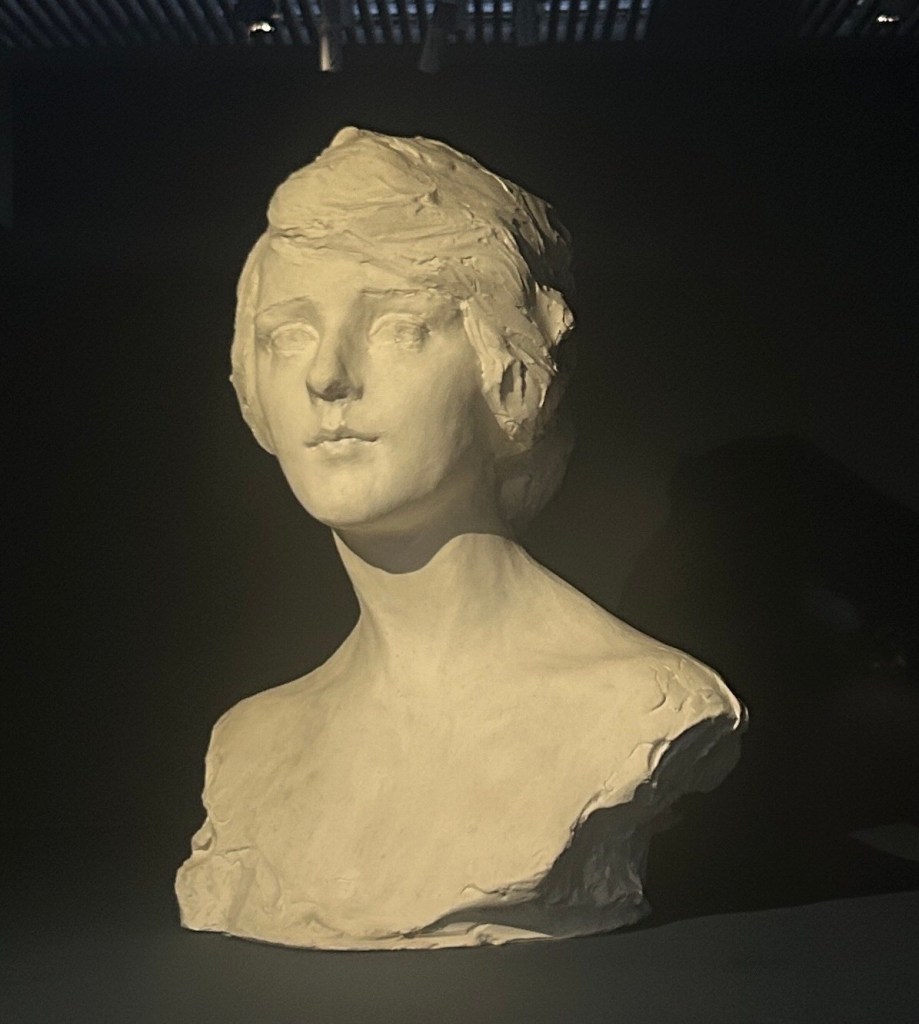
This time the temporary exhibition was of the previously unknown to me sculptor Paul Troubetzkoy (1866-1938).

Troubetzkoy, who was an iconic figure of his time, was the illegitimate child of a Russian diplomat and an American singer and pianist. He was acknowledged by his father at the age of five, trained in Milan and started his career in Moscow and St Petersburg, where he was well received by the local elite, despite speaking virtually no Russian. Having a wonderful facility of capturing people’s likeness in clay (which he then cast in bronze) he sculpted numerous portraits of the aristocracy, but his masterpiece of that period was the portrait of Tolstoy, a vegetarian who made a profound impression upon him (and converted him to the cause).

In 1906, when Russia was racked by the first throes of revolutionary unrest, Troubetzkoy left for Paris, where he quickly won over Parisian society. Bohemian and eccentric, he walked his domesticated wolves in the Bois de Boulogne, and hobnobbed with the city’s cosmopolitan elite, earning numerous portrait commissions. He perfected the genre of portrait statuettes that would make him famous—Anatole France, George Bernard Shaw, Auguste Rodin, Baroness de Rothschild and Roland Garros were amongst those who posed for him.

In his studio, with wolves and statuettes

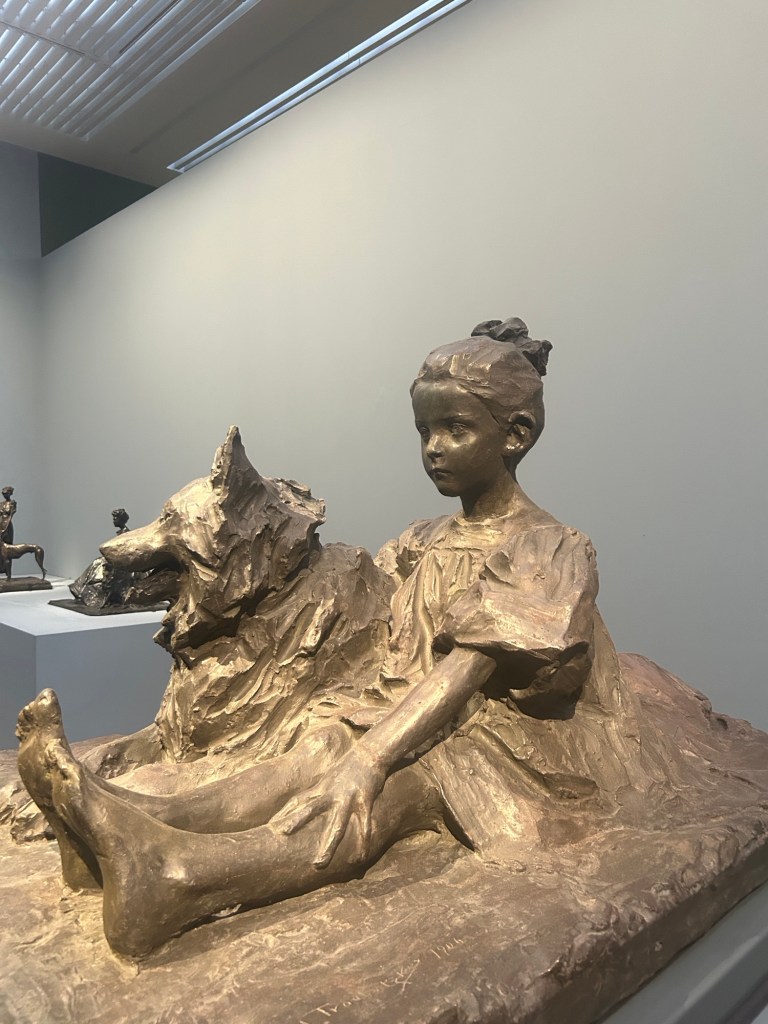
He also loved to depict children and animals. His passion for the latter was the reason he became a vegetarian.

A little girl and her dog

He suffered unbearable tragedy when his only son, Pierre died at the age of two and a half—just after he had sculpted a moving portrait of him with his mother, Paul’s wife Elin.

Troubetzkoy also had much success in America, where he travelled three times between 1911 and 1912, then stayed for almost seven years (1914-1920), again attracting numerous commissions.

Franklin D. Roosevelt, 1911, commissioned by his godmother when he was elected senator of the state of New York.

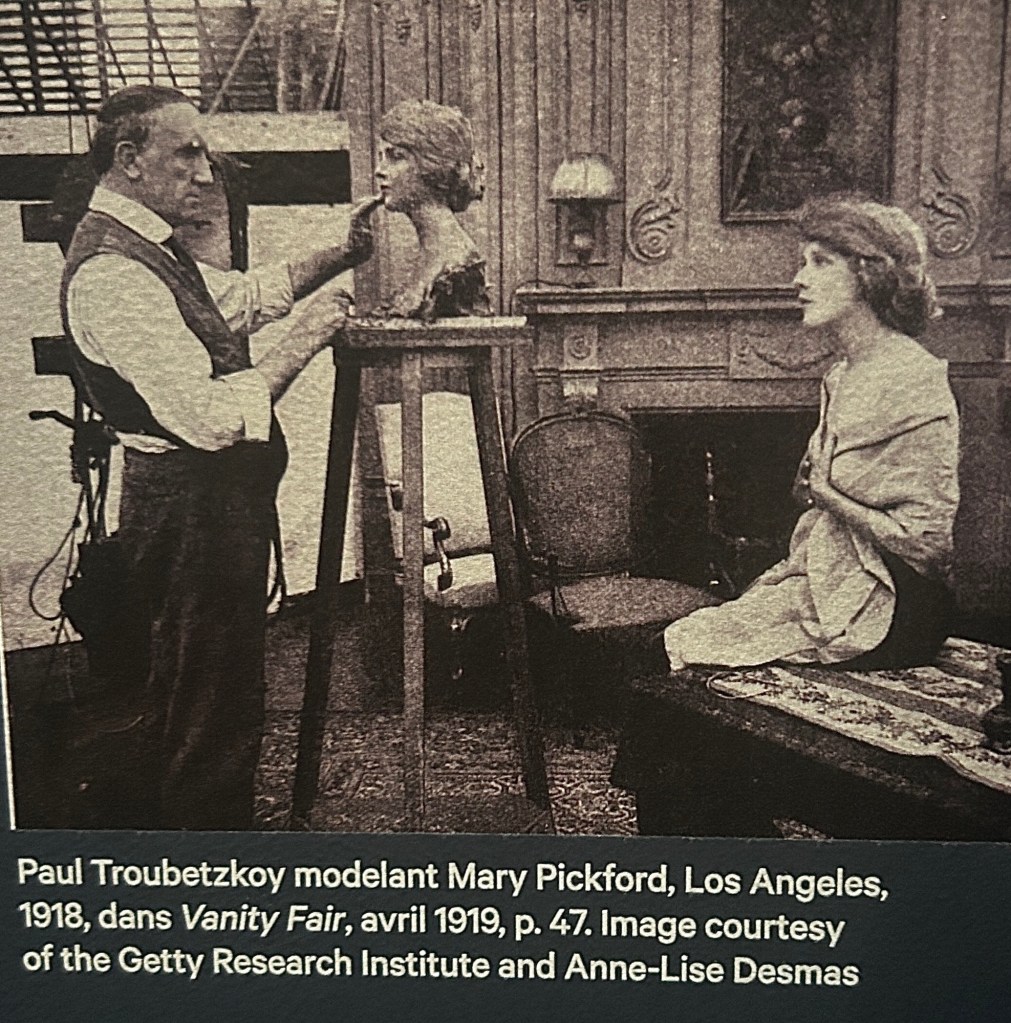
Here he is sculpting the actress Mary Pickford. Amazing how he works in a waistcoat, shirt and tie! He also had a magnificent comb-over…

And the finished portrait.

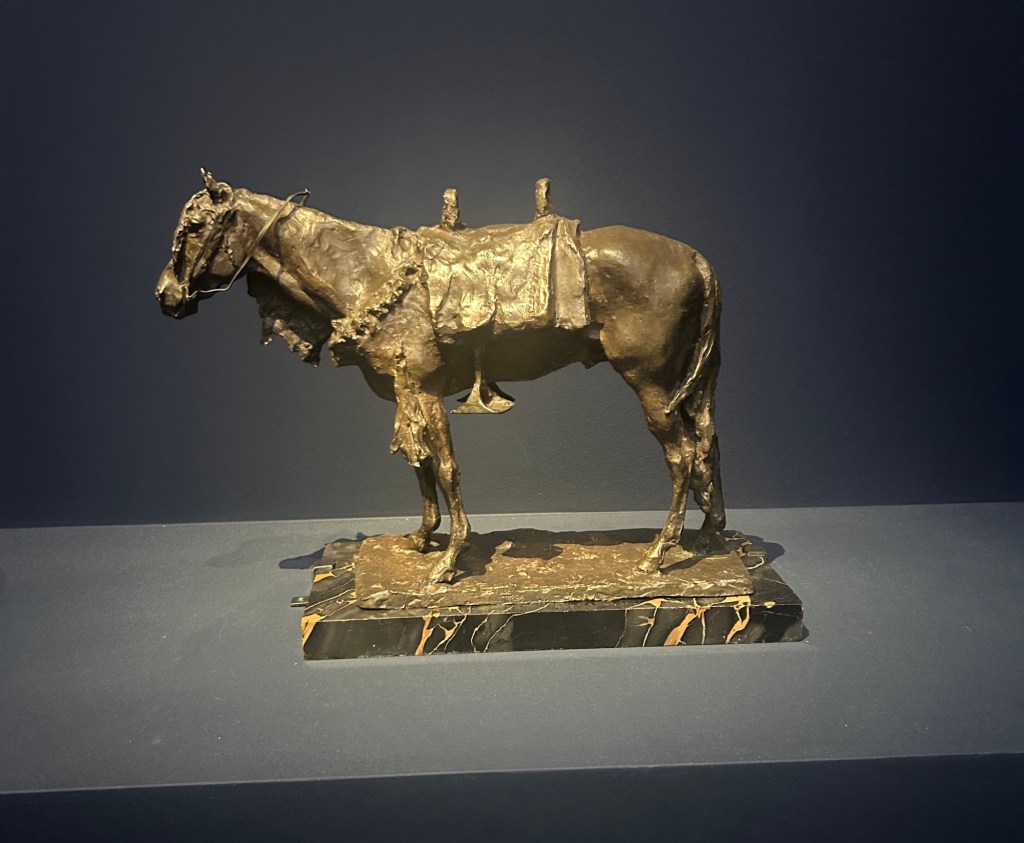
I adored this lovely statuette of an Arabian horse.

Troubetzkoy returned to Europe in 1920, where he settled in France and stayed until his death in 1938 at the age of 72, travelling often to Italy and continuing to sculpt portraits of political figures and representatives of cosmopolitan high society in both countries.

Jean Bugatti, circa 1930

Art on a rainy afternoon

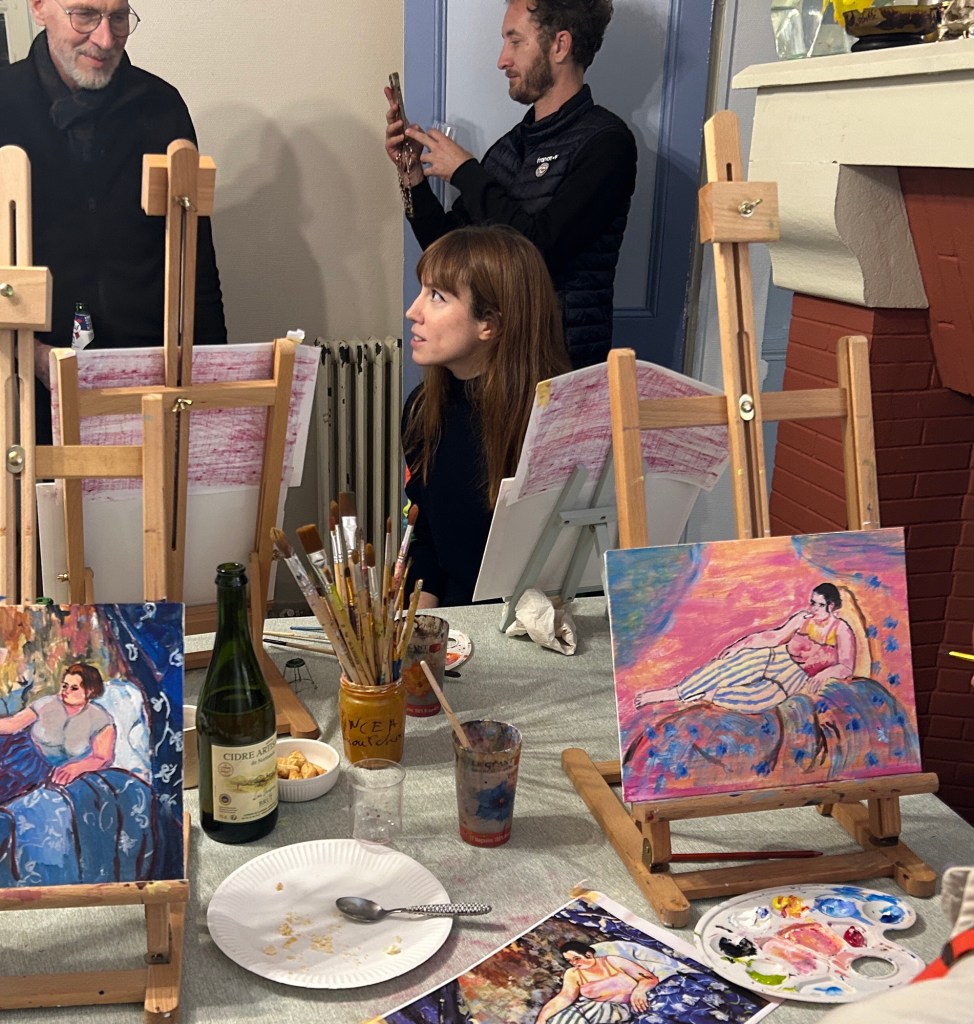
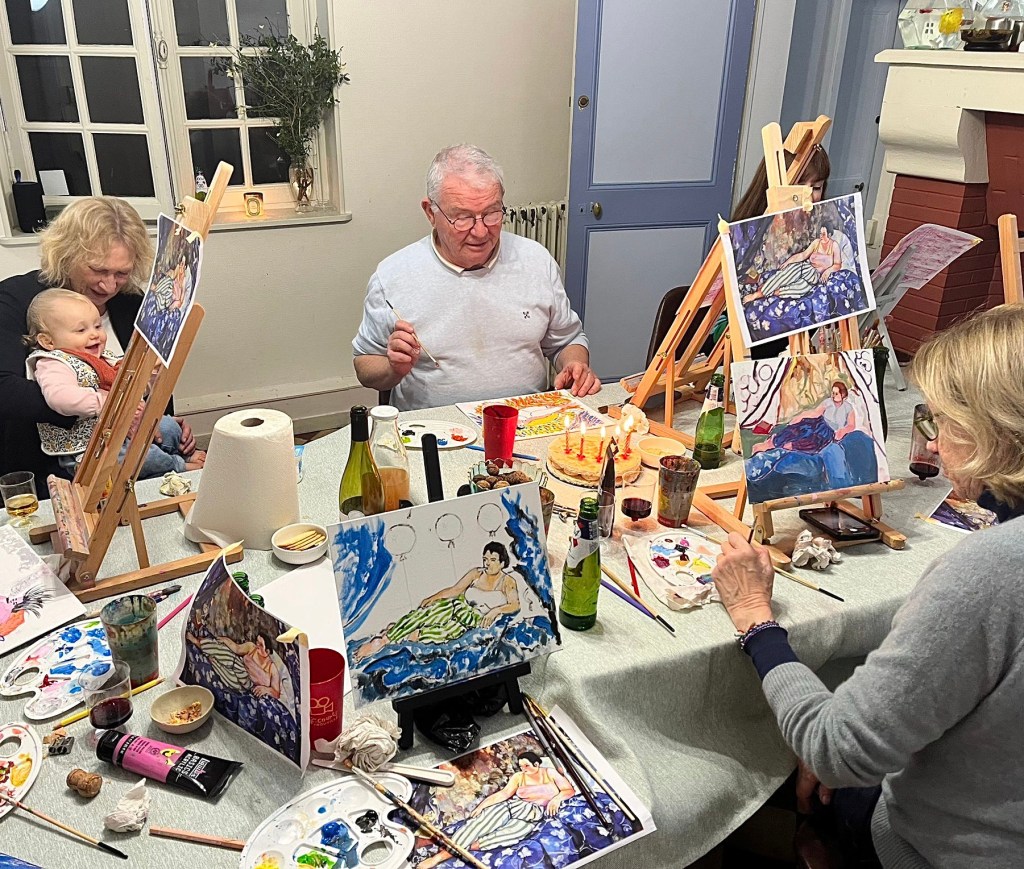
Josepha, the young woman who runs the art studio I attend on Mondays and (when possible) Tuesdays, has set up a Saturday afternoon painting session she calls apéro peinture. The idea is to attract outsiders who are beginners and just want to try painting, but this has had mixed results. Attendance varies. So, a group of the usual suspects decided to take over yesterday, to while away a rainy afternoon.

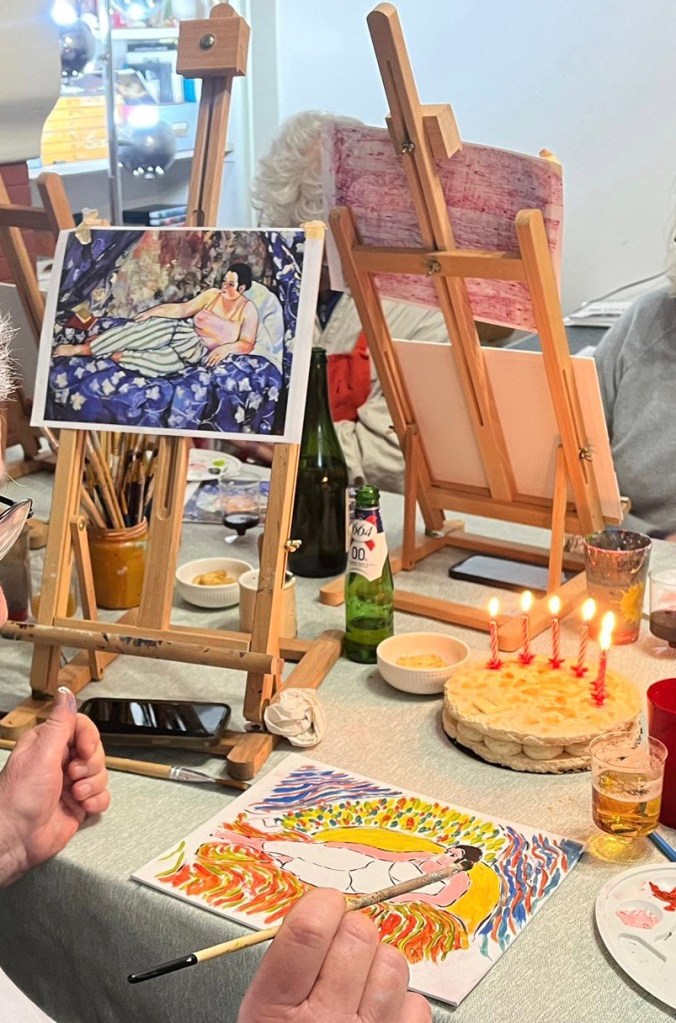
The idea is not to take ourselves seriously, but interpret the subject as the fancy takes us. We all sit around a table set with small easels, boards and acrylic paints and we all paint from the same model, provided by Josepha. We are fuelled by apple cider, wine and tidbits.

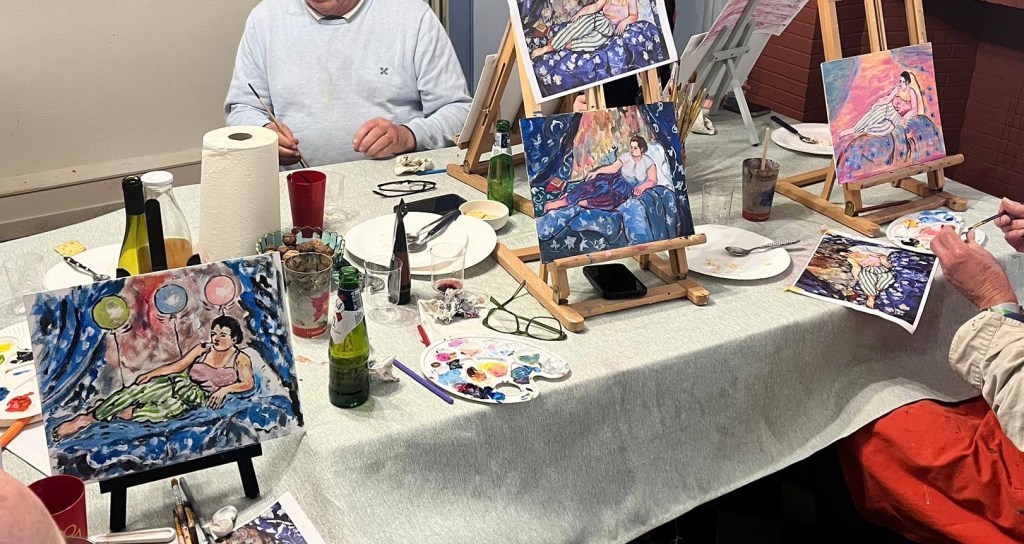
Yesterday the inspiration was a work by Suzanne Valadon (1865-1938), a French painter who in 1894 became the first woman painter admitted to the Société Nationale des Beaux-Arts. She was also the mother of painter Maurice Utrillo. The painting is of a, shall we say, corpulent woman lying on a couch, smoking.

What is always interesting in such situations, is how differently people interpret the same subject. In barely two hours we were supposed to finish a small painting (acrylics dry fast), and this was accomplished amid a lot of banter. We always mock each other mercilessly and have to defend our choices.

Note the birthday cake. With candles 🎂

Christophe and I decided to omit the cigarette, on the pretext that smoking is unhealthy and Non-PC; Philippe on the contrary gave the woman a spliff and drew her levitating above the couch, with three balloons hovering above; and Nathalie actually put her in a bathtub!

Josepha was accompanied by her baby, Garance, her mother (to look after Garance who has just learned to walk), her dog Odin (who is a frequent visitor to the studio) and her partner Tommy who is a journalist and does not draw of paint. His first effort was quite creditable.

Needless to say, a merry afternoon was had by all. However, the artistic benefits are not to be understated, as this type of exercise allows one to let go of rules like perspective and colour values and give free rein to one’s imagination.

My finished version. Cigarette apart, I did not stray too far from the original.

An Autumn Recipe

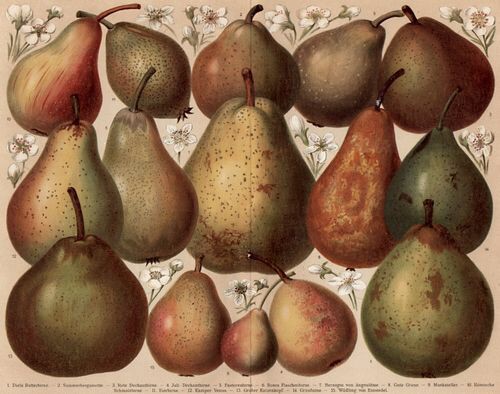
Now that summer stone fruit are over, it is time for the humble pear to take up the slack. OK, an apple a day keeps the doctor away, and here in Normandy we are spoilt for choice with crisp, sweet-tasting apples.

Oil on embossed hardback book cover

The pear, however, must not be disregarded, although it is a bit of a bother to get it right—one minute they are stone hard, the next nearly too soft. One must always keep an eagle eye on them.

Pears are lovely eaten with some kind of blue cheese—Saint Agur, Fourme D’Ambert or Stilton—and walnuts. And the lot is good in a fresh green salad. Here in Normandy they make a refreshing pear cider, called poiré; but pears are great cooked, too. Poached in red wine or maple syrup, or baked with honey, vanilla and ginger.

I have discovered a wonderfully easy and deliciously homey recipe for pear cake, which I will herewith share with you.

CINNAMON PEAR CAKE
1 1/2 cup flour (I use a half-wholemeal flour but normal will do)
3/4 (scant) cup sugar
1 tsp. baking powder
1/4 tsp. salt
1 tsp. cinnamon
1 tsp. vanilla
1 egg
3/4 cup canola oil (I use half my Greek Olive oil)
2 pears or more, peeled and cut into chunks
2/3 cup walnuts (or pecans), chopped. Optional (mostly I don’t use them)

Easy one-bowl mixing. First mix the flour, sugar, BP, salt and cinnamon—add the vanilla and egg—mix in the oil—fold in the pears. The chunks needn’t be too small, and bits of pear should be poking out of the batter, otherwise add more. The batter will be very thick. Put in a greased tin and smooth as much as you can . I usually sprinkle some cane sugar on the top to give it some crunch. Bake in a pre-heated oven at 180 C for 45-55’ depending on your oven.

You’re welcome ☺️

Quick in and watercolour sketch

A change from doom scrolling

How about some poetry instead of the relentless march of horrific news we are subjected to daily?

I never watch the news live anymore. I only scroll through the titles, glance diagonally in case something catches my attention and read pieces that interest me—about new books and films, art exhibitions, or people who do unexpected and funky things. My children mock me about being a fringe reader, but I do enjoy it.

Irrelevant but hopefully cheering sketch

Looking through available films on iTunes and elsewhere, I notice a huge number are horror movies. This is amazing to me—aren’t people horrified enough by what is happening in real life but they need to scare themselves further? To each his taste, I suppose.

Meanwhile, there is nothing more soothing than poetry, so I leafed through favourite books to find something to improve your day. Browsing, I realised a great number of poems deal with grief, loss, fear and other lowly feelings—of course, expressed in beautiful language. Nothing like newspaper articles, but still. Even the Romantics are very concerned with death and loss of love. However, there are poems to lift the heart, so here is one of them, about the transformative power of words, by Dylan Thomas.

Notes On The Art Of Poetry

I could never have dreamt that there were such goings-on
in the world between the covers of books, 
such sandstorms and ice blasts of words,,, 
such staggering peace, such enormous laughter, 
such and so many blinding bright lights,, ,
splashing all over the pages
in a million bits and pieces
all of which were words, words, words,
and each of which were alive forever
in its own delight and glory and oddity and light.

Flowers are always cheerful