Here’s wishing you all a happy, healthy and prosperous new year. And hoping for Peace on Earth, although it doesn’t seem very likely at the moment…But one must remain positive.
Here’s wishing you all a happy, healthy and prosperous new year. And hoping for Peace on Earth, although it doesn’t seem very likely at the moment…But one must remain positive.
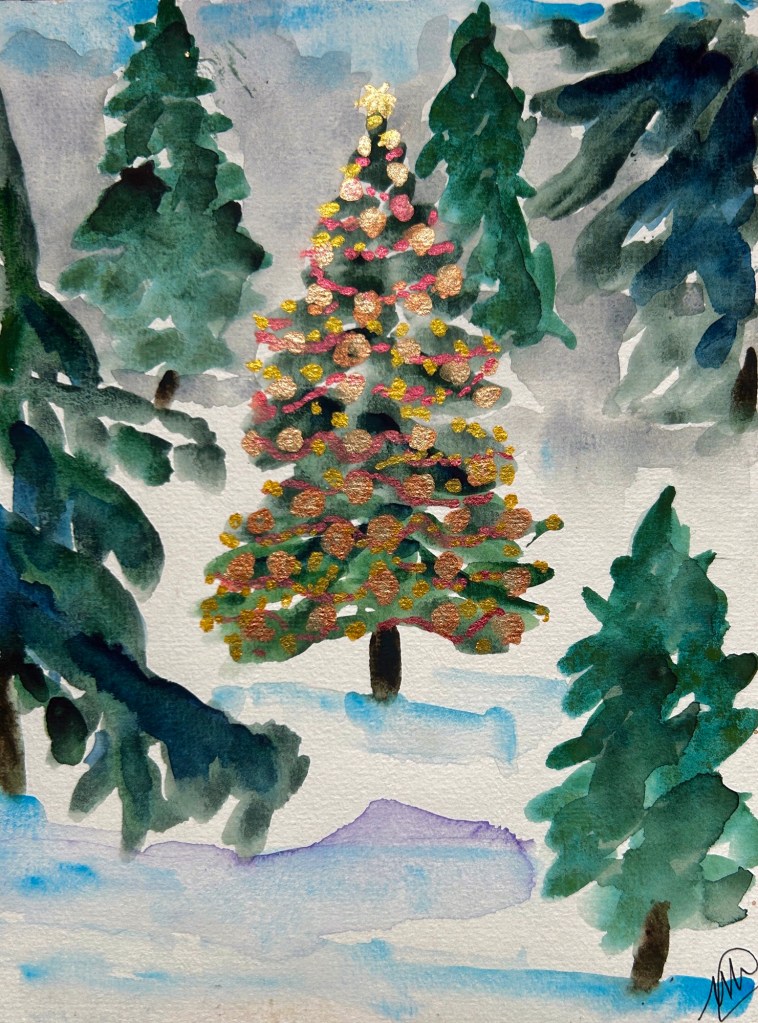
I seem to be in a poetic mood lately, so here’s a seasonal one by Robert Frost.
A Christmas circular letter by Robert Frost.
The city had withdrawn into itself
And left at last the country to the country;
When between whirls of snow not come to lie
And whirls of foliage not yet laid, there drove
A stranger to our yard, who looked the city,
Yet did in country fashion in that there
He sat and waited till he drew us out,
A-buttoning coats, to ask him who he was.
He proved to be the city come again
To look for something it had left behind
And could not do without and keep its Christmas.
He asked if I would sell my Christmas trees;
My woods—the young fir balsams like a place
Where houses all are churches and have spires.
I hadn't thought of them as Christmas trees.
I doubt if I was tempted for a moment
To sell them off their feet to go in cars
And leave the slope behind the house all bare,
Where the sun shines now no warmer than the moon.
I'd hate to have them know it if I was.
Yet more I'd hate to hold my trees, except
As others hold theirs or refuse for them,
Beyond the time of profitable growth—
The trial by market everything must come to.
I dallied so much with the thought of selling.
Then whether from mistaken courtesy
And fear of seeming short of speech, or whether
From hope of hearing good of what was mine,
I said, "There aren't enough to be worth while."

"I could soon tell how many they would cut,
You let me look them over."

                                    "You could look.
But don't expect I'm going to let you have them."
Pasture they spring in, some in clumps too close
That lop each other of boughs, but not a few
Quite solitary and having equal boughs
All round and round. The latter he nodded "Yes" to,
Or paused to say beneath some lovelier one,
With a buyer's moderation, "That would do."
I thought so too, but wasn't there to say so.
We climbed the pasture on the south, crossed over,
And came down on the north.

                                    He said, "A thousand."

"A thousand Christmas trees!—at what apiece?"

He felt some need of softening that to me:
"A thousand trees would come to thirty dollars."

Then I was certain I had never meant
To let him have them. Never show surprise!
But thirty dollars seemed so small beside
The extent of pasture I should strip, three cents
(For that was all they figured out apiece)—
Three cents so small beside the dollar friends
I should be writing to within the hour
Would pay in cities for good trees like those,
Regular vestry-trees whole Sunday Schools
Could hang enough on to pick off enough.

A thousand Christmas trees I didn't know I had!
Worth three cents more to give away than sell,
As may be shown by a simple calculation.
Too bad I couldn't lay one in a letter.
I can't help wishing I could send you one,
In wishing you herewith a Merry Christmas.


🎄And a very Merry Christmas from me too, to you all.
As the year draws to a close, I though I’d make a short list of the best books I read this year—the books I personally liked best, because obviously opinions differ. I was inspired by Jacqui Wine’s Journal—I’ve followed her for years, because our tastes coincide, and I’ve had many wonderful recommendations from her over time. If you haven’t come across her Blog, I urge you to take a look, especially if you are a fan of solid storytelling and excellent writing. She also often revisits old favourites, as well as books in translation.
Since I do like variety in my reading, my list is quite eclectic. Here are the ten I savoured most, not in any particular order.

Wild Thing, by Suzanne Prideau, a truly exceptional life of Paul Gaugin, which I reviewed a little while ago Here
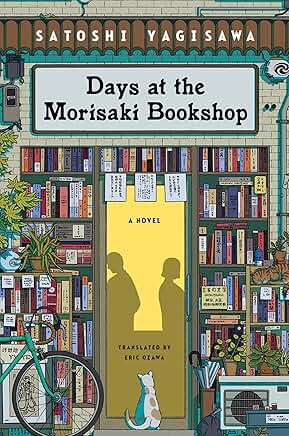
Days at the Morisaki Bookshop and More Days At the Morisaki Bookshop, to coincide with my trip to Japan. Life in Tokyo through the eyes of a young woman. Amusing and different (and a cool cover!). Buy it: Here
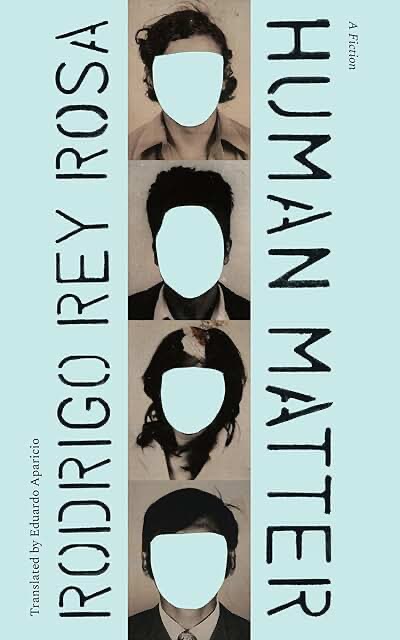
Human Matter, by Rodrigo Rey Rosa, a well-known Guatemalan writer. A semi-autobiographical dive into the realities of a dictatorial regime, seen through its bureaucracy. Engrossing if harrowing. Here
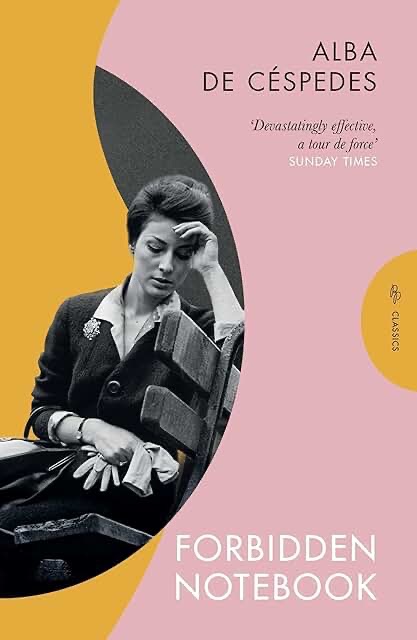
The Forbidden Notebook, by Alba de Cespedes. One of Jacquie’s suggestions, about the daily life of an Italian housewife in the 50s. Fascinating. Here
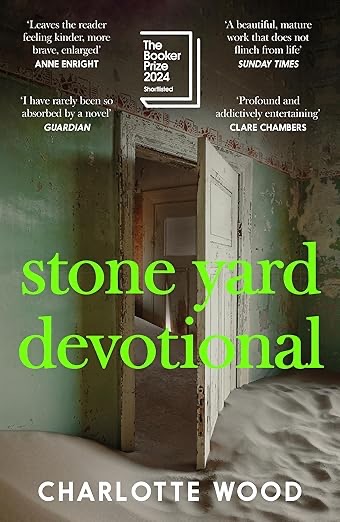
Stone Yard Devotional, by Charlotte Moore. One of the Booker Prize shortlist for 2024. Very original and atmospheric. I got caught up in a very absorbing story. Here
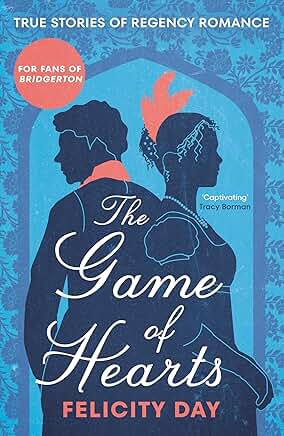
The Game of Hearts, by Felicity Day. Part of my research into the Regency era. The stories of real women of that time—often, truth is stranger than fiction. Or more amusing. Here

Longbourn, by Jo Baker. Pride and Prejudice from behind the mirror: the daily life of the Bennet household as seen through the eyes of their servants. Here

Horse, a novel, by Geraldine Brooks. A great story told over two time lines, based on the real champion thoroughbred Lexington. With added enjoyment for people who love horses. Here

The Safekeep, by Yale Van Der Wooten. Another book shortlisted for the Booker Prize, this is an original story of the developing relationship between two very different women staying in the same house in the Dutch countryside during the summer of 1961. It is well plotted and in turns mysterious and unnerving. Here
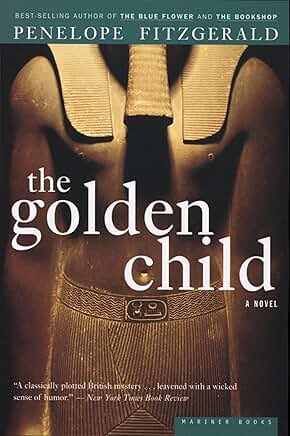
The Golden Child. I love Penelope Fitzgerald and this was one that, most surprisingly, I had not read. Like an immersion in a warm bubble bath. Did not disappoint. Here
Add to those a couple of thrillers, some Regencies (good and not so good), and a handful of crime novels (I especially enjoy those of Vaseem Khan, set in India with a most interesting policewoman heroine.) I’ve also been reading books by people whose blogs I’ve been following for years and who have been most supportive of my own book. They’ve been on my TBR list for a while, but—so many books, so little time, as I keep repeating.
Well, I do hope some of the above will appeal to you. Happy reading! (Or perhaps you’ve e read them all?)
Talk about leaving something behind! Tom Stoppard, who has just died, aged 88, wrote—over the course of five decades—35 stage plays (including seven translations or adaptations of foreign work), 11 radio plays, 6 television plays, and 14 film and television adaptations of books and plays. An opus which will keep his memory fresh for years to come.
I am not about to write an obituary complete with all his life details. Every newspaper has done that, and writer, journalist and magazine editor Tina Brown, who knew him personally since she was a teenager (he lived close to them and was friends with her father) has posted a lovely eulogy on Substack.

Stoppard wrote great theatre because he wrote great dialogue, witty and argumentative. In his own words, ‘Writing plays is the only respectable way of contradicting oneself.’
Here is a description of him, from an obituary in the Guardian:
A tall and strikingly handsome man, with a long, bloodhound face, a thick tangle of hair and a casually assembled wardrobe of expensive suits, coats and very long scarves, Stoppard cut an exotic, dandyish figure, a valiant and incorrigible smoker who moved easily in the highest social and academic circles, a golden boy eliding into middle-aged distinction and never losing the thick, deliberate accent of his origins, even though he never spoke Czech. He carved out his career in his own always carefully chosen words. He was often thought to be “too clever by half,” but never patronised audiences by talking down to them, even if they had to work hard to keep up.

Stoppard lived a charmed life in England, something he was always grateful for, considering a large part of his family died in the camps. This part of his personal history he only got to research in later years.
In my case, I credit Stoppard for instilling in me an eternal love of the theatre. Not living in England, I sadly did not manage to see all his plays, but I made it a point to see as many as I could, and they remain vivid in my memory. The wit, the irony, the sarcasm, the erudition and, above all, the sheer enjoyment.
Rozencrantz And Guidenstern Are Dead, The Real Inspector Hound, Arcadia, India Ink…The list goes on. Wonderful actors, such as Bill Nighy and the incomparable Felicity Kendall, fantastic sets. A great director, for a lot of them, in the shape of Peter Wood.
He’s always been number one in my list of people to invite to an imaginary dinner party. May you rest in peace, Mr Stoppard, and thank you.

 Letters from Athens