The silence of the girls

Greek children are brought up on mythology—the shenanigans of the gods on Mount Olympus, the battles of the Trojan war, the travels and adventures in the Odyssey. However, although I knew how the story ends, I really enjoyed this backstage view of the Iliad by Pat Barker. 
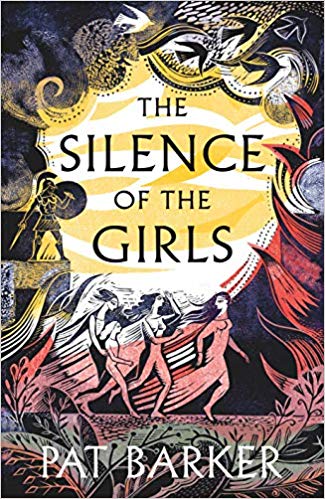


The tale is told from the point of view of Briseis, a princess who becomes a slave, awarded to Achilles as his prize after he sacks her city, slaughtering her father and brothers. She ends up in the camp of the Greeks besieging Troy, together with many other women. This is their voice, their side of things. 

Pat Barker is a master of writing about war, as evidenced in her Regeneration Trilogy—the reek, the noise, the far-flung effects on everyone involved, however remotely. Here we are placed firmly in the camp—we see the cooking fires, smell smoke and roasting meat, unwashed bodies. We are inside the weaving huts, where the women are shut up and made to work all day, or the hospital hut, where bloodied and maimed men are brought in after the battle.

The women’s situation is horrifying, and their treatment at the hands of the men is appalling, yet Barker manages not to veer into one-sidedness. The men are not one-dimensional brutes, but have a human side, and some passages are from their point of view as well, since they are the ones fighting the war.

The pace is kept up throughout, so that I found the book unputdownable. For anyone interested in the lives of the Ancient Greeks, give it a try.

Highly recommended. 

Amazon link here

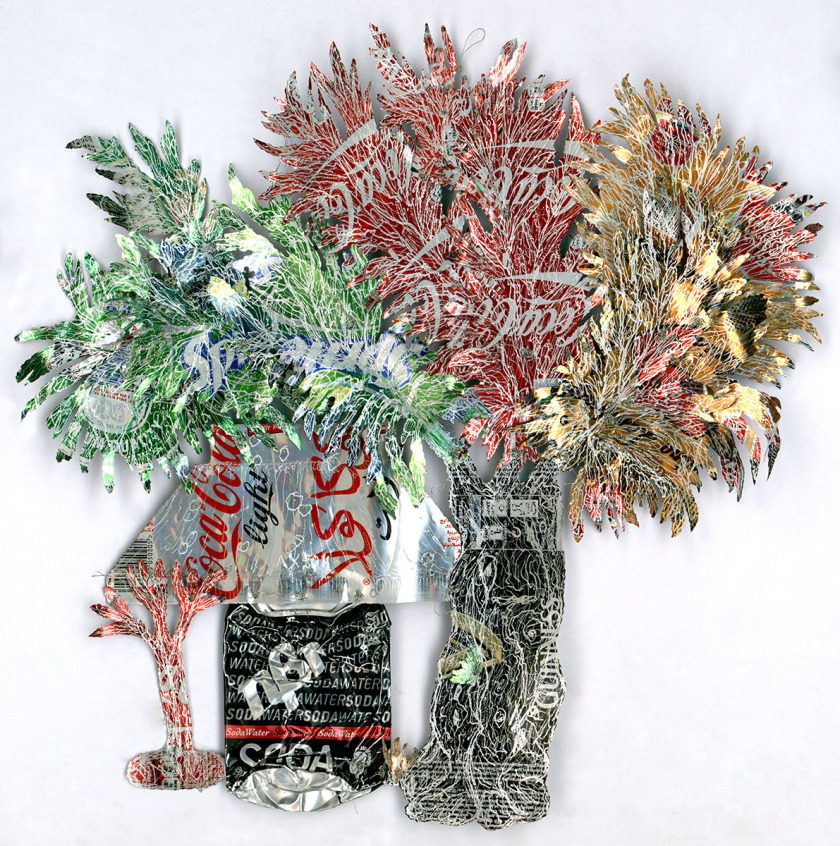
Cola tins transformed to art

I think these are marvelous! It’s fantastic when artists use their imagination to overcome shortcomings such as lack of funds or other materials. This type of recycling is done a lot by African artists such as El Anatsui, about whom more to come.

art scene athens's avatarart scene athens

christidou

IN THE age of the Greek crisis, some artists look further towards alternative methods of creativity and materials. Most traditional art materials are expensive, but there are also options that are free, and everywhere: arte povera was a movement that pioneered this approach in a conceptual manner, back in the Sixties and Seventies. Today,  Lefki Christidou has found some contemporary ‘poor materials’ of her choice, using them in a more decorative style, especially the Coca-Cola tin, which adds a slightly more pop aesthetic to her work.Christidou2It’s also in line with how artists today combine the art process with recycling. She manages to transform this everyday object into flowers, cats, people, landscapes and more, at Athens’s Gallery 7, in an exhibition entitled ‘Debt relief programme – developments’. Opens on September 25 (runs till October 13).

View original post

From Sepolia to the NBA

After yesterday’s post about a boy who went from being a refugee to playing basketball in the Greek A1 league, I could not avoid mentioning our ‘Greek Freak,’ Giannis Antetokounmpo.

Giannis is not an immigrant himself, but his parents were. They are Nigerian, and came to Greece from Lagos via Turkey, in 1991.


Three years later, on December 6, 1994, Giannis was born in Athens. Even though he and three of his four brothers were born in Greece, they did not automatically qualify to receive full Greek citizenship. For the first 18 years of his life, Giannis had no papers from Nigeria or Greece, and only officially became a Greek citizen in 2013.

Antetokounmpo grew up poor, in the Athens neighborhood of Sepolia. Like many other immigrants, his parents struggled to find work, so Giannis and his older brother, Thanasis, helped out by hawking items such as watches, bags and sunglasses. But Antetokounmpo’s father, Charles, was a former Nigerian association football player, while his mother, Veronica, is a former high jumper. Giannis was tall and athletic, and loved basketball, and by 2009 he was playing competitively for the youth squad of the Greek team Filathlitikos. 


With his family, in Sepolia

In 2012, Antetokounmpo joined the senior squad of Filathlitikos and played for them in Greece’s second-tier basketball league, the Greek A2 League, during the 2012–13 season.

In December 2012, just days after turning 18, Antetokounmpo signed a four-year deal with Spanish club CAI Zaragoza. However, he never ended up playing in Spain, nor with the Greek A1 league.

He made himself eligible for the 2013 NBA draft and was selected 15th overall by the Milwaukee Bucks.

Since then, he’s set many personal career heights.


At 22 years and 74 days old, he became the youngest player in franchise history to start in an All-Star Game. He also became the first Greek NBA All-Star,  and his special talents earned him the nickname ‘Greek freak.’ The awards he has collected are too numerous to mention and he has legions of fans.

Giannis is very family-oriented, and his brothers are all athletic. Despite the problems he encountered in his childhood, he lauds his adopted country wherever he goes, and has represented Greece multiple times. He served a reduced military service, as all Greek men who permanently live abroad are allowed to do.

Here’s a peek at what Giannis can do:


Is there a moral to this? Only that a lot of us have ancestors who had to move, due to different circumstances, such as poverty or war, to another country, leaving behind all they knew. Most countries owe a lot to immigration, and totally closed societies die off eventually. At the moment we are facing an unprecedented crisis, and, in my opinion, it is up to us to deal with it in a way that will enrich our communities.

Sometimes there is a happy end

The statistics on the refugee crisis are horrendous. The death rate for migrants attempting to reach Europe has risen even though the number of people trying to make the crossing has fallen. While in 2017, there was one death for every 42 migrants attempting the crossing, for the same period in 2018 the number is one death for every 18. More than 1.600 people have died or gone missing this year.
Meanwhile, there are over 4.000 refugees amassed in the island of Samos, of whom 3.817 are piled up in a facility meant for 648 people. In Lesbos, too, 10.454 migrants, mostly having arrived from the Turkish coast, are packed in the camp of Moria (and this is just in Greece—I didn’t check the numbers for Italy and Spain, where lots of people cross over from Libya.)

However, in a few cases, there can be a happy ending. It is from the Lesbos hotspot that young Christ Wamba has moved to the basketball courts of Aris, a top class team based in Thessaloniki, in the north of Greece. He was introduced to the public as their newest player, to enthusiastic applause, at this season’s opening ceremony. ‘His life could be made into a film,’ said the presenter.


The not-quite-18-year-old lived with his family in the Congo until three years ago. Their situation was dire—he often had to go to bed on an empty stomach. He loved basketball, but knew he had to leave home to achieve his dream. At 15, he crossed half of Africa alone, and managed to arrive in Turkey after many adventures. From there, he found himself confined in the Lesbos camp, where he remained for a year and a half. It was there he met social worker Michael Poulimas, member of an NGO looking after unaccompanied children on Lesbos. Michael managed to get him into an apartment with some other youths, and observed his passion for basketball—Christ could seldom be seen without a ball in his hand, and lost no opportunity to play.

Michael helped him make an asylum claim, and in 2017, he was moved to another camp, in Sindos, in northern Greece. There, George Balogiannis, head coach of the local basketball team, noticed his talent and took him on. Christ started practicing for 8 hours per day, in order to improve and take his skills to a new level.


Meanwhile, a teammate had helped him post his profile on Athlenda, a worldwide basketball network site known for the discovery of new talent. And the rest, as they say, is history. When Christ applied for a job opening with Aris, a well known northern Greek team, the head coach recognized his unique talent, and he earned his spot on the roster. He started training with the squad a few months ago (the deal was officially announced earlier this week).

A fairytale come true and an inspiration for other kids hoping to attain their dreams. However, one cannot help but wonder how many people with similar talents and ambitions still remain stuck, with little hope for the future.


No cause for celebration

Greek prime minister Alexis Tsipras hailed it as a ‘day of liberation ‘ and the ‘end of a modern day Odyssey’: after about nine years of unbearable austerity, Greece has exited the bailout program.

“Greece has managed to stand on her feet again,” the prime minister’s office announced last week, describing receipt of a final €15bn bailout loan as “The last act in the drama. Now a new page of progress, justice and growth can be turned.”

However, celebrations are premature: not only in my opinion, but according to several experts, the bailout was a disaster for Greece, since the loans were designed to help Northern European banks, not the Greek government, nor the Greek people.


Photo from Benaki Museum Archives


If their purpose was to support the Greek economy, the emergency loans must be considered a failure. Greece is now the fourth poorest country in the EU behind Bulgaria, Croatia and Romania. In an economy that has contracted by 26%, a fifth of the working population – two-fifths of young people – have been left unemployed, while about 500,000 people have fled, mostly to EU member states in Europe’s wealthier north.

Although Greece might be now able, after many years, to borrow again at market rates, and Tsipras is at pains to play down outside supervision, we will still be subject to a regime of enhanced surveillance. Further pension cuts are in store.

Also, a return to borrowing has been made much more difficult because of market turbulence caused by financial problems in both Italy and Turkey. In the midst of his triumphant pronouncements, Tsipras has nevertheless warned of “fresh battles ahead” as the country prepares its first budget measures following the end of its international bailout.

The country faces decades of austerity since, contrary to widely held beliefs, less than €10 billion or a fraction of less than 5% of the overall programme went to the Greek fiscal budget. In contrast, the vast majority of the money went to existing creditors in the form of debt repayments and interest payments. Athens will be repaying a €322bn debt mountain for next 42 years.

Scary? If you talk to Greeks who’ve had to sell their house, whose kids have left for a better life abroad, whose businesses have gone bankrupt, who have zero faith in their leaders, I can assure you not many of them will be opening the champagne just yet.

Thank you

I’d like to thank all of you who sent me words of commiseration and encouragement over the last two days. I was touched by all the positive energy, sometimes from people I hadn’t spoken to in years.


I’m finding it difficult at this moment to answer each and every one separately, while the news are still full of updates, tragic stories and horribly depressing photos. Even worse, there are still a lot of people missing—I can’t imagine what their families and friends are going through.

I’m so sad Greece has again made the front pages for such a dreadful reason—it seems our troubles are never ending.

The beach below is Kokkino Limanaki (the little red port) where we often go to swim. It had beautiful pine trees above a red cliff and a lovely view of the island of Euboea. Many people tried to escape from there.


When the wind is blowing, fire changes direction with the speed of lightning. Sometimes there are only a few meters between hell and safety.


All photos from Google. Please DM for credit.

Ablaze

In 2015, I wrote about the summer fires in Greece (here). Sadly, this is a recurring theme, which I could post about every year.  Forest fires can  occur everywhere when it’s dry and windy. And pine trees, which comprise most of the bits of forest around Athens, burn with more intensity than other woods because they’re resinous.

I’ve already experienced two very bad fires in previous years, when both times our garden was burnt and the house barely saved. However, this one is the worst by far. Since yesterday the situation has been catastrophic. Not only much of the remaining vegetation has been destroyed and scores of houses damaged, but, even more tragically, there have been a large number of casualties. Many people were trapped on the beaches and had to be rescued by sea. Others were trapped in their cars, some died when the taverna they were eating in burned to the ground.


Can these fires be prevented, or controlled faster? A very strong wind was blowing, spreading the flames at a terrifying rate. The usual blame game is going on, but in California and Australia, where the equipment must be superior, they seem to face the same sort of problems.

Meanwhile, superhuman efforts are being made by firefighters and volunteers on the ground, along with the heroic pilots who skim the waves to fill up their tanks and then fly through the smoke to drop the water on their chosen target.


It’s going to be a long, difficult summer.


Photos from Google

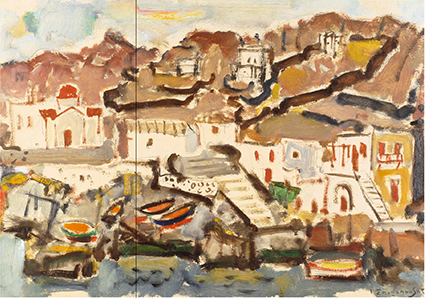
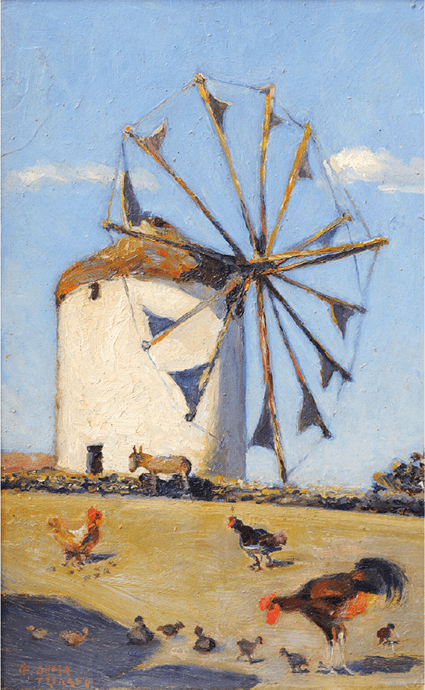
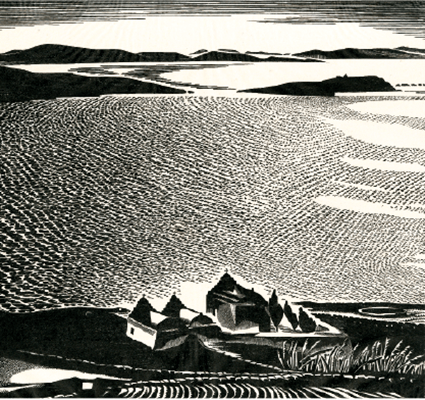
Mykonos: From arty to party

For any of you headed to Mykonos, you could take a break from swimming or partying to see this fascinating exhibition. From one of my favorite art blogs, Art Scene Athens.

art scene athens's avatarart scene athens

Ziller

“MY SOUL is often a back street on Mykonos when night begins to fall”, wrote Surrealist artist/poet Nikos Engonopoulos back in 1939. I imagine those back streets were pretty quiet in those days, and nothing like they are today, since Mykonos became Greece’s party island par excellence. But this island does have an arty side to it too, for it is here that the Athens School of Fine Arts had set up its first annex, back in 1932. The ‘island of the winds’ had already been pulling a cultured crowd from the early 20th century, due to its close proximity to Delos, and the antiquities there, excavated by the French School of Athens (between the years of 1873-1913).

kefallinos

The current exhibition at the Municipal Gallery of Mykonos (runs till July 31), entitled ‘Mykonos through the Gaze of the Artists. From the Interwar years to 1960’, sheds light on the unique…

View original post 163 more words

An Antique tomb

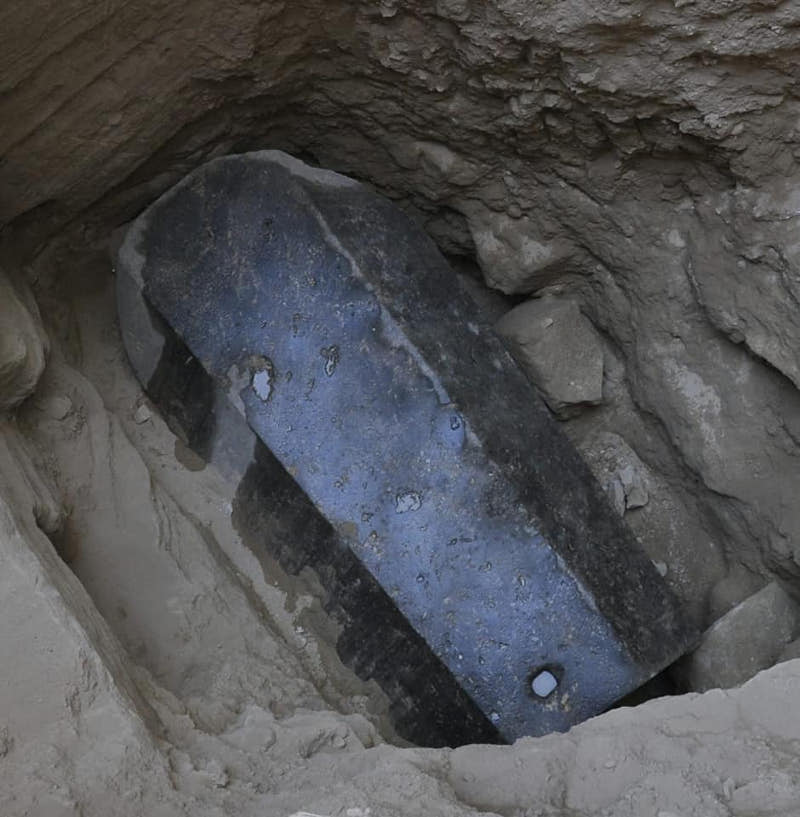
The Egyptian Ministry of Antiquities has announced that an unusually large, untouched sarcophagus has been discovered in the Sidi Gaber district of the city of Alexandria. The tomb was uncovered during work on the foundations of a new building and is believed to belong to the Ptolemaic era, more than 2000 years ago.


Source: Google

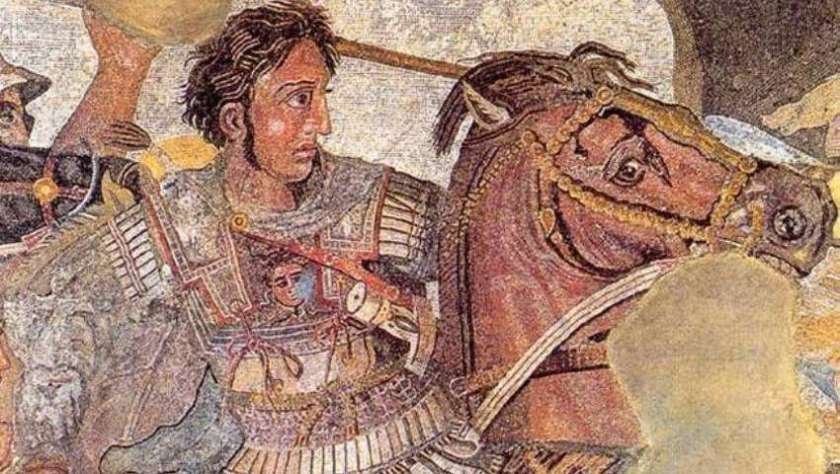
Alexandria was founded by Alexander the Great in 332 BC, one of around twenty cities bearing his name. Alexander the Great succeeded his father on the throne of Macedonia at the age of twenty. He died in Babylon at the age of 33, having in this short time created an empire that stretched from Greece to northwestern India. He was undefeated in battle and is widely considered one of history’s most successful military commanders. His reign, while being undoubtedly bloody and violent, nevertheless resulted in the spread of Greek culture in the east. This led to a new Hellenistic civilization, aspects of which were still evident in the traditions of the Byzantine Empire in the mid-15th century AD. It is amazing that people spoke Greek in central and far eastern Anatolia until the 1920s! Alexander became legendary as a classical hero in the mold of Achilles, and is often ranked amongst the most influential people in history.


Source:Google

Alexander’s tomb has never been found, but it is widely believed to be in Alexandria. The reasons for this are multiple:

Ancient sources often mention Alexander’s tomb, all placing it in Alexandria. Amongst the people who are thought to have visited are Julius Caesar, Octavian, Caligula and others, according to ancient texts. There is no definite proof, but there is however a strong probability, given that after his death Alexander’s body remained in Babylon for two years, before starting on the long journey home in order to be buried in Macedonia. It is said that Ptolemy, the governor of Egypt, waylaid the mission and kept the body in Alexandria until at least the 4th century AD. Possibly it was destroyed there during the persecution of Christians. The fact that the royal necropolis was never found could also be due to the ravages of natural catastrophes such as earthquakes and tsunamis, or the later destruction of pagan temples by Christians.

Finally, Alexandria has progressively grown into a thriving modern city of five million inhabitants, making it difficult for archaeologists to conduct digs there.

This new discovery is a rare specimen sculpted out of black granite. It is exceptionally large, measuring 2.65m in length, 1.65m in width, and 1.85m in height. The lid is sealed with mortar, which is an indication that it probably has never been opened, and that in itself is unusual, given that most ancient graves have been desecrated by robbers.

Given that it weighs around 30 tons, it will probably need to be opened on site.


Source: Google

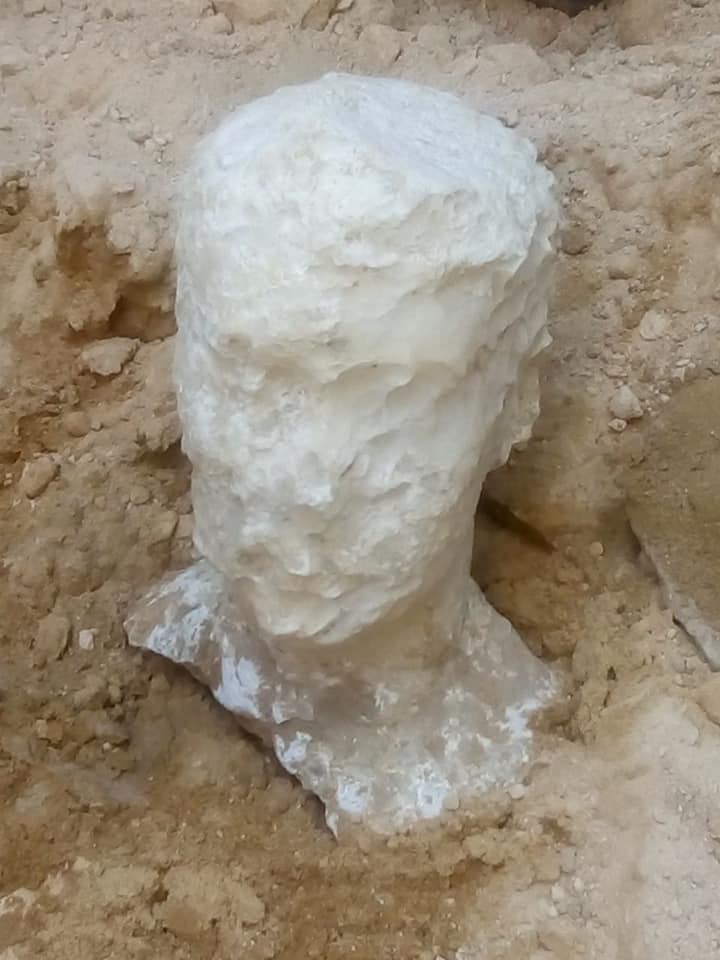
Could this be the sepulchre of Alexander the Great? Doubtful, although it probably belonged to a prominent, wealthy man. However, it not luxurious enough for a king, especially one of Alexander’s radiance. An alabaster bust was found in the grave, believed to be that of its owner, but unfortunately its features are quite eroded.

Archaeologists are now all agog to open the sarcophagus, hoping to find clues to its owner inside.

Stay tuned for developments.

Eastern Crete – A Notebook

For anyone planning to visit the beautiful island of Crete, here is a book that could be of use. From the blog of Kritsa, who has written a book about Crete herself, a novel called Kritsopoula, girl of Kritsa.

kritsayvonne's avatarKritsa, at the heart of it all

517D17qjCKL._SX311_BO1,204,203,200_ One of my favourite travel writers, Richard Clark has a new book out focusing on my favourite region of Crete. Well, I live there so I cheerfully admit my bias. Richard has a knack of taking you on a journey through his eyes that either makes you nod in appreciation with a ‘Yep, that’s what I thought/saw about that place’ or ‘Mmm, I must visit there.’

Many guidebooks about Crete are unfortunately out of date and only skim the places they mention. Richard brings a fresh approach, and gives more detail while encouraging your own exploration. I’m proud to say I was able to make a small contribution to the book and thoroughly recommend it.

To learn more about the book Click Here.

The photo on the book cover was taken in Elounda and I’m looking forward to standing right there to soak in the view. Congratulations, Richard for capturing…

View original post 63 more words