The refugee crisis revisited

My heart sank when I read in the paper that Burkina Faso is on the brink of civil war. More people wanting to come over here, was my first thought.
The refugee crisis has gone on for so long, and is so out of control, that serious political and economic dimensions have been added to the humanitarian aspect.

On the one hand, it has become big business. Here is some number crunching:
It costs a minimum of €1200 per person for the passage from Bodrum to Kos. For 50 people in each boat this equals a whopping €60.000! And that’s just for a short crossing – I have no idea what traffickers from Libya make, when they pile 700-800 people into a rust bucket and cast it off without enough fuel to reach Italy…
Once you get to Greece, apparently kickbacks are extracted everywhere: €200 to get to the head of the queue, €200 to get on the bus, and so on. A lot of these ‘facilitators’ are themselves Syrian.
It’s €4000 from Morocco across the straights of Gibraltar to Tarifa in Spain. By jet ski! Although it is very dangerous since it is beyond the safe range, the trip must be undertaken under cover of darkness and the water is freezing.
For wealthier Syrians, safer, more comfortable trips can be arranged via Dubai to Turkey, then from Izmir to Rhodes on larger boats. A few more thousand euros then have to be paid out in taxis, hotels and fake documents. I read an interview with a Syrian doctor who had turned ‘travel agent’ after failing to cross over himself – he was saying people trust him because he’s a doctor and prided himself on not having a single person die on his boats.

On the other hand, attitudes are hardening:
Donald Tusk, the EU president, has claimed that migrants are being sent to Europe as a campaign of “hybrid warfare” to force concessions to its neighbors. An influx of hundreds of thousands of refugees becomes a “weapon” and a “political bargaining chip” used by the EU’s neighbors who want to put pressure on Europe to obtain extra aid or other benefits.
Mr Tusk warned that the Schengen system of passport-free travel would collapse and Europe would become a “breeding ground of fear” unless Europe’s external borders are secure. There is mounting frustration in Brussels at President Recep Tayyip Erdoğan’s refusal to seal Turkey’s coasts and border with Greece.

At the same time, a controversial plan to relocate 160,000 people from Greece and Italy to other parts of the EU by quota was announced.
The countries that refused this project, one of which is Romania, claimed that the immigrants will alter the fabric of their society. That’s as it may be, but people from these countries have themselves emigrated in the not so distant past. Greece accepted more than 20,000 Romanian refugees after the fall of communism. Did they ask themselves if they would alter the fabric of our society?

Unfortunately, the West does bear a part of responsibility for this situation, by meddling in these people’s countries. As usual, economic interests are mostly to blame. For one, the arms industry needs wars in order to make a profit – then there is oil, and minerals, and construction… Now we have to deal with the fall-out. Theoretically, it would make a lot more sense to spend the money making their countries safe for them, than dealing with them in Europe. It is probably too late now. Boris Johnson, the Mayor of London, has suggested there should be a safe haven organized for them in the Middle East. I don’t know how feasible that would be, but I do think the Arab world should be doing more to help.
image

Meanwhile, in Athens, the situation remains dire.

On September 30th, a friend of mine went to Victoria Square, in downtown Athens, to evaluate the migrant situation first-hand. This is what she wrote:

‘Flanked by three friends, all laden with bags bulging with juice boxes, cans of long-life milk, packets of biscuits and cereal bars, markers, children’s books and clothes, I exited my car on the busiest side of the square. We were immediately accosted by tens of people, including many children.
I wasn’t psychologically prepared to be faced with such palpable desperation. The situation was worse than I’d imagined. And a thousand times more unsettling, too.
People grabbed at the bags, tore them straight out of our hands, served themselves to as many goods as they could carry. We made sure the children received priority but, soon, we were mobbed by grown men, too.
It was actually pretty terrifying. If you don’t see it first hand, it’s hard to fathom how bad it is.
Turns out the people here were not political refugees from Syria. These were all illegal immigrants from Afghanistan. I was shocked to find that they were not even all that grateful for the things we’d brought.
I certainly don’t regret going, but, having said that, I value my safety and I’m not about to go back any time soon. I would not recommend that unprepared civilians intervene, but I did approach a harried-looking volunteer from Holland who shed some light as to what you can do if you really must help in person.

1- Bring warm clothing, blankets and socks. With winter coming, this is what they will need the most.
2- Bring food, always a necessity.
3- Circulate with a zippered bag rather than paper or plastic, both of which tear easily, and hand the goods out directly to the people you choose. Keep moving. Stay too long in one place and you will be mobbed. (Easier said than done.)
4- Prioritize women and children. The men come third.
5- Make sure you are not carrying valuables. Gypsies who roam amongst the Afghans are quick to pounce on unsuspecting strangers.

The situation is really too bad to be true and pressing questions arise: where will all these people live should they choose—or be forced—to stay here? After all, they can’t camp out forever.’

image


Other friends who ventured to Victoria square told me approximately the same things, adding, however, that the baker where they went to buy food for the refugees gave them ten loaves which he also cut into pieces for them.The same thing happened to us, when we went to buy medicines for them at a pharmacy. The pharmacist added a large number of freebies to our bag. Greeks, whatever their other faults, remain human and sensitive to the pain of their fellow men.

Roger Cohen, writing in the New York Times, says:

Greece has made me think about everything statistics don’t tell you. No European country has been as battered in recent years. No European country has responded with as much consistent humanity to the refugee crisis.

For the whole article, click here.

A Greek church near Ground Zero

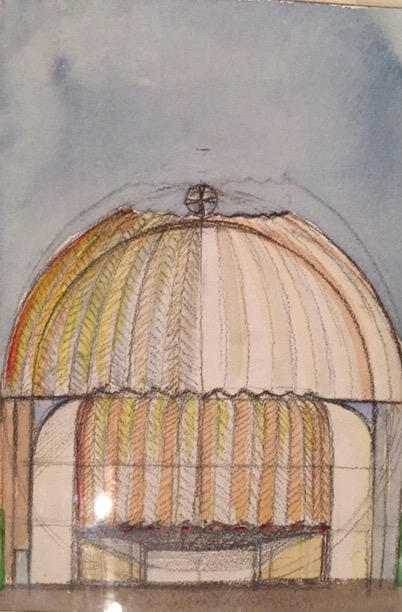
Inspired by visiting the churches in Patmos while sailing in the Greek islands, Spanish architect Santiago Calatrava did not hesitate to submit his design for the building of the St. Nicholas Orthodox Church at the World Trade Center.

image

He visited many churches, and notably Aghia Sophia and the Church of the Holy Saviour in Chora (both in Istanbul) and made thousands of sketches before perfecting his proposal. This was selected from over a dozen others to replace a 19th-century building that was destroyed by falling debris and building parts from World Trade Center Tower Two during the 9/11 attacks in 2001. The Greek Orthodox Archdiocese had to negotiate hard with the Port Authority to have the church rebuilt, and is funding part of the project.


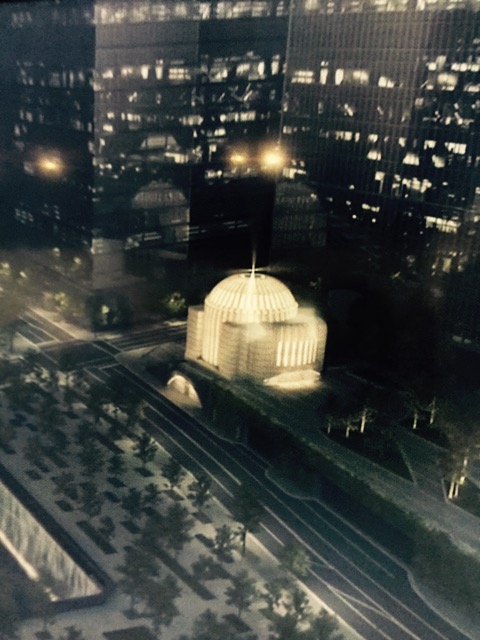
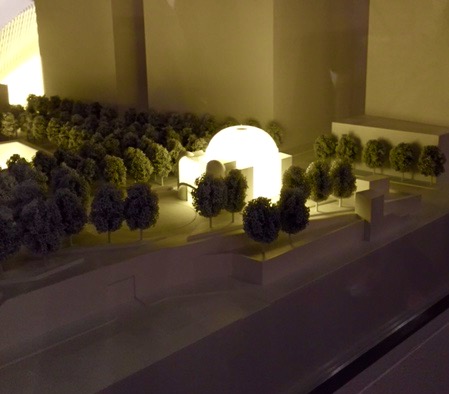
The domed structure will be partly clad in a translucent skin, made of thin stone and laminated glass, which will allow it to glow softly from the inside at night. A small white flame beneath the skyscrapers.

image

The project is being  presented in an exhibition at the Benaki Museum. At the preview, looking at the maquettes and the original sketches that made up the exhibition, one could sense the church would provide an ideal counterpoint to the plaza’s twin reflecting pools.

image

Although St. Nicholas will function as a Greek Orthodox Church, it will also be open to anyone as a shrine and spiritual beacon overlooking the Ground Zero memorial Plaza. It is designed to be a place where people of every belief will be inspired to go in and light a memorial candle – even people who do not practice any religion.

The September 11 terrorist attack in the name of Islam gave rise to a discussion about the role of religion as a weapon of fanaticism. The fact that a Catholic architect designed a contemporary Byzantine church inspired by structures that were used also as Muslim mosques can only add a note of optimism and hope.

In my mind, there is also a historical connection of this idea with Constantine the Great, a Roman Emperor who later converted to Christianity and built Constantinople. In 313 A.D. he signed the Edict of Milan, concerning religious tolerance, which stopped the persecution of Christians. A small excerpt: ‘And thus by this wholesome counsel and most upright provision we thought to arrange that no one whatsoever should be denied the opportunity to give his heart to the observance of the Christian religion, of that religion which he should think best for himself, so that the Supreme Deity, to whose worship we freely yield our hearts may show in all things His usual favor and benevolence.’

Calatrava’s work is known for courting controversy. As well as supremely talented, he is perceived as vainglorious, designing meta-modern Parthenons that will secure his place in the Pantheon of architecture. His projects are often plagued by delays and spiraling costs. This particular design has been criticized by many as being ‘cold’, ‘like a pumpkin sitting in a box’, ‘more like a museum than a church’ and, worse, ‘like a mausoleum’. It is certainly not as welcoming inside as a traditional Byzantine church with its gold and red icons. In the context of the specific site, however, I personally found it awe-inspiring and very apt.

I’d be curious to know what everyone else thinks.

Below is a short video. The quality is mediocre, since I recorded it on my phone. But it shows a fascinating insight into Calatrava’s thought process as his design evolved.

Duration of the exhibition:
24/09/2015 – 25/10/2015

Venue:
Athens Benaki Museum
Main Building

Come on, everybody

A few days ago I received this comment:

“Had a stroll through your blog thing. It is very well organized and I found your stuff to be topical, on the point of controversial, and very well presented. I was very impressed, which doesn’t happen often, particularly when I have slightly different views than yours on some of the topics.”

Well, good. Pity my friend didn’t write this comment on the blog itself, as I pointed out to him (he has since been doing so). I wish more people would disagree with me, have a different opinion, or point out something they didn’t like.
Of course it’s lovely to get compliments, and it gives me a real boost when people enjoy something and say so, so thanks to all of you out there!
But one thing, which I haven’t succeeded in doing much of yet, is start a conversation. Occasionally, it would be nice if people had a good old discussion in the comments.
I can’t always be right. Sometimes I’m angry, frustrated, or just biased. You don’t have to even like the same artists I do.
So bring it on!

(Within the limits of civility, of course 🙂 )


image

And while we’re at it, is there something in particular you’d like me to write about? Things I should write about more often? Less often? Let me know.

.

Election Results

Alexis Tsipras, the ‘Laughing Boy’ as he’s known locally due to his youthful looks and smiling face, won the elections by a comfortable margin. He is to form a government with ANEL, a right-wing, anti-austerity party he’s already collaborated with in the past. Godspeed – he has a huge task ahead, and now he’s been given the mandate to proceed. No more referendums or elections, no more escape routes.

The ‘Return to the drachma’ faction was wiped out as it failed to win a single seat in Parliament. Tsipras bounced back from an in-house revolt of radicals which nearly made him lose control of his party. He now must prove himself as a leader to deal with issues such as the immigrant crisis and also implement the reforms he signed for the bail-out agreement.

The elections are finished, the Troika returns, screamed a headline in one of the dailies. The election is over, the crisis isn’t, wrote another paper.

Let’s hope that politicians will settle down now and do their jobs, instead of spending their days on TV panels, shouting at each other.
In a worrying statistic, 2 million less people turned up to vote than in 2004. That’s around 45% of the electorate, a record by Greek standards. In a population of around 10 million who can vote, that is huge. Parties will have their work cut out to win those people back.

imageEven more worrying, Golden Dawn, the extreme-right party, won two more seats in Parliament than before. That means that 400,000 people voted for a party who has acknowledged murdering people and whose leader has spent time in jail.

What will be the face of Greece in two years? In five? We are facing an uphill battle, but Greeks have proved they are resilient, so we must hope there will be light at the end of the tunnel.

photo by Eleni Koryzi 

The suspension of disbelief

The politicians are at it again. Disregarding the huge problems looming over Greece, they’ve dropped everything to stand on their soapboxes haranguing the crowds. Their aim? To persuade people to vote for them, obviously.

Every other program or issue has vanished from TV channels, as politicians are monopolizing air time. Everything is at a standstill.
In one of the ‘shows’ I briefly watched, young people in the crowd looked positively catatonic as the would-be future leader – it could have been any one of them – trotted out the same, tired old platitudes. They all have identical weapons of choice: shouting as loudly as possible, and blaming each other for every difficulty the country is facing.  They obviously think this will make the audience overlook their total lack of credibility, the absence of any constructive proposal. Promises – how can they promise, with a straight face, to do the things they never did when they were in power last? Why should anyone believe them this time round?

imageDoes anyone believe them? Some are certainly turning up to listen – is it curiosity? Hope springing eternal?
The suspension of disbelief can only go so far. A quick poll I conducted over the last few days uncovered a startling fact. Practically everyone I asked is refusing to vote. I say refusing, because Greeks consider voting a matter of principle and pride. They’re certainly not abstaining because they can’t be bothered.
Possibly – certainly – my sample was skewed. But, in all my years as a voting citizen, this has NEVER happened before. Usually, Greeks love to argue, to try and persuade, to discuss politics for the fun of it. Now they’re just disgusted. They don’t want to know.

Will they resist to the end? On Sunday, we shall find out.

Photograph by Eleni Koryzi

A question of humanity

no one leaves home unless
home is the mouth of a shark
From Home by Warsan Shire, a Somali poet

Yannis is a baker on an Athens street. He’s finding it harder and harder to go out of his shop, because of the smell. People, lots of people, are camped outside, in tents. Some just sleep on the pavement. He’s been giving them bread, but how long can this go on? One week follows the next, and his regular customers are dwindling. They’re making a detour to another bakery, because the smell is awful and the spectacle heartbreaking.
People have been giving the refugees food, but they have nowhere to wash themselves or their clothes. Mostly, they have no toilets. At least it’s summer, so they’re not cold at night, but during the day the sun is merciless.
Many such scenes of desperation are played out on the refugee route from the Greek islands through Athens and then north, towards Germany or Calais, for those whose aim is the UK. Another route starts in Italy.

In some places, a distinct note of xenophobia if not racism is creeping in. The migrants have variously been described as ‘marauding’ and ‘swarming’. Some countries have been trying to keep them out by any means.  In a photograph that made the front pages, a man with mournful brown eyes is handing a baby dressed in a pink onesie over rolls of razor wire on the Hungarian border. Czech officials caused a scandal by stamping refugees’ arms with numbers. The Italians have closed the border at Brennero. Passengers on the Eurostar remained stranded in the dark for hours after the train was stopped because of refugees walking on the track and on the roof.

imageAngela Merkel has said that the migration crisis is a bigger test for the European Union than the Greek financial meltdown. To my mind, she’s the first European leader to have grasped the immensity and urgency of the problem and to have taken responsibility for dealing with it. Thanks to her handling, Germany has regained the moral high ground. It has been obliged to lead in this matter due to the incapacity of the rest of Brussels to deal with the problem.

Merkel has been heard to remark that what Germany is living through now will change the face of the country over the next few years. The same is true for the whole of Europe, and it is up to Europe to make this issue as positive as possible. After all, the populations of both Europe and the U.S. are to a large degree made up of immigrants.

Sadly, some refugees who ‘made it’ report the experience was ‘not worth it’. These are people who paid all they had, risked death multiple times, had to eat grass to survive, were kidnapped and held captive for ransom on the way, then nearly drowned, and finally spent months in camps – only to find a lonely existence, excluded from local society, struggling to learn a foreign language and strange customs, in the hope of getting a menial job. They tell the ones left back home not to do it. But no one listens.

Why? Because things at home are much, much worse. People don’t leave all they know on a whim. It is interesting to read On Encouragement, an essay by Helen Jones: https://helenejones.wordpress.com/2015/09/03/on-encouragement/

They have no choice.

It is appalling that by failing to agree on how this crisis could be confronted, the EU is now fostering a new species of international crime. Illegal migration is now big business. Not only are these displaced people being robbed, terrorized and sometimes killed by gangsters, they are also being preyed upon by political manipulators.

The degree of collective irresponsibility is truly shocking. In Greece, for example, the authorities have spectacularly delayed in setting up the structures that would allow them to draw upon an EU fund available for the purpose. The blame game is shameful to behold. What is going on in most of Europe is way beyond the limits of what should be acceptable to any enlightened society.

image

You have all seen the images: of the toddler washed up on the shore, of the overflowing boats, the tents, the crowds. I will not post more. You can read the statistics, the declarations, the arguments. I have no arguments. But if you want to know what it’s like for them, read The Rahma Diaries blog, and especially the post A Letter from one Mother to Another. Rahma is a mother with a baby, and she can write.

https://therahmadiaries.wordpress.com/rahma/

And read Russell Chapman’s blog post: Escape to Freedom. Bringing a Syrian Family to Safety. Russell is a freelance writer and photographer who undertook to help a family travel from Athens to ‘a particular country in Europe’. Hair-raising and harrowing.

https://russellchapman.wordpress.com/

Photos by Anna Koenig

A botched start to the school year

Many parents are breathing a sigh of relief that the endless summer holidays are over and their little horrors will be returning to school. Not so fast: little Kostas or Maria might not be getting a teacher until December. One by one, the problems created by the previous government’s inexperience and inability to cope while struggling with the Grexit issues are rising to the surface.

With schools due to open for the new year, it seems there are not enough teachers to go around, at either primary or secondary level. ‘Not enough’- to the tune of 25.000 vacant positions. There is only money to cover 13.000 appointments, while in other public sectors rumor has it that people have been hired, even though there is no need for them. It seems that no Greek government can escape this method of securing future votes.
Around 90.000 teachers are queuing to put in their applications in the hopes of a job, most of them having been obliged to repeat the process a second time after their first applications were canceled because of some bureaucratic ‘mistake’.

image

Now Greek kids, already stressed from living in families who are coping with huge financial problems, will pay for this mismanagement. Some positions will not be filled until December, since there was a huge delay in taking the necessary bureaucratic steps. Schools on the islands and in rural areas will suffer most.
It must also be noted that, during the previous school year, a large percentage of children in the Athens area went to school each morning on an empty stomach, because of their parents’ dire financial situation. Teachers who could ill afford it themselves were purchasing cookies and fruit to feed their class. In some areas, breakfast was donated by private-sector companies or by the church.

All this is bound to have a huge impact on Greek society, which is family-oriented still. A country that neglects its future generations is a country in trouble.

Greece through the eyes of a Welsh yachtie

Having left his previous life to follow his dream of living on a yacht, Darren has been boating in the Greek islands and occasionally blogging about it. He also had the chance to explore Athens and the mainland and observe Greek reality for himself. He kindly let me borrow a bit from his Musings from the Med to re-post here, since I always find it interesting to take a look at things through someone else’s eyes. See what he says below:

image
“It’s now a little over one year since I first discovered Greece. I came initially to view a boat and make a holiday out of the trip. A sailboat was bought and Greece has been home for 2015.
Athens, 2014, where my trip began was hot and bustling. I had opted for a hotel not too far from Omonia square. The guide book said it was an area renowned for Russians, prostitutes and general dodginess – not that I am trying to make a connection here, nor was that the reason I chose that area! It was simply cheap and geographically well suited to my needs of exploration.
I seem to recall the streets being full. The flow of people, made up mainly of tourists, was difficult to pass if caught going in the wrong direction; Monastiraki was crammed with people sipping their freddo coffees and pointing cameras through all cardinal points. The city was alive!
With a hire car I ventured further afield: Peloponnese, Lefkadha, Meteora and Sounion. No matter where I went, I found a natural beauty I had not found anywhere else in Europe. The tourists were still there, the numbers varying with the area/location.
2015: economic crisis, debt uncertainty and politics – something I don’t concern myself with – very much the focus in Greece. It wasn’t like this when I first arrived in early March of this year. I had made friends with some fellow yachties and talk was of pleasant sailing, discovery and fine dining on the abundance of fresh fish and seafood one can easily find here.
Apart from a few teething problems, the sailing began well. The warmer weather became more permanent and the winds and rain became less of a concern. I had been asked to go back to Africa in June to help out on a project I had been involved with in 2014. It was only for 5 weeks so off I went. It was during this period that I became aware of the crisis unfolding in Greece. Had I paid more attention to politics and, well, read newspapers or listened to the news, it may not have crept up on me so suddenly!
The scaremongering of the news people was good; I was fearful for a lot of things. My money and life were tied up in a boat in Greece. I had no idea what could happen but did fear the worst! It was time to head back to Greece and face the uncertainty. I came back armed with euros and a plan to take the boat elsewhere should the situation look impossible. I needn’t have worried half as much. Not all cash machines had money but those that did readily churned out notes for me. My boat was not going to be impounded and sold off to put money in the Greek coffers…
Actually, at first, all seemed as I had left it. I remained in Athens a few days before heading back north to Preveza. During my stay in Athens I began to notice the difference. The bustle was less; there was an uncertain calm; there seemed to be more homeless on the streets – or more than likely they were now visible due to the lack of visitors to the capital – perhaps they had always been there, hidden and ignored by the masses too eager to get snaps of the Acropolis.
Whatever the reason, Athens was not the same as when I had first visited 12 months prior. It seems to be the same story all over. I have pulled into anchorages and town quays in the Ionian expecting to fight for a spot only to be pleasantly surprised at the amount of space available. Boat numbers are definitely down on previous seasons, so I am led to believe. Great news for a novice sailor like me but not good news for the Greek economy.
The Greek people seem subdued and confused with what is happening to them and their country. I have made good friends with a local restaurant owner and a dentist. Panos, who owns a restaurant near a marina I frequent, and that does very well, is moving to Sweden at the end of the year having had enough of the uncertainty – a sentiment shared by many no doubt. Konstandina, my dentist, is also looking at openings in either the UK or the Netherlands. She chose to open her practice here in Greece because of her love for the place. However, with a young family to support, and recent events and an unclear future not helping much – she is being forced to look at other options.
As for me, well, I absolutely love the country and hope it all comes good. I have only good things to say about the people I have met: their happiness, kindness, honesty and their willingness to make me feel comfortable and accepted. My plans are such that hopefully one day, in the not-so-distant future, I will leave Greece to travel further west – though I am sure I can fit in another season or two before leaving. This happens to be the same plan shared by many a yachtie out here on the water, most of whom never left and have been sailing here for upwards of 10 years…so we’ll just have to see what happens!”

image

September Blues

image

While people are shutting up the summer house, getting kids ready for school and, in most of Europe, getting out the woollies, in Greece summer is far from finished. The sea is still, the temperature high without being stifling and the light is mellow.
Time to get in a few last swims now that the crowds have gone. Still plenty of time for alfresco lunches and dinners, with salads of sun-ripened tomatoes and chilled wine; still ice cream weather.

It’s a good time for walks in the countryside where the dry grasses conceal lizards sleeping on hot stones while cicadas provide the background music – or shall I say din? You feel your forehead damp against your sun hat and you watch your step in flip flops. The heat presses down on your shoulders and the air is fragrant with thyme and oleander.
I’m doing my best to preserve this summery feeling for a few more days – or even weeks, if the weather holds. We usually swim well into October, the sea being far warmer than in May or early June. My strategy to prolong the summer involves the following:
Avoid watching the news as much as possible, and read a book instead – a book with paper pages that smell of ink. A hardback with a bright dust jacket or a paperback that can be tossed into a beach bag with the page corners folded over. I’m deep into The Daughters of Mars, Thomas Keneally’s fascinating story of Australian nurses in the Great War.

image If you have teenagers skulking around the house, you can try them with Olivia Wildenstein’s debut book, Ghostboy, Chameleon and the Duke of Graffiti – it’s funny, sad and a cracking good story at the same time (good for sun-addled adults as well). And while on the subject of books, neurologist and author Dr. Oliver Sacks has sadly passed away. He leaves behind a series of remarkable books, such as The Man Who Mistook His Wife For a Hat and An Anthropologist on Mars. I was a big fan and I highly recommend them – they have inspired generations of doctors while being extremely interesting and easy to read.

Go pick blackberries, if you can find any (on one of the walks mentioned above). The good ones are always too high to reach, your hands get scratched, your bare toes get pricked and dusty. It’s difficult to pick enough to make jam, as they get eaten along the way, but you can mix them with peaches in a crumble, or put them on ice cream.

Have dinner by the sea. Xypolitos, in Loutsa, is a fish shack where they put the tables as close to the rocky shore as possible, and serve the catch of the day. Aromatic fish soup, tsipoures grilled to perfection, or crispy fried red mullet. A smiling moon, zillions of stars and a little breeze. The lapping of wavelets at your feet. Bliss.

image

Photos by Anna Koenig

Xypolitos tel number: 2294 028342. Best reserve if you want a table by the sea on weekends

Ghostboy, Chameleon and the Duke of Graffiti: Get it at Amazon