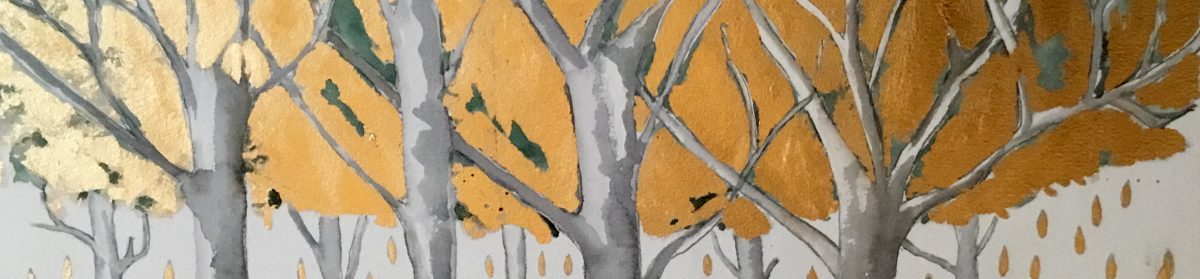
On February 17, 2026, we officially entered the Year of the Fire Horse. In Chinese astrology, because the elements rotate alongside the animal signs of the Zodiac, the same combination returns only every 60 years. The Fire Horse is associated with intense momentum, restlessness and catalytic change. Well, one only has to read the news to realise that.
In honour of this, and to give it a more positive dimension, I decided to write about the horse in art. The horse has carried human civilisation upon its back: it has provided transport and entertainment, been a vehicle of agriculture and battle, a beloved and trusted companion, a spiritual presence and a symbol. As such, it has been depicted in art throughout the ages, in almost every culture.
It would take many volumes to include all, or most, representations of the horse in art. I will restrain myself, therefore, to some of my favourites, starting in prehistoric times.
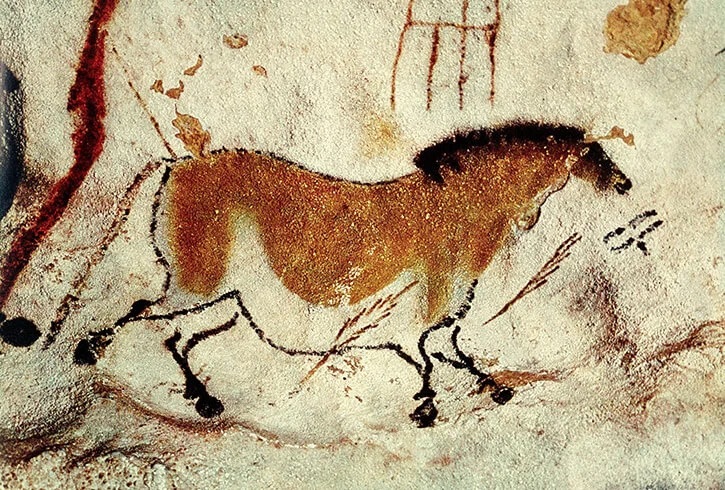
Stone Age occupants of Europe had a strange fixation on horses. Almost one in every three animals they depicted on cave walls was a horse. However, the reason why the horse loomed so large in ancient minds may remain forever a mystery.
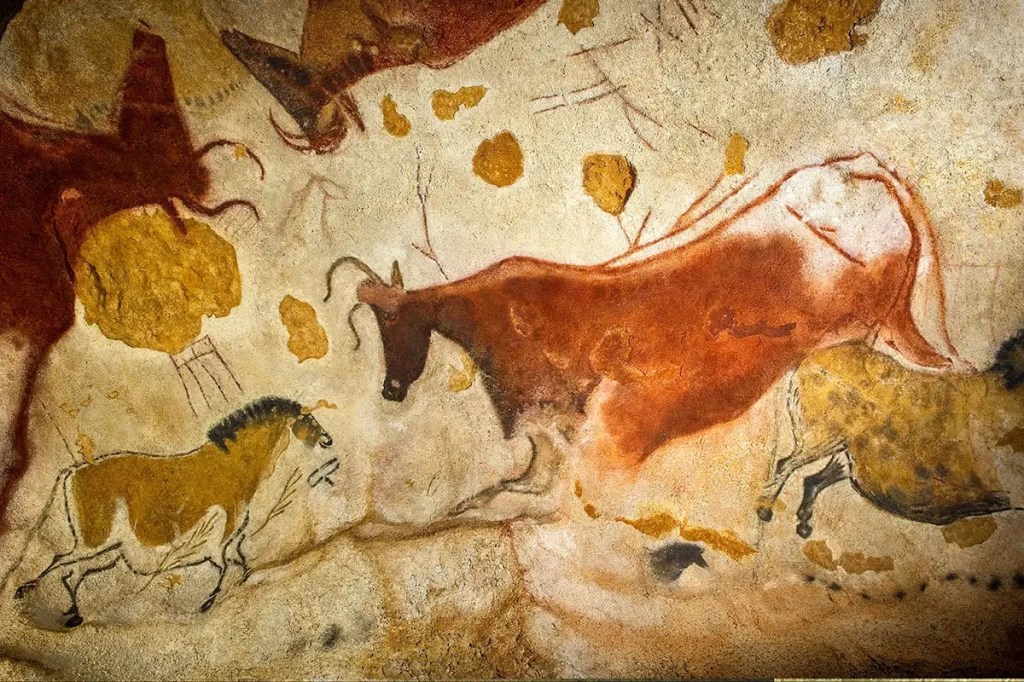
Some of the most famous cave paintings (but there are many, all over the world) are the those in the Lascaux network of caves in the Dordogne region of France. They are estimated to be roughly 17,000 years old.
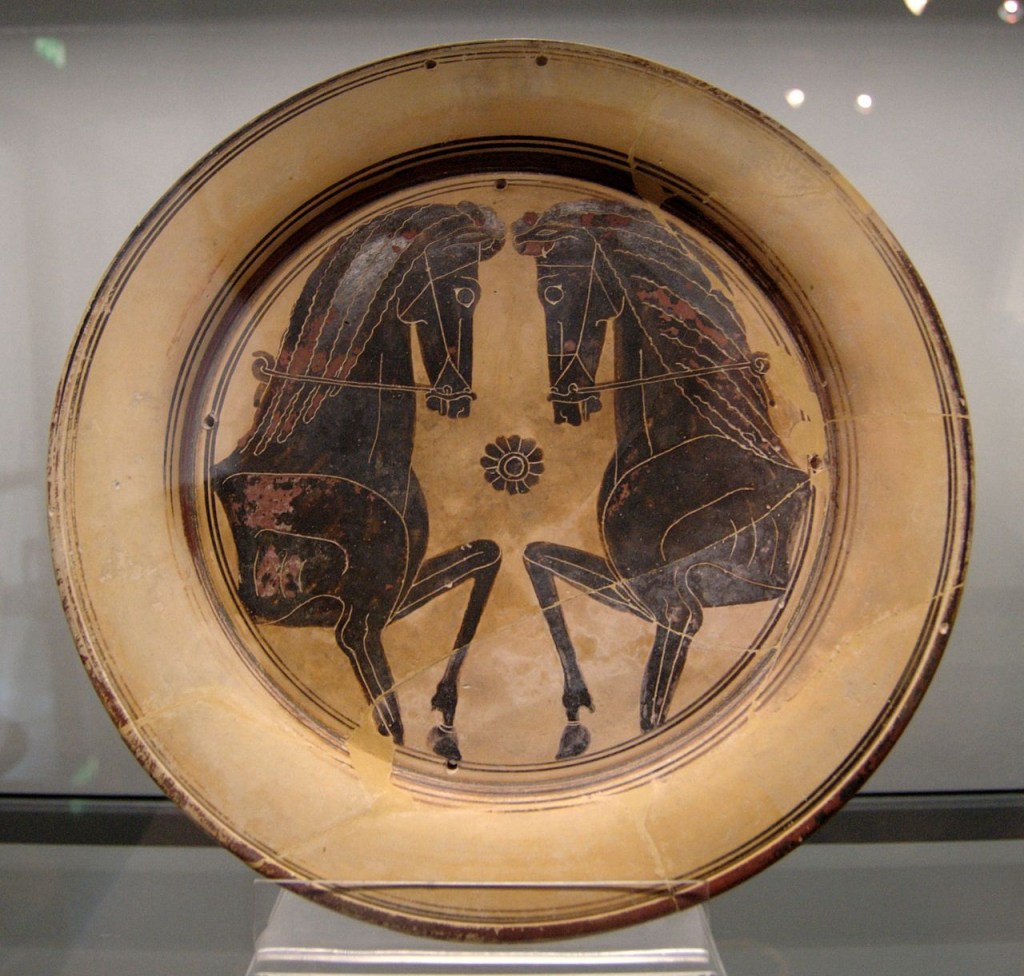
Of course, horses could not be absent from Ancient Greek art, since they play a prominent part in mythology and history, from the flying horse, Pegasus, to Bucephalus, the beloved mount and companion of Alexander the Great. They figured in vases and plates, like the one below:
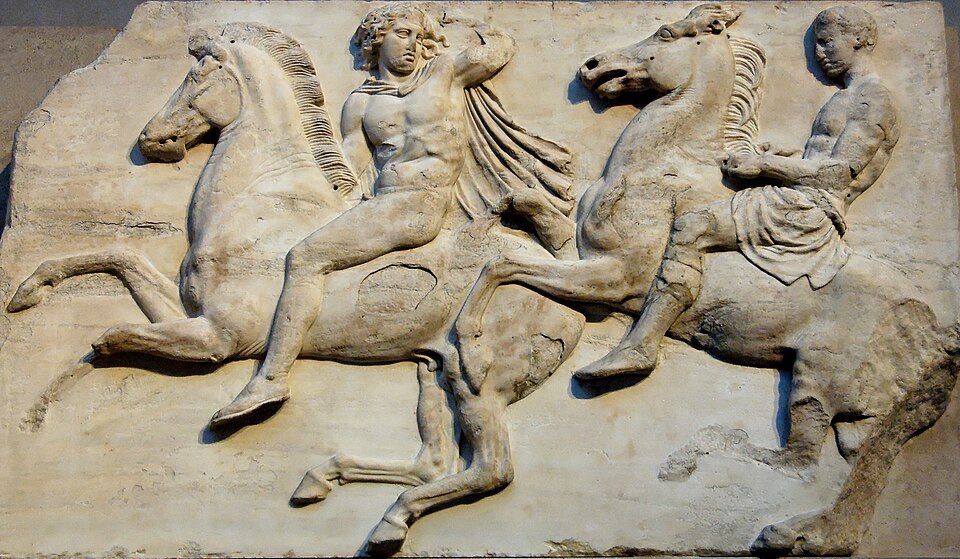
As well as in sculpture and bas-relief, such as the famous Parthenon frieze.
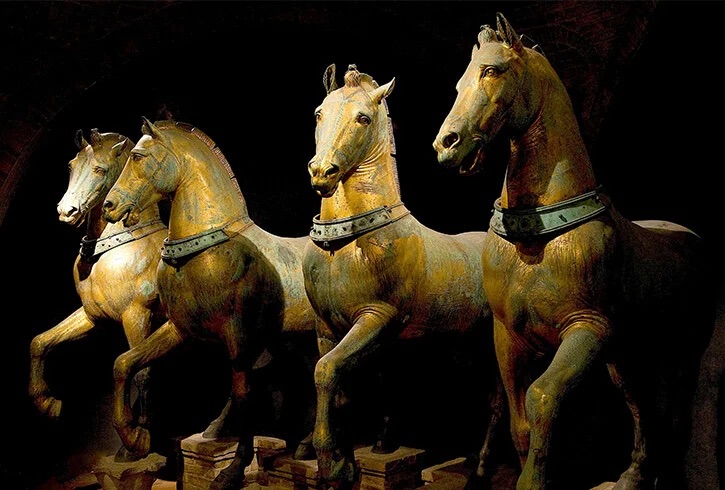
The other famous horses that date from classical antiquity, perhaps originally from Constantinople, where they were displayed for many years, are the Horses of Saint Mark.
Situated atop the Loggia of Saint Mark’s Basilica in Venice, these were originally part of a monument depicting a ‘quadriga’ – a four-horse carriage used for chariot racing in antiquity, used in the ancient Olympic games or depicted as the ‘Chariot of the Gods’ ridden by Apollo across the heavens.
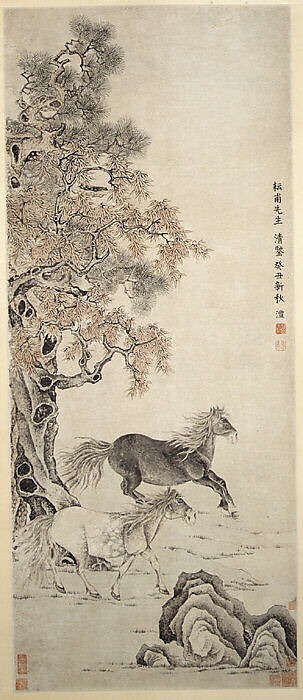
The horse was also revered and commemorated in China, in pottery and glazed statues as well as scrolls.
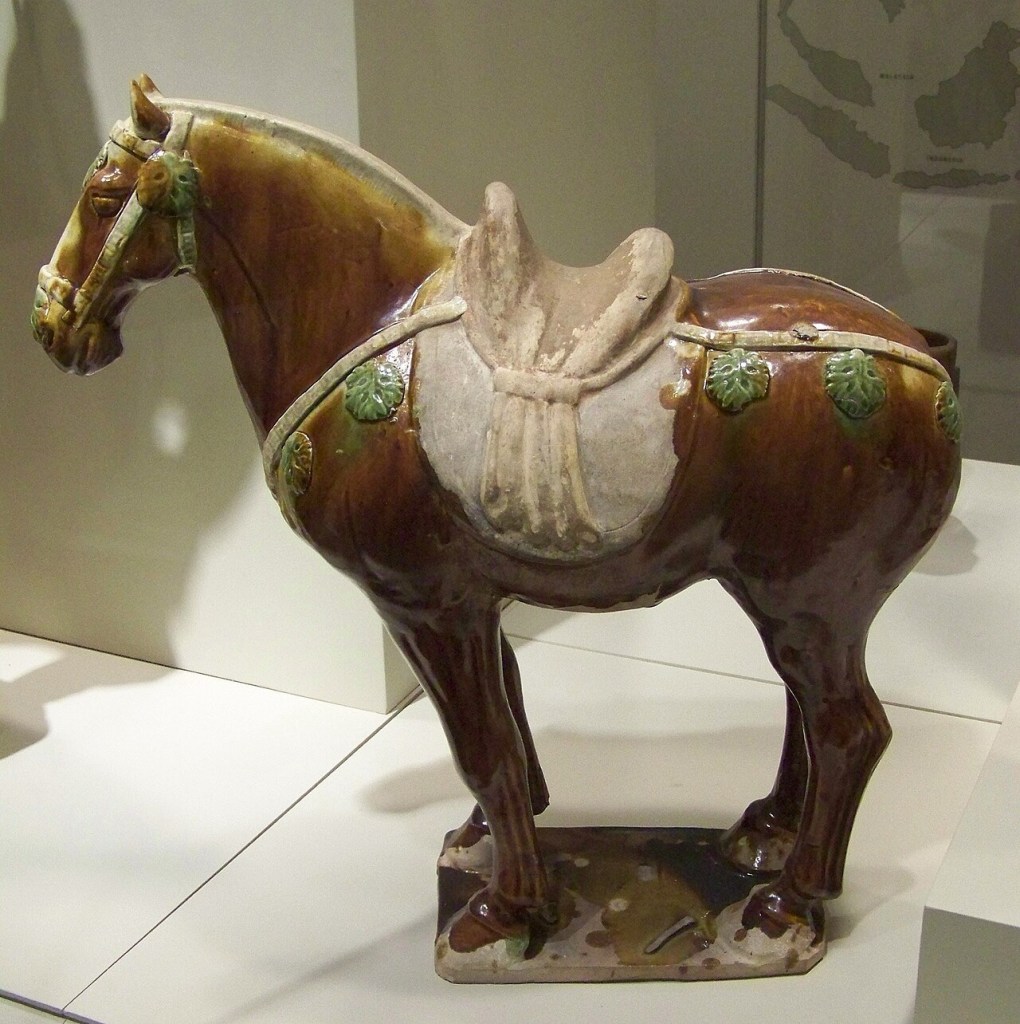
Unidentified
After Qian Feng Chinese
dated 1793
Coming to modern times, one of the most famous equestrian artists is certainly George Stubbs (1724-1806). He was self-taught and had an obsessive interest in anatomy.
In 1758, Stubbs rented a farmhouse in Lincolnshire and spent 18 months studying dead horses. Gruesomely stringing the carcasses up on a system of pulleys, he injected their veins with wax to give them a lifelike appearance and proceeded to systematically study them in different positions, stripping off each layer of the body.
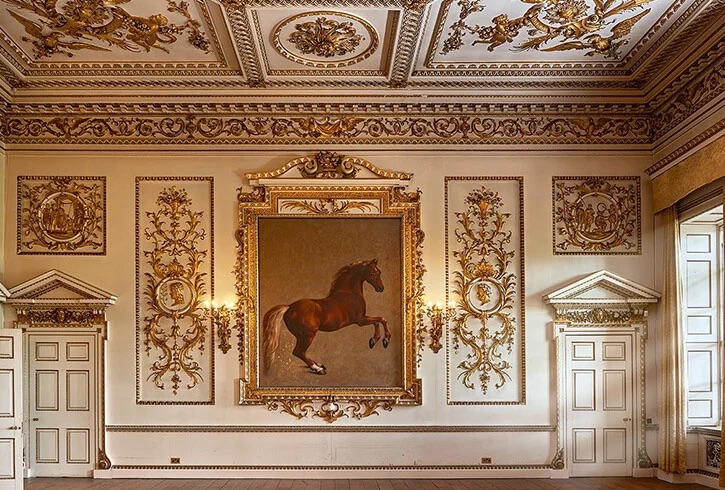
Stubbs made many wonderful paintings, but arguably his masterpiece is a life-size portrait of the horse Whistlejacket, (c. 1762), commissioned by his owner, the Marquess of Rockinham.
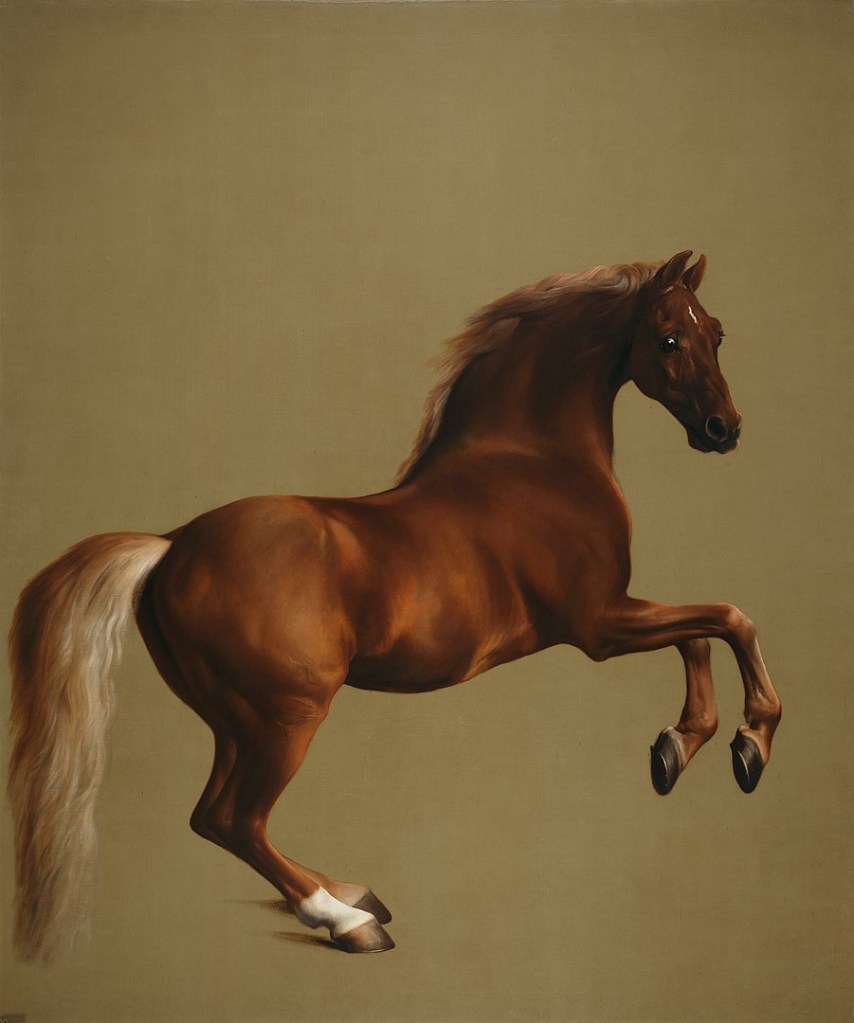
George Stubbs, Whistlejacket, c. 1762, National Gallery, London, UK.
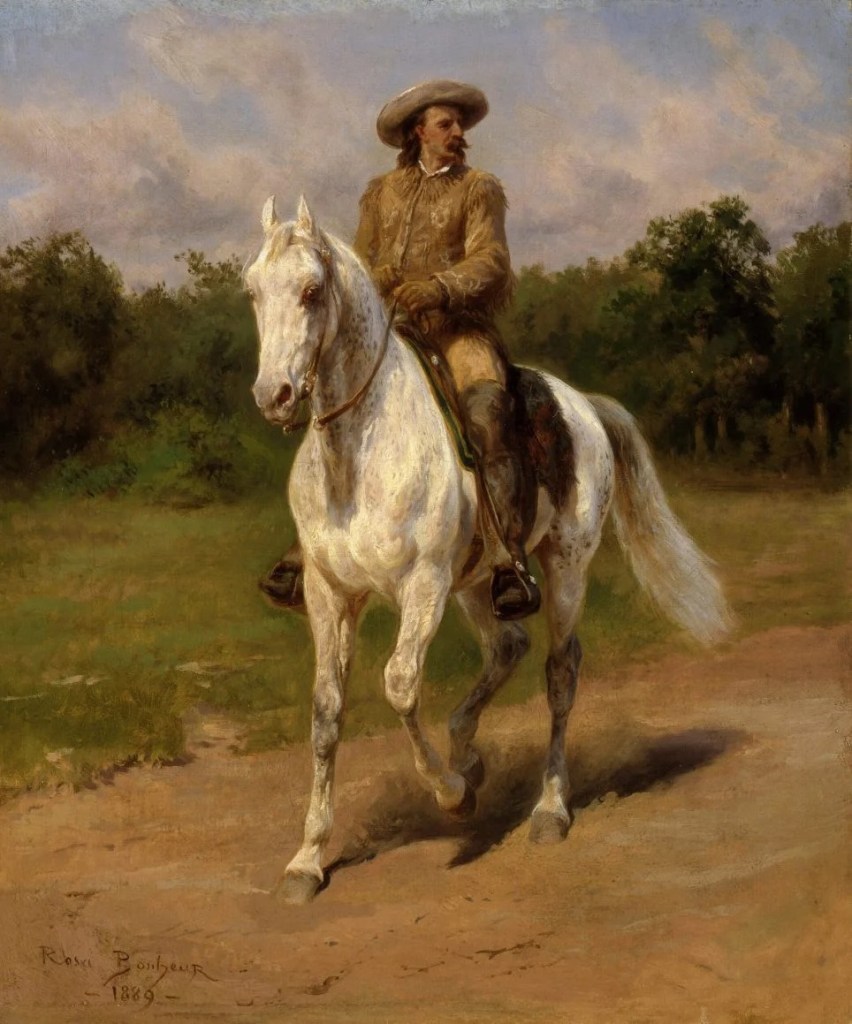
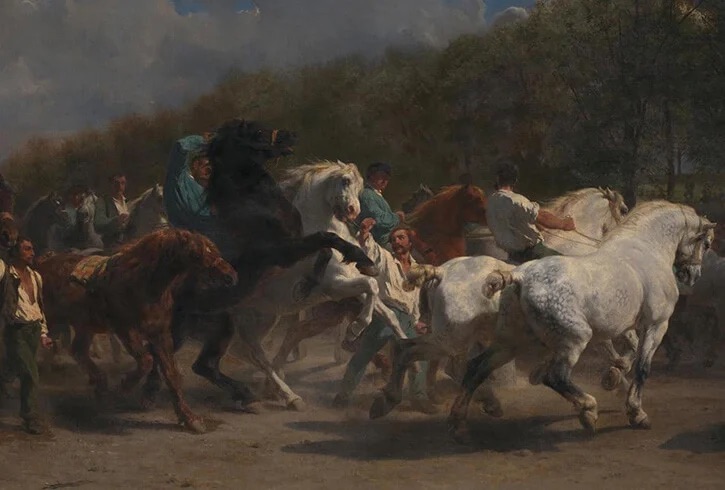
Another wonderful painter of animals was Rosa Bonheur, who was inspired by George Stubbs and Eugène Delacroix but also by Ancient Greek sculpture. Her most famous work is The Horse Fair, but I love the portrait below, of William F. Cody, alias Buffalo Bill, whom she met and befriended at his Wild Est Show, held on the lawns of Neuilly during the Exposition Universelle.
To paint the Horse Fair, which shows the horse market held on the Boulevard de l’Hôpital, Paris, Bonheur sketched there twice a week for a year and a half.
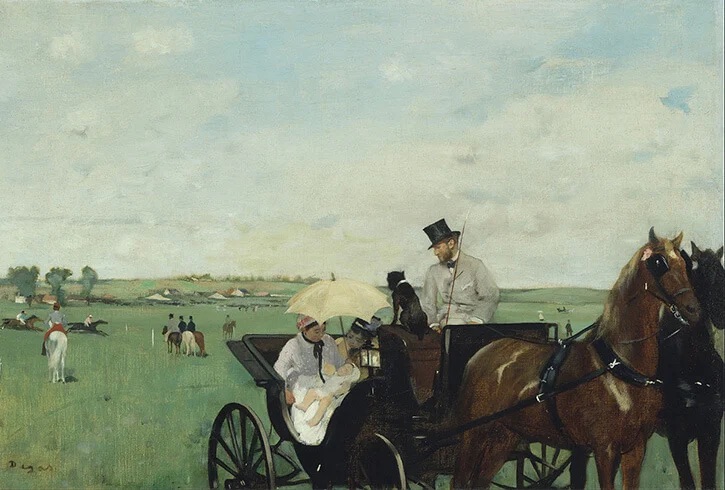
Another of my favourite paintings is At the Races in the Countryside (1869) by Edgar Degas, which focuses on a young, upper-class family at the races. It is a wonderful offset composition, relegating the race itself to the background.
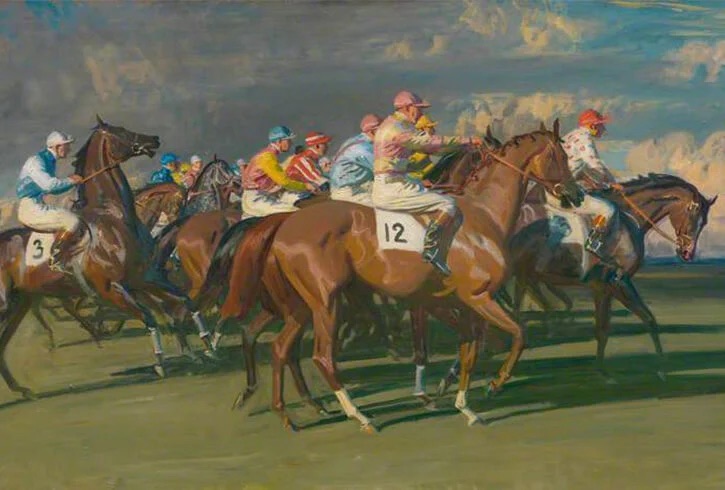
And of course I cannot fail to mention Alfred Munnings, who was enraptured by horse racing for his entire career. The painting below, brimming with excitement and anticipation, is titled Start at Newmarket: Study No. 4, c. 1947
I could go on forever, and might go on in another post, but this is a little taste to celebrate the start of the year of the Fire Horse. Which is your favourite?
 Letters from Athens