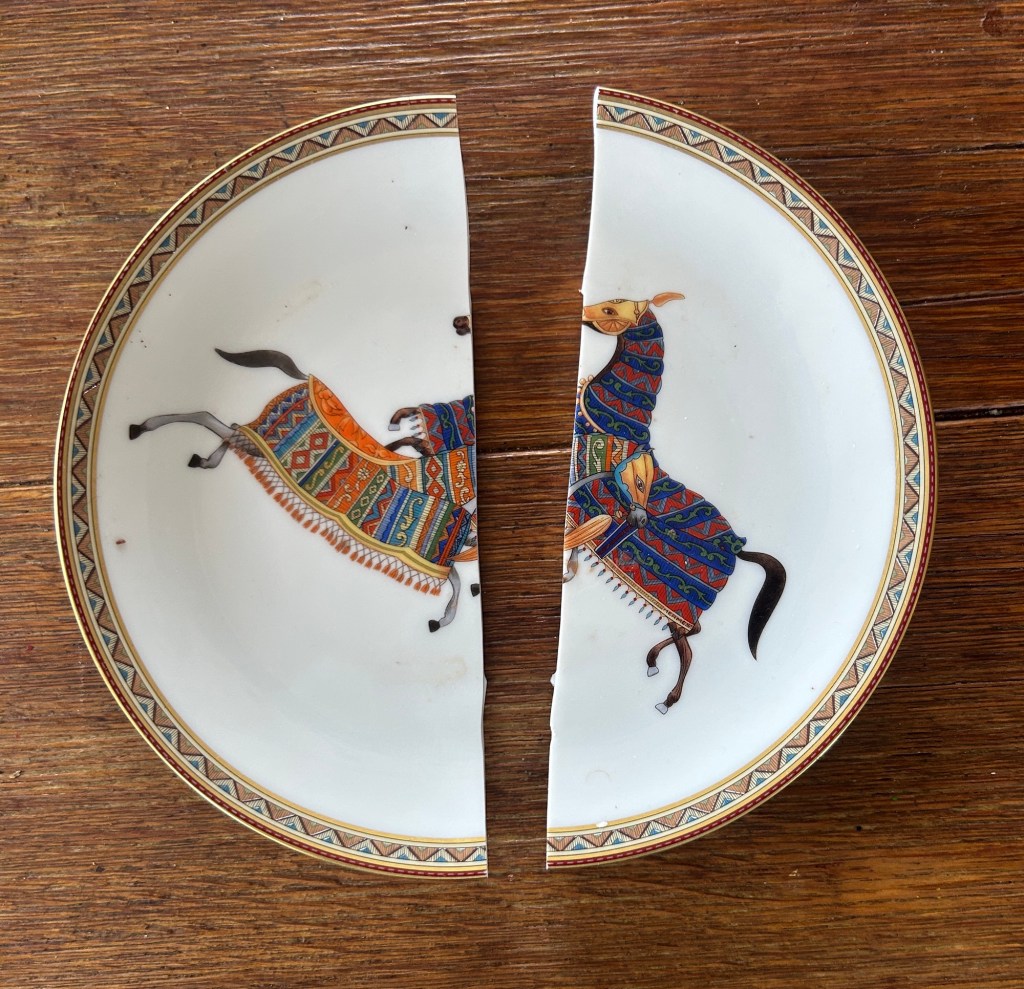
Meet Sanga, our overgrown and over enthusiastic puppy. In one day he ate my slippers, shredded my favourite pashmina and broke the lovely little plate above.

Having got over my extreme annoyance and digested the fact that both slippers and pashmina were shot, I thought it would be an opportunity to try something which has intrigued me for a while: the ancient Japanese art of Kintsugi.

Kintsugi, which probably originated in the 15th century, is a method of repairing broken pottery by mending it with urushi lacquer dusted or mixed with powdered gold. People became so enamored of the new art that some were accused of deliberately smashing valuable pottery so it could be repaired with the gold seams of kintsugi. Sometimes a pottery piece was chosen for deformities then deliberately broken and repaired, instead of being discarded.

Kintsugi means “to join with gold” and it serves as reminder to stay optimistic when things fall apart and to celebrate the flaws and missteps of life.
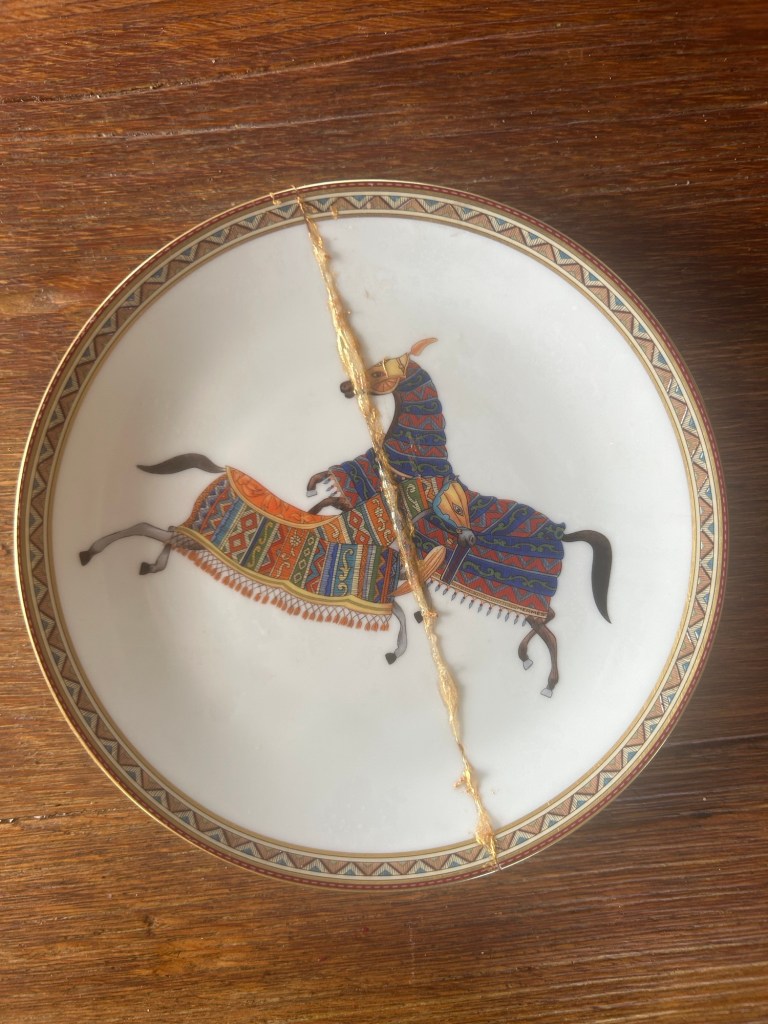
Kintsugi encompasses a profound meaning and philosophy beyond mere repair, namely the idea of embracing imperfection and impermanence and transforming them into something valuable. It reflects an aesthetic perspective on the way people live, since from this perspective our life is like a vessel.
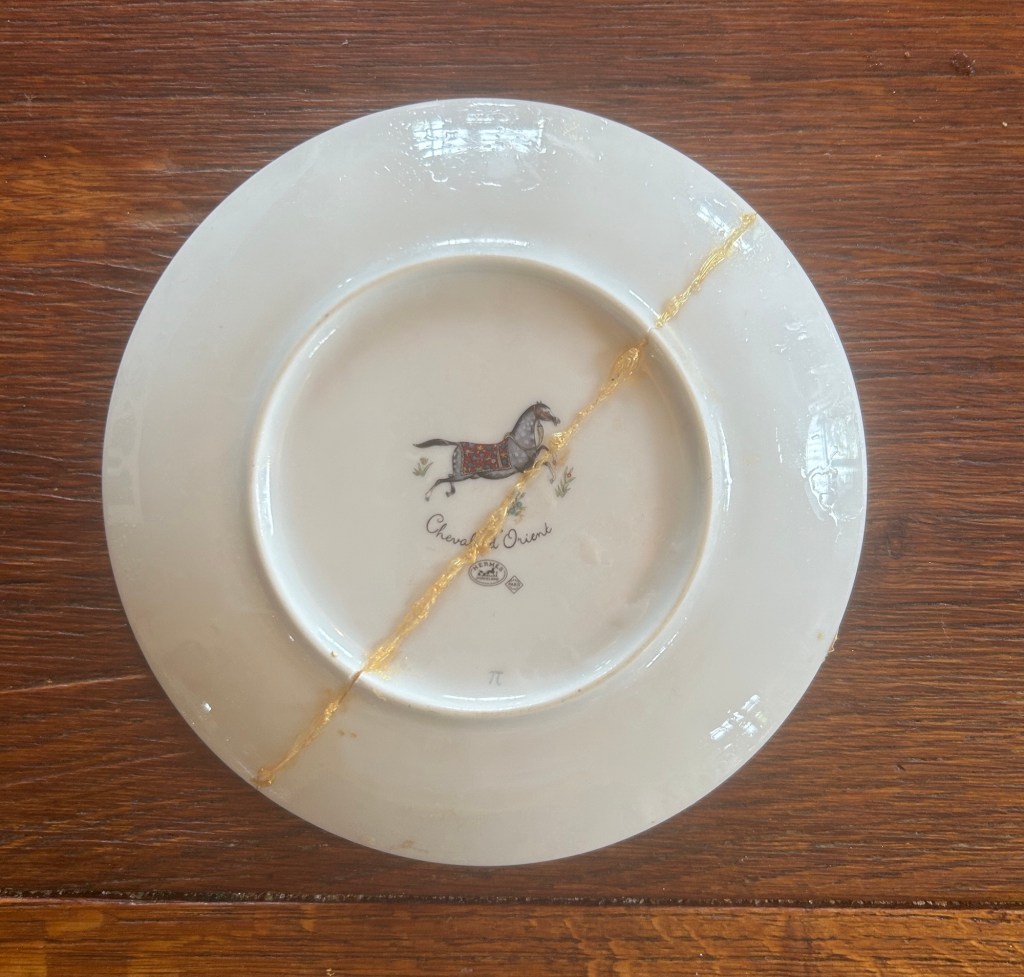
A good Kintsugi vessel can be very expensive, because it requires months of intricate work. My plate was only broken neatly in two pieces, and I used glue mixed with gold powder (courtesy of YouTube) but I can assure you it is a messy and delicate procedure which ended in my kitchen looking as if a gold storm had hit it.
I am too impatient for the real thing, I’m afraid. Look at this:
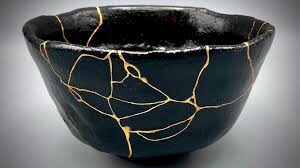
And here’s an interesting video on the real thing
 Letters from Athens