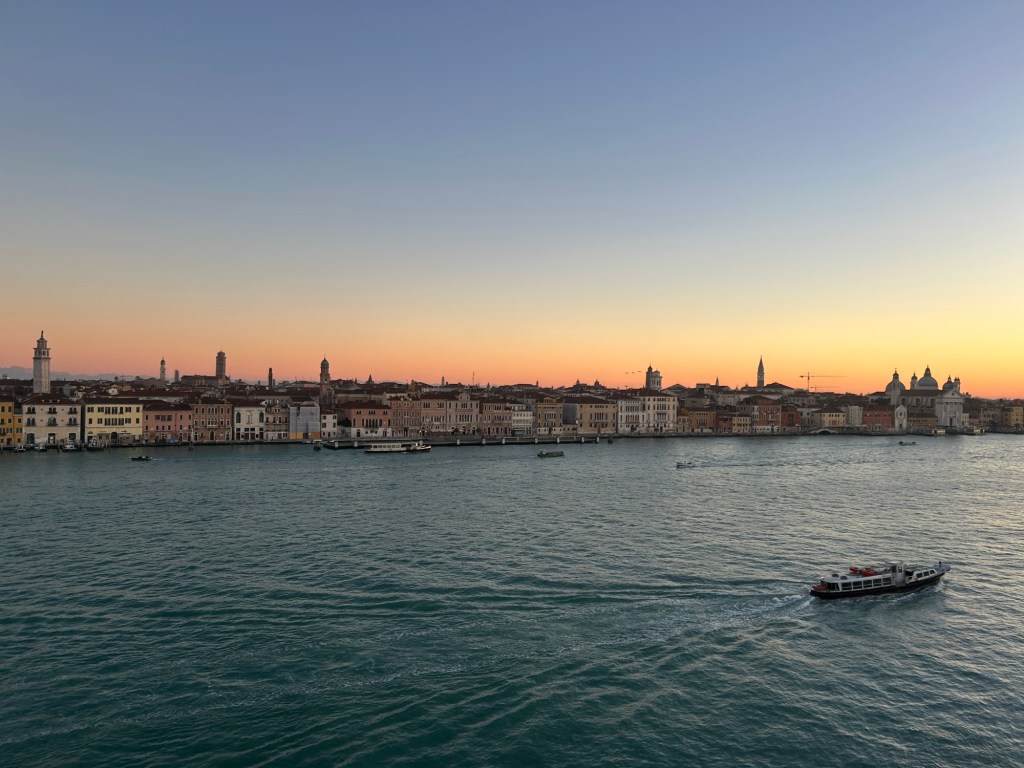
What luck to get away for few days in Venice after Christmas—and more good luck with the weather. Bright sunshine, then misty mornings rendering the city mysterious. The whole previous week there was constant rain, and there are no cars in Venice—walking along under a dripping umbrella would have lessened the pleasure somewhat.
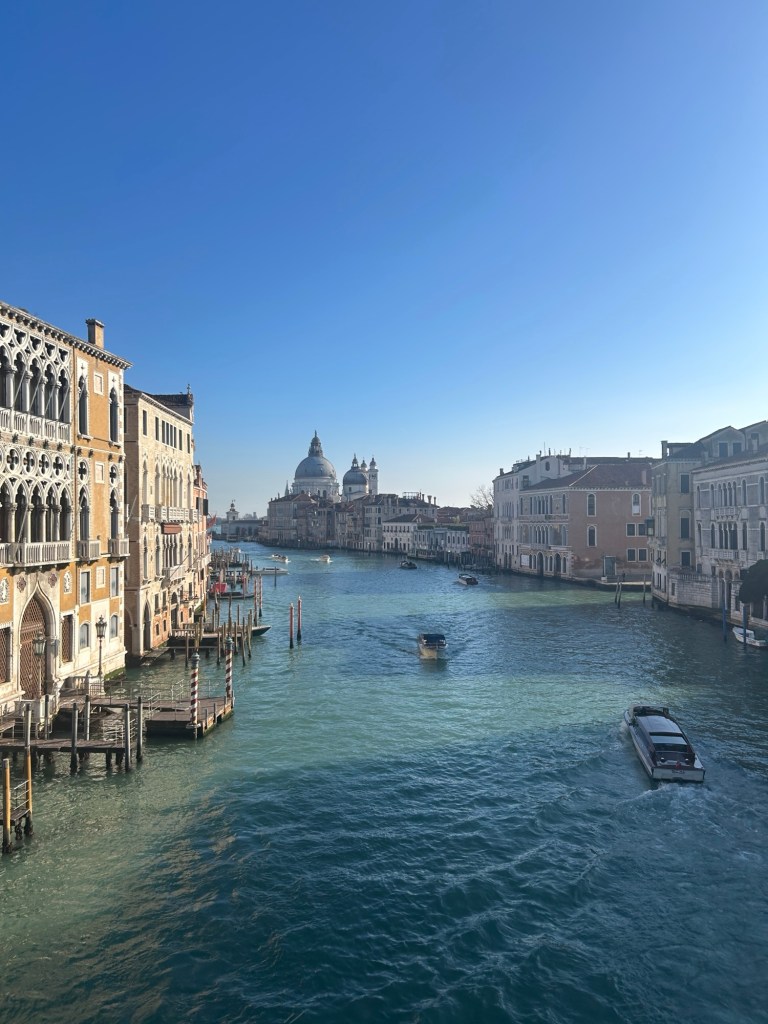
As it is, navigating the city centre is a matter of crossing a bridge over a canal, or hopping on a vaporetto (better than going underground to board a train.) The city rests on 126 islands and 150 canals—connected by 472 bridges—and was built by driving more than 10 million wooden piles made of the trunks of alder trees into the clay bottom of the Venetian Lagoon.
The city was the capital of the Republic of Venice for almost a millennium, from 810 to 1797. It was a major financial and maritime power during the Middle Ages and the Renaissance.
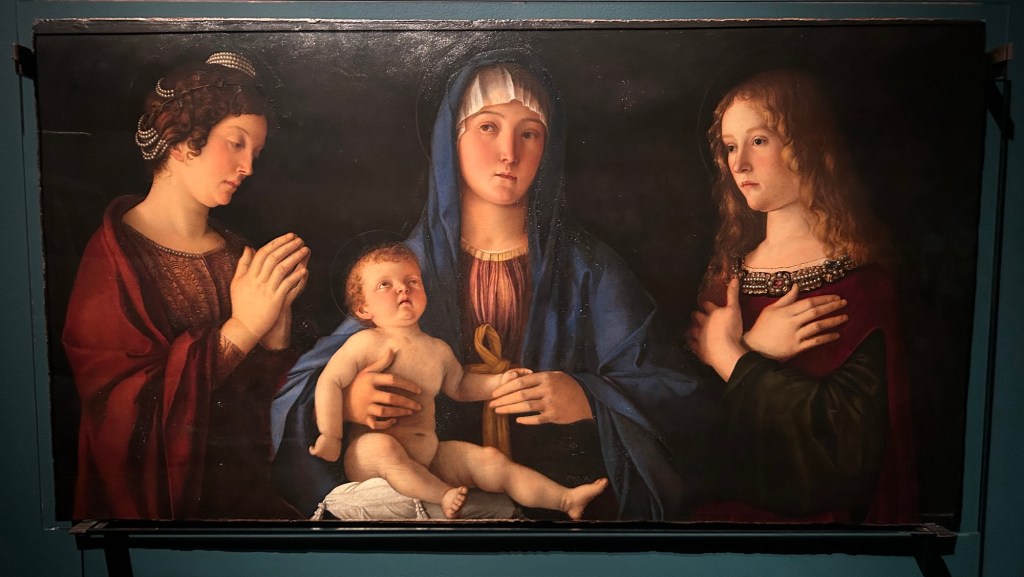
Venice is an overflowing cornucopia of treasures. Of course one can’t see everything in a few days, but the senses are so overwhelmed by beauty that absorbing the details of the landscape, the architecture, and of course, the art, is feast enough.
The Renaissance was a wonderful period for art, and Venice contains a lot of it. It would be impossible to list everything we saw, so I will just treat you to some highlights. Prominent amongst those were the paintings in the Galleria di belle Arti. It was difficult to know where to look first.
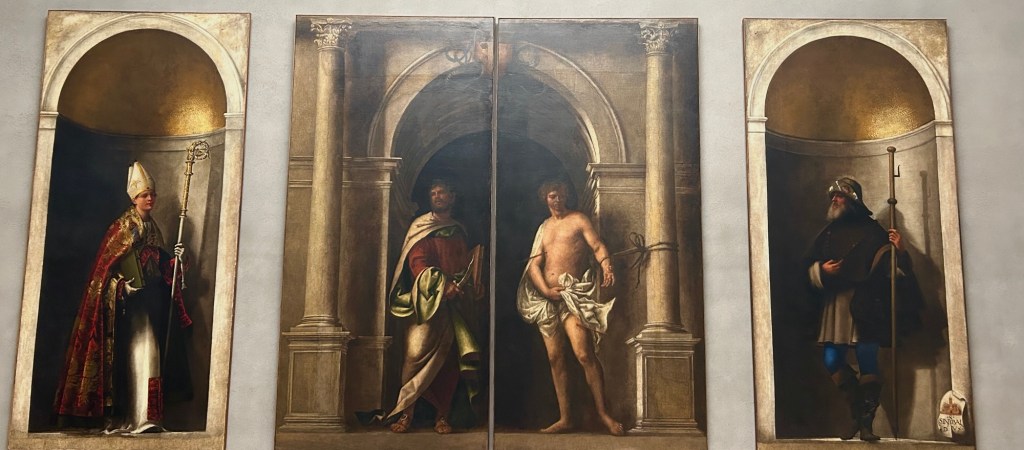
We stayed gazing at these historic organ shutters for a long time. They are huge, and the detail is astounding: the light, the shadows, the drapery and clothes. An interesting detail is that the Church of San Bartolomeo where they were placed was frequented by a large community of German merchants, and the figure on the right is Saint Sebaldus, patron of Nuremberg. I suggest you zoom in on the photos to see the details better.
Sometimes it was the details that fascinated me the most. Look at the clothes below:
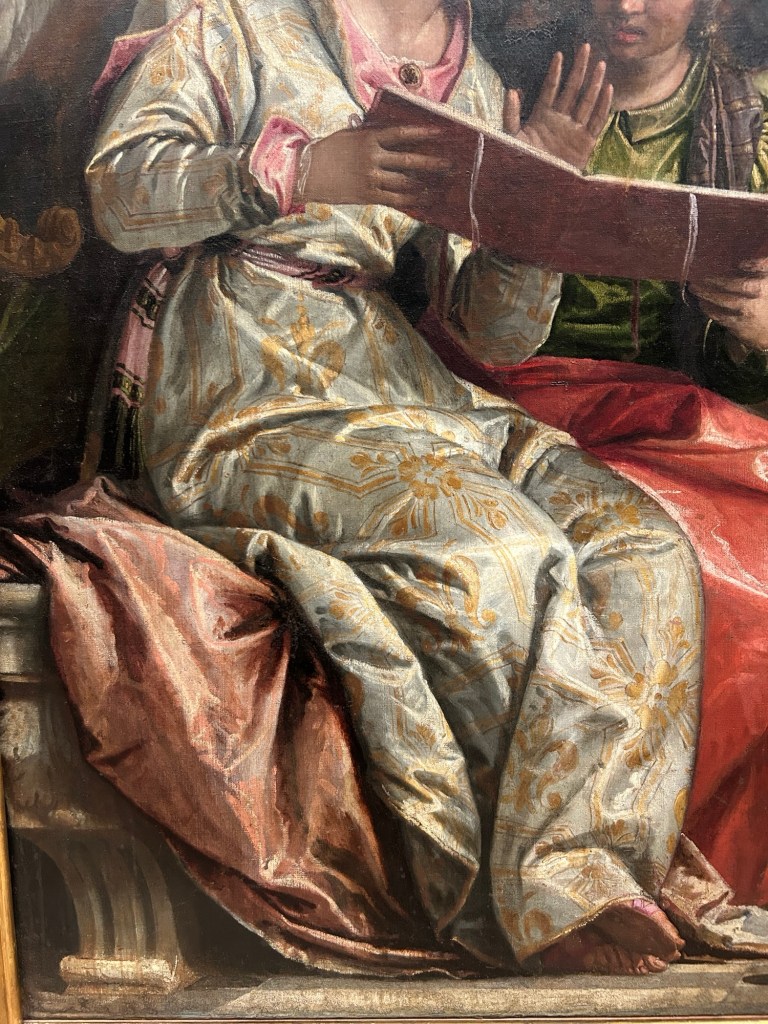
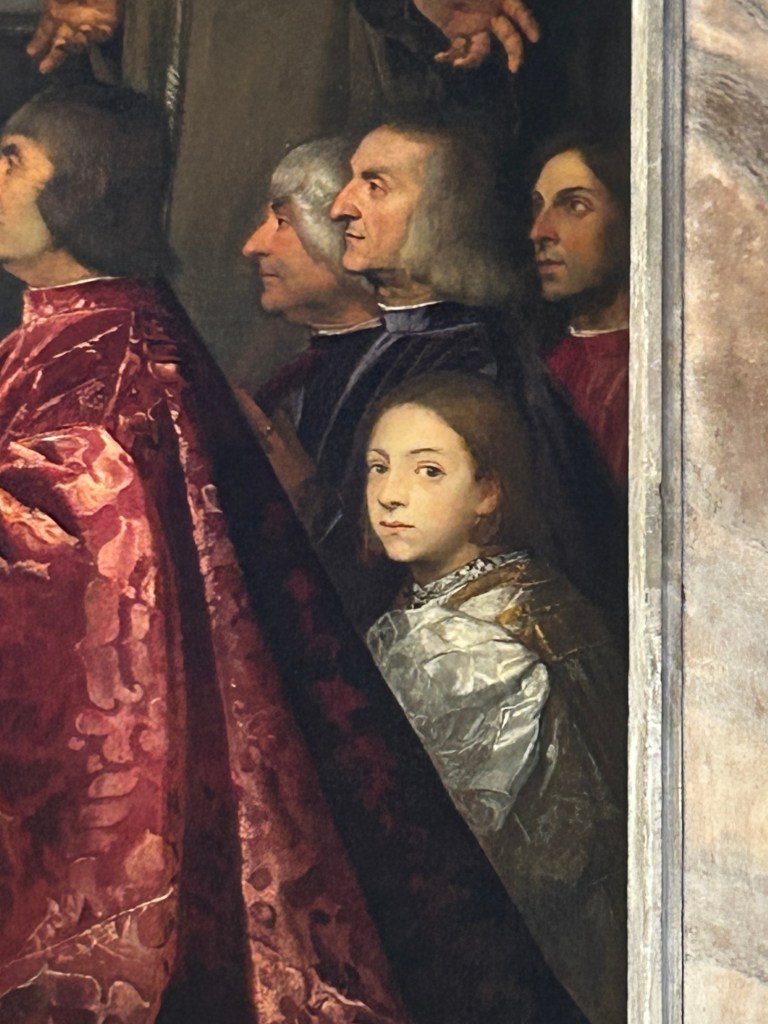
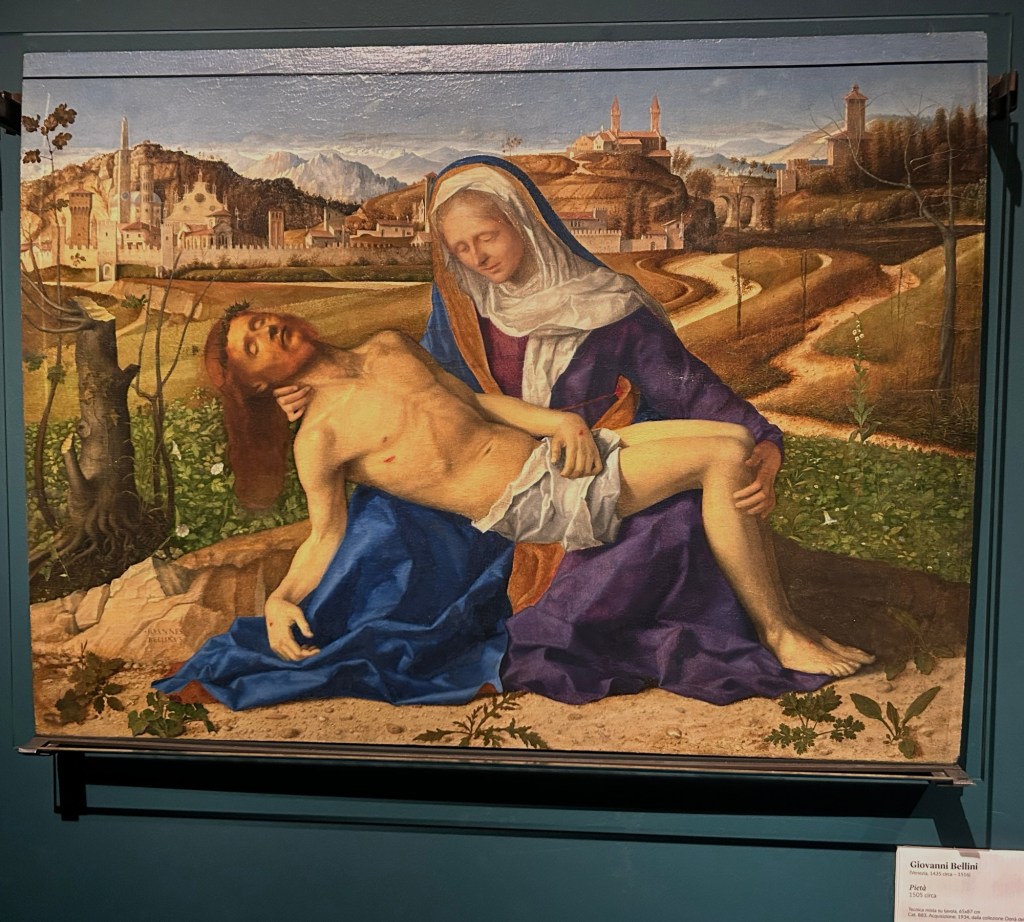
In crowds, every face is different, with its own distinct personality. Below is a fascinating Pietà, again by Bellini. Look at the background landscape—also it is rare that the Virgin looks aged.
Another highlight was the Scuola Grande di San Rocco, an ornate museum built as the seat of a lay confraternity of wealthy merchants focused on philanthropy, which houses a simply stunning collection of over 60 works by Tintoretto.
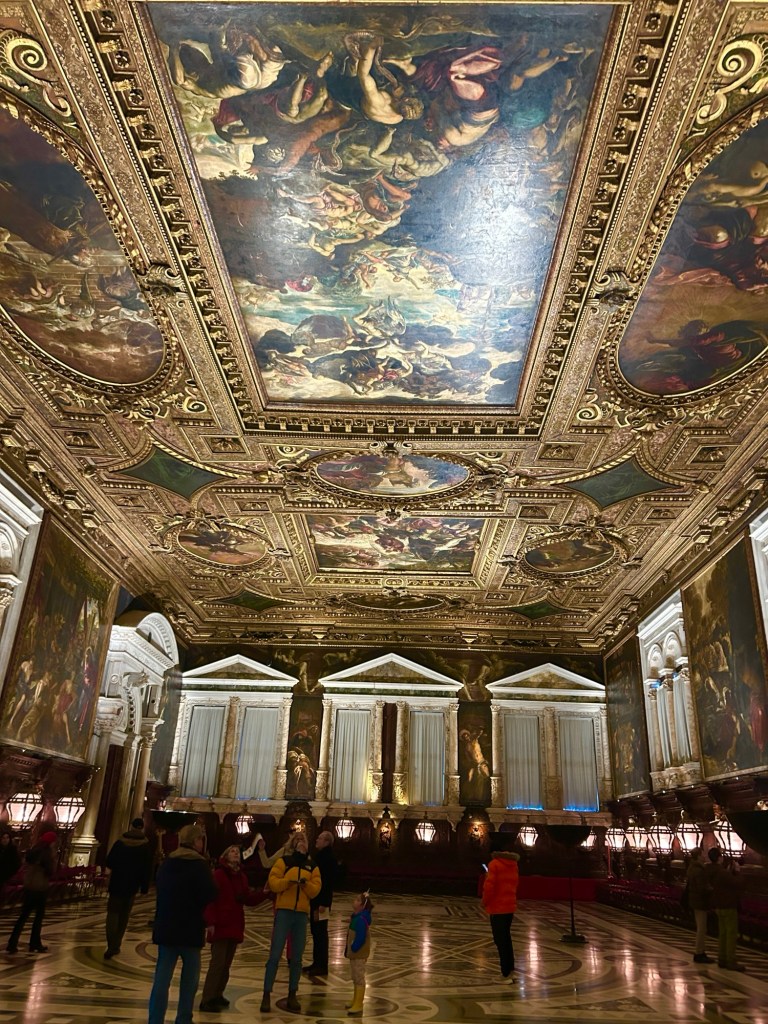
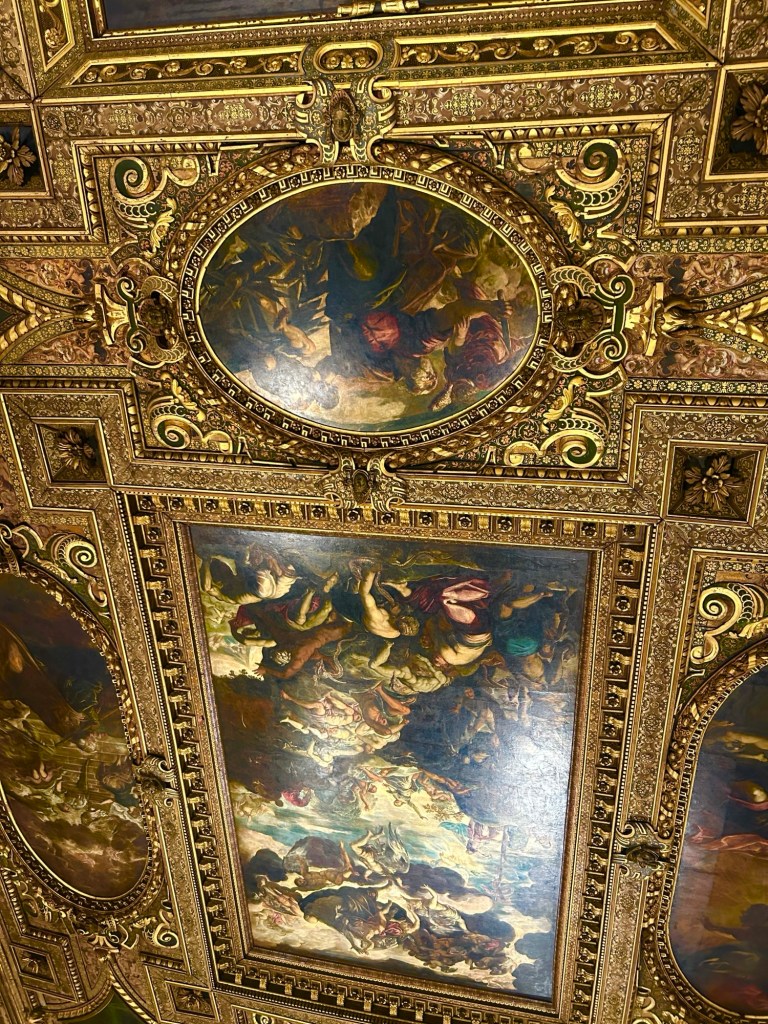
The Sala Capitolare, with its painted ceiling surrounded by gild mouldings.
This enormous room was overwhelming in its beauty and detail. Mirrors were provided so that you could see details of the paintings without getting a crick in the neck.
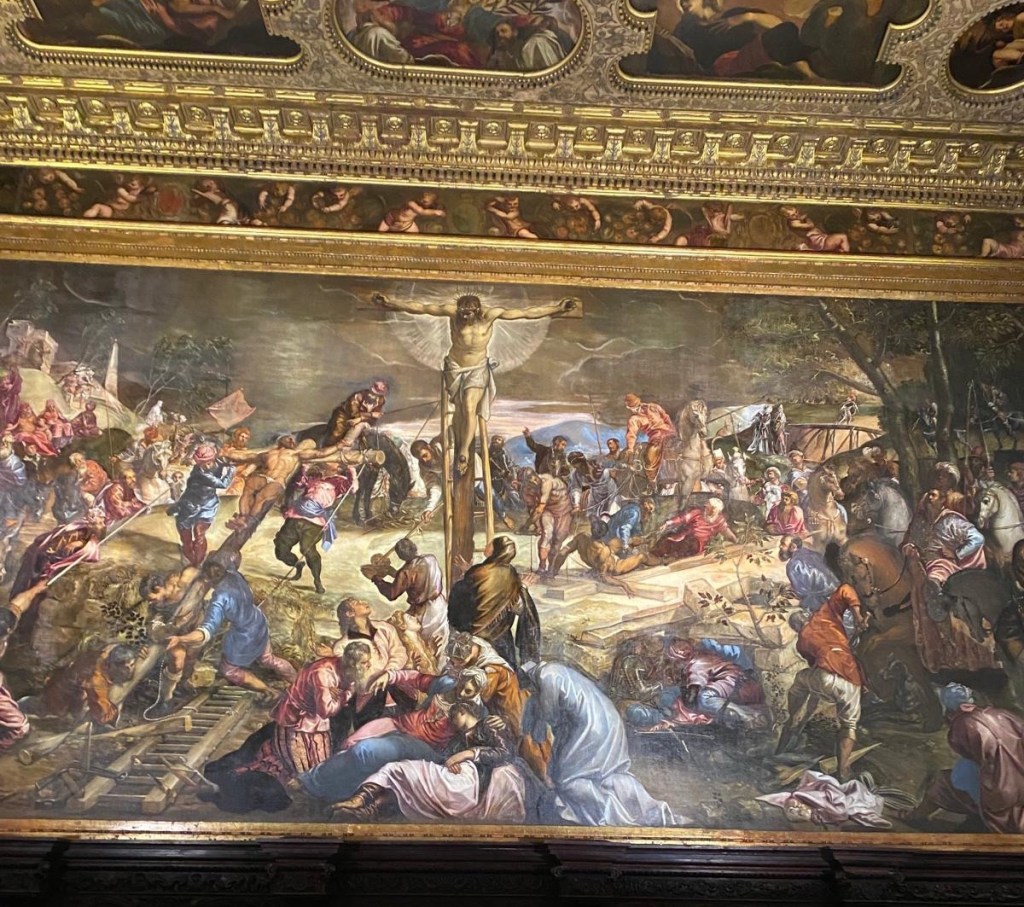
In the adjacent room the far wall was taken up by a huge painting of the Crucifixion.
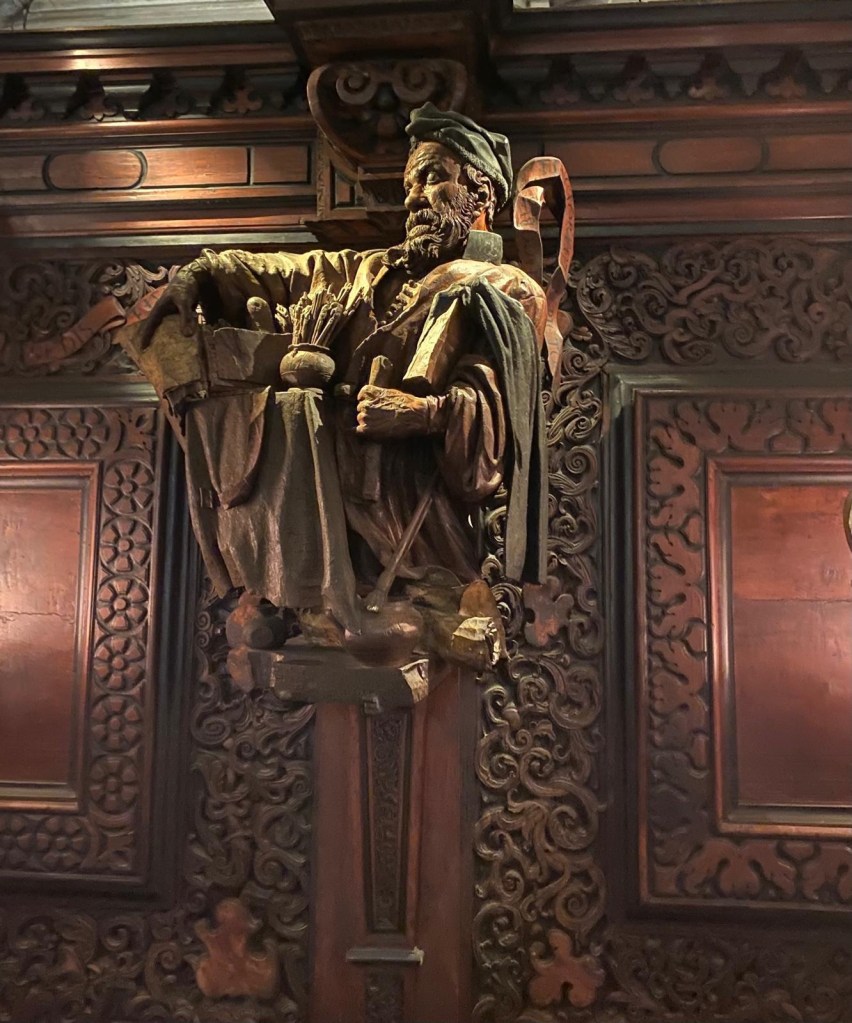
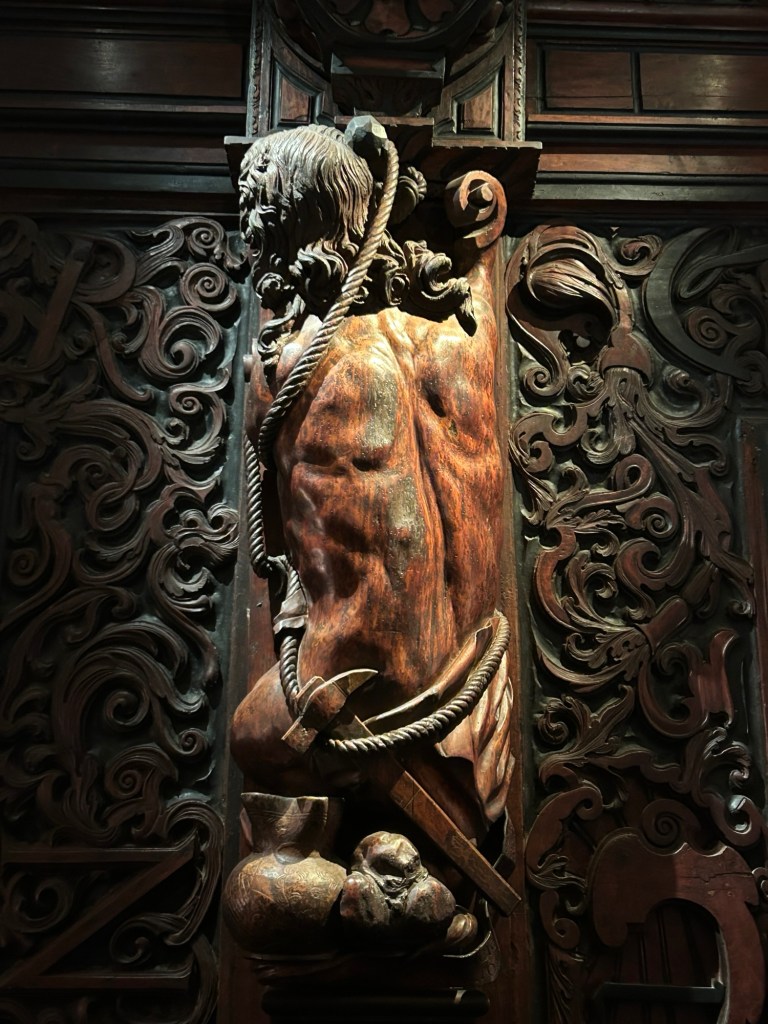
The walls of the Sala Capitolare between the paintings are panelled in walnut and adorned with a series of striking allegorical walnut sculptures made by Francesco Pianta between 1657 and 1676
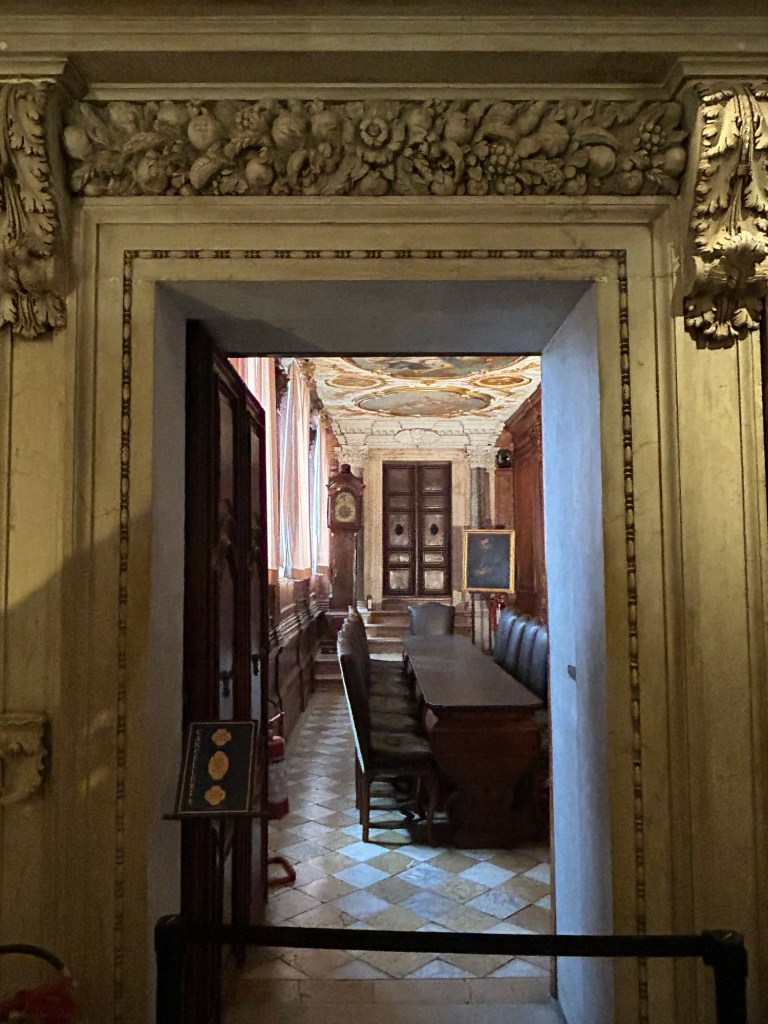
Even the small dining room was impressive. Look at the frieze of fruit and vegetables above the entrance.
We visited this museum twice, there was so much to see.
On another note, some whimsical frescoes by Giandomenico Tiepolo adorn the walls of Ca’ Rezzonico, another museum in a beautiful building by the Grand Canal.

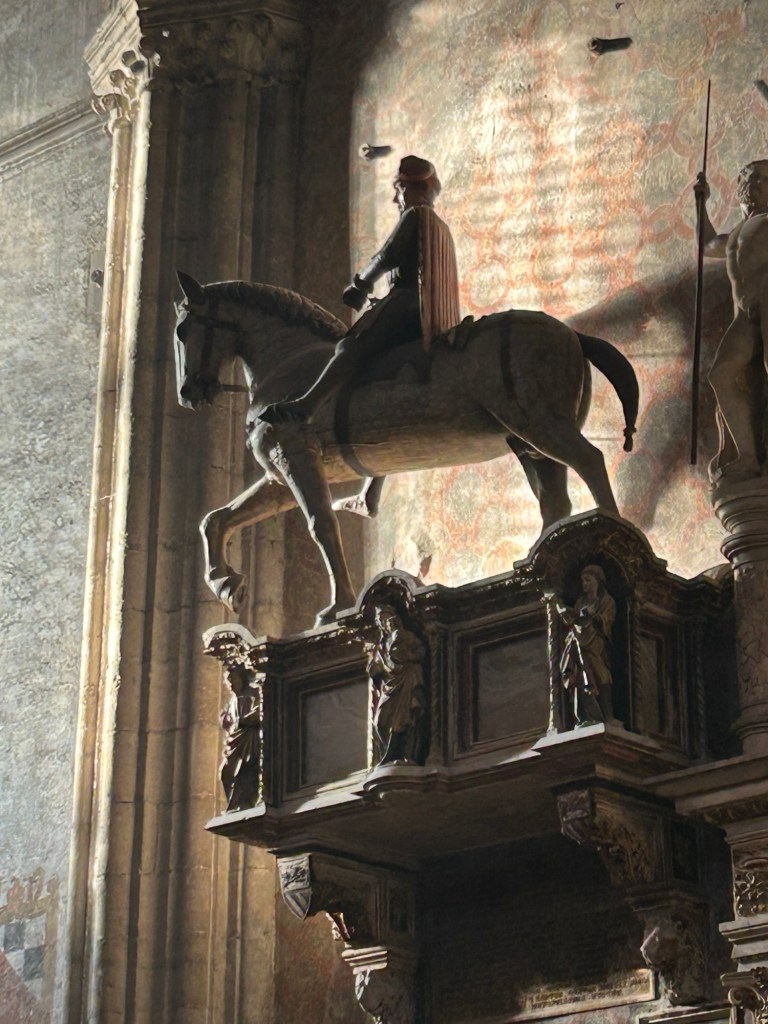
And a lovely statue on a church wall.
It is interesting to think that Venetians could see this art displayed everywhere, in their daily life. It was on the walls of the churches, the offices, the city halls, the houses. Now it is all in museums, and nothing equivalent has replaced it in our lives.
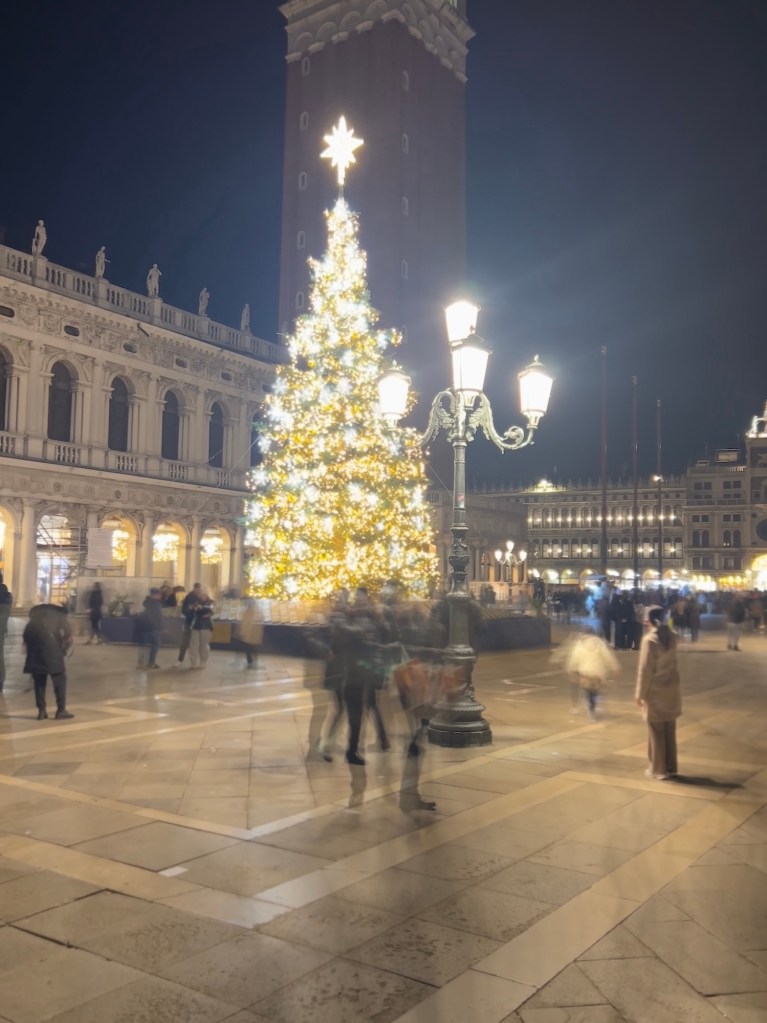
As for me, I honestly don’t know whether I should be inspired, or pack up my brushes and paints! Hopefully the former.
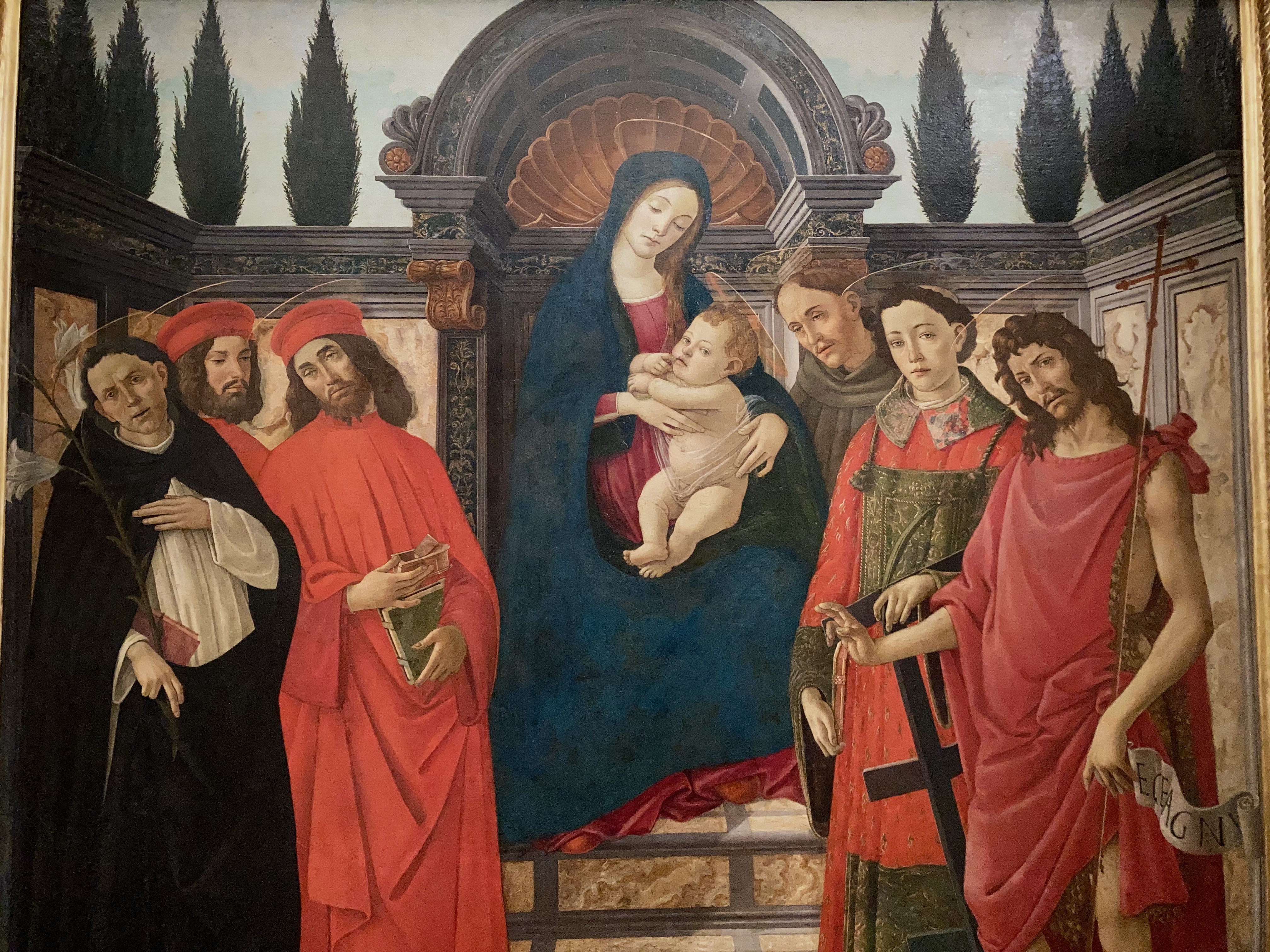
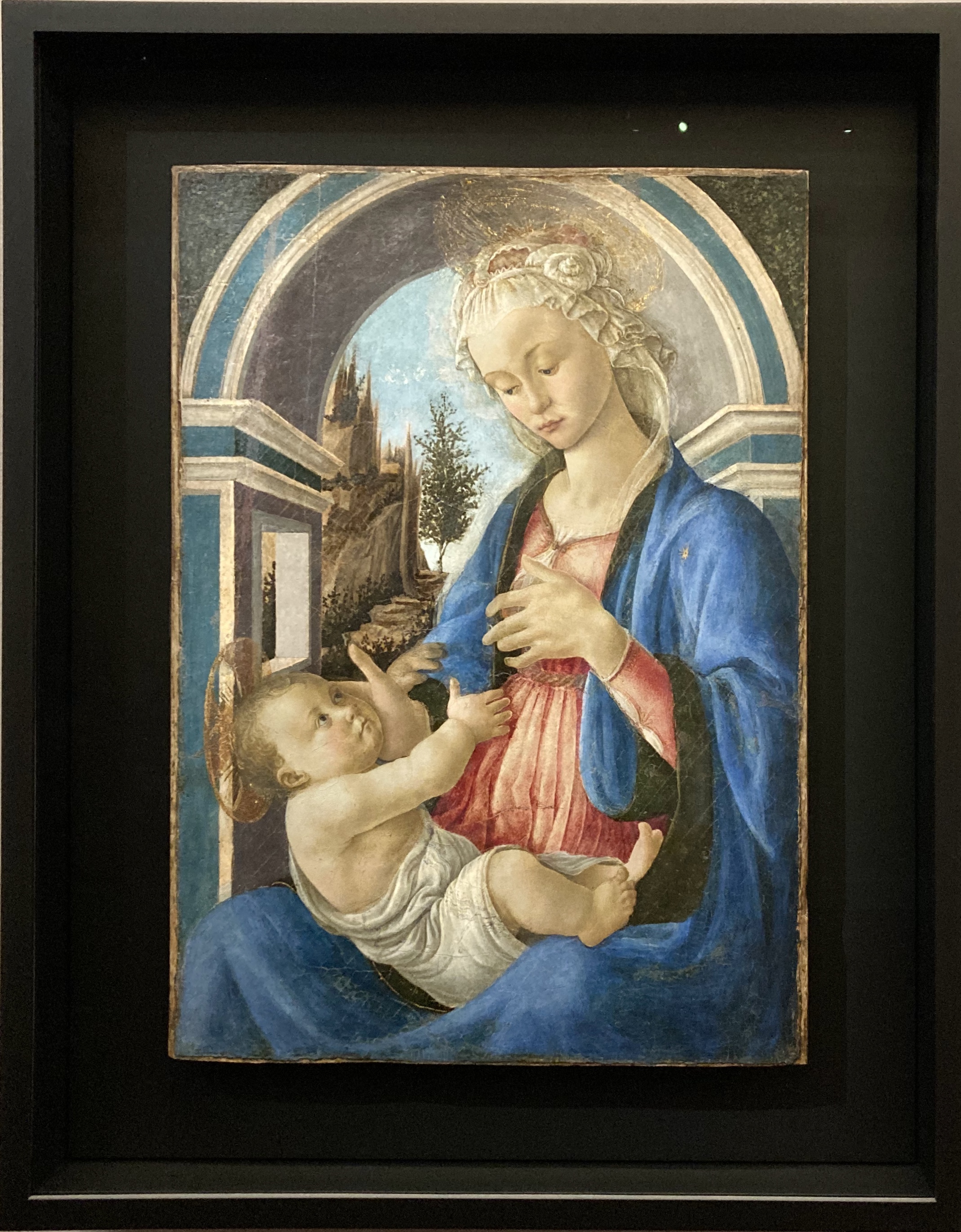
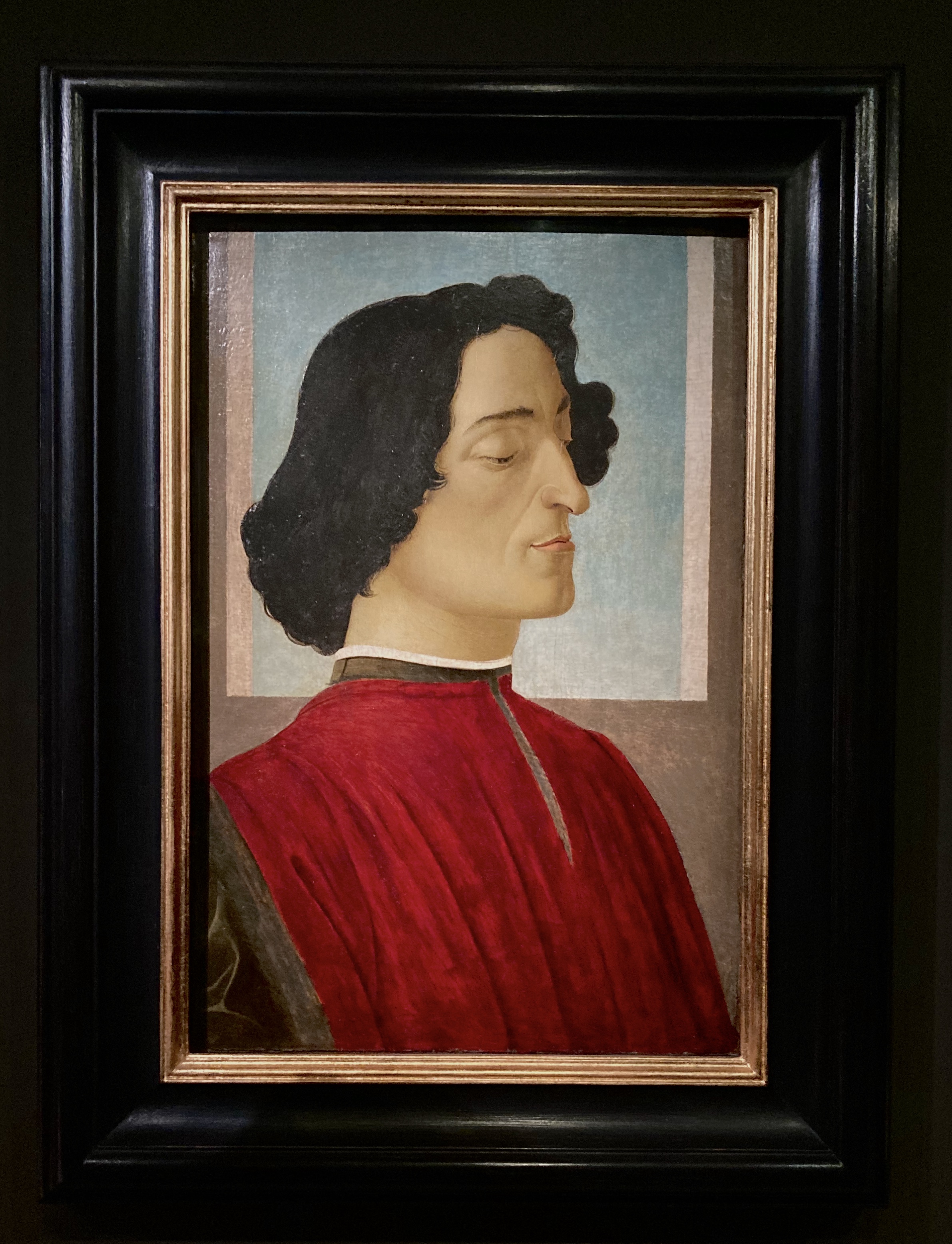
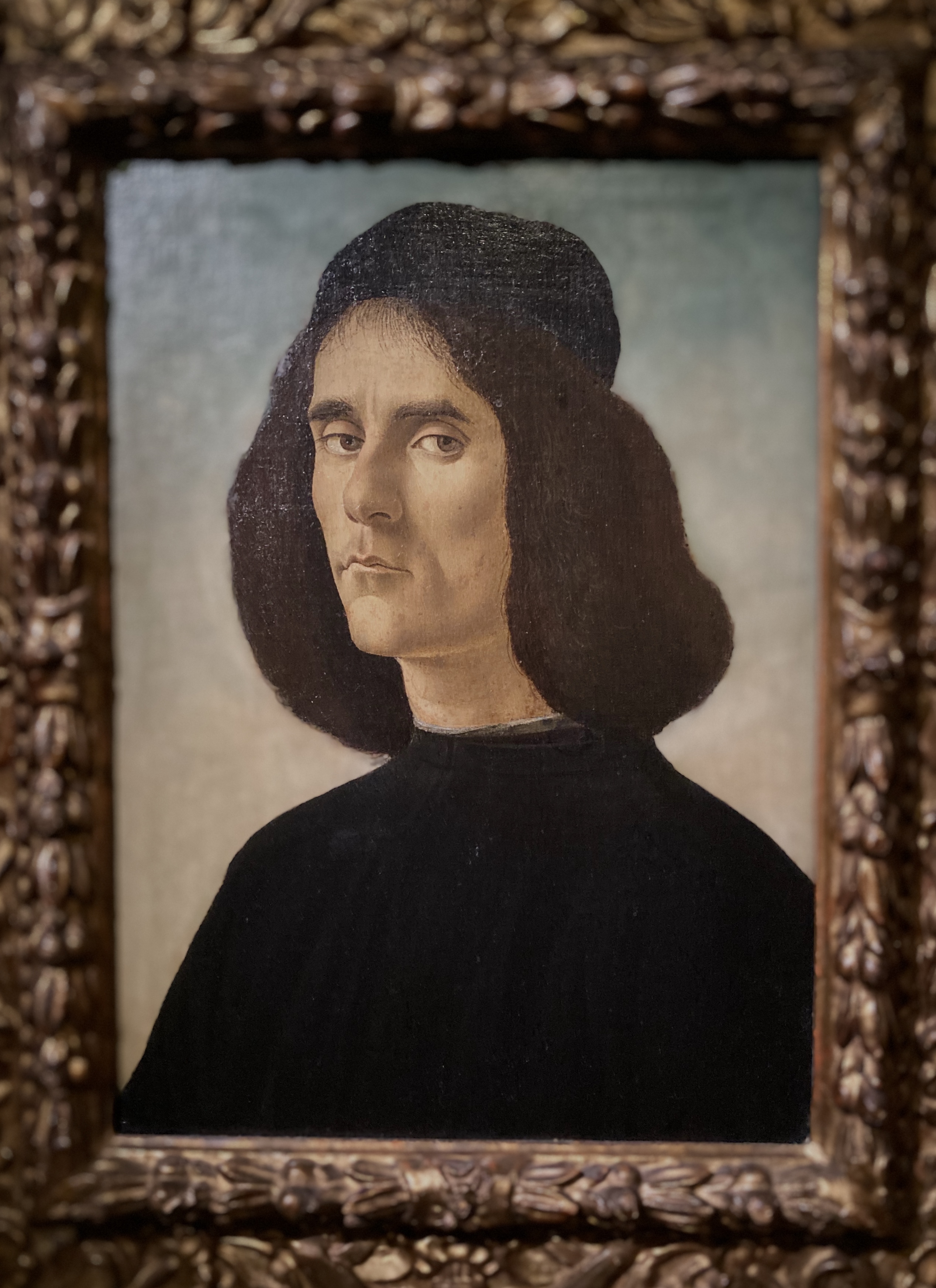
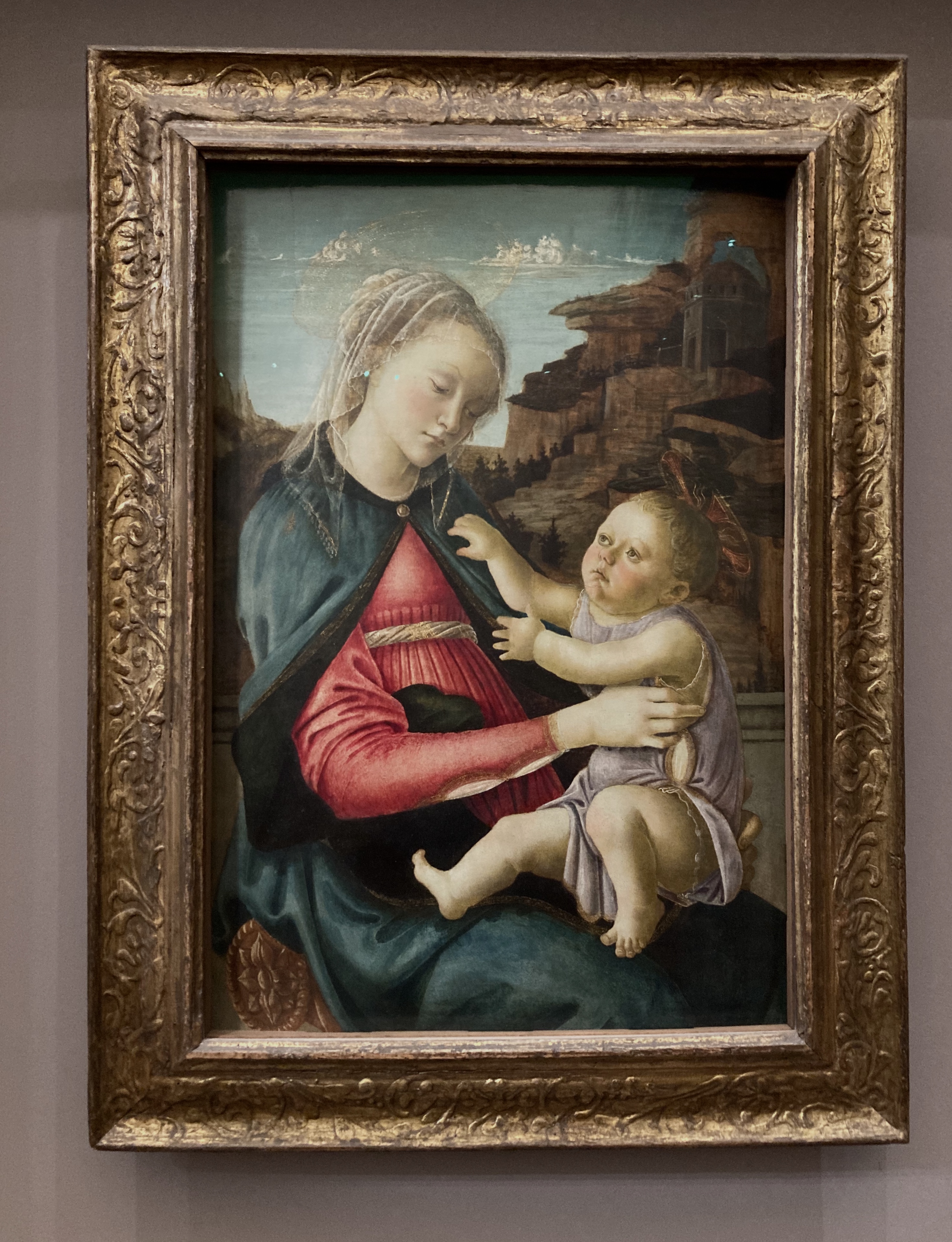
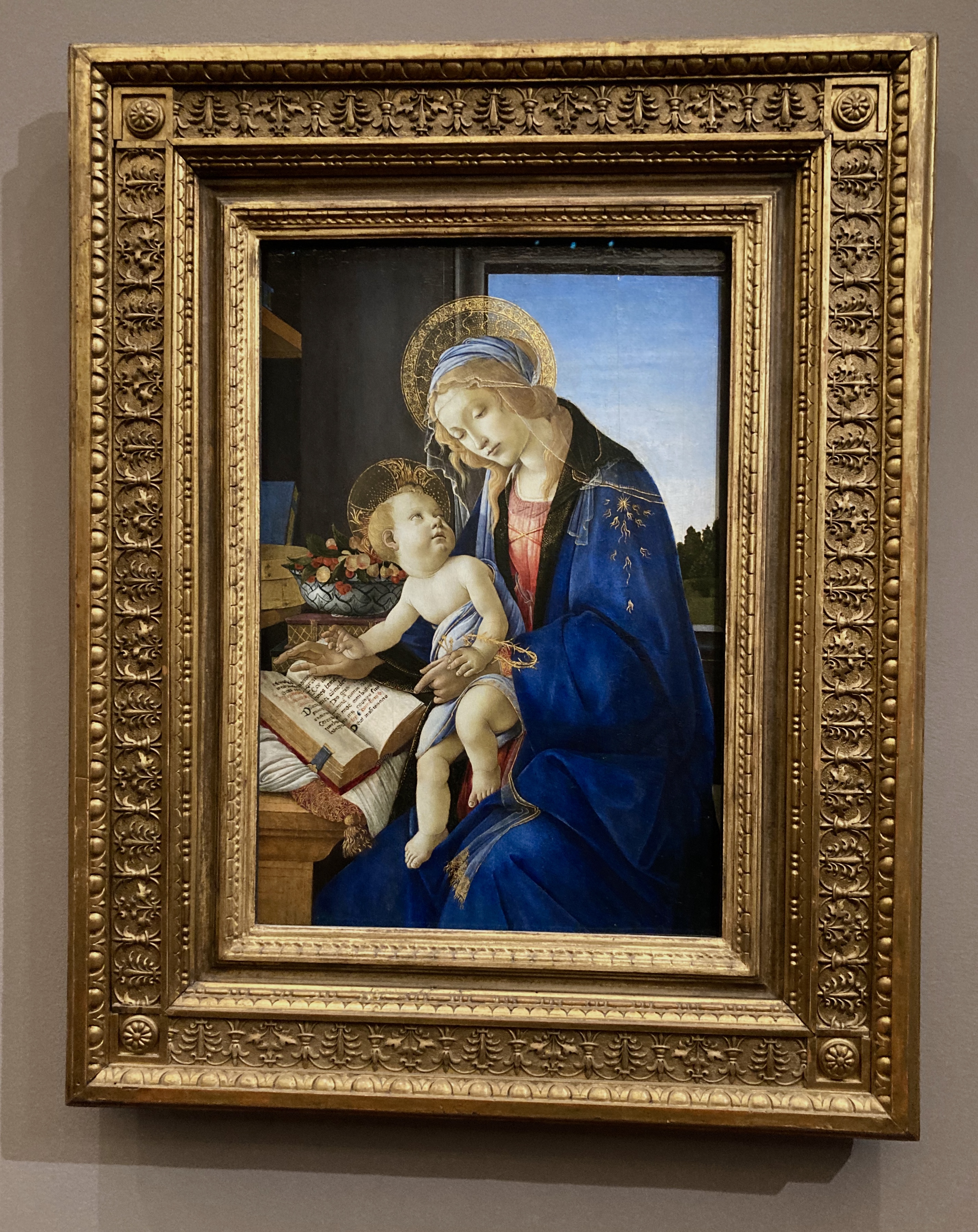
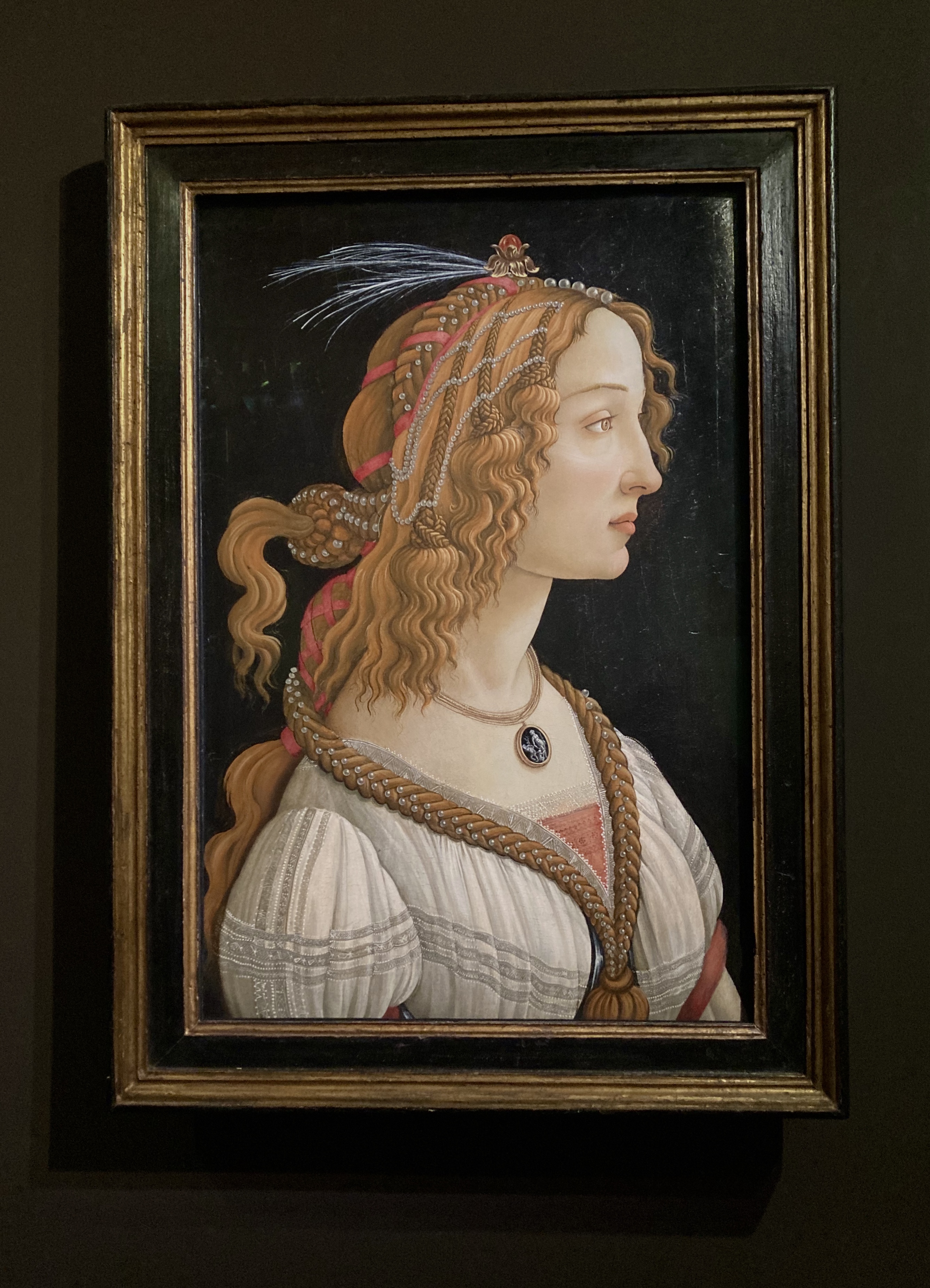
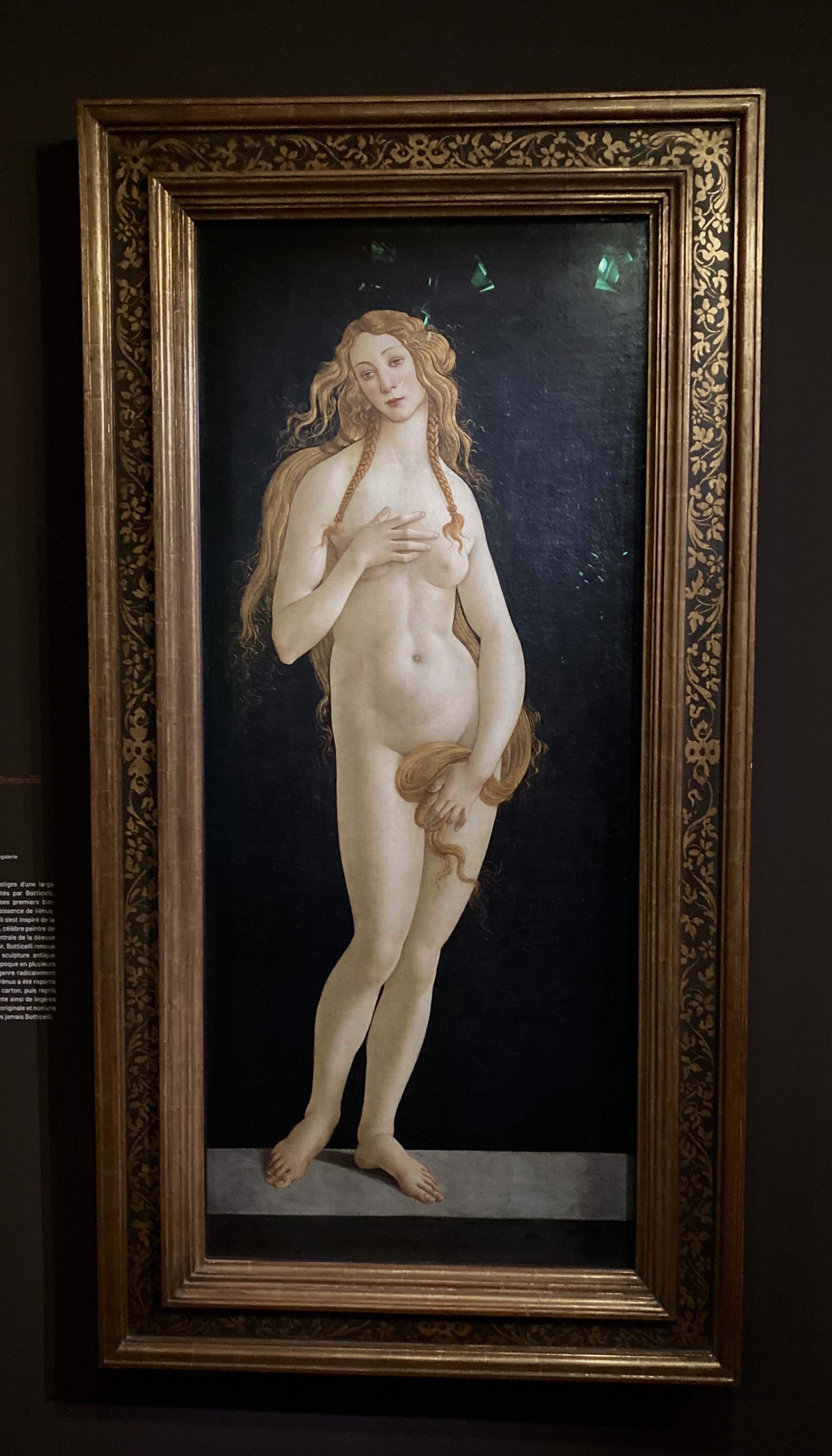
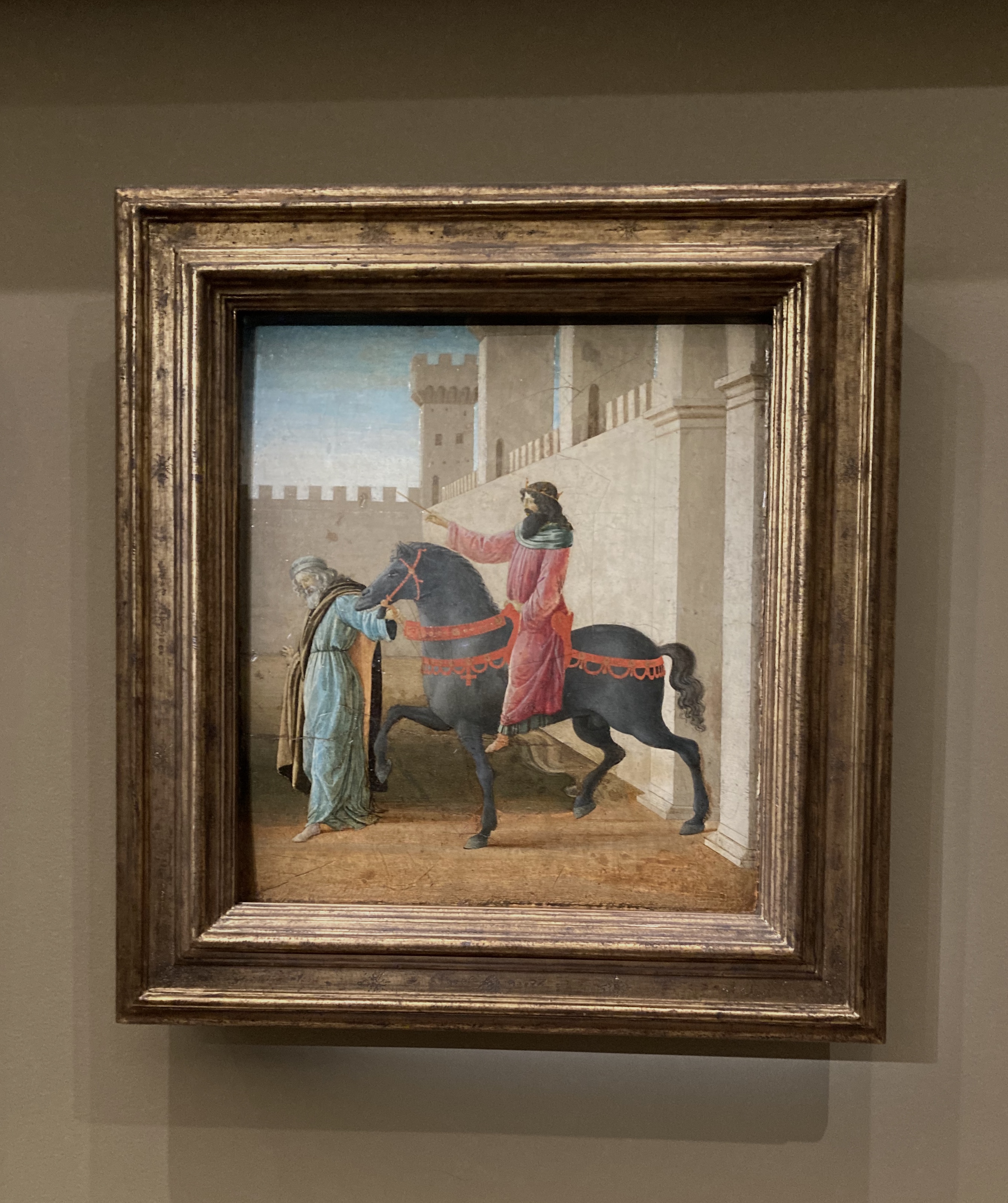
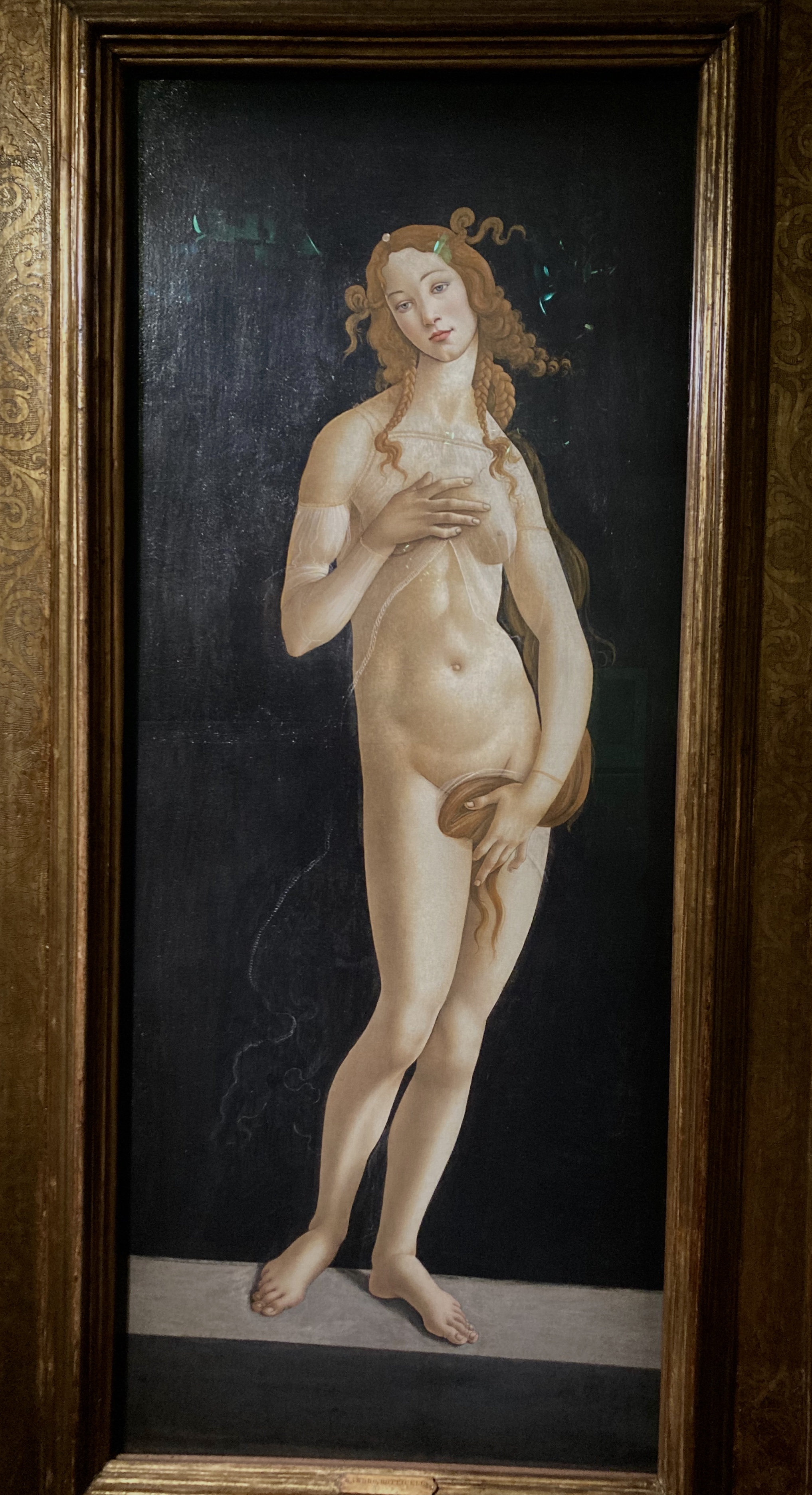 Something I didn’t know is that, in later years, Botticelli came under the influence of the monk Savonarola, and that gave his work a not-so-pleasant dimension. Of course, by then he was old for the standards of the age, and perhaps he could not see very well, so much of the work was made by assistants.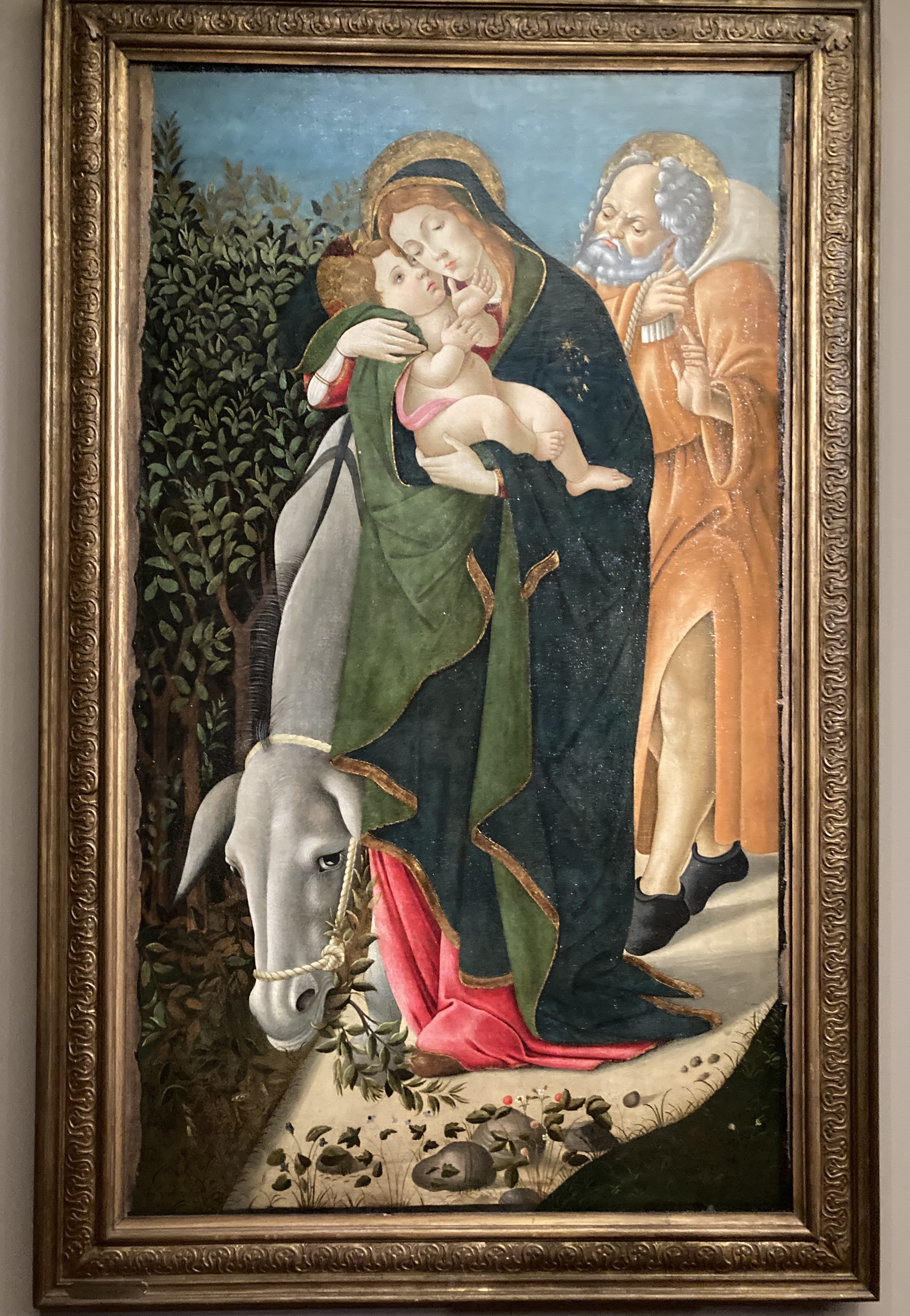
 Letters from Athens