June Q&A – the Chemical Engineer

Nikos Tsourougiannis is the general manager of family-owned company CHROMICHIMIKI SA which operates in the field of dyeing and finishing of woven fabrics.

Tell us a little about yourself

After my studies in England (at the University of Surrey and the Imperial College of Science) and my military service, I started working in our family business, Chromochimiki SA. Our business is processing woven textiles – dyeing and finishing. My father worked in various dyeing and finishing mills as a chemist and general manager. In 1997, while I was still studying Chemical Engineering in England, we had the chance to open a small fabric dyeing plant; we started from literally nothing, with three production machines. Gradually, taking advantage of every opportunity afforded by the state (subsidies etc.), and by getting bank loans, of course with personal guarantees, we started adding machinery piece by piece.
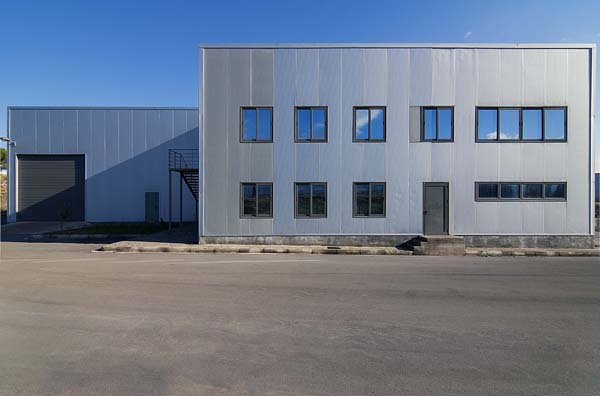
imageIn 2003, when the crisis had started and the financial environment was not at its best, we bought a piece of land and built our new plant, against reason as well as against everyone’s advice. On May 2nd 2005, production started in our new factory, with brand new machinery. We believed in ourselves, and in our work, and we have not regretted it, despite everything. Even in 2012, at the peak of the crisis, we continued to invest; we now have 30 employees, having started with 9. Of course, the psychological and financial cost was great, and the workload was massive; but even today we plan on taking advantage of opportunities offered and to continue investing. Apart from my father and myself, there is a strong team, and I would not like to take all the credit – the strength of our company does not lie in the machinery, but in the people running it. I really believe in the human factor; we are all cogs of one machine, and if we don’t take pride in our work, no success is possible.

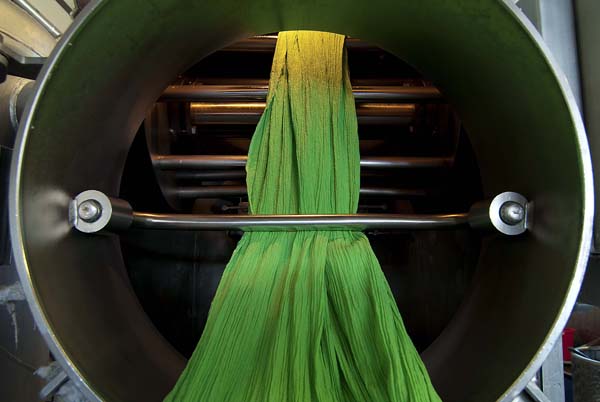
Our clients are either producers of textiles (weavers) or merchants who import from other countries. We treat the fabrics: we dye and finish them (we make them waterproof, oil repellent, flame retardant, etc.) When we started in 1997, our expertise was only in dyeing curtains. Later we expanded into upholstery, tablecloths, terry towels and fashion fabrics, for both men and women’s wear. We were forced into this – the processing cost is much higher, since we had to invest in different kinds of mechanical equipment, a large warehouse, higher labour cost – but business was diminishing, and we needed to keep up our market share.

In a way, this expansion has been beneficial. We are a small but flexible unit which gives us an advantage against foreign competition: for example, as regards dye houses from China – we might be more expensive, but our quality and response delivery times cannot be matched by them.

What were the major difficulties you’ve faced in the last five years?

Where can I start? Mainly the public sector – bureaucracy, delays, taxation, and, of course, the capital controls which make our daily life harder. Bank loans and the cooperation with the Greek banks makes business difficult; the cost of money is very high, social security contributions are crippling. You really have to be a masochist to run a company these days – well, maybe we are!
Another difficulty we have to face is unfair competition, such as imports without any quality control from countries like China, Pakistan and India. Also the monopoly in energy, which makes it very expensive; the cost of energy in Greece is probably the highest in Europe.
Lastly, because of the reduction in Greek production there are no raw materials (such as chemical dyes etc.) to be found locally – everything has to be imported. And now, because of the capital controls, this has become extremely hard.
 

image


Did anyone in particular inspire you or help you?

My father. He’s 78 and he still works. I’ve had so many valuable lessons from him – not only in business but life lessons. No studies or degrees can replace that. I was not an ideal student at school, so he always said to me, ‘I don’t care what you’ll become in life – but, whatever it is, even if it’s just collecting rubbish, you have to do it well.’ When I started working, he used to tell me, ‘Your must treat your work like a girlfriend.’ This ethic and values he gave to his family, we have passed on to the staff as well.
My father is the soul of the company – nothing would have been achieved without him. He’s there every day and when we are facing a problem we always ask for his advice. His experience is irreplaceable.
Another person who inspired me and taught me a lot is my first boss, Nikos Kouvaras. I was 14, and I worked in his factory in the summer. He gave me a card that said: “Niko, remember this – two things in life will never betray you, your family and your work.”

What are your hopes/plans for the future?

Difficult to define, but of course I do have hopes and ambitions. We always want to do more, expand, but it’s not easy.

What are your hopes for Greece? What changes do you hope to see happen?

In our sector there used to be around 250 dye houses in Greece. Now there are only 10 -15. Unfortunately, industry in Greece since the 80s has become a scapegoat and is discriminated against.
My view is that a country without industry, without production, is doomed. In Greece industry has been destroyed, and I want to believe that, in the end, it will make a comeback. Even Switzerland, despite high labor costs,  has industry. In my country we produce nothing – this has to change.
 

image


Have you considered leaving? If so, where would you like to go, and why?

In 2011 we came very close to stopping our production. Finally, we decided to take a big risk, and instead to invest, and it seems to have paid off: we almost doubled our turnover in these years. Leaving the country is the easy solution. I don’t know if circumstances will make us act differently in the future, but as long as we have the willingness and the courage, we’ll fight to stay in Greece.
Where would I choose to go? You’ll think it strange, and perhaps it’s not the best timing to say this, but I would choose North Africa – one of the countries on the Mediterranean. I know at the moment these countries are not politically stable, but, in the future, perhaps this will change. They’re close to Europe and have other advantages. But this is just a future thought.

Are you actively doing anything to help with the situation? Is there something you would like to do?

I believe just the fact that we keep this company going is no small feat. The easy solution would be to close the factory and move somewhere cheaper.

How do you see Greece in 5, 10 years?

Unfortunately, in this country you cannot predict. Eighteen months to a year ago we were literally about to ‘take off’: we’d been offered very big contracts and were ready to sign – but the developments in the political environment changed everything. So what can I say? It’s impossible to foresee what will happen in this country.
image
How do you cope with obstacles and frustrations in your everyday life?

As regards the professional side, there’s not much you can do but grit your teeth and have patience. Generally I believe in the saying: ‘Where there’s a will, there’s a way.’

What are the positive sides of living in Greece? Have you had any good experiences lately?

Greece is a country with unbelievable opportunities. First of all, the people, the workforce. Despite our faults, Greeks are really hard working, smart, friendly and full of willingness to give and share with other people. The weather, the climate in general and our location which is geopolitically strategic, gives this country and its people the chance to hope and dream for future generations.
One year on…

I started this blog a year ago, in June 2015: a place to rant against my pet peeves, but also to share the good moments of life in this troubled land, and to showcase its diversity and many beauties. And some of its amazing people.
To date I’ve notched up 105 posts, and accumulated over 10,000 views. I only post once or twice a week, when I actually have something to say.  (Or I think I do). And that works out fine for me.

Those numbers would probably be sneered at by Taylor Swift or Kim Kardashian, but who cares? To me, the biggest reward has been meeting you guys. I never imagined the blogosphere would be such a fun place. I love discovering new blogs, following my favorites, hosting guest bloggers, and writing guest posts. I enjoy sharing my photos and drawings.  I love your comments and likes. Keep it up!
To thank you all, I’ve made a cake.

image


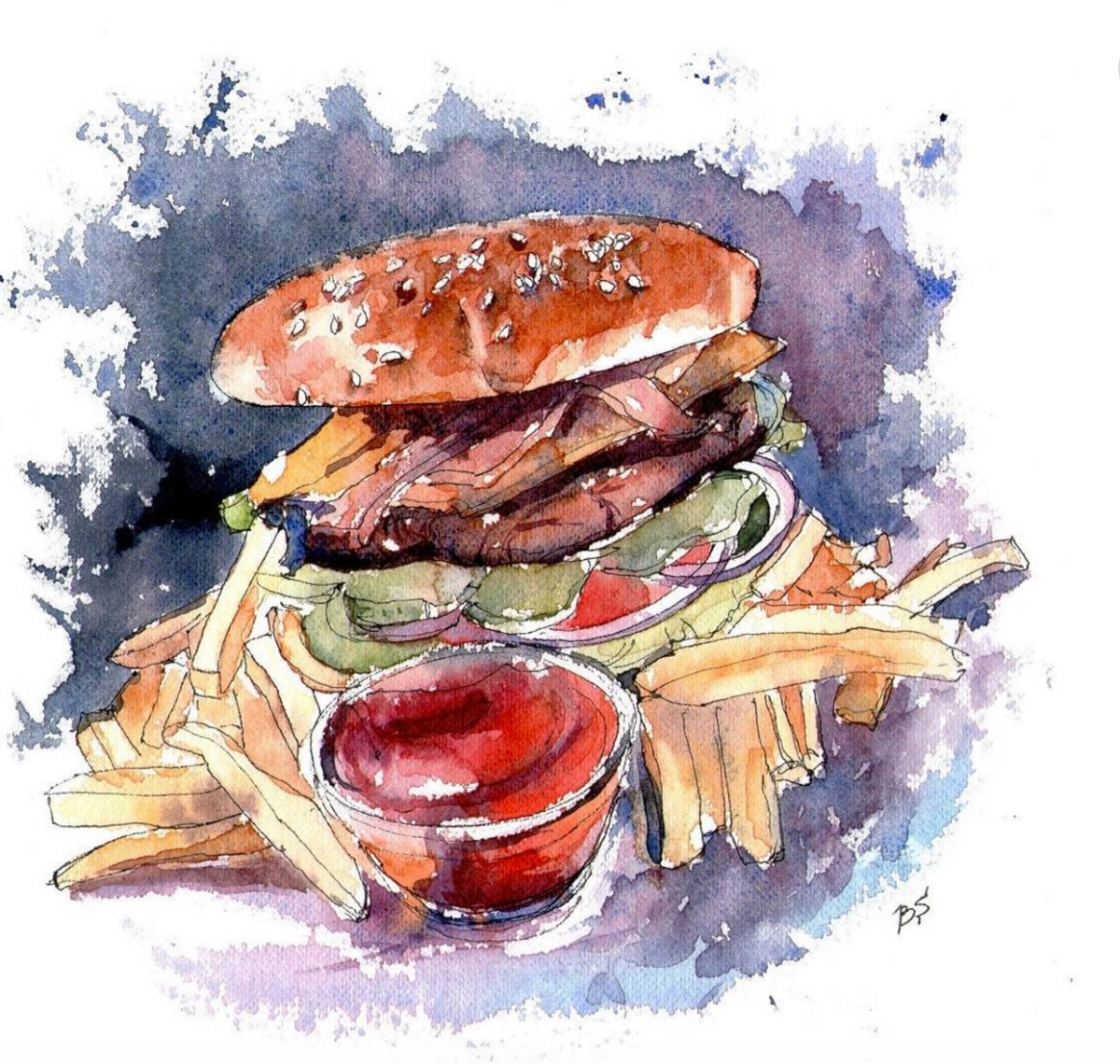
And drinks! Enjoy!

image


Guest Doodlewash: Alphabet Soup!

For those of you interested in my artistic endeavors, Charlie O’Shields very kindly invited me (or did I invite myself – I can’t remember) to do a guest post on his funky blog, Doodlewash.
I strongly urge everyone to check it out: it’s a sunny, cheerful place where Charlie posts his own lovely sketches but also showcases a variety of other artists.

Charlie O'Shields's avatarDoodlewash®

Doodlewash and watercolor sketch by M. L. Kappa of Donkey in Greece

Doodlewash and watercolor sketch by M. L. Kappa of MonkeyMy name is Marina, but I’m known as M. L. Kappa on my blog, and I live in Athens, Greece. (you can also follow me on Instagram & Pinterest!). Since I was a kid, I’ve loved drawing and painting and other arty stuff, such as batik, clay and mosaics. I’ve had no formal training apart from school art class, but I always like to have a project on the go.

Some fail dismally, like a mosaic I made with lovely sea glass, painstakingly collected on the beach, only I didn’t cement it properly and the pieces started falling out! I now have discovered many artists through Charlie’s guest posts, and I’ve been getting tips and inspiration from them.

View original post 456 more words

Poetry is honey for the soul (11) – ML Kappa

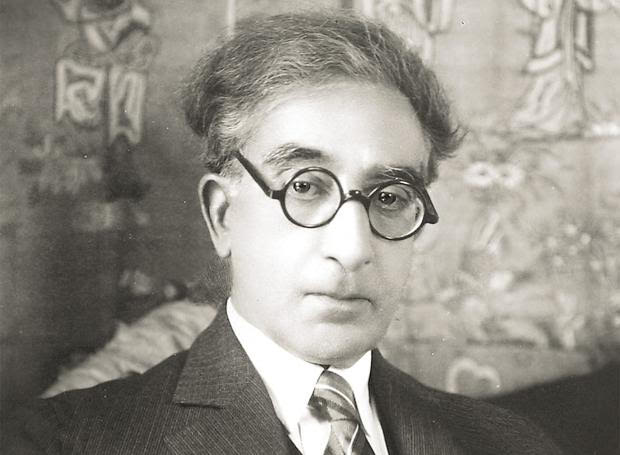
Camille de Fleurville is running a poetry series on her fascinating blog, Sketches and Vignettes from La Dordogne. She very kindly asked me to contribute and I chose a poem by one of the greatest Greek poets, Constantine Cavafy. Do pop over to take a look.

camilledefleurville's avatarSketches and Vignettes from la Dordogne

Poetry is honey for the soul

Marina gives us regularly news from Greece in her blog:

https://athensletters.com/

I follow it with the utmost assiduity: politics, economy, society, refugees, literature, Ancient Greece, Grecian Islands, myths, history, traditions -her blog is always full of information. Its full name is “Letters from Athens – A blog about life and times in Greece”.

Today, she invites us to read or re-read a poem by Constantin Cavafy, which sounds oddly relevant to our times.

unnamed (2)

C.P. Cavafy is widely considered the most distinguished Greek poet of the twentieth century. He was born in 1863 in Alexandria, Egypt, where his Greek parents had settled in the mid-1850s.

During his lifetime Cavafy was an obscure poet, living in relative seclusion and publishing little of his work. A short collection of his poetry was privately printed in the early 1900s and reprinted with new verse a few years…

View original post 407 more words

Geckos on the walls and ceilings

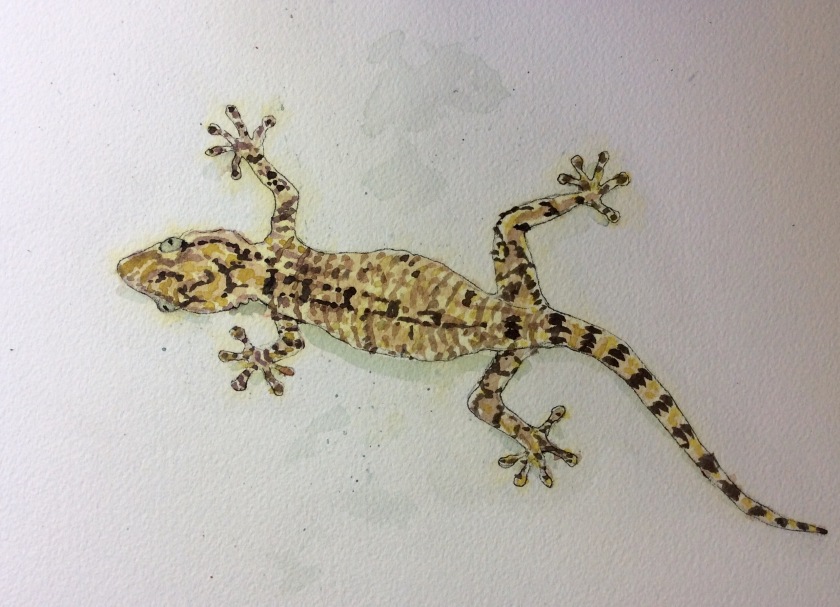
Last night I found the first gecko of this summer in my bathroom. I was so happy to see him (her? it?) that I took a picture on my phone – but he was so small, it did not come out well under electric light. So I decided to make a drawing – in this case, a lot larger that life-size, as he was only 3cm long. The ones we get here are very small, and a lot more elegant than in my drawing. The babies are translucent!


image
House geckos are considered good luck by most people, and they’re useful to have around, since they feed on mosquitos and other insects. In the winter they hibernate, and when summer comes, they show up on the walls or on the ceiling, sometimes emitting a high-pitched squeak, almost like the faint chirping of a bird.
Geckos have adhesive toe pads enabling them to scurry with ease along walls and ceilings. Looking at this little fella’s toes reminded me of Gollum – Tolkien must have been inspired by some similar creature.

A clean blanket and a bowl of spaghetti

The borders are shut and tensions are running high in the refugee camps, as people become increasingly desperate about their future. A few days ago, in Souda on the island of Chios, refugees set fire to the rubbish skips as a protest. The fire spread and was only put out after a couple of hours by the fire brigade with the help of the police and the locals whose houses it threatened – but not before severely damaging two large tents used by NGOs and the UN High Comissioner for Refugees, some offices and a load of equipment. One of the firemen was injured.

In the sprawling border camp of Idomeni, in Northern Greece, police had to use tear gas to break up clashes between rival groups of rock-throwing Pakistani and Afghan migrants; incidents of violence along ethnic lines have become a daily reality. At Elliniko camp in Athens, hundreds of people, mostly Afghans, refused to eat because of the quality of the food and because of their belief that Syrians are receiving preferential treatment at their expense.
There are still nearly 60,000 refugees stranded in Greece, although the flow from Turkey has abated since the deal in March between Brussels and Ankara. However, it has not lessened as much as shifted – they have now gone back to trying to reach Italy from Libya, and hundreds have drowned in the Mediterranean in the last few weeks (this route is longer and more dangerous). In total there have been 10,000 deaths in the Mediterranean since January of 2014.


image


Meanwhile, tireless and feisty volunteers are continuing to give their all to help their fellow man. The Dirty Girls of Lesvos (see previous post, here) have saved more than 10,000 blankets from ending up in a landfill. Hearing the Idomeni camp was to be emptied, they came over and collected around 15 tons of bedding, to clean and re-distribute to other camps. Alison Terry-Evans says: ‘A clean blanket is a small way for people to have a little dignity in an underserved situation.’
Other volunteers are bringing water to camps where there is none; some deal with vulnerable groups; some with cleanliness; some with training and education of the refugees. Some set up WiFi in the camps (like Ilias Papadopoulos or Ben Ridge) or lay wooden floors in the tents, paid for out their own pocket.

Take a look at the video below, and you will see why Iokasti Nikolaidi spent three months cooking, together with up to 15 of her friends, on the island of Samos. Her husband, a fireman, was upset with the deaths he was witnessing. Iokasti was on maternity leave, having just given birth to her fourth child, and had not been out and about. When she went with him to see the hundreds of desperate, dispossessed, exhausted people, and especially the crying kids, she wanted to help. ‘Why don’t you cook something?’ said her husband.

Iokasti called her friends; they started with 30 portions, and slowly built up, with the help of other women, to their record – 4,380 portions one day! Spurred on by a photo of her holding a sick baby – she was initially angry with the photographer for taking it – volunteers from England and the rest of Europe came to help, and people sent money and supplies. Her worst nightmare: when the food finished, and the last people in the endless lines got none, after having waited for hours. This was her last thought when falling into bed at night: ‘If we don’t cook tomorrow, these people won’t eat.’

(In English)

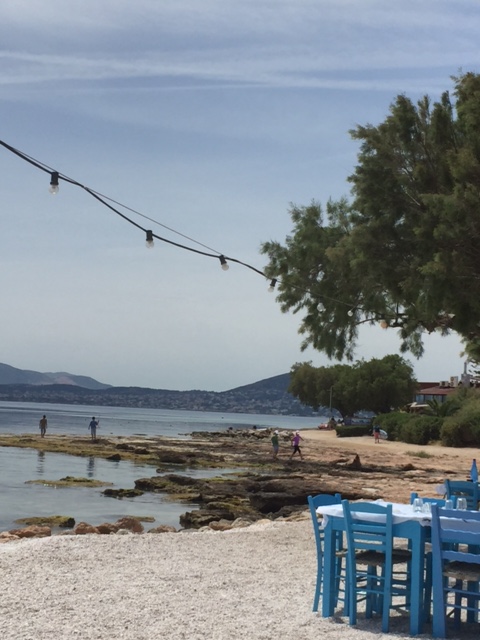
Hints of summer

The weather has been unstable lately, and we actually had a nice storm a few days ago. However,  summer is not far off.

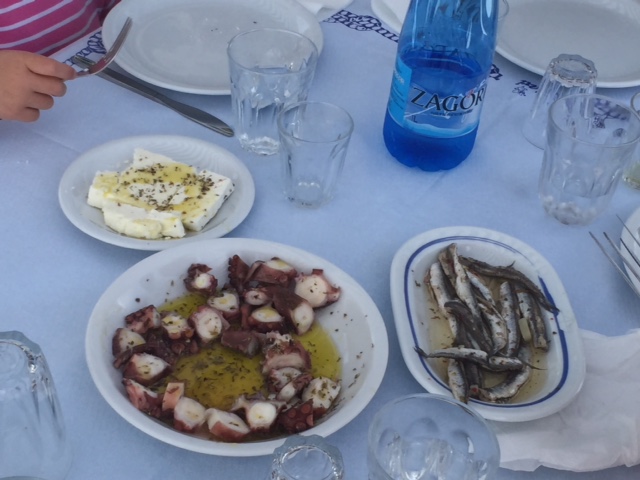
Time for lunch by the sea.


image


image


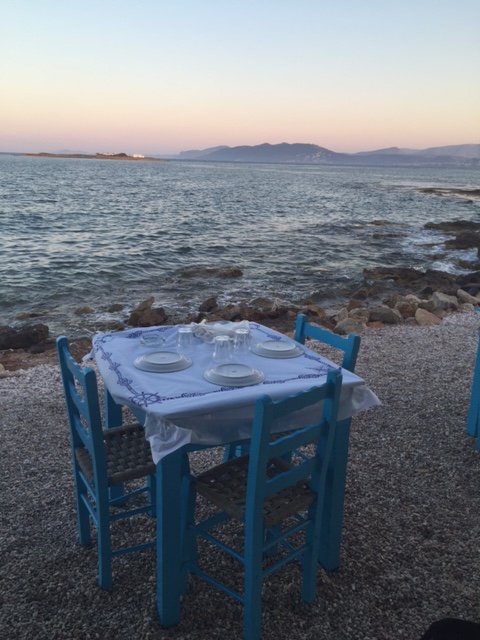
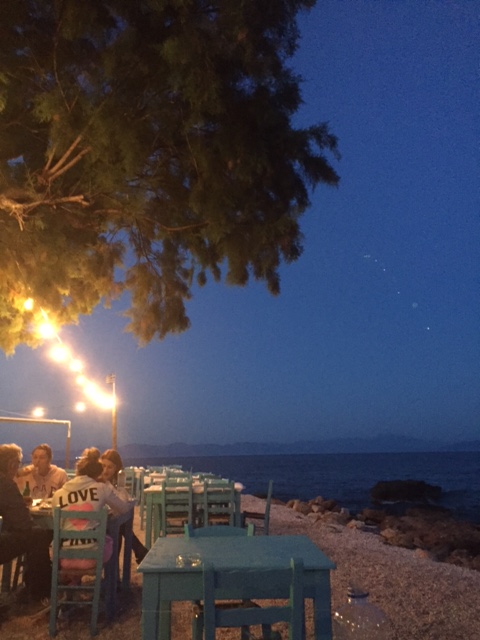
Or dinner – pure magic.

Sunset
Sunset

image


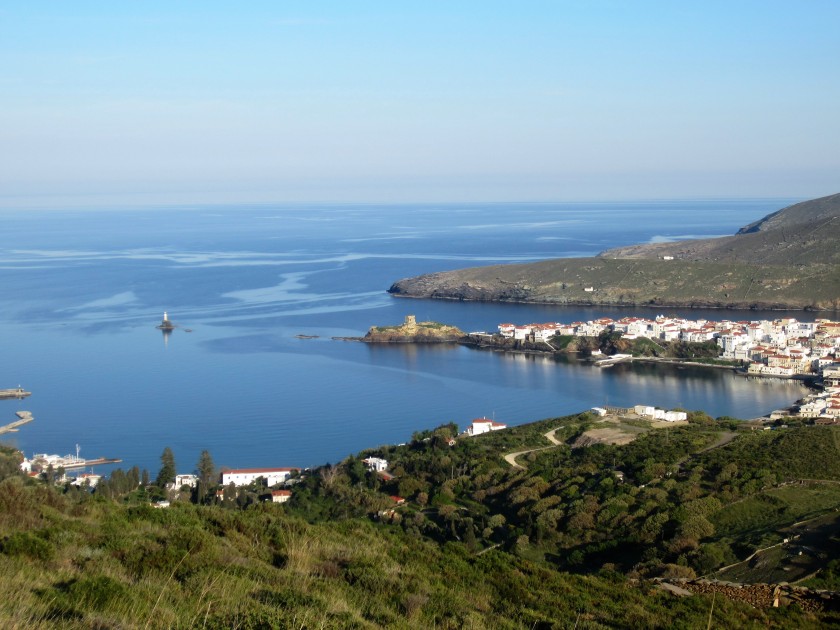
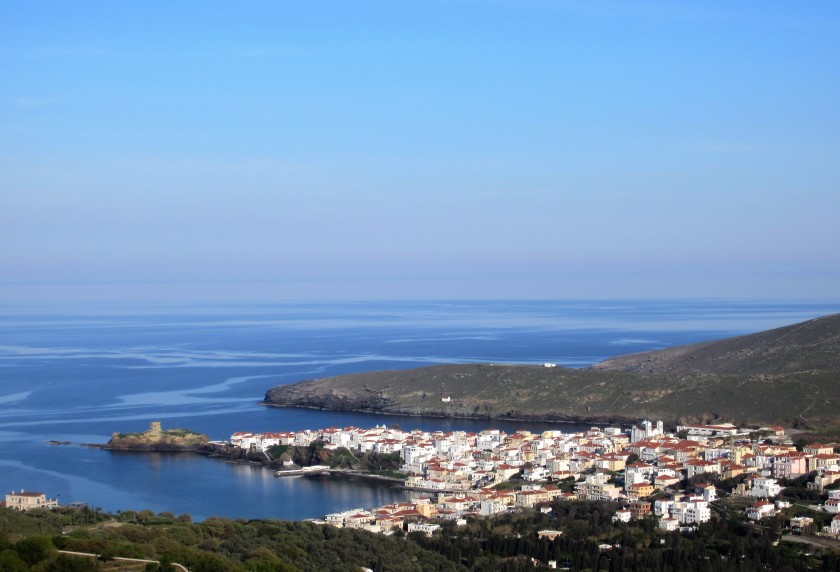
A mini break on some nearby island.

image
Andros Hora. Photo by Mariella Edgerly

Andros, with its lovely town and ruined Venetian fort. A mere two hours from Athens.

Andros Hora. Photo by Mariella Edgerly


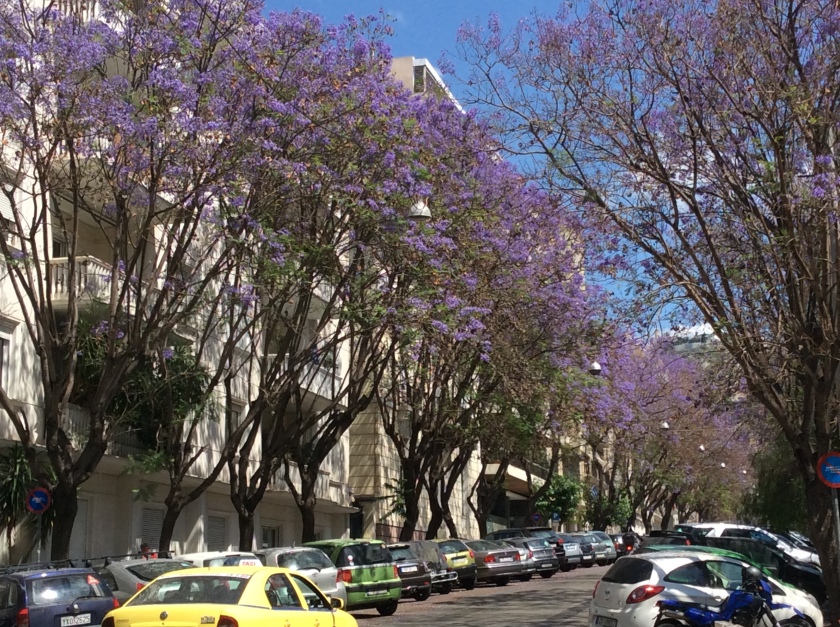
The jacaranda is in bloom, but not for much longer. This is Rigillis street in Athens.

image


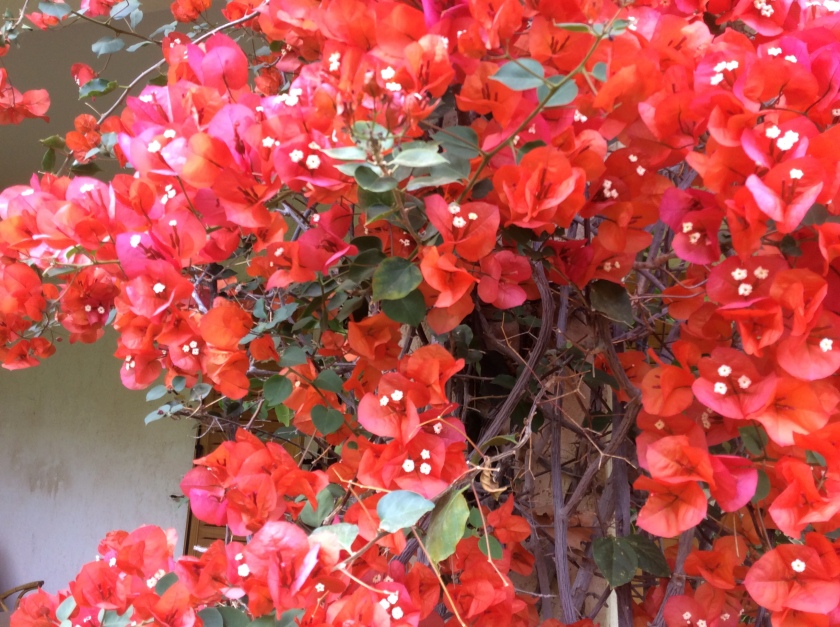
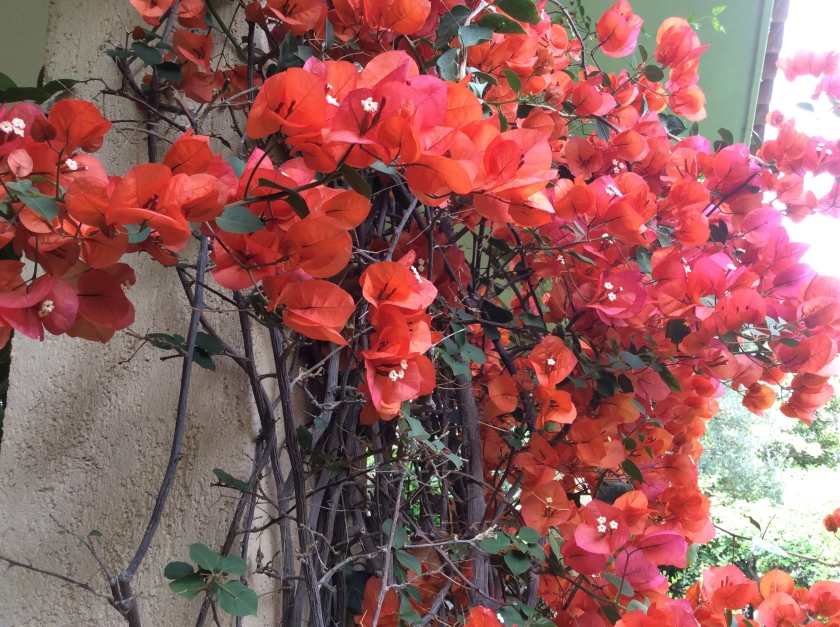
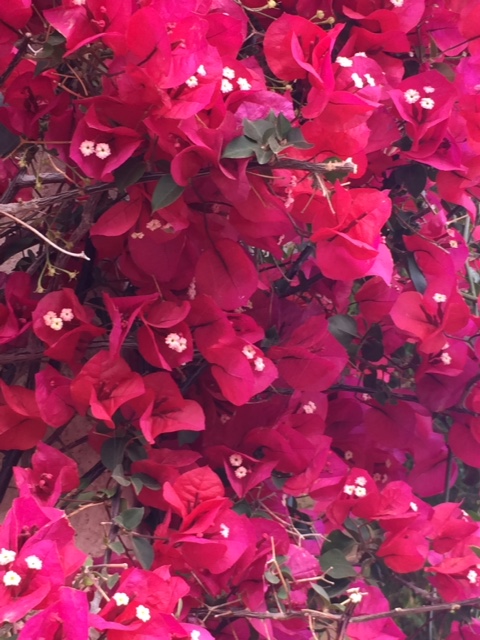
The bougainvillea is out.

image


image


image


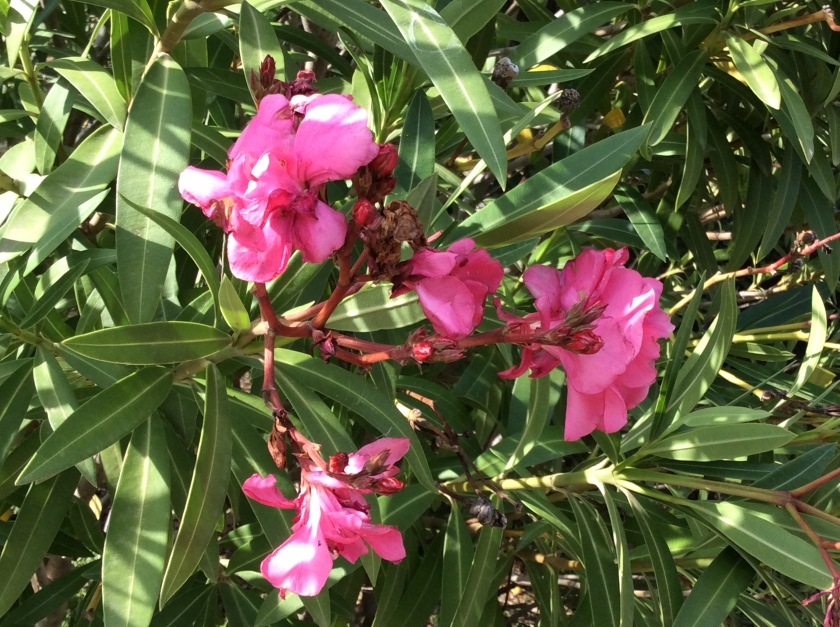
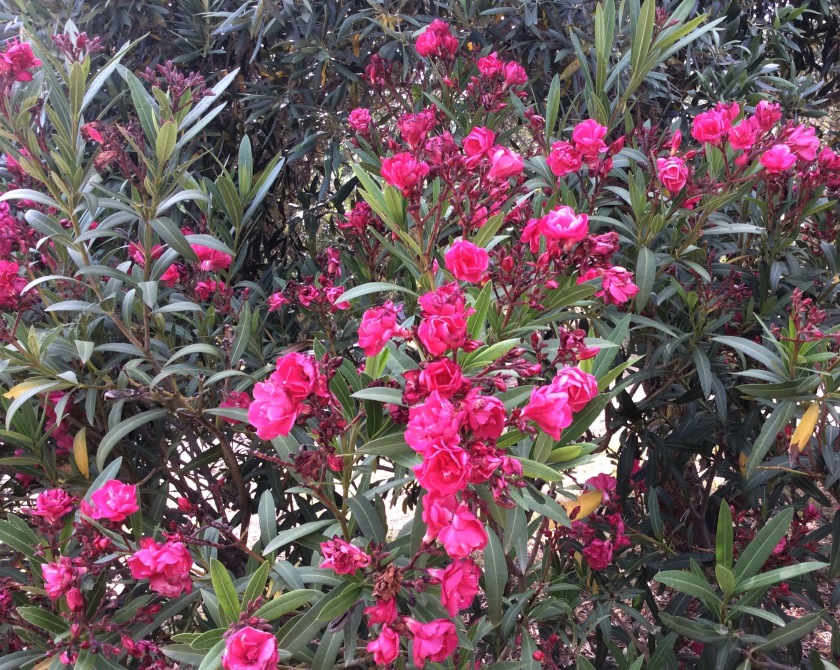
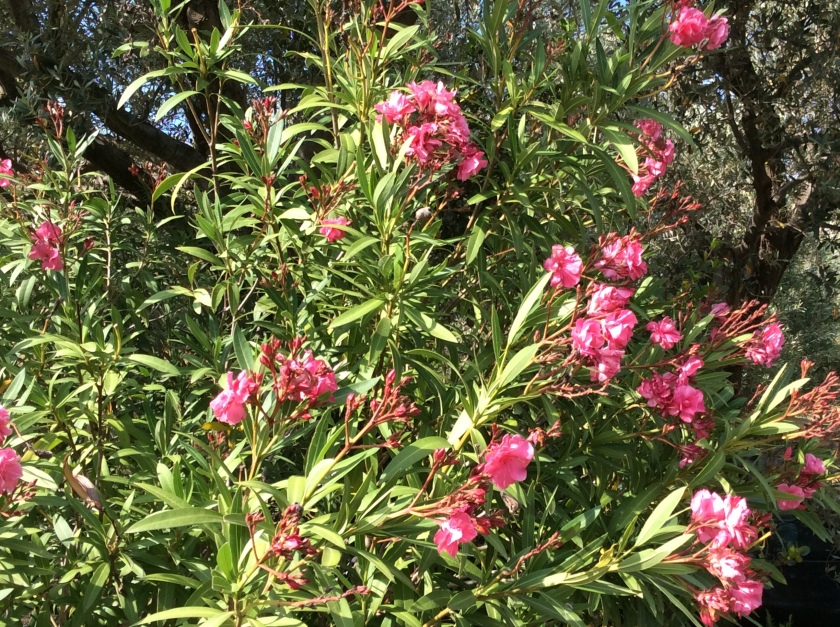
The oleanders are starting up,

image


image


image


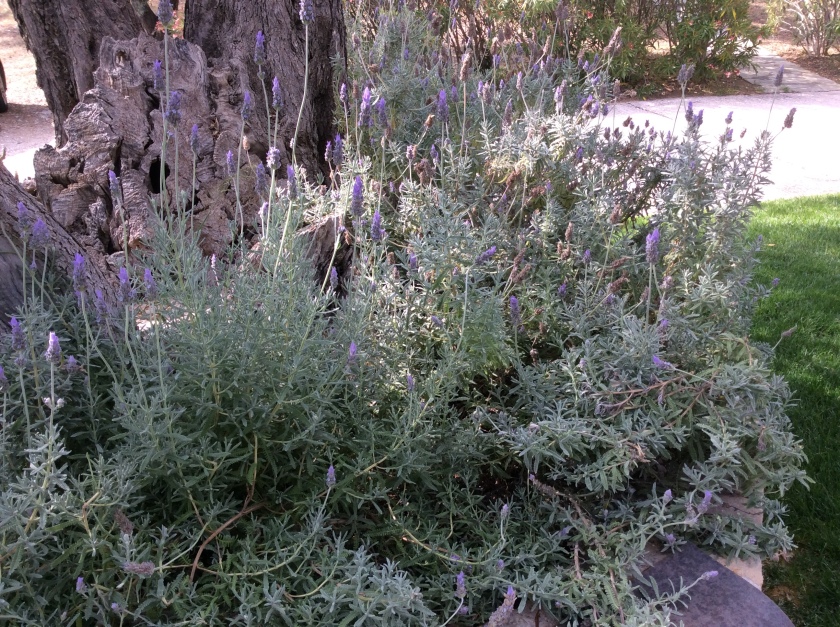
So is the lavender,

image


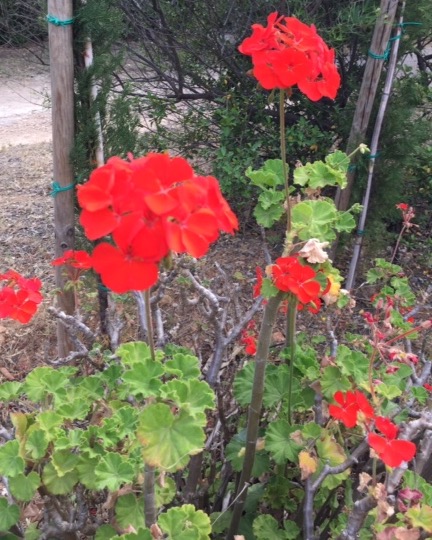
And the geraniums.

image


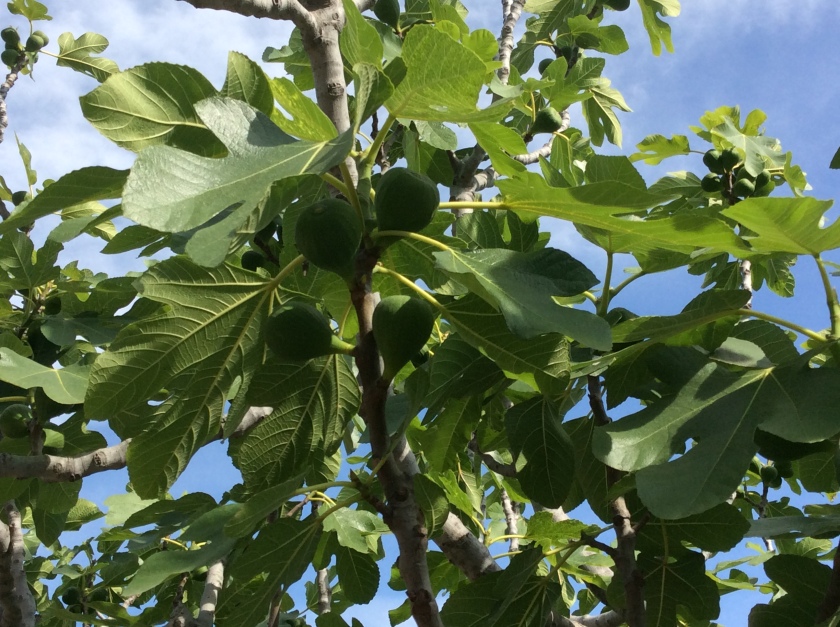
And it looks like we’ll be getting plenty of figs later on.

image


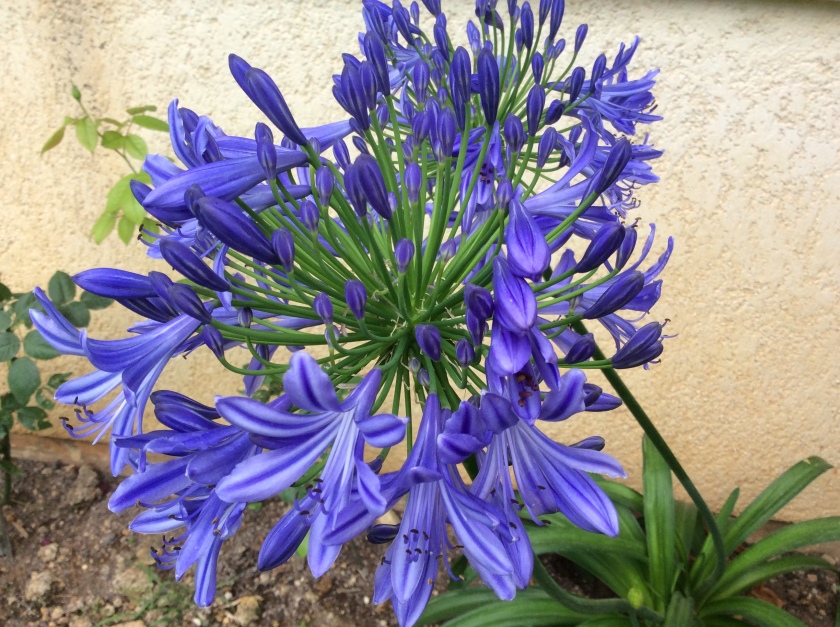
Does anyone know what this flower is called?

image


GUEST DOODLEWASH: Featured Artists At The Doodlewash Dinner Party!

Head over to Charlie’s DOODLEWASH blog, to see the fantastic food a whole bunch of artists made for his dinner party! There’s something for all tastes.

Charlie O'Shields's avatarDoodlewash®

#DoodlewashDinner title card by Jacob at Jaywalks Alphabet Soup Title Graphic Created by Jacob at Jaywalks

This month’s adventure was a truly fabulous event, as artists from around the globe came together for a very unique gathering called a #DoodlewashDinner Party! Over 60 talented doodlewashers showed up with their culinary creations! And we were even visited by some intriguing surprise guests (thanks Jill!) and treated to a fabulous food painting video (thanks Bogdan!).

Check out the Featured Culinary Artists’ images below and click any one to scroll through the gallery of artists. If you see someone new at the party you’d love to keep up with, just click the follow link under their art! It was truly an amazing gathering, so thanks to everyone who participated! (I was only able to select a single dish per artist for this gallery, but you’ll find many more on Instagram and on WordPress!) If I missed your hashtag and failed to include you in the gallery below, or misspelled your name…

View original post 35 more words

May Q&A – the Entrepreneur

Feeling hungry? At the office and in need of coffee? Nothing in the fridge? Bored of cooking on the weekend?
Paminos Kyrkinis and his brother Constantinos have addressed these questions by creating e-FOOD.gr, an online delivery service that lets you order food (in five languages!) in 1’ without extra charge. You can select your meal from 4300 restaurants and shops in 50 Greek cities.

Tell us a little about yourself

Born and raised in Greece, studied Economics and Business at the University of Cambridge and the University of Warwick. Entrepreneurial by nature, I started my first online business at 24 and have since co-founded five different companies, e-FOOD being the largest and most successful.


image


What were the major difficulties you’ve faced in the last five years?

Over the past five years I’ve been actively involved with e-FOOD as founder – together with my brother – and CEO. We have been lucky enough to have experienced significant growth so managing a team that has grown from 3 to 120 people in 4 years has been quite a challenge!

Did anyone in particular inspire you or help you?

Immanuel Kant who said: Strive for the impossible to achieve the best of what is possible.

What are your hopes/plans for the future?

At the moment I am 100% focused on e-FOOD and my goal is to change the way people order delivery in Greece. We want to offer the best possible experience to our users and make this the fastest and easiest way to order your favorite food. Online delivery in Greece is growing fast and there is a lot of potential for further growth.


image


What are your hopes for Greece? What changes do you hope to see happen?

I want the positive forces in Greece that are being overshadowed by mediocrity to prevail. Greeks excel all over the world. There is no reason not to do this at home. e-FOOD is now part of one of the largest food delivery companies in the world with presence in 38 countries and I am proud to say that we are one of the best performers in the group and we started right here in Greece!

Have you considered leaving? If so, where would you like to go, and why?

I have never felt compelled to leave Greece but in my industry San Francisco would be the obvious choice and it is something that I have of course considered and may reconsider in the future. It was after all an informed decision of mine to return to Greece in 2011. There are opportunities in Greece and e-FOOD is proof of that. In 4 years we have created a company with 120 employees and this started in my living room. e-FOOD is now part of Rocket Internet and Delivery Hero – Rocket Internet is one of the largest internet groups in the world – and all this started in Greece in 2012 during the peak of the crisis. There are other companies in the Greek starutup industry that have enjoyed similar success or are on track to achieve it.

If you have already decided to leave what would make you stay?

I have not decided to leave but if I had I would keep in mind that the grass always seems greener on the other side. We have to be the change we want to see in Greece.

Are you actively doing anything to help with the situation? Is there something you would like to do?

I feel I have made a small contribution through e-FOOD and the 120 jobs (and counting) created. I hope to do more. Meanwhile, our cooperation with Boroume* (www.boroume.gr) and other non-profit organizations have allowed us to help our fellow citizens by providing free meals.


image


How do you see Greece in 5, 10 years?

At the moment there is a trend for certain situations to persist although they have already been overtaken by reality. I believe we will experience the total collapse of mediocrity, and through this a new Greece will emerge.

How do you cope with obstacles and frustrations in your everyday life?

I don’t believe that obstacles and frustrations are unique to Greece. I am aware of tons of obstacles and frustrations even in the most sophisticated countries. Problem solving is part of everyone’s personal and business life so I am certain one will find ways to cope no matter how unnecessary or annoying these obstacles and frustrations may be.

What are the positive sides of living in Greece? Have you had any good experiences lately?

Its people. From time to time we might encounter someone who doesn’t stop at a crossing to let pedestrians pass, or give their place in line to a pregnant woman or their seat to an elderly person on the bus. But these people exist everywhere. I’ve found that people’s honesty, kindness and gratitude as well as the directness of human relations in Greece are unequalled, and I’ve lived abroad for years!


*BOROUME is a non-profit organization that helps combat food wastage.

Day trip to Mycenae

In the Iliad, Homer described Mycenae as ‘a city rich in gold.’ It was the legendary home of King Agamemnon, leader of the Greeks who went to Troy to fight the Trojan War. The Greeks of classical antiquity idealized the Mycenaean period as a glorious period of heroes, closeness of the gods and material wealth, as described in the Trojan Epic cycle.
In 1876, amateur archaeologist Heinrich Schliemann set out to prove the historical accuracy of the Iliad by identifying the places described by Homer. Using the text of Pausanias, the second-century A.D. traveller, as his guide, he excavated the site at Mycenae, discovering the deep shaft graves where bodies were buried dressed in lavishly decorated shrouds adorned with gold items and diadems and with their faces covered by masks of gold or electrum (such as the Mask of Agamemnon, below).

Copy of the mask of Agamemenon


However, the very first excavations at Mycenae were carried out in 1841 by Greek archaeologist Kyriakos Pittakis, who found and restored the impressive Lion Gate, at the entrance to the acropolis.


The gate of lions
The gate of lions


image

The Minoan civilization (see post, here) was brought to an abrupt end in c. 1500 BC. Historians surmise the palaces were destroyed by fire, earthquake and a tsunami caused by the eruption of the Santorini volcano.

Meanwhile, another brilliant civilization was emerging, that of the Mycenaeans, who set up a number of centers of power in southern mainland Greece. They were a warrior elite society, as is witnessed by their palaces which, contrary to those of the Minoans, featured impressive fortifications.

The Myceneans were much influenced by Minoan Crete, and, after its decline, took control of Crete including Knossos, and colonized several other Aegean islands, reaching as far as Rhodes.

The principal Mycenaean centers were well fortified and usually situated on an elevated terrain. One of their most impressive cities, just 90km from Athens, was Mycenae, or Mykines, as we call it. Built on a tall hill overlooking a fertile plain and the gulf of Argolis and beneath towering peaks, it is the reminder of their glorious civilization.


The view from the acropolis
The ruined city of Mycenae

On a recent day trip, we enjoyed the amazing view of the plain stretching beneath the city ruins to the sea. The famous fortifications, know as Cyclopean walls, are built of large, unworked boulders more than 8 m (26 ft) thick and weighing several metric tonnes. They were roughly fitted together without the use of mortar or clay to bind them, though smaller hunks of limestone fill the interstices.


image


Following the Shaft Grave era, a new and more imposing type of elite burial emerged, resulting in a characteristic feature of the Mycenaean civilization, the Tholos: large circular burial chambers with high vaulted roofs and a straight entry passage lined with stone.

The most impressive of these is the Treasure of Atreas, which might have been the tomb of Agamemnon, or his father, Atreas.

image
Entrance to the tomb. Above is the ‘relieving triangle’. The stone beneath is the largest and most heavy found on the site.


Above the entrance we can see one of Mycenaens’ architectural innovations,the relieving triangle. The Mycenaean Greeks were pioneers in the field of engineering, launching large-scale projects unmatched in Europe until the Roman period, such as fortifications, bridges, culverts, aqueducts, dams and roads suitable for wheeled traffic.

Inside the tomb
Inside the tomb

image


In an amusing footnote, today the Treassure of Atreas is being squatted by a swarm of bees, which obviously appreciate ancient culture as well as the tomb’s resemblance to a giant beehive. These bees are apparently a rare species, so the authorities are unwilling to spray them and are trying to find a way to eject them humanely. The bees are also different in that they don’t sting; when we were there, they were buzzing happily about and did not interfere with our visit in the least. However, it was still April. Apparently in the height of the season, when thousands of tourists are visiting, their numbers are such that most people are scared to enter the tomb. Also, the lure of honey attracts  numerous birds and bats, whose droppings result in a filthy floor and an unbearable smell. It will be interesting to see what solution will be found to this problem.

The on-site museum is small but full of treasures.

The octopus was supposed to looked after the souls of the drowned
The octopus was supposed to care for the souls of the drowned
Primitive idols
Anthropomorphic ceramic figurines
This one almost looks like an alien!


On the way back to Athens, we stopped at the Ancient Theater of Argos, nestled in the hill above the city. The theater was built in the Hellenistic period (third century BC) and had a seating capacity of 20,000. It was remodeled during the Roman period (second century AD) and even today, a number of cultural events are held there.

image


image