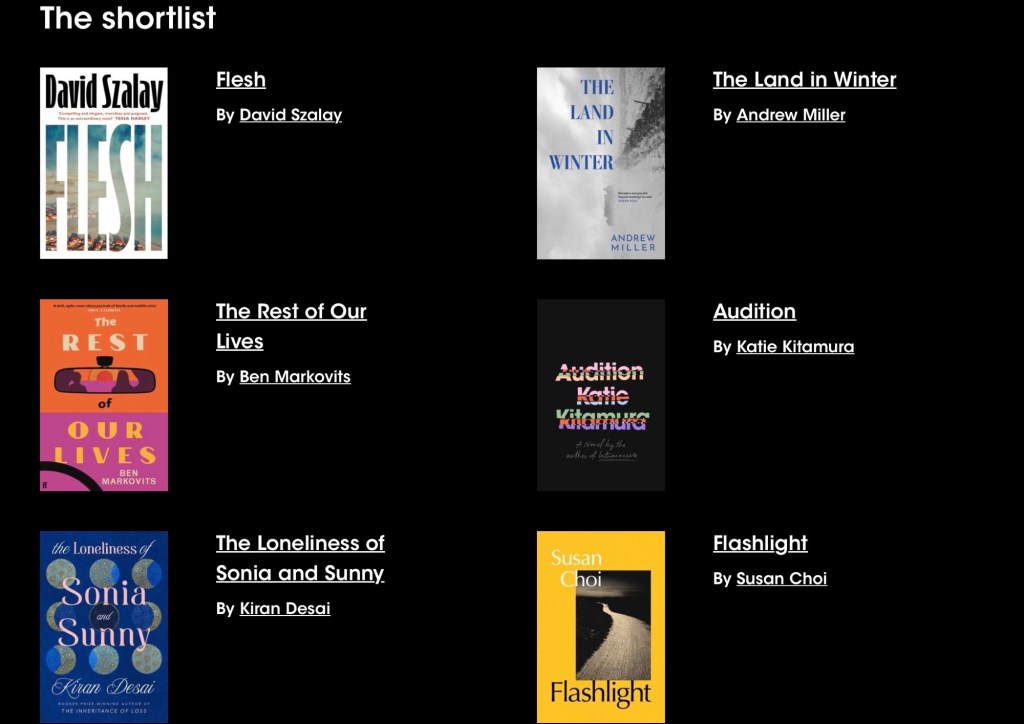
The Booker Prize season has come around again, and the shortlist has been published. Let me say at once that I have not read any of these books, but last year the list contained some pretty good stuff, so I am hopeful of a repeat, especially since Roddy Doyle is Chair of the 2025 judges and he knows a good story when he sees one.
Photos from the Booker Prize site
I don’t suppose I will read them all, and I will look at some on the long list as well, but one I am looking forward to tackling is 700-page The Loneliness of Sonya and Sunny, by Kiran Desai (who has won it before in 2006 with The Inheritance of Loss.) It reminds me of another doorstop, A suitable Boy by Vikram Seth, which I devoured at the time. Many years in the making, it is an epic tale of love and life.
Flesh, by David Slazay, is (I quote the Booker Prize site): “A propulsive, hypnotic novel about a man who is unravelled by a series of events beyond his grasp.”
The Land in Winter, by Andrew Miller, is about two couples, a doctor, a farmer and their respective wives, whose lives are upended in the middle of a harsh winter landscape.
The Rest of Our Lives, by Ben Markovits, is about a middle aged academic who goes on a road trip after his wife has an affair, trying to escape his problems.
The last three all seem to be about lives unravelling. Hmm…it depends how each writer deals with the subject.
Audition, by Katie Kitamura, is about the relationship between two very different people: an attractive actress and a man young enough to be her son. Intriguing.
Flashlight, by Susan Choi, is a saga about a father’s mysterious disappearance and the reverberations of this event on his family.
All six authors are deep into their literary careers, with a number of books to their name and, besides previous winner Kiran Desai, Andrew Miller and David Szalay have been shortlisted before.
If (or when) any of you read any of these books, I will be glad of an opinion. In any case, a pile of new books is always enticing, even if at the moment it is not on my shelf but only on my screen.
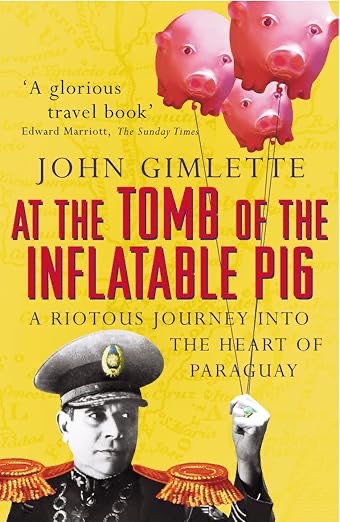
“Reading the book is like watching a Komodo dragon eat a tethered goat. Paraguay, as Gimlette portrays it, is . . . completely bizarre. . . . Conquistadores and Nazis, whores and cannibals, all of them rather awful, all of them splendidly rendered. . . . Graham Greene would have approved.” –National Geographic Adventure
I seem to be on a roll of recommending favourite books. This one is in a category of its own, a crazed travelogue on Paraguay, one of the most exotic, captivating and eccentric countries in the world, according to writer John Gimlette. Even the title of the book is insane.
I have never been to Paraguay, nor are there any Paraguayans amongst my South American friends, so I cannot pretend to have a personal opinion on the veracity of his observations. I can only say the book enchanted me, with its descriptions of hellish jungles, Germanic villages, missionaries, utopian experiments and coups. Apparently the Paraguayans venerate Princess Diana and, if they deem it necessary, will call in Scotland Yard.
Here’s an excerpt from Chapter 1:
I had a room on the second floor. It was a vast, mildewed space that might once have been used for dancing classes. It had floor-to-ceiling louvred shutters that were so seized up with drifts of green paint that they’d become petrified in the open position, admitting scalding blasts of dust and roasted corn from the street below. I shared this great green tropical ballroom with two others, for whom it was, in its own way, heavenly. The first was an Englishman called Kevin Pluck who’d come to South America to give some long and careful thought to the question of whether or not he should ever get a job. He had an opening in the car factory at Luton, but the delicious, orange-blossomed lassitude that overwhelmed Asunción ensured that he wasn’t going to hurry the decision. He’d at least made up his mind to return to Luton with a suntan and so he spent a lot of time and effort trying to go brown. For some reason his skin remained determinedly cheesy.
I have given this book to various people as a gift, but I never followed up on whether they had read it and liked it, as I don’t believe in gifts with strings attached. I do however, consider it a fine aid to armchair travel. You will become lost in a world so exotic that it will make you feel like Alice in Wonderland.
In yet another ineffectual effort to put some order into my bookshelf I came upon one of my favourite books of all time, The Worst Journey in the World, by Apsley Cherry-Garrard (1886 -1959).
This is an account of Robert Falcon Scott’s ill-fated expedition to discover the South Pole in 1911, written by the youngest member of the team, who was just 24 at the time. A memoir, in a completely immersive style, by someone who had never written a book before, nor wrote another in his entire life.
I came upon the book by chance many years ago, browsing in the wonderful Heffers bookshop in Cambridge. Just the cover of the hardback, the shape and heft and compact size of the wonderful Picador Travel Classics edition and I was sold. I bought the thing as an object, but then I started reading it and became hooked on the subject and, most unlikely for me, Polar exploration in general.
The old-fashioned, unreal feel of the whole organisation, the details and lists of supplies and packing, the endless debates of dogs versus ponies versus men hauling the sleds. Why would anyone want to put themselves through such an ordeal, but in fact, many did. They vied to get on the expedition crew. They felt it was heroic and, being British, even more heroic to combine the race to the South Pole with scientific projects such as geologising, which meant carrying about bags of rock samples, as well as going on a winter trip in the middle of the endless dark of the Antarctic winter (the Worst Journey in the title) in order to collect Emperor penguin eggs from their impossible to reach breeding grounds. Cherry was one of three men who went on that little pleasure trip, and it is a miracle how they survived, especially since their tent was blown away in a storm one night.
Apsley Cherry-Garrard with frostbitten nose
In fact it was a miracle any of them survived, because they had miscalculated the supplies and equipment needed. Scott and his team of four all died, from scurvy and cold and hunger, having faced the most bitter of disappointments. They had lost the race—finally arriving at their destination to find the Norwegian flag already planted there. Because of course, Roald Amundsen had no interest in penguins or rocks. He and his team were highly skilled on skis and used dogs to pull the sleds and got there in a ruthlessly efficient manner, five weeks before Scott. They also had a better diet of fresh meat and so did not suffer from scurvy.
Both Amundsen and, more importantly, Scott’s wife, learned of his death more than a year later, which in our era of instant communications, seems weirdly shocking.
Photo from Wikipedia
There have been many books written on polar exploration, about the exploits of Amundsen and Shackleton and others. I have read quite a few and watched films, especially the 1985 seven-part series called The last place on Earth. I find it all quite fascinating, more so since it is something I would never dream of attempting myself. I think it amazing that still, especially now that there is nothing left to ‘discover’, there are people still doing it—such as Sir Rannulph Fiennes, who, amongst other expeditions, was the first person to visit both the North Pole and the South Pole by surface means and the first to completely cross Antartica on foot.
Be that as it may, the book is engrossing and will make you travel into a different world. What is particularly interesting is the minutiae of daily life and the relationships between the men facing such difficult conditions. Highly recommended.
My days, darkened by the quasi-permanent absence of sunlight, were unexpectedly lit up by the discovery I had somehow missed reading a couple of Penelope Fitzgerald’s books, although she has long been one of my favourite writers.
Penelope Fitzgerald died in 2000 aged 83. In 2008 The Times listed her among “the 50 greatest British writers since 1945”.The Observer in 2012 placed her final novel, The Blue Flower, among “the ten best historical novels”, and A.S. Byatt called her, “Jane Austen’s nearest heir for precision and invention.”
Fitzgerald’s books are short, but within a few pages her prodigious powers of imagination create whole worlds. In The Beginning of Spring, she manages to describe the minutiae of life in pre-Revolutionary Russia as if she had been born there. But the research is worn so lightly it is imperceptible.
The Blue Flower, about the poet Novallis, has always been one of my favourite books. Based on the life of Friedrich von Hardenberg (1772–1801) it describes the time when, aged 22, before he became famous under the name Novallis, he became mystically attracted to the 12-year-old Sophie Von Kühn, an unlikely choice for an intellectual of noble birth given Sophie’s age and lack of education and culture, as well as her physical plainness and negligible material prospects. The couple became engaged a year later but never married as Sophie died of consumption a few days after her 15th birthday. The book is sad, subtle and romantic.
One of the books I had not read yet is The Golden Child, which is actually a murder mystery (she did not include it in her novels) with such a biting sense of humour that I found myself laughing out loud. The book is set in a museum, where “Even in total silence one could sense the ferocious efforts of the highly cultured staff trying to ascend the narrow ladder of promotion.” A perfect phrase if there ever was one. Or the description of the characters, even their names: “Hawthorne-Mannering, the Keeper of Funerary Art, was an exceedingly thin, well-dressed, disquieting person, pale, with movements full of graceful suffering, like the mermaid who was doomed to walk upon knives. Born related, or nearly related, to all the great families of England (who wondered why, if he was so keen on art, he didn’t take up a sensible job at Sotheby’s), and seconded to the Museum from the Courtauld, he was deeply pained by almost everything he saw about him.”
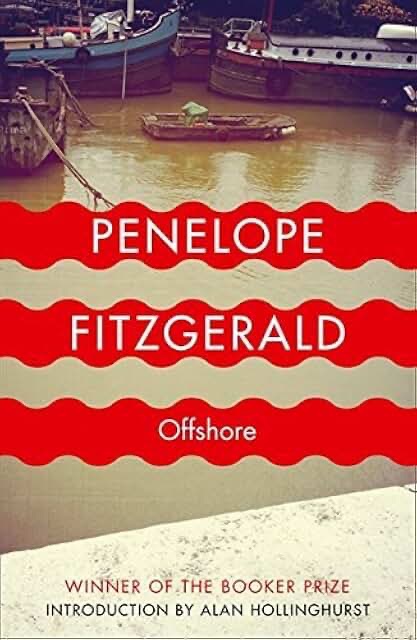
Her third novel, Offshore, won the Booker Prize in 1979. Based on her own years of living on an old sailing barge moored at Battersea Reach, it is about the mixed emotions of houseboat dwellers who live between the water and the land, fully belonging to neither.
Although she launched her literary career late, at the age of 58, Fitzgerald wrote nine novels, plus several biographies, short stories and articles. She had a hard life because due to her husband’s alcoholism she faced poverty, living for years in a houseboat which sank twice, and in public housing. She taught until the age of 70. Would she have been as good if she’d had an easy life? I think probably yes, because she was born in a scholarly family: she was the daughter of Edmund Knox, later editor of Punch, and Christina, daughter of Edward Hicks, Bishop of Lincoln and one of the first female students at Oxford. She was a niece of the theologian and crime writer Ronald Kox, the cryptographer Dillwyn Knox, the Bible scholarWilfred Knox, and the novelist and biographer Winifred Peck. She obviously also had great inherent talent.
She remains a unique, luminous voice in the literary firmament. I highly recommend her to anyone wanting to immerse themselves in her world.
Can one have a horrible life, punctuated by difficulties and tragedies and ending in extermination at Auschwitz, yet leave behind work that, despite its disturbing themes, is poignant, breathtaking and uplifting in its luminosity and colour?
This is the case of Charlotte Salomon, the only Jewish artist who died in the Holocaust to leave behind such a large body of work. It consists of 769 works painted between 1941 and 1943—a mere two years—while she was hiding from the Nazis in the South of France. In October of that year, 5-months-pregnant Salomon was captured and deported to Auschwitz where she was immediately killed.
Born to a prosperous and well-assimilated Jewish family in Berlin, Charlotte was 16 when the Nazis came to power. By 1938 it became too dangerous for her to continue her studies, so she left the art school she was attending, and after Kristallnacht she was sent to live with her grandparents in Nice; her father had been interned and, when her stepmother succeeded in freeing him, they left for Amsterdam. Her mother, suffering from depression, had committed suicide when she was eight.
After several attempts, her grandmother also succeeded in killing herself and Charlotte remained with her grandfather, who it appears was abusive. To escape him, she went to Saint-Jean-Cap-Ferrat where—in order to recover her mental sanity—she started painting; stating that she was driven by the question, “whether to take her own life or undertake something wildly unusual”.
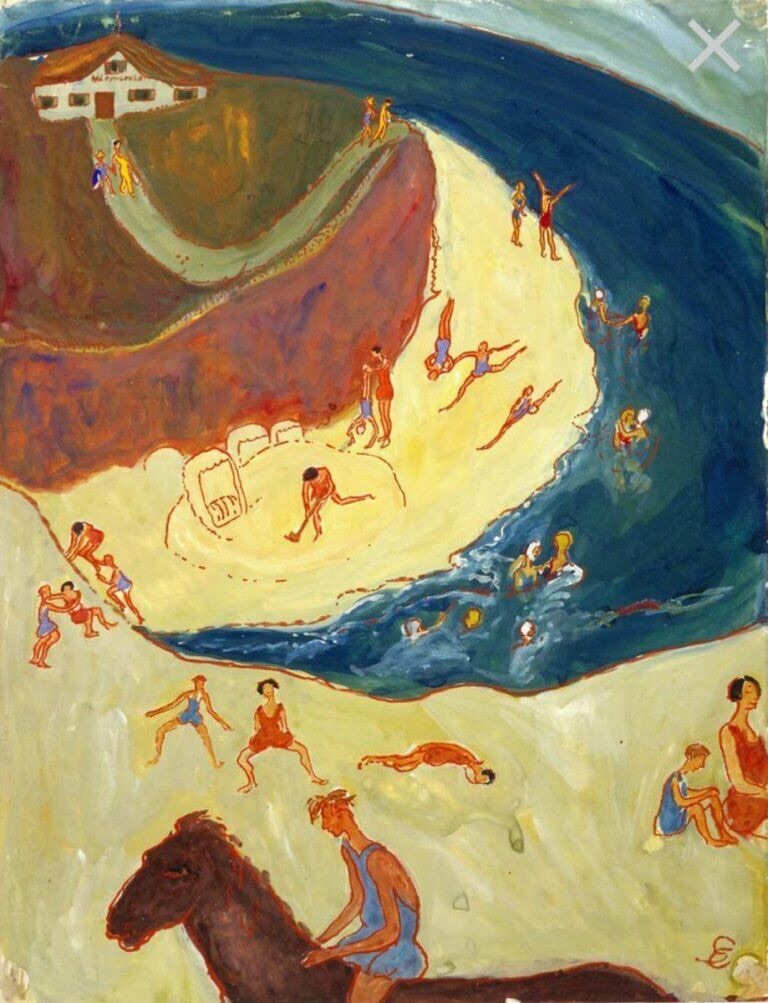
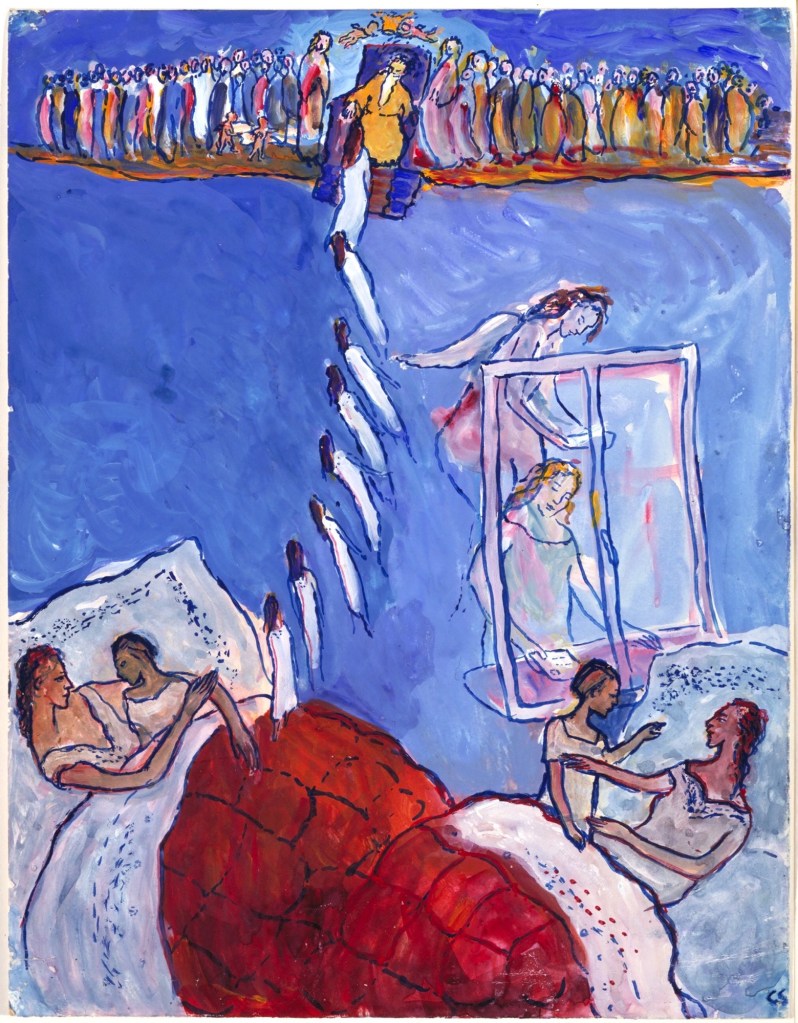
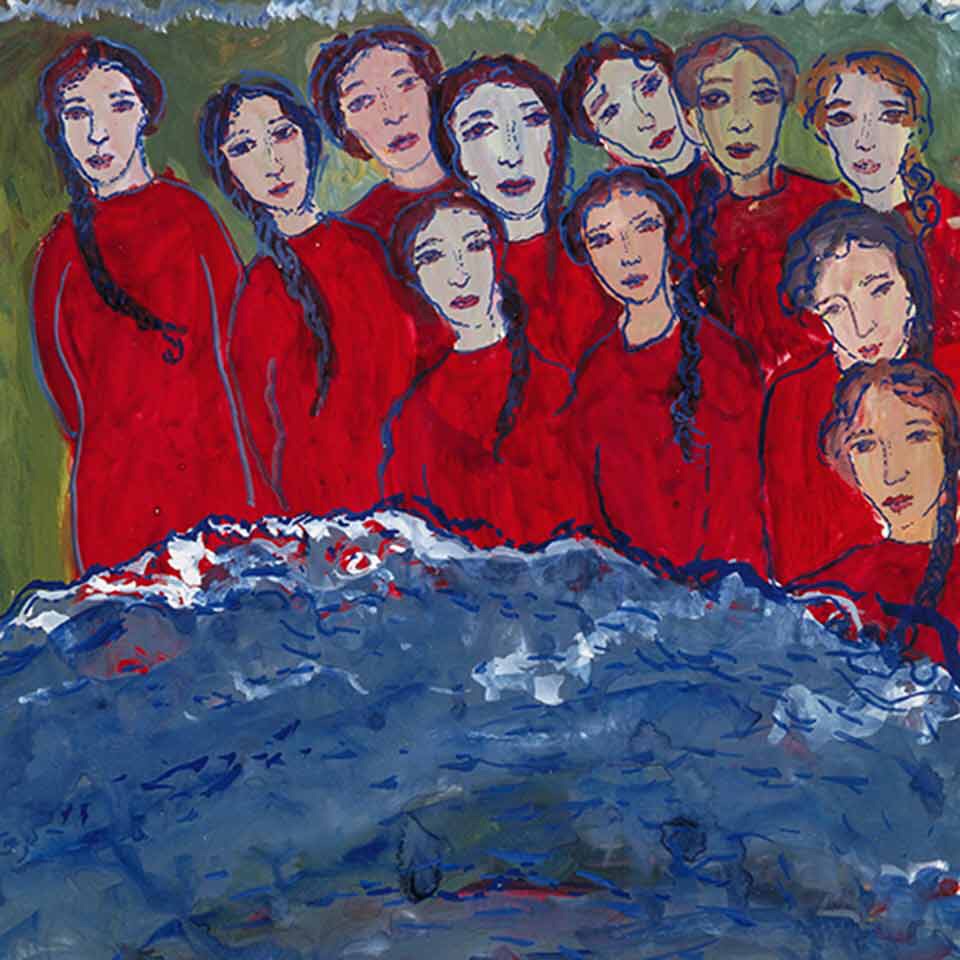
Painting obsessively, in less than two years she produced more than 1.300 gouaches, amongst which she chose the 769 which she numbered and edited, adding text, captions and transparent overlays, to make a kind of autobiography outlining the main events of her life—speaking of herself in the third person, altering all the names and adding elements of imagination.
In 1942 she was obliged, due to her residence permit, to join her grandfather in Nice. Shockingly, shortly after, she poisoned him with a Veronal omelette, then drew him as he lay dead (the drawing exists). She made a 35-page confession which she sent to a former lover who, however, never received it; it remained a secret until much later.
In 1943, as the Nazis closed in, she packed up her paintings and gave them to a local doctor with instructions to forward them to Otillie Moore, a wealthy American who was her protector and sponsor. At war’s end, the package found its way to her remaining family.
In 1943, Charlotte had married Alaxander Nagler, another German Jew refugee, with whom she had been confined in Otillie Moore’s house for a while. Soon after their marriage, they were both deported and murdered.
I find it beyond me to talk about her work, which is based on film-making techniques and is extremely layered and complex; and one must also follow the narrative, in its dream-like dimension. It is, in some ways, a precursor to the graphic novel as we know it today. Although Salomon has always been classed as a Holocaust artist, her work—save for very few drawings—is not about the Holocaust: it is about her childhood, her very disfunctional family, her life and her loves. In the final pages of her book, two sentences stand out. She writes, ‘And with dream-awakened eyes she saw all the beauty around her, saw the sea, felt the sun, and knew; she had to vanish for a while from the human plane and make every sacrifice in order to create her world anew out of the depths.’
I have seen her paintings live in a couple of exhibitions, and they are simply wonderful. I have a book published by the Royal Academy of Arts, with colour reproductions, which I highly recommend.
More information:
Charlotte is a biography by David Foekinos, which I have not read yet, but which has excellent reviews. This is the Amazon link to the English version (the original is French).
Also there is a very interesting article in the New Yorker with more information than I have given on both her life and her work, and great images. Link below:
The limerick packs laughs anatomical Into space that is quite economical. But the good ones I’ve seen So seldom are clean And the clean ones so seldom are comical.
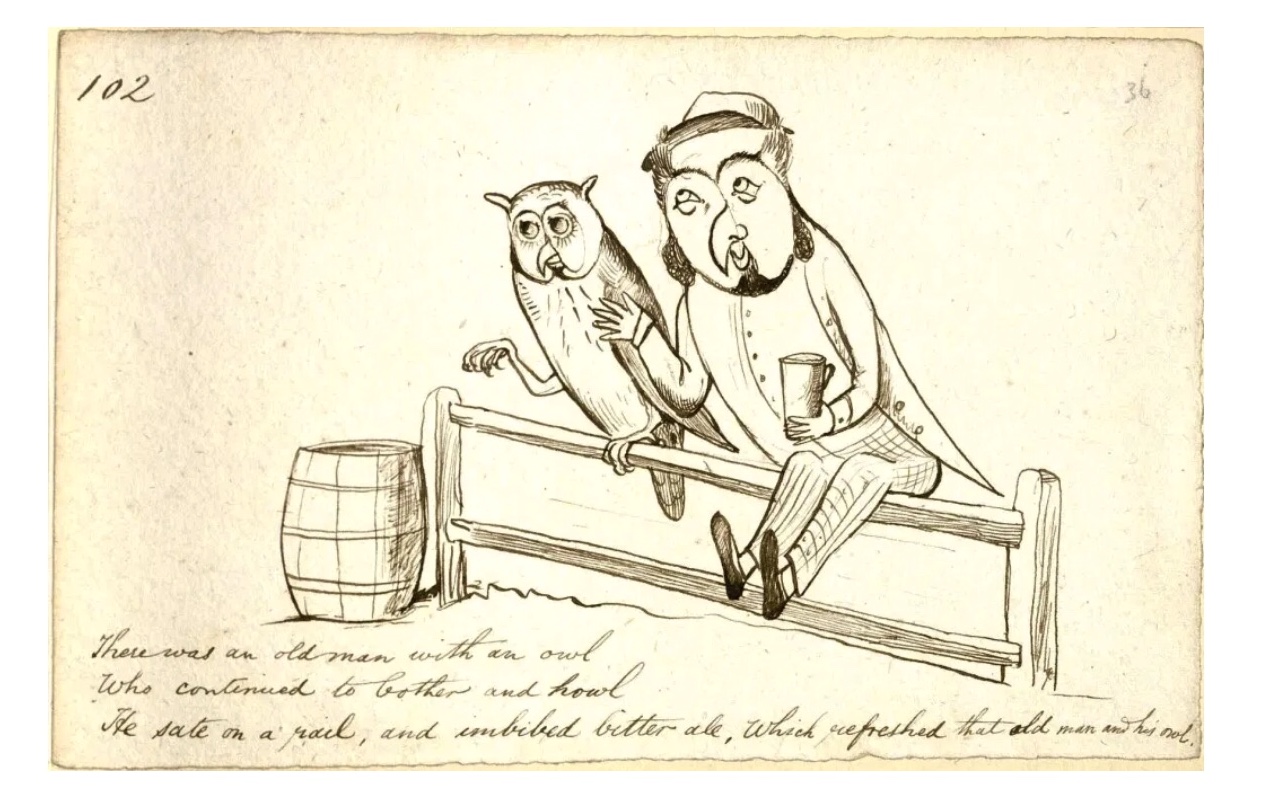
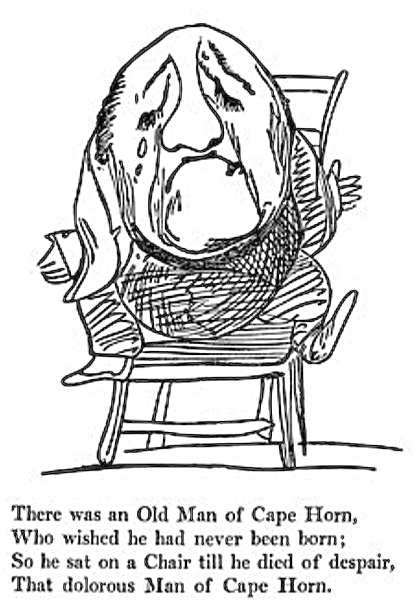
But limericks were not always bawdy. In fact the form was made popular in the 19th century by Edward Lear, a great believer in pure silliness. In 1846 he published ABook of Nonsense, which went through three editions and made limericks so popular that many people started using them to amuse, scandalise or satirise.
We used to have the Lear books and other collections of limericks, and as a child I read them so many times that I still remember my favorites. Here are some of them, interspersed with illustrations from the Lear books:
There was an old man from Blackeath Who sat on his set of false teeth Said he with a start, Oh lord, bless my heart I’ve bitten myself underneath!!
I sat next to the duchess at tea Distressed as a person could be Her rumblings abdominal We’re simply phenomenal And everyone thought it was me!
A feisty young girl from St. Paul Wore a newspaper dress to a ball The dress caught on fire And burnt her entire Front page, sporting section and all.
The wonderful artist Edward Gorey also liked witty and sometimes unsettling verse, and joined the party with gusto:
He illustrated the verse with his detailed ink drawings
British wordplay and recreational mathematics expert Leigh Mercer (1893–1977) even devised the following mathematical limerick:
This is read as follows:
A dozen, a gross, and a score Plus three times the square root of four Divided by seven Plus five times eleven Is nine squared and not a bit more
Quite clever, don’t you think?
Not to be outdone, I’ve produced a few limericks of my own over the years, some of which you might have seen, since I made illustrations to go with them for Inktober 2019. (Posted Here )
And so, dear readers, hoping I have sufficiently inspired you by now, I would like to urge you to send me your own efforts. We’re not talking about a competition here, just a fun thing to do. No prizes to be had, but if I get enough, I will do a post on them and make a few illustrations, too! So come on, people, put your humorous thinking caps on!
There are so many hours one can spend on a screen, and now that we’re facing another few months of restricted outings, listening to podcasts is a very pleasant way of getting immersed in different worlds. I’m an obsessive bookworm, but it’s nice to have something to listen to while cutting up veggies or ironing. A human voice: it’s almost like company, when you’re alone; and it’s different to music.
I’ve listened to a lot of audiobooks, and that’s lovely as well, especially when read by someone with a voice that suits the subject; but podcasts are short, and you don’t constantly have to remember who the characters are.
There are millions out there, of course, but here’s a list of some I recommend:
For crime aficionados, whether writers or readers, Listening to the Dead podcast features crime writer Lynda La Plante and CSI Cass Sutherland. They discuss, in fascinating detail, how the police investigate various forensic aspects of crime-solving such as insect infestation, arson, DNA and fiber analysis. Amusing as well as informative.
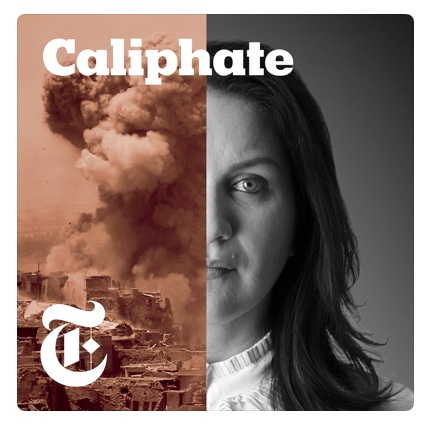
Caliphatefollows journalist Rukmini Callimachi, who covers terrorism for The New York Times, on her project to find out about ISIS. Listening to the podcast is quite harrowing, and there’s an added twist to the tale, because Canadian authorities have since arrested a man featured in the podcast and accused him of falsely claiming to have been an ISIS executioner.
For art lovers, the Great Women Artists podcast is presented by art historian and curator Katy Hessel. She interviews contemporary women artists such as Cecily Brown and Toyin Ojih Odutola, or curators and art historians who talk about famous artist like Alice Neel and Georgia O’Keefe. Some of the artists you might never have heard of, but it’s interesting finding out about them. Has excellent reviews.
The World Wide Tribe podcast
On TheWorldwide Tribe podcast, the incredible Jaz O’Hara (I’ve written about her before here) brings us stories from the refugee crisis. Jaz, whose mother is fostering no less than four refugee children from four different countries, wants to give people a voice, so that their stories come to light. Really moving and a great eye opener.
For fiction addicts, there’s nothing better than a good short story, and the New Yorker offers two podcasts: The Writer’s Voice, where writers read their own stories, and Fiction, in which writers pick a story from the magazine archives to read and discuss with the fiction editor, Deborah Treisman. There’s something for every taste, and the beauty of it is, if you find you hate one of the stories, just go on to the next one!
Here’s the thing. Podcast with Alec Baldwin
In Here’s the Thing, actor Alec Baldwin takes his audience into the lives of performers, policy makers and artists, by going into their offices, appartments and dressing rooms. He interviews a wide range of people. I loved the episode with Patti Smith.
Fake Heiress podcast
Finally, for a bit of fun, Fake Heiress is the story of Anna Delvey – the apparent millionaire heiress who grifted her way through New York’s upper echelons. Journalist Vicky Baker and playwright Chloe Moss collaborate on a podcast that mixes reporting about the millennial fraudster with a dramatisation of her swindle. In the reviews, people complained that the actors’ accents were terrible, but whatever. I don’t think we’re meant to take this seriously, although it is a true story; Netflix and HBO are supposedly preparing films about it. Anna Delvey, at the cost of a few years in jail, will probably end up richer than she ever imagined!
Well, this concludes my eclectic selection. Enjoy!










 He illustrated the verse with his detailed ink drawings