Now that summer stone fruit are over, it is time for the humble pear to take up the slack. OK, an apple a day keeps the doctor away, and here in Normandy we are spoilt for choice with crisp, sweet-tasting apples.
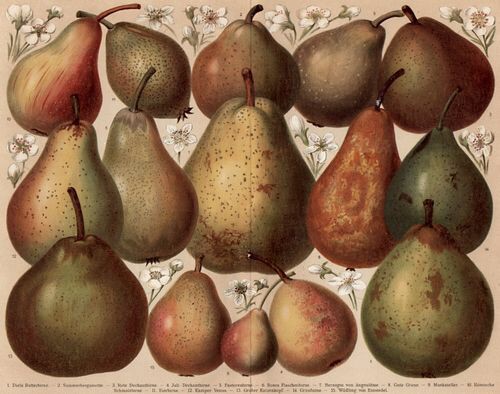
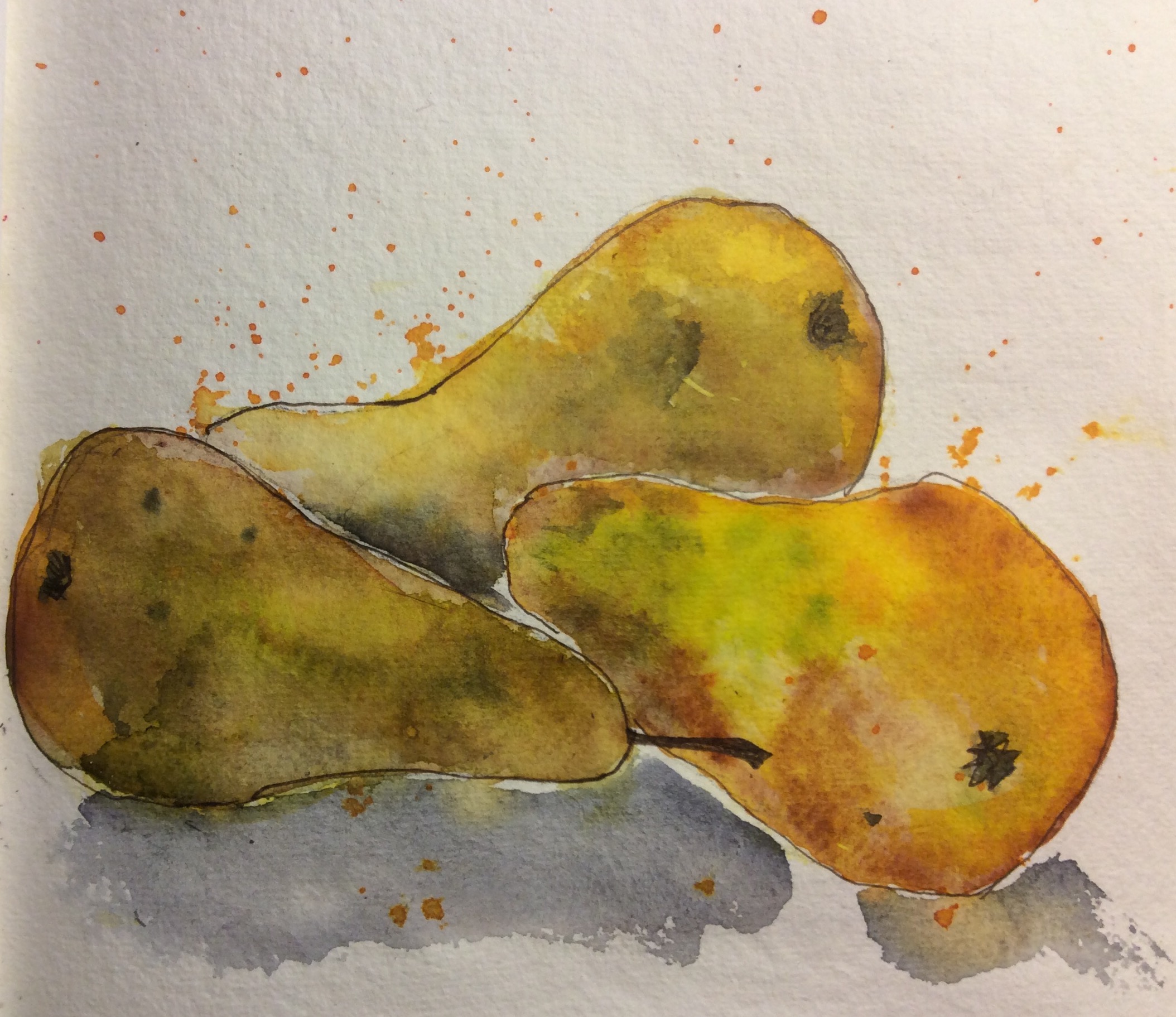
Oil on embossed hardback book cover
The pear, however, must not be disregarded, although it is a bit of a bother to get it right—one minute they are stone hard, the next nearly too soft. One must always keep an eagle eye on them.
Pears are lovely eaten with some kind of blue cheese—Saint Agur, Fourme D’Ambert or Stilton—and walnuts. And the lot is good in a fresh green salad. Here in Normandy they make a refreshing pear cider, called poiré; but pears are great cooked, too. Poached in red wine or maple syrup, or baked with honey, vanilla and ginger.
I have discovered a wonderfully easy and deliciously homey recipe for pear cake, which I will herewith share with you.
CINNAMON PEAR CAKE 1 1/2 cup flour (I use a half-wholemeal flour but normal will do) 3/4 (scant) cup sugar 1 tsp. baking powder 1/4 tsp. salt 1 tsp. cinnamon 1 tsp. vanilla 1 egg 3/4 cup canola oil (I use half my Greek Olive oil) 2 pears or more, peeled and cut into chunks 2/3 cup walnuts (or pecans), chopped. Optional (mostly I don’t use them)
Easy one-bowl mixing. First mix the flour, sugar, BP, salt and cinnamon—add the vanilla and egg—mix in the oil—fold in the pears. The chunks needn’t be too small, and bits of pear should be poking out of the batter, otherwise add more. The batter will be very thick. Put in a greased tin and smooth as much as you can . I usually sprinkle some cane sugar on the top to give it some crunch. Bake in a pre-heated oven at 180 C for 45-55’ depending on your oven.
Some days ago I was happy to be invited to a picnic organised by a Paris art gallery, the Galerie Jocelyn Wolf, at a manor house in deepest Normandy. This was a very old building, renovated over the course of a few years by the gallery owner, Jocelyn, in order to provide a venue for artist residencies and a framework for exhibiting artworks, including outdoor sculptures.
After passing the Pont de Normandie, always a treat as driving over it is the next best thing to flying, I took a road winding through beautiful countryside and arrived literally in the middle of nowhere, where thankfully a small sign with PARKING on it gave a hint I was in the right place (to outward appearances, a rustic farm with various agricultural implements scattered around).
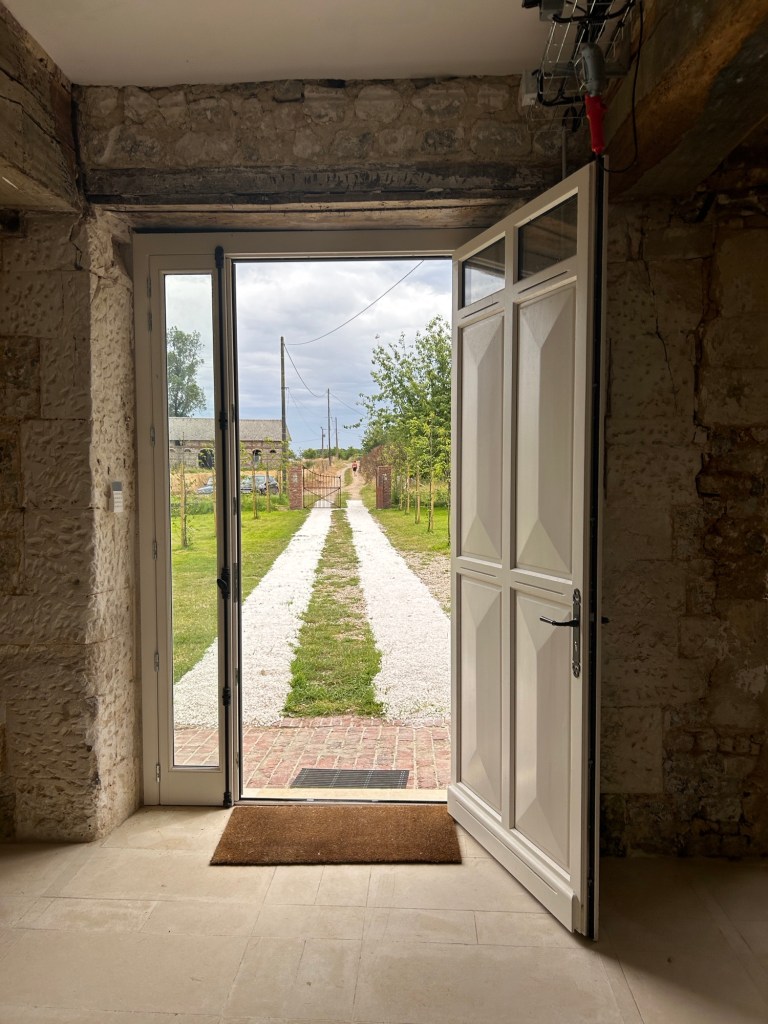
A gravel road led to the house itself, fronted by an orchard where I came upon a group of people sitting on the grass under the beautiful, ancient apple trees.
I joined them and someone thoughtfully provided me with a glass. Each group of three or four people shared a wicker basket of the most delicious local food: a loaf of fresh country bread, a variety of cured meats and cheeses, small radishes, a jar of rillettes, a brioche, punnets of berries—washed down with cool cider. Dogs and kids ran about.
Painting by Sosthene Baran
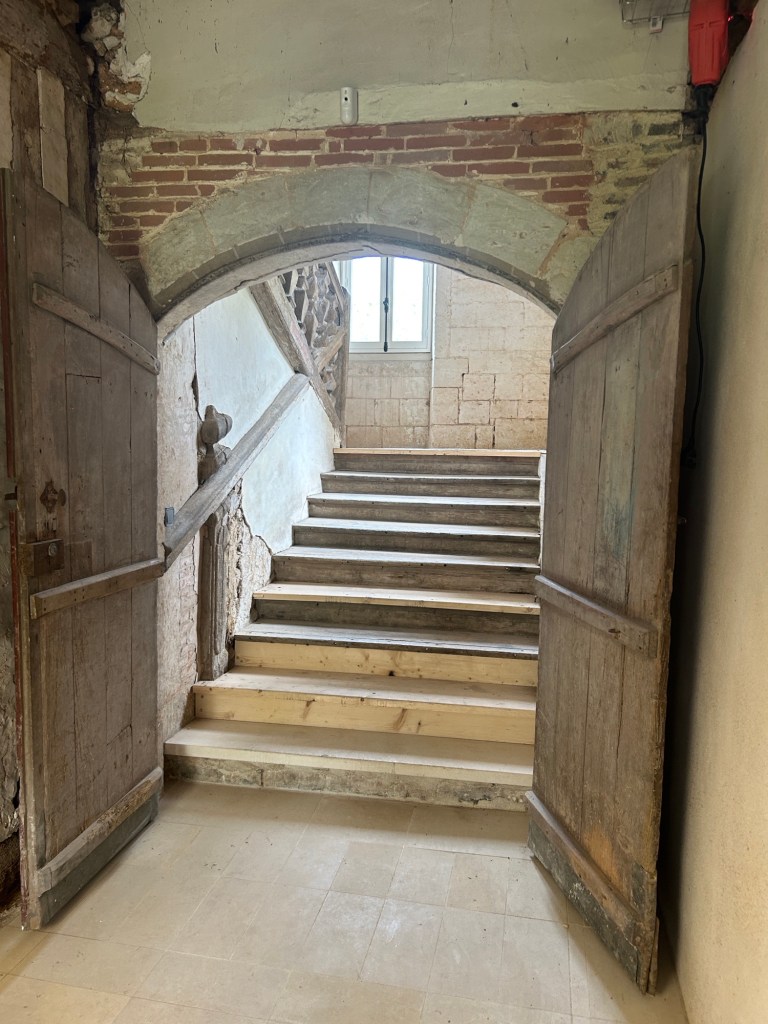
As we were finishing, a few drops of rain (it being Normandy, after all) made us gather up the remains and congregate for coffee in the kitchen, after which I went to explore the house. This has been left in a very primal state, with beautiful old doors renovated but unpainted, stone and brick exposed, and gallery-style electrics installed on wire tracks.
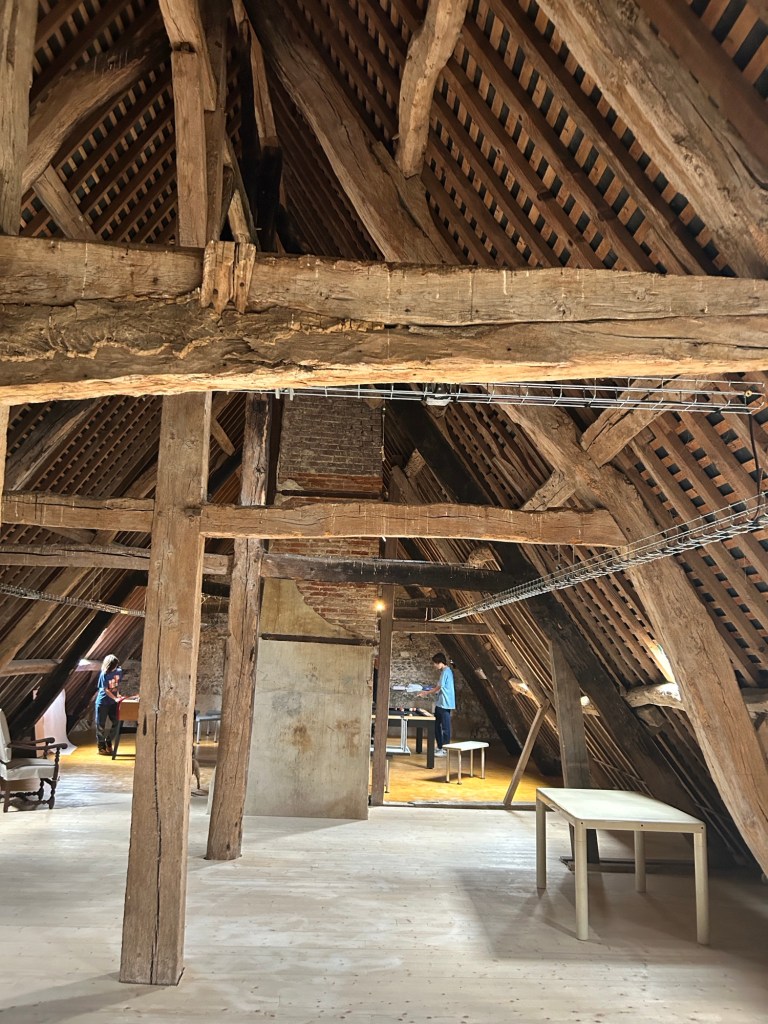
Windows on every side open on pristine, unspoilt countryside and there is a huge open space attic. The whole thing is in impeccable taste and a fitting framework for all sorts of art.
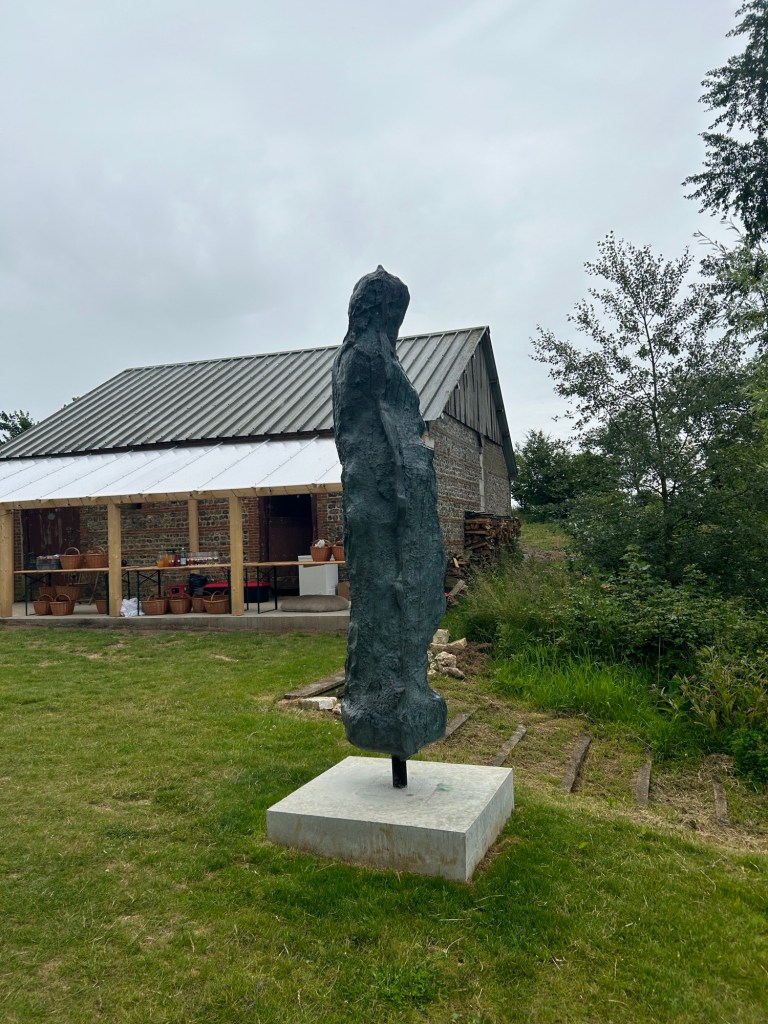
Sculptures by Christof Weber
The rain having stopped, I went for a tour of the garden to see the sculptures installed there, some actually in the pond behind the house.
Sculpture by Francisco Tropa
The afternoon concluded with a performance by two artists represented by the gallery, Prinz Gholam, who struck poses taken from famous sculptures while wearing a series of fascinating masks.
We have all heard of the benefits of a Mediterranean diet—but it amused me to find out how far back this goes. What did people in antiquity eat?
The Ancient Greeks were not big eaters like the Romans. In fact they mocked the Persians, who were very much into gastronomy, and considered them gluttons. They believed eating was for the delectation of the palate, not for overfilling the stomach.
They ate a great variety of foods, but in small quantities. Most frugal were the Spartans, who on a daily basis subsided on a cup of MelasZomos (black broth, made with pork, salt, vinegar and blood) and a piece of bread, and for special occasions ate boiled pork, accompanied by pies and wine.
For the rest breakfast, Akratisma, was very light, consisting of barley bread dipped in wine, with a few olives and figs—often accompanied by a drink called kykeon, made with boiled barley flavoured with mint or thyme.
Around midday they partook of the Ariston, another light meal usually of fish such as sardines, anchovies, mullet or eels; pulses such as lentils, peas, and broad beans; bread, eggs, fruits and nuts.
An occasional afternoon snack, the Hesperisma, consisted of bread, olives and dried fruit.
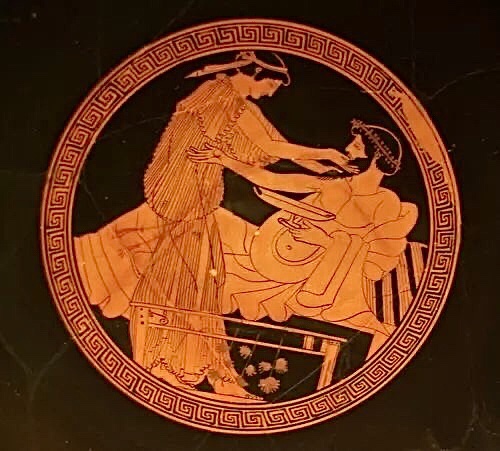
Deipnon, taken in the evening, was the most important meal of the day. That is when meat was eaten, especially by wealthy families; mostly pork and beef, as well as venison, and wild birds such as quail and thrush. This was the time, after dark, when wealthy families also held banquets, Symposia, served by their slaves. The women usually ate apart. The meal would be followed by deserts flavoured with honey, somewhat like a modern baklava.
Olive picking
Ancient Greeks loved all kinds of breads, and also ate snails, which were cooked in Crete since the reign of Minos. They grew vegetables in their gardens, and foraged for foods such as mushrooms, asparagus and nettles. Fruit played a large part in their diet, but they were limited to pomegranates, cherries, pears, apples, figs, plums, and mullberries—there were no bananas, peaches, citrus fruits or potatoes, which were imported later.
Kitchen shelves would be well stocked with spices and herbs: oregano, basil, mint, thyme, coriander, capers and sesame were all used to flavour dishes, together with sea salt and olive oil. Another flavouring was gáros, a sauce or condiment made out of fermented fish, a little like Worcestershire sauce. Food was quite light, since it was mostly baked, meat was roasted on spits, and deserts sweetened with honey—there was no sugar or cocoa. Milk and cheese were also consumed, as well as oxygala, a form of yogurt.
Wine was drunk mostly mixed with water, and was widely traded, like olive oil.
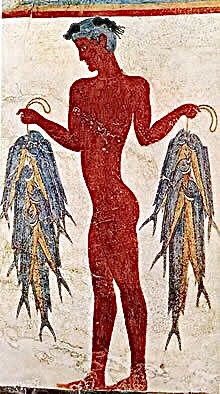
Fisherman with his catch. From a Minoan fresco.
While wealthy Greeks were able to afford elaborate banquets—the aforementioned Symposia—which boasted a wide variety of fine meats, the average person lived very frugally. However, their diet was still quite varied and based on fresh produce, and therefore healthy. As for the Symposia, some were the scenes of learned philosophical and literary discussions, while others were more like rowdy parties with hired performers and other forms of entertainment.
It seems the Mediterranean is now full of ‘alien’ fish, which decided to emigrate to better seas, and so swam there from the Indian Ocean via the Suez Canal.
They have thrived to the extent they are now threatening the eco-system, being both prolific breeders and aggressive towards native species; but they are already too numerous to eradicate. So, what is the next best solution? Why, eating them of course, and thus killing two birds (fish?) with one stone: hopefully equilibrium will be established, while at the same time we can complement our calamari with rabbitfish, trumpetfish and lionfish.
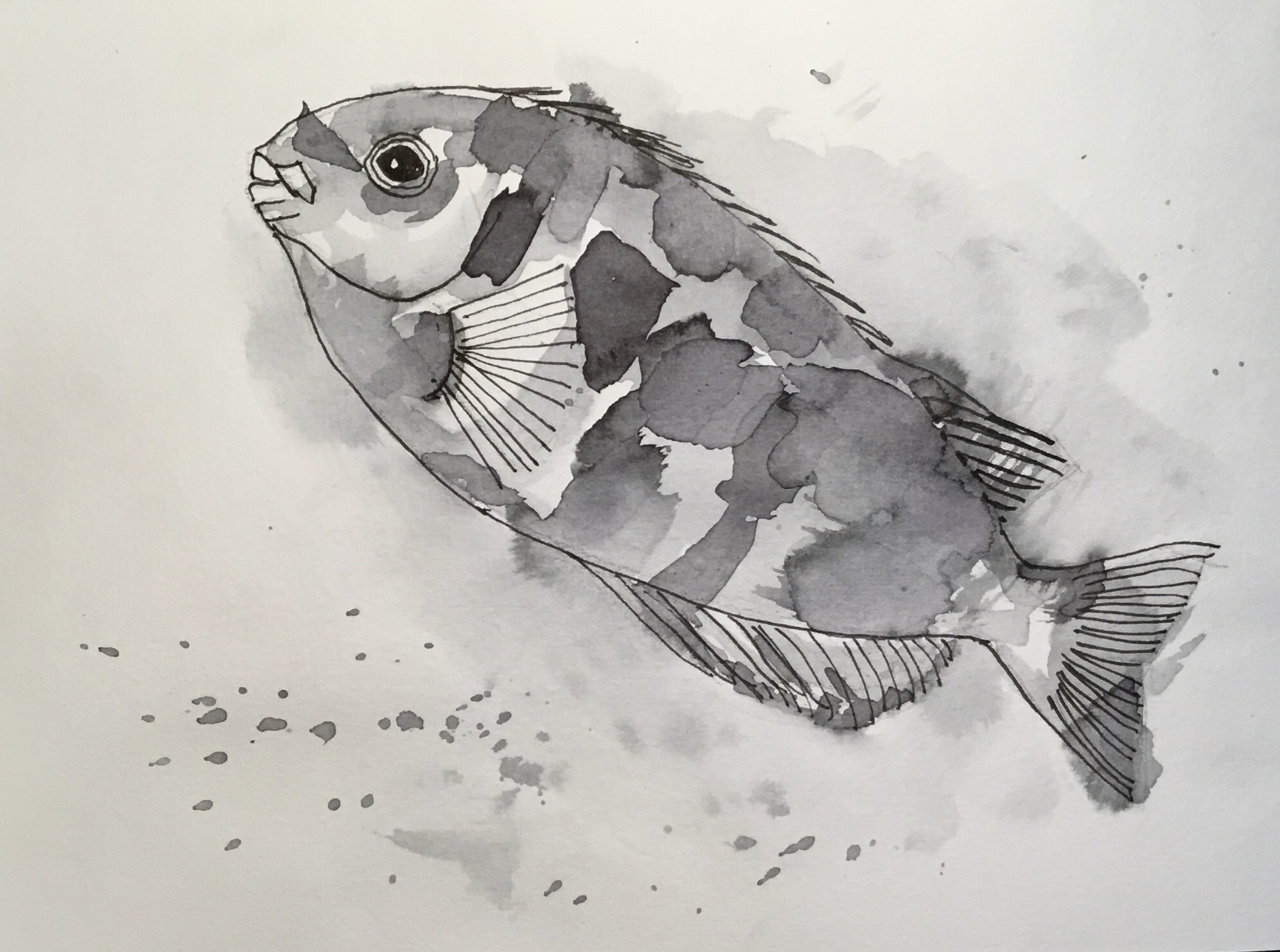
Lionfish
At least this is the original idea of Greek conservationists, who have come up with a cookbook of recipes, so that tourists can be encouraged to try these new species. ‘Recipes for Edible Alien Species’ is published by two conservation organizations, the Cyclades Preservation Fund and iSea.
In the book, written in both Greek and English, Greek chefs have paired these species with classic Mediterranean ingredients like olive oil, garlic, tomatoes and parsley. While it doesn’t have the glamour of a Nigella cookbook, the recipes sound delicious: it would probably be a good idea to take some good photos of the finished dishes and post them on Instagram. You can find the cookbook here
Rabbitfish
Tempting locals and tourists to eat the invaders will help the environment, but also fishermen to make a living. A campaign called Pick the Alien, launched in a few islands such as Santorini, Amorgos, and Zakynthos, aims to encourage people to choose these fish on the menu of their favorite fish taverna.
Would I try them? Of course. I’m always in favour of new tastes, as long as it’s not fried insects or monkey brains, even if the former are also touted as a help for the environment.
'What's for dinner?'
 Providing the answer to this simple question is getting increasingly complicated.  Even a quick glance at the daily news turns every meal into an experience fraught with uncertainty and guilt. Because almost everything turns out to be bad for the health, or the environment, or both.
– Meat is high in fats and cholesterol and stuffed with antibiotics and hormones.
– Fish is full of metal deposits and also guilt-inducing due to overfishing. Sushi is particularly to blame for the depletion of the oceans. Another minus is that, according to a recent article, fish are eating minute particles of plastic – it seems that plastic smells good when mixed with seawater – and this ends up in their tissues.
– Vegetables and fruit are riddled with pesticides, unless they are organic.
– Dairy products are to be totally avoided, being indigestible and artery-clogging. Cheese, in particular, is maligned as being tantamount to poison.
– Sadly, almond milk, which is a good substitute for dairy, is terrible for the environment, since its production uses up huge amounts of water.
– Anything ‘white’ and ‘refined’, such as flour, pasta and rice, should be avoided like the plague. Only the wholemeal varieties will do, if that.
There is very little one can be sure about:
– Wine, in small quantities, appears to be good for you – until you read the next study, which has now discovered it is bad (or is it good again?) The same goes for chocolate (black, of course) and coffee.
– Eggs are terrible for cholesterol levels – BUT I just read an article that it is now considered advisable to eat up to ten a week. – Seafood is also high in cholesterol, with the added environmentally-unfriendly aura connected with fish (see depletion of oceans, above).
– We can’t even count on spirits to raise our spirits (pardon the awful pun). A lovely mojito, a vodka tonic, a drop of whisky – out of the question. Not should any morsel of dessert (brownies, ice cream, cake) pass our lips. I did, however, read an article that gin is good for the health.
– And salt? Is salt good or bad? Opinion differs here too.
There are also practical matters to be considered:
– Should you eat breakfast, or can you skip it? I recently read that it’s okay, even beneficial, to do the latter, although up to now we were taught to ‘breakfast like a king…’ etc. etc.
–Juicing helps with getting your five-a-day, but breaks down the fibers in the fruit and veggies. So better not.
And moral ones:
I admit I’m a terrible hypocrite, since I enjoy a lamb chop as much as the next person, but would probably be a total vegetarian if I had to kill the said lamb myself. However, I feel like screaming when I hear vegetarians self-righteously proclaim they still eat butter and cheese, ‘because no animals get killed in the process.’ When I try to explain the basic facts of agriculture, they just don’t seem to get it. I have good friends who keep repeating the same argument every time food is discussed.
So, what the devil are we supposed to eat?
As far as I can see, that leaves seeds (chia, sesame) pulses (chickpeas…) and insects (which are full of protein and totally devoid of fat). The Swiss are about to stack supermarket shelves with food made from mealworms, which are the larval form of the mealworm beetle. We’re talking ‘burgers’, made by a startup called Essento, in which the mealworms are combined with vegetables, herbs and spices. Sound yummy? Their byword is ‘delicious insects.’
Apparently, fried crickets and grasshoppers are also tasty and crunchy, I suppose as a substitute for potato chips, which are notoriously bad for the health. According to the experts, insects have a high culinary potential, their production saves resources and their nutritional profile is high-quality. They are the perfect complement to a modern diet.
On the strength of the above, I have compiled a menufor a dinner party:
Drinks: Gin and tonic (gin is good for you, right? Unless a new survey comes out before the evening in question, saying the contrary). Crispy fried locusts and organic carrot sticks.
Starter: Organic quinoa with kale chips and sliced raw radishes. I actually had this made for me by a friend, and it was surprisingly tasty.
Main course: Mealworms ‘burgers’ with raw cauliflower ‘risotto’. The latter is a recipe favored by vegans, but I confess I’ve never had it – I love cauliflower, but eating it raw instead of rice – not so much.
Desert: I need to find a recipe that avoids eggs, sugar and flour – probably something made with oats and fruit and sweetened with stevia. As if life was not complicated enough…
One must not forget to be extra careful because of people’s allergies to nuts, gluten or even strawberries. Thus the planning of a simple dinner has been turned into a major strategic exercise – what with reading up on the latest developments and finding the ingredients (although some might be captured in the garden?)
Perhaps the answer is to eat everything, but stop reading? Because it never ends. Today, I read an article about antibiotics. It seems doctors now are not sure which to prescribe, because of resistance and allergies. Also they disagree about whether you should finish the whole course, or stop taking them as soon as you feel better.
The first element to consider in any Greek pie is the pastry – in this case, homemade phyllo pastry. It is often refered to as horiatiko phyllo, village phyllo, and is generally thicker than the machine-made store bought stuff. Pie fillings vary, but a popular one is based on seasonal greens. Here – as an example – I’ve made little pies (pitakia) with tsigarista, a winter dish of sautéed wild greens. It really doesn’t matter what you fill your little pies with, this post is primarily about the homemade phyllo!
Homemade Phyllo
When making Phyllo for a sweet pie, a teaspoon or two of sugar is added with the flour.
1kg flour
pinch salt
30ml red wine vinegar
60ml olive oil
Up to 500ml water
Place the flour and salt in a large bowl. Make a well in the centre and add the vinegar and oil…
To a lot of people Lent means giving up something they love, such as meat, or chocolate, or cigarettes. It’s all about self-denial. In the Greek Orthodox religion there are strict rules that govern fasting around religious holidays. For example, the week before Clean Monday and the beginning of Lent is called the Cheese-eater (Τυροφάγου – Tyrofagou): in order to start cleansing the body and preparing it for Lent, you give up meat but are still allowed dairy products. Then during the 40 days of Lent there are some days when olive oil is allowed and others not, culminating in Agia Evdomada (Αγία Εβδομάδα – Holy Week) which is the week before Easter and the strictest of all.
One of my favourite Lent dishes, artichokes with broad beans
People follow these rules more or less strictly, depending on their upbringing, personality and circumstances. Some believe in self-denial and make do with a couple of boiled potatoes or lentils boiled in water. But the human spirit tends to find ways to make the best of things; and so a whole cuisine has blossomed around the Lent fast. These foods are called Nistisima (νηστίσιμα) in Greek.
On Clean Monday only, bakers make lagana, a special unleavened flat bread, light and crusty, sprinkled with sesame seeds. The origins of the bread and its name are lost in the depths of time, but it goes great with the ubiquitous taramosalata , a dip made of salted and cured cod’s roe, whipped with breadcrumbs or boiled potato, olive oil and lemon juice.
Dolma – Delicious rice balls wrapped in vine leaves, and a bowl of taramosalata.
The menu also comprises seafood like cuttlefish, octopus, shrimp and mussels, which can be simply grilled and served with oil and lemon, or braised with tomatoes and mixed with rice or pasta. There are black-eyed beans, spicy giant beans baked with tomato, and dolma, rice wrapped in vine leaves; loads of vegetable dishes in various combinations, and lovely fresh salads.
As for dessert, again we have developed many recipes for cakes and cookies that conform to the rules (no dairy). And there is always χαλβάς (halvas) similar to the Arabic “halwa”, which is made of tahini, sesame paste, and sugar, to which are sometimes added pistachio nuts or cocoa. This you buy ready-made at the baker’s or supermarket and it is served sliced thinly, sometimes accompanied by slices of apple sprinkled with cinnamon. It is extremely sweet, and so nourishing it could sustain polar explorers on their journeys!
Peppers stuffed with vegetables and rice
The monastic life entails many days of fasting (the monks never eat meat), and so it is not surprising that monks are adept at this cuisine. Monks can make as brilliant cooks as anyone, and I’ve heard plenty of stories of memorable meals eaten by people visiting Mount Athos in particular. Mount Athos is an autonomous monastic state within the Hellenic Republic, where 20 Eastern Orthodox monasteries are home to over 2,000 monks from Greece and other countries.
They live an ascetic life, isolated from the world, but they get a lot of visitors: some are on a religious pilgrimage, others come because of the extraordinary beauty of the monasteries and the nature surrounding them. Many are interested in the rich collections of well-preserved artifacts, rare books, ancient documents, and artworks of immense historical value. Finally there are people who want to sample what they see as the simple life, even for a short while.
Unfortunately no women are allowed within the borders of Agion Oros (the Holy Mountain), as it is called. But I looked up their fascinating site and found a whole recipe book of Nistisima in both Greek and English, with accompanying photographs.
Chickpeas with aubergines
There is a huge selection and most recipes are quite simple to prepare, although the translation can be slightly excentric (but use your imagination, people!) I encourage everyone to browse, (click here), but I have copied a couple of the recipes as a sampler.
Fava
Ingredients:
500 gr. of split yellow peas
1/5 litre of water
1 onion
2 potatoes
2 peppers
salt
1 tea cup of olive oil
4-5 fresh chopped onions
1 bunch of chopped dill or oregano
some lemon juice
Put the split peas, the water, the chopped onion, the potatoes, the chopped peppers and half of the oil in a pressure cooker.
When they have softened, blend. Put in a serving plate and sprinkle with the fresh chopped onions and the dill or oregano. Pour over a little oil and lemon. Serve warm or cold, with bread.
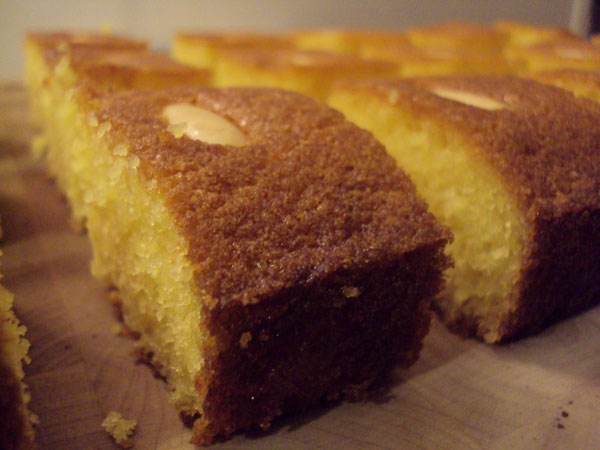
Semolina Cake
Ingredients: ½ cup tahini – ¾ cup water – ¼ cup lemon juice – 2 cups sugar – 1 cup orange juice – 1 cup water – 1 teaspoon cinnamon – ½ teaspoon carnation (they mean powdered cloves!) – 3 ½ cups semolina – 1 cup blanched almonds.
For the syrup: 3 cups sugar – 2 ½ cups of water – 1 tablespoon lemon juice – 2 cinnamon sticks. Preparation: Beat tahini and ¾ cup water with the lemon juice until it turns white. Successively add sugar, orange juice, water, cinnamon, carnation (cloves) and mixing the semolina mixture. Pour into pan (40×35 cm) and sprinkle almonds over the surface. Bake at 180 degrees for 45 minutes. Meanwhile, prepare the syrup by boiling all the ingredients together until thickened. Let cool and as soon as the semolina pie comes out of the oven, pour over immediately.
The monks even have an e-shop selling various products. Their recipes are full of good ideas for vegetarians, but also for everyone else. All the photographs are from their site.
The word tsikna (τσίκνα) means ‘pungent smoke from grilled meats’ – it’s what your clothes smell like when you return from a taverna or barbecue. Today is Tsiknopempti (Τσικνοπέμπτη) – literally the ‘Thursday of grilled meat smoke’, a Greek tradition beloved by all carnivores, since it entails an orgy of grilled meats.
We are now in the middle of the three weeks of Apokries (Απόκριες – Carnival) preceding Lent and a fast of 40 days before Easter. Little kids in fancy dress can be seen walking in the streets, on their way to various parties. Tonight people will either descend upon tavernas – better reserve, since even your local is bound to be overbooked – or congregate in homes around someone (usually a man) priding himself on his barbecuing skills.
Every full-blooded Greek considers the Tsiknopempti feast his unalienable right, not to be spoilt by any vegetarian, cardiologist or fish-eater.
The menu on offer usually comprises the following:
*Burgers, kebabs, sausages, lamb and pork cutlets, and steaks. Maybe chicken pieces.
The meat has to be top class and seasoned with salt, pepper and oregano. It will be accompanied by: Cut lemons to be squeezed over according to taste. Tzatziki – a yogurt and garlic sauce. Mustard, ketchup and mayo.
*Fries. They have to be home cut and cooked in olive oil.
*Salads. A xoriatiki (Greek salad) with tomato, cucumber, plenty of onions, and tons of feta cheese. A green salad for freshness. A shredded cabbage and carrot salad dressed with olive oil and lemon.
*Bread – pita and slices of country loaf, brushed with olive oil, grilled and sprinkled with oregano.
*Plenty to drink. Beer, of course; wine, red and white (some like retsina, a white whine flavored with pine resin – a strong, old-fashioned, acquired taste); ouzo, raki and other spirits.
*A selection of desserts, the sweeter the better. Baklava full of nuts and drenched in honey syrup, something chocolate.
All of this engenders a lot of discussion and theory:
-I see you didn’t go to the butcher I told you about.
-Do we have enough coal?
-Have you lit the coal? We don’t want to eat at midnight.
-If the meat is good enough, it doesn’t need marinating.
-No, no, pancetta should be marinated in beer.
-Don’t be stingy with the salt and pepper.
-Or with the garlic in the tzatziki.
-The sausages have to be eaten first.
-Someone has to be in charge of the fries.
-Someone has to keep the cook supplied with drink.
-Someone has to praise the cook.
Suggestion: Better lay in a supply of antacids for after dinner and/or plan a week’s detox.
But, meanwhile, Kali Orexi! (Καλή Όρεξη – Bon Appetit)
The images are from the oneman.gr blog which has a very amusing article on Tsiknopempti, for those who speak Greek.
Running a school canteen is not the world’s most profitable business at the best of times. But now it’s slowly becoming a recipe for disaster.
The crisis has affected pocket money – for a lot of kids, the freshly-baked tyropita is now above their means.
Canteen owners are in despair. They say sales have fallen by 70% during the last six years. Meanwhile, they feel obliged to let kids have food on credit, something which had not been the case before. Many run up tabs their parents are unable to pay from one year to the next.
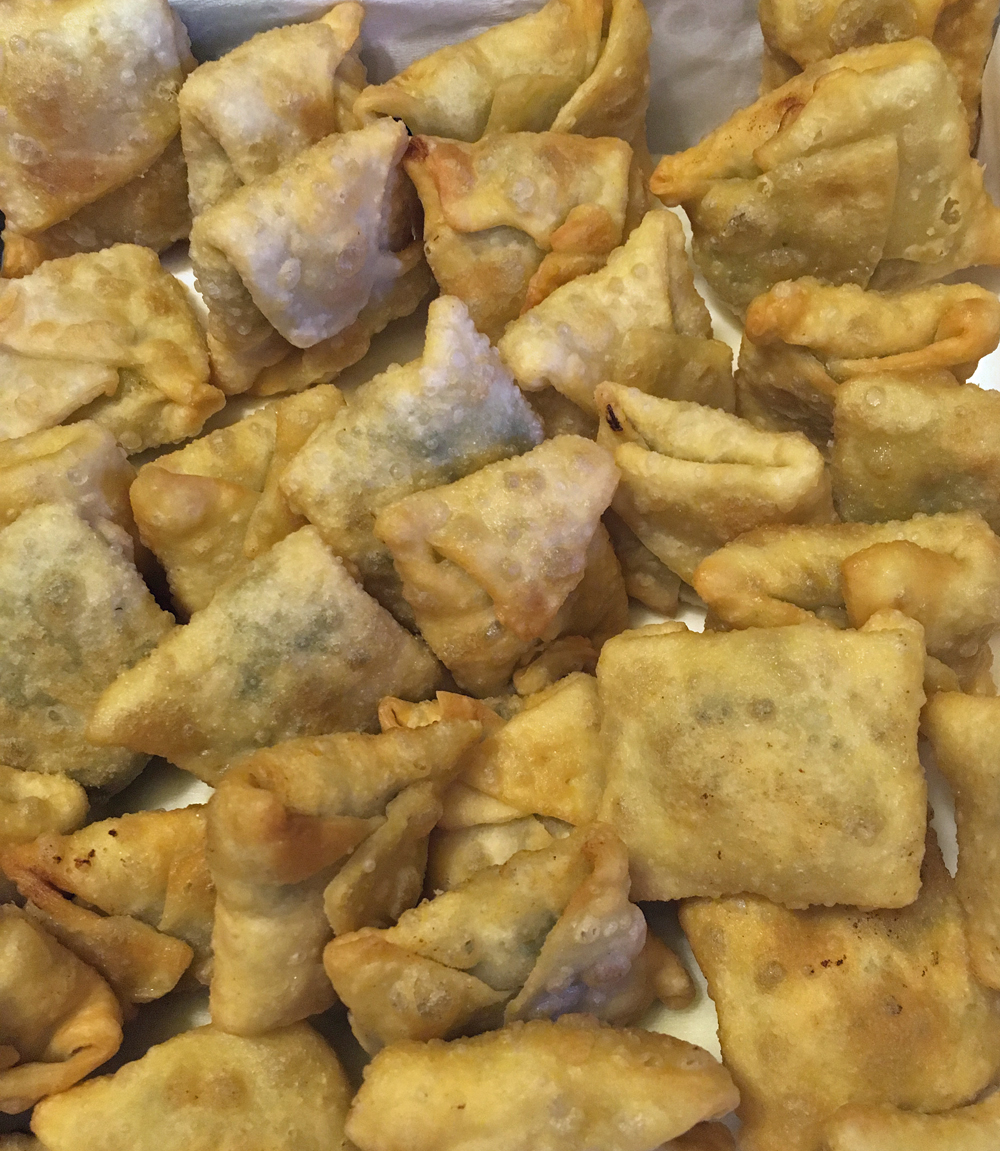
Only about half the students in any school purchase things from the canteen, and they choose the least expensive items, since they only have one euro on average to spend. This is enough for one tyropita (cheese pie) or a koulouri (round bread stick) and a small bottle of water.
Often the canteens, together with the teachers and the parents’ committee, are called upon to subsidize snacks for needy students. A lot of canteens give out leftover food at the end of each day.
But canteen owners are not rich. Many have already closed up shop, and some schools are having problems replacing them. The increase in taxation to 23% is not helping.
In some areas, a lot of kids don’t bring anything to eat from home, even when they have to stay at school until 4.15 pm. In many cases the Church has stepped in, offering a large number of school snacks. Also the Prolepsis Institute is implementing a program of Food Aid and Promotion of Healthy Nutrition for the 3rd year running, with a grant from the Stavros Niarchos Foundation. In 2016 it serves food to 148 schools (11.617 children) in different areas. However, the number of students who have applied to join the program are more than 260.000.
Since 2012 more than 11,5 million meals have been distributed to 480 schools and 80.000 students.
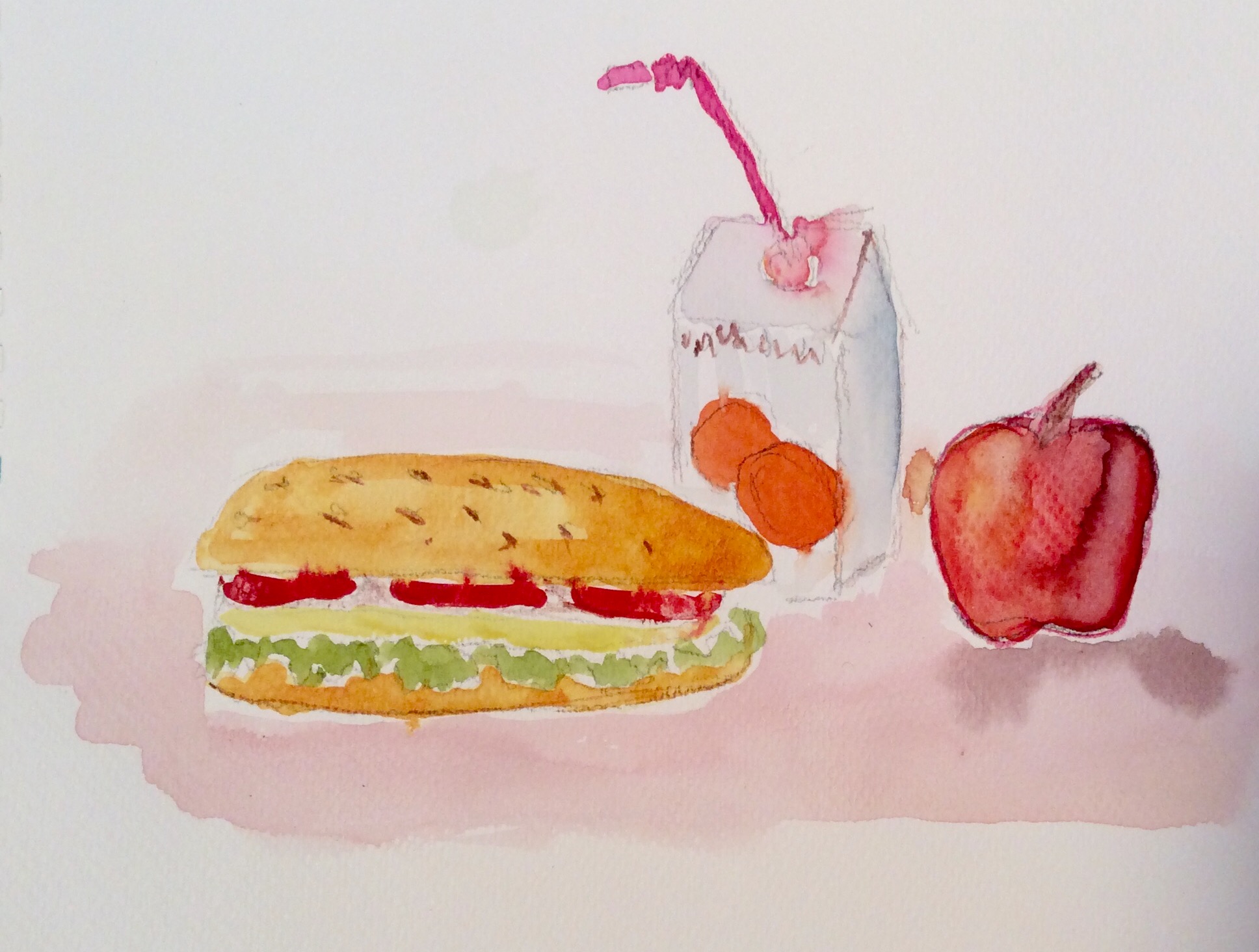
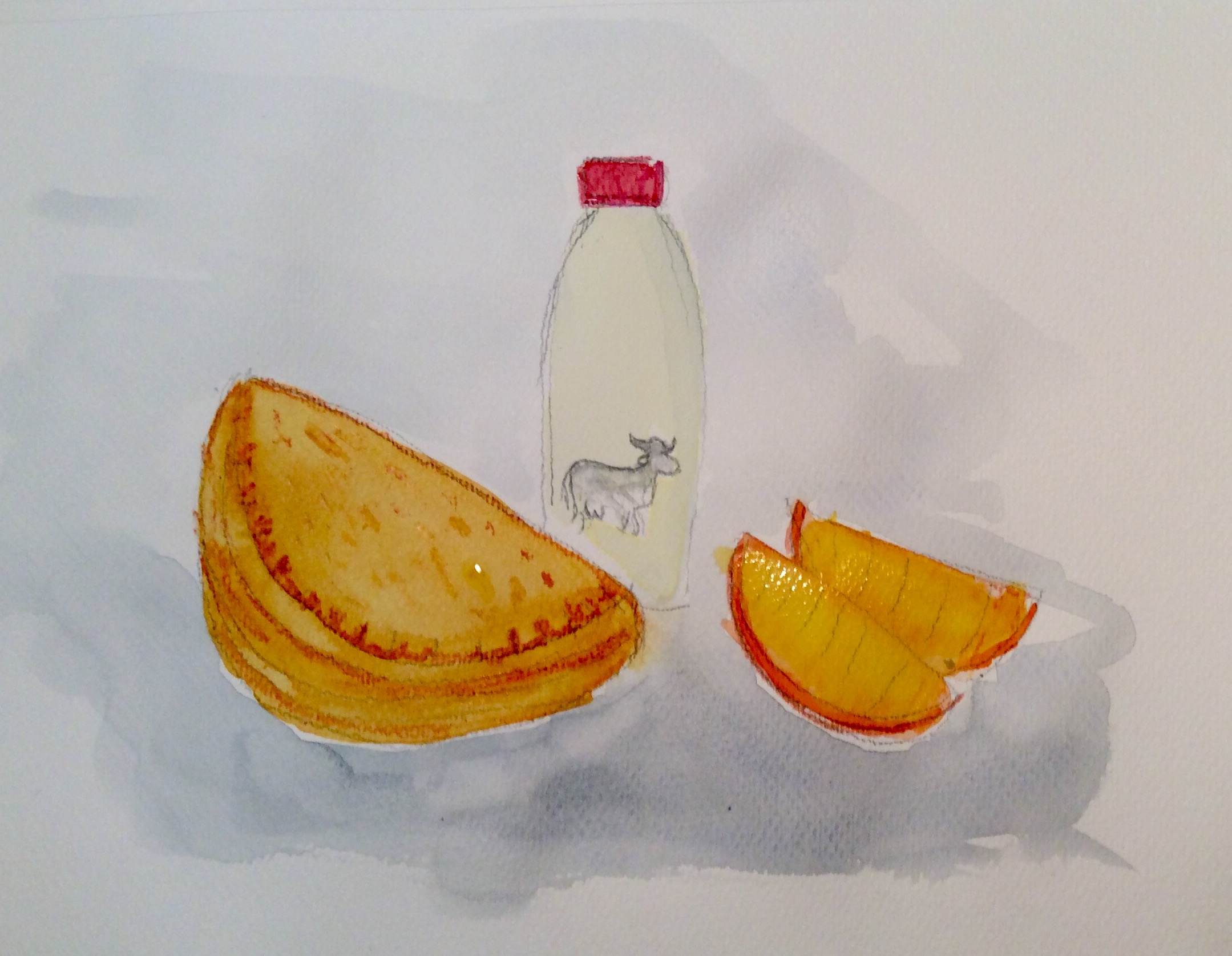
The daily menu includes a breadstick or a sandwich, a piece of fruit, milk and yoghurt with honey. There is an effort to make the meals as healthy as possible, with wholewheat bread, vegetables in the sandwiches, as well as traditional cheese or spinach pies. There is also a program for educating the children in healthy nutrition as Prolepsis feel this is important for the prevention of obesity.
Finally, Prolepsis has set up a campaign to get companies to sponsor individual schools, so that not a single child has to go without a snack.















 Letters from Athens