An afternoon at the Musée d’Orsay

A few days ago I went to Paris to visit a friend, who lives right next to the Musée d’Orsay, in a bustling neighbourhood on the Left Bank. After a delicious lunch that she had prepared for me, we wandered over to the museum, which has always been a great favourite.
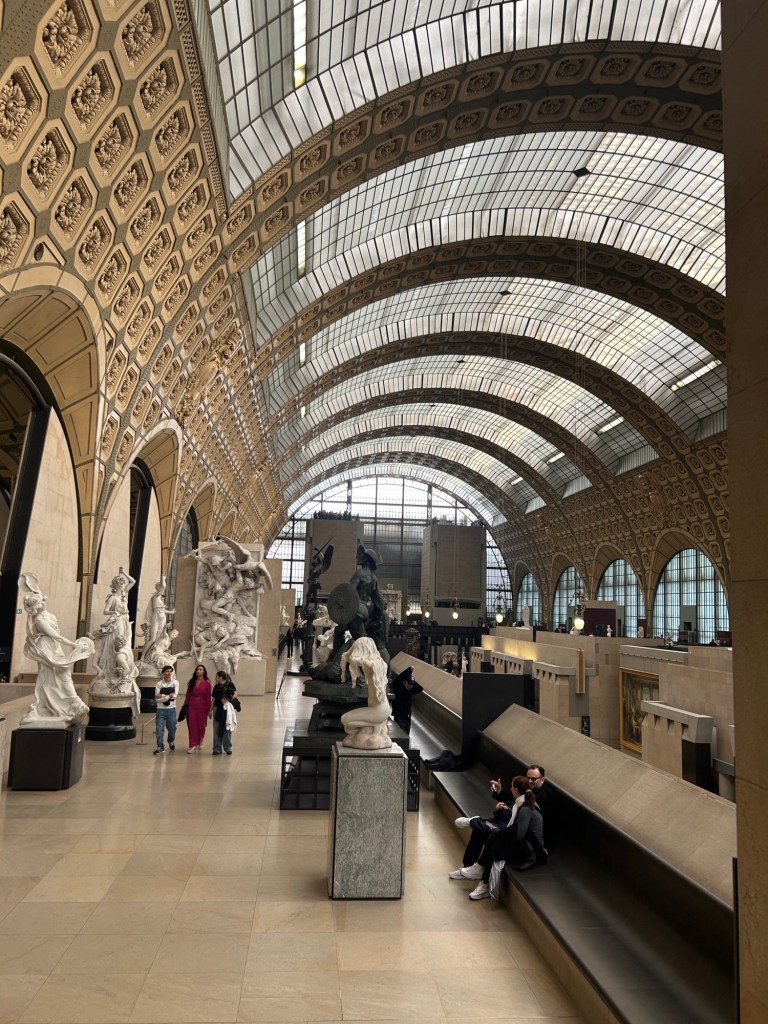
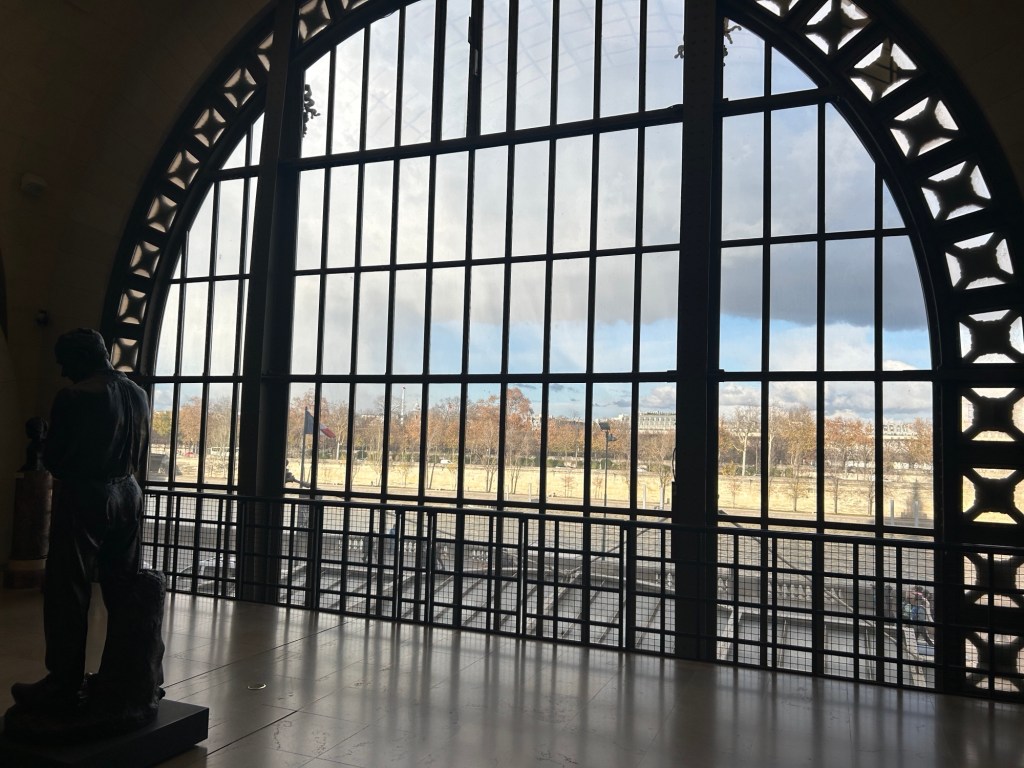
A conversion of the Gare d’Orsay, a Beaux-Arts railway station built in the late 19th century, the building itself is amazingly beautiful, with stunning views of Paris out of every window. Regular readers will know I visit as often as I can, and have written about exhibitions by Picasso, Caillebotte and others (for those interested, putting “Musée d’Orsay” in the finder will lead you to them).
The permanent collection is full of treasures, and every time I go I discover something new amongst the old favourites. My friend and I walked around, admiring the Gaugin paintings some of which I had read about in Sue Prideaux’s biography,Wild Thing (reviewed in a recent post).

The Meal, also known as The Bananas. 1891

Another lovely painting, the portrait, by Odilon Redon, of Baronne Robert de Domecy

Odilon Redon, 1900

This time the temporary exhibition was of the previously unknown to me sculptor Paul Troubetzkoy (1866-1938).

Troubetzkoy, who was an iconic figure of his time, was the illegitimate child of a Russian diplomat and an American singer and pianist. He was acknowledged by his father at the age of five, trained in Milan and started his career in Moscow and St Petersburg, where he was well received by the local elite, despite speaking virtually no Russian. Having a wonderful facility of capturing people’s likeness in clay (which he then cast in bronze) he sculpted numerous portraits of the aristocracy, but his masterpiece of that period was the portrait of Tolstoy, a vegetarian who made a profound impression upon him (and converted him to the cause).

In 1906, when Russia was racked by the first throes of revolutionary unrest, Troubetzkoy left for Paris, where he quickly won over Parisian society. Bohemian and eccentric, he walked his domesticated wolves in the Bois de Boulogne, and hobnobbed with the city’s cosmopolitan elite, earning numerous portrait commissions. He perfected the genre of portrait statuettes that would make him famous—Anatole France, George Bernard Shaw, Auguste Rodin, Baroness de Rothschild and Roland Garros were amongst those who posed for him.

In his studio, with wolves and statuettes

He also loved to depict children and animals. His passion for the latter was the reason he became a vegetarian.
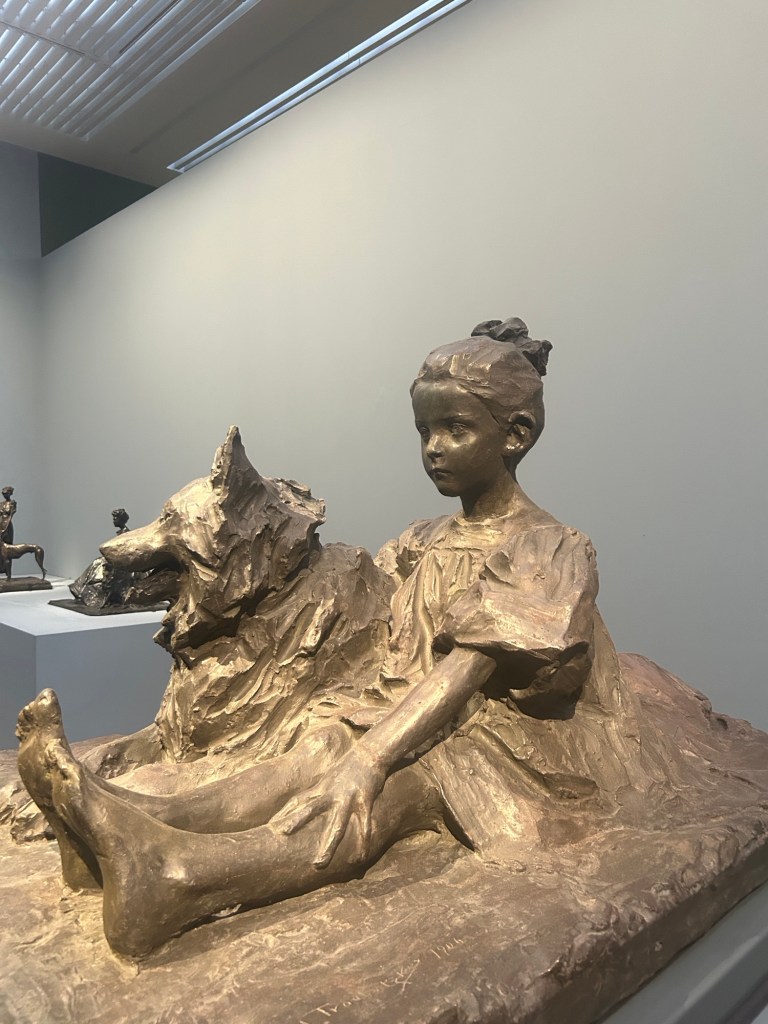
A little girl and her dog

He suffered unbearable tragedy when his only son, Pierre died at the age of two and a half—just after he had sculpted a moving portrait of him with his mother, Paul’s wife Elin.

Troubetzkoy also had much success in America, where he travelled three times between 1911 and 1912, then stayed for almost seven years (1914-1920), again attracting numerous commissions.

Franklin D. Roosevelt, 1911, commissioned by his godmother when he was elected senator of the state of New York.

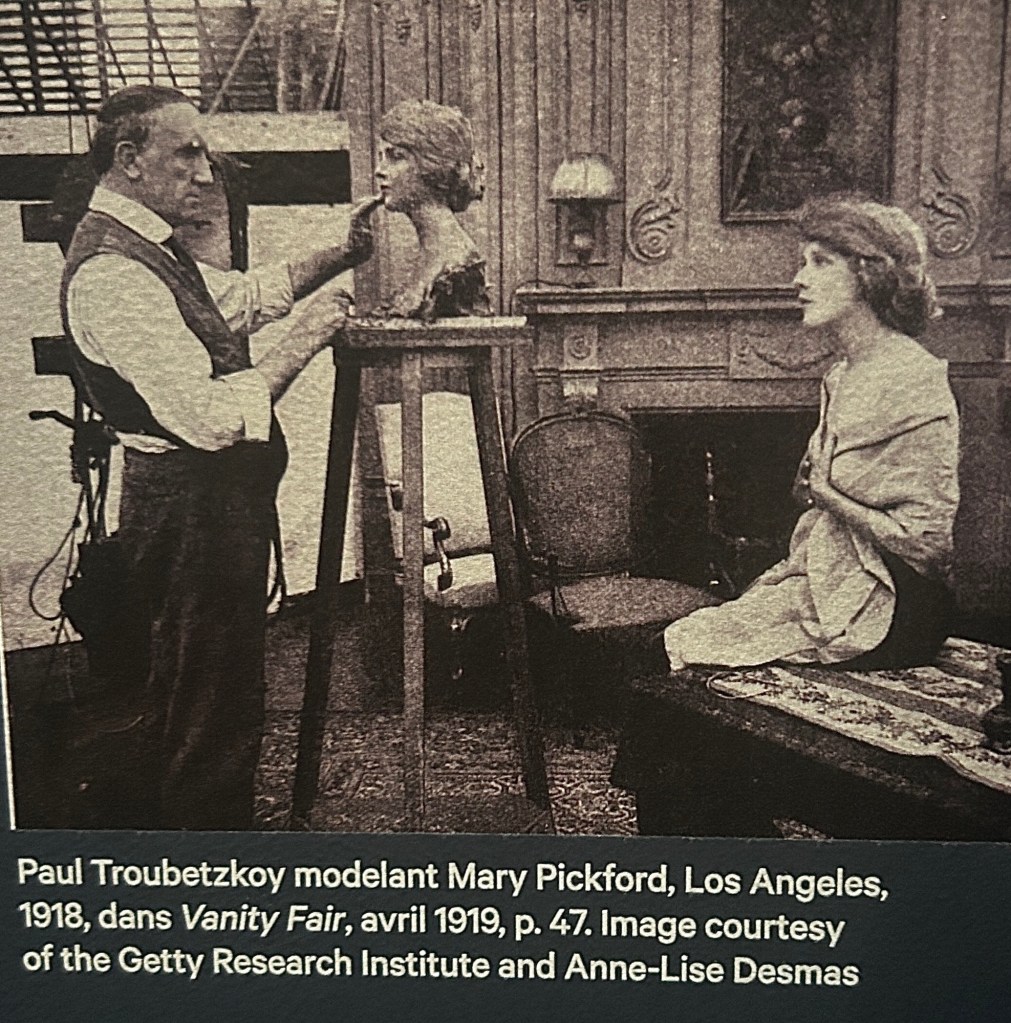
Here he is sculpting the actress Mary Pickford. Amazing how he works in a waistcoat, shirt and tie! He also had a magnificent comb-over…
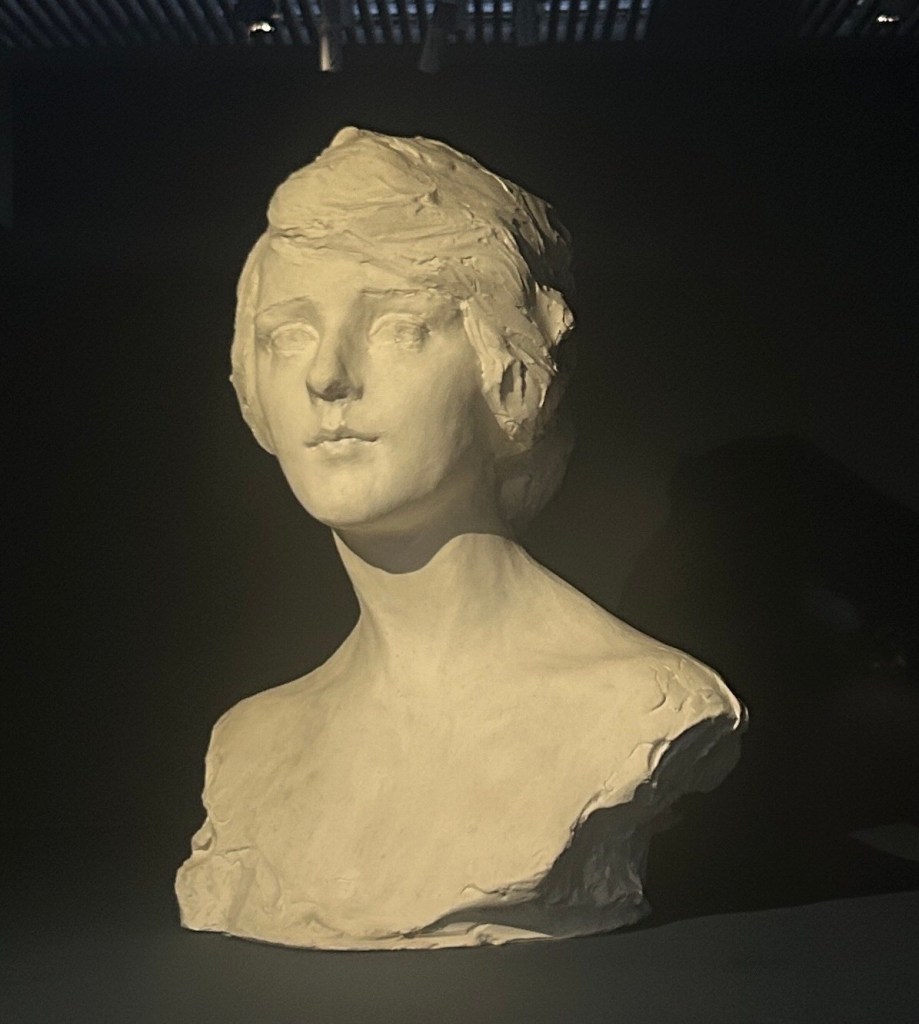
And the finished portrait.
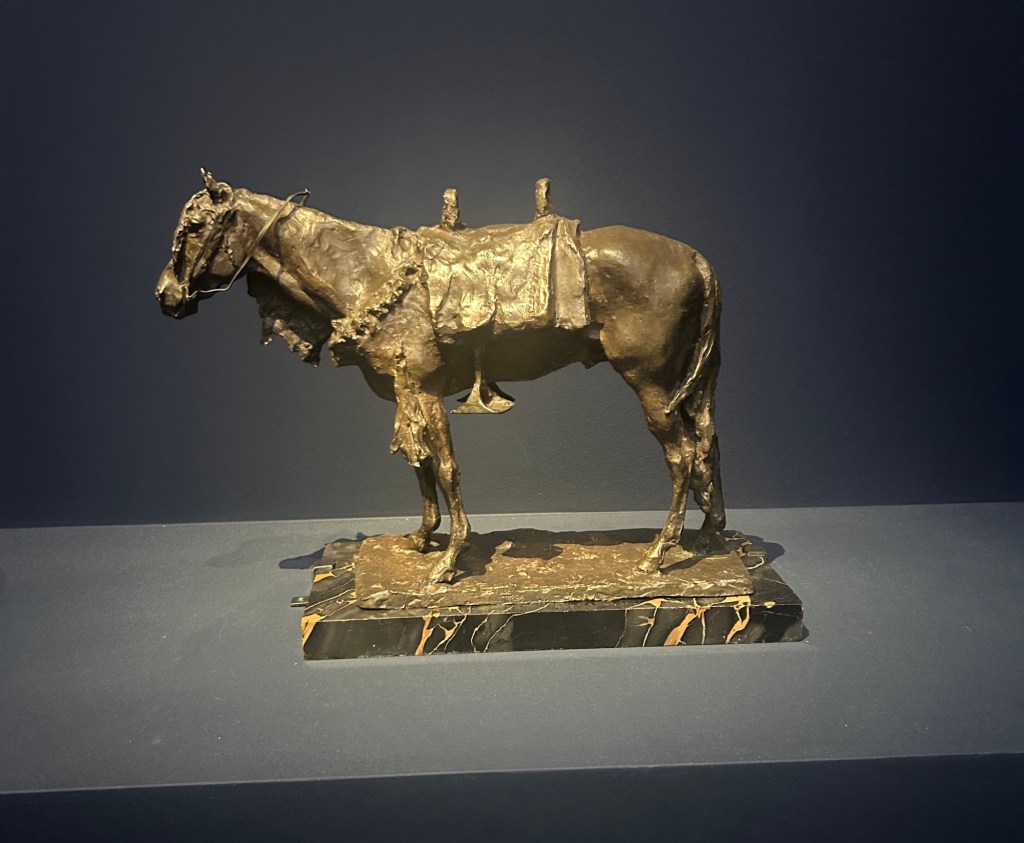
I adored this lovely statuette of an Arabian horse.
Troubetzkoy returned to Europe in 1920, where he settled in France and stayed until his death in 1938 at the age of 72, travelling often to Italy and continuing to sculpt portraits of political figures and representatives of cosmopolitan high society in both countries.

Jean Bugatti, circa 1930

A change from doom scrolling

How about some poetry instead of the relentless march of horrific news we are subjected to daily?

I never watch the news live anymore. I only scroll through the titles, glance diagonally in case something catches my attention and read pieces that interest me—about new books and films, art exhibitions, or people who do unexpected and funky things. My children mock me about being a fringe reader, but I do enjoy it.

Irrelevant but hopefully cheering sketch

Looking through available films on iTunes and elsewhere, I notice a huge number are horror movies. This is amazing to me—aren’t people horrified enough by what is happening in real life but they need to scare themselves further? To each his taste, I suppose.

Meanwhile, there is nothing more soothing than poetry, so I leafed through favourite books to find something to improve your day. Browsing, I realised a great number of poems deal with grief, loss, fear and other lowly feelings—of course, expressed in beautiful language. Nothing like newspaper articles, but still. Even the Romantics are very concerned with death and loss of love. However, there are poems to lift the heart, so here is one of them, about the transformative power of words, by Dylan Thomas.

Notes On The Art Of Poetry

I could never have dreamt that there were such goings-on
in the world between the covers of books, 
such sandstorms and ice blasts of words,,, 
such staggering peace, such enormous laughter, 
such and so many blinding bright lights,, ,
splashing all over the pages
in a million bits and pieces
all of which were words, words, words,
and each of which were alive forever
in its own delight and glory and oddity and light.

Flowers are always cheerful

A matter of perspective

Here in deepest Normandy I don’t think we have seen the sun—or a pale imitation thereof—more than twice in the last few months. I might exaggerate a bit, but not much.

8.30 a.m.

When I take the puppy out in the morning, it is pitch dark. Once or twice when the sky was overcast I even had to use a torch! I wrap up in boots, scarf, hat and gloves.

However, I would rather have rain, sleet, fog and ice than wildfires. Having lived through a number of those in Greece, there are few things worse. A vision of hell.

My thoughts are with the people of California who are dealing with this at the moment. Many have lost their homes, their livelihoods and some their lives. I sincerely hope the fires will be brought under control soon…

Did you know…

…Some animal are immortal?

Theoretically, that is—or, at least, they do not age. Obviously, they can die from other causes: accidents, predators etc. I found this bit of arcana fascinating and thought I’d share.

One species that has been called ‘biologically immortal’ is the jellyfish Turritopsis dohrnii. These small, transparent animals hang out in oceans around the world and can turn back time by reverting to an earlier stage of their life cycle.

Then there is the Hydra: a tubular body with a tentacle-ringed mouth at one end and an adhesive foot at the other. They’re very simple animals that spend their days mostly staying in one place in freshwater ponds or rivers and using their stinging tentacles to grab any prey that happens to swim past. Their claim to immortality? They don’t go through senescence (biological aging) at all. Instead of gradually deteriorating over time, a Hydra’s stem cells have the capacity for infinite self-renewal. Cool, right? However, who’d want to be a Hydra…

Hydra. Photo:Google


Lobsters also do not experience senescence. Unlike Hydra’s reliance on particular genes, however, their longevity is thanks to them being able to endlessly repair their DNA. Unfortunately there’s a catch: they literally grow too big for their own shells. Lobsters continually grow larger and larger, but their shells can’t change size, meaning a lifetime of ditching too-small shells and growing a brand-new exoskeleton each time. That takes a fair amount of energy. Eventually, this becomes too much, and they die of exhaustion—unless they have managed to end up in a lobster roll before that happens.

Many other species offer tantalising glimpses into an ageless existence: such as naked mole rats, whose risk of dying does not increase as they get older; the Ming quahod clam; some bristlecone pines—there is a colony of quaking aspens considered to be about 80,000 years old. Also the enormous bowhead whale, which can live up to 200 years, since they can repair damaged DNA, hence are prevented from developing cancer. Scientists also suggested that these whales can survive the absence of oxygen even for a long time.

These animal can perhaps provide information which will benefit human longevity. But to the question, asked by a young relative, ‘Would you like to live forever?’ my answer is, ‘No, thank you.’ Especially if I had to live attached to a rock, like a Hydra.

A lovely Greek Easter


Greeks love Easter—even the agnostics and atheists. The rites surrounding it are lovely, at a time of the year when nature is at its best.

The culmination of a week of special church services is the mass celebrating the resurrection, at midnight on the saturday. Unfortunately, at most churches celebrations are riotous, with fireworks and crackers going off even during the service—and cars going past sounding their horns.

Thus we were delighted to discover a completely different atmosphere at a nearby church where we’d never been before. Families and friends had gathered and small children ran about despite the late hour. Everyone sang together.


The holy light passes from one candle to another, and each family carries one lit candle home, to bless their house.

And of course, Easter involves lots of food: lamb cooked in a variety of ways, red eggs to be cracked against each other, a special sweet bread called tsoureki. (I had wriiten about Easter customs in a previous post:

https://athensletters.com/2016/05/01/celebrating-greek-easter/.)

To all Greek friends, Χριστός Ανέστη.

Mystras, a Byzantine city

A silver lining of the pandemic has been the lack of visitors in historic sites, and May is a perfect month for exploring Greece, since it’s not too hot yet.

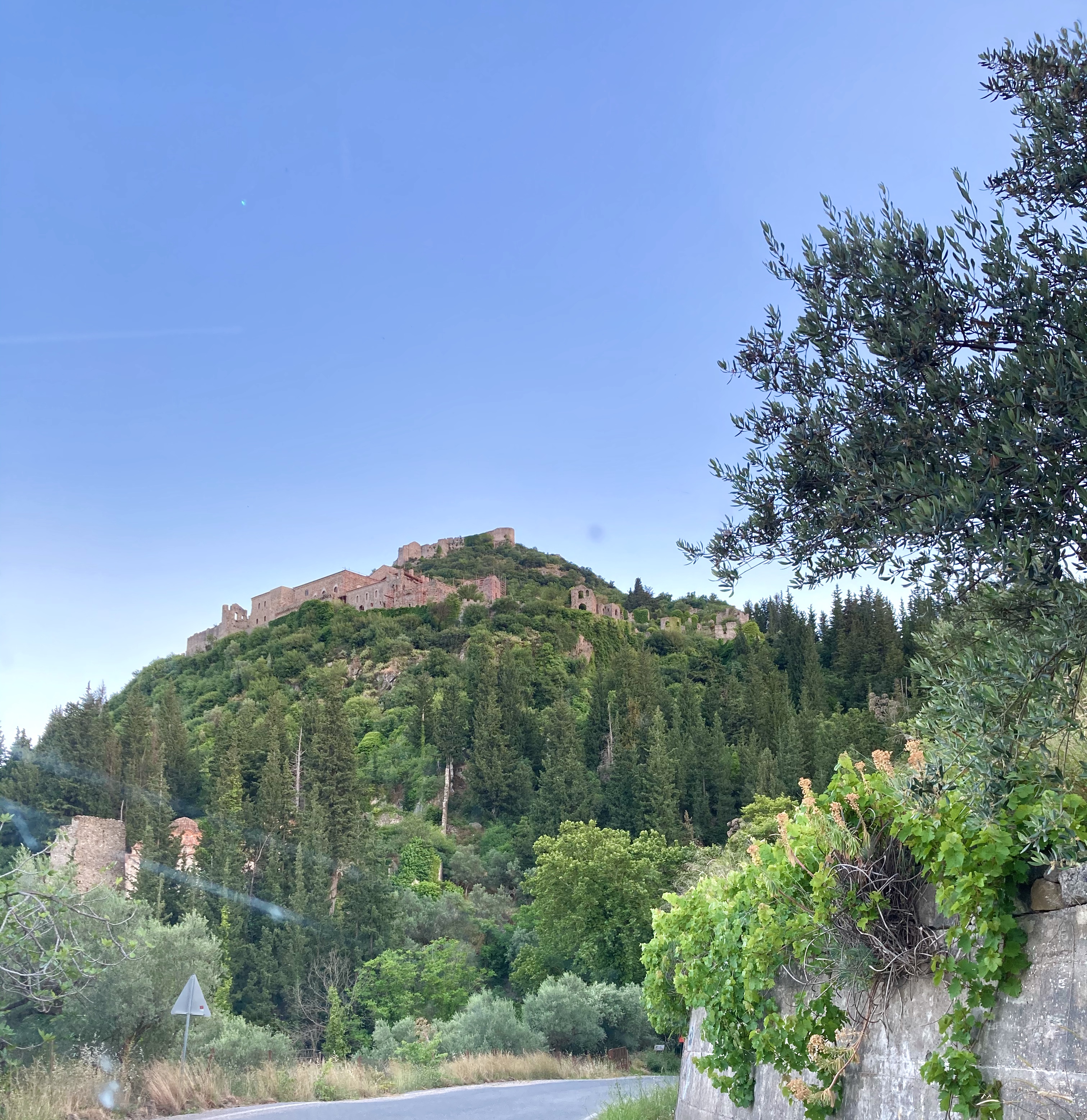
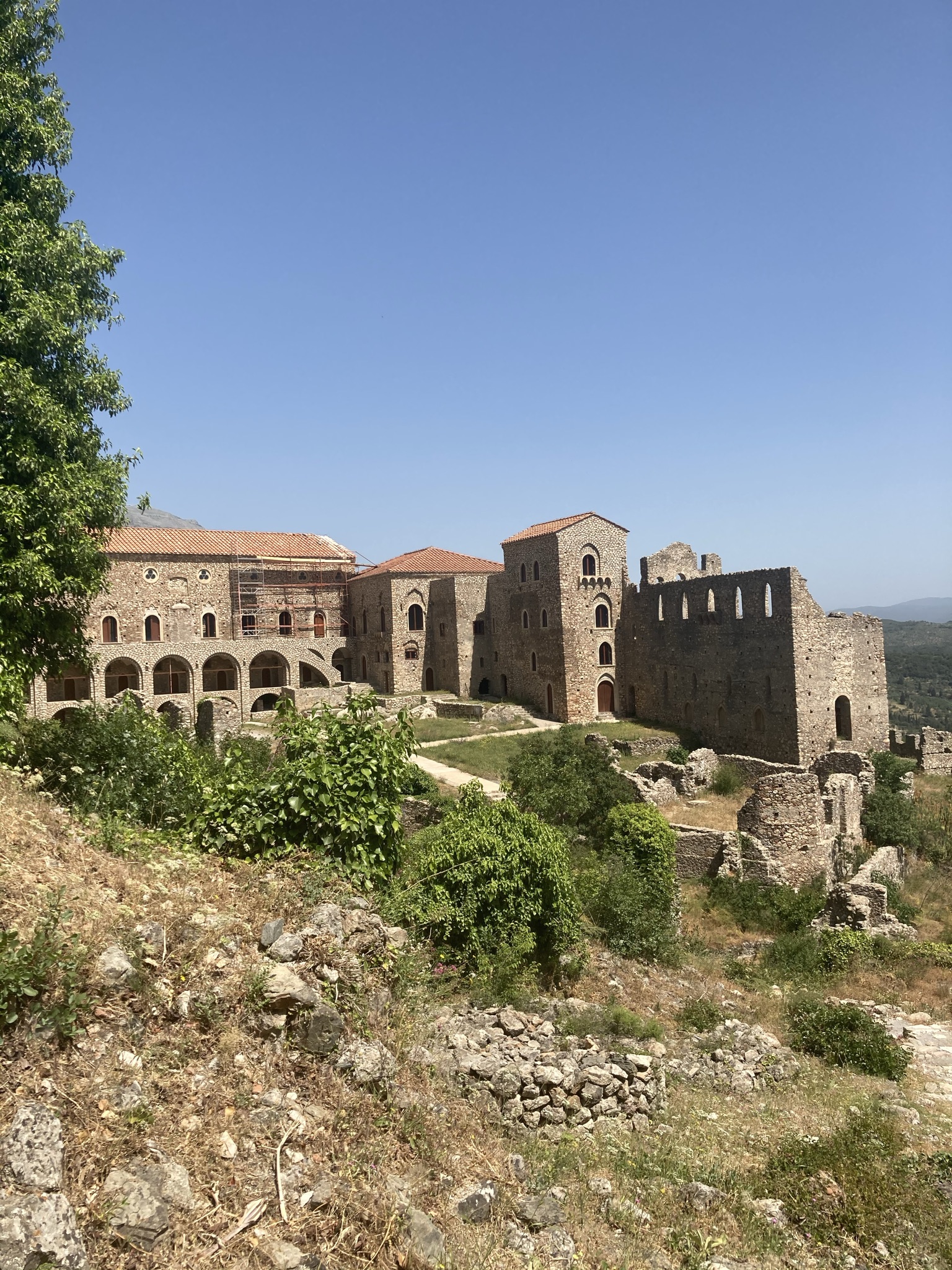
The view of the fortified town from the road

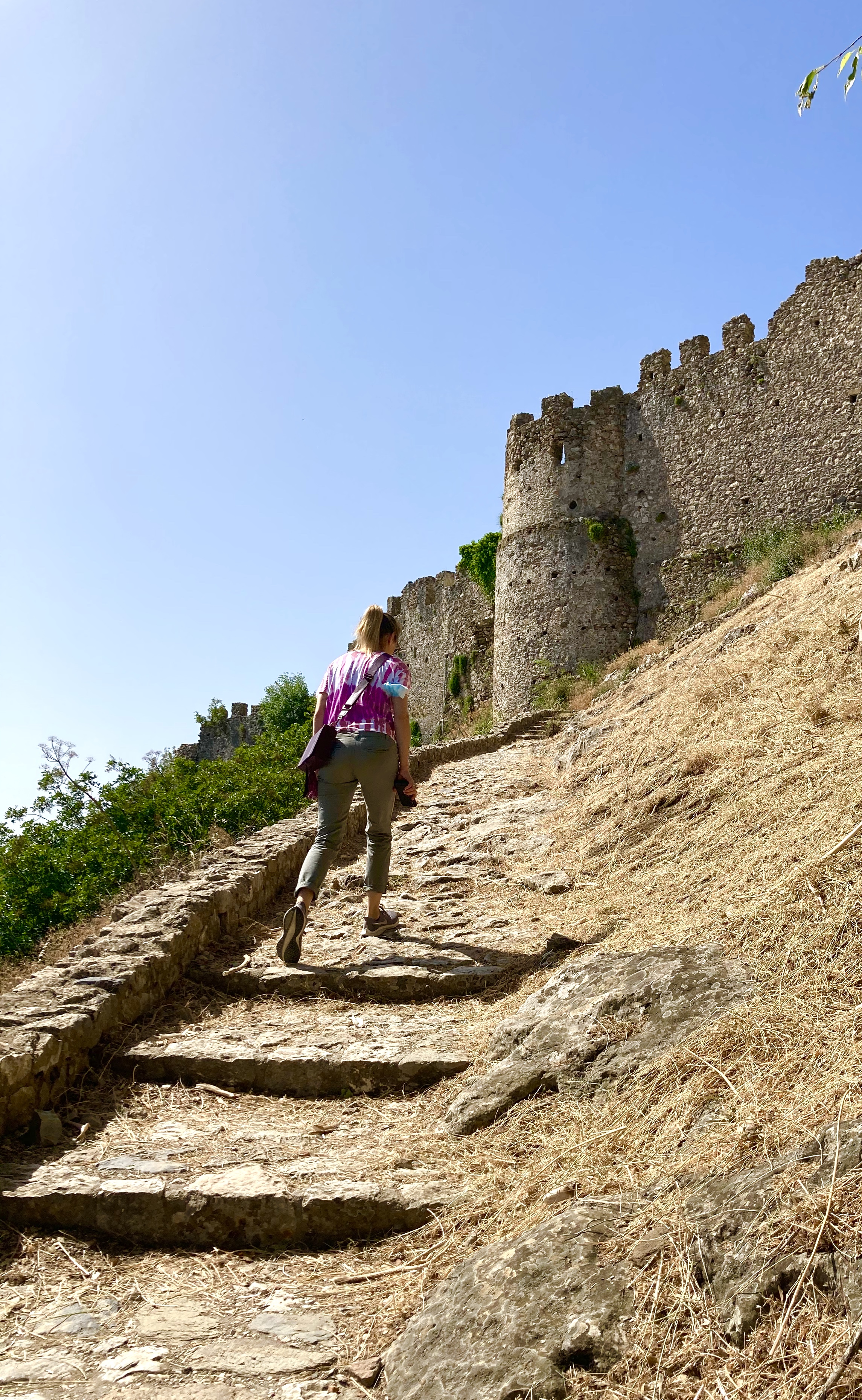
A recent road trip to the Byzantine city of Mystras involved a hike up to the fortress during which we only met a handful of other visitors.


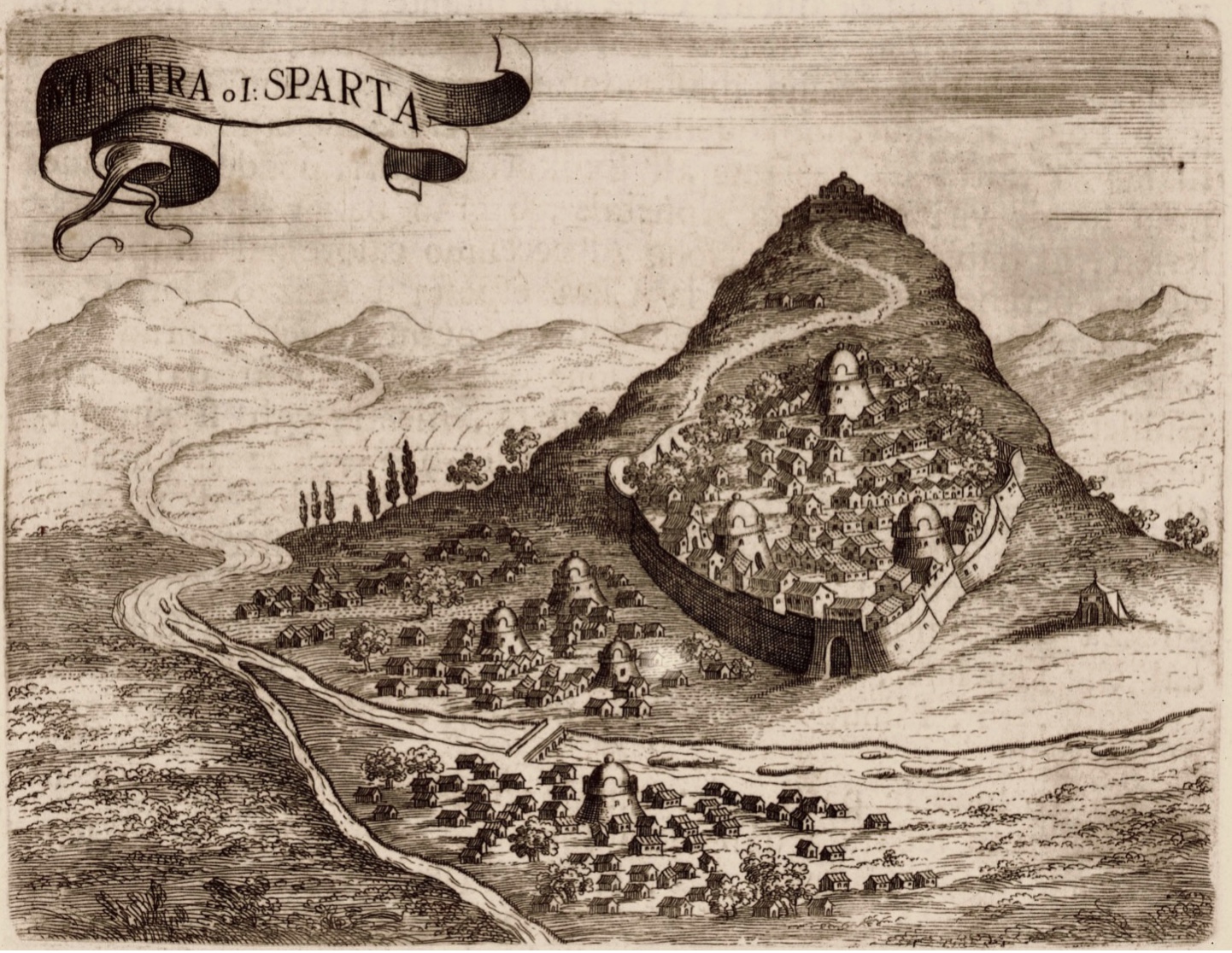
Mystras is a fortified town in the Peloponnese, built in 1248 by Guillaume II de Villehardouin, ruler of the Frankish Principality of Achaea. In 1259, William of Villehardouin was defeated and captured, along with many of his nobles, at the Battle of Pelagonia, by the forces of the Nicaean Emperor Michael VIII Palaiologos. Two years later, the Nicaeans recaptured Constantinople, putting an end to the Roman Empire and establishing the Byzantine Empire. At this point, the emperor concluded an agreement with the captive prince: William and his men would be set free in exchange for an oath of fealty, and for the cession of Monemvasia, Grand Magne, and Mystras. Thus henceforth Mystras served as the capital of the Byzantine Despotate of the Morea in the 14th and 15th centuries, during which period the city prospered, culturally as well as practically, producing silk, citrus fruit and olive oil which were exported to Western Europe.


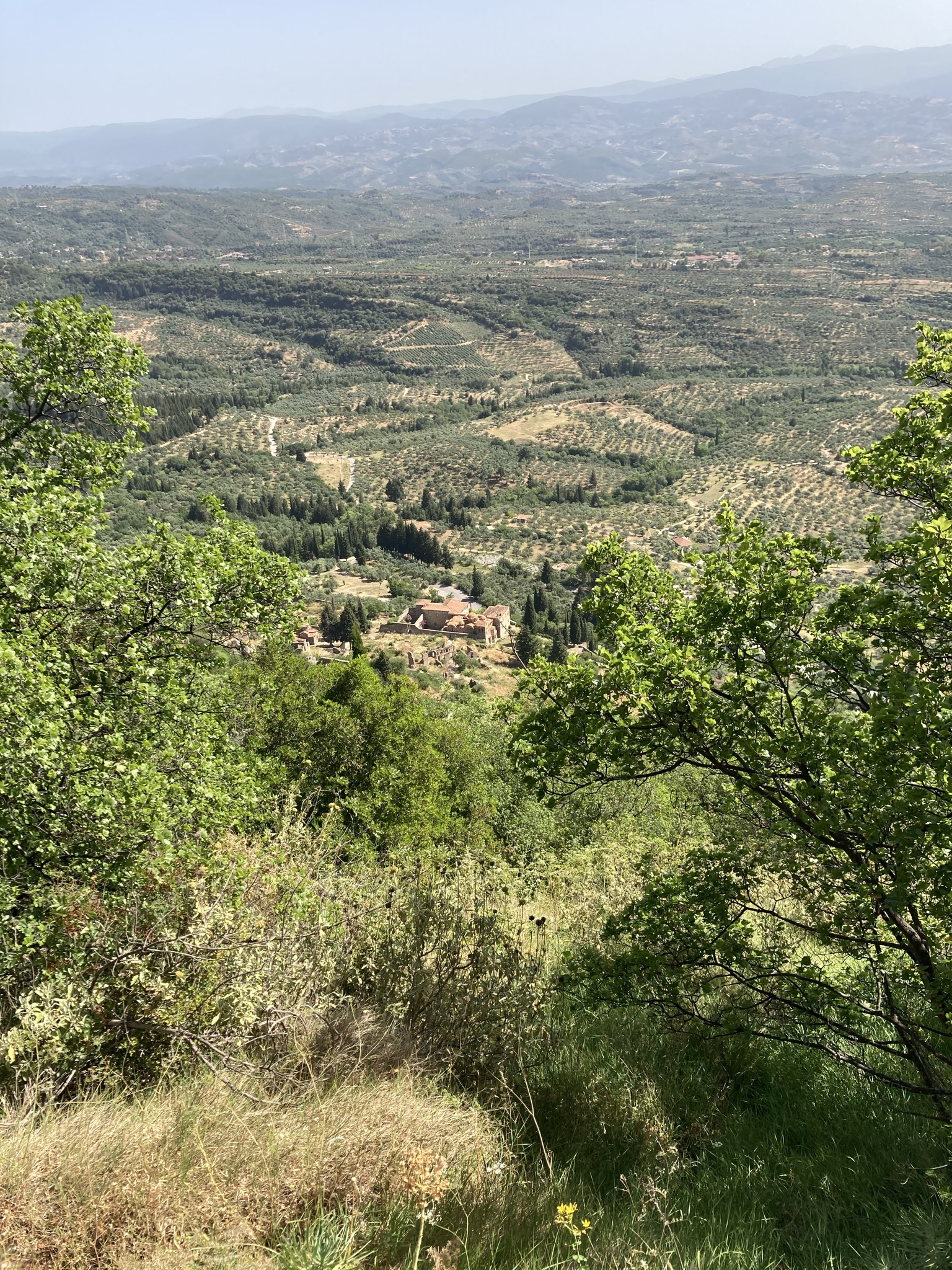
The view of the church of Pantanassa  from above

Wild flowers and butterflies were abundant, and the only sounds  were the chirping of birds and the buzzing of bees.


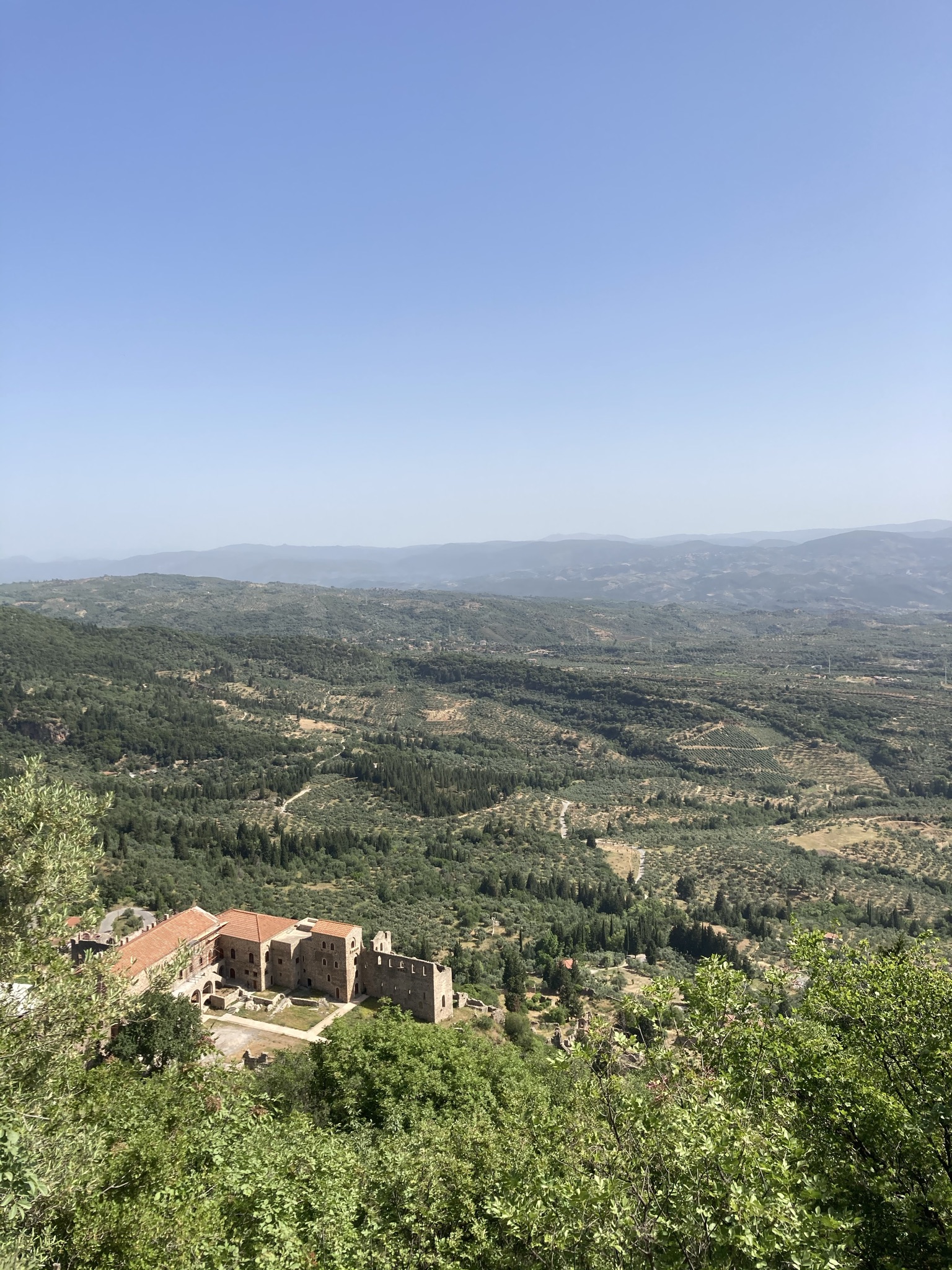
The view of the Palace complex from the top

It is a magical site, like so many others in Greece.


The Palace complex is being restored

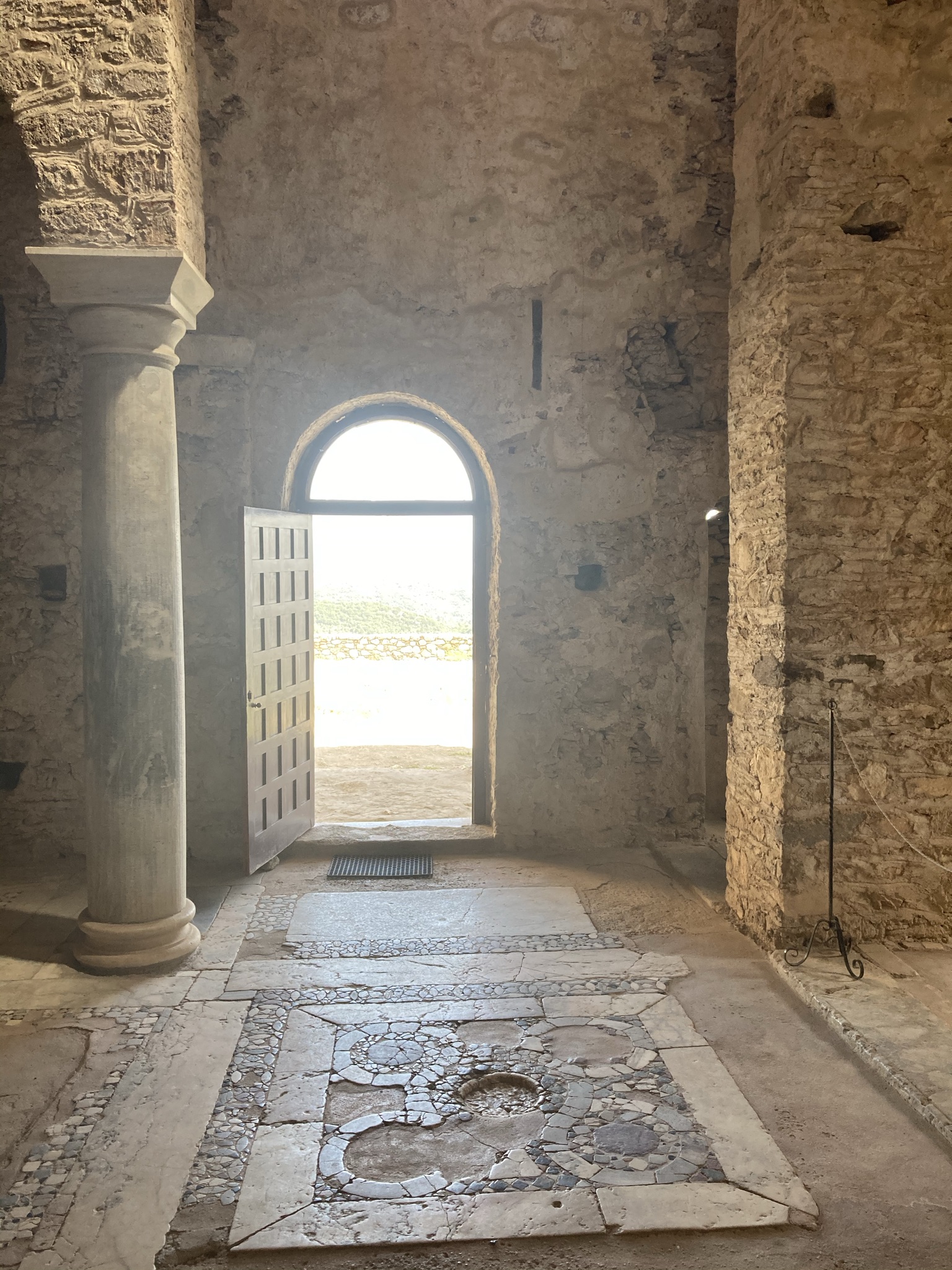
The city contains a number of beautiful churches, in different states of preservation.

Icons in the small but beautiful church of Aghia Sofia

Looking out

And a view of the lovely Monastery of Pantanassa

Photo: Wiki commons

An old map of the city

Photo: Wiki commons

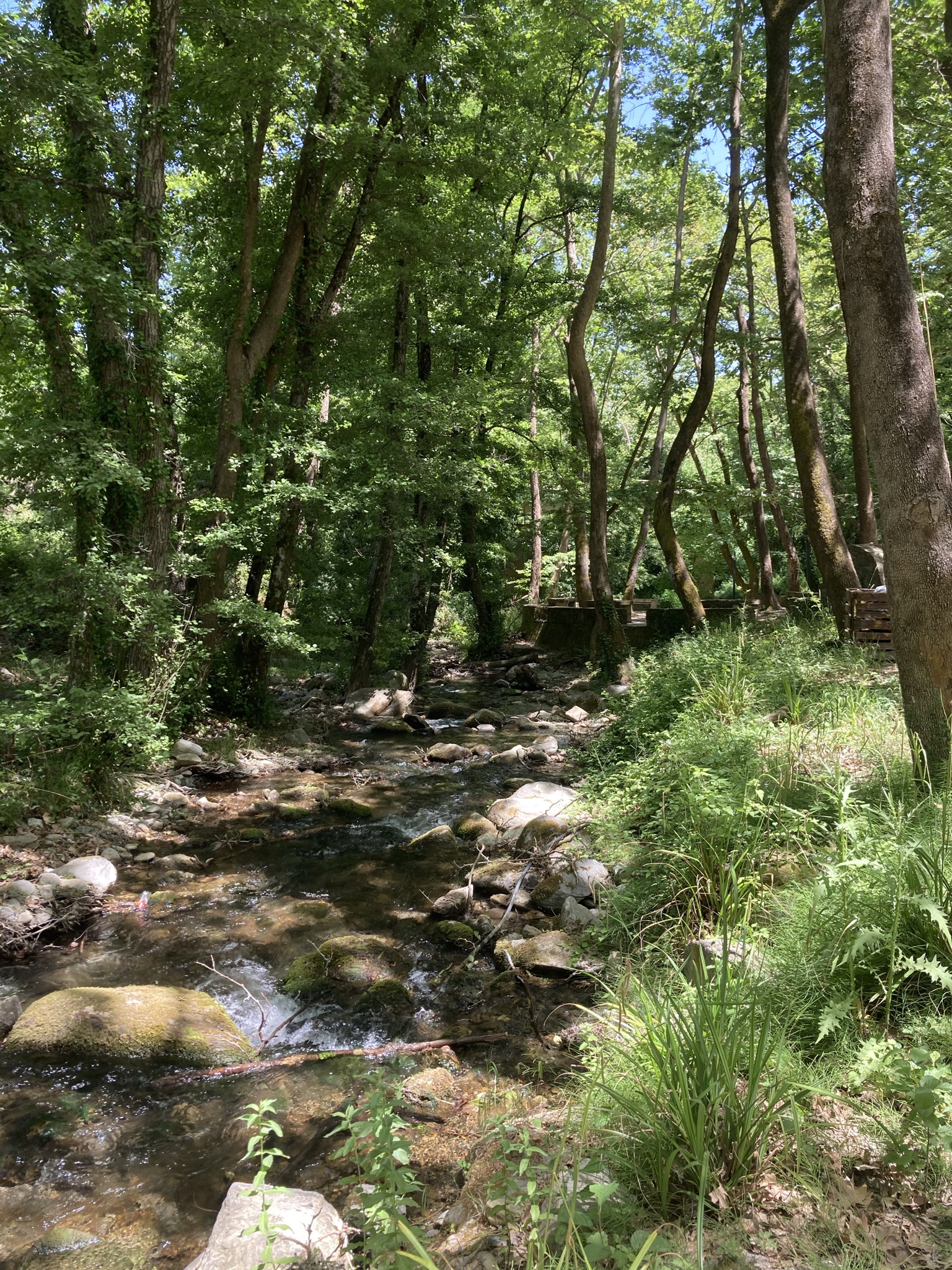
The hike made us hot and thirsty, so we descended to the village. After ice cold drinks under the shade of mulberry trees in the village square, we repaired for lunch to the village of Kastori. A small taverna with a garden full of roses at the back provided us with an excellent Greek salad and a simple meal followed by a bowl of cherries from their tree. This fortified us for another, this time shady, hike by a stream in the forest at the feet of the majestic Taygetos mountain.


The 12 days of Christmas

It being TBT today, I thought I’d repost a seasonal article I wrote in 2015, for newer readers—old hands just avert your eyes. I remember I had lots of fun making all the drawings for this post. Here goes:


Christmas can be a tiring and frustrating time. We expect too much, we want everything to be perfect. Some run themselves into the ground, feeling it’s their job to provide that perfection for family and friends. Some expect to be surrounded by luxury and glamour, to be enchanted and entertained. Some just get depressed.

The image of the beautiful family, dressed to kill, with brushed hair and dazzling smiles in front of a tree dotted with tasteful baubles, or sitting around a table laden with a delicious feast is hardly likely to materialize. The gingerbread house will refuse to stay up, and will have to be propped up with cans of tuna. The kids will squabble over their gifts and make faces at the camera, having refused to wear the velvet ruffled garments bought for the occasion. The turkey will be overcooked, and uncle John will get drunk and insult his mother-in-law. Nobody will get the gifts they’d hoped for, and the glamorous party will turn out to be totally devoid of hot babes/dudes. And then the bills will start coming in. (Just an imaginary scenario!)

Perhaps the solution is to aim for less materialistic pleasures. Trying to think what those could be, I came up with the following, somewhat fanciful, list:  of tips for the days to come.

image


On the first day of Christmas – Do something for yourself. A little treat: have a massage, go for a ride or a walk in the park. Take an hour off work for coffee with a friend.


image


On the second day of Christmas – Spend some quality one-on-one time with someone special: spouse, lover, sibling, offspring, grandchild, friend. Or even your dog.


image


On the third day of Christmas – Resolve to think three positive thoughts per day, every day. Or, to note three good things that happened. Or, to find three things to be thankful for.


image


On the fourth day of Christmas – Get four old friends together for a pizza and cards evening. Laughs guaranteed.


image


On the fifth day of Christmas – For the last full working week before Christmas, be cheerful at work. Smile and people will smile in return. Five days – it should be possible.


image


On the sixth day of Christmas – Find six good books to read. Browse in a bookshop, or go through the pile on the bedside table. Books take you away from your problems – they’re a door into another world.


image


On the seventh day of Christmas – Resolve to spend ten minutes each Sunday making a menu for the week. The cooking and shopping will become so much easier.


image


On the eighth day of Christmas – Make a list of eight fun things to do in the coming months. Book a show, visit places you haven’t seen, explore the neighbourhood. Almost as good as a vacation (but one of them could be a weekend break).

image


On the ninth day of Christmas – Bake or buy cupcakes or cookies and distribute them. Food makes people happy.


image


On the tenth day of Christmas – Get ten people together and have a party. Don’t spend a fortune, or ages cooking – everyone can bring something.


image


On the eleventh day of Christmas – De-clutter. Find 11 things to donate, recycle or bin. You’ll feel so much lighter.


image


On the twelfth day of Christmas – Call twelve people and ask how they are. Listen to what they have to say. Not your buddies to whom you talk every day: the old friend you haven’t seen for a while, the elderly aunt who bores you, the acquaintance you heard has not been well. It will make everyone feel better.

I hope this list has amused you, if nothing else. Do I hear hollow laughs? Any other suggestions?


A May wreath

Gathering wild flowers? Chopping the last of the lilac blossoms off the bush, or picking the first roses? Stealing from the neighbor’s garden or buying bunches of tulips from the roadside stand?

Everything goes when it comes to making the May wreath, a tradition dear to Greeks. Some add olive or laurel branches, and a head of garlic, to ward off the evil eye. The wreaths will adorn front doors and balcony railings, slowly drying up until the time comes to burn them on bonfires on Saint John’s day (June 23rd). Family and friends will jump over the embers for good luck.


Continue reading “A May wreath”

Fall colors

We don’t celebrate Halloween in Greece – apart from some themed kiddy parties – but how could I resist painting these awesome pumpkins?


img_4073


I love fall colors, all those burnished oranges and reds.

fullsizerender-21

img_4074

How could you ever hope to reproduce those brilliant colors in paint?

In strong light the colors are almost fluorescent. Or almost fake!

img_4087


And an irrelevant photo. But I do love ducks!


img_4086

And a swan.

img_0136


As for Halloween, the commercial aspect is hard to avoid. I even chanced upon a Simpsons spoof version of Edgar Allan Poe’s poem The Raven on television.

‘…and the silken, sad, uncertain rustling of each purple curtain…’

Was a spookier verse ever written?

Photos by Peter (follow him on Instagram @Alma_Peter)

One year on…

I started this blog a year ago, in June 2015: a place to rant against my pet peeves, but also to share the good moments of life in this troubled land, and to showcase its diversity and many beauties. And some of its amazing people.
To date I’ve notched up 105 posts, and accumulated over 10,000 views. I only post once or twice a week, when I actually have something to say.  (Or I think I do). And that works out fine for me.

Those numbers would probably be sneered at by Taylor Swift or Kim Kardashian, but who cares? To me, the biggest reward has been meeting you guys. I never imagined the blogosphere would be such a fun place. I love discovering new blogs, following my favorites, hosting guest bloggers, and writing guest posts. I enjoy sharing my photos and drawings.  I love your comments and likes. Keep it up!
To thank you all, I’ve made a cake.

image


And drinks! Enjoy!

image