Wild thing is a life of the artist Paul Gaugin. Sue Prideaux does her subject proud—she is a sympathetic and judicious biographer who writes like a novelist and has researched her subject from different angles.
The biography contains information which was new to me. Gaugin had an extremely varied and interesting life, knowing both riches and poverty.
I will not reveal too much detail because it is a book well worth reading. But did you know that Gauguin:
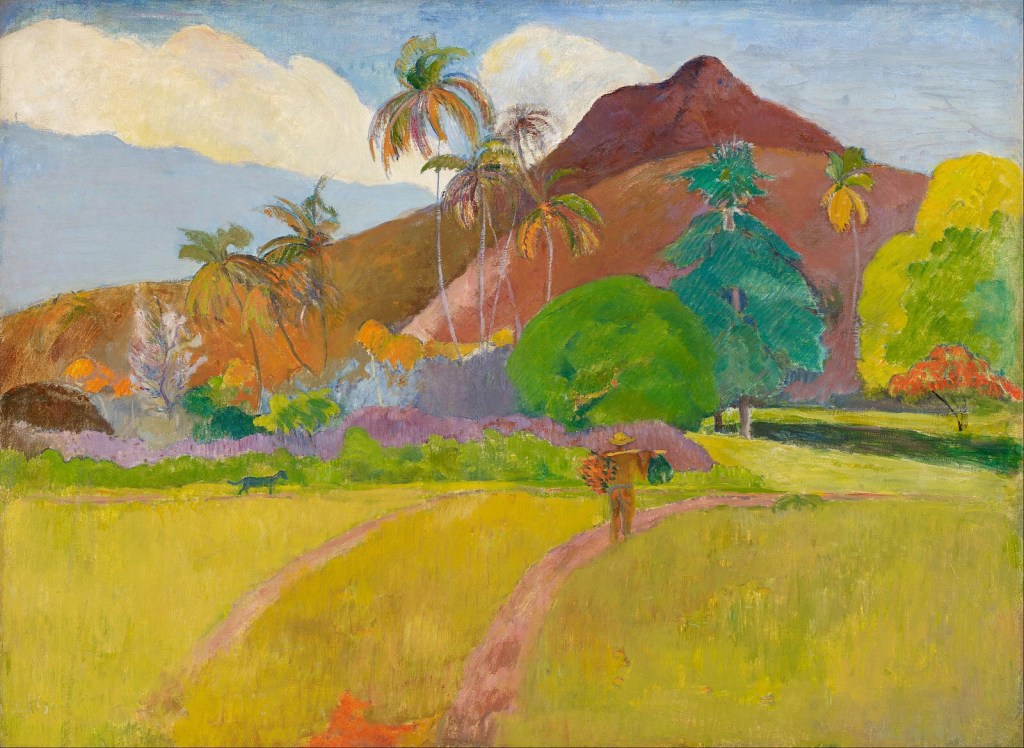
Paul Gaugin, Tahitian landscape
-Spent the first seven years of his life in Peru, which left indelible impressions of colour, heat and life in him? To my mind, this explains a lot about his palette and use of colour.
-That he then led a very bourgeois existence, working at the Bourse in Paris and becoming extremely wealthy? Even as he started painting and married, he lived luxuriously, spending without a thought for the future.
Then the Bourse failed in 1882 and for the rest of his life he was poor, living a hand to mouth existence, begging and borrowing from friends. He often did not have enough to eat.
La vision après le serment, 1888
-That he had a very complicated and close relationship with Vincent Van Gogh, which continued up to his death. Read the book to find out details of the famous ear-cutting episode.
-That Vincent’s brother, Theo Van Gogh, was Gauguin’s agent.
-That he was deeply affected by attending a public execution in Paris: the death by guillotine of a mysterious murderer.
-That he was greatly inspired by the colonial exhibits at the 1889 Exposition Universelle in Paris, where the Eiffel Tower, built for the celebration, soared heavenward, lit by electric light. Round its feet sprang recreations of the colonies and their treasures, from which he borrowed elements and incorporated them into his art. For this Camille Pissarro called him a bricoleur, a cobbler-together of second-hand ideas.
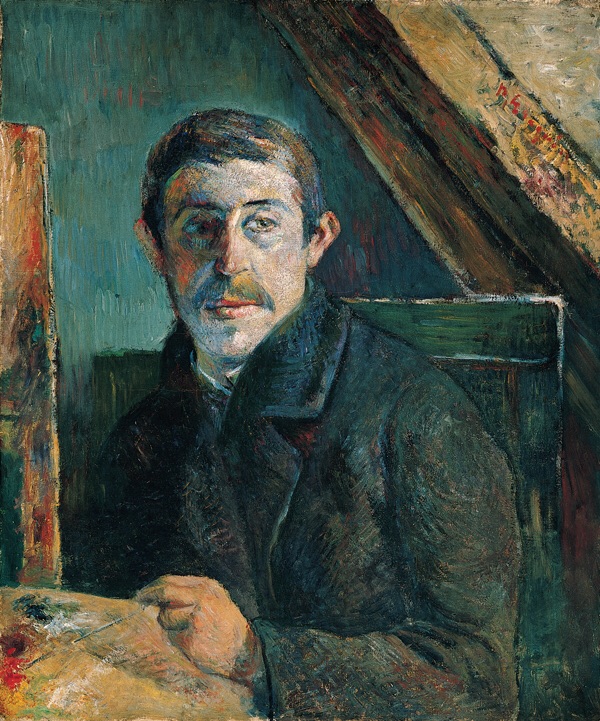
Self portrait
The book details his marriage and relationship to his children, and his friendships and dealings with prominent men of his world, such as André Gide, Pierre Loti, August Strindberg, Frederick Delius and others. One of his main supporters in hours of need was Edgar Degas. The biography is full of delicious anecdotes of this crowd of supremely talented men.
Finally we get an account of his latter years in Tahiti, where he ended up almost by chance. Gaugin’s life is one of the richest in the history of wester art, and Sue Prideaux does it full justice.
Les ancêtres de Tehamana, 1893 (portrait of Tehura).
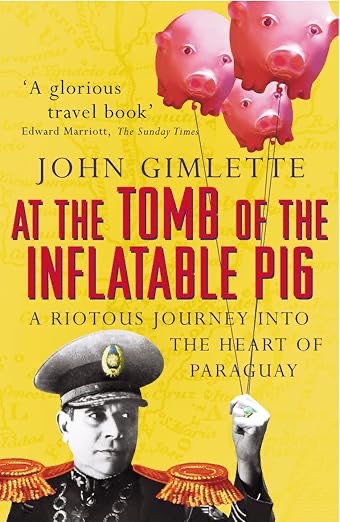
“Reading the book is like watching a Komodo dragon eat a tethered goat. Paraguay, as Gimlette portrays it, is . . . completely bizarre. . . . Conquistadores and Nazis, whores and cannibals, all of them rather awful, all of them splendidly rendered. . . . Graham Greene would have approved.” –National Geographic Adventure
I seem to be on a roll of recommending favourite books. This one is in a category of its own, a crazed travelogue on Paraguay, one of the most exotic, captivating and eccentric countries in the world, according to writer John Gimlette. Even the title of the book is insane.
I have never been to Paraguay, nor are there any Paraguayans amongst my South American friends, so I cannot pretend to have a personal opinion on the veracity of his observations. I can only say the book enchanted me, with its descriptions of hellish jungles, Germanic villages, missionaries, utopian experiments and coups. Apparently the Paraguayans venerate Princess Diana and, if they deem it necessary, will call in Scotland Yard.
Here’s an excerpt from Chapter 1:
I had a room on the second floor. It was a vast, mildewed space that might once have been used for dancing classes. It had floor-to-ceiling louvred shutters that were so seized up with drifts of green paint that they’d become petrified in the open position, admitting scalding blasts of dust and roasted corn from the street below. I shared this great green tropical ballroom with two others, for whom it was, in its own way, heavenly. The first was an Englishman called Kevin Pluck who’d come to South America to give some long and careful thought to the question of whether or not he should ever get a job. He had an opening in the car factory at Luton, but the delicious, orange-blossomed lassitude that overwhelmed Asunción ensured that he wasn’t going to hurry the decision. He’d at least made up his mind to return to Luton with a suntan and so he spent a lot of time and effort trying to go brown. For some reason his skin remained determinedly cheesy.
I have given this book to various people as a gift, but I never followed up on whether they had read it and liked it, as I don’t believe in gifts with strings attached. I do however, consider it a fine aid to armchair travel. You will become lost in a world so exotic that it will make you feel like Alice in Wonderland.
In yet another ineffectual effort to put some order into my bookshelf I came upon one of my favourite books of all time, The Worst Journey in the World, by Apsley Cherry-Garrard (1886 -1959).
This is an account of Robert Falcon Scott’s ill-fated expedition to discover the South Pole in 1911, written by the youngest member of the team, who was just 24 at the time. A memoir, in a completely immersive style, by someone who had never written a book before, nor wrote another in his entire life.
I came upon the book by chance many years ago, browsing in the wonderful Heffers bookshop in Cambridge. Just the cover of the hardback, the shape and heft and compact size of the wonderful Picador Travel Classics edition and I was sold. I bought the thing as an object, but then I started reading it and became hooked on the subject and, most unlikely for me, Polar exploration in general.
The old-fashioned, unreal feel of the whole organisation, the details and lists of supplies and packing, the endless debates of dogs versus ponies versus men hauling the sleds. Why would anyone want to put themselves through such an ordeal, but in fact, many did. They vied to get on the expedition crew. They felt it was heroic and, being British, even more heroic to combine the race to the South Pole with scientific projects such as geologising, which meant carrying about bags of rock samples, as well as going on a winter trip in the middle of the endless dark of the Antarctic winter (the Worst Journey in the title) in order to collect Emperor penguin eggs from their impossible to reach breeding grounds. Cherry was one of three men who went on that little pleasure trip, and it is a miracle how they survived, especially since their tent was blown away in a storm one night.
Apsley Cherry-Garrard with frostbitten nose
In fact it was a miracle any of them survived, because they had miscalculated the supplies and equipment needed. Scott and his team of four all died, from scurvy and cold and hunger, having faced the most bitter of disappointments. They had lost the race—finally arriving at their destination to find the Norwegian flag already planted there. Because of course, Roald Amundsen had no interest in penguins or rocks. He and his team were highly skilled on skis and used dogs to pull the sleds and got there in a ruthlessly efficient manner, five weeks before Scott. They also had a better diet of fresh meat and so did not suffer from scurvy.
Both Amundsen and, more importantly, Scott’s wife, learned of his death more than a year later, which in our era of instant communications, seems weirdly shocking.
Photo from Wikipedia
There have been many books written on polar exploration, about the exploits of Amundsen and Shackleton and others. I have read quite a few and watched films, especially the 1985 seven-part series called The last place on Earth. I find it all quite fascinating, more so since it is something I would never dream of attempting myself. I think it amazing that still, especially now that there is nothing left to ‘discover’, there are people still doing it—such as Sir Rannulph Fiennes, who, amongst other expeditions, was the first person to visit both the North Pole and the South Pole by surface means and the first to completely cross Antartica on foot.
Be that as it may, the book is engrossing and will make you travel into a different world. What is particularly interesting is the minutiae of daily life and the relationships between the men facing such difficult conditions. Highly recommended.
Being a bookworm from a young age, I read as the mood takes me, across a wide variety of genres: literary fiction, memoir, historical fiction and non-fiction, travel books, short stories, thrillers and crime. I have now arrived at an age where, if a book does not draw me in, I abandon it. So many books, so little time…And it has long ago ceased being homework. I read to be entertained, but also to be drawn into different worlds.
Into this last category come atmospheric books, such as the Booker Prize shortlisted Stone Yard Devotional, set in a religious community, or the winner, Orbital, set in space. The pace can be slow, but it is a delight to find oneself in a place one will never visit. The opposite of a thriller or police procedural, where you are waiting with bated breath to find out whodunnit.
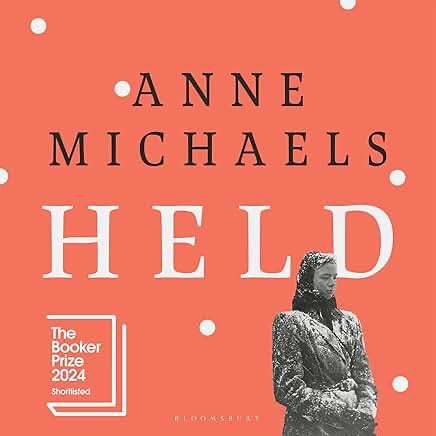
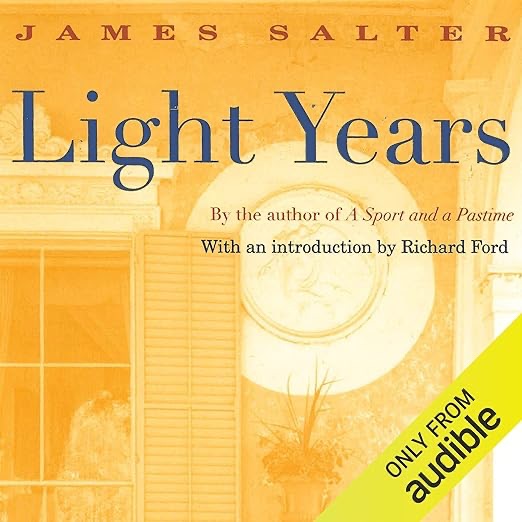
Occasionally, though, I come across a book where the plot does not matter, because the writing itself is so beautiful that I relish every sentence. I have lately, by coincidence, read two books of that calibre: Held, by Anne Michaels and Light Years, by James Salter.
Anne Michaels is an award-winning poet, which is perceptible in this fragmented tale of four generations of women. It explores the trauma of loss and the impact of love, shifting between times and viewpoints. You get submerged in the power of language, which is simply exquisite—lyrical and vivid. Like poetry, like music.
The second book is the story of a marriage, between two people who have privilege, charm but also flaws.
It describes the brittleness of happiness, the chinks in the perfect facade, the pull between contentment and desire. The inability to enjoy what one has, the longing to escape, the lure of something different. Restlessness, unfocused dissatisfaction. Voices heard, details of clothing, music, food. Flashes of landscape, the beauty of nature, subtle thoughts and feelings. The prose is lucid, the style is impressionistic, flawless.
Neither of these books have much of a plot, and ultimately perhaps this is not enough. A few of the reviewers complain about this and of course, liking a book or not is entirely subjective. It also much depends on one’s mood. Occasionally, however, it is a joy to luxuriate in wonderful language, where every sentence is a asks to be re-read. I loved both books and highly recommend them.
I have the great honour of joining in my bloggy friend Geoff Le Pard’s tour to promote his new book, The Art of Spirit Capture.
Geoff has, in his spare time, written an astonishing number of books, just how many I did not realise until I saw the complete list. I am full of admiration (and envy, since he makes my own efforts seem pretty pathetic…) I also like his sense of humour and style of writing—and general take on life.
So, without more ado, here is the blurb for the book:
The Art Of Spirit Capture
Jason Hales is at his lowest ebb: his brother is in a coma; his long-term partner has left him; he’s been sacked; and Christmas is round the corner to remind him how bad his life has become.
After receiving an unexpected call telling him he’s a beneficiary of his Great Aunt Heather’s estate, he visits the town he vaguely recalls from his childhood, where his great aunt lived. Wanting to find out more, he’s soon sucked into local politics revolving around his great uncle’s extraordinary glass ornaments, his ‘Captures’, and their future.
While trying to piece his life back together, he’ll have to confront a number of questions: What actually are these Captures and what is the mystery of the old wartime huts where his uncle fashioned them? Why is his surly neighbour so antagonistic? Can he trust anyone, especially the local doctor Owen Marsh and Charlotte Taylor, once a childhood adversary, but now the lawyer dealing with the estate? His worries pile up, with his ex in trouble, his flat rendered uninhabitable and his brother’s condition worsening. Will Christmas bring him any joy?
Set in the Sussex countryside, this is a modern novel with mystery, romance and magic at its core, as well as a smattering of hope, redemption and good cooking.
Mystery, romance and magic, laced with cooking—what more can one hope for?
Here is Geoff explaining a little more about his process:
How To Find Your Characters; Death Becomes Them In the Art, the initial piece that started me towards this novel centred around a glass blower, Ben Wood who’d discovered how to capture a deceased’s spirit in a glass pendant.
I killed him off.
It didn’t take me long to realise I had to tell this story from the viewpoint of someone who knew nothing about these captures, nor what was expected of him with regard to them. If the person who made them, who’d invented them and created the rules around them, was still alive, it would become one of those irritating fiction devices to keep my main protagonist in the dark, to build suspense. But if he was dead, indeed had been for a while and those who’d come to depend on, at least the idea of Spirit Captures were waiting to find out if the secret had died with him, then the mystery, when told from the point of view of the main protagonist wouldn’t be a device but very natural.
Ignorance, at least in good fiction, is essential and bloody annoying for the main protagonist.
That having been decided I needed to develop a way in which the story unfolds as we see if indeed the secret is lost. You’ll have to read the book to find out; all I will say is the answer is neither obvious or straightforward.
And something about the Author, in his own words:
Geoff bedazzling a masked beauty
Who Am I?
For those who don’t know me, I’m an outwardly sixty-something Brit (Inside, I’m still in my late teens, wondering what life has in store), residing in one of London’s villages some five miles to the south of the Capital’s centre. In those six and a half decades, I have stopped: being self-conscious; practicing as a lawyer (you can only practice for so long before you realise you’re not getting any better); attempting consecutive cartwheels (now its single cartwheels and time spent in traction); being embarrassed by my hair; believing I should try and be politically correct; expecting to be called up to play cricket for England; buying new suits and wearing ties, save to hold up trousers; and weighing myself. In that same period I have started: writing in all styles and genres; volunteering; practising as a parent (unlike the law, you have to keep practising); baking with increasing competence; a deep continuing love affair with both my wife and Dog; a no doubt lifelong relationship with my lawn; nightly excursions to the bathroom; ballroom and Latin American dancing (I can waltz but I’m still one cha sort of the full set); and a determination to go green, though, I hope, not because of a creeping stasis that leaves me susceptible to developing mould. I find pleasure in small things (and I will leave the smutty amongst you to run with the obvious double entendre), inspiration in the opaque and opulent alike, and I have developed a firm belief that nowadays I need little stuff and loads of new experiences, which post Covid I intend embracing with the grip of an anaconda and the lack of embarrassment of my great aunt Ruby, whose attempts to offer free hugs to all and sundry in her small village were received, mostly, with delight, save for those few who were allergic to lavender. I can’t stand grapefruit or marmite, Tintin and Paddington Bear remain my heroes and in the eleven general elections since I was eligible to vote, I have put my cross next to all the main political parties at least once as well as spoiling my ballot though a poorly timed sneeze and voted for the Monster Raving Loony party merely to irritate my father. I am blood type A+ which annoyingly makes me very common.
And finally, here is Geoff’s author bio and link to his Amazon page. Do take a look, I promise it is worth your while.
Geoff Le Pard started writing to entertain in 2006. He hasn’t left his keyboard since. When he’s not churning out novels he writes some maudlin self-indulgent poetry, short fiction and blogs at geofflepard.com. He walks the dog for mutual inspiration and most of his best ideas come out of these strolls. He also cooks with passion if not precision.
A man and a boy, sole survivors of an inflatable boat full of refugees, wash up on a remote and unnamed Greek island. Before long they come upon the incongruous sight of a grazing elephant. It turns out the animal belongs to a circus which is stranded on the island due to its owner’s debts, but the owner still takes the strangers in and gives them food and shelter.
The boy, Jamil, who has lost his family at sea, dotes on the man, Mokdad, who has saved him. Mokdad feels responsible for the boy, but dislikes him and keeps him at arm’s length. The circus owners are, in a way, immigrants themselves—or, at least, aliens on the island—but still manage to provide for the strangers out of their meager means.
When more refugees arrive on the island, Mokdad avoids them, even though they are compatriots who speak his language. He feels guilt about having fled his country, and about an incident that happened at sea.
This slim volume, written by Greek-born author PanosKarnezis, deals in a terse but evocative manner with themes of alienation, hospitality (philoxenia, as it is called in Greek, being the antithesis of xenophobia), life and death decisions, courage and cowardice. Nothing is as it seems at first, and yet the novel brims with compassion. None of the characters are particularly likeable; even the child seems strangely unaffected by the death of his family. In fact the most likeable character, to me, is the elephant, who is also a migrant in an alien land, but is totally innocent. She is sad and lonely, but ever dignified, and makes us care the most about her fate.
The narrative is spellbinding. The physical details of the island are described sparsely but so evocatively that, for a Greek at least, they ring vividly true. As does the difficulty humans feel in connecting with each other.
Karnezis was born in Greece in 1967, and came to England in 1992 to study engineering. After working in industry, he studied for an MA in Creative Writing at the University of East Anglia. His first book, Little Infamies (2002), was a collection of connected short stories set in a nameless Greek village. This is his fifth.
Karnezis is a brilliant storyteller, and this book will stay with you for days after you’ve turned the last page. Its theme is a very current one, but he deals with it in a delicate and original way. Highly recommended.






 Letters from Athens