The Booker Prize shortlist

The Booker Prize season has come around again, and the shortlist has been published. Let me say at once that I have not read any of these books, but last year the list contained some pretty good stuff, so I am hopeful of a repeat, especially since Roddy Doyle is Chair of the 2025 judges and he knows a good story when he sees one.

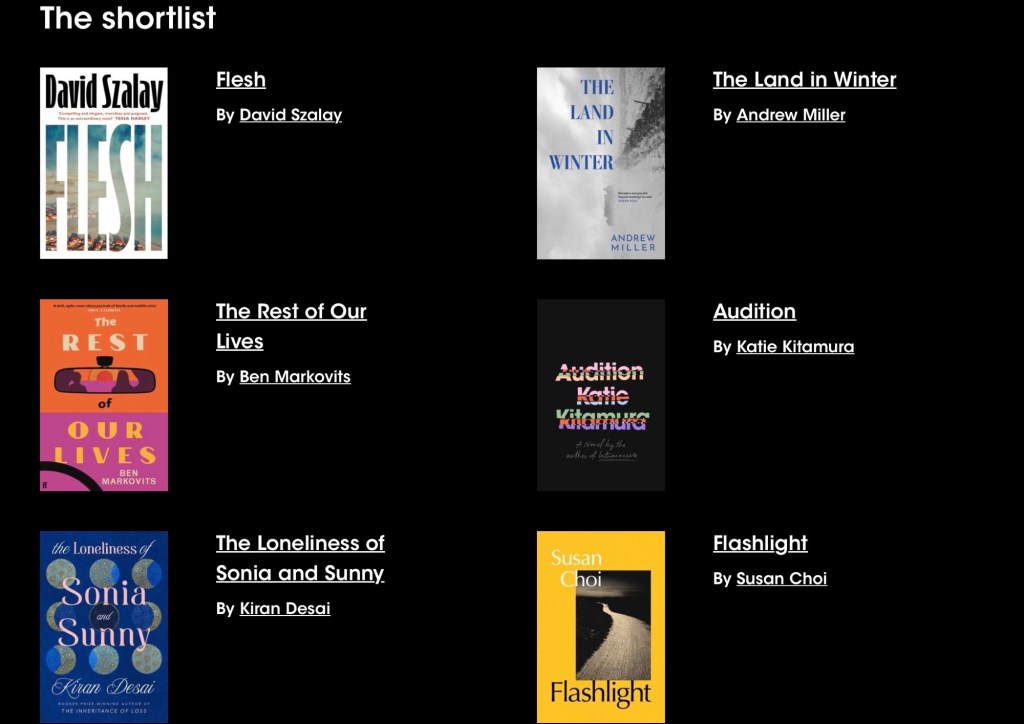
Photos from the Booker Prize site

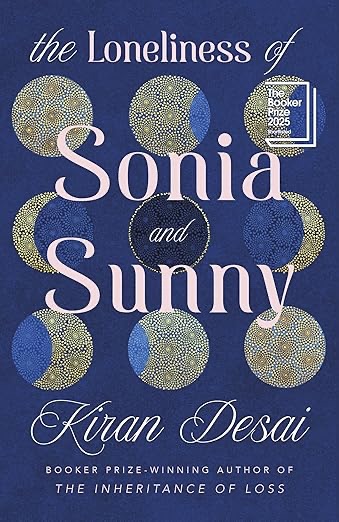
I don’t suppose I will read them all, and I will look at some on the long list as well, but one I am looking forward to tackling is 700-page The Loneliness of Sonya and Sunny, by Kiran Desai (who has won it before in 2006 with The Inheritance of Loss.) It reminds me of another doorstop, A suitable Boy by Vikram Seth, which I devoured at the time. Many years in the making, it is an epic tale of love and life.

Flesh, by David Slazay, is (I quote the Booker Prize site): “A propulsive, hypnotic novel about a man who is unravelled by a series of events beyond his grasp.”

The Land in Winter, by Andrew Miller, is about two couples, a doctor, a farmer and their respective wives, whose lives are upended in the middle of a harsh winter landscape.

The Rest of Our Lives, by Ben Markovits, is about a middle aged academic who goes on a road trip after his wife has an affair, trying to escape his problems.

The last three all seem to be about lives unravelling. Hmm…it depends how each writer deals with the subject.

Audition, by Katie Kitamura, is about the relationship between two very different people: an attractive actress and a man young enough to be her son. Intriguing.

Flashlight, by Susan Choi, is a saga about a father’s mysterious disappearance and the reverberations of this event on his family.

All six authors are deep into their literary careers, with a number of books to their name and, besides previous winner Kiran Desai, Andrew Miller and David Szalay have been shortlisted before.

If (or when) any of you read any of these books, I will be glad of an opinion. In any case, a pile of new books is always enticing, even if at the moment it is not on my shelf but only on my screen.

Rediscovering Barbara Pym

Does anyone remember Barbara Pym?

I’d read her books years ago while still at school. I wonder why, since I was at Greek school and she could hardly have been on the curriculum. Probably browsing my mother’s bookshelves, where I was allowed a free run. At the time it was difficult to find foreign books in Athens and she was member of a book club – cloth-bound volumes arrived by post every month or so: Agatha Christie, Georgette Heyer, Ian Fleming, Neville Shute. I still have most of them. The thrill of it, the anticipation of receiving a new book, before the instant gratification of Amazon (I almost miss it—still prefer Amazon, though.)

But I digress. I recently came upon a BBC dramatisation of some of Pym’s books on Audible and downloaded it on impulse.

Very old-fashioned cover, isn’t it?

Barbara Pym wrote a series of social comedies in the 50s, but by the 70s her work was deemed too old-fashioned and was rejected by several publishers. Still, she kept writing, and forged a friendship with the poet Philip Larkin, who championed her work. When both he and the critic Lord David Cecil nominated her as the most underrated writer of the century, her career was revived. Her book Quartet in Autumn was nominated for the Booker Prize.

Pym was a shrewd observer of a certain type of English middle-class behaviour. Spinsters, bored housewives, academics and, in particular, vicars and curates, all came under her sharp and ironic scrutiny.

Of course I did not recall details of the books but I seemed to remember amusing and straightforward stories of village life and church goings-on. Via the dramatisation I am now discovering a narrative full of undertones, sexual innuendo and a delightful disregard for morality. Respectable wives go out to lunch with their friends’ husbands, spinsters plot to entrap men into marriage, older women meddle in everything. County housewives obsess over the new curate as they would today over the Kardashians. And all of it delivered in posh cut-glass accents you never hear any more because people are careful to disguise them even if they spent their childhood at Eton.

Probably this is not to everyone’s taste—I don’t think the young would appreciate it—and even for me there is no element of nostalgia, since it is set before my time. But it is an excellent production and I am deriving considerable amusement from listening in the car.

In praise of Penelope Fitzgerald

My days, darkened by the quasi-permanent absence of sunlight, were unexpectedly lit up by the discovery I had somehow missed reading a couple of Penelope Fitzgerald’s books, although she has long been one of my favourite writers.

Penelope Fitzgerald died in 2000 aged 83. In 2008 The Times listed her among “the 50 greatest British writers since 1945”. The Observer in 2012 placed her final novel, The Blue Flower, among “the ten best historical novels”, and A.S. Byatt called her, “Jane Austen’s nearest heir for precision and invention.”

Fitzgerald’s books are short, but within a few pages her prodigious powers of imagination create whole worlds. In The Beginning of Spring, she manages to describe the minutiae of life in pre-Revolutionary Russia as if she had been born there. But the research is worn so lightly it is imperceptible.

The Blue Flower, about the poet Novallis, has always been one of my favourite books. Based on the life of Friedrich von Hardenberg (1772–1801) it describes the time when, aged 22, before he became famous under the name Novallis, he became mystically attracted to the 12-year-old Sophie Von Kühn, an unlikely choice for an intellectual of noble birth given Sophie’s age and lack of education and culture, as well as her physical plainness and negligible material prospects. The couple became engaged a year later but never married as Sophie died of consumption a few days after her 15th birthday. The book is sad, subtle and romantic.

One of the books I had not read yet is The Golden Child, which is actually a murder mystery (she did not include it in her novels) with such a biting sense of humour that I found myself laughing out loud. The book is set in a museum, where “Even in total silence one could sense the ferocious efforts of the highly cultured staff trying to ascend the narrow ladder of promotion.” A perfect phrase if there ever was one. Or the description of the characters, even their names: “Hawthorne-Mannering, the Keeper of Funerary Art, was an exceedingly thin, well-dressed, disquieting person, pale, with movements full of graceful suffering, like the mermaid who was doomed to walk upon knives. Born related, or nearly related, to all the great families of England (who wondered why, if he was so keen on art, he didn’t take up a sensible job at Sotheby’s), and seconded to the Museum from the Courtauld, he was deeply pained by almost everything he saw about him.”

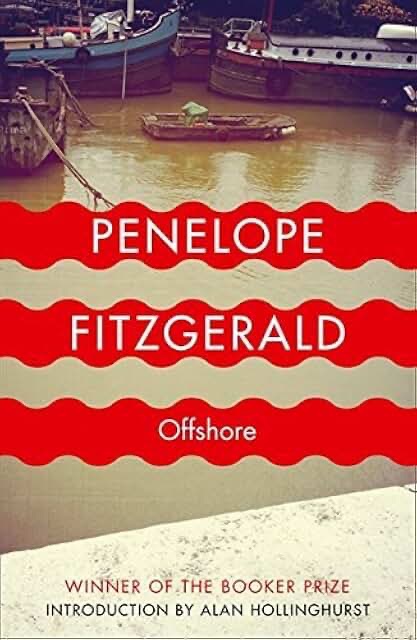
Her third novel, Offshore, won the Booker Prize in 1979. Based on her own years of living on an old sailing barge moored at Battersea Reach, it is about the mixed emotions of houseboat dwellers who live between the water and the land, fully belonging to neither.

Although she launched her literary career late, at the age of 58, Fitzgerald wrote nine novels, plus several biographies, short stories and articles. She had a hard life because due to her husband’s alcoholism she faced poverty, living for years in a houseboat which sank twice, and in public housing. She taught until the age of 70. Would she have been as good if she’d had an easy life? I think probably yes, because she was born in a scholarly family: she was the daughter of Edmund Knox, later editor of Punch, and Christina, daughter of Edward Hicks, Bishop of Lincoln and one of the first female students at Oxford. She was a niece of the theologian and crime writer Ronald Kox, the cryptographer Dillwyn Knox, the Bible scholarWilfred Knox, and the novelist and biographer Winifred Peck. She obviously also had great inherent talent.

She remains a unique, luminous voice in the literary firmament. I highly recommend her to anyone wanting to immerse themselves in her world.

And the winner is…

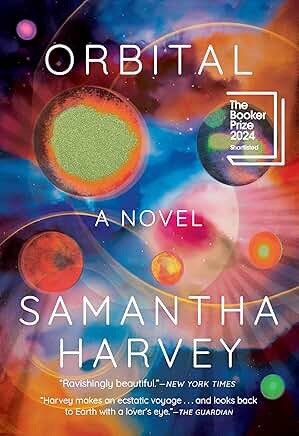
Orbital, the book about six astronauts in space I recently reviewed, has won the Booker Prize.

I admit I have not read the other books on the short list—or rather, I am in the process of reading Rachel Kusk’s Creation Lake. I like her writing, and loved The Mars Room, but I’m finding this one slow going. Some of the others are tempting, though, and I will get to them eventually.

Photo: bdnews24.com

Nevertheless, even though I lack comparison, I think this book is a very worthy winner, being at once original, lovely to read and beautiful in every way.

Samantha Harvey nearly gave up writing the book at some point, because she felt like an impostor, never having been in space. But then she took it up again, during the pandemic, and watched hours and hours of streaming video from the International Space Station while writing. Thus she could observe Earth from space, actually completing whole orbits and describing what she saw. The result is nothing short of miraculous.

In her acceptance speech, Harvey said she wanted to dedicate the prize “to everybody who does speak for and not against the Earth; for and not against the dignity of other humans, other life; and all the humans who speak for and call for and work for peace.”

Harvey, 49, is the author of four previous novels, including “The Wilderness,” about a man with Alzheimer’s, which was longlisted for the 2009 Booker Prize, and 2018’s “The Western Wind,” about the mysterious death of a village’s wealthiest resident in medieval England. She also wrote “The Shapeless Unease: A Year of Not Sleeping,” a 2020 memoir about her struggles with insomnia.I’m tempted to try one or two.

Of course, a few people thought it a good idea to publish articles panning Orbital in comparison to the other books on the short list. Although of course everyone is entitled to their opinion—and all art appreciation is subjective—I thought it was in poor taste to do so today. It smacks of sour grapes. Let the woman enjoy her day of glory—they are hard enough to come by. So, congratulations, Samantha Harvey!

Kazuo Ishiguro

Congratulations to Kazuo Ishiguro for winning the Nobel Prize for literature this year. A subtle, quietly assured writer, he has always been one of my favorites. I admire him for possessing the combined powers of observation and imagination, and for his evocative but minimalistic style.

Photo source: Google/Goodreads

Ishiguro was born in Nagasaki and came to England with his parents at the age of five. He’s an immigrant, in other words, but I’m sure the English are proud to claim him as their own. One of his most famous novels, The Remains of the Day (Booker Prize of 1989) is written from the point of view of a quintessentially English character, a butler. I’m not making any particular point by writing this, I’m just fascinated by the combination of cultures and the ability of someone to imagine different worlds.
Ishiguro’s latest novel, The Buried Giant, was a wonderful example of this, being set in a a sort of medieval world, an England after the departure of the Romans. The Nobel committee praised it for exploring “how memory relates to oblivion, history to the present, and fantasy to reality”. Some people found it hard going, but I was totally mesmerized.

Ishiguro was surprised by his win, to the extent that at first he thought it was a hoax. He said: “Part of me feels like an imposter and part of me feels bad that I’ve got this before other living writers. Haruki Murakami, Salman Rushdie, Margaret Atwood, Cormac McCarthy, all of them immediately came into my head and I just thought wow, this is a bit of a cheek for me to have been given this before them. And because I’m completely delusional, part of me feels like I’m too young to be winning something like this. But then I suddenly realised that I’m 62, so I am average age for this I suppose.”

Ishiguro is also a musician and one of Bob Dylan’s greatest fans, so he is a fitting successor to last year’s surprise winner.


I’m now off to buy When We Were Orphans, which for some reason I haven’t read.

Click the link below to watch a video where Ishiguro explains how his wife made him scrap his latest novel after two years’ work.

http://www.bbc.com/news/av/entertainment-arts-31693964/kazuo-ishiguro-s-wife-demanded-rewrite-on-latest-novel