Rays of sunshine – J. M. W Turner

Rays of sunshine are not too plentiful this weekend—neither in the weather, because it is persistently drizzling (just enough to soak you after a while,) nor in the absolutely horrendous news. And I do hope none of you has been indulging in a sunny holiday in Dubai, ha ha (sorry about the graveyard humour.)

However, sunshine is to be found in the wonderful paintings of J. M. W Turner, at the joint exhibition with John Constable at Tate Britain.
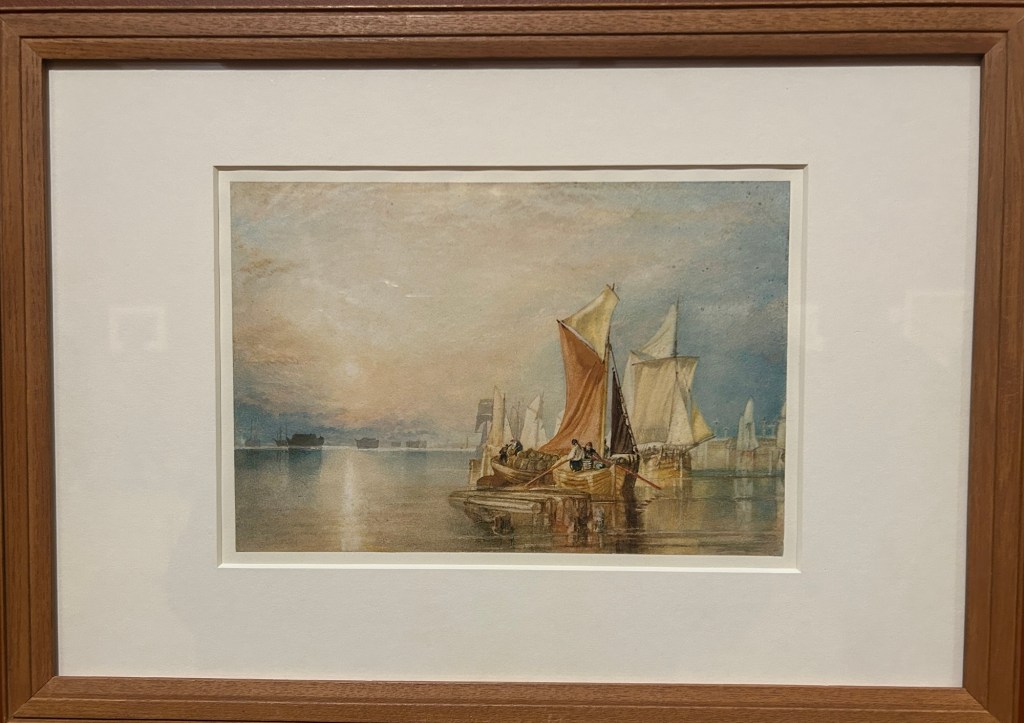
Stangate Creek, 1823-1824, watercolour on paper

Born within a year of each other – Turner in 1775, Constable in 1776 – and both trying to transform landscape painting, the two were great rivals, rather than friends.

Raised in the gritty heart of Georgian London, Turner quickly became a rising star of the art world, beginning his formal training at the Royal Academy Schools aged just 14 and exhibiting there soon after—whereas Constable, the son of a wealthy Suffolk merchant, faced a longer, more arduous rise to acclaim.

I think Constable was a very accomplished, solid artist who funded his life by painting portraits of wealthy people in order to be able to indulge in his great love, landscape painting. The combination of known faces and beloved places makes for an evocative and precious portrait of life in Regency England.

The juxtaposition of these two artists is certainly an interesting one, but may I say at once that in my mind Constable loses by the comparison. The curators cleverly did not place their works next to each other, but gave separate rooms to each.
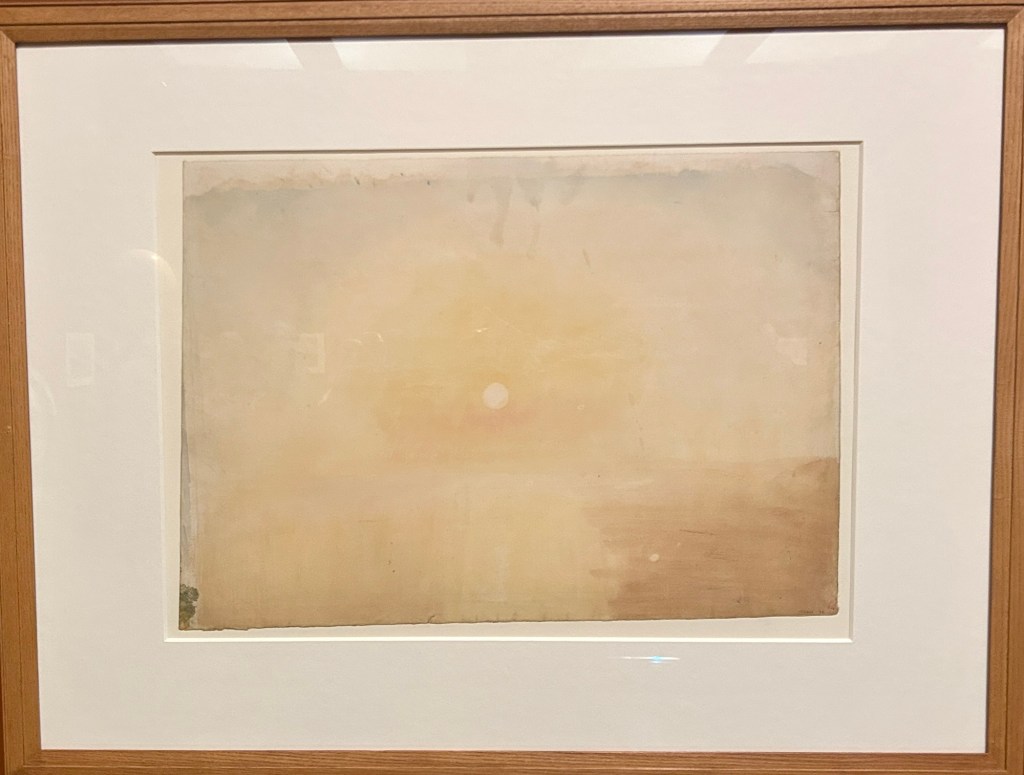
The sun rising over water, 1825-30, watercolour on paper

At the time they were exhibiting, Constable had a solid following and favourable reviews, whereas Turner was thought a genius by some, but deranged by others. In our modern consciousness and wider knowledge and appreciation of art, Turner’s paintings are mind-blowing. His treatment of the natural elements, wind, rain, water, clouds, sunrises and sunsets—in fact, all aspects of light and its effects, are unique. Especially the watercolours—the way he moved paint around and scraped paint off in places to achieve the translucent quality of the air around him is astonishing. Watercolour is a very delicate and elusive medium, and mistakes are dearly paid for; but he found it convenient and easy to transport so that he could capture the effects of light on nature live.
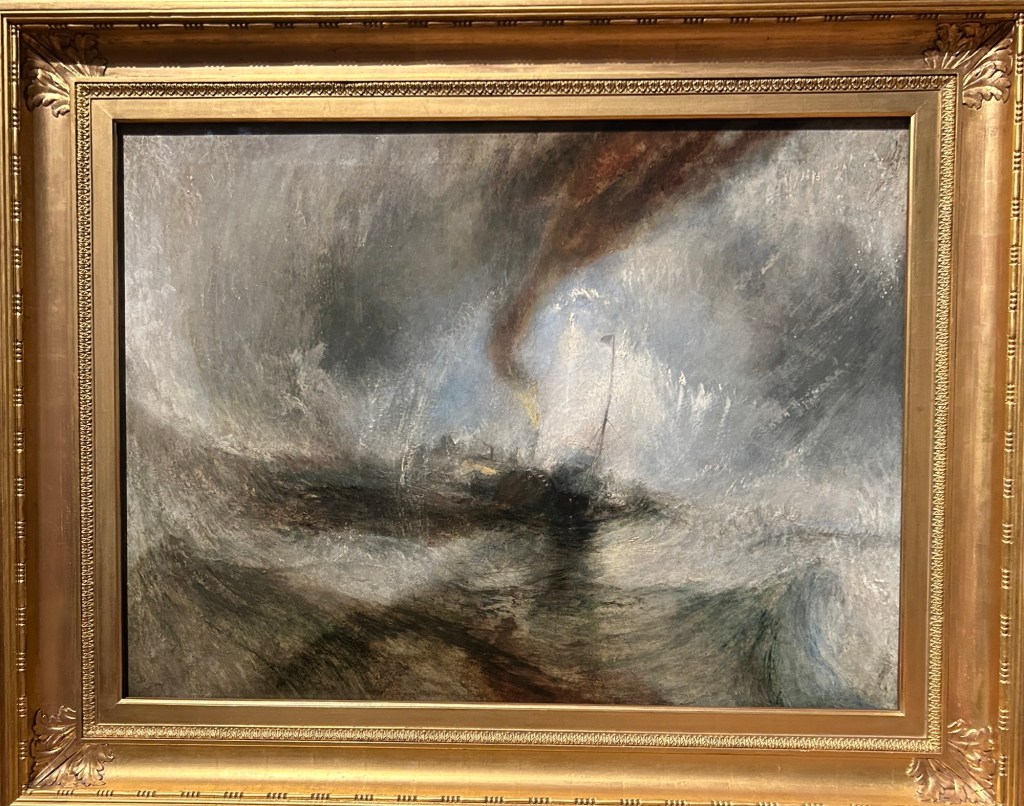
Snow storm – steam boat off a harbour’s mouth. Oil on canvas. This is one of Turner’s most daring paintings.

Many of the works in the exhibition are from private collections, so the opportunity to see them in person, and in close proximity, was a rare treat.
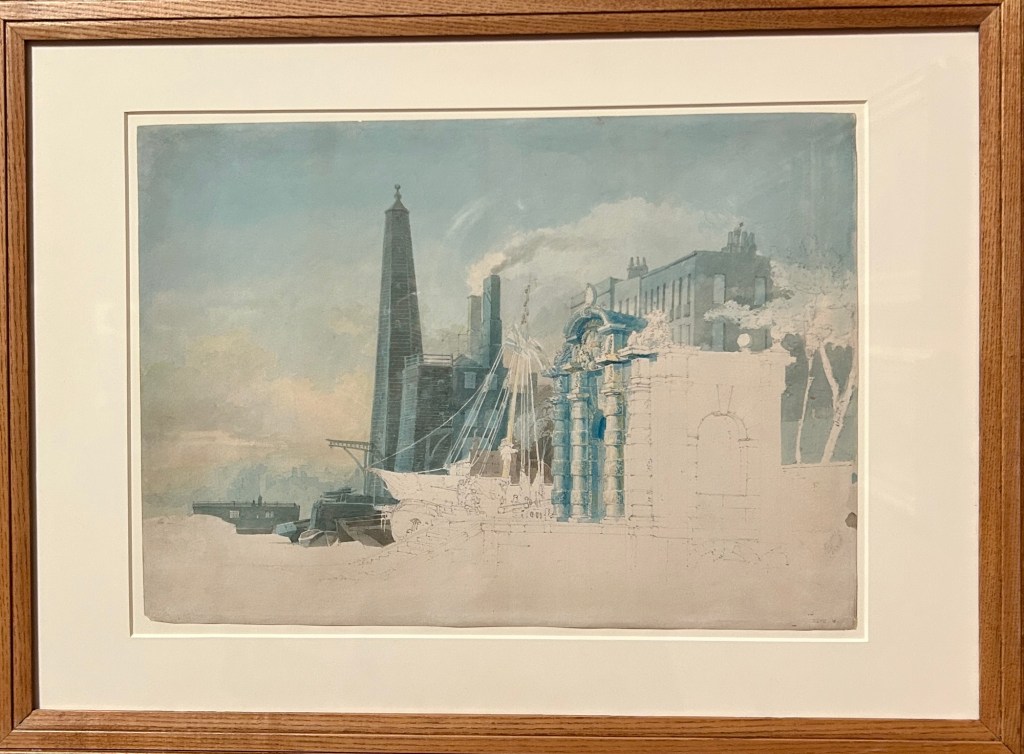
York House watergate, Westminster, London. Graphite and watercolour on paper.

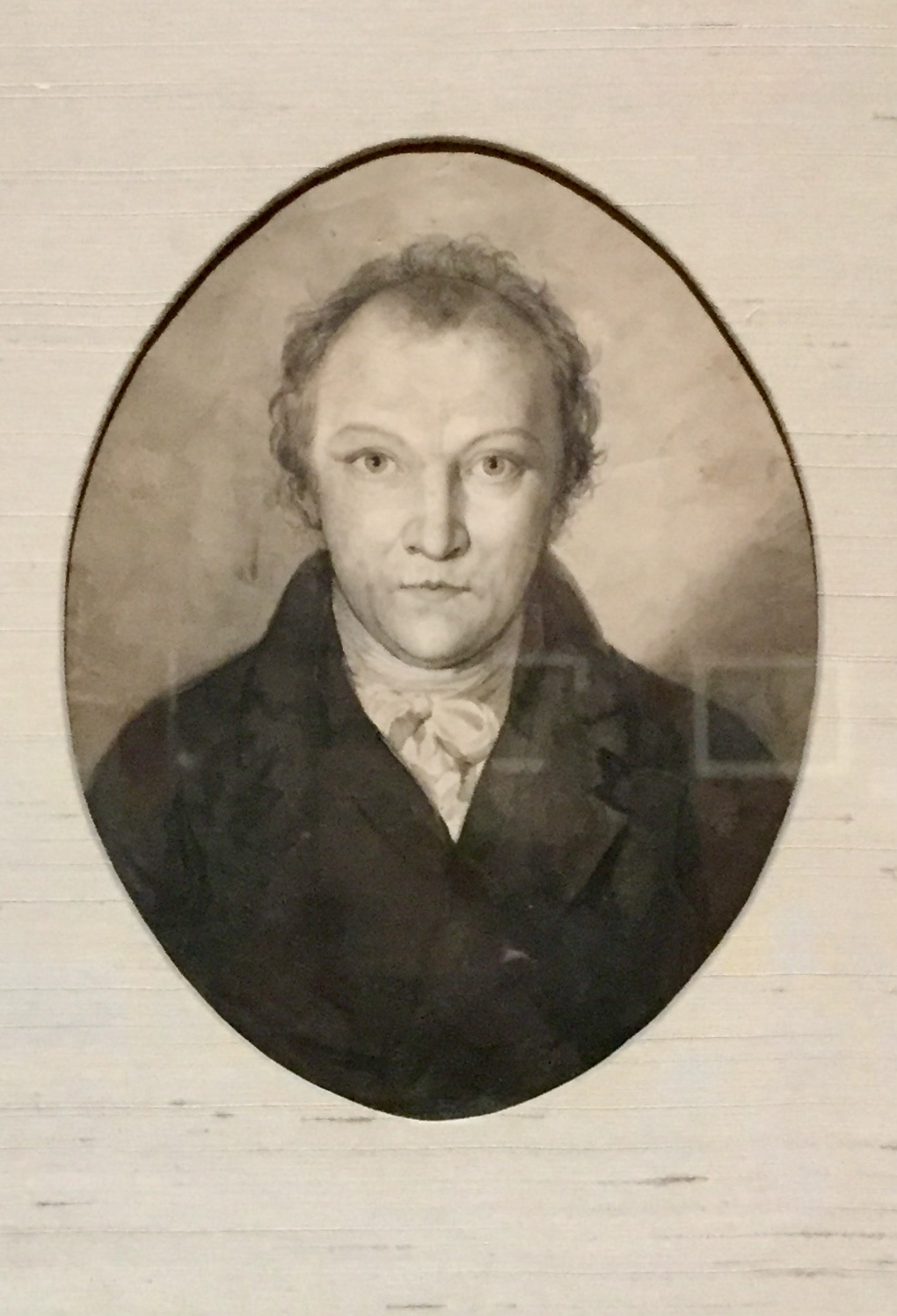
Poet and artist William Blake


Taking advantage of a couple of days in London a few weeks ago, I tried to fit in as many art shows as possible. After the Gormley exhibition at the Royal Academy, I went to see the works of William Blake at Tate Britain.
When I was in school, I found Blake’s poetry a little grim, if not downright creepy: O rose, thou art sick… etc. But I was always intrigued by any accompanying illustrations, so seeing them in the flesh is always a real treat.


William Blake (self portrait above), born 1757 – died 1827, was an English poet, painter, and printmaker. He lived most of his life in London, at a time of great political and sociological change which greatly influenced his writing. He was largely unrecognised during his lifetime, but is posthumously considered one of the leading lights of English Romanticism.


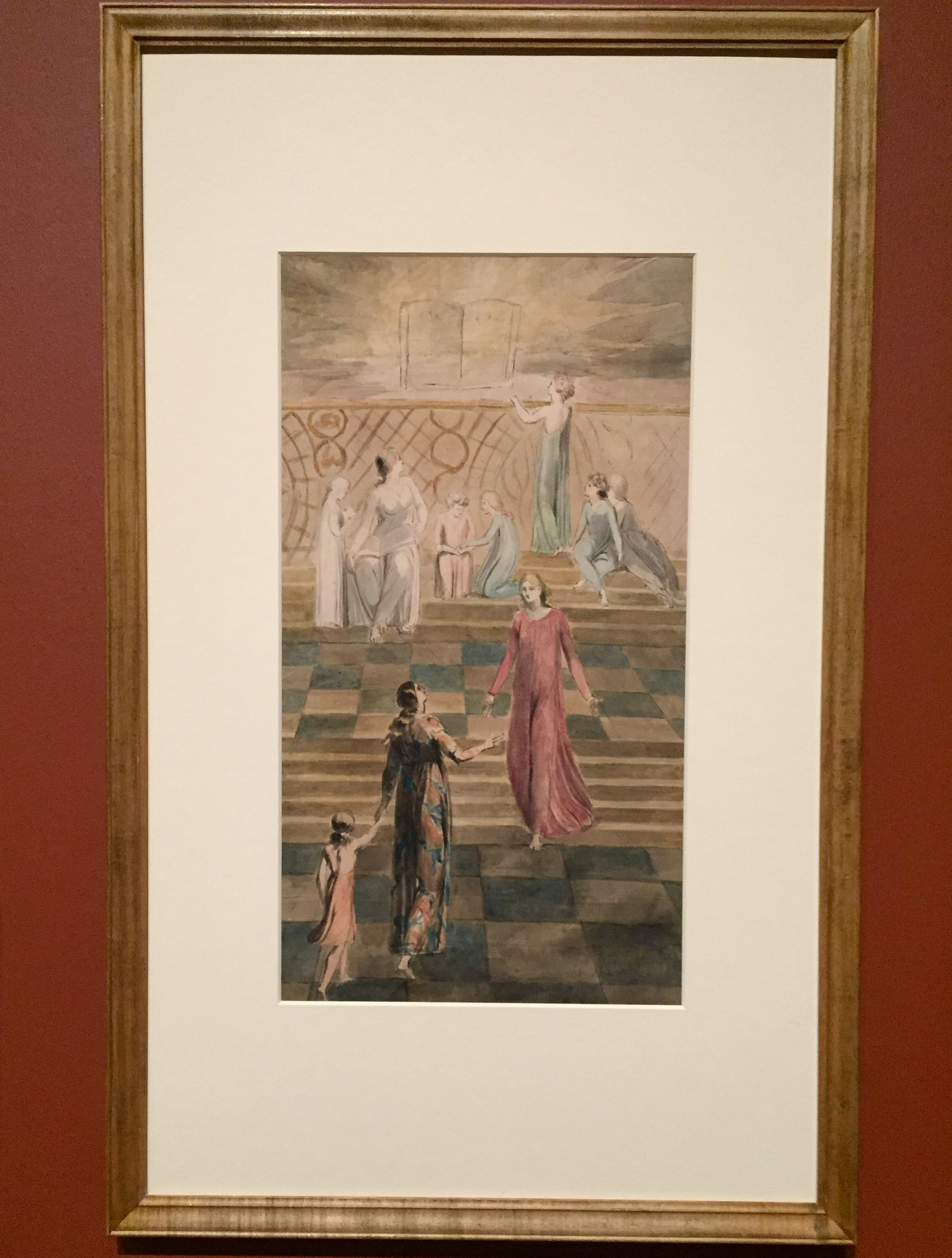
The painting above is ink, graphite and watercolor, and has been named An Allegory of the Bible, which is not the artist’s title. The Bible, however, was always an inspiration for Blake, and in this composition he has started using more color than previously.


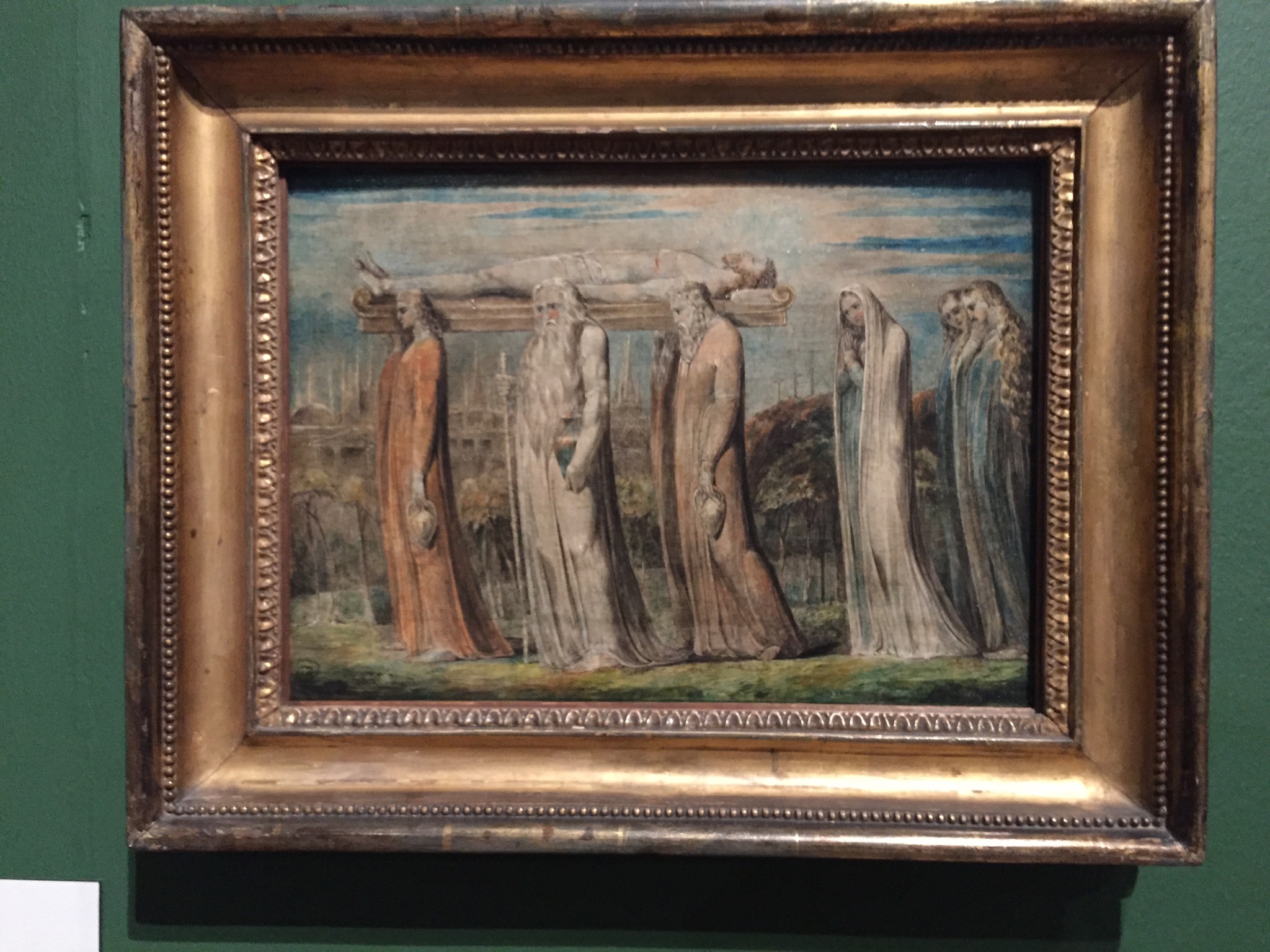
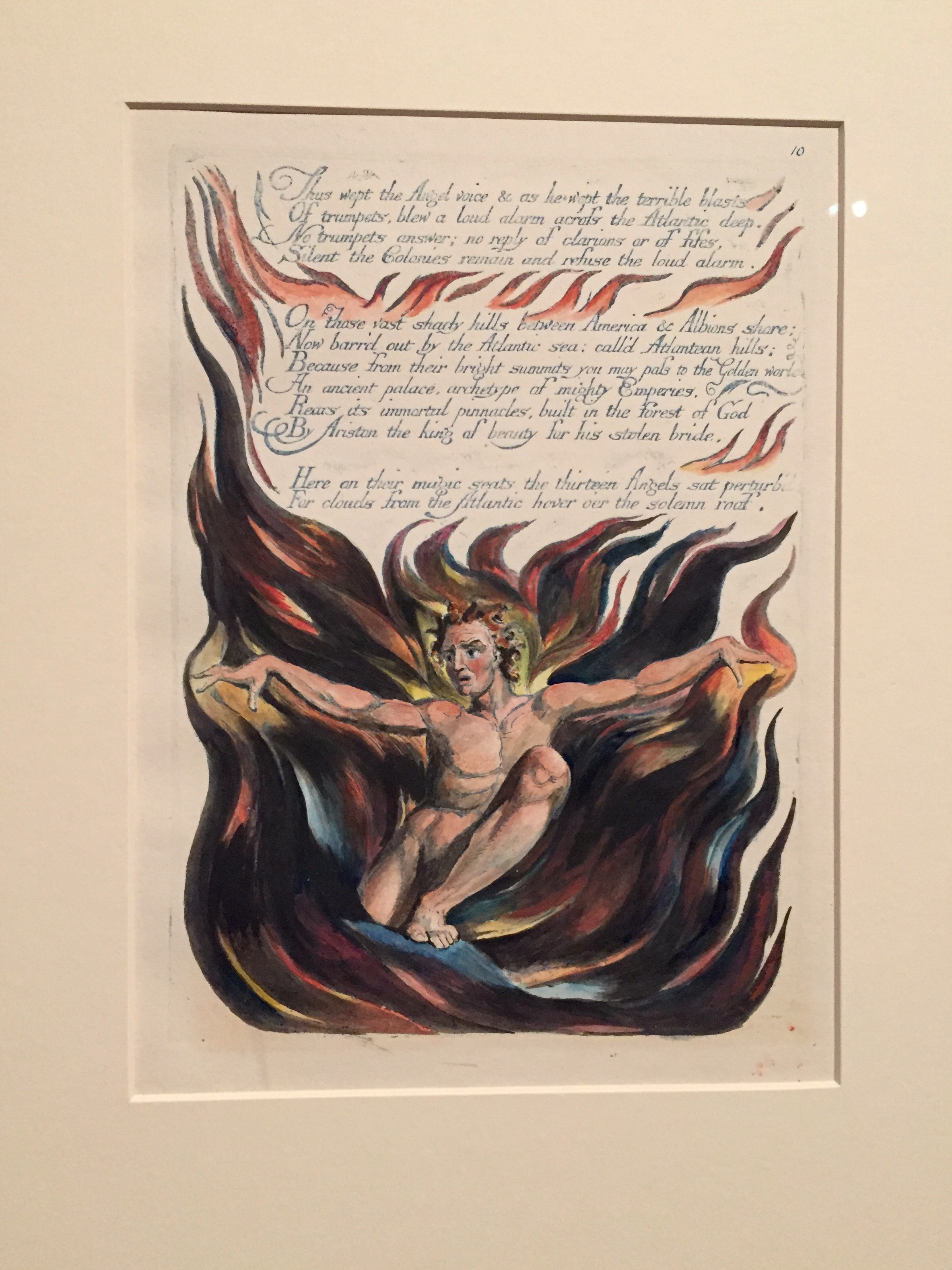
Blake was born into a modest family who, happily, encouraged his artistic leanings. He eventually went to work as an engraver, and at the age of 31 developed relief etching, a method he used to produce most of his books, paintings, pamphlets and poems. The process is also referred to as illuminated printing; however, for his commercial work, Blake mostly used the more common intaglio engraving. He is a master of composition, as can be seen in the painting above. He also used oils, as In the painting below.


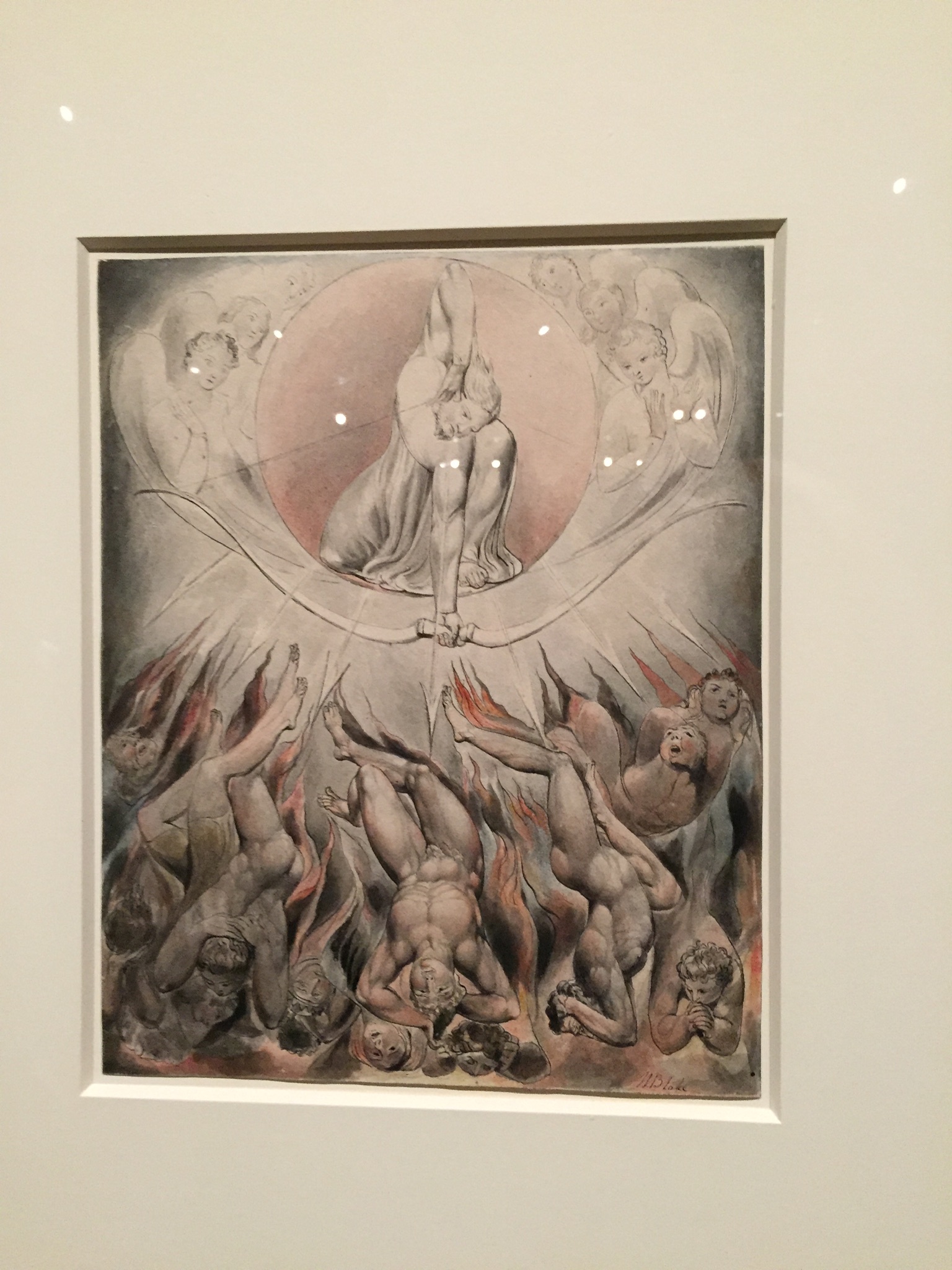
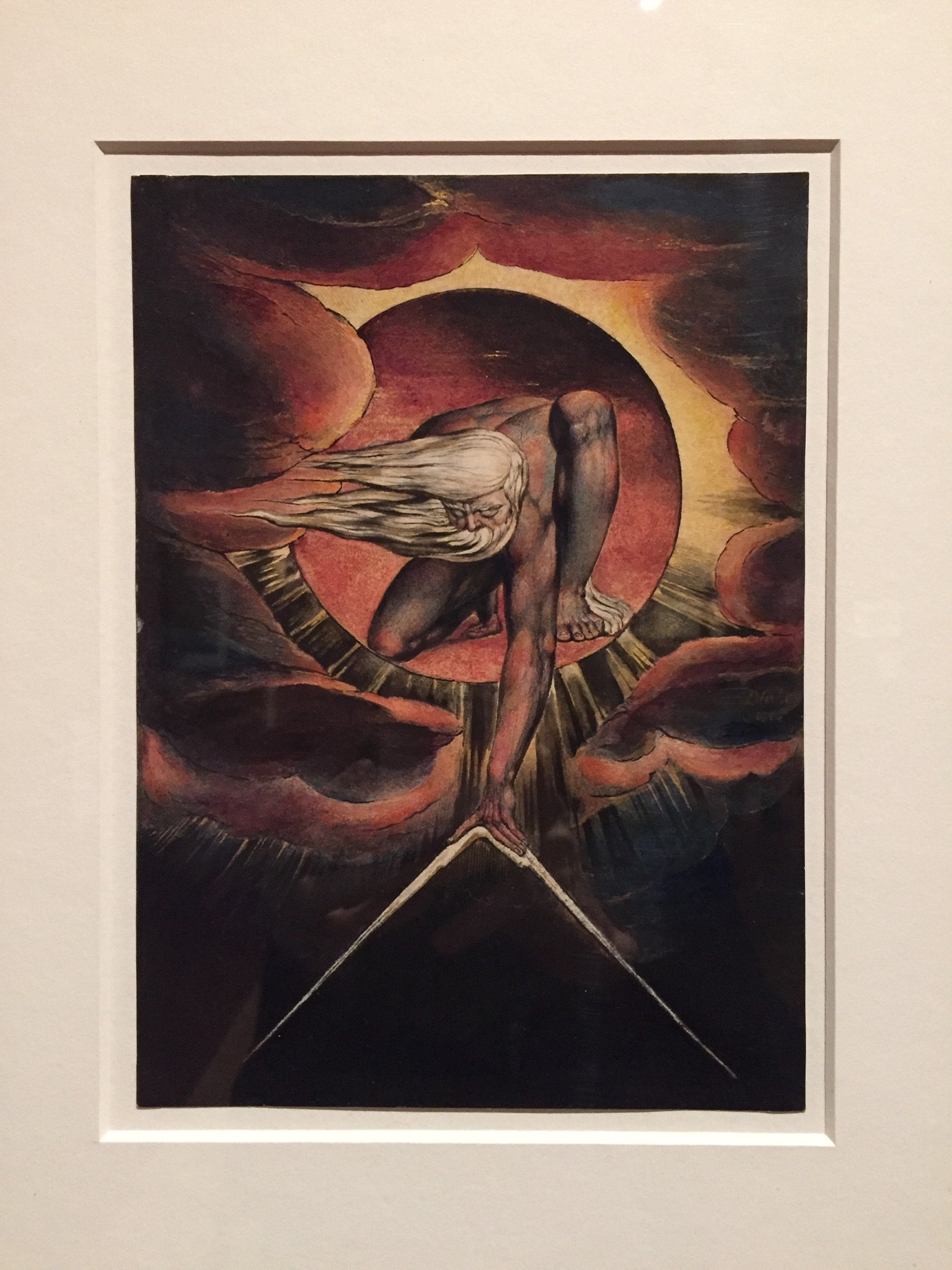
Between 1793 and 1795 Blake produced a remarkable collection of illuminated works that have come to be known as the Minor Prophecies, in which he examines the fall of man. In Blake’s mythology man and God were once united, but man separated himself from God and became weaker and weaker as he became further divided.


One of the best known paintings from this series is the one above, which, though small, is very powerful. Its central figure is Urizen, who, measuring the world beneath him with his golden compass, represents the scientific quest for answers. For Blake this action was a threat to what he thought of as the cornerstones of human happiness: imagination, creativity and thought.


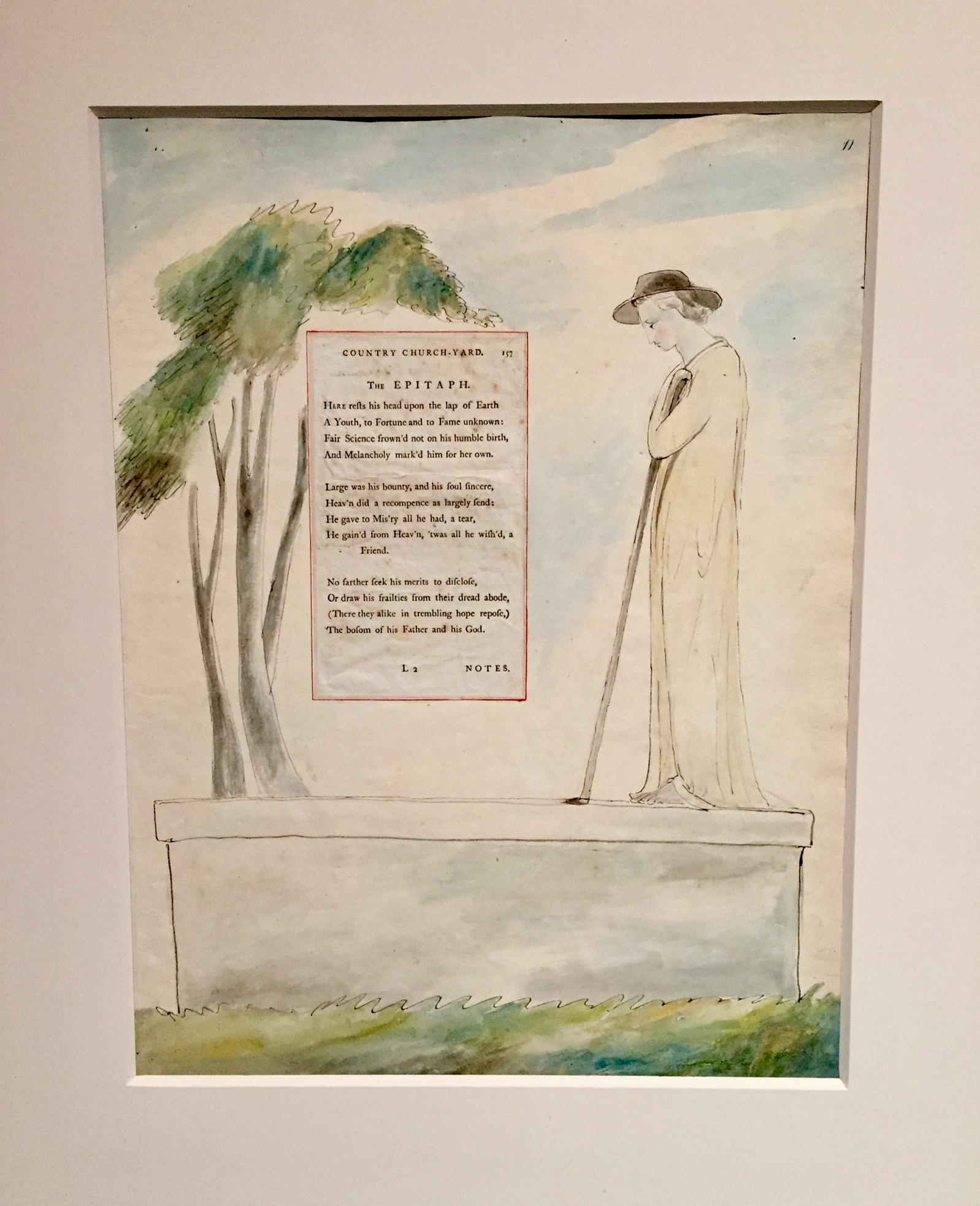
Blake must have had fantastic eyesight to be able to spend hours writing out his poems in minute script before illuminating them. Blake also illustrated other people’s work, such as Thomas Grey’s lovely ‘Elegy written in a country churchyard’.


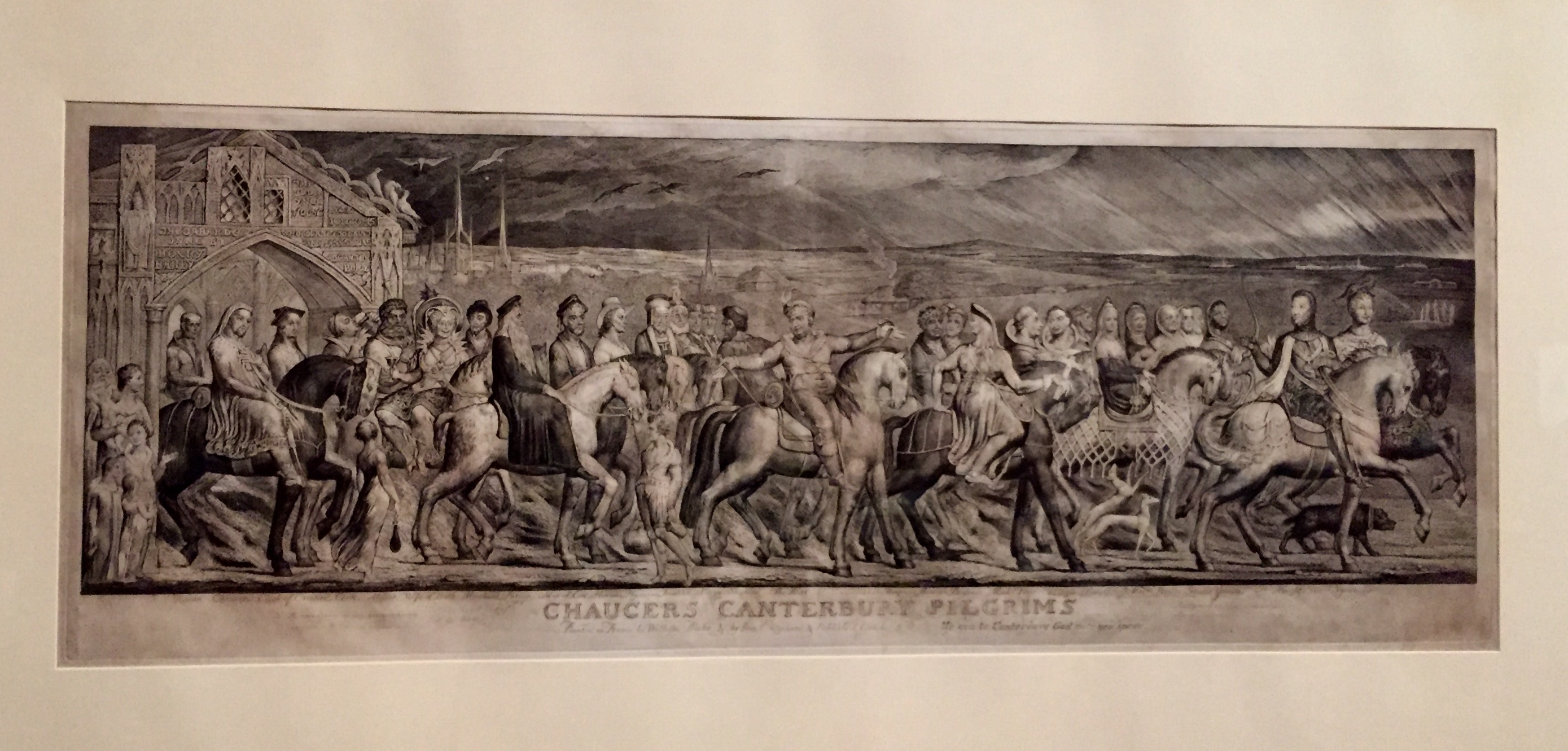
And his engraving of Chauser’s The Canterbury Tales remains probably the best known image on this subject.