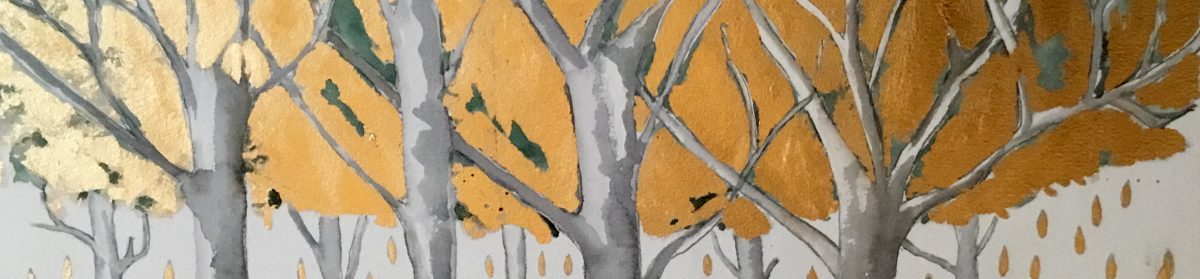
Going into winter

It is not cold yet, but the days are drawing short, and when I take the puppy out at 7.30 a.m. I wear a jacket and sometimes a woolly hat. The leaves are turning and some days there is mist on the ground.
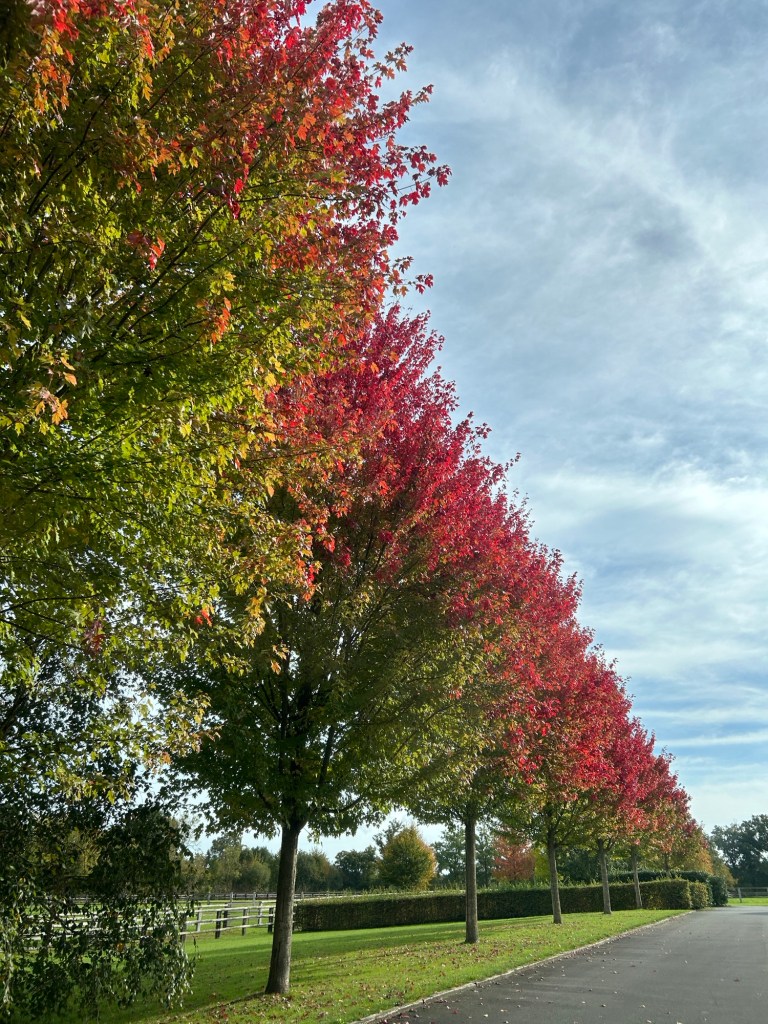
We do get some brilliand days, though, and the beach is magic.

There are still flowers in the garden, and a few tomatoes. The crab apples are red, and the apples are ripening also.

The summer went by too fast, as usual, and the weather was not very inspiring—however, we did not get heatwaves, or a water shortage, or forest fires, as in Greece or other southern countries.

The puppy likes crab apples

We are fortunate to live near Deauville, which is a beautiful and lively town, with plenty going on at all times. Racing, polo, film festivals, exhibitions and more. We have lately acquired a cultutal center called Les Franciscaines, the conversion of an old nunnery, and there is always something on.

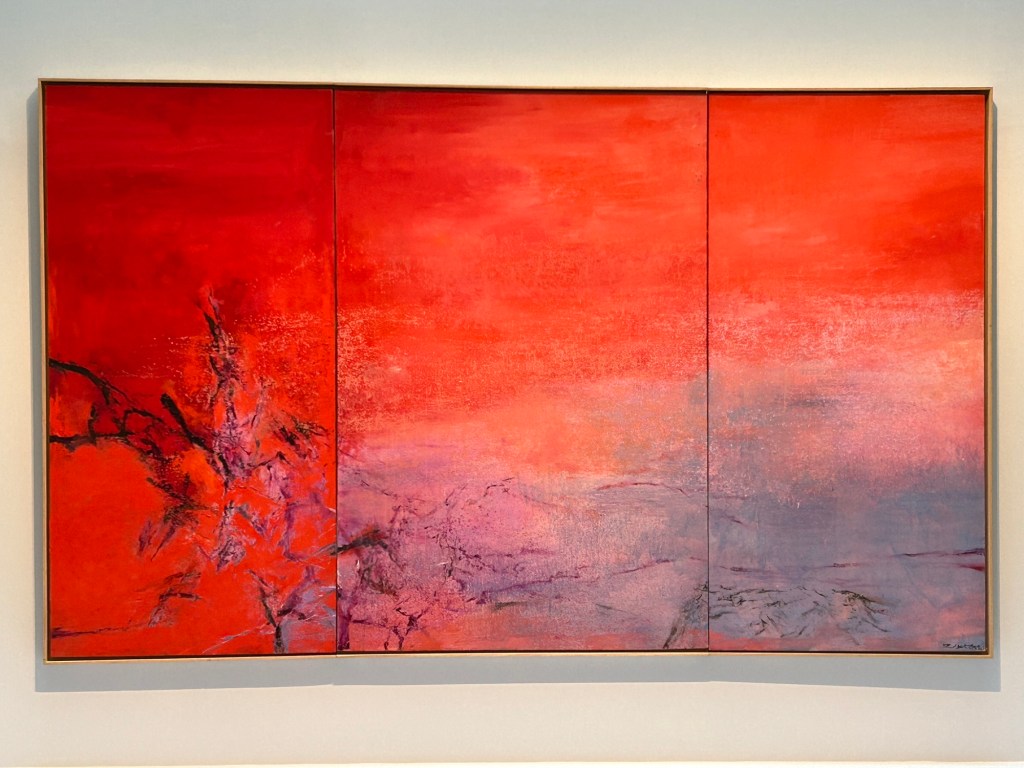
Back in March they put on an exhibition by the abstract artist Zao Wou Ki. It was a real treat to be able to see some of his paintings within 15’ of my house. I’ve written about him before. Here: https://athensletters.com/2018/09/25/awed-by-the-abstract/)
One of the highlights of the summer was an exquisite concert by the Japanese neoclassical composer Koki Nakano. I did not know what to expect, having never heard of him before, and in fact had never heard anything like it before—immersive soundscapes somehow combined with melody. In the La Chappelle, the small theatre placed in the former nunnery’s chapel, a grand piano was the only thing on the stage, its lid open and adorned with electronic devices. It was flanked by an electric keyboard.
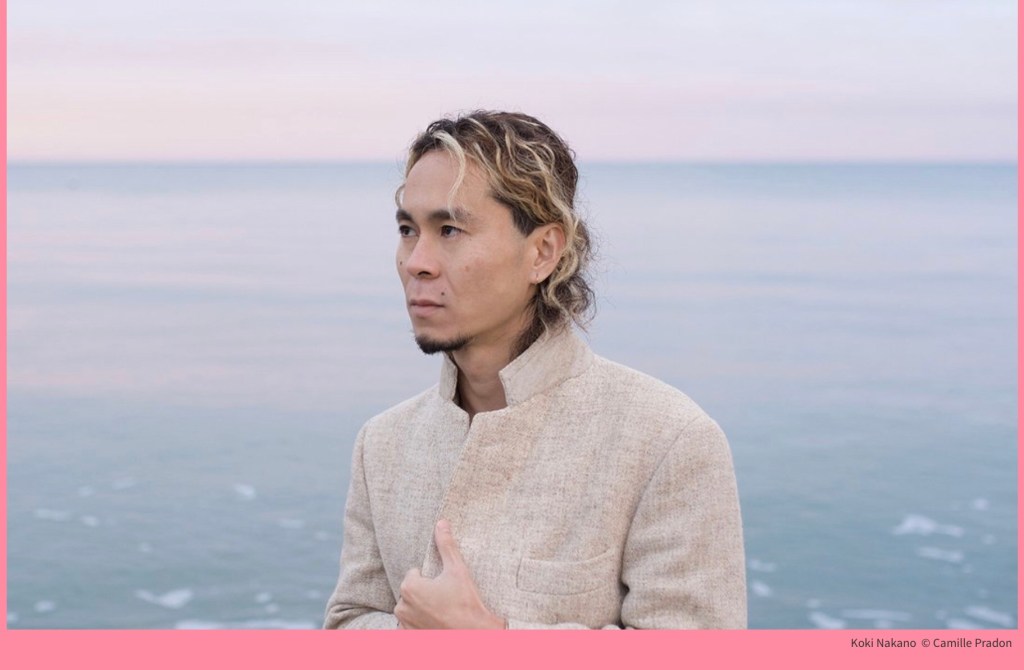
Nakano played his own compositions, a mixture of electric and acoustic piano and I can honestly say one was more beautiful that the previous. The concert was called Oceanic Feeling. Sometimes he was accompanied by a dancer, the wonderful Tess Voelker from Chicago, since he is fascinatedby the relation between music and the human body.

This is the clip he had made of his music

The simplicity of the setup, the magical lighting, the elegant musician himself who addressed the audience between the pieces and even spoke in French, all made for a truly memorable evening.

Tokei(Tokyo) by Akira Yamagoshi. An aerial view with enchanting details. Zoom in to enjoy.

At the same time the centre put on an exhibition relating how the impressionists were inspired by Japanese art, which contained a few treasures.

Micro Fuji by Tiger Tateishi (1941-1998)

To finish off, sadly we could not see the northern lights which appeared over Europe. I have seen them once, in Iceland, and they were mostly green and yellow, whereas these were quite pink. So for your enjoyment I am posting a wonderful photograph by Deborah M. Zajak on her lovely blog Circadian Reflections (https://circadianreflections.com/2024/10/13/something-for-sunday-northern-lights/#respond) I urge you to take a look, she posts great photographs of birds and other stuff.

Awed by the abstract

When artist Zao Wou-Ki left China to come to Paris in 1948, his whole family gathered on the quay in Shanghai to bid him farewell. They were dressed in western clothes, the men in coats and felt hats, the women with Lauren Bacall hairstyles, flat shoes and leather gloves. His wife Lalan was coming with him, but they left behind their son with his grandparents, because they were only planning to stay for two years. By the time he came back to visit his mother, it was 1972 and his beloved father had died four years earlier.


Zao Wou-Ki had to wait two years to get his passport and visa, and months to get a passage—boats to Europe were rare. He disembarked in Marseilles after thirty six days of a voyage that filled him with boredom. But he was determined—he felt he had to get away from China or he would die.


Hommage à Claude Monet


Zao had been obsessed with painting since childhood, a pursuit encouraged by his father, a banker. At fourteen, he left home to study at the school of fine art in Hang-Cheou, 300km from home. But he felt stifled by Chinese art, which he thought mired in convention and rules. He wanted to free himself and his creativity. So he ended up in Montparnasse, where he remained. He did, however, travel extensively to New York and Hong Kong.


Le vent pousse la mer


In Paris, Zao was influenced by major artists of his time, such as Paul Klee, Picasso, Matisse and Cezanne, and developed close relationships with Jean-Paul Riopelle, Alberto Giacometti, Joan Miró, Joan Mitchell and Sam Francis, among many others. But he was also inspired by poetry and music. Two of his best friends were poet Henri Michaud and composer Edgar Varèse. His work became increasingly freer, and he produced his marvelous glowing large works.


In memory of May


It is difficult to reproduce the depth, subtlety of color, and brilliance of these paintings in photographs, especially ones taken on a phone. But this is art to soothe and elevate the soul.


Across his career, Zao sought to create works that captured ‘the presence of nature’. He had rejected the classical conventions of Chinese calligraphy and landscape painting, but, by 1971, he returned to the brush-and-ink technique in which he was trained in China, with work that reflected its sources in Chinese traditions. Zao explained in a 1962 interview with the French magazine Preuves, ‘Although the influence of Paris is undeniable in all my training as an artist, I also wish to say that I have gradually rediscovered China.’ He added, ‘Paradoxically, perhaps, it is to Paris that I owe this return to my deepest origins.’


Zao was a member of the Académie des beaux-arts, and was considered to have been one of the most successful Chinese painters during his lifetime. He died in 2013.


The temple of the Han

Exhibition at the Musée d’Art Moderne de la ville de Paris.