Due to complicated calculations concerning the Vernal Equinox, the split between the Roman and Byzantine Empires and their different calendars and the division of the Christian Church into Orthodox and Catholic (look it up, people, I can’t be bothered to explain further) usually there are two Easters, one for each church. Sometimes, though, they coincide—and this year they do (the last time was in 2017).
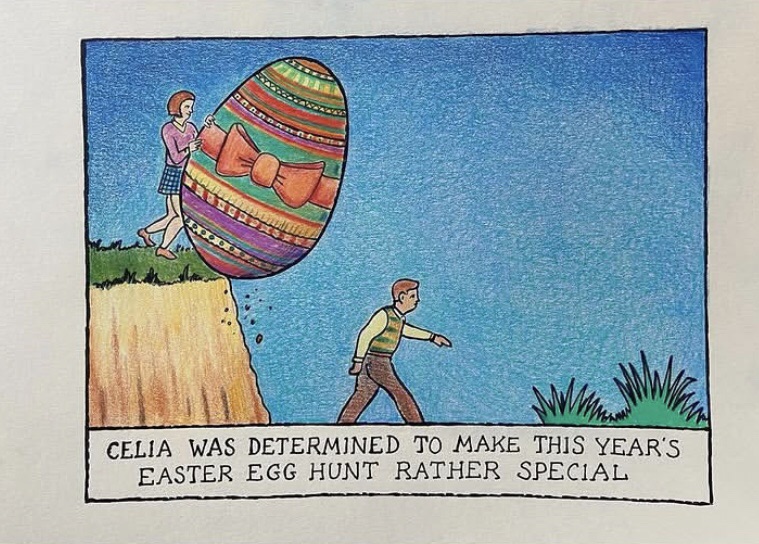
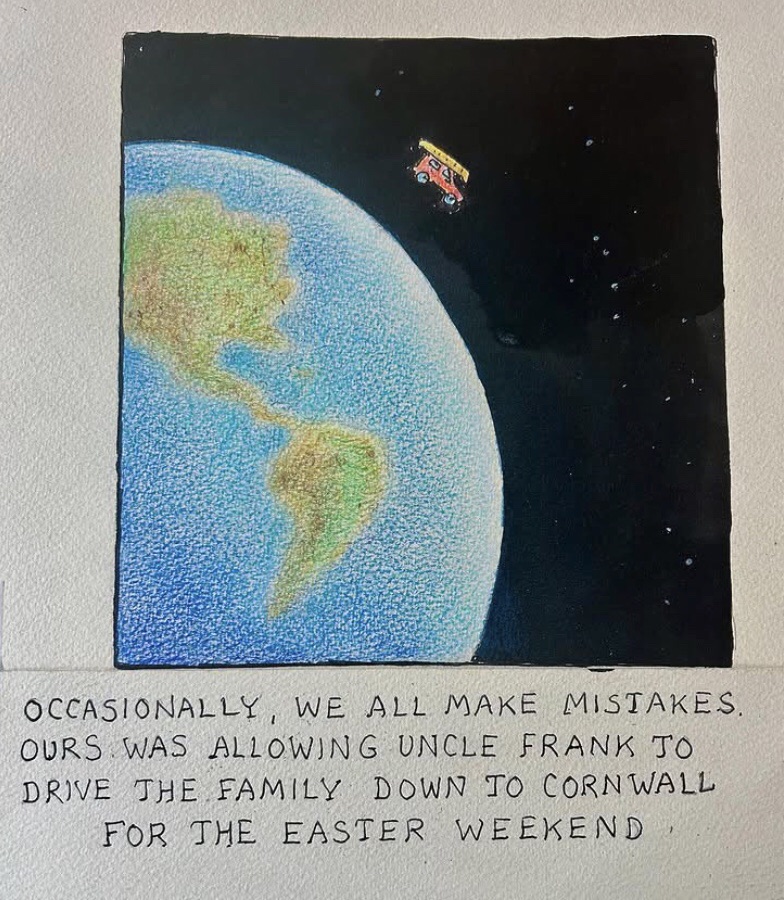
Therefore I am in the happy position to wish you all a Happy Easter, wether you smash red eggs or wait for the Easter Bunny. Enjoy your lamb on the spit, your Hot Cross buns, your Easter Bonnet Parade (is that still a thing?), your egg hunts and your indigestion. Or anything else in your local or family traditions.
I’d read her books years ago while still at school. I wonder why, since I was at Greek school and she could hardly have been on the curriculum. Probably browsing my mother’s bookshelves, where I was allowed a free run. At the time it was difficult to find foreign books in Athens and she was member of a book club – cloth-bound volumes arrived by post every month or so: Agatha Christie, Georgette Heyer, Ian Fleming, Neville Shute. I still have most of them. The thrill of it, the anticipation of receiving a new book, before the instant gratification of Amazon (I almost miss it—still prefer Amazon, though.)
But I digress. I recently came upon a BBC dramatisation of some of Pym’s books on Audible and downloaded it on impulse.
Very old-fashioned cover, isn’t it?
Barbara Pym wrote a series of social comedies in the 50s, but by the 70s her work was deemed too old-fashioned and was rejected by several publishers. Still, she kept writing, and forged a friendship with the poet Philip Larkin, who championed her work. When both he and the critic Lord David Cecil nominated her as the most underrated writer of the century, her career was revived. Her book Quartet in Autumn was nominated for the Booker Prize.
Pym was a shrewd observer of a certain type of English middle-class behaviour. Spinsters, bored housewives, academics and, in particular, vicars and curates, all came under her sharp and ironic scrutiny.
Of course I did not recall details of the books but I seemed to remember amusing and straightforward stories of village life and church goings-on. Via the dramatisation I am now discovering a narrative full of undertones, sexual innuendo and a delightful disregard for morality. Respectable wives go out to lunch with their friends’ husbands, spinsters plot to entrap men into marriage, older women meddle in everything. County housewives obsess over the new curate as they would today over the Kardashians. And all of it delivered in posh cut-glass accents you never hear any more because people are careful to disguise them even if they spent their childhood at Eton.
Probably this is not to everyone’s taste—I don’t think the young would appreciate it—and even for me there is no element of nostalgia, since it is set before my time. But it is an excellent production and I am deriving considerable amusement from listening in the car.



 Letters from Athens