On February 17, 2026, we officially entered the Year of the Fire Horse. In Chinese astrology, because the elements rotate alongside the animal signs of the Zodiac, the same combination returns only every 60 years. The Fire Horse is associated with intense momentum, restlessness and catalytic change. Well, one only has to read the news to realise that.
In honour of this, and to give it a more positive dimension, I decided to write about the horse in art. The horse has carried human civilisation upon its back: it has provided transport and entertainment, been a vehicle of agriculture and battle, a beloved and trusted companion, a spiritual presence and a symbol. As such, it has been depicted in art throughout the ages, in almost every culture.
It would take many volumes to include all, or most, representations of the horse in art. I will restrain myself, therefore, to some of my favourites, starting in prehistoric times.
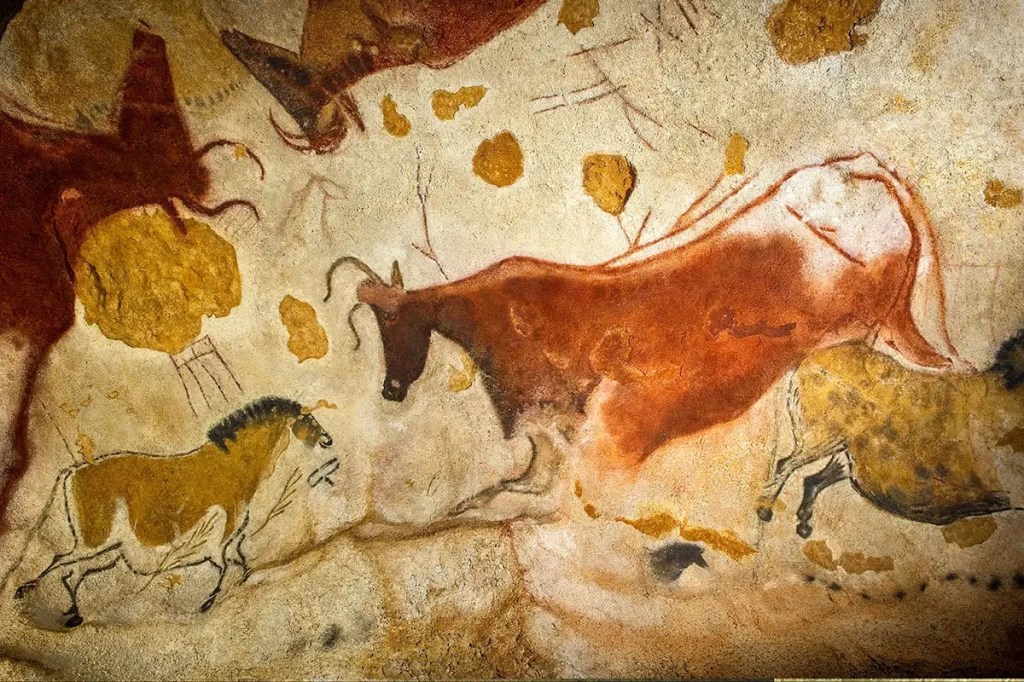
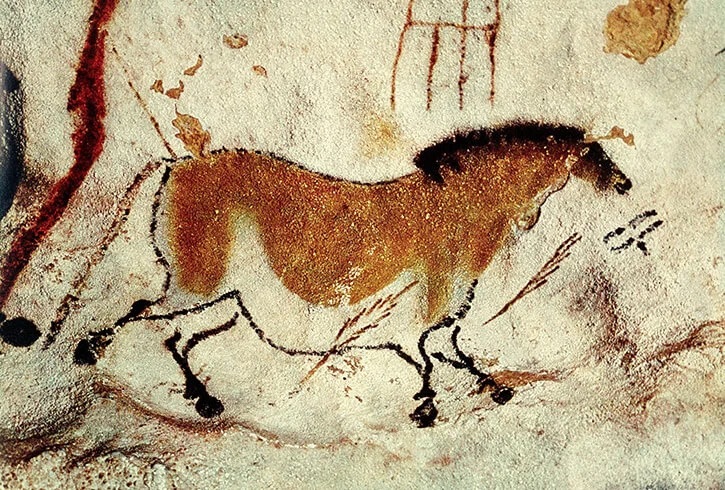
Stone Age occupants of Europe had a strange fixation on horses. Almost one in every three animals they depicted on cave walls was a horse. However, the reason why the horse loomed so large in ancient minds may remain forever a mystery.
Some of the most famous cave paintings (but there are many, all over the world) are the those in the Lascaux network of caves in the Dordogne region of France. They are estimated to be roughly 17,000 years old.
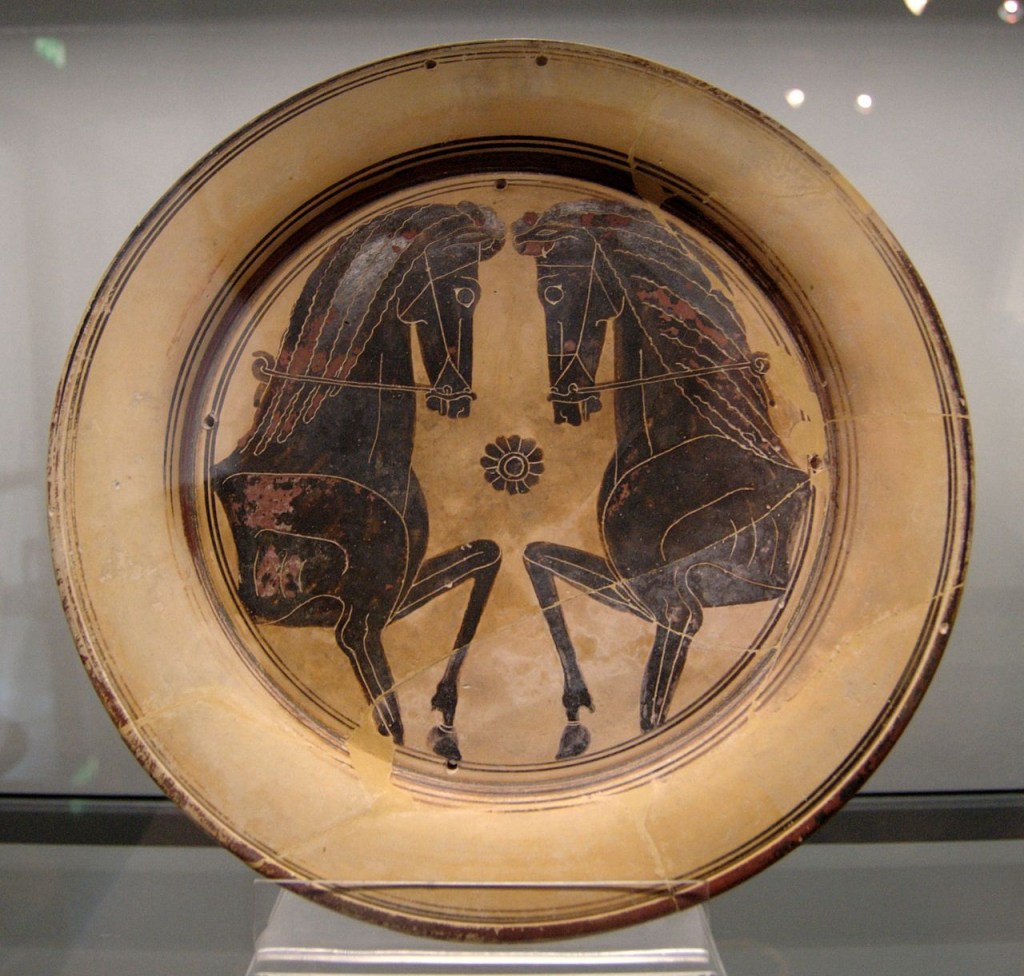
Of course, horses could not be absent from Ancient Greek art, since they play a prominent part in mythology and history, from the flying horse, Pegasus, to Bucephalus, the beloved mount and companion of Alexander the Great. They figured in vases and plates, like the one below:
Horses’ heads, Corinthian black-figure plate, 600-575 BC
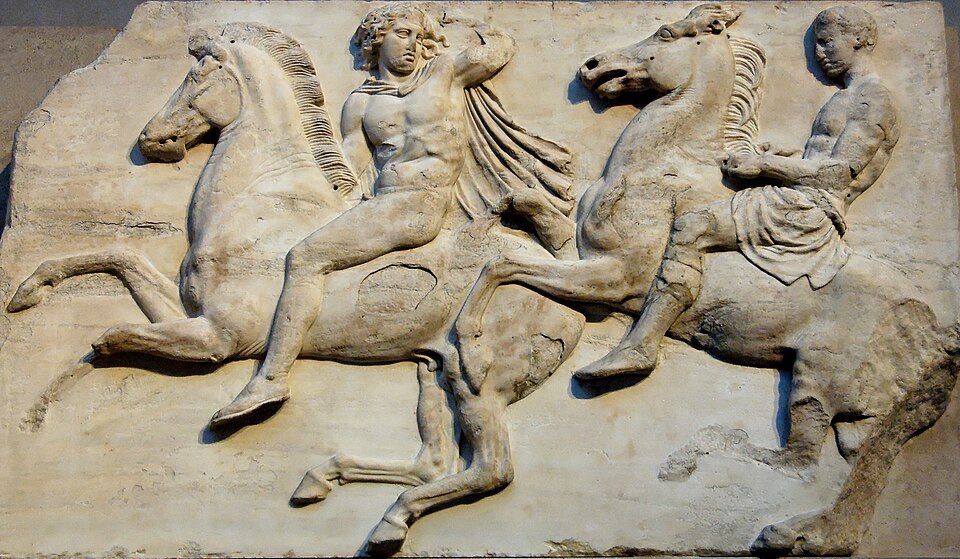
As well as in sculpture and bas-relief, such as the famous Parthenon frieze.
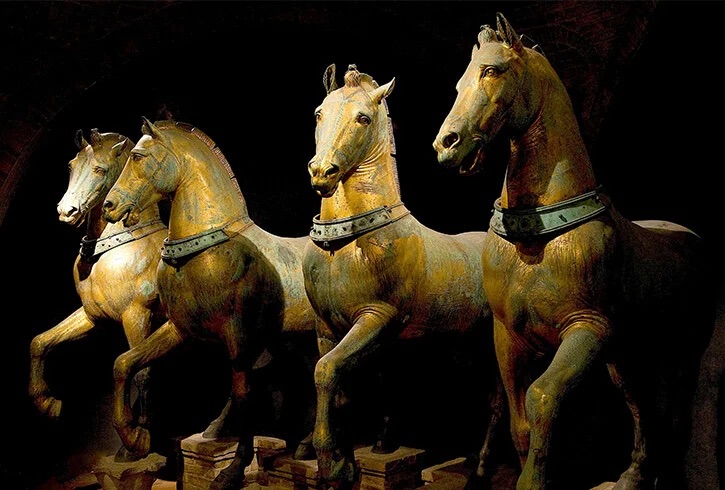
The other famous horses that date from classical antiquity, perhaps originally from Constantinople, where they were displayed for many years, are the Horses of Saint Mark.
Situated atop the Loggia of Saint Mark’s Basilica in Venice, these were originally part of a monument depicting a ‘quadriga’ – a four-horse carriage used for chariot racing in antiquity, used in the ancient Olympic games or depicted as the ‘Chariot of the Gods’ ridden by Apollo across the heavens.
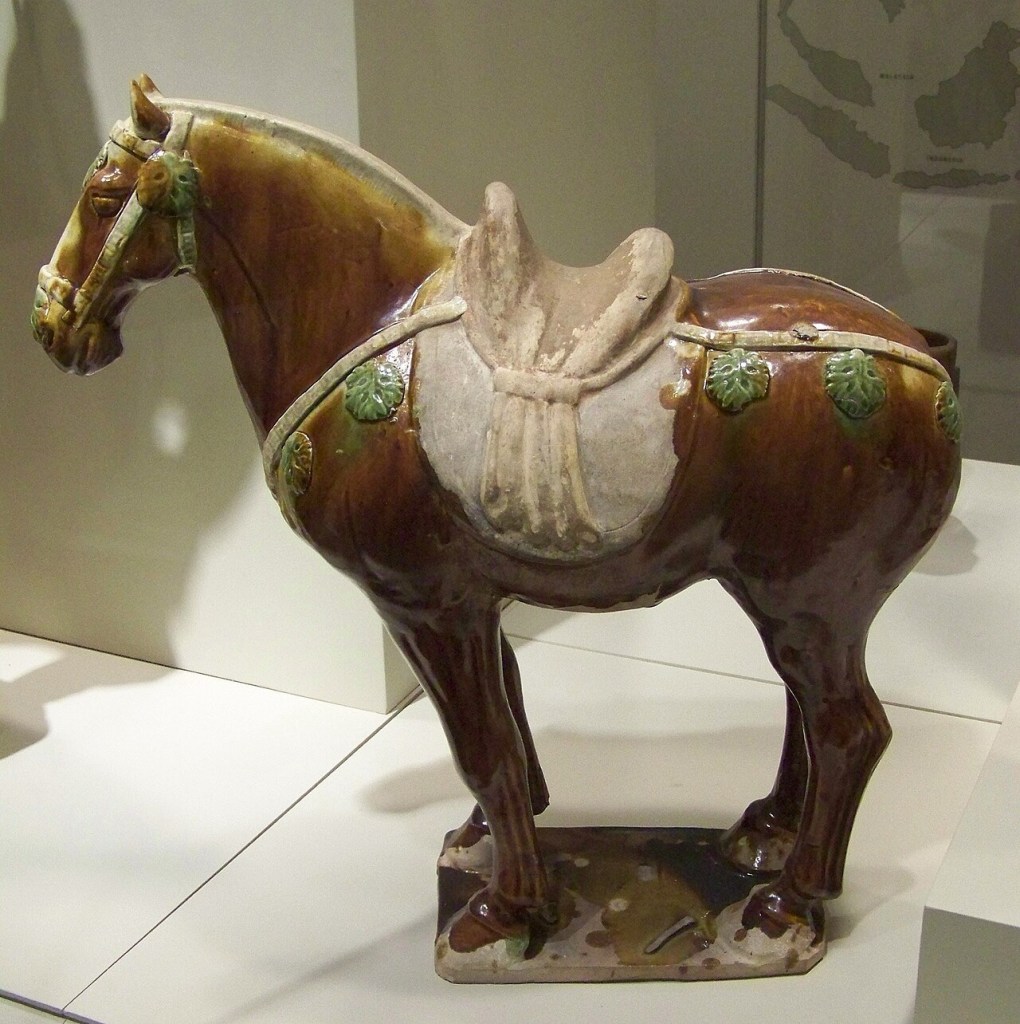
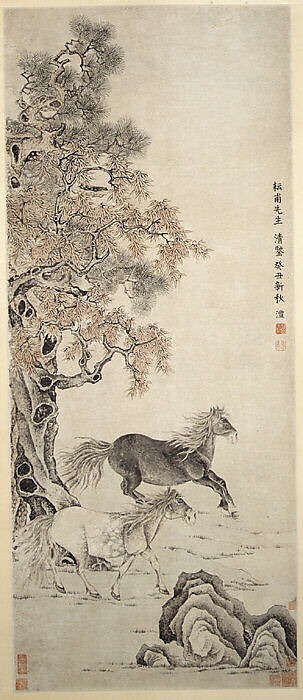
The horse was also revered and commemorated in China, in pottery and glazed statues as well as scrolls.
Coming to modern times, one of the most famous equestrian artists is certainly George Stubbs (1724-1806). He was self-taught and had an obsessive interest in anatomy.
In 1758, Stubbs rented a farmhouse in Lincolnshire and spent 18 months studying dead horses. Gruesomely stringing the carcasses up on a system of pulleys, he injected their veins with wax to give them a lifelike appearance and proceeded to systematically study them in different positions, stripping off each layer of the body.
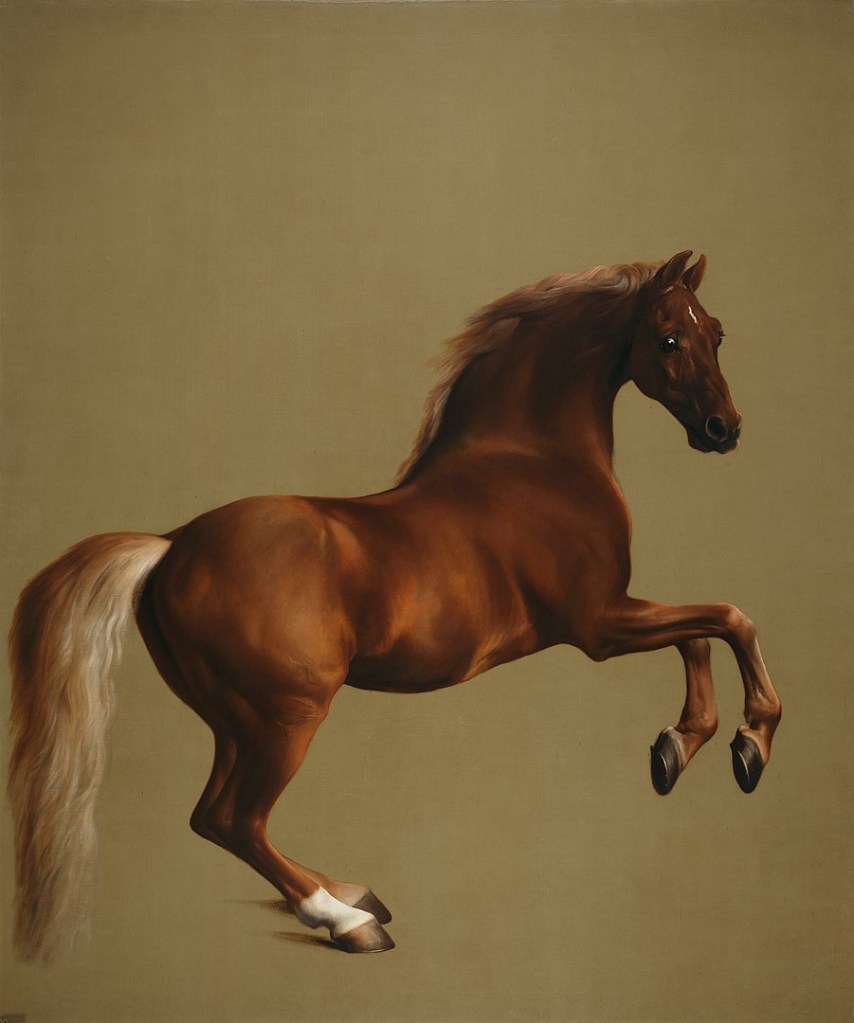
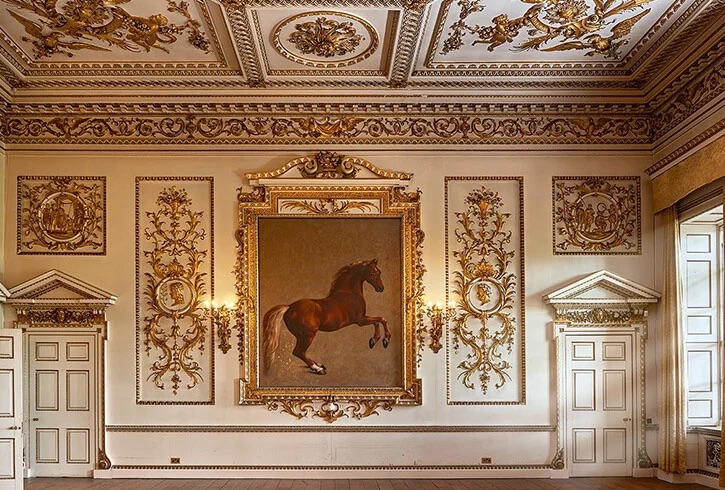
Stubbs made many wonderful paintings, but arguably his masterpiece is a life-size portrait of the horse Whistlejacket, (c. 1762), commissioned by his owner, the Marquess of Rockinham.
George Stubbs, Whistlejacket, c. 1762, National Gallery, London, UK.
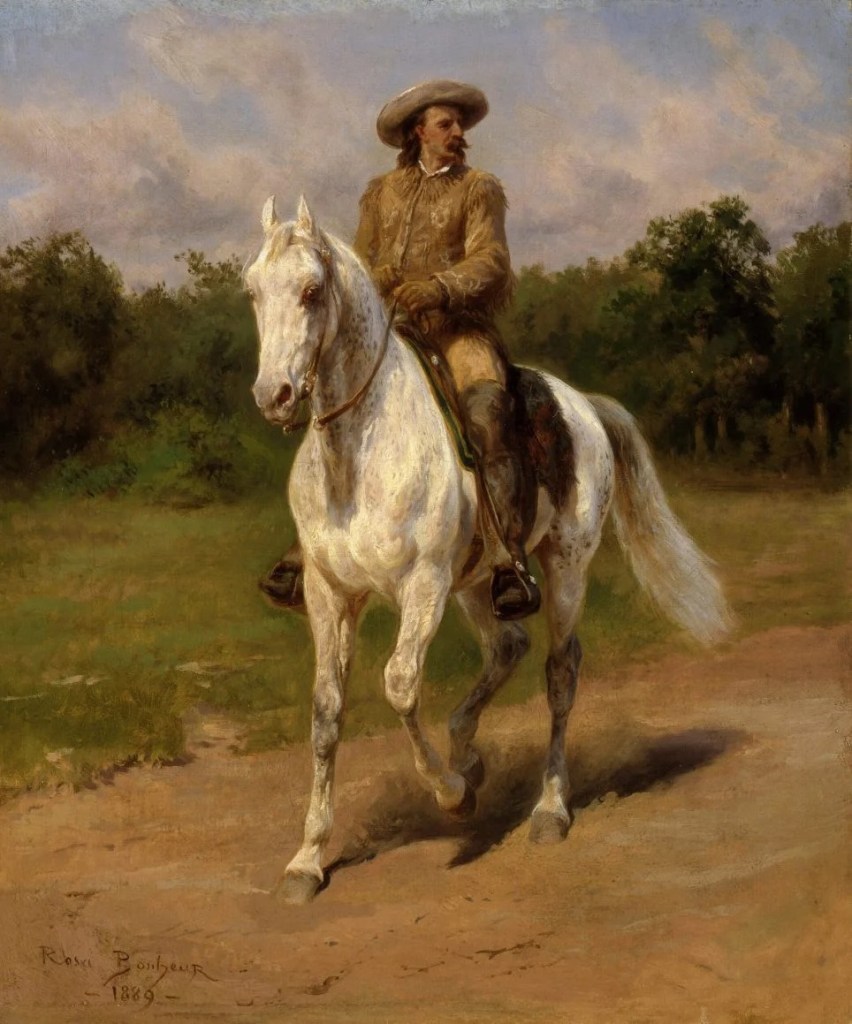
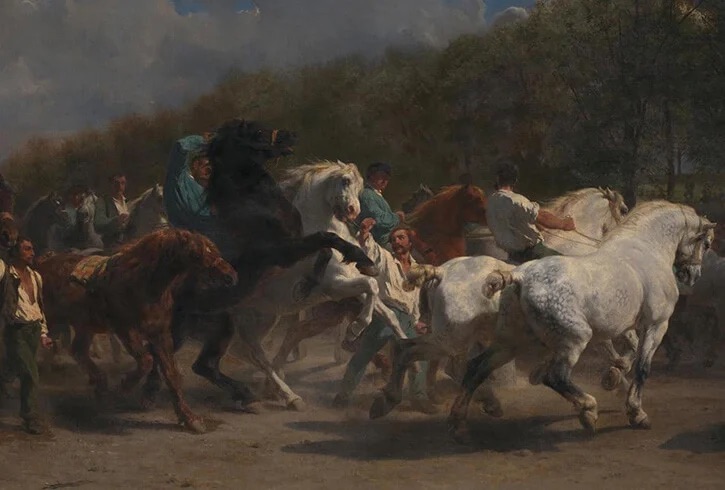
Another wonderful painter of animals was Rosa Bonheur, who was inspired by George Stubbs and Eugène Delacroix but also by Ancient Greek sculpture. Her most famous work is The Horse Fair, but I love the portrait below, of William F. Cody, alias Buffalo Bill, whom she met and befriended at his Wild Est Show, held on the lawns of Neuilly during the Exposition Universelle.
To paint the Horse Fair, which shows the horse market held on the Boulevard de l’Hôpital, Paris, Bonheur sketched there twice a week for a year and a half.
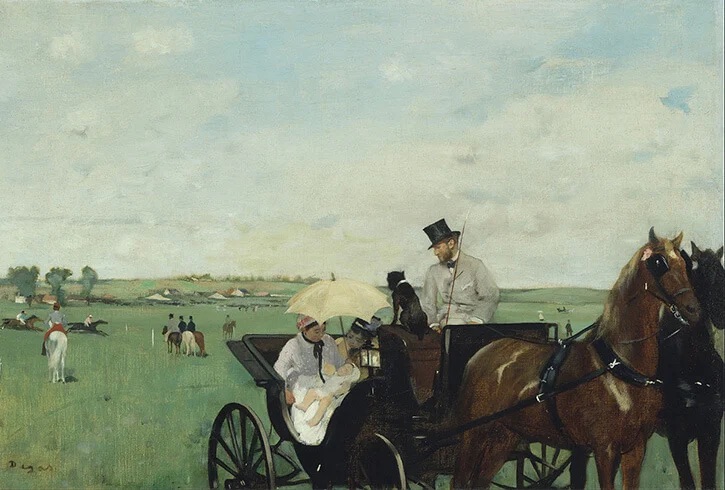
Another of my favourite paintings is At the Races in the Countryside (1869) by Edgar Degas, which focuses on a young, upper-class family at the races. It is a wonderful offset composition, relegating the race itself to the background.
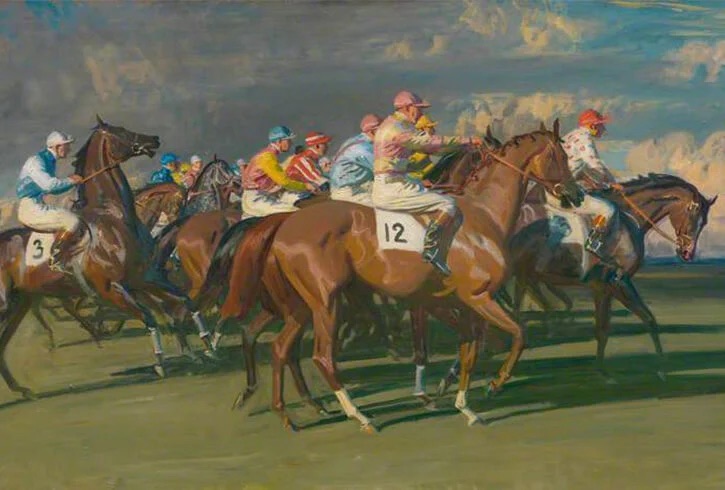
And of course I cannot fail to mention Alfred Munnings, who was enraptured by horse racing for his entire career. The painting below, brimming with excitement and anticipation, is titled Start at Newmarket: Study No. 4, c. 1947
I could go on forever, and might go on in another post, but this is a little taste to celebrate the start of the year of the Fire Horse. Which is your favourite?
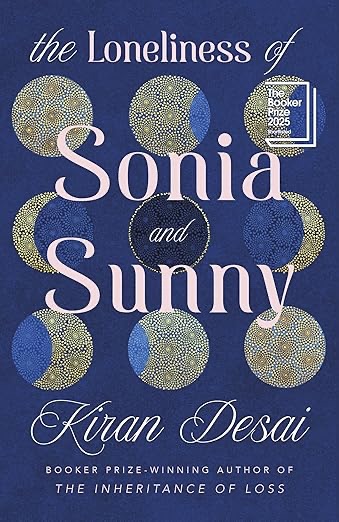
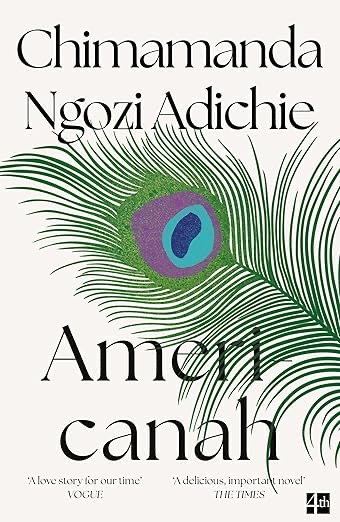
I always tend to have at least a couple of books on the go, and I choose them depending on my mood. So I must have been in the mood for a saga (in the modern sense of the word) since I plunged simultaneously into two doorstoppers: Americanah, by the Nigerian writer Chimamanda Ngozi Adichie, and The Loneliness of Sonia and Sunny, by the Indian writer Kiran Desai (both were written in English.) As I read on, I realised they shared a lot of similarities.
First of all, may I say both of these women are wonderful writers, whose clarity of prose and turn of phrase I much admire. It was very pleasurable immersing myself in their world.
Both books are meant to be, primarily, love stories. From an interview with Kiran Desai:
I wanted to write a story about love and loneliness in the modern world. I wanted to write a present-day romance with an old-fashioned beauty. In the past of my parents, and certainly my grandparents, an Indian love story would mostly be rooted in one community, one class, one religion, and often also one place. But a love story in today’s globalised world would likely wander in so many different directions.
However, the book is about so much more than that—it is about displacement, about identity, about moving to another country and then feeling you don’t belong in either your new home or your old one. It is about race and class distinctions.
Americanah deals with a lot of the same themes, although set in a primarily different background. Again based on a love story at its core, again exploring themes of displacement, race, identity and adapting to a different culture.
Both books are stories of love and expectations in today’s globalised world.
Which book did I prefer? Probably the first, for the simple reason that Ifemelu, the heroine of Americanah, is not a very likeable character. Although bright and self-assured, she often tends to shoot herself in the foot, especially as regards relationships. She can be unpleasant, disdainful and very sure her opinions are the right ones. I did enjoy the descriptions of life in Nigeria, though, a country I know little about.
This brings me to my main criticism of both books: although I understand how both writers became engrossed in the world they created (and I know that Desai worked on her book for years), I thought both books were ultimately too long and could have done with more judicious editing. I know it’s difficult to kill one’s darlings—but there was just too much detail and repetition of the minutiae of daily life, the backstory or subplots, the characters’ thoughts.
I asked myself—did I think this because our attention span has shrunk? I remember devouring long books like A Suitable Boy, by Vikram Seth. Dickens, Tolstoy, Dostoyevsky, Robertson Davies…I read Middlemarch twice. Would I have the patience now? I wonder. If I want to re-read something long nowadays, I usually get the audiobook.
What do you think? Has anyone read one or both of these books? Did you like them? Are they too long? I would be interested to know. Awaiting comments!
Rays of sunshine are not too plentiful this weekend—neither in the weather, because it is persistently drizzling (just enough to soak you after a while,) nor in the absolutely horrendous news. And I do hope none of you has been indulging in a sunny holiday in Dubai, ha ha (sorry about the graveyard humour.)
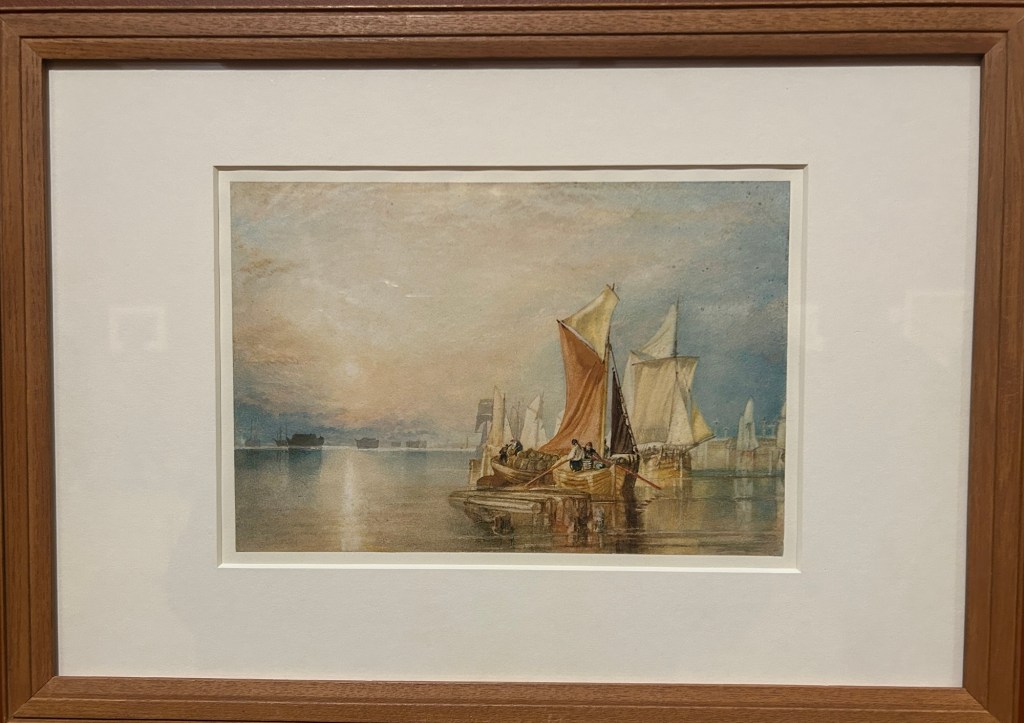
However, sunshine is to be found in the wonderful paintings of J. M. W Turner, at the joint exhibition with John Constable at Tate Britain.
Stangate Creek, 1823-1824, watercolour on paper
Born within a year of each other – Turner in 1775, Constable in 1776 – and both trying to transform landscape painting, the two were great rivals, rather than friends.
Raised in the gritty heart of Georgian London, Turner quickly became a rising star of the art world, beginning his formal training at the Royal Academy Schools aged just 14 and exhibiting there soon after—whereas Constable, the son of a wealthy Suffolk merchant, faced a longer, more arduous rise to acclaim.
I think Constable was a very accomplished, solid artist who funded his life by painting portraits of wealthy people in order to be able to indulge in his great love, landscape painting. The combination of known faces and beloved places makes for an evocative and precious portrait of life in Regency England.
The juxtaposition of these two artists is certainly an interesting one, but may I say at once that in my mind Constable loses by the comparison. The curators cleverly did not place their works next to each other, but gave separate rooms to each.
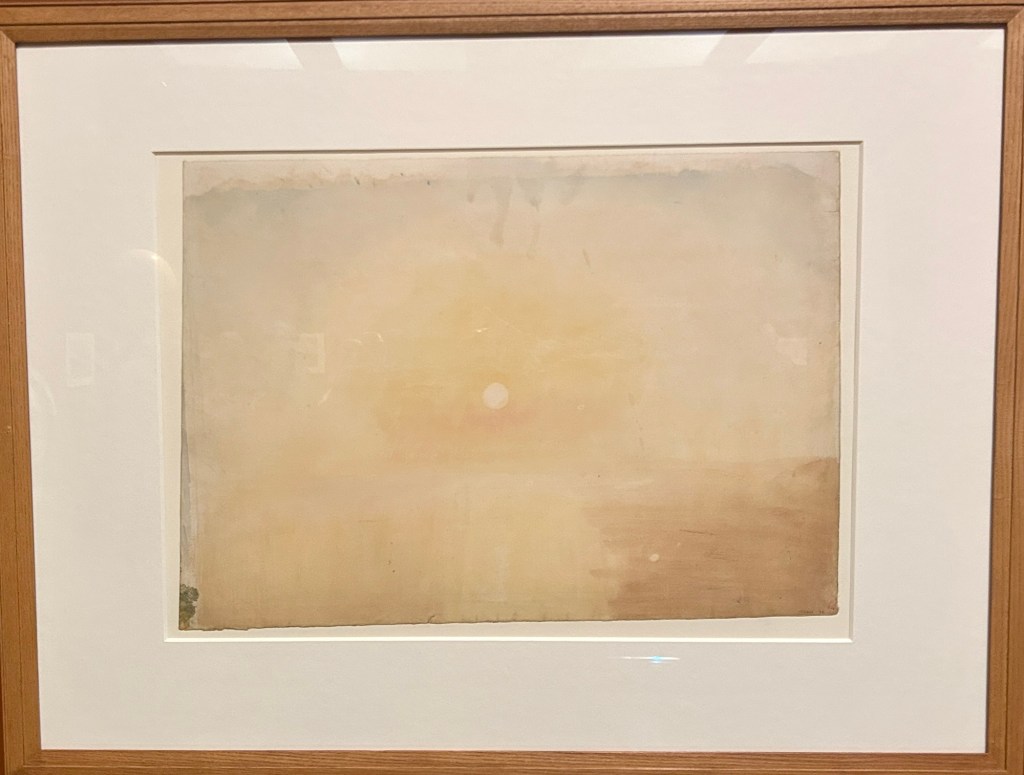
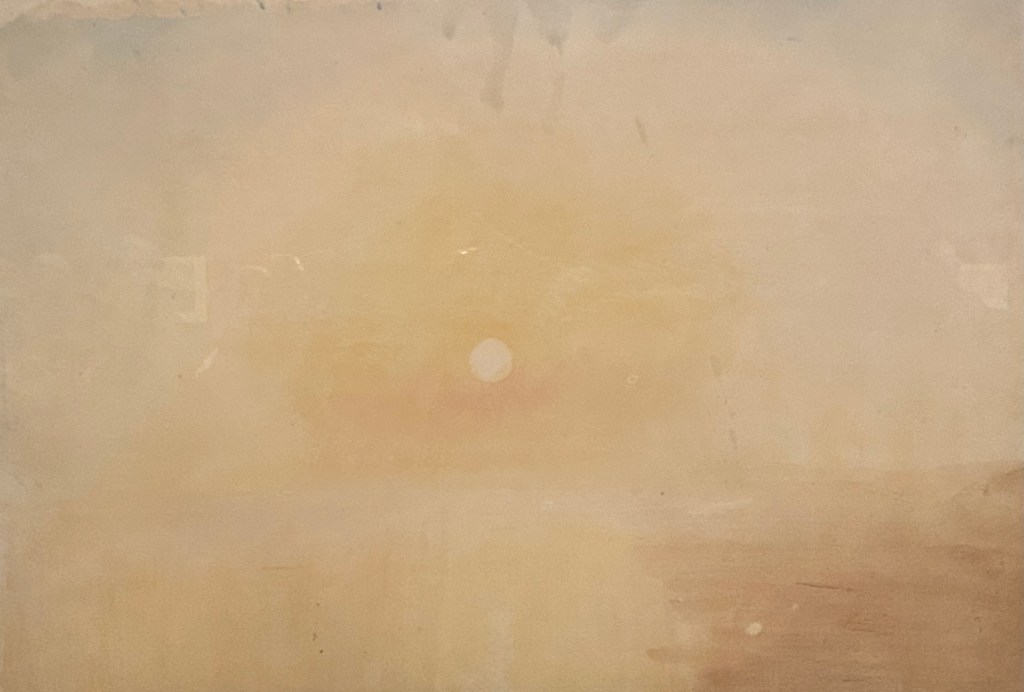
The sun rising over water, 1825-30, watercolour on paper
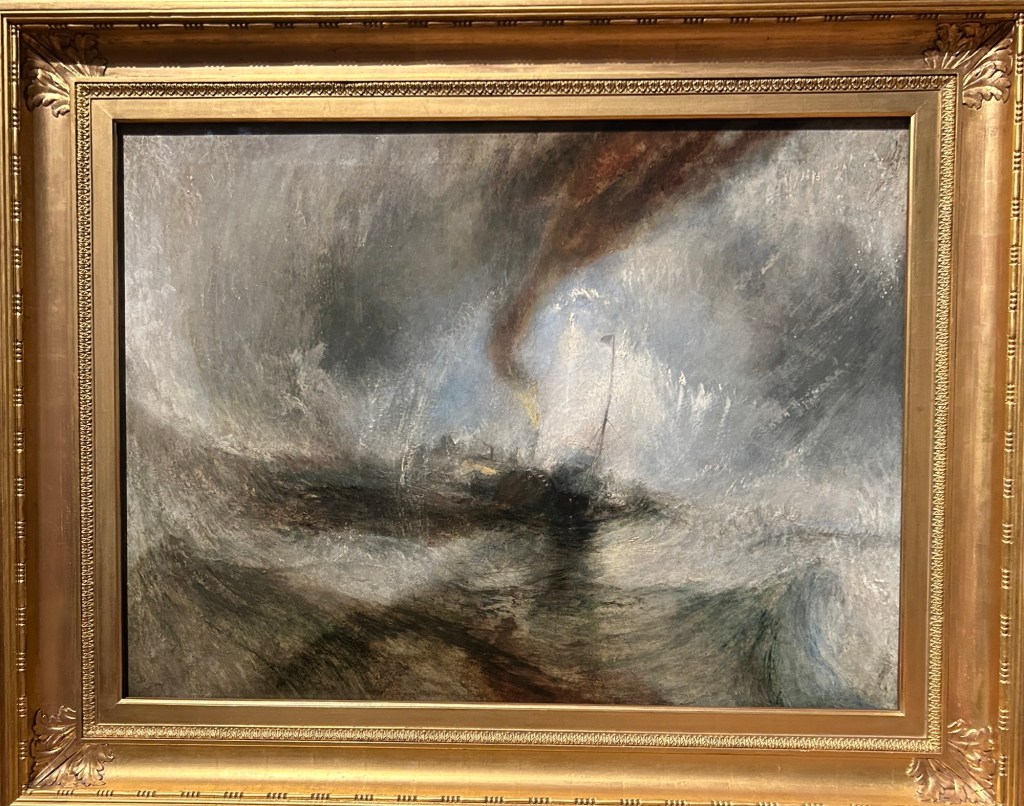
At the time they were exhibiting, Constable had a solid following and favourable reviews, whereas Turner was thought a genius by some, but deranged by others. In our modern consciousness and wider knowledge and appreciation of art, Turner’s paintings are mind-blowing. His treatment of the natural elements, wind, rain, water, clouds, sunrises and sunsets—in fact, all aspects of light and its effects, are unique. Especially the watercolours—the way he moved paint around and scraped paint off in places to achieve the translucent quality of the air around him is astonishing. Watercolour is a very delicate and elusive medium, and mistakes are dearly paid for; but he found it convenient and easy to transport so that he could capture the effects of light on nature live.
Snow storm – steam boat off a harbour’s mouth. Oil on canvas. This is one of Turner’s most daring paintings.
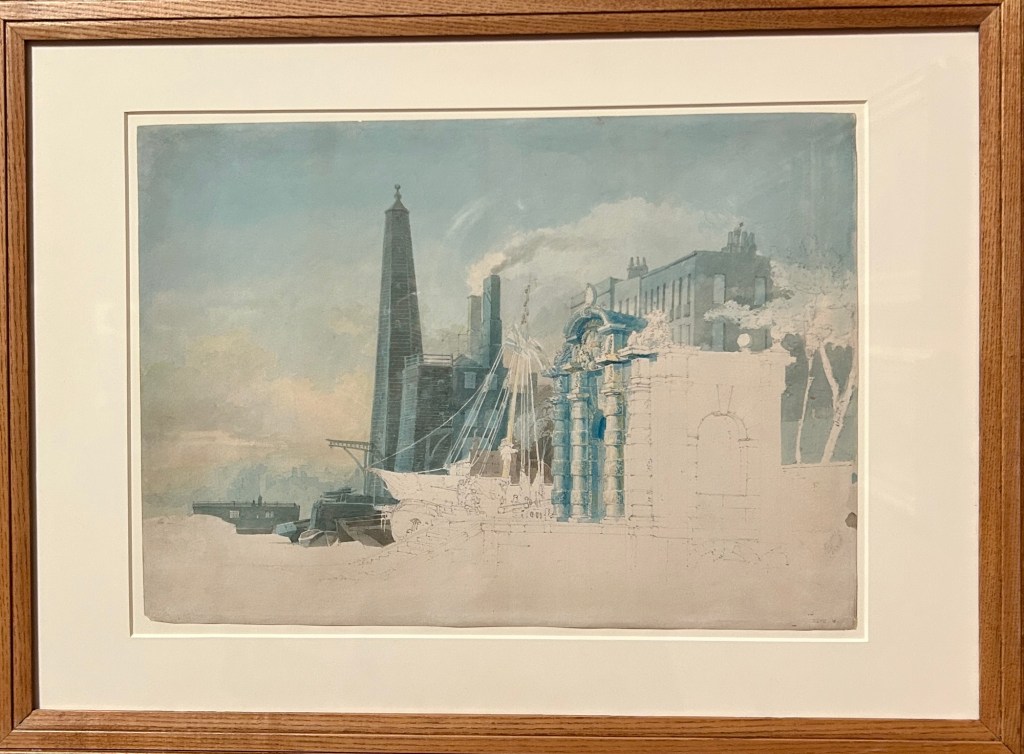
Many of the works in the exhibition are from private collections, so the opportunity to see them in person, and in close proximity, was a rare treat.
York House watergate, Westminster, London. Graphite and watercolour on paper.
The weather refuses to improve yet, and we are treated to endless rain and waterlogged grass. So I took refuge in poetry, and I would like to share this poem by Louis MacNeice, which evokes the ephemeral pleasures of life. It is lyrical and sad, exploring themes of time, memory and loss.
I particularly like MacNeice’s mastery of the poetic form in the poem’s distinctive rhyme scheme and rhythm. The poet was anxious about the darkening political situation evolving in Europe at the outbreak of the Spanish Civil War and he evokes a sense of impending destruction. The allusions are vague and a modern reader can surely adapt them to his or her own experience.
Detail of JMW Turner’s painting, The Sun Rising over water (1825-30)
While sorting out my camera roll I came upon various photos that I had saved out of interest. I thought I might share some of them.
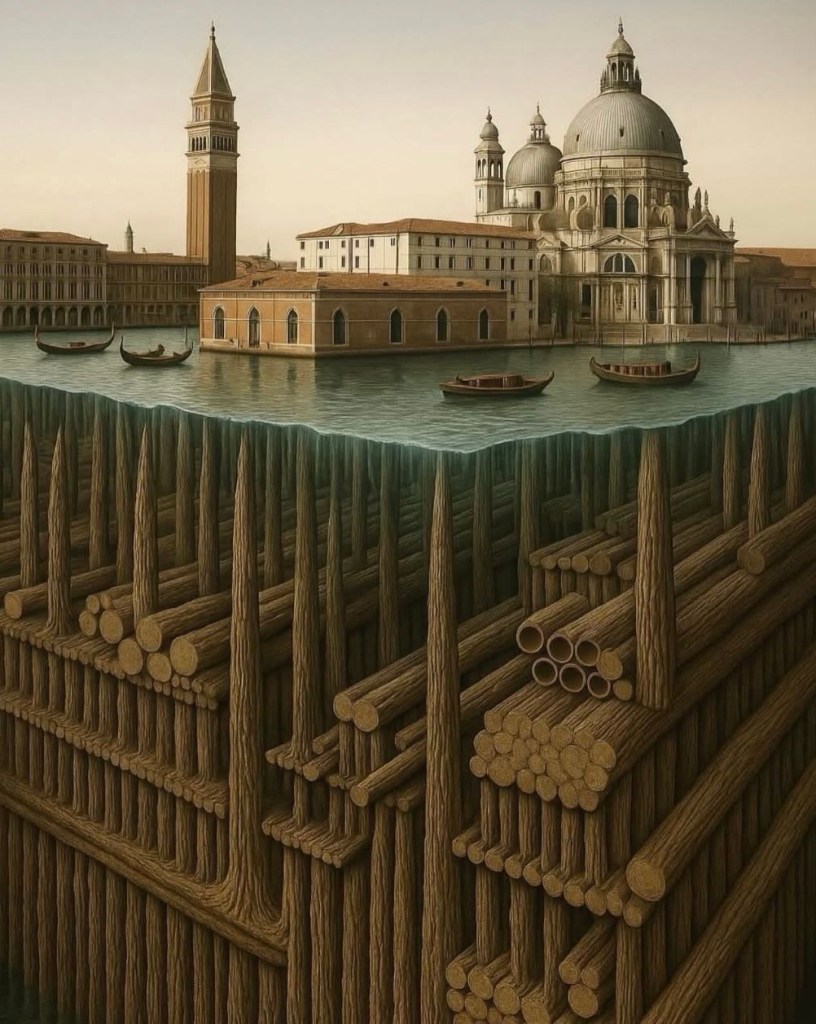
Although this print is reproduced on many sites about Venice, I could not find out where to credit it…
This one in particular fascinated me, especially after our recent trip to Venice.
It shows how the millions of wooden poles upon which the city was built were placed. The wood was transported from surrounding forests via the rivers. It does not rot but, when it comes into contact with the clay mud at the bottom of the lagoon, becomes petrified. The construction process itself is awesome.
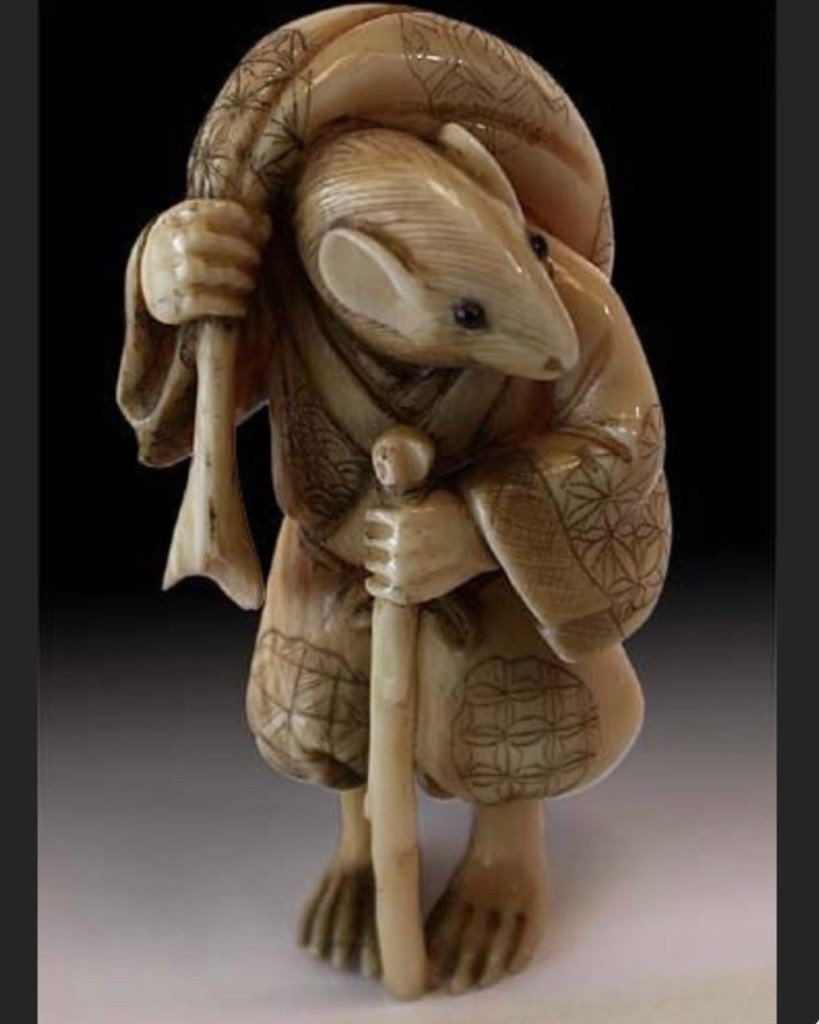
19th century carved ivory netsuke depicting a mouse traveller. Netsuke originated in the 17th century, starting as useful accessories for fastening a pouch to a kimono, for example, but evolving into an art form. This one is attributed to Giyokuseki.
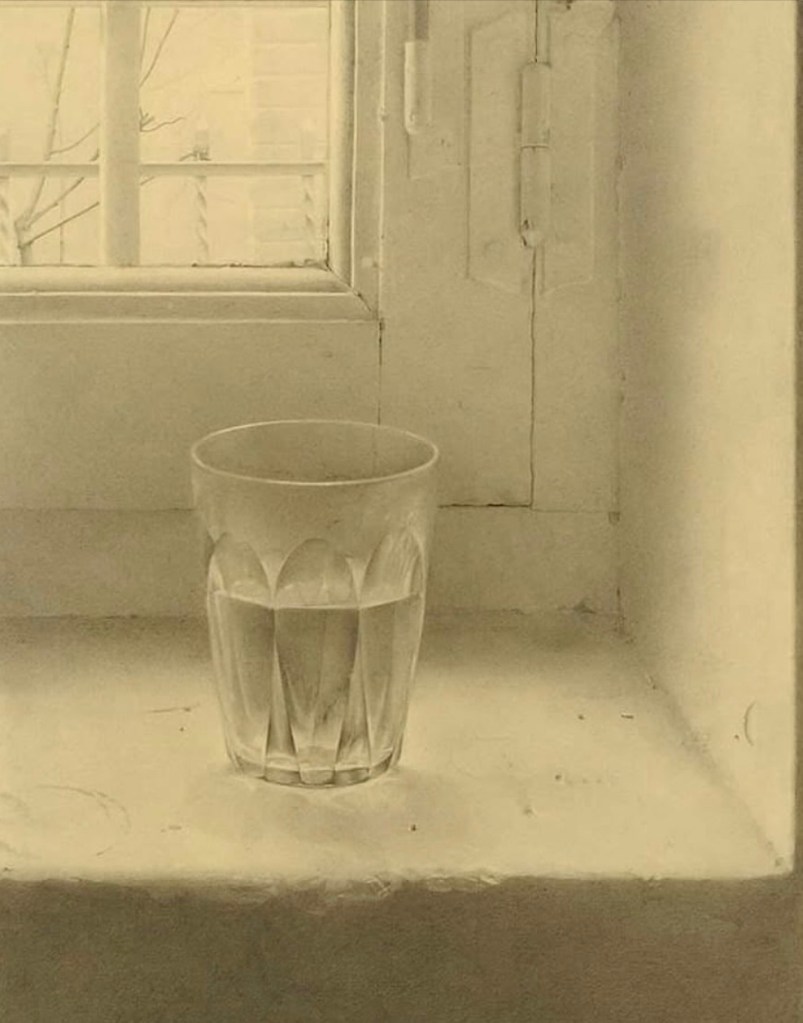
I am in awe of this simple drawing of a glass (pencil on paper). By the Spanish artist Isabel Quintanilla (1938-2017)
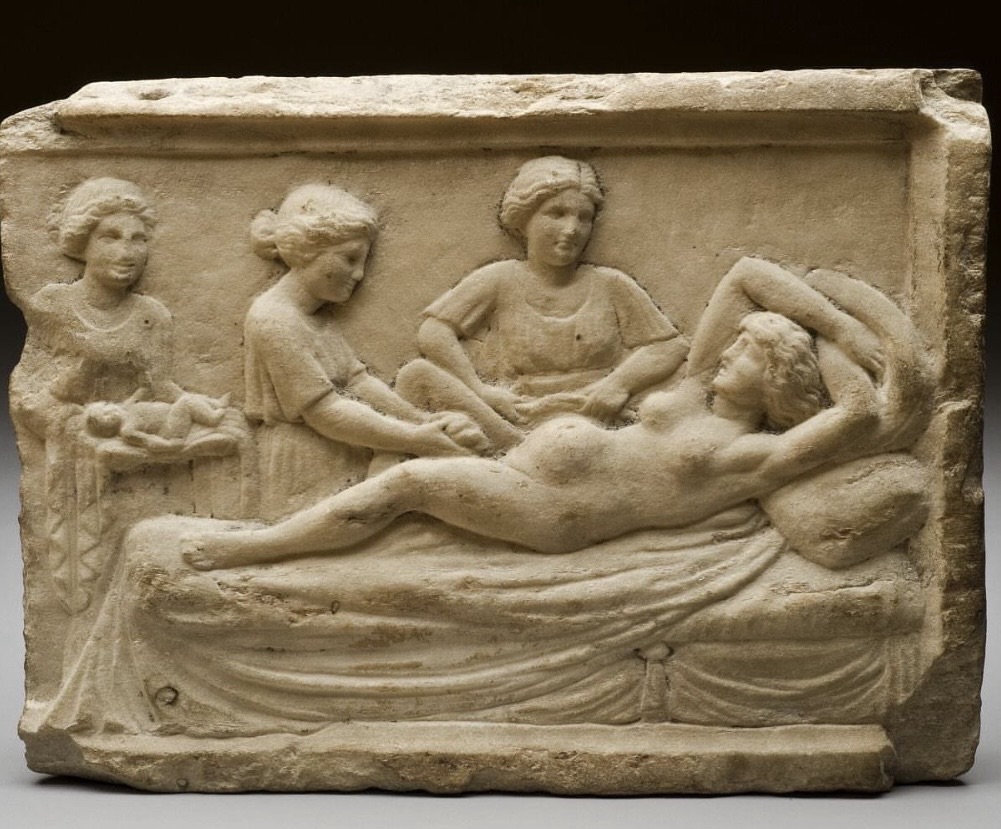
An astonishing Roman marble bas-relief, depicting a midwife assisting a woman having a baby. I have never seen anything like it before, and I think it is lovely. What a feat, to convey such an atmosphere of serenity in stone.
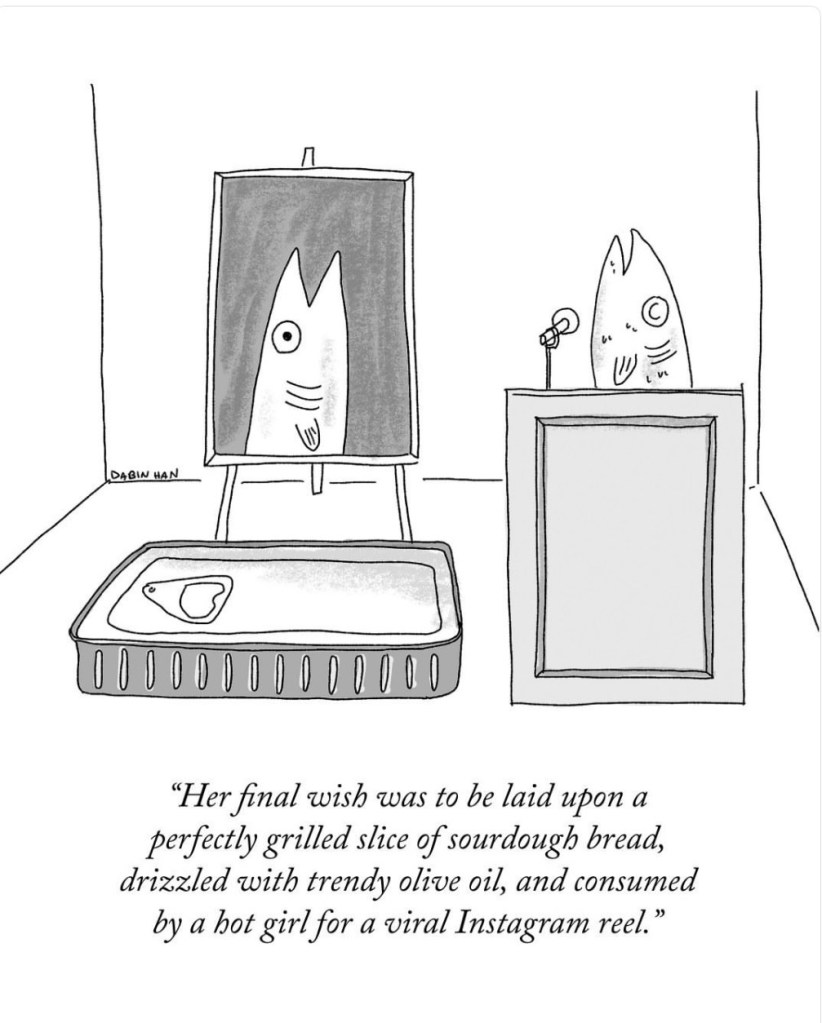
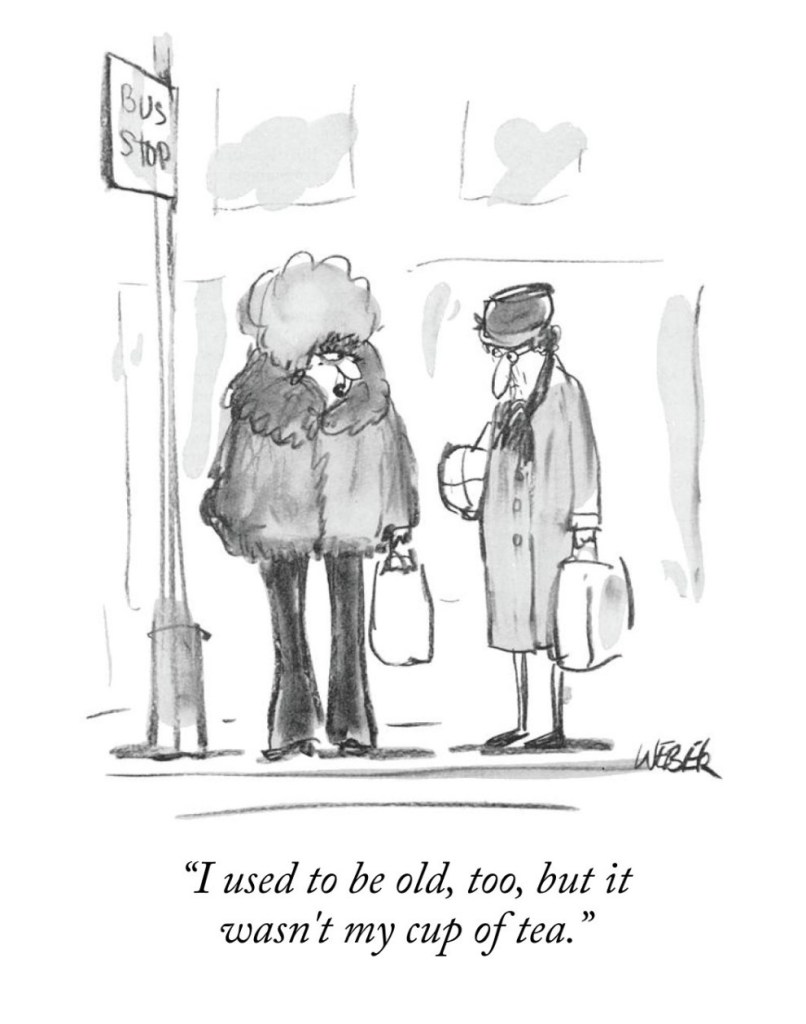
I could not resist adding a couple of cartoons I had also saved, because what’s life worth without a good laugh? The one below is from the New Yorker.
On Throwback Thursday I thought I’d post something I started writing some time ago after a trip to Morocco, but for some reason I never finished. It was a beautiful place, and the photos brought back nice memories.
Not far from the Marrakech medina and overlooked by the majestic, snow-capped Atlas Mountains, there is a magical garden combining art with a profusion of beautifully planted trees, bushes and flowers of all kinds.
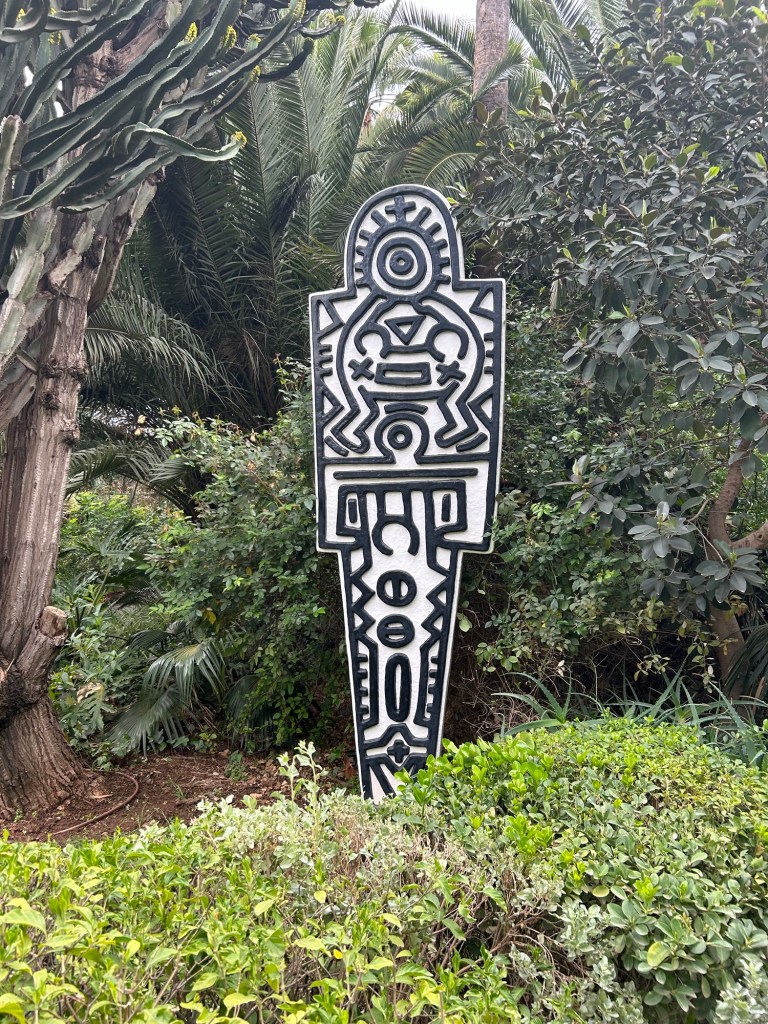
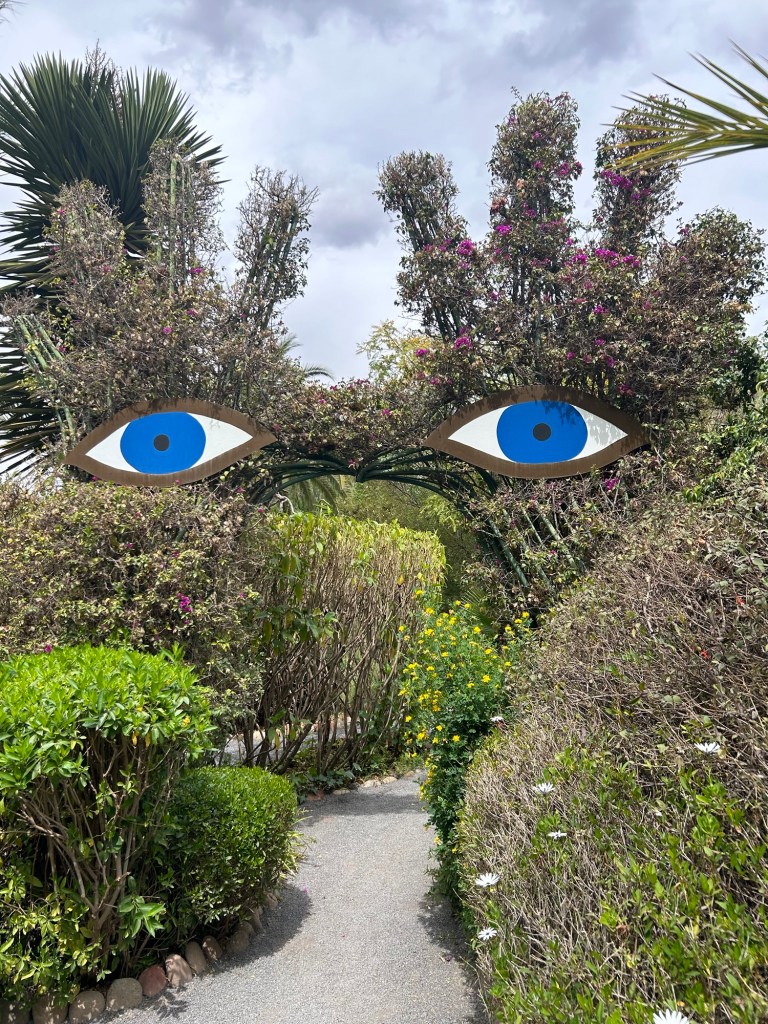
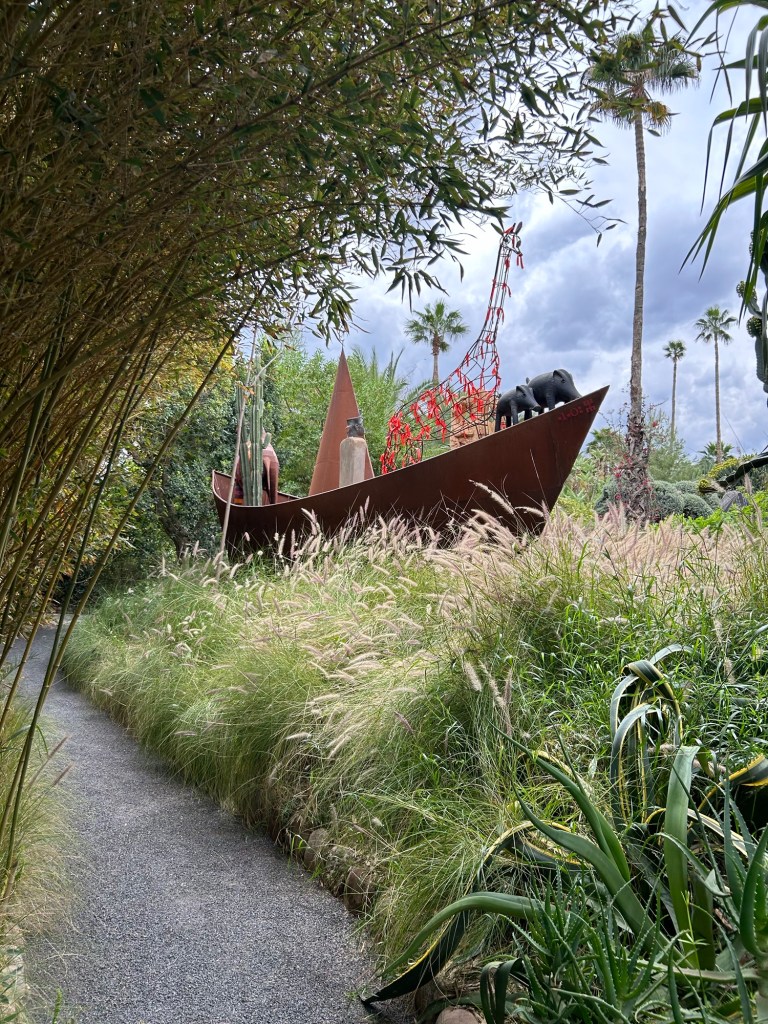
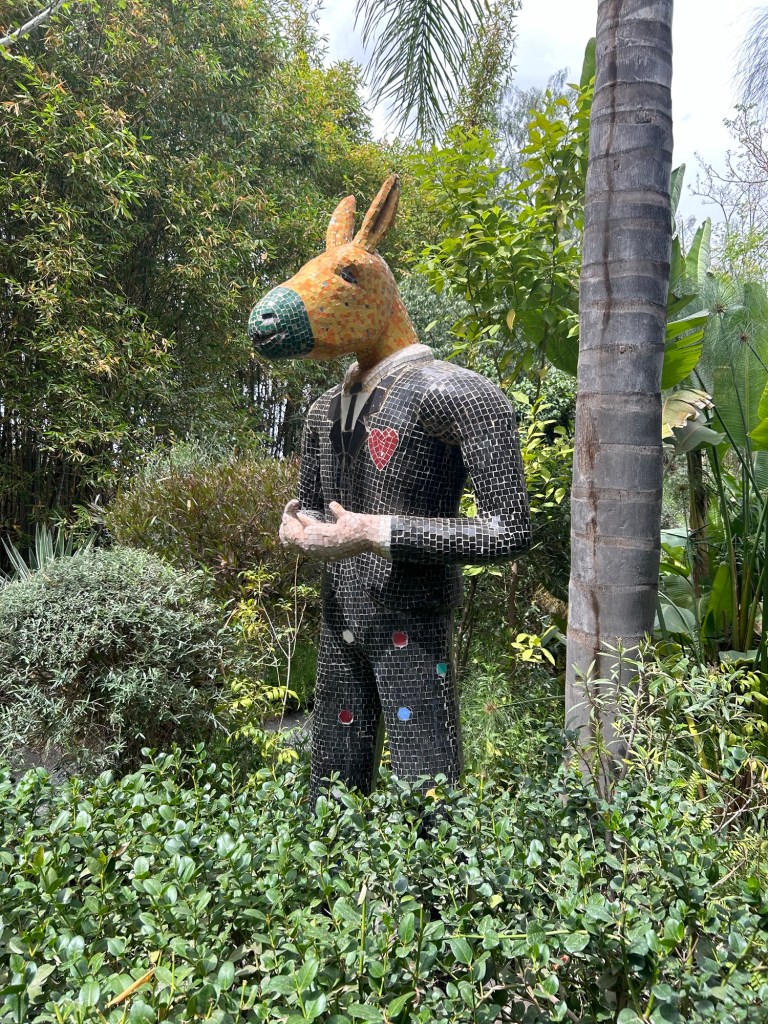
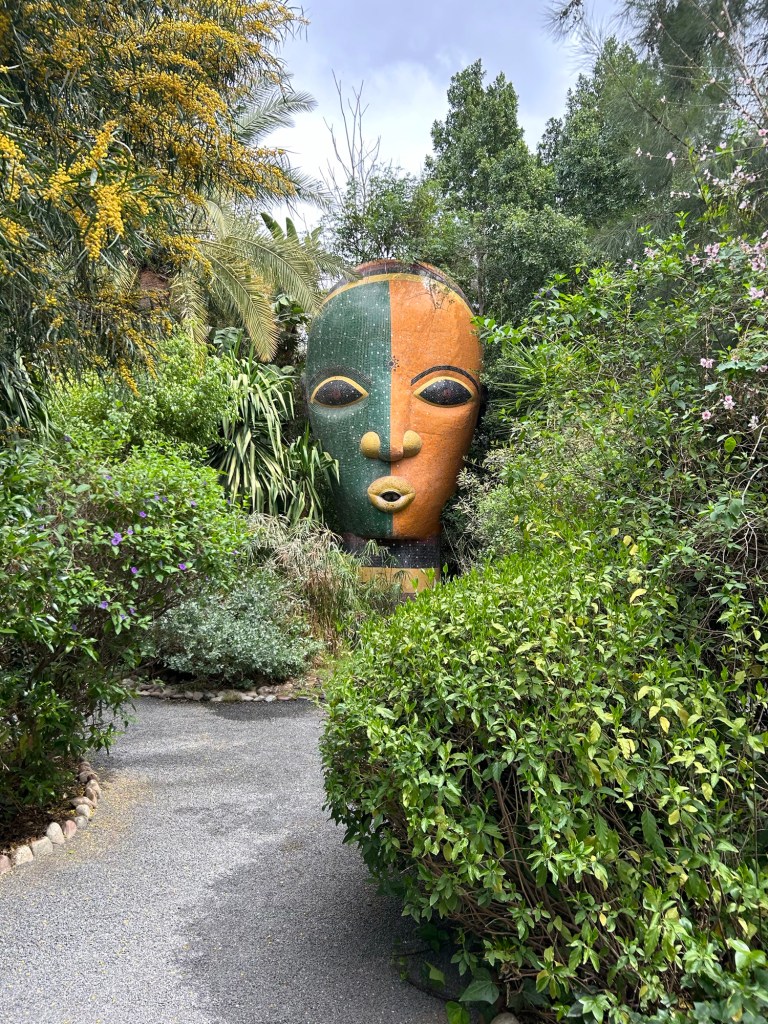
The garden is laid out with paths meandering through the vegetation and interspersed with astonishing sculptures by various artists, some very well known.
Here’s one by Keith Haring below:
The place has the most unusual vibe: it is at once peaceful, joyful and alive.
The garden is the creation of acclaimed Austrian artist Franz André Heller. Here’s a short bio from the Anima site:
André Heller was born in Vienna in 1947. He’s among the world’s most influential and successful multi-media artists.
His achievements encompass garden artwork, chambers of wonder, prose publications and processions including a revival of circus and vaudeville, selling millions of records as a chansonnier of his own songs, amazing flying and swimming sculptures, the avant-garde amusement park Luna Luna, films, fire spectacles, and labyrinths as well as stage plays and shows that have entertained audiences from Broadway to the Vienna Burgtheater, from India to China, and from South America to Africa.
André Heller lives in Vienna, Marrakesh, and on the road.
There is a lovely café in the garden, named after writer Paul Bowles,and plenty of hidden benches where people sat reading or just soaking in the atmosphere. There are even a couple of colourful striped hammocks where you can lie in the dappled shade.
A very well-dressed gentleman, above.
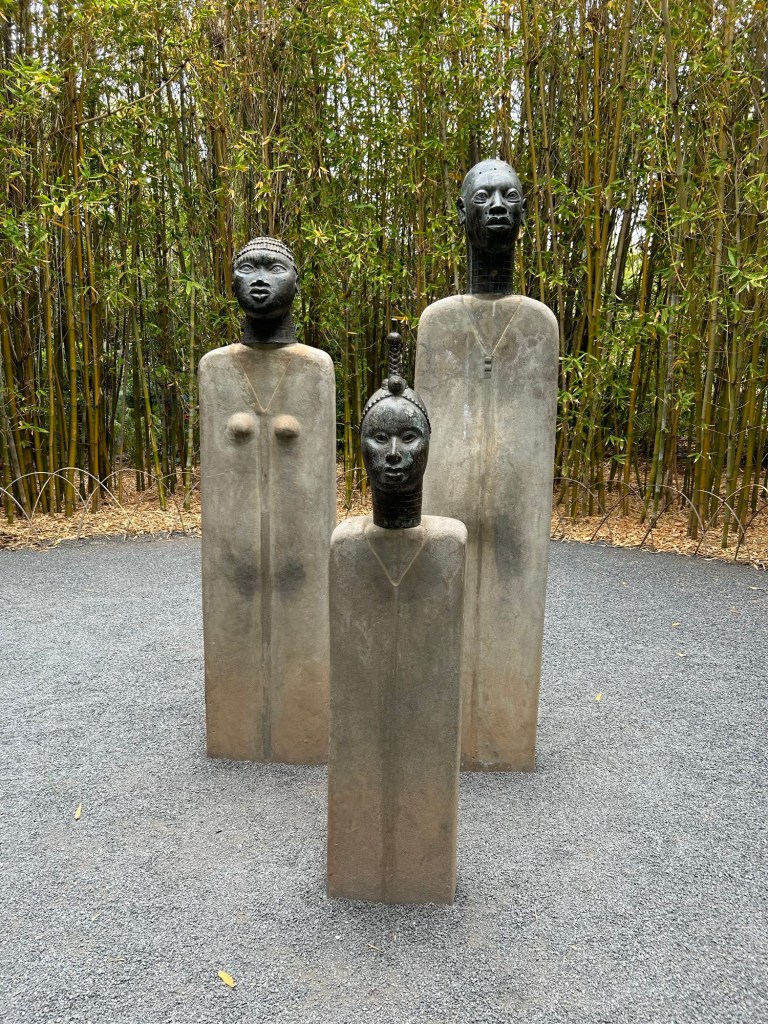
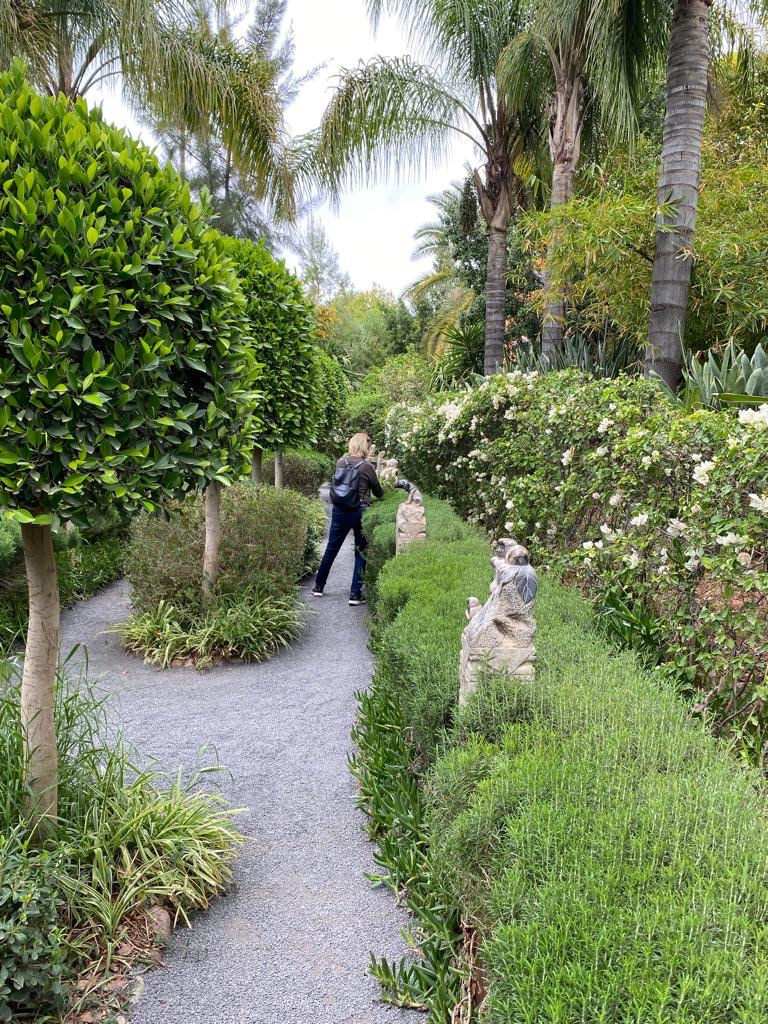
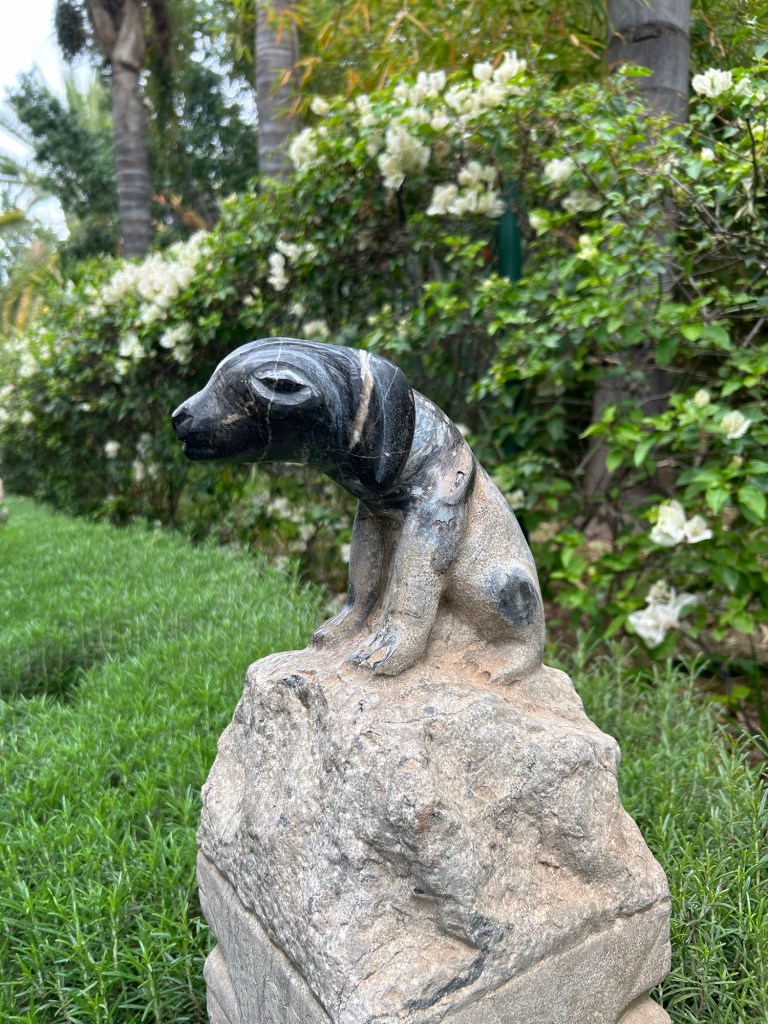
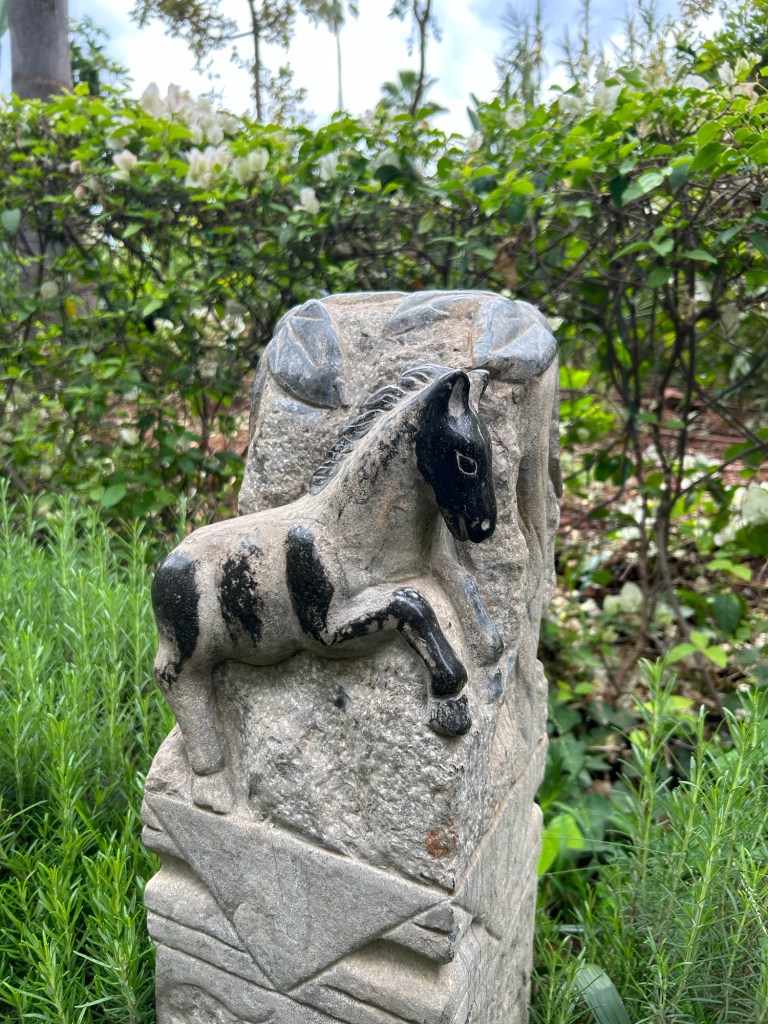
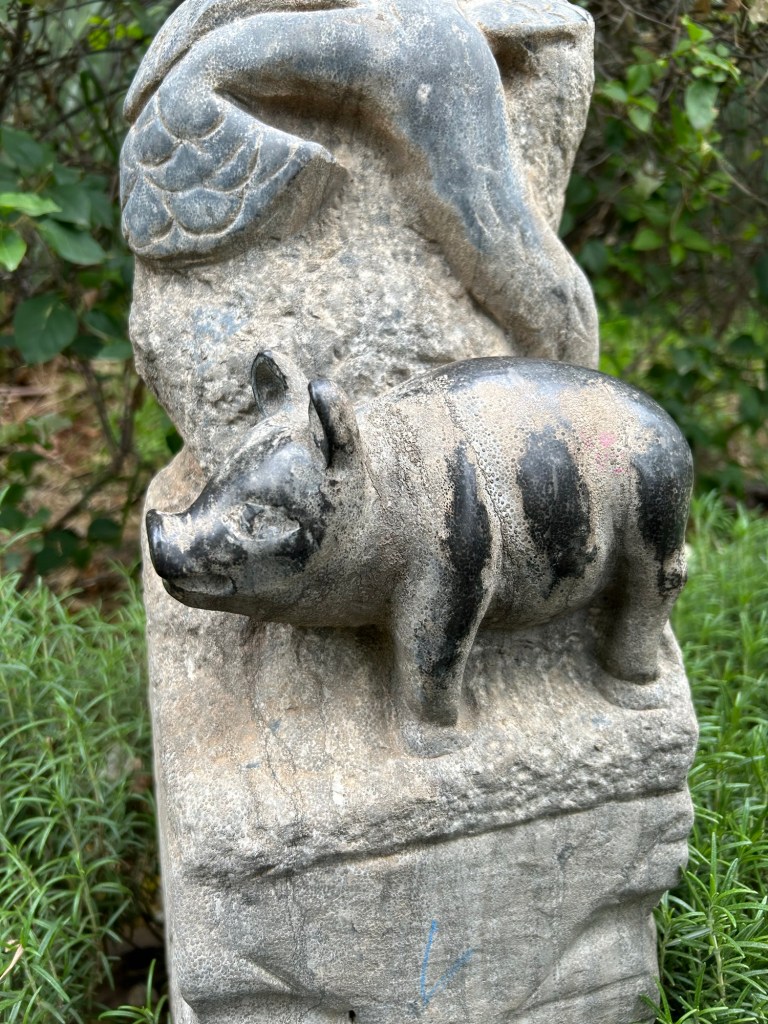
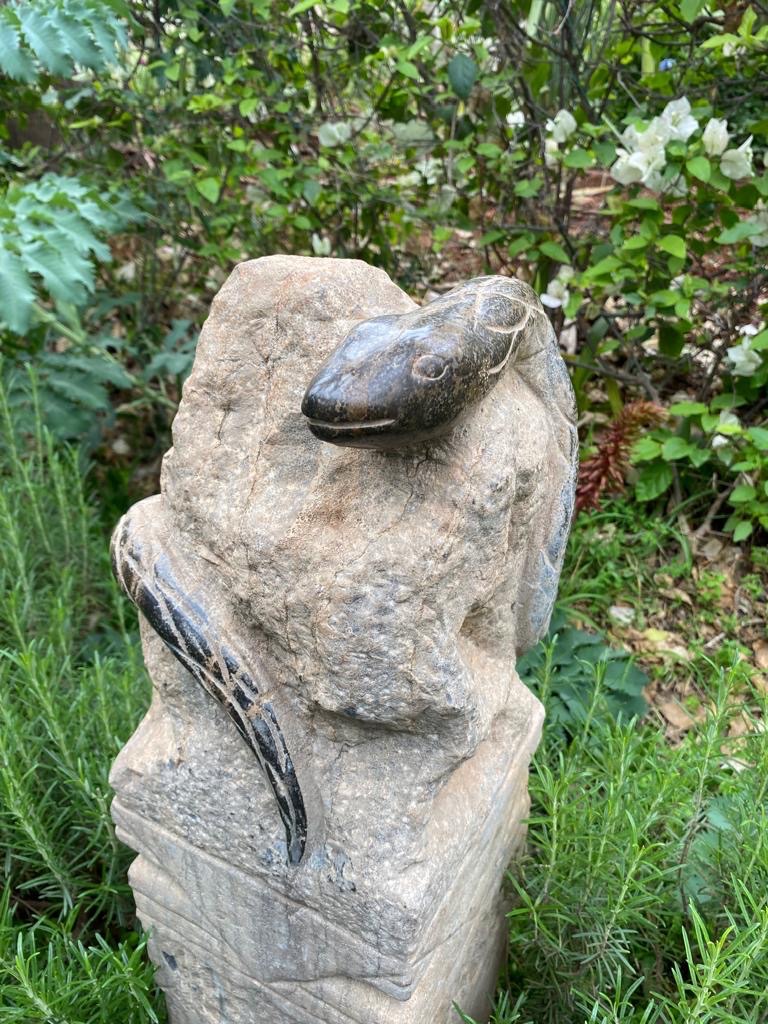
My absolute favourite was an alley lined with stone columns, each with a carved animal upon it.
Each more charming than the next.
My one caveat is that there are no identifying labels anywhere, so there is no way of knowing who the artist is, unless they are universally recognisable, like Picasso or Rodin.
So if anyone recognises the artist who made these delightful animals, please let me know.
This visit was one of the highlights of a short break in Morocco, and is most highly recommended, should you be somewhere in the vicinity.
Vivienne very kindly hosted me on her blog, Aspholessaria , and I am happy and honoured to return the favour. She writes mostly fantasy, which has not been my cup of tea so far, but I will now give it a try! I have already heavily promoted her to members of my family who are fans. And I have put her Viking books on my TBR list.
Here’s a bit about Vivienne:
V.M. Sang was born and lived her early life in Cheshire in the north west of England. She has always loved books and reading and learned to read before she went to school.
During her teenage years she wrote some poetry, one of which was published in Tecknowledge,the magazine of the University of Manchester Institute of Science and Technology (UMIST). Unfortunately, that is the only one that is still around.
V.M. Sang became a teacher and taught English and Science at her first school.
She did little writing until starting to teach in Croydon, Greater London. Here she started a Dungeons and Dragons club in the school where she was teaching. She decided to write her own scenario. The idea of turning it into a novel formed but she did nothing about it until she took early retirement. Then she began to write The Wolves of Vimar Series.
Walking has always been one of V.M. Sang’s favourite pastimes, having gone on walking holidays in her teens. She met her husband walking with the University Hiking Club, and they still enjoy walking on the South Downs.
V.M.Sang also enjoys a variety of crafts, such as card making, tatting, crochet, knitting etc. She also draws and paints.
V.M.Sang is married with two children, a girl and a boy. Her daughter has three children and she loves to spend time with them.
She now lives in East Sussex with her husband.
⭐️
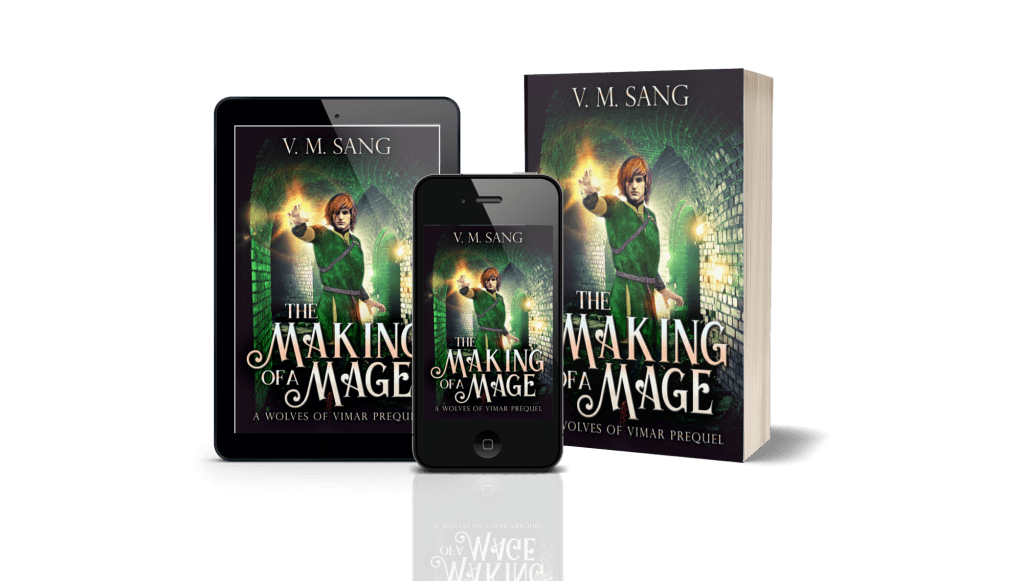
Unlike me with my one measly novella, Vivienne has been very prolific, and you will find links to her books below, and of course on her website. Here I would like to mention her novella, The Making of a Mage. It’s one of the Wolves of Vimar prequels and tells of the early life of Carthinal, one of the main characters in the series.
Blurb: Carthinal is alone in the world. His parents and grandparents have died. Without money and a place to live, he faces an uncertain future.
After joining a street gang, Carthinal begins a life of crime. Soon after, he sees a performing magician, and decides he wants to learn the art of magic.But can he break away from his past and find the path to his true destiny?
⭐️
And now onto our interview:
1. You have been very prolific. Do you spend many hours writing every day?
Not really. I’ve been rather bad recently and hardly written anything except a few poems. I think it’s because I’ve finished Book 4 of The Wolves of Vimar (Immortal’s Death) and am stuck on another couple of projects.
2. Do you finish one project before starting another, or do you have a few things on the go at once?
I usually have more than one thing on the go. I’ve started Book 3 of my Historical Novel series and I’m also writing a series of short stories inspired by fairy tales. The second story is going through a critique process at the moment and I’m partway through the third one. I’m also writing some poetry as I’ve been asked to submit some for an anthology.
3. Who is your favourite author/book?
Usually the last one I’ve read!
But seriously, I enjoy Fantasy and Science Fiction. I loved the Wheel of Time by Robert Jordan, but there are so many books and excellent writers.
One of my special favourites is Diana Wallace Peach. She writes fantasy in such a beautiful way.
4. If the above is not a classic, what is your favourite classic book?
I think Wuthering Heights by Emily Bronte. She builds such a wonderful picture of the moors. Maybe I like it because of that. I used to live not far from that country and walked many times in my teens on those bleak moorland hills. Although they aren’t always bleak! In the heather season they are quite beautiful.
5. When we were children, Enid Blyton kept us up at night (with a torch under the covers) She is much criticised now, but she got many kids to read—as did JK Rowling, who is also criticised. I believe that is so important, above other considerations. Are your books read by children? Or teens and young adults?
I wholeheartedly agree with you about Enid Blyton. I loved her books when I was growing up, and they instilled a love of books in me.
I don’t consciously write for a particular age. My Elemental Worlds has been marketed as Young Adult. Someone said they thought Vengeance of a Slave was YA, but I disagree with that.
My books aren’t read by children. They are too long for a start, and I don’t think the language is children’s language. I don’t simplify words. Most YA books are also shorter than mine.
So no. They aren’t children or YA books.
6. If you have a proper job, what is it?
I used to be a teacher until I retired. Now I enjoy life! (If you get the chance to retire early, do so!)
7. Why do you write?
There are stories in my head trying to get out. I think they’ve always been there. I made a little ‘fairy’ out of grass and told my sister tales about her, and I told myself stories at night to help get to sleep. (What does this say about my stories if they put me to sleep?)
I wrote a very bad romance when I was in my teens, and read it to my long-suffering friends. They were very kind about it.
So I think I write to get these stories out of my head.
8. Why do you write fantasy?
When I was a student, I was doing teaching practice when a nine year old boy, with the wonderful name of Fred Spittal, asked me if I’d read Lord of the Rings. I hadn’t, and he recommended it, but said I should read The Hobbit first. I found both in the College Library and from there I was hooked. I read a lot of the fantasy that was around at the time and loved the way the authors built worlds out of their imagination. It’s still one of my favourite parts of writing fantasy.
9. From your About page, I know you love dogs. Do you have any pets at this time?
I don’t have any pets at this time, no. I didn’t think it was fair to have a dog while I was working as it would have to be left alone all day. Not good for a dog, which is a pack animal and needs company. After retirement we were going away a lot, so didn’t have any pets.
Growing up I had two dogs (not at the same time) a border collie, whom I called Laddie, and a corgi called Johnnie. I also had a budgerigar called Peter who was an amazing talker.
My stepfather was a farmer on the Cheshire/North Wales border and so there were plenty of animals around. There were the farm dogs, of course, and I had a cat called Frances who would sit on my shoulder. She was lovely.
Later, well after I’d married and had children, we had goldfish and three cats, although my husband doesn’t like cats!
10. If you could meet any three people, alive or dead, who would they be and why?
I would love to meet Leonardo da Vinci. Such a clever man–an artist, an engineer, a scientist, a medical researcher and more. We visited his chateau in Amboise, France and saw his inventions brought to life using only tools and materials from his day. Quite amazing.
You say three people. Someone I had (along with Leonardo) a picture of on the wall of my lab in school was Stephen Hawking. He was incredible. Not only did he have an amazing brain, but to do all he did with such a severe disability as Motor Neurone Disease, was incredible. His determination must have been second to none.
Finally, no, not a writer, but an artist. Any of the Impressionists, I think, but having visited his famous garden, I think I’d go with Monet.
11. Do you enjoy sport? Do you prefer to watch or take part?
Yes, I do enjoy sport. I used to play tennis, badminton and the occasional squash game, and when my daughter was at school and my son was small, I used to attend a session at the local sports centre aimed at mothers. They had a creche for the kids and we did some aerobics then volleyball, badminton or basketball.
Now, I don’t partake, but enjoy watching most sports (not golf though).
12. There is a photo of a lovely flower painting on your site. Do you still paint a lot? Who is your favourite artist?
I think I’ve answered the second part of your question alreaedy. I adore the Impressionists. I don’t think I really have a favourite amongst them, though.
As to the first part, I’ve not done so much recently. I have one partly finished, but it’s in oils and I don’t like to do it indoors as it creates a smell. I’m waiting for the warmer weather so I can finish it!
13. Do you do any voluntary work? If so, what?
I don’t do any voluntary work at the moment. I did work in the small park behind our house until recently. The park had become very overgrown, the council only cutting the grass. I contacted them and they looked it up. They told me it was supposed to be a ‘community project’. It seems the original volunteers had either died, moved away or grown too old, so several of us took it over. It looked nice for a few years, then the same thing happened. People moved away, and became too old. There was only myself and my husband doing it, and we’re getting older and finding it increasingly difficult, especially the heavier jobs. We do very little now, except for the occasional cutting back of overgrown brambles that are blocking the paths.
14. What do you think is the biggest problem facing the world today?
I think there are two. One is increasing selfishness and the other is stupidity.
From the person wanting to park their car as near as possible to their destination, regardless of inconvenience to others, to governments and large organisations who trample roughshod over anyone and everyone who gets in their way. Often stopping them getting what they want, up to and including taking over other people’s countries in order to get at the minerals etc that are there.
And threatening the whole future of humanity in not accepting scientifically proven things like Climate Change. And it’s not only governments who are becoming stupid, either. Individuals seem to have lost the ability to think for themselves.
Sigh…
Thank you so much for answering all my nosy questions, Vivienne. I’m sure my readers will enjoy discovering your books—those that don’t know them already, that is. Fantasy is very much the flavour of the day!
⭐️
For those interested, I am including links to Vivienne’s books below:
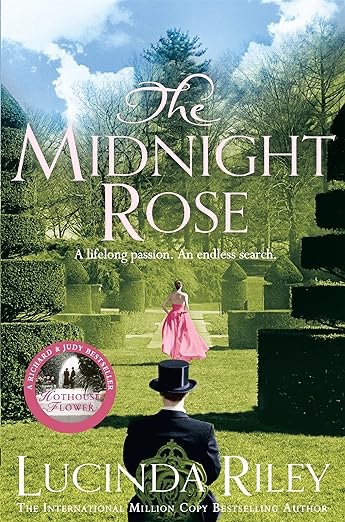
While tidying up my bookcase, I came upon some book recommendations which make for pleasant reading. A comfortable sofa, a mug of tea or chocolate, a good book and the rain falling outside…Or perhaps, depending on your location, a lounger on a beach and a large straw hat to shade your page…
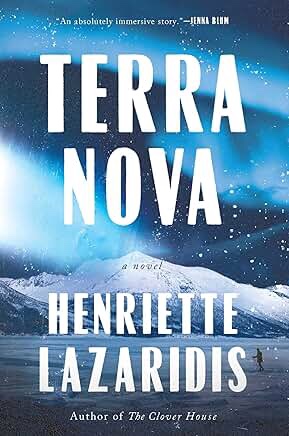
For cooling off on the aforementioned beach, what better than a tale set in the frozen wastes of Antarctica?
Terra Nova, by Henriette Lazarides, is the haunting story of two explorers seeking to reach the South Pole and the woman who loves them both. Set in 1910, it is a tale of love and betrayal. The two men are friends who have set themselves an impossible task of endurance and privation. Back in London, Viola, wife of one and lover of the other, is a photo journalist and suffragette. In both settings, secrets multiply and grow toxic. I have been interested by polar exploration since reading the marvelous The Worst Journey in the World, and this fictional tale hits all the right keys.
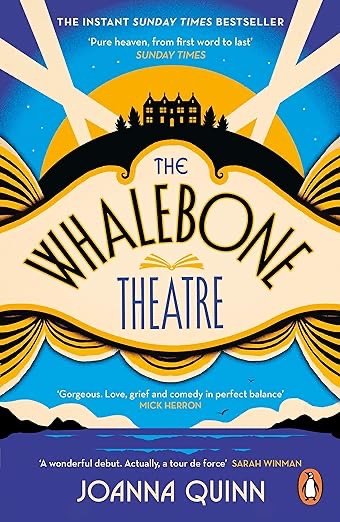
A crumbling English manor house by the sea and the three children who grow up there. A dead whale washes up on the beach. A family saga par excellence, it decribes what unfolds in the wings as the children grow, and while the war increasingly gets centre stage. Engrossing.
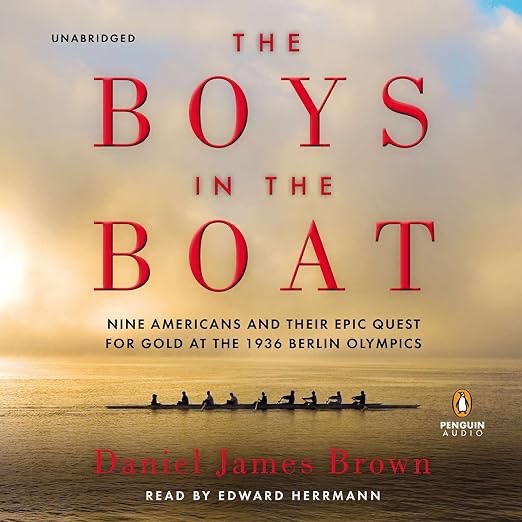
I was initially put off by the subject matter of this book, which tells the tale of nine working class boys from the American West, and their quest to win the gold medal for rowing in Hitler’s 1936 Berlin Olympics. I thought a whole book about rowing would bore me, but a friend was so insistent that I caved. All I can say is that it kept my interest to the very end—the story is so well told, the characters all have depth and empathy, the technical descriptions are, dare I say it, poetic, the races full of suspense and the whole is set within the larger stage of the Depression, the looming war, and the rising of Hitler’s power in Europe. A story of grit and courage against terrible odds—and which is soon to be a film produced by George Clooney. The trailer looked interesting and—as an added bonus when reading the book—on YouTube one can find the original, black-and-white, films of the race (mostly by the notorious Leni Riefenstahl).
Another family saga, alternating between India and England in 1911 —and the same places in the present day. It is the story of Anahita Chavan, from a noble but impoverished family, and her lifelong friendship with the headstrong Princess Indira, the privileged daughter of Indian royalty. The relationships between them and with the men they love have repercussions down the years; culminating in a love story between Anahita’s grandson and a young American film star on a film set in England.
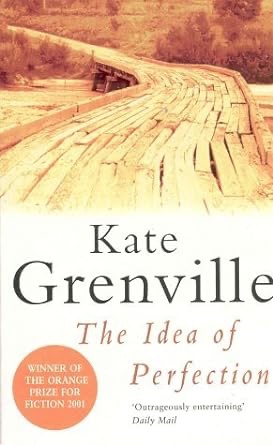
Set in the eccentric backwater of Karakarook (pop. 1,374), New South Wales, this is the story of Douglas Cheeseman, a shy and clumsy engineer with jug-ears who meets Harley Savage, a woman who is known for being rather large and abrupt. A cheerful and humorous tale.
Last but not least, non-fiction. A study of 18th century women artists, this book examines the careers and working lives of celebrated artists like Angelica Kauffman and Elisabeth Vigée Le Brun but also of those who are now forgotten. As well as assessing the work itself – from history and genre painting to portraits – it considers artists’ studios, the functioning of the print market, how art was sold, the role of patrons and the flourishing world of the lady amateur.
I found this book fascinating. The details of these women’s lives are beautifully described, and the constraints imposed upon them would seem intolerable to women artists now. The book also has beautiful reproductions of many paintings—however, it is out of print and can only be read as an e-book (of top quality, I must say), unless it can be found in a second-hand shop.
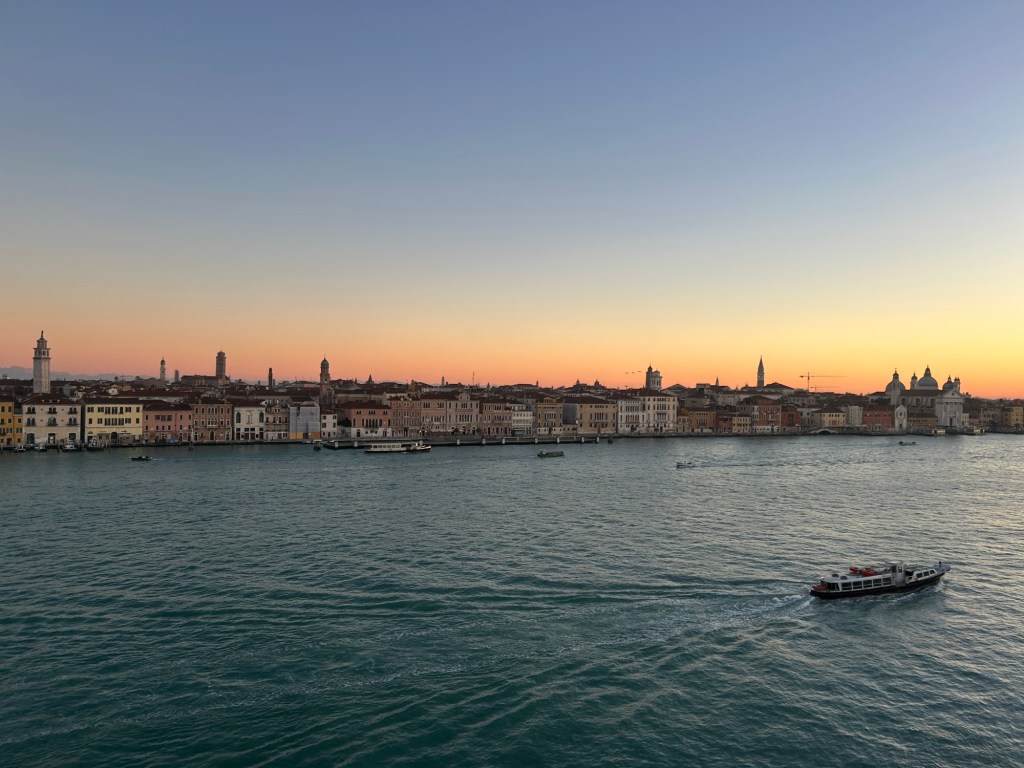
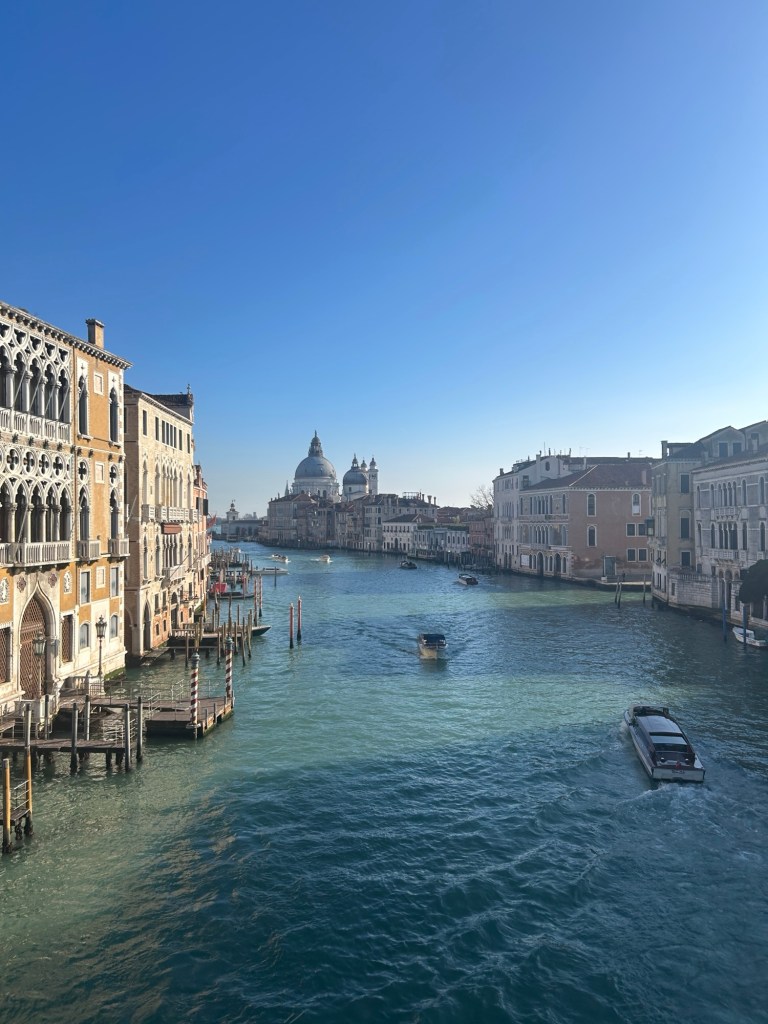
What luck to get away for few days in Venice after Christmas—and more good luck with the weather. Bright sunshine, then misty mornings rendering the city mysterious. The whole previous week there was constant rain, and there are no cars in Venice—walking along under a dripping umbrella would have lessened the pleasure somewhat.
View from the hotel, which was on Giudecca island
As it is, navigating the city centre is a matter of crossing a bridge over a canal, or hopping on a vaporetto (better than going underground to board a train.) The city rests on 126 islands and 150 canals—connected by 472 bridges—and was built by driving more than 10 million wooden piles made of the trunks of alder trees into the clay bottom of the Venetian Lagoon.
The city was the capital of the Republic of Venice for almost a millennium, from 810 to 1797. It was a major financial and maritime power during the Middle Ages and the Renaissance.
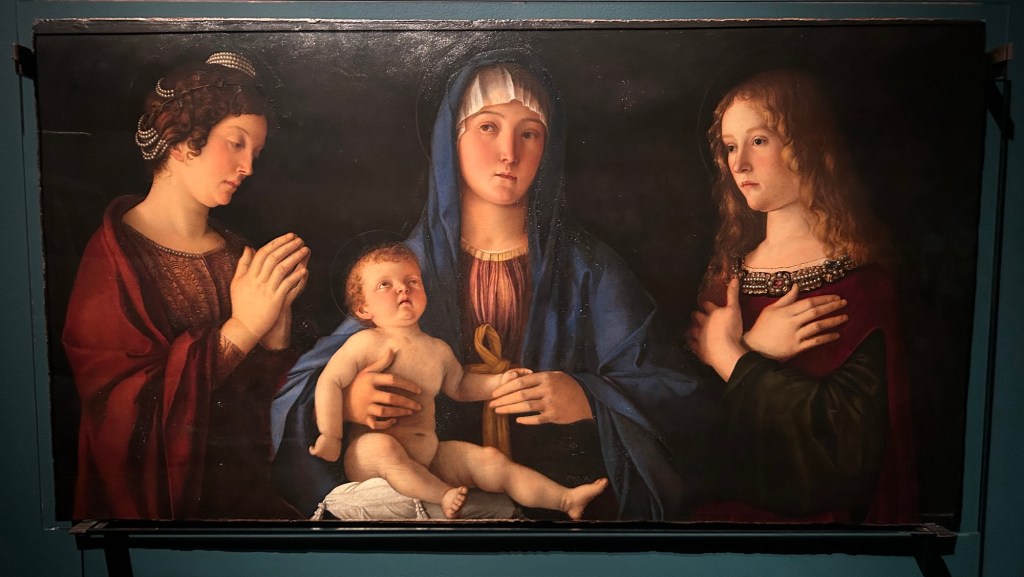
We saw multiple Virgin and child scenes, this is a lovely one by Bellini.
Venice is an overflowing cornucopia of treasures. Of course one can’t see everything in a few days, but the senses are so overwhelmed by beauty that absorbing the details of the landscape, the architecture, and of course, the art, is feast enough.
The Renaissance was a wonderful period for art, and Venice contains a lot of it. It would be impossible to list everything we saw, so I will just treat you to some highlights. Prominent amongst those were the paintings in the Galleria di belle Arti. It was difficult to know where to look first.
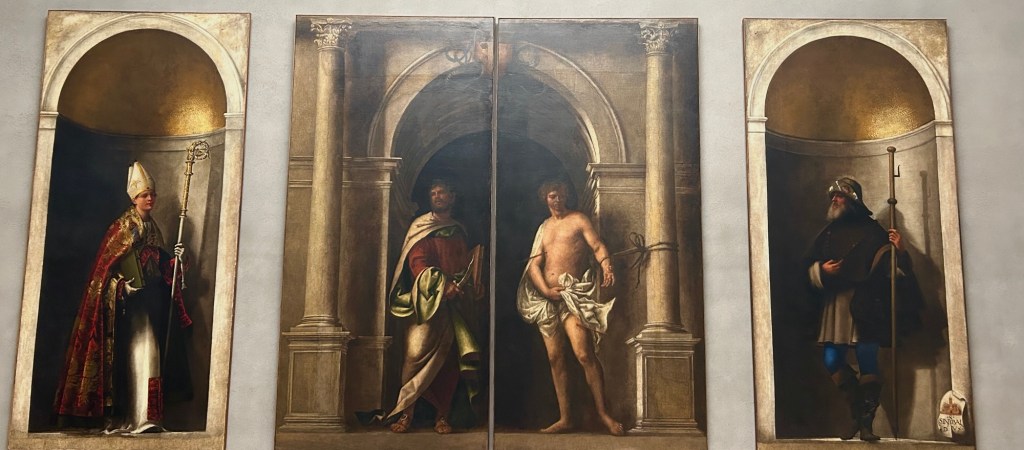
Sebastiano Luciani, detto Sebastiano del Piombo, 1485-1547
We stayed gazing at these historic organ shutters for a long time. They are huge, and the detail is astounding: the light, the shadows, the drapery and clothes. An interesting detail is that the Church of San Bartolomeo where they were placed was frequented by a large community of German merchants, and the figure on the right is Saint Sebaldus, patron of Nuremberg. I suggest you zoom in on the photos to see the details better.
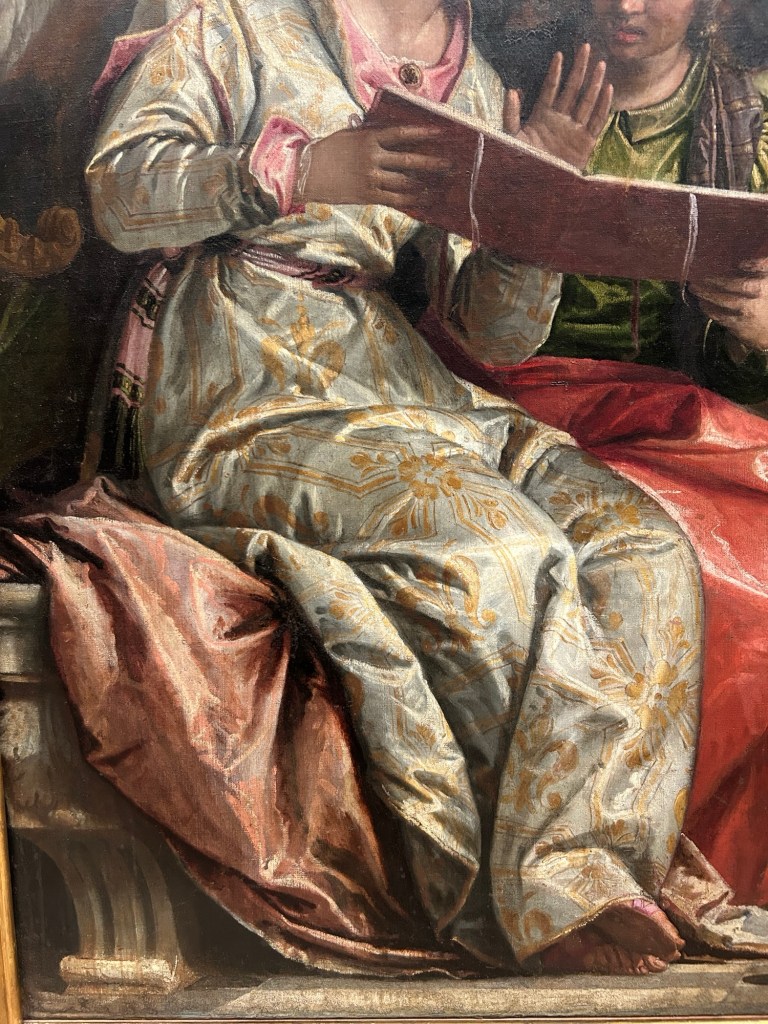
Sometimes it was the details that fascinated me the most. Look at the clothes below:
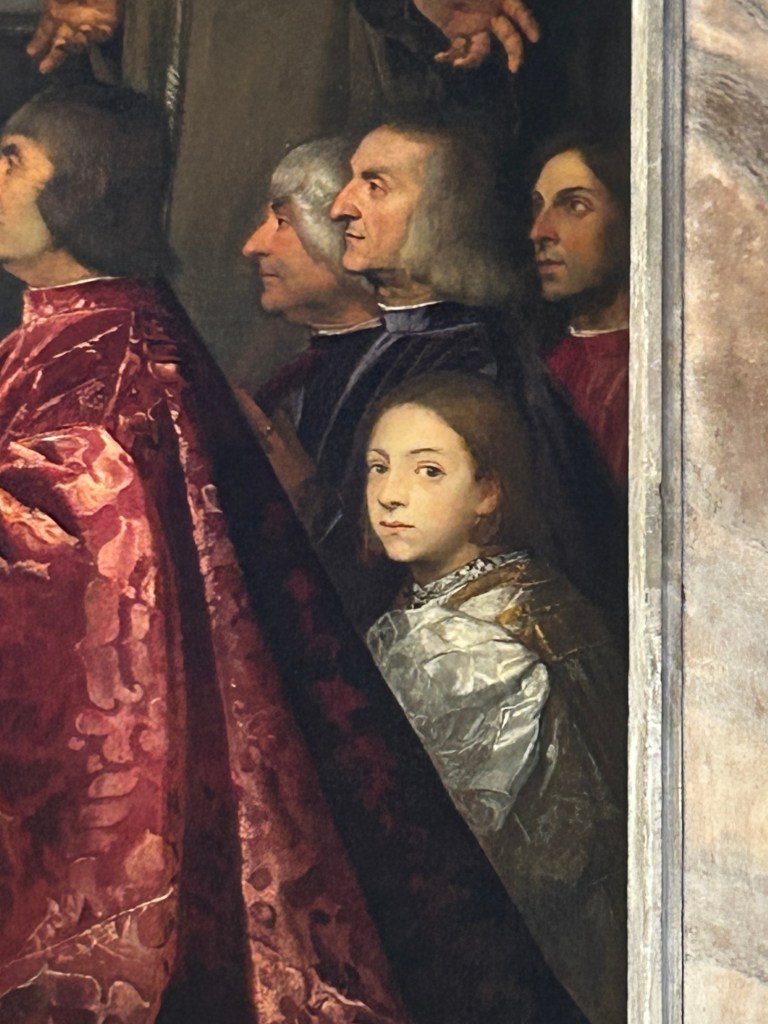
A child peering behind his elders
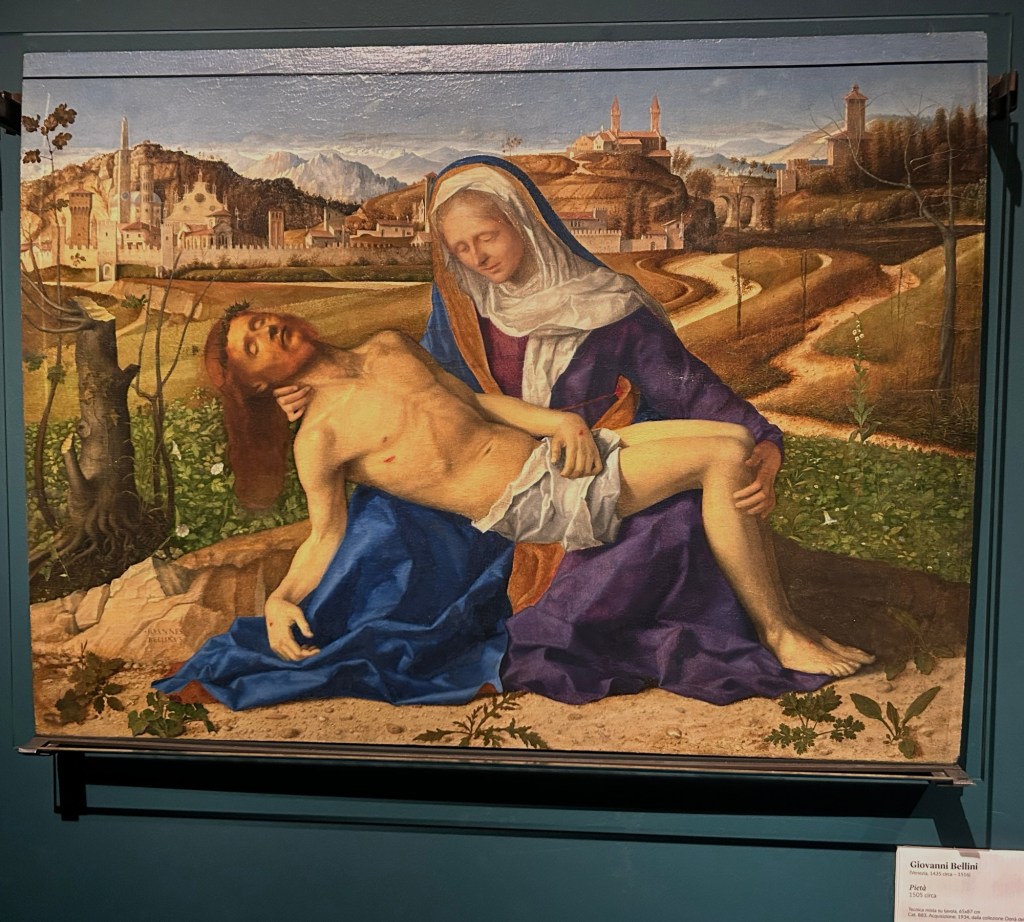
In crowds, every face is different, with its own distinct personality. Below is a fascinating Pietà, again by Bellini. Look at the background landscape—also it is rare that the Virgin looks aged.
Giovanni Bellini, Pietà, circa 1505
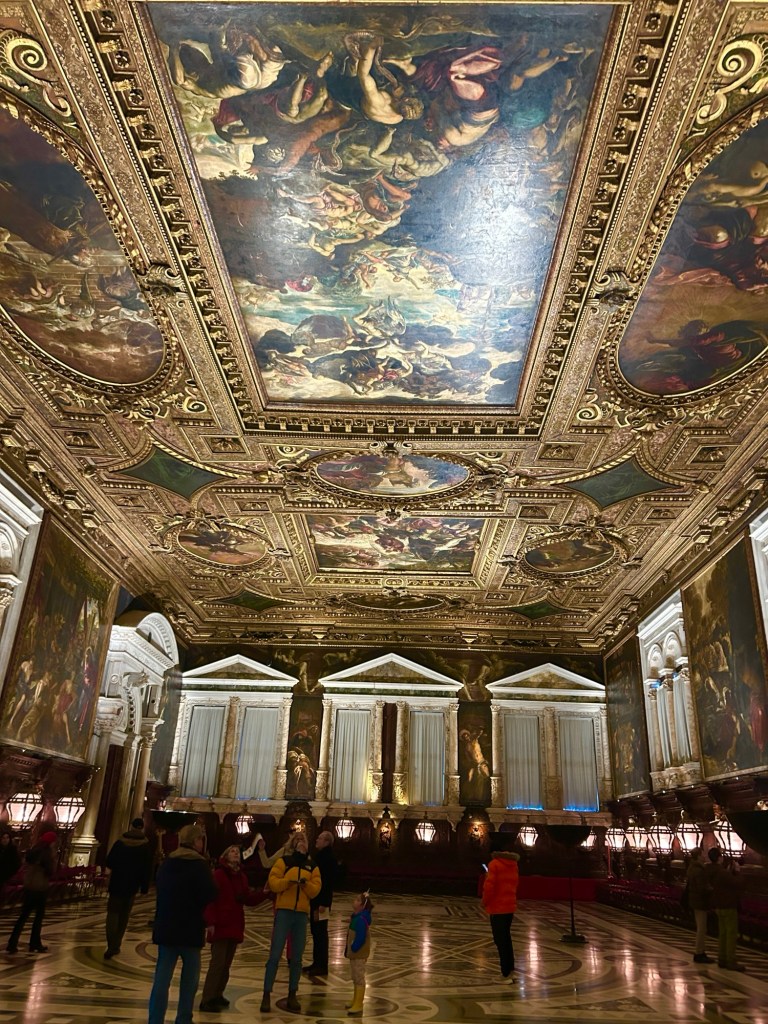
Another highlight was the Scuola Grande di San Rocco, an ornate museum built as the seat of a lay confraternity of wealthy merchants focused on philanthropy, which houses a simply stunning collection of over 60 works by Tintoretto.
The Sala Capitolare, with its painted ceiling surrounded by gild mouldings.
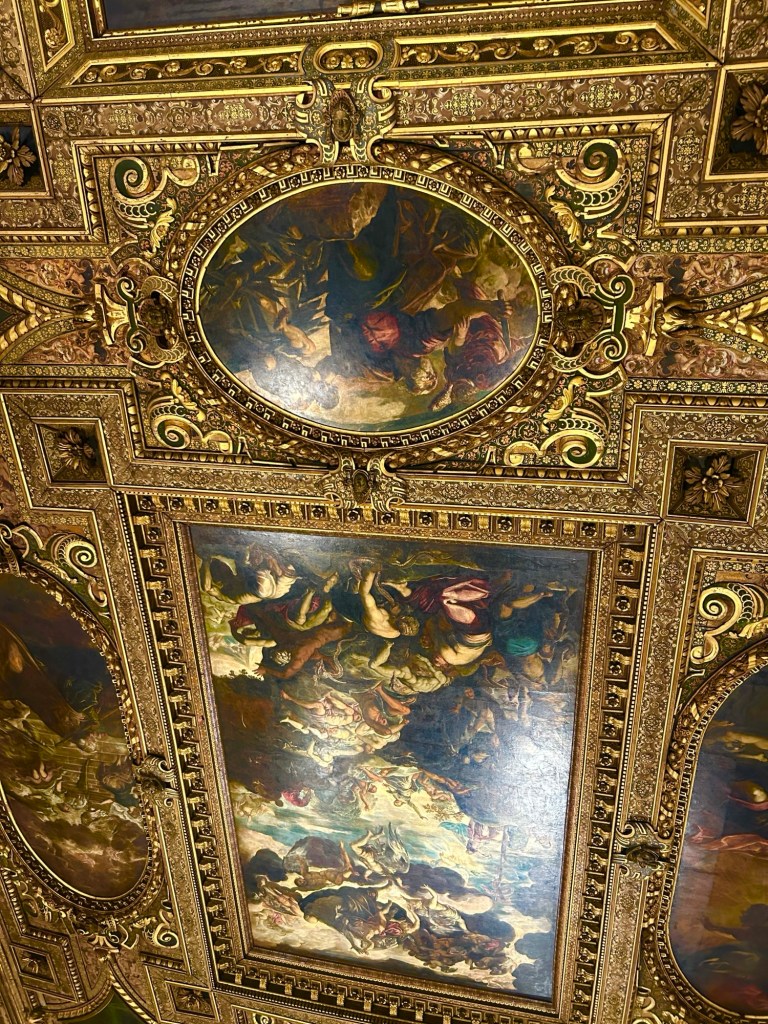
This enormous room was overwhelming in its beauty and detail. Mirrors were provided so that you could see details of the paintings without getting a crick in the neck.
A detail of the ceiling
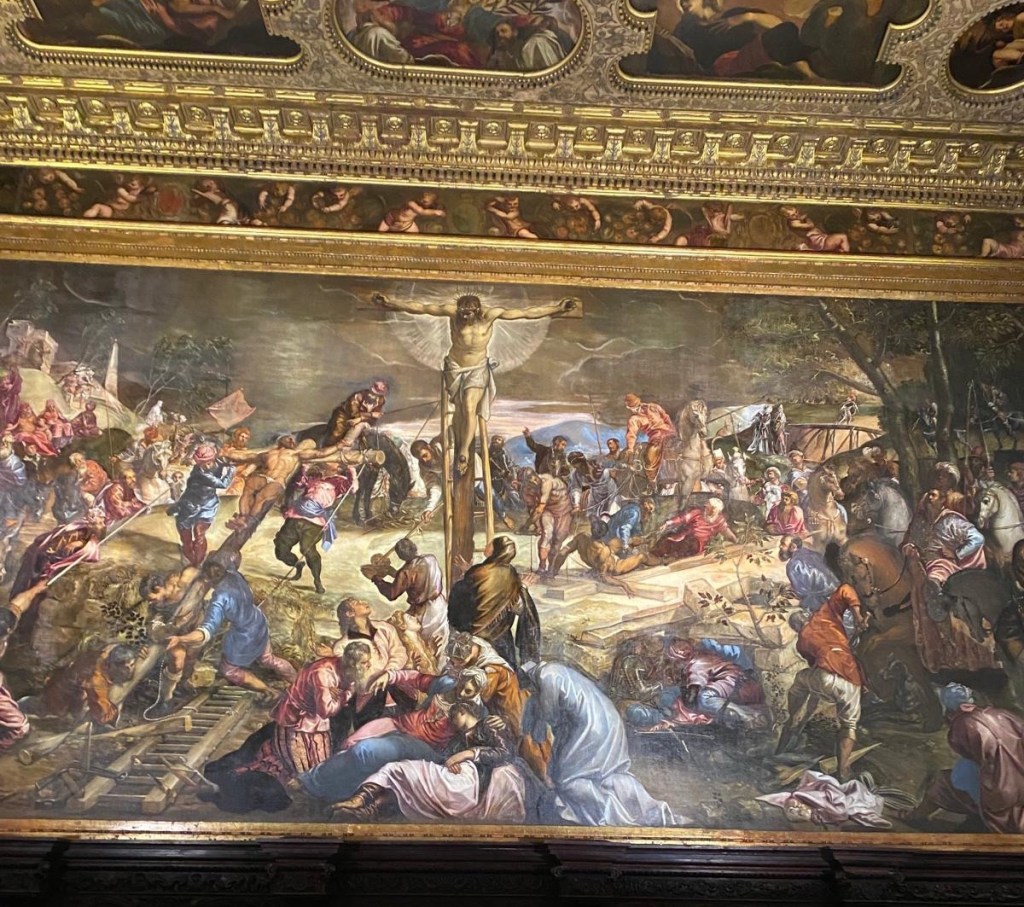
In the adjacent room the far wall was taken up by a huge painting of the Crucifixion.
A whole story is told within this painting. I think we counted 19 or 20 horses, besides the people.
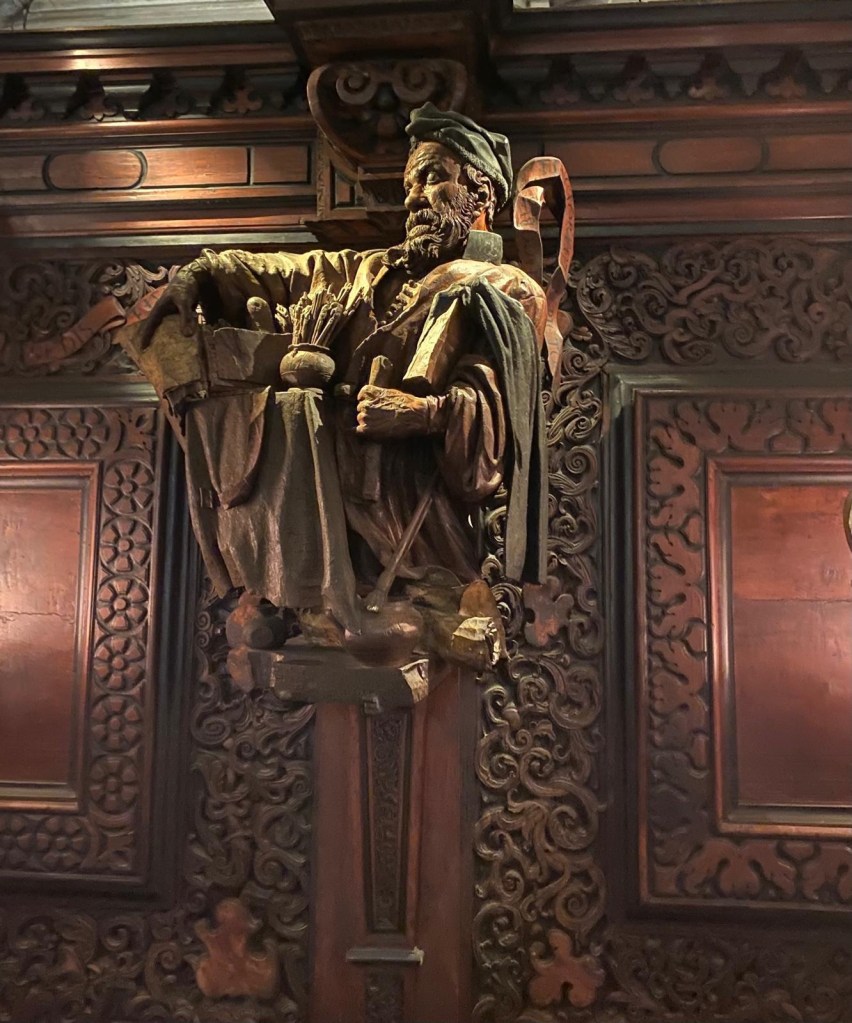
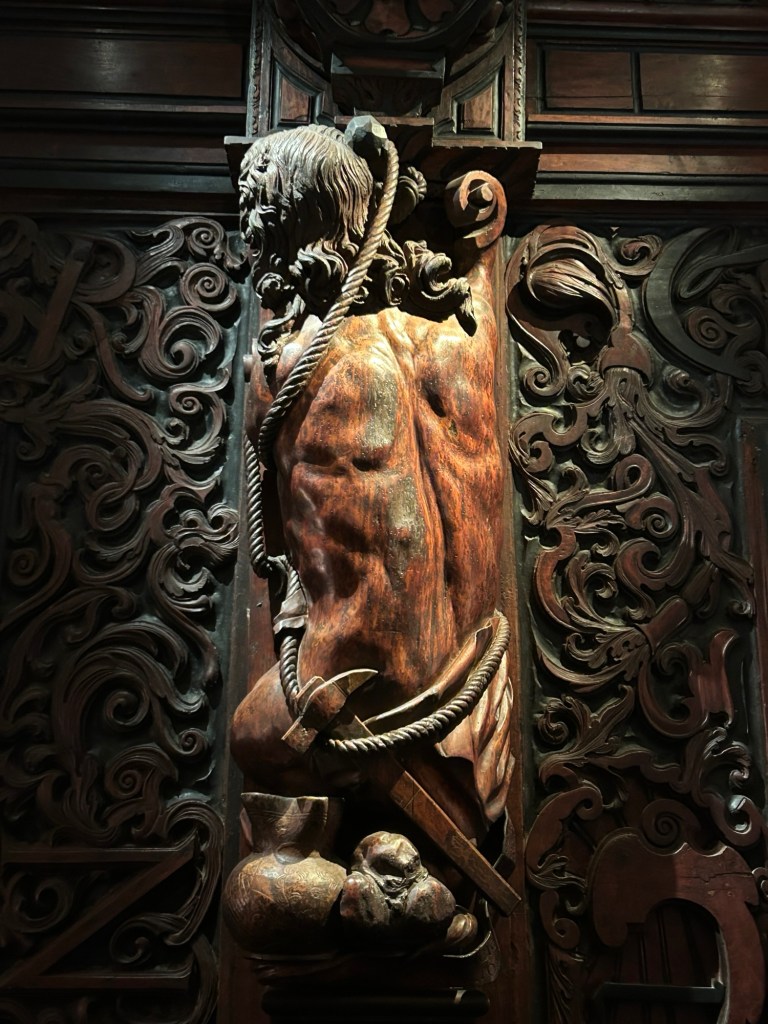
The walls of the Sala Capitolare between the paintings are panelled in walnut and adorned with a series of striking allegorical walnut sculptures made by Francesco Pianta between 1657 and 1676
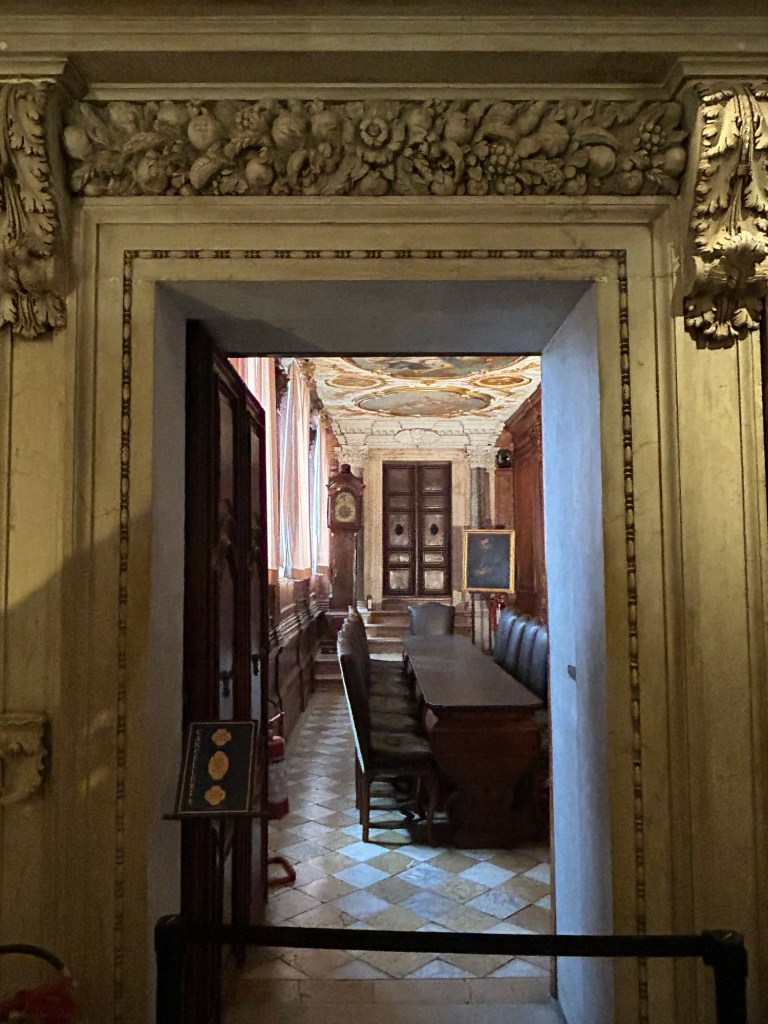
Even the small dining room was impressive. Look at the frieze of fruit and vegetables above the entrance.
We visited this museum twice, there was so much to see.
On another note, some whimsical frescoes by Giandomenico Tiepolo adorn the walls of Ca’ Rezzonico, another museum in a beautiful building by the Grand Canal.
Isn’t he fun and gorgeous?
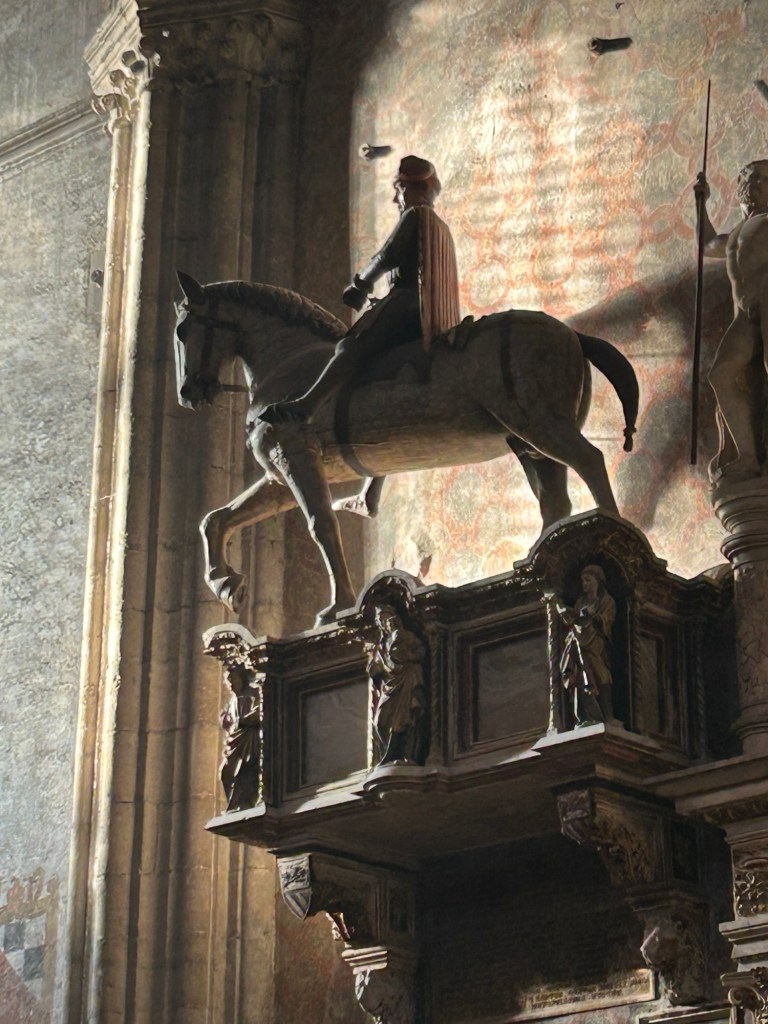
And a lovely statue on a church wall.
It is interesting to think that Venetians could see this art displayed everywhere, in their daily life. It was on the walls of the churches, the offices, the city halls, the houses. Now it is all in museums, and nothing equivalent has replaced it in our lives.
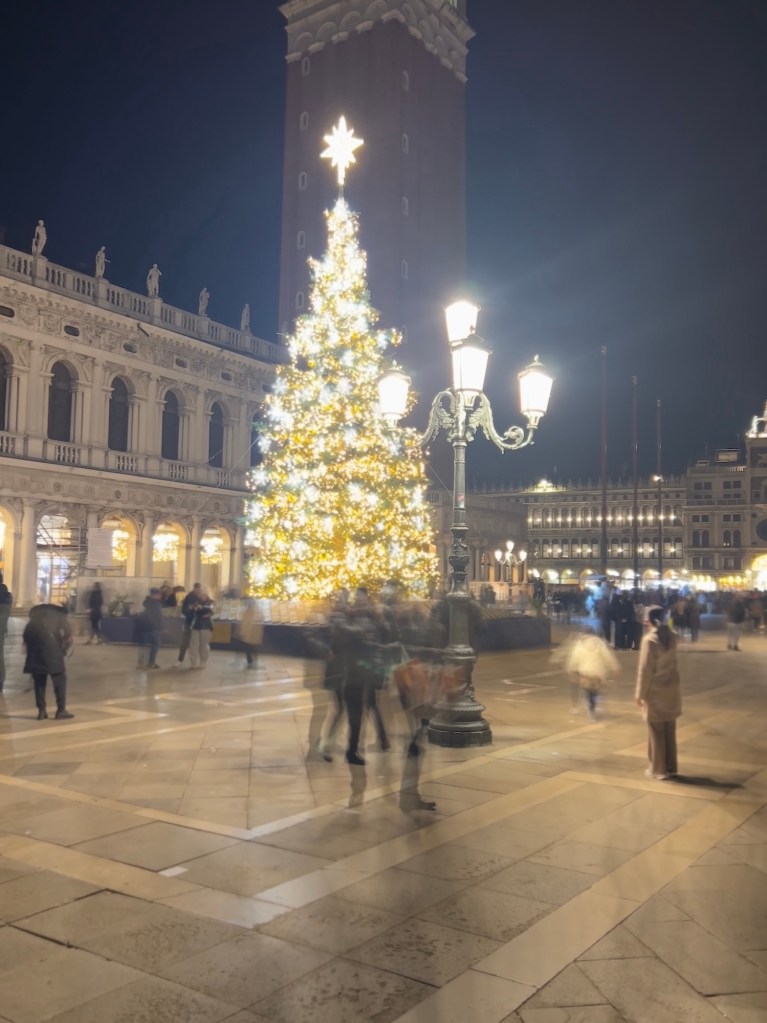
The Piazza San Marco
As for me, I honestly don’t know whether I should be inspired, or pack up my brushes and paints! Hopefully the former.


 Letters from Athens