I read this article on The Alk3R Post, a cool blog which always posts interesting things. These sponge divers were a particular breed of men, very brave, and very famous in Greece. I have some of these sponges – in the sea they look black, and have to be treated and bleached to reach their final form.
Author: M. L. Kappa
I’m an artist and writer based on a farm in Normandy, France, where we breed horses with my husband.
It’s not always sunny in Greece
The Greek daily paper Kathimerini posted this video today, about life in one of the refugee camps in Greece, where are large number of people are stuck indefinitely, with no idea of what will happen to them.
In another article, I read that in Syria the army has started to conscript civilians.
Relatives of detainees claim that Syrian forces are arresting and forcibly conscripting civilians fleeing opposition-held areas of east Aleppo. Dozens of military-aged teachers, medics and aid workers are reported to have been rounded up and spirited away, as regime troops push further into the city.
According to the Syrian Observatory for Human Rights, a UK-based monitoring group, more than 300 people have gone missing from east Aleppo since the regime began its blistering ground offensive late last month. They believe the army has been looking to bolster its dwindling numbers, having suffered a huge loss of manpower during the bloody five-year-conflict.
It is difficult to know what conclusions to draw from all this, but no wonder people are putting their lives in the hands of traffickers…
Home
This is an emotive and well-written piece by Nada Elfeituri from Benghazi, Libya. It is an eye-opening account of what many people are having to face in our world today. I will make no other comment.

This is how I remember it: There were missiles coming down, and it was pitch black. It wasn’t the missiles that scared us, we were used to them. It was the darkness, mostly, not being able to see what happened if something did hit the house. It was also the emptiness, knowing that most of the neighbours had already left, that there would be no one to call out for help. The morbid anticipation of what could happen was one of the worst parts of the war.
We packed in the dark, consoling our fears with the plan that we’d leave at sun-up, that we couldn’t stay anymore. We had no idea where we would go and we didn’t care. We just had to go.
One thing I vividly remember is that we didn’t lock the doors of the rooms. My dad said, “If we lock them, they’ll break the doors down to…
View original post 1,275 more words
Not much to be thankful for?
In Greece we do not celebrate Thanksgiving, but we’re still aware of it through foreign relations and friends. Many have been asking me if things are getting better, since Greece seems to be a lot less in the international news lately. Unfortunately, I have to report that the answer is no.
We cannot be thankful that we are saddled with an inexperienced and inefficient government. And we cannot be thankful for our ‘lenders’, whose handling of things has been a disaster. Negotiations have been going on over the summer regarding The Debt. Result: more and more taxes are to be imposed. To my mind, this only makes sense if the aim of the exercise is to make sure Greece sinks. I’m sure a lot of people would be interested in buying national and private assets dirt cheap, something which has already been going on. Airports and ports, anyone? A house on a lovely island? The list goes on.
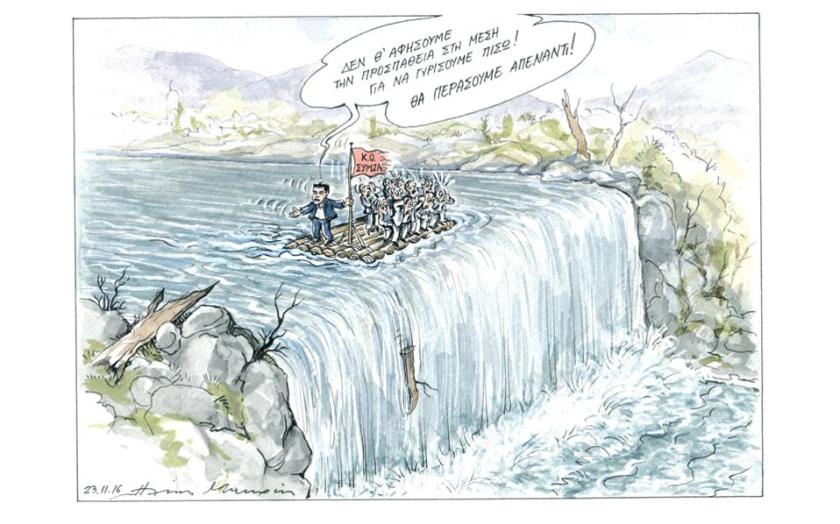
Various eminent economists from different countries have been at pains to explain what needs to be done for Greece to regenerate its economy, but their words are falling on deaf ears. It would seem self-evident: if you want to help the country out of this crisis, give incentives to investment, help small businesses, start new projects. Curb corruption and cut the public sector. Maybe this sounds simplistic as a theory, but what is happening now is a dead end. The government, coerced by the lenders to produce more money is basically robbing people who have no more to give. I say robbing, because those who are owed money by the government are lucky if they see half of it, after great delay. And yet they are fined if they don’t pay the whole of their taxes on time. More and more are being forced into the black economy (on the advice of their accountants, no less), paying with cash or even using barter (You fix my plumbing and I’ll fix your back…)
At the same time, the country has been obliged to face a terrible humanitarian crisis, which is being mismanaged to an appalling extent. People are herded like cattle into inadequate facilities, where, due to despair, loss of hope and lack of employment they are turning against each other. Fires are set, people are injured. These violent incidents will only result in turning opinion against them. I’m not saying that all refugees, or migrants, call them what you will, are the same. But I have taken the trouble to read some stories of these people’s journeys and misfortunes, of the situations they have been forced to flee, and I am horrified by what is happening.
As a nation, we still have a lot to be thankful for. Our climate, our beautiful countryside, our heritage, and most of all, our people who, as a whole, are managing to deal with their misfortunes and remain optimistic. But it will take more than optimism to get the country out of the mess it’s in.
A general malaise
The US election result left a lot of people in shock. I will not attempt to comment on the subject, since I do not consider myself knowledgeable enough. After all, I have never lived in America, so what do I know?
Taking a step back, however, I can discern a depressing trend in what we consider as ‘the western world’. The Brexit affair; the whole Greek catastrophe; the information that today the French president, François Hollande, holds the unenviable record of the lowest approval rating ever (4%); the wish of both Scotland and Catalonia to secede from their countries… I’m sure there are many other examples. Also the fact that the polls are increasingly getting it wrong – their predictions are off. What does this tell us? That people are dissatisfied, resentful, uneasy. This makes them vote in unpredictable ways – against, rather than for, something. But why? The reasons I can perceive are the following:
- Financial anxiety – the middle classes are seeing the steady erosion of the comforts they worked hard for, which they had started taking for granted, and which are now being taken away from them. The distribution of wealth is also becoming increasingly unfair.
- The failure of globalisation and open border policies. This feeds into the fears mentioned above.
- The disappointing performance of coalitions such as the EU, which failed spectacularly to address all the major issues facing it.
- The role of the social media, which rewards extreme behaviors and disdains political correctness, or even good manners.
- The failure of the ‘democratic’ political system. The inherent corruption, nepotism, lobbying etc, combined with the reluctance to expose oneself and one’s family to the viciousness and intrusion of the press and social media, is driving away a lot of capable, intelligent people who could make great leaders. I wonder how many amongst us would encourage their children to go into politics today?
People are angry – they feel the carpet is being pulled from under their feet, that the choice given them at voting time is untenable. The prevailing zeitgeist is one of depression and fear, and loss of optimism and hope for the future. So they vote for change, any change, even risky – and to express their desire to kick the established order in the butt.
And the worst of it is, there is no real reason for having arrived at this impasse. Humanity has never had it so good: health, life expectancy, infant mortality, accessibility of consumer goods and travel and education, leisure time – compared to previous generations, we are blessed.
So, did we get greedy? Complacent? Did we put our trust in people who were way below expectation? Did we allow people with the wrong ethics to manipulate the system and take over?
Whatever it is, it smells like the end of an era. Something new must be built, but I don’t see it happening under the present leadership in most western countries. Meanwhile, we are witnessing the rise of more extreme, fanatical groups.
So as not to finish on a depressing note, I will include a bit of British humor, by Matt, one of my favorite cartoonists (he does a daily cartoon for the Daily Telegraph.)
 I can imagine the same little alien landing on America, and telling a bemused local: ‘Do NOT take me to your leader!’ (I’m quite pleased with this – perhaps I should contact Matt and suggest he draws it!)
Fall colors
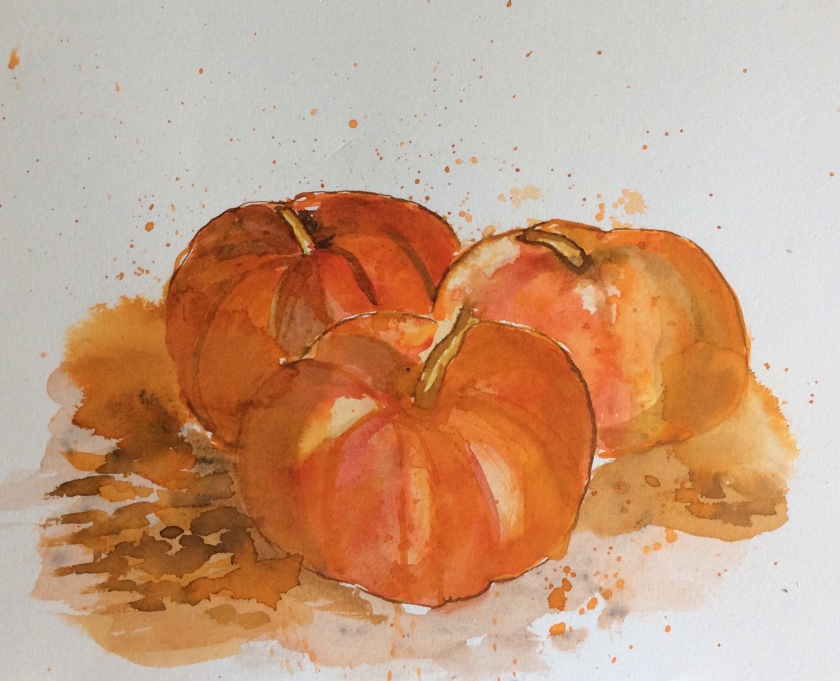
We don’t celebrate Halloween in Greece – apart from some themed kiddy parties – but how could I resist painting these awesome pumpkins?
I love fall colors, all those burnished oranges and reds.
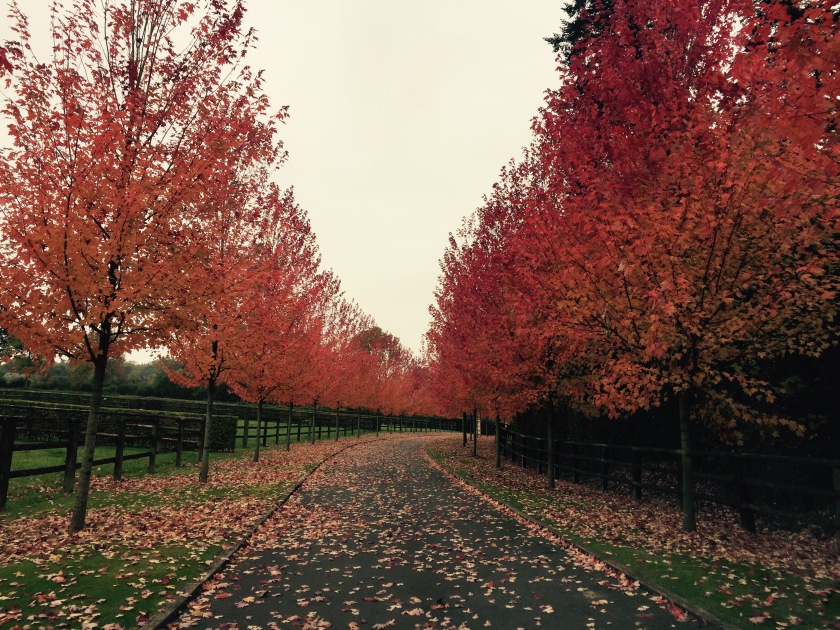
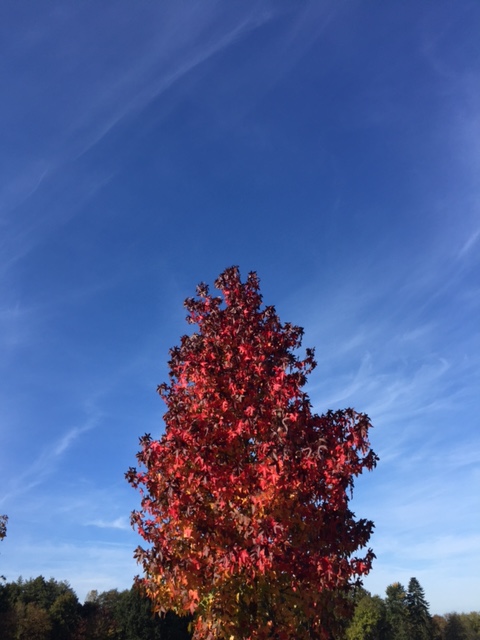
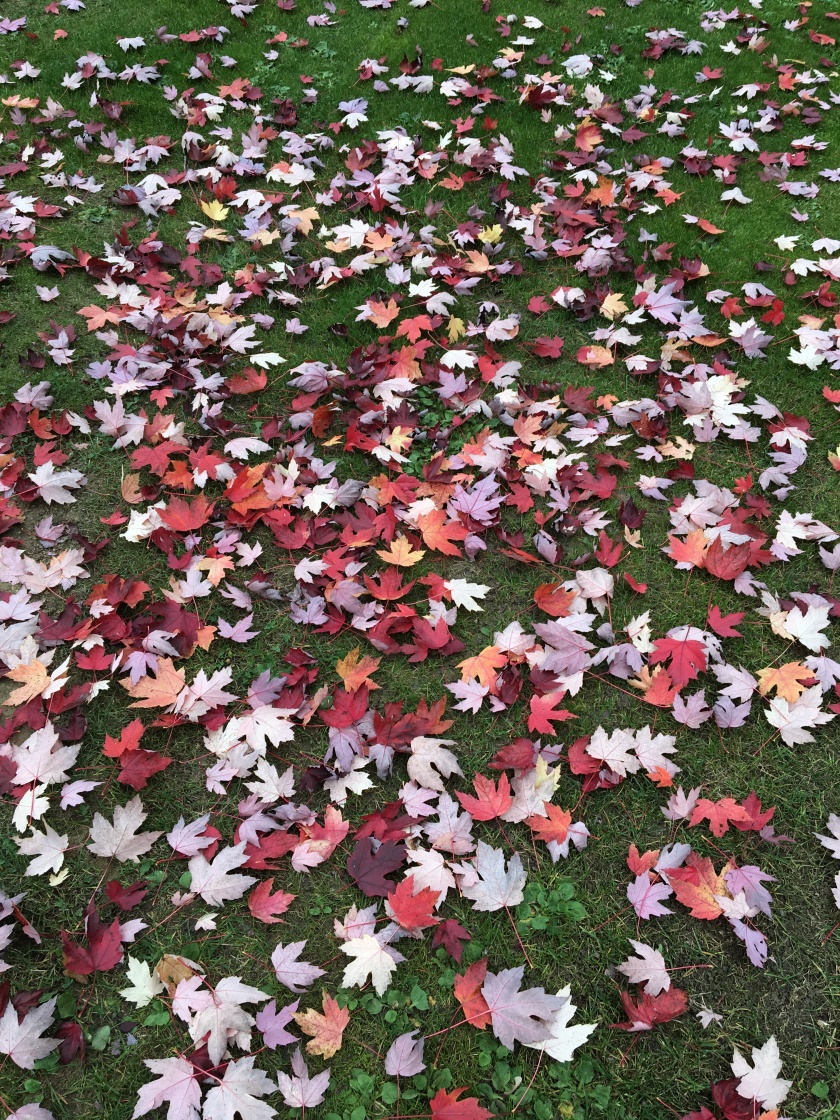
In strong light the colors are almost fluorescent. Or almost fake!
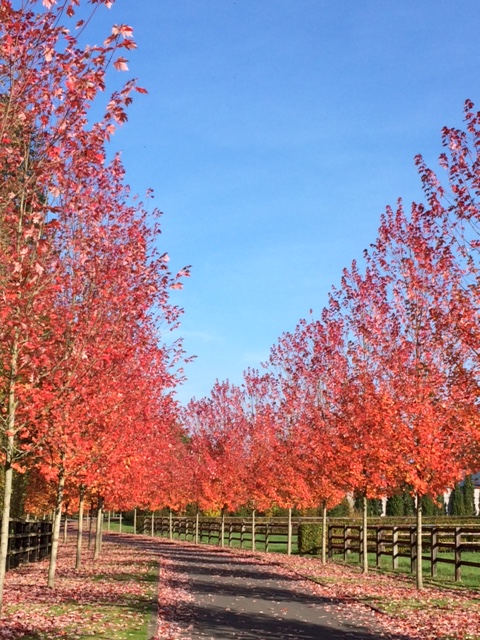
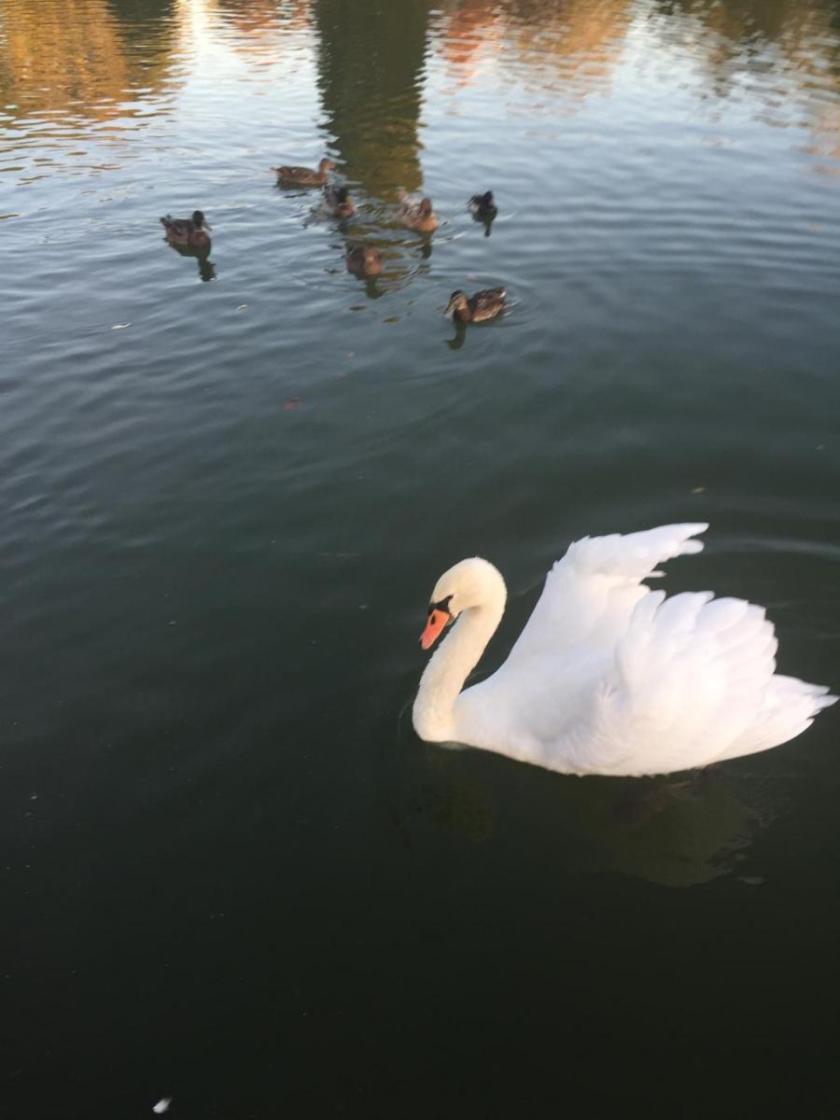
And an irrelevant photo. But I do love ducks!
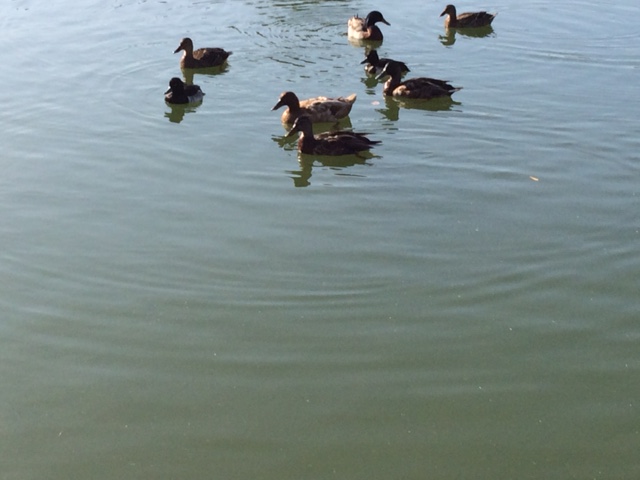
And a swan.
As for Halloween, the commercial aspect is hard to avoid. I even chanced upon a Simpsons spoof version of Edgar Allan Poe’s poem The Raven on television.
‘…and the silken, sad, uncertain rustling of each purple curtain…’
Was a spookier verse ever written?
Photos by Peter (follow him on Instagram @Alma_Peter)
A year of interviews – what next?
Well, time flies – I suddenly realized I’ve completed a year of Q&A posts.
For a quick reminder, we’ve had:

November 2015: Ioulia Mavrelou – The hotelier
 December 2015: Sofia and Nikos Pattakos – The Internet startup

January 2016: Niki Kerameos -The Politician

February 2016: Athina Mavromati and Yannis Tornazakis – The doctors

March 2016: Marilena Chrisochoidi – The Musician

April 2016: Alexia Vasdeki – the project manager
May 2016: Paminos Kirkinis – The Entrepreneur

June 2016: Nikos Tsourouyannis – the chemical engineer

July 2016: Chryssanthi Papadopoulou – the archaeologist

August 2016: Lucy Kanatsoulis – the college admissions officer

September 2016: Sofia Kioroglou – the poet

October 2016: Petros Koryzis – the chef
*Click on each name to see the original interview.
Going forward, dear readers, I want your opinion. Do I stop here? Do I carry on? Perhaps it would be nice to change the questions a little, if there are different things people are interested in. Or perhaps it would be nice to also get the point of view of Greeks living and working abroad… Call to action: I’m really keen to know what everyone thinks. Even if it’s ‘Enough! Move on to something else.’
Saving the seahorse
Diver Vassilis Mendoyannis was part of an archaeological team making an underwater inspection of the mining port in Stratoni, on the Halkidiki peninsula. Taking a detour to come out of the sea, he suddenly came upon a seahorse.
‘I was ecstatic,’ he says, ‘since, despite many years as a diver, I’d never come upon one of these creatures in the sea. Then we saw a second, and a third… The place was full of them! It was amazing.’
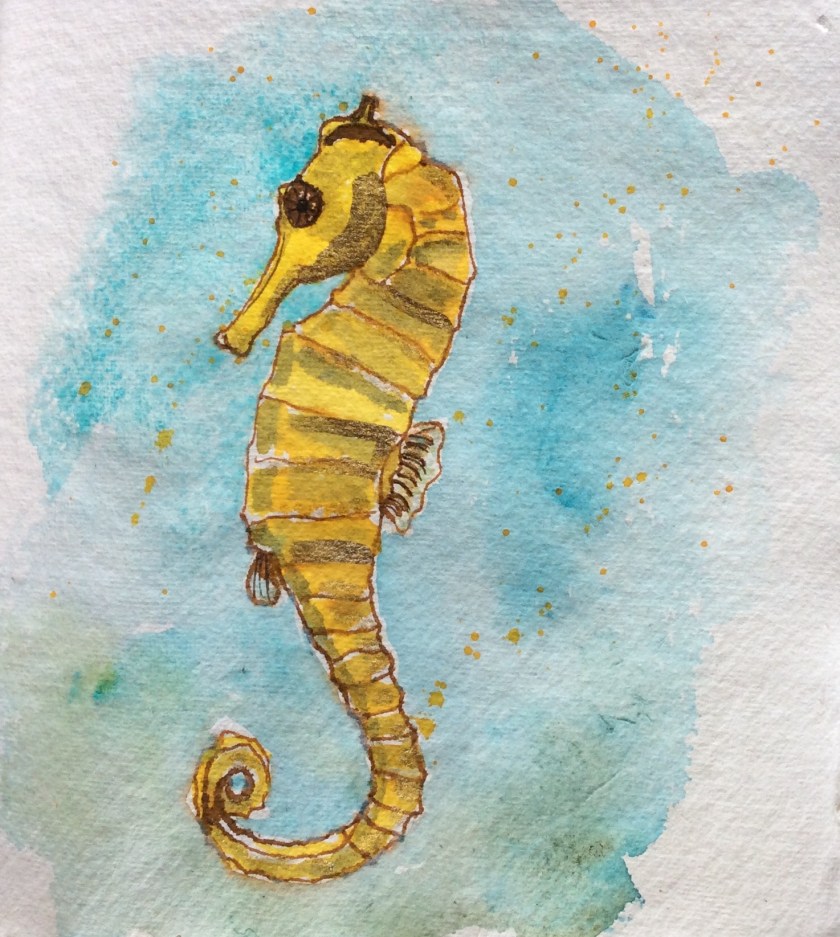
Seahorses are fish. They live in water, breath through gills and have a swim bladder. However, unlike other fish, they have an exo-skeleton. They eat small crustacea, sucking up the food through their snout which is like a mini vacuum cleaner. An adult eats 30-50 itmes a day. Baby seahorses, which are amusingly called seahorse fry, eat a staggering 3000 pieces of food per day!
Mendoyannis returned to the spot a few months later, and again met with a plethora of seahorses. When he asked local fishermen about it they confirmed their presence in the area, showing him many that had got caught in their nets.
This was an important discovery, since seahorses are a vulnerable species, despite being masters of camouflage: they’re able to change color almost instantly and can grow appendages which make them resemble seaweed. However, they are slow swimmers and are easily entangled in nets, and their numbers in Greek waters have been steadily dwindling. So, researchers at the Hellenic Centre for Marine Research were interested in finding out how that particular spot supported such an important population.
Then, in 2010, a bad storm resulted in tons of silt being deposited on the area due to the flooding of a dry stream, burying the eco-system of the sea bottom. After that, the seahorse population was reduced significantly. Being poor swimmers, seahorses use their prehensile tail to grip onto eel grass and other weeds in order to prevent themselves from being washed away by strong currents and waves. All this seaweed had now disappeared.
Mendoyannis came to the rescue. His team created an artificial environment, putting a metal grid on the sea floor to which were attached ropes and fake aquarium plants, giving the seahorses the means to anchor themselves. Results were impressive: the seahorses quickly adopted this artificial sea garden and their numbers started increasing again.
Today the area is still monitored by the Hellenic Centre for Marine Research and the seahorses are being photographed using a special, digital method which allows individuals to be recognized, despite their minuscule size. This will allow for various studies to be conducted, and a special documentary Is planned about the presence of the species in Greek seas.
‘Seahorses are are attractive and romantic creatures,’ says Mendoyannis, whose friends tease him about having fallen in love with the species. He believes that is why is why the local fishermen reacted positively to the idea of protecting the area.
The Greek name for a seahorse is hippocampus (ιππόκαμπος) which is a combination of the word ‘hippos’ (horse) and ‘campos’ (Campi in Greek mythology was a sea-monster, whose body was half human, half snake.) Ancient writers like Pliny thought the hippocampus had therapeutic properties, and, to this day, the traditional medicine trade (TCM) industry takes approximately 150 million seahorses per year from the wild for use mainly as natural aphrodisiacs. There appears to be a new trend for dosing Chinese children with seahorse pills in the belief it will spur growth. Seahorses have also been proven to have high levels of collagen, which is encouraging Chinese women to use them as a substitute for Botox. All this, as well as the capture of seahorses to make tourist souvenirs and to display in aquariums, has been endangering the survival of the species.
When I was a child, I had a dried seahorse given to me by some fisherman. It was one of my most treasured possessions. Seahorses are unique in that the female transfers her eggs to the male, who thus becomes ‘pregnant’ and gives birth to loads of tiny offspring. Below I’ve included an amusing and rather astonishing video.
October Q&A – the Chef
Petros Koryzis came to cooking in a rather roundabout way. At the moment he is working in the family pastry shop, Cake & Cookie Co., who are famous for their 100% homemade goodies. They sell out of their tiny shop, but work mainly on orders, and cater events such as kid’s parties or christenings. Petros also does catering on his own or with friends, for parties and events of all kinds.
Tell us a little about yourself
After school I went to college in the United States, where I studied Italian and Economics. Then I went to London and worked for Starbucks for almost two years, completing their management course. I decided that the service sector was something I liked, but not that specific job. Brainstorming with friends, I realized the restaurant industry was what I was most interested in, so I went to the Cordon Bleu London school where I acquired the Grand Diplôme which included cooking and patisserie.
I’ve always enjoyed cooking. The hardest part to control in a restaurant is the kitchen, so I decided to start there. I spent about 7 years working in various kitchens in London, starting with an internship at Hybiscus Michelin star restaurant. I then moved around, getting experience in bistrot-style, Italian, and Mediterranean food and ending up at Buddha-Bar, which specializes in Pacific Rim cooking.
At some point I decided to come back to Greece to help my mother who had opened a pastry shop, which has now become a mother-and-son affair! Once here I also developed a catering side-line with other friends.
What were the major difficulties you’ve faced in the last five years?
Returning to Greece was something I’d always wanted, although London afforded more immediate possibilities. Despite Greece’s problems I always felt there was the potential to do something in the food industry. After all, it is my home, and my life here gave me an edge. In London the competition is vast and it’s a hub, where you get the best of the best. Here I have personal contacts and even today many of my clients are people I went to school with and their friends and families, and I’ve met many more through them.

Did anyone help or inspire you?
At Cordon Bleu they kept telling us that our choice of career was hard and offered little financial benefit. They taught us a lot about discipline and organization, which was useful as I’m not usually one to take the difficult route! Also one of the hardest kitchens I worked in taught me that this job can be a test of humility. Like in any job 90% is difficult and boring and it’s the 10% which makes it worth it. In my case the 10% makes it really worth it
A major inspiration were Peter and Hiili, the couple who were executive head chef and head chef at Buddha-Bar when I worked there. They’d met at Nobu, stuck together and risen together. They loved their job and managed to make it work. They were the chefs that opened Buddha-Bar London, and are now married with a lovely little girl. Having a woman head chef was a best case scenario for me because the kitchen ran very smoothly.
What are your hopes/plans for the future?
Ideal scenario would be to put together a group of chefs and build a team which would enable me to partly move out of the kitchen and have a choice in the catering jobs I do personally. I’d like to groom and grow others to do it properly. I think that Greece has excellent chefs who are highly skilled but perhaps do not have the disciple to offer what abroad would be seen as upscale catering. An example being the state in which some leave the kitchen at the end of the night. I’m not interested so much in the grand scale of things, but in private ‘cheffing’ at a normal price. To provide a level of quality which would be consistent and ensure repeat customers.
One of the difficulties to be faced, for example, are the waiters. There are plenty of waiters in Greece but it isn’t considered on the whole a respected profession. They are mostly people who do this as a stopgap, or a stepping stone. Having met a few who are truly professional, I’d like to form waiters who know exactly what the clients want and how to provide it.
One of the most interesting things in catering is that I get to go into houses and take over! I get to see people in their family environment, with the kids the dog, and I love being part of this, as well as delivering the food.
What are your hopes for Greece? What changes do you hope /would you like to see?
I hope that Greece will manage to get through this period of turmoil and unrest, although I fear the unrest has not reached its climax yet. My main hope would be that we all together start thinking as a group, instead of as individuals.
In Greece we have the classic example of ‘envying the neighbor’s goat’. I don’t think this is wrong per se: people should want to acquire a goat like the neighbor’s, or a whole herd of goats, in the sense of bettering themselves. To make and have more, we have to understand that we all need to benefit, and we need to work together, in order to better the current psychology, and so that the markets and infrastructure pick up..

Have you considered leaving? If so, where would you like to go, and why? If you have decided to leave what would make you stay?
I think of leaving every day! But I don’t think it would make a difference to my situation at this point, unless I get a very well-paid job. Leaving the country wouldn’t solve anything. Staying here and fighting for what I believe in and working with others I hope I may even, in a small way, be able to help.
If I left the obvious place would be London, because I know it well and I could get a job tomorrow. However I would love to work in France for a while.
Are you actively doing anything to help with the situation? Is there something you would like to do?
I’d love to think that just by going to work every day and doing my best I’m helping! I do believe that by staying and working with others I give something to the whole.
Would I like to do something more? Yes – my problem being I have no idea what that would be. I’m not one for taking to arms or politics.
How do you see Greece in 5, 10 years?
I don’t see much happening in five, to be honest. In ten, I’m hopeful we’ll be able to see some positive change.
How do you cope with obstacles and frustrations in your everyday life?
By venting! I have discovered in the last 5-6 years that I have a short temper, which, growing up, I never did. So I vent, not always on the right person. And by dancing! Sometimes out with friends, sometimes alone in my room.
What are the positive sides of living in Greece? Have you had any good experiences lately?
Not to sound corny, but I still believe Greece is one of the greatest countries in the world. Geographically and geologically we have everything, mountains and sea and climate. However, I also believe that we have good people in Greece.
Something my job affords me is to see people as they are at home; they are fathers, and mothers, and hard workers.
Thanks to the store and the human contact we have with the customers, I experience the everyday reactions to the ongoing problems and I see that everyone has to wake up in the morning and smile. There’s still good in Greece – people who want change, people who enjoy the good things going on in their life, like births, marriages… I love to travel by car, and all you need to do is go into a small village anywhere in Greece and you’ll see what Greek hospitality is all about.
For those of you living in Greece, Petros can be contacted on: info@cakeandcookieco.gr or the numbers +30 210 8078169 and +30 6946468882
Although I’m sure he’d love to be asked to go and cook in Australia or elsewhere, as long as he gets a plane ticket (first class, of course!)
Inside The Well-Traveled Sketchbooks of an Artist
The ALK3R blog showcases many interesting artists. I have reblogged this because I find the work of Dina Brodsky absolutely enchanting. Wish I could draw like that!
 Letters from Athens