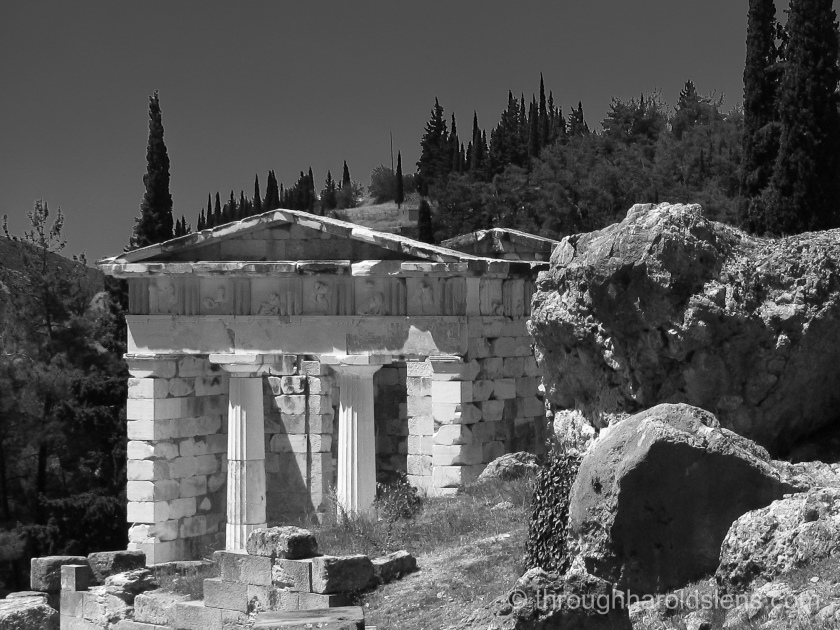
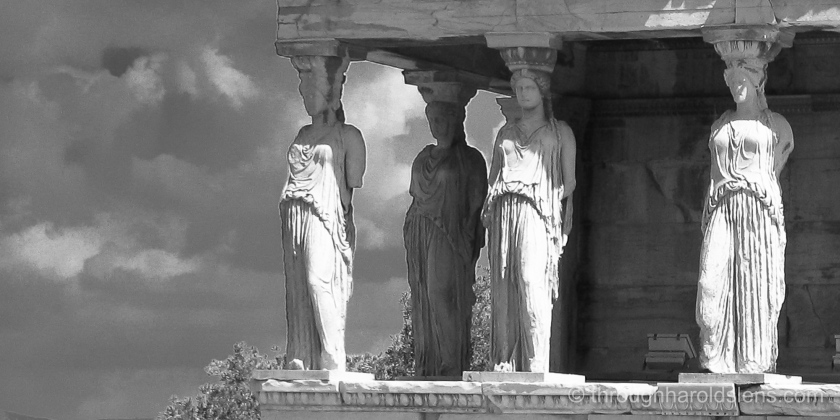
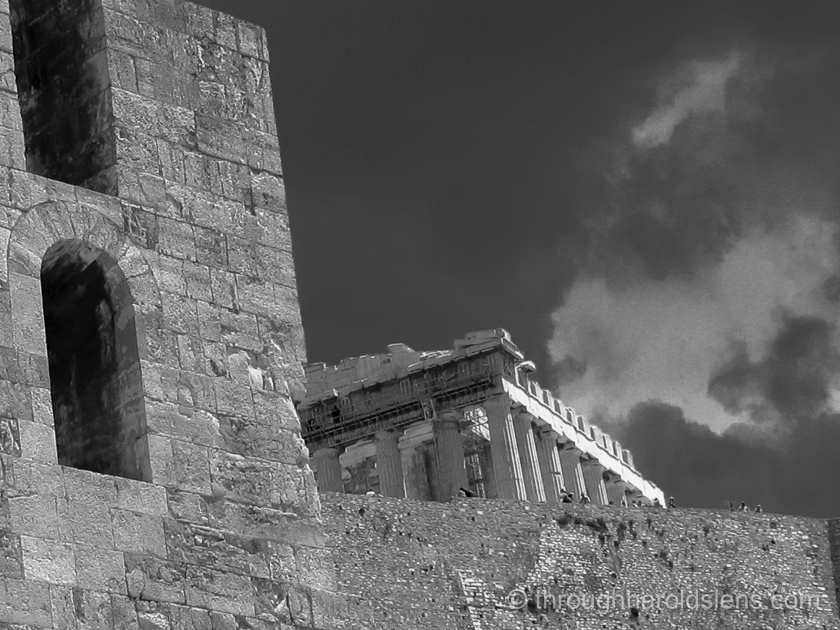
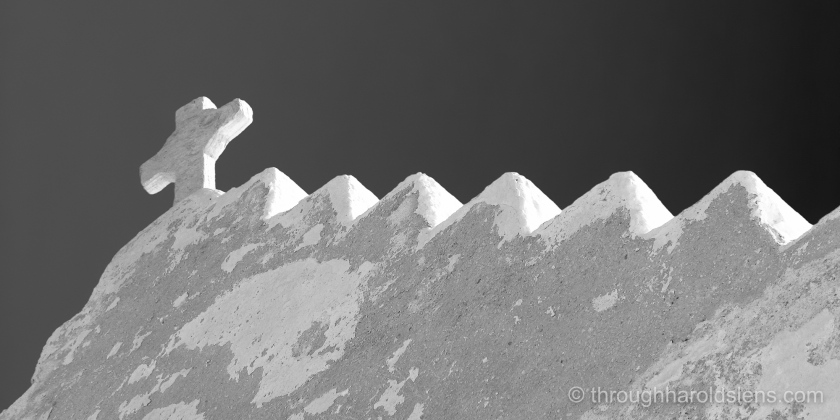
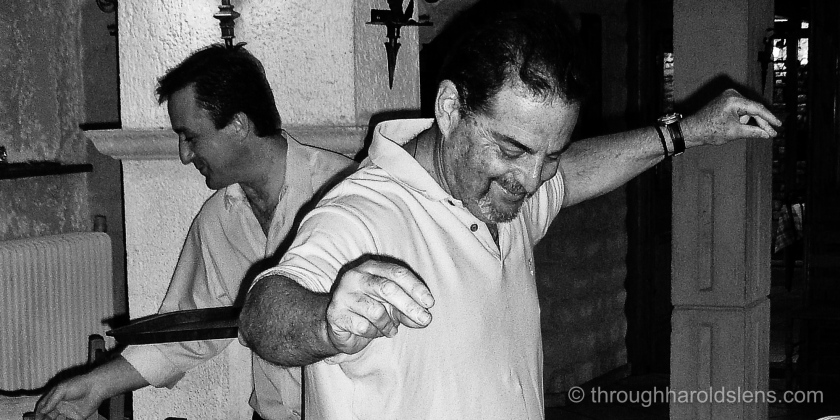
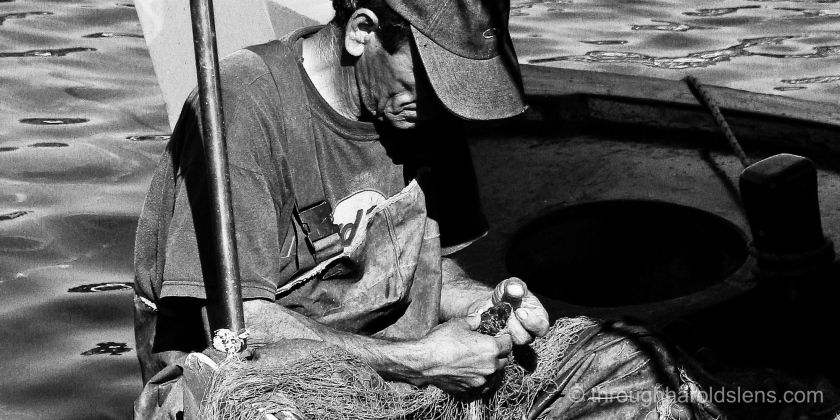
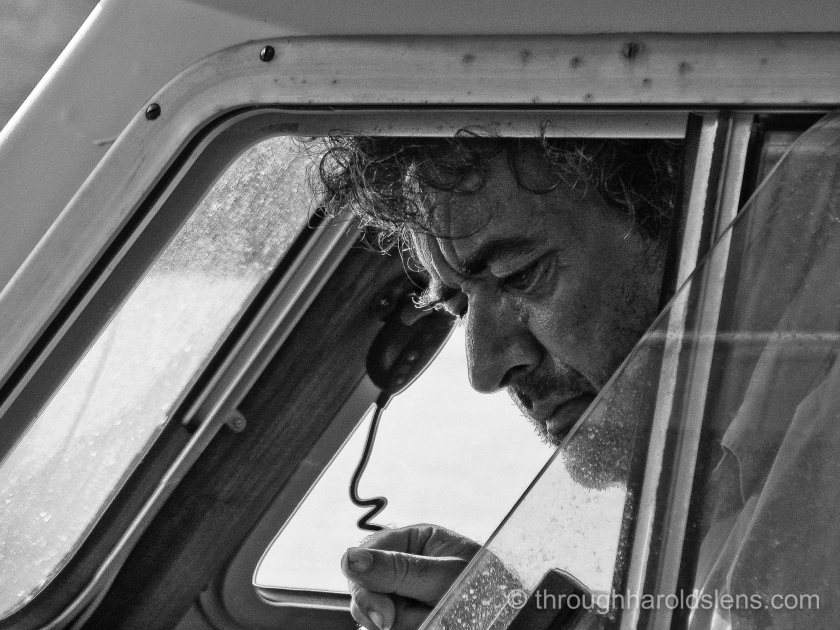
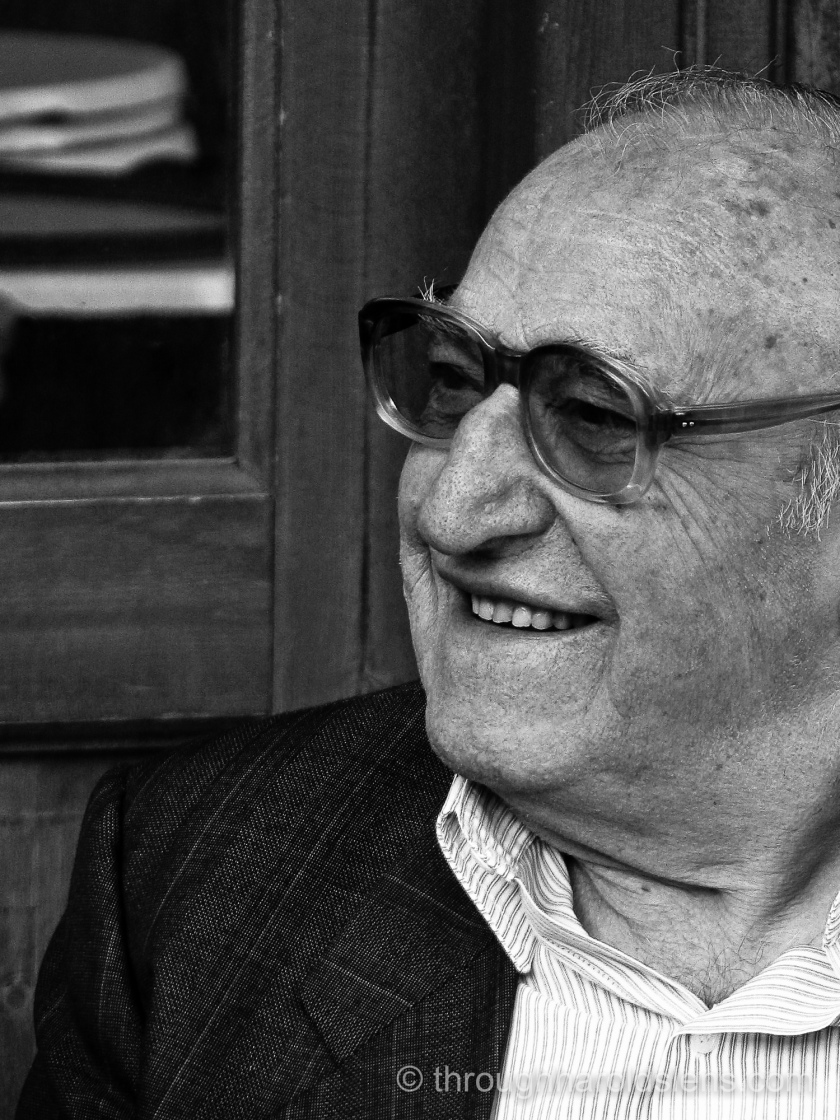
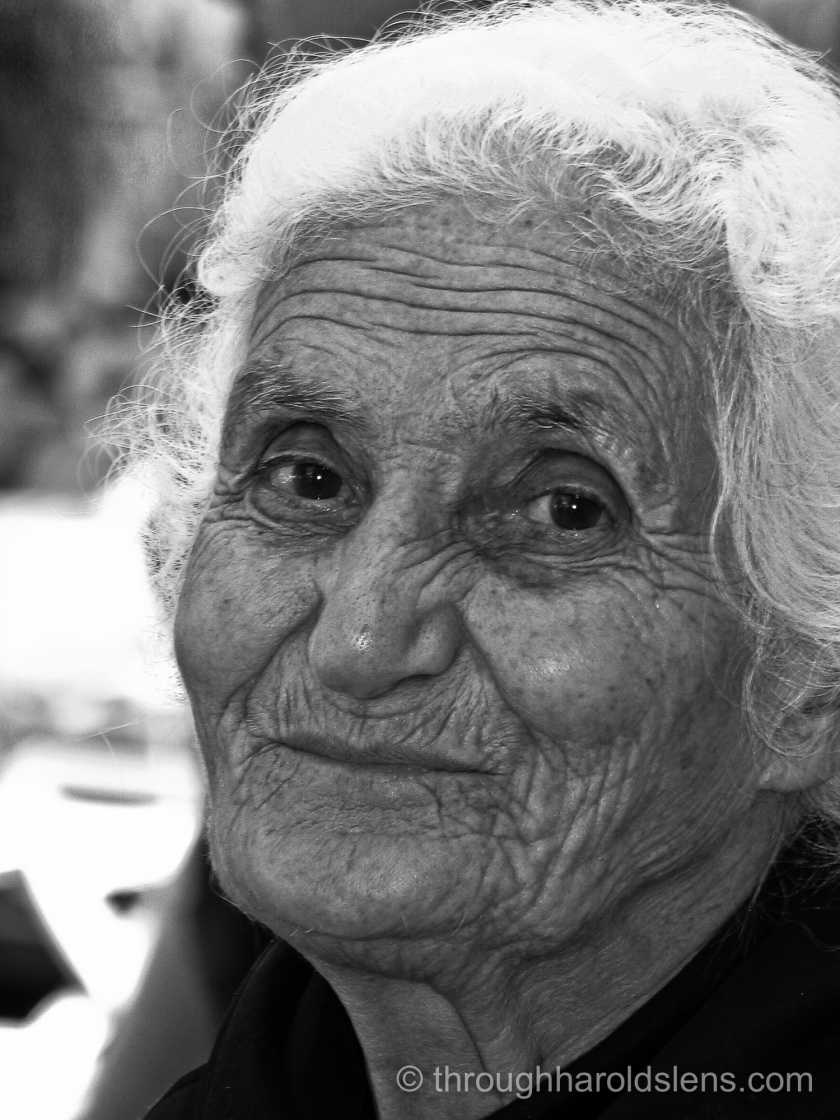
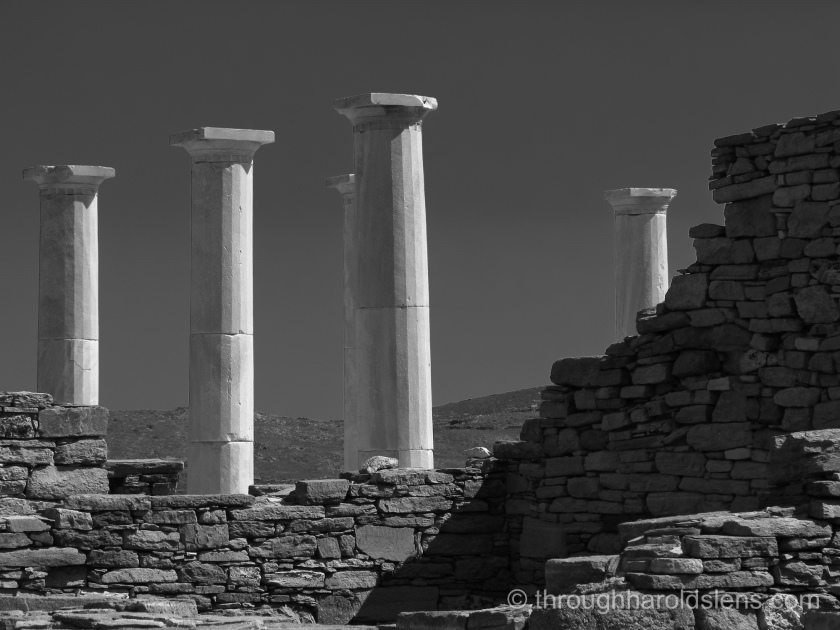
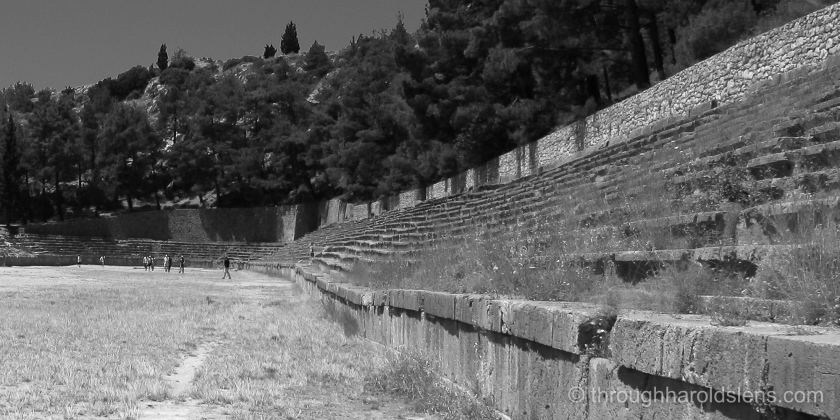
Harold is a photojournalist and a great traveller. I always think it interesting to look at places through different sets of eyes, and I loved the photographs of Greece he often posts on his blog, Through Harold’s Lens.He very kindly agreed to be a guest host when I asked him, never imagining the amount of work this entailed! In his own words: ‘What a fun project this has been. Going through and selecting from 1,500 photographs from Greece was a challenge.’
He has been more than generous in sharing his photographs, and since I found it quite hard to choose from this bounty, I will divide them between a couple or more posts.
Harold goes on to say:
As a recent visitor to Greece, I was alive with excitement strolling through this historical cradle of Western Civilization.
To journey through Greece’s UNESCO World Heritage Sites and experience the numerous gods of the ancient Greek religion as well as the mythical heroes.
To feel the faith of the country.
To embrace the warmth, joys and sorrows of the Greek people.
With my sidekick Mr. SLR Nikon, we have tried to capture some of the riches and beauty of your country. We hope you enjoy.
To thank M.L., Through Harold’s Lens is celebrating “Greek Week” on our blog www.throughharoldslens.com. You are invited along on our journey.
Running a school canteen is not the world’s most profitable business at the best of times. But now it’s slowly becoming a recipe for disaster.
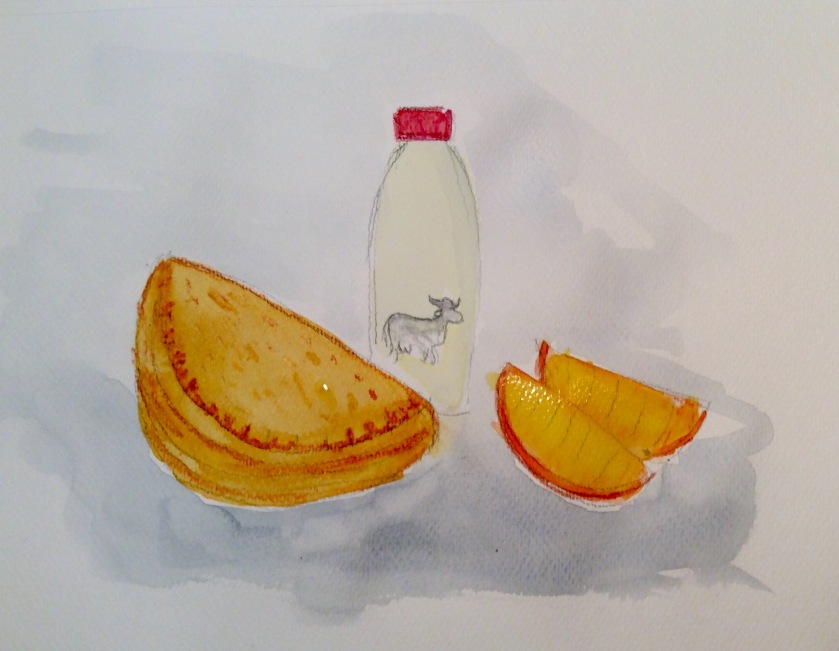
The crisis has affected pocket money – for a lot of kids, the freshly-baked tyropita is now above their means.
Canteen owners are in despair. They say sales have fallen by 70% during the last six years. Meanwhile, they feel obliged to let kids have food on credit, something which had not been the case before. Many run up tabs their parents are unable to pay from one year to the next.
Only about half the students in any school purchase things from the canteen, and they choose the least expensive items, since they only have one euro on average to spend. This is enough for one tyropita (cheese pie) or a koulouri (round bread stick) and a small bottle of water.
Often the canteens, together with the teachers and the parents’ committee, are called upon to subsidize snacks for needy students. A lot of canteens give out leftover food at the end of each day.
But canteen owners are not rich. Many have already closed up shop, and some schools are having problems replacing them. The increase in taxation to 23% is not helping.
In some areas, a lot of kids don’t bring anything to eat from home, even when they have to stay at school until 4.15 pm. In many cases the Church has stepped in, offering a large number of school snacks. Also the Prolepsis Institute is implementing a program of Food Aid and Promotion of Healthy Nutrition for the 3rd year running, with a grant from the Stavros Niarchos Foundation. In 2016 it serves food to 148 schools (11.617 children) in different areas. However, the number of students who have applied to join the program are more than 260.000.
Since 2012 more than 11,5 million meals have been distributed to 480 schools and 80.000 students.
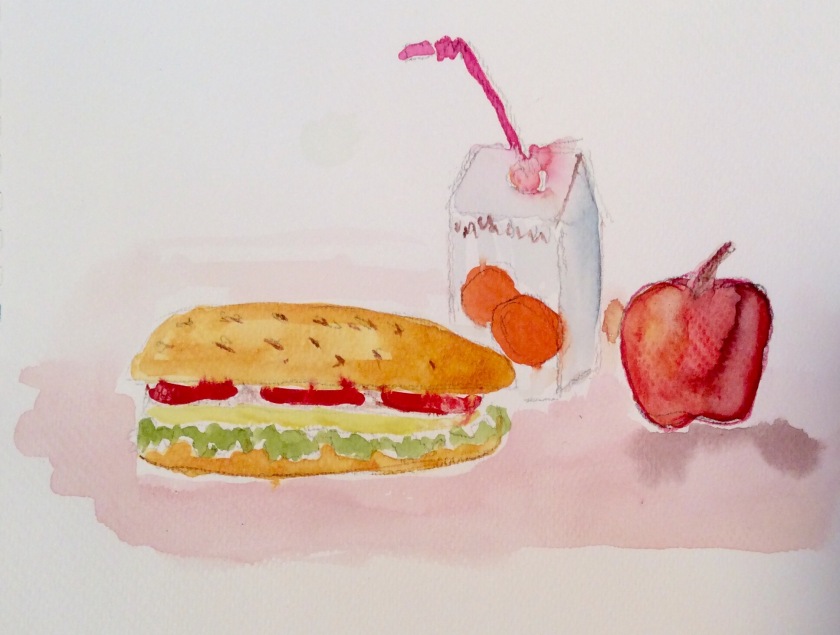
The daily menu includes a breadstick or a sandwich, a piece of fruit, milk and yoghurt with honey. There is an effort to make the meals as healthy as possible, with wholewheat bread, vegetables in the sandwiches, as well as traditional cheese or spinach pies. There is also a program for educating the children in healthy nutrition as Prolepsis feel this is important for the prevention of obesity.
Finally, Prolepsis has set up a campaign to get companies to sponsor individual schools, so that not a single child has to go without a snack.
We haven’t had much of a winter this year – it’s been mostly mild. A little snow on the mountains. Central and Northern Greece had a few bad days, with lots of snow, and roads shut.
I hope we get more rain before the hot summer months set in, but the first signs of spring are here, and they are hard to resist.
The almond trees are in bloom.
Anemones come in all shades of pink and mauve, from almost white to fuschia, from palest lavender to purple. They can even be bright red, like poppies. They’re lovely in bowls around the house.
Daisies and other wild flowers are popping up.
The first kumquat. It’s in a pot outside the kitchen door.
‘Our mission is the therapeutic treatment of pain and the restoration of the functionality and normal life for our patients.’
TheATHENA MAVROMATI PAIN CLINICcan be found on a leafy street in the Athenian suburb of Chalandri. The owners, Athena Mavromati and Ioannis Tornazakis, combine Athena’s medical expertise as an anesthesiologist and pain management specialist with Ioannis’s engineering and administrative skills to deliver top quality medical interventional services and treatments. Apart from being business partners, they are married and live in Athens, Greece, with their dog Ektoras.
Tell us a little about yourself.
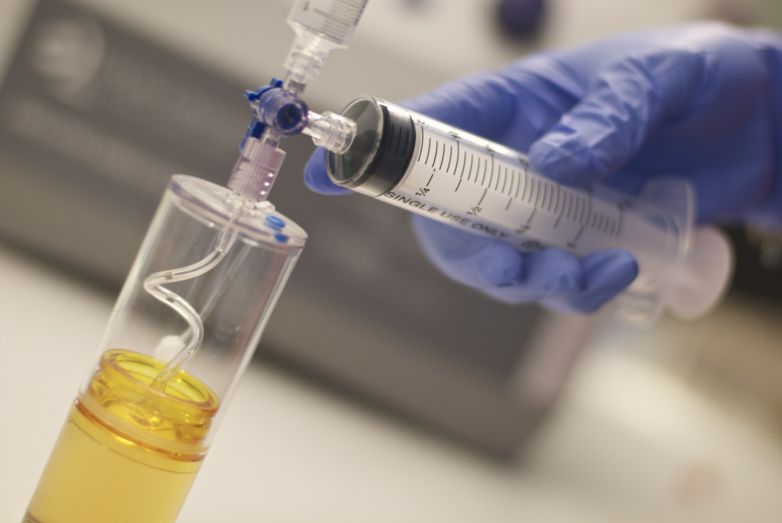
Athena: I was born on the island of Thassos where I spent my preschool years. We then moved to the city of Kavala but always came back for the summer vacations. I received my Μedical Degree from the Aristotle University of Thessaloniki and specialised in Anesthesiology in Athens. I worked in Intensive Care Units for both adults and children in main hospitals of Athens. I then further specialized in the treatment of pain in Queens Medical Centre, Nottingham and Bradford Royal Infirmary at the UK. Upon my return to Greece, I worked at the Hygeia Hospital’s Pain Management Unit as a consultant, and at the University of Athens as an associate scientist. In 2001, I founded my own clinic and I’ve worked exclusively there ever since. I practice regenerative medicine and minimally invasive techniques such as prolotherapy, prp and stem cells. I have been continuing my scientific education in the US on the emerging field of regenerative medicine.
Ioannis: I was born and raised in Athens, Greece. I received my BSc in Aviation
Science and Wings from the Hellenic Air Force (HAF) Academy and got my MSc in
Electronic Warfare Systems Engineering from NPS in Monterey, California. As a fast
jet pilot I have logged more than 1,000 flight hours in jets including the Mirage 2000.
In the following years I served as an Electronic Warfare Systems Engineer at HAF
headquarters and was the Head of Delegation for Greece in key NATO groups
tasked with aircraft self-protection. In 2012, I decided to quit my career in the Air Force and join Athena in her practice. Since then, I have been designing and supporting our technical infrastructure, and constantly improving our medical imaging capabilities. I am also tasked with the administration of the practice and our day to day business needs.
What were the major difficulties you’ve faced in the last five years?
Athina: Well, they fall into two very different categories. On the one hand, there is our decision to move on from traditional pain management techniques to advanced regenerative medicine interventions under ultrasound guidance. This is a significant leap on an international scale that requires extensive medical training, and acquisition of new medical technologies and equipment; it also presents logistical challenges. On the other hand, as a medical practice here in Greece, we face a hostile environment to do business in, because of the destabilised and unpredictable tax, banking and healthcare policies.
It is a huge challenge to bring new and innovative technologies into a troubled market. Ioannis: I’ve also had to face the difficulty of a major career change from defence to healthcare. After after 20 years in the Air Force and having adopted the lifestyle and habits of a well structured, disciplined and isolated work environment, I had to switch gears and adapt to a more open and flexible setting. This did not happen without trouble both for me and all others around me!
However, things eventually settled down thanks to Athena’s patience and determination.
At least healthcare and military operations have one thing in common: a mission-oriented approach.
Did anyone in particular inspire you or help you?
Ioannis: Our constant inspiration comes from our patients. We appreciate their trust and willingness to pay out of their pockets for our medical services. Greeks really value education and health and are still willing to invest in them despite their current economic status. Athena: Other sources of inspiration include traveling abroad for education and
business. Following up on the latest medical advances fascinates me and is a powerful and constant source of inspiration.
What are your hopes/plans for the future?
Athina: Our plan is to keep going while being be able to incorporate
the latest advances in regenerative medicine into our everyday practice. In
order to achieve that, we are constantly investing in technology, training and
resources, and adapting our procedures as needed. Ioannis: In addition to our mainstream business we have started to develop medical mobile applications, which will complement our daily practice and reflect our knowledge in the field. We have been researching and working on this for a while and hope to see it eventually coming to life in early spring this year.
What are your hopes for Greece? What changes do you hope to see happen?
We hope that our country will eventually achieve economic stability and growth, and maintain its geopolitical status and advantage in our region. More important, we hope that we Greeks will be able to restore our country’s name and place in Europe and the global community. Though we have been greatly underestimated and blamed for the last years, we believe that in the end our spirit will prevail and we will reclaim our lost pride.
Have you considered leaving? If so, where would you like to go, and why?
Yes, despite our growth we have considered leaving. In a scenario like that we would like to go to an English-speaking country outside Europe. This is because Europe is in the grips of a decline and has lost its competitive advantage in almost all areas in comparison to America and the East. Plus, it is always interesting to work and live in new places.
If you have already decided to leave, what would make you stay?
We are very well established in our business so it would be a pity to leave the country. Moreover, we have reached a balance between work and quality of life. At the end of the day, we love our country and would not be among the first to flee from it.
Are you actively doing anything to help with the situation? Is there something you would like to do?
We are actively helping with the situation by doing our part as a medical practice. We are bringing new technologies into the country and sustaining them. Despite being surrounded by a collapsing healthcare system, we offer advanced health services that make a difference. We save our patients having to face a situation where there is no place to go when their health is at stake. We strongly believe that if all of us do our part, we will, as a whole, harvest the benefits. It might seem a little hard at the beginning, but frankly, there is no other way.
How do you see Greece in 5, 10 years?
We cannot say how we see Greece for the next quarter let alone the next 5 to 10
year period. Our country’s economic and geopolitical instability, (not to mention warfare and associated problems in the wider region) does not allow for such predictions.
Instead, we find it more productive to focus on contingency planning and what to do if things get worse or take a new course. As for our expectations, we believe the pessimistic messages coming from the political and academic milieu are countered by the optimistim and hopes of active citizens.
How do you cope with obstacles and frustrations in your everyday life ?
We cope with obstacles by solving the problems one at a time and having a
plan for resources and supplies. We brainstorm a lot and have long conversations in order to analyse each issue that arises.
Frustrations are hard to manage because they are sudden and overwhelming in
nature. What we have found works for us is having a flexible plan, doing things in
small increments that eventually add up, and always having alternate paths and
options.
What are the positive sides of living in Greece? Have you had any good
experiences lately?
In our free time we like to hike with our dog in the nearby mountains and go sailing at every opportunity. Greece’s nature is one of a kind, from its limitless coastlines and countless islands to its mountains. We have the best scenery on this planet, with the sun a permanent resident, signs of the ancient Greeks everywhere, ruins of temples and historical sites all around. Add to that the openness of the people and the whole set up has no equal.
Ask sailors around the world from New Zealand to the Baltic which is the hardest
sea to master, and they will all come up with one answer: the Aegean! So, both of us being sailors worth our salt, our best experiences have to do with sailing around
in our yacht. Recently we sailed for a couple of hours from our harbour to the maintenance centre. There was a light breeze, no waves, and brilliant light
with scattered clouds. All that in the middle of winter!
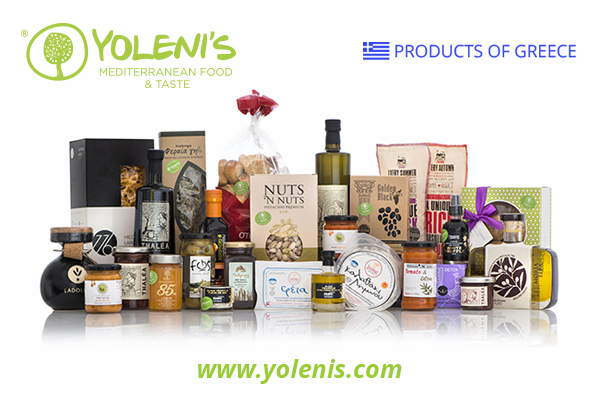
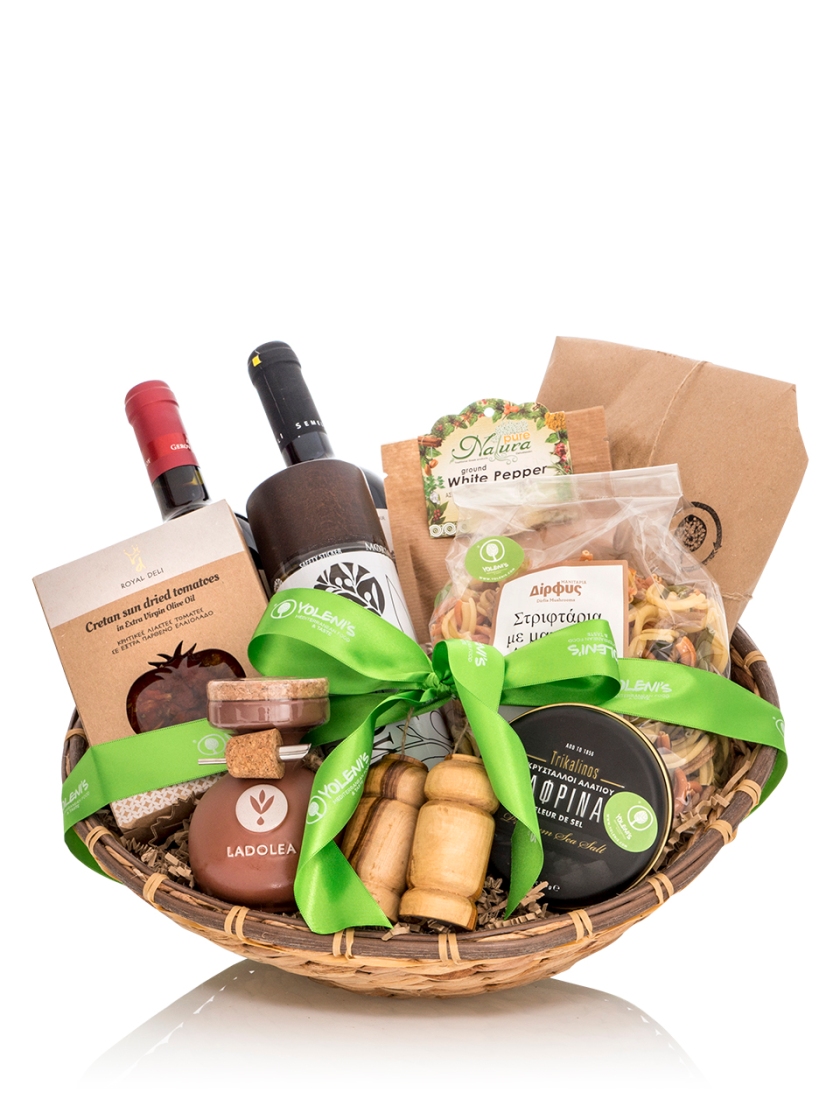
Organic extra-virgin olive oil, wild herbs, cheeses from around Greece, Cretan honey, truffle salt. Artisanal breadsticks and ‘spoon’ sweets. Selected wines and pasta. All those things that are sometimes hard to find, even if you live in Greece, are now only a few clicks away.
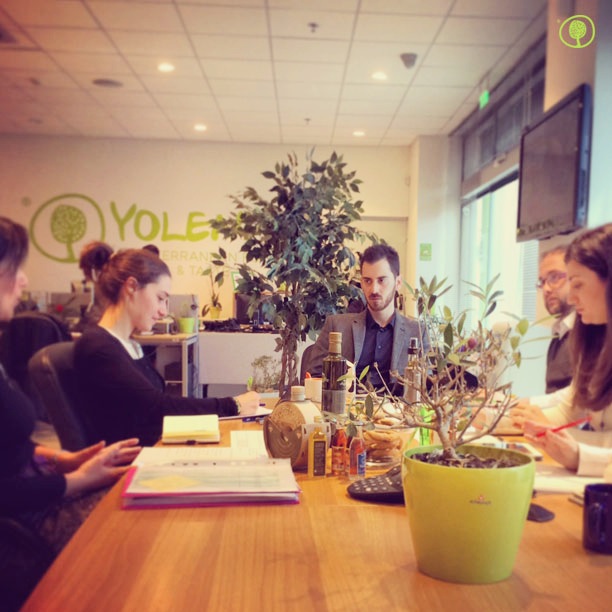
In one of those coincidences that seem to occur occasionally, right after writing my post on Greek cuisine I chanced upon an article in the Sunday papers. It described an e-commerce site, Yoleni’s, which sells a wide range of top-grade products from all over Greece. Checking them out, I found myself on a virtual foodie journey: you navigate the site via the different regions of Greece, sourcing products lovingly described. They even have a large number of delicious recipes to temp you into experimenting. The site is in three languages – Greek, English and German – and they deliver to anywhere in the world.
I got in touch with Yannis Georgiadis, one of the co-founders of the enterprise.
Tell me, Yannis, how did Yoleni’s come into being?
Yoleni’s was started four and half years ago by five friends. The logic behind it was to combine traditional products with e-commerce. At the time this did not exist in Greece. Our ambition was to provide our customers with the best Greek products available on the market; to give shopping for food a new twist. Before going online, we spent a very long time working on our content. We imagined our customers travelling through Greece, finding specialities from different regions, accessing traditional recipes.
Can you give me some numbers?
We opened online in 2014, and in the last two years we have built up our range to include 2.000 products, sourced from 180 producers based throughout Greece. In 2015 we notched up 11.000 clients andsent out 6.000 corporate gifts around the world. We deliver to 47 countries, and that is excluding the US, which has its own site, yolenis.us, as well as its own warehouse and distribution network.
So you are getting quite well known.
What has helped is winning some awards, the most important of which was the Hellenic Entrepreneurship Award in 2015. This provides winning companies with interest-free funding, mentoring and a range of business support services. With their help, our aim is to open our first retail store in Athens in 2016, followed by stores in the USA. Then we hope to expand further through a franchise system.
Also in America we are the exclusive providers of all the products for The Cooking Odyssey, a TV show aiming to bring its audience the traditions, culture and recipes of the Mediterranean.
How do you source the products you sell?
In the beginning we travelled all over Greece, meeting the producers and striving to persuade them we were capable of selling their produce online. This was a totally new concept for them and they were dubious at the start. Then they saw how much we invested in each product, talking about it, photographing it, connecting it to specific recipes. Now it is they who call us, asking if we can sell their products.
How do you choose which products to take on?
First let me say that we buy the products outright. Then we have three main criteria: The products must be Greek. They have to be free of conservatives. They must have the necessary certification for export.
Have you been affected by the crisis?
PayPal going down because of the Capital Controls did not help. Of course there has been a positive side to the issue, since Greeks were forced to use plastic money, which they mostly avoided before. What worries us now is the possibility of the closing of the borders, if we are thrown out of Schengen. It is difficult to imagine how that would affect exports.
What are the main obstacles you faced?
In Greece, people are not used to shopping online, especially not for food. We think opening our flagship store in Athens will help, since customers will be able to taste foods before buying. At the moment we see that they look at things online again and again before deciding. Of course, once they’ve tried something they come back for more, so we must be doing something right!
People abroad don’t know about many of the products we sell, so they have to be educated – and that takes time.
Tell me a little about running the company
We started with 5 people and we are now 18. In that time there have been a lot of changes because of the crisis, but not only. We invested a lot, both in time and money, on the content of our company, and we are now starting to reap the benefits of that. The idea to connect traditional organic products with an e-grocery did not exist before in Greece.
We run the company in a very relaxed, informal, family-style manner, focusing on teamwork.
What are your bestsellers?
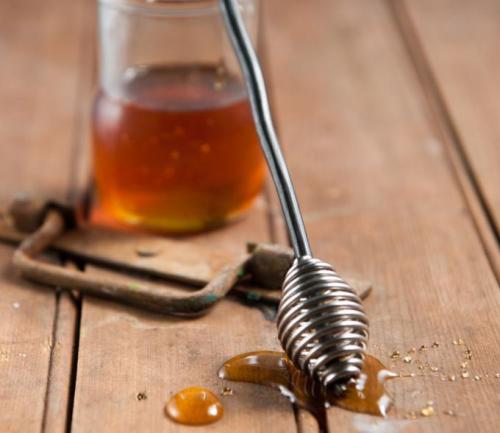
Definitely honey, followed by refrigerated goods like cheeses and cold cuts, then corporate gifts; and extra-virgin olive oil, which we mostly sell abroad. Greeks usually have their own source of olive oil, from relatives in the countryside!
After I said goodbye to Yannis, I went on the site and ordered some cheeses from Andros, truffle salt and some lovely buffalo sausages. There is a huge selection and each product is accompanied by short texts about its history, about the history of its place of origin, and about the producer. Each product is also linked to a couple of recipes to give ideas to cooks! My mouth was watering as I browsed.
If you have a couple of minutes to spare, click here. You will come upon a short video explaining Yoleni’s concept.
Greece is being threatened with the closure of its borders, effectively trapping hundreds of thousands of refugees who have made it across the sea from Turkey. We are being accused that, for refugees who see Greece as a transit point on their journey north, ‘Athens is happy to oblige, waving them through, providing transport, but never hosting the caravan of humanity wending its way into central Europe.’
We are also blamed for ‘not ‘protecting our borders’, thus endangering the social fabric of other European countries.
Greeks are furious about this ‘blame game’. We have been offered money in return for keeping the refugees, an offer that is deeply insulting. How about our own social fabric? From as far back as the 80s, Greece has already hosted a vast amount of refugees: Asians and Africans, Palestinians and Kurds, and, after the dissolution of the communist bloc, people from Eastern Europe, especially Albanians, Bulgarians and Rumanians. A large percentage of these are now very well assimilated, speaking the language perfectly and blending in with their neighbours—despite the usual bureaucratic shambles regarding their documents. In a population of around 11 million, around one million are immigrants.
This society, already strained to breaking point by six years of internationally mandated austerity, is now asked to accept responsibility for an unprecedented situation for which it is certainly not to blame. It is a fact that the Greek government has not fulfilled all its duties in this matter yet. But which government has? We have seen the rapid deterioration of the situation in Germany – Mrs. Merkel’s neck is on the line for her open-door policy. We read daily about the situation on the Hungarian border, or in the Jungle in Calais. And now the tinder-box is to be kept solely within our borders, courtesy of our European partners and allies.
It is certain Europe cannot accept everyone, and the terrorist dimension has added complications to the issue. A lot of the able-bodied young men wanting to take advantage of social benefits available elsewhere should be returned home. People have worked for those benefits for generations, and it is normal they should want to protect their way of life. But everyone has to work together towards a solution, and the Arab countries have to do their bit as well. Finally, Turkey has been promised three billion euro to deal with the problem – yet that is where most of the trafficking takes place.
Greece cannot and must not be turned into a dystopia, a giant campsite, or, as some have said, into Europe’s prison.
Frontex has declared it is impossible to patrol a coastline which includes 117 inhabited islands (there are 6000 islands in total, including some that are just large rocks). So how are we supposed to do it? Surely the refugees should be stopped in Turkey, before they drown as they are doing on a daily basis, now the seas have turned cold and rough—but apparently the traffickers are offering cheap ‘off season’ rates. Every single day, we wake up to the news: 12 drowned, 7 drowned and so on, all on our shores. Some can be saved – what are we supposed to do, throw them back into the sea?
I will finish with an account, freely translated, written by islander Nina Giorgiadou:
‘Today was another ‘normal’ day. For us normality has gone beyond seeing your children unemployed and depressed, not being able to pay a new lot of taxes, or having your property confiscated.
Our normality has been enriched by repeated doses of mass death, packaged in black bags that are piled, when full, one upon the other.
Here is a resume of today’s normality.
We were woken in the dead of night by one of those phone calls that make your heart race. We ran to the port, bearing clothes, blankets, hot tea and a tendency to rapid depression.
The first body arrived before dawn. A small bundle, probably a child. Then came 26 survivors. The 12 were more dead than alive, deeply hypothermic; they were piled rapidly into ambulances.
The rest who were more ‘alive’ we undressed and rubbed down, muttering endless and meaningless times ‘Ok, my friend, tamam,’ all mixed up with a lot of tears and snot since there’s no time to wipe your nose when hurrying to dress the frozen.
Afterwards, our normality included 13 more bodies, big and small, and an attempt not to vomit. Where to put so many dead?
To continue within the framework of normality, we received ten boxes of body bags. To do what with? Let’s put them aside for times of need. The industry operating around death is impressive.
The next phase includes scattered images within the shelter. Aliki is holding in her arms the 15-year-old girl who has lost her parents and both siblings. Aliki is the smaller of the two. You have to wonder—who is consoling whom? Vasilia has gathered the children in a corner of the high-ceilinged space we gracefully call ‘the playground’. They are the offspring of those who arrived the day before yesterday. Today not a single child was saved. Vasilia is telling stories in a low voice. In Greek. They listen as if they understand. She has her way. Stories always have a way.
Outside, the coastguard boat is passing again. How many? Around twenty? How many were you, Sam, on the rust bucket?
Sixty or eighty. We’re missing twenty lives. They will never be found. They will never even be listed as missing.
Tomorrow is the day for identifying the dead. Our normality will be transported to the morgue. It will be a little more tense, I suppose. But it will still be our normality. Distorted, but normal.
Oh yes! The clock shows it is already tomorrow.
Another normal day will soon dawn.
An online petition has been made by the grassroots campaign group, Avaaz, on behalf of the residents of the Greek islands who have been rescuing, feeding and sheltering hundreds of thousands of desperate migrants arriving at their shores.
This is the text of the petition: “Ordinary residents of Greek islands and other volunteers have been on the front lines of Europe’s refugee crisis for months, opening up their hearts and homes to save hundreds of thousands fleeing war and terror. For their compassion and courage, for treating those in danger with humanity, and for setting an example for the rest of the world to follow, we citizens around the world, nominate these brave women and men for a Nobel Peace Prize.”
Nearly 1 million migrants entered Europe in “irregular arrivals” last year, most fleeing conflict, persecution and poverty in the Middle East and Africa, according to the International Organization for Migration. These tidal waves of humanity have made the Mediterranean “the deadliest route for migrants on our planet,” the IOM’s Director General William Lacy Swing has said, with nearly 3,700 people drowning in its waters last year. And more are continuing to drown on a daily basis, especially in the last weeks, when the weather has turned to winter at last, and the sea is freezing cold.
According to an article in the Guardian (Sunday 24 January, 2016), “of the 900,000 refugees who entered Europe last year most were received – scared, soaked and travelling in rickety boats – by those who live on the Greek islands in the Aegean Sea.
The islanders, including fishermen who gave up their work to rescue people from the sea, are in line to be honoured with one of the world’s most esteemed awards. Eminent academics from the universities of Oxford, Princeton, Harvard, Cornell and Copenhagen are drafting a submission in favour of awarding the prize to the people of Lesbos, Kos, Chíos, Samos, Rhodes and Leros.”
The article goes on to say that “it must be noted that a people of a country already dealing with its own economic crisis responded to the unfolding tragedy of the refugee crisis with “empathy and self-sacrifice”, opening their homes to the dispossessed, risking their lives to save others and taking care of the sick and injured.”
At the time of posting, the petition had amassed 313,975 signatures
To cheer up a cold January evening, I thought I’d reblog of of my favourite posts from my friend Margaretha’s blog. Who knows, it might inspire some of you to plan a little retreat for next summer!
I love food, all kinds of food. Gourmet food, soul food, street food, ethnic food, home cooking. So I thought it would be amusing to do a little research on Greek cuisine, because it’s fun to think we have a lot of the same things on our plate as Plato (forgive the pun!)
Some Greek recipes have existed for thousands of years, especially those including local produce such as oranges and lemons, pomegranates, tomatoes, grapes, figs. And, of course, olive oil – our liquid gold.
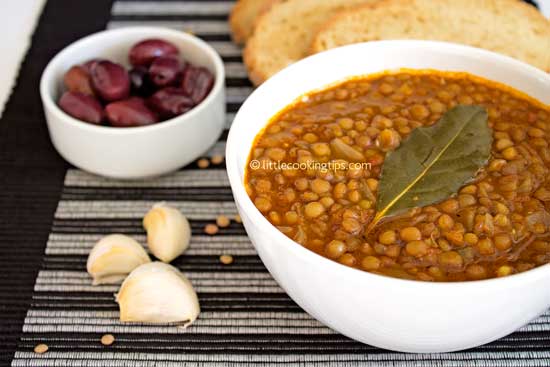
Lentil soup flavored with bay leaf
The first cookbook ever to be written is credited to Archestratus, a Greek poet living in Sicily around 350 B. C. It’s a poem called Υδηπάθεια (Life of Luxury) written in hexameters, of which only 62 fragments survive. The poem is in fact a gastronomic guide, where the author tells of his travels around the Mediterranean in search of the best food and wine. Like today’s foodies, Archestratus loved learning the culinary traditions and customs of different places. He believed in the importance of quality ingredients, which had to be fresh and in season, and cooked simply, with little fat, using seasoning lightly in order to enhance and not mask their flavor.
He focused mainly on fish, being a big fan of tuna, but also of mullet, sea bass, swordfish and squid. One of his recipes is for tuna wrapped in fig leaves, cooked under the ashes and flavored with olive oil and oregano.
But even before Archestratus, the Greeks were interested in good food. Aristaios (or Aristaeus) was the god of shepherds and cheese-making, bee-keeping, honey, honey-mead, olive growing and medicinal herbs. His name was derived from the Greek word aristos, “most excellent” or “most useful.” It seems he started life a mortal, but was made a god because of his services to mankind.
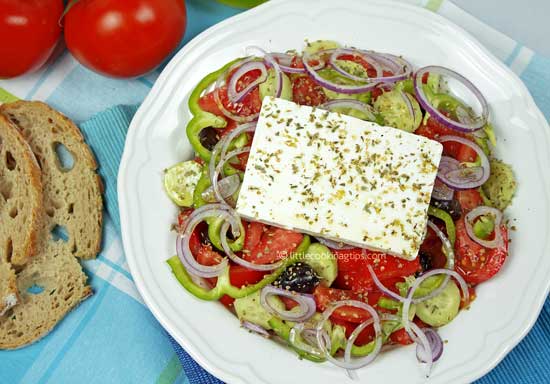
Χωριάτικη (Horiatiki) salad with feta and olives
The Greeks invented bread; they made wine which they flavored with thyme, mint, cinnamon or honey and stored in clay pots, amphoras, which they marked with the year and origin. They drank their wine cut with water, to keep their wits about them, and thought drinking undiluted wine a barbarian custom.
They cultivated orchards of fruit and nut trees, and raised swine, goats, sheep and cows, as well as chickens, ducks, geese and swans. They grew an abundance of vegetables and gathered myriad greens. Fish was essential to their diet but they ate little meat. They enhanced dishes with wild oregano and sage and imported cinnamon and pepper.
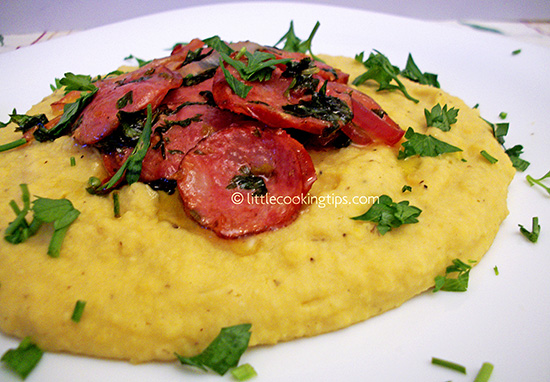
Fava with sausages
The Greek diet has been influenced by both the East and the West. In ancient times, the Persians introduced Middle Eastern foods, such as yogurt, rice, and sweets made from nuts, honey, and sesame seeds. When Rome invaded Greece, the Romans brought with them foods that are typical in Italy, such as pasta and sauces, and the thin phyllo pastry dough used to make sweet and savory pies. Then came the Ottoman conquerors, with assorted Central Asian dishes like rice pilaf and loukoum – Turkish Delight, flavoured with rose water. Arab influences added spices such as cumin, cinnamon, allspice, and cloves, and introduced coffee to Greece. Potatoes, pumpkins and tomatoes were later brought from the New World.
For Greeks, food and eating did not just satisfy physical needs; it was primarily a social event. Plutarch, a Greek historian, said, “We do not sit at the table to eat… but to eat together”. This idea of conviviality has resulted in the meze tradition of sharing a multitude of small dishes, which has spread throughout the Mediterranean and the Middle East.
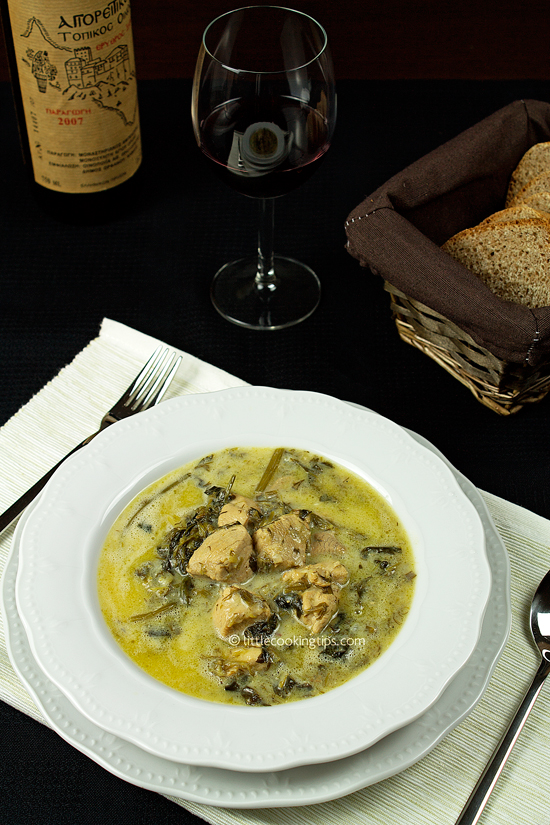
Pork with celery in an egg-and-lemon sauce
In Greece today you will still find all the foods that have been eaten through the ages: plates of fava, a puree of yellow split peas topped with wild capers, onions, or marinated sardines; tomatoes, peppers, cabbage and vine leaves stuffed with meat or rice, pine nuts, sultanas, cheese; λαδερά (ladera), vegetables braised in olive oil; meats simply grilled or cooked with tomatoes and wine; fish and seafood of all kinds; meats and greens encased in delicate phyllo pastry. Food is seasoned with sea salt, onion, garlic, oregano, thyme, rosemary and mint, as well as cumin, cinnamon, allspice and chili pepper.
For dessert, the same phyllo pastry enfolds fruit and nuts and is bathed in honey syrup and sprinkled with cinnamon. A simple dish of yogurt is topped with walnuts and drizzled in honey. And there’s always fruit: apples, pears and citrus fruits in winter, cherries, apricots, strawberries in the spring, peaches, watermelons, melons and figs in summer, grapes, quinces and pomegranates in fall. Of course now you can get fruit out of season, as well as exotic fruits like bananas, pineapples and mangoes. But Greeks generally like to buy things in season.
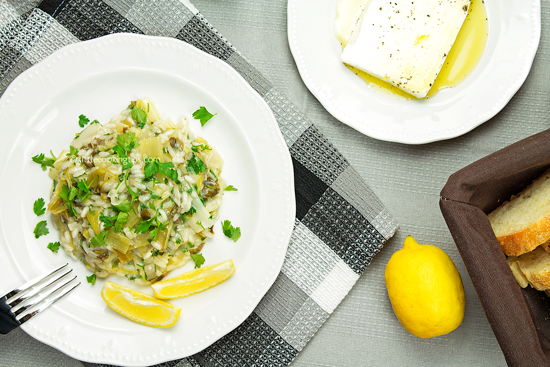
Πρασόρυζο – leeks with rice
Greek chefs today have taken this rich tradition and given it a modern twist. You will find them plying their trade in Athens, but also in other cities, on the islands and on the mountains. The success of the tourist trade, as well as the popularity of tv cooking shows has made the profession lucrative for many young people. They like to use local produce in season, bring a fresh take to old recipes, and also use ideas and influences from other countries.
Greece produces a wide variety of cheeses, from the ubiquitous feta and other soft, fresh cheeses, to hard cheeses such as γραβιέρα (graviera) and κεφαλοτύρι (kefalotyri). Every region also produces their own local cheeses – always ask to sample them when traveling.
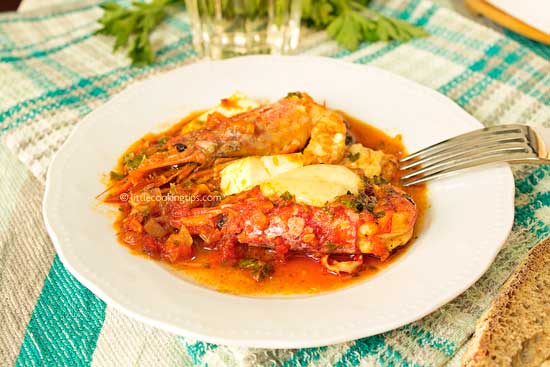
Shrimp with tomato and feta
The first Greek wine has been dated about 6,500 years ago, and, in recent years, the Greek wine industry has been undergoing a renaissance. Improvements have been made with serious investments in modern wine making technology. The new generation of native winemakers is being trained in the best wine schools around the world and their efforts are paying off as Greek wines continue to receive the highest awards in international competitions. What makes Greek wine so unique are the more than 300 indigenous grape varieties grown here, some of which have been cultivated since ancient times. Many well-known international grape varieties are also used in Greek wine making.
Greeks love to eat outdoors, and will do so all year round, weather permitting.
Following the tradition of hospitality, people will welcome you into their homes with a glass of water and a spoonful of γλυκό (glyko) – preserves made with fruit such as sour cherries or citrus peel, flowers such as rose petals and lemon tree buds, and also fruit and vegetables not yet ripe, such as tiny aubergines, green walnuts, tiny green mandarins and figs.
For those interested in trying their hand at some Greek specialities, there are many good cookbooks in English. For example, the lovely series written by Diane Kochilas;
or Vefa’s Kitchen, the bible of Greek cuisine by the grande dame of Greek cooking.
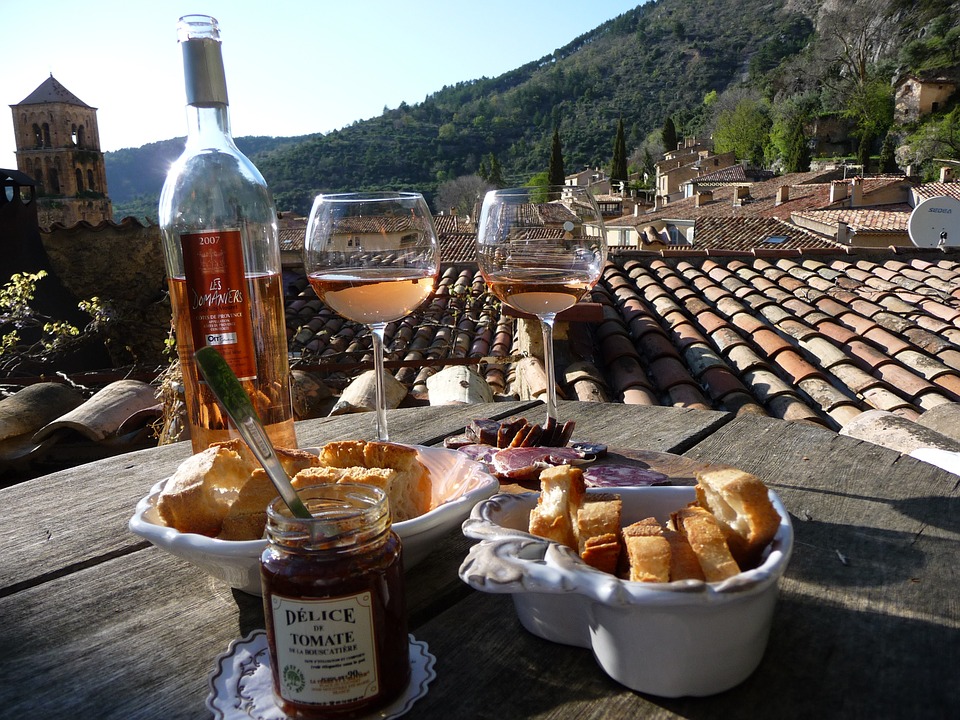
There are also a few great blogs, such as Little Cooking Tips, which features delicious recipes. They kindly allowed me to borrow their lovely photographs of food, all of which could have been in Plato’s plate.
And, by the way, Bon appetit in Greek is Καλή Όρεξη (Kali Orexi)!
Niki K. Kerameus is a lawyer and a politician; she’s also involved in social welfare on a pro bono basis.
35-year old Niki is a partner at Kerameus & Partners Law Firm in Athens, practicing mainly in international arbitration. She has significant experience in international arbitration matters, having worked in this field in three different jurisdictions (Athens-Greece, Paris-France, New York-U.S.A.).
Since January 2015, Niki also serves as a Member of the Hellenic Parliament (State Constituency). She has served as “Shadow Minister” for the Administrative Reform and E-Government Sector of New Democracy (ND), the major opposition party of Greece, from March 2015 until January 2016, and has just now been appointed as the third Parliamentary Representative of ND.
Niki is a founding member and until recently President of the Non-profit Foundation “Desmos”, which locates surplus from companies and individuals to cover needs of our most vulnerable citizens and social welfare organizations.
Finally, Niki is a mother-to-be, expecting her first child in 2 months!
Tell us a little about yourself
I grew up in a family that has always encouraged me to learn and to actively participate in civic life. After studying and working for several years abroad, in France and the United States, as a lawyer, I decided to return to Greece in order to apply, in my country’s benefit, all experiences acquired. About a year ago I got involved in politics when I accepted a highly honoring proposal from the former Prime Minister, Mr. Antonis Samaras, to be included in the State Constituency list of ND. One of the main reasons I decided to accept was because I strongly feel that our generation has to actively engage with society; that we should not simply criticize, but act when the opportunity arises; that we should all – to the extent possible – try to make the difference we would like to see materializing around us.
What were the major difficulties you’ve faced in the last five years?
Among the difficulties I have faced these past five years is striving to build a business practice in the midst of an unprecedented financial crisis. Such difficulties, though, seem immaterial when compared to the real difficulties faced by our most vulnerable citizens suffering on a daily basis from the repercussions of the crisis. As a founding member of “Desmos”, which aims at helping our most vulnerable citizens, I have come face to face with the most significant survival problems that an important segment of the Greek population has been facing for the past years.
Did anyone in particular inspire you or help you?
I have had the tremendous chance of being surrounded by a number of people who have both inspired me and helped me in my path so far. My parents, my brother, my mentor to the legal profession in New York, and most importantly my husband who has been a tremendous source of support and wisdom throughout the eight years we have been together.
What are your hopes/plans for the future?
What I hope for, and try to contribute towards, is to shape a better future for our children, in a fair, growing, opportunity-offering country.
What are your hopes for Greece? What changes do you hope to see happen?
I hope to see the country turn once again towards growth, productivity, towards regaining credibility abroad and creating new jobs.
Have you considered leaving? If so, where would you like to go, and why?
I lived and worked abroad for almost 10 years. My decision to return to Greece right when the financial crisis hit was carefully balanced. Although my professional prospects as a lawyer were definitely more promising abroad, I felt that we – the younger generation – had to at least try to return to Greece and assist our country in any way we can.
If you have already decided to leave what would make you stay?
If I was a young entrepreneur who had decided to start a career abroad, I would be tempted to stay if there was concrete hope for a better future in Greece. Kyriakos Mitsotakis’ election as Leader of the major opposition party, New Democracy, incarnates – in my opinion – the optimism that there are better days to come for our country, and could hopefully invert the Greek “brain drain”.
Are you actively doing anything to help with the situation? Is there something you would like to do?
Both in the past few years and in the present, I try to help in two different ways: (i) through my active engagement in politics and (ii) through my offering and volunteering to “Desmos”.
How do you see Greece in 5, 10 years?
Greece’s and its people’s potential is huge, and 5-10 years is quite a significant projection time for which I have only optimism. I see the current, catastrophic government dissociated from the political scene and new leadership driving the country. I see a reformed, more efficient, transparent public sector, where institutions can serve the benefit of all citizens, with impartiality and objectivity, offering a fertile environment for business and private initiative to grow and young people motivated to create and participate. I see older people equipped with dignity for themselves and hope for their children’s future.
How do you cope with obstacles and frustrations in your everyday life?
I cope with obstacles and frustrations with realism, patience, effort, persistence.
What are the positive sides of living in Greece? Have you had any good experiences lately?
There are definitely positive sides of living in Greece. Our friends, family, the climate, the beauty of our country, and most importantly the challenge to fix what needs to be fixed.
In less than 4 years, Desmos has offered goods worth almost 2 million euros to more than 300.000 vulnerable citizens of Greece.If you want to find out more about DESMOS, their site is here – or read a previous post on this blog: DESMOS: Matching donations to needs.



 (to be continued…)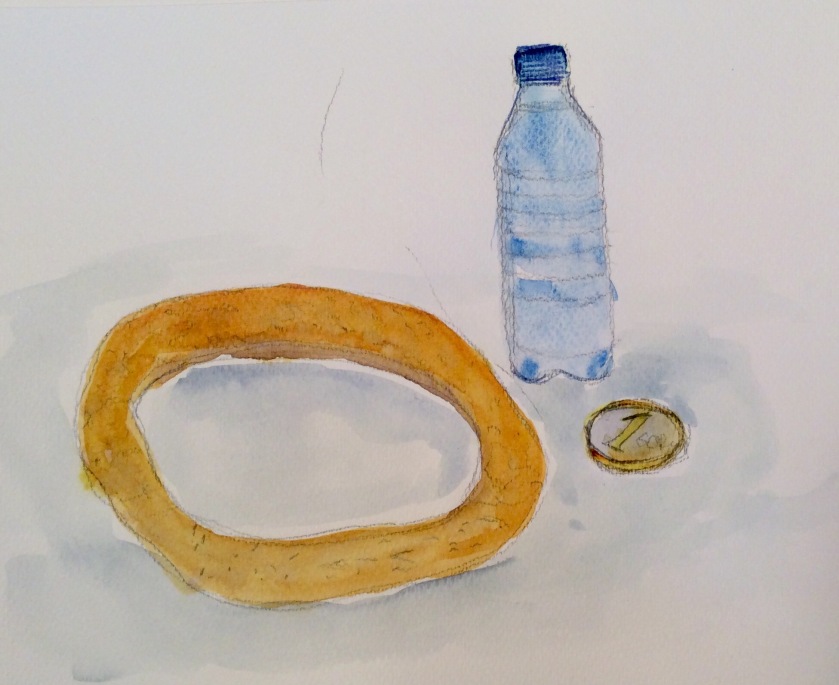
 The almond trees are in bloom.
 Anemones come in all shades of pink and mauve, from almost white to fuschia, from palest lavender to purple. They can even be bright red, like poppies. They’re lovely in bowls around the house.
 Daisies and other wild flowers are popping up.
 The first kumquat. It’s in a pot outside the kitchen door.
 And buds on the camellia!

 Tell me, Yannis, how did Yoleni’s come into being?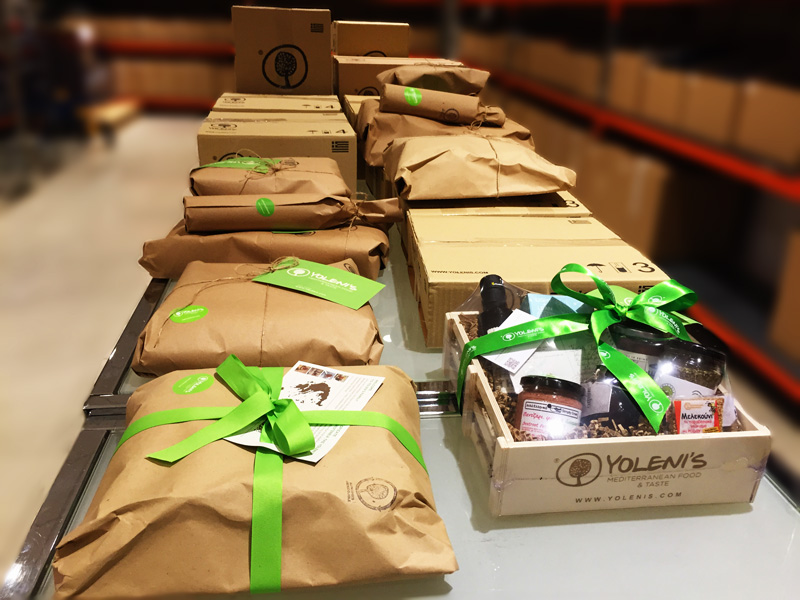
 How do you choose which products to take on?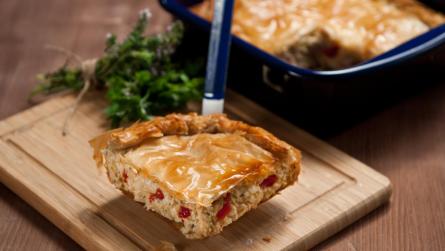


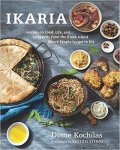 For those interested in trying their hand at some Greek specialities, there are many good cookbooks in English. For example, the lovely series written by
 or
or 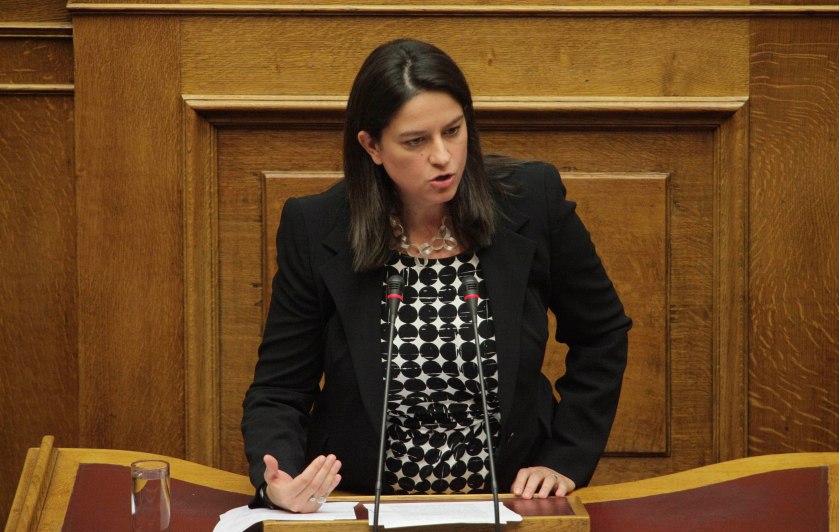

 Letters from Athens