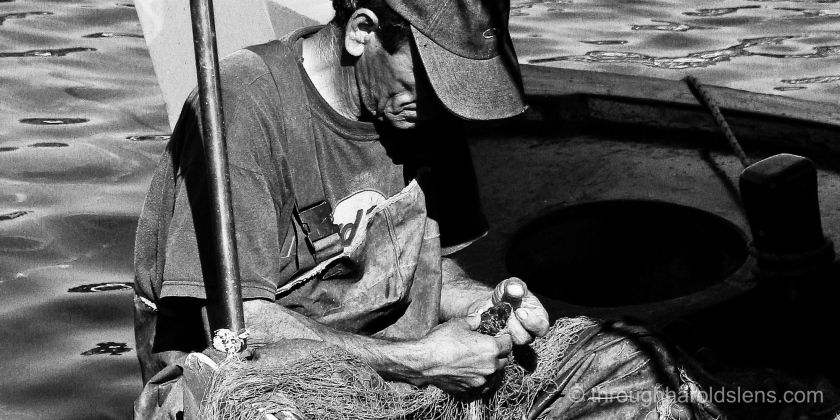
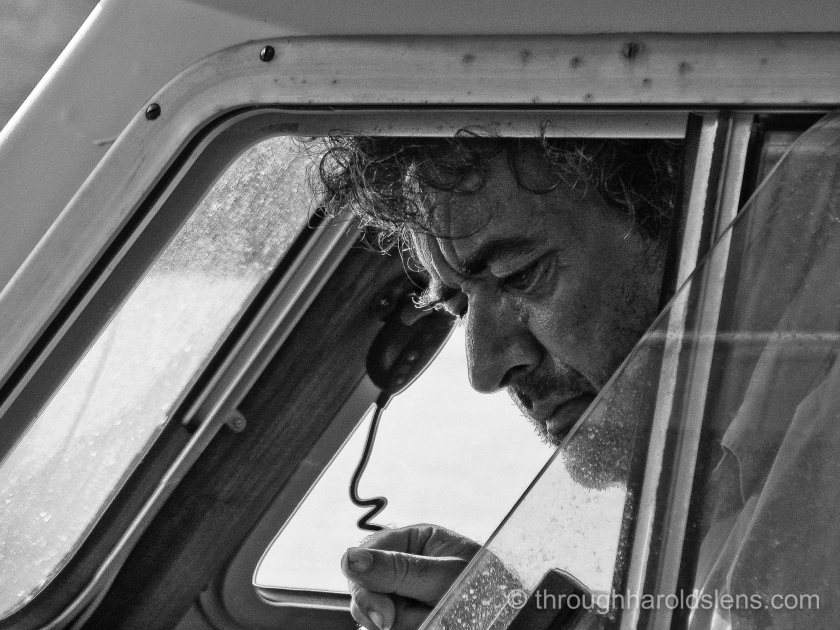
An online petition has been made by the grassroots campaign group, Avaaz, on behalf of the residents of the Greek islands who have been rescuing, feeding and sheltering hundreds of thousands of desperate migrants arriving at their shores.
This is the text of the petition: “Ordinary residents of Greek islands and other volunteers have been on the front lines of Europe’s refugee crisis for months, opening up their hearts and homes to save hundreds of thousands fleeing war and terror. For their compassion and courage, for treating those in danger with humanity, and for setting an example for the rest of the world to follow, we citizens around the world, nominate these brave women and men for a Nobel Peace Prize.”
Nearly 1 million migrants entered Europe in “irregular arrivals” last year, most fleeing conflict, persecution and poverty in the Middle East and Africa, according to the International Organization for Migration. These tidal waves of humanity have made the Mediterranean “the deadliest route for migrants on our planet,” the IOM’s Director General William Lacy Swing has said, with nearly 3,700 people drowning in its waters last year. And more are continuing to drown on a daily basis, especially in the last weeks, when the weather has turned to winter at last, and the sea is freezing cold.
According to an article in the Guardian (Sunday 24 January, 2016), “of the 900,000 refugees who entered Europe last year most were received – scared, soaked and travelling in rickety boats – by those who live on the Greek islands in the Aegean Sea.
The islanders, including fishermen who gave up their work to rescue people from the sea, are in line to be honoured with one of the world’s most esteemed awards. Eminent academics from the universities of Oxford, Princeton, Harvard, Cornell and Copenhagen are drafting a submission in favour of awarding the prize to the people of Lesbos, Kos, Chíos, Samos, Rhodes and Leros.”
The article goes on to say that “it must be noted that a people of a country already dealing with its own economic crisis responded to the unfolding tragedy of the refugee crisis with “empathy and self-sacrifice”, opening their homes to the dispossessed, risking their lives to save others and taking care of the sick and injured.”
At the time of posting, the petition had amassed 313,975 signatures
To cheer up a cold January evening, I thought I’d reblog of of my favourite posts from my friend Margaretha’s blog. Who knows, it might inspire some of you to plan a little retreat for next summer!
I love food, all kinds of food. Gourmet food, soul food, street food, ethnic food, home cooking. So I thought it would be amusing to do a little research on Greek cuisine, because it’s fun to think we have a lot of the same things on our plate as Plato (forgive the pun!)
Some Greek recipes have existed for thousands of years, especially those including local produce such as oranges and lemons, pomegranates, tomatoes, grapes, figs. And, of course, olive oil – our liquid gold.
Lentil soup flavored with bay leaf
The first cookbook ever to be written is credited to Archestratus, a Greek poet living in Sicily around 350 B. C. It’s a poem called Υδηπάθεια (Life of Luxury) written in hexameters, of which only 62 fragments survive. The poem is in fact a gastronomic guide, where the author tells of his travels around the Mediterranean in search of the best food and wine. Like today’s foodies, Archestratus loved learning the culinary traditions and customs of different places. He believed in the importance of quality ingredients, which had to be fresh and in season, and cooked simply, with little fat, using seasoning lightly in order to enhance and not mask their flavor.
He focused mainly on fish, being a big fan of tuna, but also of mullet, sea bass, swordfish and squid. One of his recipes is for tuna wrapped in fig leaves, cooked under the ashes and flavored with olive oil and oregano.
But even before Archestratus, the Greeks were interested in good food. Aristaios (or Aristaeus) was the god of shepherds and cheese-making, bee-keeping, honey, honey-mead, olive growing and medicinal herbs. His name was derived from the Greek word aristos, “most excellent” or “most useful.” It seems he started life a mortal, but was made a god because of his services to mankind.
Χωριάτικη (Horiatiki) salad with feta and olives
The Greeks invented bread; they made wine which they flavored with thyme, mint, cinnamon or honey and stored in clay pots, amphoras, which they marked with the year and origin. They drank their wine cut with water, to keep their wits about them, and thought drinking undiluted wine a barbarian custom.
They cultivated orchards of fruit and nut trees, and raised swine, goats, sheep and cows, as well as chickens, ducks, geese and swans. They grew an abundance of vegetables and gathered myriad greens. Fish was essential to their diet but they ate little meat. They enhanced dishes with wild oregano and sage and imported cinnamon and pepper.
Fava with sausages
The Greek diet has been influenced by both the East and the West. In ancient times, the Persians introduced Middle Eastern foods, such as yogurt, rice, and sweets made from nuts, honey, and sesame seeds. When Rome invaded Greece, the Romans brought with them foods that are typical in Italy, such as pasta and sauces, and the thin phyllo pastry dough used to make sweet and savory pies. Then came the Ottoman conquerors, with assorted Central Asian dishes like rice pilaf and loukoum – Turkish Delight, flavoured with rose water. Arab influences added spices such as cumin, cinnamon, allspice, and cloves, and introduced coffee to Greece. Potatoes, pumpkins and tomatoes were later brought from the New World.
For Greeks, food and eating did not just satisfy physical needs; it was primarily a social event. Plutarch, a Greek historian, said, “We do not sit at the table to eat… but to eat together”. This idea of conviviality has resulted in the meze tradition of sharing a multitude of small dishes, which has spread throughout the Mediterranean and the Middle East.
Pork with celery in an egg-and-lemon sauce
In Greece today you will still find all the foods that have been eaten through the ages: plates of fava, a puree of yellow split peas topped with wild capers, onions, or marinated sardines; tomatoes, peppers, cabbage and vine leaves stuffed with meat or rice, pine nuts, sultanas, cheese; λαδερά (ladera), vegetables braised in olive oil; meats simply grilled or cooked with tomatoes and wine; fish and seafood of all kinds; meats and greens encased in delicate phyllo pastry. Food is seasoned with sea salt, onion, garlic, oregano, thyme, rosemary and mint, as well as cumin, cinnamon, allspice and chili pepper.
For dessert, the same phyllo pastry enfolds fruit and nuts and is bathed in honey syrup and sprinkled with cinnamon. A simple dish of yogurt is topped with walnuts and drizzled in honey. And there’s always fruit: apples, pears and citrus fruits in winter, cherries, apricots, strawberries in the spring, peaches, watermelons, melons and figs in summer, grapes, quinces and pomegranates in fall. Of course now you can get fruit out of season, as well as exotic fruits like bananas, pineapples and mangoes. But Greeks generally like to buy things in season.
Πρασόρυζο – leeks with rice
Greek chefs today have taken this rich tradition and given it a modern twist. You will find them plying their trade in Athens, but also in other cities, on the islands and on the mountains. The success of the tourist trade, as well as the popularity of tv cooking shows has made the profession lucrative for many young people. They like to use local produce in season, bring a fresh take to old recipes, and also use ideas and influences from other countries.
Greece produces a wide variety of cheeses, from the ubiquitous feta and other soft, fresh cheeses, to hard cheeses such as γραβιέρα (graviera) and κεφαλοτύρι (kefalotyri). Every region also produces their own local cheeses – always ask to sample them when traveling.
Shrimp with tomato and feta
The first Greek wine has been dated about 6,500 years ago, and, in recent years, the Greek wine industry has been undergoing a renaissance. Improvements have been made with serious investments in modern wine making technology. The new generation of native winemakers is being trained in the best wine schools around the world and their efforts are paying off as Greek wines continue to receive the highest awards in international competitions. What makes Greek wine so unique are the more than 300 indigenous grape varieties grown here, some of which have been cultivated since ancient times. Many well-known international grape varieties are also used in Greek wine making.
Greeks love to eat outdoors, and will do so all year round, weather permitting.
Following the tradition of hospitality, people will welcome you into their homes with a glass of water and a spoonful of γλυκό (glyko) – preserves made with fruit such as sour cherries or citrus peel, flowers such as rose petals and lemon tree buds, and also fruit and vegetables not yet ripe, such as tiny aubergines, green walnuts, tiny green mandarins and figs.
For those interested in trying their hand at some Greek specialities, there are many good cookbooks in English. For example, the lovely series written by Diane Kochilas;
or Vefa’s Kitchen, the bible of Greek cuisine by the grande dame of Greek cooking.
There are also a few great blogs, such as Little Cooking Tips, which features delicious recipes. They kindly allowed me to borrow their lovely photographs of food, all of which could have been in Plato’s plate.
And, by the way, Bon appetit in Greek is Καλή Όρεξη (Kali Orexi)!
Niki K. Kerameus is a lawyer and a politician; she’s also involved in social welfare on a pro bono basis.
35-year old Niki is a partner at Kerameus & Partners Law Firm in Athens, practicing mainly in international arbitration. She has significant experience in international arbitration matters, having worked in this field in three different jurisdictions (Athens-Greece, Paris-France, New York-U.S.A.).
Since January 2015, Niki also serves as a Member of the Hellenic Parliament (State Constituency). She has served as “Shadow Minister” for the Administrative Reform and E-Government Sector of New Democracy (ND), the major opposition party of Greece, from March 2015 until January 2016, and has just now been appointed as the third Parliamentary Representative of ND.
Niki is a founding member and until recently President of the Non-profit Foundation “Desmos”, which locates surplus from companies and individuals to cover needs of our most vulnerable citizens and social welfare organizations.
Finally, Niki is a mother-to-be, expecting her first child in 2 months!
Tell us a little about yourself
I grew up in a family that has always encouraged me to learn and to actively participate in civic life. After studying and working for several years abroad, in France and the United States, as a lawyer, I decided to return to Greece in order to apply, in my country’s benefit, all experiences acquired. About a year ago I got involved in politics when I accepted a highly honoring proposal from the former Prime Minister, Mr. Antonis Samaras, to be included in the State Constituency list of ND. One of the main reasons I decided to accept was because I strongly feel that our generation has to actively engage with society; that we should not simply criticize, but act when the opportunity arises; that we should all – to the extent possible – try to make the difference we would like to see materializing around us.
What were the major difficulties you’ve faced in the last five years?
Among the difficulties I have faced these past five years is striving to build a business practice in the midst of an unprecedented financial crisis. Such difficulties, though, seem immaterial when compared to the real difficulties faced by our most vulnerable citizens suffering on a daily basis from the repercussions of the crisis. As a founding member of “Desmos”, which aims at helping our most vulnerable citizens, I have come face to face with the most significant survival problems that an important segment of the Greek population has been facing for the past years.
Did anyone in particular inspire you or help you?
I have had the tremendous chance of being surrounded by a number of people who have both inspired me and helped me in my path so far. My parents, my brother, my mentor to the legal profession in New York, and most importantly my husband who has been a tremendous source of support and wisdom throughout the eight years we have been together.
What are your hopes/plans for the future?
What I hope for, and try to contribute towards, is to shape a better future for our children, in a fair, growing, opportunity-offering country.
What are your hopes for Greece? What changes do you hope to see happen?
I hope to see the country turn once again towards growth, productivity, towards regaining credibility abroad and creating new jobs.
Have you considered leaving? If so, where would you like to go, and why?
I lived and worked abroad for almost 10 years. My decision to return to Greece right when the financial crisis hit was carefully balanced. Although my professional prospects as a lawyer were definitely more promising abroad, I felt that we – the younger generation – had to at least try to return to Greece and assist our country in any way we can.
If you have already decided to leave what would make you stay?
If I was a young entrepreneur who had decided to start a career abroad, I would be tempted to stay if there was concrete hope for a better future in Greece. Kyriakos Mitsotakis’ election as Leader of the major opposition party, New Democracy, incarnates – in my opinion – the optimism that there are better days to come for our country, and could hopefully invert the Greek “brain drain”.
Are you actively doing anything to help with the situation? Is there something you would like to do?
Both in the past few years and in the present, I try to help in two different ways: (i) through my active engagement in politics and (ii) through my offering and volunteering to “Desmos”.
How do you see Greece in 5, 10 years?
Greece’s and its people’s potential is huge, and 5-10 years is quite a significant projection time for which I have only optimism. I see the current, catastrophic government dissociated from the political scene and new leadership driving the country. I see a reformed, more efficient, transparent public sector, where institutions can serve the benefit of all citizens, with impartiality and objectivity, offering a fertile environment for business and private initiative to grow and young people motivated to create and participate. I see older people equipped with dignity for themselves and hope for their children’s future.
How do you cope with obstacles and frustrations in your everyday life?
I cope with obstacles and frustrations with realism, patience, effort, persistence.
What are the positive sides of living in Greece? Have you had any good experiences lately?
There are definitely positive sides of living in Greece. Our friends, family, the climate, the beauty of our country, and most importantly the challenge to fix what needs to be fixed.
In less than 4 years, Desmos has offered goods worth almost 2 million euros to more than 300.000 vulnerable citizens of Greece.If you want to find out more about DESMOS, their site is here – or read a previous post on this blog: DESMOS: Matching donations to needs.
Kyriakos Mitsotakis won the New Democracy leadership election in a fairly tight vote on Sunday. This was seen by most as an upset (Mitsotakis was lagging in the first round) or a reversal.
I see it more as a correction. It has remained a source of astonishment for me how the old guard politicians, having failed dismally at everything they had promised, have the gall to continue promising things they almost certainly have no intention of delivering. At last, the voters saw reason. Whatever one may think of Mitsotakis, let’s give him a chance!
Reactions in the foreign press have also been positive, pointing out that now Tsipras will no longer be ‘the only game in town’. Continue reading “Quick news update”
Today is the second Sunday of the new year. Time for stocktaking – what are the prospects before us?
I took a look at the main Sunday papers. Although of different political persuasions, the themes they deal with are the same.
THE ECONOMY
The problematic state pension scheme, the constantly increasing taxes, and the difficult measures that have to be taken in order to satisfy our lenders. Depressing, to say the least!
THE NEW DEMOCRACY ELECTIONS
The second round of voting to choose a leader for the New Democracy party (the main opposition party) takes place today. It is between Mr. Meimarakis, a member of the old guard, and Mr. Mitsotakis, much younger and more modern, but a member of an old political – and often controversial – family. Is there, in actual fact and despite what they’re proclaiming, much to choose between the two? Voters who turned out in decent numbers for the first round are, so far today, exhibiting election exhaustion.
THE REFUGEE ISSUE
European countries are complaining about the number of refugees allowed into Europe but, let’s not forget, most of those are still in Greece (to say nothing of the vast numbers stuck in Turkey). It is clear the situation is totally out of control. Today the articles were about increasing instances of fights amongst the refugees themselves, especially between groups with different religions; abuse of women and children; cases of women selling themselves in order to pay the traffickers; extortion; black markeering in cellphones, fake documents and other goods.
In a horrifying statistic given out by the organization “Missing Children Europe“, 50% of unaccompanied children arriving at one of the refugee centers disappear within 48 hours never to be found again.
Very few of the refugees are actually in the centers – the rest are wandering around, penniless, hungry, hounded by the police.
Meanwhile, the trafficking business is thriving, starting from Syria itself, where allegedly there are special ‘schools’ coaching people how to reach Europe.
In Bulgaria, the police has issued a warning to hunters to be careful what they shoot at in the woods, in case the prey is not a wild boar but some refugee hiding from the authorities.
However, in a different article, there are glowing reports from various workers from the NGOs working on the island of Lesbos. This is close to the Turkish coast and has received huge numbers of refugees. The NGOs are doing a great job, but they’re also full of praise for the islanders, who have been welcoming the refugees to the best of their ability. People collect food, prepare formula for babies, grandmothers are even knitting little sweaters. Many volunteers from all over the world have also arrived, some giving up their vacation to help, others declaring their willingness to stay ‘until the war ends in Syria.’
Another, more curious, article deals with the refugees who have arrived with their pets. As a general rule, this has been well received by the Greeks, who think it a very human touch. In some other countries, however, (apparently Slovenia is one,) the refugees’ pets have become an object of political pressure, as well as a business: border controls confiscate cats and dogs, even those with passports, microchips and the correct vaccinations, and put them in quarantine, demanding for their keep and release exorbitant amounts (up to €2000). Otherwise the animals are euthanized…
FOOD
The Sunday supplements have the usual restaurant reviews: a new Italian in Kolonaki, an Asian street food bar, a tacos place. And two great salad recipes, to detox after the festive overeating. My favorite? A rocket salad with roasted beetroot, walnuts and orange.
The political situation remains unstable, and thing are not looking good yet. But the start of a new year always feels like a new start, and there is a tiny whiff of optimism in the air.
In other, unrelated, news , as Anita Kunz put it: ‘As if everything else this past year weren’t enough , now Kim Jong-un shows up again.’
She’s doing a cover of him as a baby playing with toy missiles, for the New Yorker.
Please feel free to join in with other pleasant surprises awaiting us in 2016!
I always like to have a couple of books on the go – something light to read at bedtime, like a crime novel or a book of short stories, and something more challenging for when I’m not falling asleep after one page. Not that there are rules – it all depends what mood I’m in, how busy I am, etc. Sometimes I almost long to get the flue so I have an excuse to stay in bed all day with a book!
One hefty tome I’m picking my way through is the Herodotus Histories. Written around 450 B.C., in the Ionic dialect, it is a record of the ancient traditions, politics, geography and clash of cultures of the then ‘known world’ – Western Asia, Northern Africa and Greece. Its main theme is the rise of the Persian Empire and the causes of the Greco-Persian wars.
Herodotus portrays the conflict as one between the forces of slavery (the Persians, whom he calls ‘barbarians’) on the one hand, and freedom (the Athenians and the confederacy of Greek city-states which united against the invaders) on the other. His aim is to preserve the memory of this clash of two worlds and also of the ‘works of man’ that he so admires. In doing so, he is sometimes a strict historian, sometimes almost a poet. Embed from Getty Images
Herodotus, a contemporary of Socrates, was born in Halicarnassus, Caria (modern-day Bodrum, Turkey) and lived in the fifth century BC. Widely referred to, notably by Cicero, as “The Father of History“, he was the first to treat historical subjects as a method of investigation, by collecting his materials systematically and critically.
He travelled widely in the known world, looked at everything with insatiable curiosity, asked questions and wrote down the answers. We must remember this was in a time when an embassy would set out from Athens and, even traveling with all the facilities available to official missions, arrive in Sousa in Persia after three months! Herodotus went as far as Assyria and Babylon, Persia and Egypt. He sailed up the Nile. He went north to Kolchis, describing the snows of the Ukraine. He travelled the whole of Greece, and visited Sicily. His work can be described as a sort of historical and geographical encyclopaedia.
This treasure-trove of anecdotes sometimes seems to waver between history and myth; and yet, Herodotus of Halicarnassus both coined the term, ‘historia,’ and invented the genre. History can therefore be anything that he, the very first historian, pleases. And ‘historia’ – Ιστορία – to Herodotus, meant ‘enquiry’ or ‘investigation.’ Also, many of the stories which were considered fantastic have, with later discoveries, been proven to be true.
Histories was, in the Alexandrine period, divided into the nine books that appear in modern editions, named after the nine Muses. I’m currently in the middle of book III, Thalia. I’m reading it in Modern Greek – the excellent Angelos Vlahos translation.
For English speakers, there are many translations, such as the Robin Waterfield one below.
Histories is a highly entertaining read, with amazing stories of emperors and kings, e.g., the tale of Gyges, a mere bodyguard who, after being forced by King Candaules to peek at his beautiful wife as she is undressing, murders the king, marries his wife and becomes tyrant of Lydia; or wealthy Croesus, King of Lydia, who keeps pestering the Delphic oracle, finally learning that if he attacks Persia, a Great Empire will fall – a riddle that Croesus does not understand until he has been ensconced on his own funeral pyre by Cyrus, King of Persia.
Herodotus also tells of the poet Arion, saved from drowning by a dolphin who carried him safely ashore; he relates that the Egyptians hunted crocodiles, respected their elders, and slept in huts that were on stilts to escape being bitten by mosquitoes which hovered near the ground.
Reading Herodotus is like taking a trip back in time, and discovering an ancient world in the company of an intelligent, observant and amusing guide. Highly recommended.
On January 6, the last day of the festive season, Greeks celebrate the Epiphany, the baptism of Christ by Saint John the Baptist in the Jordan River. We call it Θεοφάνια (Theophania) or Φώτα (Fota) – the Feast of Lights.
Celebrations start the day before, on the 12th day of Christmas. It is a day of fasting – the devout don’t eat meat, fish or dairy products, and not even olive oil is allowed. In Crete they make a special dish called Παπούδια (Papoudia) or Φωτοκόλυβα (Fotokolyva): wheat is boiled with different dried pulses such as lentils, chickpeas and beans, which they eat with salt, bread and maybe an onion and a few olives. They also used to feed this to their chickens and other livestock.
After the morning church service, priests go around the houses in their parish in order to bless them by sprinkling holy water around the rooms. They are also asked to go and bless shops and offices and, in the countryside, stables and livestock. This is known as Μικρός Αγιασμός (mikros agiasmos) or small blessing and, in the old days, it was thought to chase away the Kallikanzaroi, the malevolent gnomes who come out of their holes to plague households over the Christmas period. Now they flee before the priest, and disappear for the rest of the year. Until next Christmas!
Today also those who have burned the Χριστόξυλο (Christ-wood) during the twelve days of Christmas will gather the ashes and spread them around the house, stables and fields to exorcise evil spirits.
The next morning, January 6, after a special service, a procession is formed through towns, starting at the church and leading to the sea, a river, or even a reservoir.
The priests lead, followed by the the local authorities, the villagers or townspeople, schoolchildren and, in large towns, the army. Sometimes there is a band. The size and brilliance of this procession is in accordance with the size of the town, the most impressive ceremonies taking place in ports. In the port of Pireas, the procession is attended by members of the government.
When the procession reaches the water, the priests recite a blessing, and white doves are released. Then a large cross is thrown in the sea, to symbolize the blessing of the waters. A band of local men, the Βουτιχτάδες (voutihtades – divers) plunge into the icy waters to retrieve it. It is considered both a great honour and a sign of good luck to be the one who brings back the cross to the priest.
The church bells ring, the ships’ sirens boom. The faithful drink a few sips of holy water, and take some home to bless their houses and livestock.
This ceremony symbolizes cleansing, purifying and, in a dimension that has its roots in ancient, pre-Christian times, riddance from demons.
During the Epiphany, other customs are revived that go back to Dionysian festivals or to the Turkish occupation.
Groups of people, wearing costumes and masks and holding wooden swords and bells, wander the streets or go from house to house singing and demanding money in return for chasing away evil spirits. The costumes and routines vary from place to place, as does the name of this custom. Μωμόγεροι (Momogeroi), Ραγκουτσάρια (ragoutsaria) , Ρουγκατσάρια (rougatsaria) are all different manifestations of this tradition.
In the town of Galatitsa in Halkidiki, they even construct a camel, activated by six men, to commemorate the 19th century story of the abduction of a beautiful young girl by the son of the local Turkish official. Her fiancé and his friends thought up the camel costume with which they gained entry into the Turkish household, hiding the girl inside the camel to sneak her out and back home where she married her intended before the Turks could get her back!
In some places, there is a custom called ‘the washing of the icons’: people take the icons they have in their houses and wash them in the nearest river.
Later, everyone repairs home for another festive meal, usually of pork, which can be baked with celery, or with quinces. On the island of Skyros, housewives make traditional pies filled with spiced pumpkin, called μαρμαρίτες (marmarites). They bake them on tiles inside the fireplace, taking care they are not stolen by the Kallikanzaroi, who have the ability to make their arms as long as they like, and can thus reach down the chimney to steal the pies!
Chrysoula Manika – Chrissy for short – writes a stunning blog, travel passionate, about traveling in Greece. I’m reblogging one of her posts, just to give you a taste. But do go and take a look, it’s full of great places to visit, restaurants and hotels; day trips, fun things to do, where to get street food; she even gives tips on what to pack! 5 reasons to visit Greece in winter by Chrissy on November 22, 2015 in Travel Ideas
Greece is considered one of the top summer destinations worldwide. What is not widely known, is that Greece is a great winter destination as well, with many sites worth visiting and many activities worth doing. Here are some reasons why Greece makes the perfect winter destination.
Meteora
Why you should visit Greece in Winter:
It’s cheaper
If you are traveling to Greece during winter you will see that everything is cheaper and especially in popular summer destinations. There are a lot of Greek islands that you can still visit in winter and although some hotels and restaurants do close, there are always some that are still open with very low rates compared to summer. Also the restaurants that stay open are the ones that the locals visit, so you are bound to eat some good food. So if you don’t have the Greek beaches in mind there are a few islands that can be easily visited in winter, for example Santorini, Crete, Syros, Corfu, Rhodes and Hydra to name a few. During winter all the air fares are cheaper as well, both domestic and international. I have recently booked a return air ticket from Athens to Santorini with only 30€.
old town of Corfu from harbour
Less crowded
During the busy summer season everything is crowded. The lines for the Acropolis are big. The little alleyways of the islands are filled with people. On the contrary during winter you will have a more enjoyable experience having the site just for yourselves and a few more. You shouldn’t worry about the weather either. Although it gets cold from December till February winters are usually milder compared to most countries.
me at lake Plastira Nice cities to explore
Athens, the capital of Greece is a great destination all year round. You will see less tourists in winter and you will get the chance to observe the local life. Apart from Athens and its countless sites that you can visit there are other beautiful cities in Greece worth exploring, Thessaloniki in the north is a very vibrant city with many archaeological sites, a great food and shopping scene and a lively nightlife. Kavala located in the north of Greece as well, is a very picturesque seaside town built ampitheatrically with many sites worth visiting.
Thessaloniki
Great winter destinations to discover
Apart from the big cities and the Greek islands that one can visit during the winter, Greece has many popular winter destinations as well, with great natural beauty. The beautiful villages of Zagorohoria and the town of Kastoria in Epirus, Pelion villages, Arachova and lake Plastira near Meteora in Thessalia. Kalavryta, Mani and Nafplio in Peloponnese to mention a few. All these areas and many more make the perfect winter destination with their picturesque scenery, archaeological sites, incredible nature and local cuisine.
Vathia village Mani
A variety of sports activities
Did you know that you can ski in Greece? There are a few big ski and snowboards centers in Greece like the one in Arachova and Kalavryta. Other sports activities include hiking trails in the mountainous regions, rafting in one of the country’s rivers and horseback riding. One of the world’s leading athletic event takes place in Athens every November, the Athens Marathon, where athletes from all over the world come to run the original classic route.
outside Trikala Makrinitsa village in Pelion
Now you know and you can too, arrange your winter visit to Greece.
Have you ever visited Greece in winter?
Did you like it?
Click on the blog name to get there – I’m sure you’ll find plenty to interest and tempt you!