Art Website Reveal

Some time ago I subscribed to a site called Artwork Archive, one of a several available tools for managing artwork.

At first I just entered my drawings and paintings indiscriminately, using hastily made photographs, in order to keep track of the work I had, what had been given to people as gifts, and what had been sold. I never took the time or the trouble to use the multiple features offered, such as adding up expenses, generating invoices, or setting up a public profile.

The work can be organised as a portfolio, in the order of one’s choice, or sorted into collections

Then when I started entering art for online exhibitions or competitions, I kept getting asked for my website address, so I decided I now needed my own art website. After wasting numerous hours trying to choose between Word, Winx and Squarespace, and more hours attempting to navigate their sites, I belatedly realised the Artwork Archive Public Profile would do the job more than adequately.

It would save me from paying for another site, plus their client support is excellent.

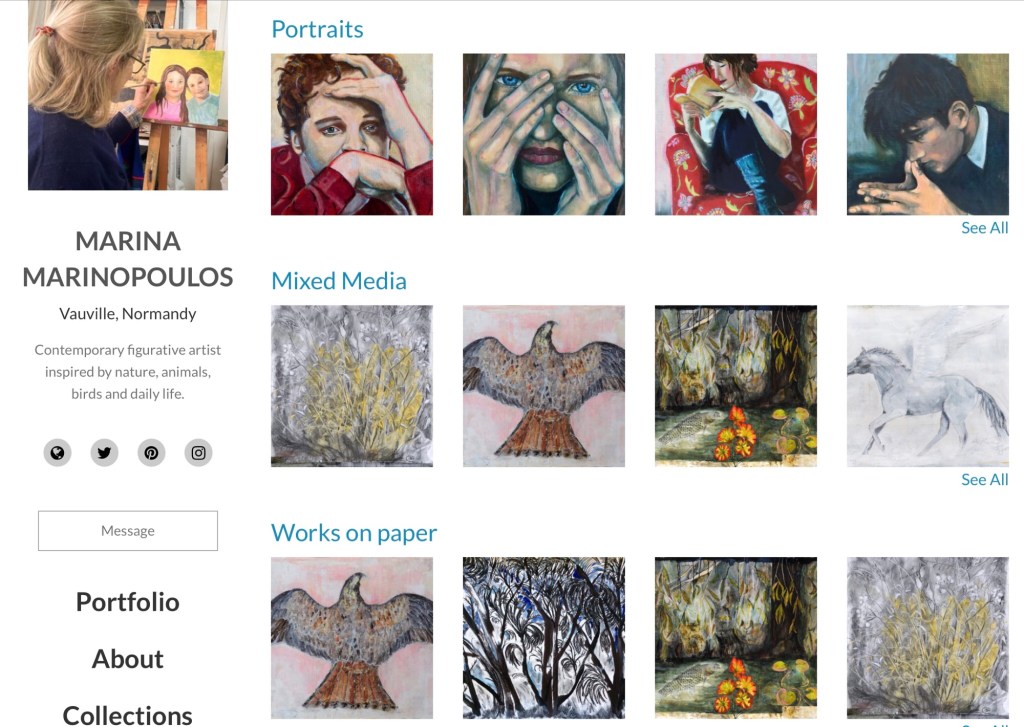
Here is a random page showing the tools offered, and how the work looks in the portfolio mode

So if I have not posted anything here for a while, it is because I’ve been working on taking better photos, deciding which pieces to put on the public platform, and entering any relevant information. All this takes an inordinate amount of time…

Viewed as a portfolio

But here it is! Although it is still a work in progress, and will continue to be one as I make new work and improve my presentation and other parameters, I am now proud to reveal it to you.

Viewed as Collections

If you are interested in actually going on-site, here is a link.

Suggestions welcome!

https://www.artworkarchive.com/profile/marina-marinopoulos

Life? Or Theatre?

Can one have a horrible life, punctuated by difficulties and tragedies and ending in extermination at Auschwitz, yet leave behind work that, despite its disturbing themes, is poignant, breathtaking and uplifting in its luminosity and colour?

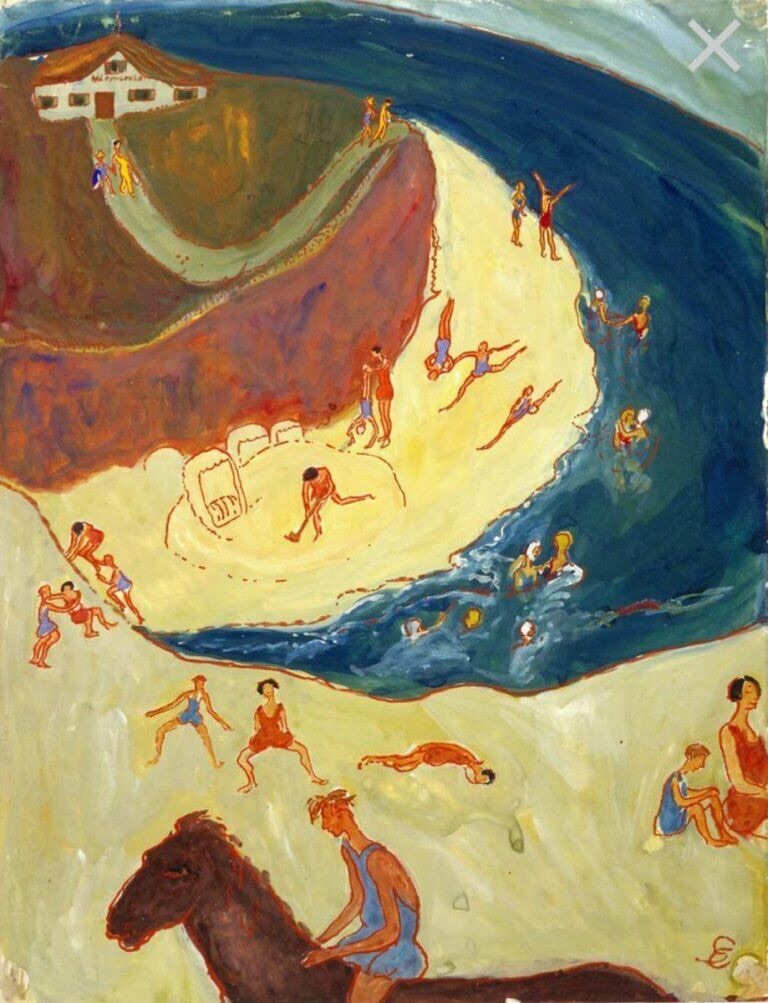
This is the case of Charlotte Salomon, the only Jewish artist who died in the Holocaust to leave behind such a large body of work. It consists of 769 works painted between 1941 and 1943—a mere two years—while she was hiding from the Nazis in the South of France. In October of that year, 5-months-pregnant Salomon was captured and deported to Auschwitz where she was immediately killed.
Born to a prosperous and well-assimilated Jewish family in Berlin, Charlotte was 16 when the Nazis came to power. By 1938 it became too dangerous for her to continue her studies, so she left the art school she was attending, and after Kristallnacht she was sent to live with her grandparents in Nice; her father had been interned and, when her stepmother succeeded in freeing him, they left for Amsterdam. Her mother, suffering from depression, had committed suicide when she was eight.

After several attempts, her grandmother also succeeded in killing herself and Charlotte remained with her grandfather, who it appears was abusive. To escape him, she went to Saint-Jean-Cap-Ferrat where—in order to recover her mental sanity—she started painting; stating that she was driven by the question, “whether to take her own life or undertake something wildly unusual”.

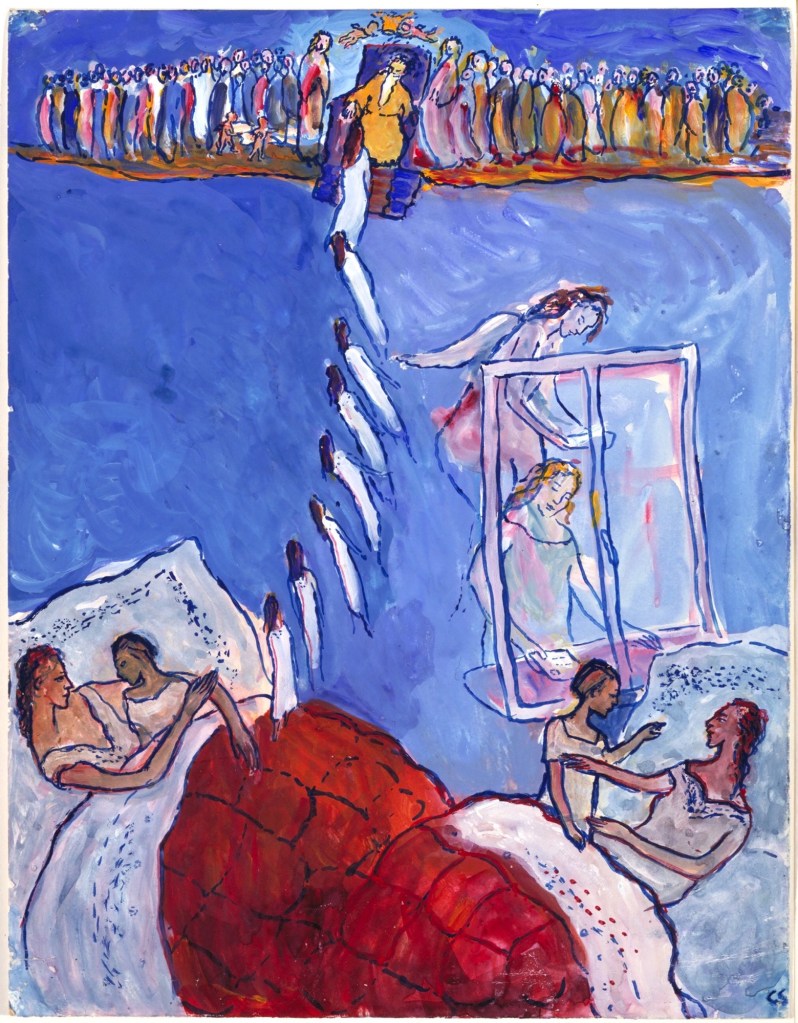
Painting obsessively, in less than two years she produced more than 1.300 gouaches, amongst which she chose the 769 which she numbered and edited, adding text, captions and transparent overlays, to make a kind of autobiography outlining the main events of her life—speaking of herself in the third person, altering all the names and adding elements of imagination.

In 1942 she was obliged, due to her residence permit, to join her grandfather in Nice. Shockingly, shortly after, she poisoned him with a Veronal omelette, then drew him as he lay dead (the drawing exists). She made a 35-page confession which she sent to a former lover who, however, never received it; it remained a secret until much later.

In 1943, as the Nazis closed in, she packed up her paintings and gave them to a local doctor with instructions to forward them to Otillie Moore, a wealthy American who was her protector and sponsor. At war’s end, the package found its way to her remaining family.

In 1943, Charlotte had married Alaxander Nagler, another German Jew refugee, with whom she had been confined in Otillie Moore’s house for a while. Soon after their marriage, they were both deported and murdered.

I find it beyond me to talk about her work, which is based on film-making techniques and is extremely layered and complex; and one must also follow the narrative, in its dream-like dimension. It is, in some ways, a precursor to the graphic novel as we know it today. Although Salomon has always been classed as a Holocaust artist, her work—save for very few drawings—is not about the Holocaust: it is about her childhood, her very disfunctional family, her life and her loves. In the final pages of her book, two sentences stand out. She writes, ‘And with dream-awakened eyes she saw all the beauty around her, saw the sea, felt the sun, and knew; she had to vanish for a while from the human plane and make every sacrifice in order to create her world anew out of the depths.’

I have seen her paintings live in a couple of exhibitions, and they are simply wonderful. I have a book published by the Royal Academy of Arts, with colour reproductions, which I highly recommend.

More information:

Charlotte is a biography by David Foekinos, which I have not read yet, but which has excellent reviews. This is the Amazon link to the English version (the original is French).

https://amzn.eu/d/gqzWlAf

Also there is a very interesting article in the New Yorker with more information than I have given on both her life and her work, and great images. Link below:

https://www.newyorker.com/culture/culture-desk/the-obsessive-art-and-great-confession-of-charlotte-salomon

Best Wishes for 2024

The dawn of a new year: who knows what it will bring. Is there a glimmer of light on the horizon? Let us be optimistic, although things are pretty grim at the moment. I skim over the headlines each day, trying to avoid the worst of the news.

We all wish for world peace, at least those of us who are not dictators or involved in the arms industry. Meanwhile, let us take comfort in the good things in life, if we can manage it: art and books and nature, family and friends. And let us hope for good health.

Let us think of those who have none of the above, and lend a helping hand when we can. Let us hope for that glimmer of light on the horizon.

And for those who like to celebrate, here is a painting by Toulouse Lautrec, who was a master at depicting people enjoying themselves!

Happy New Year, everyone!

Festive Greetings!

To all my faithful readers, my best wishes for a very Merry Christmas, together with a seasonal poem.

Collage and watercolour on paper

Christmas Carol

BY SARA TEASDALE

The kings they came from out the south, 

   All dressed in ermine fine; 

They bore Him gold and chrysoprase, 

   And gifts of precious wine.

The shepherds came from out the north, 

   Their coats were brown and old; 

They brought Him little new-born lambs— 

   They had not any gold.

The wise men came from out the east, 

   And they were wrapped in white; 

The star that led them all the way 

   Did glorify the night.

The angels came from heaven high, 

   And they were clad with wings; 

And lo, they brought a joyful song 

   The host of heaven sings.

The kings they knocked upon the door, 

   The wise men entered in, 

The shepherds followed after them 

   To hear the song begin.

The angels sang through all the night 

   Until the rising sun, 

But little Jesus fell asleep 

Before the song was done.

Portraits

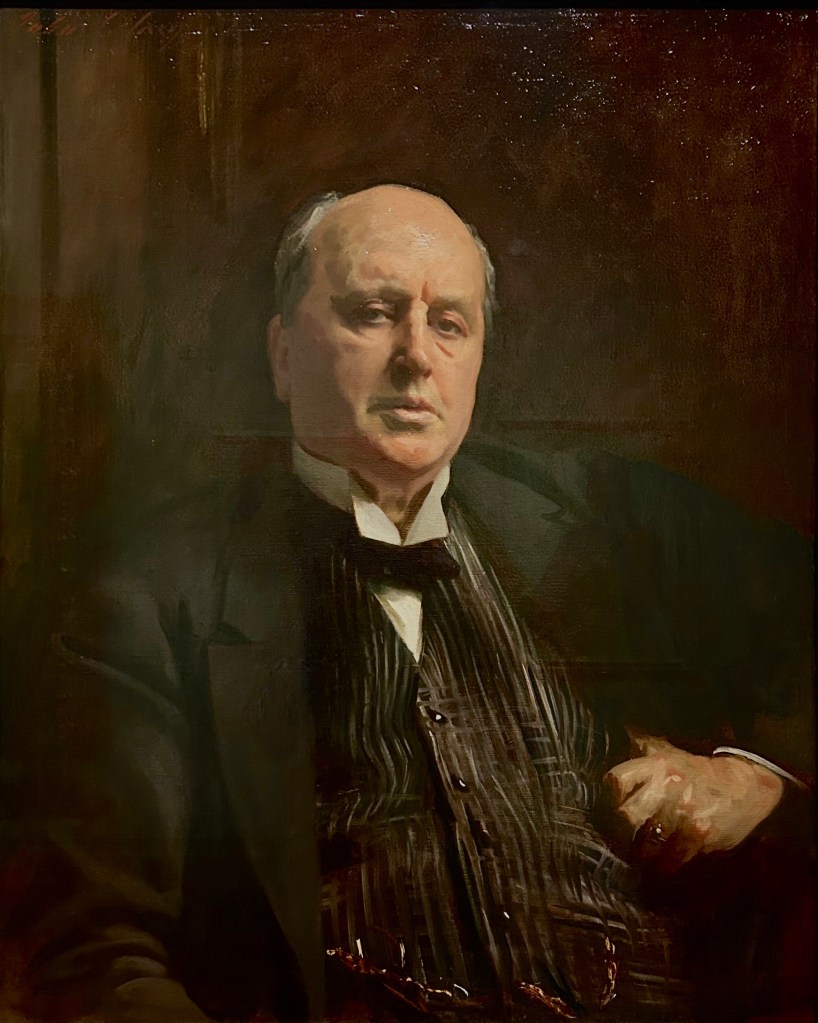
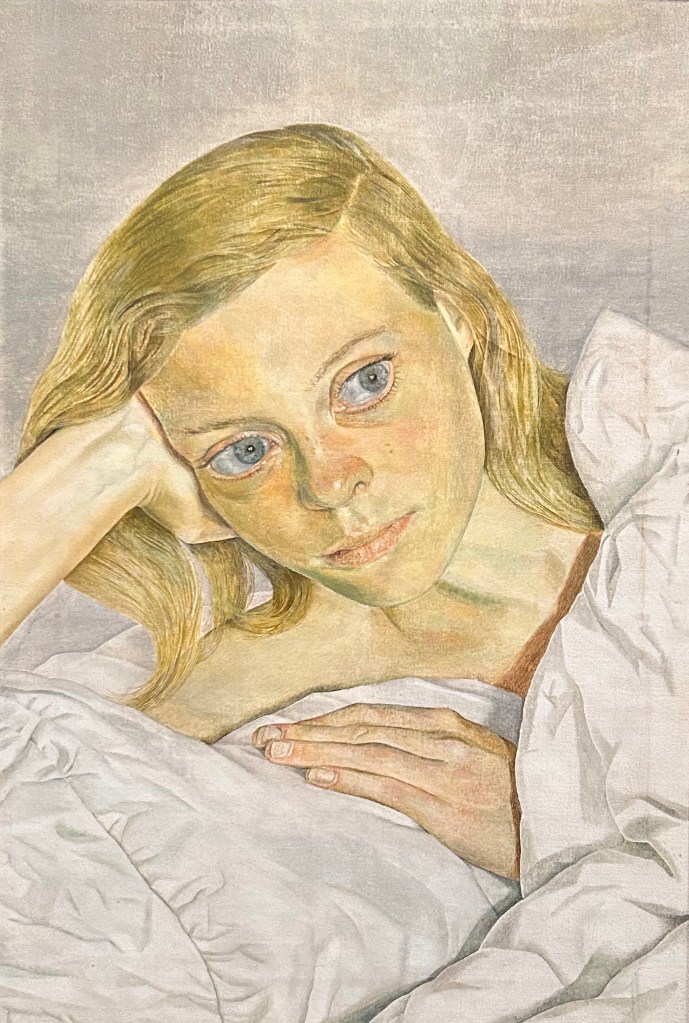
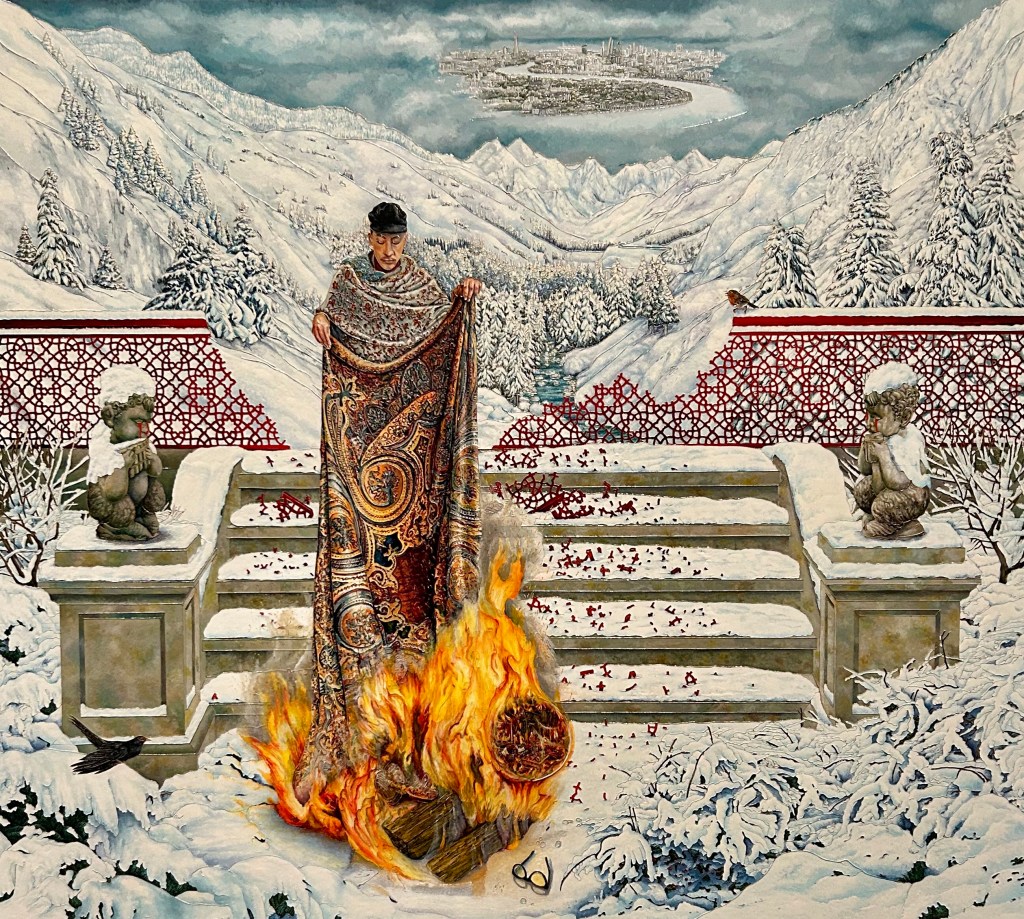
On a trip to London my fondness for portraits drew me, first, to the refurbished National Portrait Gallery. A few highlights below.

The Duke of Wellington, by Sir Thomas Lawrence
Henry James, by John Singer Sargent
Lucian Freud’s portrait of Irish writer Caroline Blackwood, after they had eloped to Paris together.
A wonderfully quirky self-portrait by Raqib Shaw, The Final Submission in Fire on Ice. The detail is amazing if you zoom in.
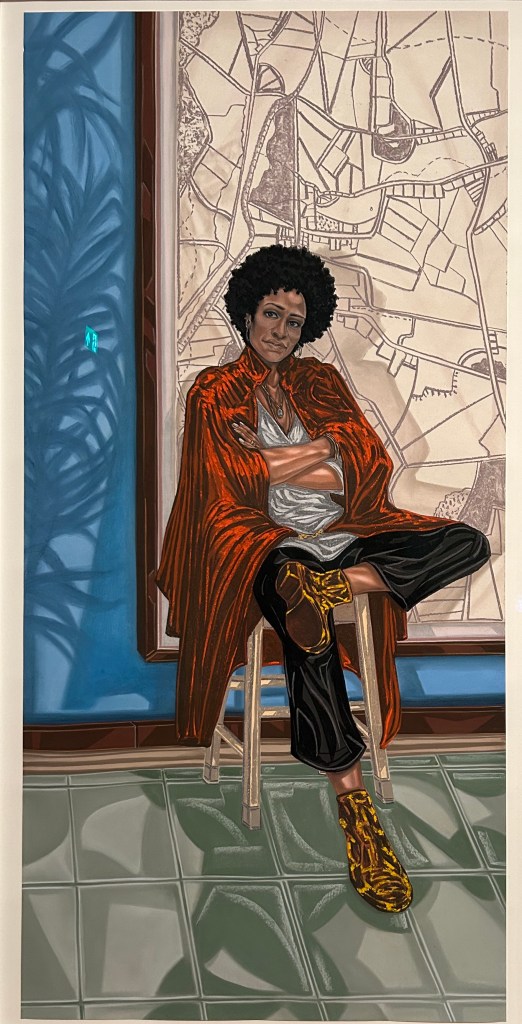
The beautiful Zadie Smith, by Toyin Ojih Odutola

Onwards to the National Gallery, to see the Franz Hals exhibition. One of the most important 17th-century Dutch artists, Hals was a portraitist par excellence, a virtuoso who painted mostly a la prima, without a preliminary sketch (this is difficult to imagine, given his assured brushstrokes and beautiful detail.)

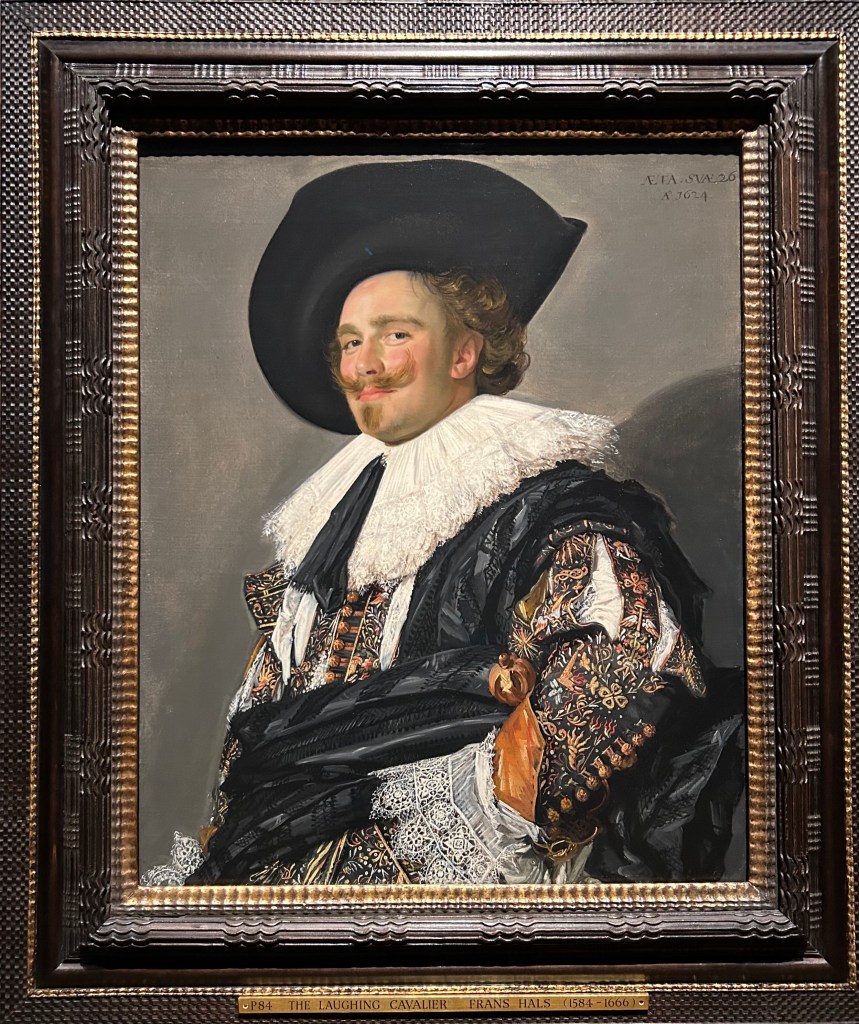
His portraits possess a unique liveliness of expression, and he painted his subjects smiling or laughing, something few painters dared to attempt.

The Laughing Cavalier, one of his most famous paintings

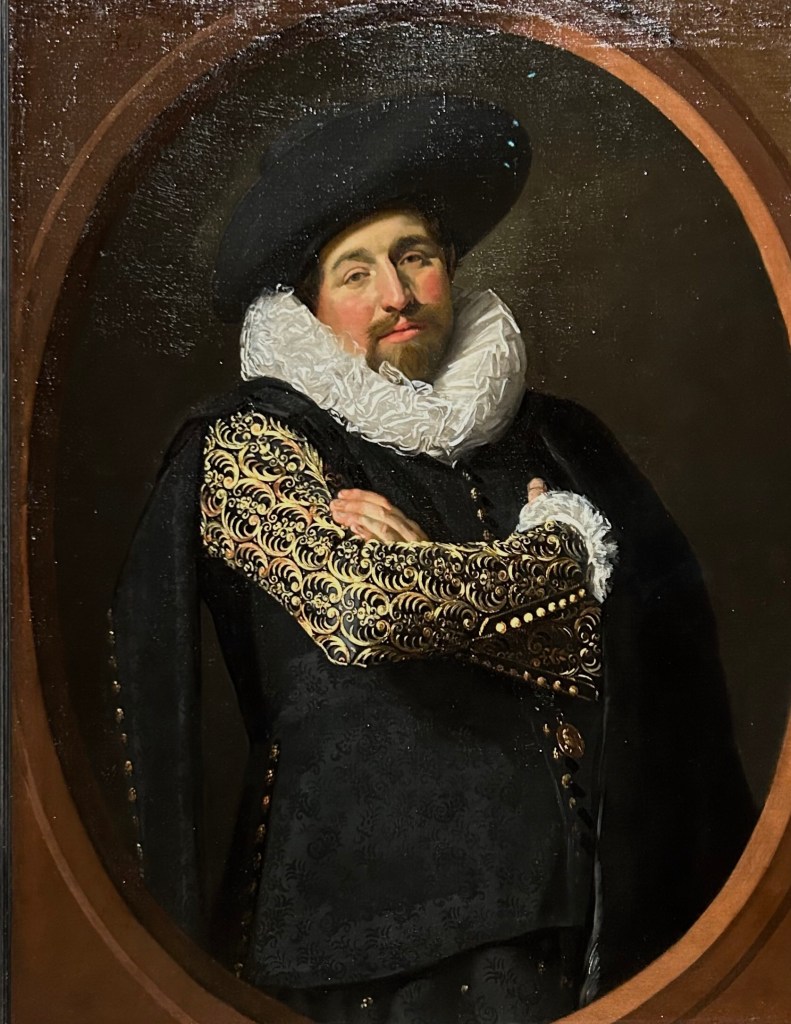
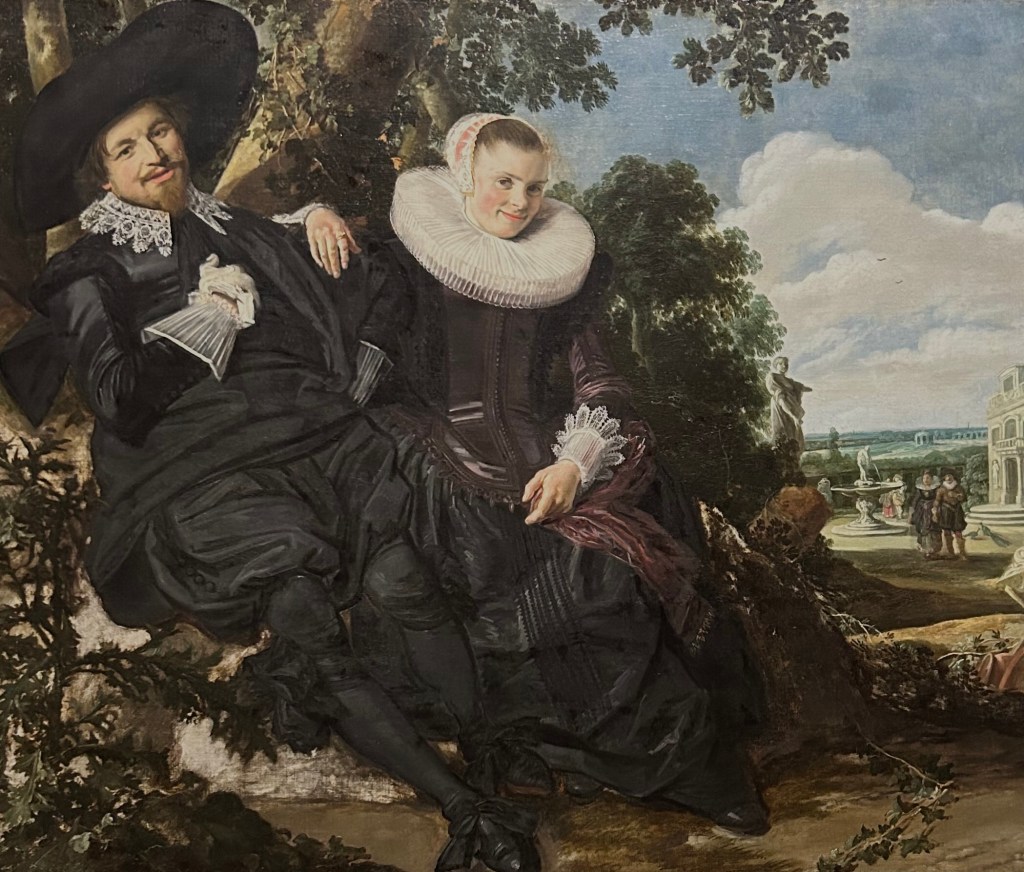
He also portrayed people in informal positions, especially his friends…

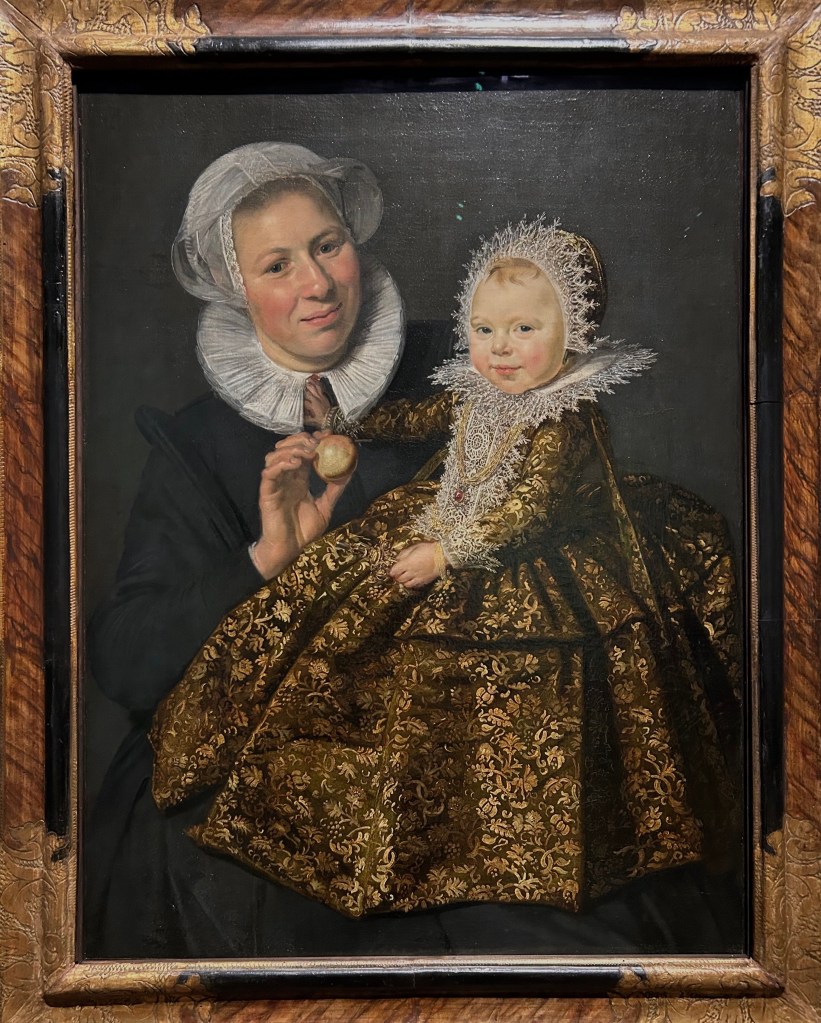
…and was sought after by couples and families for his seemingly casual, yet carefully posed compositions, where the affection between the subjects is apparent.

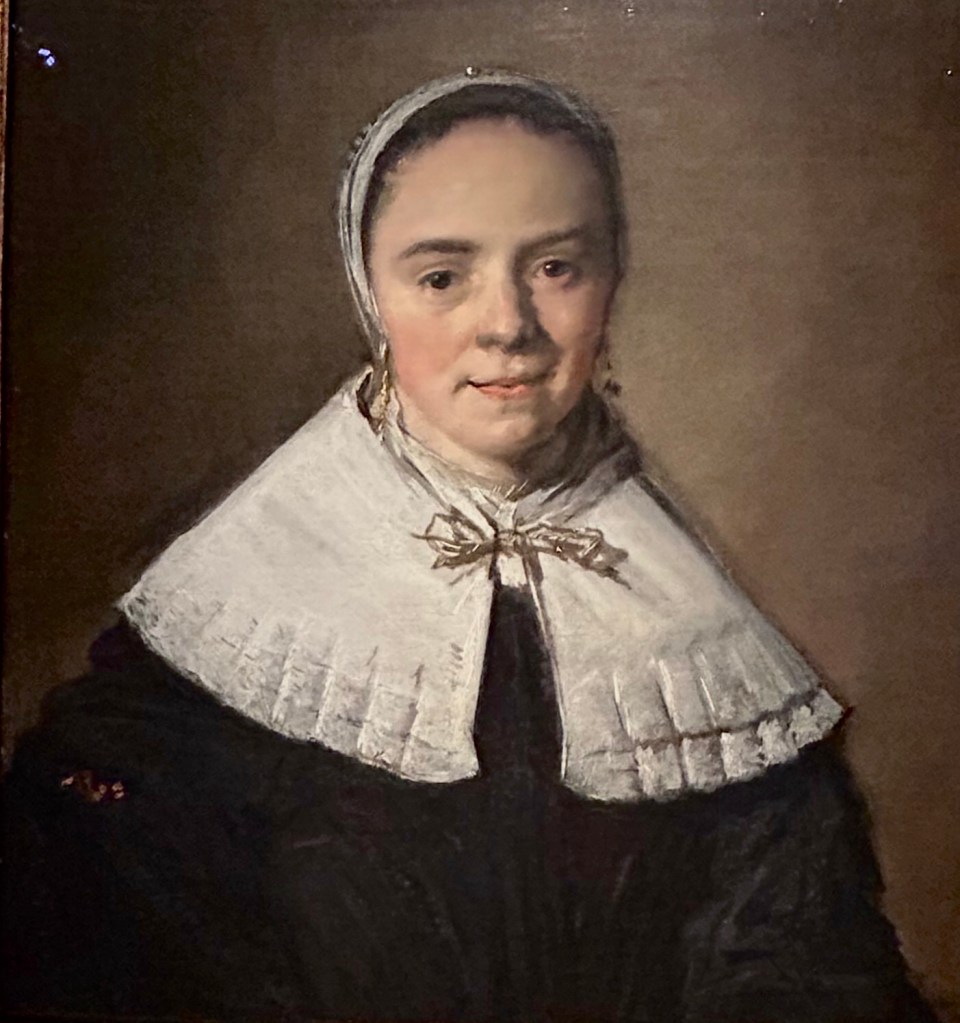
The portrait of the young girl below was one of my favourites, due to the sweetness of her expression.

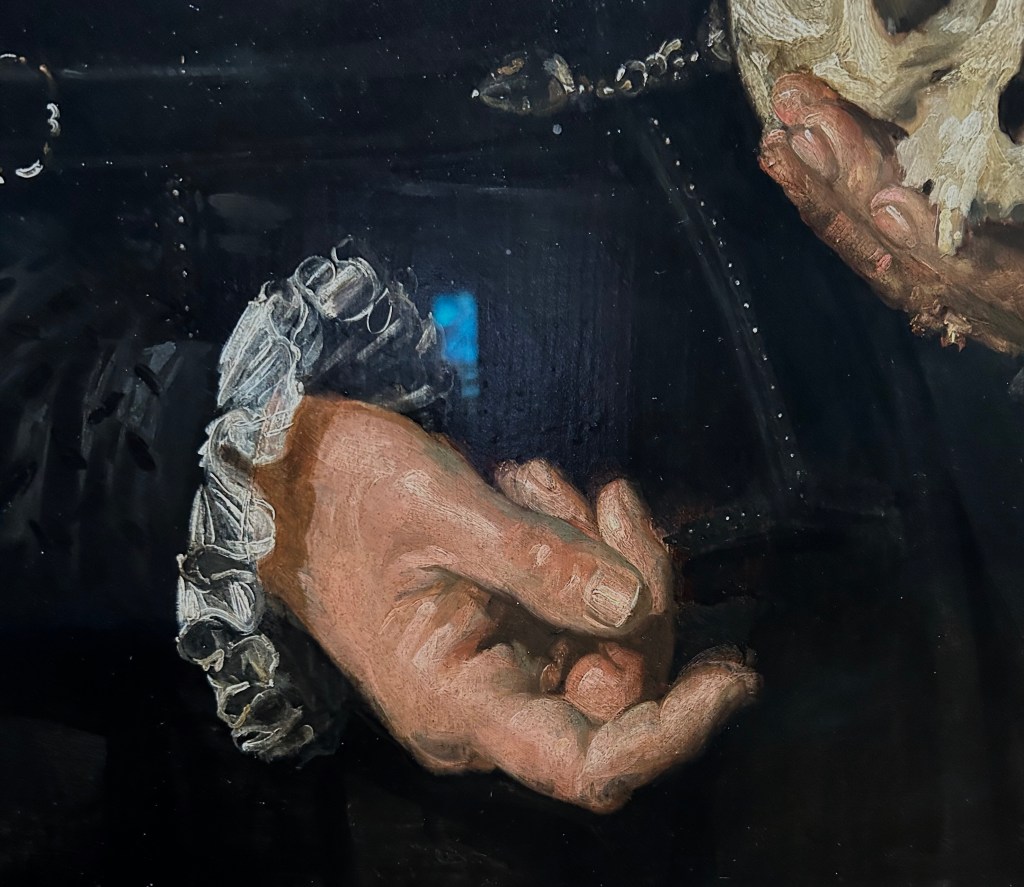
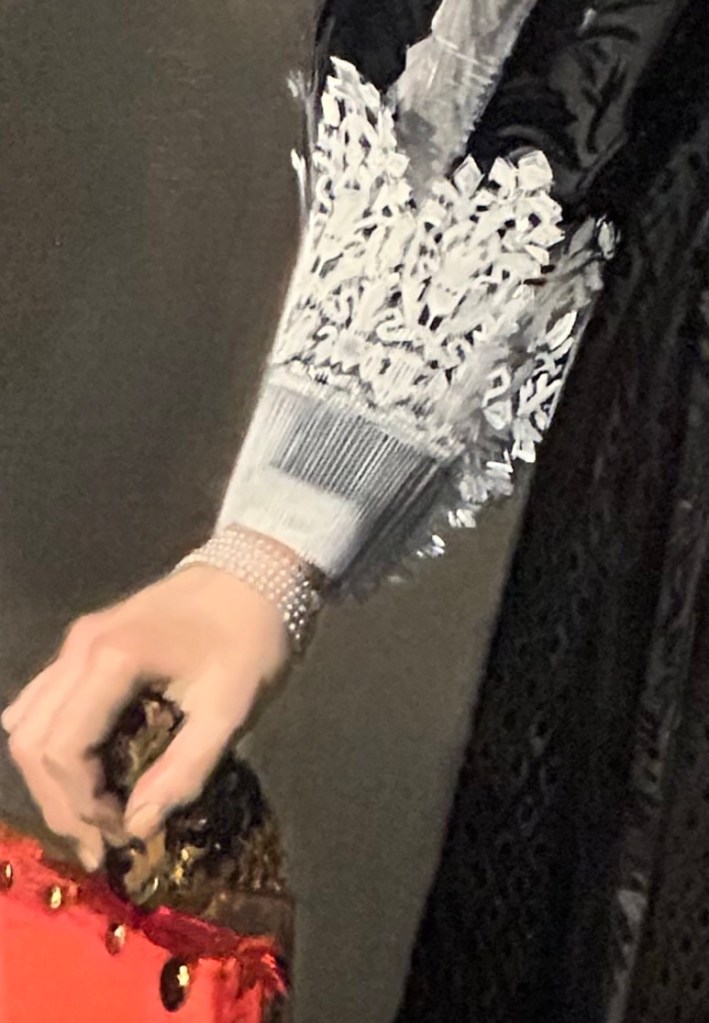
He was also great at painting hands, one of my predilections.

The lace cuff, the pearl bracelet…

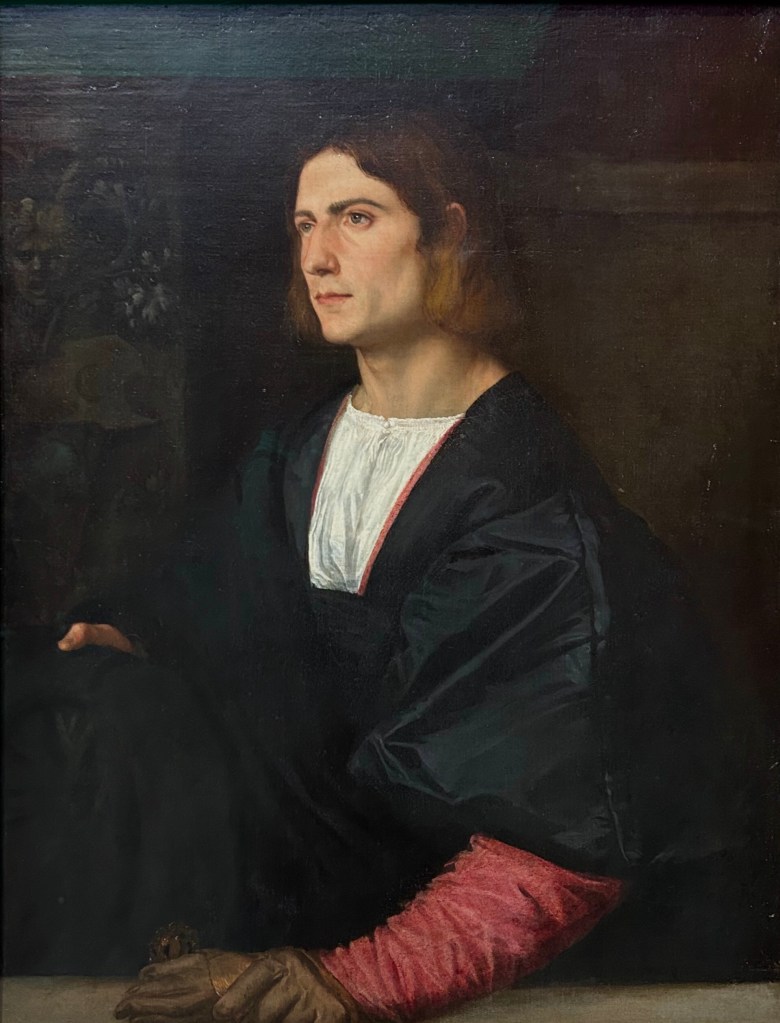
My one caveat is that his sitters are not particularly attractive, if I may be permitted to say so. A fact impressed upon me as, going out of the exhibition, I came upon a portrait of a young man by Titian.

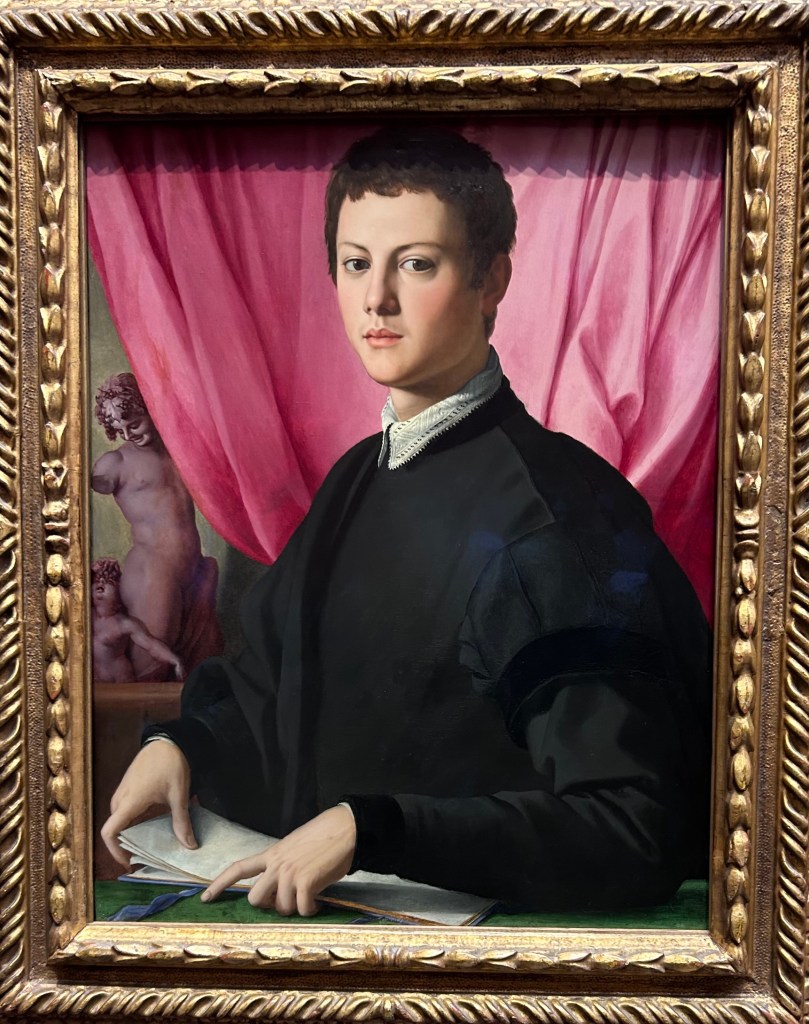
And another by Bronzino. Were Italians better looking than the Dutch, or did the painters idealise them more?

I then wandered into a small but stunning exhibition of the idiosyncratic painter Jean-Etienne Liotard. Born in Geneva, he travelled widely and was a master of pastel, a very delicate and subtle medium.

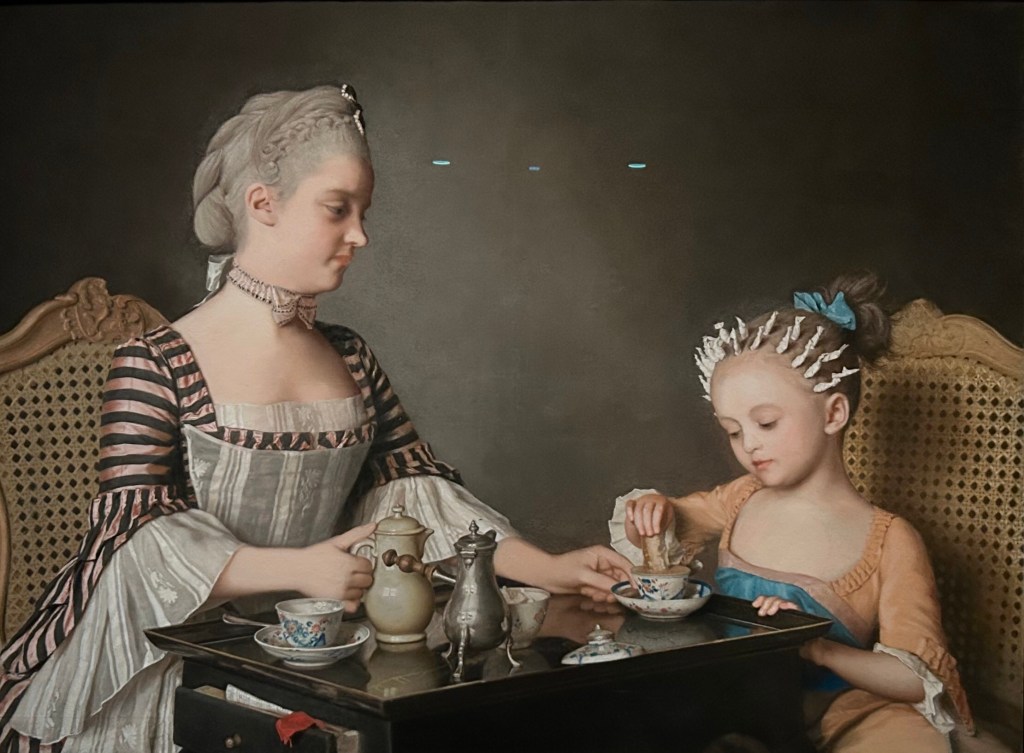
In 1754 he produced a masterpiece, The Lavergne Family Breakfast, which he sold to William Ponsonby, Viscount Duncannon, for the then princely sum of 200 guineas. Upon the latter’s invitation he went with him to Constantinople, where he stayed for four years, growing a long a bushy beard, adopting Turkish dress and calling himself the ‘Turkish Painter.’

I really find this lovely – the detail, the expression on the faces…

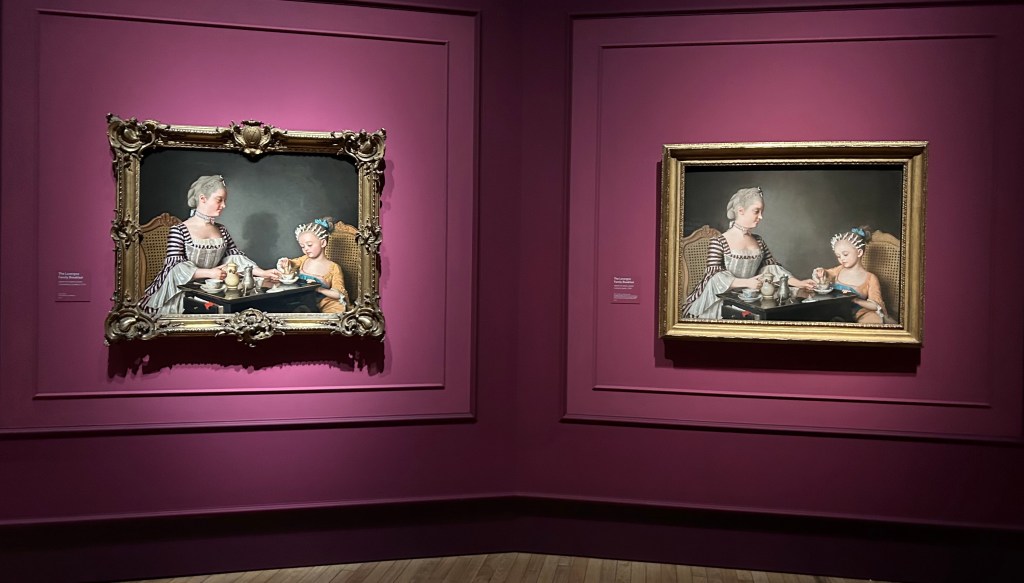
Having not seen his painting for twenty years, he then went back and made an exact replica in oil. This is the first time the paintings have been exhibited together.

On the left in oil, and on the right the original in pastel

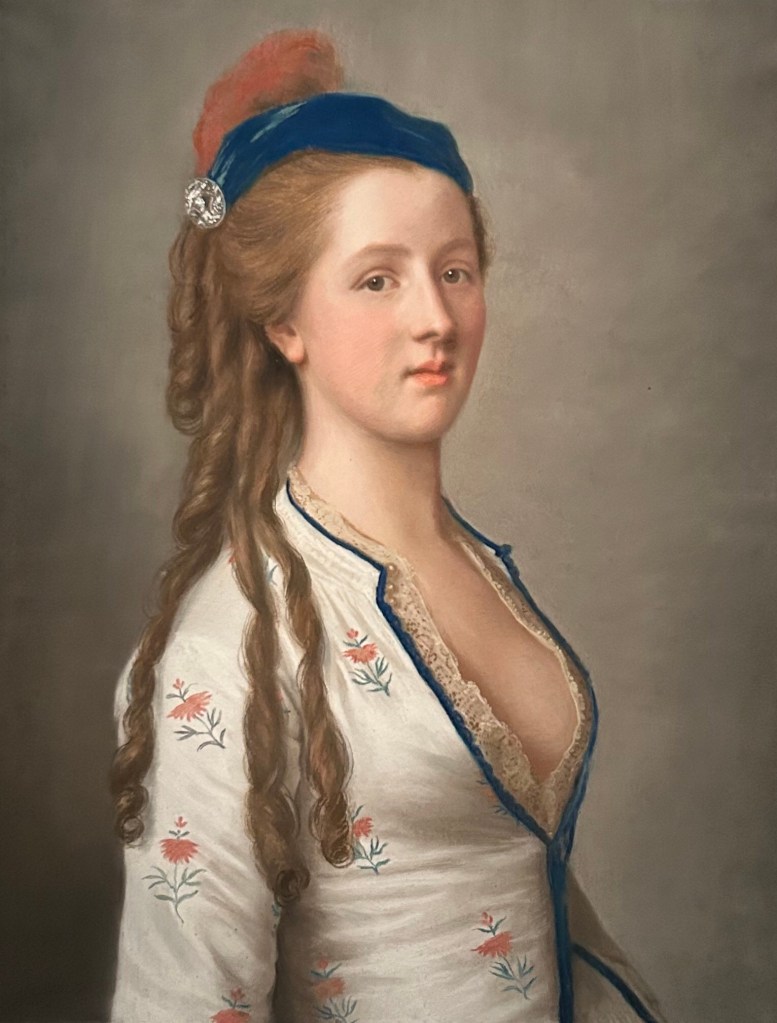
Liotard sounds like a very amusing fellow, as well as being a most accomplished artist. However, having met the love of his life, he shaved off his beard, this being a condition of the marriage. He made numerous portraits in pastel, such as the one below of Lady Anne Somerset, looking much older than her fourteen years, with her cascading locks and plunging neckline.

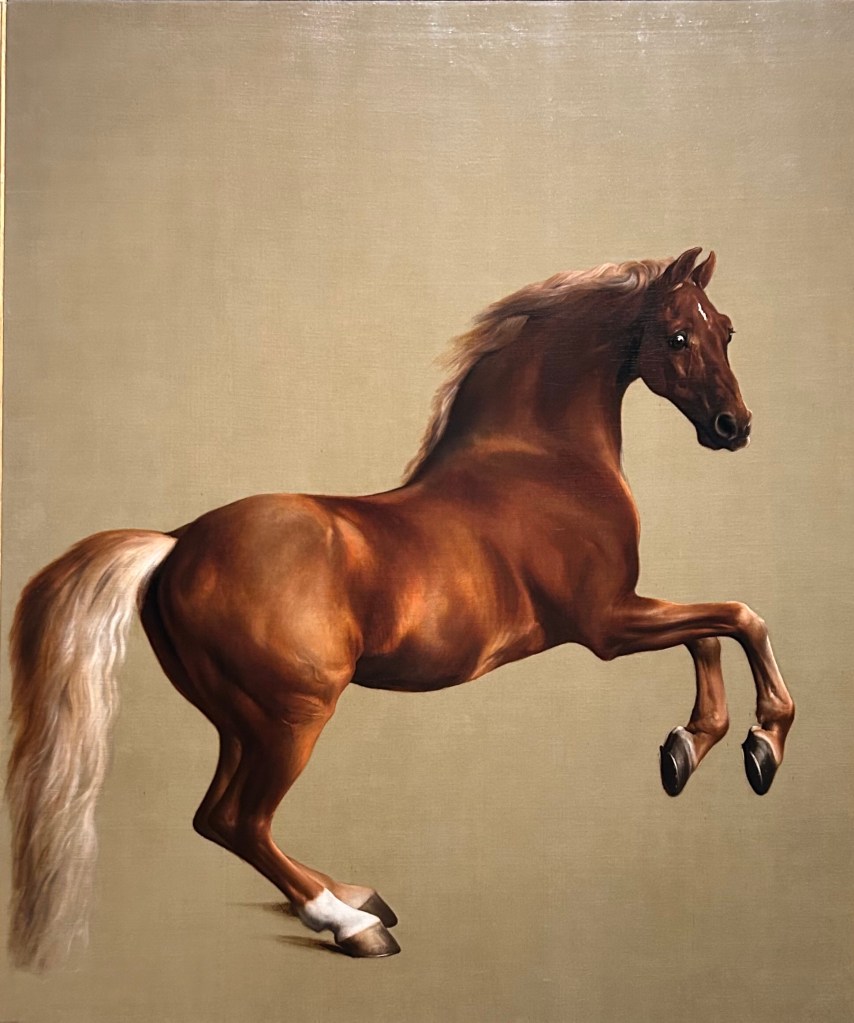
I will end this post with the portrait of a horse, the beautiful Arabian stallion Whistlejacket, by George Stubbs. One of my favourite pictures in the National Gallery.

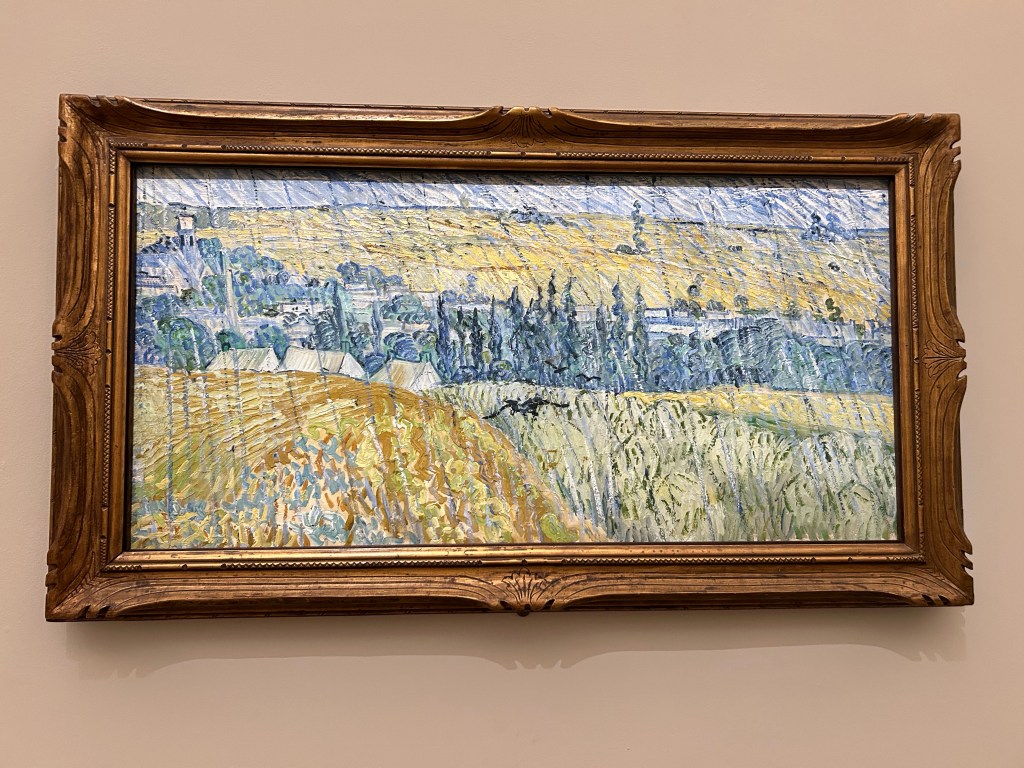
Van Gogh: the last paintings

In the last 70 days of his life, Van Gogh produced 74 paintings and 33 drawings! A huge burst of productivity before he sadly put an end to his life.

The current exhibition at the Musée d’Orsay in Paris is the first devoted to this period in his life, spent at Auvers-sur-Oise, which was the home of Dr Gachet, his friend, mentor and supporter—a man who specialized in the treatment of melancholia but was also a lover and connoisseur of art, friend to the Impressionists and a collector and amateur artist. There he could also be closer to his brother Theo, an art dealer.

From May 20 1890 to July 29th, in a frenzied artistic renewal, he painted one or two canvases per day, mostly “alla prima”, using thick pigment directly on the canvas.

If you look at the detail, you can see bits of bare canvas, as well as the boldness of the strokes and the thikness of the paint

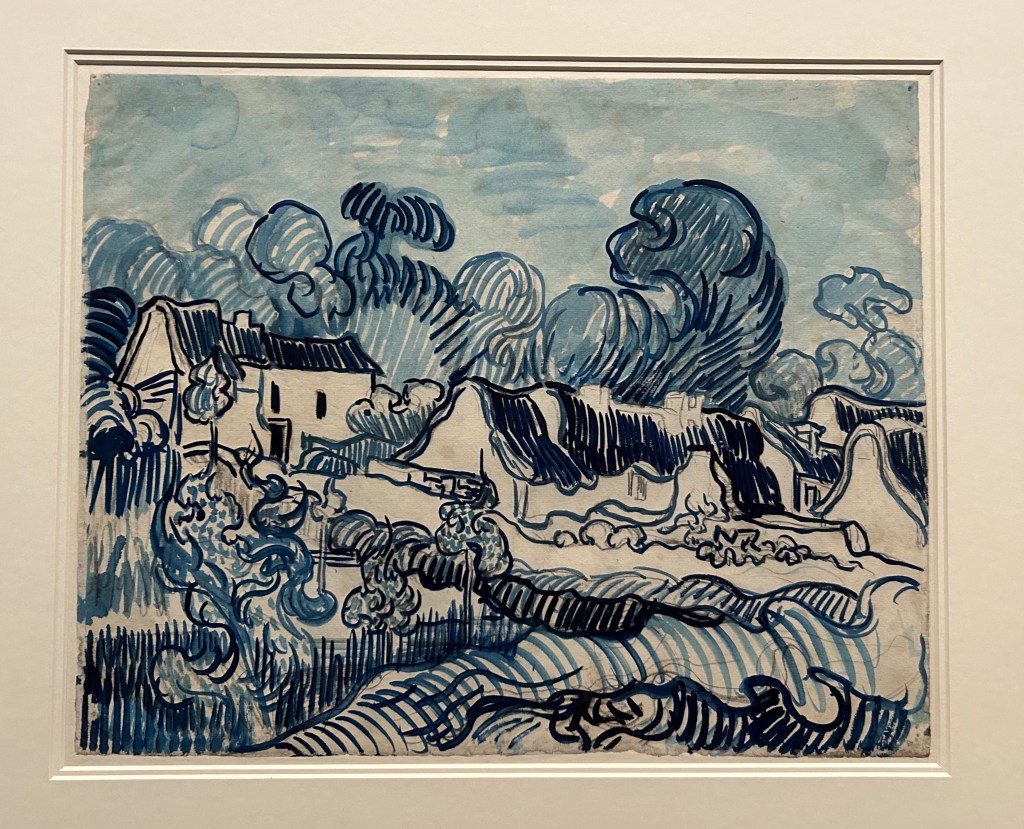
In the drawings, he interestingly mixes oil and aquarelle, and sometimes other media, such as graphite and wash.

Luminous landscapes, portraits and still lifes.

Pure colours, and sheer boldness which delivers a huge emotional impact.

Wonderful cows!

The exhibition is well worth the effort, because although not large, almost every painting is a masterpiece—the artist in full maturity and control of his expression.

The highlight, however, of a very special show, was the room with 11 paintings in the rare ‘double square’ format.

A rainy day
Roots

Autumn mood

In Greece the sea is still warm enough to swim in, but here in Normandy where we mainly live now the weather has turned, despite the steady rain being interrupted by periods of brillian sunshine. At 7.30 am it is still pitch dark; there is a chill in the air that inspires the lighting of a fire in the chimney, although the heating is not on yet.

Beach walks are dramatic

Autumn is a productive time, with a good harvest of apples and pears

The last of the tomatoes

Dahlias still thriving

The leaves have started to turn

More indoor time means more art making

Morning Window. Oil and varnish on book cover

An interior on a hardbook cover primed with gesso (instead of paper or canvas)

I was inspired by the pears to make an oil sketch on another, embossed, book cover.

In my art workshop we have been drawing shoes!

Charcoal on paper
Marker on paper

And a wet and dismal Saturday (it steadily rained all day) drove me to bake a totally unnecessary—but delicious—cake. Of course the apples and pears make lovely crumbles and pies and compote, but I was in the mood for something different. Something I’ve wanted to try for a while. It is Yottam Ottolenghi’s Lemon and Blueberry one-bowl loaf. Only I did not have a loaf tin and the blueberries were frozen, but I don’t think it made a difference.

The trick is to roll the blueberries in flour before putting in the batter—in my case, straight out of the freezer. It was an easy cake and highly recommended.

Down memory lane: the art comp

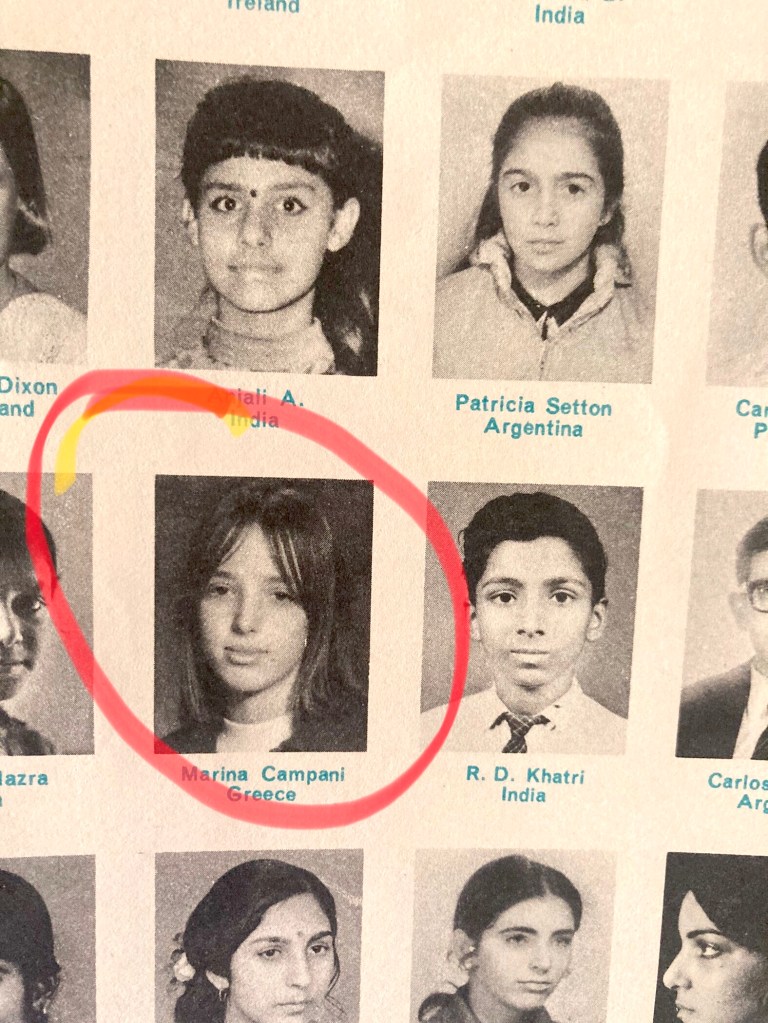
When I was fourteen, my school entered one of my paintings in a competition in India, The Shankar’s International Children’s Competition. How my—very inspiring—art teacher, Mrs Orfanou, came upon this competition, I have no idea.

I won a ‘gold medal’ in my category, for my painting of racehorses. I think it was done in gouache.

I don’t remember having actually received a real gold medal, but I must have had some kind of certificate and also a copy of the book the organisers published each year.

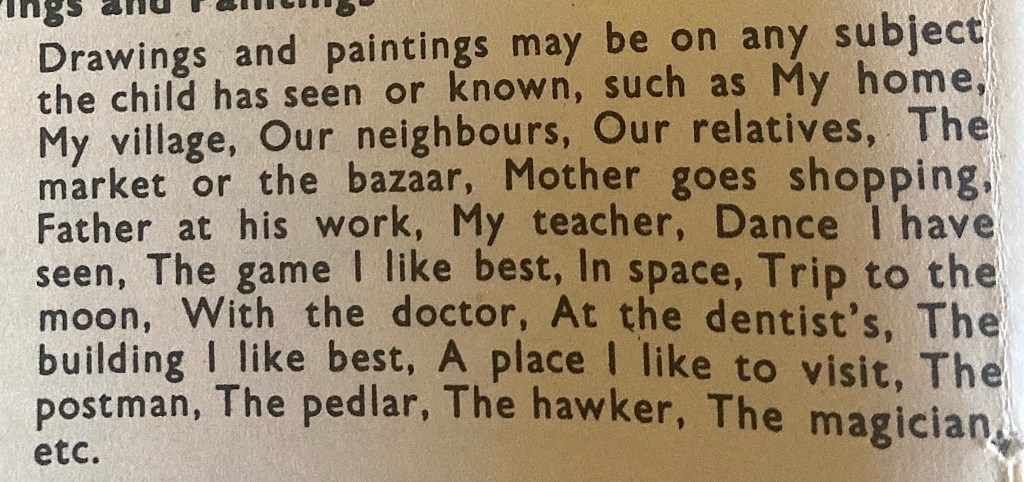
There are 17000 entries from 83 countries! There are twelve pages of photographs of the gold medalists, for every category. Along with the paintings, there are also short stories and poems.

Look how old-fashioned some of the suggested subjects are—I wonder if kids today even know what a pedlar or a hawker is.

Interestingly, I googled the competition, and it continued until 2019! Having been set up in 1949 for children in India, the next year it was opened to kids from all over the world. Sadly, I could not find anything more recent than 2019, so I assume it is no more.

In an unexpected turn of events, via the competition I acquired an Indian penpal named, if memory serves me right, Rajesh Malhotra, with whom I corresponded for a number of years. No idea what we wrote about, I suppose school and hobbies etc. We also practiced our English! (This was before the internet, and Facebook, obviously—people actually wrote letters.)

Footnote: When you decide to sort out the bookcases, the unexpected might turn up.

Summer reading

For anyone who does not already have a huge TBR pile and wants something to read for the rest of the summer—at the beach, or if it is pouring outside—here are a few recommendations from my recent forays into literature.

The Marriage Portrait, by Maggie O’Farrell, tells the story of Lucrezia, daughter of the richest man in Florence, who is married at fifteen to the Duke of Ferrara, whom she suspects of trying to kill her. The details of the period and settings are vividly imagined and portrayed and the suspenseful story only adds to the enjoyment. Based on historical facts.

Perhaps Greek friends, but not only, would enjoy The Clover House, the story of a family set in the city of Patras in Greece during two periods: in 1940 during the war, and in the present day. Complex characters and family secrets.

I am a fan of William Boyd, and The Romantic ticks all the boxes. The saga of Cashel Greville Ross is a fascinating one, and beautifully told. Something to sink into.

For lovers of thrillers, a recommendation from Ian Rankin, who is one of my favourite crime writers. All the Sinners Bleed is a chilling but unputdownable read. Great characters, suspense and endless twists.

The best seller Lessons in Chemistry, by Bonnie Garmus, lives up to its reputation. A fun, quirky story, with original characters, it would be the ideal beach read.

A Winter Chase, by Mary Kingston is for fans of Jane Austen. Set in the Regency era, it is no bodice-ripper, like many of these sort of books nowadays are, featuring bare-chested dukes clutching begowned maidens on the cover. This is an exploration of class and family values.

Fey’s War, by Catherine Bailey, tells a true, incredible story, and it makes for harrowing reading. A WWII tale of a mother whose sons are taken away by the Nazi, and her quest to find them.

For horse lovers, and not only (knowledge of horses is not a prerequisite for enjoyment), Kick the Latch, by Kathryn Scanlan, provides a fascinating view into American racing. Written like a memoir, (it is based on transcribed interviews with Sonia, a horse trainer), in short bites full of humour, it depicts the daily vicissitudes of one woman’s life at the racetrack.
I like everything by Amanda Craig, and her latest, The Three Graces, is set in Tuscany, making for perfect summer reading. An earlier book I had somehow missed, Hearts and Minds does not disappoint. It is a heartwarming and thought-provoking look into the realities in modern Britain. As always, her characters are diverse and likeable and, as usual, some we have met before, in previous books.
And finally, The Means of Escape, a collection of wonderful short stories by the incomparable Penelope Fitzgerald. Something to read again and again.

I did not write a review of each book, because it would make this post interminable, and you can easily find reviews online. My purpose was to try to tempt you. I hope you find something to like.

Yet another inferno

I don’t want to go into details about the fires raging in Greece, since these can be found in all the papers and news streams. They are too awful to contemplate, as are the fires in Canada, California, and elsewhere. Nor do I want to start a discussion of what, or who, is to blame—arson, climate change, negligence… It is too painful.

Ireelevant photo of a soothing Japanese garden

All I want is to spare a thought for the people affected, who have lost holidays, possessions, properties and sometimes their lives. And another for the people fighting those fires, with immeasurable courage. Having witnessed a few myself, I know there are few things more frightening than an out-of-control blaze. Horrible for people on the ground, but perhaps even worse for the pilots, who have to fill up with water from a raging sea (it is strong winds that drive the blazes) and then fly blind through the smoke to dump it on houses and woods.

The gardens of the Villa Ephrussi de Rothschild in the south of France

And finally a thought for nature, which will be depleted for years to come, and might never recover.

I have posted peaceful pictures because we see enough violent ones in the news.