Kazuo Ishiguro

Congratulations to Kazuo Ishiguro for winning the Nobel Prize for literature this year. A subtle, quietly assured writer, he has always been one of my favorites. I admire him for possessing the combined powers of observation and imagination, and for his evocative but minimalistic style.

Photo source: Google/Goodreads

Ishiguro was born in Nagasaki and came to England with his parents at the age of five. He’s an immigrant, in other words, but I’m sure the English are proud to claim him as their own. One of his most famous novels, The Remains of the Day (Booker Prize of 1989) is written from the point of view of a quintessentially English character, a butler. I’m not making any particular point by writing this, I’m just fascinated by the combination of cultures and the ability of someone to imagine different worlds.
Ishiguro’s latest novel, The Buried Giant, was a wonderful example of this, being set in a a sort of medieval world, an England after the departure of the Romans. The Nobel committee praised it for exploring “how memory relates to oblivion, history to the present, and fantasy to reality”. Some people found it hard going, but I was totally mesmerized.

Ishiguro was surprised by his win, to the extent that at first he thought it was a hoax. He said: “Part of me feels like an imposter and part of me feels bad that I’ve got this before other living writers. Haruki Murakami, Salman Rushdie, Margaret Atwood, Cormac McCarthy, all of them immediately came into my head and I just thought wow, this is a bit of a cheek for me to have been given this before them. And because I’m completely delusional, part of me feels like I’m too young to be winning something like this. But then I suddenly realised that I’m 62, so I am average age for this I suppose.”

Ishiguro is also a musician and one of Bob Dylan’s greatest fans, so he is a fitting successor to last year’s surprise winner.


I’m now off to buy When We Were Orphans, which for some reason I haven’t read.

Click the link below to watch a video where Ishiguro explains how his wife made him scrap his latest novel after two years’ work.

http://www.bbc.com/news/av/entertainment-arts-31693964/kazuo-ishiguro-s-wife-demanded-rewrite-on-latest-novel

A black day, a black tide

As if Greece was not plagued by enough problems, it is now the site of an unprecedented ecological disaster, following the sinking of an oil tanker near the port of Piraeus.

The Agia Zoni II sank on September 10 while anchored in calm seas and carrying 2,200 tons of fuel oil and 370 tons of marine gas oil. The ship’s cargo spilled into waters where dolphins, turtles, seals and a variety of fish and sea birds feed and live. Oil slicks have extended from the island of Salamina, near where the tanker went down, to the entire length of the Athens coast.


Image from naharnet.com


The Greek government is being accused (as usual) of a slow and inadequate response to the crisis, which it (obviously) is denying.

Meanwhile, the World Wildlife Fund has filed a lawsuit over extensive pollution to the coastline around Athens. The environmental group’s Greek branch filed the lawsuit in the port city of Piraeus against “anyone found responsible,” a common practice when a party that could be held legally accountable has not been identified formally. Mayors of affected coastal areas are also threatening to take legal action.

Environmental and wildlife organizations have been posting instructions on social media on how members of the public should handle any stricken wildlife they come across, as well as phone numbers to call for help. As for the members of said public, they have been denied one of the great benefits – or saving graces – of living in Athens, that is, access to sandy beaches with clear water. The end of this season is shot, and who knows what the long-term consequences will be? This will also affect another Athenian pleasure, eating locally caught fish in little tavernas by the sea.

This disaster comes at the end of a summer beset, as usual, by wildfires which consumed another chunk of precious forest around Greece and the islands. There again, the authorities were criticized for being more disorganized than ever. At the moment they are engaged in heaping blame on each other – the opposition has asked for the resignation of Ministers concerned, etc – while spouting various inanities, such as, ‘In a month the beaches will be cleaner than before.’ Nobody is amused or convinced by this. Greece’s greatest assets are its natural beauties, and it is very sad to watch these being destroyed.

Below is a video taken by a drone, which shows the impact on usually pristine beaches


It is still unclear why the ship sank. Its owners insist it was seaworthy and that its documents were in order.

The food conundrum

'What's for dinner?'
 Providing the answer to this simple question is getting increasingly complicated.  Even a quick glance at the daily news turns every meal into an experience fraught with uncertainty and guilt. Because almost everything turns out to be bad for the health, or the environment, or both.

Meat is high in fats and cholesterol and stuffed with antibiotics and hormones.
– Fish is full of metal deposits and also guilt-inducing due to overfishing. Sushi is particularly to blame for the depletion of the oceans. Another minus is that, according to a recent article, fish are eating minute particles of plastic – it seems that plastic smells good when mixed with seawater – and this ends up in their tissues.
Vegetables and fruit are riddled with pesticides, unless they are organic.
Dairy products are to be totally avoided, being indigestible and artery-clogging. Cheese, in particular, is maligned as being tantamount to poison.
– Sadly, almond milk, which is a good substitute for dairy, is terrible for the environment, since its production uses up huge amounts of water.
– Anything ‘white’ and ‘refined’, such as flour, pasta and rice, should be avoided like the plague. Only the wholemeal varieties will do, if that.


There is very little one can be sure about:
Wine, in small quantities, appears to be good for you – until you read the next study, which has now discovered it is bad (or is it good again?) The same goes for chocolate (black, of course) and coffee.
Eggs are terrible for cholesterol levels – BUT I just read an article that it is now considered advisable to eat up to ten a week.                                                                                              – Seafood is also high in cholesterol, with the added environmentally-unfriendly aura connected with fish (see depletion of oceans, above).
– We can’t even count on spirits to raise our spirits (pardon the awful pun). A lovely mojito, a vodka tonic, a drop of whisky – out of the question. Not should any morsel of dessert (brownies, ice cream, cake) pass our lips. I did, however, read an article that gin is good for the health.
– And salt? Is salt good or bad? Opinion differs here too.


There are also practical matters to be considered:
– Should you eat breakfast, or can you skip it? I recently read that it’s okay, even beneficial, to do the latter, although up to now we were taught to ‘breakfast like a king…’ etc. etc.
Juicing helps with getting your five-a-day, but breaks down the fibers in the fruit and veggies. So better not.

And moral ones:
I admit I’m a terrible hypocrite, since I enjoy a lamb chop as much as the next person, but would probably be a total vegetarian if I had to kill the said lamb myself. However, I feel like screaming when I hear vegetarians self-righteously proclaim they still eat butter and cheese, ‘because no animals get killed in the process.’ When I try to explain the basic facts of agriculture, they just don’t seem to get it. I have good friends who keep repeating the same argument every time food is discussed.

So, what the devil are we supposed to eat?

As far as I can see, that leaves seeds (chia, sesame) pulses (chickpeas…) and insects (which are full of protein and totally devoid of fat). The Swiss are about to stack supermarket shelves with food made from mealworms, which are the larval form of the mealworm beetle. We’re talking ‘burgers’, made by a startup called Essento, in which the mealworms are combined with vegetables, herbs and spices. Sound yummy? Their byword is ‘delicious insects.’

Apparently, fried crickets and grasshoppers are also tasty and crunchy, I suppose as a substitute for potato chips, which are notoriously bad for the health. According to the experts, insects have a high culinary potential, their production saves resources and their nutritional profile is high-quality. They are the perfect complement to a modern diet.


On the strength of the above, I have compiled a menu for a dinner party:

Drinks: Gin and tonic (gin is good for you, right? Unless a new survey comes out before the evening in question, saying the contrary). Crispy fried locusts and organic carrot sticks.

Starter: Organic quinoa with kale chips and sliced raw radishes. I actually had this made for me by a friend, and it was surprisingly tasty.

Main course: Mealworms ‘burgers’ with raw cauliflower ‘risotto’. The latter is a recipe favored by vegans, but I confess I’ve never had it – I love cauliflower, but eating it raw instead of rice – not so much.

Desert: I need to find a recipe that avoids eggs, sugar and flour – probably something made with oats and fruit and sweetened with stevia. As if life was not complicated enough…

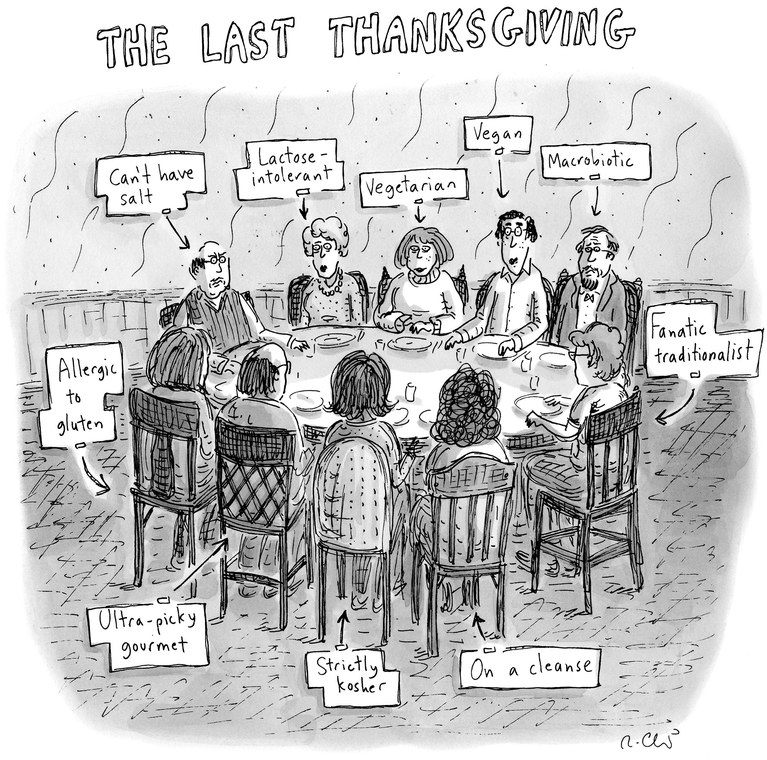
One must not forget to be extra careful because of people’s allergies to nuts, gluten or even strawberries. Thus the planning of a simple dinner has been turned into a major strategic exercise – what with reading up on the latest developments and finding the ingredients (although some might be captured in the garden?)

Perhaps the answer is to eat everything, but stop reading? Because it never ends. Today, I read an article about antibiotics. It seems doctors now are not sure which to prescribe, because of resistance and allergies. Also they disagree about whether you should finish the whole course, or stop taking them as soon as you feel better.

I rest my case.

Bon appetit, everyone!
 

An art page and a shop

The more perspicacious amongst you might have noticed an extra page in the menu bar of my blog entitled MY ART.

AthensLettersArt. My Etsy shop logo

Since I seem to be spending more and more of my time painting, I decided to add some information about this aspect of my life. It is a change in lifestyle which makes me happy. Art is fun and great therapy! As Picasso put it, Art washes away the dust of everyday life.’

Click on MY ART to find out more. I have no idea how this will develop, we shall see.

Also, bowing to popular demand (drum rolls and applause), I have set up an Etsy shop, AthensLettersArt,  for my smaller watercolors. I invite those interested to take a look.(Click here)

And that’s all for today, folks!

The Worldwide Tribe

Meet Jaz.


And Nils, her brother.


The O’Hara siblings used to work, respectively, in fashion and advertising. Then they visited the Jungle, a large refugee camp near Calais. They’d been hearing little bits about it, mostly about how it was affecting holiday makers by delaying the trains going across the English Channel.
They became interested, because their parents were already involved in the long and complicated process  needed to foster a refugee. Since it wasn’t so far from their home in Kent, they decided to go over for the day and take a look.


Two years later, they have acquired two new brothers, one of whom comes from Eritrea and the other from Afghanistan. And they have founded the Worldwide Tribe.

The first time they visited Calais, there weren’t many volunteers about yet. They were, of course, shocked by the conditions there, and by the fact that there weren’t many people helping at all. However, what made the greatest impression, was, in Nils’s words, ‘How nice and welcoming the refugees were to us. Everyone wanted to share what little they had, to feed us and make us tea.’ People were polite, smiling, and full of optimism. The siblings went home, feeling very emotional about what they’d seen, and Jaz wrote about it on her Facebook page. The post went viral. Overnight, people started sending donations, both physical and monetary. In a short amount of time, they’d gathered a lot of clothes, shoes and food, as well as money.


Jaz and Nils soon realized that in the long run they weren’t best placed for managing warehouses and dealing with the distribution of donations – others were better at it. What they felt they were good at was telling people’s stories. They started diverting donations and volunteers towards other organizations, and they created the Worldwide Tribe.
They see their organization not so much as a charity, but as a platform for people to share their stories.


Jaz concentrates on content creation and writing, setting up talks in schools and universities and organizing different events. Both siblings manage the production of documentaries, of which the latest is the film DIASPORA.


Meanwhile, Nils and two friends have been setting up WiFi in camps. This is very important to refugees as it is the only way they can keep in contact with what’s left of their families, and also get information about their status, prospects, etc. This activity has resulted in the creation of a product which has generated commercial interest, which they believe has the scope to get bigger, and maybe result in the generation of funds towards their projects.


I was curious about the two boys the O’Hara parents are fostering. One, Mez, comes from Eritrea, which he fled because his only choice was to spend his life in the Army, where his brother already is. Having arrived in England aged 14 speaking not a word of English, he has now done all his GCSEs and is heading to college. He still has family in Eritrea and keeps in touch with them. In the beginning things were difficult because the cultural differences are huge but he managed to adapt quite quickly and has done ‘incredibly well’, according to Nils.

The other boy, Arash, is Afghani. He saw some of his family killed before his eyes, has lost all contact with them and doesn’t know if his mother is still alive. Speaking to Nils, I found it hard to imagine how difficult it must have been for this family to open their home – and how ultimately rewarding. I asked Nils how the two got on and he laughed and said: ‘They get on OK – but they are classic teenage boys.’


The O’Haras’ vision for the Worldwide Tribe is to inspire as many people as possible to share and contribute in any way they can, whether by volunteering, sharing a post or just talking about things. They hope this will create change from the ground up, while pointing out that their platform is not at all political.

Nils hopes the WiFi project will take off – if they manage to commercialise the product, it will earn money they can then plough back into the Worldwide Tribe, to help more people across Europe and the Middle East.

I asked Nils if it was hard to keep positive at all times. His answer was that they do see a lot of misery and it’s difficult not to take it home. What helps them is that although they spend a lot of time in the camps, in Greece, Turkey and Lebanon, they are not there all the time, so they manage to get some distance. Of course, they have seen bad things, and violence, but they have mostly been inspired by the positivity and humanity they encounter. They feel they’ve learned a lot and are awed by the human spirit, and the incredible stories they’ve heard. They are amazed by how people in such difficult circumstances keep trying and finding resources, and they reckon the experience has generally been far more positive than negative.


You should go on their site, and read some of the incredible stories there.  Such as the one about Noor, who’s in a wheelchair but is determined to become a judge, or Besh, who, with his four younger brothers, searched practically every refugee camp in Europe to find his mother, and then miraculously located her in Dunkirk. You can also follow Jaz on Instagram or Facebook.

Young people spreading good will – perhaps it will offset some of those intent on spreading havoc…

Trying to keep up

Well, it’s been a busy week, but I was determined not to fall behind on the World Watercolor Month challenge, so I mostly resorted to quick sketches at bedtime.

Day 8: Seagulls.  I seem to be inspired by birds lately, and it is the summer and beach weather. After making a quick and splashy background, I drew the seagulls in ink and added oil pastel for highlights.


Day 9: Mother and child. I have to force myself to draw people (not my strongest point, so I need the practice).  I had a little more time tonigh, and I found an appealing photo as a reference – it would have been better drawn from life, but no models available (sigh…)


Day 10: Garden produce. I’d gone out to pick some lettuce, onions and cauliflower, so I just dumped them on the kitchen table (I used a tea towel not to get dirt onto the table, and that proved quite a useful addition to the sketch!)


.

Day 11: Three bowls of fruit and a tomato. I do love summer fruit. These are peaches, yellow cherries and red currants. What could have been more inspiring than to make a sketch of them in a large Moleskine journal.


Day 12: Roses. Really no time tonight, so I just sloshed some paint around and doodled on top. It was a good way to test some new Daniel Smith watercolors, too (Quinacridone Rose, New Gamboge and Deep Sap Green).


Meanwhile, I’ve been putting the finishing touches on my bird project, ‘Sandhill Cranes In Flight’. This is watercolor, oil crayon and gold leaf on two large sheets of Arches paper (100x60cm). It has now been packed off to the recipient, who I hope will be happy with it. I’m a rotten photographer, only use my iPhone and couldn’t get the light right, but you get the idea (I blue-tacked it to the wall to take the picture, but the left side was in shadow).


Day 13: Three-panel study of floral painting. This is my new project, so I started making some studies to help me decide how to proceed. It will be based on plein air sketches of irises, tulips and hyacinths I made when they were in flower in the garden. Always gives a better result than painting from photos.


Day 14: Six-panel study. Another version, using six pieces of paper instead of three. I probable prefer the first one.


Day 15: Chickens. Really got back late today, so when I came upon a piece of paper on which I’d been testing color mixes and some flower stencils, I just added a rooster and a hen on top.


That’s the week done, phew!

Ode to A Market

Who doesn’t love a market? Debi has taken some fabulous photos of her local Greek “laiki”, which I am re-blogging for your enjoyment.

Debi @ An Evolving Life's avatarAn Evolving Life

No poetry could do my local market – laiki – justice, or at least the kind of poetry that I might come up with. That said, I am sure that many others who are gifted wordsmiths could create a beautiful ode. In fact, Michael Llwellyn-Smith, in his 2004 travel book Athens, in Signal Book’s ‘Imagined Cities’ series, has eloquently described (albeit in prose) our Friday laiki:

It is one of the most vivid displays of everyday life in the city, with its regularity, the personal encounters with neighbours, the cheerful noise of the vendors crying their wares, the quiet purpose of the shoppers stocking their trolleys and baskets.

What I can offer is a photo essay from images I’ve taken in the market over the past year. The great majority of the photographs I have taken record the seasonal produce, but every once in a while, people catch…

View original post 413 more words

Broiling and filthy

While we are awaiting a major heatwave in Greece, we are surrounded by piles of rubbish, since garbage collectors have decided to go on strike. In fact, they have been on strike for some time and, following days of protests, rallies, occupation of public car parks and camping outside city halls, yesterday they voted to carry on, unhappy with the terms of their employment. The government, as usual, is dithering, wavering between the country’s needs and the demands from the Troika, while every decision taken is delayed by the usual bureaucratic tape.

As neighborhoods are being asphyxiated by piles of bin bags, some cities – such as Thessaloniki, which boasts a very active mayor – are looking to hire private firms to do the job, something which is not looked upon kindly by the syndicates. The impact on tourism is incalculable.

A street in the town of Tripoli (source: Google)

Meanwhile, citizens already suffering from heatstroke and inhalation of toxic fumes are to be dealt another major blow: taxes for employees, farmers, pensioners and the self-employed are due another whopping rise, since they will now be calculated in a different, ‘new’ way. Speaking of which, the government has taken to inventing creatively named ways of fleecing the population – such as the ‘claw-back’ and the ‘solidarity tax’. I leave it to your imagination to make out their meaning.

This is the result of demands for more and more money from our lenders, which will go to paying back what we owe. But the well is running dry, and the economy, instead of being revived, is being driven underground. I know a lot of people who already use barter – the dentist putting fillings in the plumber’s teeth in return for having the shower fixed, and so on. Back to basics, I suppose…

Meteora Greece

I know I’ve written about the Meteora before (https://athensletters.com/2015/10/31/road-trip-to-meteora/) but I find this place magical, and enjoyed reading a post on the blog Kritsa, at the heart of it all, written by Yvonne, who shares her time between the U.K. and Crete. Take a look, it might inspire you to visit!

kritsayvonne's avatarKritsa, at the heart of it all

In early May we set off on a road trip around central Greece…what an adventure.

RICOH IMAGING

We drove aboard the overnight Minoan car ferry from Heraklion, Crete to Pireaus, the main port near Athens. Bright and early next morning  found us zooming up the excellent motorway on a four hour trip to odd peaks named Meteora. Our aim was to see the monasteries that ‘balance’ between heaven and earth.  For the Greek Orthodox faith, this Holy area is second only to Mount Athos.

After checking in to the Kastraki Hotel for two nights ‘Wow’ was a common term.

I’d pre booked asunset tour and it proved to be an excellent way to see many of the monasteries perched atop the peaks.  Hard to believe the top of the rocky towers were once the bottom of a lake. Close up you can see they’re an aggregate of mud and rocks.

RICOH IMAGINGRICOH IMAGINGRICOH IMAGINGDay Two – Meteora Hike

After a breakfast we set…

View original post 228 more words

The upside

On Saturday, just two days after the ‘monsoon’, the day dawned bright and beautiful. Fishing boats bobbed about in the port of Rafina, near Athens,


overlooked by a picturesque chapel, white against a pure blue sky.


Motor boats and yatchs waited for their owners to take them out.


A short boat ride away is the large and beautiful island of Euboea. Euboea (or Evia, as we call it), is the second largest island in area and population in Greece, after Crete, and separated from the mainland by the narrow Euripus straight. It has stunning mountains as well as lovely beaches.


Here we indulged in a freezing but invigorating swim in the turquoise waters.


Then lunch in a nearby taverna called Platanos,


Where the tables were set under the plane trees.


The owner had caught this fish (a type of grouper) himself that very morning. He’s a keen fisherman and regaled us with the story of his other catch, which weighed 14 kilos! Ours was preceded by his deliciously crispy cheese pies, salad with tomatoes and feta cheese, was accompanied by hand-cut fries, and followed by yoghurt drizzled with honey.


The port of Rafina is around 30′ from the centre of Athens. For the boatless, there is a regular ferry-boat and this taverna, remote as it looks on the photos, is a few minutes away from landing.

An easily accessible day out and one of many such options for escape from Athens. It beats being downtown where two out of every three shops are shut. I suppose that’s one of the reasons why we can bear to stick it out.  (Sigh…)