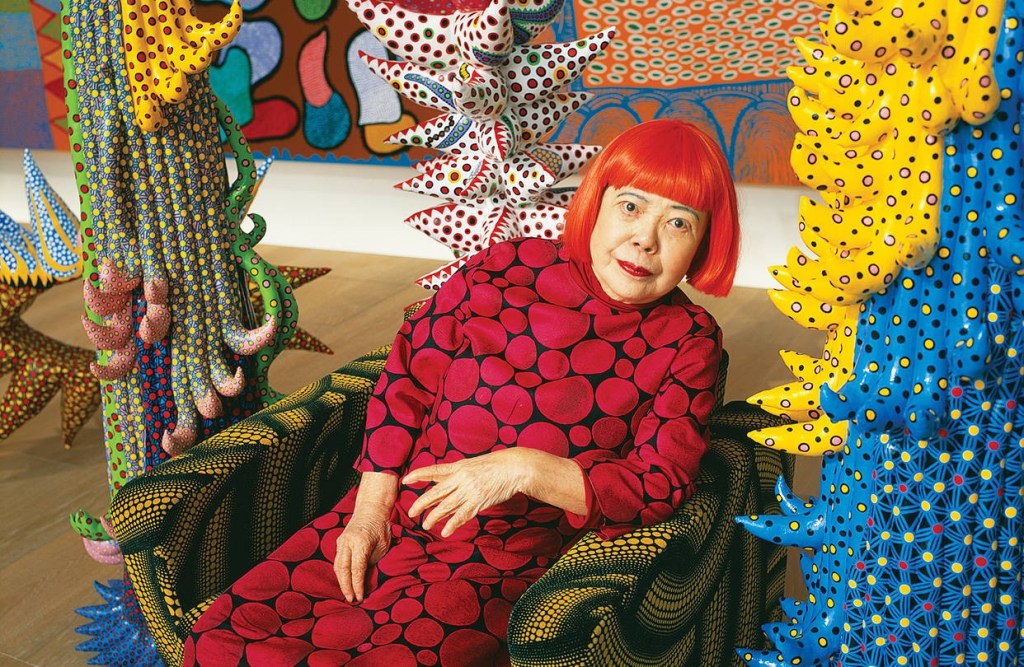
Regular readers will remember I have written about the artist Yayoi Kusama, who has died aged 97 in Tokyo, a few times: Here, Here, Here, and Here. I had actually forgotten how many times before looking them up.
I thought she was intriguing both as an artist and as a personality, although I suspect that she was exploited by the art world in her old age… Still, I wanted to honour her passing.
Today I came upon this article in the New York Times which I think is interesting, giving a concise view of her work.
I did not want to write an obituary of Dolly Parton, a much-loved superstar and top-selling singer, songwriter and entrepreneur, who has died aged 80. The news are full of all the memories and minutiae of her life.
I just wanted to mention a detail that perhaps has escaped people’s notice.
Dolly Parton rose from poverty to fame and never forgot her roots. Her father could not read or write, so—a year before Oprah started her book club—she set up her Imagination Library, a global program that mails free, age-appropriate books to children from birth to age 5. They can receive 60 books by the time they start kindergarten, regardless of their family’s income level.
This program began in her East Tennessee home county with The LittleEngine that Could and over time went global, sending nearly 300 million books to young readers in the U.S., Canada, the U.K., Ireland, and Australia. It earned Parton an honorary lifetime membership in the American Library Association a few years ago.
“I will always love you” was one or her well-known ballads—and for what you did for books, and for children’s libraries, we will always love you, Dolly Parton.
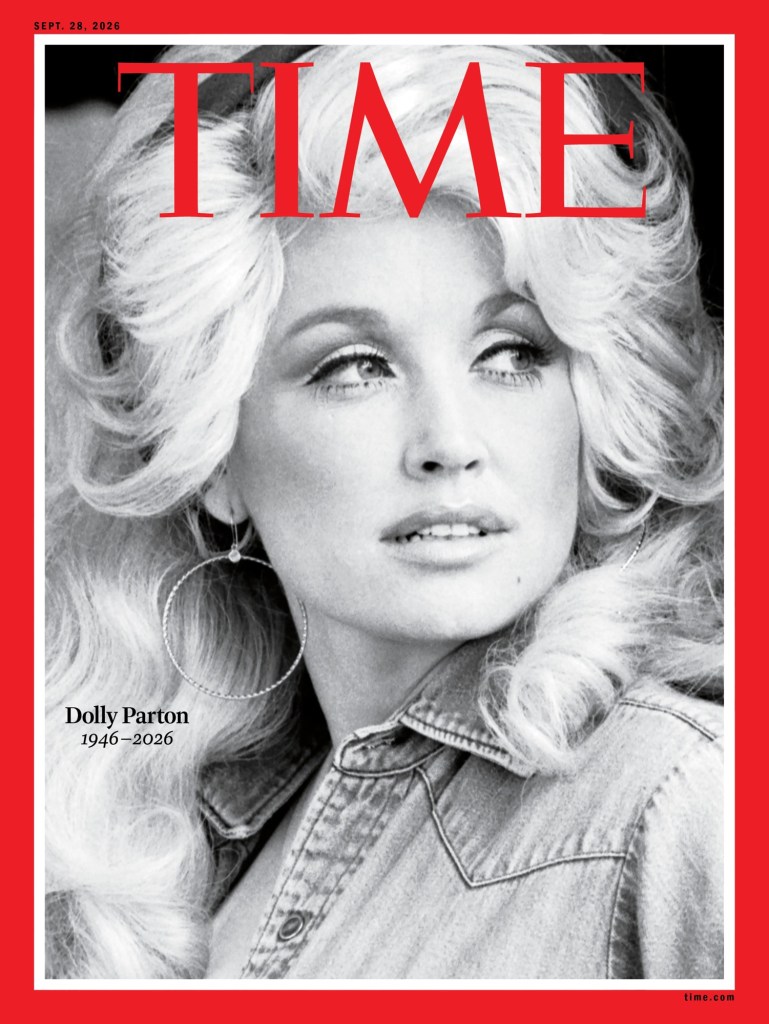
She made the covers yet again ❤️
And for a little amusing epilogue:
Dolly Parton famously said her motto was: “Leave no rhinestone unturned.” Which reminded me of her 1984 romantic comedy Rhinestone, in which she starred with Sylvester Stallone. This was an absolutely hilarious movie where her character bets that she can turn the next person she sees into a Nashville-style crooner. Unfortunately, the next person she sees is cocky New York City cabbie Nick (Sylvester Stallone), who can’t sing a note. Here’s a trailer:
Another post, another obituary. But this time it is a celebration of a life well lived—David Hockney did the thing he loved to do most, paint, to the very end. Not a bad way to go. He was 88, and his health had been failing for some time.
David Hockney was born in 1939 into a working-class family in the small industrial city of Bradford, Yorkshire, one of five children. His father was a self-employed restorer of baby carriages and a crusader against nuclear arms. His mother, Laura, to whom he was especially close, was a frequent subject of his portraits. David Hockney maintained close ties to his parents, returning yearly to spend Christmas with them until the end of their lives.
Conservative in his art, since it was figurative and narrative in an era when abstraction was favoured, he was nevertheless avant-garde as one of the first widely popular artists of his time to make work with undisguised gay content.
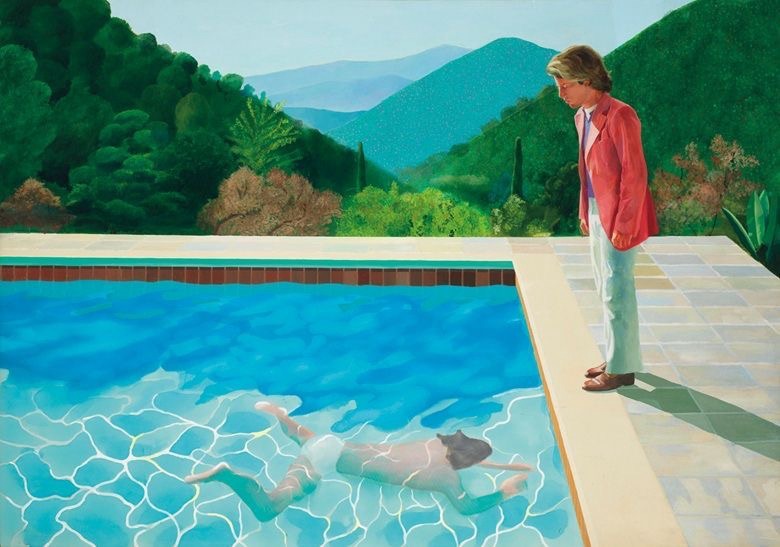
Hockney travelled widely in search of inspiration and spent many years in America, in New York and especially Los Angeles, where he made a lot of his best-known paintings, many including images of swimming pools. These identified him as the quintessential artist of Southern California’s nouveau riche leisure life.
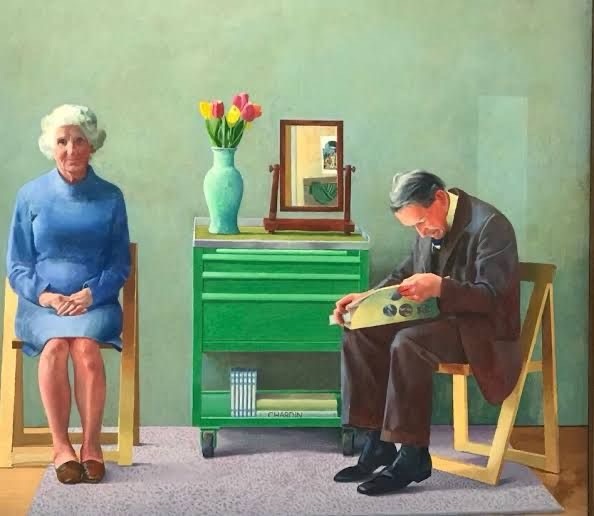
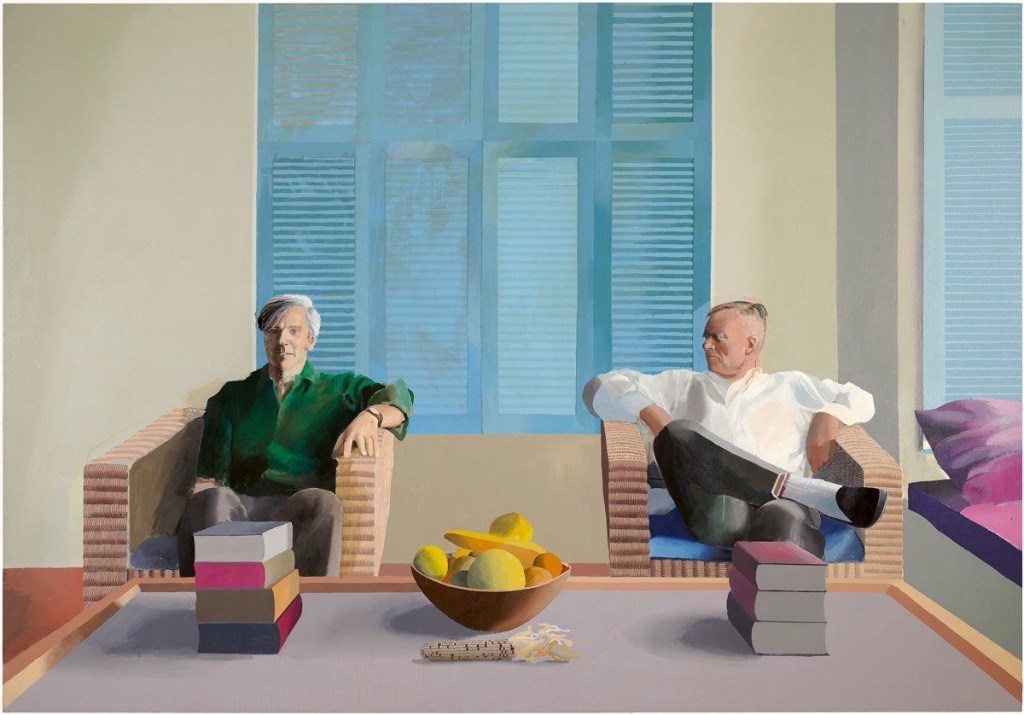
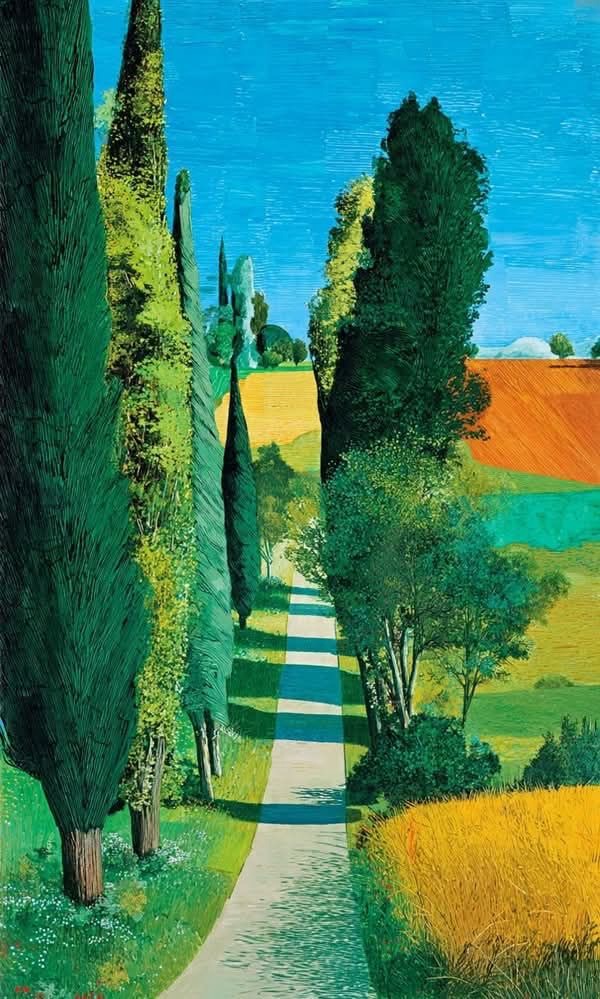
He painted the people around him, his family, lovers and friends, and made a series of evocative double portraits (the one above is a particularly favourite of mine.) He also painted vivid landscapes, some huge, filled with light and colour.
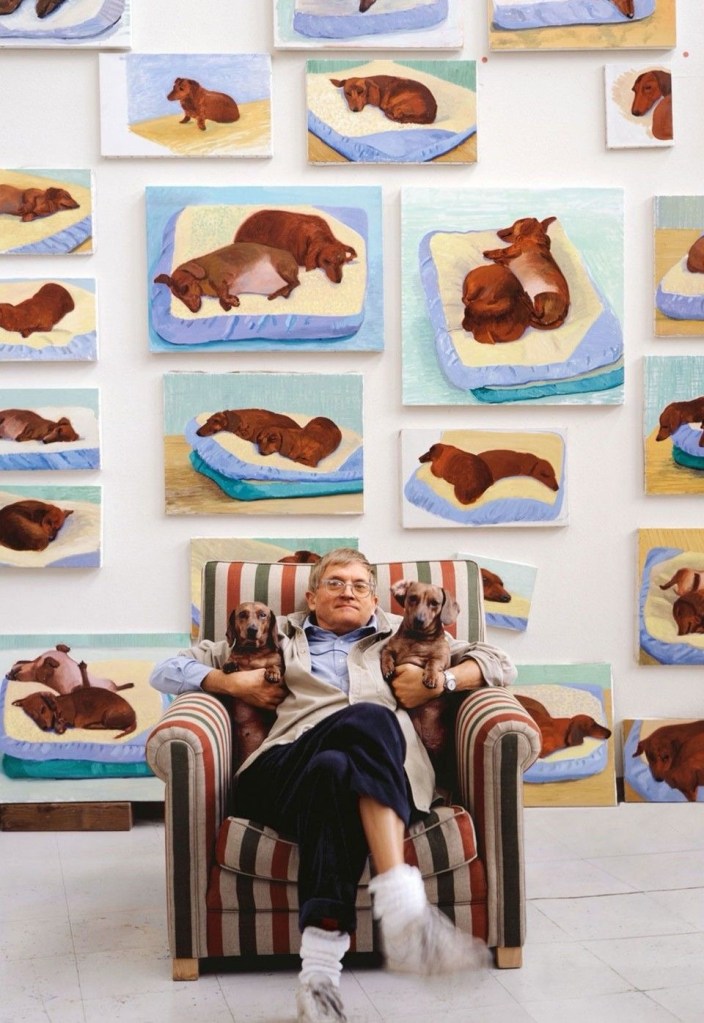
Hockney was a visually striking man, with a high-color wardrobe of plaid suits, striped soccer jerseys and mismatched colored socks, owlish glasses and bleached blond hair. A gregarious personality, he surrounded himself with people and made many friends, until late in life, when deafness isolated him slightly. He compensated by surrounding himself with his beloved pet dachshunds.
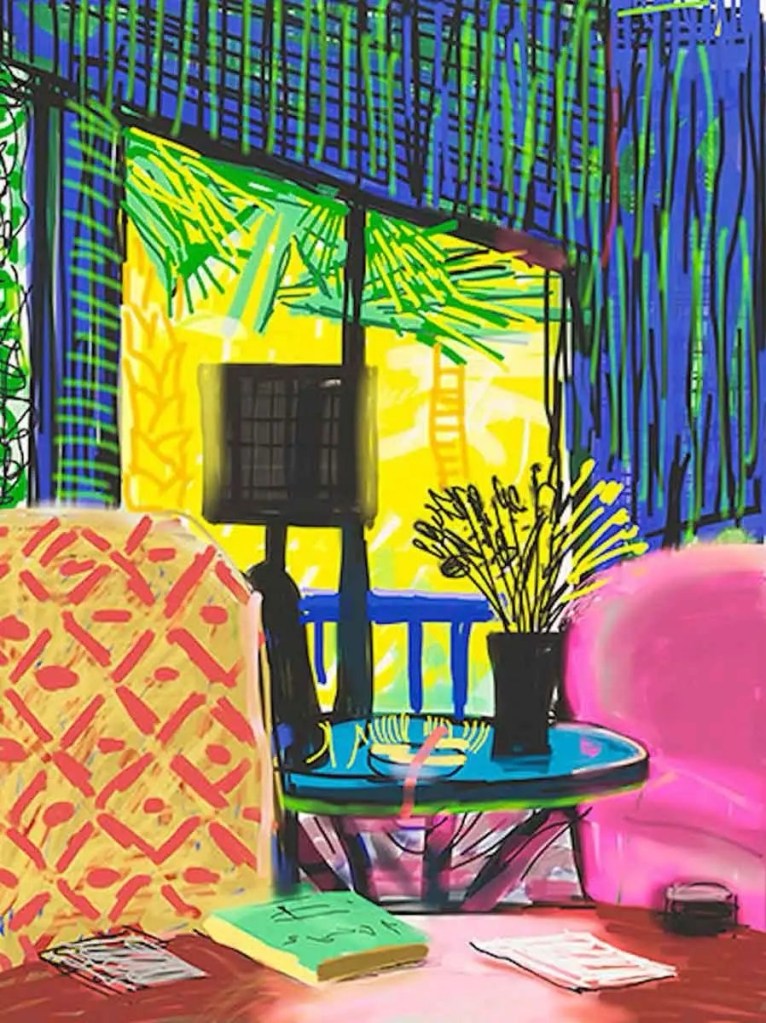
Made on iPad with Procreate
Later on he used technology in his art, making collages of photographs and iPad art. In fact during his long career he tried his hand at many different techniques, such as theatre sets and stained glass windows. He loved to experiment with various methods. Nevertheless, his appetite for technology was unexpected because, as The Washington Post put it: “There is no living art star less in need of a machine… Hockney can draw water. Hockney can draw smog. He can draw the bleaching sunlight… in Los Angeles. He can draw the chilling damp of Bradford… He can draw the glow of friendship.”
The photo is from an invitation to an exhibition at the Museum Boijmans Van Beuningen in Rottredam, 1995.