An Intervention

Artist duo Elmgreen&Dragset were invited to exhibit their work in the iconic sculpture gallery of the Musée d’Orsay.

They called this installation, consisting of a number of boyish figures engaged in incongruous—in the context—pursuits, L’Addition.

Michael Elmgreen (born 1961 in Copenhagen, Denmark) and Ingar Dragset (born 1969 in Trodheim, Norway) have worked together as an artist duo since 1995, exploring the relationship between art, architecture and design.

Elmgreen&Dragset live and work in Berlin. They are known for art work that has wit and subversive humour, and also addresses social and cultural concern. Their work is too varied and prolific to be described in a short post, but anyone interested can look them up on Wikipedia—and they are, indeed, interesting.

For the first time in its history, the Musée d’Orsay invited someone to intervene in the museum’s permanent display of 19th century sculpture, which has remained the same for nearly 40 years.

As quoted in the museum’s site: In a trans-historical encounter between past and present, L’Addition highlights themes of evolving masculinities, solitude, and the magic of everyday situations. There is a certain beauty to be found in each of the fleeting moments captured in the works, whether it is in the pause before jumping from a diving board, the split second before a drone is sent off from a child’s hand, or a glimpse through the lens of a camera.

The figures are made of bronze, stainless steel and laquer. Boys waiting to dive, taking pictures from the mezzanine, setting off drones or just lounging upside down on the ceiling. It was all pretty cool, and an extra treat combined with the Caillebotte exhibition.

Gustave Caillebotte at the Musée d’Orsay

Amongst the lesser-known of the Impressionists, for the simple reason he was wealthy and did not need to sell his paintings in order to live, Gustave Caillebotte (1848-1894) is nevertheless a most interesting artist, because he had a unique take on things, using perspective and composition in original ways. He was very ‘modern’ for his time as well as more realistic in his technique than some of the others.

A lawyer and engineer, he fought in the Franco-Prussian war and upon his return frequented the Académie des Beaux Arts, as well as befriending several artists. The first painting he exhibited, of labourers working on a wooden floor, was criticised as “vulgar” (sweaty men doing a menial job) and rejected by the Salon of 1875. It is a masterpiece, if only for the light and perspective.

Rabatteurs de parquet, 1876 (détail)

Caillebotte painted many domestic scenes, depicting his family and friends in everyday pursuits.

A beautiful pastel, which does not really show to advantage in a photo

I love the composition in this painting, the frame of the portrait replicated in the chair’s back, the diagonal made by the blue clothes…

He also loved sport and painted people rowing or sailing at the family’s Yerres estate. His technique of cropping or zooming in is original and gives a lot of movement to his scenes.

If I had painted this, I don’t think I would have thought to chop off the front of the first canoe, which is just sliding out of the picture.

In this view the boats are coming towards us

And here, seen from the back.

I love this gentleman, who is not rowing for sport, only taking himself on a little jaunt in his city clothes.

Caillebotte also did many urban paintings, some from an elevated perspective, such as the one below.

His paintings of Paris give off a very special flavour of the city.

Two of the artist’s friends looking out towards the Boulevard Haussmann in this painting entitled Balcon (circa 1880)

Le pont de l’Europe (1877)

He also made realistic studies of the human body and his paintings of males nudes were considered revolutionary, depicting ‘real’ men in domestic settings, instead of heroes in allegories.

Homme au bain, 1884 (note the wet footprints on the floor!)

Caillebotte used his wealth to support many of his fellow artists, notably Renoir—who was a close friend—Monet and Pissarro, amongst others. He died young, at the age of 45, of pulmonary congestion. He left behind an impressive body of work and bequeathed a large and varied collection—he had acquired many works from his fellow artists—to the French government. Here he is below, in one of those funny hats they all wore to row on the river. He looks like a jolly good sort.

Self portrait in a summer hat (circa 1873)

I was very lucky to visit the exhibition before the crows swarmed in, with a friend who is a Friend of the museum and holder of a card allowing early entry. A most impressive artist.

A wonderful collection

In 2004, the descendants of the Senn family made a donation of 205 pieces of art to the MuMa Museum in Le Havre. The collection, of mostly Impressionist and Fauve artists, was amassed by Olivier Senn and further embellished by members of his family. It includes works by such icons as Delacroix, Boudin, Monet, Renoir, De Chirico, De Staël and others. On the 20th anniversary of this major donation, the museum curated a major exhibition of the works.

Edgar Degas, pencil on paper

Born in Le Havre in 1864, Olivier Senn studied law and, after marrying, joined his father-in-law’s cotton business. Once he’d made his fortune, he started buying art. The Senns and their descendants and relatives by marriage were all art and music lovers, as well as generous donors.

Yesterday’s vernissage of the exhibition drew a large and very appreciative crowd, which thankfully spread out around the museum rooms, making it pleasant to wander about, admiring the works. The collection was too large to describe in full, so I will linger over some particular favourites, a set of lovely pencil drawings by Edgar Degas.

Degas, circa 1859-1861.
This drawing, along with the one above and several others, were studies for a large oil painting titled Alexandre et Bucéphale

Another interesting work, probably in pastel, is the study below, for a painting called Semiramis building Babylon

Further little treasures among the works on paper were the small charcoal studies below, by Henri-Edmond Cross. A lesson in conveying much with but a few simple strokes.

Here’s a link for anyone who would like to see more:

https://www.muma-lehavre.fr/fr/expositions/les-senn-collectionneurs-et-mecenes

And the winner is…

Orbital, the book about six astronauts in space I recently reviewed, has won the Booker Prize.

I admit I have not read the other books on the short list—or rather, I am in the process of reading Rachel Kusk’s Creation Lake. I like her writing, and loved The Mars Room, but I’m finding this one slow going. Some of the others are tempting, though, and I will get to them eventually.

Photo: bdnews24.com

Nevertheless, even though I lack comparison, I think this book is a very worthy winner, being at once original, lovely to read and beautiful in every way.

Samantha Harvey nearly gave up writing the book at some point, because she felt like an impostor, never having been in space. But then she took it up again, during the pandemic, and watched hours and hours of streaming video from the International Space Station while writing. Thus she could observe Earth from space, actually completing whole orbits and describing what she saw. The result is nothing short of miraculous.

In her acceptance speech, Harvey said she wanted to dedicate the prize “to everybody who does speak for and not against the Earth; for and not against the dignity of other humans, other life; and all the humans who speak for and call for and work for peace.”

Harvey, 49, is the author of four previous novels, including “The Wilderness,” about a man with Alzheimer’s, which was longlisted for the 2009 Booker Prize, and 2018’s “The Western Wind,” about the mysterious death of a village’s wealthiest resident in medieval England. She also wrote “The Shapeless Unease: A Year of Not Sleeping,” a 2020 memoir about her struggles with insomnia.I’m tempted to try one or two.

Of course, a few people thought it a good idea to publish articles panning Orbital in comparison to the other books on the short list. Although of course everyone is entitled to their opinion—and all art appreciation is subjective—I thought it was in poor taste to do so today. It smacks of sour grapes. Let the woman enjoy her day of glory—they are hard enough to come by. So, congratulations, Samantha Harvey!

Orbital: a book review

A day in the life of six astronauts, bobbing around inside the International Space Station which is in orbit around earth. The spaceship orbits the Earth sixteen times in a day, during which the astronauts witness sixteen sunrises and sunsets. In fact, as Samantha Harvey describes it in this luminous novel, “the whipcrack of morning arrives every ninety minutes” and the sun is “up-down-up-down like a mechanical toy”.

The astronauts clock up time on the treadmill in order to preserve their body mass and go about their numerous chores: laboratory tasks, monitoring microbes or the growth of cabbages, tending to lab mice, endless cleaning. But they never tire of floating over to the observation windows, and their awe of our planet never dims.

There’s the first dumbfounding view of earth, a hunk of tourmaline, no a cantaloupe, an eye, lilac orange almond mauve white magenta bruised textured shellac-ed splendour.

Russian, British, Japanese, American, Italian: they each have their individual pasts and preoccupations, their different countries and cultures, but together they form a sort of whole, collective being. The two Russians go off to their “decrepit Soviet bunker”, but geopolitical divisions are hard to maintain when moving at 17,000 miles an hour. 

It is a strange, confusing existence which makes them at times question everything—is it day or night? Which era, year, decade are we in?

In order to avoid total confusion, a strict artificial order is imposed. Earth time (Earth time at take-off point?) is kept. Bedtimes, rising times, mealtimes—unconnected to the dawns and sundowns succeeding each other. Every continent, every mountain and river and desert and city, comes around again and again.

The past comes, the future, the past, the future. It’s always now, it’s never now.

The astronauts float around the gravity-free module at will. They remember their past lives, think of their loved ones, consider the future. One of them makes lists to keep things in perspective. They hate being so far from home and yet there is nowhere they’d rather be. They’re obsessed with space. The details of this unnatural existence are faithfully recorded:

When you enter your spacesuit and try to habituate yourself to the difficulty moving, the painful chafing, the unscratchable itches that might persist for hours, to the disconnection, the sensation of being buried inside something you cannot get out of, of being inside a coffin, then you think only of your next breath, which must be shallow so as not to use too much oxygen, but not too shallow, and even the breath after that is of no concern, only this one.

This image is one of the most widely known photographs of Earth, taken by the crew of the final Apollo mission (Apollo 17), as the the crew made its way to the Moon on Dec. 17, 1972. NASA dubbed this photo the ‘Blue Marble.’

And meanwhile, on earth, things are going on: wars, cities sending their innumerable lights into space, an approaching tornado. Some descriptions are terrifying:

Every swirling neon or red algal bloom in the polluted, warming, overfished Atlantic is crafted in large part by the hand of politics and human choices. Every retreating or retreated or disintegrating glacier, every granite shoulder of every mountain laid newly bare by snow that has never before melted, every scorched and blazing forest or bush, every shrinking ice sheet, every burning oil spill, the discolouration of a Mexican reservoir which signals the invasion of water hyacinths feeding on untreated sewage, a distorted flood-bulged river in Sudan or Pakistan or Bangladesh or North Dakota, or the prolonged pinking of evaporated lakes, or the Gran Chaco’s brown seepage of cattle ranch where once was rainforest, the expanding green-blue geometries of evaporation ponds where lithium is mined from the brine, or Tunisian salt flats in cloisonné pink, or the altered contour of a coastline where sea is reclaimed metre by painstaking metre and turned into land to house more and more people, or the altered contour of a coastline where land is reclaimed metre by metre by a sea that doesn’t care that there are more and more people in need of land, or a vanishing mangrove forest in Mumbai, or the hundreds of acres of greenhouses which make the entire southern tip of Spain reflective in the sun.

We are given numbers too large to fit into most human brains, condensed into readability.

Some eighty million miles distant the sun is roaring.

Shortlisted for the Booker Prize, Harvey’s book is a writing tour de force. Wonderfully imaginative, full of subtle humour and descriptions overflowing with colour and movement. If reading a book is opening a door into another world, this novel is a supreme example of it.

Grand Marin

I came upon this 2023 film by chance (the English title is Woman at Sea), but I’ve watched it twice, which is something I almost never do. I wanted my husband to see it—he loved it as well, and I appreciated details I had not noticed the first time. It is an underrated gem of a movie.

Photo: Google

Based on a book by Catherine Poulain, is a quiet movie, with almost no plot or dialogue, but don’t let this put you off. You become totally immersed in a world that is as strange to outsiders as it is real. The directorial debut of Dinara Drukarova, who also stars, it is the story of a young woman seeking to escape her past by looking for a job on a fishing vessel in Iceland.
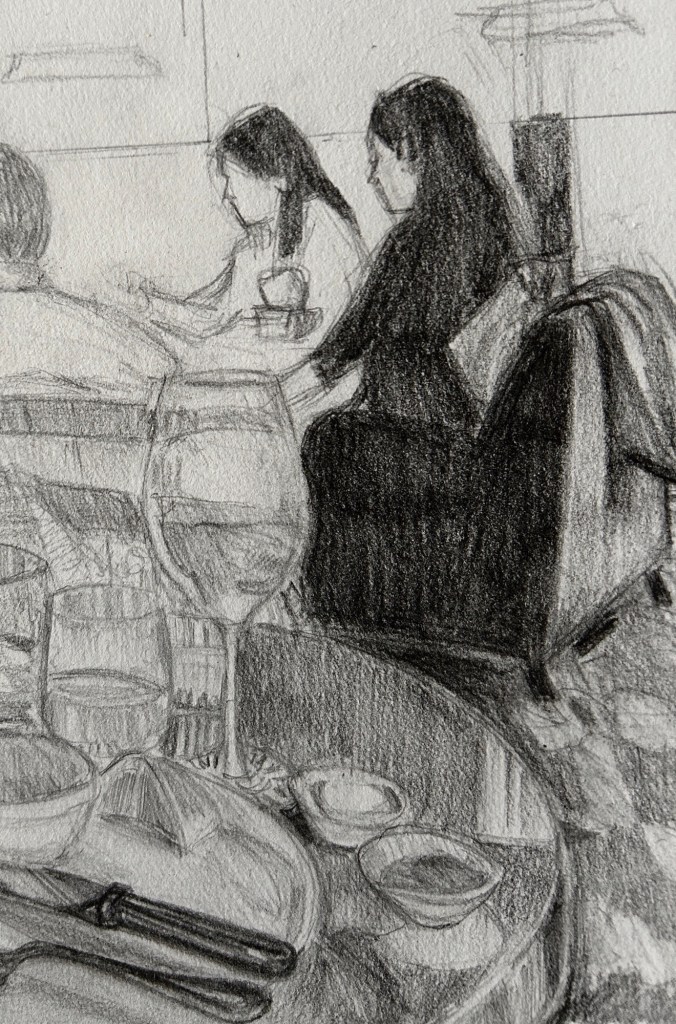
She appears at the port, seeking employment in a strictly masculine world. We know nothing of her background or her motives for coming here. She has not fished before but, for some unexplained reason, she is determined to try. She appears frail but is tough and keen to earn her place amongst the men.
Adopted by a greying sea wolf who calls her Sparrow, she joins a team of men from different cultures, who will be closeted together on the boat for the duration of the trip.

Beautifully simple and incredibly evocative, the film is a powerful exploration of identity and individuality. It also showcases the loneliness of a life where people forced into intimacy by their circumstances, slowly coalesce into a team where they look out for each other, only for the partnership to dissolve when they reach land and each goes his own way to the next available job.

The cinematography is wonderful, depicting the high drama of life at sea and the brutal realities of commercial fishing, as well as the short moments of respite and rest where each can find it. The characterisation of the fishermen is subtle but well-developed, and the acting by all the cast is superb.

Here’s the trailer:

https://youtu.be/foDCXZo7w3I?si=FfmZnrGu8u0Crfd5

The film is worth watching on every level, and if only for the final scene (no spoilers), of fishing for king crabs in Alaska at night.

You will never look at a piece of cod on your plate the same way again!

*I watched it on Amazon Prime, but it also streams on other channels.

Going into winter

It is not cold yet, but the days are drawing short, and when I take the puppy out at 7.30 a.m. I wear a jacket and sometimes a woolly hat. The leaves are turning and some days there is mist on the ground.

We do get some brilliand days, though, and the beach is magic.

There are still flowers in the garden, and a few tomatoes. The crab apples are red, and the apples are ripening also.

The summer went by too fast, as usual, and the weather was not very inspiring—however, we did not get heatwaves, or a water shortage, or forest fires, as in Greece or other southern countries.

The puppy likes crab apples

We are fortunate to live near Deauville, which is a beautiful and lively town, with plenty going on at all times. Racing, polo, film festivals, exhibitions and more. We have lately acquired a cultutal center called Les Franciscaines, the conversion of an old nunnery, and there is always something on.

Back in March they put on an exhibition by the abstract artist Zao Wou Ki. It was a real treat to be able to see some of his paintings within 15’ of my house. I’ve written about him before. Here: https://athensletters.com/2018/09/25/awed-by-the-abstract/)

One of the highlights of the summer was an exquisite concert by the Japanese neoclassical composer Koki Nakano. I did not know what to expect, having never heard of him before, and in fact had never heard anything like it before—immersive soundscapes somehow combined with melody. In the La Chappelle, the small theatre placed in the former nunnery’s chapel, a grand piano was the only thing on the stage, its lid open and adorned with electronic devices. It was flanked by an electric keyboard.

Nakano played his own compositions, a mixture of electric and acoustic piano and I can honestly say one was more beautiful that the previous. The concert was called Oceanic Feeling. Sometimes he was accompanied by a dancer, the wonderful Tess Voelker from Chicago, since he is fascinatedby the relation between music and the human body.

This is the clip he had made of his music

The simplicity of the setup, the magical lighting, the elegant musician himself who addressed the audience between the pieces and even spoke in French, all made for a truly memorable evening.

Tokei(Tokyo) by Akira Yamagoshi. An aerial view with enchanting details. Zoom in to enjoy.

At the same time the centre put on an exhibition relating how the impressionists were inspired by Japanese art, which contained a few treasures.

Micro Fuji by Tiger Tateishi (1941-1998)

To finish off, sadly we could not see the northern lights which appeared over Europe. I have seen them once, in Iceland, and they were mostly green and yellow, whereas these were quite pink. So for your enjoyment I am posting a wonderful photograph by Deborah M. Zajak on her lovely blog Circadian Reflections (https://circadianreflections.com/2024/10/13/something-for-sunday-northern-lights/#respond) I urge you to take a look, she posts great photographs of birds and other stuff.

Farewell, Maggie

I will not attempt to describe Dame Maggie Smith’s life or acheivements—following her death at 89, the papers and online sites are full of detailed biographies and tributes and I am sure everyone who is interested has read them.

This is just a short personal tribute to a great actress—someone who has provided me with unforgettable moments of delight throughout my life.

A lovely 70’s portrait (Wikipedia)

Growing up and living for a large part of my life in Greece, I was very fortunate to have been able to witness some of her best performances in the theatre, live. Thanks to my parents’ love of the theatre and a few well-timed trips to London, I saw her in various plays, and most memorably in Lettuce and Lovage. I remember tears of laughter running down my face as, playing a stately-home tour guide who embellishes her descriptions with fictions to keep the visitors’ attention, she became increasingly more demented. Also memorable was The Importance of being Ernest, where her Lady Bracknell was so haughty that her nose was parallel to the ceiling as she delivered another scathing put-down to some hapless person.

Of course I have watched her in most of her films, too. Her wit, her cool delivery, her tart and sophisticated personality were unique. It is a great privilege to have given so much pleasure to so many people during your lifetime, and she was proof that it is possible not to become invisible and diminished as one ages. On the contrary, her fame increased at the end (despite all her success, up to a certain point she managed to go about town unrecognised). Of course, not everyone has her talent.

Let me conclude with the deliciously quirky line which just sprung to my mind, asked with opened eyes a a note of genuine astonishment, ‘What is a weekend?’

The Booker Prize Long List

Like every rabid bookworm in the land I too await the long list for the Booker Prize with anticipation each year. Not that I put much faith in prizes: in all creative things they are very subjective, and often the prize gets awarded to the book each person on the panel of judges dislikes least—just so they can all agree.

© Tom Pilston for Booker Prize Foundation

Also I cannot say that usually I read every book on the long list, or even on the short list—some do not appeal at all. Often some are books I have read before, such as Hilary Mantel’s Wolf Hall and Bring up the Bodies, which I adored. However, there are books I discovered because they were on the list, which I might not have picked otherwise—some I abandon half way through (I stopped long ago making myself read to the bitter end a book I dislike), some I love, such as Bernardine Evaristo’s Girl, Woman, Other.

This year the list looks tempting—it is varied and seems to contain meaty stories. I have read none of these books, and perhaps will not read them all, but I will certainly try some.

Here is the Booker’s dozen of thirteen novels, to tempt you:

-Colin Barrett, Wild Houses. A debut novel from a top Irish short story writer, it is a sort of crime tale set in small-town Ireland.

-Rita Bullwinkle’s Headshot follows the teenage girls taking part in a boxing tournament in Nevada. Spills and thrills, physical and mental combat.

-Percival Everett, James. One of the favourites to win, it retells the story of Jim, the runaway slave in Mark Twain’s Huckleberry Finn.

-Samantha Harvey’s Orbital is about six astronauts in an International Space Station.

-Rachel Kushner, Creation Lake. A freelance spy infiltrates a commune of eco-activists in France.

-Hisham Matar, My friends. The story of three Libyan dissidents exiled in Britain.

-Claire Messud, This Strange Eventful History. A Franco-Algerian family’s wandering through eight decades of war and peace.

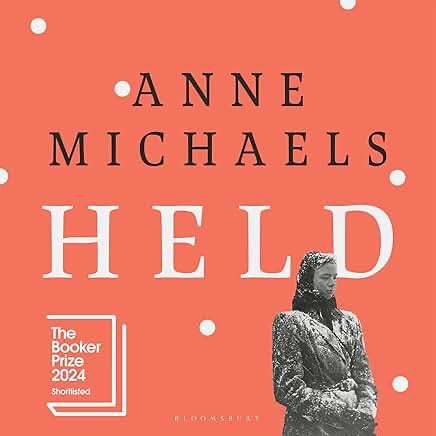
-Anne Michaels, Held. Short snapshots of various characters bedevilled by war and tyranny, it is the most experimental work on the list.

-Tommy Orange, Wandering Stars. It explores the consequences of a shooting at a Native American powwow.

-Sarah Perry, Enlightenment. A baroque story about group of Strict Baptists in 1990s Essex.

-Richard Powers, Playground. Floating cities threaten to overwhelm a Polynesian island already ravaged by mining.

-Yael van der Wouden, The Safekeep. A debut novel about a young woman falling in love with her brother’s girlfriend explores the callous treatment of the Jews returning to the Netherlands after the war.

-Charlotte Wood, Stone Yard Devotional. A quiet Australian novel about a woman taking refuge among eccentric nuns at a Catholic retreat in the outback.

I consider it a list full of original, complex work, set in different cultures—there is something there for everybody. The authors are American, Irish, British, there is a Duch writer and a Native American—true diversity. And it is mostly free of household names. The chair of this year’s judges, artist and author Edmund de Waal, said : “These are not books ‘about issues’: they are works of fiction that inhabit ideas by making us care deeply about people and their predicaments.”

Enjoy.

An artsy picnic

Some days ago I was happy to be invited to a picnic organised by a Paris art gallery, the Galerie Jocelyn Wolf, at a manor house in deepest Normandy. This was a very old building, renovated over the course of a few years by the gallery owner, Jocelyn, in order to provide a venue for artist residencies and a framework for exhibiting artworks, including outdoor sculptures.

After passing the Pont de Normandie, always a treat as driving over it is the next best thing to flying, I took a road winding through beautiful countryside and arrived literally in the middle of nowhere, where thankfully a small sign with PARKING on it gave a hint I was in the right place (to outward appearances, a rustic farm with various agricultural implements scattered around).

A gravel road led to the house itself, fronted by an orchard where I came upon a group of people sitting on the grass under the beautiful, ancient apple trees.

I joined them and someone thoughtfully provided me with a glass. Each group of three or four people shared a wicker basket of the most delicious local food: a loaf of fresh country bread, a variety of cured meats and cheeses, small radishes, a jar of rillettes, a brioche, punnets of berries—washed down with cool cider. Dogs and kids ran about.

Painting by Sosthene Baran

As we were finishing, a few drops of rain (it being Normandy, after all) made us gather up the remains and congregate for coffee in the kitchen, after which I went to explore the house. This has been left in a very primal state, with beautiful old doors renovated but unpainted, stone and brick exposed, and gallery-style electrics installed on wire tracks.

Windows on every side open on pristine, unspoilt countryside and there is a huge open space attic. The whole thing is in impeccable taste and a fitting framework for all sorts of art.

Sculptures by Christof Weber

The rain having stopped, I went for a tour of the garden to see the sculptures installed there, some actually in the pond behind the house.

Sculpture by Francisco Tropa

The afternoon concluded with a performance by two artists represented by the gallery, Prinz Gholam, who struck poses taken from famous sculptures while wearing a series of fascinating masks.