On a lightning trip to London, I managed to squeeze in a visit to the stunning Sargent exhibition at Tate Britain.

John Singer Sargent (1856 – 1925) was considered the most important portrait painter of his generation. His speciality was making evocative paintings of Edwardian society, depicting beauty, wealth and luxury. He created roughly 900 oil paintings and more than 2,000 watercolors, as well as countless sketches and charcoal drawings, travelling worldwide to Europe, America and the Middle East.
He was born in Florence to American expatriate parents, and trained in Paris before later moving to London, living most of his life in Europe.
Sargent was a very demanding portraitist, almost a bully with his sitters. Believing their attire was an important part of the composition, he chose and then manipulated their clothing until he achieved the desired effect.

Sitting for one’s portrait is in any case a disquieting activity—the self-consciousness at being stared at in such detail, exposing all one’s flaws, the discomfort of retaining the pose for an extended period of time, the boredom, and the possible dissatisfaction with the result. And that is without mentioning the cost: at the height of his fame Sargent charged $4000 for a full length portrait, compared to $400 for an average artist (from an invoice he sent to the Harvard Club of New York in 1896) —or a whopping 150k in today’s money. Sargent was sought after for his ability to produce a flattering likeness in most cases, but that did not make it any easier, either for the sitter or for him. He often said he hated painting portraits.
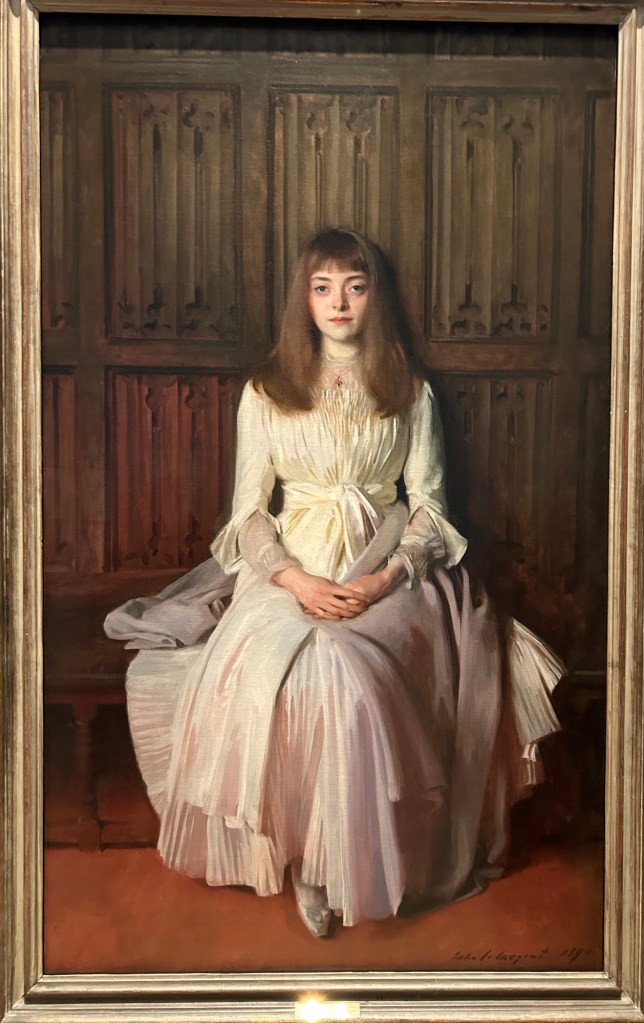
Sargent seldom let his sitters choose their own dresses—and often he added chiffon scarves, shawls, wraps or simply pieces of material and pinned the dresses up or wrapped them around the body to achieve the desired effect. One of his subjects remembers being pricked by the pins he stuck in the fabric to make it stay in place.
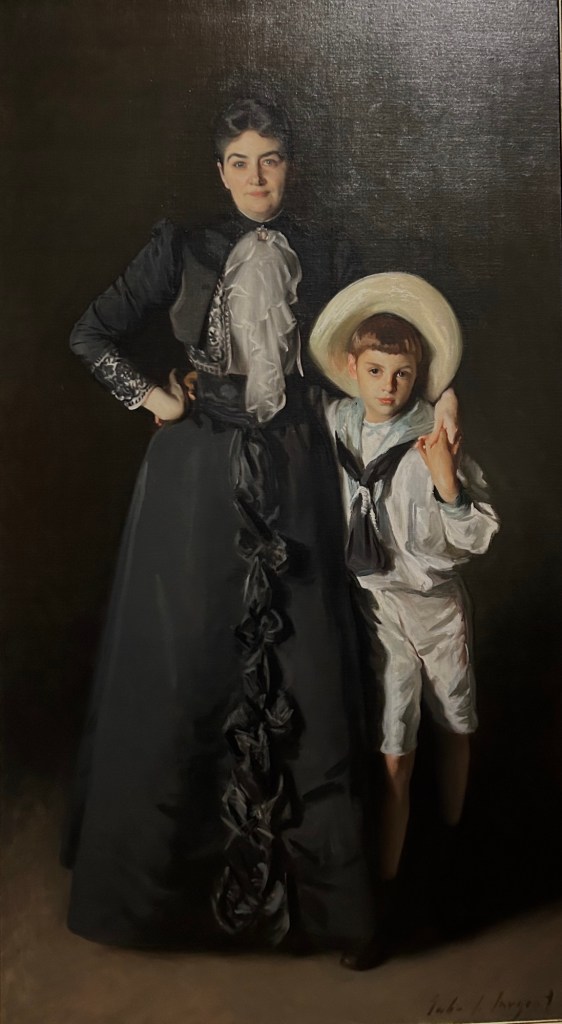
Looking at the paintings, I was struck by how uncomfortable some of the poses looked, whereas others were a lot more relaxed and natural.
In some cases there was a photograph of the subject next to the painting, which showed that Sargent was wonderful at capturing a likeness, although often flattering and prettifying, whether the face, making look younger and smoother, or the body, which he often elongated to render it more elegant.
He was a master at painting fabrics. Notice the difference between satin, in the portrait of Mrs Harrison, below, and her strange cape…
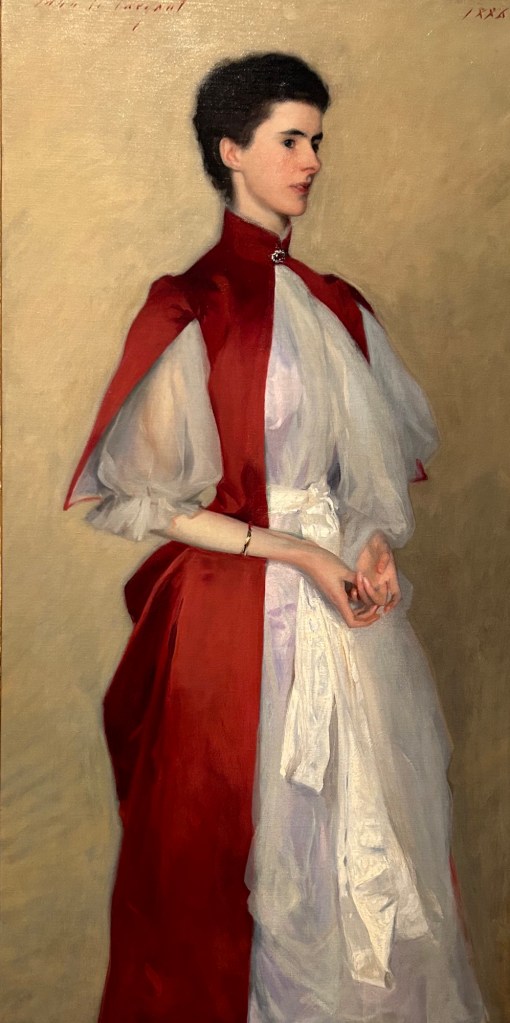
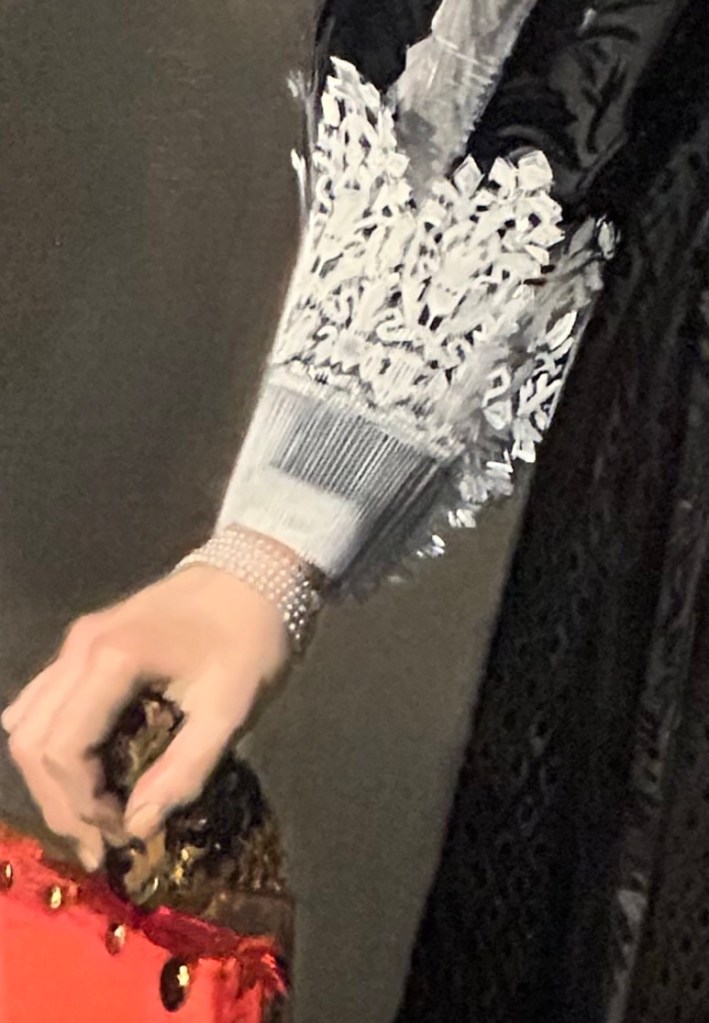
…and the silk velvet of the cherry red gown trimmed with gold lace, worn by his friend Mary Hammersley.
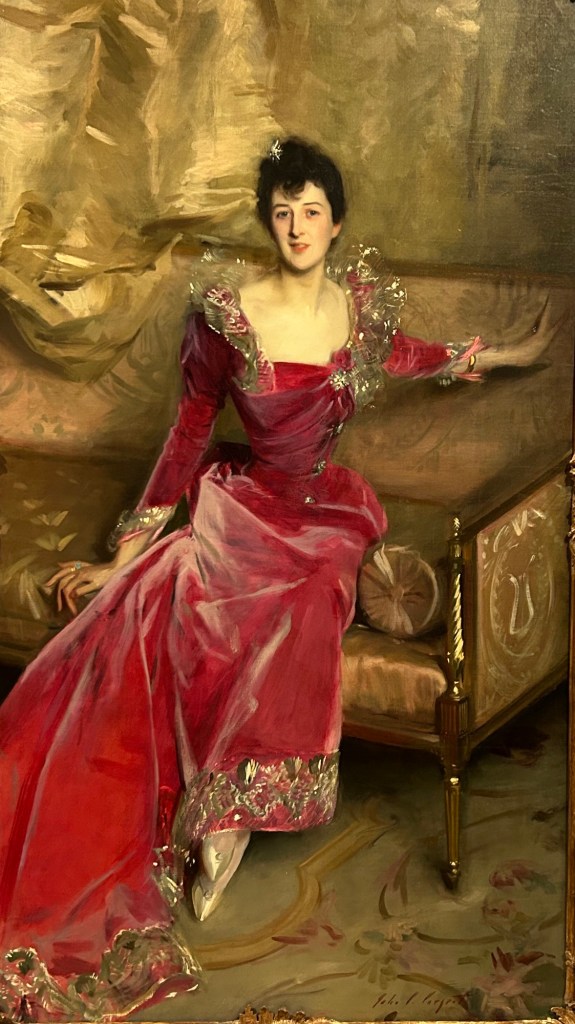
Sargent was a master at painting black fabric, which is not only apparent in the frock coats of his male models, but he often induced females to wear it, too.
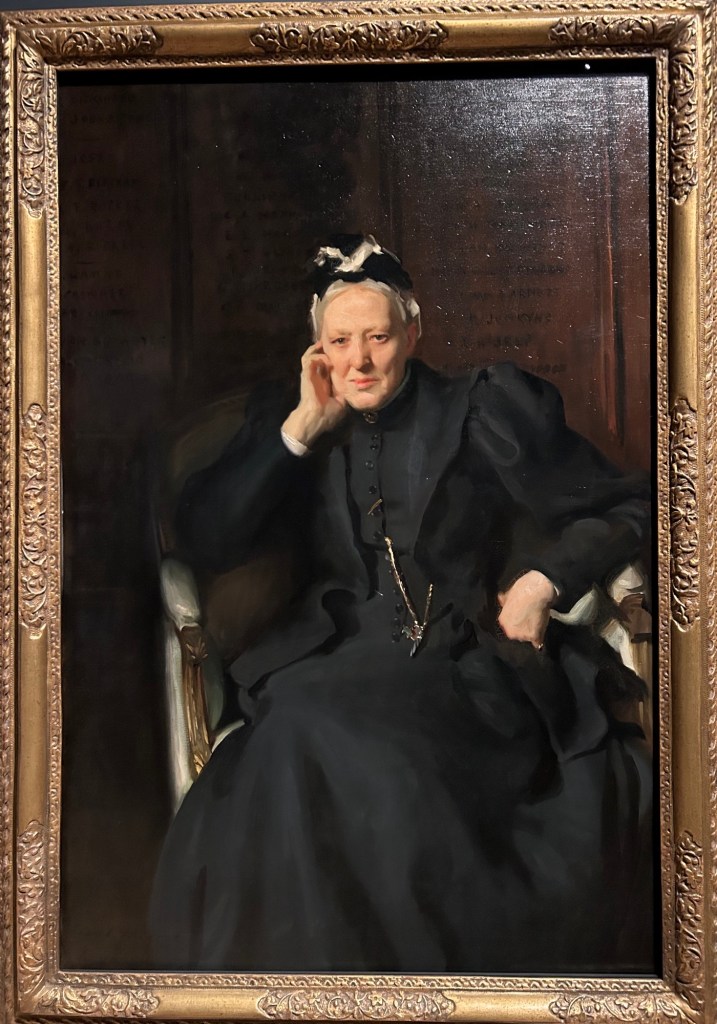
Jane Evans, who ran a boarding house at Eton College, was said to be ‘able to see through a boy as if he were a pane of glass’, and one can picture them quaking before her—the portrait fully conveys her authority and the power of her personality.
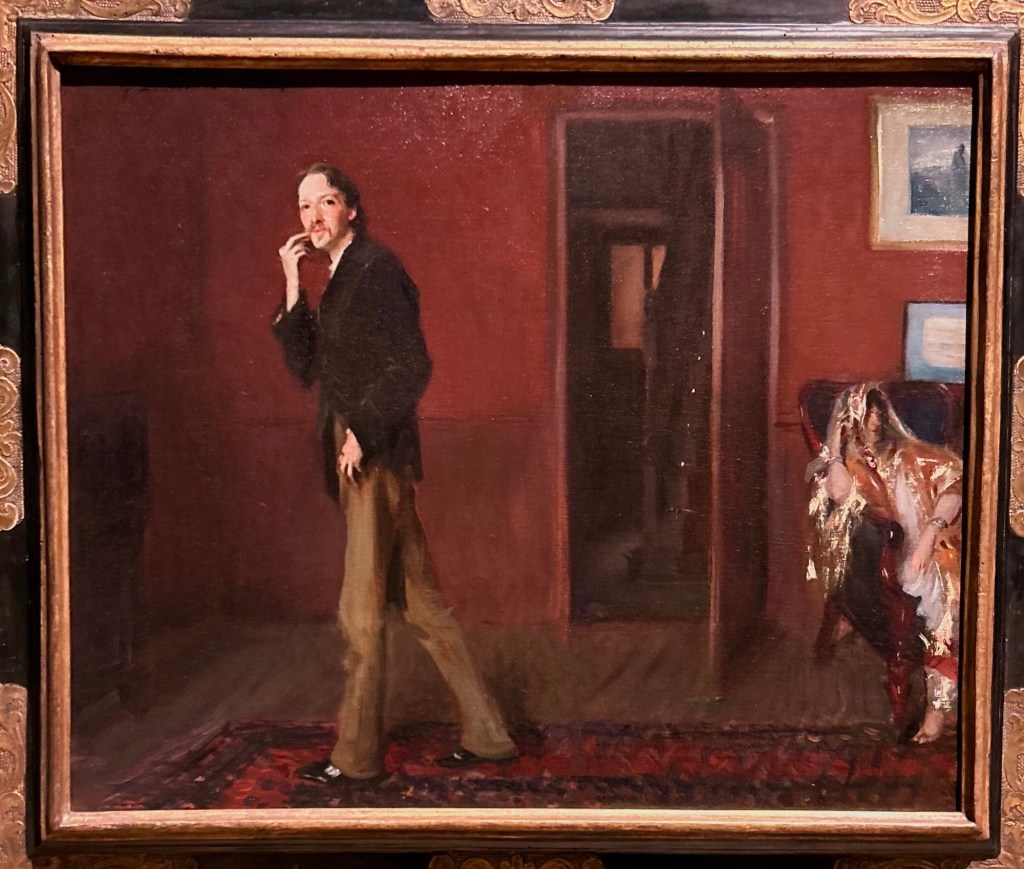
Sargent made Graham Robertson, below, wear a long Chesterfield coat in the heat of summer, despite his objections, because ‘the coat is the picture…’ Robertson was an artist, writer, collector and friend of Oscar Wilde. Please note the cane and be-ribboned poodle at his feet.
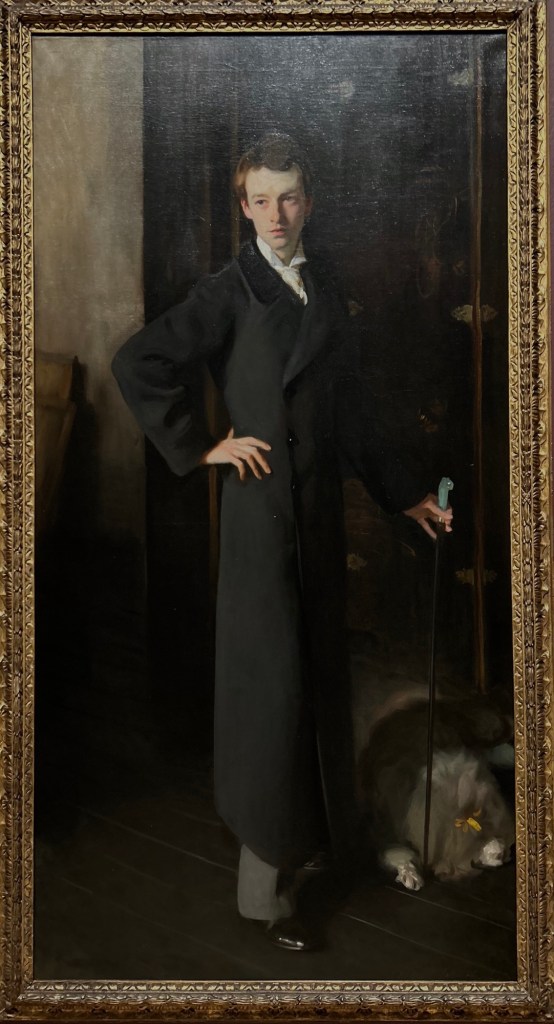
Sargent depicted a world of wealth and leisure enjoyed not only by the aristocracy but, increasingly, by a new cosmopolitan elite. His compositions included fashion as well as furnishings and props.
The Gilded Age and the Belle Epoque (1870-1914) saw the birth of Haute Couture. The exhibition featured dresses from that era, such as the one below made by the House of Worth, one of the leading couturiers of the era.
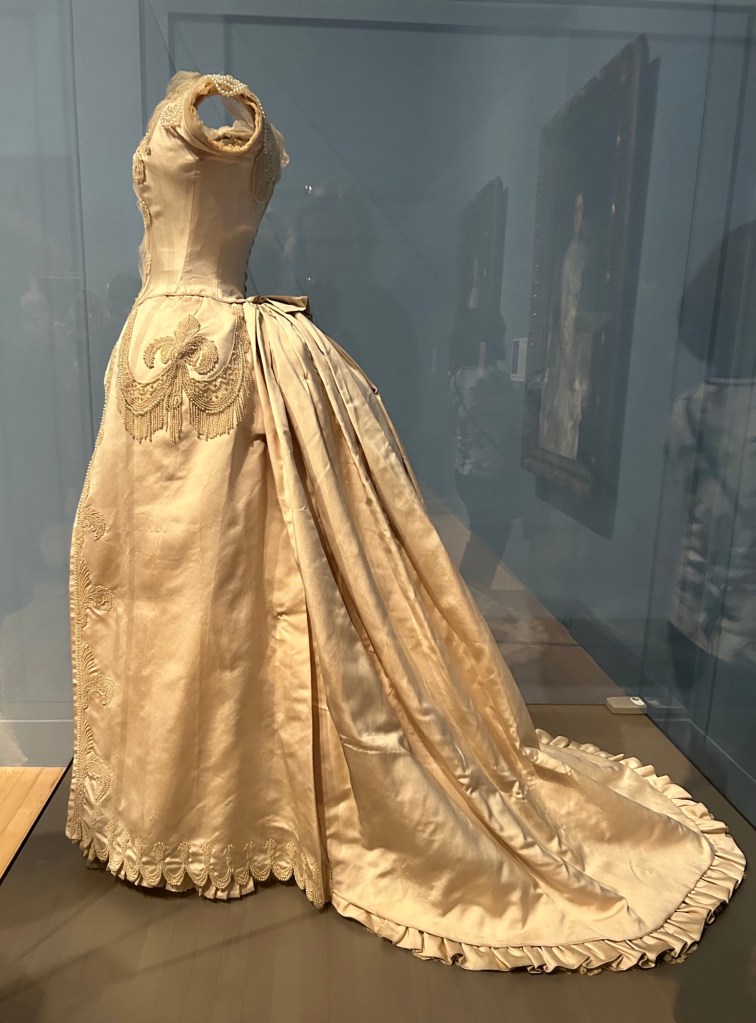
Absolutely beautiful and very expensive—dresses like this could cost up to £25.000 in today’s money—but personally I would not like to wear something like that. How could one possibly sit in this, or even breathe? Look at the tiny waist, strangled by stays, and the huge bustle at the back.
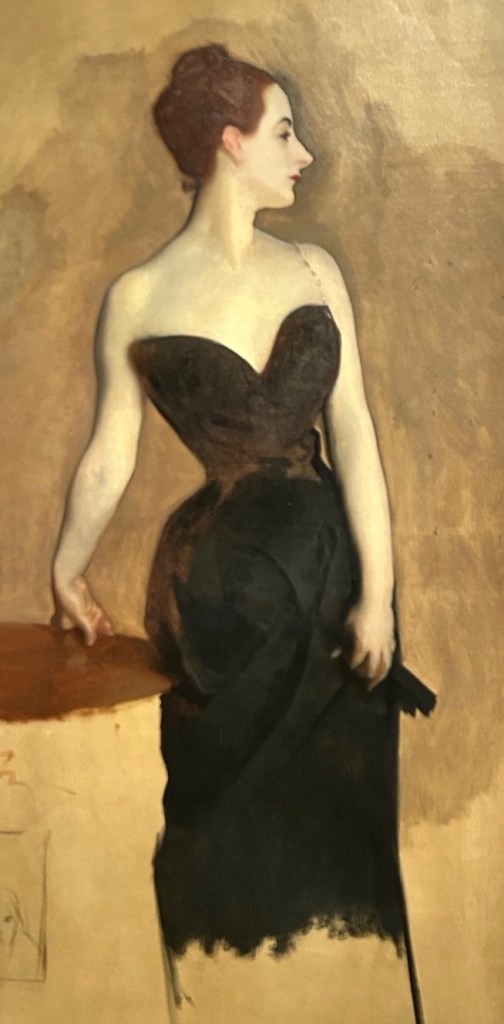
But I digress. The wonderful portrait below, of the Chilean beauty Madame Ramòn Subercaseaux was widely admired and brought more custom to the young artist.
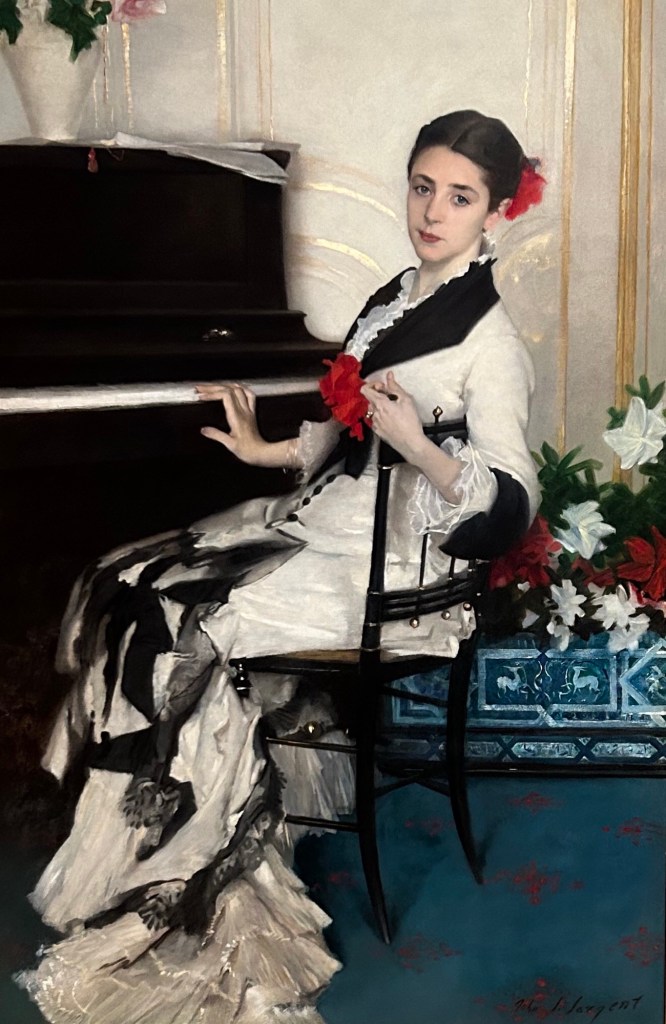
There might not have been social media at the time, but there was a closed society ready to critique everything people wore.
In an age when there were no photographs to look at, people even consulted portraits at exhibitions on matters of taste in dress.
To be painted in a couture dress, in a portrait singled out at a prestigious exhibition venue such as the Royal Academy or the Paris Salon, could help gain or assert a woman’s social status.
Of course this facility at painting beautiful dresses enabled his critics to assert Sargent was not a serious artist but just a clever painter of fashion, what art critic Walter Sickert called ‘ the chiffon and wriggle school of portraiture.’
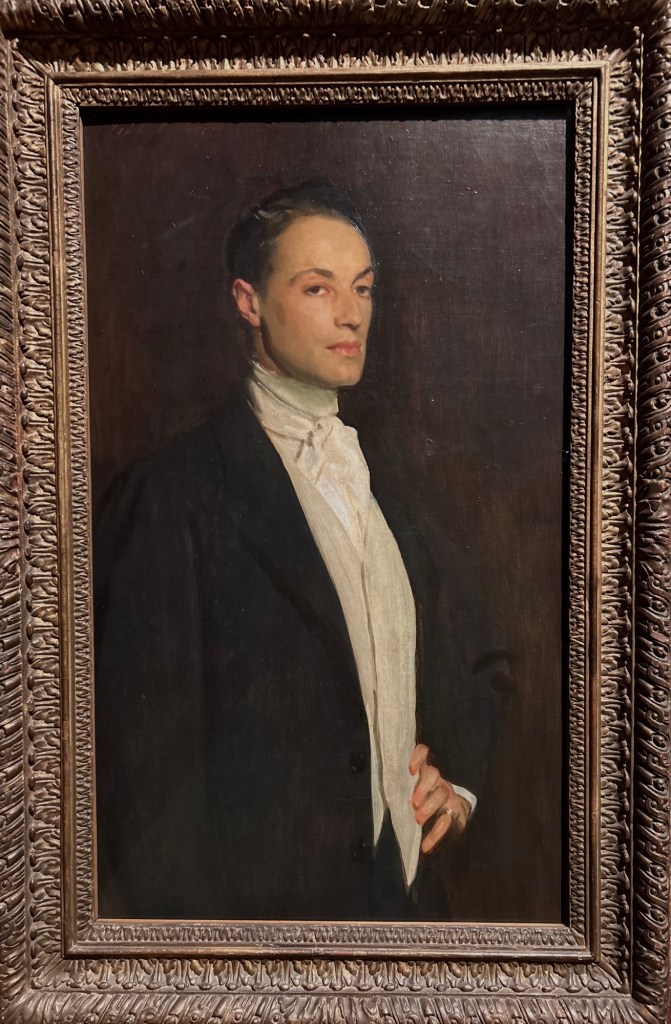
However, when painting men he usually confined himself to a darker and more conventional palette, depending on his sitter’s character and position in life.
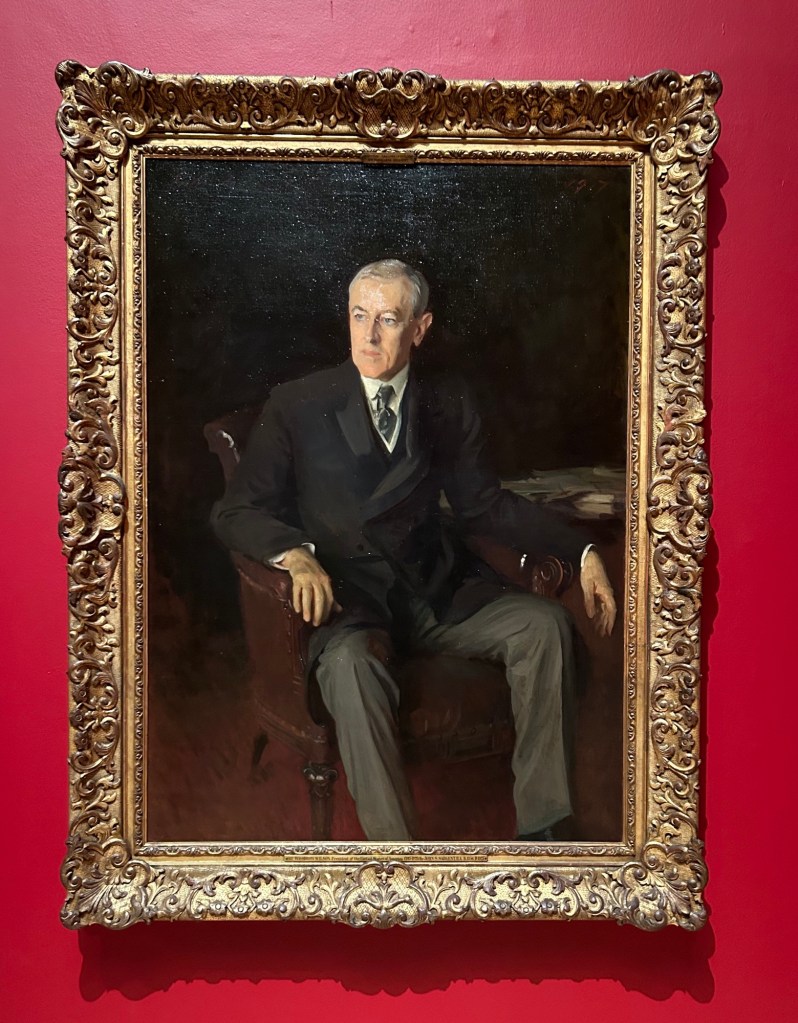
But not always. He painted the notorious womaniser, surgeon Dr Pozzi en desabillé, in a sumptuous red dressing gown and Turkish slippers, as if standing in front of a stage curtain.
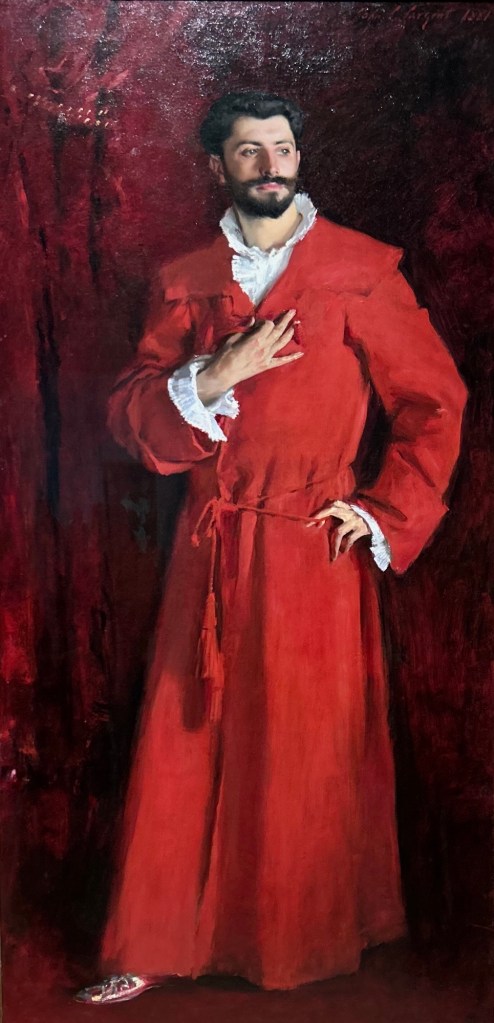
Dr.Pozzi was said to be ‘disgustingly handsome’ and had many scandalous affairs including, famously, with Sarah Bernhartd. Despite this, he was a brilliant avant-garde gynecologist, who made women’s lives better. Sadly, he was murdered in his own consulting room by a disgruntled (male) patient.
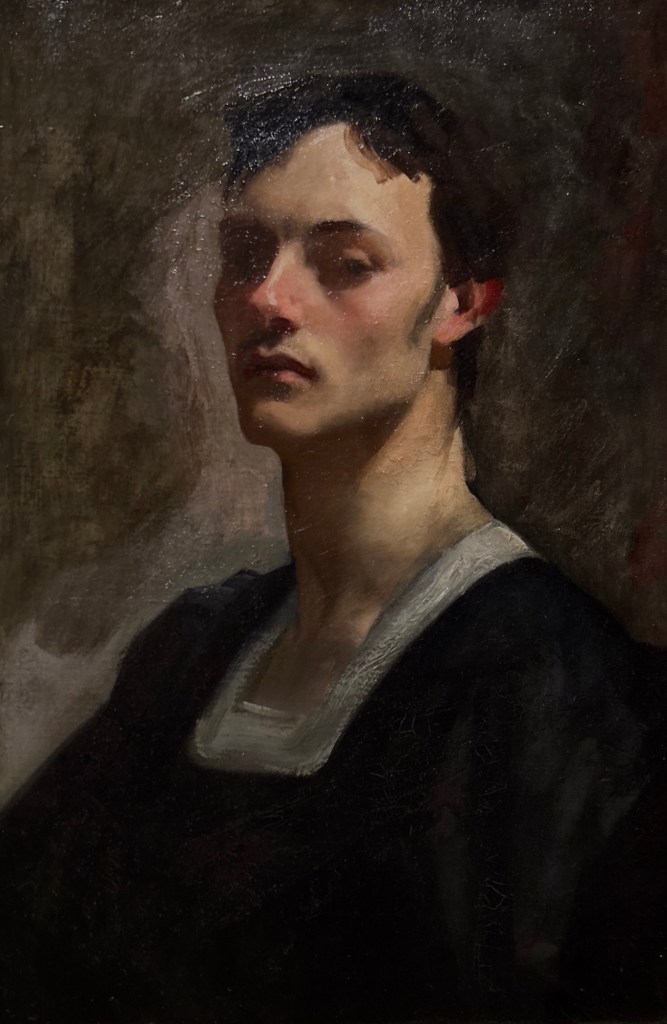
It is interesting, and proof that Sargent made his sitters expressive, that as I wandered through the exhibition with a friend we commented on whether we ‘liked’ or ‘disliked’ the sitters, making totally subjective comments on their character, such as ‘she looks nice’, ‘he looks very full of himself,’ etc. Most amusing and, judging by overheard comments, most visitors were doing the same. By observing the portraits closely one can perceive many hints as to the sitter’s character, mood, or even sexuality.
However, what today is almost universally admired, at the time drew more than its fair share of criticism. Sometimes the finished portrait was met by a disapproving silence by the sitter and his of her family. Sometimes portraits even caused a scandal, such as the famous one of Mrs Gatreau, a study of which see below.
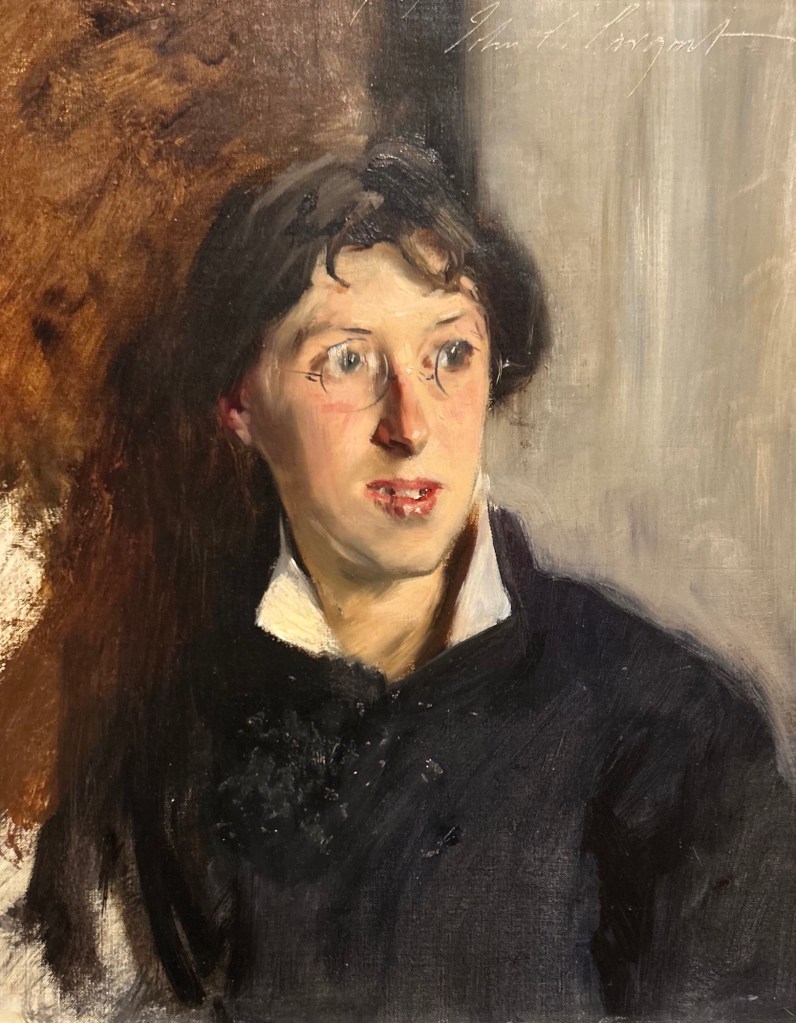
Besides the paintings of nobility, ‘Dollar Princesses’—as wealthy American heiresses coming to England to bag a title were called—and politicians, Sargent made lovely sketches of his friends, like the quick study below, which was finished in one hour.
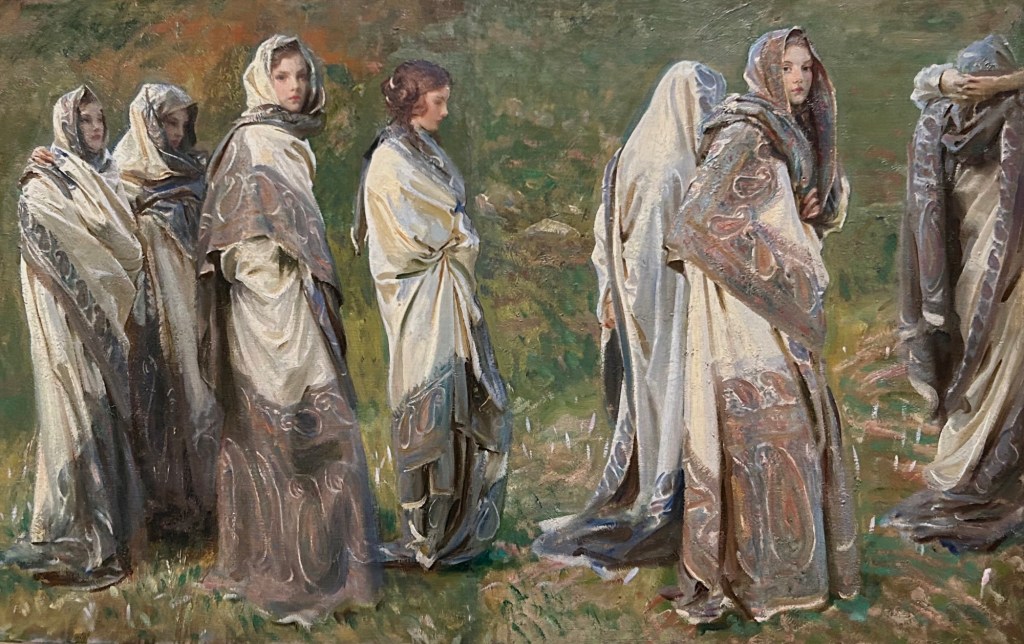
And this wonderful painting of girls wearing Indian shawls (his beloved niece posed for most of the figures).
This post gives but a glimpse into Sargent’s long and diverse career. A fascinating man and fascinating work.


















 Letters from Athens