4.1 miles

I know I keep harping on about the refugee crisis – most of you must be heartily sick of me by now. But it is something that I don’t feel the world as a whole can ignore – and not only in reference to the humanitarian aspect, but because it is a problem that, give the present situation, we will all have to face in the future, one way or another. And I don’t believe building fences everywhere is a solution.

4.1 miles is a short documentary made by Daphne Matziaraki, a Greek filmmaker who lives and works in the San Francisco Bay Area. ‘4.1 miles’ refers to the distance between Turkey and the island of Lesvos, where she followed a coast guard captain for three weeks as he pulled family after family, child after child, from the ocean and saved their lives. All the events in this film were shot on a single day, October 28, 2015. Two additional rescues happened that same day but were not included.

She says: ‘The Greek Coast Guard, especially when I was there, has been completely unprepared to deal with the constant flow of rescues necessary to save refugees from drowning as they attempt to cross to Europe from Turkey. When I was there filming, Lesbos had about 40 local coast guard officers, who before the refugee crisis generally spent their time conducting routine border patrols. Most didn’t have CPR training. Their vessels didn’t have thermal cameras or any equipment necessary for tremendous emergencies.

Suddenly, the crew was charged with keeping the small bit of water they patrolled from becoming a mass grave. Each day, thousands of refugees crossed the water on tiny, dangerous inflatable rafts. Most of the passengers, sometimes including whoever was operating the boat, had never seen the sea. Often a motor would stall and passengers would be stranded for hours, floating tenuously on a cold, volatile sea. Or the bottom of a dinghy would simply tear away and all the passengers would be cast into the water. The coast guard felt completely abandoned, they told me, as if the world had left them to handle a huge humanitarian crisis — or allow thousands to drown offshore.’ (Excerpt taken from a NYT article, sept 28, 2016.)
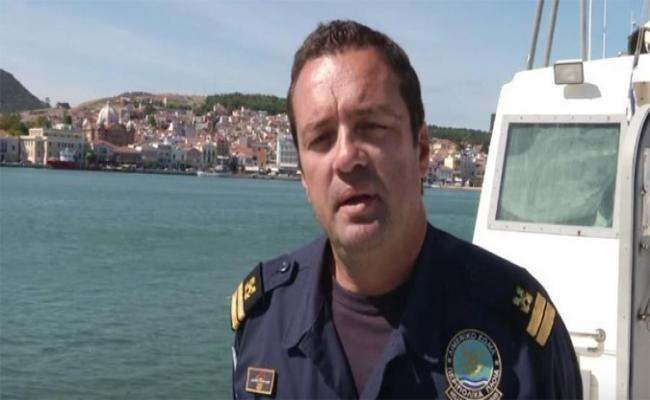
 

Kyriakos Papadopoulos, coast guard captain on the island of Lesvos, who rescued countless refugees from drowning

To watch the video, click below:

https://static01.nyt.com/video/players/offsite/index.html?videoId=100000004674545

The coast guard captain in question is Kyriakos Papadopoulos (photo above), a naval officer who, after working on freight ships for a few years, decided to come back and settle on his beloved island of Lesvos, where he dreamed of a quiet life. Little was he to imagine what was in store for him and his crew, on the by now legendary coast guard launch “602”.
The first sea rescue in Lesvos took place in September 2001, when they picked up ten Afghans off the coast. This became the talk of the island. The war in Syria changed all that. In 2014 around 50-100 people washed up on the island daily; and, by the beginning of 2015, this number had risen to thousands every day. More than half of the one million refugees who arrived in Greece that year came to Lesvos, and most of those were picked up by Kyriakos’s boat.

Usually, rescues take place in bad weather conditions. Kyriakos says: ‘We come upon boats that are half sunk – we know we need to act fast, people can drown before our eyes. We need to pull around 60 people into our boat in less than five minutes. It’s a huge responsibility.’ Psychologically, this is tough, and has taken a toll on him and his crew. Kyriakos has two daughters, aged 15 and 7,5. At sea, he sees their faces in the faces of the children who lift up their arms to be saved. ‘You can never get used to this. However, none of us has entertained the thought of giving up. Saving people gives us the strength to continue. Especially the smiles of the children, when they see us.’ (Translated from an article in Kathimerini, January 28, 2017).

Kyriakos has been given an award for his work by the Academy of Athens, and the documentary has been nominated for an Academy Award. What pleases him most, though, is the fact that through the screening of the documentary, his friends and family have seen for themselves what he and his crew are going through. Because they find it impossible to talk about this to anyone; they only discuss it amongst themselves, on the advice of psychiatrists – to exorcise the images they’ve had to witness. He also hopes the world will see the film, and offer some help.

I watched the film, and I warn you it is harrowing. An incongruous thought kept going through my mind: at least there are no killer sharks in Greek waters.

A batch of novels set in Greece

Today we have a guest post written by a good friend of mine, Mark Stephenson. It is a review of his favorite novels with a Greek background. In fact, his love of the country has inspired him to set a large part of his own debut novel, a thriller called The Last Messenger, on the island of Crete. It is to be published later this year, so stay tuned. Meanwhile, you could visit his blog here.

Read on:

My favourite novels set in Greece

It’s over forty years since my first visit to Greece. The collapse of the military junta had only just occurred and tourism was nowhere near as sophisticated as it is now. Package tours were available to the larger islands of Corfu, Rhodes, Crete and Kos but if you wanted to find the real Greece your best bet was to fly into Athens and head down to Piraeus and hope for the best with a ferry. Island hopping in those days required plenty of time as ferry timetables, unlike now, were erratic. We didn’t have much time so took an old Russian-made hydrofoil to the Saronic islands of Poros, Hydra and Spetse which were just a short journey from the Athens port. I was desperate to go because I’d just read The Magus. My list is a personal one, in no particular order of preference. Please let us know if you recommend any other novels with a Greek setting which are not included here.


img_4452THE MAGUS by John Fowles

The Magus is set on the fictional island of Phraxos which the author admits is based on the island of Spetse. It is a book that is beguiling in many ways and is regarded as a classic (published in 1966). I read it in my twenties and it made a great impression on me. It is not for everyone, especially if you don’t like a story which often escapes from reality and can be misogynistic in tone. There are twists and turns and improbable story lines. It is a mystical journey on the human condition and the meaning of love. Perfect if you want to be submerged in the romance and spiritual presence of the Greek landscape.


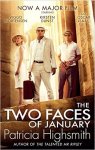
img_4450THE TWO FACES OF JANUARY by Patricia Highsmith

If you enjoyed the Ripley novels, you will enjoy this one which has a perfect command of its setting in Athens and Crete. This is a crime novel involving a war of wills between two American men in Greece who are both running away from something. Chester is a conman and Rydal, a young drifter, hanging around Athens seducing the tourists, is looking for adventure. Chester reminds Rydal of his father who he doesn’t get on with. Colette, Chester’s wife, is caught up in a menage a trois between the two men who become increasingly entwined when Chester’s life of deception catches up with him.


img_4451CAPTAIN CORELLI’S MANDOLIN by Louis De Bernieres
If you’ve seen the film starring Nicholas Gage and Penelope Cruz, you may have decided not to read the novel because you know the story. My advice is don’t be put off if you love reading because the emotions of the characters and the historical background of the story are so much better described in the novel. Set in Kefalonia, the early part of the novel is full of humour and the joys of life. The onset of the Second World War does not seem to affect this idyll even when the Italians occupy the island as Captain Corelli and his men prefer to play music and make love not war. The contrast at the end of the novel when the Germans arrive on the island is shocking and deeply moving.

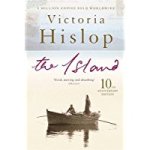
img_4447THE ISLAND by Victoria Hislop

Another fictional story built around historical fact. This time the story is set in Spinalonga, a leper colony off the coast of Crete. I’ve visited the island which is no longer occupied and I can understand why Victoria Hislop was inspired to write the story. You can still see the buildings where the lepers lived and gain a sense of their community even though they were afflicted by this terrible disease. This book is not a classic piece of writing but is an easy beach read which addresses a serious subject about how leprosy affected the lives of ordinary people.


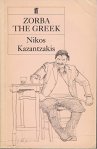
img_4449ZORBA THE GREEK by Nikos Kazantzakis

This is a must read if you want to understand the spirit behind all that Greek dancing you’ve done on your holiday. Zorba’s personality encapsulates a love for the joys of life and to hell with the consequences. He is contrasted with the narrator who is Kazantzakis lacking the confidence to live dangerously. They have many adventures together and you are left with a feeling that living for the moment is not such a bad idea. If you like Kazantzakis then also read Report to Greco which is an autobiographical account of his travels through Greece.

img_4448OFFICERS AND GENTLEMEN by Evelyn Waugh

This book is the second in the so-called Sword of Honour trilogy. I’ve chosen this novel for its brilliant writing and humour. It finds its way into this list because it describes the evacuation of troops from Crete after the German invasion. Although about a third of the novel is set in Greece, the story’s main theme is about the chaos of war.

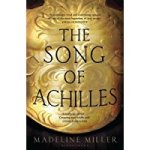
img_4446THE SONG OF ACHILLES by Madeline Miller

This retells the story of The Iliad in a sexy and exciting way. The love story between Achilles and Helen is one of the legends that we all know but few of us admit to reading Homer’s poem from beginning to end. This book makes the story much more accessible. When you visit Greece and see one of its many ancient monuments, it’s books like this that turn those pile of stones you are staring at into something much more evocative.

OTHER CRIME FICTION SET IN GREECE

There are several authors writing crime series set in Greece. Paul Johnston has Alexander Mavros who is a private investigator based in Athens. I’ve read The Silver Stain which tells the story of murder on the set of a movie being shot in Crete. Murder in Mykonos is the first book in the series by Jeffrey Siger. His protagonist is Andreas Kaldis, a former Athens detective. The story opens when a female tourist is discovered on a pile of bones under the floor of a remote mountain church. This starts a hunt for a ritualistic killer.
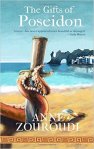
img_4445My favourite writer in this genre is Anne Zouroudi who writes stories involving her detective Hermes Dicktoros. What makes these books stand out for me is the way Anne writes about the landscape that is Greece. She has only just published the eighth in the series which I haven’t read so I’ll confine my comments to quoting some of the blurb on Amazon. “The Gifts of Poseidon is a hymn to Greece, to its beauty, its people and its food. Against this delectable back-drop, it is above all a compelling and dramatic story of the extraordinary sacrifices ordinary people will make to protect the ones they love. Anne Zouroudi writes beautifully – her books have all the sparkle and light of the island landscapes in which she sets them… Lovely, delicious prose and plot – as tasty as one of those irresistible honey-soaked Greek confections. Diaktoros is a delight.” (Alexander McCall Smith).
 

NOTE: I’ve read most of the books above, and will read the rest in the near future. Still, I’d like to add some more options to the list.


Eleni, by Nicholas Gage, is the gripping and often harrowing story of a mother determined to protect her children from the ravages of the Greek civil War at all costs and ultimately her own life. A true story (about Gage’s mother) and a must for any fan of Greek history.

The books of Mary Renault about Ancient Greece. Here is what Hilary Mantel has to say about them: “Mary Renault is a shining light to both historical novelists and their readers. She does not pretend the past is like the present, or that the people of ancient Greece were just like us. She shows us their strangeness; discerning, sure-footed, challenging our values, piquing our curiosity, she leads us through an alien landscape that moves and delights us.” I read them all as a teenager and this has made me want to re-read.

The Petros Markaris mysteries, which feature Inspector Costas Haritos and could be compared to the novels of Donna Leon, only set in Athens instead of Venice. They give a comprehensive image of modern Greece. 

I apologize for not putting in links to all the book but, frankly, I could not be bothered as it takes forever. They can all be found on Amazon.

Tsundoku

I recently came across the word Tsundoku which I find greatly amusing. According to Wikipedia:


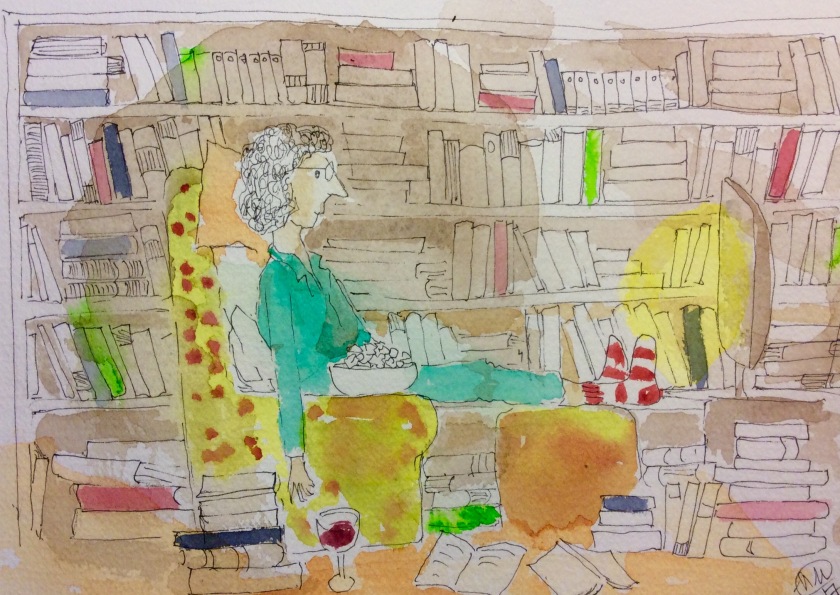
“Tsundoku” (n.) is the condition of acquiring reading materials but letting them pile up in one’s home without reading them. “Tsundoku” originated as Japanese slang (積ん読) “tsun-doku”. 「積ん読」 came from 「積んでおく」 “tsunde-oku” (to pile things up ready for later and leave) and 「読書」 “dokusho” (reading books).


img_4382


I’ve always been addicted to books, and like to be surrounded by piles of them, just in case I run out of – horrors – reading matter. And since the time when, on a trip, I finished my book and found myself with no access to a library or bookshop, I’ve also collected a number on Kindle. These are a safety measure, but lack the heft and presence of print.

In my defense, I do read them. I always have two or three on the go. But I will never get through my unread pile in my lifetime, especially since I occasionally like to re-read favorites. But have a clear out? Never!

As they say ‘So many books, so little time’ – or, ‘tsundoku‘!

The Sketchbook travels again

For those of you who read my post The Sisterhood of the Travelling Sketchbook, I have finished my contribution and I’m ready to pack it off to the next person on the list, Constanze, in Munich, Germany.


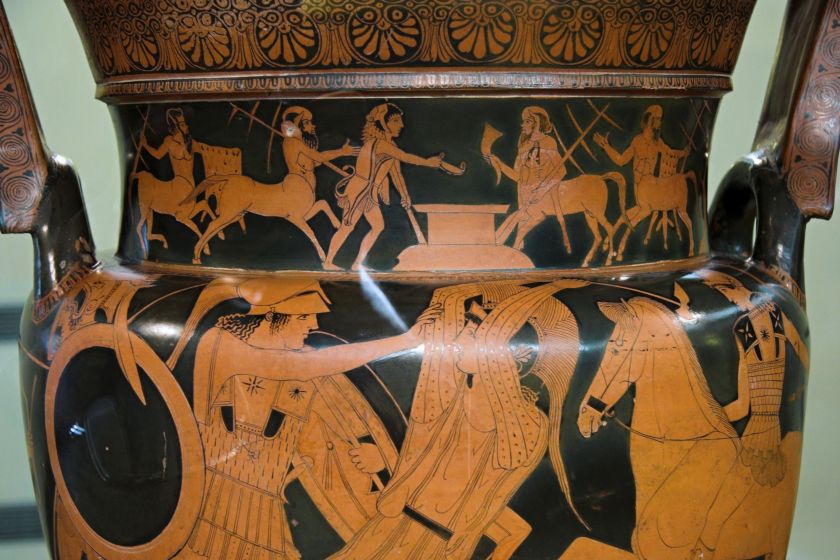
Centauromachy 460 BC
Centauromachy 460 BC. (Source:Wikimedia Commons)


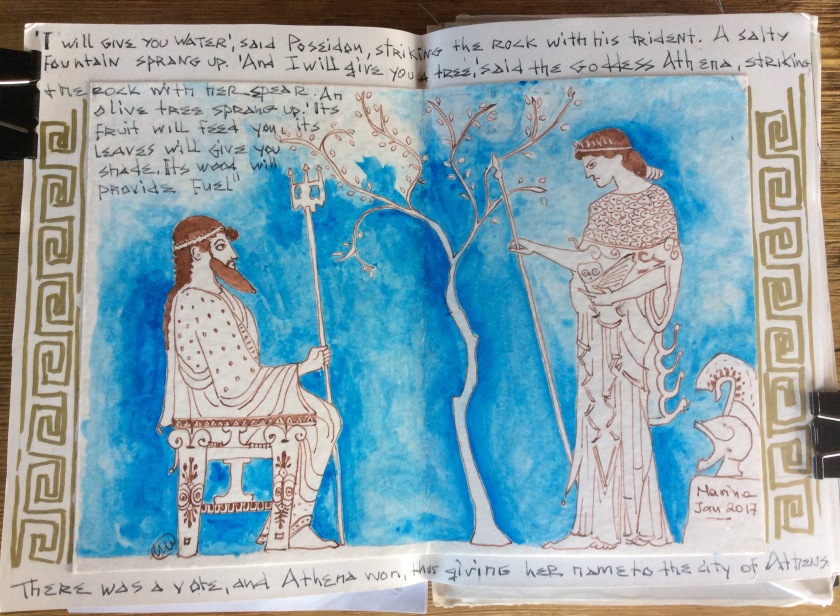
I wanted to do something referring to Greek history, so what better than the myth about the naming of Athens, which I’ve already written about, in my post Homage to the olive tree.  To make the drawing I took my inspiration from the ancient black and red pots from which one can glean amazing details about life in Ancient Greece – the food, the sport, the fashion, the rituals and the stories. They feature a large cast of gods, goddesses, demi-gods and mere mortals, nymphs, centaurs and satyrs, athletes and animals, as well as household objects, furniture and accessories. A fascinating study.

And now feast your eyes on my masterpiece below:-)


img_4358
My drawing in the Sketchbook

Standing on the Acropolis rock is Athena, having taken her helmet off, with a belligerent expression on her face. She has just produced an olive tree, using her spear. Poseidon, seated on an elaborate throne, has a rather sheepish look on his face, having lost the contest to a woman, albeit a goddess…

This has been a very amusing project, and I’m curious to see the remaining contributions. So tomorrow I will regretfully pack up the Sketchbook and bid it Bon Voyage.

A start

Despite everything, the end of the year is always a sort of celebration, as it heralds a new beginning. Why should things change, just because the date does? They probably don’t, but there is a feeling that they just might. Hope springs eternal!

However, today we woke to the news of yet another carnage, in Turkey. Wars are raging in many places. It is hard to feel optimistic. Still, life goes on, and rituals have a soothing effect on the soul.

In Greece we observe many traditions for the New Year, which I described last December in my post ‘Ringing in the New Year In Greece.’ It was all about smashing pomegranates on our doorstep, cutting the Vasilopitta (Basil’s cake) to find the lucky coin, about fireworks and gambling! For those of you who joined this blog recently, you might like to take a look (here).

Looking back through my year’s output, I thought it would be fun to see which posts were the most popular each month, based on likes (a rather random method most probably, but the only one available.)

img_4340

In January, the honors went to Greek Cuisine, featuring many delicious specialities (here).

In February, people loved The first signs of Spring, with its photographs of anemones and almond blossom (here).

In March, the most popular post was about the old tradition of Clean Monday, subtitled ‘A sky full of kites’ (here).

In April, The Minoans, about a very ancient civilization, proved interesting to a good many people (here).

In May, Day Trip to Mycenae, about another enthralling Ancient Greek civilization, took top honors (here).

In June, BrexitGrexit, what else? captured the popular vote, the only political commentary to do so (here).

In July, you were very complimentary on my completing the World Watercolor Month dare – a watercolor each day for a month. The post was entitled I did it! (here)

In August, the most popular post was Midsummer Blues – photos of lavender, figs, a cat and the sea (here).

In September, the Monthly Q&A, of poet Sofia Kioroglou, was the first to be most popular post in a month (here). This feature is always well received, but never made it to the top before. It was followed closely by ‘A short meditation on walls’ and ‘Messing about with clay.’

In October, everyone fell for Auberginesthe new super food (here). This was quite a productive month, as I also wrote about seahorses, an inspired chef, and the colors of fall.

In November, a lot of interest was shown in the The Ancients Greeks and the Terracotta Army, a fascinating theory about an incredible work of art (here).

In December, people were captivated by the Sisterhood of the Travelling Sketchbook (here).

So, moving on, what does this tell me? That you love food, art, photos of flowers and lovely landscapes, history, finding out how people live in another country… These are the things I write about, anyway, so the survey is somewhat irrelevant, especially since there were no huge differences in the number of likes. But still fun!

Regarding the number of posts, my aim was to post about twice a week, so around 8 per month. I’ve achieved an average of 7 per month, so not too bad…

And so, 2017 has started. Happy New Year, everyone!