Here’s a little news story that brought a smile to our faces today, amid all the depressing articles about the economy, the refugee situation, Brexit, the wars going on everywhere and the usual spate of crimes: A young policeman in uniform in the Monastiraki quarter of Athens joined a busker playing guitar in the street, taking the microphone and belting out ‘Stand by me,’ – in English – to the delight of passers by. The video of his performance has gone viral.
See below:
Disclaimer: I didn’t mean that ALL Greek cops can sing, nor was I suggesting they take music lessons in working hours!
Regular readers will know I’m a big fan of Japanese artist YayoiKusama. I’ve already done two posts about her (here and here) , because I find both her art and her personality fascinating. Despite now being ninety years old and living in a psychiatric facility, Yayoi Kusama is more prolific than ever. According to the New York Times, the show openings of the ‘Japanese mastermind of obsessively dotted paintings, hallucinatory pumpkins and sometimes blandly decorative installations, have become the art world’s equivalent of Star Wars premieres.’
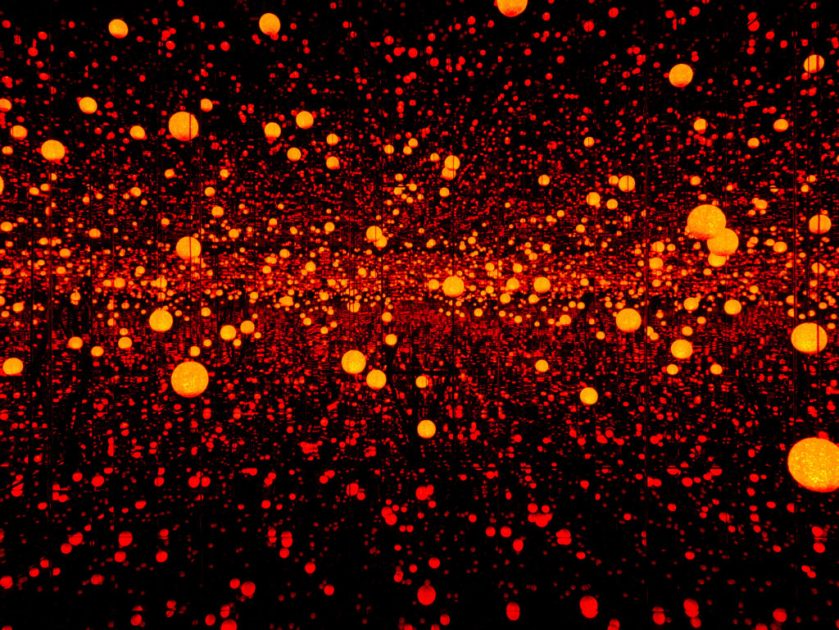
Yayoi Kusama infinity room. Photo: from David Zwirner Gallery
Her new exhibition at the David Zwirner Gallery in New York is entitled ‘Every day I pray for love,’ and features one of her famous infinity rooms, a mirrored chamber filled with reflective steel orbs. The exhibition is free, but the public will have to wait for hours in line, and can expect to stay in the infinity room for a minute at most.
You can read an article about it on Artnet News (here)
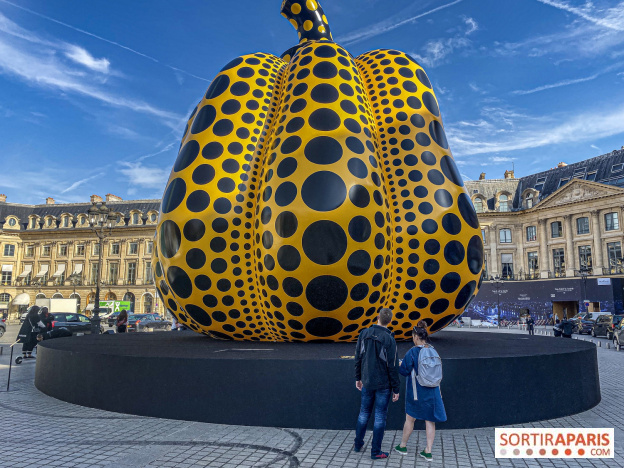
For the Paris art fair FIAC 2019 in October, Kusama also had one her spotty pumpkins set at the Place de Vendôme. This was a gigantic, 10m high inflatable structure covered in black dots.
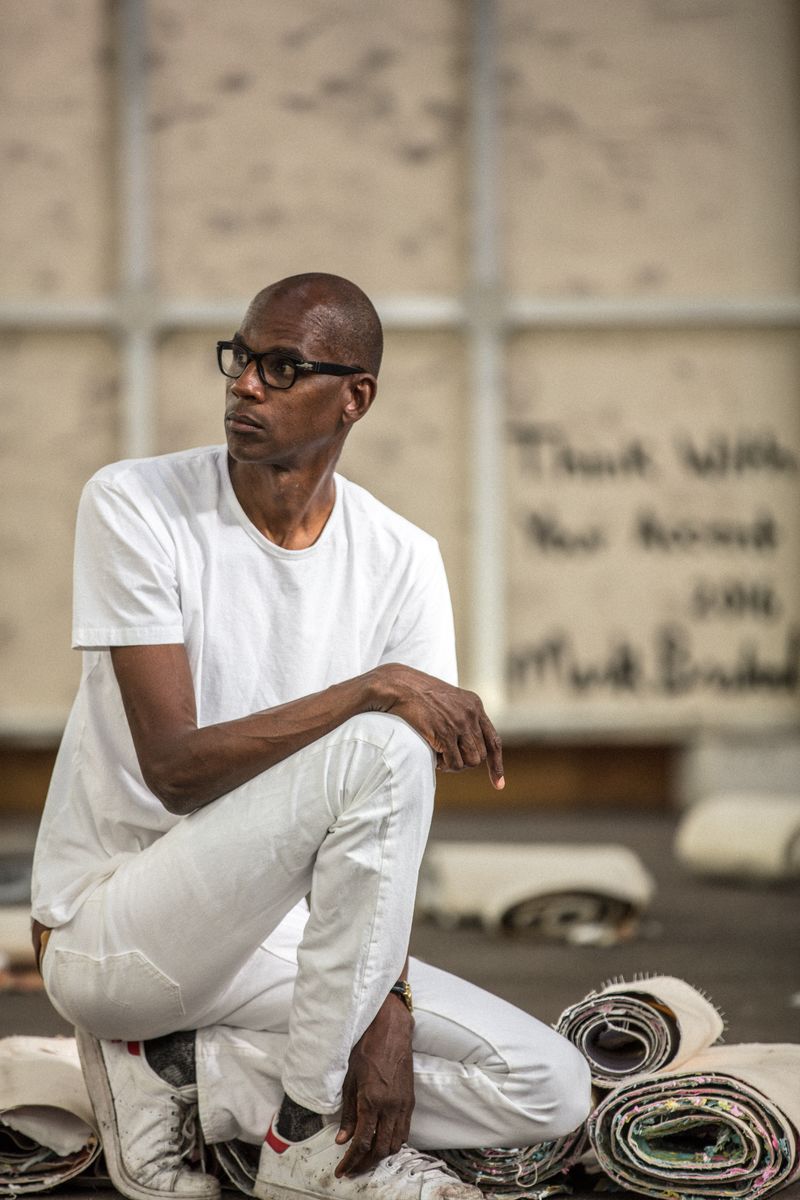
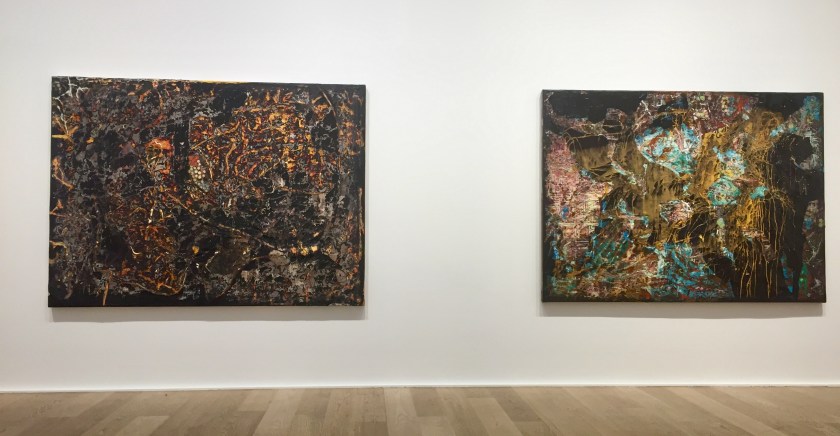
Last, but not least, of my London outings, was the stunning exhibition of Mark Bradford’s work at the Hauser and Wirth Gallery.
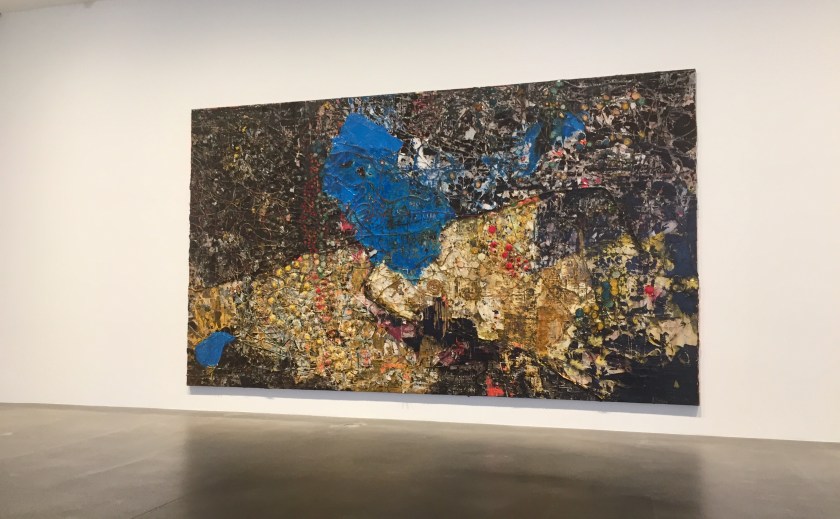
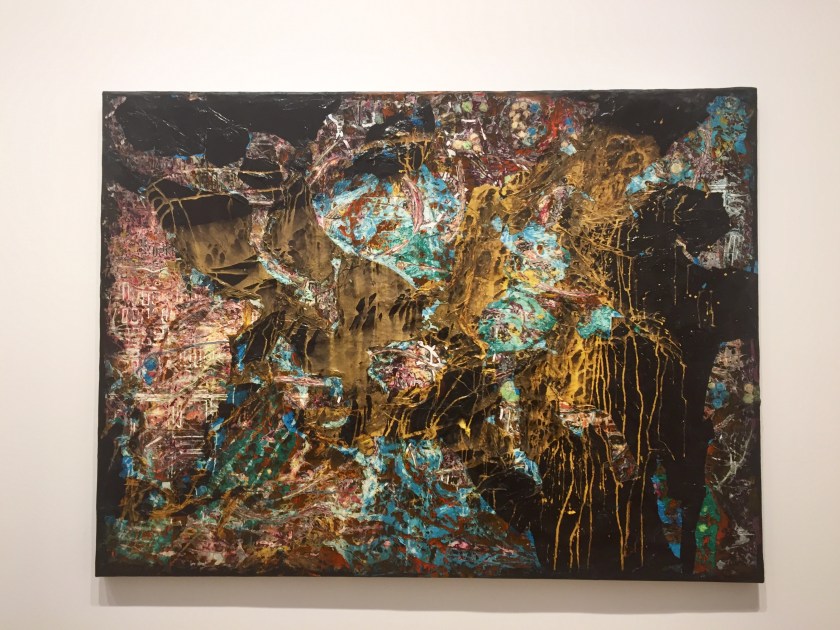
Los Angeles artist Bradford is known for his large, grid-like paintings which combine paint with collage.
Photo: Wikipedia
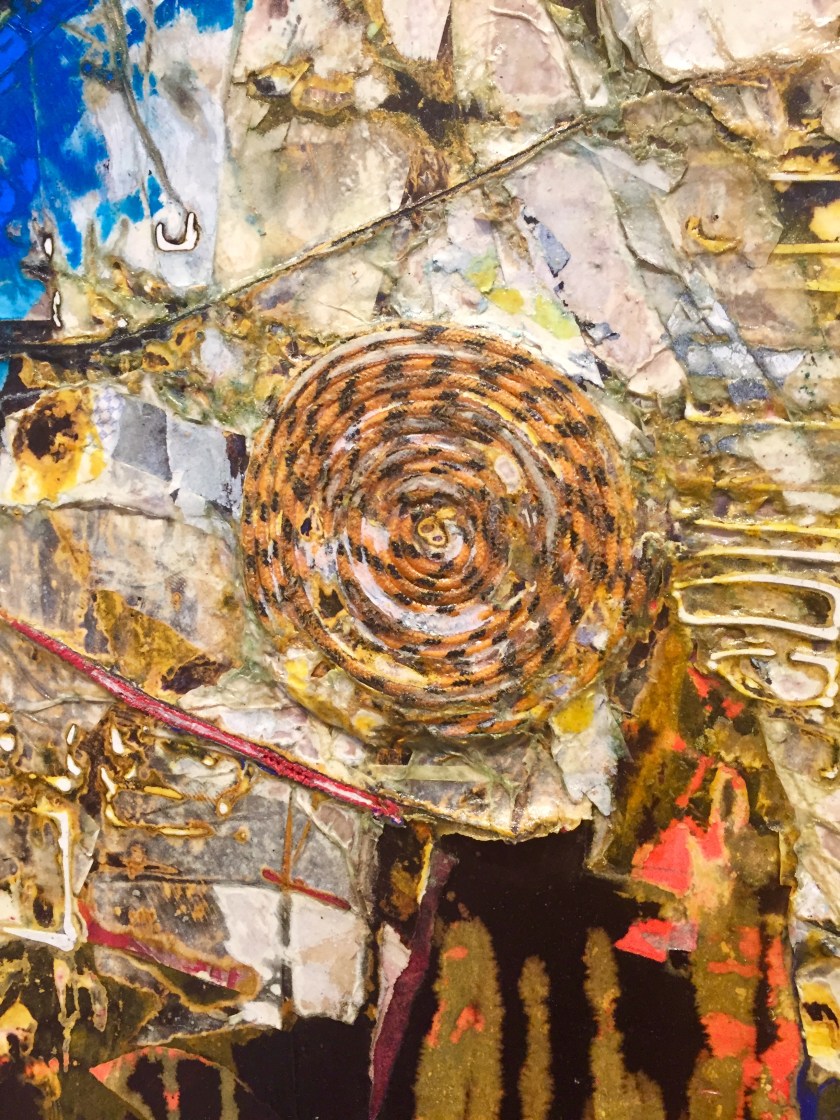
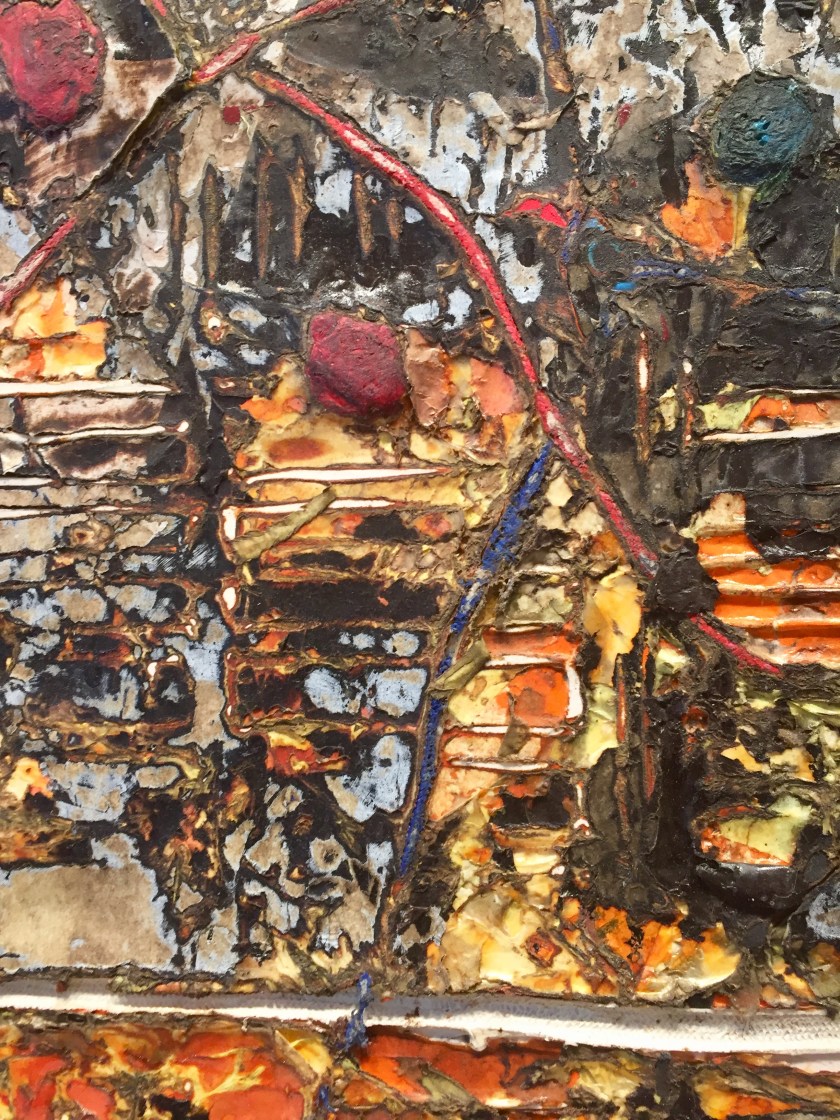
The paintings have to be seen up close to be fully appreciated. He uses a complicated process of layering: the fabric of each painting is formed from strata of pigmented paper which are scored, lacerated and stripped away, along with lengths of rope which are stretched or coiled, sometimes painted over and sometimes ripped out to leave ruts in the surface of the work. See detail below.
Bradford worked as a hairdresser (his mother owned a beauty salon) and only went to study at the California Institute of the Arts in 1991 at the age of 30.
Throughout his career, he has collected ‘merchant posters’ which are printed sheets posted in neighborhoods, advertising services such as cheap transitional housing, foreclosure prevention, food assistance, debt relief, wigs, jobs, DNA-derived paternity testing, gun shows and quick cash, as well as legal advice for immigrants, child custody and divorce.
Bradford transforms the materials he scavenges from the street into wall-size collages and installations; he is inspired by subjects as diverse as civil riots, migrant communities, abandoned public spaces and, in this instance, mythology.
The exhibition is entitled Cerberus, a reference to the many headed dog guarding the entryway to Hades. It is a metaphor representing the ‘in-between’, places difficult and fissured. As he says himself, Cerberus is an “ambivalent character. Is he keeping people out or is he keeping people in?”
I’ve been fascinated by Bradford’s work for a while – the only other artist I know who uses texture to such effect is Anselm Kiefer. But I’ve seen Kiefer’s work live before – this was the first time I’ve been close to a Bradford painting. I was blown away by their sheer size and presence.
I am a little late in getting this post out, but I have just picked up my computer.
I did a very silly thing. A friend supposedly sent me a message, via Messenger, about a video I was in. I am usually very wary about clicking links and I am far more likely to delete a message/email/link than click on it. The message didn’t seem my friend’s style, and I couldn’t image that she would have a video I would be in, but instead of the warning bells going off, I thought “Oh well, let’s see what it is”. Click!
Of course, her Facebook account had been hacked and the message sent to everyone. So, caution finally kicked in, and I took my laptop to the computer shop…just to be safe. Everything is okay. Phew! I am a couple of days older, much wiser and far more cautious, and a…
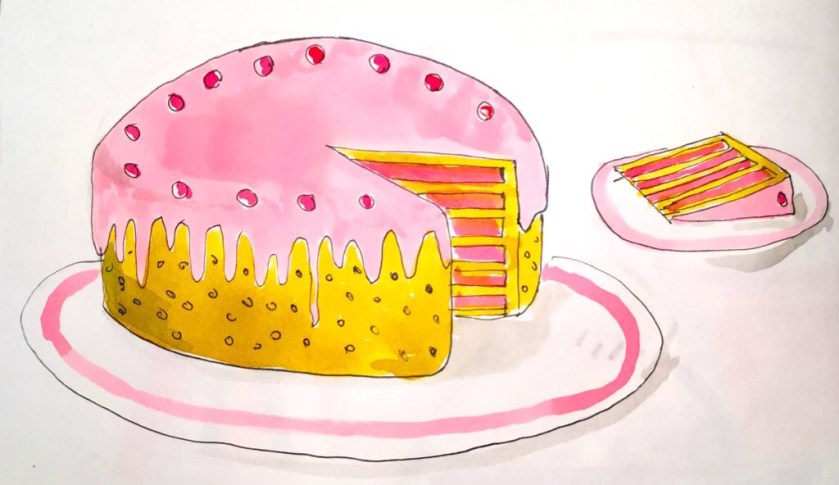
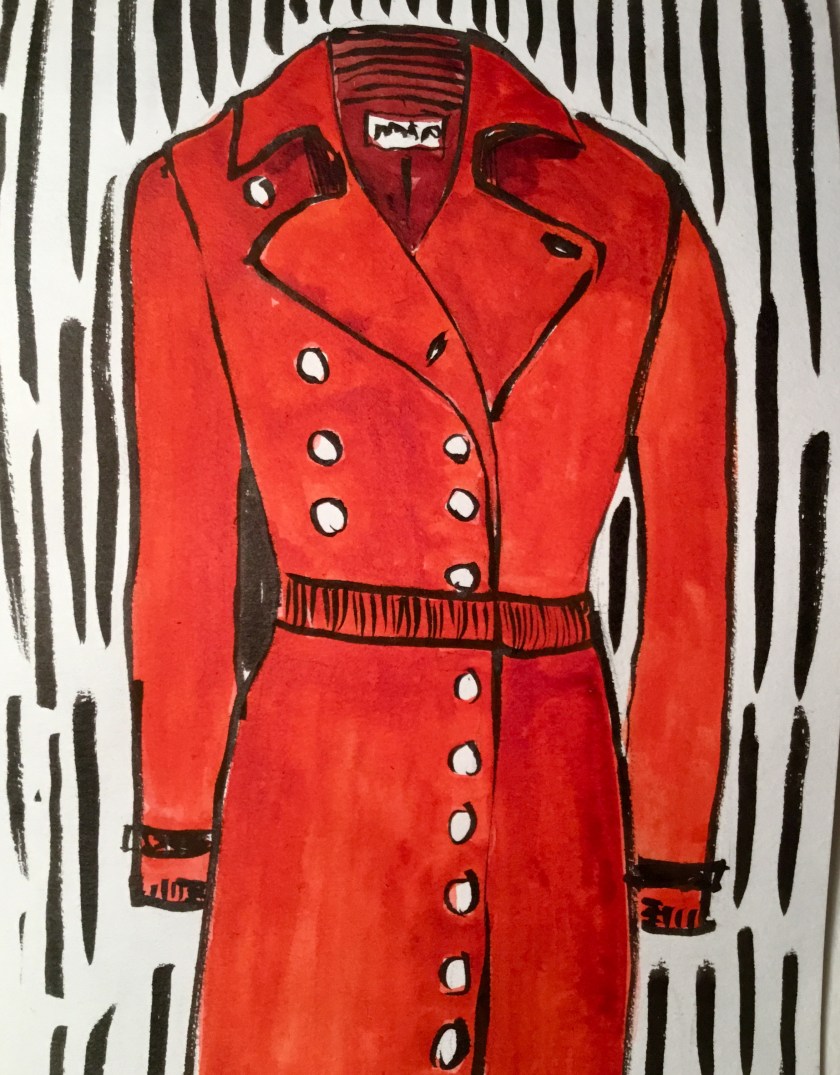
Being busy and, on some days, totally uninspired, my output for Inktober this year contained a lot of gap days and turned out to be a mishmash of different styles. I admire people who either followed all the prompts in a uniform way, thus creating a series, or didn’t but still kept to a personal theme (see my last post). However, nothing about this challenge is an obligation, and I still managed to have fun and experiment a little along the way. See below.
One interior, done in red ink:
A little urban sketching, looking out of a London hotel window:
Some kiddy stuff:
Autumn inspiration, my annual drawing of oak leaves. I added watercolor:
On the same theme, but trying out some new inks:
Playing about with ink on Yupo paper, which is shiny and and slippery, making things uncontrollable:
And, because I find being silly is good for the soul, I sprinkled in some limericks along the way:
During my London trip I managed to get a slot to see the Da Vinci drawings in the Queen’s Gallery.
Marking the 500th anniversary of the death of Leonardo da Vinci, this exhibition showed more than 200 of the Renaissance master’s greatest drawings in the Royal Collection. There was but one word to describe them: they were magical.
Loving works on paper as I do, I literally did not know where to look first: there were the most delicate flowers and plants, drawn with the precision of a botanist, yet filled with life in a unique way. It was a known fact that if Leonardo had to put a few flowers in the corner of a painting, he made dozens of studies before deciding which to use. Look at those acorns below, they seem to glow on the page.
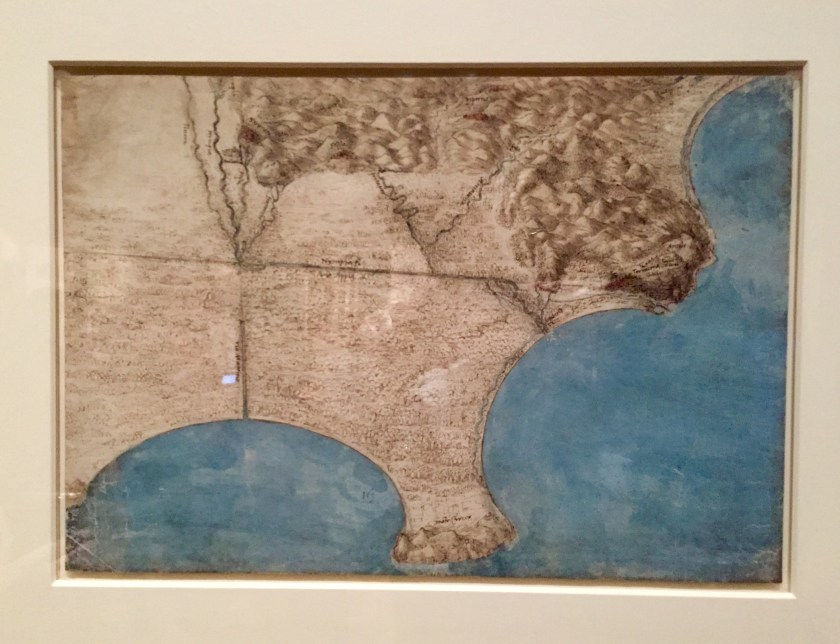
Then there were maps which must have made the adventure-loving amongst his peers long to go off and explore.
The drawings in the Royal Collection used to be bound up in a book that was acquired by Charles II. The pages have now been separated so that the drawings can be shown in their full beauty. They provide an extraordinary insight into the workings of Leonardo’s mind and reflect the full range of his interests, including painting, sculpture, architecture, anatomy, engineering, cartography, geology and botany.
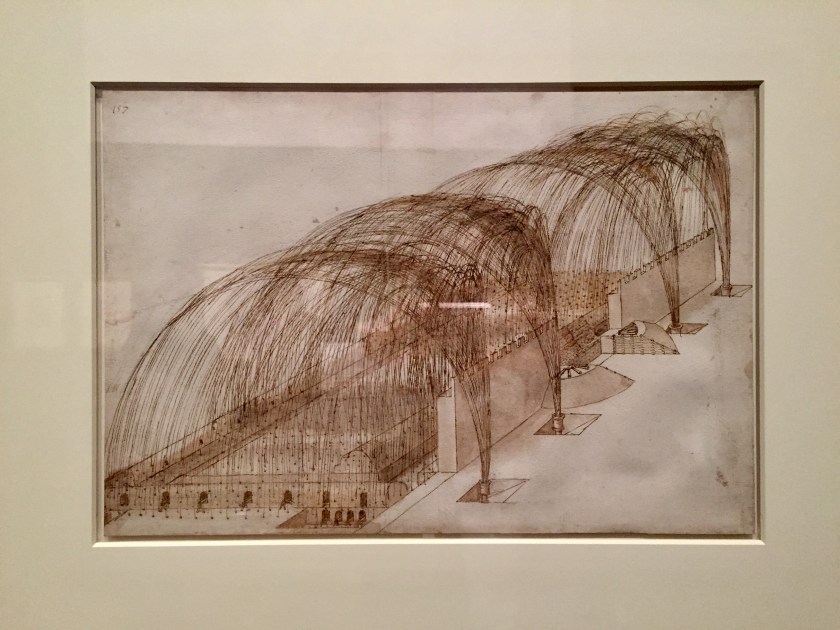
See below his scheme on how to breach a fortress’s walls.
Greece and the international fashion world are mourning the death from cancer of hugely respected designer Sophia Kokosalaki. She was 46.
Sophia was born in Athens in 1972 and, after studying at the University of Athens, she moved to London to enroll in the Central Saint Martins College of Art and Design.
She eventually evolved into a widely admired designer who drew on her Greek roots in producing classical silhouettes and artful drapery, which won various awards during her career.
Sophia was designated chief clothing designer for the summer Olympic Games in Athens in 2004, where she dressed thousands of athletes and performers for the opening and closing ceremonies, honoring Greek myth, history and culture before a global audience. Most spectacular was singer Björk’s “Ocean Dress” with its frothy and swirling pale azure plissé pleats.
She worked as creative director for various fashion houses, including Vionet and the Diesel Black Gold label, but was mostly known for her own label. She also designed the cabin crew uniforms for Aegean Airlines, as well as fine jewelry and a bridal collection.
She is survived by her partner and daughter.
Björk photo from The Independent. All other photos Google.
Two years ago I wrote about Inktober, an Instagram challenge where people have to post a daily ink drawing. There is a list of daily prompts, which are in no way obligatory, and any ink medium goes: fountain pen, biro, brush, micro liner, dip pen. You can add watercolor, collage or anything else. There are no rules and no prizes – it’s a fun thing.
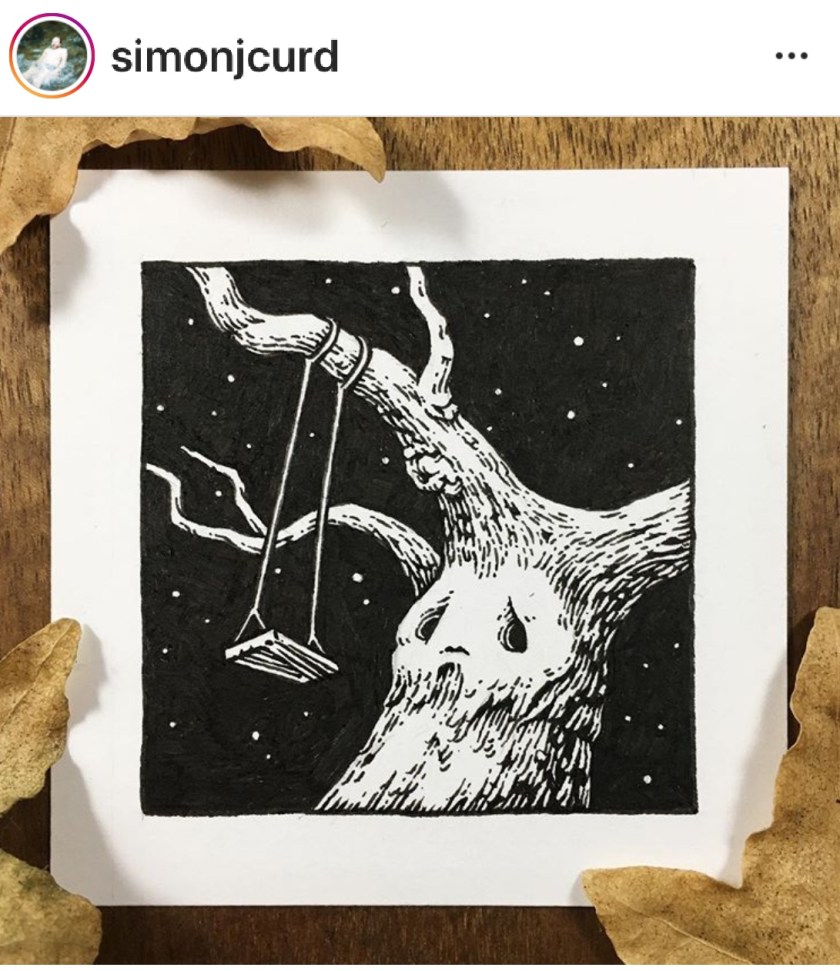
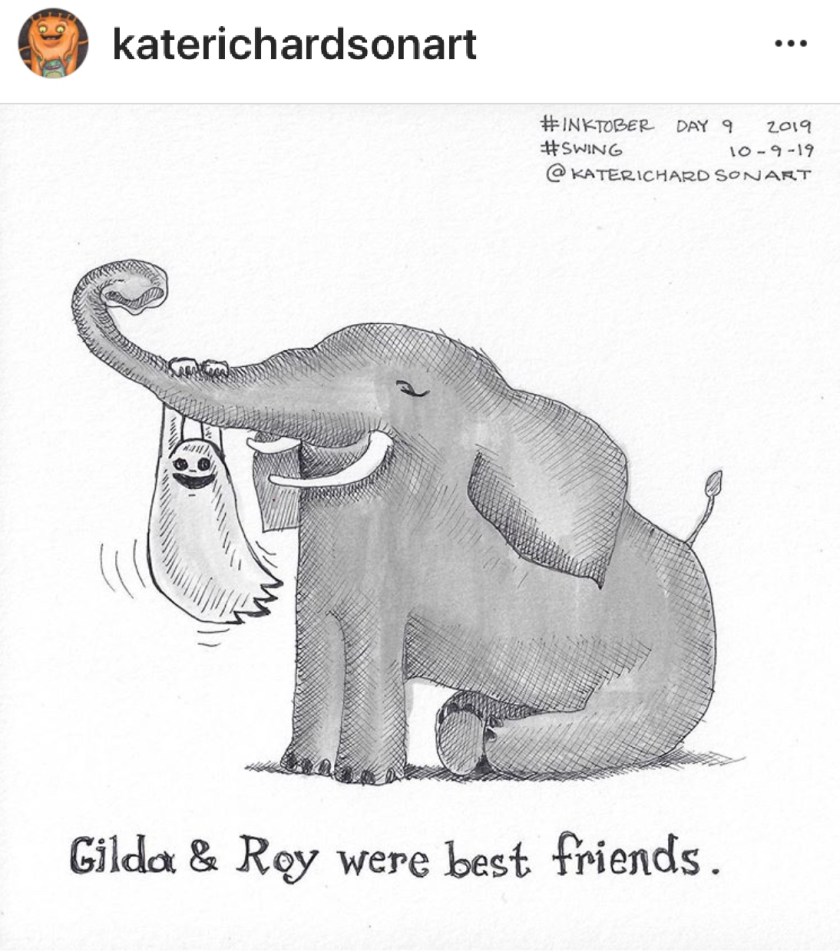
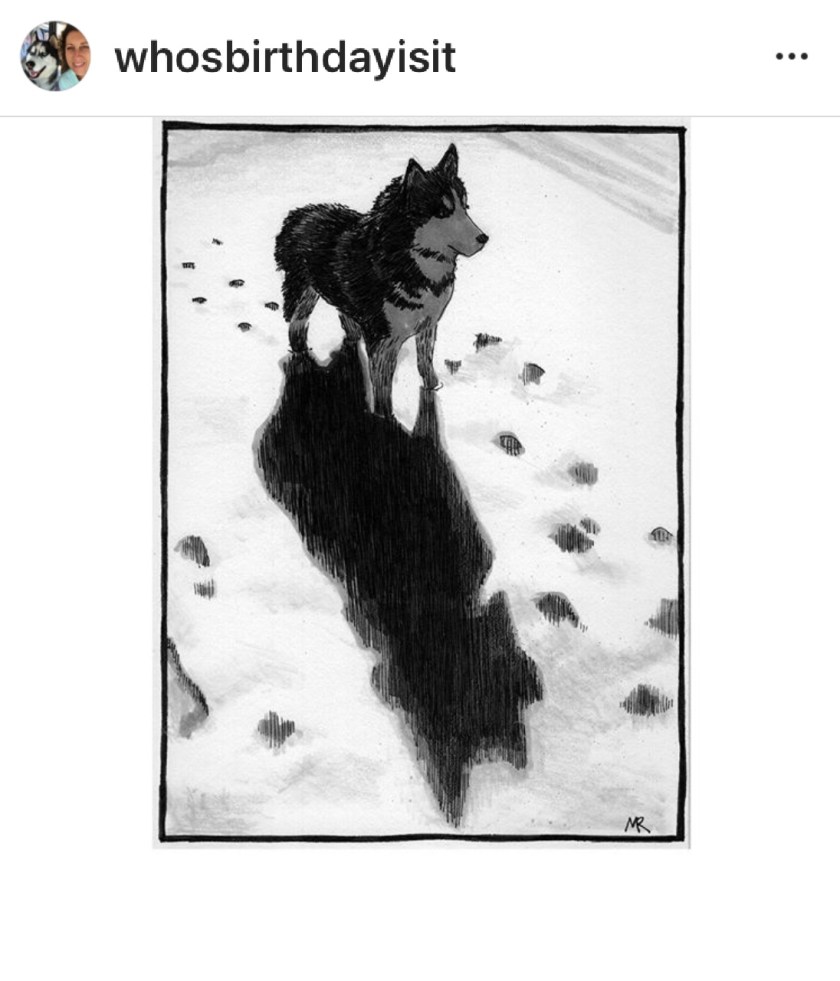
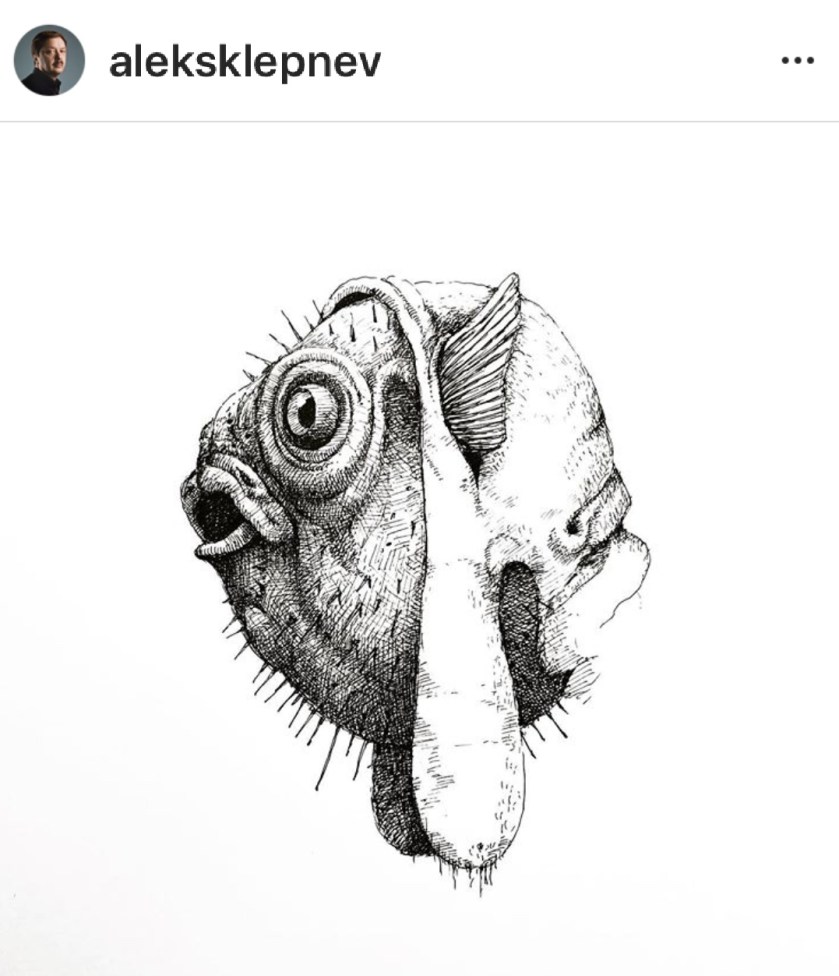
I have never yet managed to post something on all the days, and I’m only intermittently inspired by the prompts, but I always determine to take part, because I enjoy the whole camaraderie going on. It pushes me to experiment, and I always feel I’ll do better next year. At the end of the month I’ll share some of my masterpieces with you, but meanwhile, I would like to present some exceptional artists and illustrators, who mostly follow the prompts with humor and imagination. I’ve noted the particular prompt for each drawing.
So, without further delay, here are:
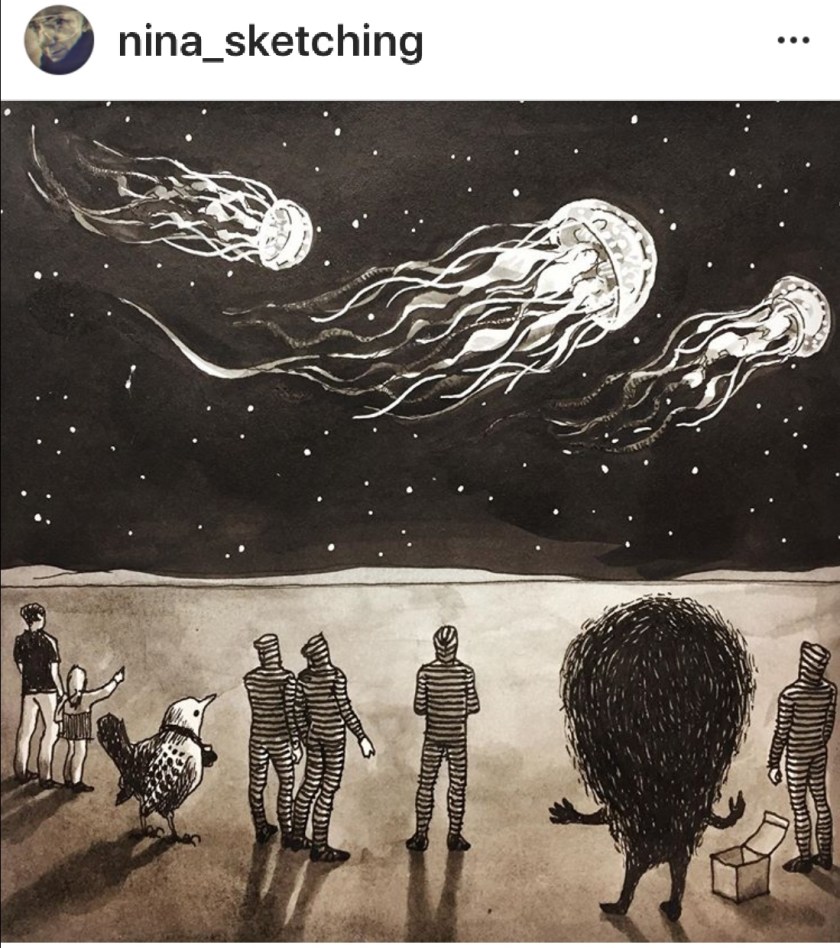
The incomparable Nina and her stripey men. Prompt: Enchanted.
Click on the URLs if you want to see more of each – definitely worth it, and a fun way to pass the time on a Sunday afternoon. There are many others to be found, some follow prompts and some not, but it’s always fascinating to see the different reactions people have to the same prompt.
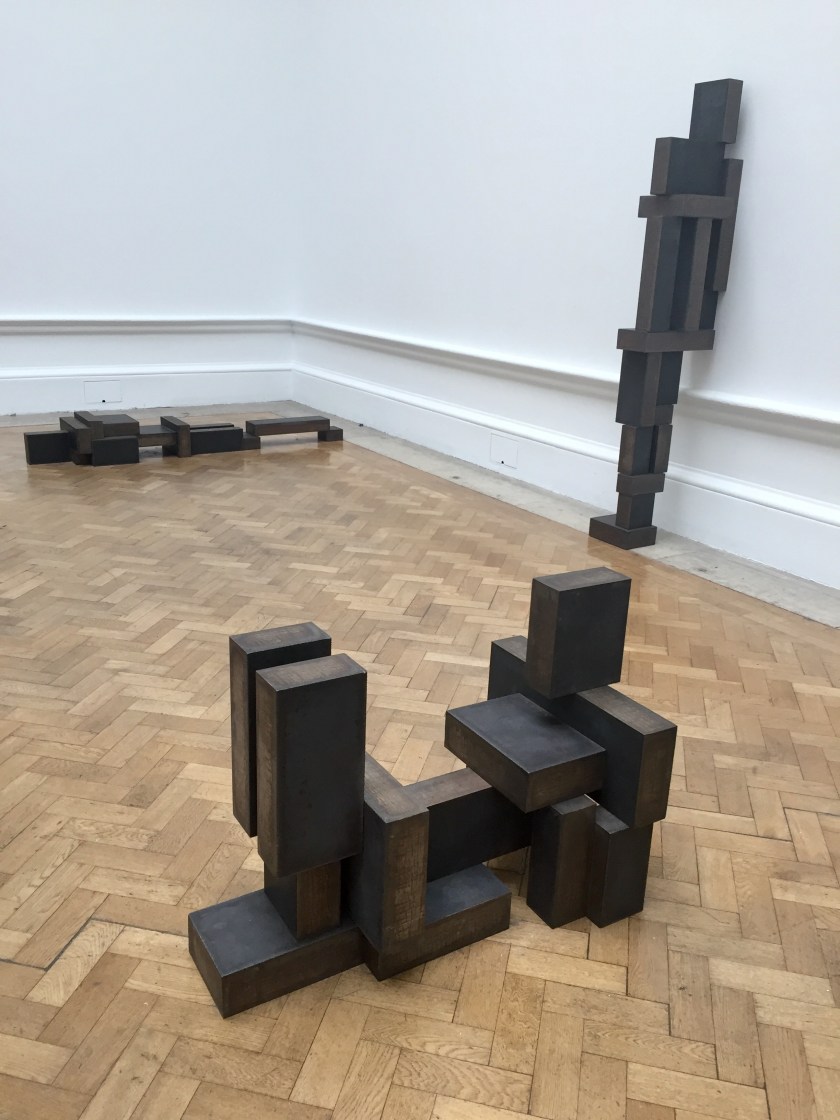
The British sculptor Anthony Gormley seems to be everywhere these days. Sadly, I never managed to get to Delos to see his fantastic installation (for those who missed my post on this, you can find it here), because Delos is not easy to access. However, I took the opportunity to see his lovely exhibition at the Royal Academy in London.
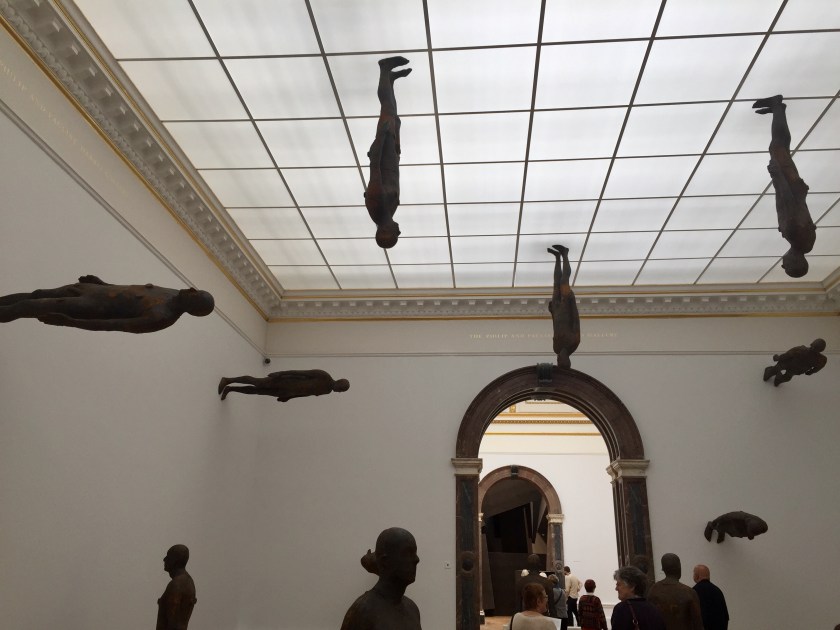
There were many of his ubiquitous depictions of the human body in various forms:
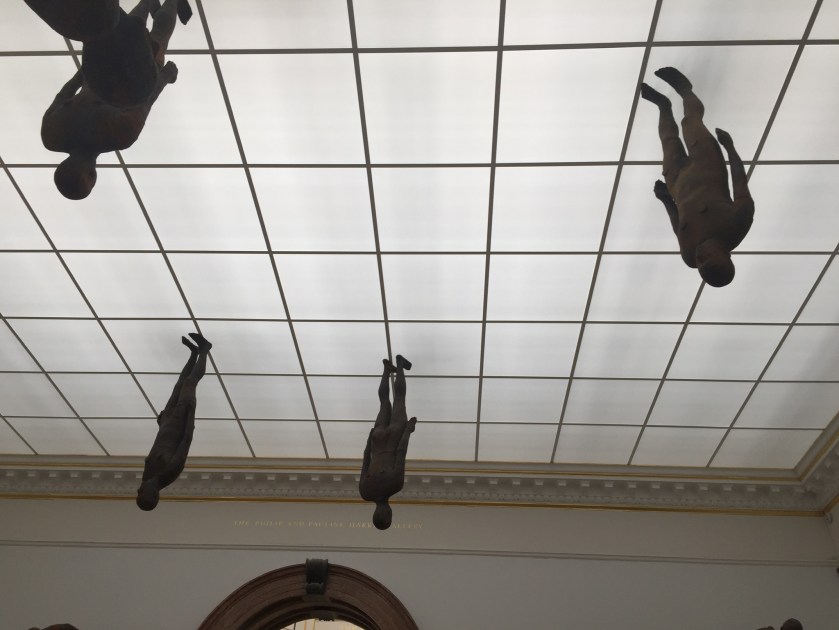
Some upside down
Walking on the ceiling.
But also some large and impressive installations:
Visitors were invited to walk through this one.
The one below looked like an alien vessel – an impressive 6 tons of steel rods suspended from the ceiling, dwarfing the people beneath.
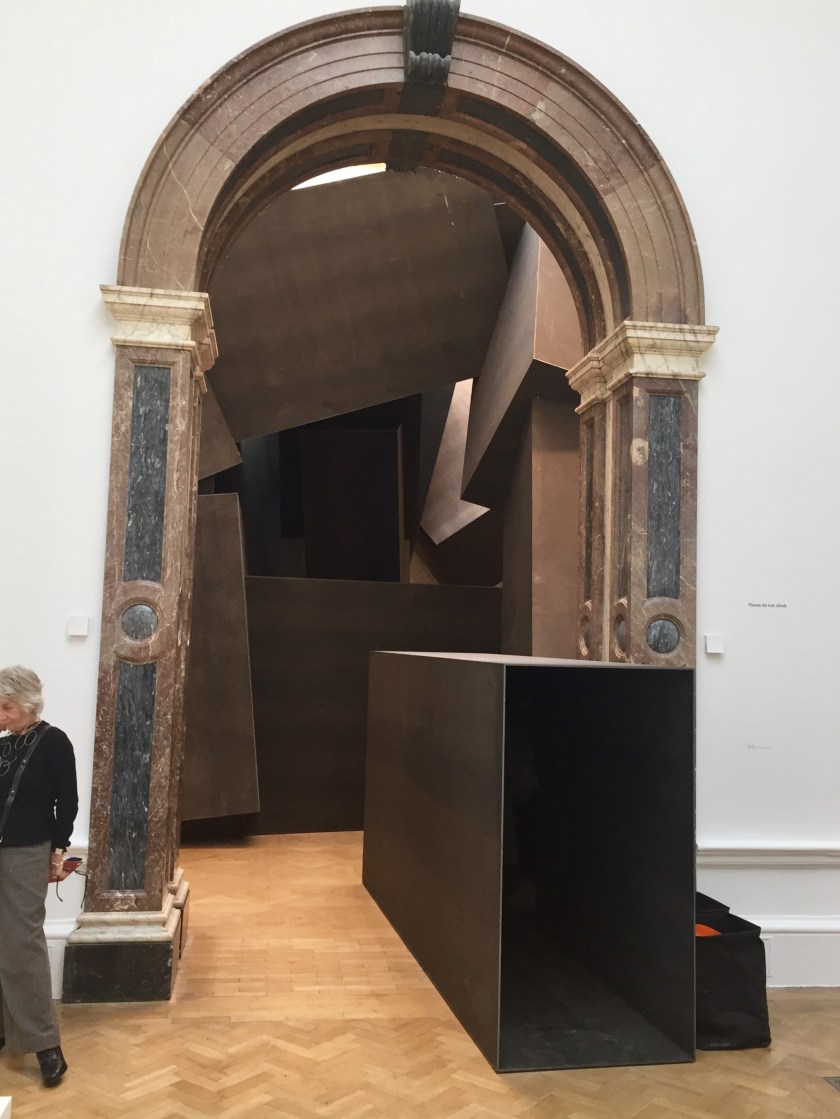
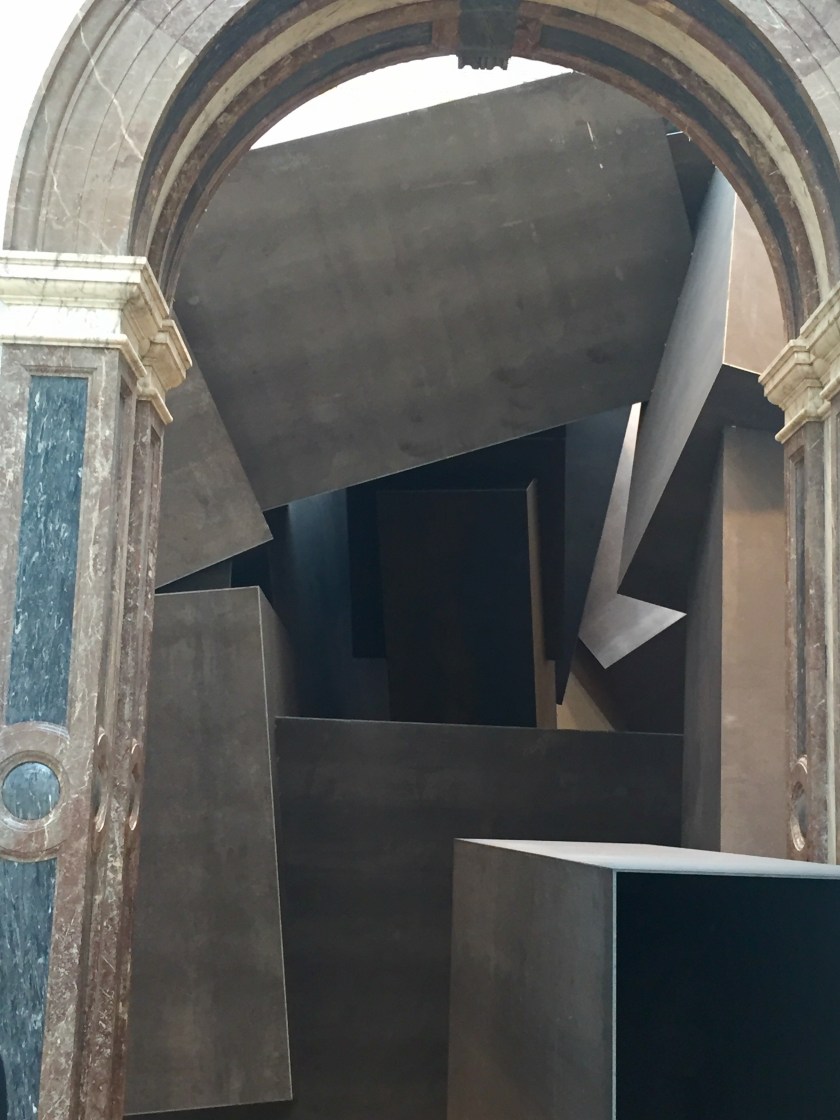
You could also walk through this next one, via the rectangular opening leading into a narrow steel tunnel, in almost total darkness – if you weren’t claustrophobic, that is.
But I mostly loved its architectural shapes, framed by the arched doorway.
Another installation featured a room flooded with Atlantic seawater on a bed of clay from Buckinghamshire. In general, the installations were site-specific, fitting beautifully into the shape of each room.
Wall art included the work below, made with clay on a blanket, which had a fleeting, haunting aura.
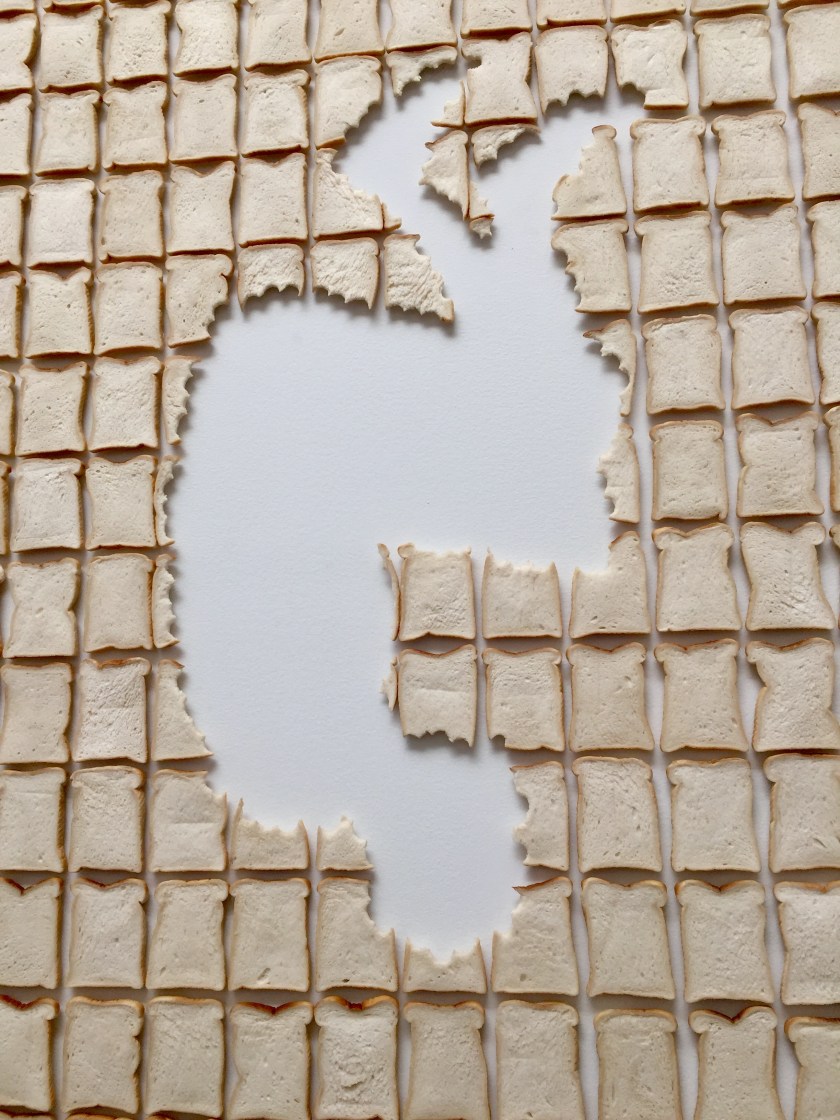
The one below was not one of my favorites, but intriguing nonetheless, since it was made out of slices of bread dipped in wax:
Finally, for someone like me who loves works on paper, there was an abundance of treasures on offer, including a multitude of small spiral notebooks where Gormley recorded his ideas (these proved impossible to photograph, since they were presented in glass cases).
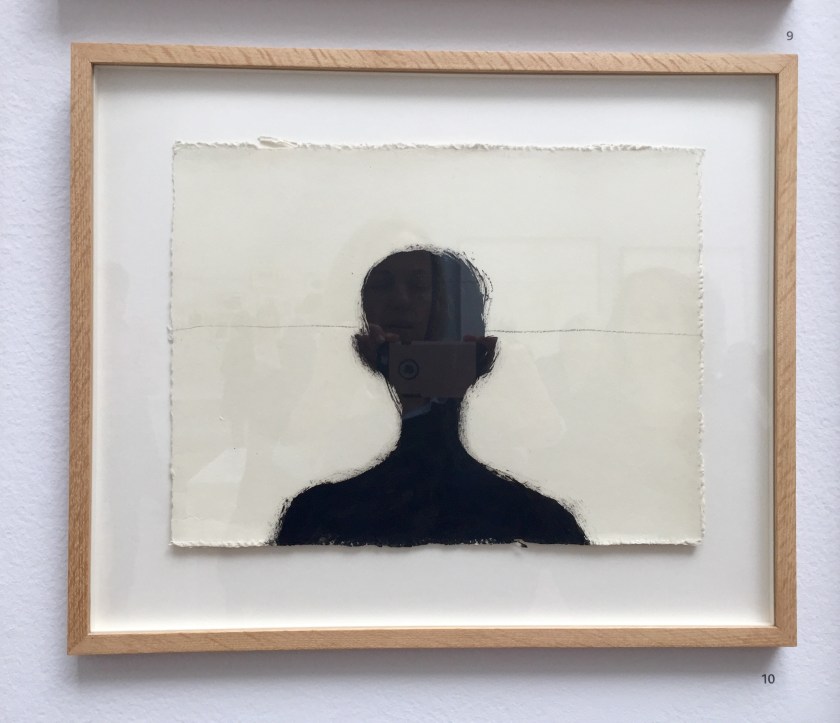
These drawings were made with charcoal and casein.
Deceptively simple,
But very evocative.
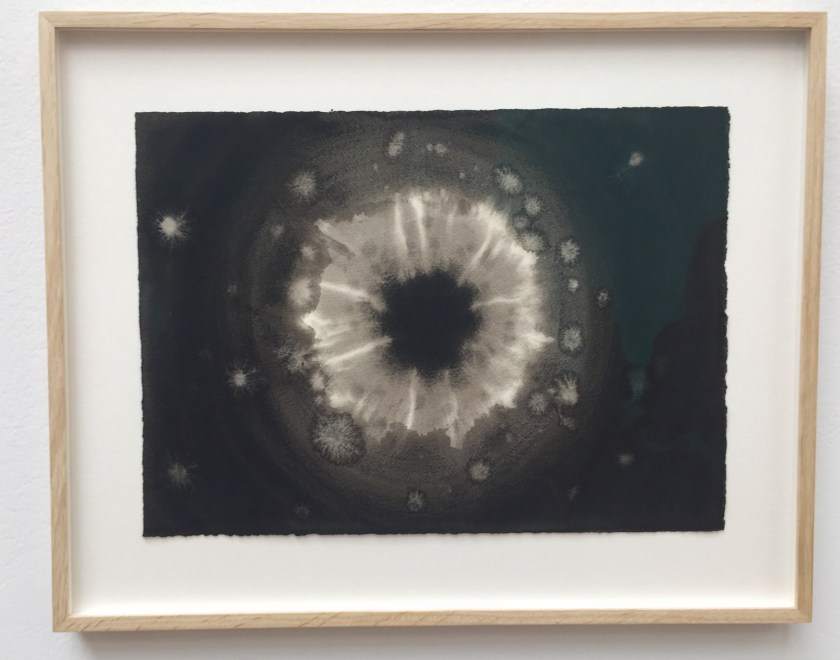
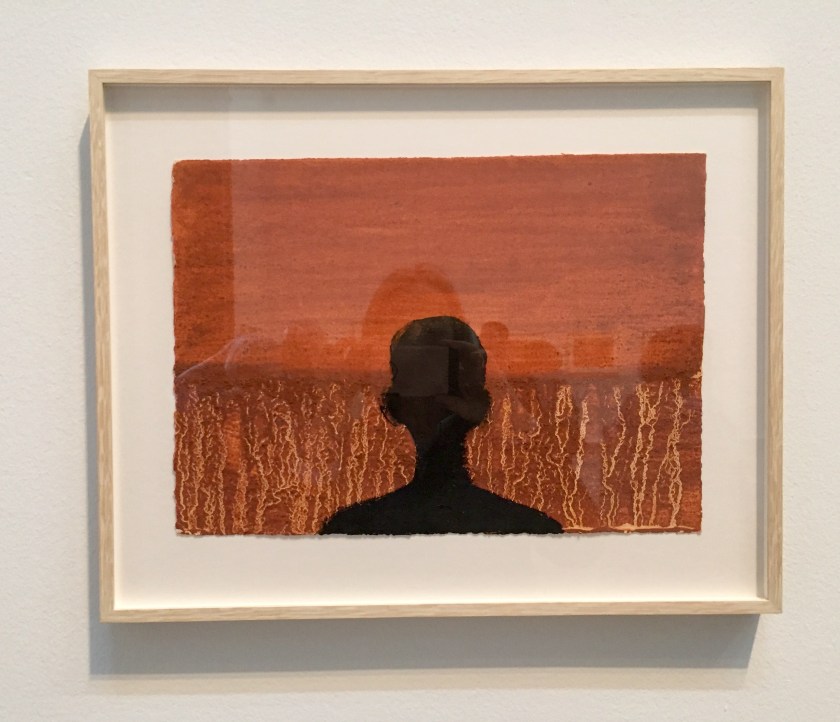
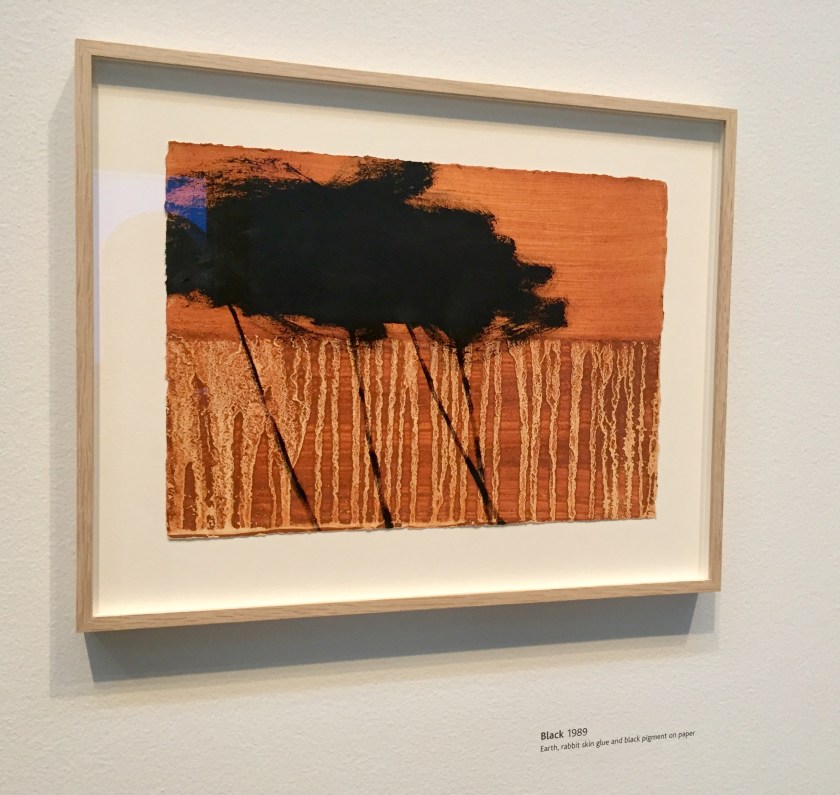
And there was a whole, luminous series made with earth mixed with linseed oil.
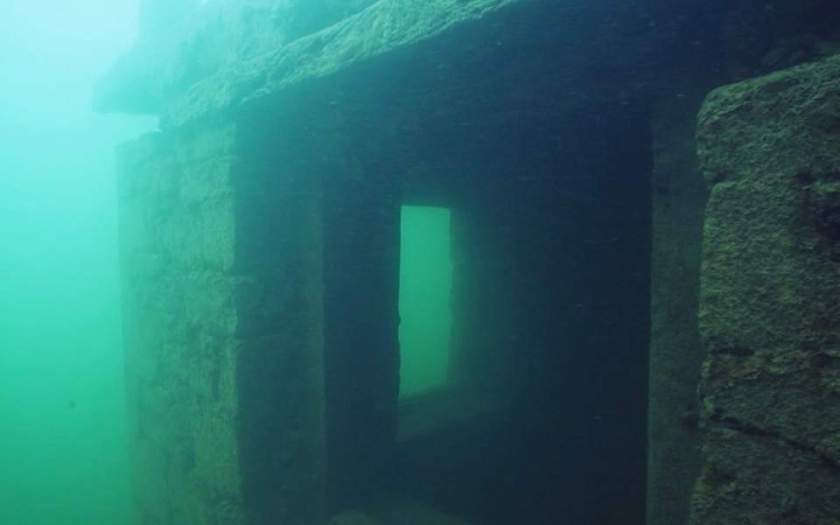
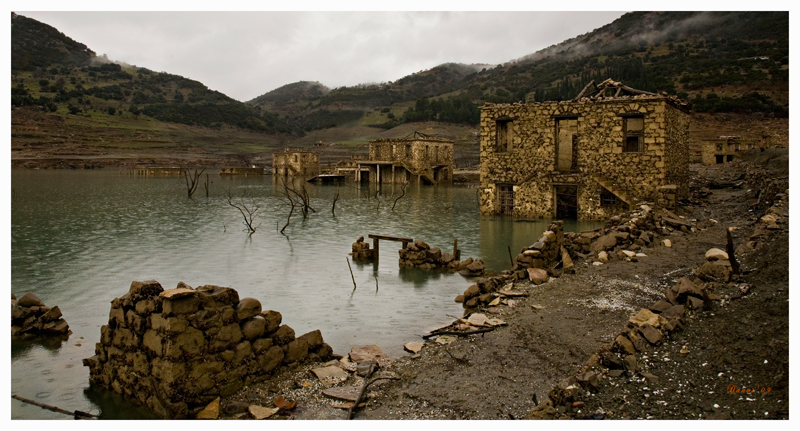
Forty years ago, the inhabitants of Kallio, a stone-built village in Fokis, saw their houses slowly disappear underwater. In 1981, a dam was built in the Mornos River in order to create an artificial lake that would supply Athens with drinking water. The villagers were given no choice: their village was expropriated, and they could only watch silently while the river water flooded their gardens, while the church sank, while the last chimney vanished. The were forced to relocate elsewhere; but they didn’t forget.
Now 27 year old Athenian visual artist Sotiris Tsiganos and his colleague Jonian Bisai have made a short film, NEROMANNA, in memory of the drowned village and the dispersal of its community. They filmed the ghost village underwater, and collected testimonies from its former inhabitants, whom they managed to locate by scouring Greece. “Our village was beautiful”, says an elderly lady, speaking in old fashioned Greek. “It had springs, cold clear waters. We couldn’t believe it when they told us we had to leave. We took the icons from the church, we had to pack everything up and go. We lost our homes.” They also lost each other, as neighbors and friends dispersed to different places.
A lot of the antiquities found locally were also dispersed, some to the museum in Lidoriki, some remaining at the bottom of the lake.
Since that day, this lake has been the main source of water of the Greek capital.
In 1993, a drought shrank the waters of the artificial lake, and part of the ruins emerged. Some of the villagers, who had gathered to see this sight, compared the occasion to a memorial service. It just made everyone sad. “Better not to have seen,” mused one old man. Then the houses sank back under the waters, and only memories remained.
The film was shown at the Athens Biennale 2017, as part of the whole project, Latent Community, whose aim was to present the history of Kallio and to briefly reconstitute its lost community. The filmmakers invited the villagers to a feast, so that they could meet up and tell their stories, thus creating an environment of narratives based on the community’s experiences. A public archive of documents and records, much of which had been provided by the village residents themselves, was also presented.
The two artists described their visual arts research project as having been very emotional, because while doing it they realized that the sacrifice made by these people had never been properly acknowledged. They had become refugees, they had lost their community, and some who could not adapt to the new situation had died. Some of the inhabitants still believe that when they die, they will all go back there to be together again.
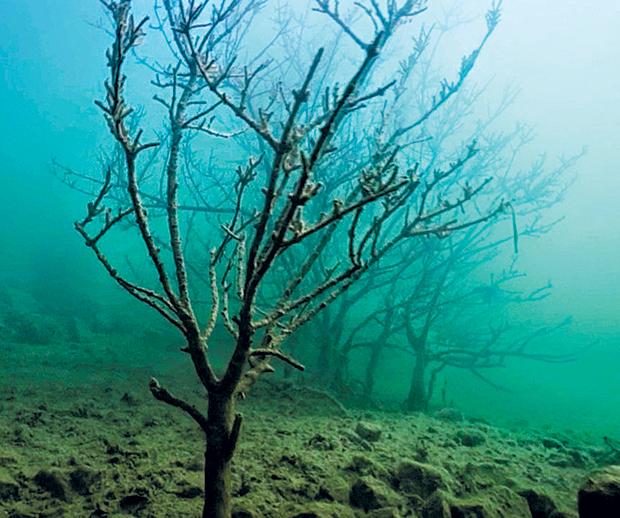
The hauntingly beautiful photo below is by photographer danos kounenis (Trek Earth)
I first came upon this story in an article in the newspaper Kathimerini

















 Letters from Athens