The 12 days of Christmas

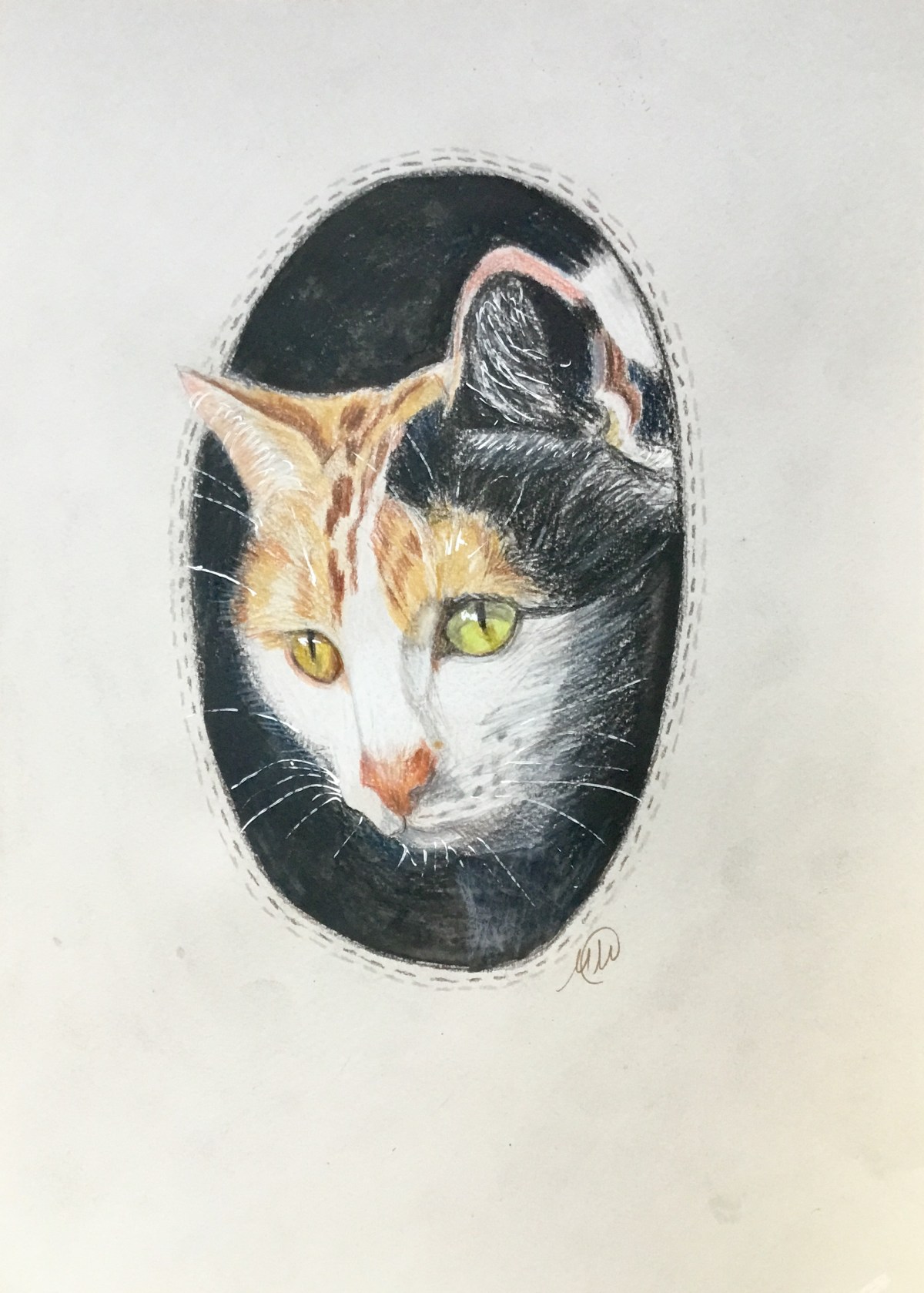
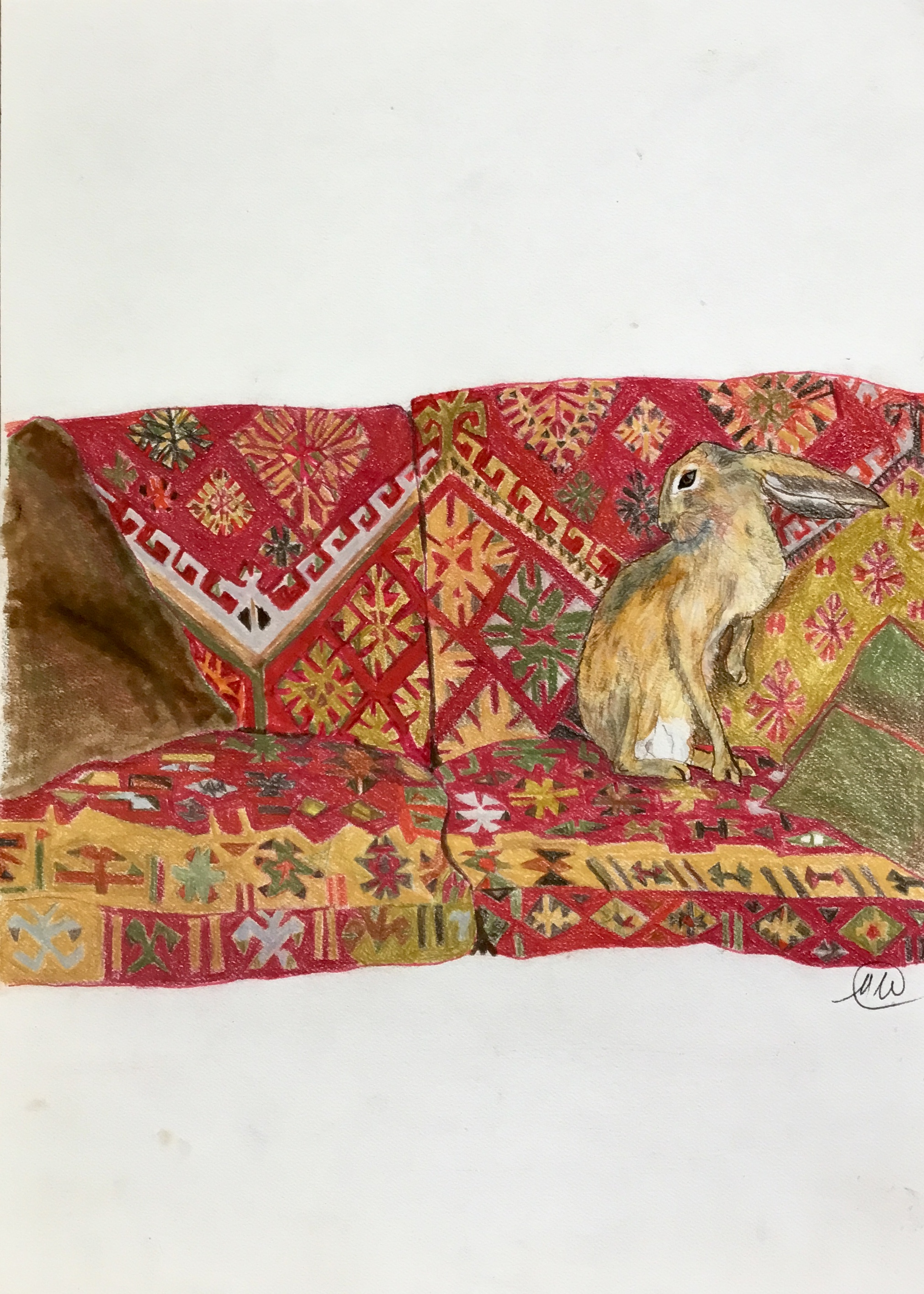
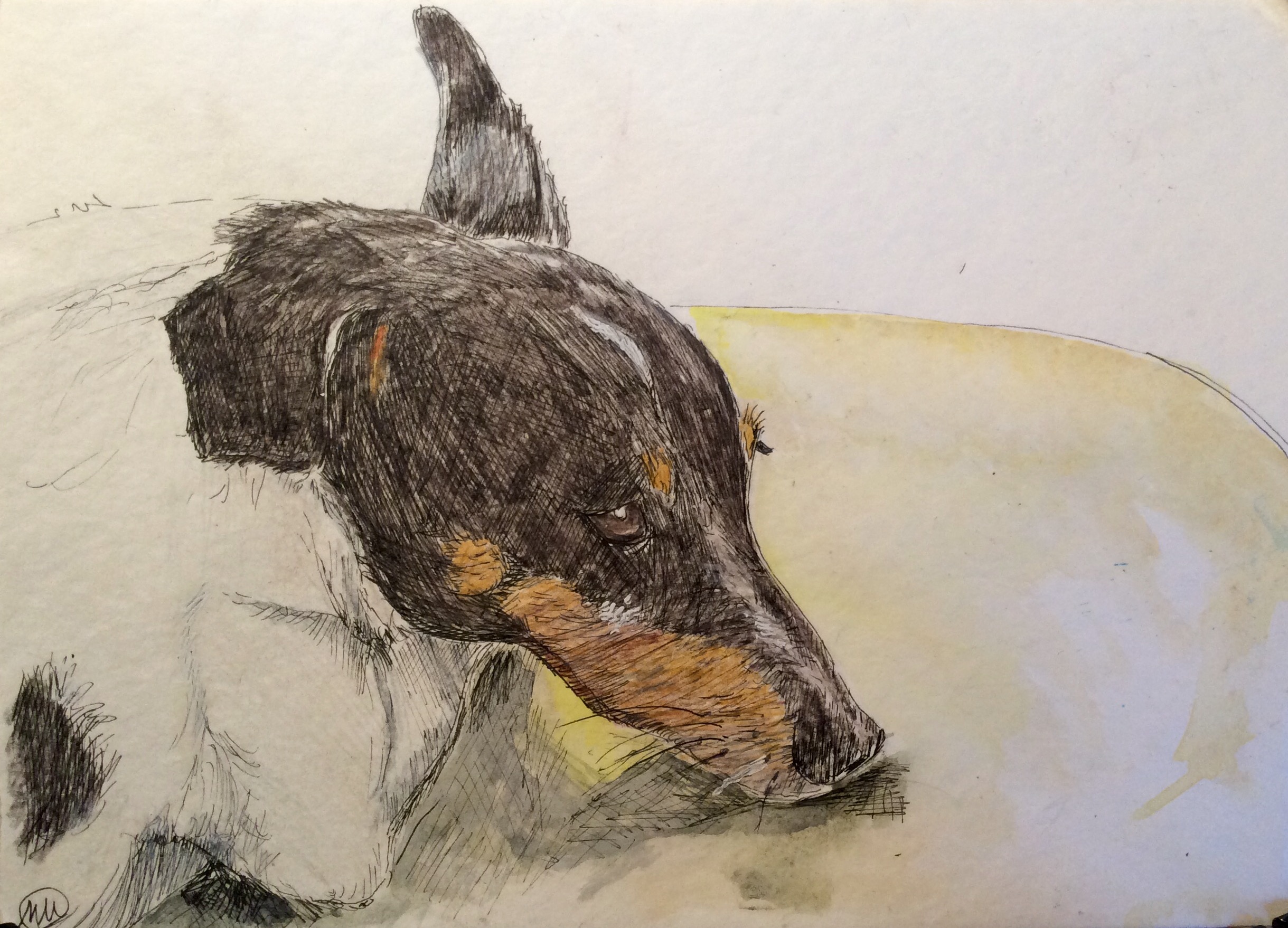
It being TBT today, I thought I’d repost a seasonal article I wrote in 2015, for newer readers—old hands just avert your eyes. I remember I had lots of fun making all the drawings for this post. Here goes:


Christmas can be a tiring and frustrating time. We expect too much, we want everything to be perfect. Some run themselves into the ground, feeling it’s their job to provide that perfection for family and friends. Some expect to be surrounded by luxury and glamour, to be enchanted and entertained. Some just get depressed.

The image of the beautiful family, dressed to kill, with brushed hair and dazzling smiles in front of a tree dotted with tasteful baubles, or sitting around a table laden with a delicious feast is hardly likely to materialize. The gingerbread house will refuse to stay up, and will have to be propped up with cans of tuna. The kids will squabble over their gifts and make faces at the camera, having refused to wear the velvet ruffled garments bought for the occasion. The turkey will be overcooked, and uncle John will get drunk and insult his mother-in-law. Nobody will get the gifts they’d hoped for, and the glamorous party will turn out to be totally devoid of hot babes/dudes. And then the bills will start coming in. (Just an imaginary scenario!)

Perhaps the solution is to aim for less materialistic pleasures. Trying to think what those could be, I came up with the following, somewhat fanciful, list:  of tips for the days to come.

image


On the first day of Christmas – Do something for yourself. A little treat: have a massage, go for a ride or a walk in the park. Take an hour off work for coffee with a friend.


image


On the second day of Christmas – Spend some quality one-on-one time with someone special: spouse, lover, sibling, offspring, grandchild, friend. Or even your dog.


image


On the third day of Christmas – Resolve to think three positive thoughts per day, every day. Or, to note three good things that happened. Or, to find three things to be thankful for.


image


On the fourth day of Christmas – Get four old friends together for a pizza and cards evening. Laughs guaranteed.


image


On the fifth day of Christmas – For the last full working week before Christmas, be cheerful at work. Smile and people will smile in return. Five days – it should be possible.


image


On the sixth day of Christmas – Find six good books to read. Browse in a bookshop, or go through the pile on the bedside table. Books take you away from your problems – they’re a door into another world.


image


On the seventh day of Christmas – Resolve to spend ten minutes each Sunday making a menu for the week. The cooking and shopping will become so much easier.


image


On the eighth day of Christmas – Make a list of eight fun things to do in the coming months. Book a show, visit places you haven’t seen, explore the neighbourhood. Almost as good as a vacation (but one of them could be a weekend break).

image


On the ninth day of Christmas – Bake or buy cupcakes or cookies and distribute them. Food makes people happy.


image


On the tenth day of Christmas – Get ten people together and have a party. Don’t spend a fortune, or ages cooking – everyone can bring something.


image


On the eleventh day of Christmas – De-clutter. Find 11 things to donate, recycle or bin. You’ll feel so much lighter.


image


On the twelfth day of Christmas – Call twelve people and ask how they are. Listen to what they have to say. Not your buddies to whom you talk every day: the old friend you haven’t seen for a while, the elderly aunt who bores you, the acquaintance you heard has not been well. It will make everyone feel better.

I hope this list has amused you, if nothing else. Do I hear hollow laughs? Any other suggestions?


Poet and artist William Blake


Taking advantage of a couple of days in London a few weeks ago, I tried to fit in as many art shows as possible. After the Gormley exhibition at the Royal Academy, I went to see the works of William Blake at Tate Britain.
When I was in school, I found Blake’s poetry a little grim, if not downright creepy: O rose, thou art sick… etc. But I was always intrigued by any accompanying illustrations, so seeing them in the flesh is always a real treat.


William Blake (self portrait above), born 1757 – died 1827, was an English poet, painter, and printmaker. He lived most of his life in London, at a time of great political and sociological change which greatly influenced his writing. He was largely unrecognised during his lifetime, but is posthumously considered one of the leading lights of English Romanticism.


The painting above is ink, graphite and watercolor, and has been named An Allegory of the Bible, which is not the artist’s title. The Bible, however, was always an inspiration for Blake, and in this composition he has started using more color than previously.


Blake was born into a modest family who, happily, encouraged his artistic leanings. He eventually went to work as an engraver, and at the age of 31 developed relief etching, a method he used to produce most of his books, paintings, pamphlets and poems. The process is also referred to as illuminated printing; however, for his commercial work, Blake mostly used the more common intaglio engraving. He is a master of composition, as can be seen in the painting above. He also used oils, as In the painting below.


Between 1793 and 1795 Blake produced a remarkable collection of illuminated works that have come to be known as the Minor Prophecies, in which he examines the fall of man. In Blake’s mythology man and God were once united, but man separated himself from God and became weaker and weaker as he became further divided.


One of the best known paintings from this series is the one above, which, though small, is very powerful. Its central figure is Urizen, who, measuring the world beneath him with his golden compass, represents the scientific quest for answers. For Blake this action was a threat to what he thought of as the cornerstones of human happiness: imagination, creativity and thought.


Blake must have had fantastic eyesight to be able to spend hours writing out his poems in minute script before illuminating them. Blake also illustrated other people’s work, such as Thomas Grey’s lovely ‘Elegy written in a country churchyard’.


And his engraving of Chauser’s The Canterbury Tales remains probably the best known image on this subject.


A new museum in Athens

Although we are spoilt for choice in Athens as far as antiquities and Byzantine icons are concerned, up to now there were no permanent exhibitions of modern and contemporary art. This hole has just been filled with the advent of a new museum hosting a wonderful collection of modern and contemporary paintings and sculpture.


After 26 years of planning and six years of construction, the Basil and Elise Goulandris Foundation has opened its new space in a totally renovated neoclassical building in the Pangrati neighborhood of Athens. The museum showcases the stunning private collection of the late Basil Goulandris and his wife Elise, and boasts around 180 paintings, sculptures, and artifacts.


Young man with bouquet, from Picasso’s rose period


A shipping magnate whose shrewd eye and passion for art was equaled by his wife’s, Basil Goulandris collected unique pieces over the years, starting with a wonderful El Greco, The Veil of San Veronica.


The couple lived with the paintings on the walls of their houses and, in 1979, when the works of art had become too numerous to be privately enjoyed, they inaugurated the Museum of Contemporary Art on the island of Basil’s birth, Andros; this was, at the time, the country’s first institution devoted to the art of the present.
However, they always nurtured a dream to establish another art space in the center of Athens, which would offer broader audiences an opportunity to see contemporary art.


Gauguin, Bowl of grapefruit


Now, 30 years after Basil’s death and 20 years after Elise’s, their vision has become reality. The original 1920s listed, three-floor building has been complemented by a modern extension hovering above the facade and now contains 11 stories (5 of which are underground to house the annex activities such as archives and storage) connected by a central stairwell made of white marble. The combination of the two styles on the outside is harmonious, and inside the different areas merge seamlessly into each other, giving an impression of spaciousness. In front of the building a little square, also renovated by the foundation, abuts the steps leading up to the church of Agios Spyridon, which was built in 1903 on designs by the noted German architect Ernst Ziller.


The museum boasts all the relevant amenities, such as a museum shop, a lovely restaurant, education spaces, and a library containing 4,500 volumes. There is also a 190-seat amphitheater, where screenings, concerts, and other events can take place. The foundation is headed by Elise Goulandris’ niece Fleurette Karadonti (President), and the museum’s director Kyriakos Koutsomallis, plus his daughter Marie Koutsomallis-Moreau (the collection’s chief curator). Their plan is to rotate the paintings of the collection on a regular basis, so that visitors can eventually get to see them all.


Giacometti, portrait of Yanaihara


The collection includes lovely pieces of sculpture, such as the Giacometti below


And a little dancer by Degas, which caused major controversy in its time, being presented in a glass case and with the addition of tulle, leather and ribbon.


There is a luminous room of works on paper, such as the Matisse below.


And a floor devoted to major and rising Greek artists. See below two beautiful works by Tsarouhis.


Like many diaspora Greeks, Basil and Elise had a deep love for their motherland, and always wanted to give something back to Greece. Having no children, they dedicated themselves to art, and their Paris home became a meeting place for many personalities of the art world, such as Callas, Baryshnikov, Balthus and Chagall, whose portrait of Elise graces the entrance.


Hauntingly misty Balthus landscape


However, finding a site for the museum took several years because its original location, a plot next to the Byzantine and Christian Museum, yielded an amazing archaeological find during construction: Aristotle’s Lyceum. After many setbacks, all obstacles were happily overcome, and the new museum is already teeming with visitors.

Van Gogh, olive grove

The collection is certainly unique, and I advise anyone planning to go to make time for lunch or at least a coffee and cake in the restaurant. The food is delicious and the waiters super friendly.


Francis Bacon


All photographs are mine, which is why they’re very moderate. The light in the museum was low, in order both to preserve the works but also to bring out their wonderful colors.


A small Jackson Pollock

HE DID IT!

After a nail biting contest which had watchers on the edge of their seats, Greek tennis player Stefanos Tsitsipas gave it everything he had to win the ATP Championship over Austrian Dominic Thiem.


The two, who apparently are good friends off court, were evenly matched and equally determined. They fought point by point to the bitter end. Stefanos finally prevailed, in my opinion by not allowing himself to become as frustrated at faults and set backs as his opponent and holding his nerve all the way. Be that as it may, it was very high quality tennis, and commentators were saying tennis is safe with such players following in the footsteps  of Federer, Djokovic and Nadal.

Tsitsipas is the first player from Greece to win the tournament and the youngest champion since Lleyton Hewitt in 2001. Not bad for a 21 year old!


Dreams can come true


Last night, Greek tennis whiz kid Stefanos Tsitsipas managed to beat his hero, Roger Federer, in the ATP semifinal, thus reaching the biggest final of his career.


On the tennis.com site last night a headline blared:

NEARLY UNBREAKABLE: TERRIFIC TSITSIPAS TAKES OUT FEDERER AT ATP FINALS

The Greek saved 11 of the 12 break points he faced to win the first semifinal at the season finale in London.

I posted about Stefanos Tsitsipas before here. Yesterday he overpowered his all-time hero Roger Federer, 6-3, 6-4, at the Nitto ATP Finals in London. The 17-year age gap between Tsitsipas (21) and Federer (38) was the largest in tournament history.

The day before, Tsitsipas had played a taxing match in a grueling three-set loss to Rafael Nadal. But he overcame his weariness and any nerves at realizing the whole stadium was rooting for Federer. At the end he was all smiles and disbelief that he could even find himself in such a position. In his own words: « I’m really proud that I managed to save so many break points today. I was trying not to give an easy time to Roger. Playing him is the biggest honor that I can have. Today’s victory is probably one of my best matches of this season. These are the moments I always wait for and want to prove the best out of my game.”

Some days before, he hadn’t even be sure he’d qualify for the event, and found out in public. See below:


Tonight he faces world no 5 Dominic Thiem in the final. Best of luck to him. 🍀🍀🍀🇬🇷


Photos: Getty Images

Greek cops can sing


Here’s a little news story that brought a smile to our faces today, amid all the depressing articles about the economy, the refugee situation, Brexit, the wars going on everywhere and the usual spate of crimes: A young policeman in uniform in the Monastiraki quarter of Athens joined a busker playing guitar in the street, taking the microphone and belting out ‘Stand by me,’ – in English – to the delight of passers by. The video of his performance has gone viral.

See below:


Disclaimer: I didn’t mean that ALL Greek cops can sing, nor was I suggesting they take music lessons in working hours!


More about Yayoi Kusama

Regular readers will know I’m a big fan of Japanese artist Yayoi Kusama. I’ve already done two posts about her (here and here) , because I find both her art and her personality fascinating. Despite now being ninety years old and living in a psychiatric facility, Yayoi Kusama is more prolific than ever. According to the New York Times, the show openings of the ‘Japanese mastermind of obsessively dotted paintings, hallucinatory pumpkins and sometimes blandly decorative installations, have become the art world’s equivalent of Star Wars premieres.’


Yayoi Kusama infinity room at Zwirner Gallery, New York
Yayoi Kusama infinity room. Photo: from David Zwirner Gallery


Her new exhibition at the David Zwirner Gallery in New York is entitled ‘Every day I pray for love,’ and features one of her famous infinity rooms, a mirrored chamber filled with reflective steel orbs. The exhibition is free, but the public will have to wait for hours in line, and can expect to stay in the infinity room for a minute at most.

You can read an article about it on Artnet News (here)

For the Paris art fair FIAC 2019 in October, Kusama also had one her spotty pumpkins set at the Place de Vendôme. This was a gigantic, 10m high inflatable structure covered in black dots.


Mark Bradford’s CERBERUS paintings

Last, but not least, of my London outings, was the stunning exhibition of Mark Bradford’s work at the Hauser and Wirth Gallery.


Los Angeles artist Bradford is known for his large, grid-like paintings which combine paint with collage.


Photo: Wikipedia


The paintings have to be seen up close to be fully appreciated. He uses a complicated process of layering: the fabric of each painting is formed from strata of pigmented paper which are scored, lacerated and stripped away, along with lengths of rope which are stretched or coiled, sometimes painted over and sometimes ripped out to leave ruts in the surface of the work. See detail below.


Bradford worked as a hairdresser (his mother owned a beauty salon) and only went to study at the California Institute of the Arts in 1991 at the age of 30.
Throughout his career, he has collected ‘merchant posters’ which are printed sheets posted in neighborhoods, advertising services such as cheap transitional housing, foreclosure prevention, food assistance, debt relief, wigs, jobs, DNA-derived paternity testing, gun shows and quick cash, as well as legal advice for immigrants, child custody and divorce.


Bradford transforms the materials he scavenges from the street into wall-size collages and installations; he is inspired by subjects as diverse as civil riots, migrant communities, abandoned public spaces and, in this instance, mythology.


The exhibition is entitled Cerberus, a reference to the many headed dog guarding the entryway to Hades. It is a metaphor representing the ‘in-between’, places difficult and fissured. As he says himself, Cerberus is an “ambivalent character. Is he keeping people out or is he keeping people in?”


I’ve been fascinated by Bradford’s work for a while – the only other artist I know who uses texture to such effect is Anselm Kiefer. But I’ve seen Kiefer’s work live before – this was the first time I’ve been close to a Bradford painting. I was blown away by their sheer size and presence.


SAL #4 ~ Portsea Cliff

I’m useless at sewing and embroidery , so I thought I’d give everyone a peep of Anne Lawson’s beautiful work. Just look at those colors!

anne54's avatarAnne Lawson Art

I am a little late in getting this post out, but I have just picked up my computer.

I did a very silly thing. A friend supposedly sent me a message, via Messenger, about a video I was in. I am usually very wary about clicking links and I am far more likely to delete a message/email/link than click on it. The message didn’t seem my friend’s style, and I couldn’t image that she would have a video I would be in, but instead of the warning bells going off, I thought “Oh well, let’s see what it is”. Click!

Of course, her Facebook account had been hacked and the message sent to everyone. So, caution finally kicked in, and I took my laptop to the computer shop…just to be safe. Everything is okay. Phew! I am a couple of days older, much wiser and far more cautious, and a…

View original post 335 more words

My Inktober 2019

Being busy and, on some days, totally uninspired, my output for Inktober this year contained a lot of gap days and turned out to be a mishmash of different styles. I admire people who either followed all the prompts in a uniform way, thus creating a series, or didn’t but still kept to a personal theme (see my last post). However, nothing about this challenge is an obligation, and I still managed to have fun and experiment a little along the way. See below.

One interior, done in red ink:


A little urban sketching, looking out of a London hotel window:


Some kiddy stuff:


Autumn inspiration, my annual drawing of oak leaves. I added watercolor:


On the same theme, but trying out some new inks:


Playing about with ink on Yupo paper, which is shiny and and slippery, making things uncontrollable:


And, because I find being silly is good for the soul, I sprinkled in some limericks along the way:


There was a young woman from York

Who sat down to tea with a stork.

When he started to eat

With his very long beak

She said, Could you please use your fork!


Sometimes I did follow the prompts.


Day 28 prompt – RIDE:

A beautiful girl in an open car

Was sure she was going to be a star

A crusty old geezer

Who wanted to please her

Had told her he knew she was going far


Day 25 prompt – TASTY:

Let them eat cake!’ The Queen cries

‘It is tasty and wholesome besides.’

But the folk in the street

Have nothing to eat

So they riot for sausage and fries.


Day 12 prompt – DRAGON


Day 27 prompt – COAT:


Day 6 prompt – HUSKY:


Well, that’s all, folks! On to the next project.