Easter Lilac

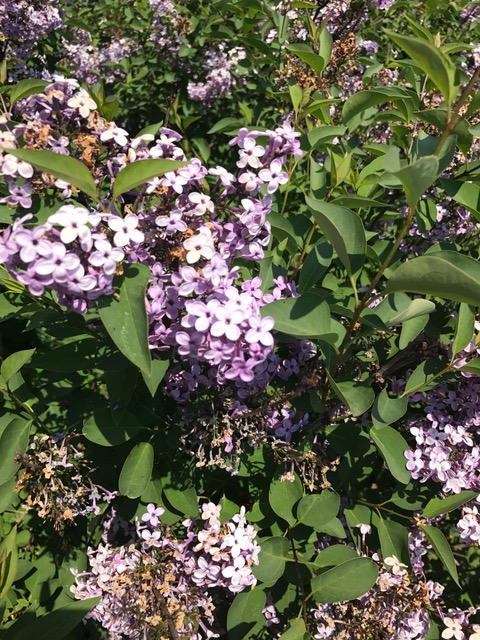
Πασχαλιά (Paschalia) is the Greek name for lilac: the Paschal flower. It always blooms for Easter.


For Greeks, Easter is a more important holiday than Christmas: a time for fasting and feasting. A celebration of spring. Even people who are not religious will go to church at least on Good Friday and then Saturday night for the Resurrection, in order to join in the festivities. Sunday is spent with family and friends, preferably in the countryside, which is covered in wild flowers, with the aroma of roasting lamb wafting about in the breeze.


For those who have not been following this blog for long, last year I wrote a post on Greek Easter traditions which you can read here.


The date upon which Easter falls is calculated according to the moon and the vernal equinox and Greek Easter this year coincides with the other Christian churches – it doesn’t always, since the calculations are based on different calendars (Julian versus Gregorian). So, for all those who celebrate this holiday, whatever their customs and traditions, I wish you a very joyful and happy time!


I couldn’t resist making a quick sketch of the lilac bush in our garden.

For Sale

In 2008, residential property prices in Greece were through the roof, boosted by the success of the Olympics, and the denial syndrome that made people refuse to acknowledge the approaching crisis. Today, they are down by 42% (-45.3% in real terms). And everybody wants to sell – or rather, needs to sell.
People can’t afford to keep the summer villa on the islands, or the large house in the suburbs which they built with such pride and is now costing them an arm and a leg.

To revive the housing market, the Greek government recently offered residence to non-EU investors purchasing or renting property worth over €250,000. This is known as the “Golden Visa” program and has resulted in a spike in the demand for property by foreigners – especially houses – according to research published  by “spitogatos.gr”,  a website focusing on property investment in Greece. The rise in interest has been particularly evident in January and February 2017 by nationals from Arab states, China, Germany and Turkey.

This might come as a welcome respite for some Greeks; it might also be the perfect opportunity for foreigners to acquire the house of their dreams on a Greek island. And we do want foreigners to keep coming, dont get me wrong – tourism is very important to us. But there is a very dark downside to be considered.


The ancient theatre at Argos

At the same time, the Greek government has been implementing a selling-out of public assets in an unprecedented scale and in ways that are mostly suspect, if not downright illegal.

Ports, airports, huge pieces of public real estate including beaches, land and wetlands, dozens of properties abroad, dozens of listed and non-listed monuments, Olympic facilities, national roads, military installations, natural gas, the defense and oil industries, railways, post offices, and profit-making enterprises – all have been sold, or are for sale.

The European Union has a hand – and, of course, an interest – in this (and some countries more than others!) Reading articles about it makes my head ache – the politics and shenanigans involved are surreal. The complications and different opinions are impossible to unravel.


Loutsa beach near Athens

History repeats itself – we are a small country coveted by many, because of our climate, natural beauty and geographical position. We are preyed upon, while being in some way complicit in our own destruction.

In twenty years, will Greece still belong to the Greeks? Or will we be the servants of higher powers, in a country where others live in our houses and profit from our natural wealth? Thinking about it makes me scared, and sad.


Haute Couture on the Acropolis

January 2017: The Central Archaeological Council (KAS) has turned down a request from Gucci to hold a fashion show in front of the Parthenon, the most famous monument of the Acropolis of Athens.

Gucci’s proposal for the fashion show included the setting up of a runway in front of the Parthenon, on the “Sacred Way”; seats for an audience of 300 selected guests, among them Hollywood stars and fashion editors; a huge tent next to Erechtheion for the models to change clothes and have their hair and make-up done and a place available for a music accompaniment.

However, and despite the fact that Gucci was prepared to pay a sum rumored to be around $2 million, the Directorate for Antiquities that oversees the archaeological site of the Acropolis was reluctant about the idea from the very first moment, and KAS unanimously voted against it. They announced that: “The particular cultural character of the Acropolis monuments is inconsistent with this event, as these are unique monuments, world heritage symbols and Unesco World Heritage sites.” KAS also pointed out that, according to the law, the Parthenon is not a leasable asset.

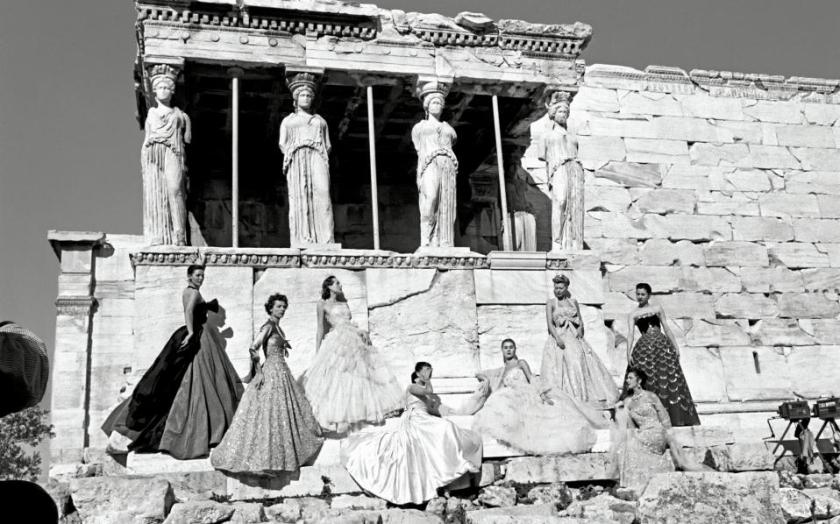
I do agree, although perhaps KAS could have done with the cash, but I was amused to see the following picture in the paper today:


Photo by Jean-Pierre Pedrazzini (source: Kathimerini)


December 1951: Eight models in Christian Dior evening gowns photographed before the Erechtheion Temple of the Acropolis of Athens by Jean-Pierre Pedrazzini for French magazine Paris Match. A moment when fashion climbed upon the sacred rock, at a nostalgic time when Greece, emerging from war and struggle, was ready to forge its way forwards. A very different time from now.

SNFCC’s handover and believing in Greek culture during the crisis

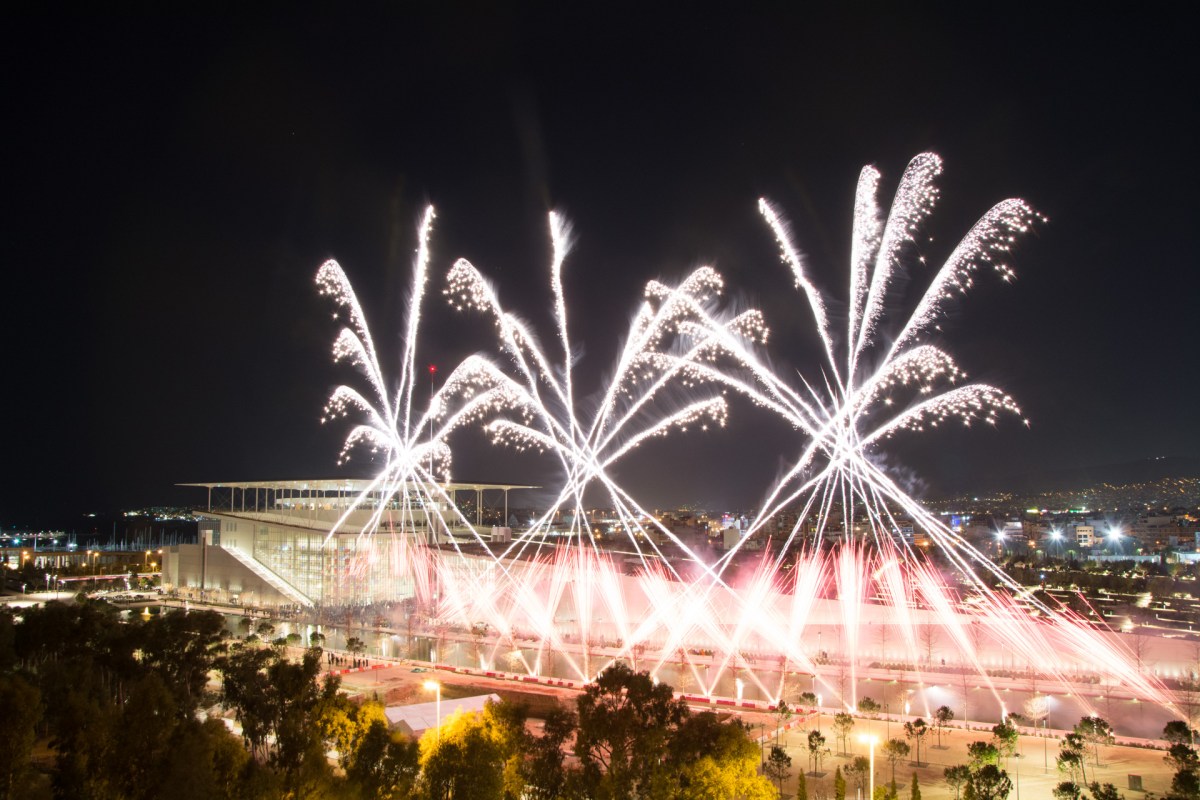
For everyone who is interested in the fate of the new park and cultural center in Athens that I wrote about in my post ‘A walk in the park’, it has been handed over, as planned, to the Greek state, in a ceremony described in the blog Art Scene Athens. Let’s all keep our fingers crossed about its fate.

art scene athens's avatarart scene athens

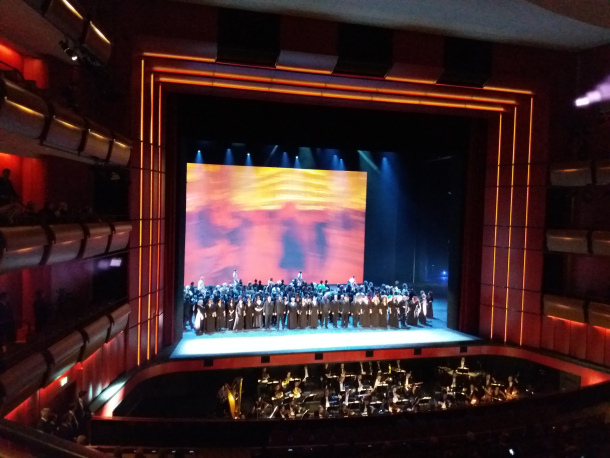
THE STAVROS Niarchos Foundation Cultural Centre (SNFCC), has witnessed around 25,000 visitors per week since August. On February 23, the 620 million euro centre which was solely funded by the Stavros Niarchos Foundation (SNF), was officially handed over to the Greek state. The SNFCC is the new home of the Greek National Opera (GNO) and the Greek National Library (GNL) and also boasts a fantastic park land, used for open air concerts, comprising sports facilities and more. The signing ceremony included speeches by Prime Minister Alexis Tsipras, President of the Hellenic Republic Prokopis Pavlopoulos and SNF Co-President and Director Andreas Dracopoulos. A spectacular performance with artists from various fields followed, the highlight of which was world-renowned soprano Sumi Jo’s performance of the aria ‘Casta Diva’ from Bellini’s ‘Norma’; An apt choice, considering that another famous interpretation of this aria was rendered by the great Greek diva of opera, Maria Callas.

20170223_195450

President…

View original post 882 more words

In dialogue with Zoi Pappa: ‘Artwork is an idea, a feeling, a knowledge’

After my last post on ‘classic’ Greek artists Tsarouchis and Bokoros, here is a young, cutting-edge artist, Zoi Pappa, whom I discovered just now on the blog Art Scene Athens. I encourage those of you interested in art to browse through this blog, it has lovely articles including, lately, on Kounelis and Mytaras, two major Greek artists.

art scene athens's avatarart scene athens

zoipappaportrait

ZOI PAPPA has achieved what many young Greek artists are striving for these days: the growing appreciation and successful exhibiting of her work abroad. She just found out that she will be participating in the Arte Art Prize Laguna, taking place at the Arsenale of Venice (March 25 to April 9), about a month before the 57th Venice Biennale kicks off. A good time to be in Venice! Pappa’s Duchampian spirit also led her last year to be selected for the show ‘Bicycle Wheels – Homage to Duchamp’, in Italy’s Ortigia. Furthermore, this artist (whose work also features in the ‘Saatchi art’ online gallery), is a winner of international art prizes, a curator of controversial shows, and an artist with a dual identity. She is also an art teacher, and a mum.

In recent years, Pappa has managed to spread her wings and to exhibit her works in exciting shows…

View original post 4,969 more words

Stone Solitude

I thought this was an interesting post from Debi at My Kitchen Witch. For anyone going to Naxos and/or interested in Greek antiquities

Debi @ An Evolving Life's avatarAn Evolving Life

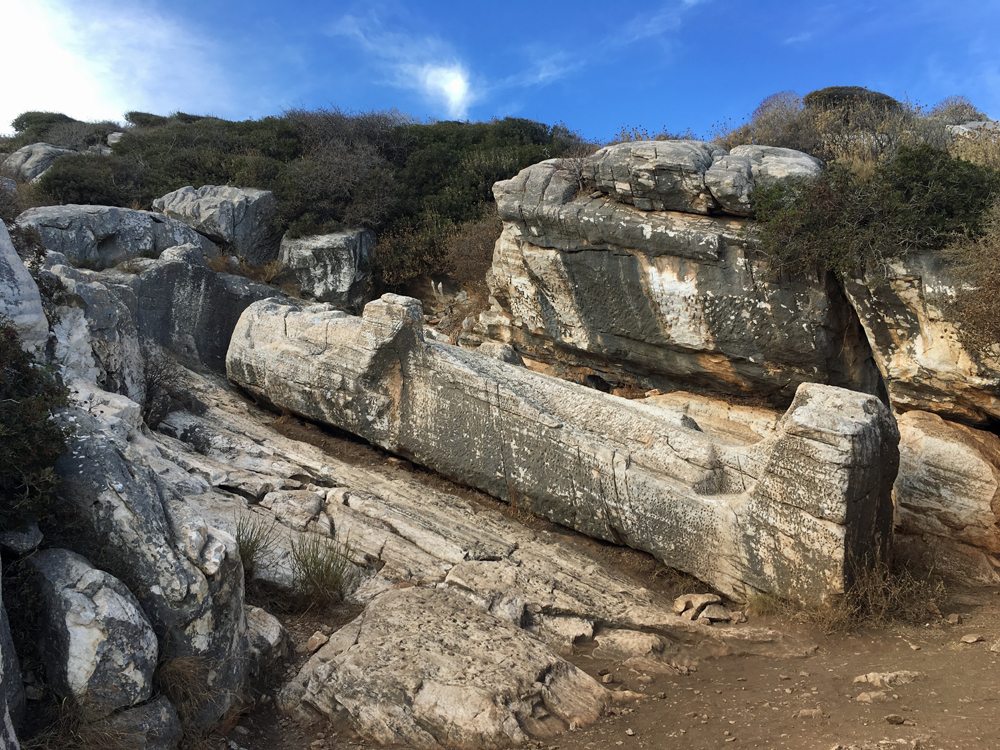
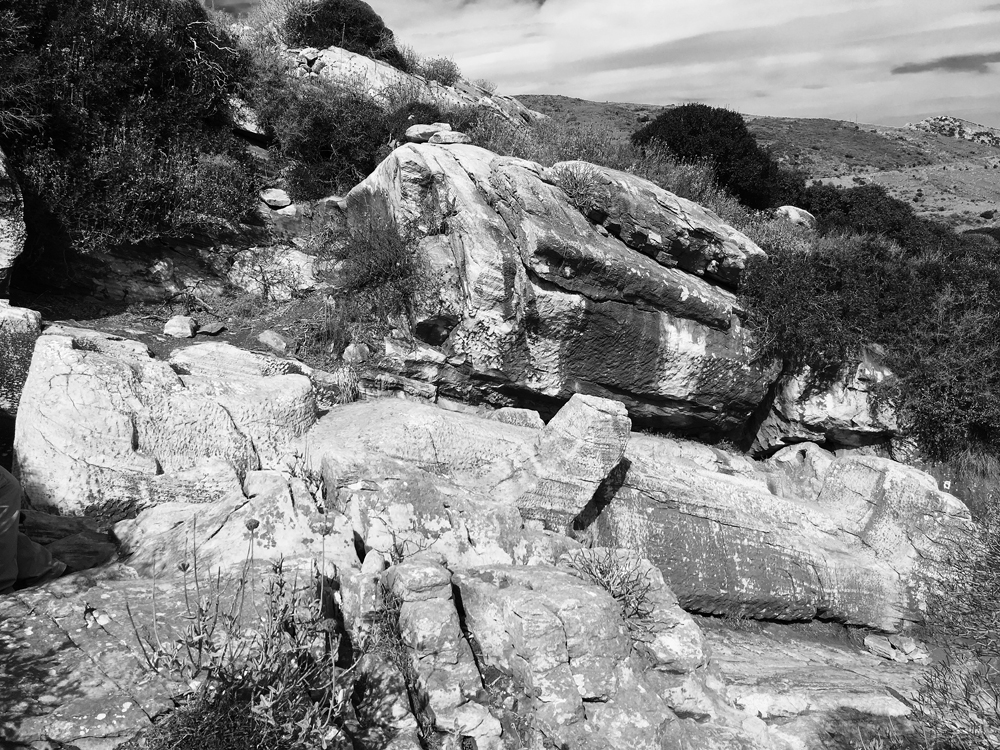
On a hillside on the northern coast of the Cycladic island of Naxos rests a blue grey marble colossus, rough hewn and almost complete. Sadly, something went wrong in the rough carving and he was abandoned in solitude. He has been resting here, set in his quarry bed for well over two and a half millennia.

Visitors come and go. I’ve seen early pre-19th century travel sketches and watercolours, old late-19th century black and white photographs, and many more recent tourist snaps of this giant unfinished statue.

colossus2-jpg

He is almost 11 metres in length. The Kouros of Apollonas (the ancient town nearby) was his original name. But in the mid-19th century he was identified as the Greek god Dionysus, so is now called the Colossus of Dionysus. Whatever his name, he perpetually lies in his stone bed gazing out to sea.

colossus_naxos1

Solitude: The Daily Post’s Weekly Photo Challenge.

View original post

4.1 miles

I know I keep harping on about the refugee crisis – most of you must be heartily sick of me by now. But it is something that I don’t feel the world as a whole can ignore – and not only in reference to the humanitarian aspect, but because it is a problem that, give the present situation, we will all have to face in the future, one way or another. And I don’t believe building fences everywhere is a solution.

4.1 miles is a short documentary made by Daphne Matziaraki, a Greek filmmaker who lives and works in the San Francisco Bay Area. ‘4.1 miles’ refers to the distance between Turkey and the island of Lesvos, where she followed a coast guard captain for three weeks as he pulled family after family, child after child, from the ocean and saved their lives. All the events in this film were shot on a single day, October 28, 2015. Two additional rescues happened that same day but were not included.

She says: ‘The Greek Coast Guard, especially when I was there, has been completely unprepared to deal with the constant flow of rescues necessary to save refugees from drowning as they attempt to cross to Europe from Turkey. When I was there filming, Lesbos had about 40 local coast guard officers, who before the refugee crisis generally spent their time conducting routine border patrols. Most didn’t have CPR training. Their vessels didn’t have thermal cameras or any equipment necessary for tremendous emergencies.

Suddenly, the crew was charged with keeping the small bit of water they patrolled from becoming a mass grave. Each day, thousands of refugees crossed the water on tiny, dangerous inflatable rafts. Most of the passengers, sometimes including whoever was operating the boat, had never seen the sea. Often a motor would stall and passengers would be stranded for hours, floating tenuously on a cold, volatile sea. Or the bottom of a dinghy would simply tear away and all the passengers would be cast into the water. The coast guard felt completely abandoned, they told me, as if the world had left them to handle a huge humanitarian crisis — or allow thousands to drown offshore.’ (Excerpt taken from a NYT article, sept 28, 2016.)
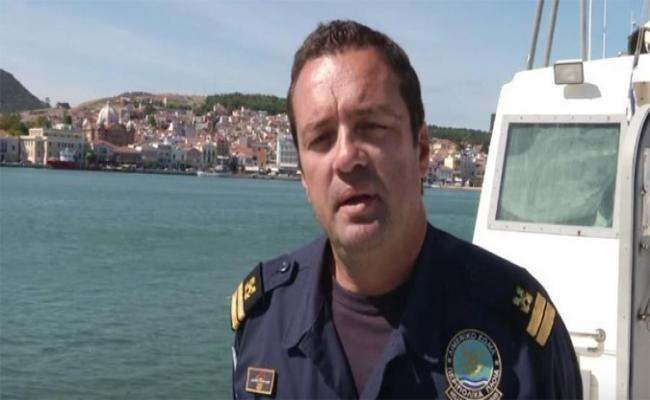
 

Kyriakos Papadopoulos, coast guard captain on the island of Lesvos, who rescued countless refugees from drowning

To watch the video, click below:

https://static01.nyt.com/video/players/offsite/index.html?videoId=100000004674545

The coast guard captain in question is Kyriakos Papadopoulos (photo above), a naval officer who, after working on freight ships for a few years, decided to come back and settle on his beloved island of Lesvos, where he dreamed of a quiet life. Little was he to imagine what was in store for him and his crew, on the by now legendary coast guard launch “602”.
The first sea rescue in Lesvos took place in September 2001, when they picked up ten Afghans off the coast. This became the talk of the island. The war in Syria changed all that. In 2014 around 50-100 people washed up on the island daily; and, by the beginning of 2015, this number had risen to thousands every day. More than half of the one million refugees who arrived in Greece that year came to Lesvos, and most of those were picked up by Kyriakos’s boat.

Usually, rescues take place in bad weather conditions. Kyriakos says: ‘We come upon boats that are half sunk – we know we need to act fast, people can drown before our eyes. We need to pull around 60 people into our boat in less than five minutes. It’s a huge responsibility.’ Psychologically, this is tough, and has taken a toll on him and his crew. Kyriakos has two daughters, aged 15 and 7,5. At sea, he sees their faces in the faces of the children who lift up their arms to be saved. ‘You can never get used to this. However, none of us has entertained the thought of giving up. Saving people gives us the strength to continue. Especially the smiles of the children, when they see us.’ (Translated from an article in Kathimerini, January 28, 2017).

Kyriakos has been given an award for his work by the Academy of Athens, and the documentary has been nominated for an Academy Award. What pleases him most, though, is the fact that through the screening of the documentary, his friends and family have seen for themselves what he and his crew are going through. Because they find it impossible to talk about this to anyone; they only discuss it amongst themselves, on the advice of psychiatrists – to exorcise the images they’ve had to witness. He also hopes the world will see the film, and offer some help.

I watched the film, and I warn you it is harrowing. An incongruous thought kept going through my mind: at least there are no killer sharks in Greek waters.
Up Close and Personal

I’m reblogging this post from one of my favorite blogs, Champagnewhisky, because saving wildlife for our children and grandchildren is a subject close to my heart. I also thought the pictures were wonderful!

PK Read's avatarchampagnewhisky

It’s generally acknowledged that we are now officially in the midst of a major phase of extinction when it comes to plant and animal life on our home planet. Whether it’s called the Sixth, the Holocene or the Anthropocene Extinction, this wave of die-offs is the biggest in almost 70 million years, when three-quarters of all plant, animal and sea life perished in the Cretaceous-Tertiary Extinction.

Pangolin and Pangolin Man. Images of the pangolin keepers who rescue and rehabilitate pangolins, the most heavily trafficked mammal in the world, hunted for its meat and scales. Image: Adrian Steirn via Africa Geographic Pangolin and Pangolin Man. Images of the pangolin keepers who rescue and rehabilitate pangolins, the most heavily trafficked mammal in the world, hunted for its meat and scales.
Image: Adrian Steirn via Africa Geographic

There are a couple of key differences between these two major extinction events.

For one thing, the earlier extinction is widely considered to be the result of a massive asteroid impact that had a series of long-lasting effects – but there is some disagreement on that origination story…

View original post 335 more words

Tsundoku

I recently came across the word Tsundoku which I find greatly amusing. According to Wikipedia:


“Tsundoku” (n.) is the condition of acquiring reading materials but letting them pile up in one’s home without reading them. “Tsundoku” originated as Japanese slang (積ん読) “tsun-doku”. 「積ん読」 came from 「積んでおく」 “tsunde-oku” (to pile things up ready for later and leave) and 「読書」 “dokusho” (reading books).


img_4382


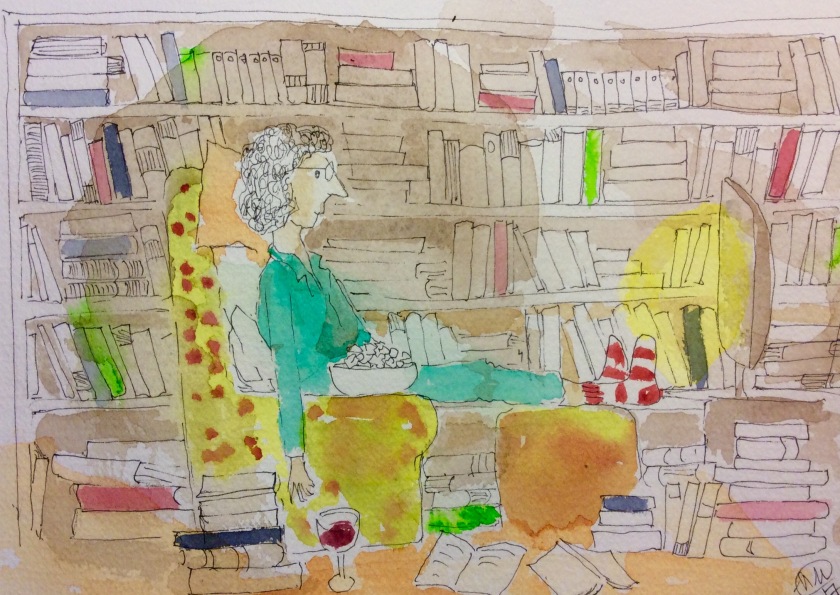
I’ve always been addicted to books, and like to be surrounded by piles of them, just in case I run out of – horrors – reading matter. And since the time when, on a trip, I finished my book and found myself with no access to a library or bookshop, I’ve also collected a number on Kindle. These are a safety measure, but lack the heft and presence of print.

In my defense, I do read them. I always have two or three on the go. But I will never get through my unread pile in my lifetime, especially since I occasionally like to re-read favorites. But have a clear out? Never!

As they say ‘So many books, so little time’ – or, ‘tsundoku‘!