Two Greek artists at the Benaki Museum

The Benaki Museum in downtown Athens was an interesting destination last week since it concurrently held exhibitions of two major Greek artists.


img_0273


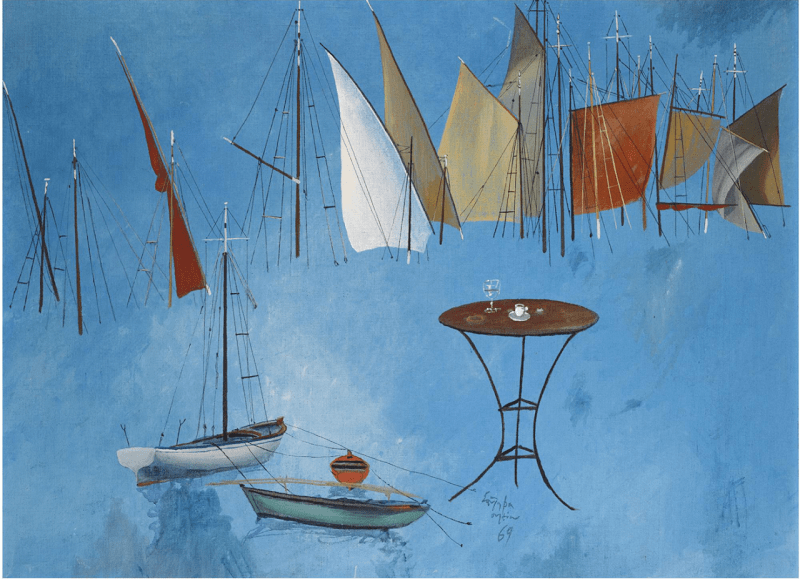
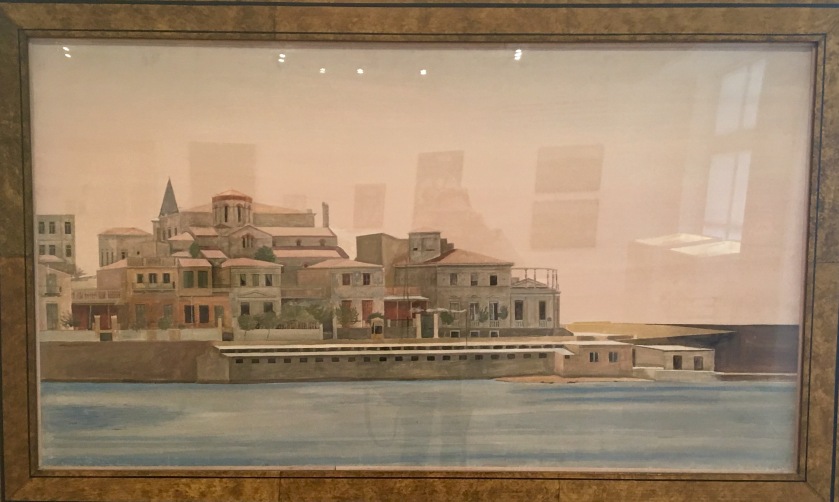
Yannis Tsarouchis was born Piraeus in 1910; he died in 1989 in Athens. The exhibition was curated on the occasion of the publication of a book on his life.

Tsarouchis studied at the Athens Academy of Fine Arts under the painters Vikatos and Parthenis and was initiated into Byzantine art by the famous hagiographist Kontoglou (1931-1934). Between the wars he travelled to Izmir, Istanbul, and Paris, where he became familiar with impressionism, cubism, and surrealism. He returned to Greece in 1940 and fought on the Albanian front.
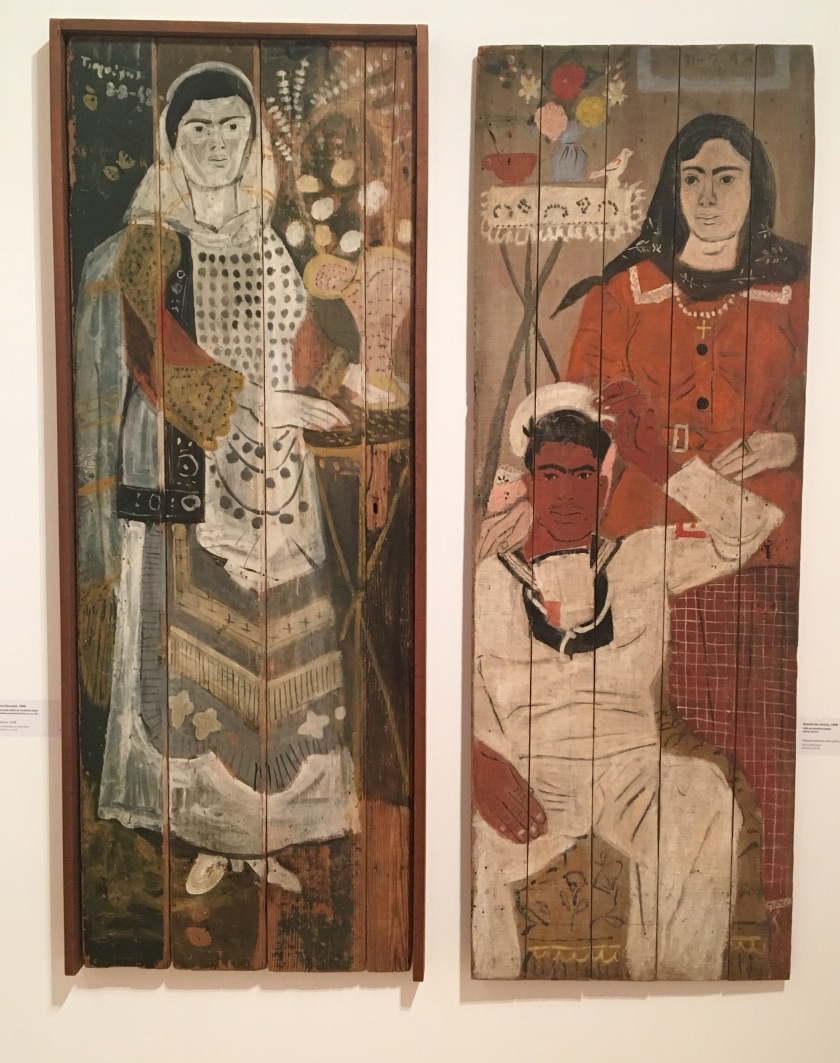
Going into self-imposed exile with the advent of the Dictatorship in Greece, Tsarouchis lived in a small studio in Paris from 1967 to 1980. He met many artists, such as Giacometti, and was inspired by Courbet, Manet, Matisse, and cubism. He combined these influences with the teaching of his Greek masters, Parthenis and Kontoglou, the Karagiozi shadow theatre, the Fayum portraits, and the work of the primitive painter Theofilos. The result is a richness of form and colour, with a focus on the human figure, and especially the male nude.


img_0271


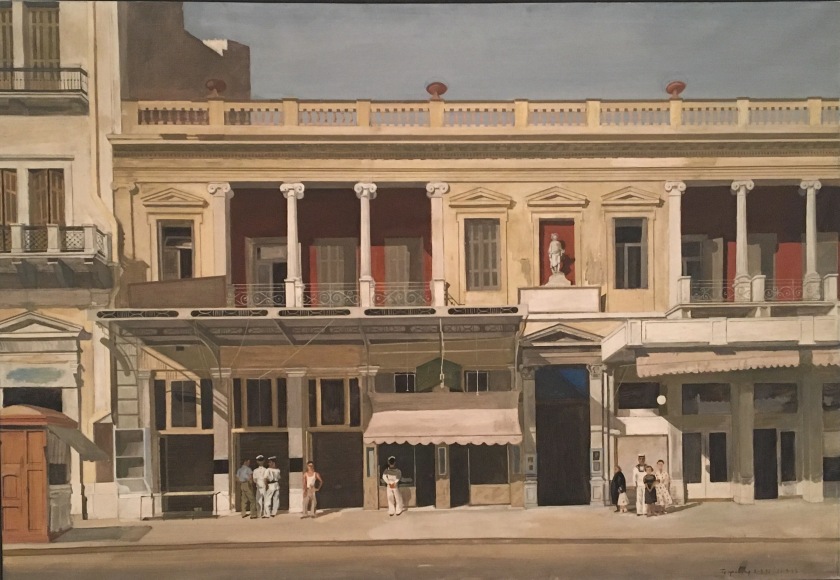
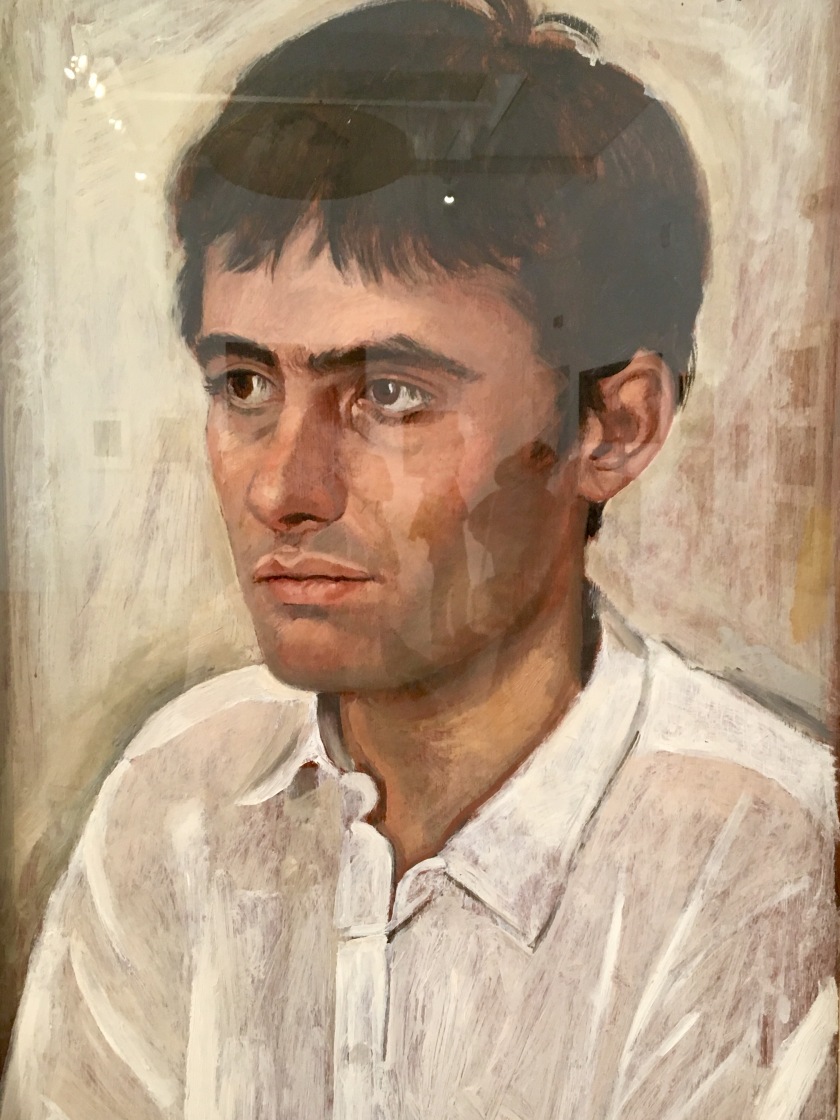
Tsarouchis liked to paint men in uniform, especially sailors. He liked to paint them naked, and sometimes he gave them angels’ wings. He also liked to paint the neoclassical buildings of Athens, which are frequently portrayed as an autonomous presence, rather than as subsidiary narrative elements.


img_0275


Tsarouchis had a long collaboration with the well known gallery owner Iolas. He designed stage sets and costumes for the National Theatre, the Art Theatre, La Scala in Milan, the Dallas Opera, the Olimpico Theatre in Vicenza, and Covent Garden in London; and designed sets and costumes for films by Dassin and Kakoyannis. He also turned his attention to weaving, and illustrated a number of books (collections of poetry by Seferis, Elytis, and others). His style has influenced many Greek artists.


img_0274


Although much younger than Tsarouchis – he was born in 1956 – Christos Bokoros is perhaps the less modern of the two.

Bokoros studied law at the Democritus University of Thrace (1974-1979) and later he joined the Athens School of Fine Arts (1983-1989), where he studied painting under D. Mytaras.
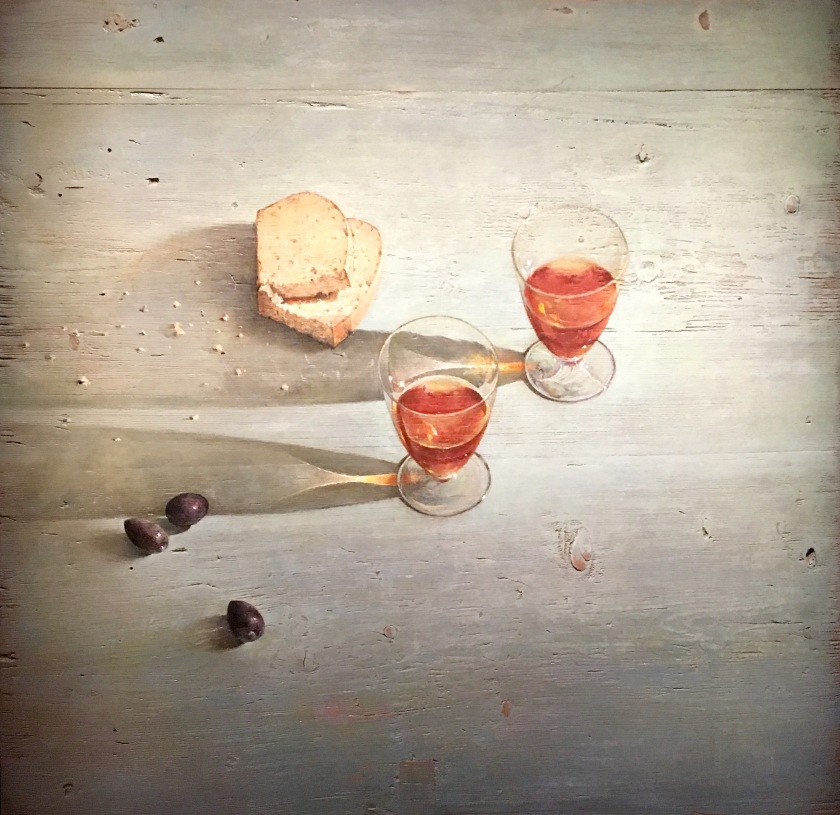
At the beginning of his career he employed traditional painting techniques, and drew his subjects from everyday life. The most striking feature of his early works was the extremely accurate and persuasive depiction of the visible world, a characteristic that governs his entire oeuvre. With time, he introduced allegorical or symbolic content to the depiction of simple things, contemplating their connotations; he began to integrate miscellaneous materials in his work (mainly old pieces of wood), and to combine his paintings with three-dimensional constructions and installations.


img_0293


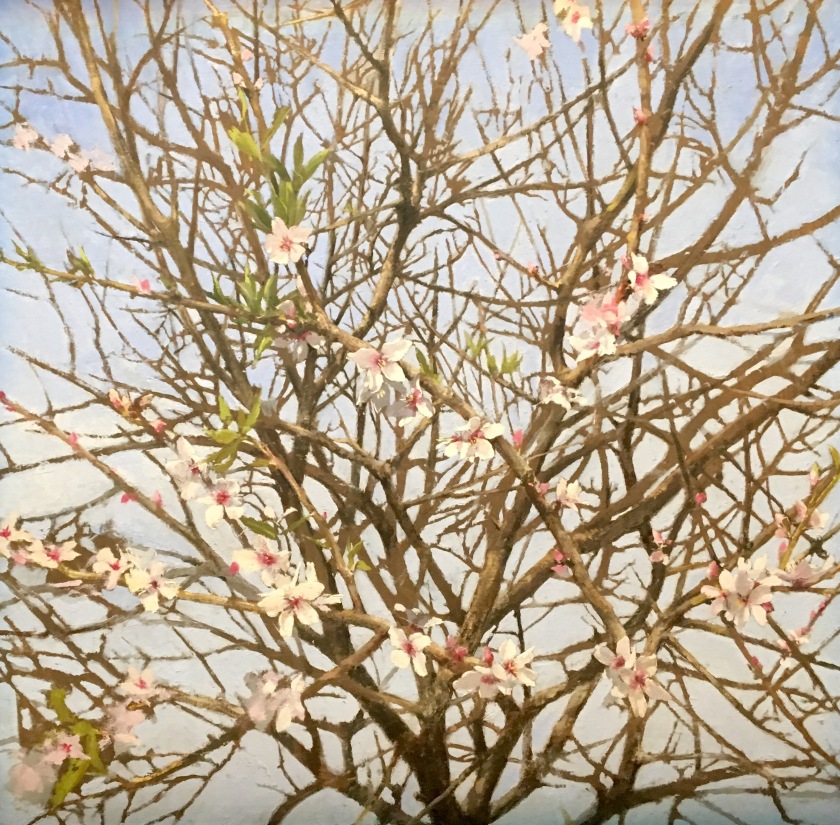
Bokoros loved the Greek countryside. He grew up far from the sea, in the tobacco fields of Agrinio, and was inspired by the earth and its produce: almond blossom, loaves of bread straight from the oven, rustling leaves and wild flowers.
He felt unable to identify with the major artworks he saw in foreign museums, and turned instead to the simple inspirations of provincial Greece.


img_0292


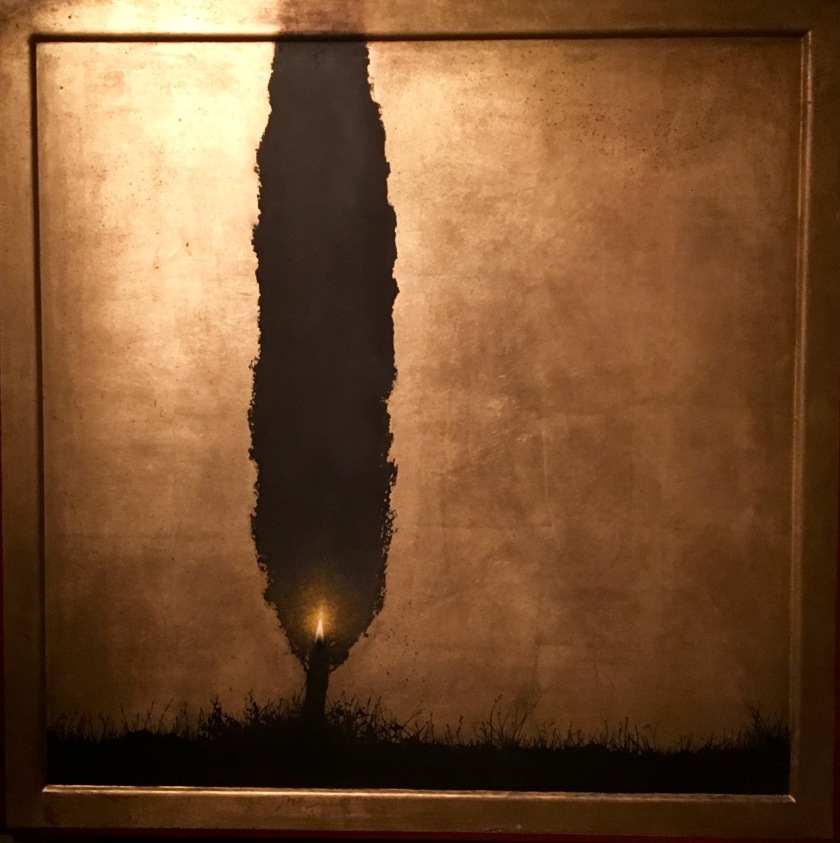
The key feature of his later oeuvre, i.e. the ritualistic repetition of certain motifs such as the flame, plays upon the correlation of the tangible with the intangible, the individual with the universal and the past with the present, sometimes interacting poetically and sometimes semantically.


img_0279


Like Tsarouchis, Bokoros also worked as stage designer, in theatrical productions of Greek plays (1995-2007).

He has presented his work in solo and group exhibitions in Greece and abroad, participating in international events, and he has been awarded many prizes.


img_0281


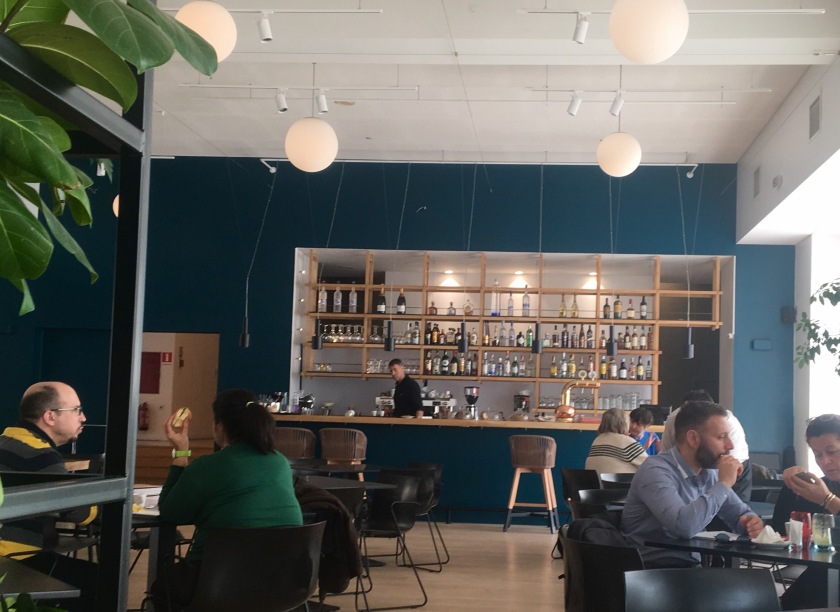
The visit ended with lunch in the museum’s cosy bar.


img_0270


More art, on the way to the car.


img_0268

The Sketchbook travels again

For those of you who read my post The Sisterhood of the Travelling Sketchbook, I have finished my contribution and I’m ready to pack it off to the next person on the list, Constanze, in Munich, Germany.


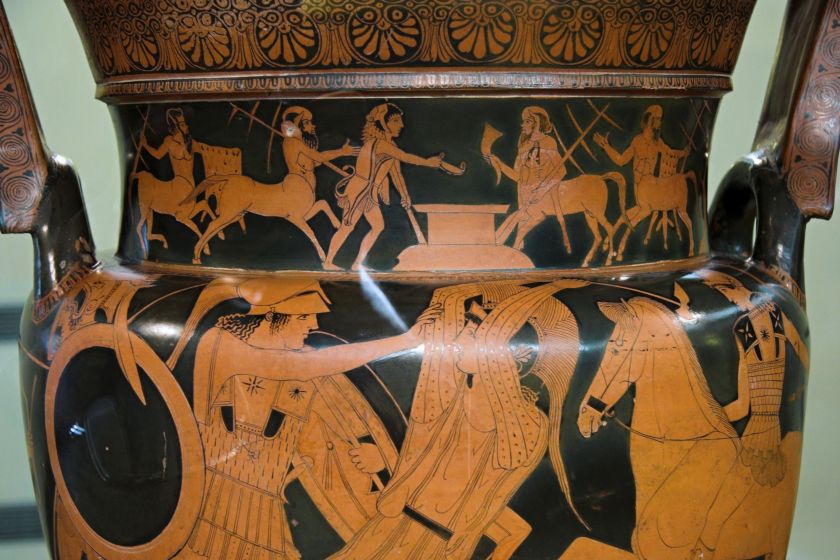
Centauromachy 460 BC
Centauromachy 460 BC. (Source:Wikimedia Commons)


I wanted to do something referring to Greek history, so what better than the myth about the naming of Athens, which I’ve already written about, in my post Homage to the olive tree.  To make the drawing I took my inspiration from the ancient black and red pots from which one can glean amazing details about life in Ancient Greece – the food, the sport, the fashion, the rituals and the stories. They feature a large cast of gods, goddesses, demi-gods and mere mortals, nymphs, centaurs and satyrs, athletes and animals, as well as household objects, furniture and accessories. A fascinating study.

And now feast your eyes on my masterpiece below:-)


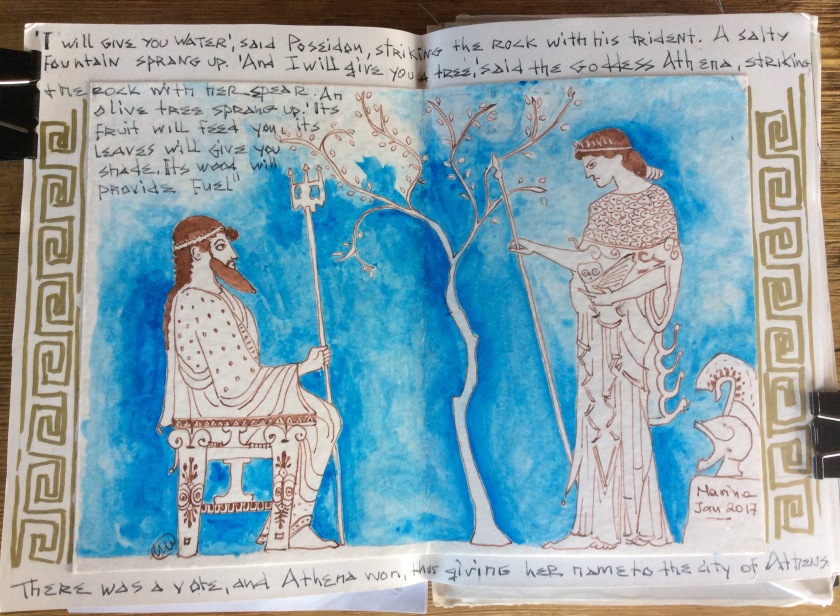
img_4358
My drawing in the Sketchbook

Standing on the Acropolis rock is Athena, having taken her helmet off, with a belligerent expression on her face. She has just produced an olive tree, using her spear. Poseidon, seated on an elaborate throne, has a rather sheepish look on his face, having lost the contest to a woman, albeit a goddess…

This has been a very amusing project, and I’m curious to see the remaining contributions. So tomorrow I will regretfully pack up the Sketchbook and bid it Bon Voyage.

The Sisterhood of the Travelling Sketchbook

On April 14, 2016 Anne Lawson, a botanical artist who lives in Melbourne, posted this on her blog: ‘Oh I do love a good idea, and this is one of the best! A travelling sketchbook!’

So she made a sketchbook, drew her own contribution in it, and posted it to the first person on the list of those who’d signed up for the project.
There are 15 of us, and each is to ‘add to the sketchbook when it comes in the post to you. Draw, write, collage, sew, paste in a photograph ~ whatever you would like to contribute. There would be no rules, no themes, just a heartfelt contribution.’
(You can read the whole post here)

I was number 9 on the list. Imagine my excitement when I received a package from Indiana, USA, and opened it to see this:

img_4283


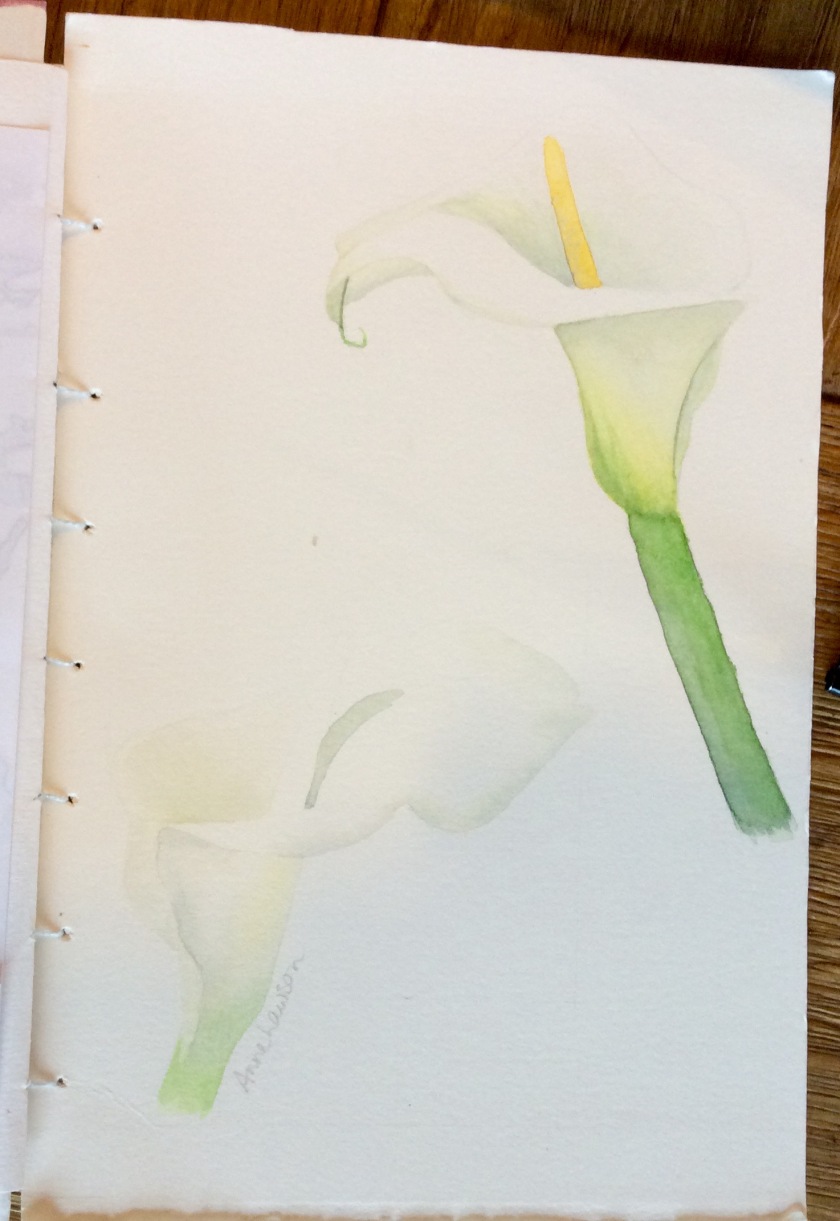
Anne had drawn on the cover, and inside the back cover,

img_4293


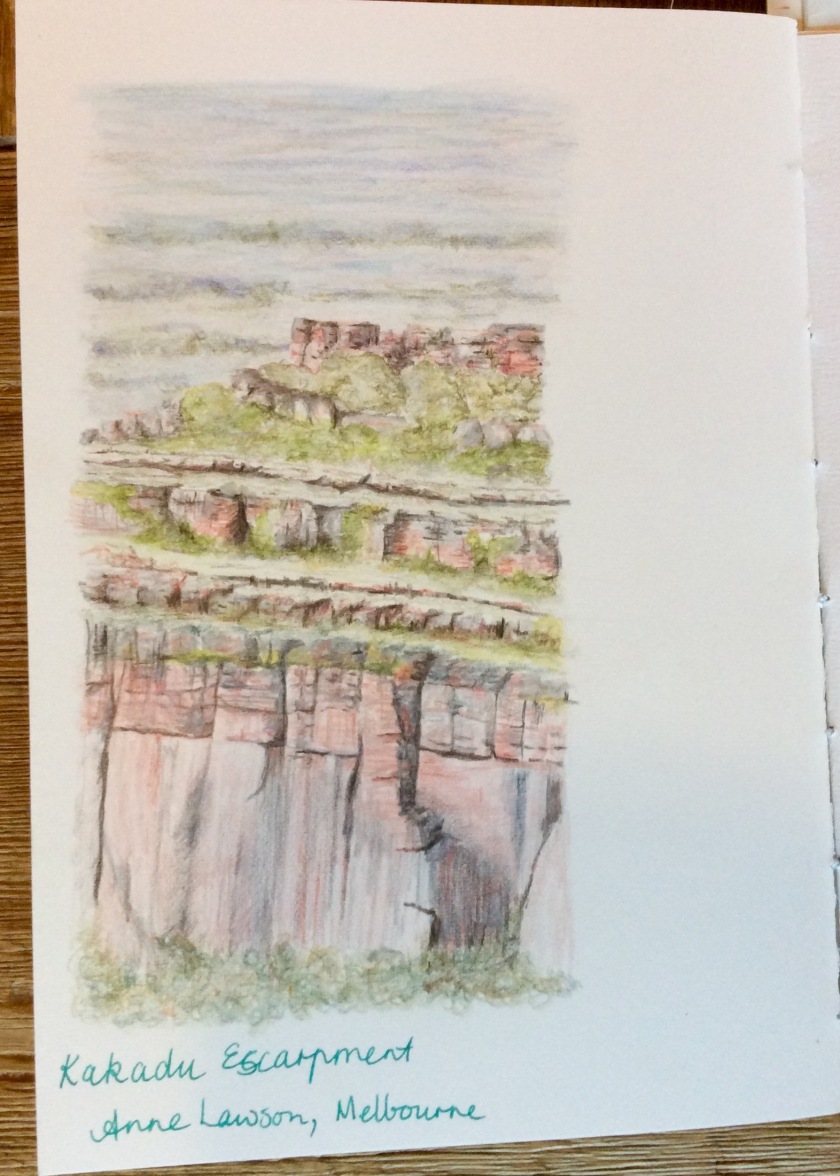
and her contribution was a delicate drawing of the Kakadu Escarpment in Melbourne.

img_4291


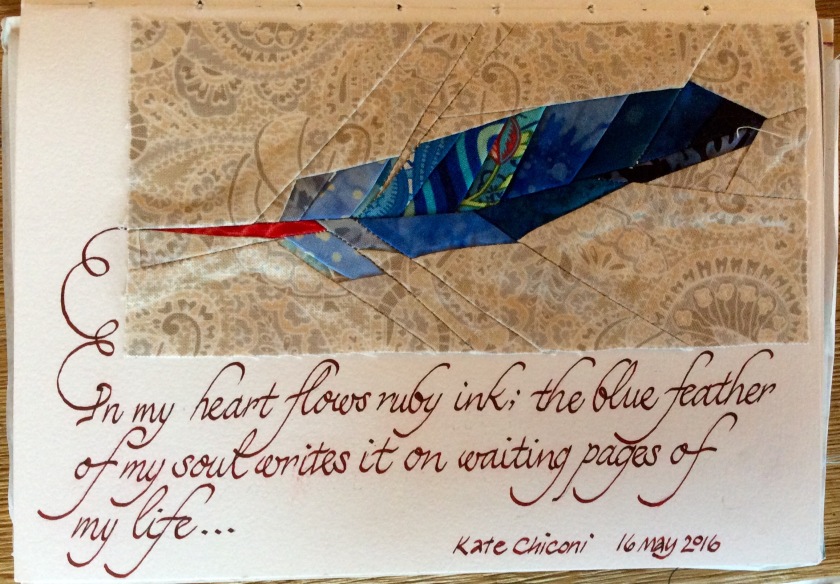
Next was Kate Chiconi from Baker’s Creek, QLD. (See her blog here) Kate makes the most amazing quilts, so this is what she came up with:


img_4284


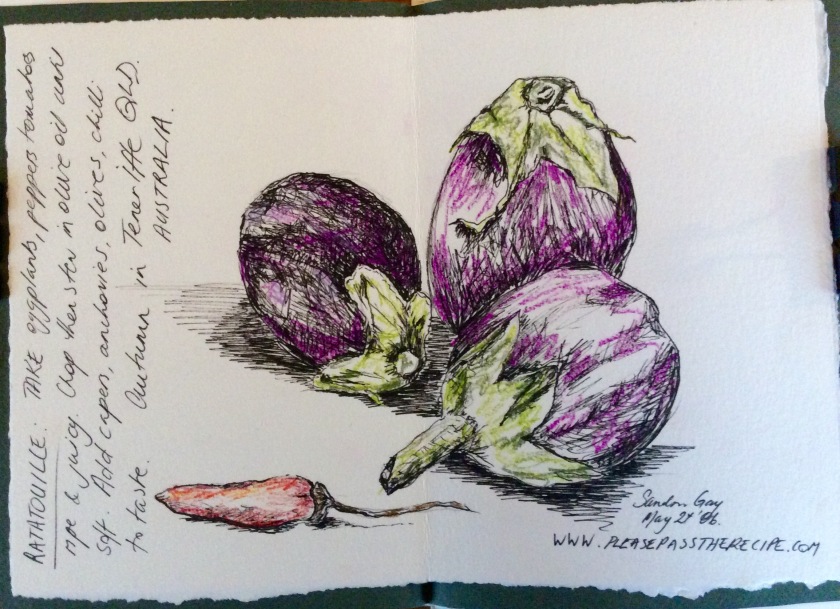
After Kate, Sandra Gay from Ténériffe, QLD (blog here), added an illustrated recipe for ratatouille!


img_4289


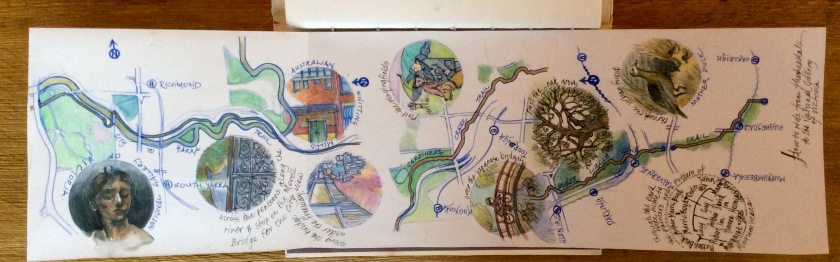
In number 4, we have the stunning drawings of Megan Power from Caulfield, VIC (blog here) – she made a map of the cycling trails in the city, leading to the National Gallery of Victoria,


img_4287

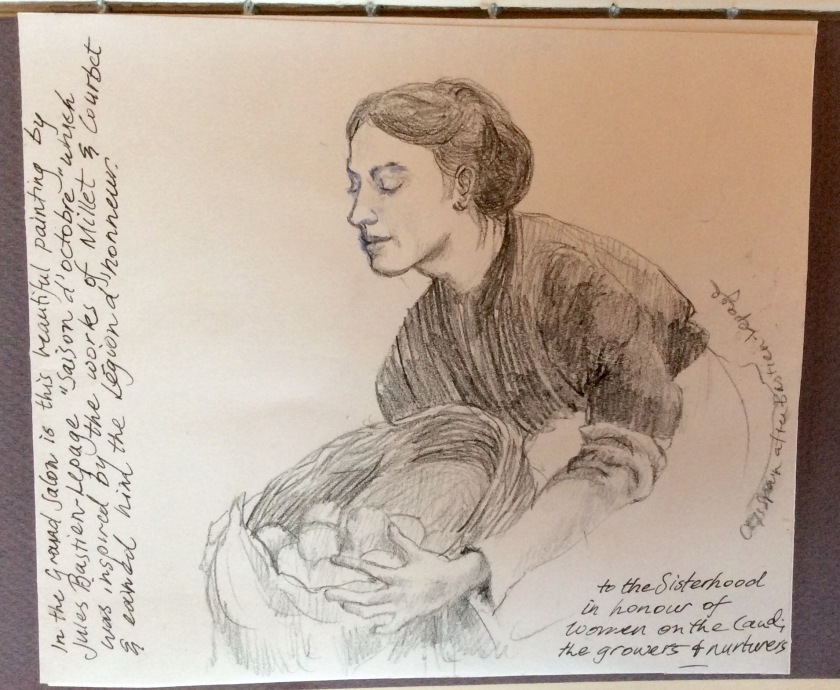
as well as a beautiful drawing inspired by a painting  by Jules-Bastien Lepage, which is exhibited in the gallery.


img_4286


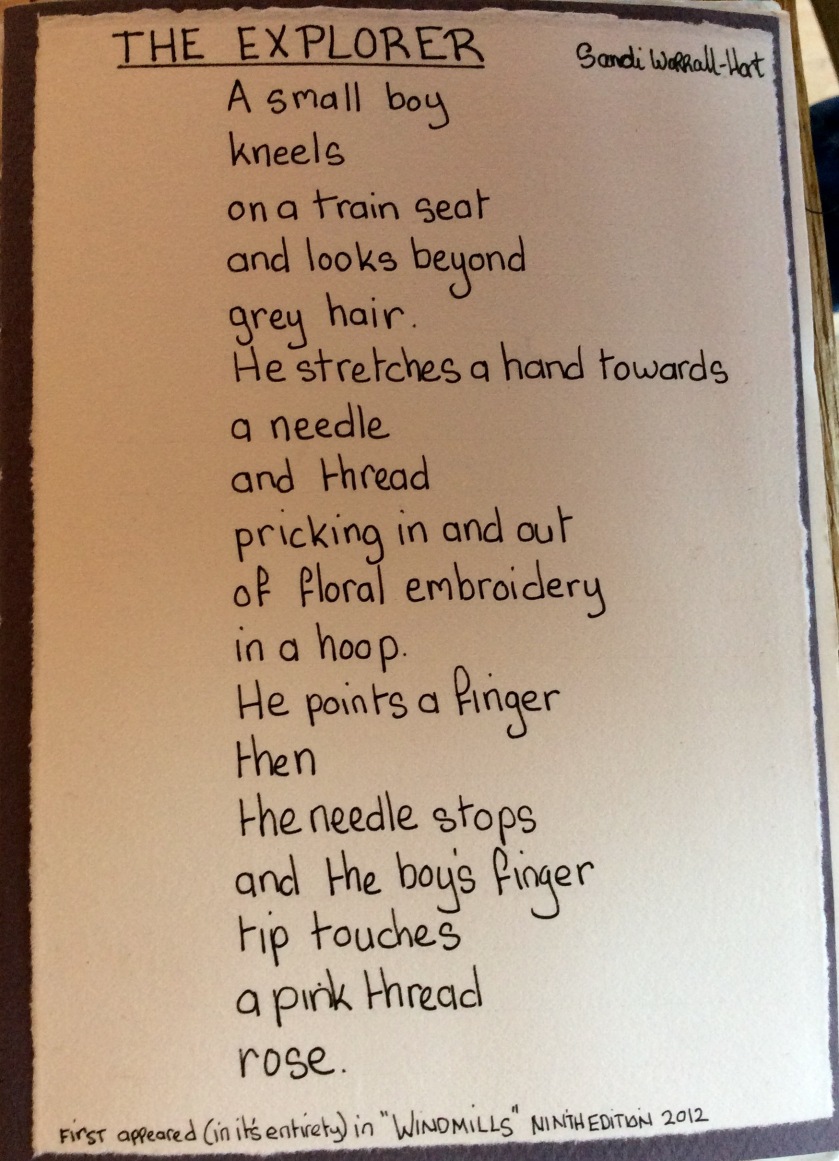
Then a poem, by Sandi Worrall-Hart, of Wnadin East, VIC.

img_4285


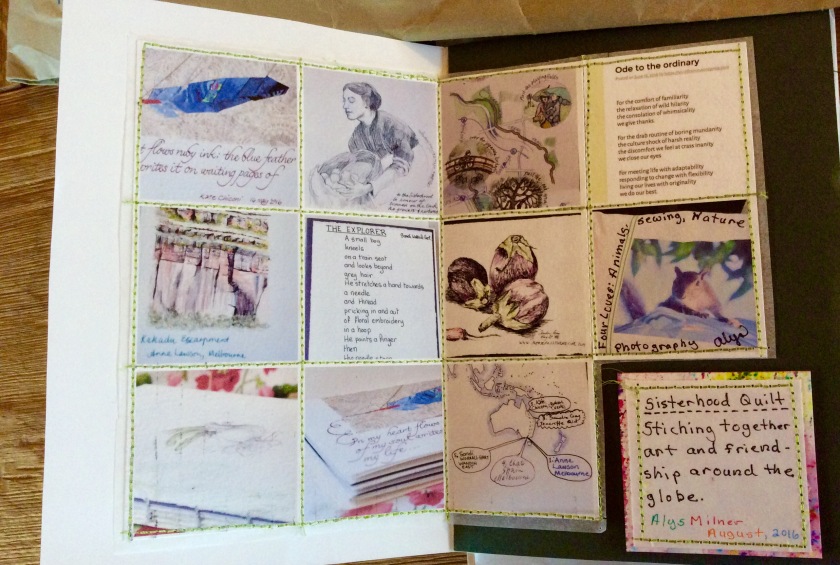
Next, the Sketchbook travelled from Australia to the US, where Alys Milner from SAN Jose, California, (blog here) made an imaginative collage ‘quilt’ from all the previous contributions!


img_4288


Followed by two more stunning mini quilts by Sue Brown of Mount Vernon, WA (blog here).

img_4290


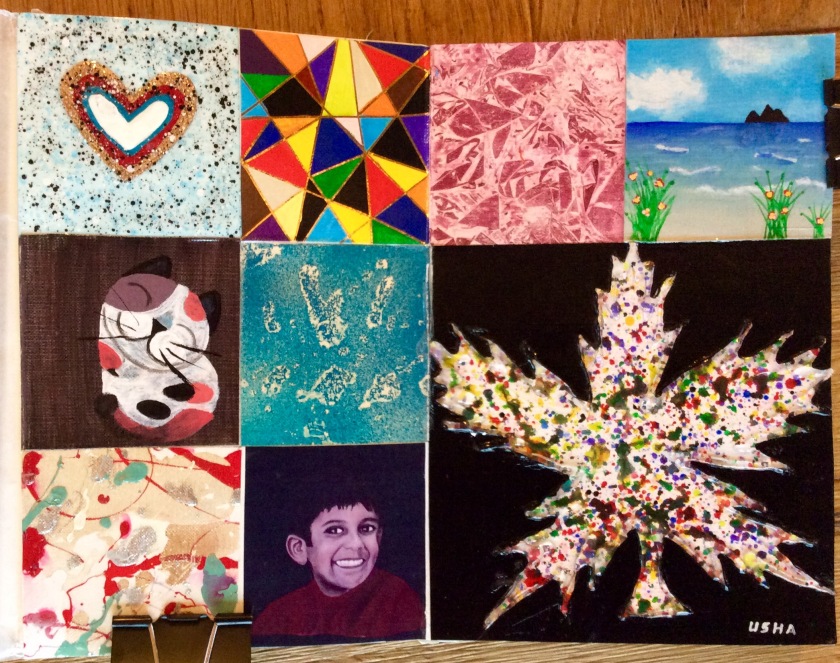
Then, just before me, Usha Gudipalli from Indianapolis (blog here) added another, very colorful,  collage. Again a quilt theme, which I assume has been so popular as it symbolises unity and friendship.

img_4292


Now the Sketchbook has travelled to Europe – first stop, Athens, Greece! When I’m done I will send it on to Germany, since there are five more memers of the Sisterhood, two in Germany, one in France, and two in the U.K. Finally, it will go to one more contributor in Australia, then at last back to Anne – we are thinking of maybe scanning it, so each of us has a memento of her own.

I have already thought about my own contribution, of course, but my lips are sealed for the moment, so stay tuned!
(To be continued)

The new Acropolis Museum

Yesterday’s post was getting a bit long, so today I will do a follow-up on the new Acropolis Museum. The video below offers a virtual tour, where you can get a fair idea of the treasures on offer: the glass floor at the entrance through which you can see the ruins of the ancient city beneath your feet; the airy space allowing you to walk all around the statues; the Caryatids in all their glory; and the beautiful top floor mirroring the Parthenon where the marbles are exhibited.


The museum has a café and restaurant with a stunning view on the Acropolis. The food uses products and recipes from all over Greece and is served by smiling and kid-friendly staff. Go on their site for more information here. (Plan a trip to Athens! Totally worth it.)

For those interested in the campaign for reunification of the marbles, below is another short video, where you can also meet Professor Padermalis.


I did it!

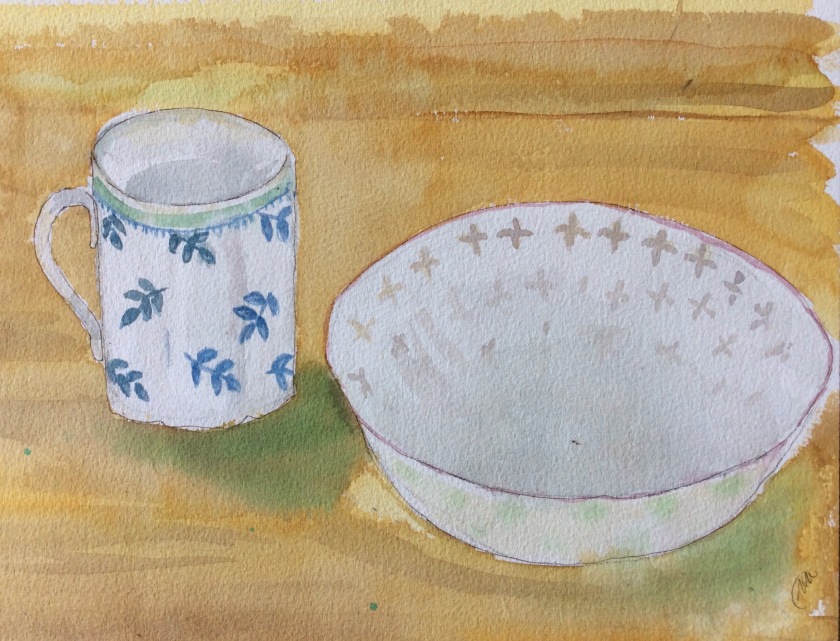
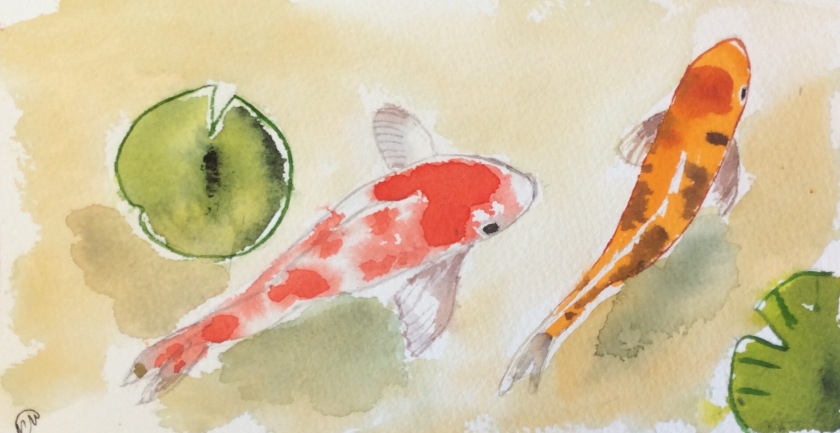
We are on the last day of July, otherwise known as World Watercolor Month. I joined the challenge of making one painting each day, and I’m happy to say I managed it, with very little cheating! (I only posted a couple that I’d actually started before…) I’m rather pleased with myself, and also glad that Charlie O’Shields, whose brainchild this is, egged me on.


image


Charlie’s great at encouraging people to join in, and also at showcasing the work of other artists. If you haven’t been to see his blog yet, go check it out, it’s fun even for people who don’t paint. It’s called Doodlewash (click here).


image


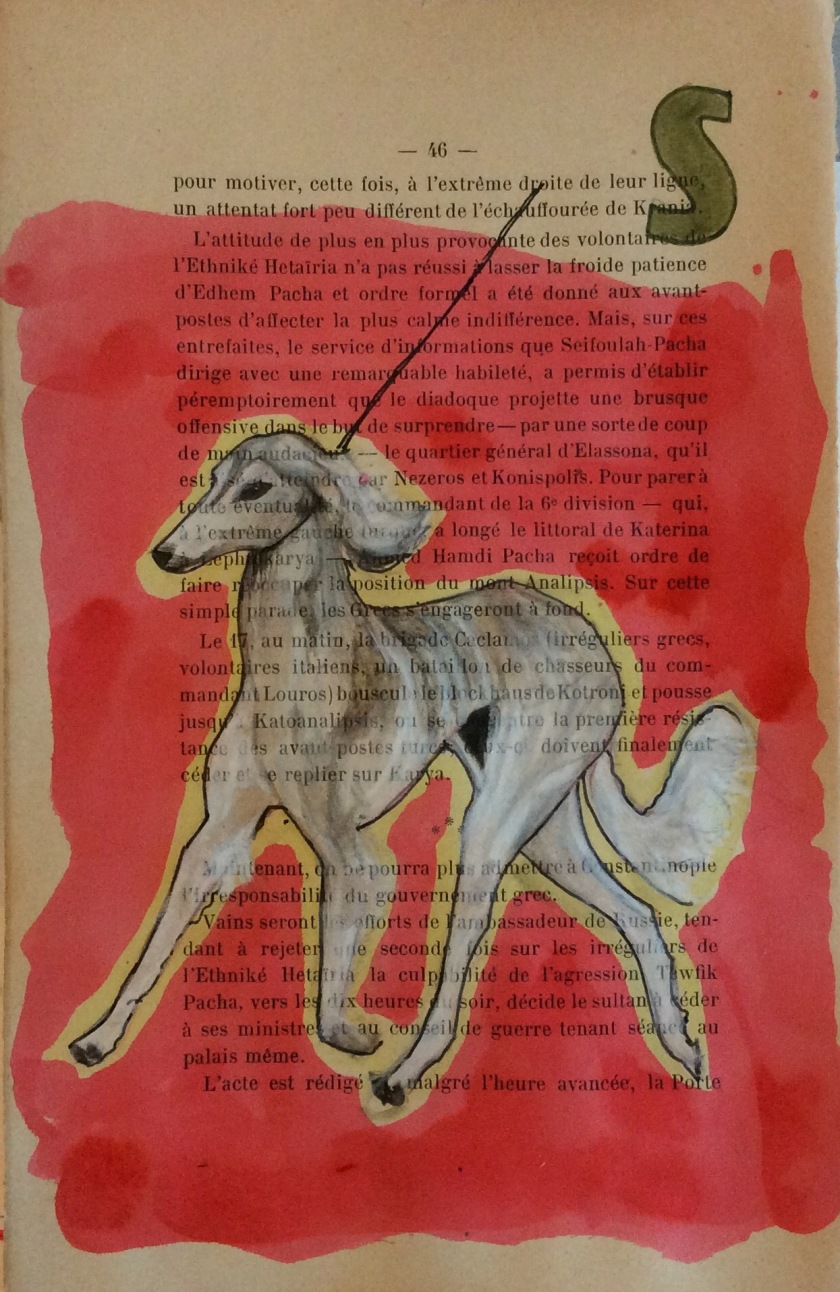
This has been a fun challenge – it made me try different things, and also get on with my dog alphabet. Only three to go now, and that baby will have a cheerful wall to look at!


image


It was also nice  seeing the work of the hundreds of other artists who joined in the challenge. I’ve followed quite a few. If anyone is interested in looking at all my efforts, I’ve posted them on Instagram, at @athensletters.


image

World Watercolor Month

What’s World Watercolor Month?

It’s a month to inspire people to paint with watercolor (watercolour, aquarelle) while raising awareness for the importance of art and creativity in the world.  Anyone can join the celebration, from master watercolorists to artists just starting out with watercolor!


image

Best of all, this first year of the celebration will be about raising awareness for children in need of art supplies and art education around the globe. Art is an important aspect of child development and paves the way for a successful future. What would the world be without art?


image


How could I resist? I’m joining the 31-day challenge – a watercolor each day. Some might be just doodles, some only dabs (abstract dabs?), but it will be fun. It will be motivation to pick up a brush each day, to try new things; and an opportunity to meet other artists. I will be posting on Instagram(athensletters). Below is my first contribution:

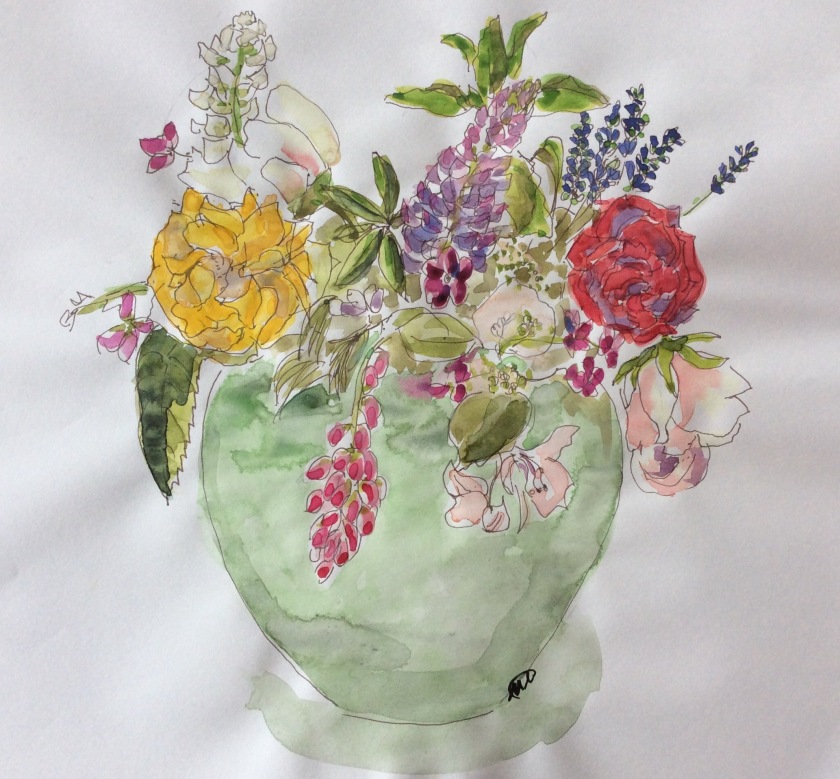
Day 1: Sketch of flowers past their prime.
image

Happy Birthday, Yayoi Kusama!

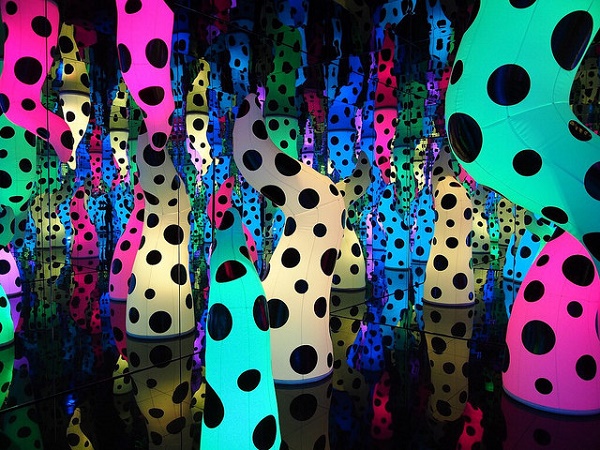
I’m a fan of Yayoi Kusama’s psychedelic eccentricity and gaily polka-dotted work. The Japanese artist is 87 today, and for the past 20 years has been living in a Tokyo mental hospital, from where she has continued to produce artworks in a variety of mediums, as well as launching a literary career by publishing several novels, a poetry collection and an autobiography.
She famously said: “My art originates from hallucinations only I can see.”


image
Yayoi Kusama, Love is Calling (2013) Image: M_Strasser via Flickr Creative Commons


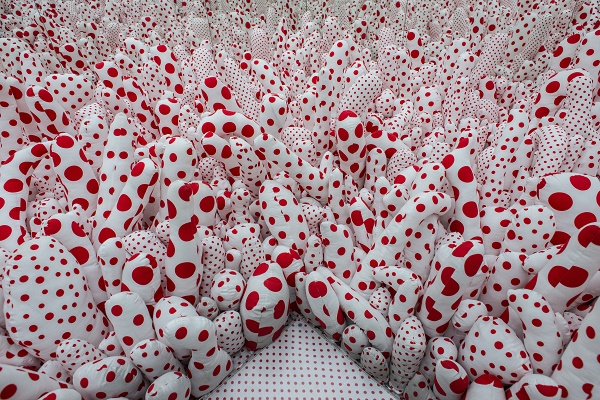
In the sixties, Yayoi Kusama was part of the New York avant-garde scene, having her works exhibited alongside the likes of Andy Warhol, Claes Oldenburg and George Segal.


image
Yayoi Kusama, Gleaming Lights of the Souls (2008) Photo: Jim Dyson/Getty Images


In her honor, Artnet News has published a lovely article entitled:

14 Yayoi Kusama Quotes on Her 87th Birthday (Article by Alyssa Buffenstein)

You can find it here. (I borrowed the photographs from them, many thanks.)


image
Yayoi Kusama, Infinite Obsession (2013) Photo: YASUYOSHI CHIBA/AFP/Getty Images

Athenians love the theater

Long queues formed again in central Athens on a recent October afternoon. But for once they weren’t leading up to an ATM machine, or to a national insurance or tax office. They led to the ticket office of the Greek Art Theater, where something very appealing was on offer: they were selling 2 tickets per person for every performance of the winter season, for the astounding price of €3 each. All the performances had to be booked in advance, with a choice of convenient dates.

3,500 people lined up around the block, even crossing over to the next street, to avail themselves of this. Men and women, young and old, all waited patiently, sometimes for hours, holding the program they’d printed out and discussing available dates. Many had a book in hand to help pass the time. The theater had never anticipated such a response – there was an overflow, and they had to apologize for not accommodating everyone.

imageThe Art Theater is not the only one trying to adapt to the crisis. Many other venues are offering reduced tickets of €10 or less – usually they go for around €20 – as well as special offers for the unemployed.

The crisis has certainly affected the theater, but it has not cowed it. On the contrary, there’s a reckless feeling in the air, a notion that ‘In a crisis one must advance, not recede,’ and ‘We’re not going to make any money anyway, we might as well have some fun.’ The public is sometimes invited to enter venues that until recently functioned as night dives or warehouses, where they might have to sit in velvet chairs or perhaps on wooden benches.

I went to a play downtown, in a basement under a bar, where we sat on plastic chairs and the props consisted of an old sofa, a lamp and a bit of carpet. The audience was warmly enthusiastic about the comedy on offer, which was admittedly very funny, with great acting. Before and after, everyone went for a drink. My sister even attended a show where the performers ‘acted’ the props, turning themselves into trees and furniture!

In contrast to that, there are lush productions, such as those in the superb Badminton Theater, where a children’s play about Theseus involved fantastic sets. Theater district neighborhoods are resounding with the music and laughter of rehearsals, as all the most popular musicals, including Mamma Mia, are being put on with casts of talented young Greek actors.

In 2014 there were more than 400 shows on. I haven’t seen this winter’s program yet, but at the moment there are 91 performances on, spread around 58 theaters. Usually there’s something for every taste: comedy, farce, drama, Ancient Greek tragedies, stand-up, Shakespeare, musicals, performances for children, puppet theater. Also political satire, plays in verse, plays involving dance, and monologues.

Sculpture update: Tony Cragg in Athens


imageThe little girl standing next to me was counting faces.
‘There’s one,’ she pointed. ‘And another!’

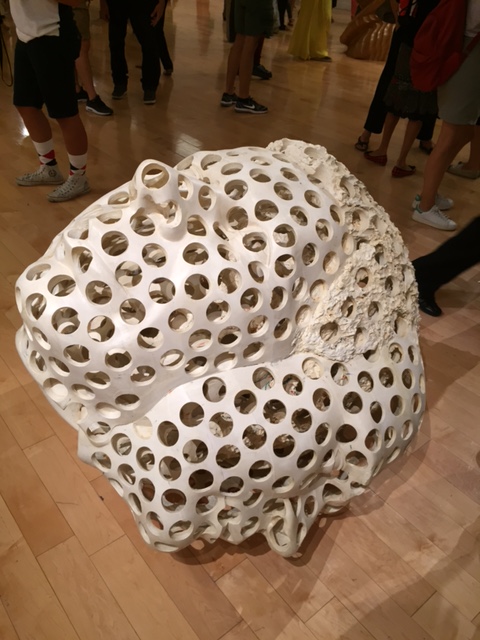
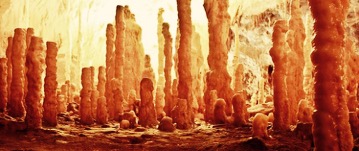
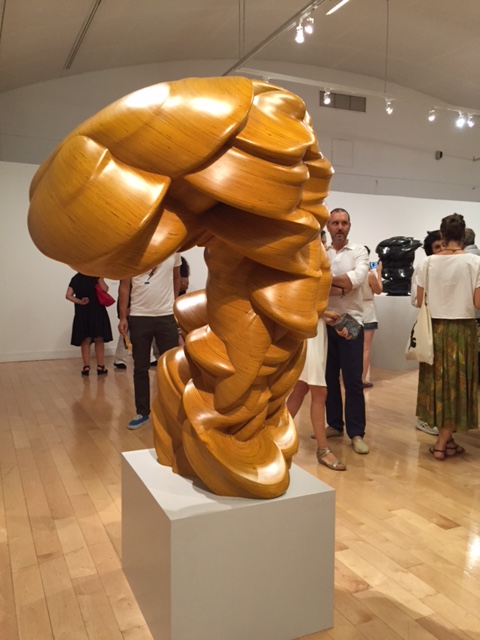
imageThe sculpture before us was made of sheets of plywood glued together in layers. Three twisted pillars that reminded me of rock formations – or stalagmites (see photo on left). But as we circled it slowly, human profiles revealed themselves: some impassive, some stern, some faintly smiling. The little girl got excited, and so did I. If you look at the photo above, and the close-up below, you will see what I mean. This was one of the most deceptively simple, yet, upon inspection, incredibly complex pieces of art I’ve ever seen.
image

When asked if some of the faces somehow ‘appear’ when he’s creating the piece, Tony Cragg is firm. Everything is meticulously planned. He takes pencil to paper and sketches out every facet of a new idea before converting it to 3D. Sometimes this proves impossible – his imagination has run away with him. Some ideas never evolve beyond the drawing stage, but if the drawings themselves are lovely, the completed sculptures are breathtaking.

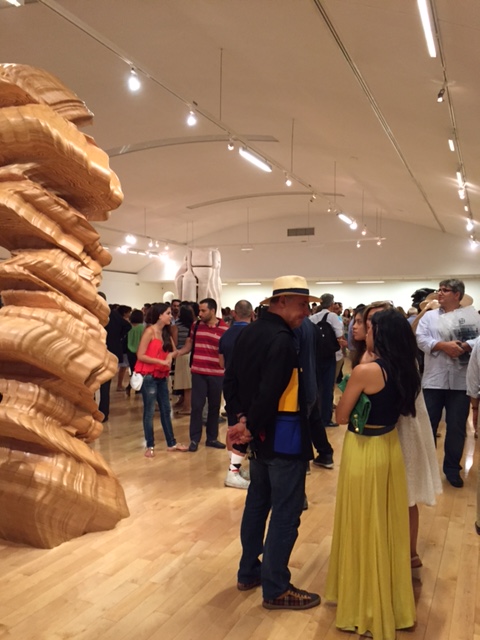
On September 8, a cosmopolitan and mostly young crowd gathered at the Benaki Museum for the opening of Tony Cragg’s sculpture exhibition. Cragg, 66, born in Liverpool, winner of the prestigious Turner Prize in 1988, has never shown his work in Greece before. He appeared happy to explain his thought processes as he stood in the auditorium, looking relaxed in an open-necked shirt. The audience enjoyed his engaging narrative which was accompanied by a slide show, and afterwards plied him with questions and requests to sign their catalogues.
Wandering amongst the works after the talk, my overwhelming urge was to touch them. Their curved, smooth surfaces cried out to be stroked.
imageCragg uses natural materials such as wood, polished stone and bronze as well as mirror-finish steel and even plastic.
The sculptures are very different. Some are squat and grounded.
image

Some seem to be leaning into the wind, their surface eroded into the outlines of human profiles. Others soar upwards. Yet they all emit the same energy, their shapes shifting depending on where you’re standing.

image

As I was leaving, I stopped to admire a few of the bigger bronze sculptures dotted about the museum’s wonderful courtyard.

image

The exhibition was curated by Xenia Geroulanou of the Thaddaeus Ropac Gallery,  who has represented the artist for 20 years; the Benaki Museum; and the artist himself, who loaned all the works from his own foundation.

*For anyone interested, below is the link to an article about Tony Cragg written by Vanessa Wildenstein for Athens Insider Magazine.

*For those in Athens, the exhibition runs until November 8, 2015.
Opening hours are Thursdays and Sundays from 10 a.m. to 6 p.m. and Fridays and Saturdays from 10 a.m. to 10 p.m.

Benaki Museum, 138 Pireos & Andronikou, tel 2102.345.3111, http://www.benaki.gr

Performing on ancient stones

On the night of August 20, my friend Anna enjoyed a very special performance in a magical setting. Here’s how she describes it:

On the 145 km of the Athens-Patras highway is a town called Aegeira. Beyond it, climbing the winding road uphill towards the mountains, at 350 metres above sea level, one comes to an ancient theatre, its koilon facing the Corinthian gulf, with a magnificent, direct sea-view. The theatre itself is a protected area, now cordoned off and out of reach. Carved in the mountain stone, it could accommodate an audience of about 3.000. It is estimated that it was built in the 3rd century B.C.

I remember, during my childhood, that my uncle Anthony used to take us brats to this ancient site. Mechanically and technologically savvy, but also a lover of classical music, once every summer, at least, by full moon, he would set his gear – battery operated tape recorder and speakers – in the middle of the theatre pit and allow us to savour his taste for music and choice of extracts from the classics. He maintained that the acoustics here were almost as good as those of the famous theatre of Epidavros. We sat on the local porous stone steps, bathed in moonlight, and were immersed in classical music.

Tonight we were back, amongst 500 others. The theatrical play was The Apology of Socrates, recited in Ancient Greek, with Greek and English overtitles. I now have to read Plato’s work, my school work flashing back, my ignorance shaming me. It was an admirable effort by a theatrical unit from northern Greece. No full moon this time, but a new moon shyly appearing and then disappearing first behind the pine trees, and then behind the dark, imposing mountains.

We were not allowed to sit on the stone, as I had done as a child. The theatre, therefore, was now set up looking backwards, our backs to the sea view and facing the grey stone. If anything, this setup was odd. Modern technology helped the inverted acoustics. The interpretation of Plato’s work was executed superbly, a soliloquy respecting the musicality of ancient Greek, which, we were told, had been learned and practised over the past three years.

Such are the small but special cultural events of Aigialia, the area whose capital is the town of Aegion. It is the beauty of Greece in all its glory.
I had a marvellous and interesting evening, hopefully to be repeated.

image