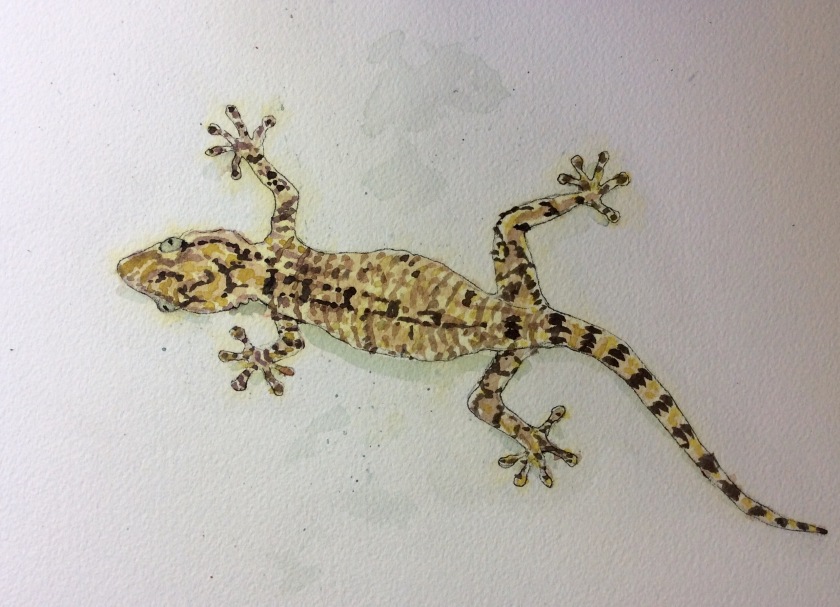
Last night I found the first gecko of this summer in my bathroom. I was so happy to see him (her? it?) that I took a picture on my phone – but he was so small, it did not come out well under electric light. So I decided to make a drawing – in this case, a lot larger that life-size, as he was only 3cm long. The ones we get here are very small, and a lot more elegant than in my drawing. The babies are translucent!
House geckos are considered good luck by most people, and they’re useful to have around, since they feed on mosquitos and other insects. In the winter they hibernate, and when summer comes, they show up on the walls or on the ceiling, sometimes emitting a high-pitched squeak, almost like the faint chirping of a bird.
Geckos have adhesive toe pads enabling them to scurry with ease along walls and ceilings. Looking at this little fella’s toes reminded me of Gollum – Tolkien must have been inspired by some similar creature.
Now that the meat-eating revel of Easter is over, people’s thoughts are turning towards showing up on the beach in a swimsuit. New season tomatoes are making their appearance, so what better than a traditional horiatiki salad, made with tomatoes, cucumber, thinly sliced onions and peppers, and cubes of feta cheese. A bit of olive oil and a sprinkling of oregano, and you’ve got a light, nutritious lunch.
And for something more substantial, many turn to fish.
Fried white bait or little red mullet are delicious, but not particularly slimming – the best is a whole fish, simply grilled and accompanied by olive oil beaten with plenty of aromatic lemon juice.
When fish is fresh, sauces disguise its flavor, so unless you are in some fancy restaurant, you will usually get your fish plain. And yes, cooked with the head on, seeing as the best bits are the cheeks and the nape of the neck. A lot of non-Greeks find this gross, but it’s not as gross as another delicacy, the head of the Easter spit-roasted lamb! (from which I, personally, refrain.)
Having said that Greeks mostly eat their fish without sauce, I discovered that the ancients had invented a concoction called garum, a fermented fish sauce used as a condiment in the cuisines of Ancient Greece, Rome, and Byzantium. It probably originated in Carthage, and Plato was the first to describe its disagreeable ‘rotten’ smell.
The preparation of garum is described in Roman and Byzantine texts. Small fish, left whole with their intestines, were mashed with salt and set to ferment in the sun. The mixture was occasionally stirred with a stick and finally filtered through layers of fine cloth, to make a condiment used to flavor meat and game, as well as fish and seafood.
Archaeological digs have brought to light garum production plants on the coast of North Africa, Portugal and elsewhere on the Mediterranean. These were placed far from inhabited areas because the smell was horrendous! The finished product, however, was supposed to have a pleasant, spicy odor. Garum was also known as liquamen, or hallex, and prices varied according to quality.
Apparently the nearest equivalent we have nowadays is Worcestershire sauce.
How’s that for the irrelevant information of the day?
We haven’t had much of a winter this year – it’s been mostly mild. A little snow on the mountains. Central and Northern Greece had a few bad days, with lots of snow, and roads shut.
I hope we get more rain before the hot summer months set in, but the first signs of spring are here, and they are hard to resist.
The almond trees are in bloom.
Anemones come in all shades of pink and mauve, from almost white to fuschia, from palest lavender to purple. They can even be bright red, like poppies. They’re lovely in bowls around the house.
Daisies and other wild flowers are popping up.
The first kumquat. It’s in a pot outside the kitchen door.
In the Greek Orthodox tradition, Christmas ranks second to Easter, but it is still a very important holiday. For the devout it is preceded by a period of fasting so food, unsurprisingly, plays a major role in the festivities. But more of that later.
In Greece, Santa Klaus or Father Christmas is Agios Vasilios (Saint Basil) – so gifts are opened on his name day, January first.
On Christmas Eve and Christmas Day children go from house to house singing the Kalanda (carols whose name comes from the Roman calendae, the first days of the month) and accompanying themselves on small metal triangles and sometimes harmonicas. They knock on doors asking ‘Na ta poume?’ – ‘Shall we say them?’ They are rewarded with money, sweets and sometimes dried figs and other fruit. Then the householders wish them ‘Kai tou xronou’ – ‘Again next year’. They will do the same on New Year’s Eve and New Year’s Day, but the carols are different.
Of course, the quality of the singing varies a lot. I’ve opened my door to blond little angels with voices to match, tinkling away on their triangles – and, a few minutes later, to hulking, spotty teenagers who expected to be paid for playing the Kalanda on their smartphones!
As far as decorations are concerned, there is the yearly debate of the Christmas tree versus the wooden ship. Changing fashion tends towards one or the other. The modern Christmas tree came to Greece with the country’s first king, Otto of Bavaria, who ascended to the throne in 1833; it did not, however, become popular before the 1940s. Some Greeks still consider it a foreign import, although use of decorated greenery and branches around New Year is recorded as far back as Greek antiquity, and there is evidence that some sort of Christmas tree existed in the Byzantine empire.
The ship, by contrast, is viewed as a quintessential Greek symbol. Greeks have been seafarers for thousands of years and the country is still one of the world’s leading shipping nations. Children on the islands sang – and are still singing – Christmas carols holding illuminated model boats.
The Christmas ship is made of paper or wood, decorated with small, colorful lamps and a few, simple ornaments. It is usually placed near the outer door or by the fire with the bow pointing to the interior of the house. There are many symbolic connotations attached to it: love of the sea, welcome to those returning from a voyage or honouring of those away at sea and a token offering for their safe return. With golden objects or coins placed in it, the ship also symbolizes a full load of riches reaching one’s home. However, it also has connotations of partings and absent husbands and fathers, and that perhaps is why the tree has found favor with many.
Spanakopita – spinach and cheese pie
Some households still display the traditional shallow wooden bowl of water with a sprig of basil wrapped around a wooden cross. Once a day, the cross and basil are dipped into holy water and used to sprinkle each room of the house. This ritual is believed to keep the Kallikantzaroi away from the house. Kallikantzaroi are ugly and malevolent sprites which emerge from underground to bring trouble to families.
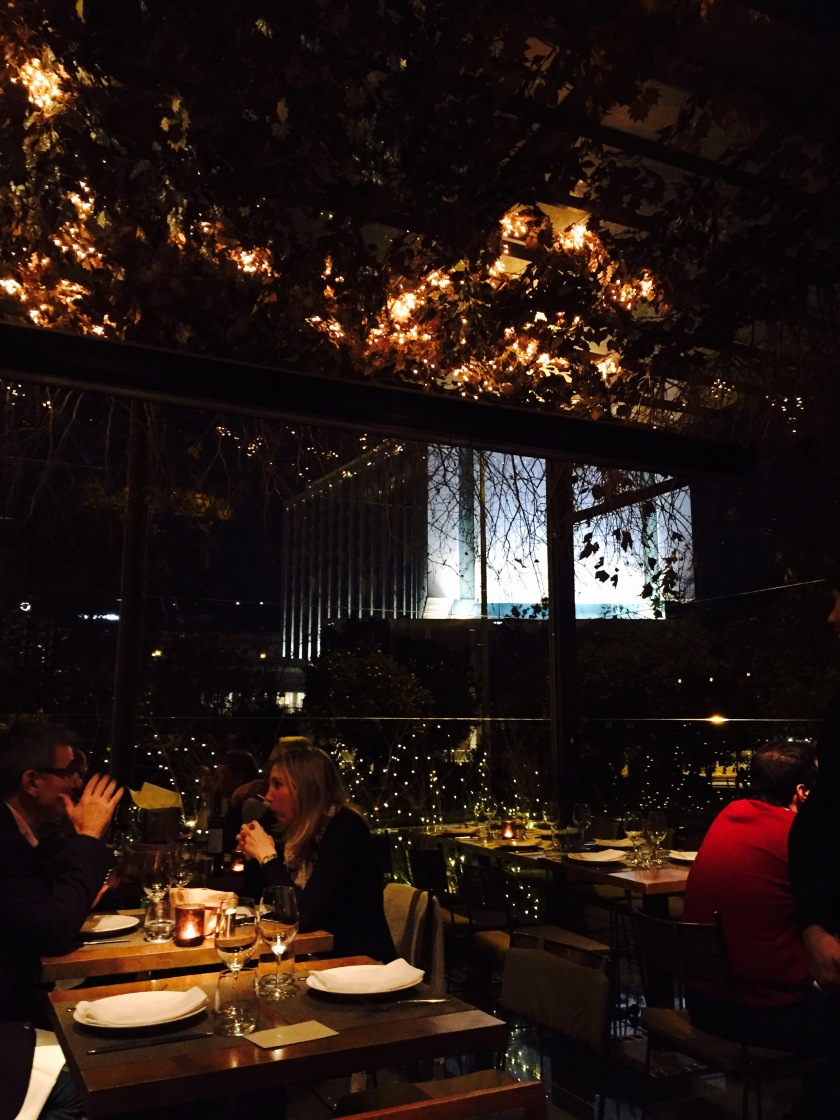
Outdoors, streets, stores and homes are decorated with garlands of lights and illuminated ships or trees. Town streets are full of people doing their last minute shopping of presents while carols are played everywhere, adding to the festive mood. In most major towns, there are concerts, theatrical performances and other cultural events promising wonderful entertainment.
Each region tends to have its own Christmas traditions. For example, in the villages of northern Greece, the man of the house chooses the sturdiest pine or olive tree branch he can find. This, named Christoxylo (Christ-wood) is put in a newly cleaned fireplace to slowly burn over the whole twelve days of Christmas. This is symbolically meant to warm the baby Jesus in his cold stable, and also to keep out the Kallikantzaroi who supposedly come down the chimney.
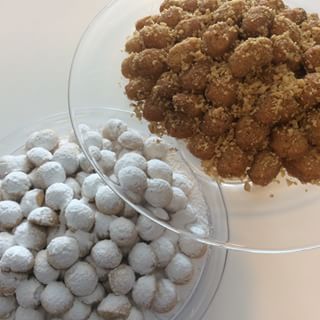
Kourambiedes and melomakarona
A lot of the traditions have to do with food, of course. The Christmas feast is looked forward to with great anticipation by adults and children alike, and especially by those who’ve followed the 40-day Advent fast.
On almost every table there will be a round loaf of Christopsomo (Christ Bread), decorated on the top with a cross, around which are dough symbols representing whatever it is people do in life. Fishermen will decorate the bread with fish, farmers with lambs, and so on.
For starters you might get a fresh, colorful salad of green leaves and red cabbage sprinkled with pomegranate seeds; a lemon-chicken soup called Avgolemono; home-made pies and pastries made with spinach and feta, pumpkin, or meat; or cabbage leaves stuffed with meat and rice, in an egg-and-lemon sauce.
The main dish is pork or lamb, cooked following some regional recipe, or perhaps wild boar; or a roast turkey with a mince, pine nut and chestnut stuffing.
In most parts of Greece, pork was the meat of choice at Christmas, a pig being slaughtered specially for the occasion and cooked in many different ways according to the traditions of the area.
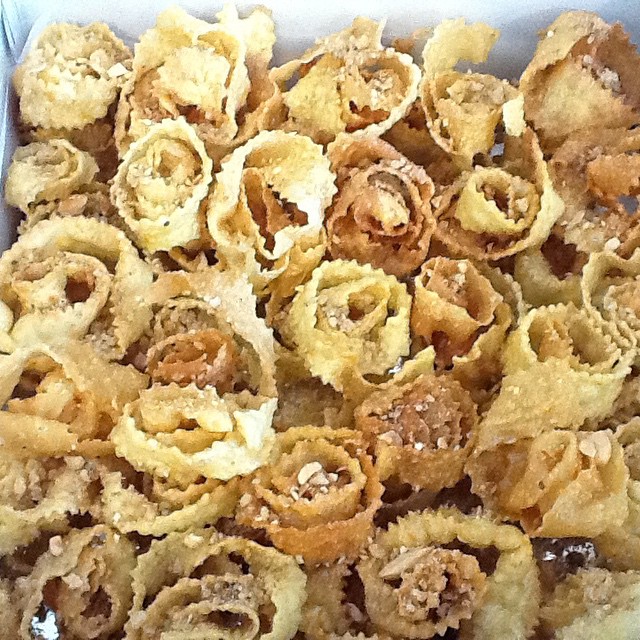
Diples
Last, but not least, are the sweets: Diples, crisp fried pieces of dough drizzled with a honey syrup; Melomakarona, made with semolina, cinnamon and cloves, dipped in honey and sprinkled with chopped nuts; Loukoumades, deep-fried puffs of batter also served with honey; and Kourambiedes, buttery, crunchy bites flavored with rose water and dusted with flurries of icing sugar. In the islands they also serve Amygdalota, a kind of almond cookie.
After the meal, at night, some people choose to stay home and watch a Christmas show while others prefer to party the night away in nightclubs and bouzouki joints.
For some great traditional Christmas recipes, click here.
The photographs of the lovely food were kindly supplied by Cake&Cookie co, who make all kinds of delicious cakes, cookies and deserts, and also do catering for various festivities. Go on their site and your mouth will water!
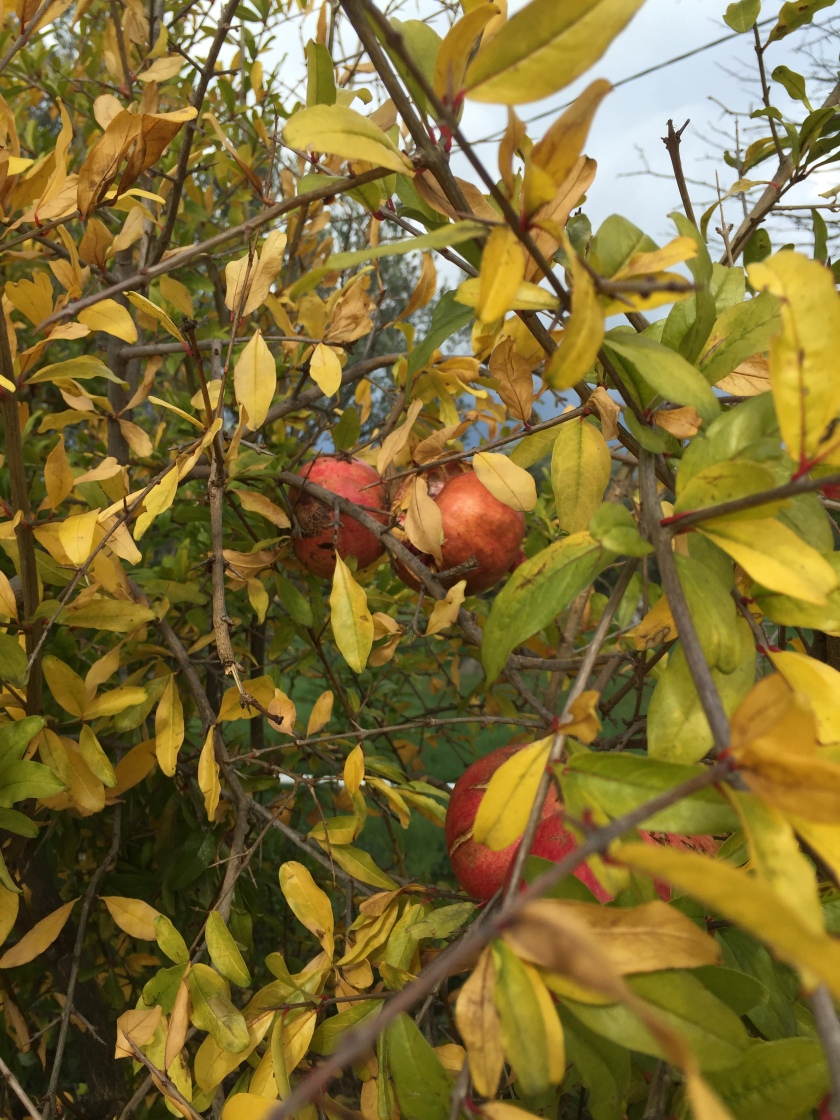
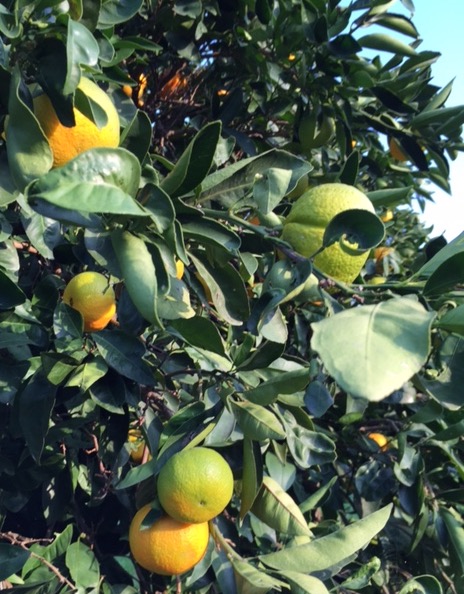
While the last of the pomegranates are splitting on branches now covered in bright yellow leaves, the oranges are ripening.
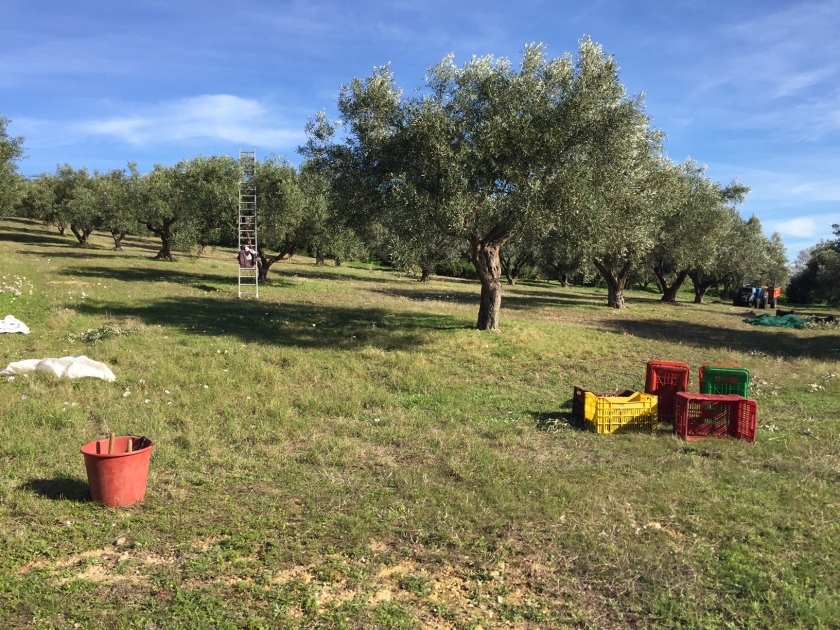
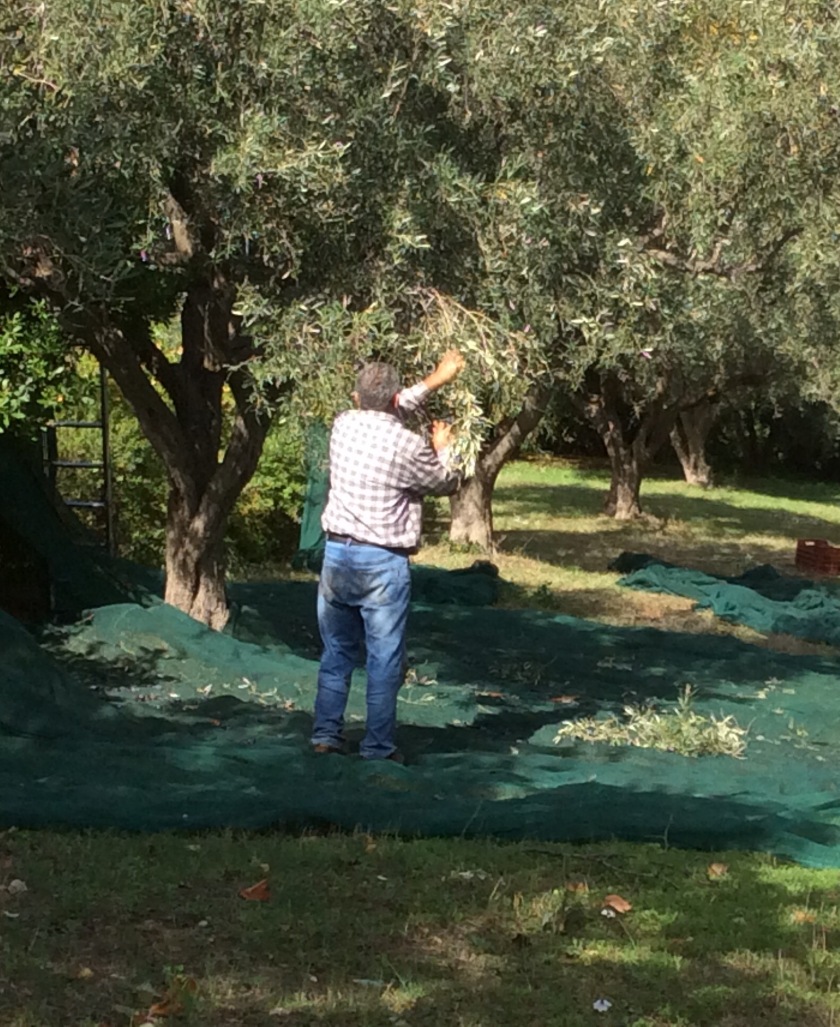
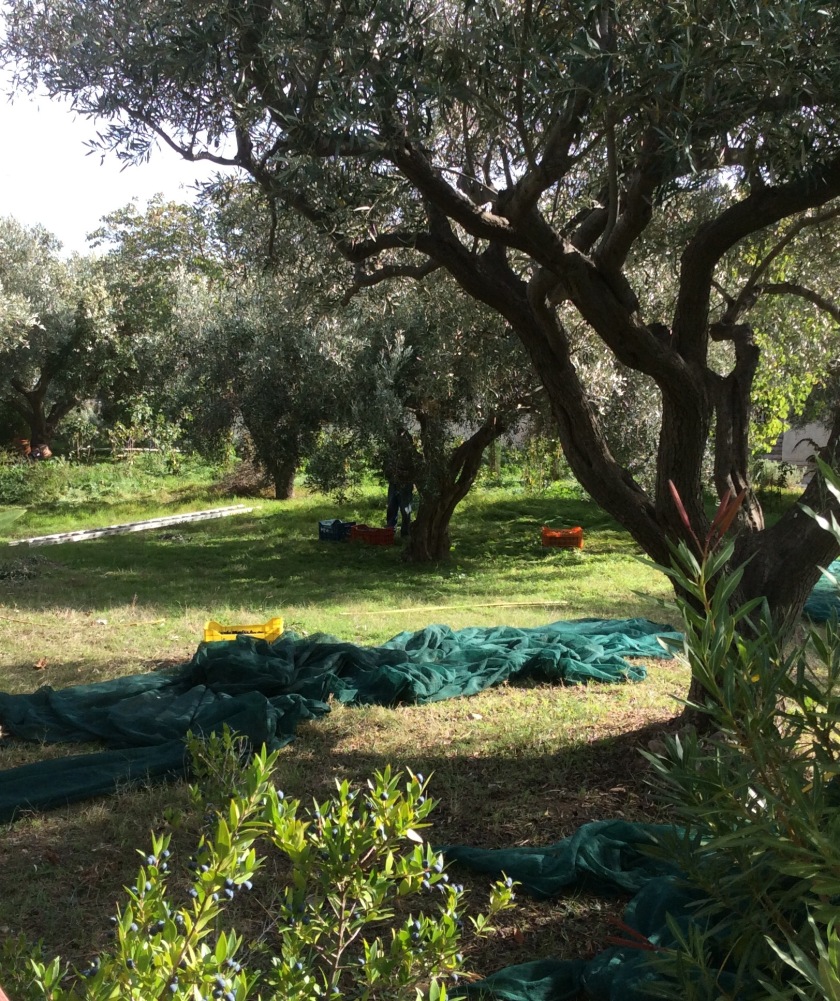
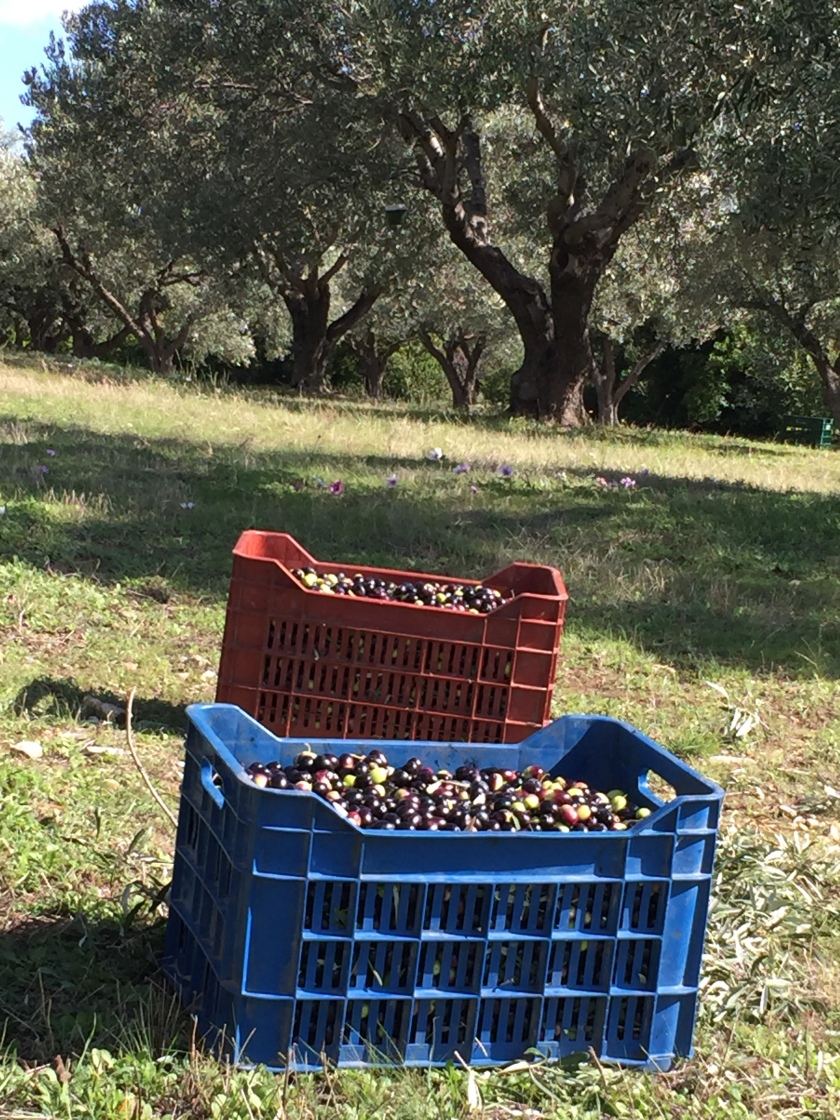
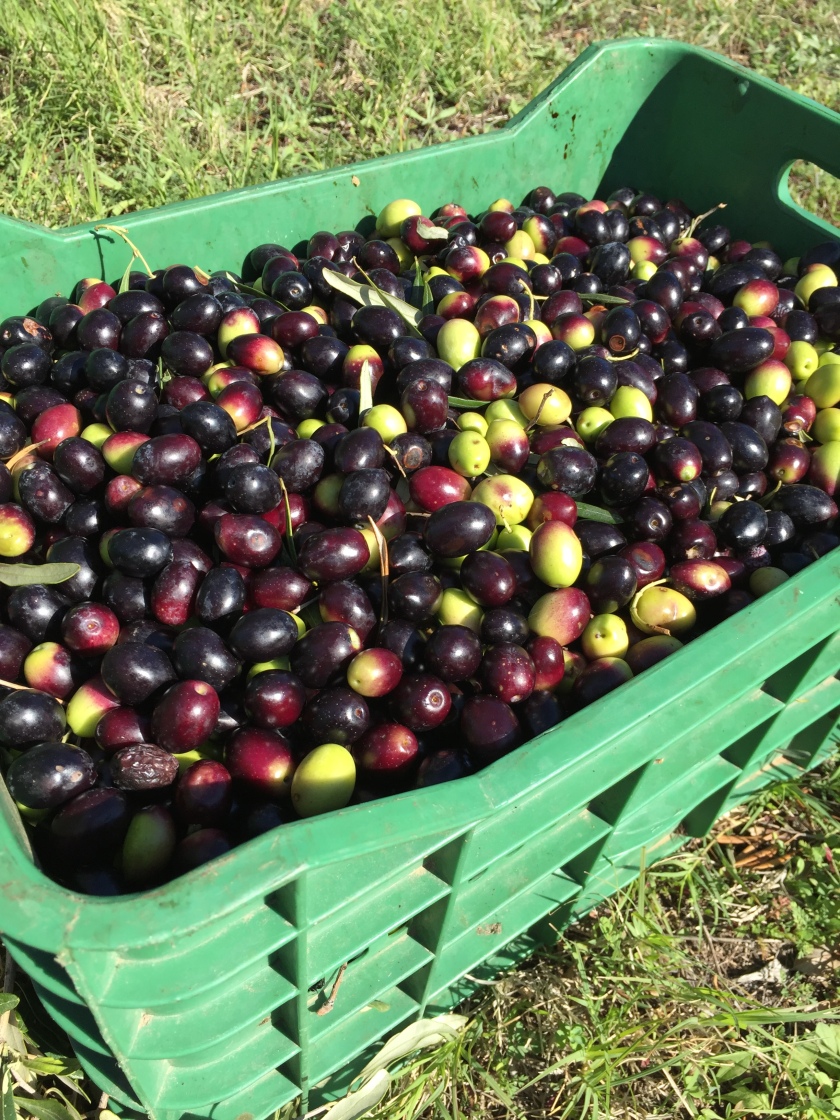
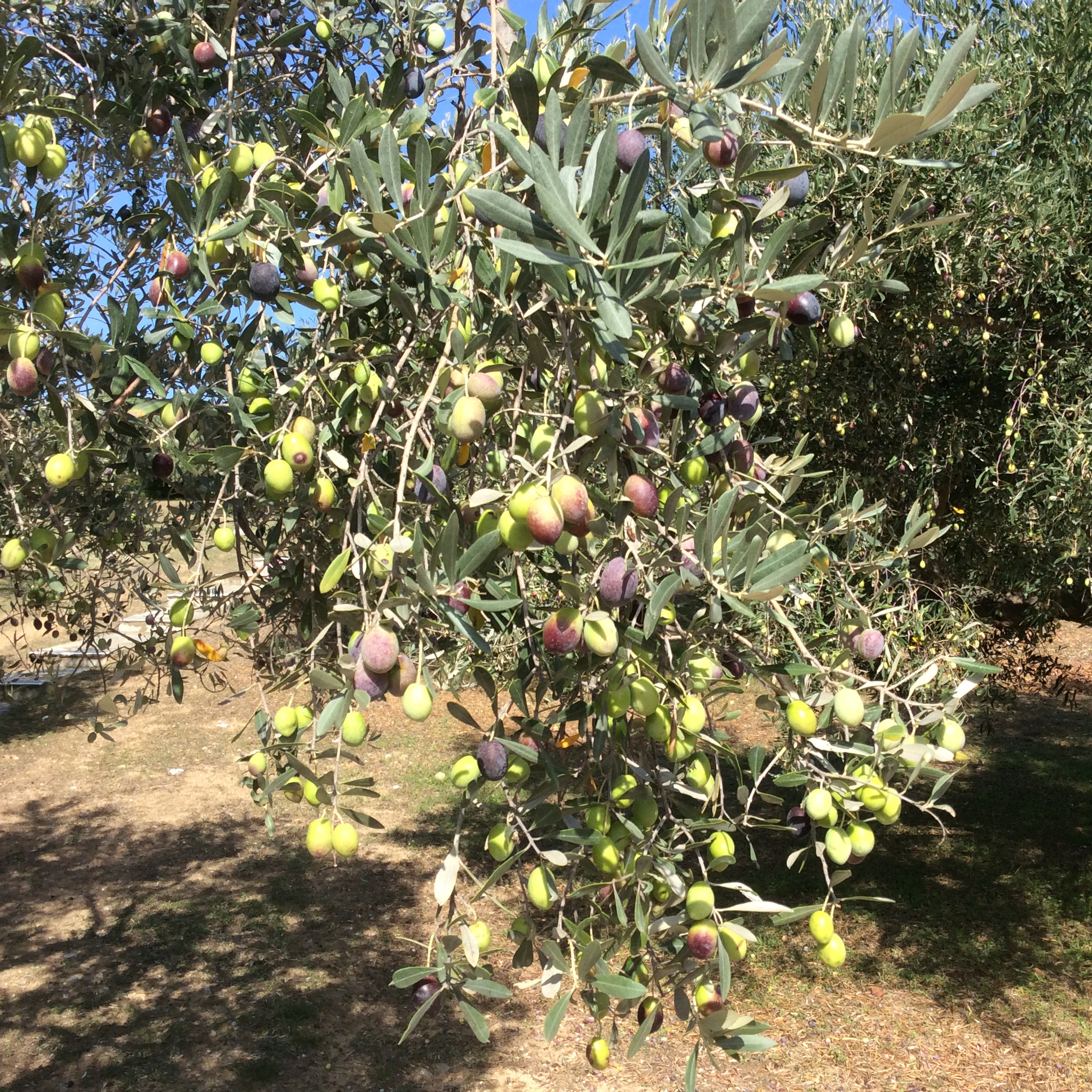
It’s olive picking time.
Soon the newly processed oil will be on our tables, and what better way to appreciate its aromatic flavor than as a dip for fresh, crusty bread. Bread and oil, with maybe an onion added – the poor (Greek) man’s caviar!
The cyclamen have been replaced by pale blue crocuses and tiny green orchids, as well as the first anemones, fooled into flower by the unseasonably warm weather.
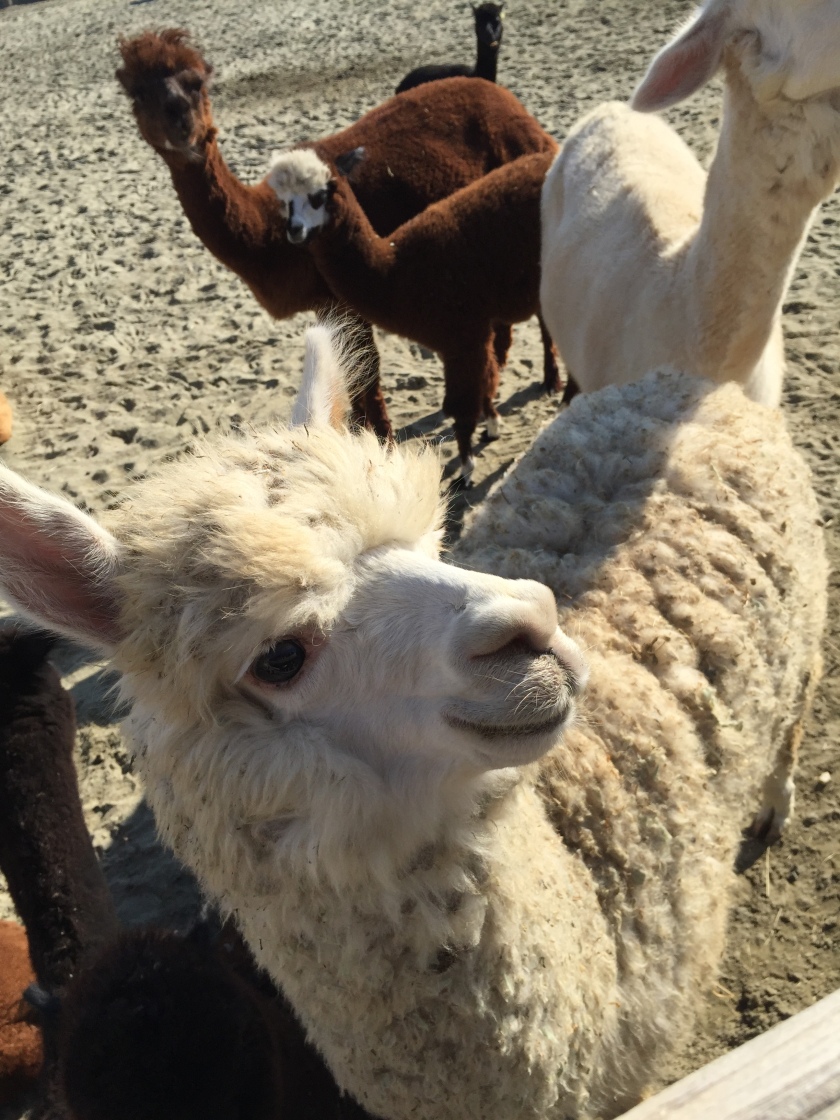
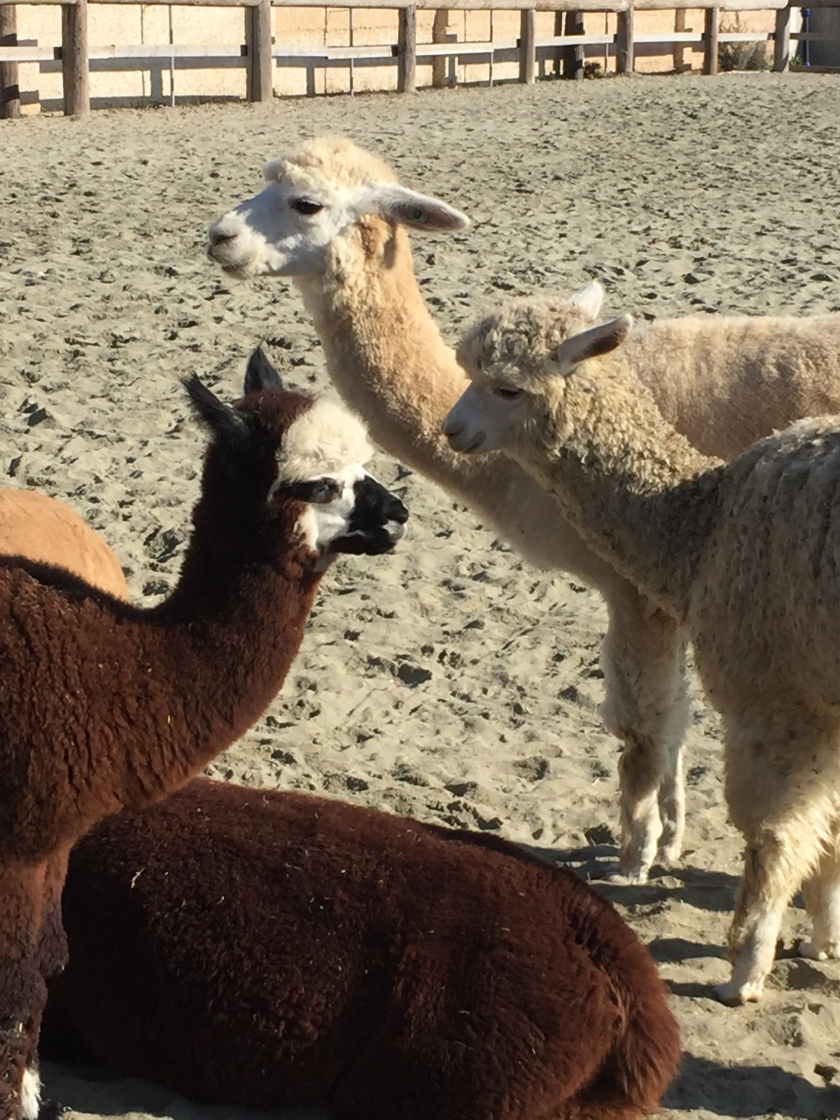
We took advantage of this to visit the Haris Estate where, amongst other cute creatures like bantam hens and miniature ponies, they keep alpacas – yes, alpacas in Attica! They hang about, looking woolly and making a high-pitched ‘mmmmmmmm’ sound – really too adorable! I want some!
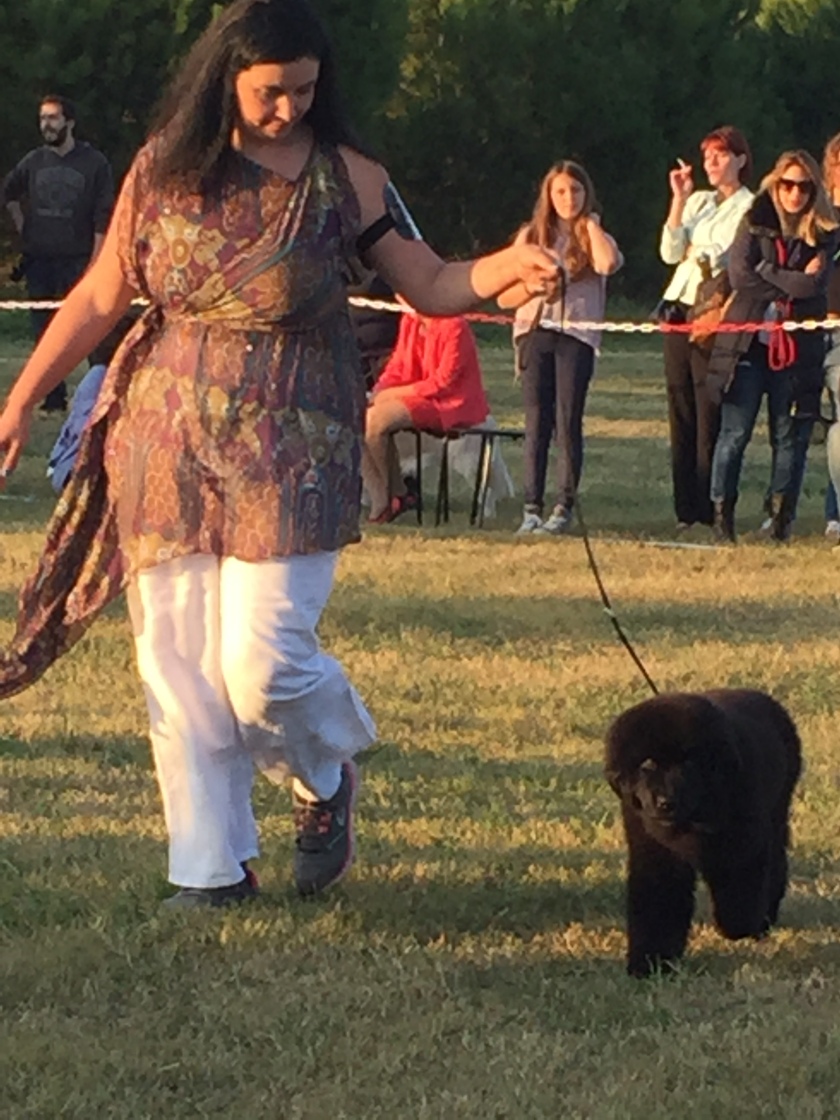
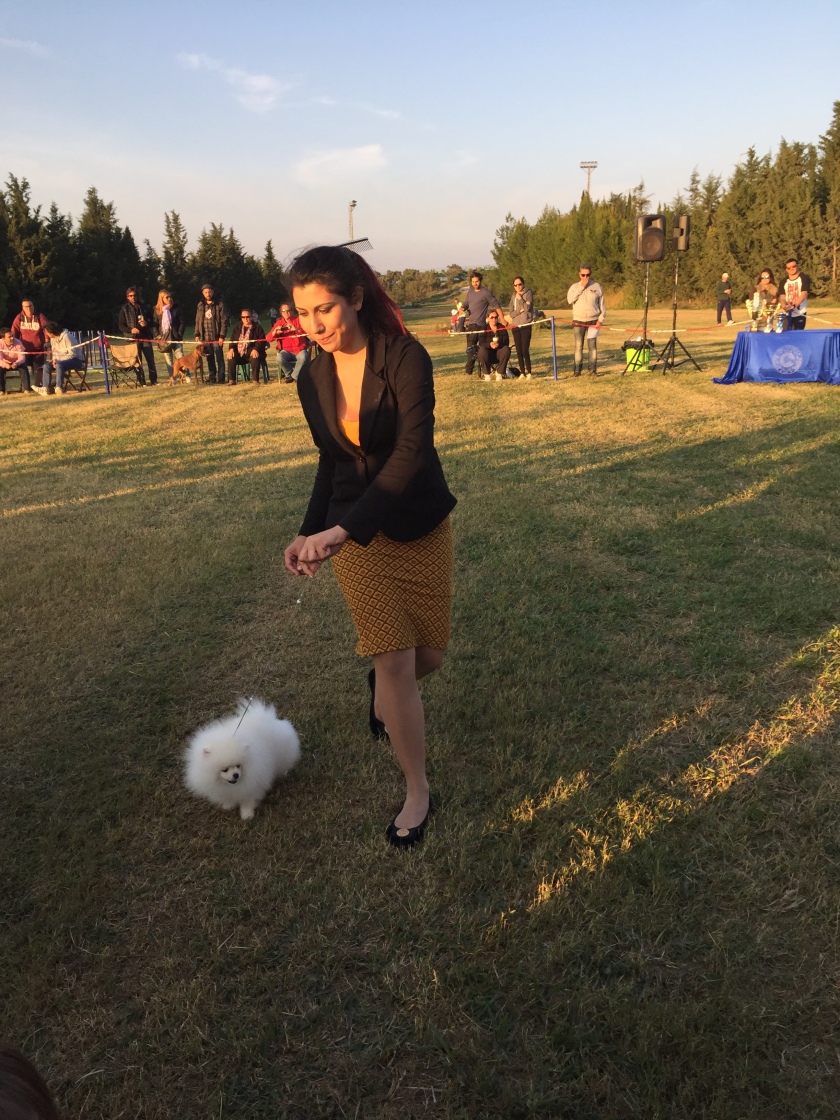
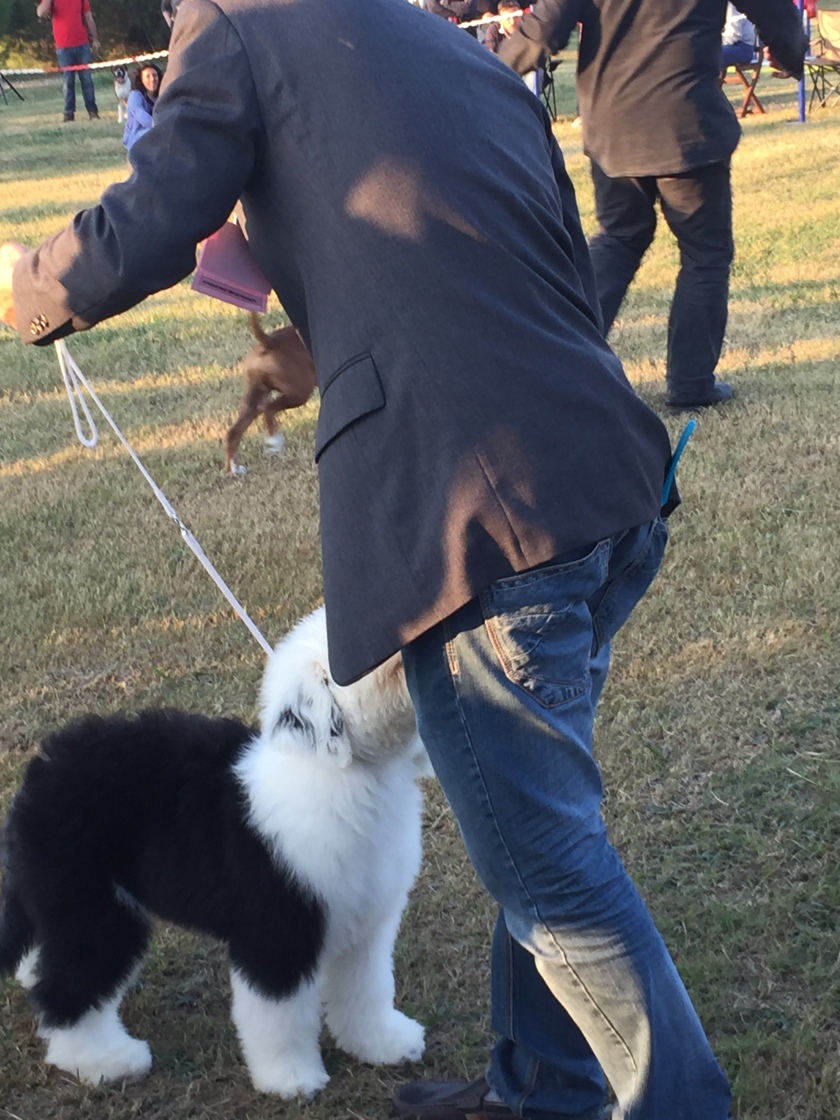
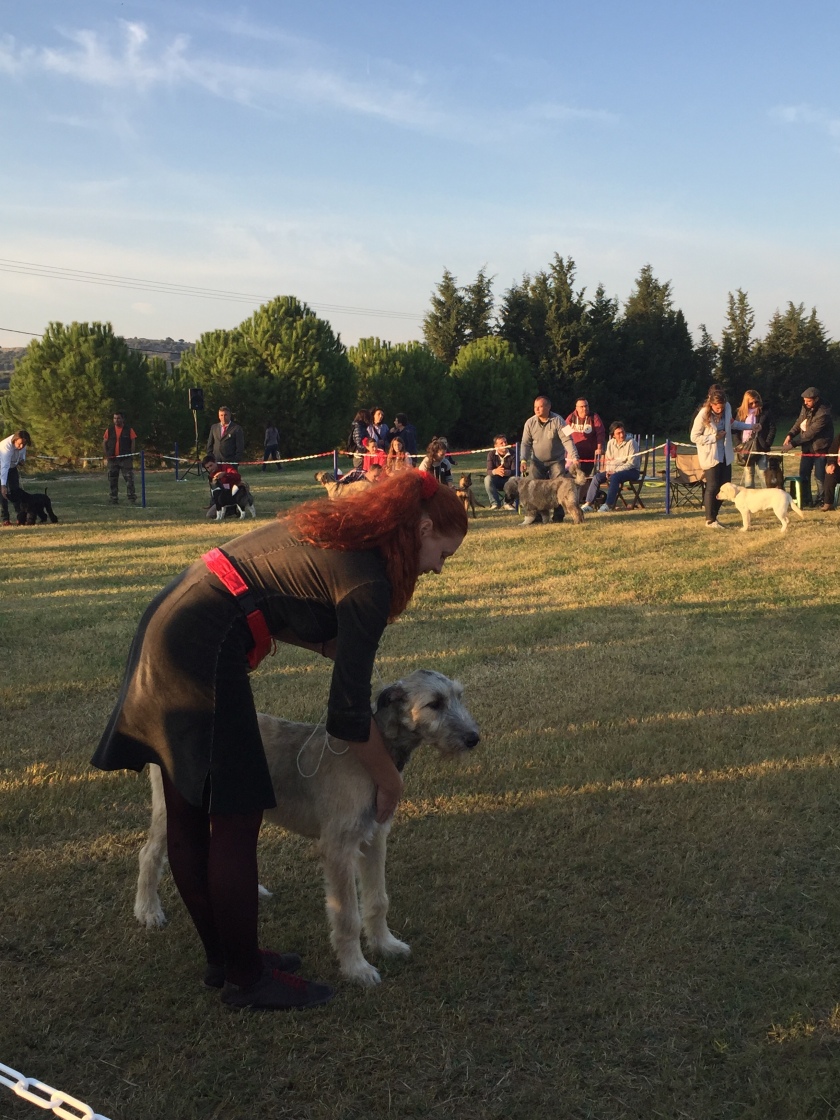
We also went to a dog show where a friend was exhibiting her champion ridgebacks. There was the usual hilarious array of enthusiasts with their pooches, from a huge white Pyrenean mountain dog to the tiniest, fluffiest, pristine Pomeranian. The dogs were all beautiful (otherwise they wouldn’t be there, I guess), there were lots of kids milling around, music, souvlaki at the canteen. Everyone was enjoying themselves.
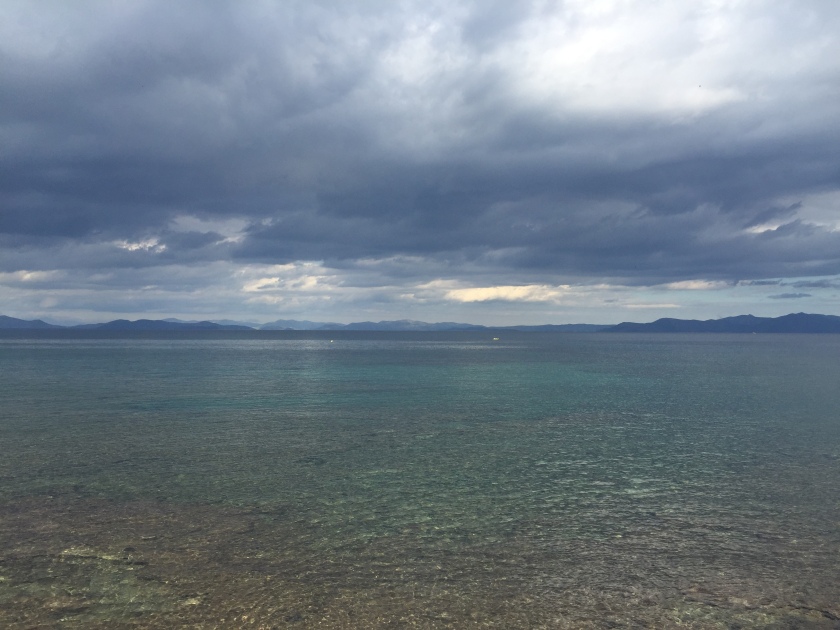
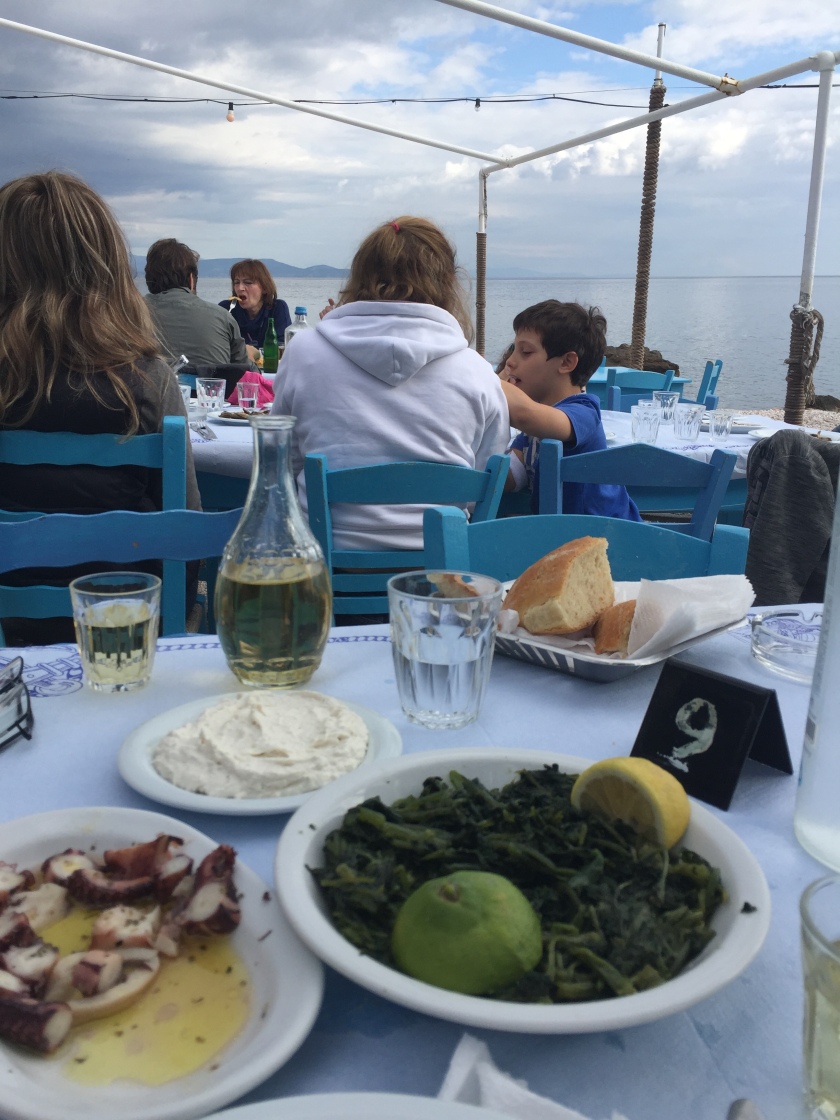
It’s still been warm enough to have lunch by the sea – outdoors! Note the kid in a t-shirt. As we ate, someone on a paddle board went by. No wind, so no windsurfers today – but quite a few swimmers. The sea is still warm, warmer than it will be in early June.
As we head into winter, it’s good to make the most of this beautiful weather.
Speaking of poor man’s caviar and looking at the photograph of food, I wanted to mention the guest post, called Postcard from Greece, which my friend Nadya invited me to write for her blog, The Exceptional. I re-blogged it without managing to write a few words – this is the first time I’ve done a re-blog, and I must have hit the wrong button! I wanted to thank Nadya for asking me, and to urge everyone to wander over and take a look at her blog about her life as a PhD student and mom.
I felt so gloomy after writing my last post (to say nothing about reading the morning papers) that I decided to make a list of my favorite mood-enhancers. Here goes – not necessarily in order of preference.
A bowl of pomegranates. Smooth on the outside, crammed full of juicy bits.
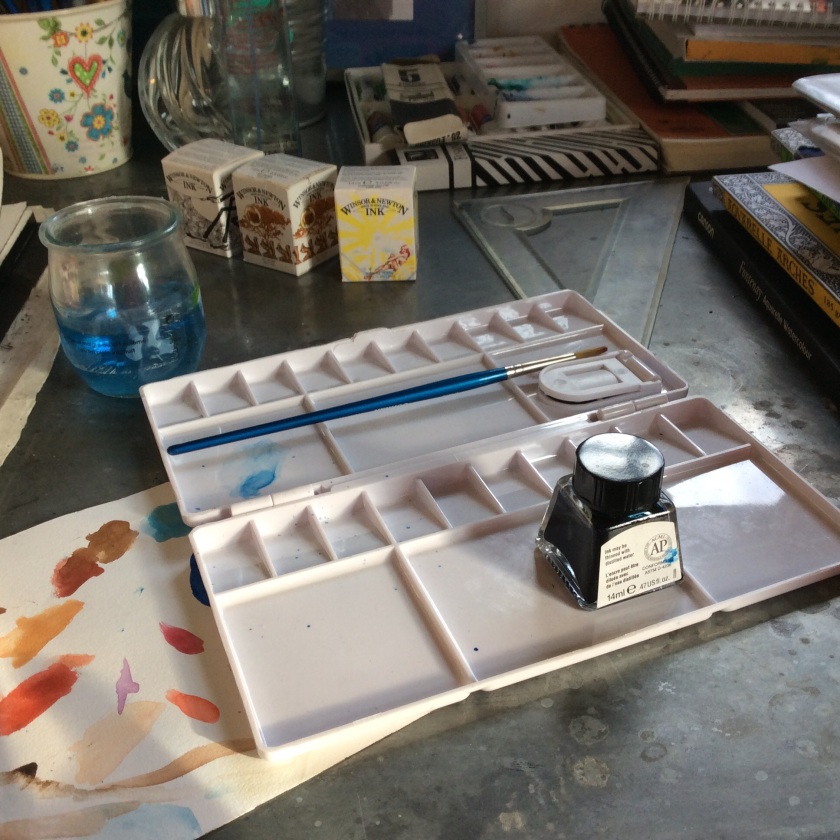
Art supplies. Anything to get the hands dirty.
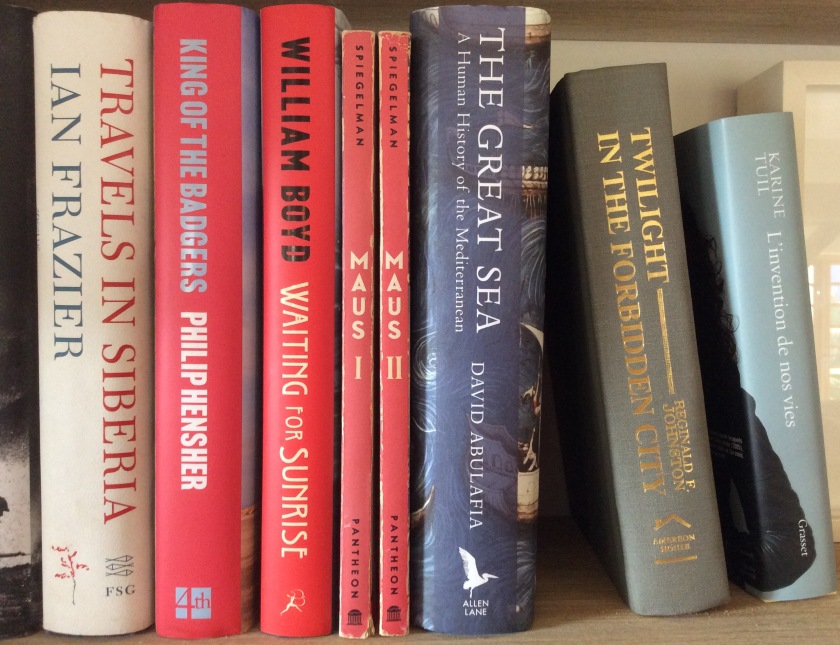
A stack of books. Some unread – and some old favorites.
A puppy. Need I say more?
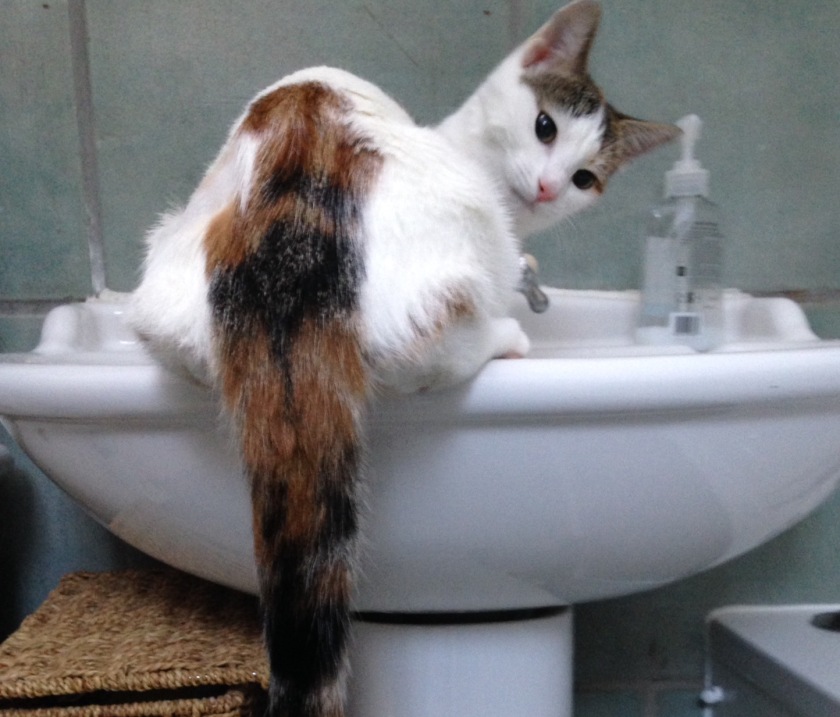
A cat, ignoring you.
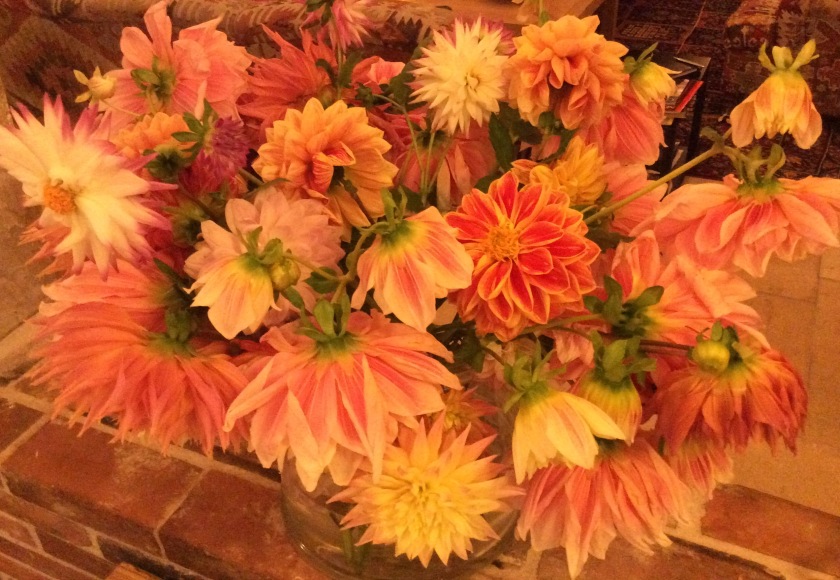
A bunch of flowers.
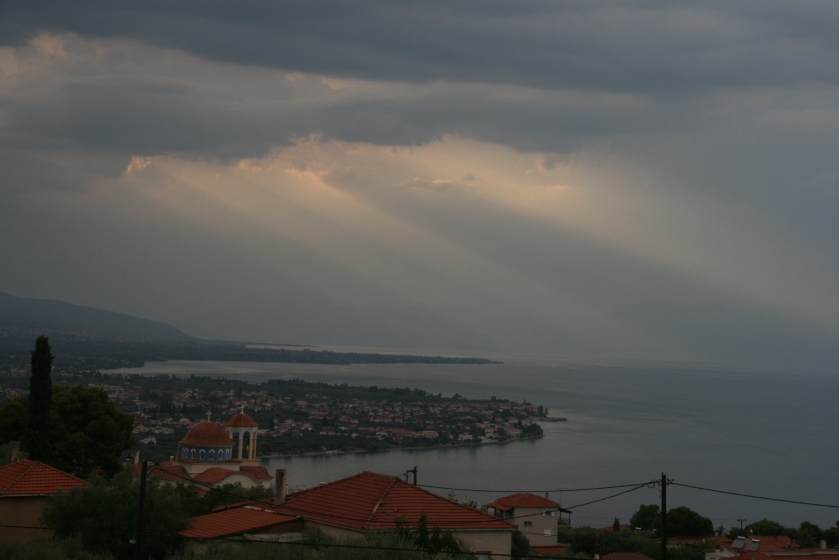
A ray of sunshine behind a cloud.
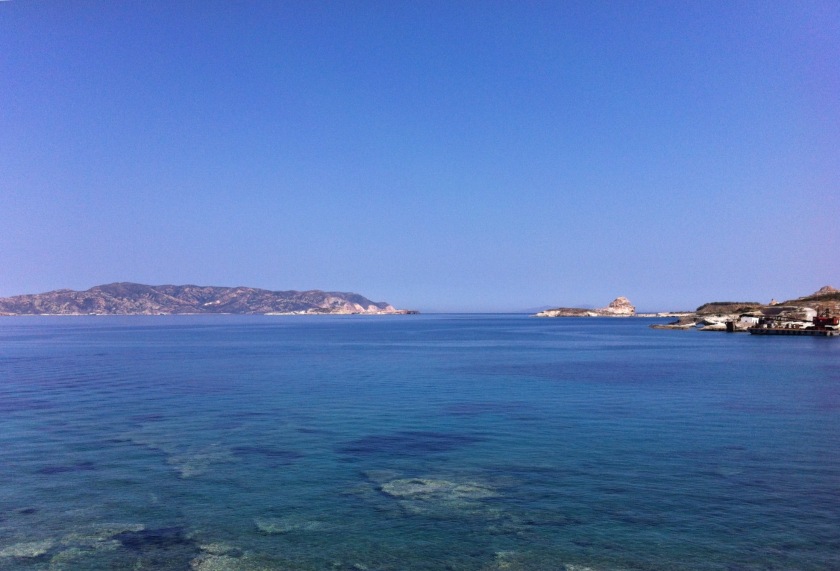
The sea.
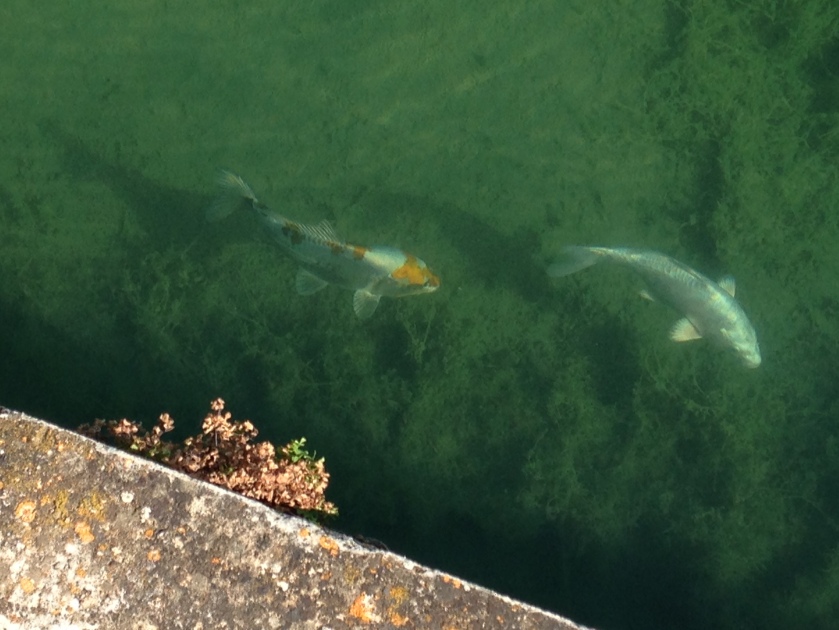
Watching fish swim. Very soothing.
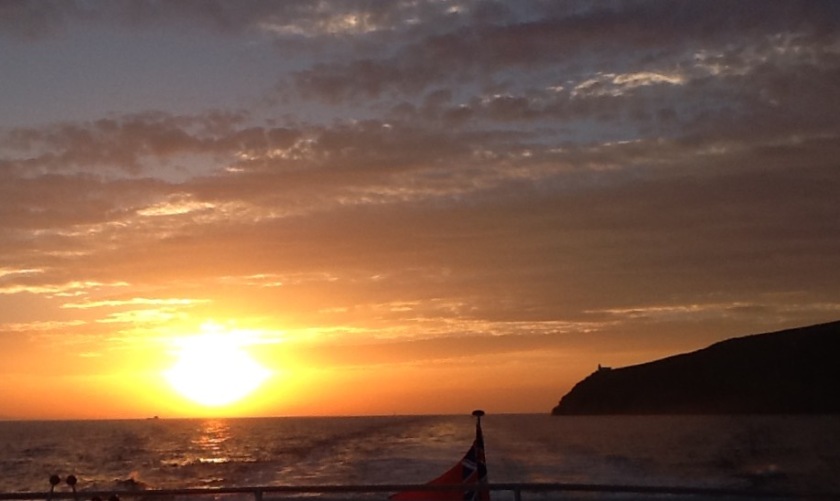
A sunset.
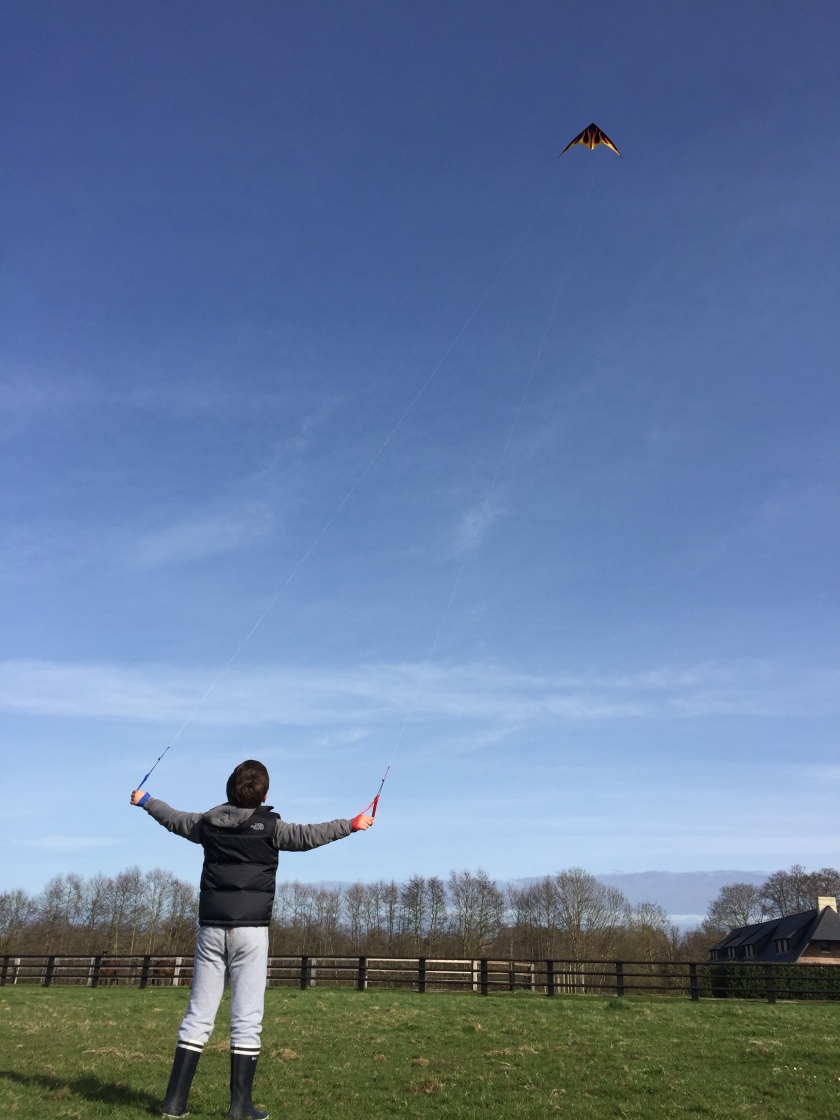
A soaring kite.
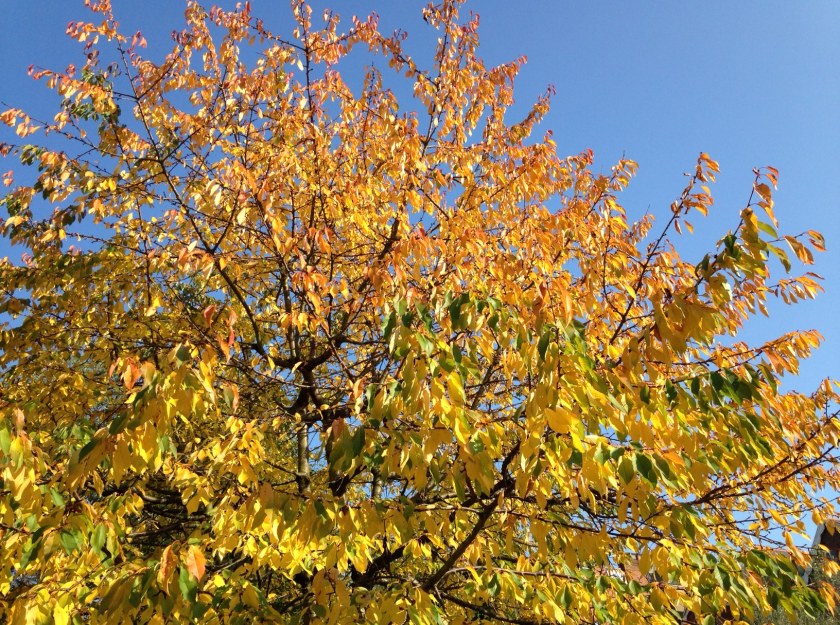
Autumn leaves.
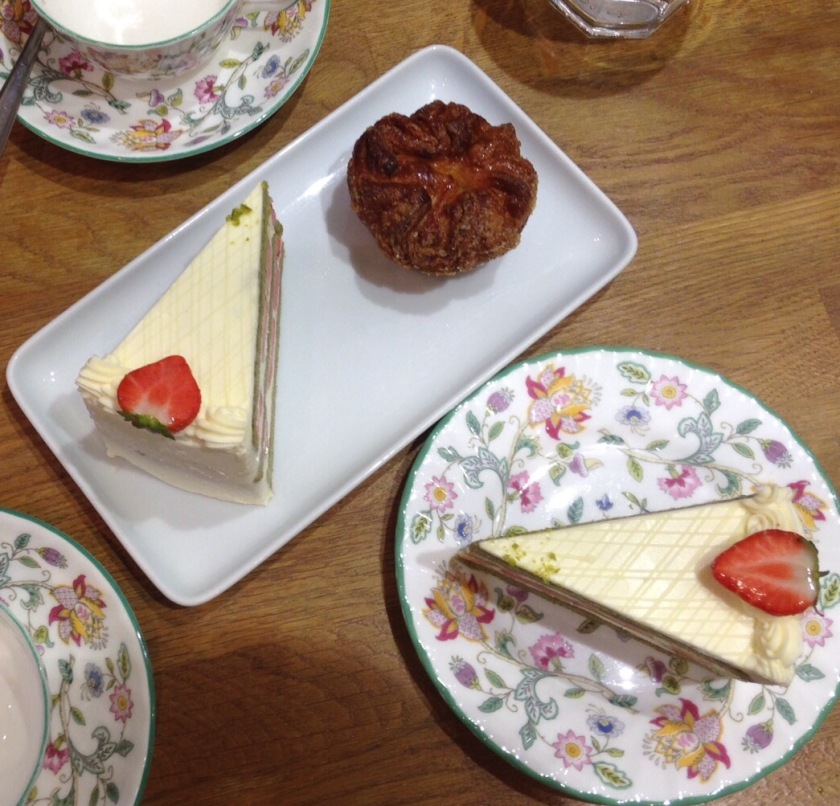
Cake!
Luckily, there are many more. Babies, rainbows, music, the smell of toast… Easy on the senses, easy on the brain. Feel any better?
Many thanks to Eleni Koryzi and Anna Koenig for providing some of the photos
Autumn is a good time to head out for a country walk. It’s not too hot and it’s rained already, so the hillsides are dotted with wild cyclamen. I pick bunches of them and put them in small pots, which are then spread around the house. My dog has learned to be patient while I am foraging. Today she investigated various interesting items, the most fascinating of which was a very dead, flattened frog which I had to prise from her with great difficulty, my orders of ‘Drop it!’ having no effect whatsoever.
Below please admire the results of my Saturday morning outing.
This is also the time to enjoy the last sun-ripened tomatoes. I do make a small batch of sauce for the winter, the emphasis being on small, since I can’t be bothered to sterilize jars and just put them in plastic boxes in the freezer.
Meanwhile, the olives are ripening on the trees. Already we have put up a few green ones in brine. We call them tsakistes (smashed) since you have to crack them with a stone. Soon it will be time to pick them. The groves will be full of people gathering and the roads will be full of tractors taking them to the press.
And for a more melancholic autumnal mood, I am re-posting Josephine‘s stunning photograph. She calls it ‘September’, but in Greece September is still summer to all intents and purposes.
Things are still festering in Greece, and no end in sight. The political scene is roiling as Tsipras tries to control his errant government, while the economy is suffering death throes and most people have had to abandon all thoughts of a holiday. The fires are out for now, but the meltemi still blows and the danger is not yet past. The destruction has been immense.
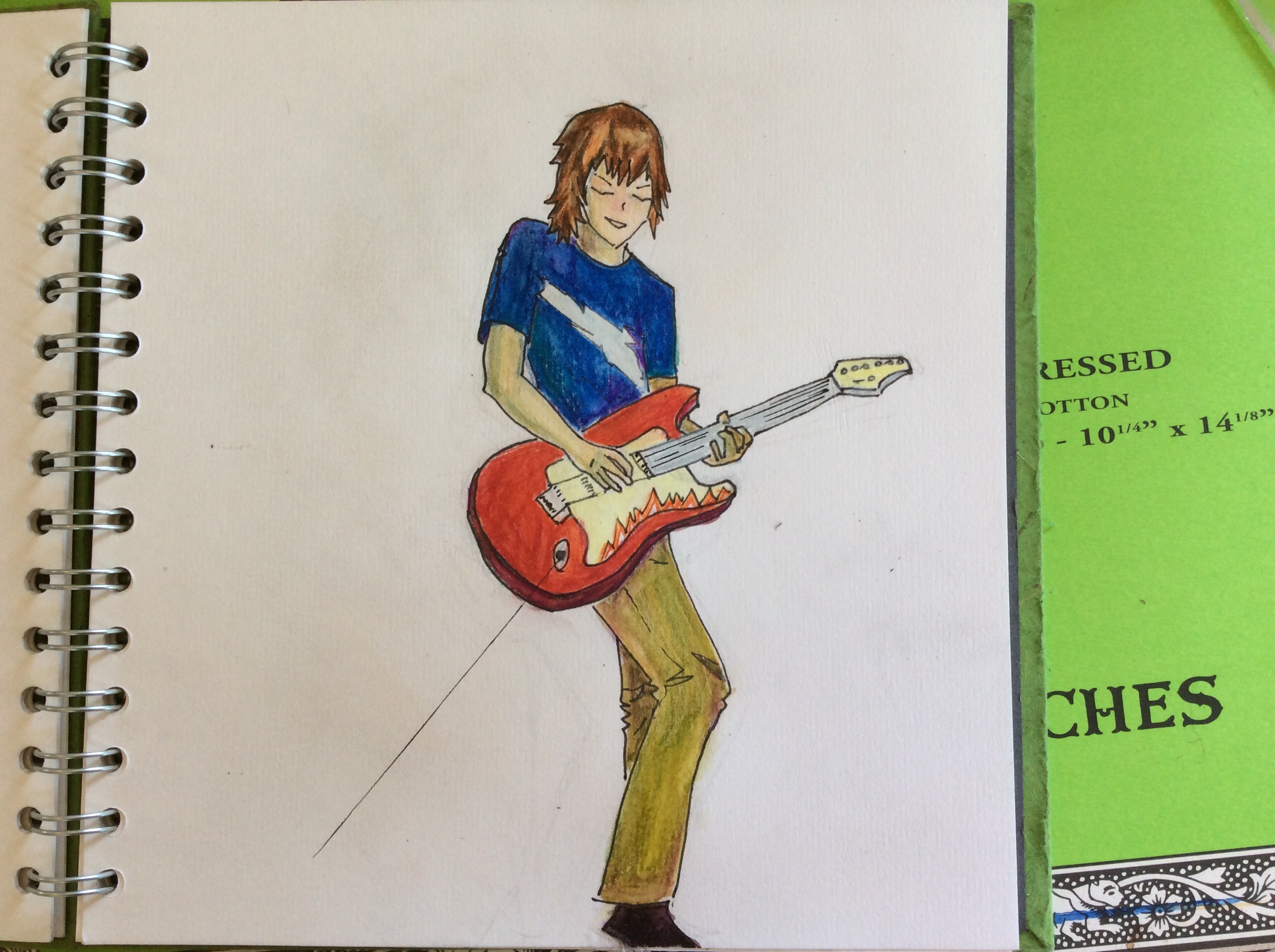
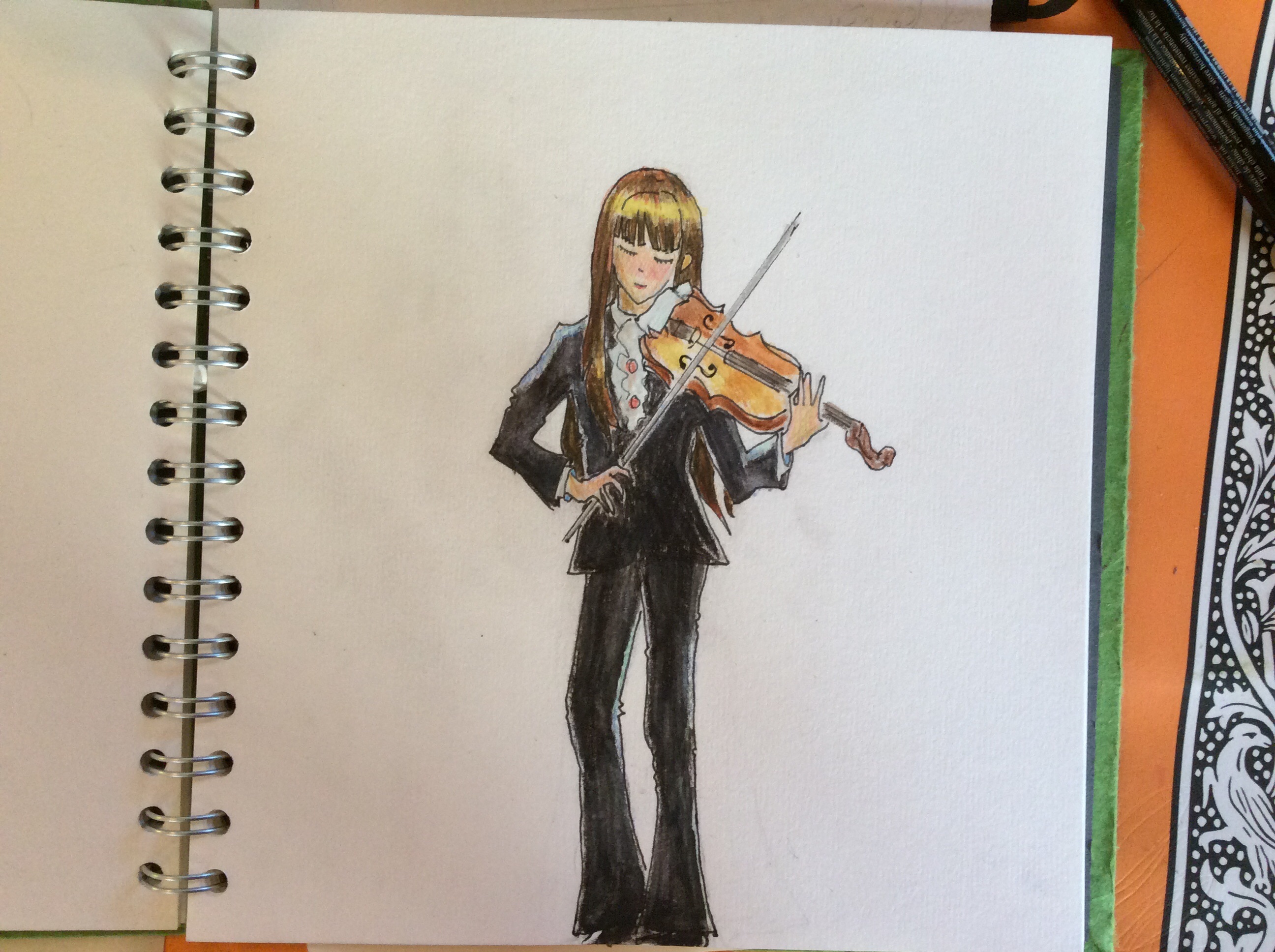
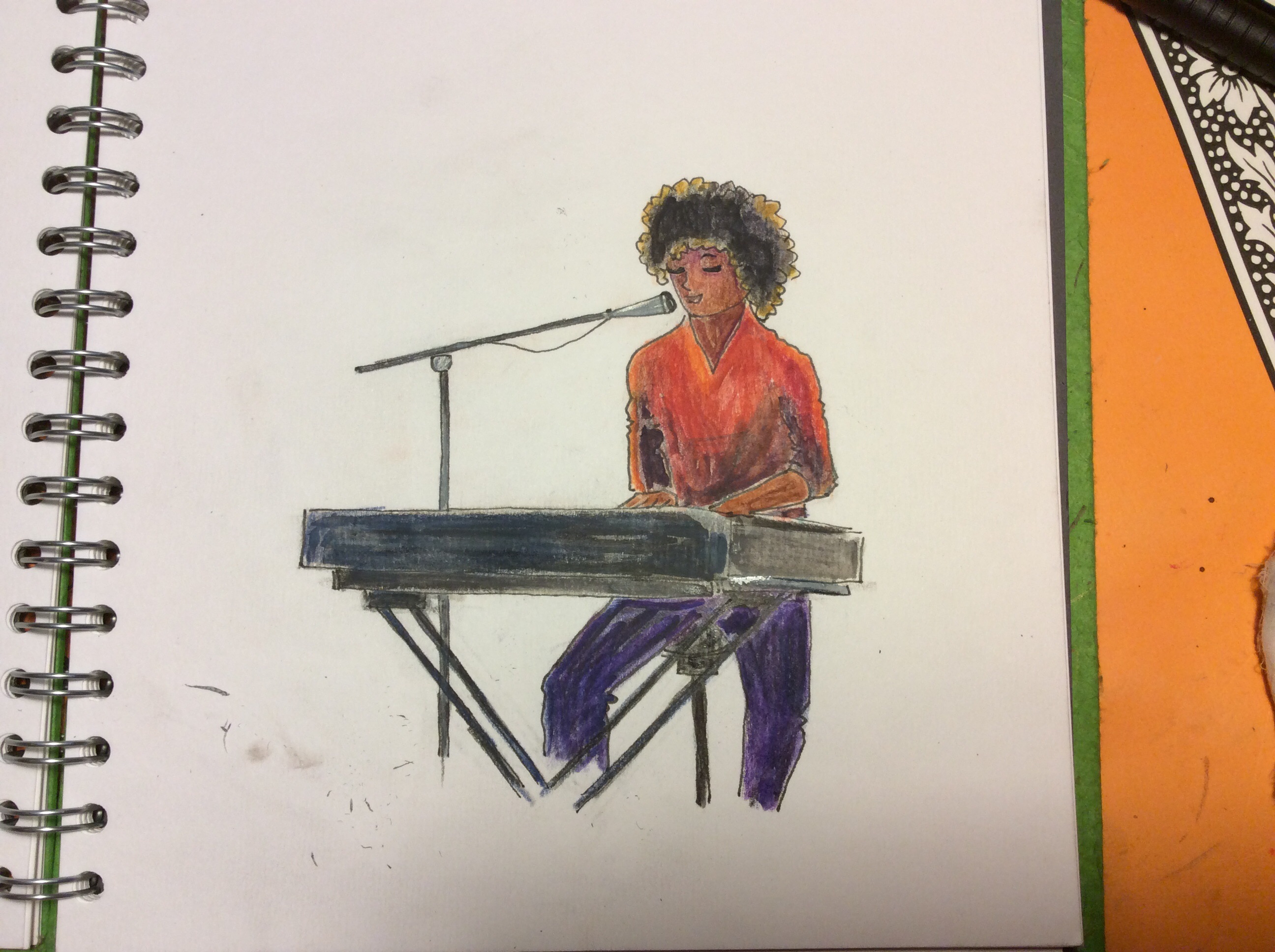
As a relief from the constant stream of bad news, I thought I’d share some of the drawings I’m doing for a music book for children. Written by two friends, pianists and music teachers Sia Antonaka and Roubini Mentzelopoulou, it’s a story about players of classical and modern music fighting with each other but finally ending up playing in harmony. It’s aimed at kids aged 6 – 10, and will be published by the end of the year. The book will include a cd and other teaching material, and hopes to encourage children to sing and enjoy rhythm.
It’s been very soothing as well as a lot of fun doing the drawings. For those interested, I used markers and aquarelle pencils.
1. We have to wait in long lines at ATMs to get our daily cash allowance (€60 which has become €50 since the banks have run out of €10 and €20 notes.) Many people have acquired a ‘secret’ or ‘favourite’ machine – one that is more reliable/less crowded that others.
2. Public Transport is – temporarily – free, only a lot less buses are running. A friend arrived at work late yesterday because she had to wait one hour and two minutes for her bus (usually there’s one every ten minutes.)
3. Any subscriptions to foreign sites (such as extra iCloud storage) are frozen, since Greek credit cards cannot pay money abroad. Same goes for Amazon or other online shopping.
4. Venues booked for weddings or christenings – there are a lot of those at this time of year- ask for part of the money in advance, preferably in cash, so they can pay for the food, etc. People are being creative about their ‘big day’: flowers from the garden, a cousin will do the bride’s hair, sister takes the photos etc.
5. Funerals can be paid for in installments.
6. Amongst my friends, the only people who have gone on holiday are those who have houses on the islands, or those who had prepaid for a trip somewhere. People trying to book rooms are asked for money in advance, in many cases in cash. Sometimes a friend on the spot can lend a hand.
However, tourists are OK since ATMs still seem to disburse money to foreign credit cards.
7. Some flights have been cancelled and many airlines are not accepting bookings from Greek tourist companies. However, around 15.000 internal flights will be available for around €10.
8. Businesses that deal in cash pay their employees in cash and get praise. Those that don’t can’t pay at all and get complaints. A lot of people have been asked to take unpaid vacation until the banks open (and are hoping that by the time this happens, their companies will still be operational.)
9. Dentists report cancellations for cosmetic appointments such as teeth cleaning or whitening.
10. Pharmacies report a rise in sales for medications used in chronic diseases such as diabetes as patients stock up, fearing a future lack.
11. People are paying with credit cards wherever possible in order to save what little cash they have. But some retailers are already refusing plastic.
12. Meanwhile, people who had money in the bank are trying desperately to spend it, fearing future haircuts. They’re buying up things they consider to have a resale value, such as jewels, cars, and electronic gadgets. To take advantage of this trend, luxury clothing retailers have started early and generous discounts (summer sales in Greece normally start in August.)
13. Generally people are trying to spend any money they have, so bills and taxes are paid promptly!
14. Imports and exports have become very complicated.
15. A lot of shows, especially those with expensive tickets, have been cancelled.
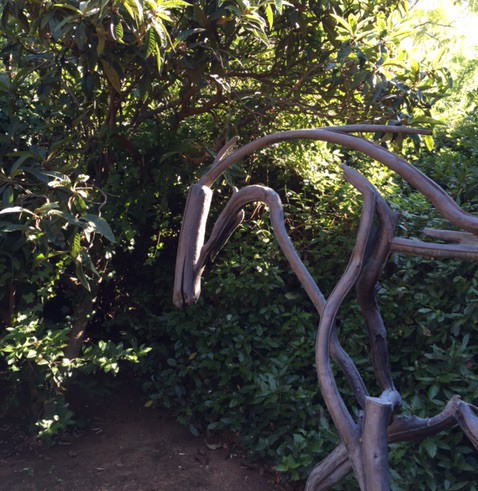
While waiting to find out our fate, I decided that life must go on, as pleasantly as possible. And what better way to soothe the soul than with art. So we descended upon my friend Alexandra, a sculptor whose studio spills out into her garden.
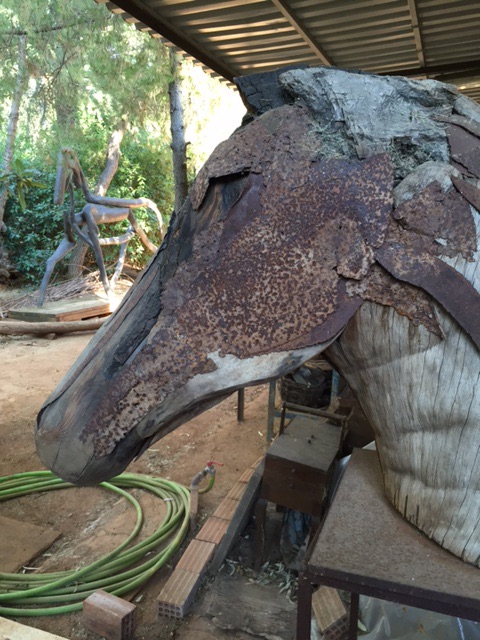
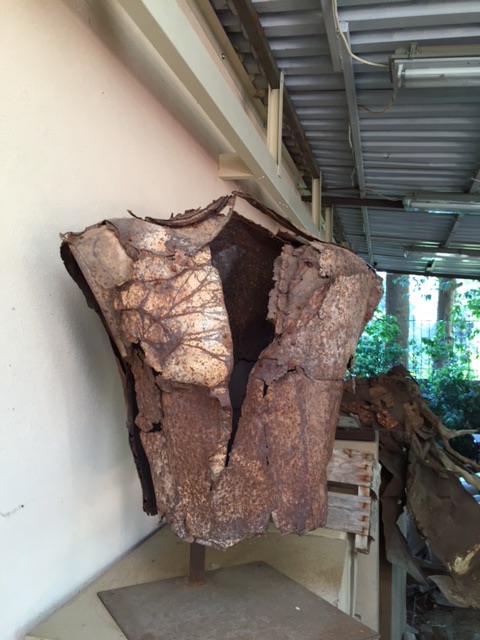
Alexandra is a versatile artist who works in many mediums: wood and rusted metal, resin, cardboard and paper. But she mostly starts her pieces with found materials – driftwood discovered on beaches, fallen branches or logs collected in woods, rusted bike frames and other bits of iron. These she assembles into her chosen shape, often horses’ heads or entire, life-size horses. Then she casts them in bronze.
This means her garden, enchantingly wild and overgrown, is a treasure trove of found pieces, as well as finished sculptures. Bits of metal left out to rust, piles of what she calls ‘rubbish’ but which no doubt will come in useful at some point. Works-in-progress, blocks of wood in weird shapes waiting for the next burst of inspiration. In the midst of all this is her studio. Welding equipment is stacked in a corner, and works on paper litter the tables – her latest passion is making books. Materials and tools spill out into the garden, where in the winter she can be seen hard at work, wearing multiple layers of clothes!
I love the way Alexandra scribbles and paints on every available surface. She flattens old cardboard boxes to draw on, uses tea and coffee to create subtle stains, tears things up and reconstructs them in layers. One of my favourites is this drawing on a broken flowerpot- she calls this work ‘Fragmented Self.’
Another recurring theme are the torsos made out of hammered sheets of metal. They are very evocative – they remind me of the Ancient Greek Kouros statues, but at the same time they suggest suits of armour.
A lovely afternoon was spent discussing how things were put together, what inspired each piece – and it was great being able to touch everything, which you cannot do in a museum or exhibition. The children had a field-day pottering about and feeding Alexandra’s tortoises. We were given ice cream on the terrace, surrounded by her collections of stones and small sculptures. Then the kids were put to work making fish out of actual rubbish gathered on a beach. The result was declared super-cool.
If you want to find out more about Alexandra Athanassiades, this is her site: http://www.alexandraathanassiades.com

 The almond trees are in bloom.
 Anemones come in all shades of pink and mauve, from almost white to fuschia, from palest lavender to purple. They can even be bright red, like poppies. They’re lovely in bowls around the house.
 Daisies and other wild flowers are popping up.
 The first kumquat. It’s in a pot outside the kitchen door.
 And buds on the camellia!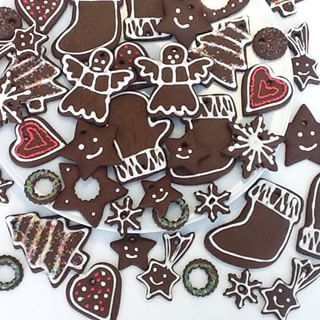
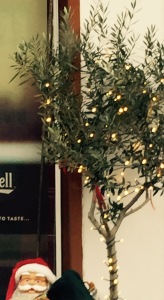 As far as decorations are concerned, there is the yearly debate of the Christmas tree versus the wooden ship. Changing fashion tends towards one or the other. The modern Christmas tree came to Greece with the country’s first king, Otto of Bavaria, who ascended to the throne in 1833; it did not, however, become popular before the 1940s. Some Greeks still consider it a foreign import, although use of decorated greenery and branches around New Year is recorded as far back as Greek antiquity, and there is evidence that some sort of Christmas tree existed in the Byzantine empire.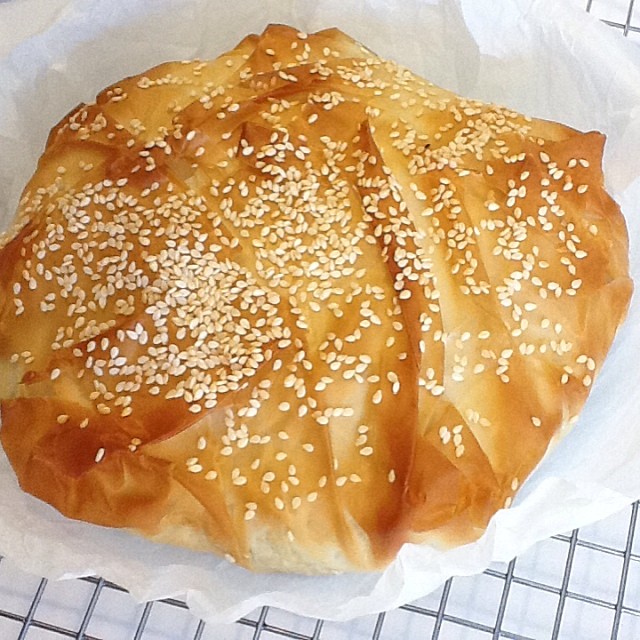
 As we head into winter, it’s good to make the most of this beautiful weather.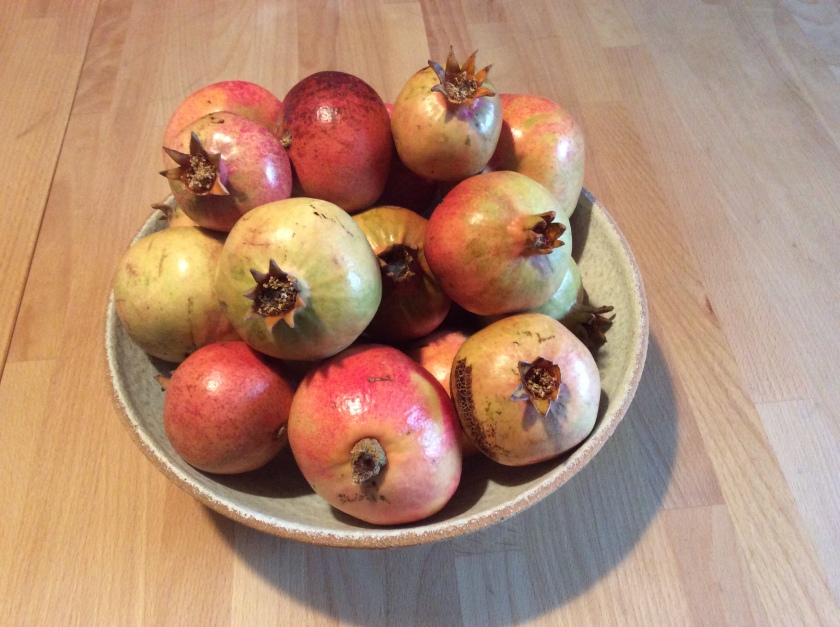











 Letters from Athens