Rediscovering Barbara Pym

Does anyone remember Barbara Pym?

I’d read her books years ago while still at school. I wonder why, since I was at Greek school and she could hardly have been on the curriculum. Probably browsing my mother’s bookshelves, where I was allowed a free run. At the time it was difficult to find foreign books in Athens and she was member of a book club – cloth-bound volumes arrived by post every month or so: Agatha Christie, Georgette Heyer, Ian Fleming, Neville Shute. I still have most of them. The thrill of it, the anticipation of receiving a new book, before the instant gratification of Amazon (I almost miss it—still prefer Amazon, though.)

But I digress. I recently came upon a BBC dramatisation of some of Pym’s books on Audible and downloaded it on impulse.

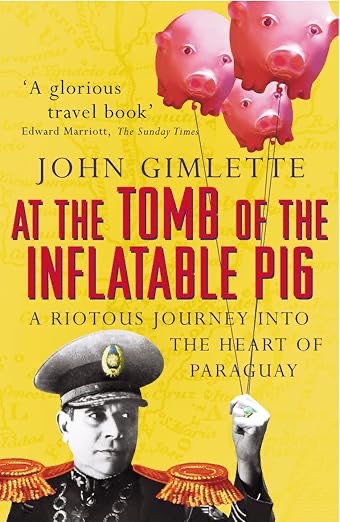
Very old-fashioned cover, isn’t it?

Barbara Pym wrote a series of social comedies in the 50s, but by the 70s her work was deemed too old-fashioned and was rejected by several publishers. Still, she kept writing, and forged a friendship with the poet Philip Larkin, who championed her work. When both he and the critic Lord David Cecil nominated her as the most underrated writer of the century, her career was revived. Her book Quartet in Autumn was nominated for the Booker Prize.

Pym was a shrewd observer of a certain type of English middle-class behaviour. Spinsters, bored housewives, academics and, in particular, vicars and curates, all came under her sharp and ironic scrutiny.

Of course I did not recall details of the books but I seemed to remember amusing and straightforward stories of village life and church goings-on. Via the dramatisation I am now discovering a narrative full of undertones, sexual innuendo and a delightful disregard for morality. Respectable wives go out to lunch with their friends’ husbands, spinsters plot to entrap men into marriage, older women meddle in everything. County housewives obsess over the new curate as they would today over the Kardashians. And all of it delivered in posh cut-glass accents you never hear any more because people are careful to disguise them even if they spent their childhood at Eton.

Probably this is not to everyone’s taste—I don’t think the young would appreciate it—and even for me there is no element of nostalgia, since it is set before my time. But it is an excellent production and I am deriving considerable amusement from listening in the car.

A Neapolitan journal

Thursday: Afternoon landing in Naples—a city with a prominent position on my bucket list because, what else, Pompéi (and pizza!) The taxi driver from the airport had us in stitches as, intent on having a conversation, he gesticulated so much his hands hardly touched the wheel! Twice he nearly went off into a side road, only to veer wildly at the last possible minute.

Our hotel on the waterfront had a view on the port, dominated by the majestic sight of the volcano. A busy port, with huge cruise ships moored next to ferries going to Sicily.

The Bay of Naples with Vesuvius looming

The afternoon was spent walking around the Piazza di Plebiscito in the historic center, bordered on one side by the huge, neo-classical Palazzo Réale and on the other by the Church of San Francesco di Paola, with its twin colonnades on either side.

Dinner in a traditional trattoria, where the owner’s husband and a friend regaled us with guitar playing and songs. Great food.

City planning BC

Friday: we treated ourselves to a guide, a great idea since Maria Luisa was enthusiastic and eloquent and answered all questions brilliantly. Pompéi was all I had expected—no, much more. I had not been prepared for the sheer size, the brilliant city planning, the length of the streets.

Stepping stones

Stepping stones were laid down so that people could cross the streets when they were flooded without getting wet. They also had ‘cat’s eyes’ of white marble in certain places so they would shine by torch light and people would not lose their way in the dark. Naples was a city of rich merchants and the villas reflect their wealth and status.

Roman villa with courtyard

The villas had courtyards and also, second floors which do not exist anymore—just the steps leading up to them.

How many artists must have lived in this city, for houses to be decorated in such a manner? Breathtaking frescoes everywhere.

Detail of fresco

The Bathhouse, below, with its original roof intact. It was a proper spa, with baths of different temperatures, fountains and a changing room.

Of course there was a theatre, a stadium and a forum.

Afternoon walk around town, where narrow, crowded streets often lead you to an elegant piazza.

The city is noisy and dirty but vibrant and buzzing with life. Walking in one of the crowded streets a few drops of rain started falling and immediately people materialised out of nowhere, selling umbrellas!

Saturday: We drove up the Vomero hill to the Certosa di San Marino, a former monastery which is now a museum. There was a stunning view over the city, with its ochre and yellow and terracotta colours.

Monastery courtyard
Some rather intriguing sculptures

Although the artefacts in the museum were interesting, the biggest attraction was the great cloister, with its wonderful mature camellia trees in bloom. A magical place, where we had the supreme luck of being alone for some minutes.

In the afternoon we visited Naples Underground: under the lively historic center there is an extensive network of streets and squares that partly was built by the Romans and Greeks and carved out of the tuff. It is a labyrinth of passages, water tanks and tunnels, almost a replica of the city above. These were used by people taking refuge from earthquakes and the war. After the second war people lived down there for years, since the city above had been destroyed by bombs and they were homeless.

We emerged to walk about the streets again. And I must not forget to mention the memorable meals. Pizza, of course, since Naples is its birthplace, but also delicious pasta and fish and greens of every kind.

Sunday: Before catching our flight we tried to visit the Museum of Capodimonte, but sadly it proved impossible since, on the first Sunday of every month museums are free and there was a huge line. However, the museum has a lovely park with a café in which we enjoyed a coffee in the sunshine. It was also the last week of Carnival, so the waterfront was closed to traffic and teeming with people out with their families, children dressed up in multicoloured costumes.

All in all, a memorable few days.

In praise of Penelope Fitzgerald

My days, darkened by the quasi-permanent absence of sunlight, were unexpectedly lit up by the discovery I had somehow missed reading a couple of Penelope Fitzgerald’s books, although she has long been one of my favourite writers.

Penelope Fitzgerald died in 2000 aged 83. In 2008 The Times listed her among “the 50 greatest British writers since 1945”. The Observer in 2012 placed her final novel, The Blue Flower, among “the ten best historical novels”, and A.S. Byatt called her, “Jane Austen’s nearest heir for precision and invention.”

Fitzgerald’s books are short, but within a few pages her prodigious powers of imagination create whole worlds. In The Beginning of Spring, she manages to describe the minutiae of life in pre-Revolutionary Russia as if she had been born there. But the research is worn so lightly it is imperceptible.

The Blue Flower, about the poet Novallis, has always been one of my favourite books. Based on the life of Friedrich von Hardenberg (1772–1801) it describes the time when, aged 22, before he became famous under the name Novallis, he became mystically attracted to the 12-year-old Sophie Von Kühn, an unlikely choice for an intellectual of noble birth given Sophie’s age and lack of education and culture, as well as her physical plainness and negligible material prospects. The couple became engaged a year later but never married as Sophie died of consumption a few days after her 15th birthday. The book is sad, subtle and romantic.

One of the books I had not read yet is The Golden Child, which is actually a murder mystery (she did not include it in her novels) with such a biting sense of humour that I found myself laughing out loud. The book is set in a museum, where “Even in total silence one could sense the ferocious efforts of the highly cultured staff trying to ascend the narrow ladder of promotion.” A perfect phrase if there ever was one. Or the description of the characters, even their names: “Hawthorne-Mannering, the Keeper of Funerary Art, was an exceedingly thin, well-dressed, disquieting person, pale, with movements full of graceful suffering, like the mermaid who was doomed to walk upon knives. Born related, or nearly related, to all the great families of England (who wondered why, if he was so keen on art, he didn’t take up a sensible job at Sotheby’s), and seconded to the Museum from the Courtauld, he was deeply pained by almost everything he saw about him.”

Her third novel, Offshore, won the Booker Prize in 1979. Based on her own years of living on an old sailing barge moored at Battersea Reach, it is about the mixed emotions of houseboat dwellers who live between the water and the land, fully belonging to neither.

Although she launched her literary career late, at the age of 58, Fitzgerald wrote nine novels, plus several biographies, short stories and articles. She had a hard life because due to her husband’s alcoholism she faced poverty, living for years in a houseboat which sank twice, and in public housing. She taught until the age of 70. Would she have been as good if she’d had an easy life? I think probably yes, because she was born in a scholarly family: she was the daughter of Edmund Knox, later editor of Punch, and Christina, daughter of Edward Hicks, Bishop of Lincoln and one of the first female students at Oxford. She was a niece of the theologian and crime writer Ronald Kox, the cryptographer Dillwyn Knox, the Bible scholarWilfred Knox, and the novelist and biographer Winifred Peck. She obviously also had great inherent talent.

She remains a unique, luminous voice in the literary firmament. I highly recommend her to anyone wanting to immerse themselves in her world.

The joy of beautiful prose

Being a bookworm from a young age, I read as the mood takes me, across a wide variety of genres: literary fiction, memoir, historical fiction and non-fiction, travel books, short stories, thrillers and crime. I have now arrived at an age where, if a book does not draw me in, I abandon it. So many books, so little time…And it has long ago ceased being homework. I read to be entertained, but also to be drawn into different worlds.

Into this last category come atmospheric books, such as the Booker Prize shortlisted Stone Yard Devotional, set in a religious community, or the winner, Orbital, set in space. The pace can be slow, but it is a delight to find oneself in a place one will never visit. The opposite of a thriller or police procedural, where you are waiting with bated breath to find out whodunnit.

Occasionally, though, I come across a book where the plot does not matter, because the writing itself is so beautiful that I relish every sentence. I have lately, by coincidence, read two books of that calibre: Held, by Anne Michaels and Light Years, by James Salter.

Anne Michaels is an award-winning poet, which is perceptible in this fragmented tale of four generations of women. It explores the trauma of loss and the impact of love, shifting between times and viewpoints. You get submerged in the power of language, which is simply exquisite—lyrical and vivid. Like poetry, like music.

The second book is the story of a marriage, between two people who have privilege, charm but also flaws.

It describes the brittleness of happiness, the chinks in the perfect facade, the pull between contentment and desire. The inability to enjoy what one has, the longing to escape, the lure of something different. Restlessness, unfocused dissatisfaction. Voices heard, details of clothing, music, food. Flashes of landscape, the beauty of nature, subtle thoughts and feelings. The prose is lucid, the style is impressionistic, flawless.

Neither of these books have much of a plot, and ultimately perhaps this is not enough. A few of the reviewers complain about this and of course, liking a book or not is entirely subjective. It also much depends on one’s mood. Occasionally, however, it is a joy to luxuriate in wonderful language, where every sentence is a asks to be re-read. I loved both books and highly recommend them.

A matter of perspective

Here in deepest Normandy I don’t think we have seen the sun—or a pale imitation thereof—more than twice in the last few months. I might exaggerate a bit, but not much.

8.30 a.m.

When I take the puppy out in the morning, it is pitch dark. Once or twice when the sky was overcast I even had to use a torch! I wrap up in boots, scarf, hat and gloves.

However, I would rather have rain, sleet, fog and ice than wildfires. Having lived through a number of those in Greece, there are few things worse. A vision of hell.

My thoughts are with the people of California who are dealing with this at the moment. Many have lost their homes, their livelihoods and some their lives. I sincerely hope the fires will be brought under control soon…

And a Happy New Year

What is it that makes the turn of the year fill us with hope? It is a totally fictitious concept. Nothing changes in reality—it is just another day. And yet…most of us think of it as a new start.

A snowy landscape

Looking at the year’s photos that are published around this time in the papers, there is not much to make the heart glad. Wars, poverty, natural catastrophes, displaced populations—the list never ends. But one could focus on this kind of thing every day of every year, or find images to lift the spirits. Wonderful landscape and wildlife photos, reminding us we live on a beautiful planet, very much worth preserving. Images of everyday life, music, art and performances. It always makes me hopeful for humankind when I see how many people enjoy going round exhibitions or pay good money to watch concerts and plays.

A good time to go out with friends (pencil on paper WIP – detail)

So let us take this opportunity to see a few good friends, spend time with family (if one can stand them, obvs!), perhaps make a donation somewhere, make a couple of (un-followable) resolutions, drink a glass of bubbly. Us Greeks will be baking or buying a Vassilopita, the traditional cake which we cut on New Year’s Day (or for months afterwards! – because one has to be eaten in every office, business, association or club as well as in every family) and devouring sugar-dusted kourabiedes or syrup-soaked melomakarona.

Out at 7.30 a.m.

My Christmas wishes were very belated this year, due to a technical glitch, but they were heartfelt, and so are my wishes to all of you, for a wonderful 2025. Health, joy and may the world be a better place.

Morning walk with puppy

An Intervention

Artist duo Elmgreen&Dragset were invited to exhibit their work in the iconic sculpture gallery of the Musée d’Orsay.

They called this installation, consisting of a number of boyish figures engaged in incongruous—in the context—pursuits, L’Addition.

Michael Elmgreen (born 1961 in Copenhagen, Denmark) and Ingar Dragset (born 1969 in Trodheim, Norway) have worked together as an artist duo since 1995, exploring the relationship between art, architecture and design.

Elmgreen&Dragset live and work in Berlin. They are known for art work that has wit and subversive humour, and also addresses social and cultural concern. Their work is too varied and prolific to be described in a short post, but anyone interested can look them up on Wikipedia—and they are, indeed, interesting.

For the first time in its history, the Musée d’Orsay invited someone to intervene in the museum’s permanent display of 19th century sculpture, which has remained the same for nearly 40 years.

As quoted in the museum’s site: In a trans-historical encounter between past and present, L’Addition highlights themes of evolving masculinities, solitude, and the magic of everyday situations. There is a certain beauty to be found in each of the fleeting moments captured in the works, whether it is in the pause before jumping from a diving board, the split second before a drone is sent off from a child’s hand, or a glimpse through the lens of a camera.

The figures are made of bronze, stainless steel and laquer. Boys waiting to dive, taking pictures from the mezzanine, setting off drones or just lounging upside down on the ceiling. It was all pretty cool, and an extra treat combined with the Caillebotte exhibition.

Gustave Caillebotte at the Musée d’Orsay

Amongst the lesser-known of the Impressionists, for the simple reason he was wealthy and did not need to sell his paintings in order to live, Gustave Caillebotte (1848-1894) is nevertheless a most interesting artist, because he had a unique take on things, using perspective and composition in original ways. He was very ‘modern’ for his time as well as more realistic in his technique than some of the others.

A lawyer and engineer, he fought in the Franco-Prussian war and upon his return frequented the Académie des Beaux Arts, as well as befriending several artists. The first painting he exhibited, of labourers working on a wooden floor, was criticised as “vulgar” (sweaty men doing a menial job) and rejected by the Salon of 1875. It is a masterpiece, if only for the light and perspective.

Rabatteurs de parquet, 1876 (détail)

Caillebotte painted many domestic scenes, depicting his family and friends in everyday pursuits.

A beautiful pastel, which does not really show to advantage in a photo

I love the composition in this painting, the frame of the portrait replicated in the chair’s back, the diagonal made by the blue clothes…

He also loved sport and painted people rowing or sailing at the family’s Yerres estate. His technique of cropping or zooming in is original and gives a lot of movement to his scenes.

If I had painted this, I don’t think I would have thought to chop off the front of the first canoe, which is just sliding out of the picture.

In this view the boats are coming towards us

And here, seen from the back.

I love this gentleman, who is not rowing for sport, only taking himself on a little jaunt in his city clothes.

Caillebotte also did many urban paintings, some from an elevated perspective, such as the one below.

His paintings of Paris give off a very special flavour of the city.

Two of the artist’s friends looking out towards the Boulevard Haussmann in this painting entitled Balcon (circa 1880)

Le pont de l’Europe (1877)

He also made realistic studies of the human body and his paintings of males nudes were considered revolutionary, depicting ‘real’ men in domestic settings, instead of heroes in allegories.

Homme au bain, 1884 (note the wet footprints on the floor!)

Caillebotte used his wealth to support many of his fellow artists, notably Renoir—who was a close friend—Monet and Pissarro, amongst others. He died young, at the age of 45, of pulmonary congestion. He left behind an impressive body of work and bequeathed a large and varied collection—he had acquired many works from his fellow artists—to the French government. Here he is below, in one of those funny hats they all wore to row on the river. He looks like a jolly good sort.

Self portrait in a summer hat (circa 1873)

I was very lucky to visit the exhibition before the crows swarmed in, with a friend who is a Friend of the museum and holder of a card allowing early entry. A most impressive artist.

A wonderful collection

In 2004, the descendants of the Senn family made a donation of 205 pieces of art to the MuMa Museum in Le Havre. The collection, of mostly Impressionist and Fauve artists, was amassed by Olivier Senn and further embellished by members of his family. It includes works by such icons as Delacroix, Boudin, Monet, Renoir, De Chirico, De Staël and others. On the 20th anniversary of this major donation, the museum curated a major exhibition of the works.

Edgar Degas, pencil on paper

Born in Le Havre in 1864, Olivier Senn studied law and, after marrying, joined his father-in-law’s cotton business. Once he’d made his fortune, he started buying art. The Senns and their descendants and relatives by marriage were all art and music lovers, as well as generous donors.

Yesterday’s vernissage of the exhibition drew a large and very appreciative crowd, which thankfully spread out around the museum rooms, making it pleasant to wander about, admiring the works. The collection was too large to describe in full, so I will linger over some particular favourites, a set of lovely pencil drawings by Edgar Degas.

Degas, circa 1859-1861.
This drawing, along with the one above and several others, were studies for a large oil painting titled Alexandre et Bucéphale

Another interesting work, probably in pastel, is the study below, for a painting called Semiramis building Babylon

Further little treasures among the works on paper were the small charcoal studies below, by Henri-Edmond Cross. A lesson in conveying much with but a few simple strokes.

Here’s a link for anyone who would like to see more:

https://www.muma-lehavre.fr/fr/expositions/les-senn-collectionneurs-et-mecenes