On another TBT, I thought I’d repost this blog for newer readers who are interested in seasonal Greek customs.
Christmas may be over but the festivities are far from finished. In Greece the New Year celebrations are considered more important than Christmas, and are connected to Saint Basil, whose nameday falls on January first. This is when gifts are opened, since our Santa Klaus or Father Christmas is Aghios Vasilios or, familiarly, Aï Vasilis.
These are the main festive customs:
Βασιλόπιτα – Vasilopita (Basil’s cake)
After midnight on December 31, with the ushering in of the new year, there is the cutting of the Vasilopita, which is either tsoureki, a kind of brioche, or a cake – usually flavored with orange and sometimes containing candied fruit and nuts. A coin we call a flourí is slipped inside and, once the cake is distributed, the person who gets it is supposed to have extra good luck for the rest of the year.
In older days and in affluent households the coin used to be gold (usually an English gold pound) but nowadays it is mostly some kind of gold charm with the year etched on. Sometimes there can be a gift associated with it.
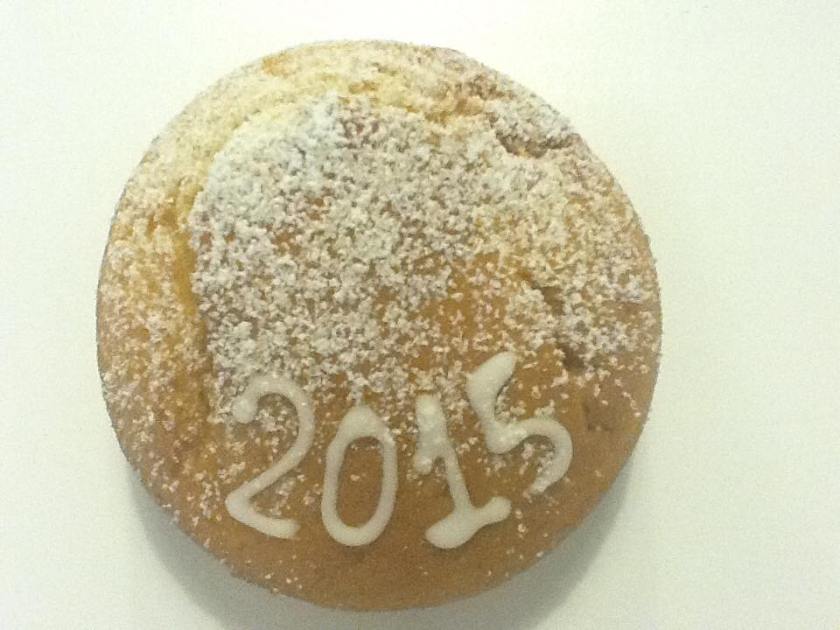
The Vasilopita has to be entirely distributed so it is divided equally amongst those present – the family, visitors and anyone working in the house are included. Tradition varies, but the first slice is usually reserved for Christ, the second for the house and the third for the poor. Then everyone gets their piece according to age, the eldest being first (or sometimes the householder). In my home the youngest child has to choose which piece will be cut first and then we proceed in a clockwise direction. People must not look for the coin until everyone has had their piece. Then there is usually a silence – often the person who has found the coin says nothing, to prolong the suspense – and the ‘discovery’ is followed by applause, congratulations and good wishes: Χρόνια Πολλά (Chronia Polla – Many Years) or Καλή Χρονιά (Kali Chronia – (May you have a) Good Year).
The Vasilopita is considered so essential to the start of each year that one is shared out not only in each and every home, but in the workplace – in offices, shops, public organizations – and even sports clubs and other associations. Because of the difficulty of getting everyone together, pitas are cut well into February and sometimes even March!
The story behind this custom is the following, although some versions existed in even more ancient times: In the 4th century, Aghios Vasilios was the Archbishop of Caesarea, an area of Cappadocia. A local tyrant was threatening to conquer and loot the town, so all the citizens gave their valuables to Aghios Vasilios, to give the tyrant in lieu of ransom, so the town would be spared. The tyrant, however, was deflected from his goal by the intervention of another Saint, Aghios Mercourios. Vasilios had the hard task of returning the valuables to their owners, but he had no idea what belonged to each. So he asked the townspeople to bake small loaves, inside which he hid the valuables, and which he then distributed at random. Upon breaking open the loaves, the parishioners were astounded to see they had each got their rightful belongings!
The Vasilopita was not the same in every part of Greece. In many places it was a savory pie, containing different meats and vegetables, such as leeks. Various spices and flavorings were used in both sweet and savory pies.
The surface of the cake or pie bore many decorations, according to local custom and the occupation of the householders. For example, in Asia Minor, the top was decorated with the double-headed eagle, symbol of the Byzantine Empire. Elsewhere, housewives etched the top with Saint Basil’s and the householder’s initials,and with barrels of wine, sheaves of wheat, lambs and goats, plows and boats, or anything else they wanted blessed for the new year.
There is still a large variety of Vasilopita to be found, but nowadays most are sweet.
Καλή Χέρα – Kali Hera (good hand)
Gifts of money are traditionally given to children on New Year’s Day. In some places, the custom was to give a gold coin, especially by grandparents to their grandchildren.
Σπάσιμο Ροδιού – Smashing of pomegranates
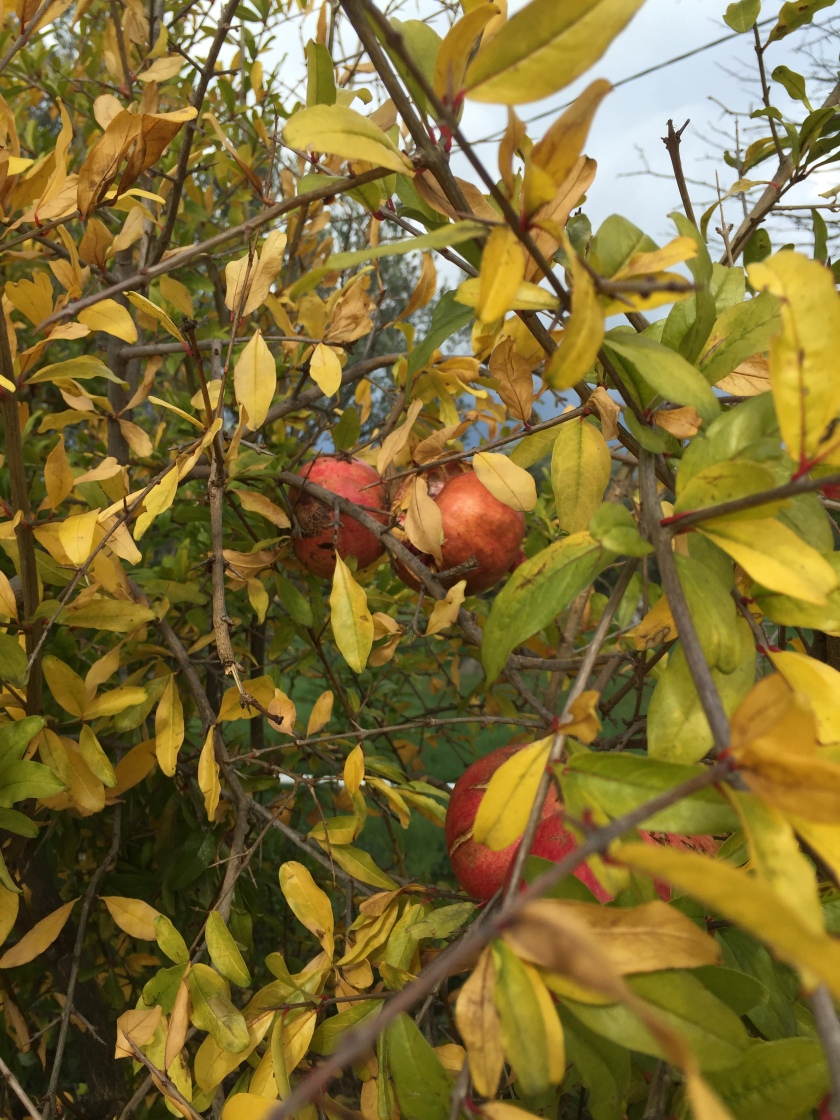
Another tradition thought to bring good luck for the coming year is the smashing of a pomegranate on the threshold of each house. The pomegranate is a fruit with a history going back to ancient times and figures prominently in mythology. It is widely revered as a symbol of regeneration, fertility and prosperity.
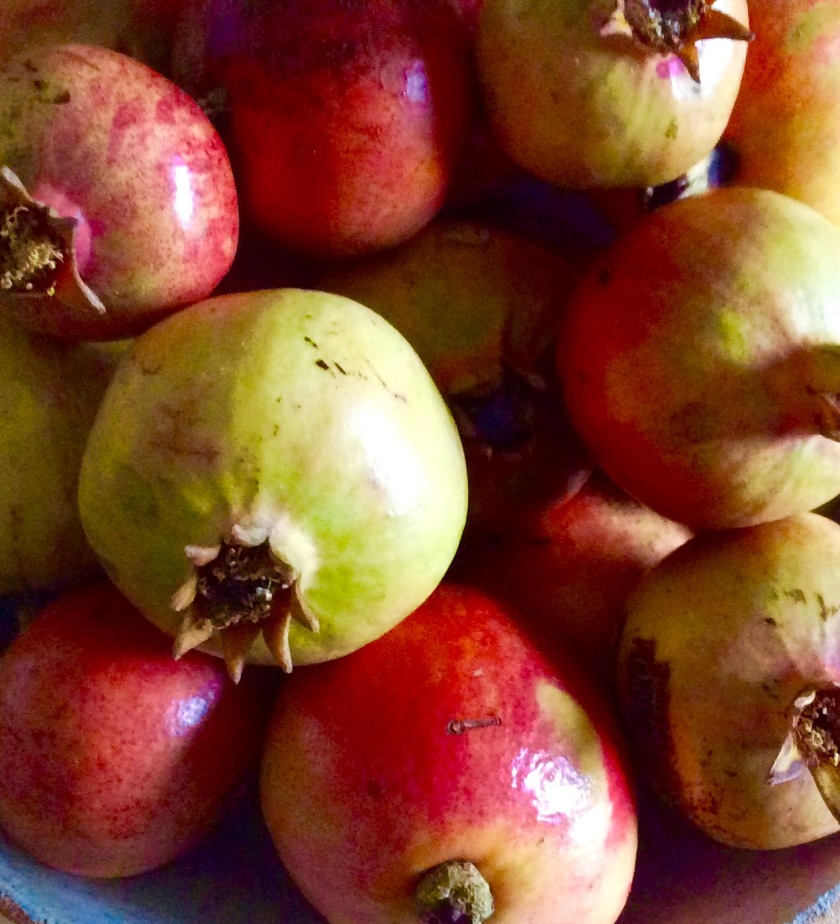 The pomegranate smashes to the floor and the red grains scatter in all directions, spreading good fortune in the household, office or shop.
Κρεμύδα – Kremyda (Onion or squill bulb)
A squill bulb, or even a plain onion, sometimes wrapped in foil to deflect bad spirits, is hung above the front door on New Year’s Eve. Because of its many layers and ability to sprout even when removed from the earth it is meant to symbolize regeneration and growth; this custom is thought to have originated in Ancient Greece. On New Year’s Day the bulb is brought into the house and kept for the rest of the year.
Ποδαρικό – Podariko (First Footing)
The person who first steps into a house on each New Year’s Day is supposed to bring good luck for the rest of the year. That’s why a child, innocent and pure of heart, is often chosen to walk in, always stepping in with the right foot first. This ‘right foot’ custom extends to anyone coming to a house for the first time, especially if it is a new house.
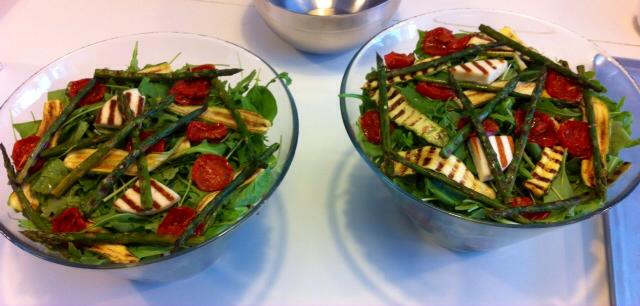
The feast
Most people gather with family and friends to celebrate the New Year, and in some houses an extra place is set at the table for Aghios Vasilios. Another rich meal with a main dish of lamb or pork, cooked according to local tradition, followed by the same festive sweets as Christmas.
In many places the feasting was – and still is – preceded by the killing of a pig, with everyone joining in for the confection of sausages and other delicacies.
Gambling
To while away the time until midnight, decks of cards are brought out since Greeks think it’s good luck to have a flutter on New Year’s Eve. All sorts of games are played but especially black jack and rolling dice; some people even have a roulette wheel. Non-gamblers, but not only, take the opportunity to invest in a national lottery ticket.

Cologne and Fireworks
Many Greeks party the night away on New Year’s Eve and in town centers the traffic is likely to be as dense at five in the morning as it is on a Saturday rush hour! In some places people walk around holding bottles of cologne, with which they spray each other. Often the municipality will put on firework displays for the enjoyment of those out and about.
Kalanda – Carols
If you’re at home on New Year’s Day you have to keep running to open the front door, as children arrive to sing the Kalanda. These are different to Christmas carols, since they celebrate the feast of Saint Basil and the start of the New Year. You have to reward the kids with some coins and maybe a melomakarono or two!
Happy New Year to all!

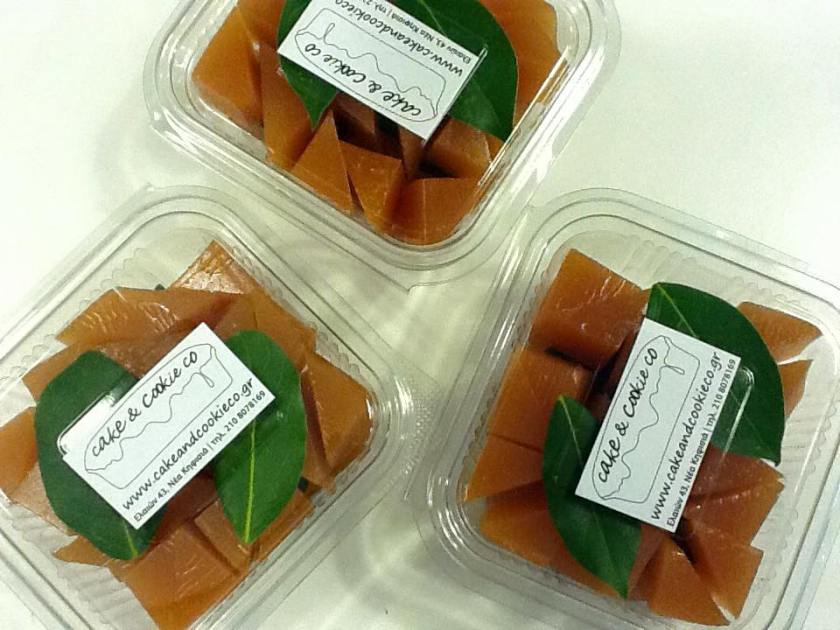
The photographs of food are courtesy of Cake & Cookie Co, who make delicious goodies!
 How do you see Greece in 5, 10 years?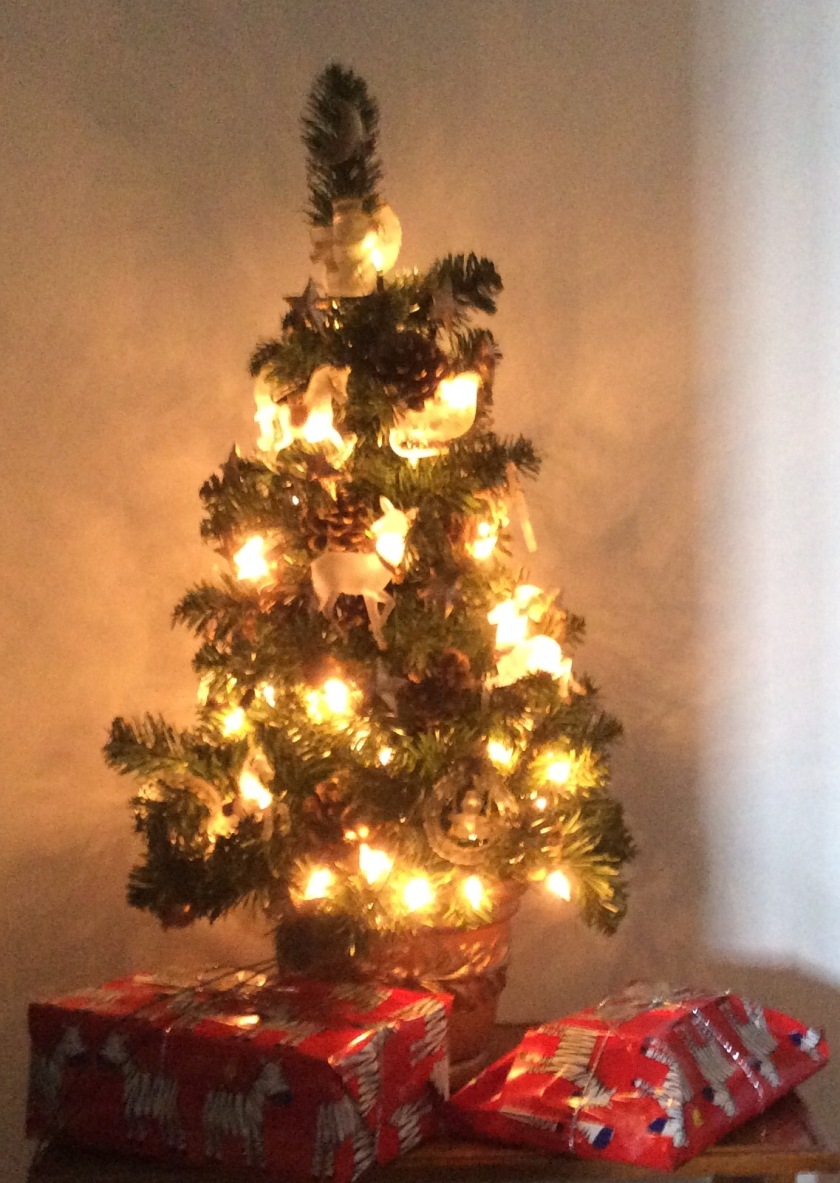
 Fresh carrots are also amazing this time of year, and a very versatile ingredient. We used them in soups (especially fasolada bean soup), in coleslaw, made carrot cakes, and so on and so forth:)
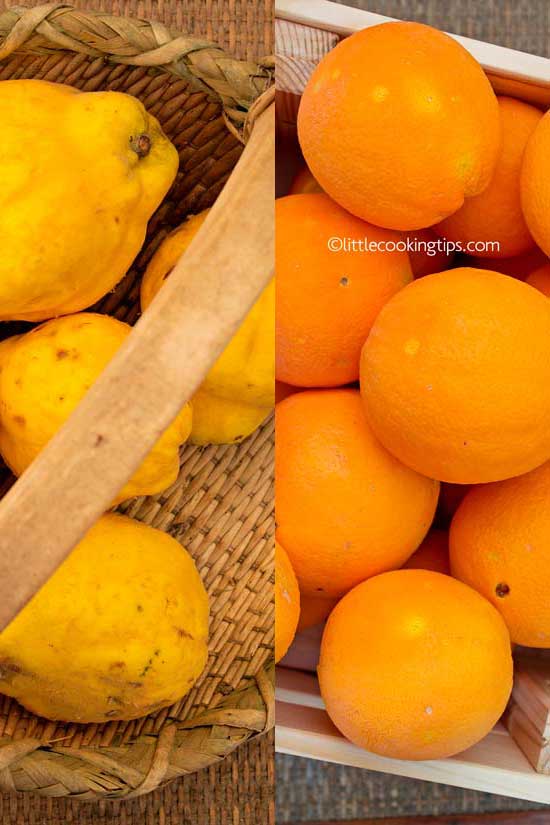
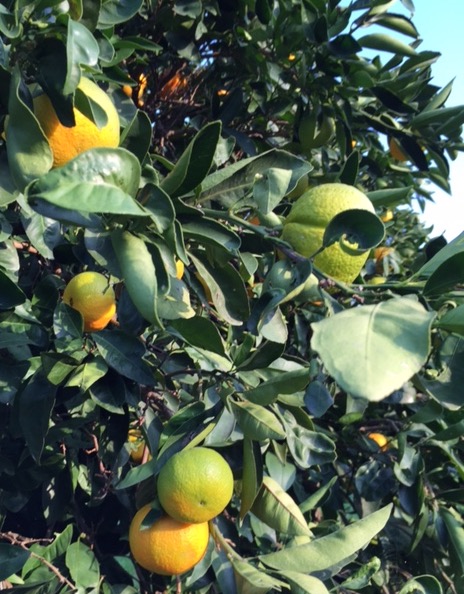
 Do you remember the green oranges back in the summer? Check them out in the photo of this post! Ripe and sweet, this year’s oranges are perhaps the best in years. And for some strange reason the trees in Evia were very generous, we got much more than we can eat, turn into jams, preserves etc. So we started sharing them with friend, like an Orange Santa, passing by on a weekly basis.
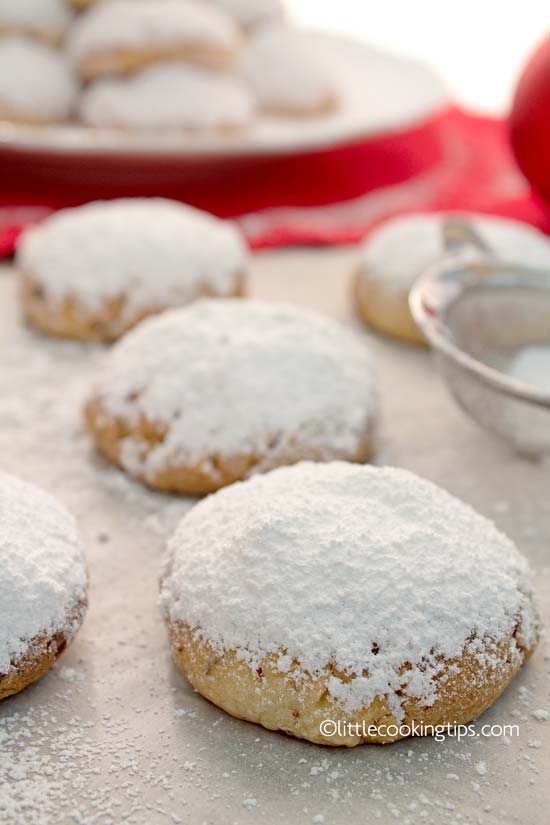
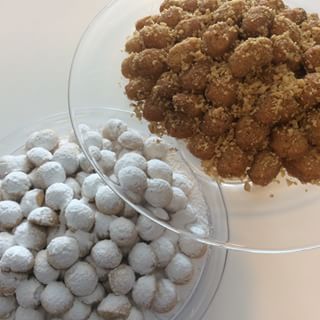
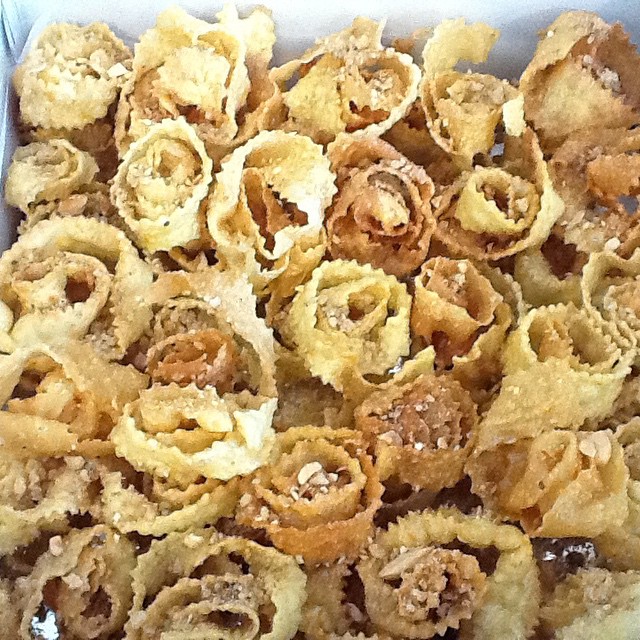
 A big part of the Greek Christmas tradition is of course the sweet treats:melomakarona, kourabiedes and diples. Melomakarona and kourabiedes are the most popular ones, and if you’re in Greece around Christmas you’re bound to fall in love with them. You will find them in every household, any pastry shop, even in super markets and grocery stores. When you’re a guest, you know you’ll be treated a melomakarono (singular for melomakarona) or a kourabies (singular for kourabiedes). And even though you most certainly will have tasted many of them already, you will devour this treat with pleasure.
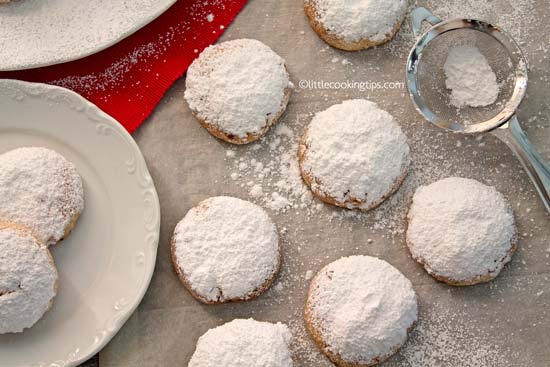 Those traditional, shortbread butter cookies include almonds, lots of powdered sugar, vanilla and usually rosewater or other flower water.
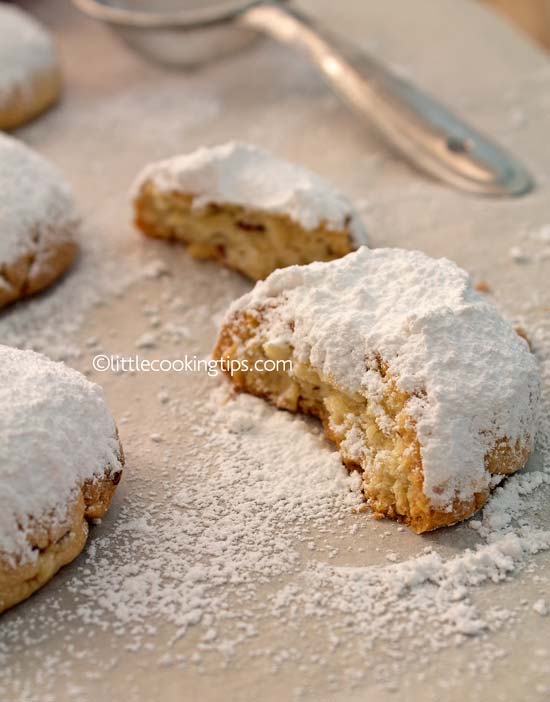 Regarding the shape of those cookies, some people may be confused due to the variety. There are 3 main shapes for kourabiedes: thick round cookies, crescents and balls. We think the easiest and nicest are the thick round cookies, as the shape helps in stacking up the cookies in layers, as they’re traditionally served.
 If using raw almonds, place them in a single layer on a lined baking sheet/pan and bake them for 10-15 minutes at 180C/350F (preheated oven) (pic. 1). Grind the toasted almonds in small pieces, using a food processor. Do not grind them into powder.
 Making the cookies:
 Add the powdered sugar (pic.4) and beat for 10 more minutes until you get a “whipped cream” -like result (pic. 5).
 Add baking powder, vanilla (pic. 6) and mix with a rubber spatula. Add the egg yolk (pic. 7) and mix until it’s incorporated.
 Add 1 tablespoon of rosewater or flower water and mix (pic. 8). Start adding the flour (pic. 9), a couple of tablespoons at a time. Mix with the spatula each time you add some.
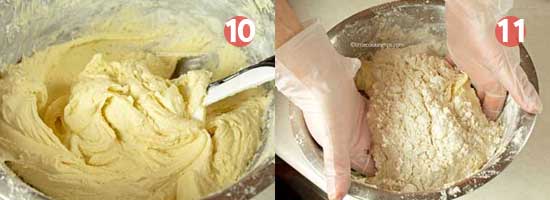 When you’ve added half the flour, you’ll get a fluffy, almost rubbery dough (pic. 10).
 Add the ground almonds (pic. 12) and fold them into the dough. Shape the cookies (pic. 13). If using 40gr/1.5oz of dough per cookie, you’ll make about 25 cookies.
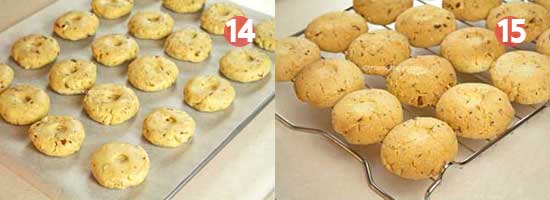 Place the cookies in a lined baking dish/pan (pic. 14) and bake for 15-18 minutes in the middle rack (use the oven fan in preheated oven). Remove from the oven,let them cool for 2-3 minutes, and then place them on a rack to dry out (pic. 15). Let them to cool completely.
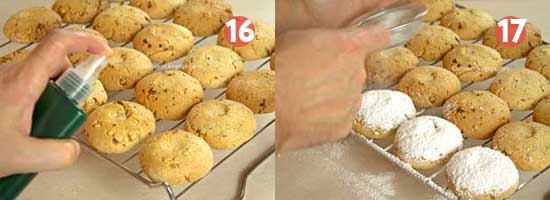 Spray them with rosewater or flower water (pic. 16) and dust them with powdered sugar (pic. 17). Be generous with both.
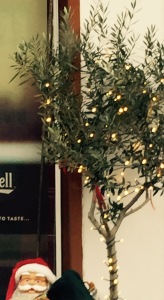 As far as decorations are concerned, there is the yearly debate of the Christmas tree versus the wooden ship. Changing fashion tends towards one or the other. The modern Christmas tree came to Greece with the country’s first king, Otto of Bavaria, who ascended to the throne in 1833; it did not, however, become popular before the 1940s. Some Greeks still consider it a foreign import, although use of decorated greenery and branches around New Year is recorded as far back as Greek antiquity, and there is evidence that some sort of Christmas tree existed in the Byzantine empire.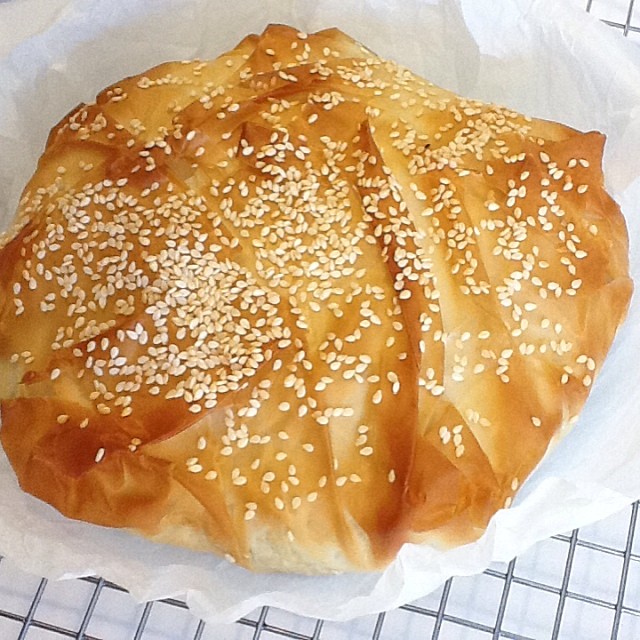





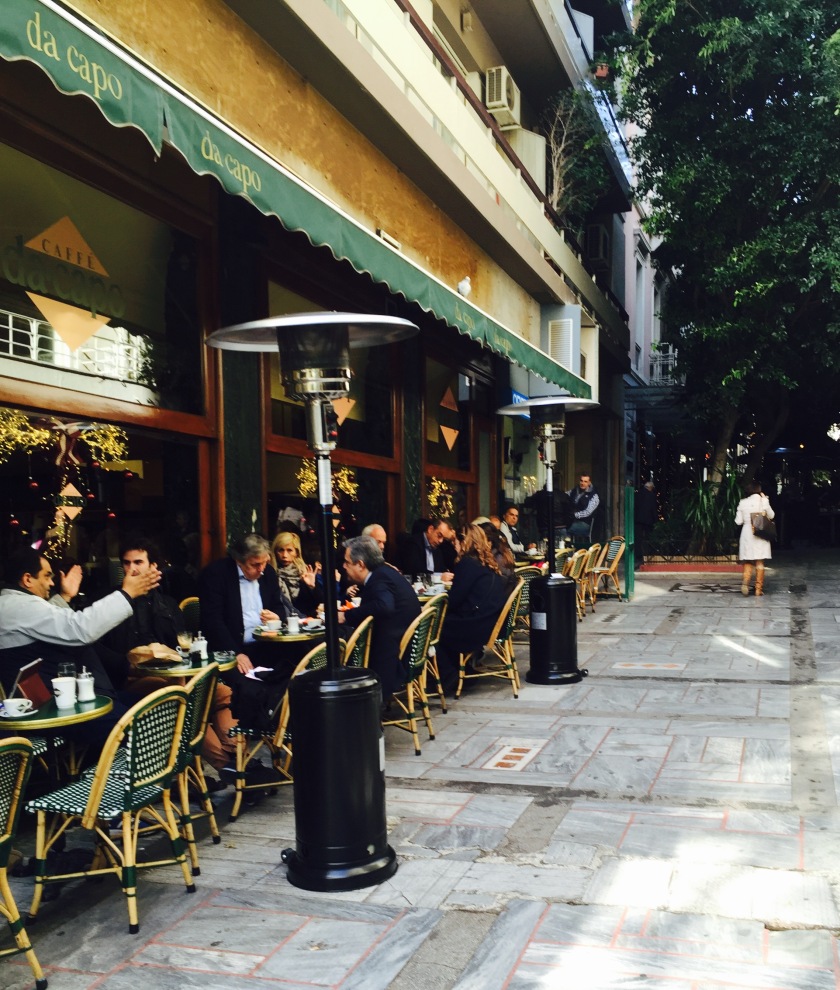

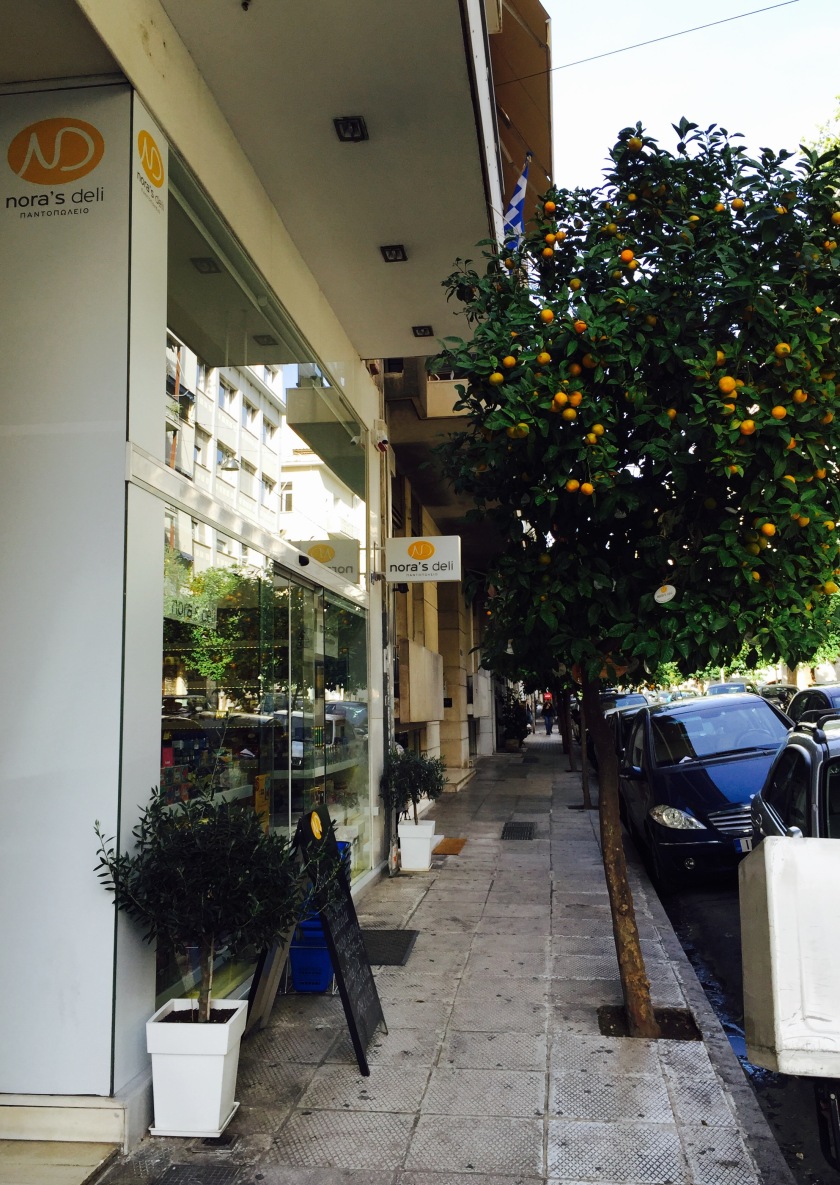
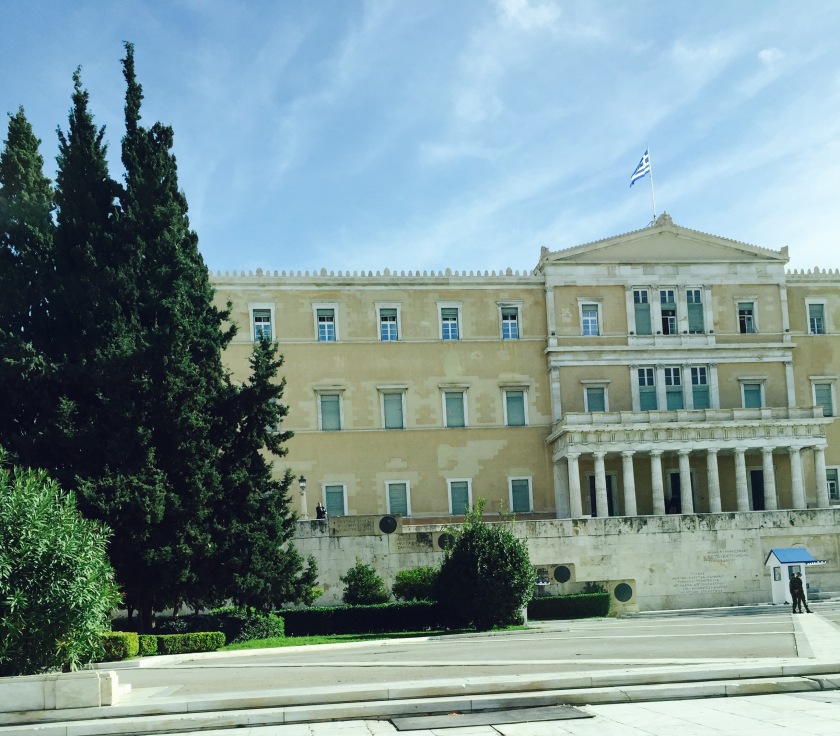



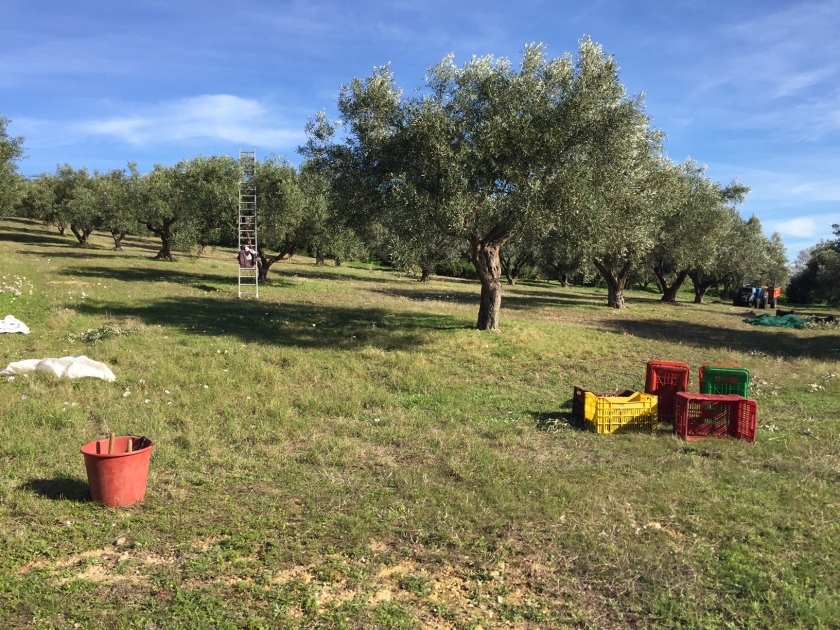
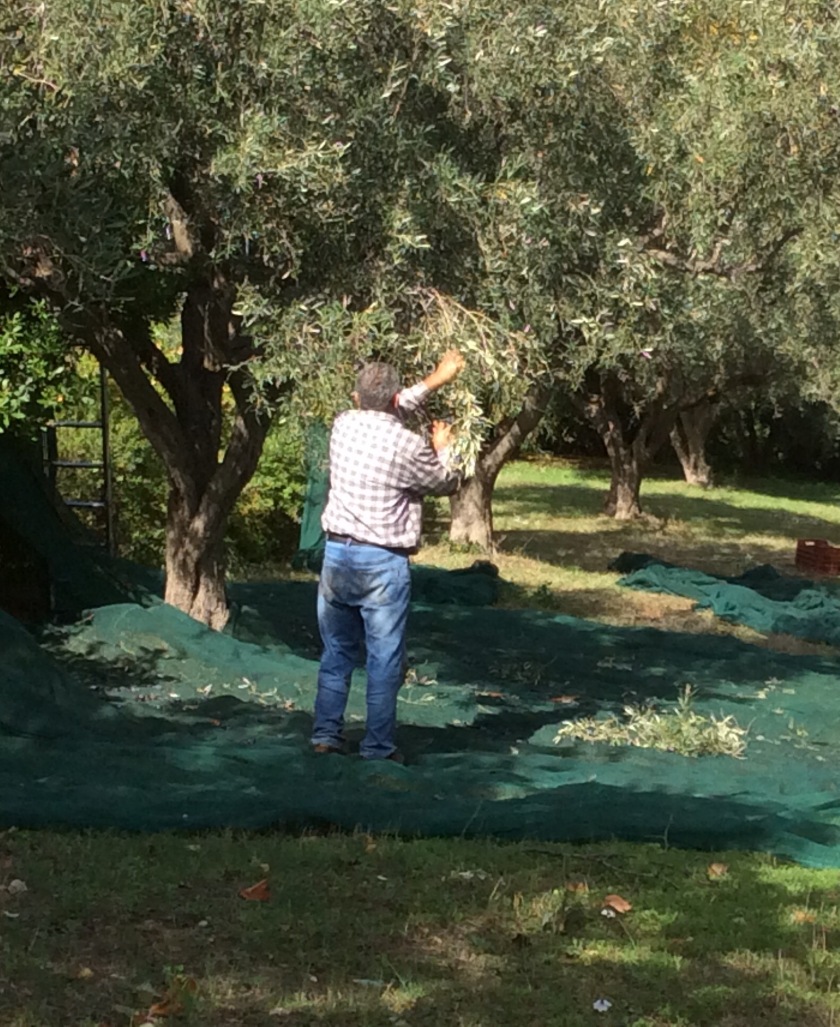
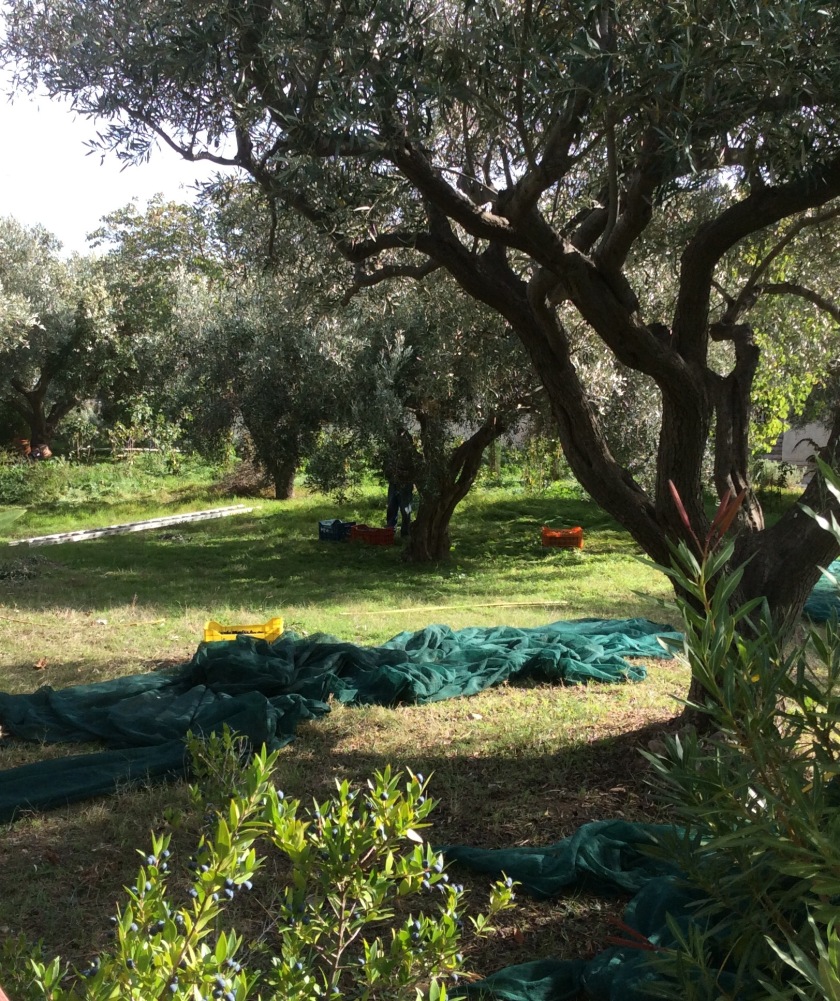
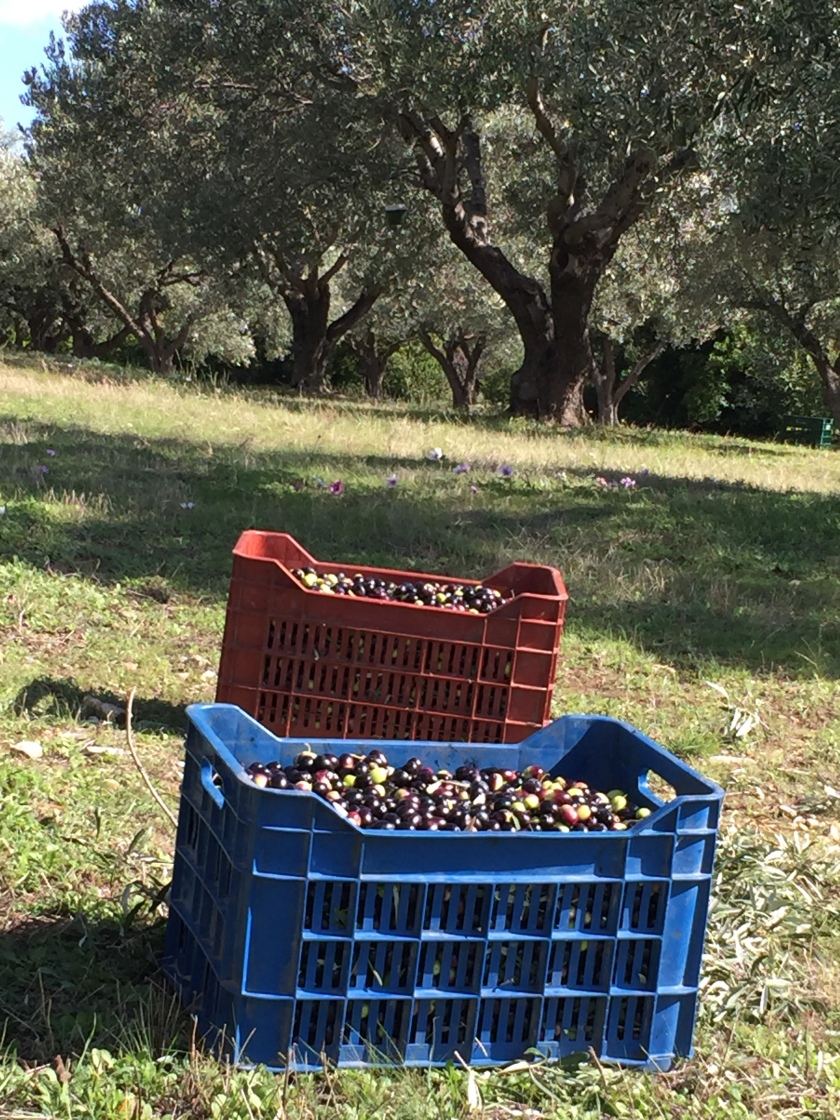


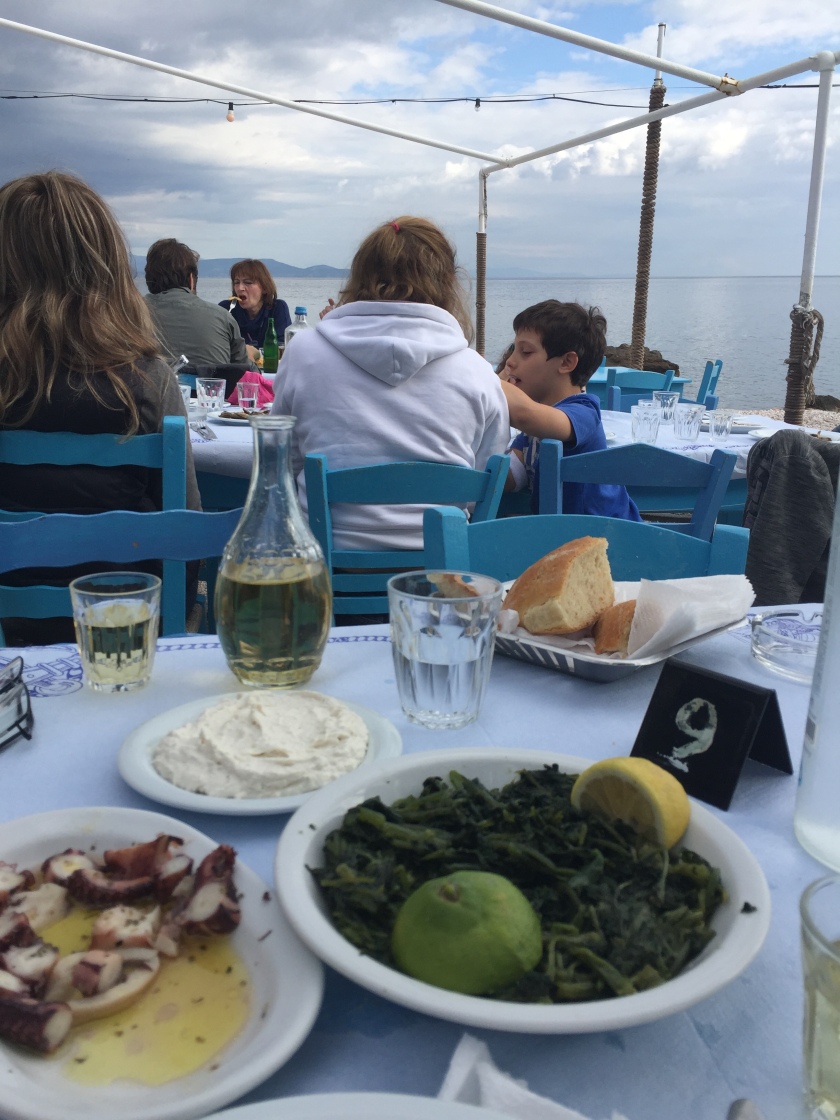 As we head into winter, it’s good to make the most of this beautiful weather.
