Landscapes

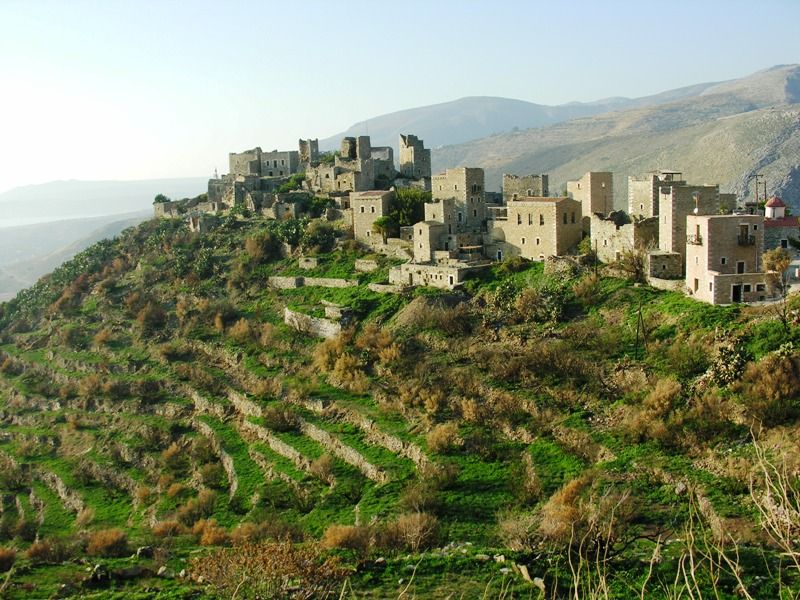
Is this the country that is crumbling about our ears?
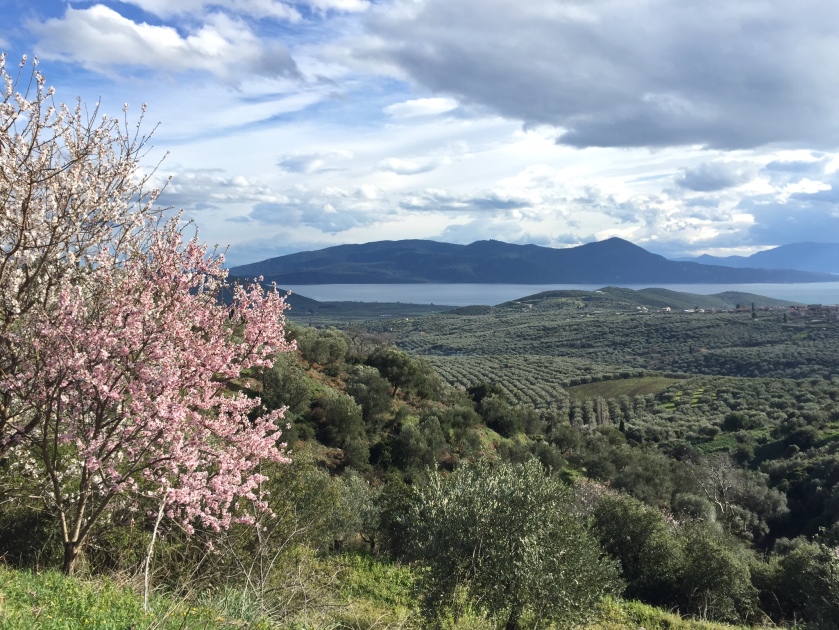
imageLooking at this prosperous, well-ordered landscape, it seems hard to believe.

And yet. Tractors are blocking the main roads at great cost to our stricken economy. Farmers are in endless dispute with the government who are finding it hard to negotiate with them, seeing as they were the ones who encouraged them in the first place.

As for the refugee situation, what is there to say? Everyone has seen the news. Our European ‘allies’ are in panic mode – the order of the day is sauve qui peut.  Countries are looking to their own interests and repeated conferences and summits fail to come to any sort of agreement. Even measures that were supposedly ratified have not been implemented. Greece is making huge efforts but, unfortunately, it is too little, too late.


image

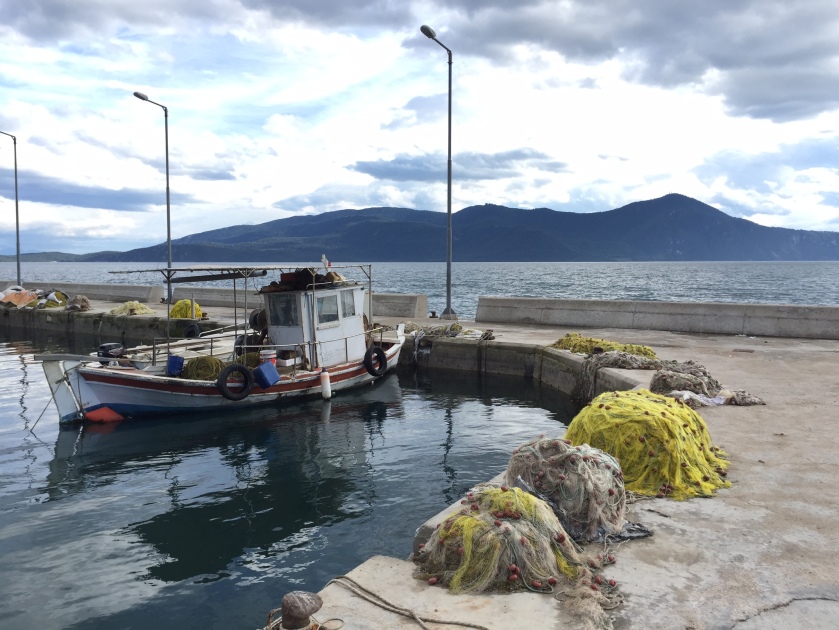
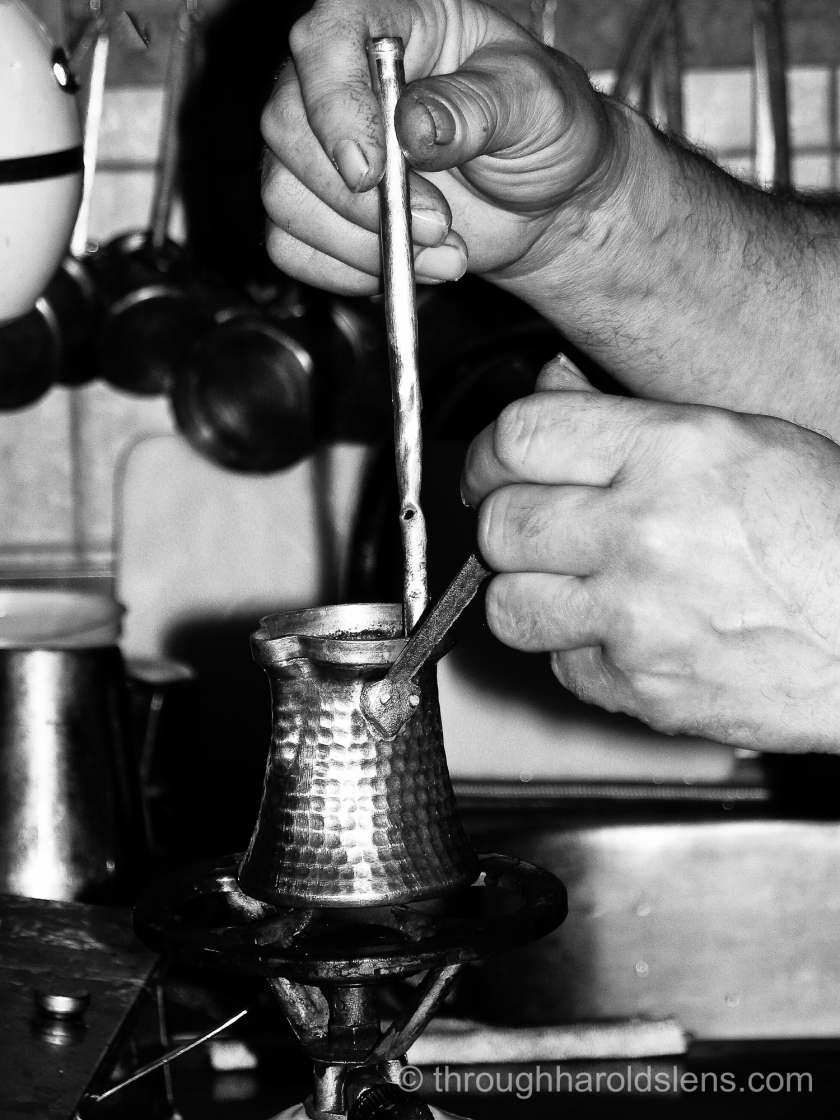
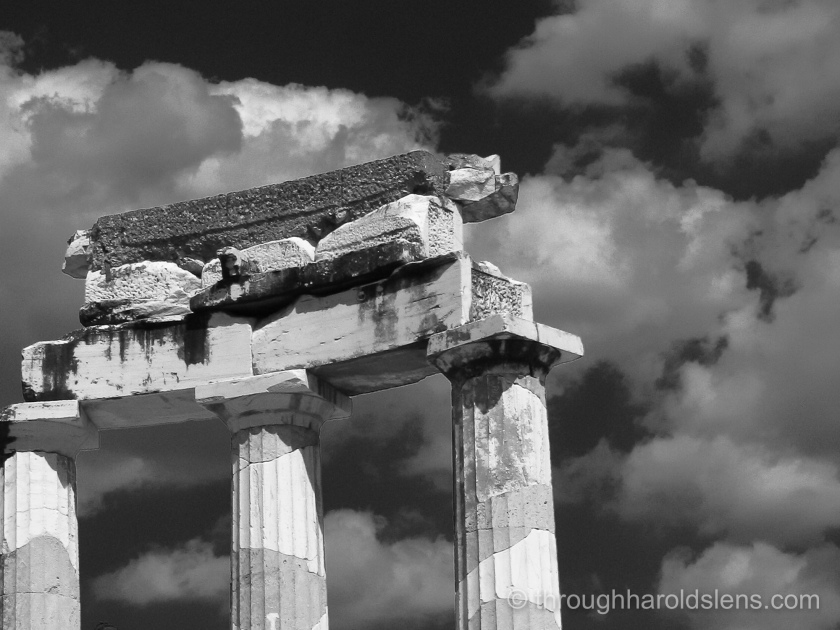
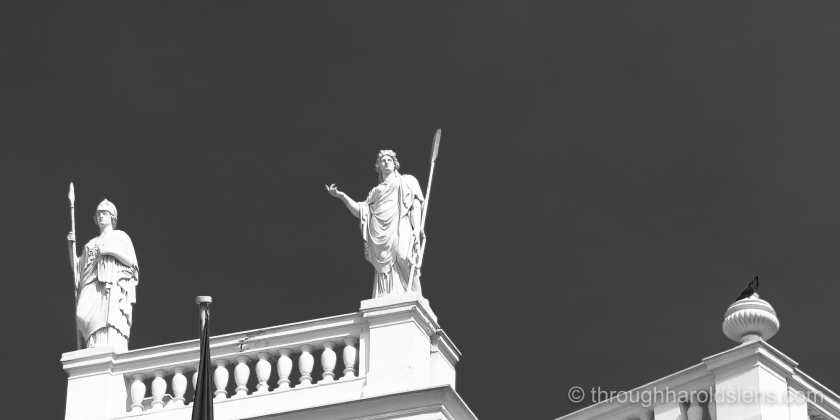
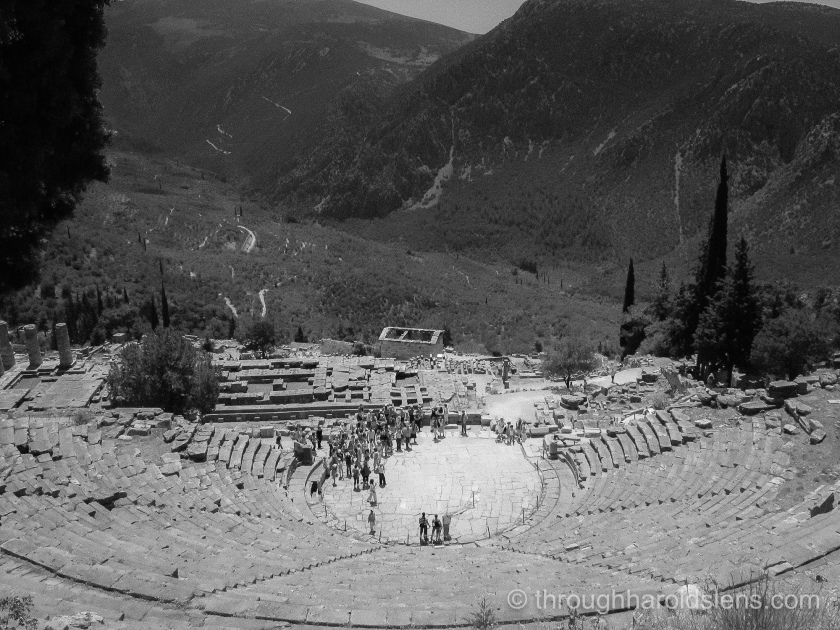
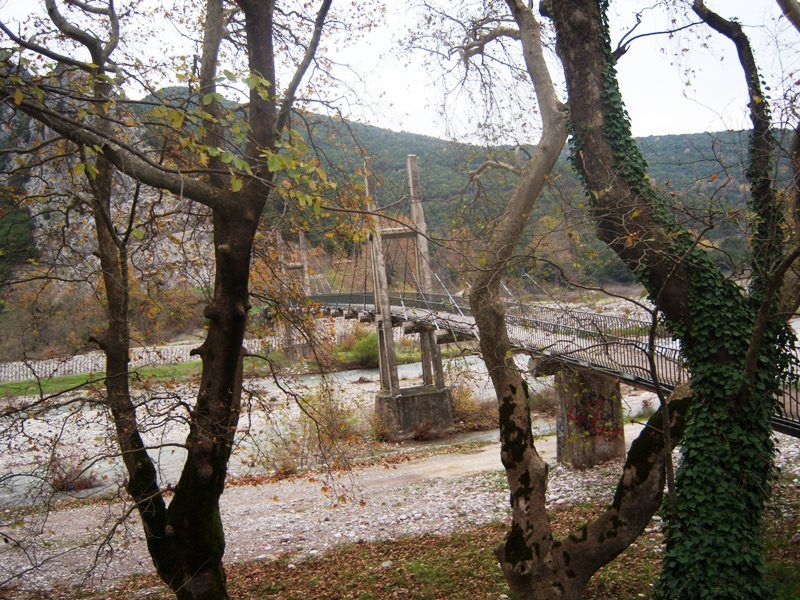
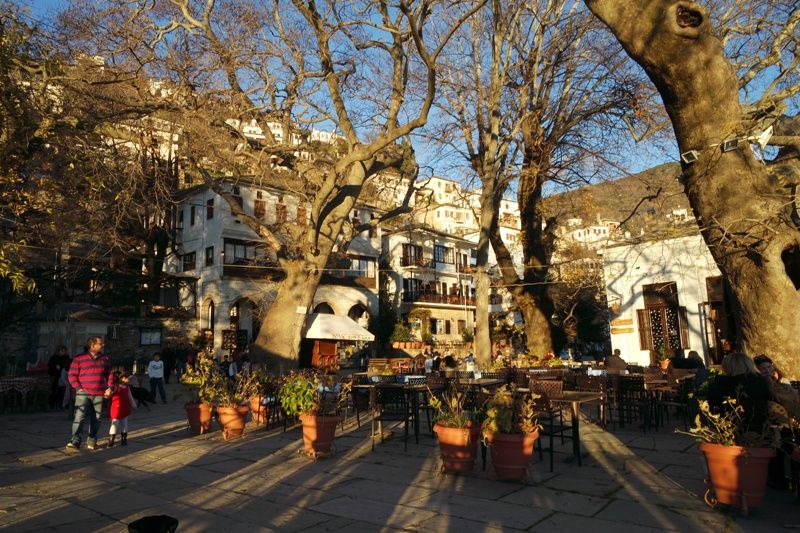
My friend Christina took these photographs on a road trip to Pelasgia, in Central Greece.

The view through Harold’s lens

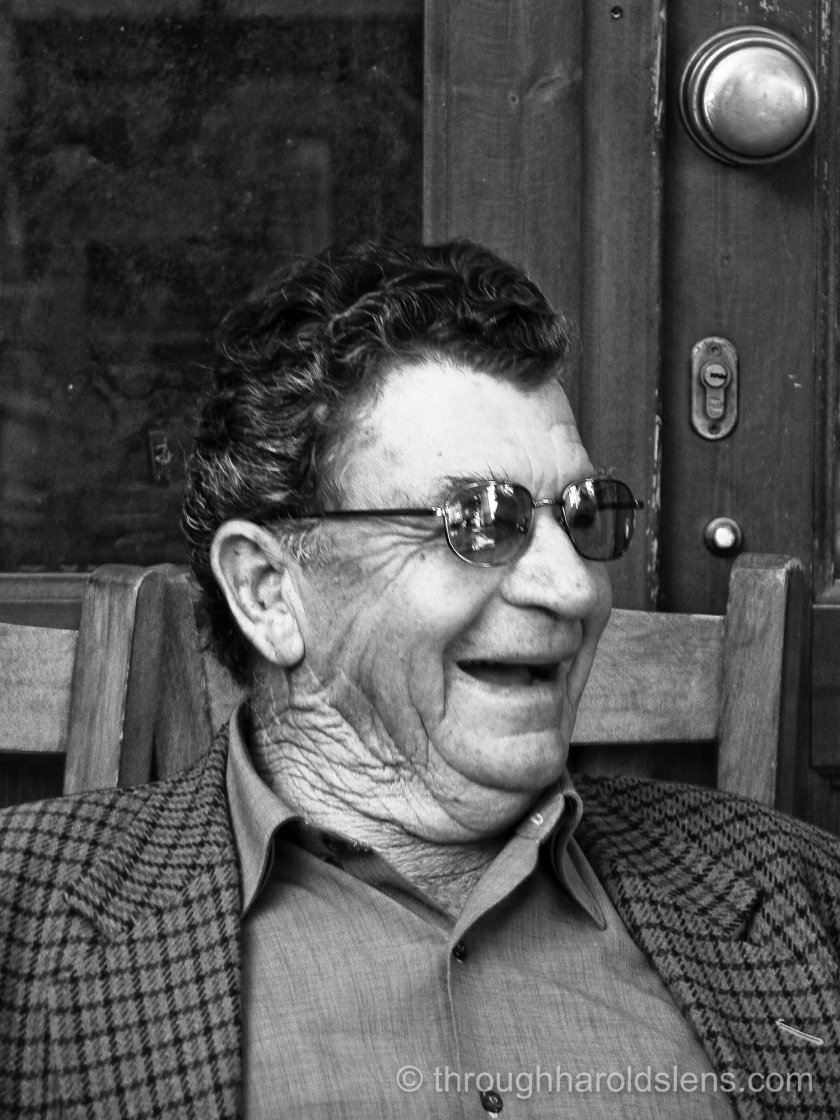
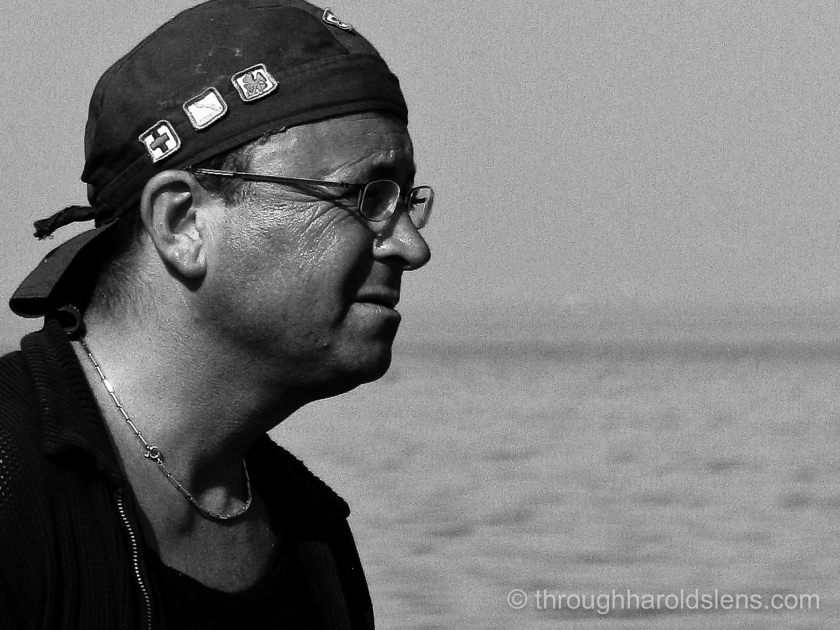
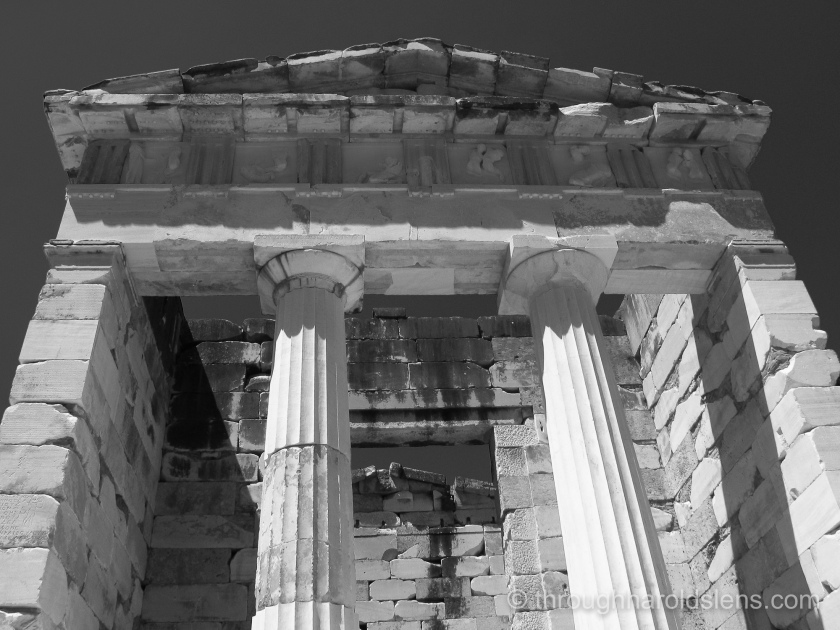
In my last post, Greece – through Harold’s lens, I showcased some of the wonderful photographs he took of Greece. Today I will post the remaining ones he sent me, since I found it impossible to leave any out.

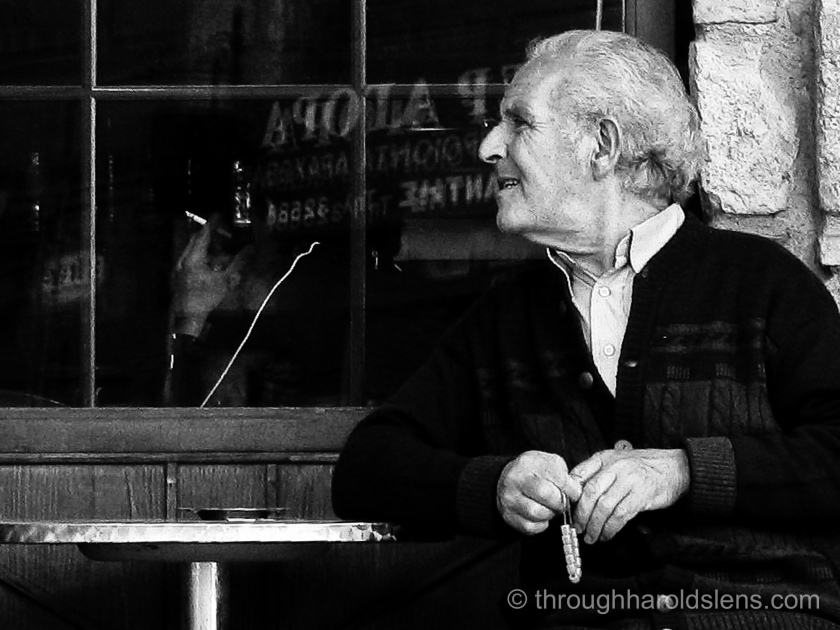
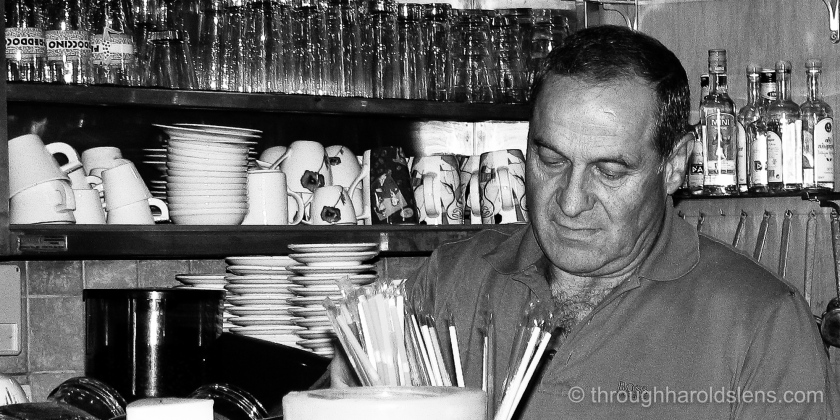
I urge everyone to check out his blog, Through Harold’s lens. Harold travels widely, and has a very personal take on things. I especially love his portraits. Sometimes he even writes poetry to go with them.


IMG_3884


IMG_3866


IMG_3867


IMG_3887


IMG_4341


These pictures of Greece remind me of an earlier, simpler time – Greece in the 50s and 60s. A more remote, more romantic country. This Greece still exists today, alongside the modern country with street art, cutting-edge technology and European problems. It exists in the countryside, in the villages, in the poorer neighbourhoods of cities. And of course the temples and monuments are timeless.


IMG_3936
IMG_3974


IMG_3368


IMG_3951

I discovered, by chance, an interview Harold gave in the blog Global From Home. A must for anyone interested in his methods – I especially liked his explanations of how he approaches strangers in order to take their photograph. (Click on the name to read the interview.) 


The definition of Dystopia

Greece is being threatened with the closure of its borders, effectively trapping hundreds of thousands of refugees who have made it across the sea from Turkey.  We are being accused that, for refugees who see Greece as a transit point on their journey north,  ‘Athens is happy to oblige, waving them through, providing transport, but never hosting the caravan of humanity wending its way into central Europe.’

We are also blamed for ‘not ‘protecting our borders’, thus endangering the social fabric of other European countries.

Greeks are furious about this ‘blame game’. We have been offered money in return for keeping the refugees, an offer that is deeply insulting. How about our own social fabric? From as far back as the 80s, Greece has already hosted a vast amount of refugees: Asians and Africans, Palestinians and Kurds, and, after the dissolution of the communist bloc, people from Eastern Europe, especially Albanians, Bulgarians and Rumanians. A large percentage of these are now very well assimilated, speaking the language perfectly and blending in with their neighbours—despite the usual bureaucratic shambles regarding their documents. In a population of around 11 million, around one million are immigrants.


This society, already strained to breaking point by six years of internationally mandated austerity, is now asked to accept responsibility for an unprecedented situation for which it is certainly not to blame. It is a fact that the Greek government has not fulfilled all its duties in this matter yet. But which government has? We have seen the rapid deterioration of the situation in Germany – Mrs. Merkel’s neck is on the line for her open-door policy. We read daily about the situation on the Hungarian border, or in the Jungle in Calais. And now the tinder-box is to be kept solely within our borders, courtesy of our European partners and allies.


It is certain Europe cannot accept everyone, and the terrorist dimension has added complications to the issue. A lot of the able-bodied young men wanting to take advantage of social benefits available elsewhere should be returned home. People have worked for those benefits for generations, and it is normal they should want to protect their way of life.  But everyone has to work together towards a solution, and the Arab countries have to do their bit as well. Finally, Turkey has been promised three billion euro to deal with the problem – yet that is where most of the trafficking takes place.
Greece cannot and must not be turned into a dystopia, a giant campsite, or, as some have said, into Europe’s prison.
image


Frontex has declared it is impossible to patrol a coastline which includes 117 inhabited islands (there are 6000 islands in total, including some that are just large rocks). So how are we supposed to do it? Surely the refugees should be stopped in Turkey, before they drown as they are doing on a daily basis, now the seas have turned cold and rough—but apparently the traffickers are offering cheap ‘off season’ rates. Every single day, we wake up to the news: 12 drowned, 7 drowned and so on, all on our shores. Some can be saved – what are we supposed to do, throw them back into the sea?

I will finish with an account, freely translated, written by islander Nina Giorgiadou:

‘Today was another ‘normal’ day. For us normality has gone beyond seeing your children unemployed and depressed, not being able to pay a new lot of taxes, or having your property confiscated.
Our normality has been enriched by repeated doses of mass death, packaged in black bags that are piled, when full, one upon the other.
Here is a resume of today’s normality.

We were woken in the dead of night by one of those phone calls that make your heart race. We ran to the port, bearing clothes, blankets, hot tea and a tendency to rapid depression.
The first body arrived before dawn. A small bundle, probably a child. Then came 26 survivors. The 12 were more dead than alive, deeply hypothermic; they were piled rapidly into ambulances.
The rest who were more ‘alive’ we undressed and rubbed down, muttering endless and meaningless times ‘Ok, my friend, tamam,’ all mixed up with a lot of tears and snot since there’s no time to wipe your nose when hurrying to dress the frozen.
Afterwards, our normality included 13 more bodies, big and small, and an attempt not to vomit. Where to put so many dead?
To continue within the framework of normality, we received ten boxes of body bags. To do what with? Let’s put them aside for times of need. The industry operating around death is impressive.


The next phase includes scattered images within the shelter.
Aliki is holding in her arms the 15-year-old girl who has lost her parents and both siblings. Aliki is the smaller of the two. You  have to wonder—who is consoling whom?
Vasilia has gathered the children in a corner of the high-ceilinged space we gracefully call ‘the playground’. They are the offspring of those
who arrived the day before yesterday. Today not a single child was saved. Vasilia is telling stories in a low voice. In Greek. They listen as if they understand. She has her way. Stories always have a way.
Outside, the coastguard boat is passing again. How many? Around twenty? How many were you, Sam, on the rust bucket?
Sixty or eighty. We’re missing twenty lives. They will never be found. They will never even be listed as missing.
Tomorrow is the day for identifying the dead. Our normality will be transported to the morgue. It will be a little more tense, I suppose. But it will still be our normality. Distorted, but normal.
Oh yes! The clock shows it is already tomorrow.
Another normal day will soon dawn.


(Borrowed from the blog of katerinafullermoon)

January Q&A – the politician

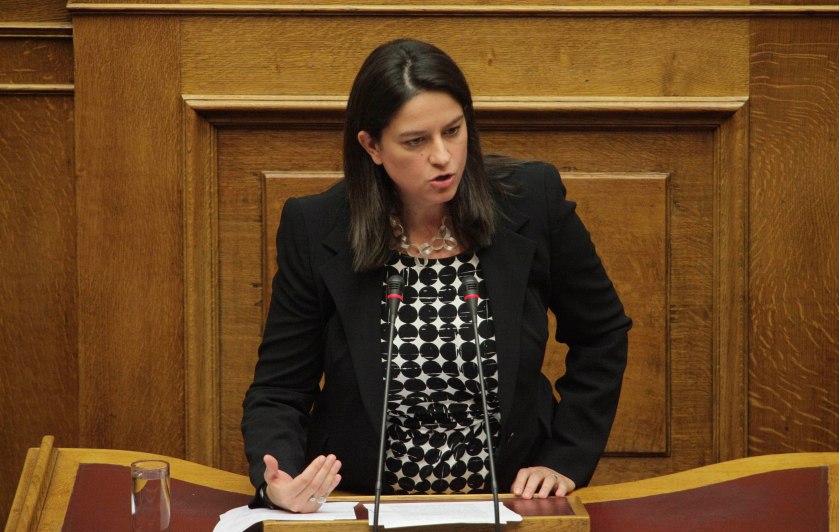
Niki K. Kerameus is a lawyer and a politician; she’s also involved  in social welfare on a pro bono basis.

35-year old Niki is a partner at Kerameus & Partners Law Firm in Athens, practicing mainly in international arbitration. She has significant experience in international arbitration matters, having worked in this field in three different jurisdictions (Athens-Greece, Paris-France, New York-U.S.A.).

Since January 2015, Niki also serves as a Member of the Hellenic Parliament (State Constituency). She has served as “Shadow Minister” for the Administrative Reform and E-Government Sector of New Democracy (ND), the major opposition party of Greece, from March 2015 until January 2016, and has just now been appointed as the third Parliamentary Representative of ND.

Niki is a founding member and until recently President of the Non-profit Foundation “Desmos”, which locates surplus from companies and individuals to cover needs of our most vulnerable citizens and social welfare organizations.

Finally, Niki is a mother-to-be, expecting her first child in 2 months!


ÂÏÕËÇ - ÓÕÆÇÔÇÓÇ ÔÏÕ ÍÓ ÃÉÁ ÔÁ ÐÑÏÁÐÁÉÔÏÕÌÅÍÁ(EUROKINISSI/ÃÉÙÑÃÏÓ ÊÏÍÔÁÑÉÍÇÓ)


Tell us a little about yourself

I grew up in a family that has always encouraged me to learn and to actively participate in civic life. After studying and working for several years abroad, in France and the United States, as a lawyer, I decided to return to Greece in order to apply, in my country’s benefit, all experiences acquired. About a year ago I got involved in politics when I accepted a highly honoring proposal from the former Prime Minister, Mr. Antonis Samaras, to be included in the State Constituency list of ND. One of the main reasons I decided to accept was because I strongly feel that our generation has to actively engage with society; that we should not simply criticize, but act when the opportunity arises; that we should all – to the extent possible – try to make the difference we would like to see materializing around us.

What were the major difficulties you’ve faced in the last five years?

Among the difficulties I have faced these past five years is striving to build a business practice in the midst of an unprecedented financial crisis. Such difficulties, though, seem immaterial when compared to the real difficulties faced by our most vulnerable citizens suffering on a daily basis from the repercussions of the crisis. As a founding member of “Desmos”, which aims at helping our most vulnerable citizens, I have come face to face with the most significant survival problems that an important segment of the Greek population has been facing for the past years.

Did anyone in particular inspire you or help you?

I have had the tremendous chance of being surrounded by a number of people who have both inspired me and helped me in my path so far. My parents, my brother, my mentor to the legal profession in New York, and most importantly my husband who has been a tremendous source of support and wisdom throughout the eight years we have been together.

What are your hopes/plans for the future?

What I hope for, and try to contribute towards, is to shape a better future for our children, in a fair, growing, opportunity-offering country.

What are your hopes for Greece? What changes do you hope to see happen?

I hope to see the country turn once again towards growth, productivity, towards regaining credibility abroad and creating new jobs.


Have you considered leaving? If so, where would you like to go, and why?

I lived and worked abroad for almost 10 years. My decision to return to Greece right when the financial crisis hit was carefully balanced. Although my professional prospects as a lawyer were definitely more promising abroad, I felt that we – the younger generation – had to at least try to return to Greece and assist our country in any way we can.

If you have already decided to leave what would make you stay?

If I was a young entrepreneur who had decided to start a career abroad, I would be tempted to stay if there was concrete hope for a better future in Greece. Kyriakos Mitsotakis’ election as Leader of the major opposition party, New Democracy, incarnates – in my opinion – the optimism that there are better days to come for our country, and could hopefully invert the Greek “brain drain”.

Are you actively doing anything to help with the situation? Is there something you would like to do?

Both in the past few years and in the present, I try to help in two different ways: (i) through my active engagement in politics and (ii) through my offering and volunteering to “Desmos”.

How do you see Greece in 5, 10 years?

Greece’s and its people’s potential is huge, and 5-10 years is quite a significant projection time for which I have only optimism. I see the current, catastrophic government dissociated from the political scene and new leadership driving the country. I see a reformed, more efficient, transparent public sector, where institutions can serve the benefit of all citizens, with impartiality and objectivity, offering a fertile environment for business and private initiative to grow and young people motivated to create and participate. I see older people equipped with dignity for themselves and hope for their children’s future.

How do you cope with obstacles and frustrations in your everyday life?

I cope with obstacles and frustrations with realism, patience, effort, persistence.

What are the positive sides of living in Greece? Have you had any good experiences lately?

There are definitely positive sides of living in Greece. Our friends, family, the climate, the beauty of our country, and most importantly the challenge to fix what needs to be fixed.


If you want to know more about Niki, check out her  site: www.nikikerameus.gr

In less than 4 years, Desmos has offered goods worth almost 2 million euros to more than 300.000 vulnerable citizens of Greece.If you want to find out more about DESMOS, their site is here – or read a previous post on this blog: DESMOS: Matching donations to needs.

The Sunday Papers

Today is the second Sunday of the new year. Time for stocktaking – what are the prospects before us?

I took a look at the main Sunday papers. Although of different political persuasions, the themes they deal with are the same.

THE ECONOMY

The problematic state pension scheme, the constantly increasing taxes, and the difficult measures that have to be taken in order to satisfy our lenders. Depressing, to say the least!

THE NEW DEMOCRACY ELECTIONS

The second round of voting to choose a leader for the New Democracy party (the main opposition party) takes place today. It is between Mr. Meimarakis, a member of the old guard, and Mr. Mitsotakis, much younger and more modern, but a member of an old political – and often controversial – family. Is there, in actual fact and despite what they’re proclaiming, much to choose between the two? Voters who turned out in decent numbers for the first round are, so far today, exhibiting election exhaustion.


image


THE REFUGEE ISSUE

European countries are complaining about the number of refugees allowed into Europe but, let’s not forget, most of those are still in Greece (to say nothing of the vast numbers stuck in Turkey). It is clear the situation is totally out of control. Today the articles were about increasing instances of fights amongst the refugees themselves, especially between groups with different religions; abuse of women and children; cases of women selling themselves in order to pay the traffickers; extortion; black markeering in cellphones, fake documents and other goods.

In a horrifying statistic given out by the organization “Missing Children Europe“, 50% of unaccompanied children arriving at one of the refugee centers disappear within 48 hours never to be found again.

Very few of the refugees are actually in the centers – the rest are wandering around, penniless, hungry, hounded by the police.

Meanwhile, the trafficking business is thriving, starting from Syria itself, where allegedly there are special ‘schools’ coaching people how to reach Europe.

In Bulgaria, the police has issued a warning to hunters to be careful what they shoot at in the woods, in case the prey is not a wild boar but some refugee hiding from the authorities.

However, in a different article, there are glowing reports from various workers from the NGOs working on the island of Lesbos. This is close to the Turkish coast and has received huge numbers of refugees. The NGOs are doing a great job, but they’re also full of praise for the islanders, who have been welcoming the refugees to the best of their ability. People collect food, prepare formula for babies, grandmothers are even knitting little sweaters. Many volunteers from all over the world have also arrived, some giving up their vacation to help, others declaring their willingness to stay ‘until the war ends in Syria.’

Another, more curious, article deals with the refugees who have arrived with their pets. As a general rule, this has been well received by the Greeks, who think it a very human touch. In some other countries, however, (apparently Slovenia is one,) the refugees’ pets have become an object of political pressure, as well as a business: border controls confiscate cats and dogs, even those with passports, microchips and the correct vaccinations, and put them in quarantine,  demanding for their keep and release exorbitant amounts (up to €2000). Otherwise the animals are euthanized…

FOOD

The Sunday supplements have the usual restaurant reviews: a new Italian in Kolonaki, an Asian street food bar, a tacos place. And two great salad recipes, to detox after the festive overeating. My favorite? A rocket salad with roasted beetroot, walnuts and orange.

The political situation remains unstable, and thing are not looking good yet. But the start of a new year always feels like a new start, and there is a tiny whiff of optimism in the air.

In other, unrelated, news , as Anita Kunz put it: ‘As if everything else this past year weren’t enough , now Kim Jong-un shows up again.’
She’s doing a cover of him as a baby playing with toy missiles, for the New Yorker.

Please feel free to join in with other pleasant surprises awaiting us in 2016!

The Epiphany

On January 6, the last day of the festive season, Greeks celebrate the Epiphany, the baptism of Christ by Saint John the Baptist in the Jordan River. We call it Θεοφάνια (Theophania) or Φώτα (Fota) – the Feast of Lights.

Celebrations start the day before, on the 12th day of Christmas. It is a day of fasting – the devout don’t eat meat, fish or dairy products, and not even olive oil is allowed. In Crete they make a special dish called Παπούδια (Papoudia) or Φωτοκόλυβα (Fotokolyva): wheat is boiled with different dried pulses such as lentils, chickpeas and beans, which they eat with salt, bread and maybe an onion and a few olives. They also used to  feed this to their chickens and other livestock.

After the morning church service, priests go around the houses in their parish in order to bless them by sprinkling holy water around the rooms. They are also asked to go and bless shops and offices and, in the countryside, stables and livestock. This is known as Μικρός Αγιασμός  (mikros agiasmos) or small blessing and, in the old days, it was thought to chase away the Kallikanzaroi, the malevolent gnomes who come out of their holes to plague households over the Christmas period. Now they flee before the priest, and disappear for the rest of the year. Until next Christmas!
Today also those who have burned the Χριστόξυλο (Christ-wood)  during the twelve days of Christmas will gather the ashes and spread them around the house, stables and fields to exorcise evil spirits.

Embed from Getty Images


The next morning, January 6, after a special service, a procession is formed through towns, starting at the church and leading to the sea, a river, or even a reservoir.
The priests lead, followed by the the local authorities, the villagers or townspeople, schoolchildren and, in large towns, the army. Sometimes there is a band. The size and brilliance of this procession is in accordance with the size of the town, the most impressive ceremonies taking place in ports. In the port of Pireas, the procession is attended by members of the government.
When the procession reaches the water, the priests recite a blessing, and white doves are released. Then a large cross is thrown in the sea, to symbolize the blessing of the waters. A band of local men,  the Βουτιχτάδες  (voutihtades – divers) plunge into the icy waters to retrieve it. It is considered both a great honour and a sign of good luck to be the one who brings back the cross to the priest.
The church bells ring, the ships’ sirens boom. The faithful drink a few sips of holy water, and take some home to bless their houses and livestock.

Embed from Getty Images


This ceremony symbolizes cleansing, purifying and, in a dimension that has its roots in ancient, pre-Christian times, riddance from demons.

During the Epiphany, other customs are revived that go back to Dionysian festivals or to the Turkish occupation.
Groups of people, wearing costumes and masks and holding wooden swords and bells, wander the streets or go from house to house singing and demanding money in return for chasing away evil spirits. The costumes and routines vary from place to place, as does the name of this custom. Μωμόγεροι (Momogeroi), Ραγκουτσάρια (ragoutsaria) , Ρουγκατσάρια (rougatsaria) are all different manifestations of this tradition.
In the town of Galatitsa in Halkidiki, they even construct a camel, activated by six men, to commemorate the 19th century story of the abduction of a beautiful young girl by the son of the local Turkish official. Her fiancé and his friends thought up the camel costume with which they gained entry into the Turkish household, hiding the girl inside the camel to sneak her out and back home where she married her intended before the Turks could get her back!

In some places, there is a custom called ‘the washing of the icons’: people take the icons they have in their houses and wash them in the nearest river.

Later, everyone repairs home for another festive meal, usually of pork, which can be baked with celery, or with quinces. On the island of Skyros, housewives make traditional pies filled with spiced pumpkin, called μαρμαρίτες (marmarites). They bake them on tiles inside the fireplace, taking care they are not stolen by the Kallikanzaroi, who have the ability to make their arms as long as they like, and can thus reach down the chimney to steal the pies!


Discovery: a great blog about Greece

Chrysoula Manika – Chrissy for short – writes a stunning blog,  travel passionate, about traveling in Greece. I’m reblogging one of her posts, just to give you a taste. But do go and take a look, it’s full of great places to visit, restaurants and hotels; day trips, fun things to do, where to get street food; she even gives tips on what to pack!
5 reasons to visit Greece in winter
by Chrissy on November 22, 2015 in Travel Ideas
Greece is considered one of the top summer destinations worldwide. What is not widely known, is that Greece is a great winter destination as well, with many sites worth visiting and many activities worth doing. Here are some reasons why Greece makes the perfect winter destination.

imageMeteora

Why you should visit Greece in Winter:


It’s cheaper

If you are traveling to Greece during winter you will see that everything is cheaper and especially in popular summer destinations. There are a lot of Greek islands that you can still visit in winter and although some hotels and restaurants do close, there are always some that are still open with very low rates compared to summer. Also the restaurants that stay open are the ones that the locals visit, so you are bound to eat some good food. So if you don’t have the Greek beaches in mind there are a few islands that can be easily visited in winter, for example Santorini, Crete, Syros, Corfu, Rhodes and Hydra to name a few. During winter all the air fares are cheaper as well, both domestic and international. I have recently booked a return air ticket from Athens to Santorini with only 30€.

imageold town of Corfu from harbour

Less crowded
During the busy summer season everything is crowded. The lines for the Acropolis are big. The little alleyways of the islands are filled with people. On the contrary during winter you will have a more enjoyable experience having the site just for yourselves and a few more. You shouldn’t worry about the weather either. Although it gets cold from December till February winters are usually milder compared to most countries.


imageme at lake Plastira
Nice cities to explore
Athens, the capital of Greece is a great destination all year round. You will see less tourists in winter and you will get the chance to observe the local life. Apart from Athens and its countless sites that you can visit there are other beautiful cities in Greece worth exploring, Thessaloniki in the north is a very vibrant city with many archaeological sites, a great food and shopping scene and a lively nightlife. Kavala located in the north of Greece as well, is a very picturesque seaside town built ampitheatrically with many sites worth visiting.


imageThessaloniki

Great winter destinations to discover
Apart from the big cities and the Greek islands that one can visit during the winter, Greece has many popular winter destinations as well, with great natural beauty. The beautiful villages of Zagorohoria and the town of Kastoria in Epirus, Pelion villages, Arachova and lake Plastira near Meteora in Thessalia. Kalavryta, Mani and Nafplio in Peloponnese to mention a few. All these areas and many more make the perfect winter destination with their picturesque scenery, archaeological sites, incredible nature and local cuisine.


imageVathia village Mani

 
A variety of sports activities
Did you know that you can ski in Greece? There are a few big ski and snowboards centers in Greece like the one in Arachova and Kalavryta. Other sports activities include hiking trails in the mountainous regions, rafting in one of the country’s rivers and horseback riding. One of the world’s leading athletic event takes place in Athens every November, the Athens Marathon, where athletes from all over the world come to run the original classic route.


imageoutside Trikala
imageMakrinitsa village in Pelion

Now you know and you can too, arrange your winter visit to Greece.

Have you ever visited Greece in winter?

Did you like it?

Click on the blog name to get there – I’m sure you’ll find plenty to interest and tempt you!

A Christmas treat

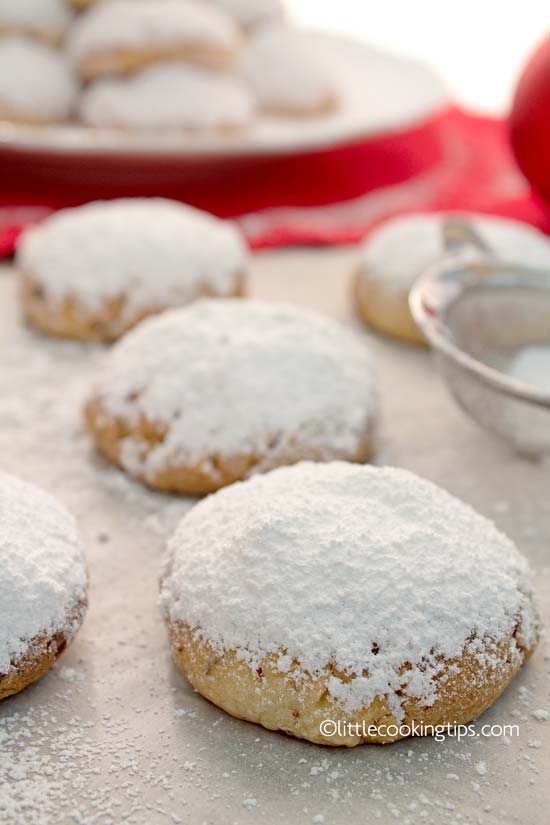
After the success of my post on Christmas traditions in Greece, I thought the cooks amongst you might like to try making the butter cookies we call Kourambiedes. I found this recipe on a blog called Little Cooking Tips, which I highly recommend to those interested in Greek cooking. The authors, Mirella and Panos, post lots of yummy recipes accompanied by mouth-watering pictures. Here I re-blogged the whole post on Kourambiedes, so you can get a taste – of the blog, and the cookies! They have a unique crumbly texture and buttery taste. I like to make the cookies quite small, but that’s personnal preference.

Greek Christmas Butter Cookies: Kourambiedes
Photo and text by Panos Diotis and Mirella Kaloglou.
image
Calories (per serving): 206
Servings: 12+ slices/pieces
Preparation Time: 30 minutes
Cooking Time: 20 minutes

Up until the last couple of weeks the weather was very kind to us here in Greece; lots of sunshine and warm temperatures allowed for long walks and enjoying the scenery.
If the leaves hadn’t fallen off the trees, one may had the impression it was spring, not autumn! This changed a few days ago and it seems that the winter is finally here. The first snow has fallen up in the mountains, especially in the north, helping us get into the festive mood, which is appropriate for Christmas and the New Year celebration!

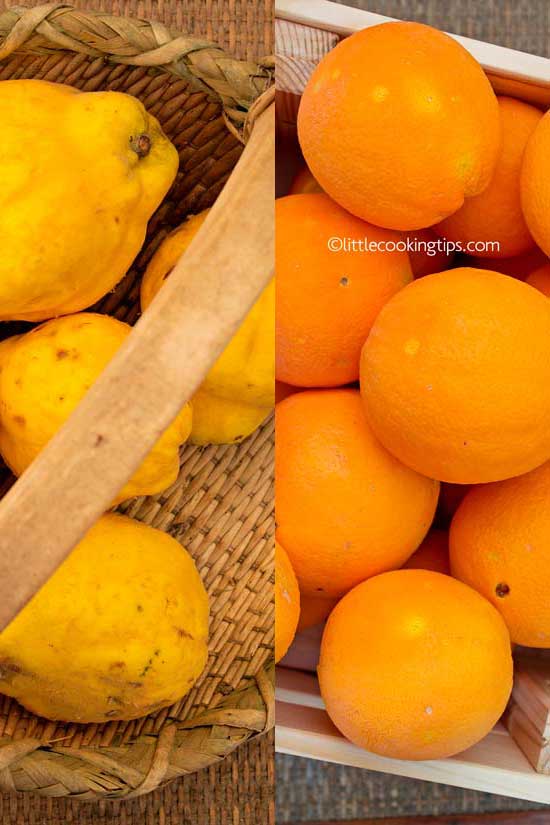
Of course, the winter was already here, providing us with lots of its yummy fruits and veggies. We especially enjoyed the quinces, made quince spoon sweet (you can read more about spoon sweets here) and cooked a wonderful ancient Greek recipe with roasted pork and quinces, which Panos learned from his grandfather (and he learned it from his own grandfather before). It’s a very old recipe and of course we’ll share it in the blog at some point.
imageFresh carrots are also amazing this time of year, and a very versatile ingredient. We used them in soups (especially fasolada bean soup), in coleslaw, made carrot cakes, and so on and so forth:)

Another delicious sweet fruit you can enjoy this time of year is the persimmon. If you haven’t tried them before, you’re missing out. They usually have a mild aroma and are very juicy and sweet. They’re packed with vitamins and full of antioxidants. You should’ve seen us devouring those like we were kids, all smiling and making a mess.

imageDo you remember the green oranges back in the summer? Check them out in the photo of this post! Ripe and sweet, this year’s oranges are perhaps the best in years. And for some strange reason the trees in Evia were very generous, we got much more than we can eat, turn into jams, preserves etc. So we started sharing them with friend, like an Orange Santa, passing by on a weekly basis.

Speaking of Santa, we’re so excited the Christmas season is here! Greek Christmas food is delicious and full of memories of older times. Just like anywhere in the world where people celebrate this season, the food this time is special, is shared with family and friends and it’s this loving setting that sears those memories in our minds and makes them so unique.

The main ingredient of the season is pork. Back in the day people didn’t consume much meat, but they raised a pig which was slaughtered around Christmas and then shared in a large table with family and friends. Some of the parts were also used in sausages, while others were put in salt or were smoked, in order to preserve some of the meat for the next weeks. By the way if you’ve never tried Greek sausages, called Horiatiko Loukaniko, you must try them at least once!

Another popular recipe this time of year is chicken avgolemono (egg-lemon) soup. It’s a creamy delicious soup, usually including rice, which is served with lots of fresh ground pepper and artisan old-school bread. Even as we type those lines and remembered all about it, we’re drooling over the keyboard 🙂

imageA big part of the Greek Christmas tradition is of course the sweet treats:melomakarona, kourabiedes and diples. Melomakarona and kourabiedes are the most popular ones, and if you’re in Greece around Christmas you’re bound to fall in love with them. You will find them in every household, any pastry shop, even in super markets and grocery stores. When you’re a guest, you know you’ll be treated a melomakarono (singular for melomakarona) or a kourabies (singular for kourabiedes). And even though you most certainly will have tasted many of them already, you will devour this treat with pleasure.

Melomakarona and kourabiedes are traditionally a made at home. When we were kids ourselves, singing carols, many neighbors were giving us kourabiedes or melomakarona as a holiday treat. Back at home of course, we also had our families’ versions.

They’re pronounced “koo-ra-bee-ye-thes”, and yes, it’s not that easy for a non-Greek speaking person to say the word! But, if you only say “kourab-yeh” to any Greek, he will know what you’re asking for, and give you the proper cookie. With a big smile on his/her face.
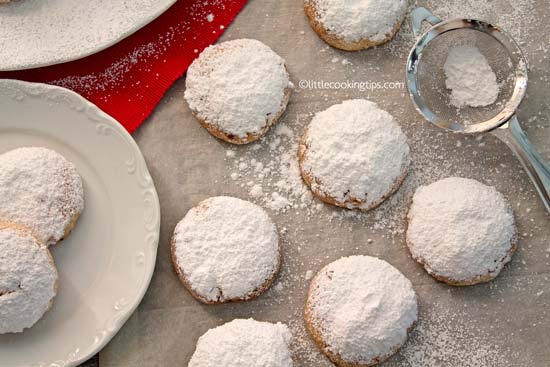
imageThose traditional, shortbread butter cookies include almonds, lots of powdered sugar, vanilla and usually rosewater or other flower water.
Edible rosewater (or flower water), adds an amazing scent to those cookies. But we know it may be difficult to find in some places (it’s available online though). If you do buy it, you will make traditional kourabiedes with exceptional aroma. If you’re thinking that it’s something you’ll buy once and then it’ll stay on your pantry gathering dust, that’s not the case.

There are many recipes which call for rosewater, plus you can try it in cookies, cakes and other desserts you already bake and create something different and delicious! Try substituting vanilla with flower water and you’ll get the idea:)
People who may not like the aroma of rosewater or flower water may also try adding bitter almond liqueur (Amaretto) which also makes for wonderful kourabiedes.

The main ingredient for kourabiedes is of course, butter. You want to use the best quality butter you can afford in this recipe. It will define the texture and taste of the cookies. The traditional way to make kourabiedes is with sheep’s or goat’s milk butter. The flavor is a bit intense for any non-Greek, plus it’s a bit hard to find abroad. That’s why we used regular cow’s butter in this recipe. Feel free to use any type of butter you prefer, or even mix of butters (like half sheep’s butter and half cow’s butter). If you can get the famous – in Greece -Corfu butter give it a try, it’s pure, excellent quality butter.
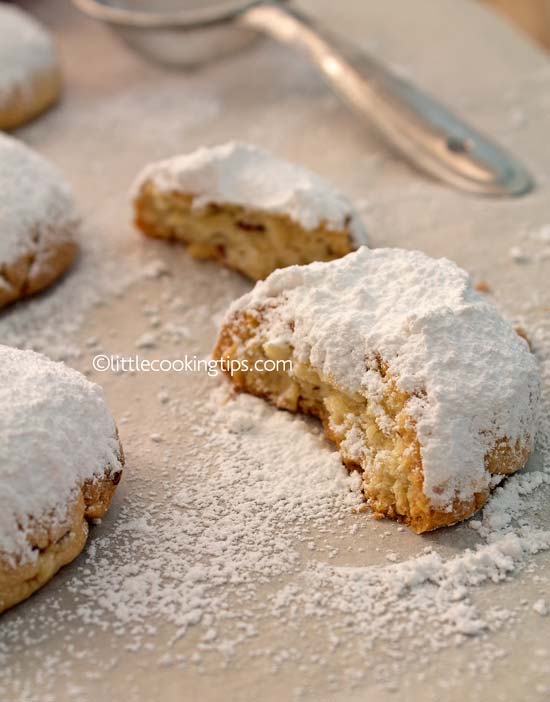
imageRegarding the shape of those cookies, some people may be confused due to the variety. There are 3 main shapes for kourabiedes: thick round cookies, crescents and balls. We think the easiest and nicest are the thick round cookies, as the shape helps in stacking up the cookies in layers, as they’re traditionally served.
As for the size of the cookies, they may be large ones (about 40gr/1.5oz of dough per cookie), or smaller bite-size ones. The ones sold in pastry shops are usually bite-sized, and the homemade ones are usually larger.

So go ahead and give them a try! You won’t regret baking those, your home will be filled with the aroma of butter and rosewater, and you’ll enjoy dusting them with lots and lots of icing sugar. They’re both pretty and delicious! So follow the recipe below and make some festive Greek cookies!

Ingredients:

– 500gr / 17.5oz / 1.1 lb (4 cups) all purpose flour
– 250gr / 9oz butter (2 sticks and 1/4), softened (room temperature, see preparation)
– 150gr / 5.5oz (1 1/4 cups) powdered sugar
– 150gr / 5.5oz (about 1 cup) almonds, unsalted and toasted
– 1 egg yolk (use a large egg)
– 1 teaspoon baking powder, and more for dusting the cookies
– 2 teaspoons vanilla extract or vanilla powder
– edible rosewater or other flower water

Preparation:
Remove the butter from the fridge at least a couple of hours before using it. This will allow it to soften. Chopping it to pieces also helps.

imageIf using raw almonds, place them in a single layer on a lined baking sheet/pan and bake them for 10-15 minutes at 180C/350F (preheated oven) (pic. 1). Grind the toasted almonds in small pieces, using a food processor. Do not grind them into powder.

imageMaking the cookies:

In a large bowl, beat the butter (pic.2) for 8-10 minutes, using a stand mixer or an electric hand mixer on medium-high speed (until soft and fluffy, pic.3).

imageAdd the powdered sugar (pic.4) and beat for 10 more minutes until you get a “whipped cream” -like result (pic. 5).

imageAdd baking powder, vanilla (pic. 6) and mix with a rubber spatula. Add the egg yolk (pic. 7) and mix until it’s incorporated.

imageAdd 1 tablespoon of rosewater or flower water and mix (pic. 8). Start adding the flour (pic. 9), a couple of tablespoons at a time. Mix with the spatula each time you add some.
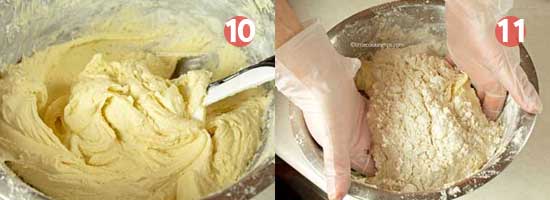
imageWhen you’ve added half the flour, you’ll get a fluffy, almost rubbery dough (pic. 10).
At this point add the rest of the flour at once, wear single-use gloves and start mixing with your hands (pic. 11). Do not overmix. Once the flour is incorporated,stop.
Important: USE the gloves in the recipe. It will help insulating the warmth of your hands (to avoid melting the butter as you mix).

imageAdd the ground almonds (pic. 12) and fold them into the dough. Shape the cookies (pic. 13). If using 40gr/1.5oz of dough per cookie, you’ll make about 25 cookies.
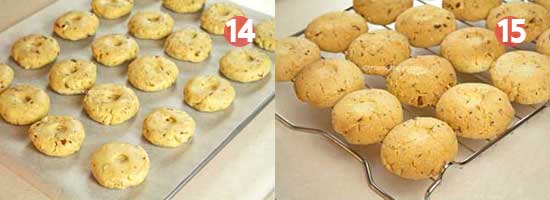
imagePlace the cookies in a lined baking dish/pan (pic. 14) and bake for 15-18 minutes in the middle rack (use the oven fan in preheated oven). Remove from the oven,let them cool for 2-3 minutes, and then place them on a rack to dry out (pic. 15). Let them to cool completely.
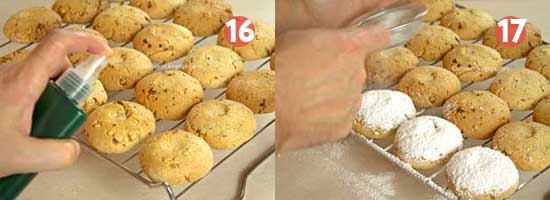
imageSpray them with rosewater or flower water (pic. 16) and dust them with powdered sugar (pic. 17). Be generous with both.

Your yummy treats are ready, place them in cookie box or a cake stand with a lid, in layers.
Kala Christougenna and Kali Chronia!

Tips:
1. You can use sheep, goat or cow butter or mix them. In any case, choose high quality butter for this recipe.
2. You can shape the kourabiedes in thick round cookies (like we did here), crescents or balls.
3. Leave a little space between the cookies before you bake them, as they will expand during baking.
4. If you want to make more cookies, feel free to double the ingredients above. The result is exactly the same.
5. If you don’t like rosewater or flower water (or can’t find any), add some vanilla powder in the icing sugar when you dust the cookies at the end of the recipe.
6. Always wear single-use gloves when you mix the dough and shape the cookies, to insulate the heat from your hands.


Try making these for Christmas or the New Year!

You can visit the Little Cooking Tips site by clicking on the name.
 

A Greek Christmas

In the Greek Orthodox tradition, Christmas ranks second to Easter, but it is still a very important holiday. For the devout it is preceded by a period of fasting so food, unsurprisingly, plays a major role in the festivities. But more of that later.

image


In Greece, Santa Klaus or Father Christmas is Agios Vasilios (Saint Basil) – so gifts are opened on his name day, January first.

On Christmas Eve and Christmas Day children go from house to house singing the Kalanda (carols whose name comes from the Roman calendae, the first days of the month) and accompanying themselves on small metal triangles and sometimes harmonicas. They knock on doors asking ‘Na ta poume?’ – ‘Shall we say them?’ They are rewarded with money, sweets and sometimes dried figs and other fruit. Then the householders wish them ‘Kai tou xronou’ – ‘Again next year’. They will do the same on New Year’s Eve and New Year’s Day, but the carols are different.

Of course, the quality of the singing varies a lot. I’ve opened my door to blond little angels with voices to match, tinkling away on their triangles – and, a few minutes later, to hulking, spotty teenagers who expected to be paid for playing the Kalanda on their smartphones!

imageAs far as decorations are concerned, there is the yearly debate of the Christmas tree versus the wooden ship. Changing fashion tends towards one or the other. The modern Christmas tree came to Greece with the country’s first king, Otto of Bavaria, who ascended to the throne in 1833; it did not, however, become popular before the 1940s. Some Greeks still consider it a foreign import, although use of decorated greenery and branches around New Year is recorded as far back as Greek antiquity, and there is evidence that some sort of Christmas tree existed in the Byzantine empire.
The ship, by contrast, is viewed as a quintessential Greek symbol. Greeks have been seafarers for thousands of years and the country is still one of the world’s leading shipping nations. Children on the islands sang – and are still singing – Christmas carols holding illuminated model boats.
The Christmas ship is made of paper or wood, decorated with small, colorful lamps and a few, simple ornaments. It is usually placed near the outer door or by the fire with the bow pointing to the interior of the house. There are many symbolic connotations attached to it: love of the sea, welcome to those returning from a voyage or honouring of those away at sea and a token offering for their safe return. With golden objects or coins placed in it, the ship also symbolizes a full load of riches reaching one’s home. However, it also has connotations of partings and absent husbands and fathers, and that perhaps is why the tree has found favor with many.


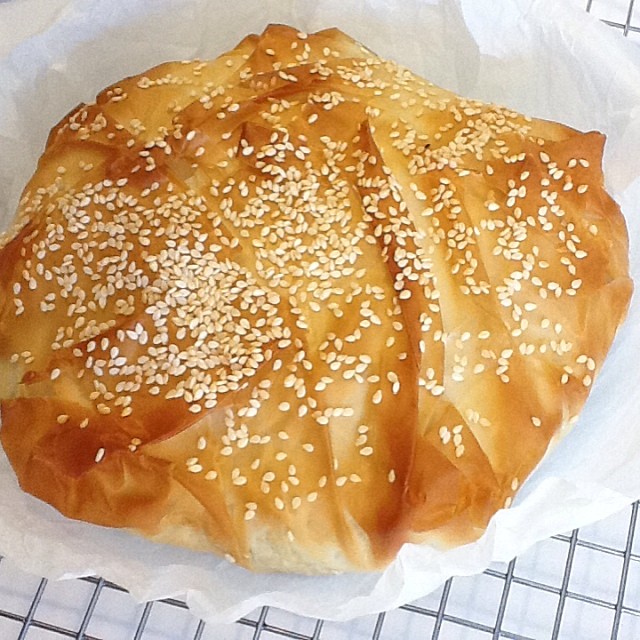
Spanakopita - spinach and cheese pie
Spanakopita – spinach and cheese pie


Some households still display the traditional shallow wooden bowl of water with a sprig of basil wrapped around a wooden cross. Once a day, the cross and basil are dipped into holy water and used to sprinkle each room of the house. This ritual is believed to keep the Kallikantzaroi away from the house. Kallikantzaroi are ugly and malevolent sprites which emerge from underground to bring trouble to families.

Outdoors, streets, stores and homes are decorated with garlands of lights and illuminated ships or trees. Town streets are full of people doing their last minute shopping of presents while carols are played everywhere, adding to the festive mood. In most major towns, there are concerts, theatrical performances and other cultural events promising wonderful entertainment.

Each region tends to have its own Christmas traditions. For example, in the villages of northern Greece, the man of the house chooses the sturdiest pine or olive tree branch he can find. This, named Christoxylo (Christ-wood) is put in a newly cleaned fireplace to slowly burn over the whole twelve days of Christmas. This is symbolically meant to warm the baby Jesus in his cold stable, and also to keep out the Kallikantzaroi who supposedly come down the chimney.


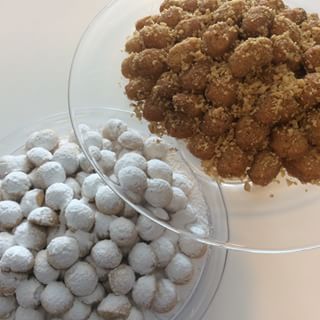
Kourambiedes and melomakarona


A lot of the traditions have to do with food, of course. The Christmas feast is looked forward to with great anticipation by adults and children alike, and especially by those who’ve followed the 40-day Advent fast.

On almost every table there will be a round loaf of Christopsomo (Christ Bread), decorated on the top with a cross, around which are dough symbols representing whatever it is people do in life. Fishermen will decorate the bread with fish, farmers with lambs, and so on.

For starters you might get a fresh, colorful salad of green leaves and red cabbage sprinkled with pomegranate seeds; a lemon-chicken soup called Avgolemono; home-made pies and pastries made with spinach and feta, pumpkin, or meat; or cabbage leaves stuffed with meat and rice, in an egg-and-lemon sauce.

The main dish is pork or lamb, cooked following some regional recipe, or perhaps wild boar; or a roast turkey with a mince, pine nut and chestnut stuffing.
In most parts of Greece, pork was the meat of choice at Christmas, a pig being slaughtered specially for the occasion and cooked in many different ways according to the traditions of the area.


Diples
Diples

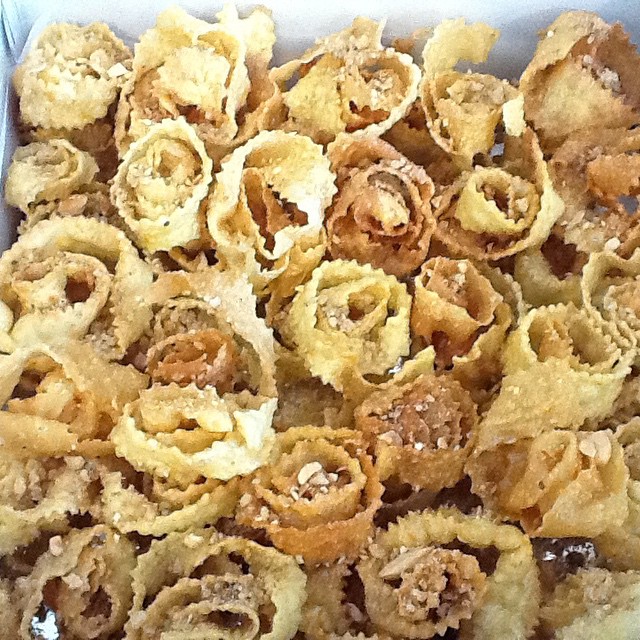
Last, but not least, are the sweets: Diples, crisp fried pieces of dough drizzled with a honey syrup; Melomakarona, made with semolina, cinnamon and cloves, dipped in honey and sprinkled with chopped nuts; Loukoumades, deep-fried puffs of batter also served with honey; and Kourambiedes, buttery, crunchy bites flavored with rose water and dusted with flurries of icing sugar. In the islands they also serve Amygdalota, a kind of almond cookie.


image


After the meal, at night, some people choose to stay home and watch a Christmas show while others prefer to party the night away in nightclubs and bouzouki joints.

For some great traditional Christmas recipes, click here.

The photographs of the lovely food were kindly supplied by Cake&Cookie co, who make all kinds of delicious cakes, cookies and deserts, and also do catering for various festivities. Go on their site and your mouth will water!


Introducing ‘Letters from Greece’

Starting with the Pickwick Papers, Charles Dickens famously published his novels in the daily press, in weekly or monthly installments. He thus pioneered the serial publication of narrative fiction, which became the dominant Victorian mode for fiction publication. This format allowed him to get feedback from the audience, which he often used to modify his characters and plots accordingly.

Now publisher The Pigeonhole has re-created this concept for the digital age, by bringing out a series of books divided into sections called ‘staves’, which can be read on a tablet, iOS device or a PC. The process is interactive, as it allows the inclusion of photographs, extra ‘margin’ notes, and commentary from readers. It can function like an on-line book club.

Amongst the books on offer, my curiosity was naturally aroused by Letters from Greece, a series of essays on various themes, all describing what it’s like to live and work in Greece today. The series is curated by literary agent Evangelia Avloniti and features a line-up of writers and photographers who, if one is to go by the staves so far, are top class.

image


I enjoyed all the staves, which were very different in tone and style but each fascinating in its own way; but I thought I would include here an excerpt from the first one, Florina: Where Greece Begins, because it struck a particular chord.

It is by award-winning writer Peter Papathanasiou, who was born in the northern Greek town of Florina and was adopted as a baby by a family in Australia. He describes a visit from Australia to see his brothers and combines this with the story of his grandfather Vasilios, an Orthodox Christian refugee fleeing for his life from Anatolia during the 1923 population exchange with Turkey. As Peter Papathanasiou puts it:

The war was over. With the return of their triumphant army, the Turks had started taking all able-bodied Orthodox Christian men into labour camps. If the Greeks dared return to march on Ankara, the Turks’ prisoners would be executed in retaliation. Vasilios was not interested in being human collateral.’


image


Vasilios walks from Smyrna to the Aegean Sea, leaving his family behind. He wants to get to Greece.
Reading this together with the refugees’ stories one sees every day in the press reminded me how history repeats itself and how we can never take anything for granted. I have chosen to feature the part where Vasilios arrives at the Aegean shore, after four months on the road. I hope you will be as moved by it as I was.


image


‘Vasilios could hear screaming in the distance. It was a sound familiar to his sunburned ears. After four months on the road, it was also a sound to which he was numb. But there was something about this scream. The timbre was higher and lighter, the duration longer. It was not a wail of agony or distress. It almost sounded happy. Vasilios tried to remember the feeling.
The seasons had changed. Winter had become spring and the rebirth had made the countryside burst with wildflowers and new grass. Vasilios had collected orange seeds from the road and stored them safely in his jar of Anatolian soil. Climbing to the top of a lush green ridge, he saw the Aegean Sea. It was the bluest, sweetest sight. People threw their hands in the air and ran the final mile to the water. Vasilios sprinted.
A sea of humanity saturated the waterfront. He arrived at the port breathless. His clothes were rags, his skin black. He could barely hold down his bread ration for hunger. He had run out of notches on his belt and started constructing his own with a rusty nail. His pockets were also considerably lighter for all the Turkish guards he had bribed with a fakelaki.
Vasilios had trudged the last hundred miles with a hole in each boot and bloodied soles. One out of four travellers did not make it. Some might say they were the lucky ones spared the scene at the docks and aboard the boats bound for Salonika. Emaciated, diseased Christians clogged every dirty corner. They turned potato sacks into makeshift clothes and old rubber tyres into shoes. Vasilios found the waterfront warehouses crammed full, saturated with refugees. The stench of human filth made him retch. There was no space to lie down and sleep, and no toilets. Elsewhere on the docks, shanty towns had sprung up, refugees sheltering in oil drums and beneath metal sheeting. Diseased cats were everywhere, all bones and patchy fur.

Boats were left floating off the coast to prevent the spread of smallpox, typhus and cholera. After two nights on the docks, Vasilios was eventually herded onto an overcrowded boat that looked like it would sink at any moment. He was quarantined for a week on an island whose name he did not know. It was there he got his first taste of what it meant to be ‘coming home’. Bowed with despair, he was spat upon by the native Greeks from their upper windows as he shambled past. ‘Tourkosporoi!’ they jeered him; ‘Seed of Turk!’ The mere fact he had lived in the Turkish state made his loyalty to Christianity suspicious. He did not fight back or even plead his case. He had neither the energy nor the spirit.


image


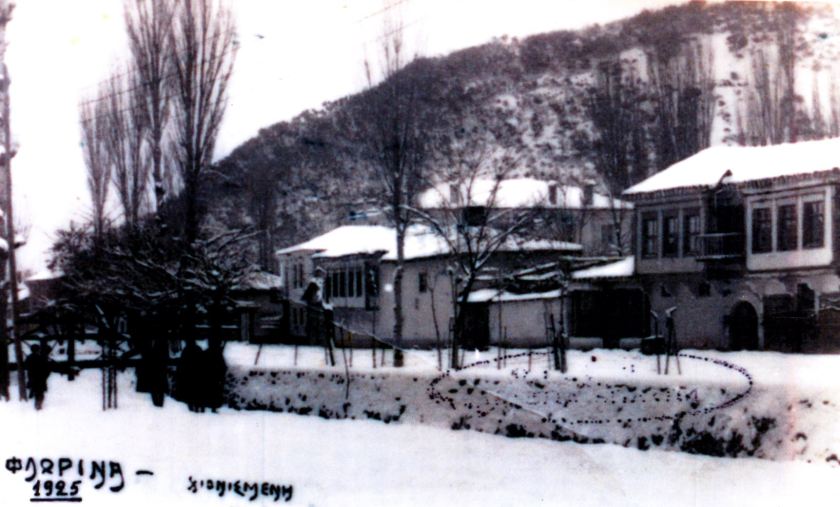
The same welcome greeted Vasilios in his new village. Its name was Florina, and it was so far into the Pindus Mountains that Vasilios could smell the Albanians from across the border when the northerly wind blew. He watched as mosques became churches, minarets torn down, crosses erected. The native Greeks were suspicious of his odd dialect. They ended up going to different churches and kafenia and even used different water pumps. The Muslims who had left were a known quantity. Vasilios’s kind, though Christian, were still alien.’


image

imageimage


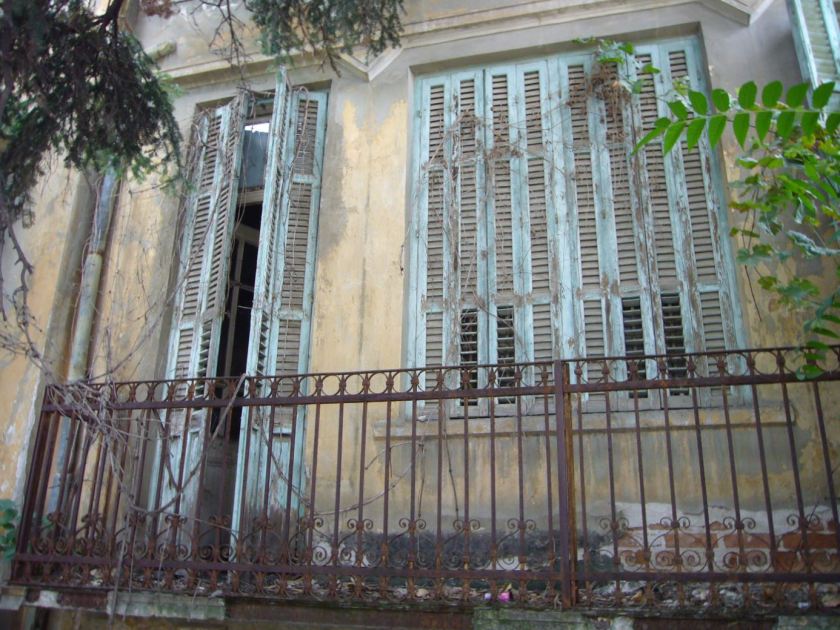
The photographs of Florina then and now were kindly provided by Peter Papathanasiou. He took the recent ones himself.

To check out The Pigeonhole, click on the name in the text above.