An afternoon at the Musée d’Orsay

A few days ago I went to Paris to visit a friend, who lives right next to the Musée d’Orsay, in a bustling neighbourhood on the Left Bank. After a delicious lunch that she had prepared for me, we wandered over to the museum, which has always been a great favourite.

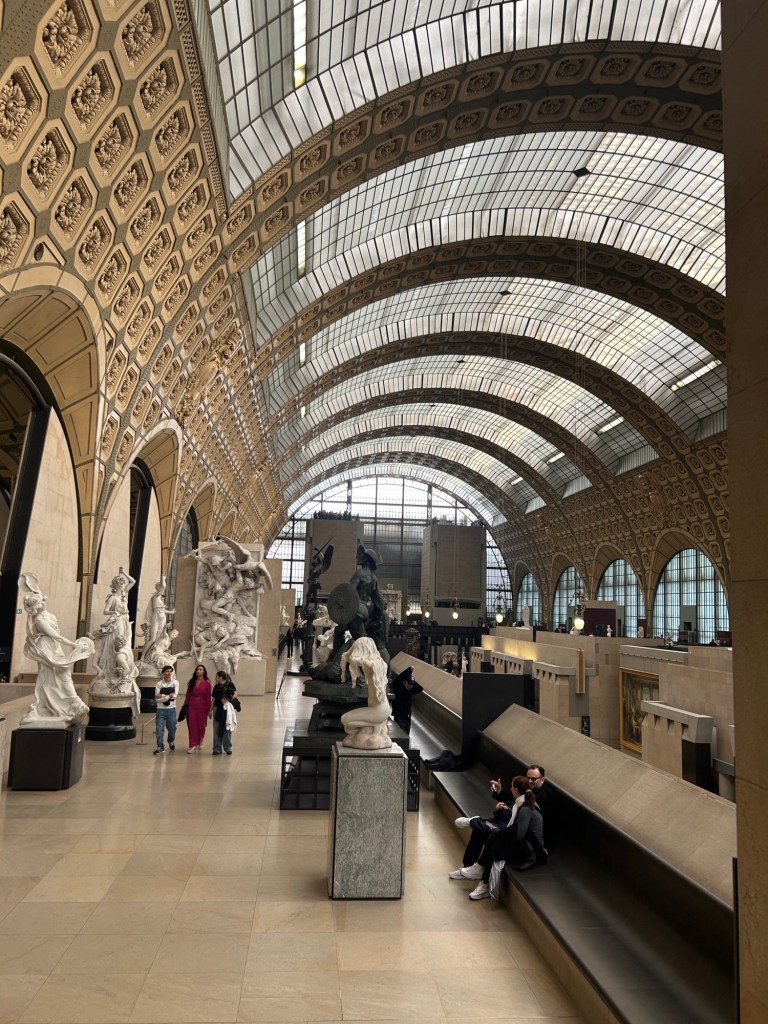
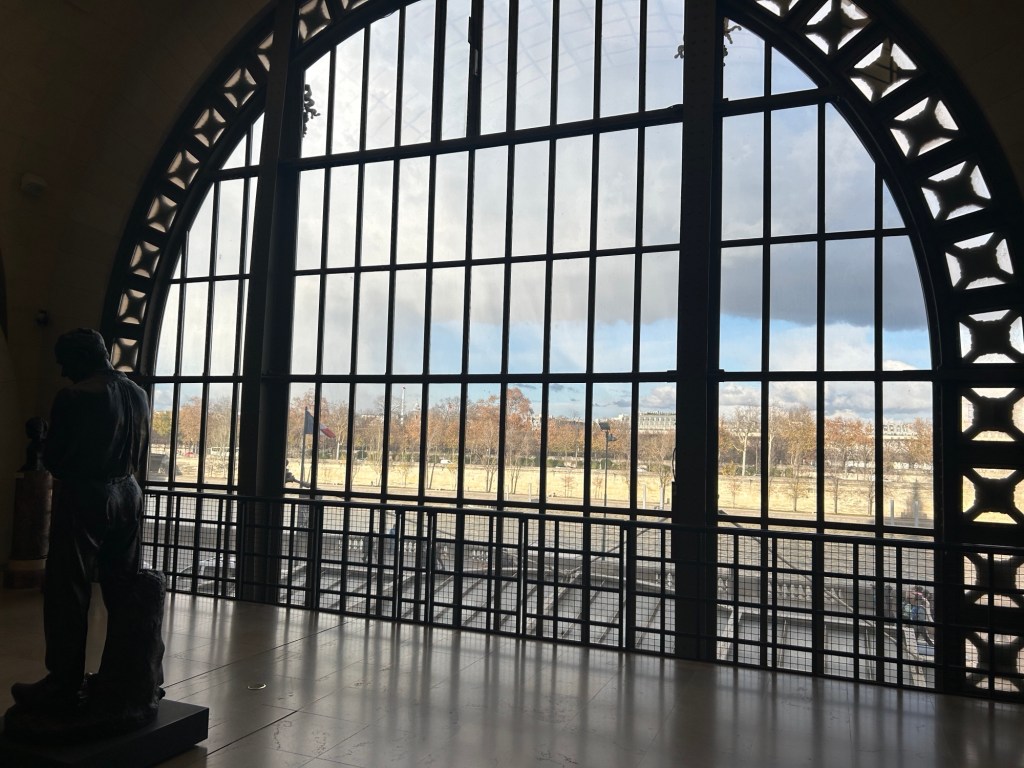
A conversion of the Gare d’Orsay, a Beaux-Arts railway station built in the late 19th century, the building itself is amazingly beautiful, with stunning views of Paris out of every window. Regular readers will know I visit as often as I can, and have written about exhibitions by Picasso, Caillebotte and others (for those interested, putting “Musée d’Orsay” in the finder will lead you to them).

The permanent collection is full of treasures, and every time I go I discover something new amongst the old favourites. My friend and I walked around, admiring the Gaugin paintings some of which I had read about in Sue Prideaux’s biography,Wild Thing (reviewed in a recent post).

The Meal, also known as The Bananas. 1891

Another lovely painting, the portrait, by Odilon Redon, of Baronne Robert de Domecy

Odilon Redon, 1900

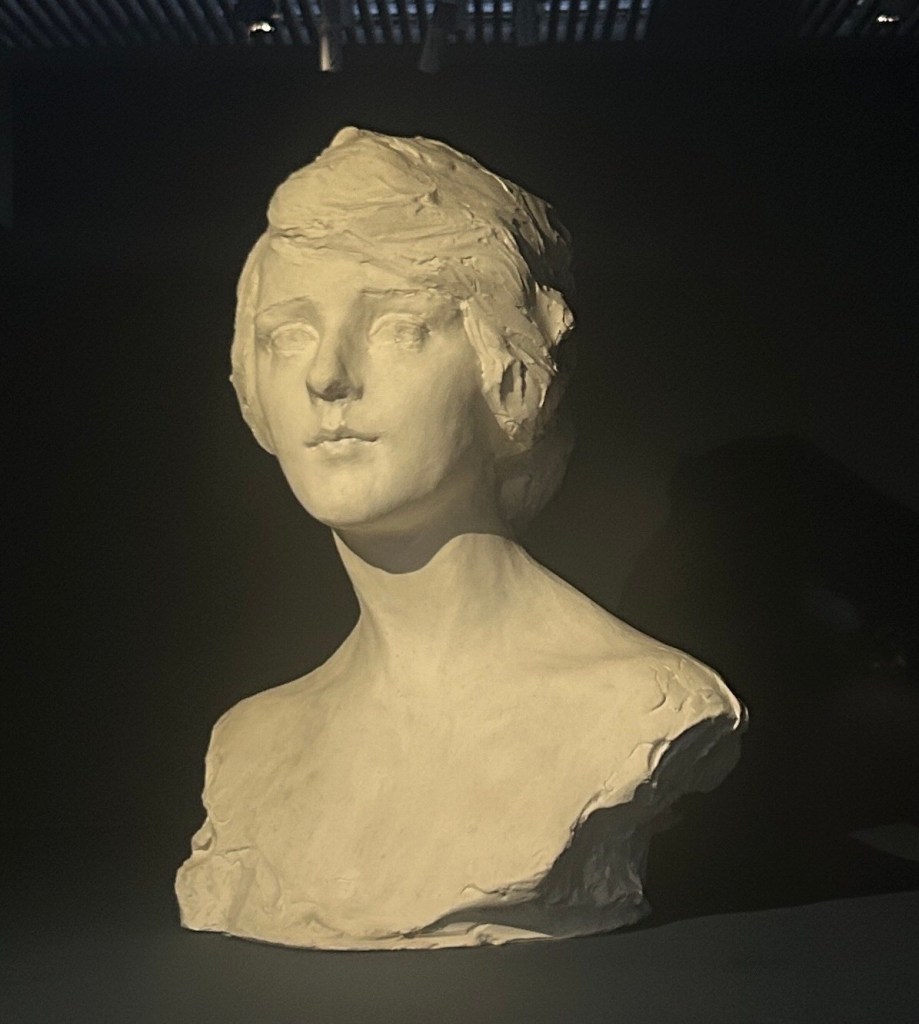
This time the temporary exhibition was of the previously unknown to me sculptor Paul Troubetzkoy (1866-1938).

Troubetzkoy, who was an iconic figure of his time, was the illegitimate child of a Russian diplomat and an American singer and pianist. He was acknowledged by his father at the age of five, trained in Milan and started his career in Moscow and St Petersburg, where he was well received by the local elite, despite speaking virtually no Russian. Having a wonderful facility of capturing people’s likeness in clay (which he then cast in bronze) he sculpted numerous portraits of the aristocracy, but his masterpiece of that period was the portrait of Tolstoy, a vegetarian who made a profound impression upon him (and converted him to the cause).

In 1906, when Russia was racked by the first throes of revolutionary unrest, Troubetzkoy left for Paris, where he quickly won over Parisian society. Bohemian and eccentric, he walked his domesticated wolves in the Bois de Boulogne, and hobnobbed with the city’s cosmopolitan elite, earning numerous portrait commissions. He perfected the genre of portrait statuettes that would make him famous—Anatole France, George Bernard Shaw, Auguste Rodin, Baroness de Rothschild and Roland Garros were amongst those who posed for him.

In his studio, with wolves and statuettes

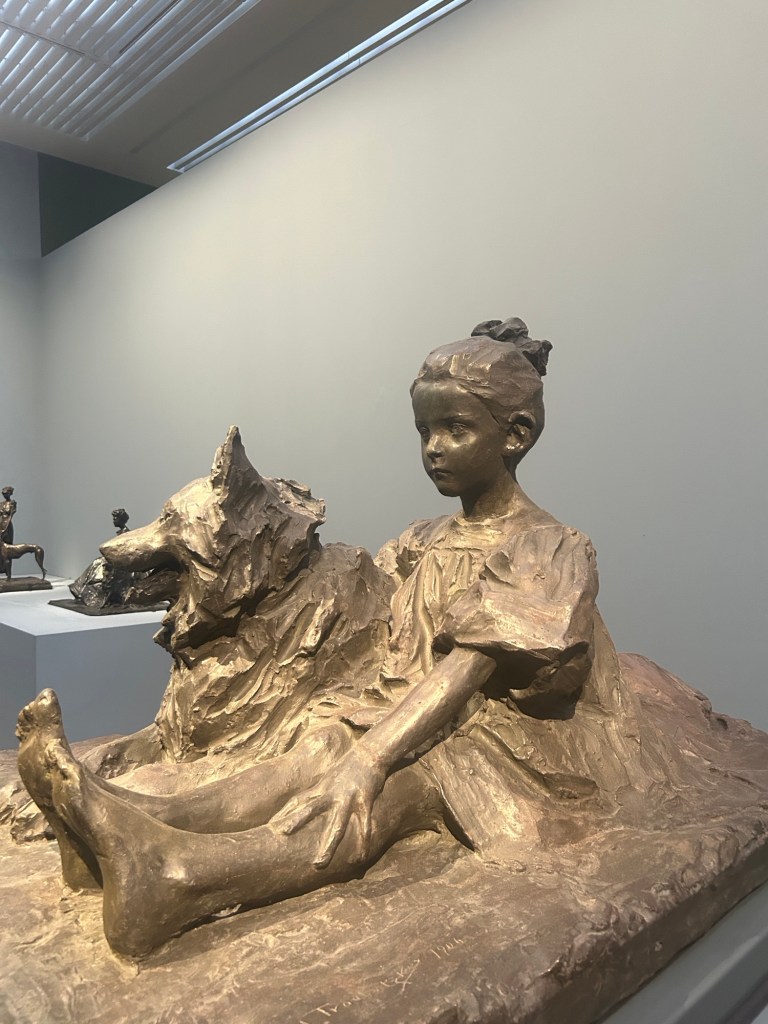
He also loved to depict children and animals. His passion for the latter was the reason he became a vegetarian.

A little girl and her dog

He suffered unbearable tragedy when his only son, Pierre died at the age of two and a half—just after he had sculpted a moving portrait of him with his mother, Paul’s wife Elin.

Troubetzkoy also had much success in America, where he travelled three times between 1911 and 1912, then stayed for almost seven years (1914-1920), again attracting numerous commissions.

Franklin D. Roosevelt, 1911, commissioned by his godmother when he was elected senator of the state of New York.

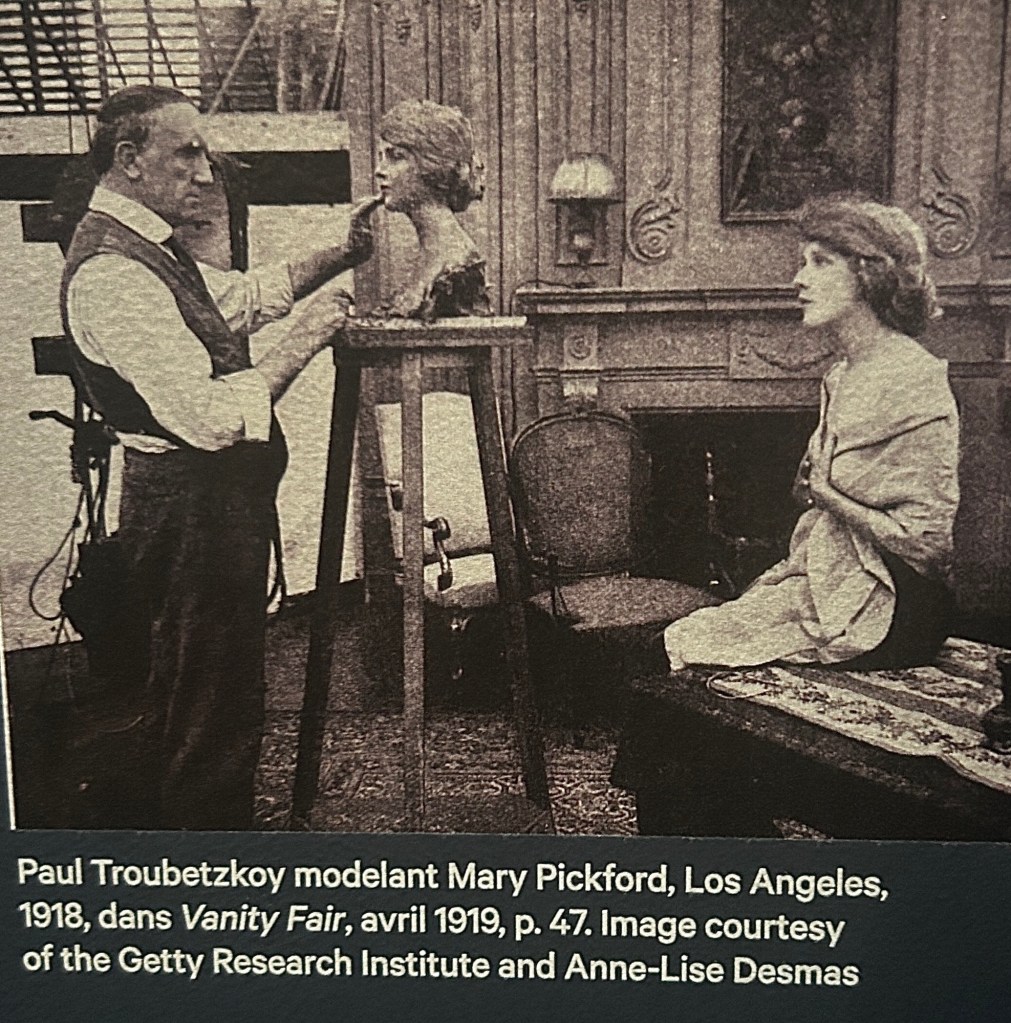
Here he is sculpting the actress Mary Pickford. Amazing how he works in a waistcoat, shirt and tie! He also had a magnificent comb-over…

And the finished portrait.

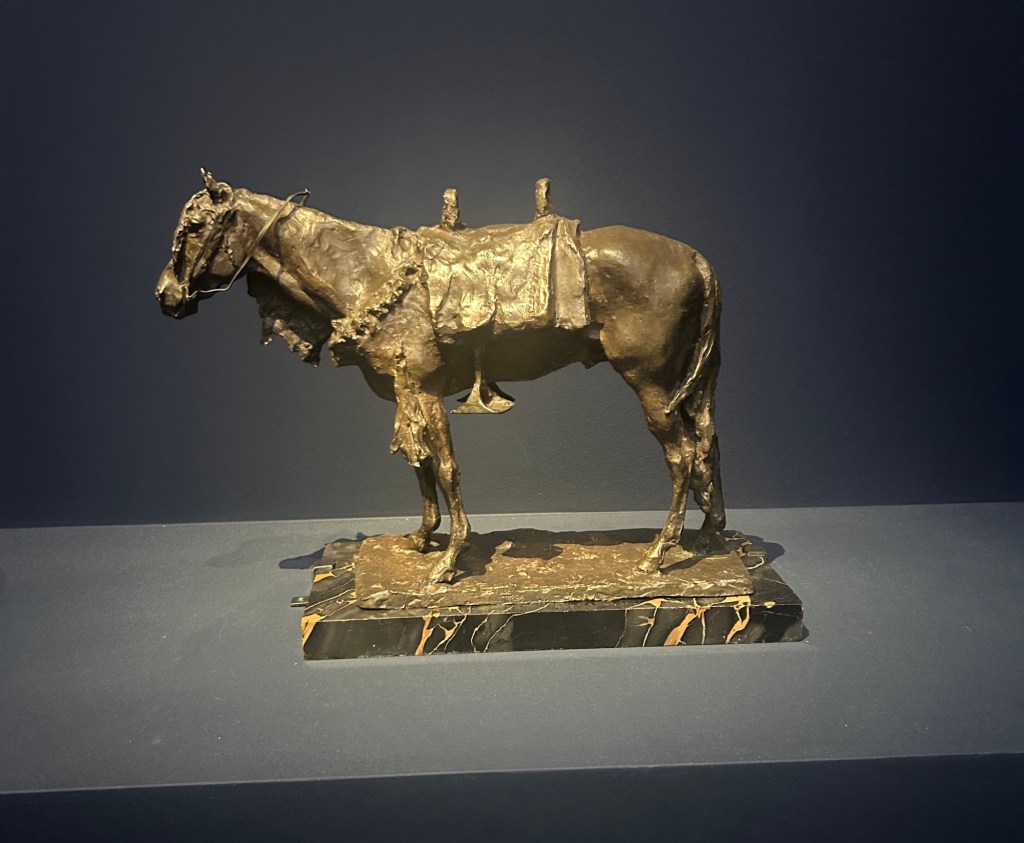
I adored this lovely statuette of an Arabian horse.

Troubetzkoy returned to Europe in 1920, where he settled in France and stayed until his death in 1938 at the age of 72, travelling often to Italy and continuing to sculpt portraits of political figures and representatives of cosmopolitan high society in both countries.

Jean Bugatti, circa 1930

An Intervention

Artist duo Elmgreen&Dragset were invited to exhibit their work in the iconic sculpture gallery of the Musée d’Orsay.

They called this installation, consisting of a number of boyish figures engaged in incongruous—in the context—pursuits, L’Addition.

Michael Elmgreen (born 1961 in Copenhagen, Denmark) and Ingar Dragset (born 1969 in Trodheim, Norway) have worked together as an artist duo since 1995, exploring the relationship between art, architecture and design.

Elmgreen&Dragset live and work in Berlin. They are known for art work that has wit and subversive humour, and also addresses social and cultural concern. Their work is too varied and prolific to be described in a short post, but anyone interested can look them up on Wikipedia—and they are, indeed, interesting.

For the first time in its history, the Musée d’Orsay invited someone to intervene in the museum’s permanent display of 19th century sculpture, which has remained the same for nearly 40 years.

As quoted in the museum’s site: In a trans-historical encounter between past and present, L’Addition highlights themes of evolving masculinities, solitude, and the magic of everyday situations. There is a certain beauty to be found in each of the fleeting moments captured in the works, whether it is in the pause before jumping from a diving board, the split second before a drone is sent off from a child’s hand, or a glimpse through the lens of a camera.

The figures are made of bronze, stainless steel and laquer. Boys waiting to dive, taking pictures from the mezzanine, setting off drones or just lounging upside down on the ceiling. It was all pretty cool, and an extra treat combined with the Caillebotte exhibition.

A new museum in Athens

Although we are spoilt for choice in Athens as far as antiquities and Byzantine icons are concerned, up to now there were no permanent exhibitions of modern and contemporary art. This hole has just been filled with the advent of a new museum hosting a wonderful collection of modern and contemporary paintings and sculpture.


After 26 years of planning and six years of construction, the Basil and Elise Goulandris Foundation has opened its new space in a totally renovated neoclassical building in the Pangrati neighborhood of Athens. The museum showcases the stunning private collection of the late Basil Goulandris and his wife Elise, and boasts around 180 paintings, sculptures, and artifacts.


Young man with bouquet, from Picasso’s rose period


A shipping magnate whose shrewd eye and passion for art was equaled by his wife’s, Basil Goulandris collected unique pieces over the years, starting with a wonderful El Greco, The Veil of San Veronica.


The couple lived with the paintings on the walls of their houses and, in 1979, when the works of art had become too numerous to be privately enjoyed, they inaugurated the Museum of Contemporary Art on the island of Basil’s birth, Andros; this was, at the time, the country’s first institution devoted to the art of the present.
However, they always nurtured a dream to establish another art space in the center of Athens, which would offer broader audiences an opportunity to see contemporary art.


Gauguin, Bowl of grapefruit


Now, 30 years after Basil’s death and 20 years after Elise’s, their vision has become reality. The original 1920s listed, three-floor building has been complemented by a modern extension hovering above the facade and now contains 11 stories (5 of which are underground to house the annex activities such as archives and storage) connected by a central stairwell made of white marble. The combination of the two styles on the outside is harmonious, and inside the different areas merge seamlessly into each other, giving an impression of spaciousness. In front of the building a little square, also renovated by the foundation, abuts the steps leading up to the church of Agios Spyridon, which was built in 1903 on designs by the noted German architect Ernst Ziller.


The museum boasts all the relevant amenities, such as a museum shop, a lovely restaurant, education spaces, and a library containing 4,500 volumes. There is also a 190-seat amphitheater, where screenings, concerts, and other events can take place. The foundation is headed by Elise Goulandris’ niece Fleurette Karadonti (President), and the museum’s director Kyriakos Koutsomallis, plus his daughter Marie Koutsomallis-Moreau (the collection’s chief curator). Their plan is to rotate the paintings of the collection on a regular basis, so that visitors can eventually get to see them all.


Giacometti, portrait of Yanaihara


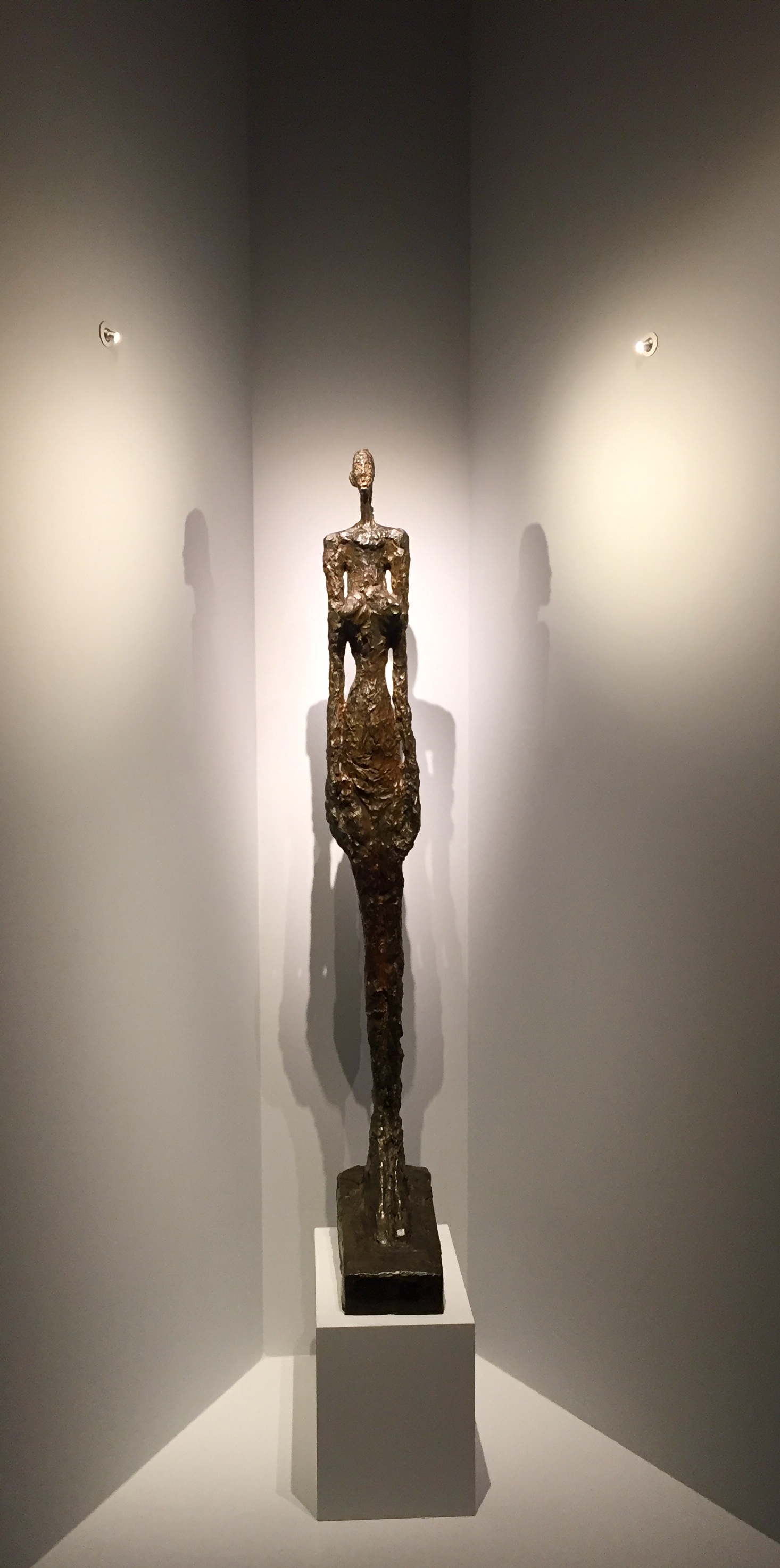
The collection includes lovely pieces of sculpture, such as the Giacometti below


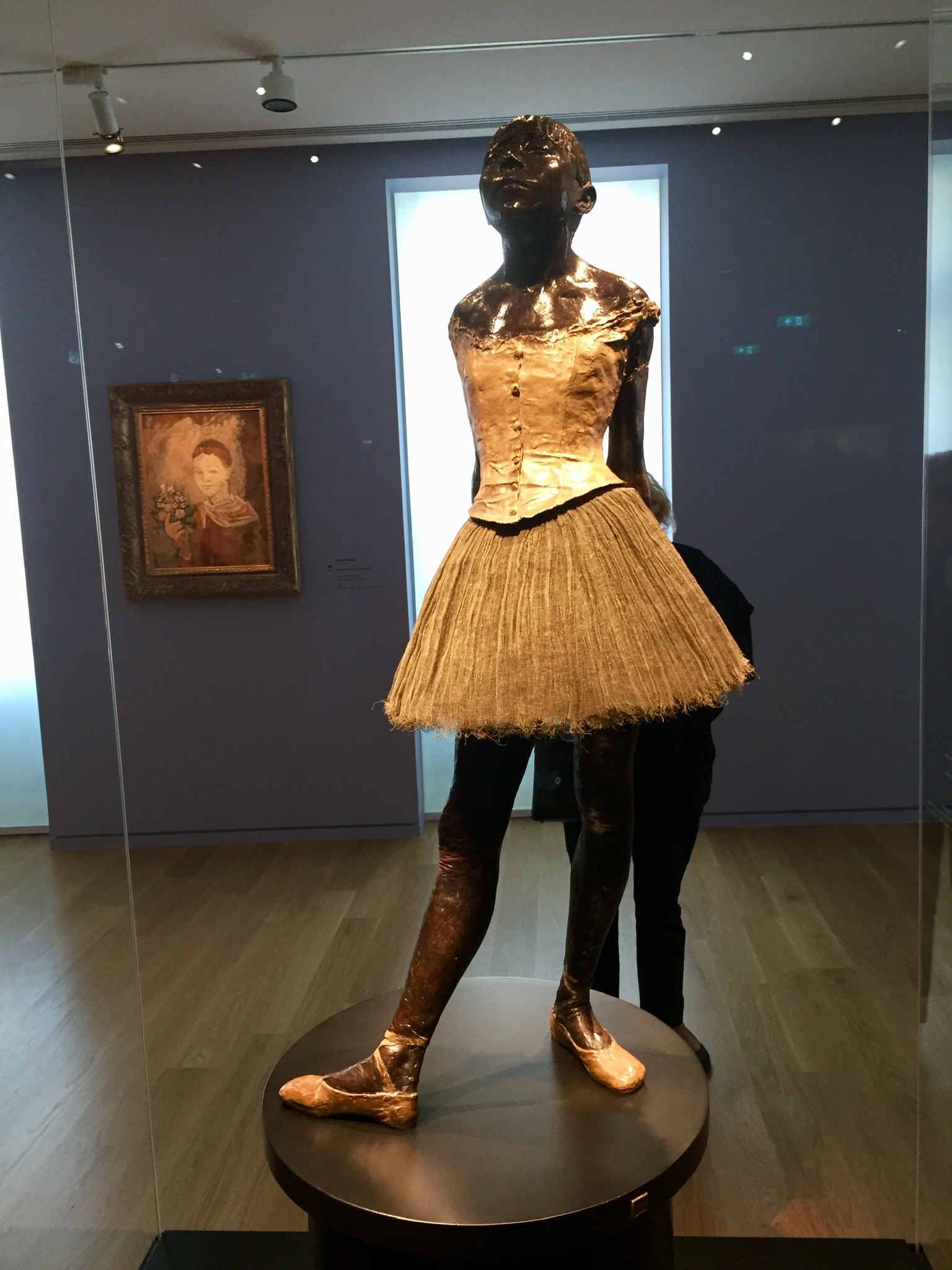
And a little dancer by Degas, which caused major controversy in its time, being presented in a glass case and with the addition of tulle, leather and ribbon.


There is a luminous room of works on paper, such as the Matisse below.


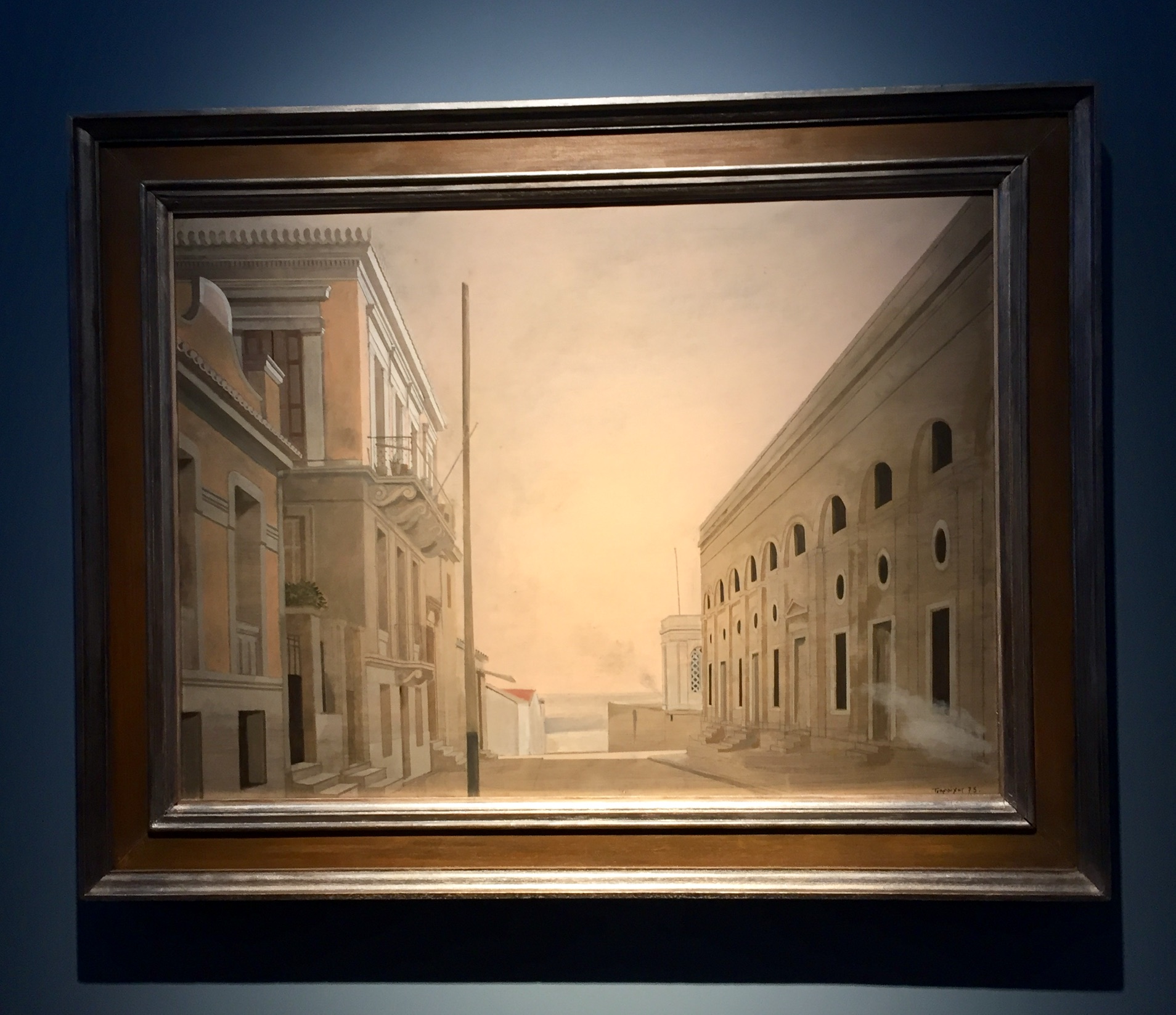
And a floor devoted to major and rising Greek artists. See below two beautiful works by Tsarouhis.


Like many diaspora Greeks, Basil and Elise had a deep love for their motherland, and always wanted to give something back to Greece. Having no children, they dedicated themselves to art, and their Paris home became a meeting place for many personalities of the art world, such as Callas, Baryshnikov, Balthus and Chagall, whose portrait of Elise graces the entrance.


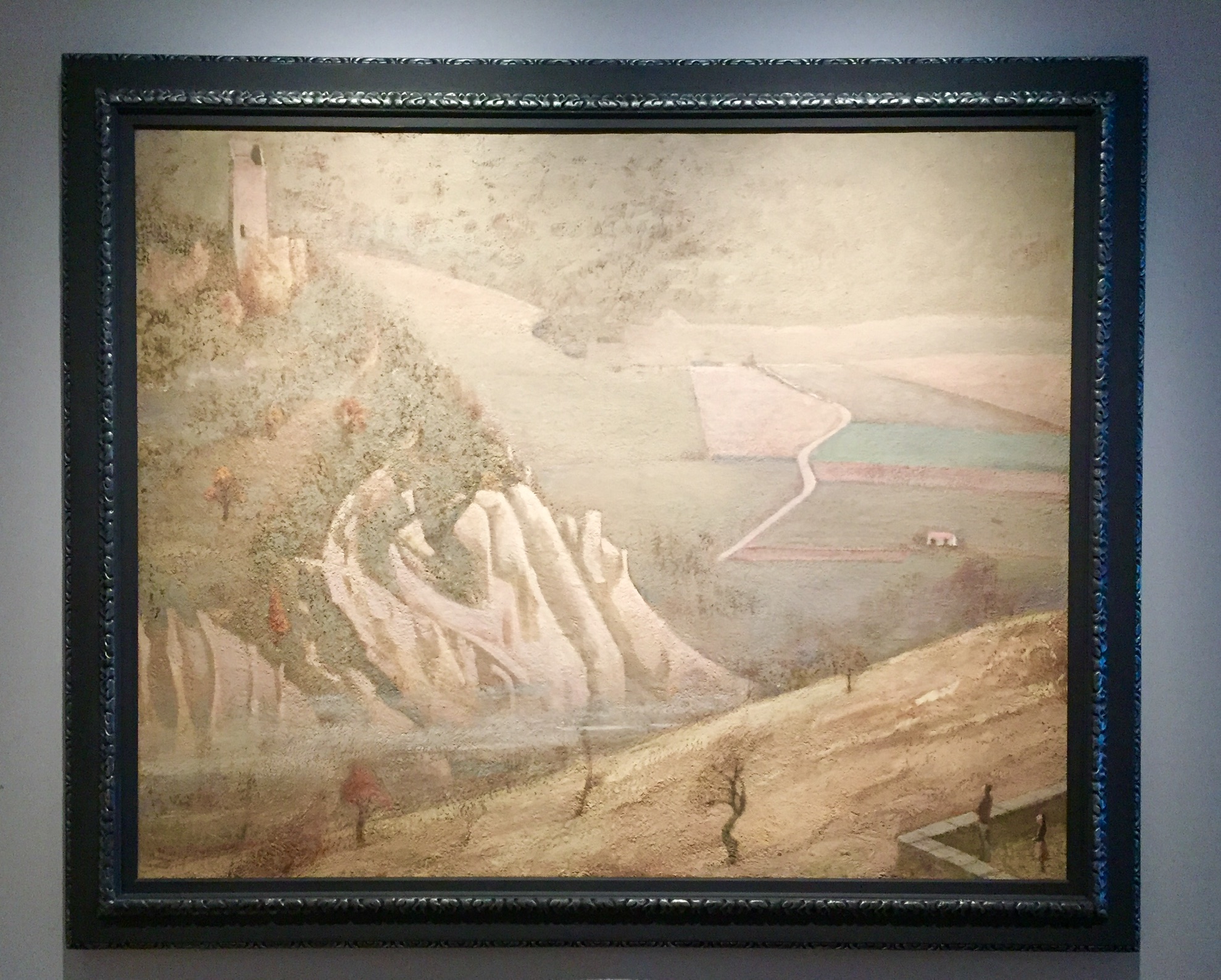
Hauntingly misty Balthus landscape


However, finding a site for the museum took several years because its original location, a plot next to the Byzantine and Christian Museum, yielded an amazing archaeological find during construction: Aristotle’s Lyceum. After many setbacks, all obstacles were happily overcome, and the new museum is already teeming with visitors.

Van Gogh, olive grove

The collection is certainly unique, and I advise anyone planning to go to make time for lunch or at least a coffee and cake in the restaurant. The food is delicious and the waiters super friendly.


Francis Bacon


All photographs are mine, which is why they’re very moderate. The light in the museum was low, in order both to preserve the works but also to bring out their wonderful colors.


A small Jackson Pollock

More Gormley

The British sculptor Anthony Gormley seems to be everywhere these days. Sadly, I never managed to get to Delos to see his fantastic installation (for those who missed my post on this, you can find it here), because Delos is not easy to access. However, I took the opportunity to see his lovely exhibition at the Royal Academy  in London.


There were many of his ubiquitous depictions of the human body in various forms:


Some upside down


Walking on the ceiling.


But also some large and impressive installations:


Visitors were invited to walk through this one.

The one below looked like an alien vessel – an impressive 6 tons of steel rods suspended from the ceiling, dwarfing the people  beneath.


You could also walk through this next one, via the rectangular opening leading into a narrow steel tunnel, in almost total darkness – if you weren’t claustrophobic, that is.


But I mostly loved its architectural shapes, framed by the arched doorway.


Another installation featured a room flooded with Atlantic seawater on a bed of clay from Buckinghamshire. In general, the installations were  site-specific, fitting beautifully into the shape of each room.


Wall art included the work below, made with clay on a blanket, which had a fleeting, haunting aura.


The one below was not one of my favorites, but intriguing nonetheless, since it was made out of slices of bread dipped in wax:


Finally, for someone like me who loves works on paper, there was an abundance of treasures on offer, including a multitude of small spiral notebooks where Gormley recorded his ideas (these proved impossible to photograph, since they were presented in glass cases).


These drawings were made with charcoal and casein.


Deceptively simple,


But very evocative.


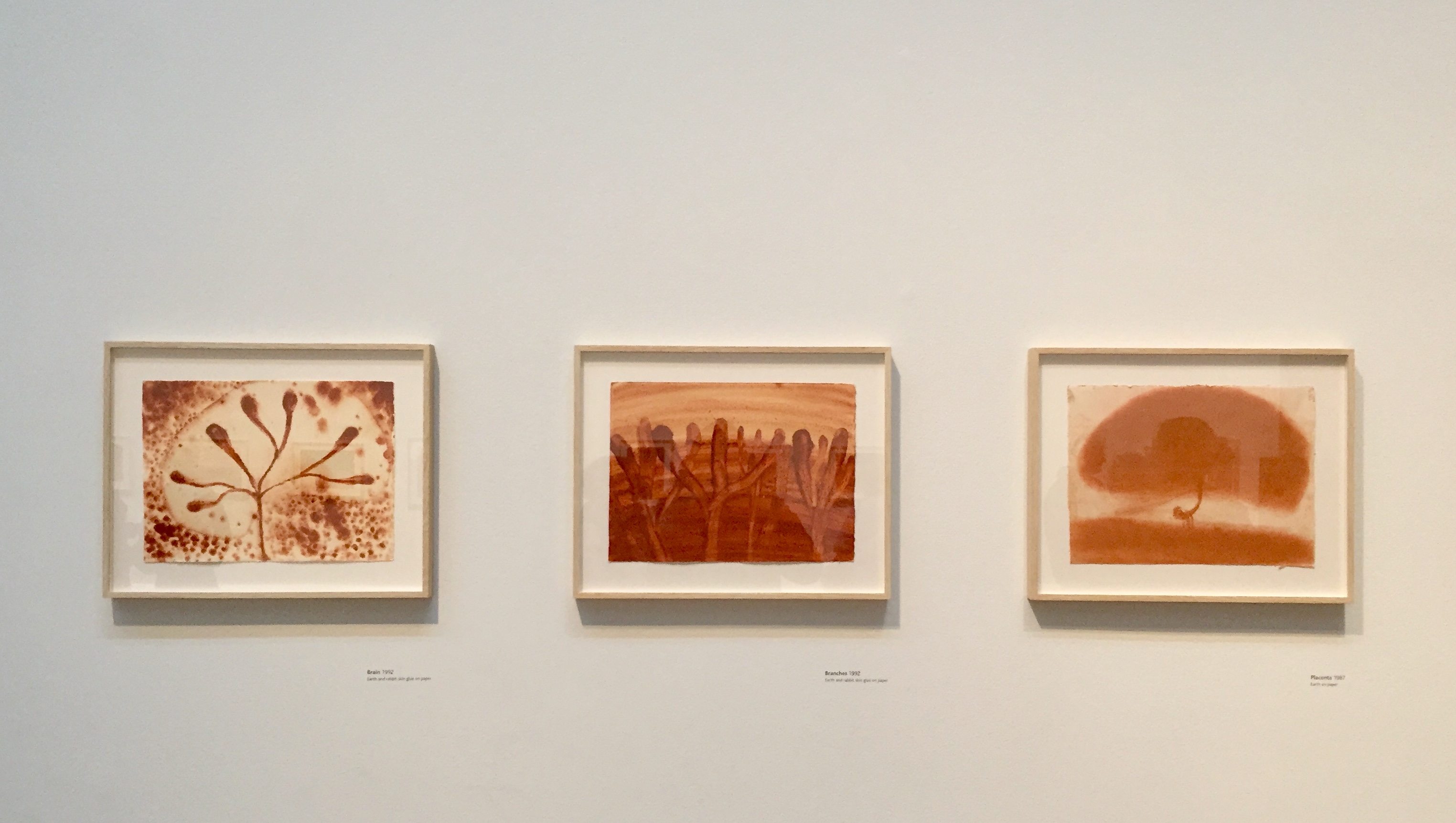
And there was a whole, luminous series made with earth mixed with linseed oil.


I came away most inspired.


Highly recommended, if you’re anywhere nearby.


Sculpture update: Tony Cragg in Athens


imageThe little girl standing next to me was counting faces.
‘There’s one,’ she pointed. ‘And another!’

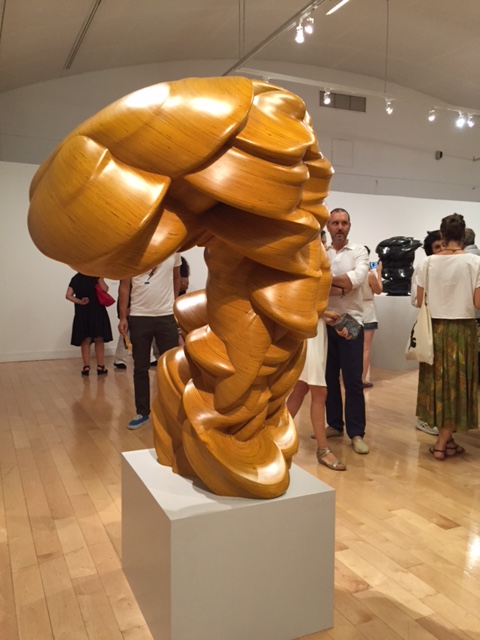
imageThe sculpture before us was made of sheets of plywood glued together in layers. Three twisted pillars that reminded me of rock formations – or stalagmites (see photo on left). But as we circled it slowly, human profiles revealed themselves: some impassive, some stern, some faintly smiling. The little girl got excited, and so did I. If you look at the photo above, and the close-up below, you will see what I mean. This was one of the most deceptively simple, yet, upon inspection, incredibly complex pieces of art I’ve ever seen.
image

When asked if some of the faces somehow ‘appear’ when he’s creating the piece, Tony Cragg is firm. Everything is meticulously planned. He takes pencil to paper and sketches out every facet of a new idea before converting it to 3D. Sometimes this proves impossible – his imagination has run away with him. Some ideas never evolve beyond the drawing stage, but if the drawings themselves are lovely, the completed sculptures are breathtaking.

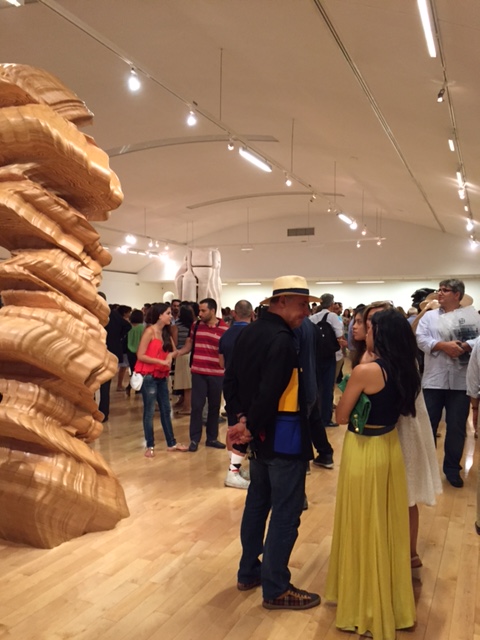
On September 8, a cosmopolitan and mostly young crowd gathered at the Benaki Museum for the opening of Tony Cragg’s sculpture exhibition. Cragg, 66, born in Liverpool, winner of the prestigious Turner Prize in 1988, has never shown his work in Greece before. He appeared happy to explain his thought processes as he stood in the auditorium, looking relaxed in an open-necked shirt. The audience enjoyed his engaging narrative which was accompanied by a slide show, and afterwards plied him with questions and requests to sign their catalogues.

Wandering amongst the works after the talk, my overwhelming urge was to touch them. Their curved, smooth surfaces cried out to be stroked.
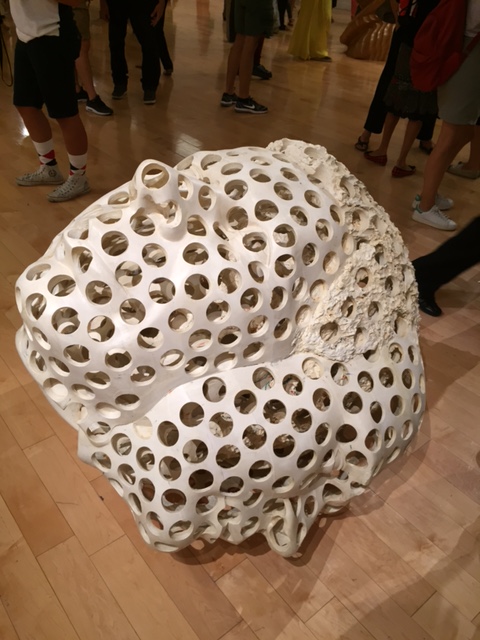
imageCragg uses natural materials such as wood, polished stone and bronze as well as mirror-finish steel and even plastic.
The sculptures are very different. Some are squat and grounded.
image

Some seem to be leaning into the wind, their surface eroded into the outlines of human profiles. Others soar upwards. Yet they all emit the same energy, their shapes shifting depending on where you’re standing.

image

As I was leaving, I stopped to admire a few of the bigger bronze sculptures dotted about the museum’s wonderful courtyard.

image

The exhibition was curated by Xenia Geroulanou of the Thaddaeus Ropac Gallery,  who has represented the artist for 20 years; the Benaki Museum; and the artist himself, who loaned all the works from his own foundation.

*For anyone interested, below is the link to an article about Tony Cragg written by Vanessa Wildenstein for Athens Insider Magazine.

*For those in Athens, the exhibition runs until November 8, 2015.

Opening hours are Thursdays and Sundays from 10 a.m. to 6 p.m. and Fridays and Saturdays from 10 a.m. to 10 p.m.

Benaki Museum, 138 Pireos & Andronikou, tel 2102.345.3111, http://www.benaki.gr